About this image
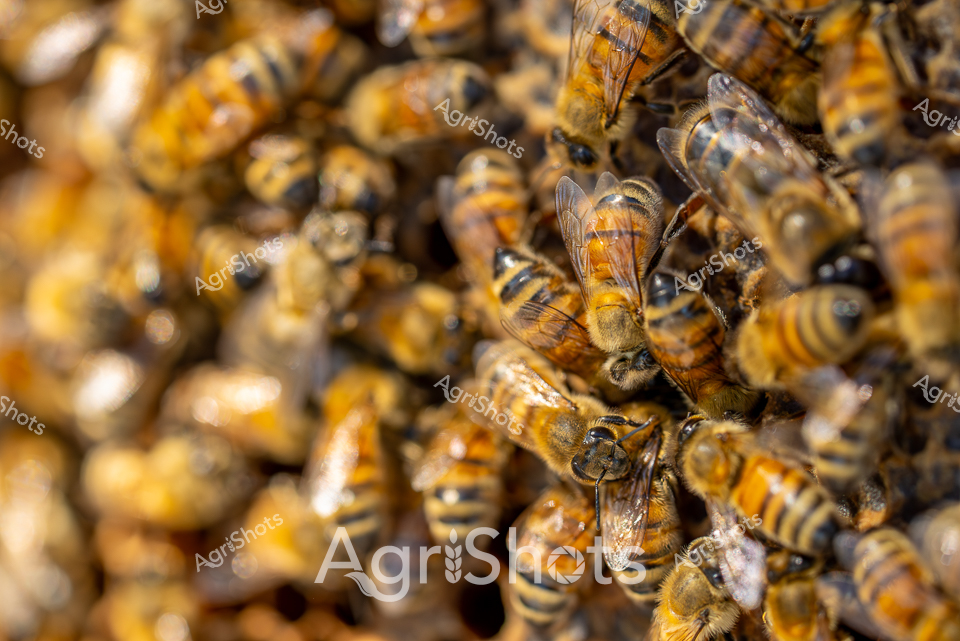
Honey bees cluster densely across the frame, their golden-amber bodies creating a mesmerizing tapestry of intricate life and collective movement. Sharp, translucent wings catch the light, revealing delicate venation against the warm amber and black striped bodies of these industrious pollinators. The tight formation suggests a thriving colony in peak spring activity, characteristic of Queensland's Lockyer Valley apiary operations during the productive flowering season. Each bee appears meticulously positioned, reflecting the precise social organization of their hive - a living, breathing organism of remarkable complexity and efficiency. Macro photography reveals the extraordinary textural details of their exoskeletons, from the fine hair-like setae to the segmented abdominal sections, capturing the raw beauty of these critical agricultural workers. The golden-brown palette speaks to the rich agricultural ecosystem of the region, where these bees play a fundamental role in crop pollination and honey production.
Similar media
 Image
Image
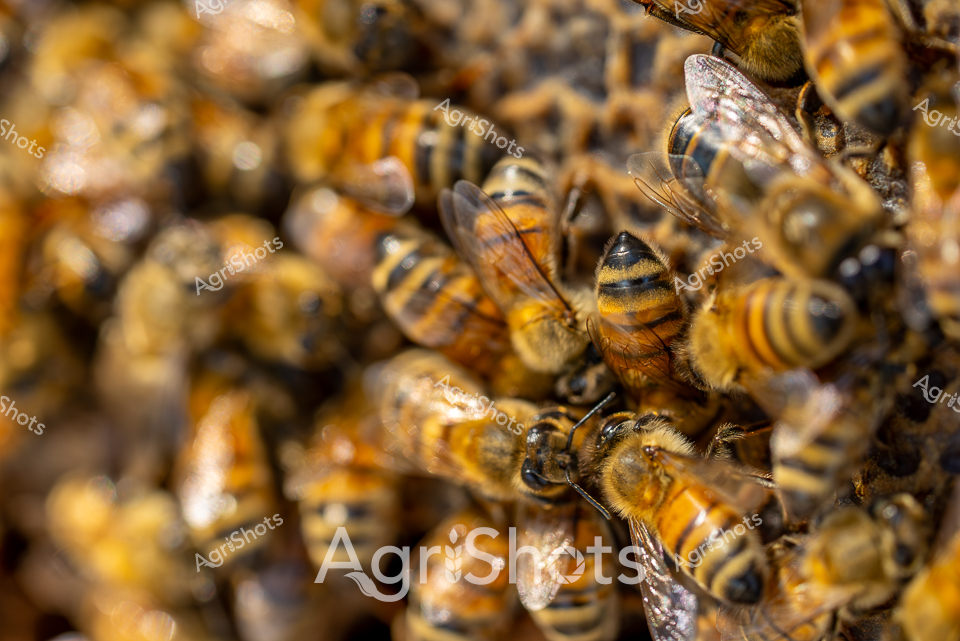
Honeybees cluster densely across the honeycomb, their golden-amber bodies striped with deep browns and blacks, creating a living tapestry of agricultural productivity. Intricate wings catch the light, revealing delicate translucent membranes against the warm, textured surface of the hive. This close-up reveals the extraordinary collective behavior of these essential pollinators, fundamental to agricultural ecosystems across Queensland's renowned Lockyer Valley. Each bee moves with purposeful precision, their bodies pressed closely together in a sophisticated social structure that speaks to the complex interconnectedness of agricultural life. The rich amber and ochre tones suggest a springtime scene, when bee colonies are most active and vital to crop production. This image captures the microscopic world of apiculture - a critical component of Australia's agricultural landscape, where these tiny workers play an enormous role in sustaining food production and ecological balance.
 Image
Image
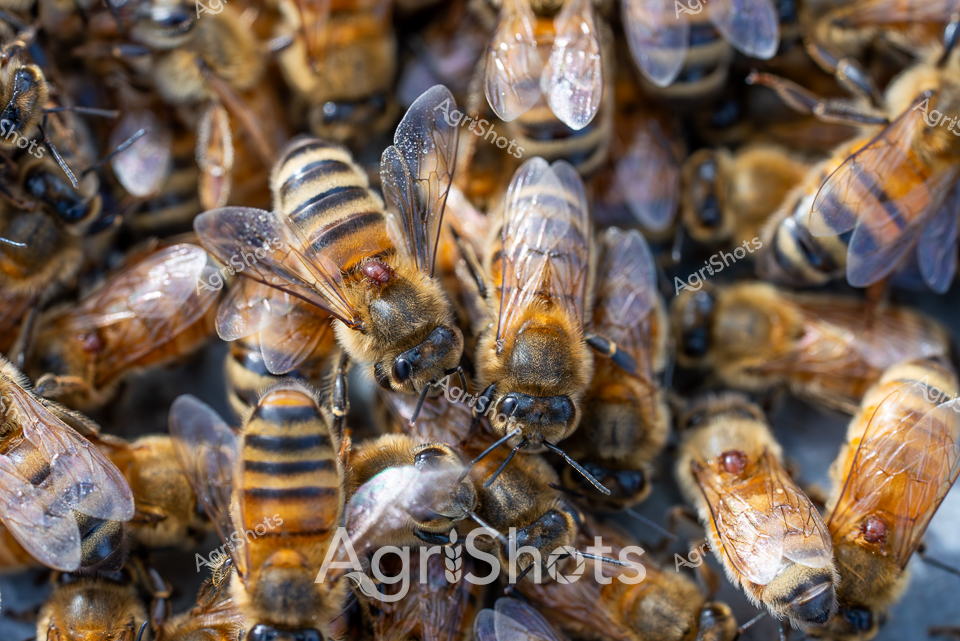
Honeybees cluster in a dense, living tapestry, their golden-amber bodies interwoven in a complex social dance within the hive. Translucent wings shimmer with delicate iridescence, catching the light and revealing intricate wing structures against the warm, textured bodies of worker bees. The close-up reveals the remarkable detail of these pollinators - their striped abdomens, fuzzy thoraxes, and compound eyes reflecting an extraordinary level of biological sophistication. Each bee is precisely positioned, demonstrating the remarkable collective intelligence of the colony, where every individual plays a crucial role in the survival and productivity of the hive. The image captures the intimate, bustling world of apiary life, showcasing the precision and communal nature of these essential agricultural partners that are critical to crop pollination across Tasmania's diverse agricultural landscapes. The rich golden and amber tones suggest a winter light, highlighting the resilience of these incredible insects during the cooler months of the agricultural cycle.
 Image
Image
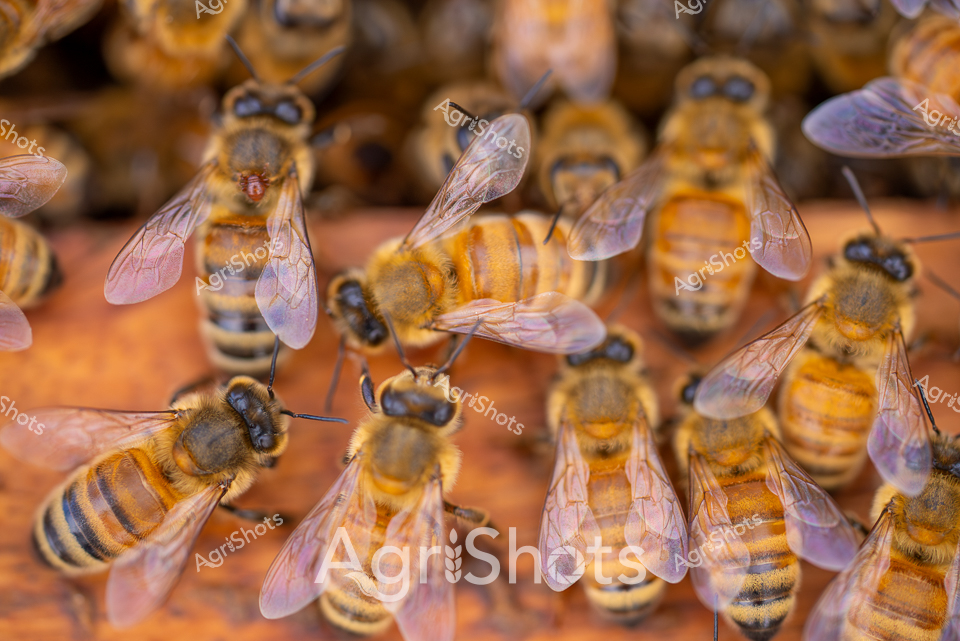
Honey bee workers cluster densely across a warm amber-toned hive surface, their translucent wings shimmering with delicate purple-tinged iridescence. Each bee displays intricate golden and black striped abdomens, their fuzzy thoraxes capturing the rich textures of a thriving Tasmanian apiary during winter. The close-up perspective reveals the complex social structure of the colony, with bees tightly packed and communicating through subtle movements, highlighting the remarkable organization of these essential pollinators. Soft orange and brown tones dominate the image, creating a sense of warmth and industry despite the cold seasonal context. Delicate wing membranes overlap and intersect, creating a mesmerizing pattern that speaks to the precision and collective intelligence of bee colonies. This compelling photograph captures the hidden world of agricultural microcosm, showcasing the critical role of honeybees in Tasmania's robust agricultural ecosystem.
 Image
Image
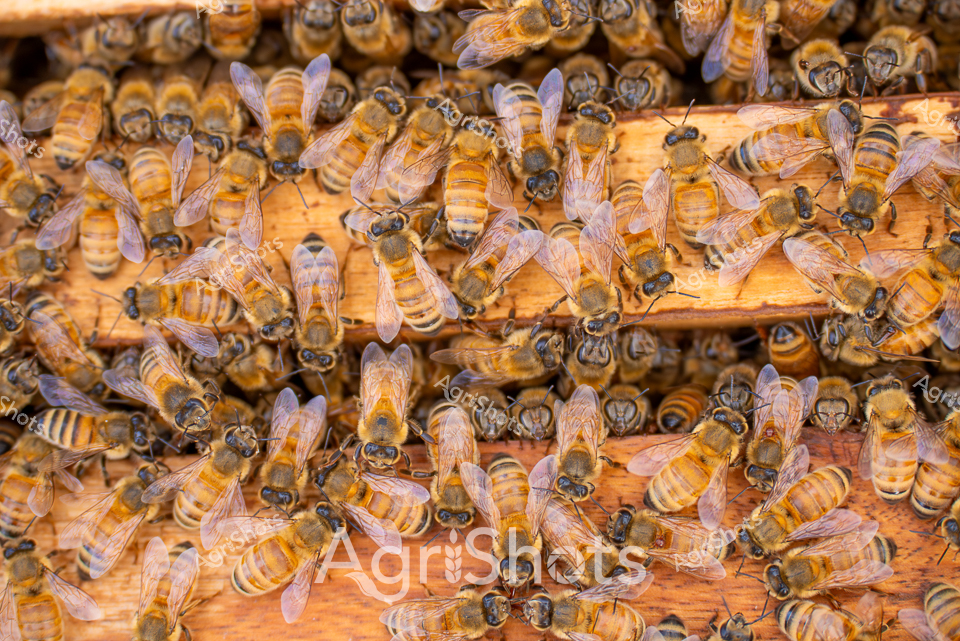
Honeybees cluster densely across warm golden wooden hive frames, their amber and black striped bodies creating a living tapestry of agricultural industry. Translucent wings shimmer against the rich timber surfaces, revealing intricate hexagonal honeycomb structures beneath their collective mass. Each bee appears meticulously positioned, representing the extraordinary collective intelligence of these crucial pollinators so vital to Tasmania's agricultural ecosystem. The tight formation suggests thermal regulation - a survival strategy where worker bees generate heat to protect their colony during the cooler Tasmanian winter months. Delicate wings overlap and intersect, creating a mesmerizing pattern of movement and stillness, highlighting the sophisticated social organization of these remarkable insects. The rich wooden tones and the bees' amber coloration evoke the warmth of honey and the deep connection between agricultural practices and natural biological systems.
 Image
Image
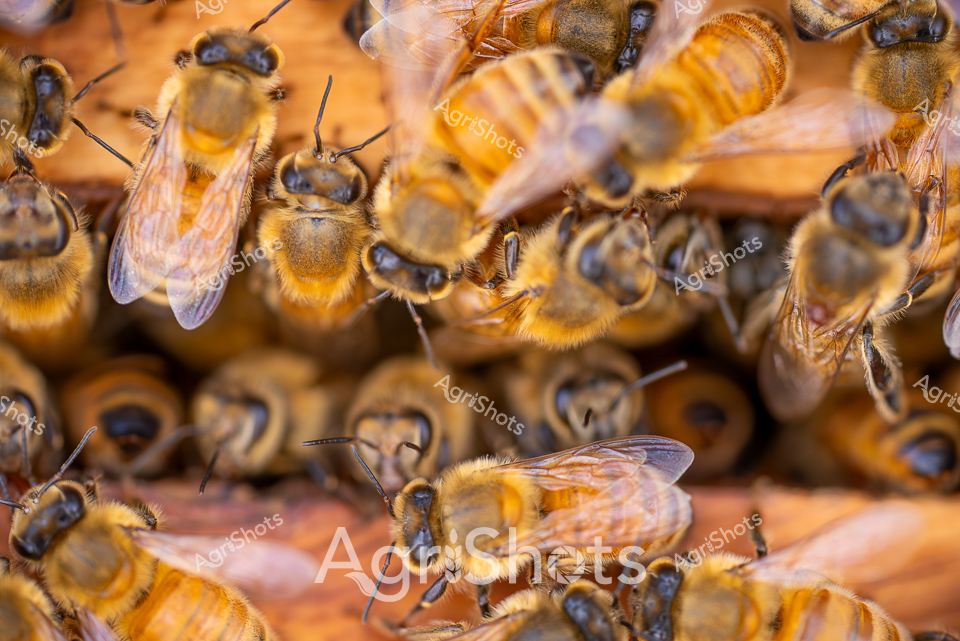
Honeybees cluster densely across a wooden hive frame, their golden-amber bodies shimmering with intricate layers of fur and translucent wings. Each bee displays remarkable detail - fuzzy thoraxes, delicate antennae, and compact segmented forms packed tightly together in a complex social arrangement. The warm amber and burnt orange tones suggest this colony is deep within their winter cluster, generating collective heat to survive Tasmania's cold agricultural landscapes. Precise hexagonal structures of the honeycomb are just visible beneath the living carpet of insects, representing the extraordinary architectural and cooperative capabilities of these critical pollinators. This macro perspective reveals the remarkable intimacy of bee society, where individual organisms function as interconnected cells of a larger superorganism, generating warmth, protecting the queen, and maintaining the intricate metabolism of their shared habitat. The image captures the resilience and collective intelligence of these essential agricultural workers, whose survival is integral to Tasmania's robust agricultural ecosystem.
 Image
Image
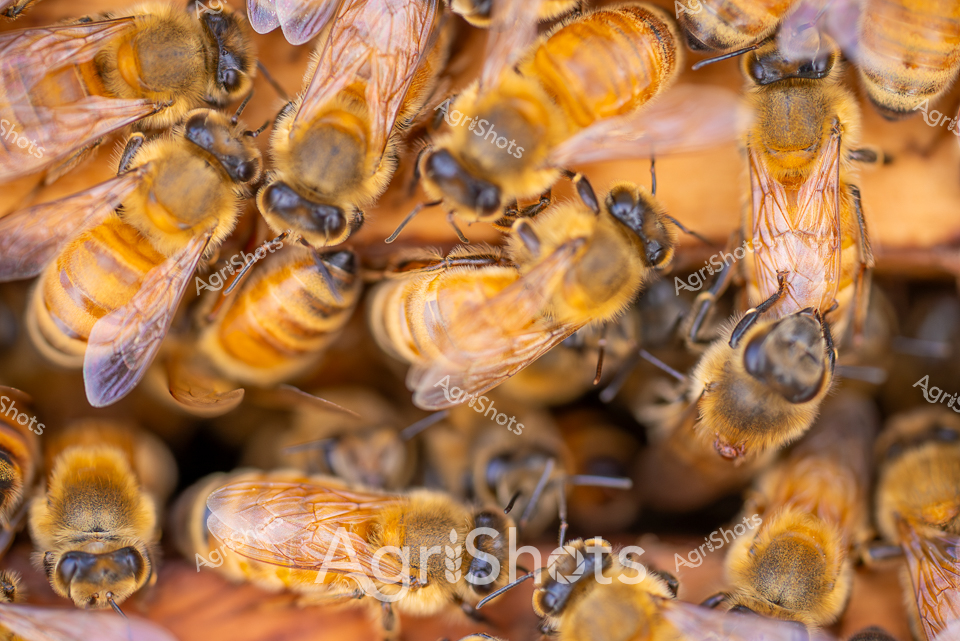
Honeybees cluster in a golden, amber-hued swarm across their densely populated hive frame. Translucent wings shimmer with delicate iridescence while fuzzy amber-brown bodies press tightly together, creating a living tapestry of intricate bee anatomy. Each insect's segmented body gleams with warm orange and brown tones, highlighting their remarkable textural details - from compound eyes to delicate antennae and fine body hair. This close-up reveals the extraordinary social complexity of a bee colony, where individual insects function as a unified collective, their bodies interlocking in a precise, rhythmic formation that suggests profound communication and collaborative survival. The warm color palette evokes the rich, organic environment of a Tasmanian apiary during the quiet winter months, when these industrious pollinators huddle closely to maintain critical colony warmth. The image captures the miraculous micro-universe of bee society, where each individual plays a crucial role in the complex, interconnected life of the hive.
 Image
Image
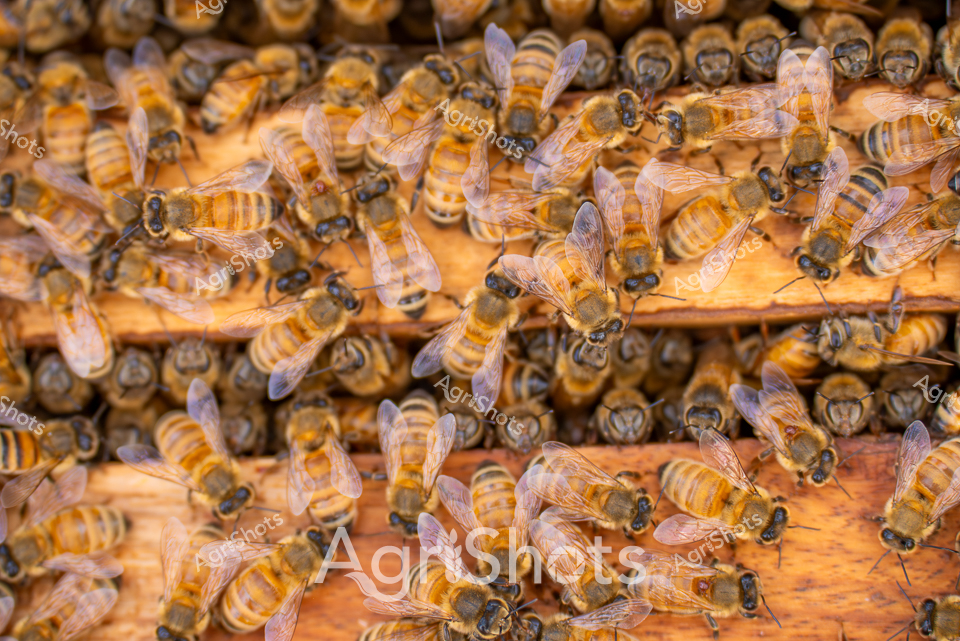
Honeybees swarm across golden wooden hive frames, their amber and black striped bodies creating a mesmerizing living tapestry. Translucent wings flutter and overlap as workers cluster densely, moving with purposeful coordination across the warm-toned timber surface. Each bee displays intricate details - segmented bodies, delicate wing membranes, and focused movements that speak to the complex social structure of their colony. The close-up perspective reveals the remarkable density of the hive, with dozens of insects moving in subtle synchronization, representing the extraordinary collective intelligence of these critical pollinators. Soft amber and golden tones dominate the image, suggesting the rich agricultural heritage of Tasmania's apiary industry during the quieter winter months. This intimate frame captures the heart of sustainable agricultural practice, showcasing the industrious nature of honeybees as they maintain their essential community through collaborative effort.
 Image
Image
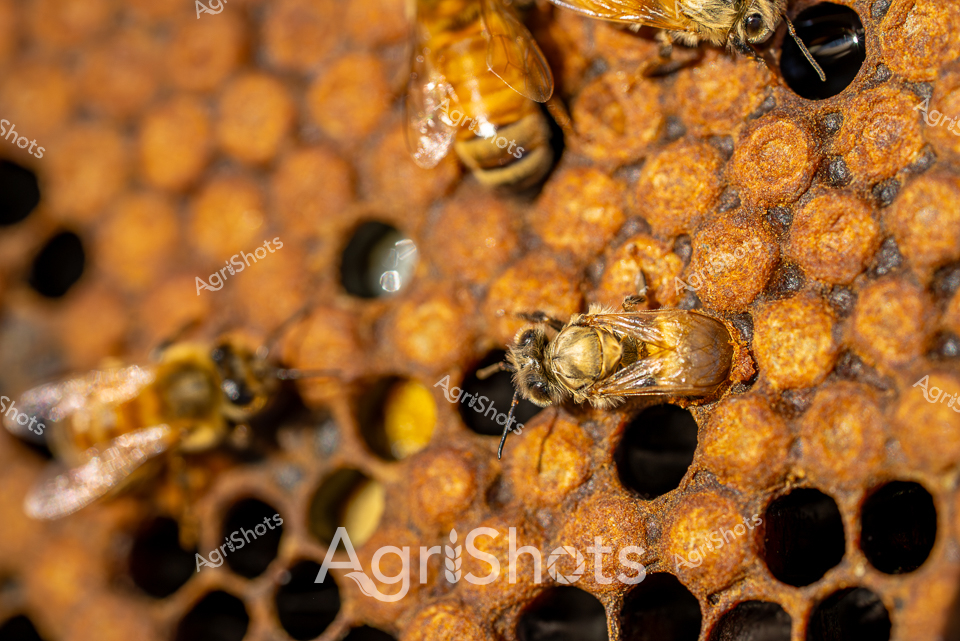
Golden honeycomb teems with life as worker bees cluster around newly emerging larvae in intricate hexagonal cells. The rich amber and ochre tones of the wax create a vibrant organic texture, with deep black spaces between the cells revealing the complex inner structure of the hive. Delicate bee wings catch the light, their bodies moving with purposeful precision across the surface of the brood chamber. Tiny larvae curl within their individual chambers, representing the next generation of this sophisticated agricultural ecosystem. This intimate macro view captures the remarkable micro-world of bee reproduction, highlighting the Lockyer Valley's crucial role in agricultural pollination and honey production during the fertile spring season. Each bee moves with choreographed efficiency, embodying the extraordinary collective intelligence of the hive - a living, breathing organism that is fundamental to Queensland's agricultural landscape.