Browse the collection
 Image
Precision dairy farming converges with pastoral tranquility in this revealing AgTech moment. A black and white dairy cow stands prominently in the foreground, her distinctive yellow ear tags gleaming against her sleek coat, while a hand carefully holds an iPad displaying detailed paddock management data for "Paddock DL13". The lush green pasture stretches into the distance, populated with a herd of similar black and white dairy cattle, some grazing and others resting across the verdant landscape. The digital interface tracks critical metrics including grazing cover, cow numbers, and paddock dimensions, representing the sophisticated technological integration modern agricultural management employs to optimize livestock productivity. Tasmania's characteristic winter landscape provides a crisp, clean backdrop - the soft grey-green grasslands and distant misty horizons epitomizing the island state's renowned dairy region. This image captures the seamless intersection of traditional pastoral farming and cutting-edge digital agriculture, where data-driven insights meet the timeless rhythms of livestock management.
 Image
Precision dairy farming meets pastoral innovation on a lush Tasmanian grassland. A focused agricultural professional in a navy blue jacket and checked collar sits among verdant winter pastures, engaging directly with a sleek black dairy cow equipped with advanced digital monitoring technology. Her tablet interfaces with a digital collar attached to the cow, representing the cutting-edge intersection of animal husbandry and data-driven agriculture. In the background, a herd of black and white dairy cattle graze peacefully across the expansive green landscape, suggesting a progressive and technologically integrated farming approach. The crisp winter light and open paddock highlight the contemporary methods transforming traditional agricultural practices, with the woman's concentrated interaction symbolizing the modern farmer's role as part scientist, part caretaker. This image captures the essence of precision agriculture - where technology, animal welfare, and environmental stewardship converge in the hands of skilled professionals.
 Image
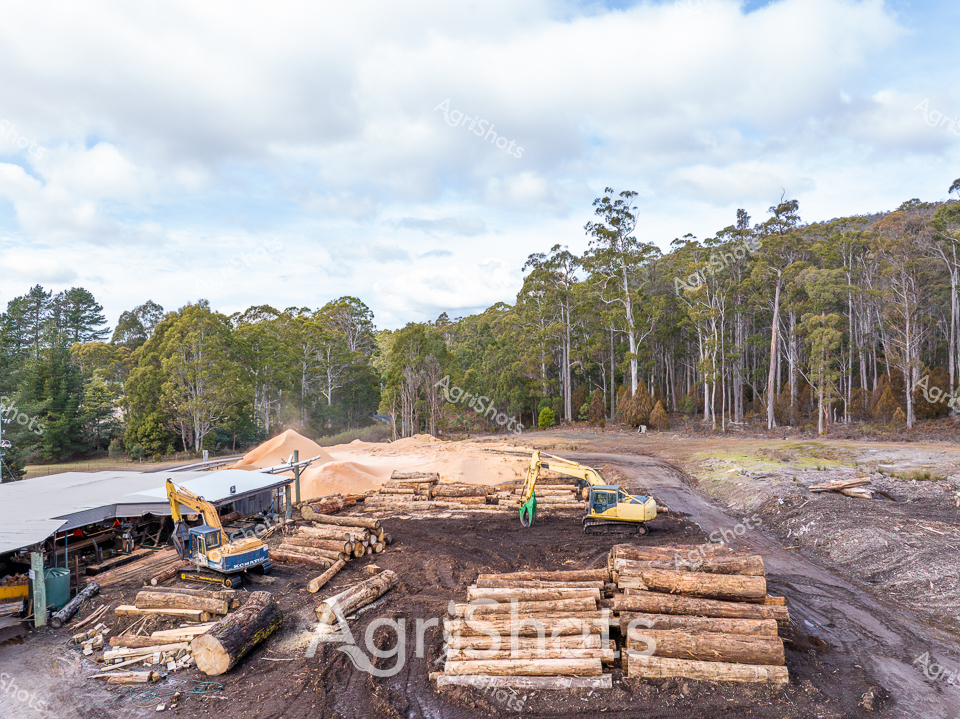
Timber harvesting operations transform the cool Tasmanian forest landscape at this bustling sawmill. Yellow excavators methodically sort and stack fresh-cut pine logs, creating neat piles of raw timber against the backdrop of dense eucalyptus and pine woodland. The rich brown earth and pale timber contrast sharply with the deep green forest, while industrial machinery sits amid the natural terrain, revealing the intricate dance between forestry production and wilderness. Mist hangs softly in the background, suggesting a crisp winter morning where mechanical precision meets natural resources. Stacked logs of varying lengths demonstrate the systematic approach to sustainable timber harvesting, with each machine precisely positioned to maximize efficiency in processing the forest's renewable resource. The scene captures the industrial heart of Tasmania's timber industry - a critical agricultural sector that balances economic productivity with careful forest management.
 Image
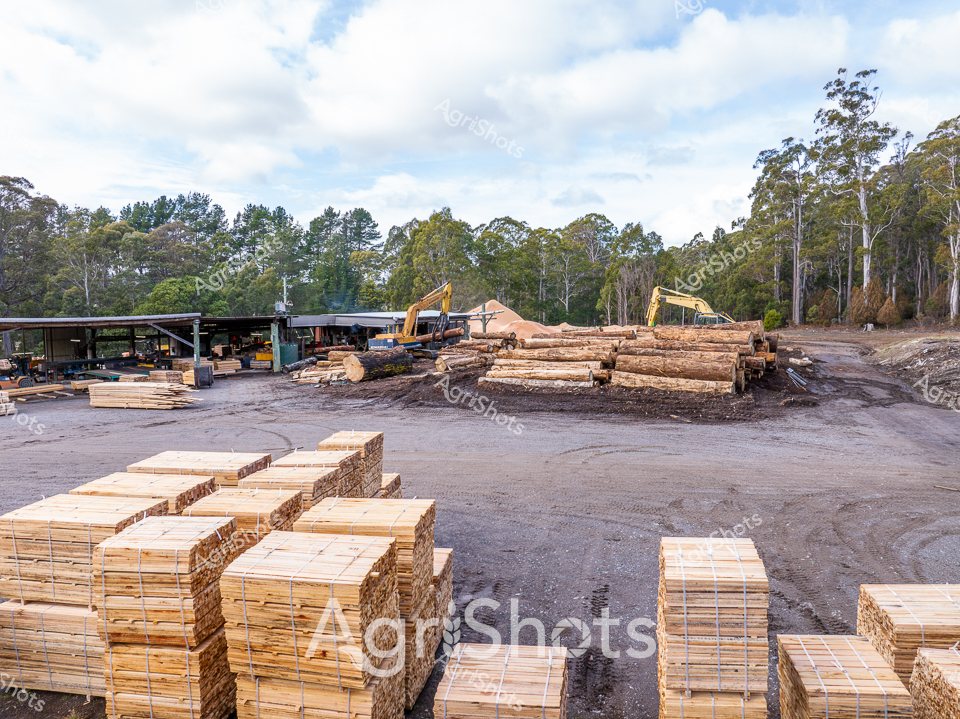
Stacked timber planks and raw forest logs populate this Tasmanian sawmill landscape, revealing the precision of sustainable timber production. Yellow excavators stand ready among neatly bundled lumber stacks, their mechanical presence a testament to industrial forest management. The grey earth and neat timber piles contrast against a backdrop of dense eucalyptus and pine forest, suggesting a carefully managed woodland resource. Pale winter light filters through scattered clouds, casting soft illumination across the timber yard where precision and scale define the industrial agricultural process. Raw log trunks await processing on one side of the yard, while precisely cut lumber planks are meticulously stacked in uniform blocks, demonstrating the transformation from forest resource to commercial timber product. This scene captures the intersection of natural wilderness and industrial agricultural practice, showcasing Tasmania's robust forestry sector with its methodical approach to sustainable timber harvesting.
 Image
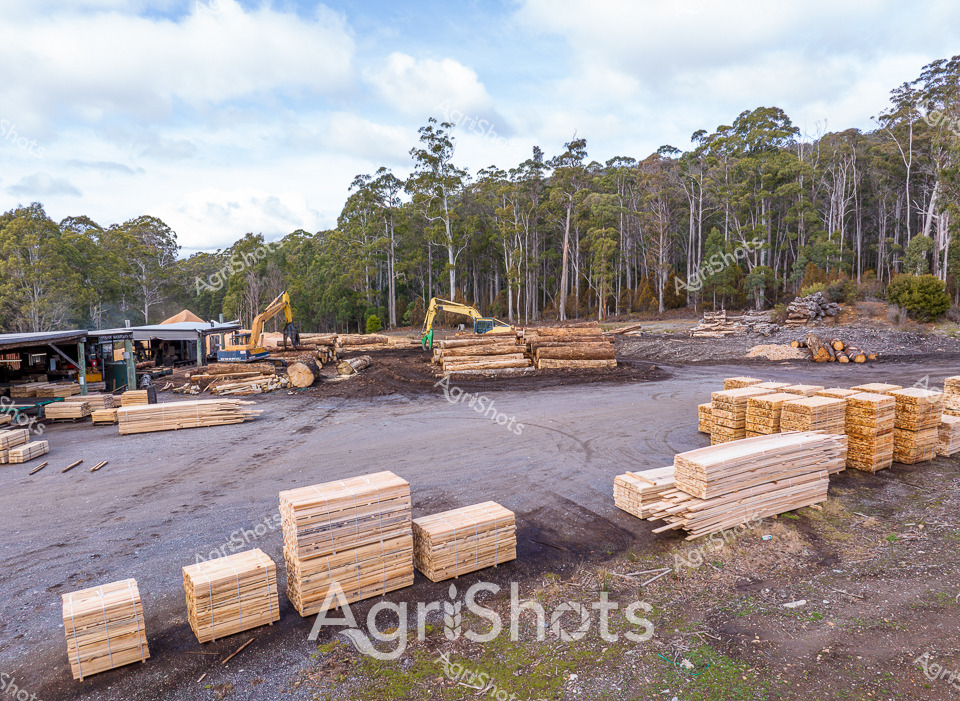
Timber Processing in the Tasmanian Wilderness Raw logs and precision-cut timber planks dominate this industrial forestry landscape, nestled among dense eucalyptus and pine forests. Yellow excavators strategically arrange massive tree trunks beside stacked lumber, revealing the methodical workflow of a Tasmanian sawmill operation. The muddy grey work yard contrasts sharply with the verdant forest backdrop, capturing the stark interface between wilderness and industrial timber production. Neatly organized wooden pallets and freshly milled timber boards showcase the transformation from raw forest harvest to structured building materials, highlighting the region's significant timber industry. Soft winter light diffuses across the cloudy sky, casting muted tones over the working environment and emphasizing the textural qualities of bark, machinery, and processed wood. This scene exemplifies Tasmania's sustainable forestry practices, where careful land management and technological precision convert natural resources into valuable commercial products.
 Image
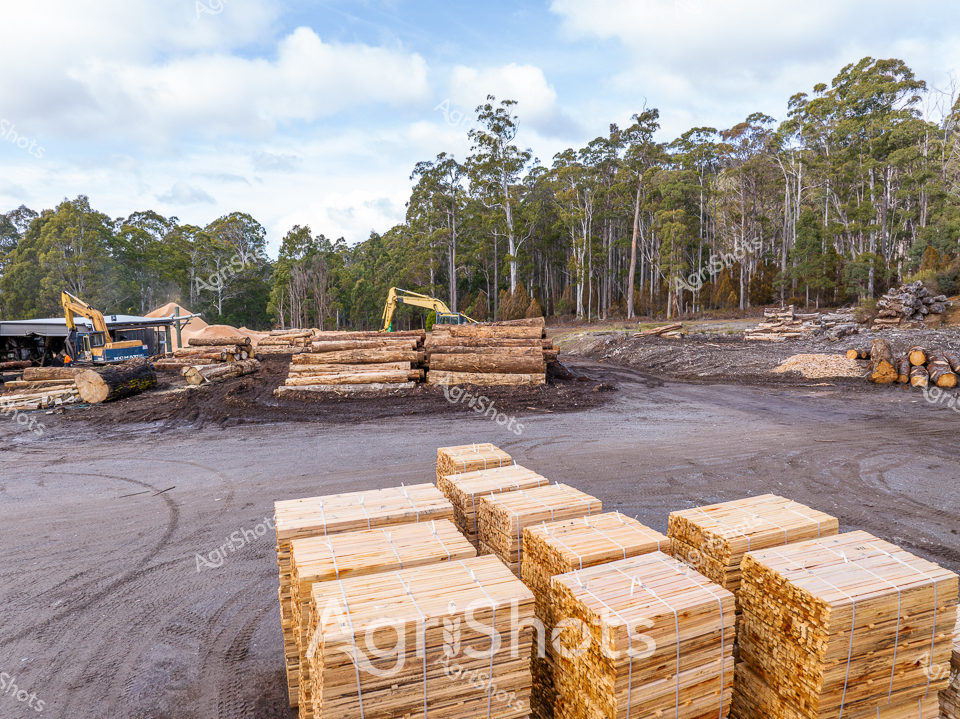
Stacked timber awaits processing at a Tasmanian forestry plantation, where raw pine logs transition into precision-cut lumber. Expansive rows of tall eucalyptus trees frame the industrial workspace, creating a stark contrast between dense forest and structured timber yards. Yellow excavators and heavy machinery stand ready to sort, move, and prepare timber bundles, reflecting the mechanical precision of modern forestry operations. Neatly bundled pine planks in warm honey and wheat tones are meticulously stacked, showcasing the transformation from round logs to angular timber products. The grey compacted earth and misty winter landscape suggest a cool, productive morning where industrial efficiency meets natural resource management. This scene captures the sophisticated intersection of environmental resources and timber industry infrastructure, highlighting Tasmania's significant role in sustainable wood production.
 Image
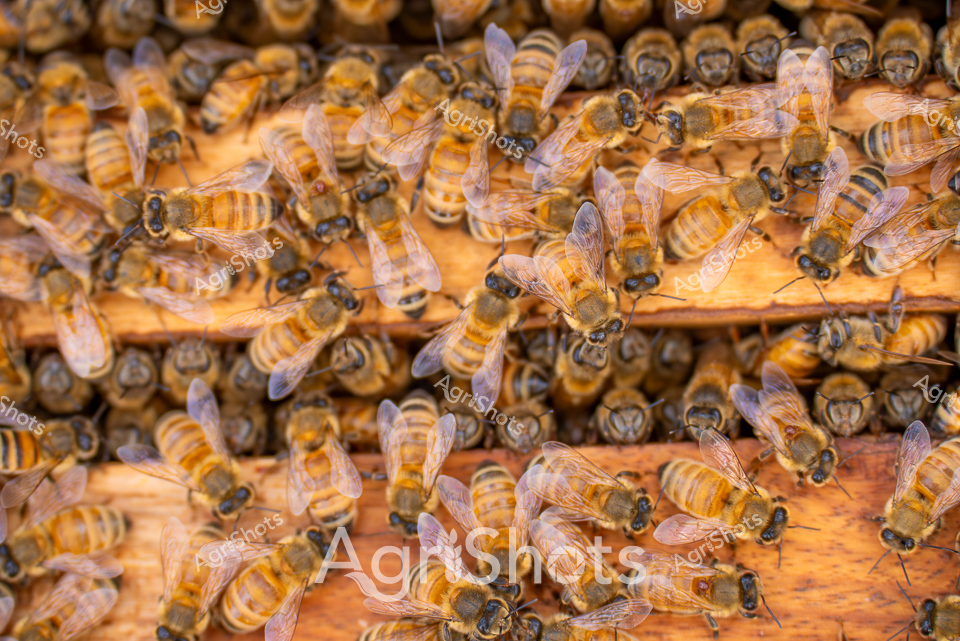
Honeybees swarm across golden wooden hive frames, their amber and black striped bodies creating a mesmerizing living tapestry. Translucent wings flutter and overlap as workers cluster densely, moving with purposeful coordination across the warm-toned timber surface. Each bee displays intricate details - segmented bodies, delicate wing membranes, and focused movements that speak to the complex social structure of their colony. The close-up perspective reveals the remarkable density of the hive, with dozens of insects moving in subtle synchronization, representing the extraordinary collective intelligence of these critical pollinators. Soft amber and golden tones dominate the image, suggesting the rich agricultural heritage of Tasmania's apiary industry during the quieter winter months. This intimate frame captures the heart of sustainable agricultural practice, showcasing the industrious nature of honeybees as they maintain their essential community through collaborative effort.
 Image
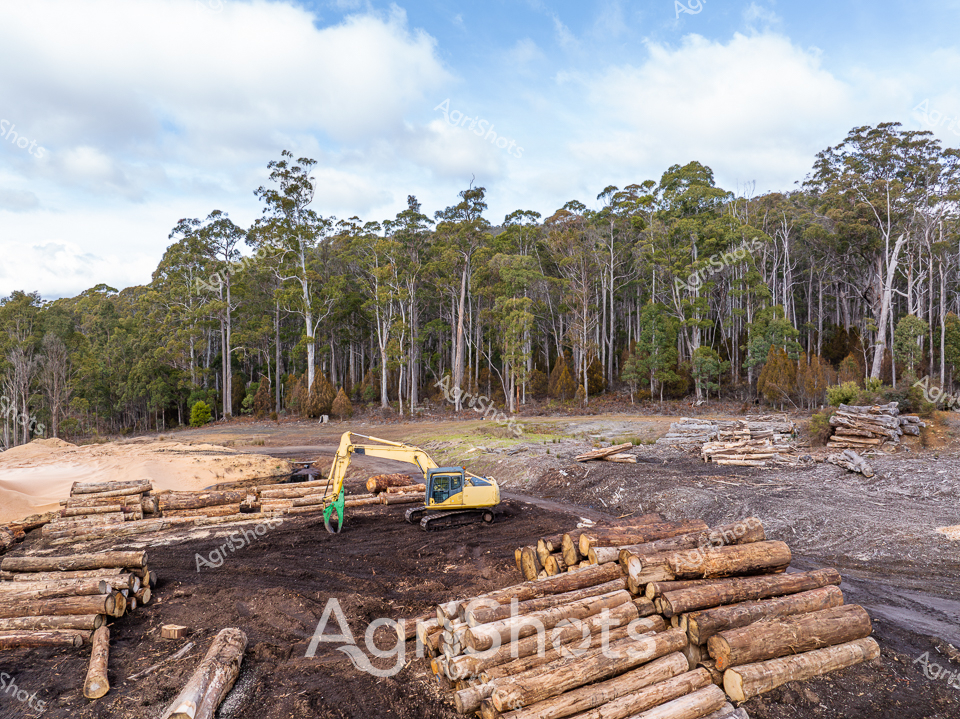
Silvery grey eucalyptus logs sprawl across a cleared logging site, their raw-cut surfaces revealing rich amber and tan heartwood against dark soil. A yellow excavator with a green grapple attachment methodically sorts and moves timber, its robust mechanical form contrasting against the dense forest backdrop of tall, slender trees standing sentinel. The Tasmanian winter landscape presents a stark tableau of industrial forestry, where managed plantation meets wilderness - bare tree stumps and freshly felled logs document the calculated rhythm of sustainable timber harvesting. Clouds drift across a pale blue sky, casting soft light over the scene and highlighting the textural complexity of bark, machinery, and exposed earth. This image captures the precise moment of transformation, where living forest becomes valuable timber resource, revealing the intricate economic and ecological dance of Australian woodland management.
 Image
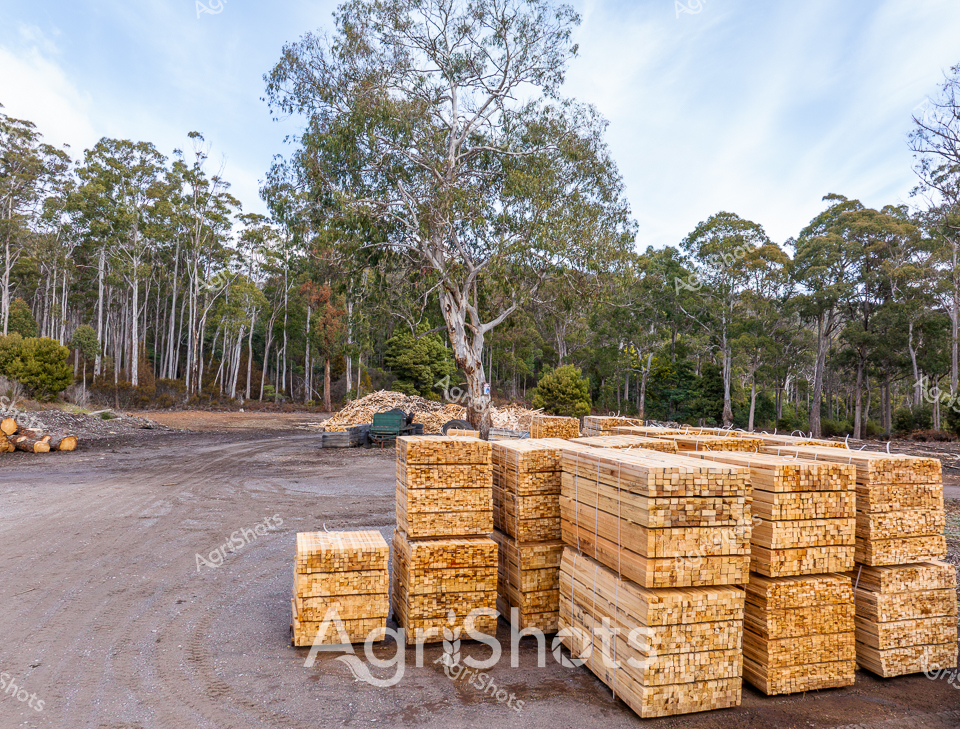
Stacked precision: raw timber awaits processing at a Tasmanian forest products facility. Golden-hued pine lumber stands meticulously arranged in uniform blocks, revealing the systematic workflow of sustainable timber harvesting. The surrounding eucalyptus forest creates a natural backdrop of silvery-green hues, with slender tree trunks stretching skyward, illustrating the renewable nature of managed woodland resources. A cleared dirt yard provides the operational staging ground, where freshly milled timber planks rest before distribution, highlighting the critical link between forest management and timber production. Soft winter light filters through the tree canopy, casting subtle shadows across the neatly stacked timber and highlighting the textural complexity of the recently cut wood. This scene encapsulates Tasmania's robust timber industry, where careful forestry practices transform living trees into valuable construction materials with precision and environmental consideration.
 Image
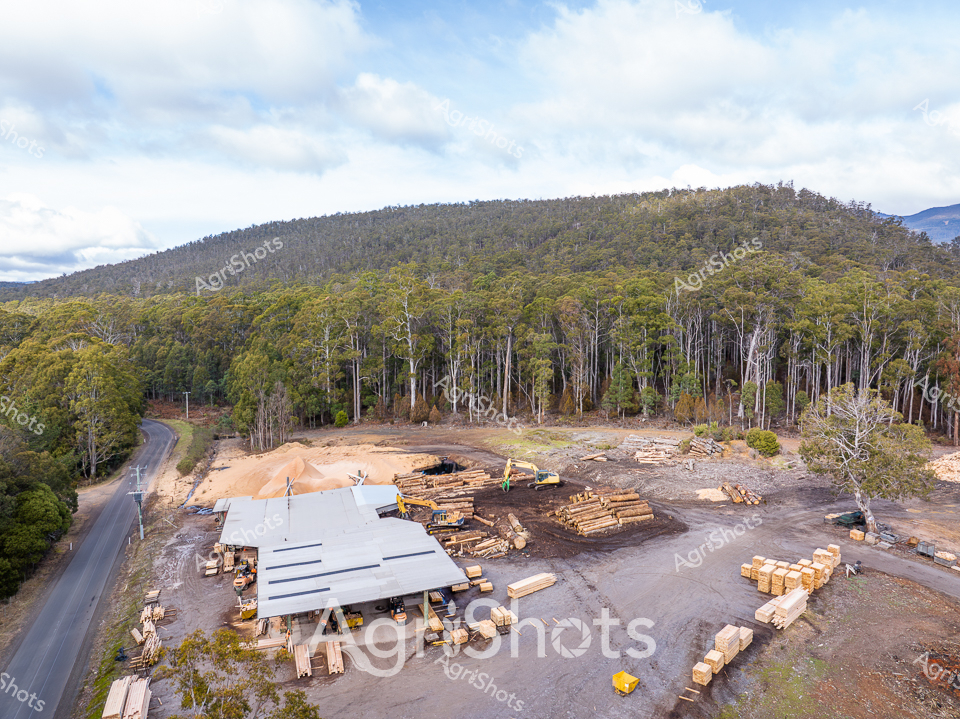
Timber harvest operations unfold in the heart of a Tasmanian forest plantation, where precision meets industrial scale. Stacked logs of varying lengths create a geometric landscape within the sawmill yard, surrounded by dense eucalyptus and pine forests climbing the mountain slopes behind. Yellow heavy machinery - excavators and loaders - stand ready amid the timber sorting area, their bright colors contrasting against the earthy browns and greys of cut logs and graveled ground. A substantial metal-roofed processing shed anchors the site, its industrial profile a testament to the region's robust forestry sector. The surrounding woodland shows a carefully managed ecosystem, with uniform rows of trees indicating planned silvicultural practices typical of Tasmania's sustainable timber industry. Soft winter light filters through scattered clouds, casting subtle shadows across the landscape and highlighting the complex interplay between human industrial activity and the natural forest environment.
 Image
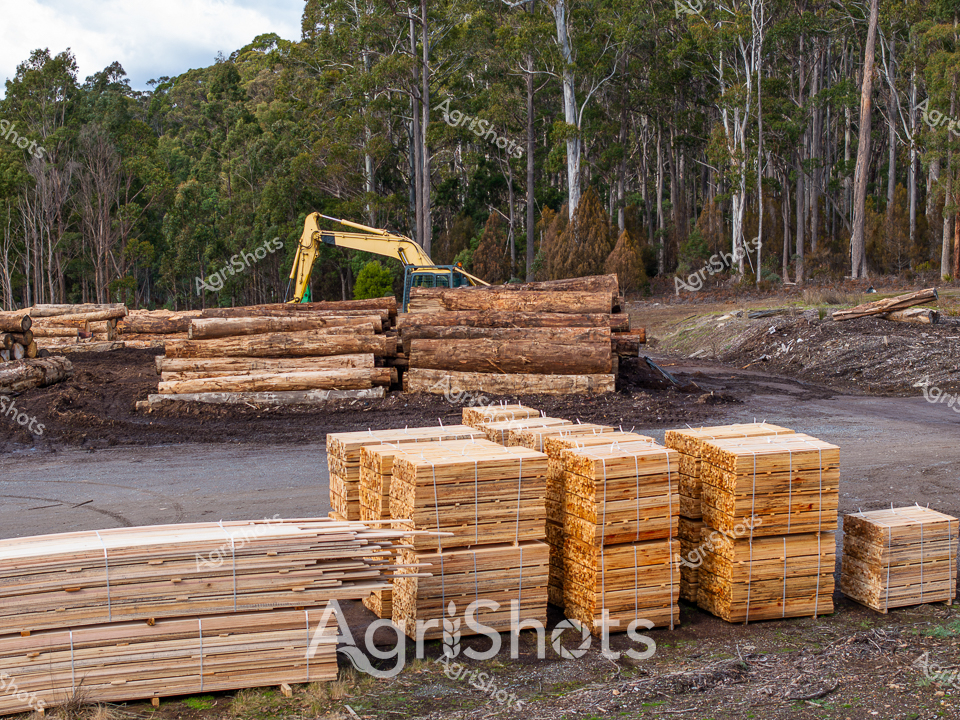
Towering pine plantations frame a bustling timber processing site in Tasmania's cool winter landscape. Stacks of freshly harvested logs sit alongside neatly bundled timber planks, showcasing the precision of modern forestry operations. A yellow excavator stands ready, highlighting the industrial scale of wood production in this southern Australian region. Raw, unprocessed logs in rich brown tones contrast with the processed timber stacked in uniform, golden-hued piles, revealing the transformation from forest to functional building material. The silvery-grey tree trunks of the surrounding eucalypt forest create a natural backdrop, emphasizing the sustainable cycle of plantation forestry. This scene captures the intersection of industrial efficiency and natural resource management, where careful harvesting meets strategic timber production.
 Image
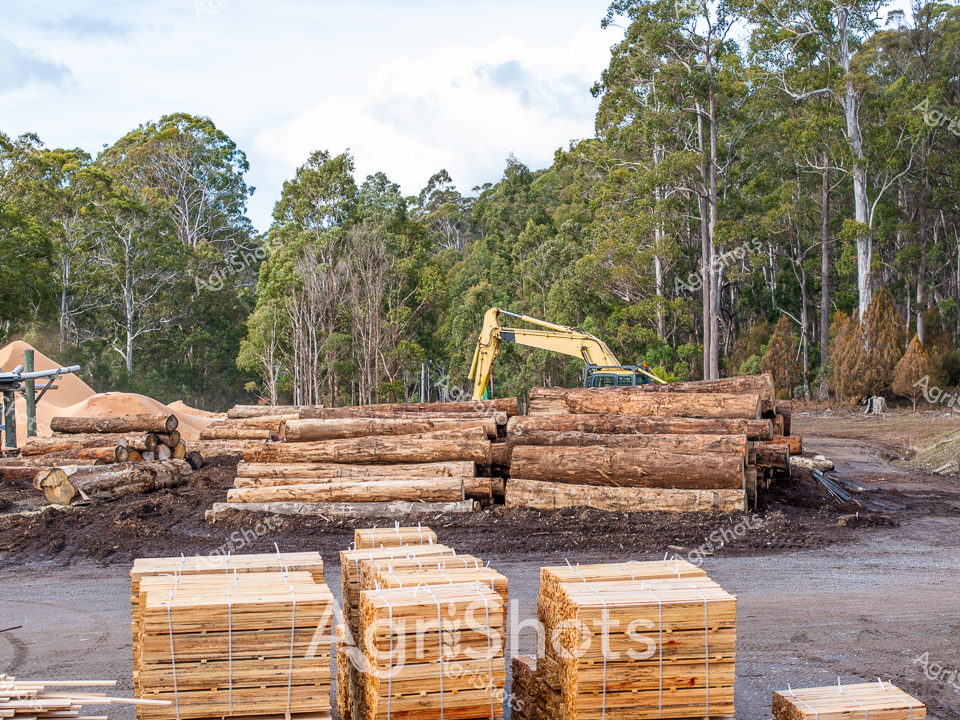
Timber harvesting unfolds at a Tasmanian forest processing site, where precision machinery and carefully stacked timber reveal the intricate dance of sustainable forestry. Yellow excavators maneuver among neatly arranged log piles, their bright color contrasting against the earthy browns and greys of the working yard. A substantial metal-roofed warehouse anchors the scene, providing shelter for equipment and processed timber stock. In the background, a dense eucalyptus forest rises in multilayered greens and greys, showcasing the renewable landscape from which these timber resources are carefully extracted. Stacks of milled lumber sit in organized rows, transformed from raw logs into valuable building materials, highlighting the economic and environmental choreography of responsible forest management. The winter palette of muted tones and the systematic arrangement of logs and machinery speak to the methodical approach of modern Australian forestry operations, where industrial precision meets natural landscape.
 Image
Towering eucalyptus logs are meticulously stacked at a Tasmanian timber processing yard, revealing the precision of Australia's sustainable forestry industry. A yellow excavator stands ready among the neat piles of raw timber, orchestrating the careful sorting and preparation of harvested logs. Bundled pine planks in pale golden hues sit neatly bundled in the foreground, demonstrating the next stage of timber transformation from forest to finished lumber product. The surrounding woodland backdrop of silvery-green eucalyptus trees frames the scene, highlighting the managed plantation environment where careful harvesting maintains ecological balance. Winter's soft light casts a muted, atmospheric quality over the landscape, emphasizing the industrial yet considered approach to timber production in Tasmania's robust forestry sector. Each log and plank represents a carefully managed resource, showcasing how Australian forestry balances economic productivity with environmental stewardship.
 Image
A sprawling herd of fallow deer blankets a verdant Tasmanian hillside, their diverse coat colors creating a living tapestry of russet browns, creamy whites, and soft duns. The lush winter pasture rises gently towards a rugged bushland backdrop, suggesting the scene is located in one of Tasmania's premier deer farming regions. Dozens of deer stand alert, some grazing peacefully while others lift their heads, creating a dynamic composition that captures the essence of managed wildlife agriculture. The herd displays remarkable genetic diversity, with animals ranging from deep chocolate to pale cream, highlighting sophisticated breeding practices in Australian deer farming. Soft morning light casts gentle shadows across the landscape, emphasizing the undulating terrain and the animals' muscular forms. This evocative image represents the sophisticated and sustainable approach to deer farming in Tasmania, showcasing how agricultural practices can harmonize with the natural landscape.
 Image
A sweeping pastoral landscape unfolds across the undulating hills of Tasmania, where a substantial herd of deer grazes peacefully on the verdant winter pastures. Soft green and brown grasslands roll between stands of eucalyptus and native forest, creating a patchwork of agricultural terrain framed by distant blue-green mountain ranges. The deer - a mix of brown and white individuals - are scattered across the sloping hillsides, their numbers suggesting a carefully managed deer farming operation typical of Tasmania's diverse agricultural enterprises. Gnarled eucalyptus trees punctuate the landscape, their silvery-green foliage providing natural windbreaks and creating visual depth against the softer textures of the grassy slopes. The scene captures the serene productivity of Tasmanian agricultural landscapes, where farming integrates harmoniously with the island's remarkable natural topography. The muted winter palette of browns, greens, and soft blues evokes a sense of quiet abundance and careful land stewardship.
 Image
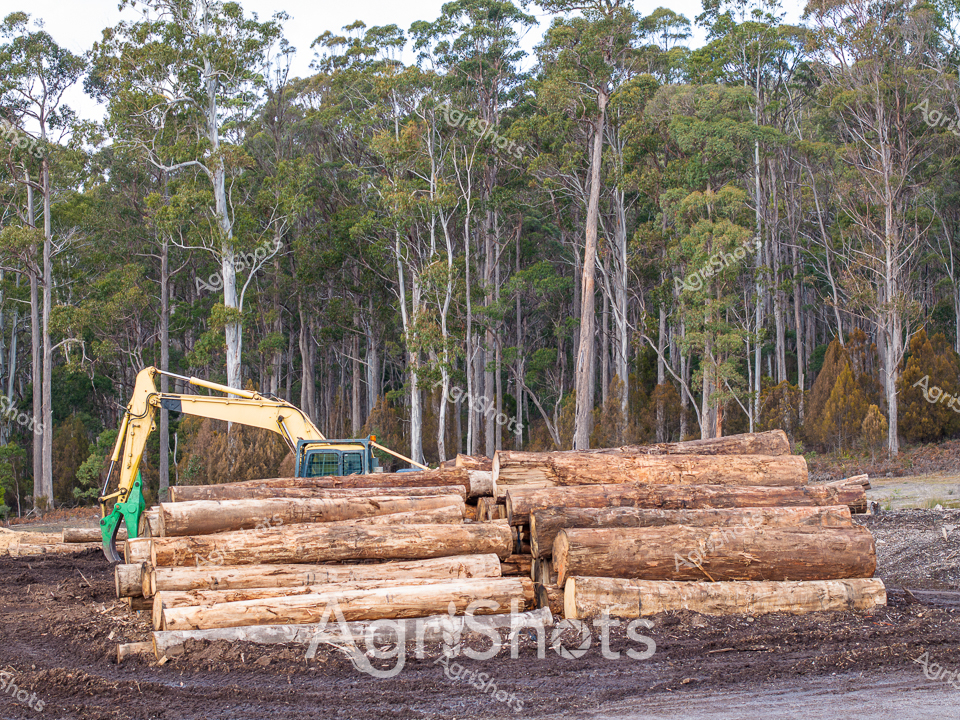
Towering blue gums and stringybark trees form a dense backdrop to a stark timber harvesting operation in Tasmania's cool winter landscape. A yellow excavator with a green grapple attachment stands ready beside stacks of freshly felled forest logs, their pale timber bark revealing recent cutting. The raw earth clearing provides a sharp contrast to the living forest behind, capturing the industrial process of sustainable timber production. Pale yellow and green machinery highlights the precision of modern forestry equipment, while the neatly stacked logs demonstrate the systematic approach to timber harvesting. This scene represents the delicate balance between environmental resource management and industrial timber production, showcasing Tasmania's significant forestry sector. The muted winter tones and orderly log piles speak to the calculated efficiency of Australian woodland resource extraction.
 Image
A magnificent herd of fallow deer grazes across a verdant pasture in Tasmania's rugged highland landscape, their dappled coats ranging from rich chocolate to pale cream against the emerald green grass. Rocky mountain ranges rise dramatically in the background, creating a stunning geological backdrop of weathered blue-grey stone formations that define the wilderness of this southern island state. The deer, positioned with their distinctive white-rimmed rumps facing the camera, move in a cohesive group across the gently sloping terrain, suggesting a managed deer farming environment typical of Tasmania's diverse agricultural enterprises. Winter's muted light casts soft shadows across the landscape, highlighting the animals' lean muscular frames and alert, upright ears - a testament to their health and careful husbandry. Each animal displays subtle variations in coat color and markings, representing a carefully bred herd with genetic diversity and robust bloodlines. The scene captures the essence of Tasmania's agricultural diversity - where wildlife, farming, and dramatic natural landscapes converge in a breathtaking tableau of rural productivity.
 Image
Agile deer traverse a frost-kissed winter pasture in Tasmania's undulating rural landscape, their tawny and ivory coats creating a living tapestry against the emerald grasslands. Rocky outcrops and weathered eucalyptus trees frame the scene, casting soft shadows across the gently sloping terrain under a pearl-grey sky. The herd moves with collective purpose, each slender creature stepping delicately through the dew-laden grass, their ears alert and heads held with elegant composure. Scattered across the verdant slope, approximately 20 deer demonstrate the potential of alternative livestock farming in Tasmania's diverse agricultural ecosystem. Hints of lichen-covered stones and sparse winter vegetation suggest this is a carefully managed grazing environment, showcasing the state's capacity for innovative agricultural practices. The crisp winter light reveals intricate textures - from the rough granite formations to the deer's fine fur - creating a serene tableau that speaks to the sophisticated and adaptive nature of Tasmanian agricultural landscapes.
 Image
Sprawling across a lush green pasture nestled against a backdrop of mature eucalyptus trees, a magnificent herd of fallow deer grazes peacefully in the cool Tasmanian winter landscape. The undulating paddock, a vibrant emerald carpet, hosts over a hundred deer - a mix of rich brown and pristine white coats creating a stunning natural mosaic. Soft winter light illuminates the scene, casting gentle shadows across the landscape and highlighting the deer's varied coat patterns and delicate movements. Sparse brown undergrowth and rocky terrain frame the edges of the pasture, providing a rugged contrast to the verdant grassland where the deer cluster in loose, meandering groups. This serene agricultural tableau captures the harmony of Tasmania's pastoral farming landscape, showcasing the careful management and sustainable livestock practices of the region. The image speaks to the quiet beauty of deer farming, where these elegant animals contribute to the rich agricultural tapestry of the island state.
 Image
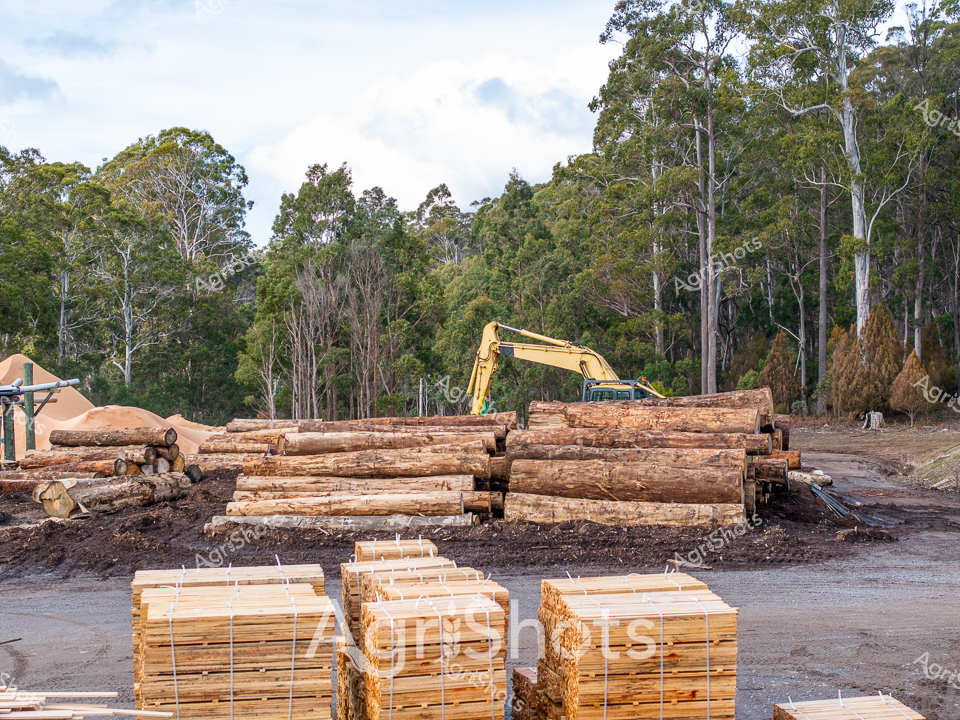
Towering blue gum and pine trees frame a stark industrial landscape of timber production in Tasmania's winter forestry sector. A yellow excavator stands sentinel among massive raw timber logs, their rich amber and brown tones contrasting against dark, churned earth. Neatly stacked lumber planks in the foreground—bundled tightly and aligned with precision—demonstrate the systematic progression from forest to finished product. The silvery-green backdrop of native forest suggests a carefully managed plantation, where sustainable harvesting practices balance environmental preservation with industrial needs. Soft overcast light diffuses across the scene, highlighting the textural complexity of bark, wood grain, and machine surfaces. This image captures the intricate relationship between Tasmania's natural landscape and its robust timber industry, revealing the methodical process of transforming living trees into valuable economic resources.
 Image
Merging Tasmania's rugged mountain terrain with pastoral tranquility, this expansive rural landscape captures a graceful herd of deer moving through a verdant valley. Windswept native gum trees frame the scene, their silvery-green foliage contrasting against rocky mountain ranges rising dramatically in the background. The undulating green pasture stretches across the middle ground, dotted with scattered stones and revealing the gentle contours of the agricultural landscape. A dense cluster of deer follows a natural pathway through the tussock grasses and lower slopes, their collective movement creating a living river of movement through the textured landscape. The cool winter light casts soft shadows across the terrain, highlighting the subtle variations in grassland colors from deep olive to pale chartreuse. This quintessential Tasmanian agricultural vista eloquently showcases the harmony between native wildlife, cultivated pastures, and the wild, mountainous backdrop that defines the island's unique ecological character.
 Image
Dappled fallow deer populate a misty Tasmanian pasture, their elegant forms creating a living tapestry across the undulating green landscape. The herd, numbering in the dozens, displays a stunning range of coat colors from rich chocolate brown to pristine white, highlighting the genetic diversity of this carefully managed population. Soft winter light diffuses across the cool, damp grasslands, casting gentle shadows that accentuate the deer's slender legs and alert postures. Some animals cluster together in small groups, while others stand independently, their large ears swiveling attentively to detect any potential disturbance in the serene pastoral setting. The lush green terrain, dotted with scattered rocks and subtle terrain variations, provides an ideal grazing environment that speaks to Tasmania's exceptional agricultural landscape. This scene captures the delicate balance of wildlife management and agricultural stewardship, showcasing how carefully introduced species can integrate harmoniously into Australia's diverse ecological systems.
 Image
In the rugged winter landscape of Tasmania, a herd of fallow deer clusters on a windswept hillside, their dappled coats blending with the muted browns and greys of the dormant vegetation. Ranging from pale cream to rich chocolate brown, these elegant deer stand alert among the dry grasses and scattered shrubs, their delicate legs carefully positioned on the rocky, moss-edged terrain. The soft winter light casts a gentle glow across the scene, highlighting the varied textures of fur and foliage, while the deer's attentive postures suggest a moment of collective vigilance in this wild agricultural landscape. Some animals stand closely grouped, while others maintain a slight distance, creating a natural composition that speaks to the social dynamics of the herd. The rocky background and sparse vegetation reveal the challenging environment of Tasmania's rural highlands, where agricultural management and wildlife conservation intersect. This evocative image captures the resilience and beauty of introduced deer species within the island's distinctive ecosystem, showcasing the intricate relationship between wildlife and agricultural landscapes.
 Image
Grazing Fallow Deer Herd on a Misty Tasmanian Pasture A sprawling herd of fallow deer blankets a verdant winter pasture in Tasmania, their varied coats creating a living tapestry of browns, whites, and tans. The lush green landscape undulates softly, scattered with rocks and hints of winter undergrowth, providing a rich backdrop for this magnificent congregation of deer. Dozens of animals stand quietly, some grazing peacefully, others alert with ears perked, their delicate forms creating an intricate, living mosaic across the hillside. The soft light suggests early morning, with a gentle mist hanging low, highlighting the soft textures of the deer's winter coats and the dewy grass beneath their hooves. This scene captures the remarkable biodiversity of Tasmania's agricultural landscapes, where introduced species like fallow deer have found a harmonious home in the island's rich pastoral ecosystems. The image speaks to the quiet beauty of wildlife management and the delicate balance between agricultural land and natural habitats.