About this image
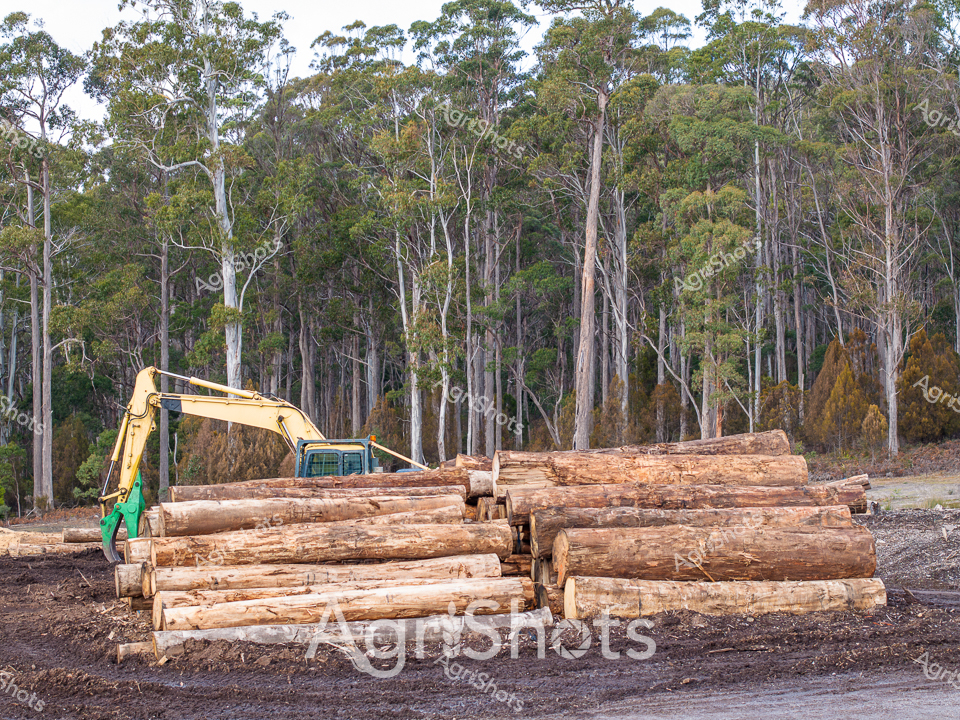
Towering blue gums and stringybark trees form a dense backdrop to a stark timber harvesting operation in Tasmania's cool winter landscape. A yellow excavator with a green grapple attachment stands ready beside stacks of freshly felled forest logs, their pale timber bark revealing recent cutting. The raw earth clearing provides a sharp contrast to the living forest behind, capturing the industrial process of sustainable timber production. Pale yellow and green machinery highlights the precision of modern forestry equipment, while the neatly stacked logs demonstrate the systematic approach to timber harvesting. This scene represents the delicate balance between environmental resource management and industrial timber production, showcasing Tasmania's significant forestry sector. The muted winter tones and orderly log piles speak to the calculated efficiency of Australian woodland resource extraction.
Similar media
 Image
Image
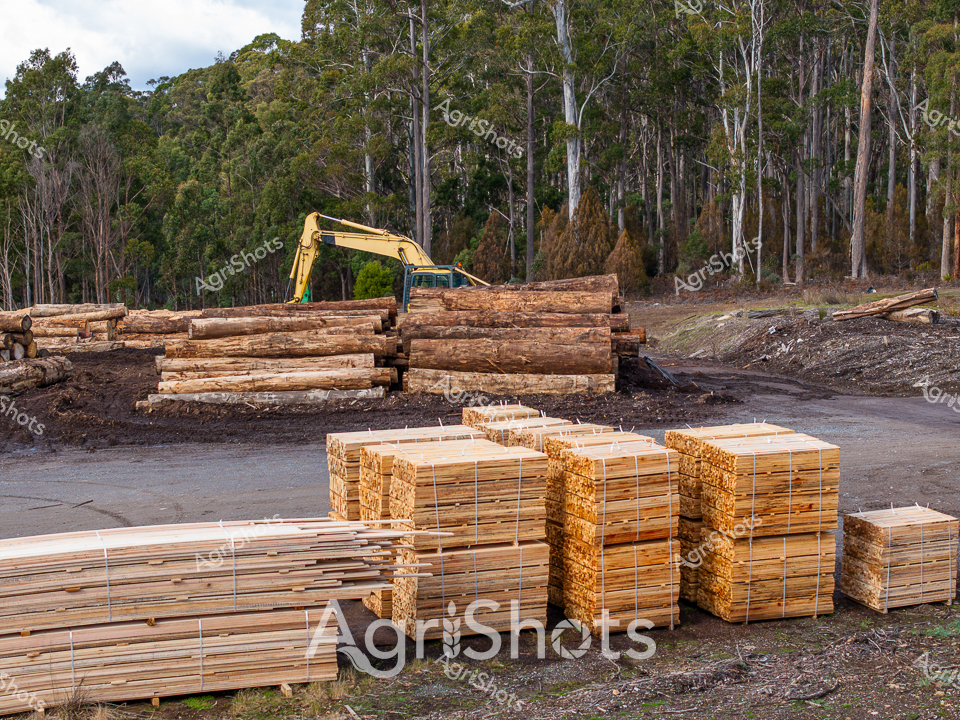
Towering pine plantations frame a bustling timber processing site in Tasmania's cool winter landscape. Stacks of freshly harvested logs sit alongside neatly bundled timber planks, showcasing the precision of modern forestry operations. A yellow excavator stands ready, highlighting the industrial scale of wood production in this southern Australian region. Raw, unprocessed logs in rich brown tones contrast with the processed timber stacked in uniform, golden-hued piles, revealing the transformation from forest to functional building material. The silvery-grey tree trunks of the surrounding eucalypt forest create a natural backdrop, emphasizing the sustainable cycle of plantation forestry. This scene captures the intersection of industrial efficiency and natural resource management, where careful harvesting meets strategic timber production.
 Image
Image
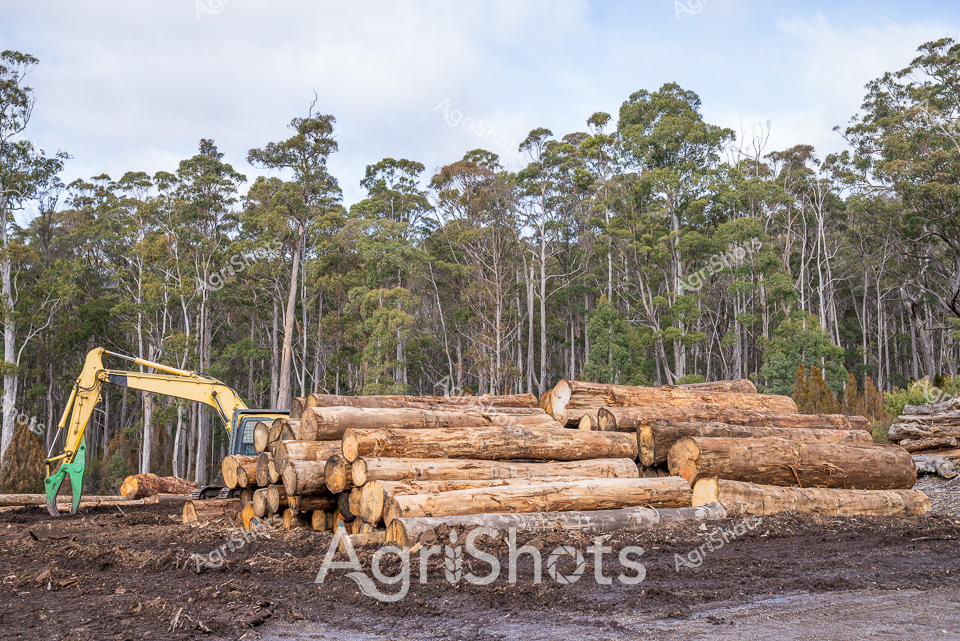
Towering mountain ash timber cascades across a stark logging clearing in southern Tasmania's wilderness. A robust yellow excavator with a green grapple stands ready, methodically organizing massive felled logs harvested from the surrounding eucalyptus forest. The pale winter light filters through silver-barked trees, casting a muted palette across the rugged landscape where industrial forestry meets ancient woodland. Each massive log bears the raw texture of freshly cut timber - golden-brown surfaces revealing decades of growth rings, testament to the mature plantation being systematically processed. The muddy ground surrounding the log stack speaks to the challenging working conditions of Tasmania's forestry sector, where precision machinery transforms living forest into valuable timber resources. This image captures the stark intersection of industrial process and natural landscape, where sustainable forestry practices balance ecological management with economic production.
 Image
Image
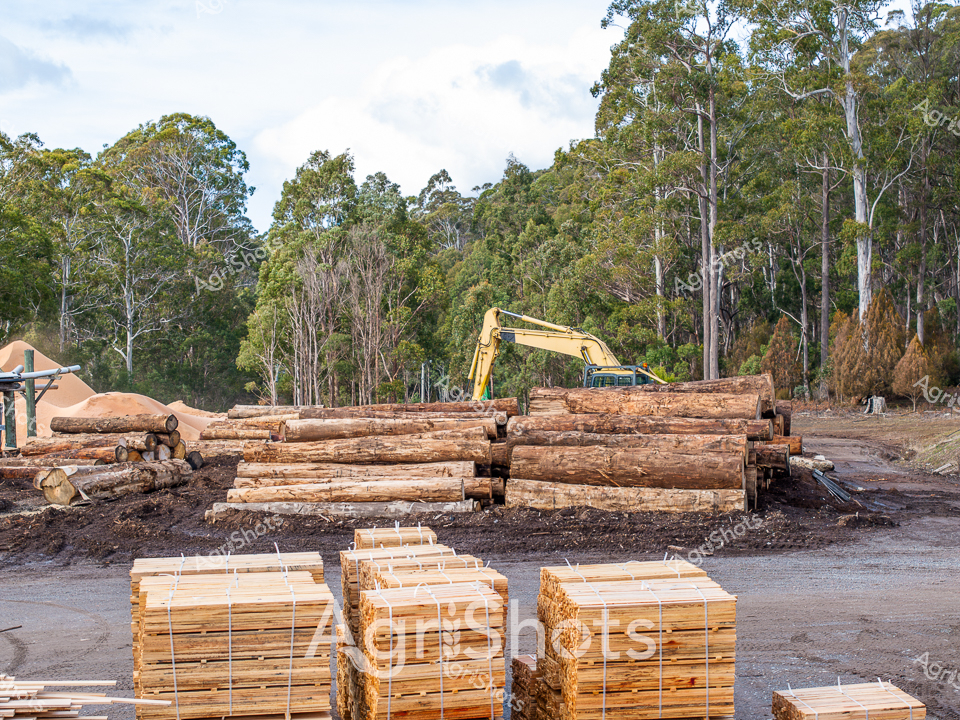
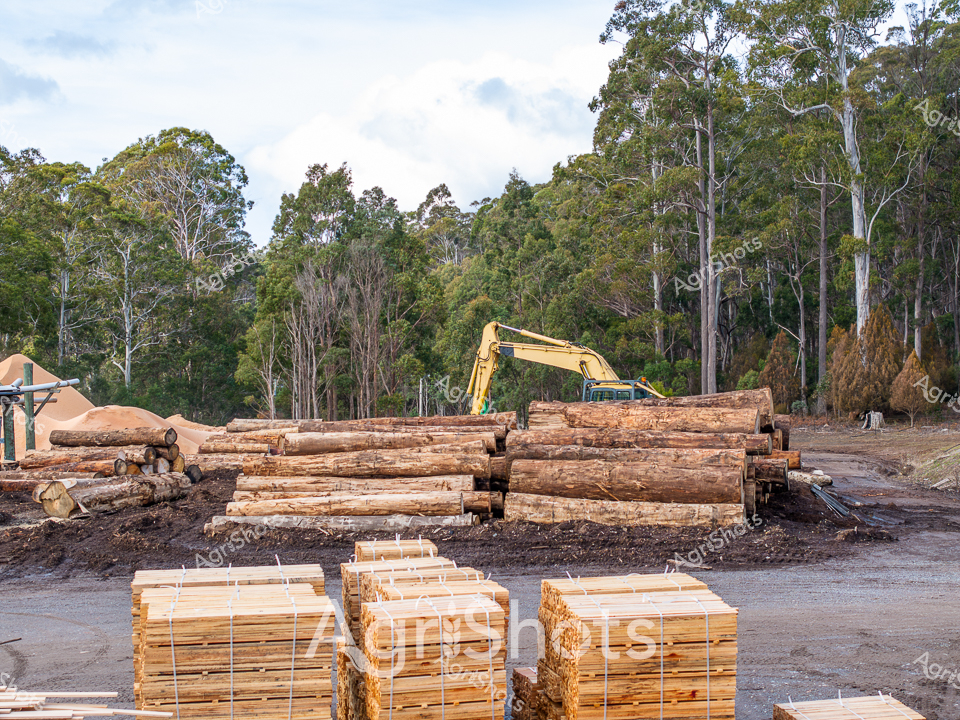
Towering eucalyptus logs are meticulously stacked at a Tasmanian timber processing yard, revealing the precision of Australia's sustainable forestry industry. A yellow excavator stands ready among the neat piles of raw timber, orchestrating the careful sorting and preparation of harvested logs. Bundled pine planks in pale golden hues sit neatly bundled in the foreground, demonstrating the next stage of timber transformation from forest to finished lumber product. The surrounding woodland backdrop of silvery-green eucalyptus trees frames the scene, highlighting the managed plantation environment where careful harvesting maintains ecological balance. Winter's soft light casts a muted, atmospheric quality over the landscape, emphasizing the industrial yet considered approach to timber production in Tasmania's robust forestry sector. Each log and plank represents a carefully managed resource, showcasing how Australian forestry balances economic productivity with environmental stewardship.
 Image
Image
Towering blue gum and pine trees frame a stark industrial landscape of timber production in Tasmania's winter forestry sector. A yellow excavator stands sentinel among massive raw timber logs, their rich amber and brown tones contrasting against dark, churned earth. Neatly stacked lumber planks in the foreground—bundled tightly and aligned with precision—demonstrate the systematic progression from forest to finished product. The silvery-green backdrop of native forest suggests a carefully managed plantation, where sustainable harvesting practices balance environmental preservation with industrial needs. Soft overcast light diffuses across the scene, highlighting the textural complexity of bark, wood grain, and machine surfaces. This image captures the intricate relationship between Tasmania's natural landscape and its robust timber industry, revealing the methodical process of transforming living trees into valuable economic resources.
 Image
Image
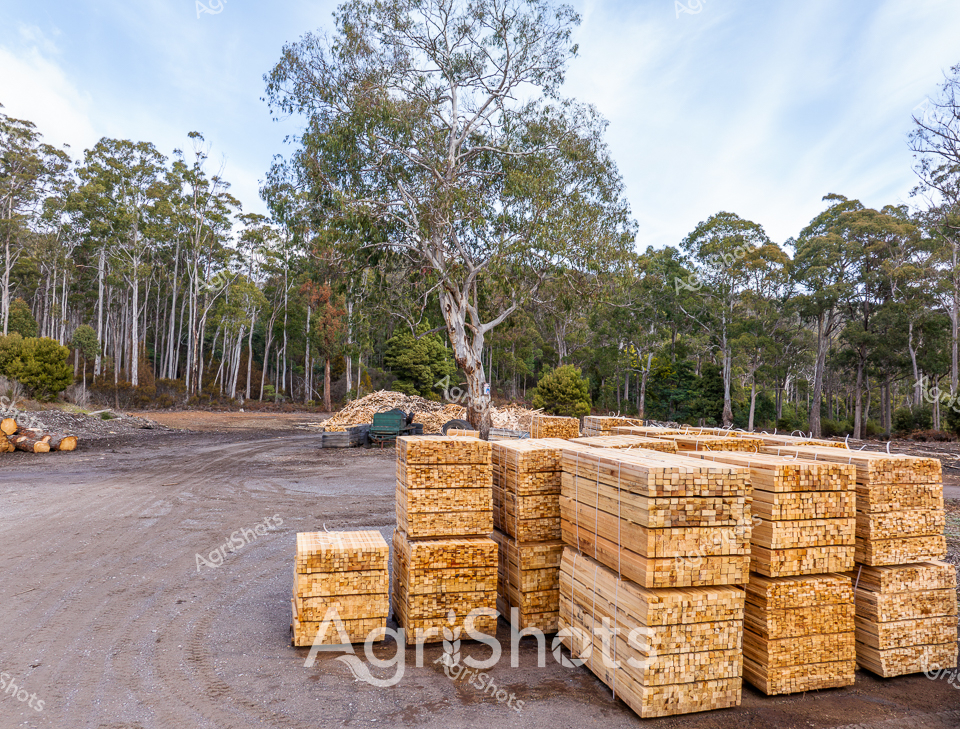
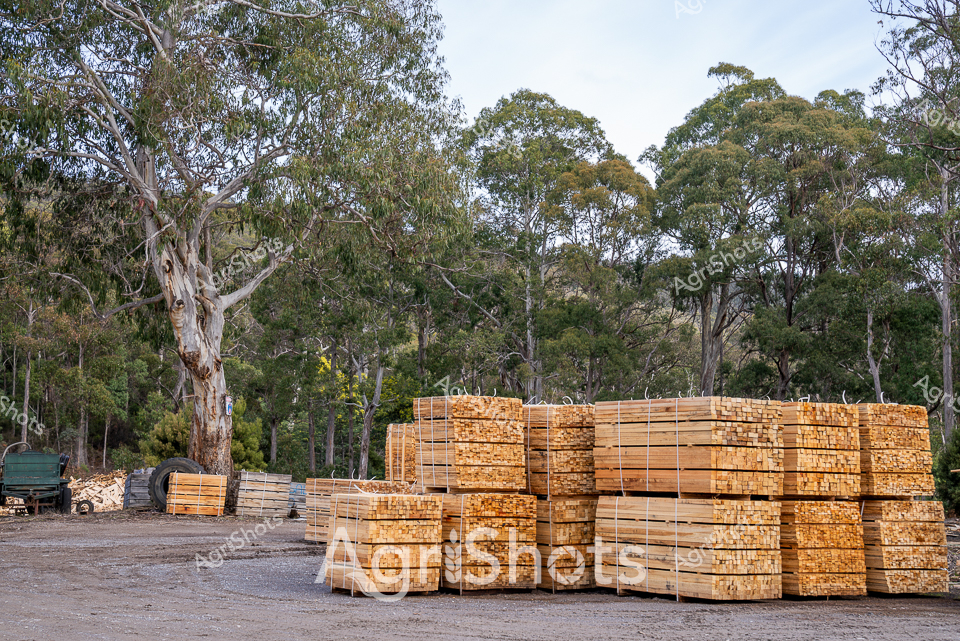
Stacked precision: raw timber awaits processing at a Tasmanian forest products facility. Golden-hued pine lumber stands meticulously arranged in uniform blocks, revealing the systematic workflow of sustainable timber harvesting. The surrounding eucalyptus forest creates a natural backdrop of silvery-green hues, with slender tree trunks stretching skyward, illustrating the renewable nature of managed woodland resources. A cleared dirt yard provides the operational staging ground, where freshly milled timber planks rest before distribution, highlighting the critical link between forest management and timber production. Soft winter light filters through the tree canopy, casting subtle shadows across the neatly stacked timber and highlighting the textural complexity of the recently cut wood. This scene encapsulates Tasmania's robust timber industry, where careful forestry practices transform living trees into valuable construction materials with precision and environmental consideration.
 Image
Image
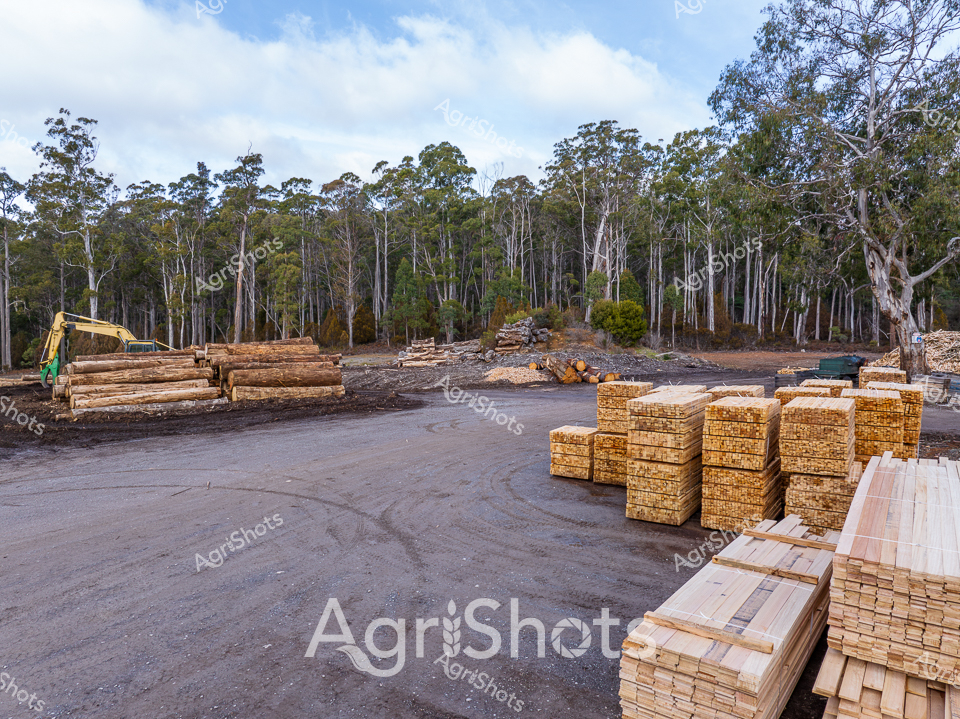
Timber harvesting transforms the Tasmanian winter landscape at this bustling sawmill operation. Stacked logs and precisely cut timber planks dominate the foreground, revealing the systematic process of forest production against a backdrop of dense eucalyptus and pine woodland. A yellow industrial machine stands ready to maneuver raw timber, while neatly organized stacks of lumber showcase the precision of modern forestry techniques. The muted winter palette of grays, browns, and soft greens creates a stark industrial tableau, where the rhythmic geometry of processed wood contrasts with the organic lines of the surrounding forest. Tire tracks in the dirt yard tell stories of constant movement and productivity, highlighting Tasmania's crucial timber industry and its careful balance between resource extraction and environmental management. The scene captures a moment of transition - from living forest to structured building materials - embodying the calculated efficiency of sustainable woodland resource utilization.
 Image
Image
Stacked precision: Raw timber awaits processing at a Tasmanian timber plantation. Golden-hued pine lumber rises in meticulously arranged rows, freshly milled and bound for construction and manufacturing. Silvery eucalyptus trees frame the background, their weathered trunks and dense canopies representing the native forest ecosystem surrounding the timber operation. The stark dirt yard, scattered with wooden pallets and processing equipment, speaks to the industrial efficiency of sustainable forestry practices. Winter's soft light filters through the tree line, casting muted shadows across the neatly stacked timber bundles, highlighting the rich textures of freshly cut wood against the rugged Tasmanian landscape. This scene captures the intersection of industrial production and natural environment, where carefully managed plantation forests provide essential resources with minimal ecological disruption.
 Image
Image
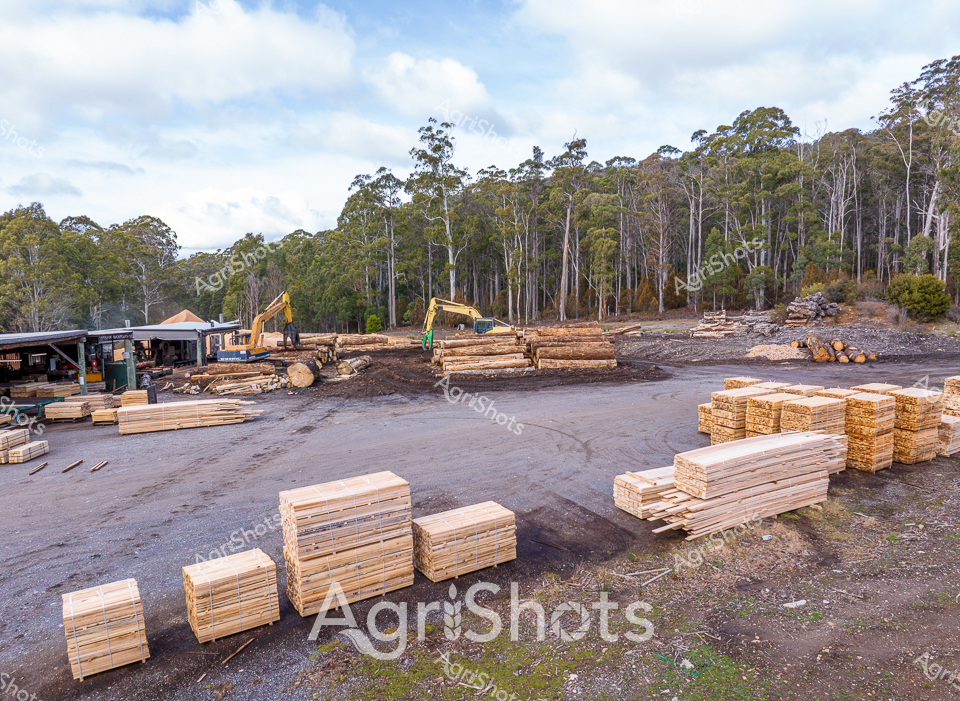
Timber Processing in the Tasmanian Wilderness Raw logs and precision-cut timber planks dominate this industrial forestry landscape, nestled among dense eucalyptus and pine forests. Yellow excavators strategically arrange massive tree trunks beside stacked lumber, revealing the methodical workflow of a Tasmanian sawmill operation. The muddy grey work yard contrasts sharply with the verdant forest backdrop, capturing the stark interface between wilderness and industrial timber production. Neatly organized wooden pallets and freshly milled timber boards showcase the transformation from raw forest harvest to structured building materials, highlighting the region's significant timber industry. Soft winter light diffuses across the cloudy sky, casting muted tones over the working environment and emphasizing the textural qualities of bark, machinery, and processed wood. This scene exemplifies Tasmania's sustainable forestry practices, where careful land management and technological precision convert natural resources into valuable commercial products.