Browse the collection
 Image
Young rural worker mends a boundary fence in the rugged Adelaide River region, wearing a vibrant blue work shirt and a cream-colored cap. The dry autumn landscape surrounds her, with golden grasslands and sparse trees creating a classic Northern Territory pastoral backdrop. She carefully works with barbed wire, her hands skillfully manipulating the fencing tools against a metal fence post, demonstrating the essential maintenance skills of agricultural workers. Her attire - sturdy denim jeans, practical work shirt, and protective headwear - speaks to the demanding nature of cattle station life in this harsh environment. The scene captures the quiet determination of rural workers who maintain critical infrastructure across vast pastoral landscapes, where fencing is crucial for managing livestock like the region's prized Brahman cattle. Soft morning light suggests an early start, highlighting the disciplined and hardworking culture of Australia's northern agricultural communities.
 Image
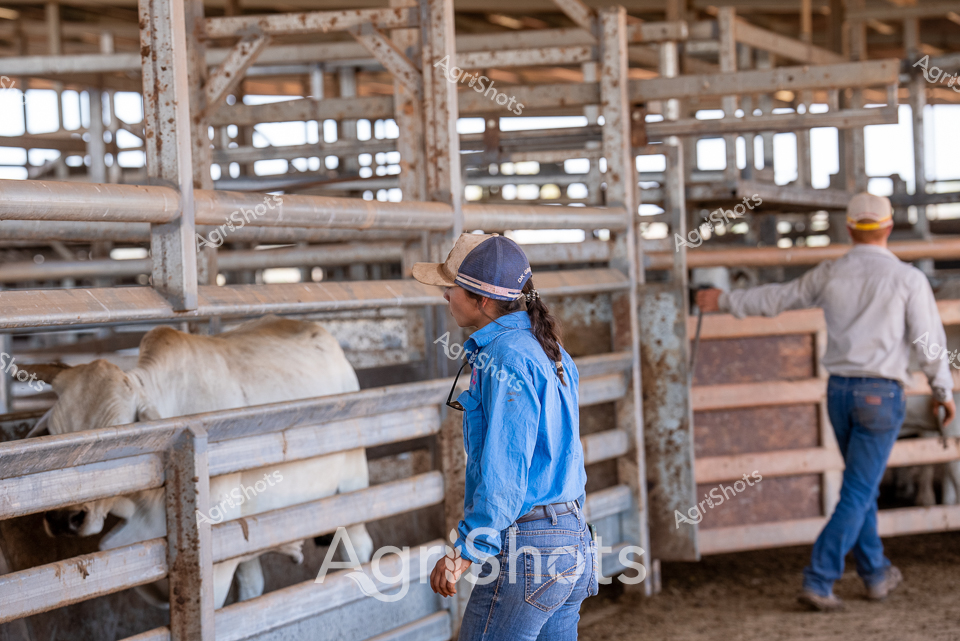
Dusty sunlight filters through the weathered timber yards as a stockwoman in a crisp blue workshirt surveys the pale Brahman cattle. Her weathered blue denim and wide-brimmed hat speak to generations of pastoral expertise, standing steadily amid the robust wooden drafting pens. Another worker in a neutral-toned shirt moves quietly in the background, their movements deliberate and measured within the expansive export yards of the Adelaide River region. These precision-built cattle yards, constructed from sturdy hardwood and metal bracing, represent the sophisticated infrastructure of Northern Territory's live export industry. The muted palette of blues, greys, and warm timber tones captures the disciplined yet organic rhythm of cattle management, where skill and animal instinct converge. This scene epitomizes the quiet professionalism of Australian agricultural workers - alert, capable, and deeply connected to the landscape and livestock that define their working world.
 Image
Burnished silver-grey against the rugged Northern Territory landscape, a magnificent Brahman cattle beast stands sentinel in the export yards near Adelaide River. The animal's distinctive loose skin and prominent hump epitomize the breed's adaptation to Australia's harsh tropical conditions, its coat gleaming under the clear autumn sunlight. Behind the foreground beast, a series of sturdy metal livestock yards stretches into the background, populated with additional cattle whose muted earth-tones contrast against the sparse woodland and distant rocky hills. This scene captures the critical infrastructure of Australia's live export industry, where carefully managed herds represent significant agricultural investment and international trade potential. The early morning light casts crisp shadows across the yard, highlighting the muscular physique and calm demeanor of these resilient cattle bred to thrive in challenging environments. Every element speaks to the precision and professional management of modern northern Australian cattle operations - a testament to generations of agricultural expertise in transforming challenging landscapes into productive agricultural systems.
 Image
Sunlight streams through the open-sided cattle yard, casting long shadows across the dusty ground of Australia's Northern Territory. A team of seasoned cattle handlers work together in the export yards near Adelaide River, masterfully managing a drafting operation using a robust silencer cattle crush. Dressed in practical workwear - blue and pink shirts, wide-brimmed hats for sun protection, and well-worn denim - the workers communicate with practiced ease around the complex hydraulic infrastructure. The metallic silver and grey machinery stands in sharp contrast to the warm earth tones of the surrounding landscape, with glimpses of trees and distant hills visible through the yard's open sides. One worker in a pink shirt stands close to the cattle crush, while others coordinate movements, their body language suggesting years of collective experience in managing Brahman cattle. The scene epitomizes the skilled, collaborative nature of Australia's northern cattle industry - a testament to the resilience and expertise of agricultural workers in one of the country's most challenging and productive farming regions.
 Image
Sunlight filters through the dusty eucalyptus trees, casting long shadows across the export cattle yards near Adelaide River. A skilled agricultural worker moves confidently among a herd of Brahman cattle, her cream long-sleeved shirt and navy cap marking her as an experienced handler. The robust white and dark grey cattle - characteristic of this distinctive Brahman breed - cluster around her, their muscular bodies and loose skin revealing generations of adaptation to Australia's challenging tropical landscapes. Wooden fence posts and packed earth define the yard's boundaries, while the warm autumn light suggests mid-morning in the Northern Territory's vast pastoral region. Her measured movements and relaxed posture communicate an intimate understanding of livestock management, a critical skill in Australia's live export industry. This scene captures the essence of contemporary agricultural work - a woman's professional expertise among the powerful, stoic cattle that are fundamental to northern Australia's agricultural economy.
 Image
Brahman cattle cluster in the dusty export yards near Adelaide River, Northern Territory, their varied coats of cream, tan, and ebony creating a living mosaic against the rusty earth. Two agricultural workers survey the herd, their backs to the camera, dressed in practical workwear - a striped button-up shirt and a light purple top - reflecting the pragmatic style of rural professionals. The expansive sky stretches pale blue above sparse eucalyptus woodland, capturing the quintessential autumn landscape of Australia's northern cattle country. The metal yard framework stands sentinel, its geometric lines contrasting with the organic shapes of the muscular Brahman cattle, renowned for their distinctive humps and heat-resistant characteristics. This scene represents the critical infrastructure of Australia's live export industry, where cattle are carefully selected and prepared for international markets. The understated collaboration between the workers suggests years of shared experience, their body language communicating a deep understanding of livestock management. The image breathes with the quiet intensity of agricultural work - a moment of assessment, preparation, and connection between humans and animals in one of Australia's most challenging yet productive agricultural environments.
 Image
Brahman cattle crowd the foreground of this pastoral scene at an export yard in Australia's Adelaide River region during the dry autumn season. A robust John Deere tractor with a green Keenan feed mixer stands ready in the background, positioned near a large grey storage tank amidst the sparse woodland typical of Northern Territory landscapes. The distinctive grey-white Brahman breed, known for their heat tolerance and adaptability, huddle closely together on the rust-colored dirt ground, their muscular bodies and prominent humps highlighting their genetic resilience to tropical conditions. Weathered eucalyptus trees frame the scene, their muted green and brown foliage reflecting the arid seasonal environment. The yard represents a critical point in Australia's live cattle export infrastructure, where precision agricultural equipment meets traditional livestock management. The composition captures the intersection of modern farming technology and the enduring character of Northern Territory cattle production, with the gleaming yellow and green tractor contrasting against the earthy, rugged surroundings.
 Image
A stockhand perches attentively on a wooden swivel chair in a sophisticated cattle drafting facility, wearing a soft pink work shirt and blue denim jeans. The individual, dressed in a white mesh-backed cap, focuses intently on the digital control panel of a sophisticated cattle handling system, with multiple hydraulic gates and a yellow electronic interface visible. The industrial interior of the livestock yard suggests a modern, high-tech approach to cattle management, with gleaming metal infrastructure and precision equipment designed for efficient animal handling and export preparation. Muted industrial tones of grey, blue, and yellow contrast with the warm pink of the worker's shirt, creating a visual representation of the sophisticated intersection between agricultural labor and technological innovation. The scene captures the meticulous attention to detail required in contemporary livestock management, highlighting the careful, methodical approach of agricultural professionals in the Northern Territory's export cattle industry. This image embodies the precision, safety, and technical expertise integral to Australia's live cattle export sector.
 Image
Sun-baked earth and sparse eucalyptus trees frame a quintessential Northern Territory rural scene of resilience and determination. A worker in a vibrant azure blue work jacket carefully tends to a barbed wire fence, her beige cap casting a shadow across her face as she focuses intently on securing the wire to a metal post. The landscape speaks of the Adelaide River region's challenging agricultural terrain - dry grasslands stretching beneath a pale sky, with scattered trees offering minimal shade. Her careful movements reflect the precision and dedication required in remote Australian agricultural work, embodying the "Women in Ag" spirit of strength and capability. The barbed wire fence represents more than a boundary marker; it's a lifeline for livestock management in this harsh environment, essential for protecting valuable cattle stations and managing vast pastoral lands. The "DoitforDolly" branding visible suggests a connection to broader agricultural community initiatives, highlighting the collaborative and supportive nature of rural Australian farming culture.
 Image
Rural fencing craftsmanship unfolds under the golden light of an autumn day in Australia's Northern Territory. A skilled farm worker wearing a vibrant blue work shirt and a protective sun hat carefully tensions a barbed wire fence near the Adelaide River region, her movements deliberate and practiced. Weathered fence posts stand sentinel among sparse eucalyptus trees, with dry golden grasslands stretching into the background, capturing the rugged essence of pastoral landscapes. Her hands, protected by work gloves, stretch and secure the wire with precision, representing the ongoing maintenance critical to agricultural operations in this challenging environment. A hint of a red equipment case rests nearby, suggesting preparedness and the essential tools of rural infrastructure work. This image powerfully captures the resilience and expertise of women in agriculture, showcasing the meticulous labor required to maintain property boundaries in the demanding Australian outback.
 Image
In this industrial processing facility, a Corpac InVision 9000 Blemish sorting machine stands ready to meticulously grade and assess produce - in this case, a line of golden potatoes moving through precision sorting lanes. The sophisticated machine represents cutting-edge agricultural technology, designed to rapidly assess and categorize agricultural products with remarkable efficiency. Gleaming metal walkways and safety railings frame the industrial interior, while control stations with digital monitors stand sentinel, allowing operators to monitor the intricate sorting process. Industrial lighting illuminates rows of pristine potatoes traveling through mechanical channels, each tuber being evaluated for quality and marketability with mechanical precision. The machine's blue-lettered branding reflects the technological innovation driving modern agricultural processing, where advanced systems ensure only the highest quality produce reaches market. Workers in high-visibility safety vests move purposefully around the machinery, their presence highlighting the human expertise that complements these sophisticated sorting systems.
 Image
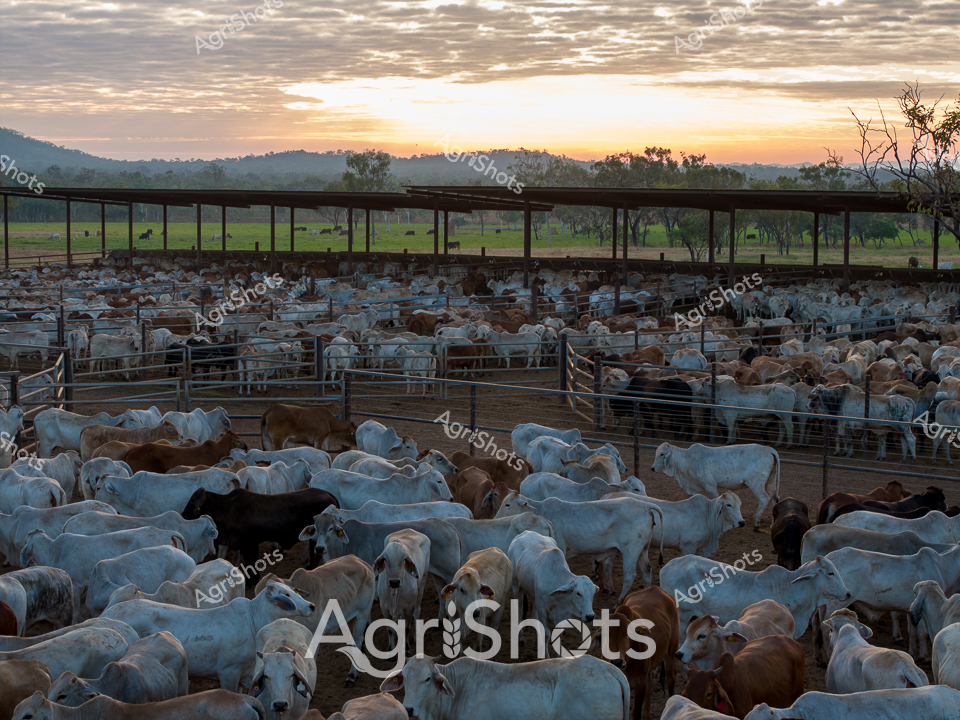
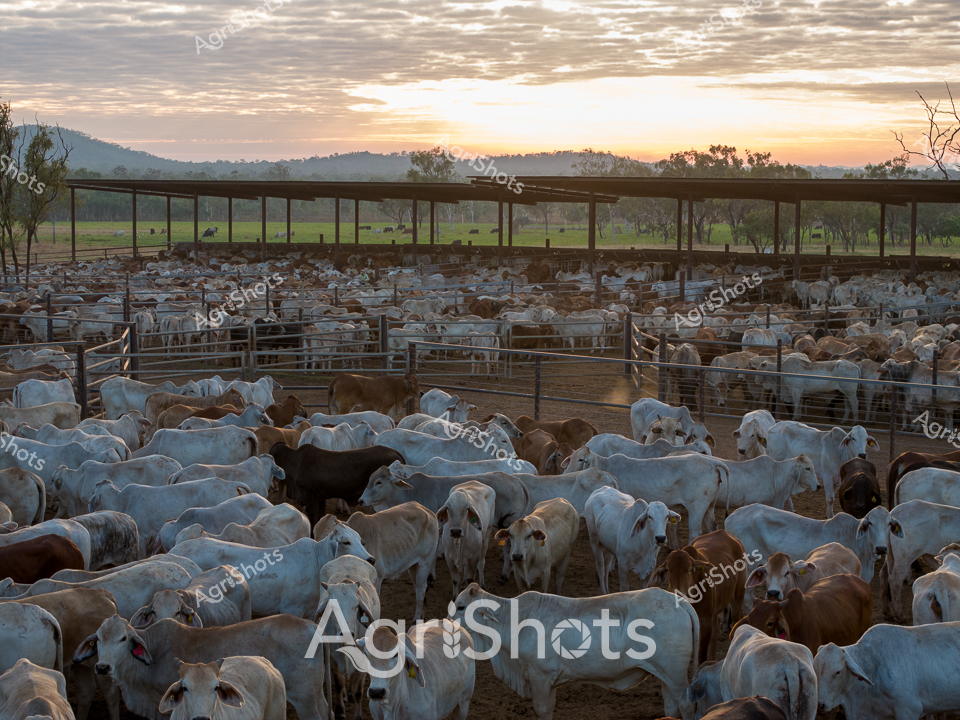
Dawn breaks over a bustling cattle yard in the Adelaide River Region of Northern Territory, casting a soft golden light across a sea of Brahman cattle. The expansive yard is densely packed with hundreds of white and brown cattle, their distinctive humped shoulders and loose skin characteristic of this heat-tolerant breed perfectly suited to Australia's northern landscape. Sturdy steel rail fences divide the yards, with a long sheltered walkway stretching across the background, silhouetted against the misty morning horizon dotted with sparse eucalyptus trees. The cattle stand closely together, their varied shades of white, grey, and rich brown creating a textured landscape of muscular bodies and gentle movements. Soft morning clouds streak the sky, creating a muted palette of yellows, greys, and soft blues that complement the pastoral scene. This is quintessential Northern Territory cattle country - a snapshot of Australia's live export industry at first light, where generations of agricultural expertise are captured in a single, powerful moment of rural industry and landscape. The scene breathes with the quiet energy of preparation, suggesting these cattle are about to begin their journey, embodying the resilience and scale of Australia's northern agricultural enterprises.
 Image
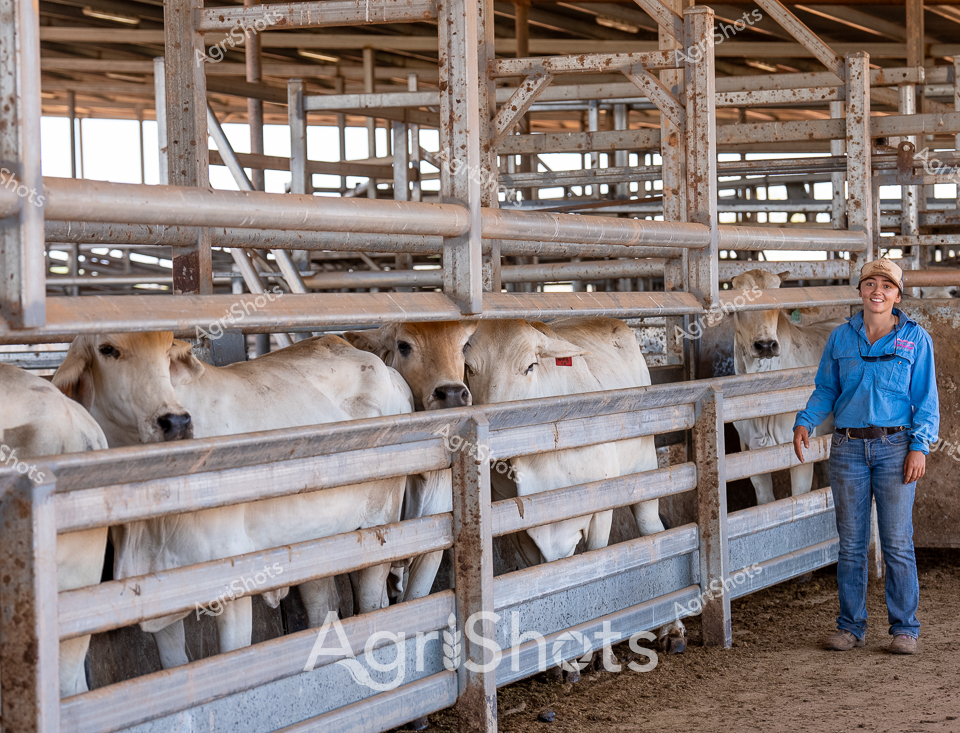
In the robust export yards of Adelaide River, Northern Territory, a seasoned cattle handler stands alongside a line of pristine Brahman cattle, their pale cream coats gleaming in the soft autumn light. The industrial steel-framed cattle yards create a structured backdrop of horizontal and vertical lines, showcasing the methodical nature of agricultural operations. Wearing a bright blue work shirt, sturdy jeans, and a protective cap, the agricultural worker exemplifies the professional approach of modern northern Australian cattle management. These distinctive Brahman cattle, known for their heat tolerance and resilience, are carefully positioned in individual holding pens, each animal displaying the breed's characteristic loose skin and prominent humps. The metallic infrastructure, weathered by years of use, tells a story of continuous agricultural activity in this challenging landscape. This scene captures the intersection of skilled animal husbandry, export preparation, and the critical role of women in Australian agricultural industries, highlighting the precision and care integral to livestock management in the Northern Territory.
 Image
Rural resilience etched in every movement, a skilled worker tends to boundary maintenance on a dry season pastoral landscape. Dressed in a vibrant blue work shirt and wide-brimmed sun protection, the individual carefully tensions barbed wire along a steel fence post, her boot braced against the metal for leverage. The Adelaide River region's characteristic autumn palette surrounds her - golden grasses, scattered eucalyptus trees, and rust-red earth creating a quintessential Northern Territory backdrop. A red post driver lies nearby, testament to the manual labor required in managing extensive cattle station infrastructure. Her posture speaks to generations of agricultural expertise: deliberate, practical, uncompromising in the face of challenging environmental conditions. The image captures the essence of pastoral work - solitary, precise, deeply connected to the land, where every fence line represents both a physical and metaphorical boundary of agricultural enterprise.
 Image
Under the soft autumn light of the Northern Territory's Adelaide River region, a vibrant blue-shirted individual stands closely with a magnificent golden-brown Brahman cattle, creating an intimate agricultural portrait. The cow, with its distinctive large ears and gentle expression, wears a proximity that suggests a deep connection between farmer and livestock. The blue shirt boldly displays hashtags "#speakevenfiyourvoices" and "#doitfordolly", hinting at a broader agricultural advocacy message. In the background, a classic pastoral landscape unfolds - grassy paddocks stretching toward distant treelines, with another cattle figure barely visible in the soft-focused distance. The scene captures the essence of Northern Territory cattle farming - a blend of professional practice and personal passion. The image radiates a sense of purpose, highlighting the integral relationship between agricultural workers and the livestock, set against the expansive, sun-drenched Australian rural landscape.
 Image
Outback resilience radiates from this powerful portrait of rural determination. A woman stands resolute against a weathered barbed wire fence, her vibrant blue shirt emblazoned with passionate social campaign hashtags #speakeveryourvoiceshake and #doifordolly. Her braided ponytail emerges from a mesh agricultural cap, embodying the strength and spirit of women in Australian agriculture. The dusty golden grasslands of the Adelaide River region stretch behind her, punctuated by sparse eucalyptus trees and termite mounds - a quintessential Northern Territory autumn landscape. Her stance speaks of quiet strength, facing away from the camera yet representing a powerful statement of community solidarity and agricultural advocacy. The crisp blue workwear against the sun-bleached landscape captures the essence of modern rural resilience - practical, purposeful, and unbreakable.
 Image
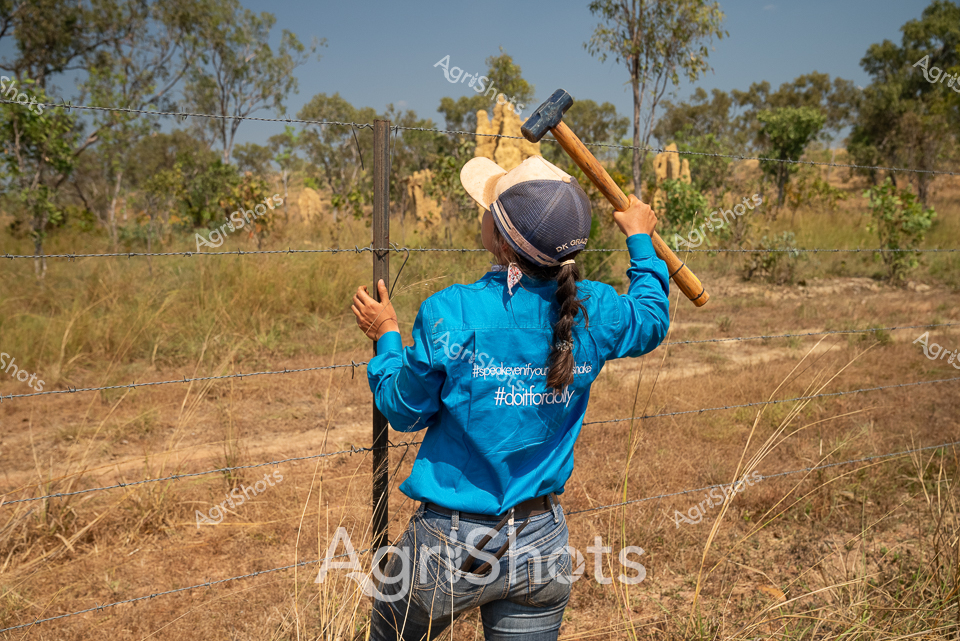
Rural fence maintenance under the golden autumn light of Australia's Northern Territory. A farm worker in a vibrant blue long-sleeved work shirt and denim jeans carefully repairs a barbed wire boundary fence, gripping a fence post while holding a heavy mallet. The backdrop reveals the classic Adelaide River region landscape - sparse eucalyptus trees, dry golden grasses, and sun-baked earth stretching toward a cloudless sky. Wearing a protective cap and work gloves, the worker appears focused and methodical, embodying the essential skills of rural infrastructure maintenance. The fence lines mark critical boundaries for cattle management, likely near export yards housing Brahman cattle - a breed renowned for its heat tolerance and importance to Australia's live export industry. This image captures the quiet determination of agricultural workers who maintain the intricate networks that support Australia's robust cattle production ecosystem.
 Image
A woman in a vibrant blue #doitfordolly branded jacket and mesh-backed cap stands amid the golden, sun-drenched grasslands of the Adelaide River region in Australia's Northern Territory. Her back is turned as she works on repairing a barbed wire fence, a critical task in managing rural landscapes and livestock boundaries. Weathered wooden fence posts and dry seasonal grasses frame the scene, capturing the rugged essence of agricultural life during the autumn months. The landscape is punctuated by sparse trees and a clear sky, highlighting the open, expansive nature of the territory. Her carefully braided hair and purposeful stance speak to the resilience and practical skill of women in agriculture, embodying a community-driven spirit of land stewardship and rural solidarity. The image captures a moment of focused work, representing the ongoing maintenance and care that sustains Australia's agricultural heartland.
 Image
On a crisp winter's day in Victoria's Ararat region, a seasoned farmer stands resolute beside his Kelp'e trailer, orchestrating the day's sheep management with quiet expertise. Dressed in a blue jacket and cap, he leans against the metallic yellow-trimmed livestock trailer, a faithful Kelpie dog at his side, surveying the expansive paddock where a flock of woolly sheep graze against a backdrop of distant mountains and scattered eucalyptus trees. The overcast sky casts a soft, diffused light across the dry grasslands, highlighting the textural contrast between the weathered landscape and the gleaming agricultural equipment. A Kelp'e grain feeder mounted on the trailer suggests precision and care in livestock nutrition, reflecting the modern farmer's commitment to animal welfare and efficient farm management. The scene captures the essence of Australian pastoral life - a blend of traditional farming wisdom and contemporary agricultural technology, where every element plays a crucial role in sustaining the land and its inhabitants. The muted palette of grays, blues, and browns speaks to the resilience of rural communities and their deep connection to the agricultural landscape.
 Image
Sweeping across a russet-earthed landscape in Australia's Northern Territory, this aerial view captures the intricate design of a modern cattle export yard near Adelaide River. A circular dirt track encircles a grove of native trees, with multiple steel-clad sheds and loading facilities strategically positioned around the perimeter. Substantial cattle transport trucks are parked along the curved roadway, ready to facilitate the critical live export process that is fundamental to the region's agricultural economy. The surrounding terrain reveals a classic Top End ecosystem - sparse eucalyptus trees, reddish soil, and undulating terrain stretching toward distant mountain ranges under a soft blue sky. Precision infrastructure and careful land management demonstrate the sophisticated agricultural systems that support Australia's livestock export industry, highlighting the intersection of environmental stewardship and commercial farming practices. This panoramic snapshot encapsulates the technical complexity and operational scale of contemporary rural agricultural enterprises in Northern Australia.
 Image
Merino ewes graze contentedly across a windswept pasture in Victoria's Moorabool region, their cream-colored fleece creating a soft contrast against the muted winter landscape. Towering white wind turbines rise dramatically in the background, their sleek blades rotating gently above the pastoral scene, symbolizing the harmonious coexistence of renewable energy and traditional agriculture. The flock, densely clustered near a gravel access road, represents the resilience of sheep farming in challenging agricultural environments, with sparse grass and overcast skies typical of the winter season. Distant tree lines and rolling hills frame the windmill farm, creating a sense of expansive rural Australian terrain that stretches towards the horizon. Each ewe stands alert yet relaxed, their robust frames testament to the hardiness of Merino breeding in this challenging climate. The monochromatic palette of grays, whites, and muted greens captures the essence of a working agricultural landscape where modern technology and traditional farming practices intersect seamlessly.
 Image
Brahman cattle crowd a steel-fenced cattle yards under a soft dawn sky, the misty winter light of Victoria's Moorabloo region casting golden hues across the landscape. Muscular white and chestnut-colored beef cattle stand shoulder-to-shoulder, their distinctive humped shoulders and loose skin characteristic of the hardy Brahman breed adapted to Australia's challenging agricultural environments. A long sheltered feeding structure stretches across the background, with scattered gum trees and distant hills completing the pastoral scene. The cattle's varied coat colors - from pale ash-white to rich coffee-brown - create a textured mosaic of livestock, highlighting the genetic diversity crucial to modern cattle breeding. Early morning shadows and soft cloud formations transform the cattle yards into a living canvas, capturing the intricate relationship between agricultural infrastructure and the natural landscape. This image epitomizes the scale and precision of contemporary Australian cattle production, where careful management and advanced breeding techniques converge to sustain one of the nation's most important agricultural sectors.
 Image
Wearing a vibrant blue jacket branded with hashtags "#doffordaily", the worker moves purposefully through a dry, golden grassland punctuated by scattered eucalyptus trees. Barbed wire fencing defines the boundaries of this expansive pastoral setting, suggesting livestock management and property demarcation typical of Australian rural environments. The scene evokes the stark beauty of winter in the Australian countryside - a palette of amber grasses, muted greens, and clear blue skies. The worker, wearing a mesh-backed cap and sporting a neatly braided hairstyle, represents the modern agricultural professional navigating challenging terrain. Their posture suggests careful movement, perhaps conducting property inspection, fence maintenance, or livestock monitoring - critical tasks in managing agricultural landscapes. The image powerfully communicates the intersection of human skill, technological branding, and natural environment that characterizes contemporary Australian agriculture. Every element - from the carefully maintained fence lines to the branded workwear - tells a story of precision, commitment, and connection to the land.
 Image
A seasoned agricultural worker stands amid a group of prime merino lambs in a well-maintained steel sheep yard near Moorabool, Victoria. Dressed in a layered winter outfit featuring a navy and orange beanie, grey and red pullover, the farmer carefully manages two working dogs - a lean brown and a sturdy black kelpie - who assist with livestock control. The lambs, uniformly woolly and cream-colored, huddle tightly together on a bed of straw, their soft forms creating a textural contrast against the metallic yard fencing and the verdant green tree line in the background. Metal sheds and sturdy post-and-wire fencing frame the scene, highlighting the structured yet natural environment of contemporary Australian sheep farming. The image captures a quintessential moment of rural agricultural practice, showcasing the symbiotic relationship between skilled farmers, intelligent working dogs, and carefully bred livestock in the Australian pastoral landscape.