Browse the collection
 Image
Image
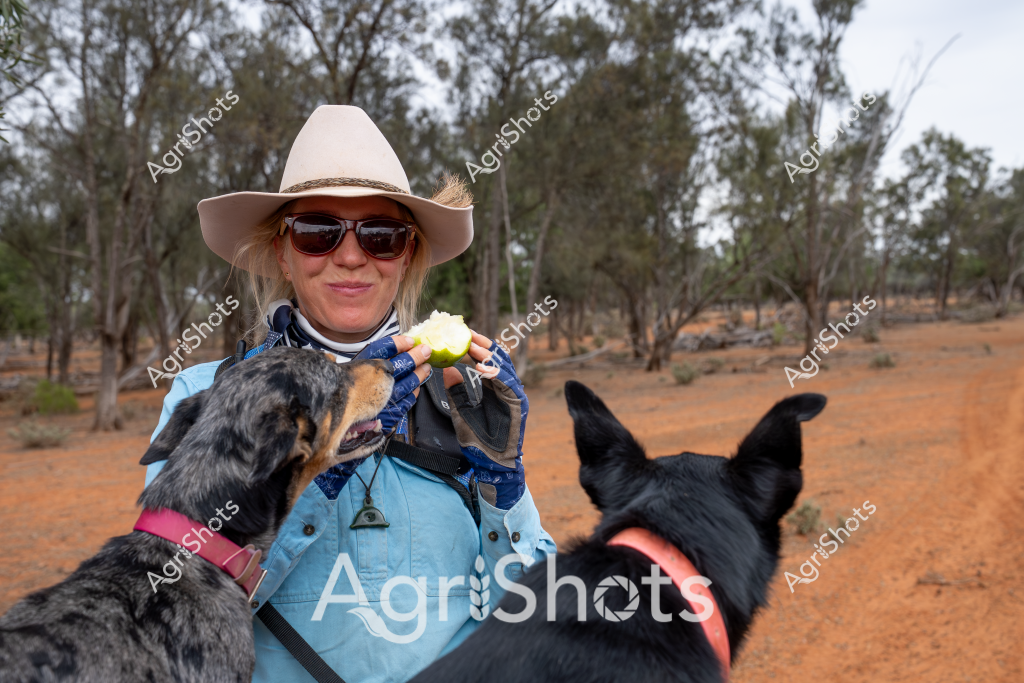
A woman stockman wearing a wide-brimmed hat and sunglasses stands in a dry, tree-lined Australian outback landscape, holding two dogs close to her. She is dressed in a light blue shirt and appears to be feeding or interacting with the dogs, one of which is a mottled grey and black color, and the other a solid black. The surrounding environment is typical of an arid rural setting, with reddish-brown soil, sparse trees, and a sense of rugged isolation characteristic of Australian pastoral regions. The woman is holding what looks like a piece of fruit or food, suggesting she might be caring for or rewarding her working dogs. Her attire - the wide-brimmed hat, sunglasses, and practical shirt - indicates she is likely a professional working in rural agriculture, possibly managing livestock or working on a remote station. The dogs appear to be working breeds, potentially Australian Cattle Dogs or similar herding breeds, positioned close to their handler in a way that suggests a strong working relationship. The scene captures a moment of connection between a skilled rural worker and her canine companions in the challenging Australian bush landscape.
 Image
Image
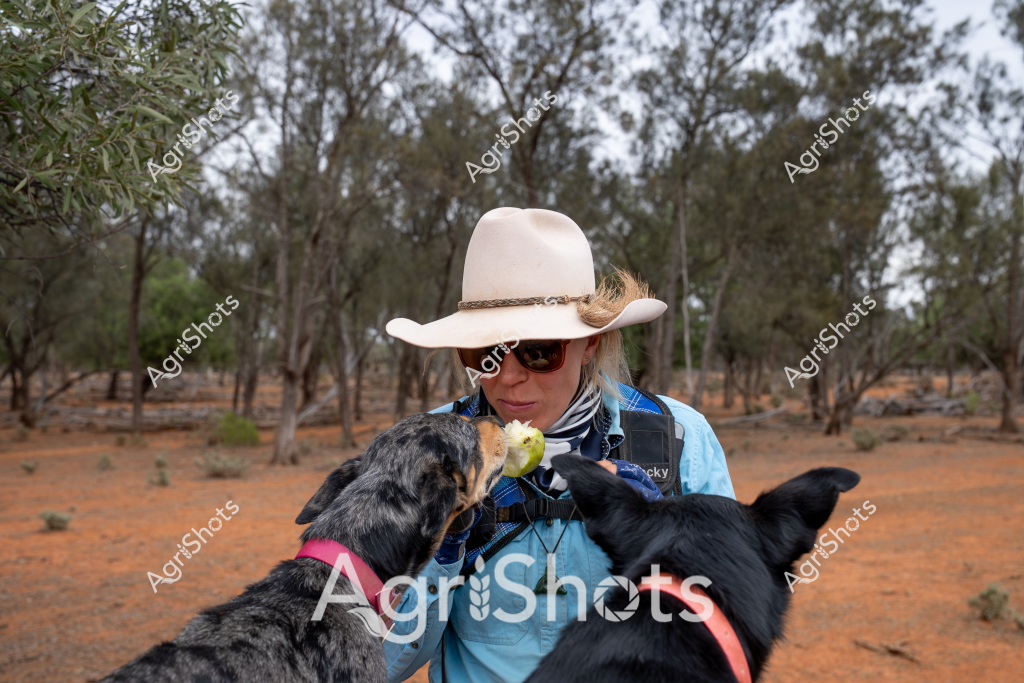
A woman wearing a white wide-brimmed hat and sunglasses stands in a dry, arid landscape with sparse trees and reddish soil, holding two working dogs. One dog appears to be taking a bite from an apple or similar fruit she is offering. The woman is dressed in a blue shirt with a patterned scarf, suggesting she is likely a livestock manager or farm worker in an outback or rural Australian setting. The surrounding landscape looks like a typical arid region, with scrubby trees and open ground, characteristic of many inland agricultural areas in Australia. Her interaction with the dogs indicates a close working relationship, common among rural workers who rely on well-trained canine companions for managing livestock or farm tasks. The scene captures the essence of rural Australian agricultural life - resilient, practical, and closely connected to the challenging landscape.
 Image
Image
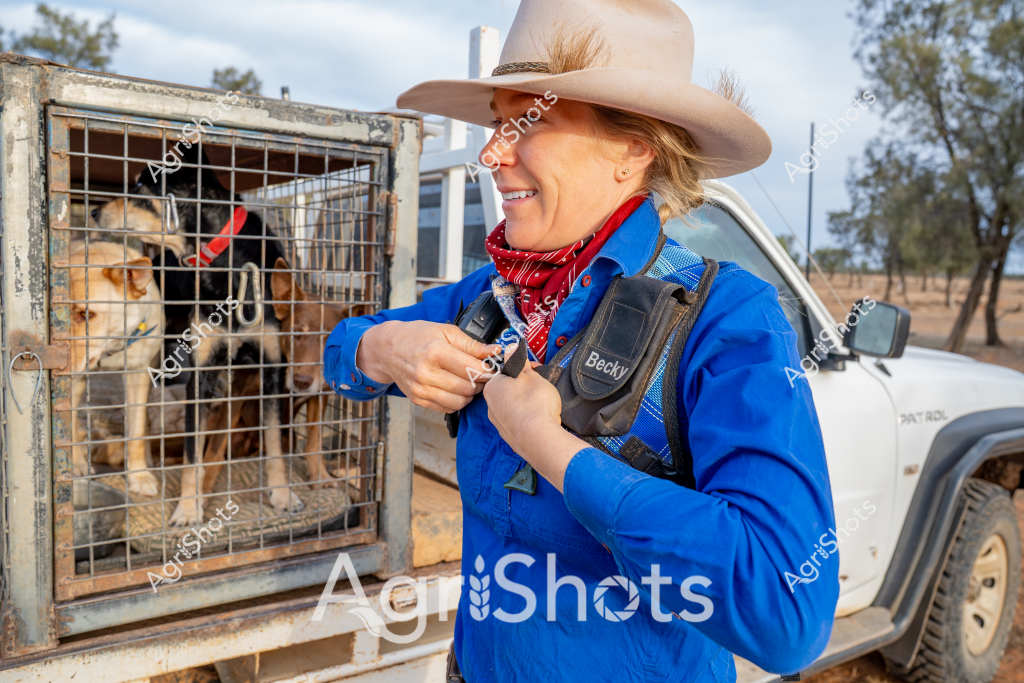
A woman in a blue jacket and wide-brimmed hat carefully handles a device while standing next to a wire cage containing several dogs. She wears a vibrant red bandana around her neck and appears to be performing an animal health or research task in an arid, rural Australian landscape. Multiple dogs are contained within the metal cage, wearing red collars, and seem calm under her professional attention. A white vehicle is partially visible in the background, suggesting this is a field veterinary or animal management operation. The environment looks dry and sparse, with scattered trees and open ground typical of an Australian outback or station setting. Her professional demeanor and specialized gear indicate she is likely a trained animal health professional or researcher working in remote conditions.
 Image
Image
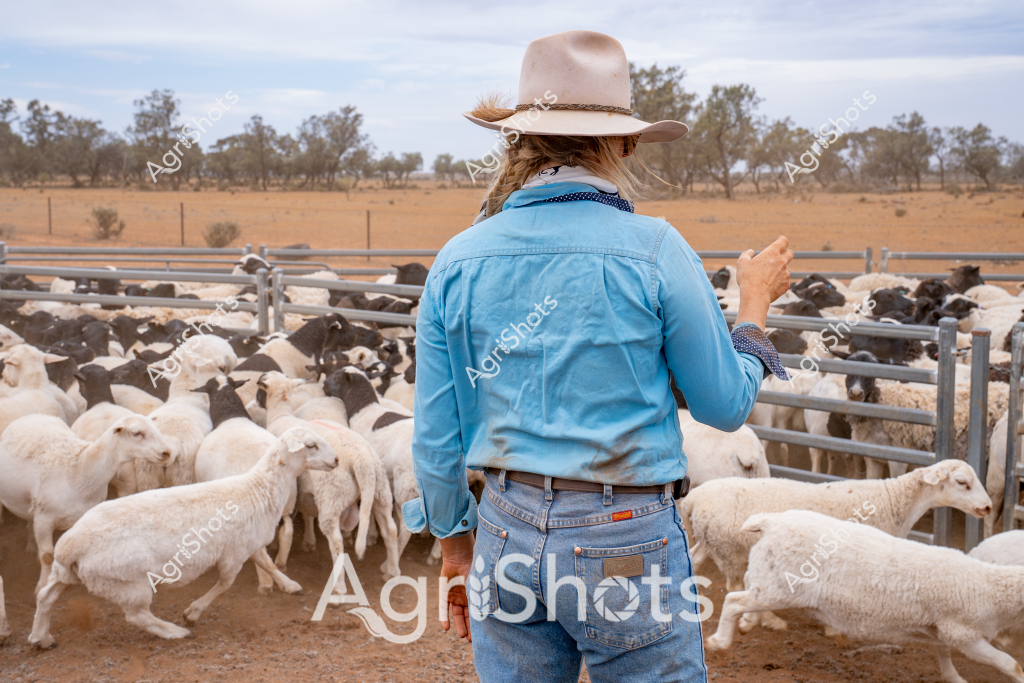
A woman stockman stands with her back to the camera, surveying a mob of white and black sheep in a dry, dusty paddock. Wearing a wide-brimmed tan Akubra hat, a crisp blue long-sleeved shirt, and well-worn denim jeans, she gestures with one hand while managing a flock of sheep within a metal livestock yard. The surrounding landscape is typical of an Australian pastoral setting - sparse eucalyptus trees dot the golden-brown horizon, and a wire fence stretches across the arid background. The sheep, a mix of white and darker-colored animals, are tightly clustered within the metal yard, reflecting the careful management of livestock in a challenging rural environment. The scene captures the essence of Australian agricultural work - a skilled stockwoman managing the flock under big open skies, demonstrating the resilience and expertise required in outback farming.
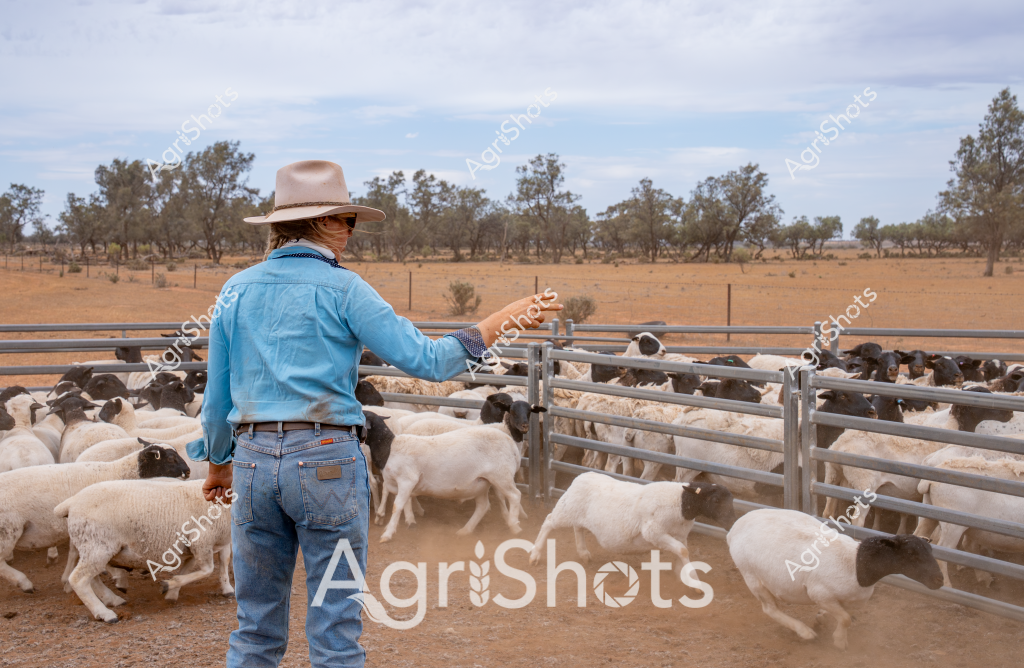 Image
Image
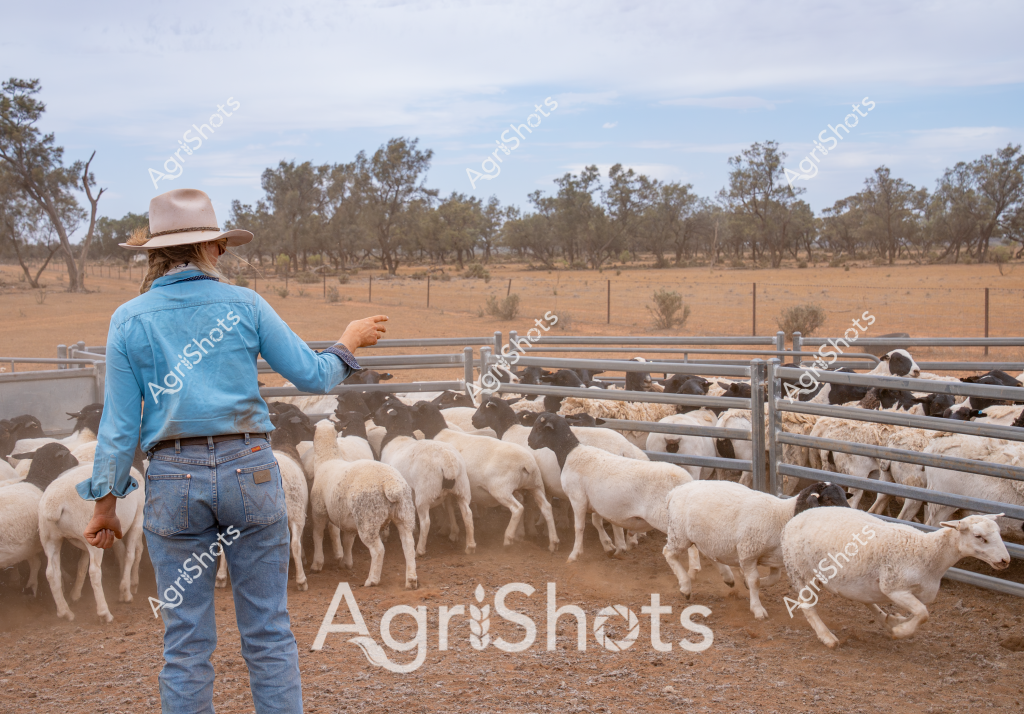
A woman stockman wearing a light blue long-sleeved shirt, blue jeans, and a wide-brimmed tan Akubra hat stands with her back to the camera, managing a flock of white and black-faced sheep in a dusty livestock yard. The paddock behind her is a classic Australian rural landscape, with sparse eucalyptus trees dotting a dry, golden-brown terrain under an overcast sky. Multiple metal livestock gates and fencing compartmentalize the yard, allowing the woman to control and sort the sheep with precision. The sheep - which appear to be a mixed breed, possibly including Merino and damara or dorper crosses - are densely packed within the metal pen, creating a bustling scene of agricultural activity. Her posture suggests calm expertise, with one arm extended to guide or manage the movement of the animals. The environment captures the quintessential Australian agricultural setting: a dry, challenging landscape where skilled stockmanship is essential for livestock management.
 Image
Image
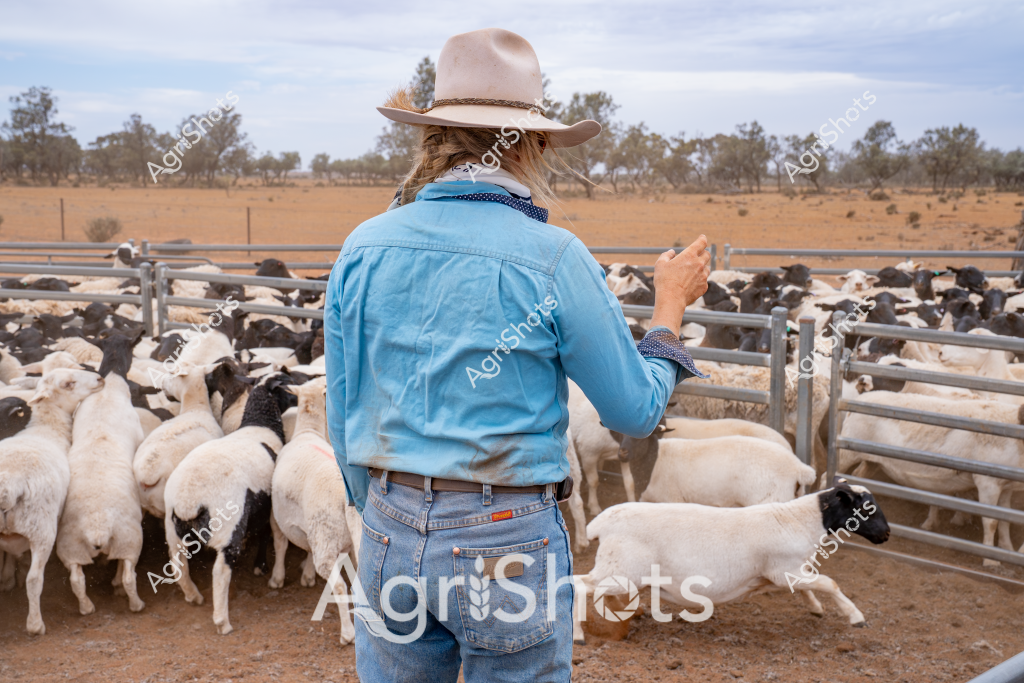
A woman stockman stands with her back to the camera, overseeing a mob of white lambs in a dusty livestock yard. Wearing a classic Australian farm uniform of a blue long-sleeved work shirt, faded blue jeans, and a light-colored wide-brimmed Akubra hat, she gestures with one hand while controlling the sheep's movement. The surrounding landscape is quintessential Australian outback - sparse eucalyptus trees scattered across a dry, golden-brown paddock with wire fencing defining the livestock area. The sheep, likely a white breed such as Merinos, are clustered tightly in a metal stock yard, creating a dynamic scene of rural agricultural activity. Dust rises from their movement, highlighting the arid conditions typical of Australian sheep farming regions. The woman's stance suggests years of experience managing livestock, her body language calm and authoritative as she guides the lambs. The background reveals a classic Australian pastoral setting - sparse trees, fenced paddocks, and wide-open skies with soft clouds creating a sense of expansive rural space. This image captures the essence of Australian sheep farming - resilience, skill, and a deep connection to the land.
 Image
Image
A woman stockman stands with her back to the camera, surveying a mob of black and white sheep in a dry, arid paddock. Wearing a light blue long-sleeved work shirt, faded blue jeans, and a classic Australian wide-brimmed hat, she appears to be managing the livestock in a metal stock yard. The background reveals a typical Australian rural landscape - sparse trees and golden-brown grasslands stretching to the horizon, indicating challenging drought conditions. The sheep are tightly packed within metal fence panels, a mix of white and black woolly bodies creating a textured scene. The woman's raised hand suggests she is guiding or directing the flock, demonstrating the skilled livestock management typical of Australian agricultural practices. The dry, rocky ground and sparse vegetation underscore the harsh environmental conditions faced by farmers in this region. Her outfit - practical and hard-wearing - speaks to the demanding nature of rural work. The wide-brimmed hat provides essential sun protection, while her blue shirt and denim jeans are standard attire for stockmen and women working with livestock across Australian stations and farms.
 Image
Image
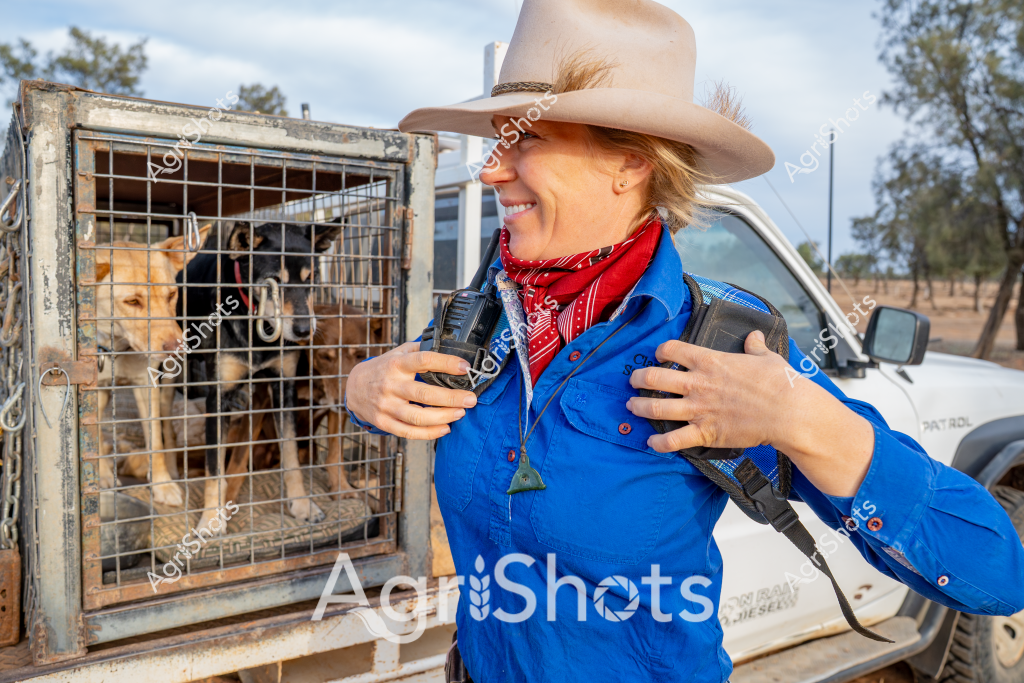
A woman in a blue jacket and red bandana, wearing a cowboy hat, stands beside a wire cage containing several dogs at what appears to be a rural property. The dogs are packed closely together in the transport crate, looking attentively toward the woman. Her wide smile and relaxed posture suggest she is a professional animal handler or veterinary worker transporting or relocating the dogs. The background reveals a white vehicle and sparse trees, indicating an arid or semi-arid Australian landscape, typical of remote regions where working dogs are essential for livestock management. Her outfit - combining practical blue workwear, a vibrant red neckerchief, and a classic Australian-style wide-brimmed hat - reflects the functional and stylish approach of rural professionals who must be prepared for varied environmental conditions.
 Image
Image
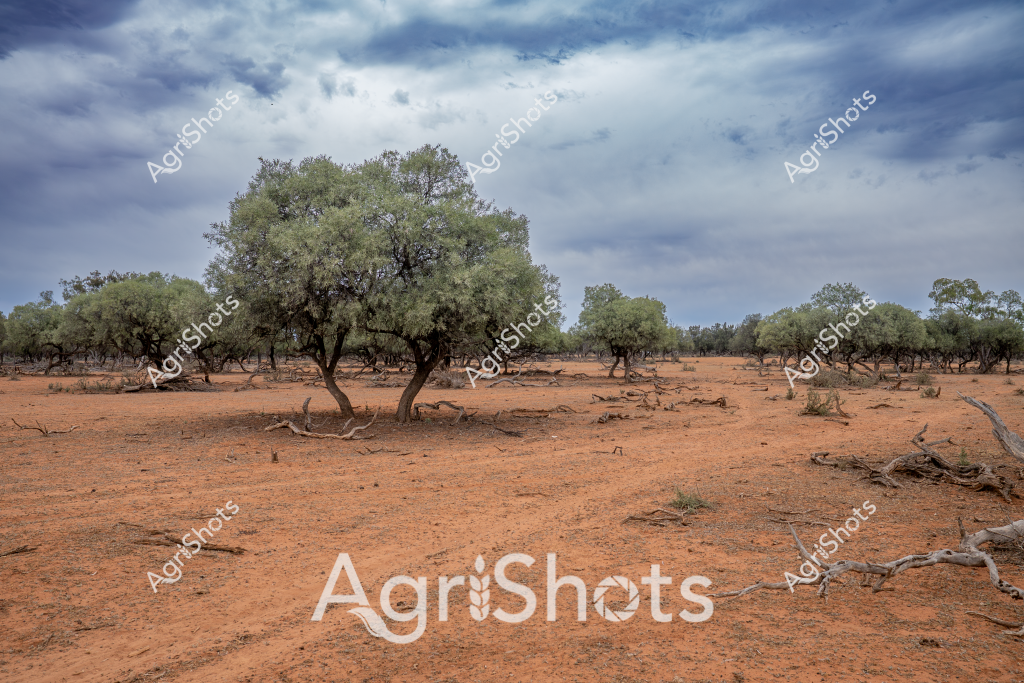
A stark landscape of drought-affected terrain dominates this image, with sparse olive-green trees standing resilient against a moody, cloud-laden sky. The ground is a rich, rusty-orange soil punctuated by scattered dead branches and minimal ground cover, revealing the harsh conditions of an arid agricultural region. Mature trees with silvery-green foliage are sparsely distributed across the landscape, their twisted trunks and broad canopies suggesting years of survival in challenging environmental conditions. The dramatic sky, filled with layered blue-gray clouds, adds a sense of atmospheric tension to the scene, highlighting the precarious balance between survival and environmental stress in this Australian agricultural landscape. The barren ground and weathered trees eloquently communicate the ongoing challenges of farming in drought-affected regions, where resilience is measured in the ability of vegetation to endure and persist against seemingly insurmountable conditions.
 Image
Image
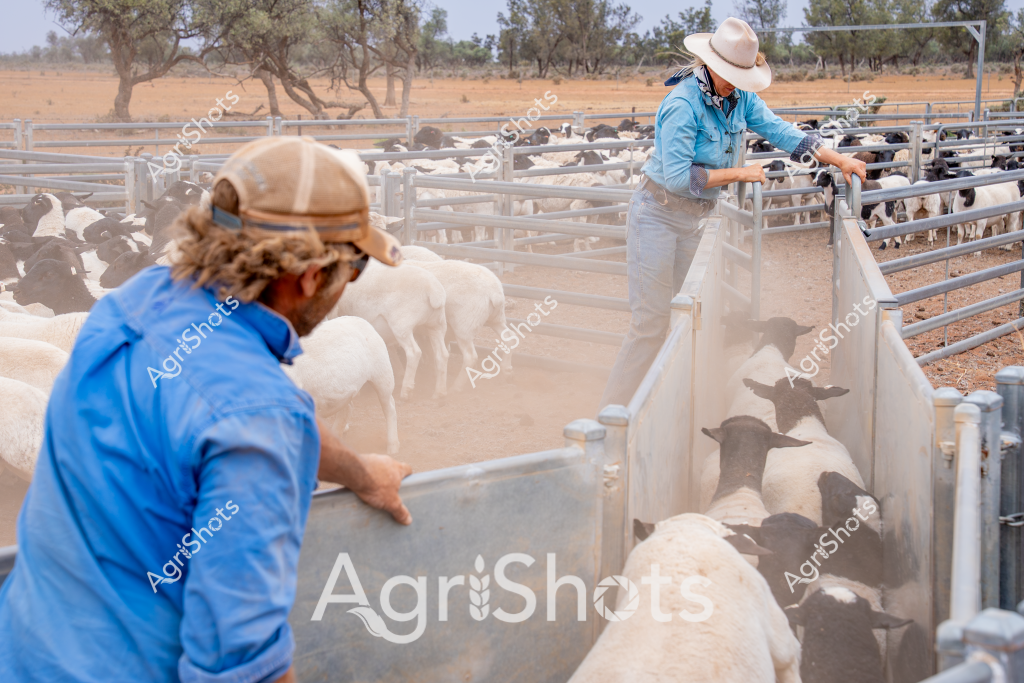
Two rural workers in blue shirts and wide-brimmed hats manage a herd of white goats in a dry, dusty livestock yard. The yard features metal livestock gates and pens, with sparse trees and arid landscape visible in the background. A woman in a light-colored hat and blue long-sleeved shirt stands near the gate, carefully managing the goat movement through a narrow chute. Another worker in a blue shirt observes from a nearby position, suggesting a collaborative approach to livestock handling. The scene captures the challenging environment of Australian pastoral agriculture, with red earth, metallic infrastructure, and resilient livestock reflecting the tough conditions of rural stock management. The workers' protective clothing - long-sleeved shirts, wide-brimmed hats, and sturdy work pants - indicates careful preparation for working in harsh, sun-exposed conditions typical of Australia's agricultural regions.
 Image
Image
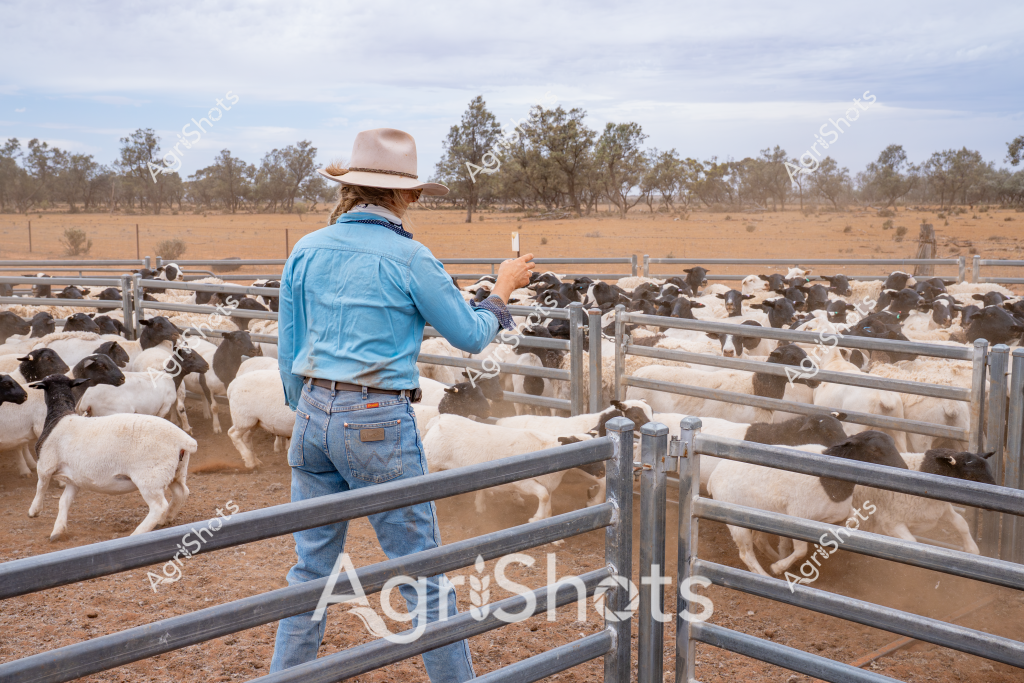
A woman stockman stands in a livestock yard, overseeing a herd of black and white goats in a dry, arid Australian landscape. Wearing a pale wide-brimmed hat, blue long-sleeved work shirt, and classic blue denim jeans, she leans against the metal livestock gates while monitoring the goats within the enclosed paddock. The surrounding environment reveals a sparse, dusty terrain with scattered eucalyptus trees in the background, typical of an inland Australian agricultural property during dry conditions. Numerous goats - a mix of white and black-colored animals - are clustered within the metal yard's fenced sections, suggesting this is likely a pastoral station in a region experiencing challenging drought conditions. The metallic gray yard infrastructure provides a structured containment for the livestock, with the woman's stance indicating careful and attentive farm management in a challenging rural environment.
 Image
Image
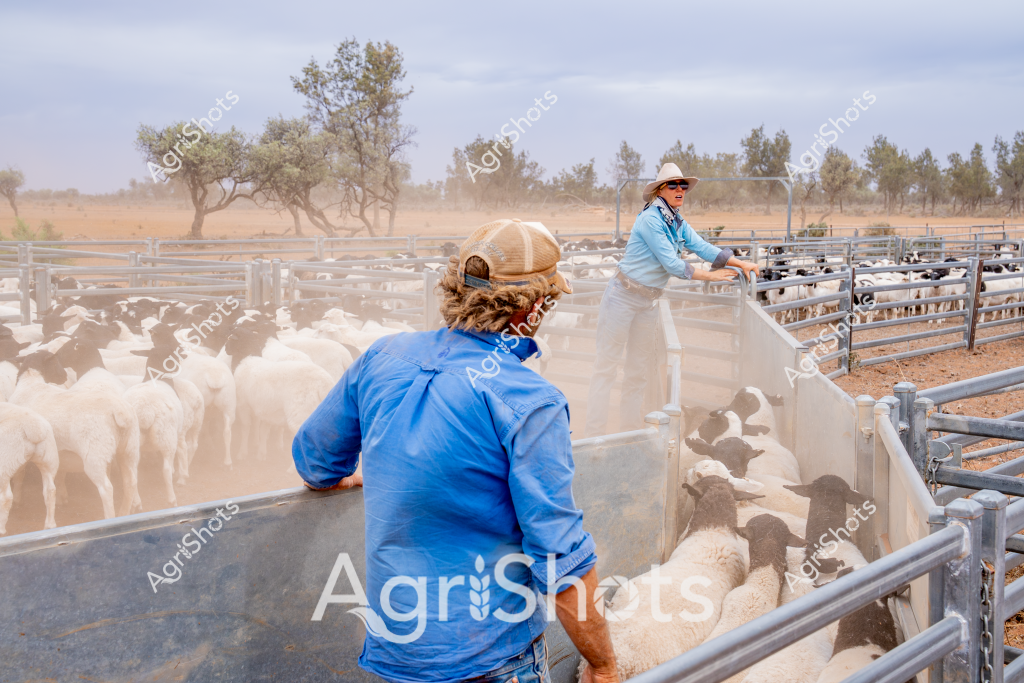
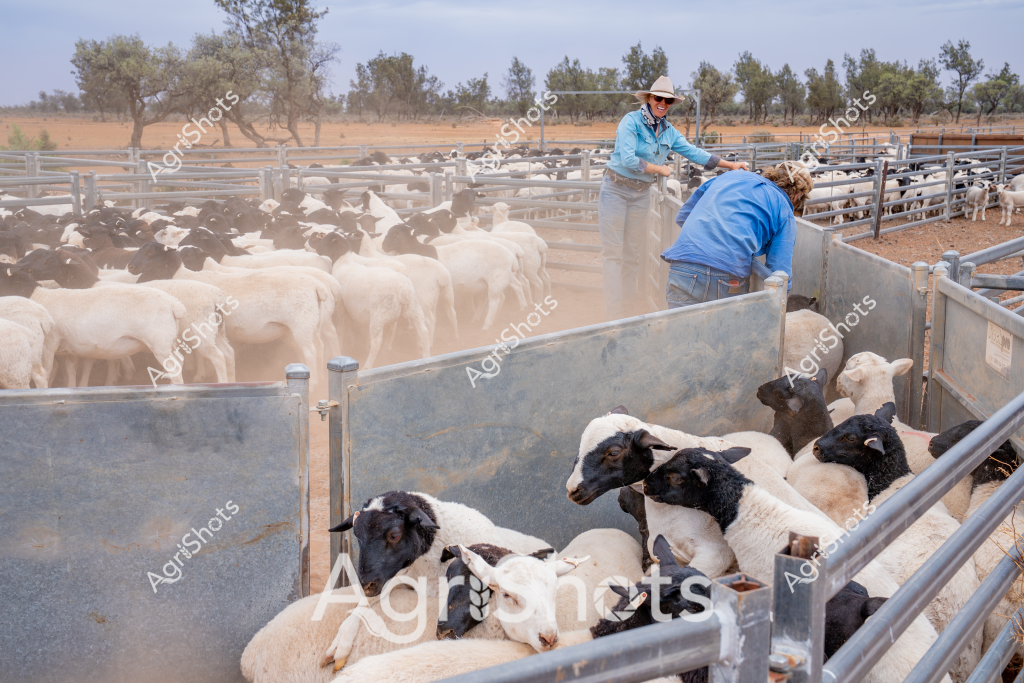
Two women working together in a dusty sheep yard, managing a flock of sheep during a dry, arid mustering operation. A woman in a blue long-sleeved shirt and wide-brimmed sun hat stands at one end of a metal livestock pen, while another woman in a blue work shirt faces away in the foreground. The landscape is a classic Australian pastoral scene, with sparse trees and red-brown earth visible in the background, indicating an inland station or rural property during what appears to be a hot, dry season. The metal livestock yards are filled with white sheep, creating a dense cluster of woolly bodies against the metal gates and fencing. Dust hangs in the air, suggesting active movement and the challenging environmental conditions typical of Australian sheep farming. The women are positioned strategically around the yards, likely coordinating the movement and sorting of the sheep, demonstrating the skilled and hands-on nature of livestock management in rural Australia. The scene captures the essence of agricultural work - teamwork, endurance, and precision in managing livestock under challenging environmental conditions. The blue work shirts, wide-brimmed hats, and professional handling of the livestock highlight the expertise and resilience of women in Australian agricultural industries.
 Image
Image
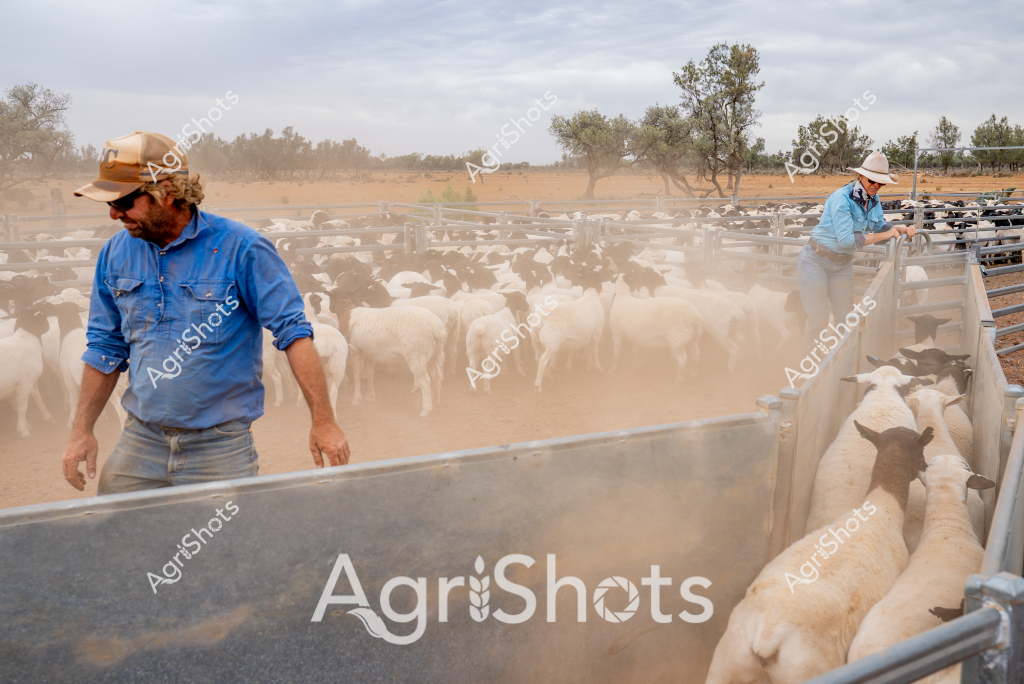
Two experienced workers manage a flock of black and white dorper sheep in a dusty rural yard during what appears to be a dry season in the Australian outback. A woman in a blue long-sleeved shirt and wide-brimmed hat stands near metal livestock yards, carefully guiding the sheep with another worker. The sheep are predominantly white with distinctive black head markings, typical of the dorper breed, which is well-adapted to arid Australian conditions. Multiple metal livestock pens contain the dense flock, with scattered trees and a sparse, reddish-brown landscape visible in the background, suggesting this is likely a station or large rural property in a drought-affected region. The workers move methodically, demonstrating the skill and precision required in managing livestock in challenging environmental conditions. Dust rises around the animals, highlighting the dry, harsh nature of the landscape and the resilience of both the sheep and the agricultural workers.
 Image
Image
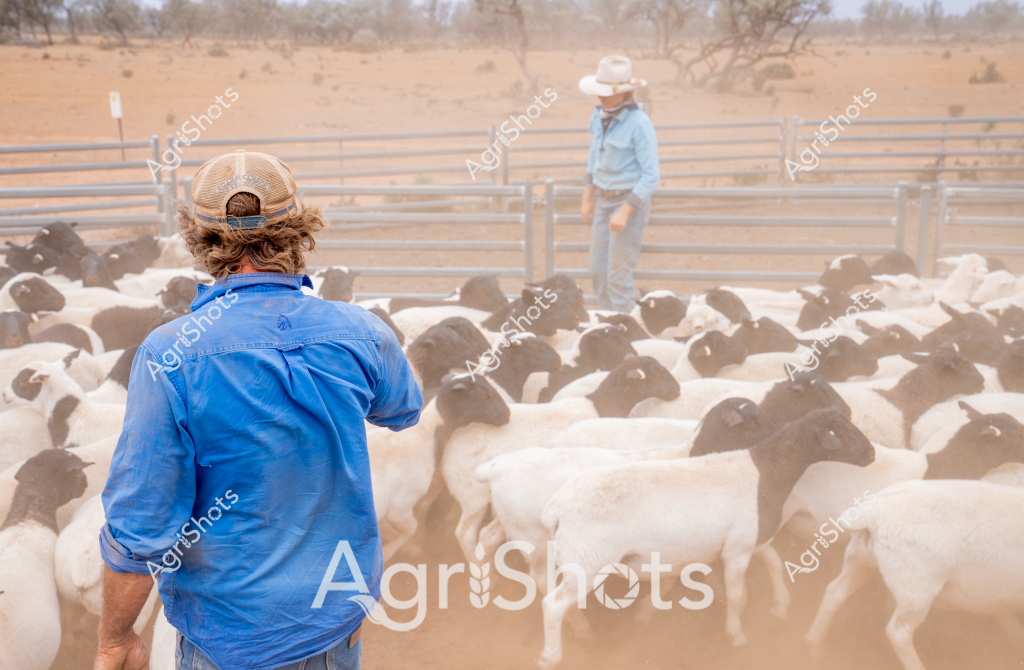
Two men managing a large flock of white sheep in a dusty, arid paddock with sparse trees on the horizon. A man in a blue work shirt and tan cap stands near a metal livestock yard, carefully guiding the sheep through the gates while another man in a light blue shirt and white hat works the opposite side of the yard. A dense cloud of ochre-colored dust rises around the animals, creating a dramatic atmosphere that highlights the challenging environmental conditions. The sheep appear to be tightly packed, moving methodically through the narrow metal race, suggesting a routine mustering or livestock management operation typical of Australian agricultural practices. The landscape looks dry and sparse, with scattered gum trees in the background indicating this is likely an inland pastoral region experiencing drought-like conditions. The workers' robust clothing and steady movements demonstrate the skilled and physically demanding nature of sheep farming in rural Australia.
 Image
Image
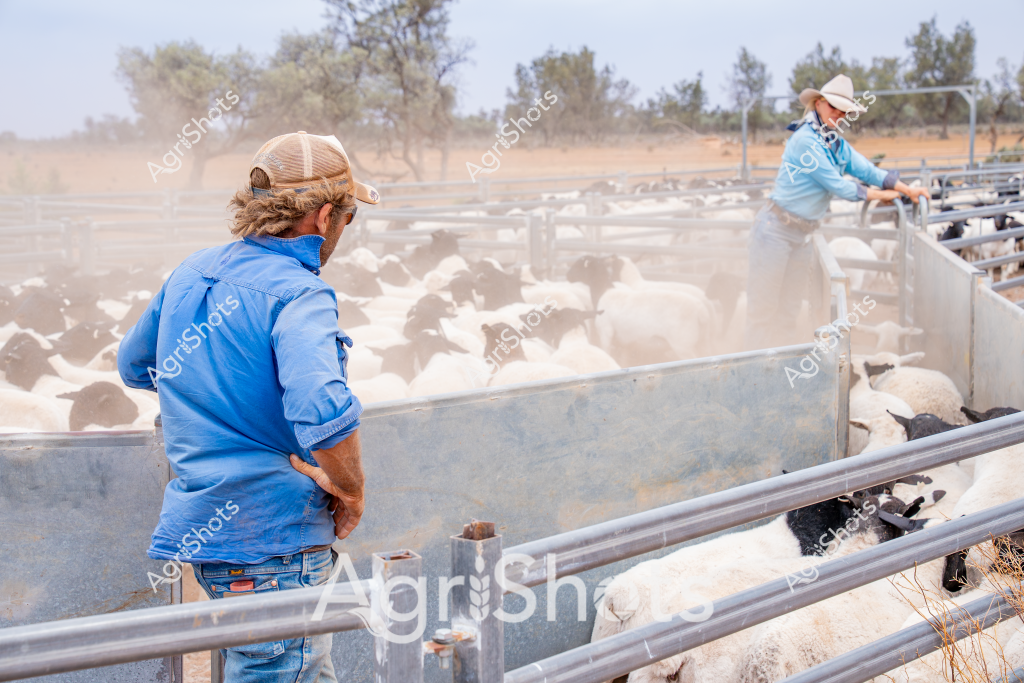
Two stockmen manage a large flock of black and white sheep in a dusty livestock yard during what appears to be a dry, arid season in outback Australia. A man in a blue work shirt stands with his back to the camera, wearing a mesh-backed cap, while another figure is visible in the distant background near the metal yard fence. The sheep are densely packed, creating a sea of white fleece with black faces - likely a Dorper or Damara breed well-adapted to harsh Australian conditions. The landscape is characteristically sparse, with scattered scrub trees and a sandy, reddish-brown ground indicating a potentially drought-affected region. The scene captures the typical challenging environment of Australian sheep farming, where skilled stockmen carefully manage livestock in tough, unforgiving terrain. The dust hanging in the air suggests movement and activity, with the sheep closely herded within the sturdy metal yard fencing. The stockmen's clothing - a blue work shirt and a light-colored hat - reflects practical rural workwear designed for protection from the intense Australian sun and harsh environmental conditions. This image epitomizes the resilience and skill required in Australian livestock management, particularly in remote, arid regions.
 Image
Image
Two farm workers manage a large flock of sheep in a dusty livestock yard during what appears to be a dry, arid farming season. A man in a blue work shirt and cap stands near metal livestock yards, watching another worker in a light blue shirt who is positioned further along the fenced pen. A substantial number of white sheep are densely packed within the metal yard gates, creating a cloud of dust as they move and shift. The scene captures the harsh Australian rural landscape, with sparse trees and reddish-brown earth visible in the background. The workers are wearing practical work attire typical of Australian agriculture - sturdy shirts, caps, and jeans - suggesting they are experienced in livestock management. The metal yards appear robust and well-maintained, designed to efficiently control and move sheep in challenging environmental conditions. Dust rises around the livestock, indicating the dry conditions and the active movement of the sheep. The scene represents the challenging but essential work of sheep farming in Australia's more arid agricultural regions, highlighting the skill and endurance required to manage livestock in tough environmental conditions.
 Image
Image
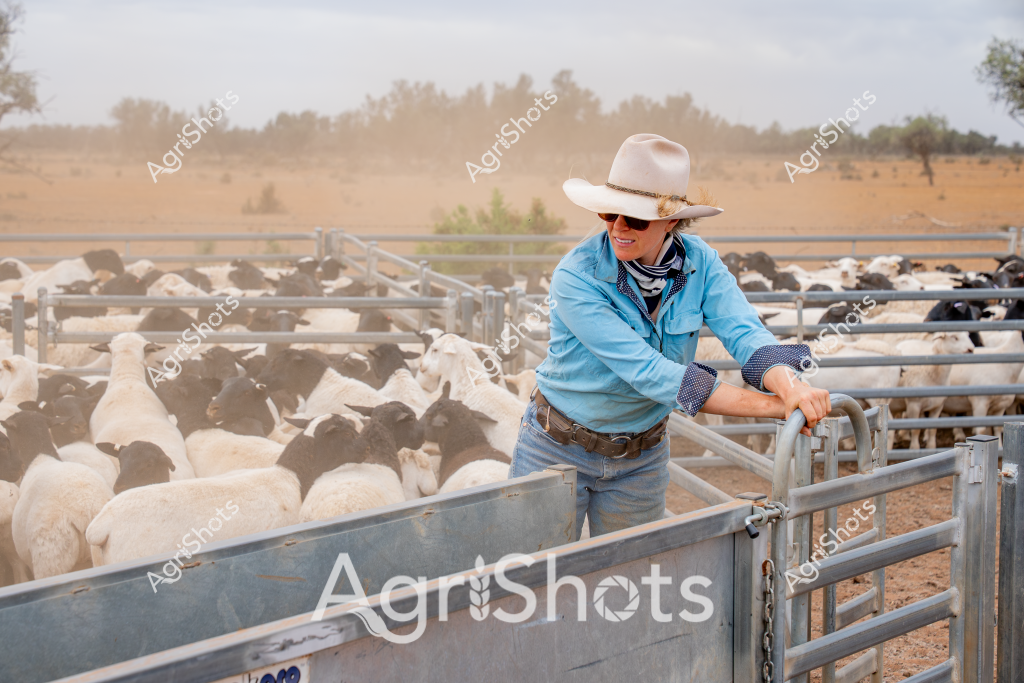
A woman stockman in a blue work shirt and wide-brimmed white hat leans against a metal livestock gate, carefully monitoring a large flock of sheep in a dusty paddock. The sheep - a mix of white and black woolly animals - are densely packed within metal yard panels, creating a textured landscape of livestock. The background reveals a dry, arid Australian rural landscape with scattered trees and golden-brown earth, suggesting challenging drought conditions. Her blue shirt, sunglasses, and relaxed posture indicate an experienced agricultural worker comfortable in the harsh rural environment. Dust hangs in the air, adding a sense of atmospheric texture to the scene and highlighting the challenging conditions of outback sheep farming. The metal livestock gates and fencing demonstrate the structured management of the agricultural property.
 Image
Image
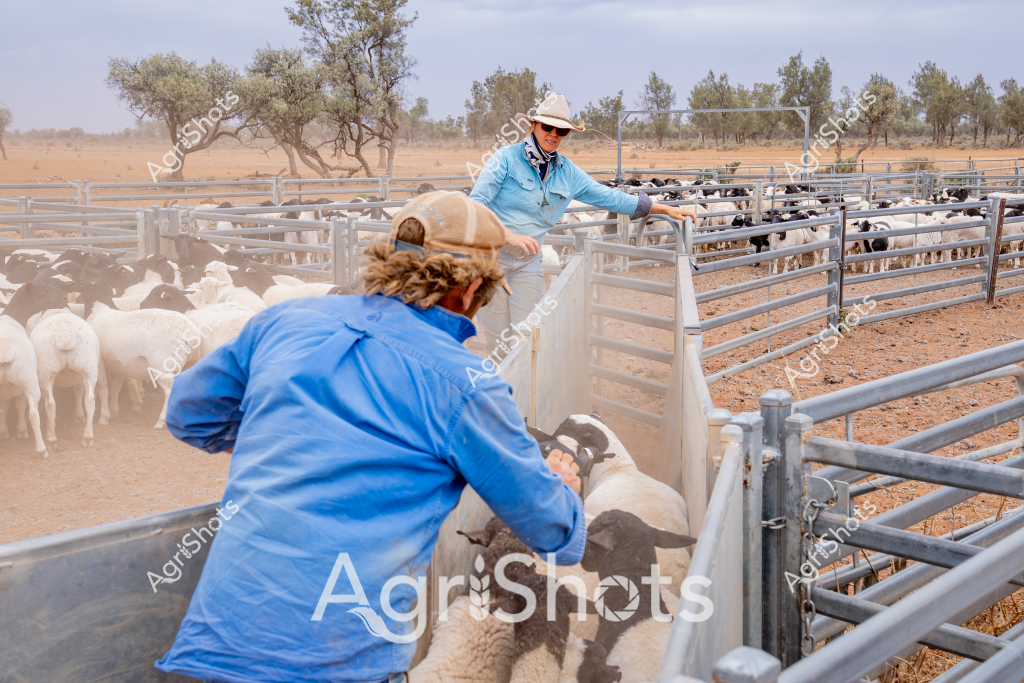
Two workers manage a flock of sheep in a dry, arid paddock with sparse trees in the background. A woman in a light blue long-sleeved shirt and white hat stands at a metal livestock yard gate, carefully handling the sheep with another worker in a blue shirt facing her. The dusty red earth and metal livestock yards suggest this is a sheep station in central or western Australia during a dry season. Multiple white sheep are being moved through the narrow metal gate sections, indicating a routine livestock management activity like drafting, sorting, or preparing for transportation. The scene captures the precision and skill required in Australian sheep farming, with professional workers efficiently managing the livestock in challenging environmental conditions. The landscape appears to be in an inland region, with scattered eucalyptus trees and a sparse, golden-brown landscape typical of Australia's agricultural interior. The workers' blue shirts and sun protection hats reflect the practical workwear needed for long days of livestock management in harsh, sunny conditions.
 Image
Image
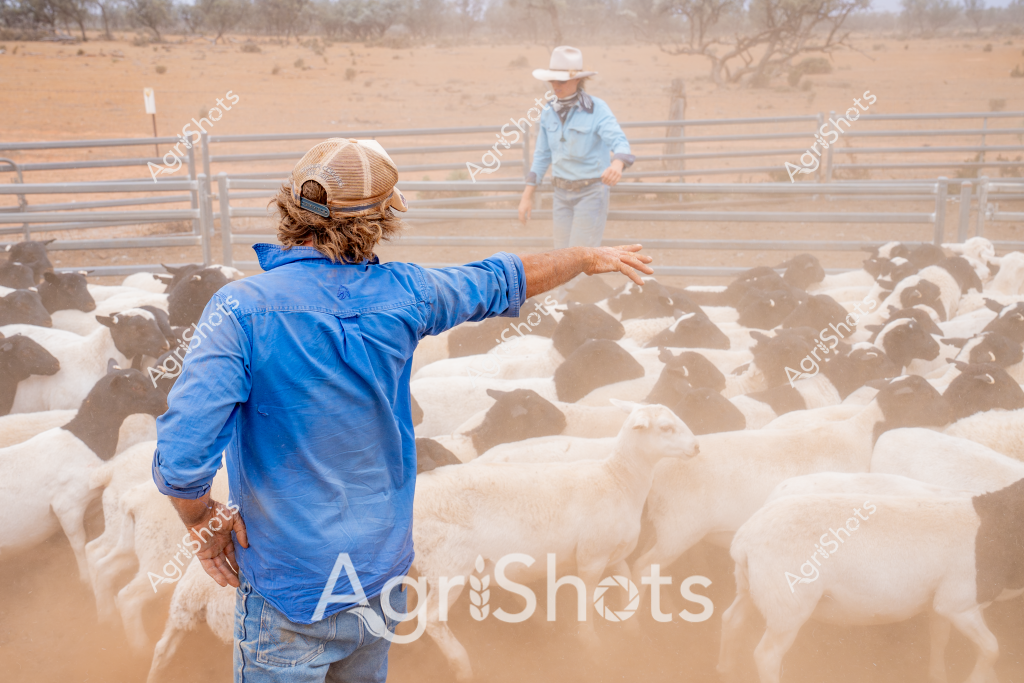
A stockman in a blue work shirt and trucker cap directs a large flock of sheep in a dusty livestock yard. Standing with his arm outstretched, he guides the dense mob of white sheep through a metal cattle yard, coordinating their movement with precision. Another worker in lighter clothing stands in the background, observing the mustering process. The landscape appears arid and typically Australian, with sparse trees and reddish-brown earth visible beyond the yards. Dust rises around the sheep, creating a hazy atmosphere that captures the challenging environmental conditions of rural livestock management. The scene exemplifies the skill and hard work required in Australian sheep farming, where experienced stockmen use subtle gestures to control large numbers of livestock in harsh, dry terrain.
 Image
Image
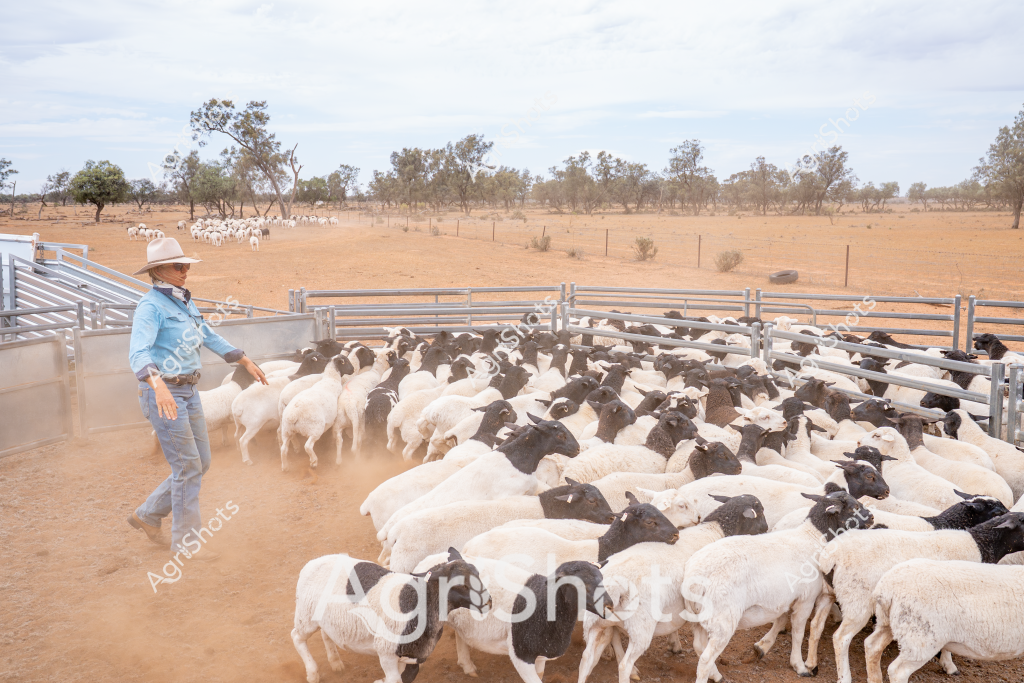
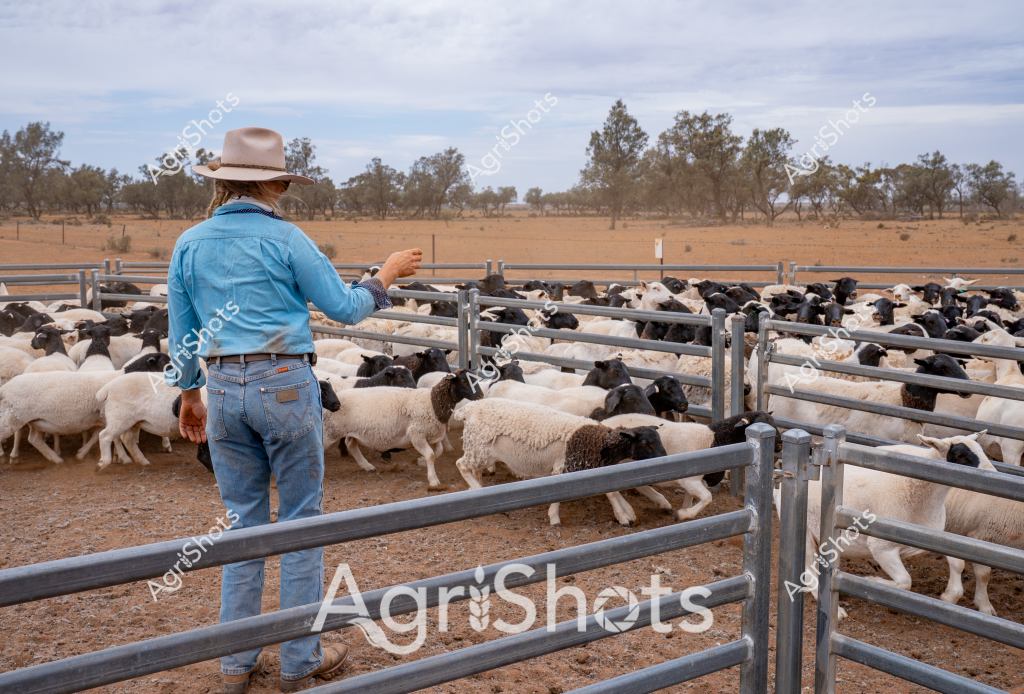
A man stockman carefully manages a large flock of black and white sheep in a dusty paddock in the Australian outback. The livestock - a mix of white and dark-colored sheep - are densely packed within metal yard panels, creating a striking visual of contrasting colors against the dry, golden landscape. Sparse eucalyptus trees line the horizon, indicating the arid conditions typical of rural Australian grazing lands. The stockman, dressed in a light blue long-sleeved shirt and wide-brimmed hat, stands casually among the sheep, demonstrating the calm expertise of an experienced livestock manager. The ground is parched and sandy, with fine dust rising around the animals' hooves, suggesting challenging drought-like conditions. In the background, additional sheep can be seen grazing in the distant paddock, extending the sense of scale and typical extensive farming practices of the region. This scene captures the essence of Australian sheep farming - a blend of professional animal management, rugged landscape, and the resilience required to operate in harsh agricultural environments. The image provides a vivid snapshot of pastoral life, showcasing the interaction between skilled workers and the livestock in a challenging rural setting.
 Image
Image
A man stockman stands in a dry, arid landscape, overseeing a large flock of black and white sheep within a metal livestock yard. Wearing a light blue long-sleeved shirt, faded blue jeans, and a wide-brimmed tan hat, he appears to be managing the mob of sheep in what looks like a typical Australian outback setting. Sparse eucalyptus trees dot the background, highlighting the sparse, golden-brown landscape that speaks to the challenging drought conditions of the region. The sheep - a mix of white and black-faced breeds, likely Dorper or Suffolk cross - are tightly packed within the steel paneled yards, creating a dense cluster of woolly bodies. The ground is dry and compacted, with minimal vegetation, emphasizing the harsh environmental conditions. The stockman's posture suggests careful observation and management, with one arm raised, potentially signaling or directing the movement of the livestock. This image captures the resilience of Australian agriculture, showcasing how farmers adapt to challenging landscapes and maintain the livestock operations under difficult environmental conditions. The scene epitomizes the daily work of a rural stockman, managing sheep in the unforgiving Australian interior.
 Image
Image
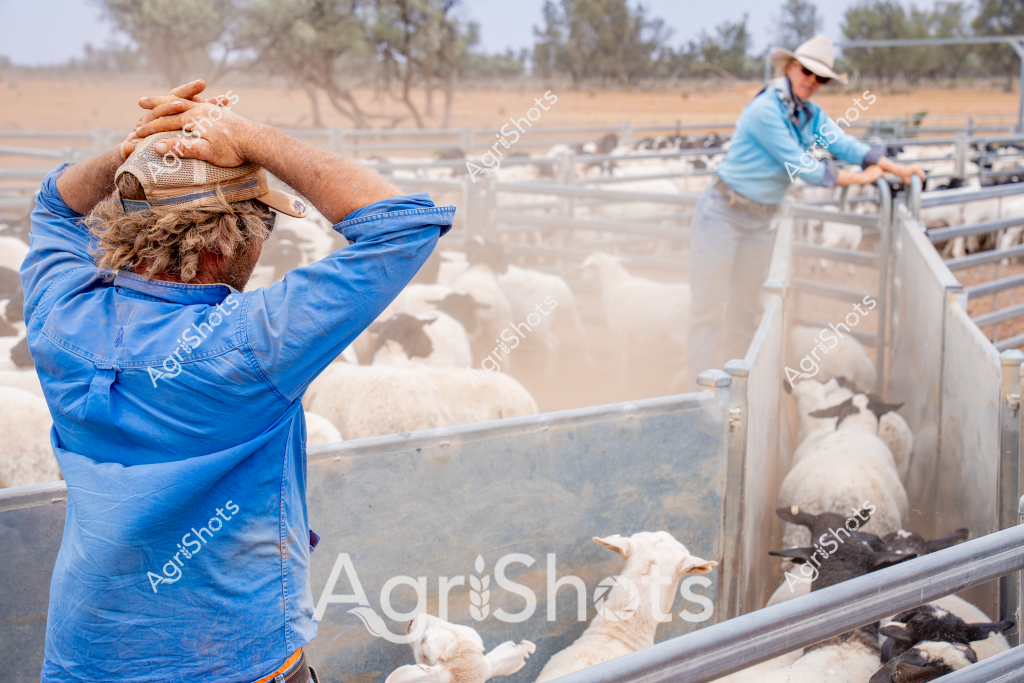
A woman in a blue shirt and wide-brimmed sun hat works in a dusty sheep yard, managing a flock of white sheep during what appears to be a warm, dry day. In the foreground, another worker wearing blue stands with hands clasped behind their head, suggesting physical exertion or momentary fatigue during the livestock management process. The metal livestock yards are filled with sheep, creating a cloud of dust as they move and shuffle within the confined space. Sparse trees and arid landscape are visible in the background, indicating this is likely a rural Australian farm setting during a dry season. The scene captures the demanding physical work of sheep farming, with workers managing livestock in challenging environmental conditions. The blue work shirts, wide-brimmed hats, and metal yard infrastructure are typical of Australian agricultural practices, highlighting the practical and resilient nature of rural farm work.
 Image
Image
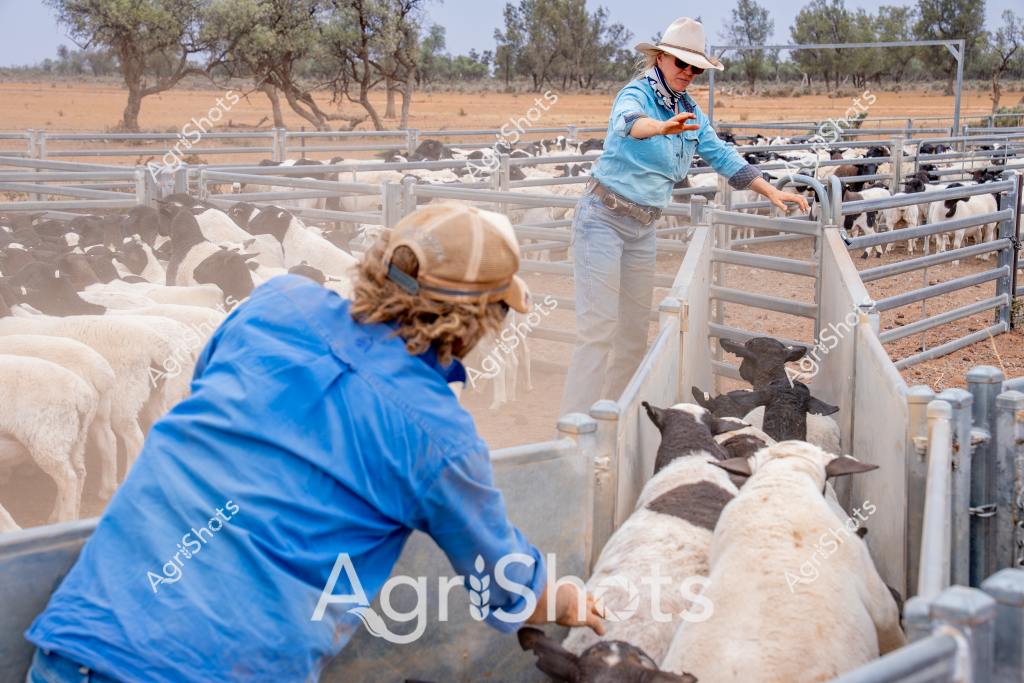
A woman stockman in a light blue long-sleeved shirt and wide-brimmed hat works in a dry, dusty livestock yard, carefully managing a group of white and black sheep through metal livestock gates. The arid landscape features scattered eucalyptus trees and reddish-brown earth, typical of an Australian rural station or pastoral property. Another worker in a bright blue jacket assists with moving the sheep through the narrow metal loading chute, raising dust around their legs as they guide the animals. The scene captures the precision and skill required in sheep handling, with the workers demonstrating professional livestock management techniques. Multiple sheep - a mix of white and darker-colored animals - are tightly packed in the metal yard, waiting to be sorted or moved. The environment suggests a hot, dry climate, with sparse vegetation and open paddocks stretching into the distance, reflecting the challenging conditions of Australian pastoral agriculture. The image exemplifies the daily work of stockpeople in managing livestock, showcasing the important role of human skill and experience in agricultural operations. The careful positioning of the workers, the sturdy metal infrastructure, and the dust-laden atmosphere all contribute to a powerful representation of Australian rural life and sheep farming.
 Image
Image
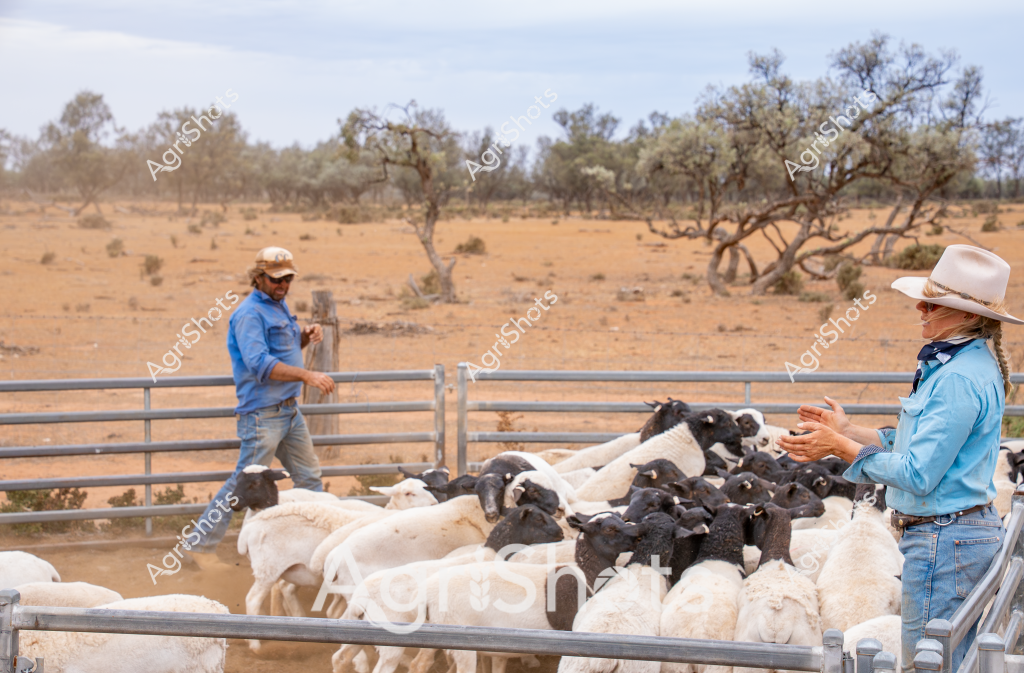
Two people manage a flock of black and white sheep in a dry, arid paddock with scattered eucalyptus trees. A woman in a light blue shirt and wide-brimmed hat and a man in a blue work shirt are positioned at opposite ends of a metal livestock yard, working together to control the herd. The landscape is typical of central Australian rangelands - reddish-brown earth, sparse vegetation, and twisted trees indicating harsh environmental conditions. The sheep, a mix of white and black woolly animals, are tightly packed within the metal yard panels, suggesting they are being sorted, counted, or prepared for movement. The scene captures the everyday work of Australian livestock management, highlighting the skill and teamwork required to handle livestock in challenging rural environments. The expansive background demonstrates the classic Australian pastoral setting - a sparse, open landscape with minimal ground cover, twisted native trees, and a muted, dusty color palette that speaks to the resilience of agricultural workers and animals in this demanding terrain. Their coordinated movements and professional demeanor illustrate the precision and experience required in sheep farming.