Browse the collection
 Image
Image
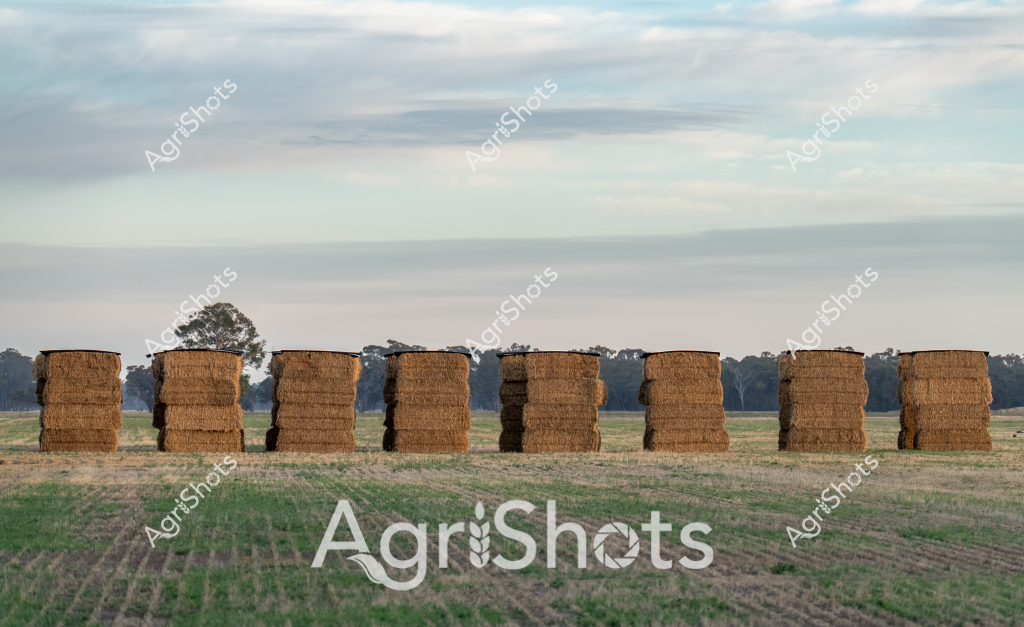
A series of golden hay bales stands neatly arranged in a linear formation across a rural agricultural landscape, creating a rhythmic pattern against the soft, overcast sky. The rectangular straw bales, tightly compressed and stacked vertically, represent the result of careful harvesting and storage techniques used by Australian farmers. Muted green and brown grasses of the harvested paddock stretch out before the hay stacks, with distant eucalyptus trees marking the horizon line. The uniform arrangement of the bales suggests systematic agricultural practice, highlighting the precision and efficiency of modern farming methods. A subtle gradient of soft blues and grays in the sky provides a gentle backdrop to the golden-brown tones of the hay, creating a classic Australian rural scene that captures the essence of broadacre farming and hay production.
 Image
Image
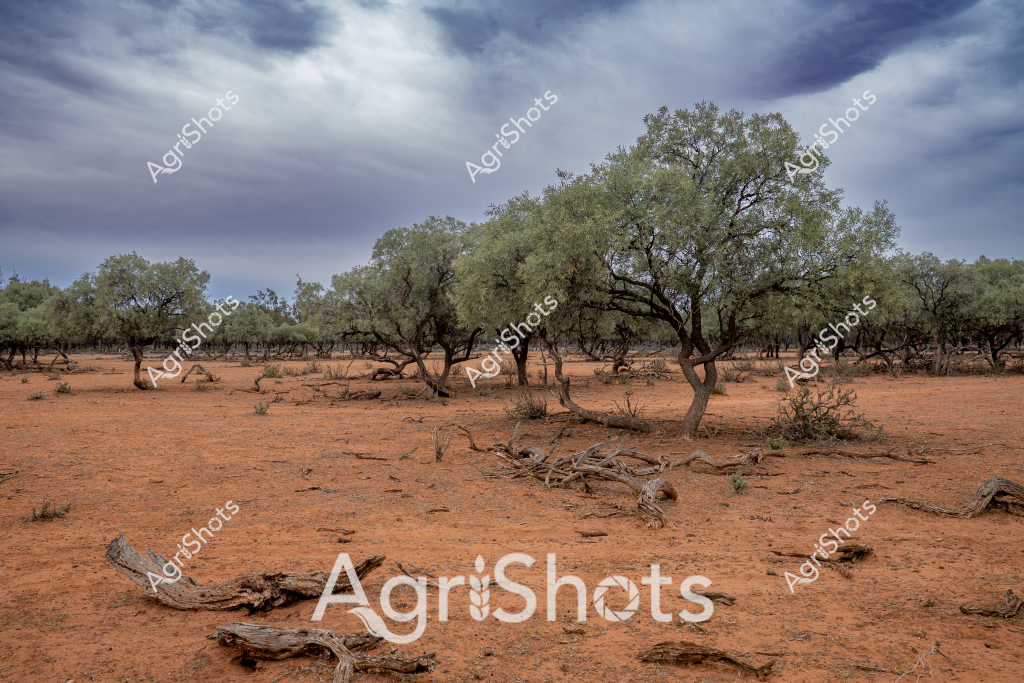
A stark olive grove stands resilient amid a harsh, rust-colored landscape under a brooding storm sky. Gnarled and weathered olive trees with silvery-green foliage are spaced across the parched, cracked earth, their twisted branches testament to years of survival in challenging conditions. Fallen branches and dried woody debris scatter across the ground, emphasizing the severe drought-like environment. Thunderclouds gather overhead in deep slate and gray tones, creating a dramatic backdrop that highlights the landscape's arid, unforgiving nature. The reddish soil speaks to the mineral-rich but water-starved terrain typical of Australia's challenging agricultural regions. This image powerfully captures the resilience of agricultural landscapes during prolonged dry periods, where trees and vegetation maintain a delicate balance of survival against harsh environmental conditions.
 Image
Image
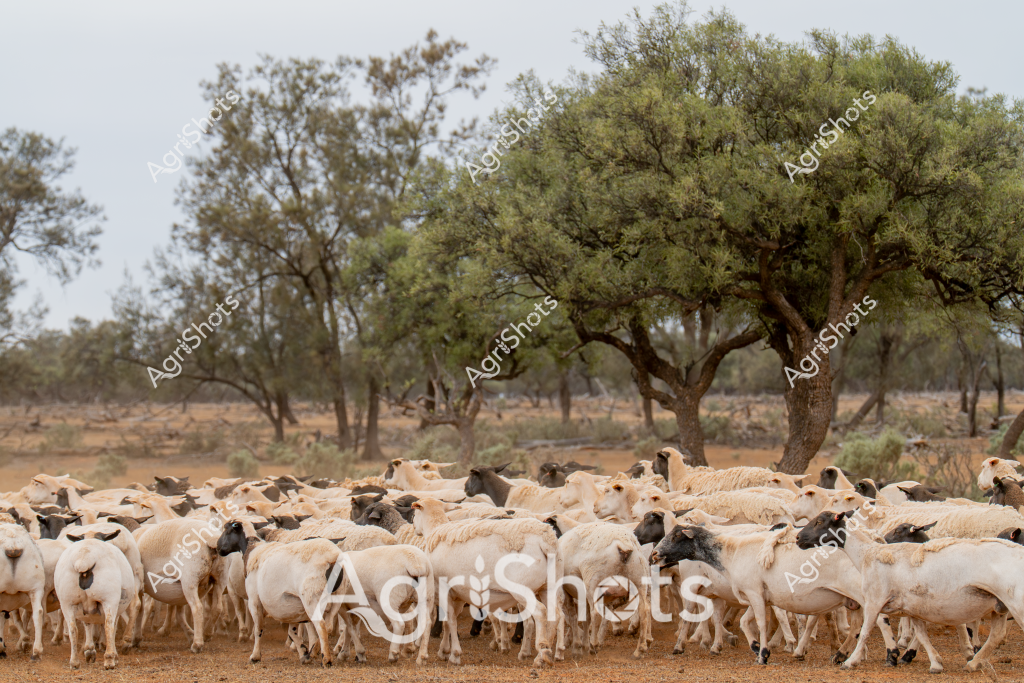
A densely packed herd of white and black sheep clusters beneath sprawling acacia trees in a dry, arid landscape typical of inland Australia. The woolly mob, primarily light-colored with some dark-fleeced individuals, stands tightly together on dusty, reddish-brown ground, creating a textural landscape of pastoral production. Gnarled, grey-green trees with spreading canopies provide minimal shade, illustrating the challenging environmental conditions of this remote grazing region. The sheep appear calm and stationary, their bodies creating a unified mass that speaks to the resilience of Australian livestock in harsh outback environments. The muted color palette of beige, grey, and olive green captures the subtle beauty of Australia's agricultural landscapes, where survival depends on adaptability and careful management.
 Image
Image
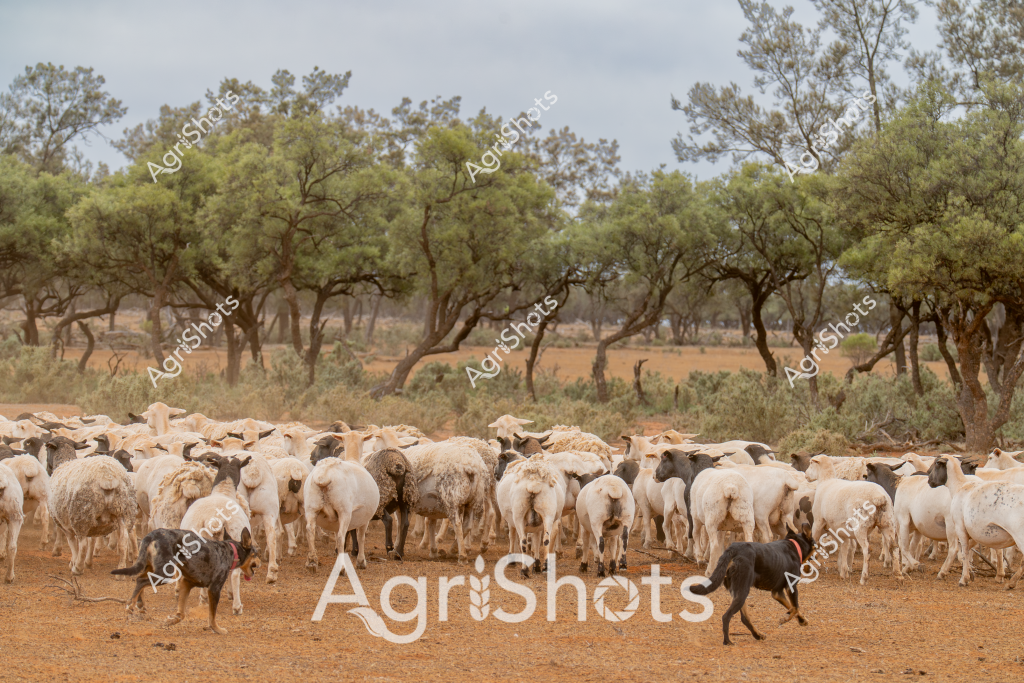
A substantial flock of white and dark-colored sheep cluster tightly together on a dry, reddish-brown earth paddock, surrounded by sparse acacia and eucalyptus trees. Two working dogs, likely Australian Kelpies, move strategically around the herd, herding and controlling the sheep's movement with practiced precision. The landscape suggests an arid or semi-arid region, with muted green trees providing a soft backdrop against the dusty ground where the sheep are densely packed. The animals appear to be Merino or crossbred sheep, their woolly backs facing mostly outward, creating a textured mass of cream and darker fleece. The scene captures the quintessential Australian pastoral setting - a moment of controlled movement during mustering, where skilled working dogs and the natural landscape work in harmony to manage livestock in challenging environmental conditions. The image represents the resilience of Australian agricultural practices, showcasing how farmers and their canine partners navigate vast, challenging terrains to manage livestock effectively. The dogs' positioning and the sheep's tight formation demonstrate the sophisticated communication and training required in rural stock management.
 Image
Image
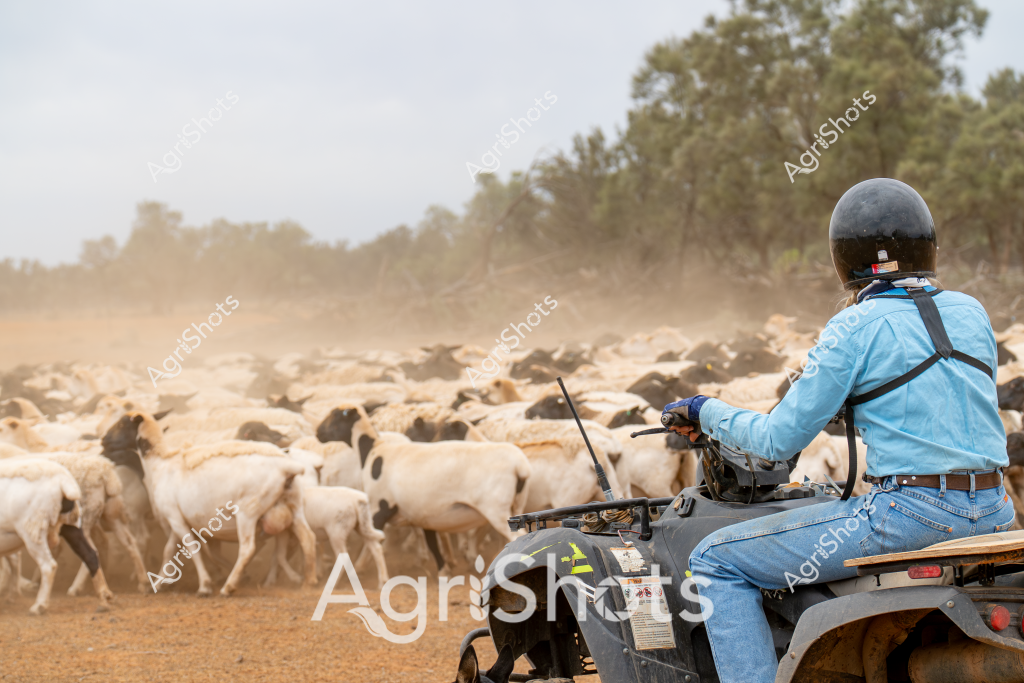
A man on an all-terrain vehicle (ATV) guides a large flock of white and mixed-colored goats across a dry, dusty paddock in rural Australia. Wearing a blue shirt, helmet, and carrying a radio, the livestock manager carefully steers the ATV through the herd, raising a cloud of fine dirt behind him. The landscape is characterized by sparse ground vegetation and distant eucalyptus trees, suggesting a dry pastoral region typical of Australia's inland areas. Dozens of goats move together in a tight cluster, their varied coat colors of white, tan, and brown creating a mottled appearance against the brown earth. The scene captures the challenging yet essential work of livestock management in an arid agricultural setting, highlighting the skill required to muster and control a large herd across open terrain. The dust and movement convey the dynamic nature of pastoral farming, with the ATV serving as a critical tool for modern livestock handling.
 Image
Image
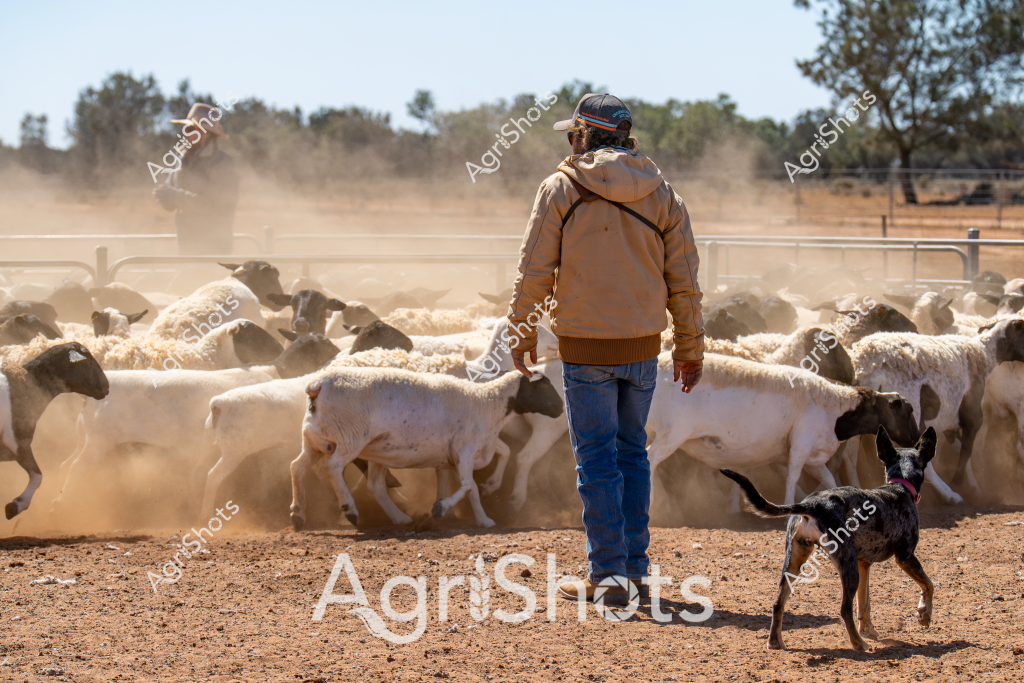
A man stockman stands amid a large flock of white sheep, surrounded by dust and dry paddock conditions. Wearing a tan jacket, blue jeans, and a cap, he is accompanied by a black working dog, likely a Kelpie, who helps manage the livestock. The sheep - a mix of white and dark-faced breeds, possibly Merino or crossbred - mill about in a confined area with metal livestock yards visible in the background. Dry, compacted earth and sparse vegetation suggest this is a typical Australian rural setting during drought or dry season. A light haze of dust rises from the movement of the sheep, creating an atmospheric scene that captures the challenging environmental conditions faced by Australian farmers. The stockman's positioning and the dog's stance demonstrate the skilled partnership between human, canine, and livestock in managing agricultural operations.
 Image
Image
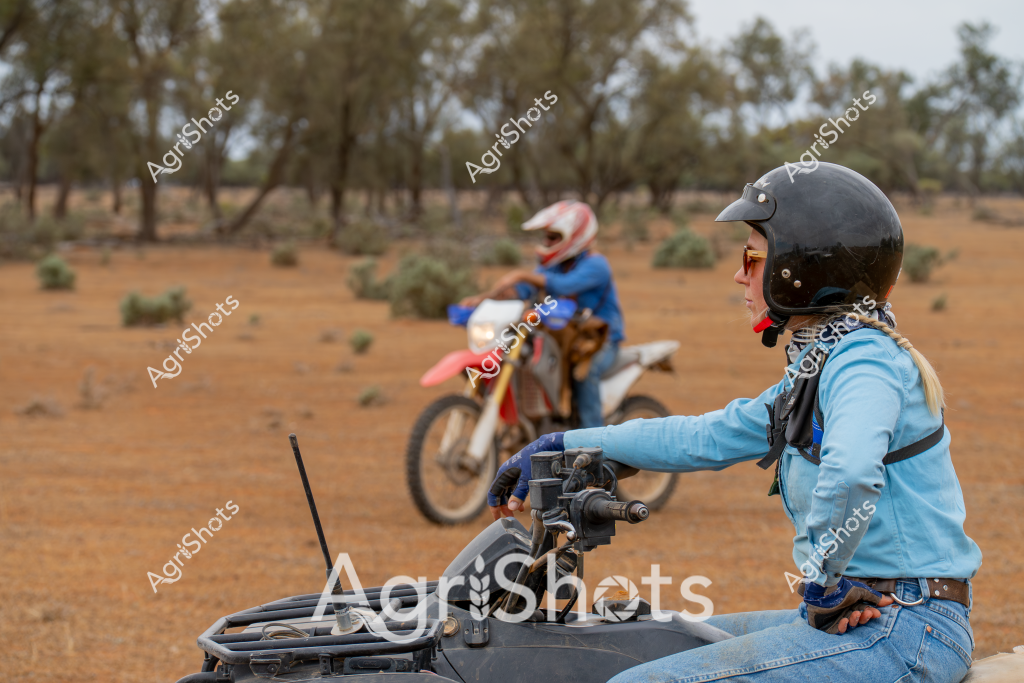
A woman in a blue jacket and black helmet navigates an all-terrain vehicle (ATV) across a dry, open landscape dotted with sparse trees and low shrubs. In the background, another motorcycle rider in a red and blue outfit travels across the dusty, reddish-brown terrain. The scene captures the rugged nature of off-road riding in an arid Australian environment, with the riders demonstrating skill and confidence as they traverse the challenging landscape. The sparse vegetation and open ground suggest this is likely a remote rural or outback setting, where off-road vehicles are essential for traversing extensive properties or exploring challenging terrain. The riders are fully equipped with protective gear, highlighting the importance of safety in these challenging outdoor conditions.
 Image
Image
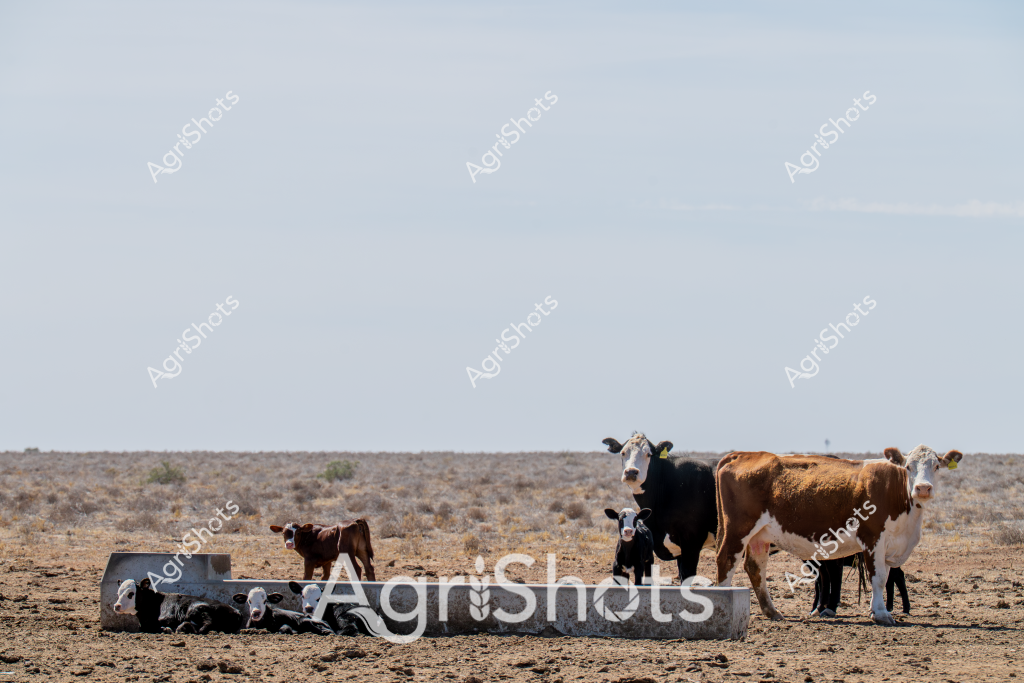
A small herd of cattle gather around a metal water trough in an arid, sparse landscape typical of Australia's dry interior. Two adult cows - one black and white, the other brown and white - stand near the trough, with a few smaller calves clustered around its base. The surrounding terrain is a dusty, rocky landscape with minimal vegetation, scattered low shrubs, and a pale gray-blue sky stretching to a distant horizon. These cattle appear to be seeking hydration in a challenging environment, highlighting the resilience of livestock in Australia's drought-prone regions. The sparse ground cover and metallic water infrastructure underscore the harsh conditions of outback pastoral farming, where water management is critical to livestock survival. The scene captures the essence of cattle farming in remote Australian landscapes, where animals must adapt to minimal resources and extreme environmental conditions. The mixture of cattle breeds and ages suggests this is likely a small family or station herd, carefully managed to survive in an unforgiving terrain.
 Image
Image
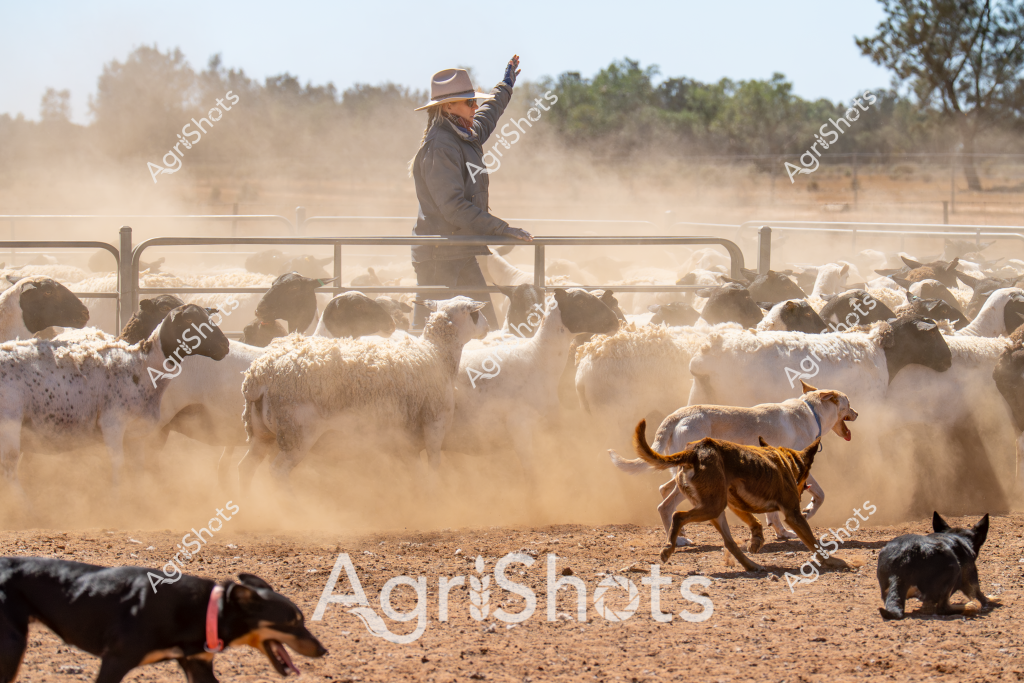
A skilled woman stockman directs a flock of white and speckled sheep during a dusty mustering operation on a dry, sun-baked paddock. Standing confidently atop a metal gate, she wears a wide-brimmed hat and gestures with an outstretched arm, guiding her working dogs who are herding the sheep. Multiple dogs - some black and others tan-colored - move swiftly around the livestock, kicking up clouds of red dust against the parched earth. The surrounding landscape features sparse trees and scrubland, typical of an Australian rural station environment during drought conditions. The intense action and swirling dust create a dynamic scene of traditional livestock management, highlighting the skill and teamwork required in mustering sheep across challenging terrain. The image captures the raw energy and practical expertise of Australian agricultural work, with the stockwoman and her dogs working in perfect synchronization to control the moving flock.
 Image
Image
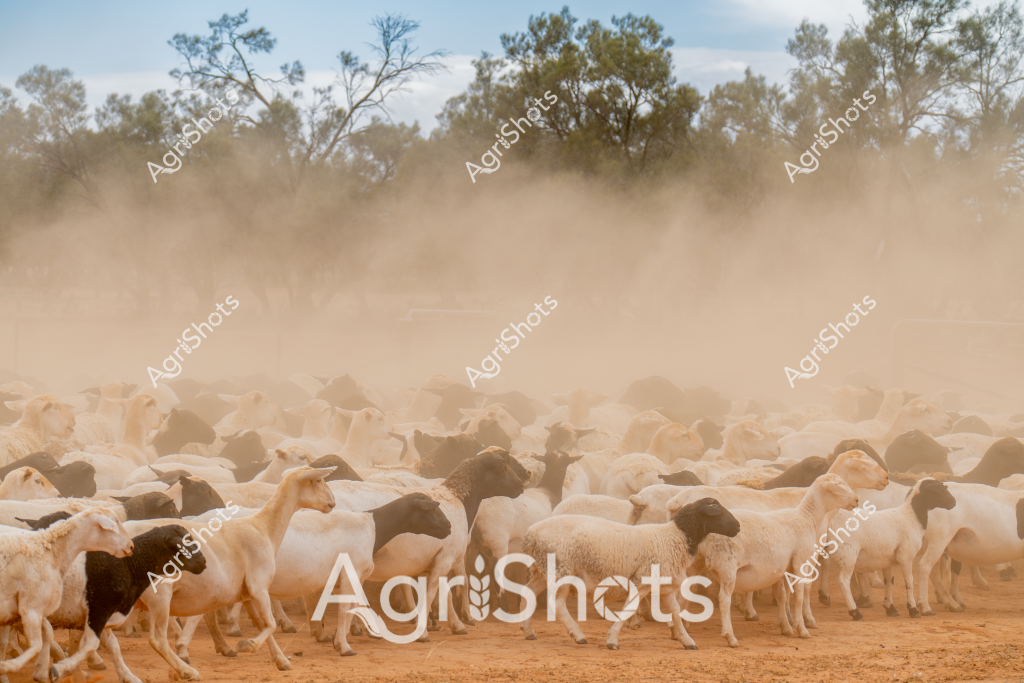
A large flock of mixed-breed sheep kicks up a massive dust cloud during mustering in the Australian outback. Merino and other white and black sheep are tightly clustered on a dry, reddish-brown earth paddock, surrounded by sparse eucalyptus trees in the background. The intense dust storm created by their movement obscures parts of the landscape, highlighting the dynamic nature of livestock management in arid regions. The sheep appear to be in motion, potentially being moved between pastures or preparing for sorting and handling. The scene captures the challenging environmental conditions of rural Australian livestock farming, where dust, heat, and vast open spaces are constant companions to shepherds and their flocks. The stark contrast between the light-colored sheep and the ochre earth creates a powerful visual representation of Australia's agricultural landscape.
 Image
Image
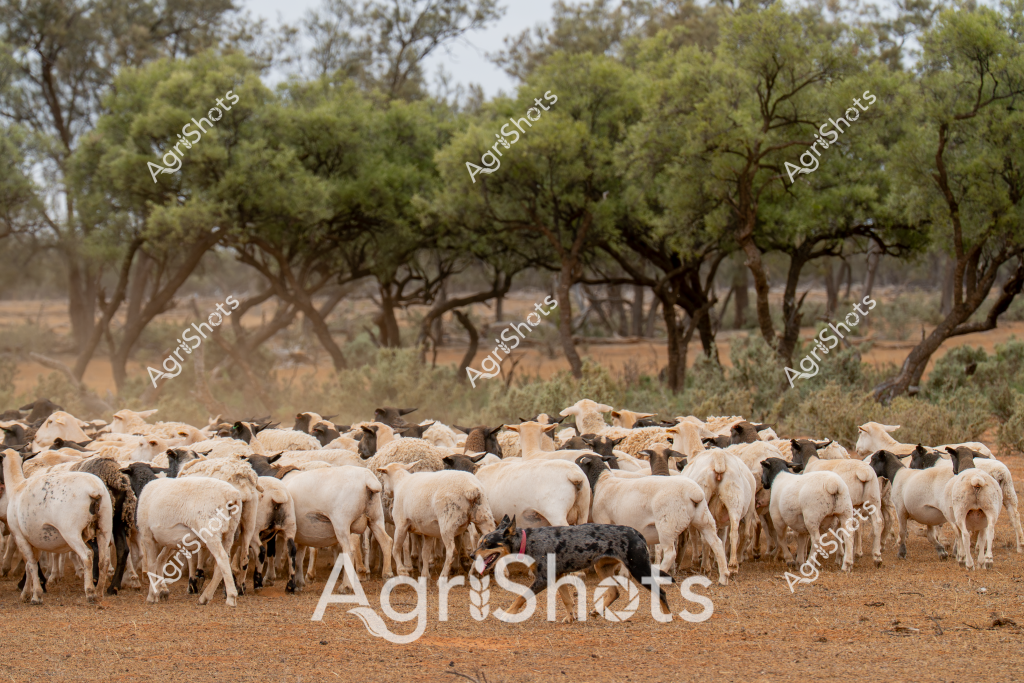
A vigilant working dog herds a large flock of white and dark-colored sheep in a classic Australian rural landscape. The dense mob of sheep, predominantly light-colored with some dark individuals, stands tightly clustered on dry, reddish-brown earth, surrounded by scattered gum trees and sparse native vegetation. A compact black and tan working dog, likely a Kelpie or Australian Cattle Dog, navigates carefully through the flock, demonstrating the critical role of livestock dogs in managing large herds across challenging pastoral environments. The background reveals a typical Australian bushland setting with mature eucalyptus trees creating a muted green and grey backdrop, their branches spreading wide across the arid landscape. The scene captures the essence of Australian sheep farming - a testament to the resilience of both animals and handlers in managing livestock across vast, challenging terrain. The tight grouping of sheep and the strategic positioning of the herding dog showcase the precision and skill required in rural agricultural practices.
 Image
Image
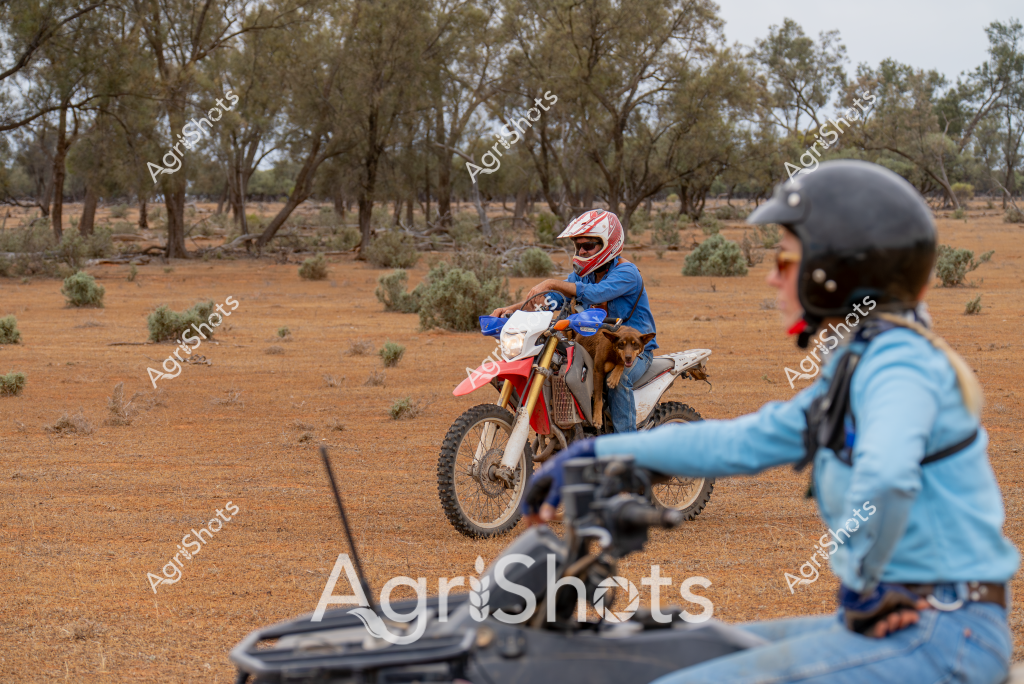
A dirt bike rider in blue clothing and a red helmet navigates an arid landscape, accompanied by a dog riding along on the motorcycle. Sparse eucalyptus trees and low scrub vegetation populate the reddish-brown terrain, creating a classic Australian outback scene. Another rider in blue, wearing a black helmet, is partially visible in the foreground, suggesting this is a shared outdoor adventure. The dry, dusty environment with scattered trees and ground-hugging bushes highlights the rugged nature of rural Australian terrain. The motorcyclists appear to be exploring or traversing the remote landscape, showcasing the spirit of adventure and mobility in challenging outback conditions.
 Image
Image
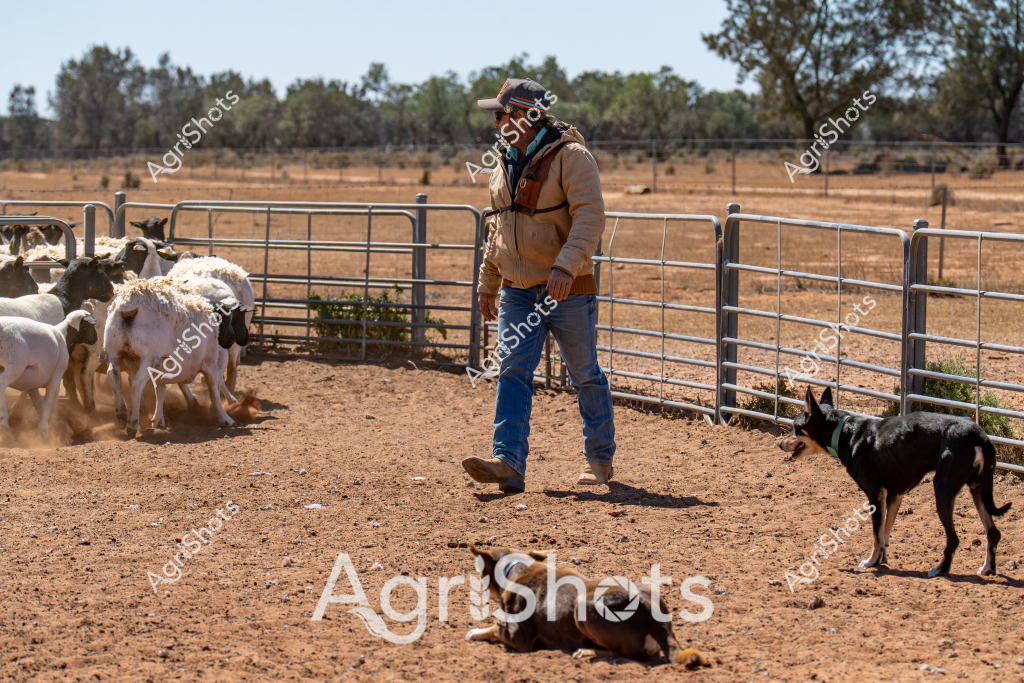
A man stockman stands in a dry, dusty yard managing a small flock of white sheep within metal livestock gates. A black working dog sits attentively nearby, while another dog lies on the ground, both ready to assist with stock movement. The landscape is typical of an Australian rural setting, with sparse paddocks and scattered eucalyptus trees visible in the background. The stockman wears traditional farm attire - a tan jacket, blue jeans, and a cap - suggesting a typical day of livestock management in what appears to be an arid or drought-affected region. The ground is hard-packed dirt, with minimal vegetation, highlighting the challenging environmental conditions common in Australian agricultural areas. The scene captures the essence of rural stock management, where skilled workers and their trained dogs work together to control and move livestock in harsh, dry conditions. The interaction between the stockman, his dogs, and the sheep demonstrates the precision and teamwork required in Australian farming.
 Image
Image
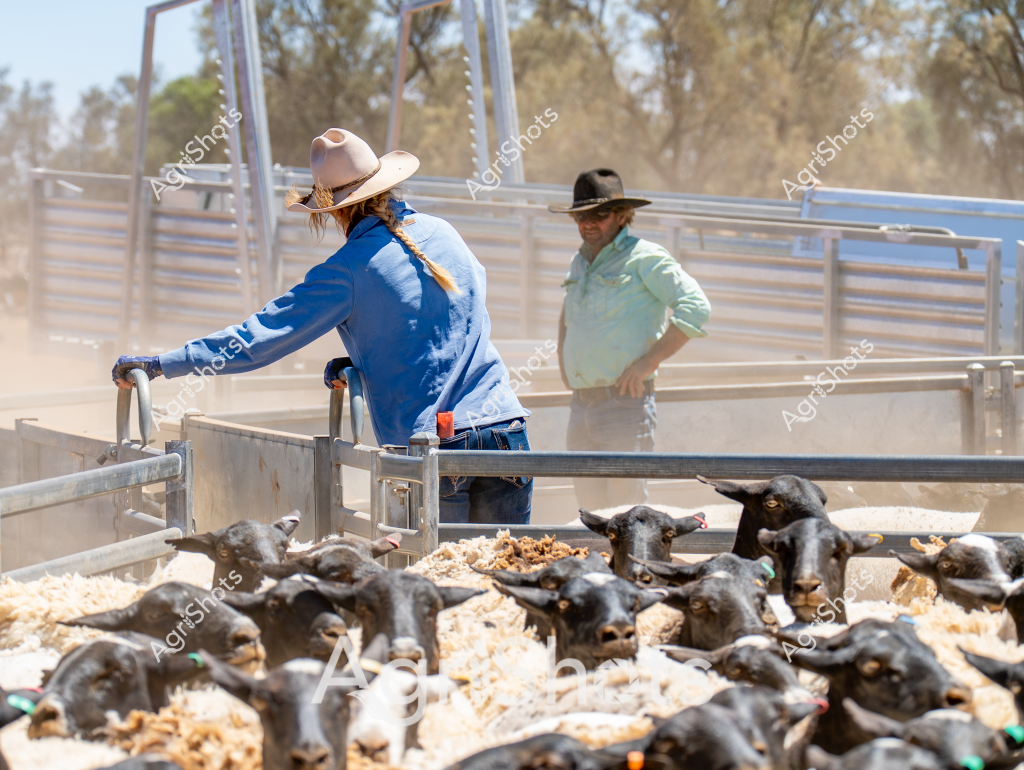
Two workers manage a group of black goats in a dusty livestock yard, with metal cattle panels and handling facilities surrounding them. A woman in a blue jacket and wide-brimmed hat operates the gate control, while a man in a light green shirt stands nearby observing the livestock. Multiple young black goats are clustered on straw bedding within the metal yard, some with colored ear tags indicating they are part of a managed herd. The scene is dry and sun-drenched, with trees and yard infrastructure visible in the background, suggesting this is a typical agricultural livestock management setting in rural Australia. Dust hangs in the air, highlighting the movement and activity of the goat handling process. The workers' attire - wide-brimmed hats, long-sleeved shirts, and practical work clothing - indicates professional agricultural practice and protection from the harsh Australian sun.
 Image
Image
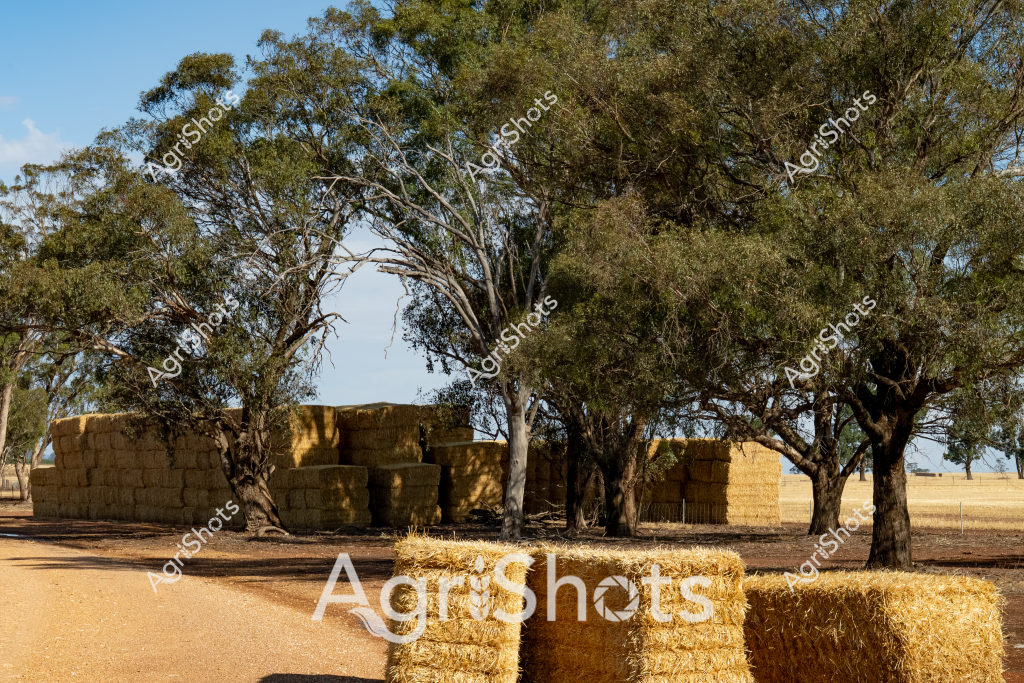
Golden hay bales are stacked beneath mature eucalyptus trees in a classic Australian rural landscape. The dry, sandy ground and expansive trees create a quintessential outback scene, with rectangular straw bales arranged in neat stacks near the tree line. Soft shadows cast by the gnarled tree trunks stretch across the ground, highlighting the golden-brown tones of the compressed hay. The landscape appears to be in a dry region, likely during late summer or early autumn when hay harvesting is typically completed. Sunlight filters through the eucalyptus branches, creating a warm, textured environment that speaks to the agricultural rhythms of rural Australia. The carefully arranged hay bales suggest efficient farm management and preparation for livestock feed during the drier months.
 Image
Image
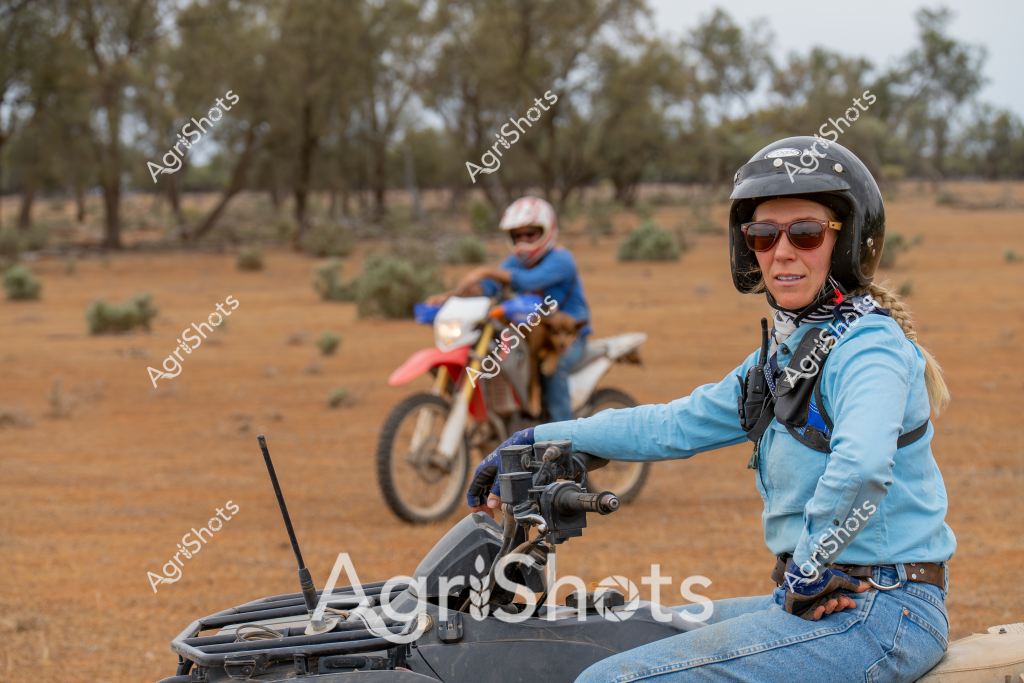
A woman rider sits confidently on an all-terrain vehicle (ATV) in a dry, sparse Australian outback landscape, wearing protective gear including a black helmet, sunglasses, and a light blue long-sleeved top. In the background, another rider on a red dirt bike navigates the arid terrain, which features scattered low shrubs and sparse eucalyptus trees across a reddish-brown soil surface. The scene captures the rugged nature of rural Australian terrain, with both riders equipped for off-road exploration, highlighting the robust spirit of outdoor adventure in a challenging landscape. The woman's positioning on the ATV suggests she is experienced and comfortable in this remote environment, with her sunglasses and helmet providing protection from the harsh Australian sun and dust. The sparse vegetation and open ground underscore the challenging conditions of this remote agricultural or pastoral setting.
 Image
Image
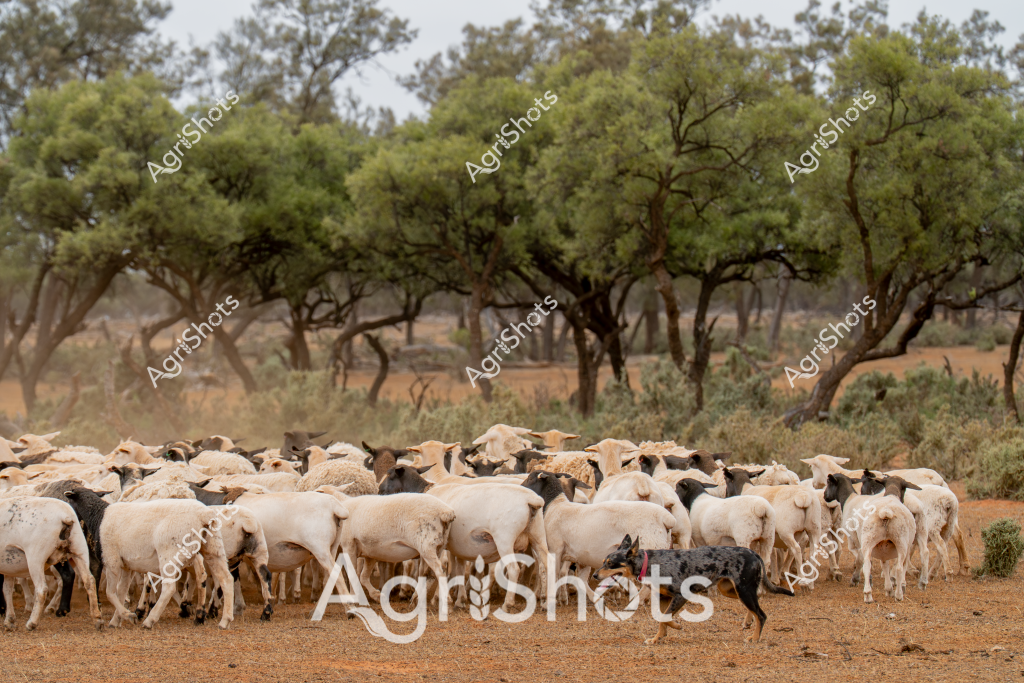
A working dog carefully herds a large flock of white and black sheep across a dry, dusty paddock in the Australian outback. The dense mob of sheep, predominantly white with some black-faced individuals, stands tightly clustered on reddish-brown earth, surrounded by scattered eucalyptus trees with their distinctive green foliage. A lone black and white cattle dog weaves strategically around the flock, demonstrating the classic Australian pastoral scene of livestock management in a challenging rural landscape. The trees provide a sparse backdrop, casting subtle shadows across the ground and highlighting the aridity of the environment. This image captures the essence of Australian sheep farming - a delicate balance of skilled animal husbandry, working dogs, and survival in a harsh, drought-prone landscape where every animal and blade of vegetation must be carefully managed. The scene reflects the resilience of Australian agricultural practices, where livestock are moved and managed with precision in environments that demand adaptability and skill from both human and animal workers. The contrast between the woolly sheep and the dry, sparse landscape underscores the challenges of sheep farming in rural Australia.
 Image
Image
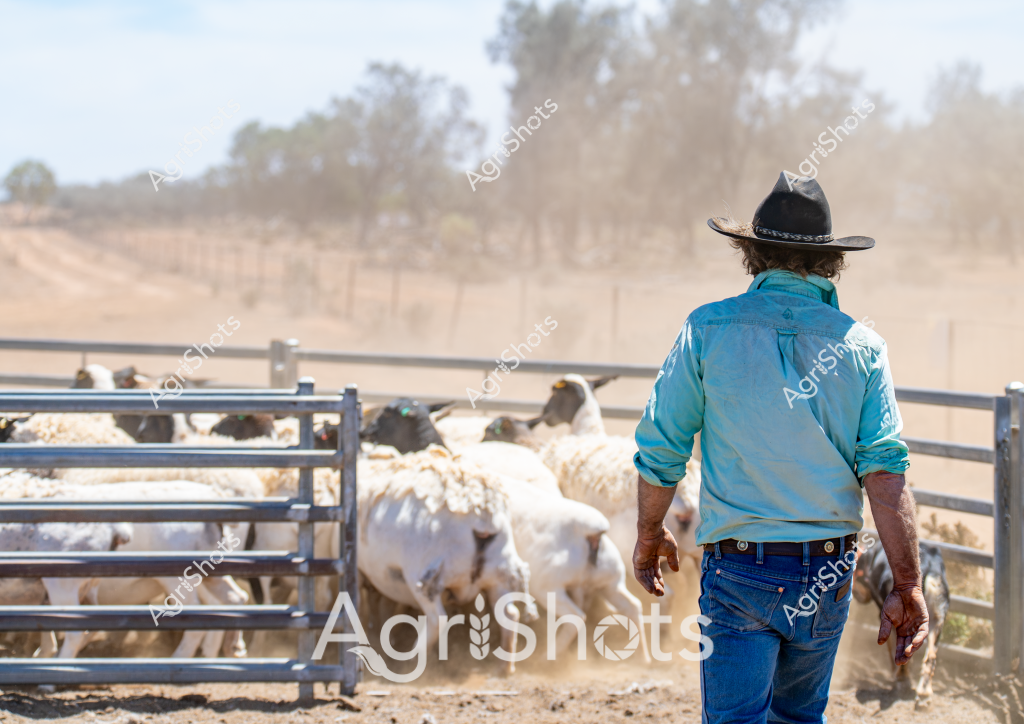
A man stockman wearing a black cowboy hat and bright blue long-sleeved work shirt stands with his back to the camera, overlooking a flock of white sheep in a dusty livestock yard. Metal livestock panels divide the paddock, with trees visible in the hazy background creating a classic Australian rural landscape. The stockman appears focused on managing the sheep, which are densely clustered within the metal fencing. Dry, compacted earth and a subtle dust cloud suggest this is likely an arid or drought-affected region, typical of many Australian pastoral areas. The scene captures the everyday work of livestock management, with the stockman's stance reflecting years of experience in handling sheep in challenging environmental conditions.
 Image
Image
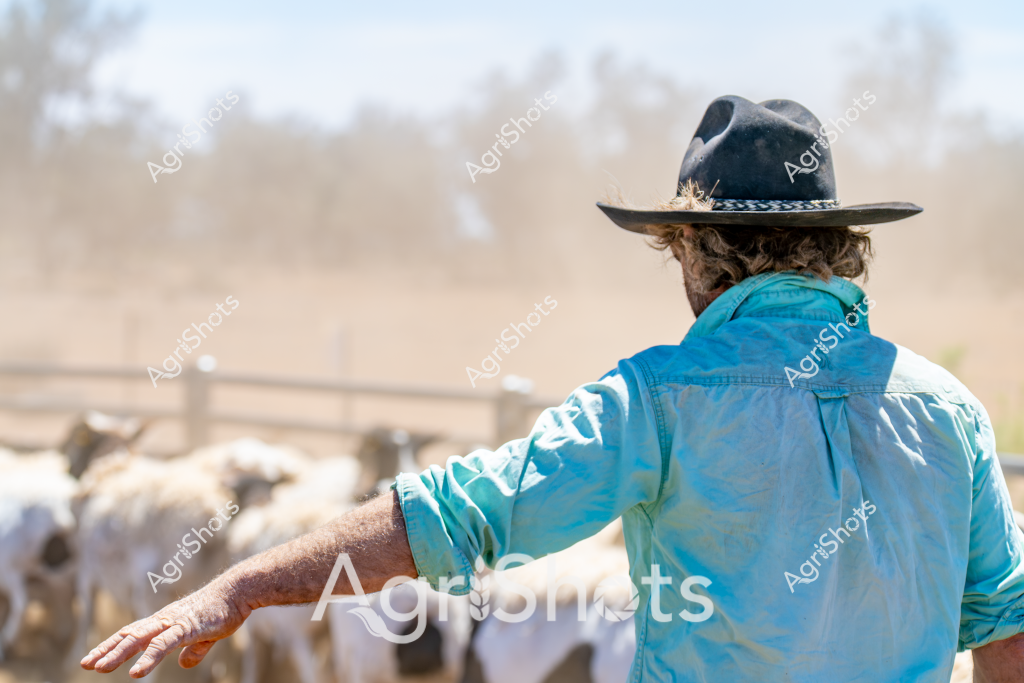
A stockman in a bright blue shirt and black wide-brimmed hat stands with his back to the camera, overlooking a herd of cattle in a dusty, sunlit paddock. His posture suggests focused concentration as he surveys the livestock, with one arm extended in a gesture of guidance or direction. The landscape appears dry and sparse, typical of an Australian rural setting, with blurred fencing and scattered vegetation in the background. The man's weathered arm and curled hair beneath his hat indicate years of outdoor work, embodying the resilience of Australian agricultural workers. His attire - a robust blue work shirt and classic stockman's hat - is quintessential rural Australian clothing, perfectly suited to the harsh pastoral environment. The scene captures a moment of quiet observation, highlighting the connection between the stockman and the land he manages.
 Image
Image
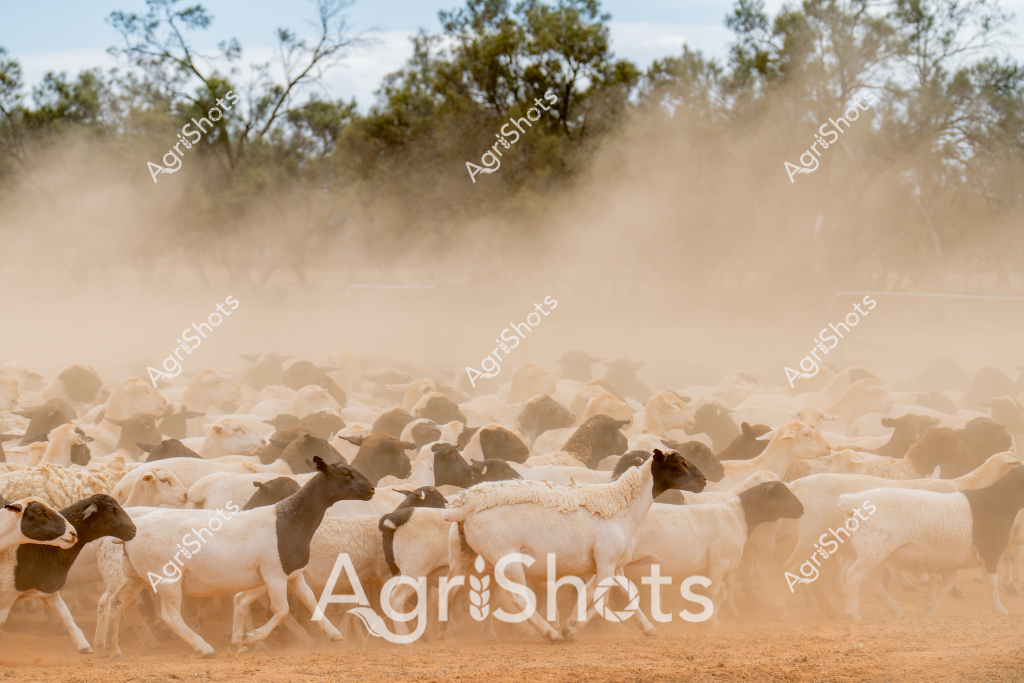
A large herd of sheep generates a massive dust cloud in a dry, arid Australian landscape. The flock consists of white and dark-colored sheep, tightly clustered together and kicking up ochre-colored earth beneath their hooves. Sparse eucalyptus trees and native scrub vegetation form a muted green backdrop against the dusty beige terrain. The dense mob of sheep appears to be moving or being mustered, creating a swirling cloud of fine dust that obscures parts of the landscape. The scene captures the harsh, dynamic environment of outback livestock management, where animals navigate challenging dry conditions with resilience. The image powerfully illustrates the intersection of livestock, landscape, and the demanding nature of Australian pastoral agriculture.
 Image
Image
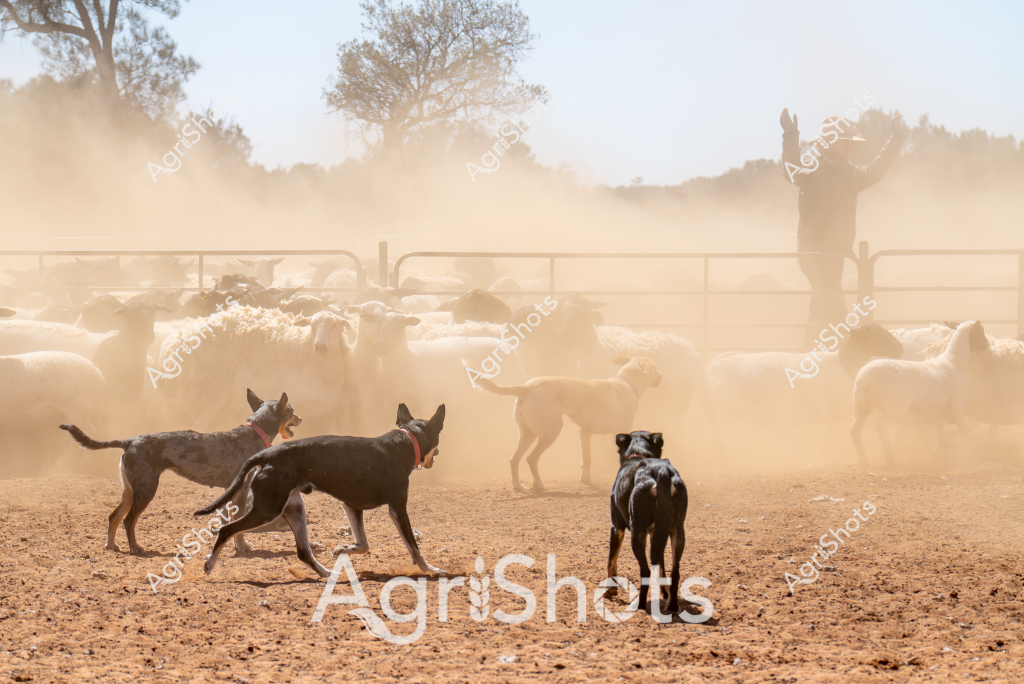
A dusty, sun-drenched livestock yard captures the intense work of three working dogs herding a large flock of sheep. Two dark-colored dogs, likely Australian Kelpies, stand alert in the foreground, their muscular bodies tense with concentration, while a third dog moves among the sheep in the background. A dense cloud of red-brown dust rises from the dry, packed earth, obscuring the distant fence line and trees, creating a hazy, atmospheric scene typical of Australian pastoral landscapes. The sheep - appearing to be a white wool breed, possibly Merinos - are tightly clustered within a fenced paddock, their woolly forms blending together in the dusty environment. The working dogs demonstrate the classic Australian farming technique of precise, controlled herding, moving strategically to manage the flock's movement and direction. One dog stands with an assertive posture, while another seems to be actively guiding the sheep, showcasing the incredible skill and training of these essential farm companions. The scene powerfully illustrates the challenging conditions of Australian livestock management, with the dry, dusty environment and the hard-working dogs highlighting the resilience required in rural agricultural settings. The image captures the raw, unfiltered essence of sheep farming in what appears to be an arid region, likely during a dry season.
 Image
Image
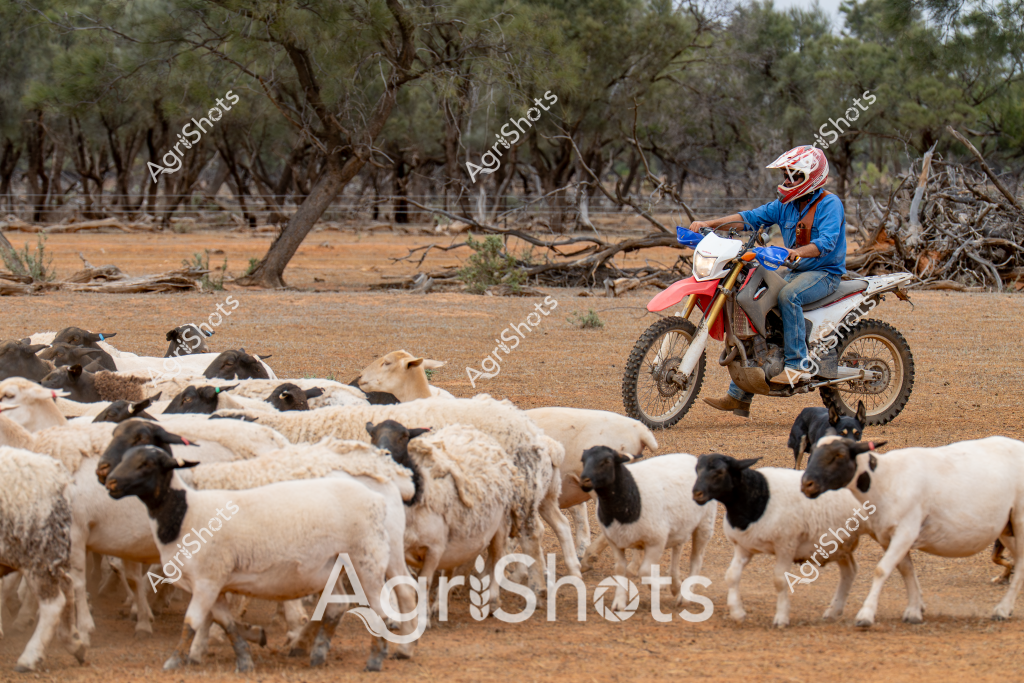
A man on a dirt bike carefully herds a flock of white and black-faced sheep across a dry, sparse landscape with scattered eucalyptus trees. Wearing a blue jacket, red and white helmet, and riding a red trail motorcycle, the rider navigates through the sheep, using the motorcycle as a herding tool in this rugged Australian rural setting. The sheep - which appear to be a breed like Dorper or Suffolk cross - are clustered together, creating a tight mob as they move across the dusty, tree-lined paddock. A small black dog can be seen near the motorcycle, potentially assisting with the livestock movement. The scene captures the adaptability of modern Australian farming, where motorcycles have become an efficient alternative to horses for mustering livestock across challenging terrain. The dry ground, sparse vegetation, and scattered fallen timber suggest this is likely in an inland region experiencing dry seasonal conditions.
 Image
Image
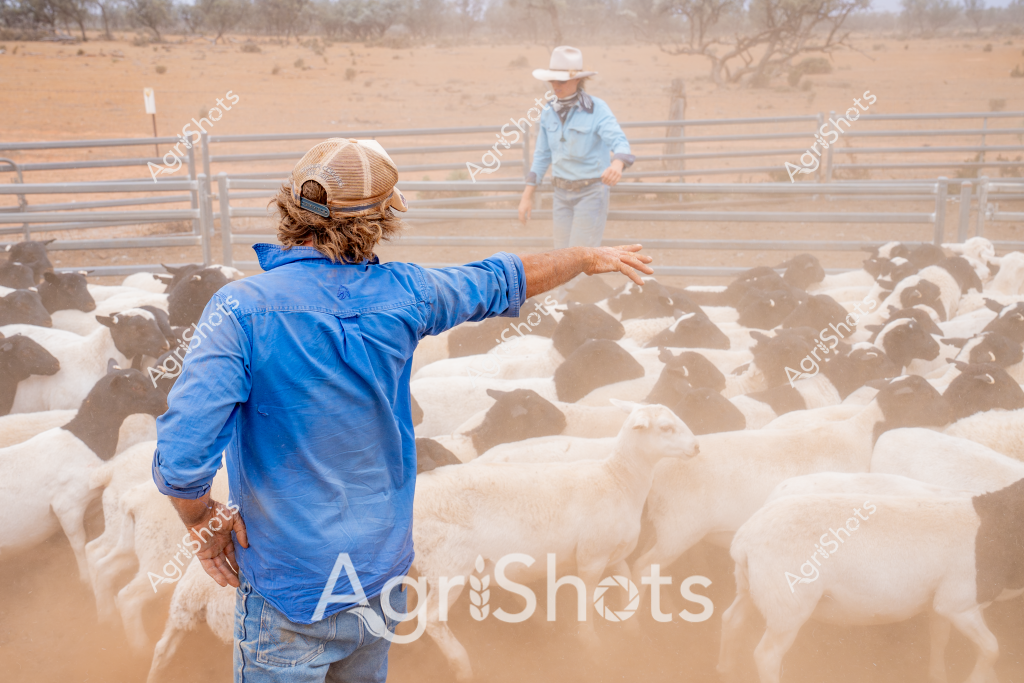
A stockman in a blue work shirt and trucker cap directs a large flock of sheep in a dusty livestock yard. Standing with his arm outstretched, he guides the dense mob of white sheep through a metal cattle yard, coordinating their movement with precision. Another worker in lighter clothing stands in the background, observing the mustering process. The landscape appears arid and typically Australian, with sparse trees and reddish-brown earth visible beyond the yards. Dust rises around the sheep, creating a hazy atmosphere that captures the challenging environmental conditions of rural livestock management. The scene exemplifies the skill and hard work required in Australian sheep farming, where experienced stockmen use subtle gestures to control large numbers of livestock in harsh, dry terrain.
 Image
Image
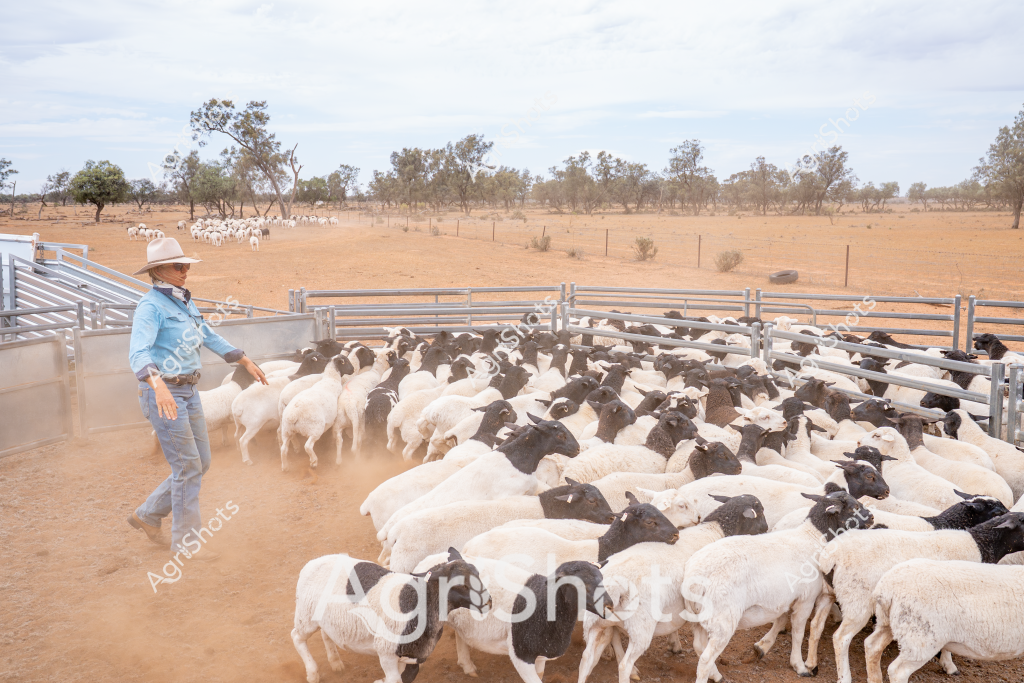
A man stockman carefully manages a large flock of black and white sheep in a dusty paddock in the Australian outback. The livestock - a mix of white and dark-colored sheep - are densely packed within metal yard panels, creating a striking visual of contrasting colors against the dry, golden landscape. Sparse eucalyptus trees line the horizon, indicating the arid conditions typical of rural Australian grazing lands. The stockman, dressed in a light blue long-sleeved shirt and wide-brimmed hat, stands casually among the sheep, demonstrating the calm expertise of an experienced livestock manager. The ground is parched and sandy, with fine dust rising around the animals' hooves, suggesting challenging drought-like conditions. In the background, additional sheep can be seen grazing in the distant paddock, extending the sense of scale and typical extensive farming practices of the region. This scene captures the essence of Australian sheep farming - a blend of professional animal management, rugged landscape, and the resilience required to operate in harsh agricultural environments. The image provides a vivid snapshot of pastoral life, showcasing the interaction between skilled workers and the livestock in a challenging rural setting.