About this image
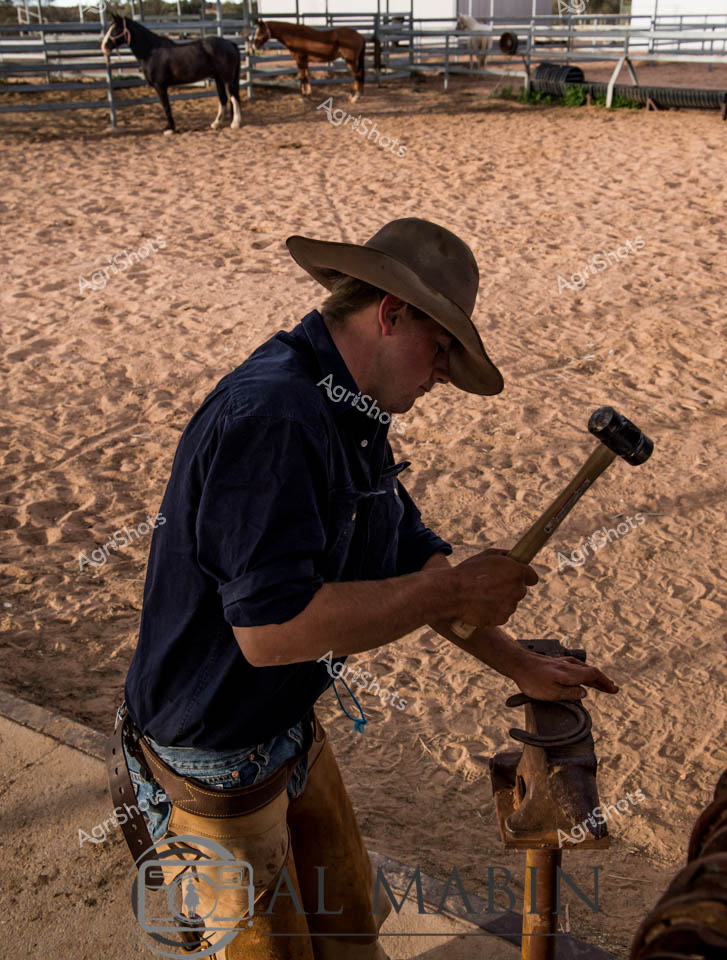
In the dusty, sun-baked cattle yards of a Queensland station, a stockman works with focused concentration, preparing to shoe a horse. Wearing a wide-brimmed akubra and dark blue work shirt, he stands amid the sandy ground, carefully positioning a horseshoe on an anvil. Two horses - one dark and one brown - wait patiently in the nearby paddock, framed by sturdy white stock fencing. The metallic ring of hammer against metal punctuates the quiet rural landscape, capturing the timeless rhythm of station life. Leather work belt, worn denim, and traditional farrier tools speak to generations of pastoral craftsmanship, where skill and patience are as essential as the equipment itself. The golden-brown earth, weathered equipment, and soft afternoon light create a quintessential Australian rural scene that embodies the resilience and practical expertise of outback horse handlers.
Similar media
 Image
Image
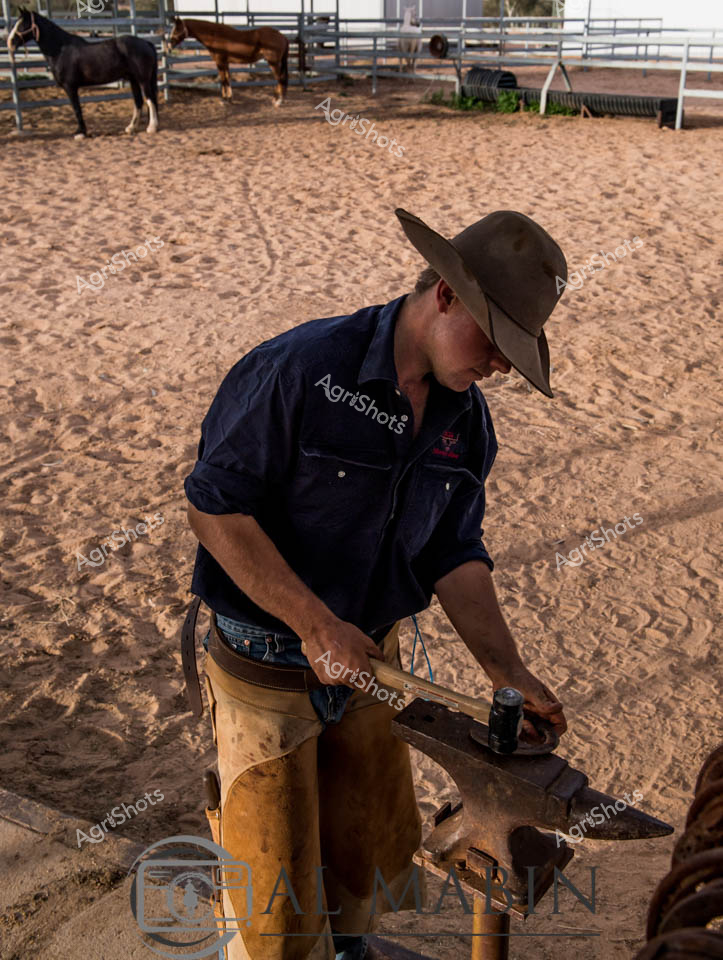
A stockman in a navy blue work shirt and wide-brimmed hat tends to a metalworking task in a sandy horse paddock, with two horses standing quietly in the background behind white rail fencing. The rugged landscape speaks of outback Queensland, where skilled station workers maintain essential equipment under the harsh sun. Wearing protective leather chaps and focused intently, the worker carefully handles an anvil, preparing to shoe or repair a piece of equipment critical to rural operations. The earthy palette of sandy ground, dark horse coats, and weathered work clothing captures the resilient spirit of Australian agricultural life. Soft morning light casts subtle shadows across the yard, highlighting the textures of sand, metal, and well-worn work gear. This image embodies the practical skills, concentration, and quiet dedication required in remote station work, where every task is performed with precision and purpose.
 Image
Image
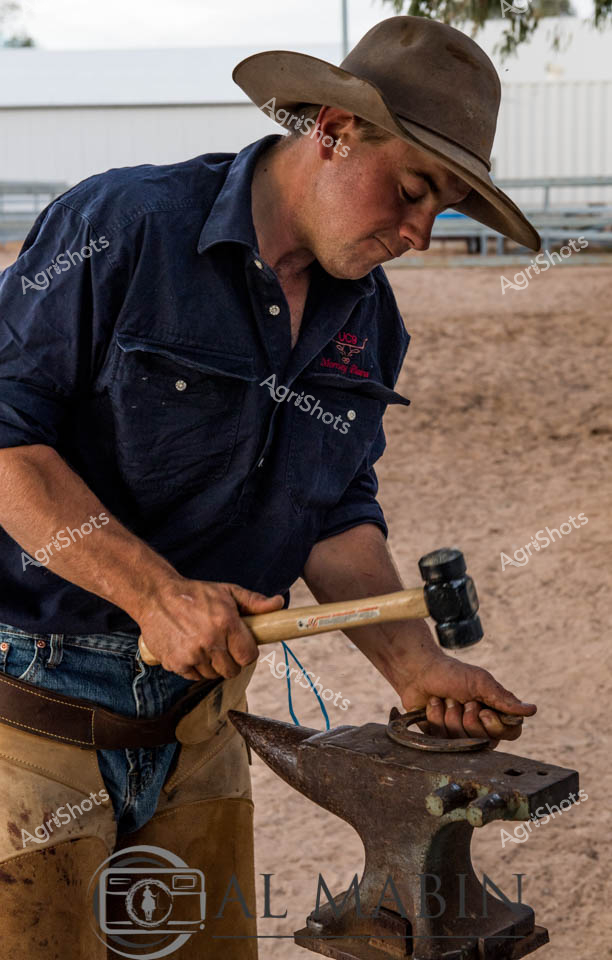
A skilled blacksmith works with precision and strength in a sun-drenched rural setting, carefully shaping metal on a heavy anvil. Wearing a classic broad-brimmed Australian work hat and a navy blue workshirt, the craftsman demonstrates generations of agricultural expertise, his muscular hands gripping a hammer with practiced control. The weathered anvil stands as a testament to countless hours of metalwork, positioned on a dusty earthen surface that speaks to the rugged outback environment. His leather belt and well-worn jeans reflect the practical attire of rural workers who blend traditional skills with modern agricultural demands. Soft shadows and the muted tones of the background suggest early morning light filtering across a station or cattle yard, capturing a moment of precise craftsmanship that is essential to rural life. The image embodies the resilience, skill, and quiet determination of Australian agricultural workers who maintain critical skills in equipment maintenance and repair.
 Image
Image
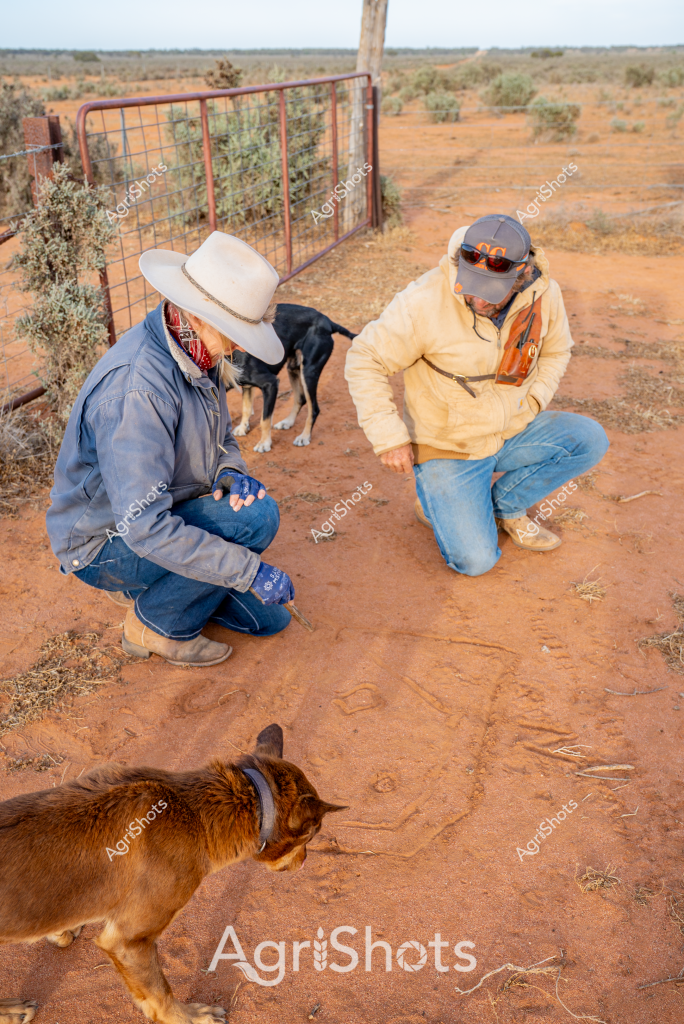
Two men work together in a dry, arid landscape, crouching on red earth surrounded by sparse desert vegetation. One wears a white wide-brimmed hat and blue denim work clothing, while the other is dressed in a light yellow jacket and wearing sunglasses and a cap. Multiple working dogs are present - a dark-colored dog and a reddish-brown dog with a collar, both attentive and close to their handlers. The scene captures a typical rural Australian outback setting, with a wire gate visible in the background and scrubby bushes dotting the reddish sandy ground. The men appear to be examining something on the ground, perhaps tracking, investigating animal signs, or discussing stock management. Their postures suggest collaboration and shared expertise in managing livestock or conducting rural work. The landscape is quintessentially Australian - a harsh, open terrain with minimal vegetation, characteristic of central or western regions where pastoral stations cover vast distances. The men's protective clothing - wide-brimmed hat, sunglasses, long sleeves - indicates adaptation to intense sunlight and challenging environmental conditions typical of remote agricultural areas. Their working dogs demonstrate the crucial role of canine companions in Australian rural work, likely trained for mustering, tracking, or providing support in managing livestock across expansive properties.
 Image
Image
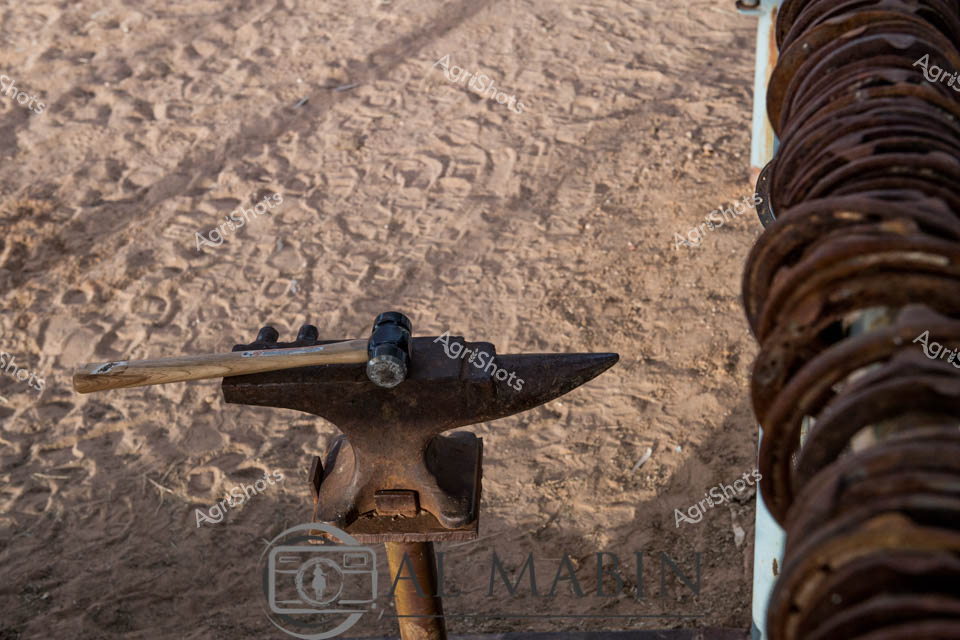
An aged blacksmith's anvil stands resolute against a weathered, textured earth backdrop, embodying the timeless craft of metalwork essential to rural Australian life. The heavy, dark iron anvil bears silent witness to countless hours of skilled hammer strikes, its surface marked by generations of precise workmanship. A wooden-handled hammer rests atop the anvil's robust form, suggesting a momentary pause in the rhythmic process of shaping metal for agricultural tools and horse equipment. Rich, rusted coils of metal spiral in the background, hinting at the workshop's utilitarian purpose and the enduring infrastructure of station life. The earthy, sun-baked ground beneath the anvil speaks to the harsh, unforgiving landscapes of Queensland's rural interior, where practical skills and robust tools are not just a trade, but a way of survival. This image captures the essence of traditional craftsmanship - a testament to the skilled hands that maintain and repair the equipment critical to pastoral operations.
 Image
Image
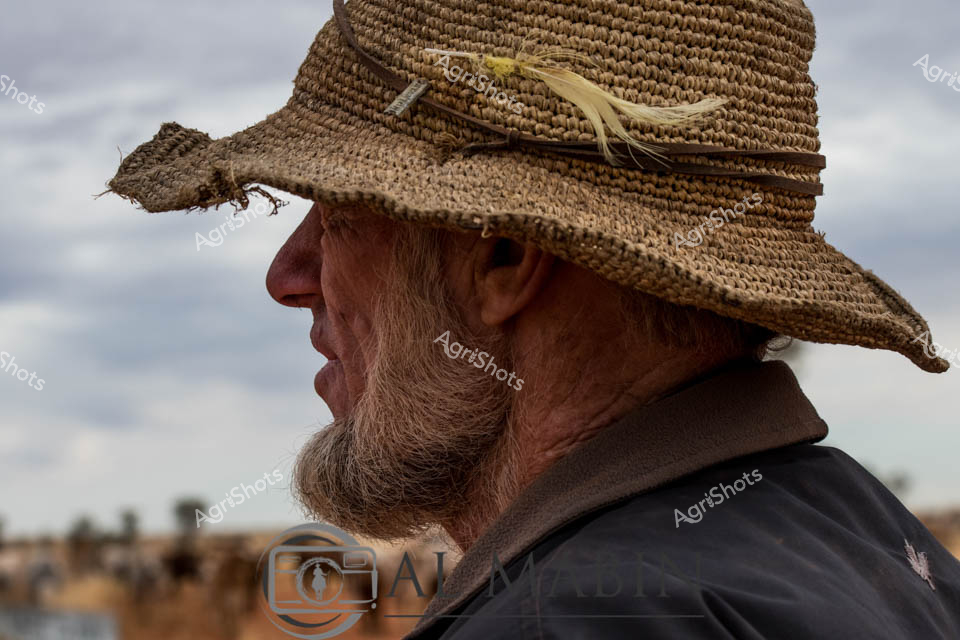
Weathered by decades of outback life, a seasoned stockman surveys the vast cattle station landscape. His deep-lined profile tells a story of resilience, framed by a meticulously hand-woven raffia sun hat adorned with a delicate feather - a subtle token of bush wisdom. Wearing a dark jacket that speaks to practical station attire, he stands with the quiet confidence of someone intimately connected to the harsh Queensland interior. The soft grey sky and distant terrain hint at the challenging environment of cattle mustering, where every detail of experience matters. A small insect rests casually on the hat's brim, a natural companion to this timeless scene of Australian pastoral life. The image captures the profound connection between a stockman and the unforgiving landscape, where survival depends on keen observation and generations of accumulated knowledge.
 Image
Image
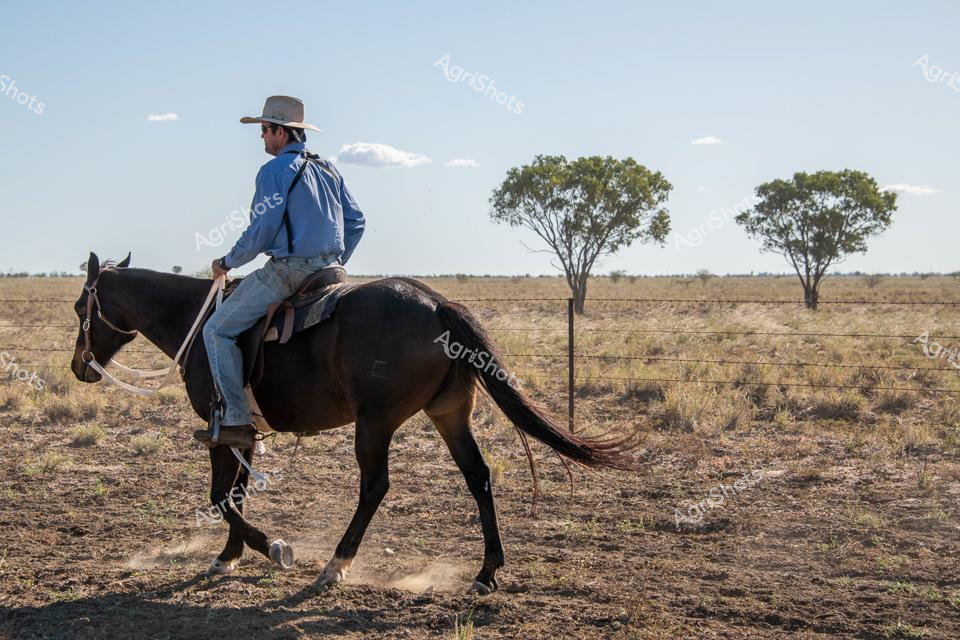
Dusty Pastoral Mustering in Central Queensland A stockman rides a dark bay horse across a sun-drenched, arid paddock in central Queensland, embodying the timeless spirit of Australian rural life. Wearing a classic wide-brimmed akubra and a crisp blue work shirt, the rider sits comfortably atop his mount, surveying the sparse landscape dotted with resilient gum trees. The dry, golden grasslands stretch toward a pale blue horizon, punctuated by weathered fence lines and sparse vegetation typical of the region's challenging agricultural terrain. His black horse moves with quiet purpose, kicking up small clouds of ochre dust with each measured step, a testament to the enduring partnership between rider and horse in managing vast pastoral stations. The sparse, rugged landscape speaks to the resilience of Queensland's agricultural communities, where stockmen continue traditional livestock management practices across immense, unforgiving territories. This scene captures the essence of outback mustering - a delicate dance of human skill, animal partnership, and unrelenting landscape.
 Image
Image
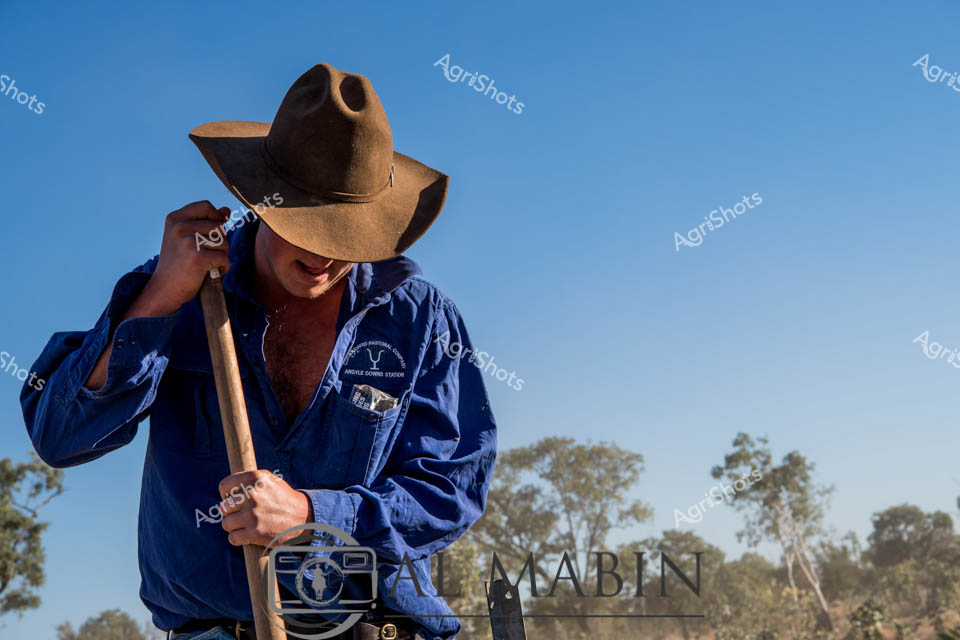
Australian rural landscape captured under a brilliant blue midday sky, featuring a station hand prepared for essential water infrastructure maintenance. Wearing a classic wide-brimmed outback hat and a deep blue work shirt with a station logo, the worker grips a long-handled tool, embodying the resilient spirit of remote agricultural workers. The rugged pastoral backdrop of sparse eucalyptus trees and open terrain speaks to the challenging environment of Queensland's inland stations, where water management is critical to livestock survival. His posture suggests readiness and purpose - a solitary figure representing generations of agricultural workers who maintain the lifeline of Australia's agricultural heartland. The composition highlights the stark beauty of rural working life, where individual effort and preparedness are key to sustaining agricultural operations in harsh, expansive landscapes. The image resonates with the quiet determination of those who keep remote stations operational, managing water resources with skill and dedication.
 Image
Image
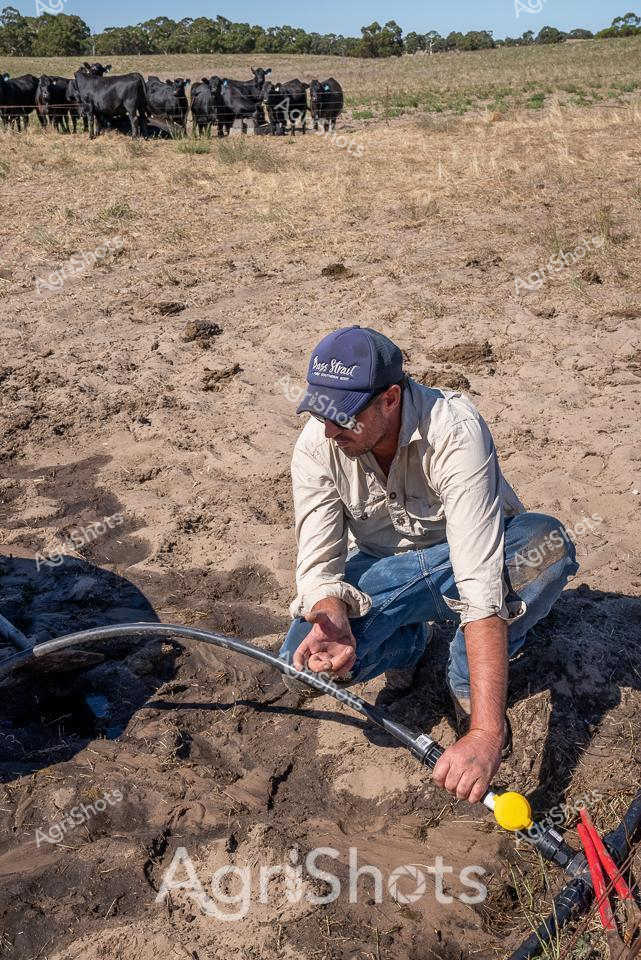
Beneath the expansive blue sky of rural South Australia, a seasoned farmhand crouches in a dry, dusty paddock, carefully managing water infrastructure for a herd of black Angus cattle. Wearing a navy cap and crisp light-colored work shirt, he manipulates a yellow-handled pipe fitting, likely a Plasson connection, ensuring critical water supply to the livestock. The parched earth tells a story of drought conditions typical of the Murray and Mallee region, with scattered eucalyptus trees providing a distant green backdrop to the rugged landscape. A line of stoic Angus cattle stand watchful behind a fence, their deep black coats a stark contrast against the bleached golden grassland. The farmer's deliberate movements speak to the precision and care required in agricultural water management, where every connection and repair can mean survival for the herd during challenging dry seasons. His posture reveals years of experience - bent low, focused, working closely with the land and its vital infrastructure. This image captures the resilience of Australian farm workers and their constant battle against harsh environmental conditions, highlighting the sophisticated yet practical approach to livestock management in one of Australia's most challenging agricultural regions.