About this image
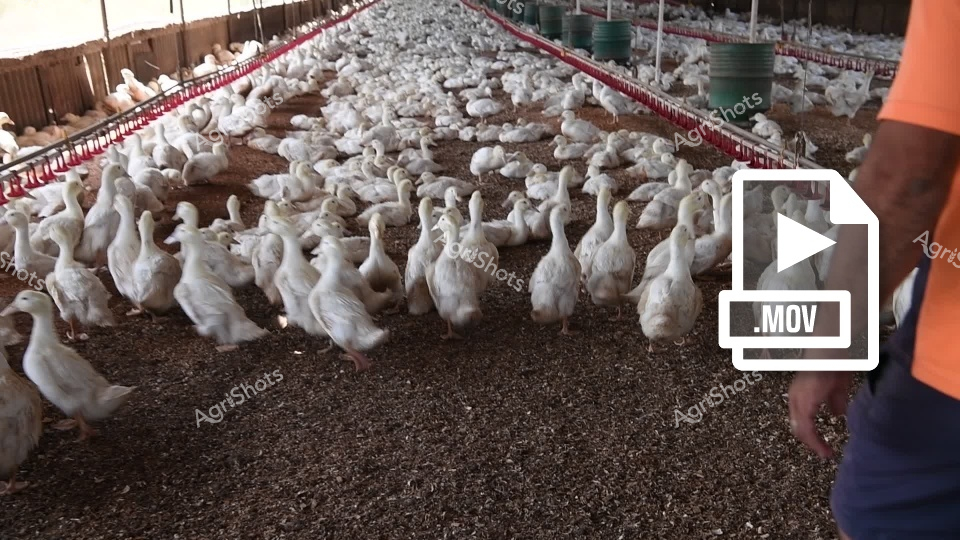
A large commercial duck farm showcases large-scale poultry farming operations in New South Wales, with hundreds of white Peking ducks densely housed in a long barn facility. The ducks are arranged along red feeding and watering lines that run parallel through the housing structure, demonstrating modern large-scale farming methods for poultry production. The systematic layout and high stocking density are characteristic of commercial duck farming operations designed for efficient meat production in the NSW agricultural sector.
Similar media
 ▶ Video
A large indoor poultry farm housing hundreds of white ducks densely packed together on a dark floor. Multiple green water containers are visible along the red-bordered enclosure, with ducks clustered across the space. The industrial farming environment shows a controlled setting for raising these birds, with part of a person in an orange-colored garment visible at the edge of the frame.
 Image
Image
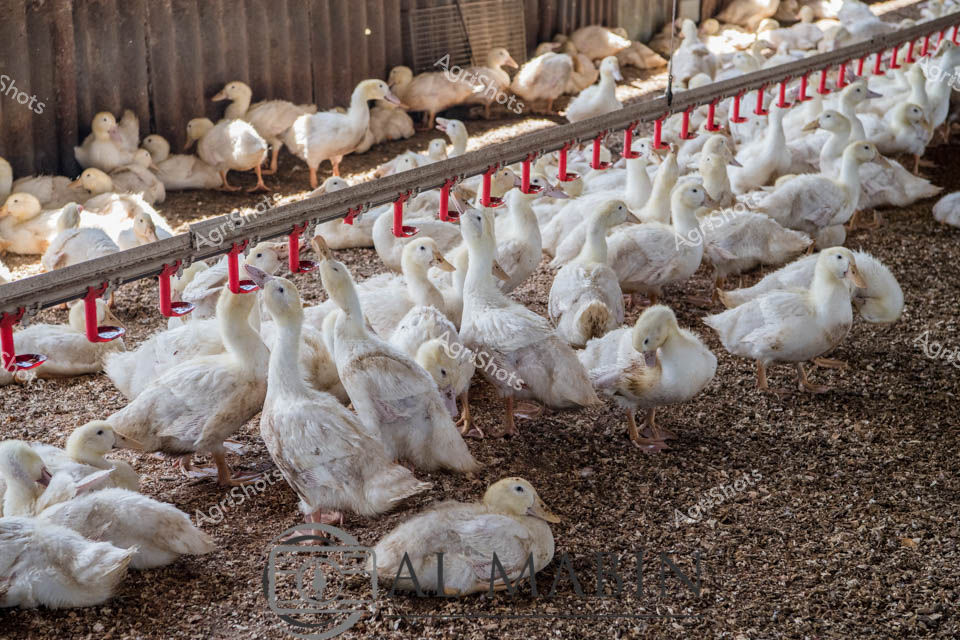
Pristine white Peking ducks cluster densely across the expansive indoor rearing shed, their soft feathered bodies contrasting against the dark gravel floor. Uniform red feeding lines trace elegant geometric patterns along the shed's wooden walls, providing systematic nutrition to the tightly-packed flock. These prized waterfowl, bred for premium meat production, represent a critical segment of Australia's sophisticated poultry agricultural sector, with this controlled environment optimizing growth and health conditions. Soft natural light filters through the shed's structured interior, highlighting the ducks' immaculate plumage and creating subtle shadows across their clustered forms. Each bird appears robust and well-developed, reflecting meticulous breeding and management practices characteristic of modern large-scale agricultural systems in New South Wales. The image captures the precise, engineered approach of contemporary duck farming - a testament to agricultural efficiency where every environmental detail is carefully calibrated to support optimal livestock development.
 Image
Image
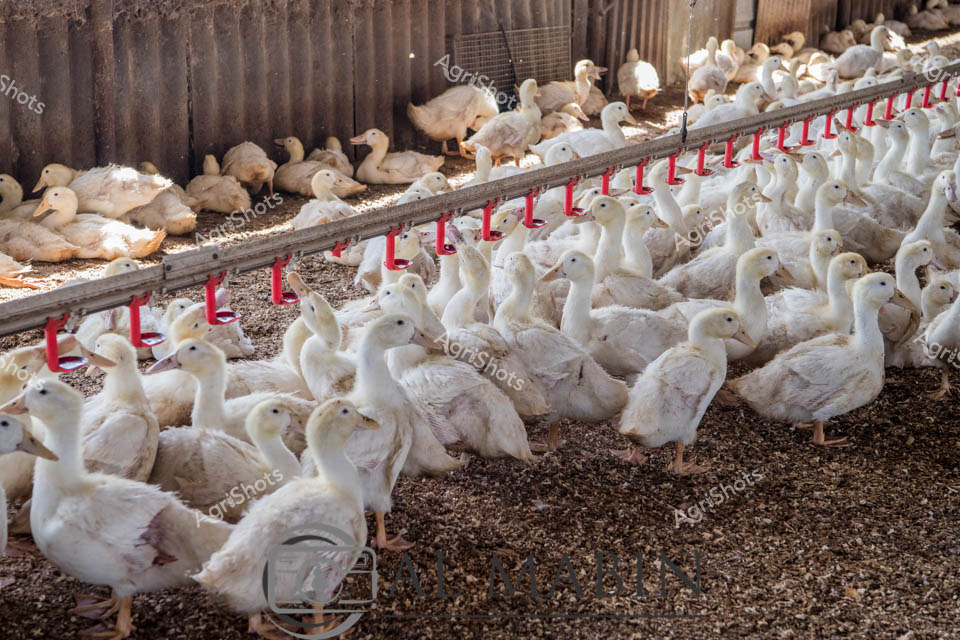
White Peking ducks crowd a meticulously organized industrial poultry shed in rural New South Wales, showcasing the precision of modern large-scale farming practices. Pristine white birds cluster densely across a gravel floor, their uniformity broken only by the rhythmic red clips of feeding and watering infrastructure running along metal barriers. Soft natural light filters through the shed's side panels, casting subtle shadows that highlight the plump, uniform bodies of these commercially bred ducks. The tightly controlled environment speaks to the sophisticated agricultural techniques used in Australian poultry production, where every element is carefully managed to optimize growth and efficiency. Clustered in generations - from smaller juvenile birds to full-sized adults - the flock demonstrates the systematic approach of contemporary duck farming. The scene captures the intersection of animal husbandry, agricultural technology, and food production, revealing the industrial backbone of Australia's protein supply chain.
 ▶ Video
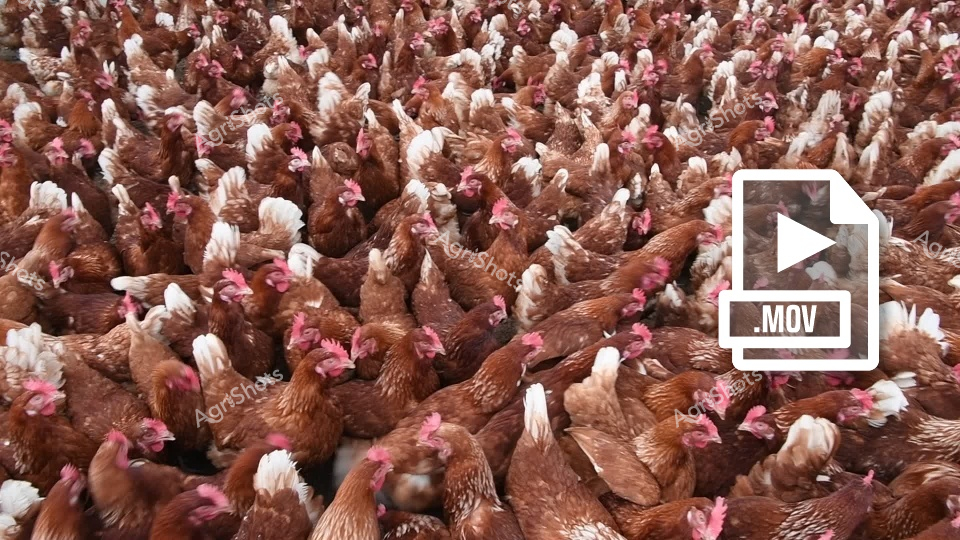
A densely packed group of brown and white laying hens are tightly clustered together, showcasing the crowded conditions of commercial egg production. The chickens appear to be Rhode Island Reds or a similar breed, with reddish-brown feathers and prominent pink combs, filling the entire frame in a uniform, tightly-spaced arrangement that highlights industrial poultry farming practices.
 ▶ Video
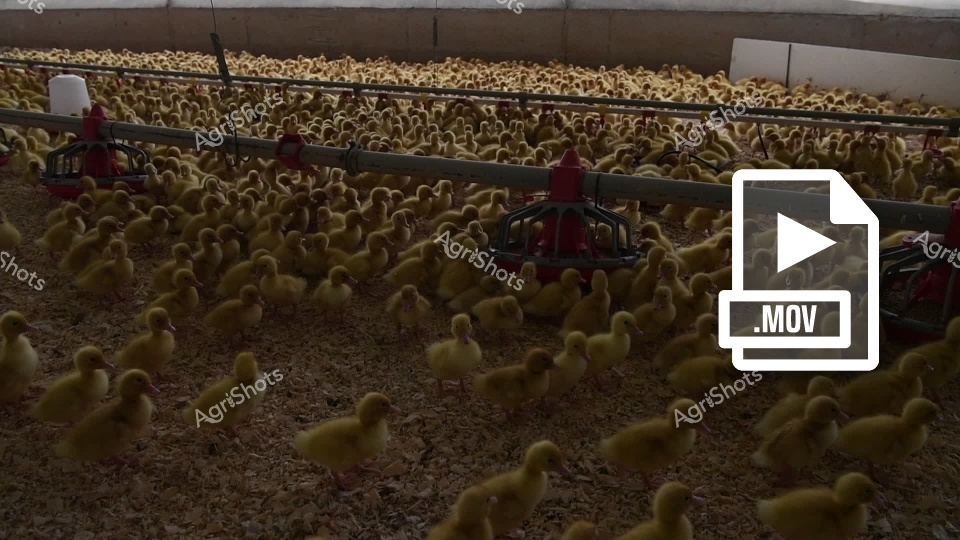
Large commercial poultry operation showing hundreds of fluffy yellow ducklings or goslings crowded together in a controlled indoor farming environment. Young waterfowl are densely packed on a bedding material, with automated red feeding/watering stations and metal barriers distributed throughout the climate-controlled brooding shed.
 Image
Image
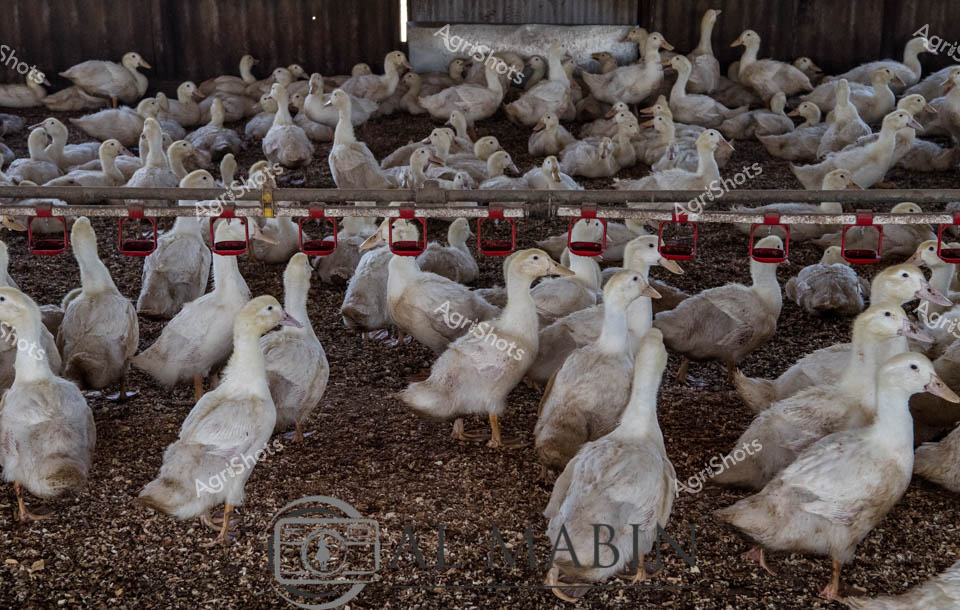
Pristine white Peking ducks crowd the expansive indoor rearing shed, their plump bodies clustered across a textured floor of fine gravel and feed. Uniform red-handled feeders line the central walkway, providing systematic nutrition to the densely packed flock. The uniform coloration of the ducks speaks to careful breeding and controlled agricultural conditions typical of modern large-scale poultry production in New South Wales. Soft ambient light filters through the wooden barn structure, casting gentle shadows across the sea of feathered bodies and creating a methodical, efficient atmosphere of contemporary agricultural practice. Each duck appears robust and well-maintained, reflecting the precision of Australian agricultural techniques in livestock management. The image captures the systematic, scientific approach to commercial duck farming, where every element of the environment is carefully controlled to optimize growth and productivity.
 Image
Image
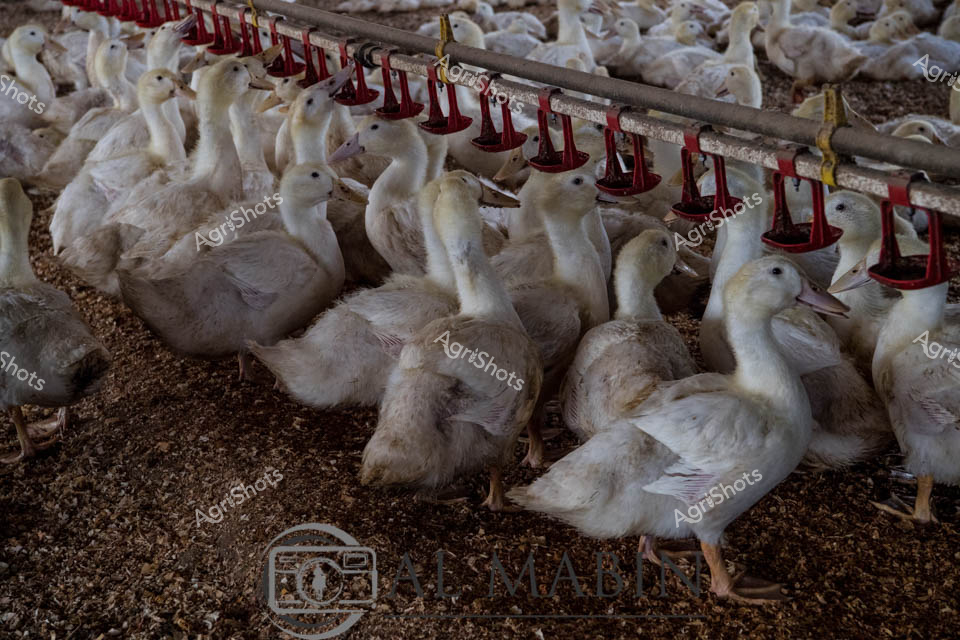
White Peking ducks huddle densely across a dimly lit poultry shed in regional New South Wales, their plump bodies clustered on a textured ground of fine granular feed and organic matter. Uniform red-topped feeding stations hang from a steel overhead rail, providing structured access points across the crowded enclosure. The birds display the characteristic creamy-white feathering of the Peking breed, their compact forms suggesting optimal growth conditions in this large-scale farming environment. Soft shadows and muted earth tones create a sense of controlled agricultural precision, highlighting the systematic approach to modern duck production. Each bird appears healthy and well-maintained, representing a carefully managed livestock operation typical of Australian agricultural practices. The image captures the industrial efficiency of contemporary poultry farming, where design and animal husbandry converge to maximize production in a compact, controlled setting.
 Image
Image
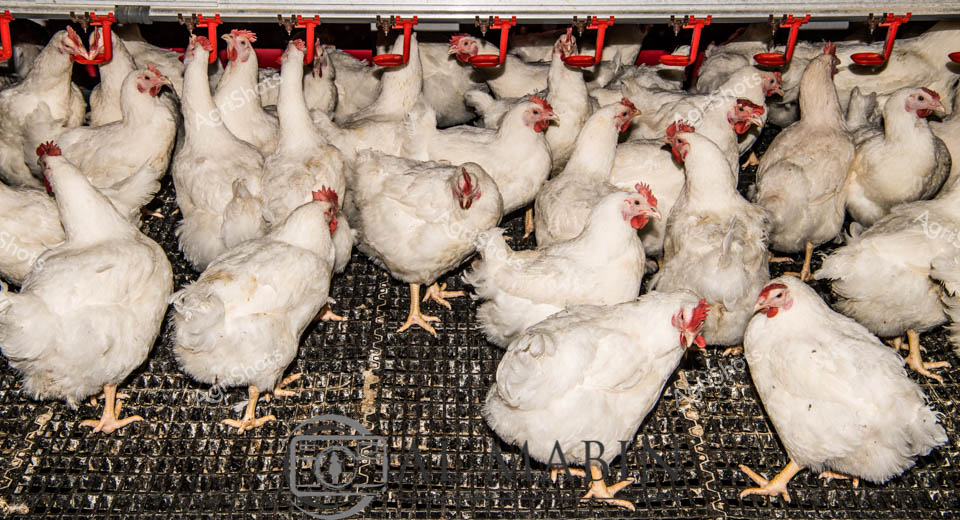
Pristine white broiler chickens huddle tightly on a perforated metal grid, suspended beneath industrial red feed dispensers. The uniform flock reveals the precision of modern large-scale poultry production, with each bird displaying identical plump forms and bright red combs. Densely packed and motionless, these commercial meat birds represent the industrialized approach to protein farming prevalent in contemporary agricultural systems. The monochromatic palette of pure white feathers against the dark grid creates a stark visual commentary on agricultural efficiency, where uniformity and maximum yield are the primary objectives. Each chicken stands identically positioned, their yellow legs and pale bodies creating a rhythmic, almost geometric composition that speaks to the systematic nature of large-scale poultry farming. The overhead red feed dispensers provide a sharp chromatic contrast, highlighting the mechanized infrastructure that supports this concentrated livestock environment.