About this image
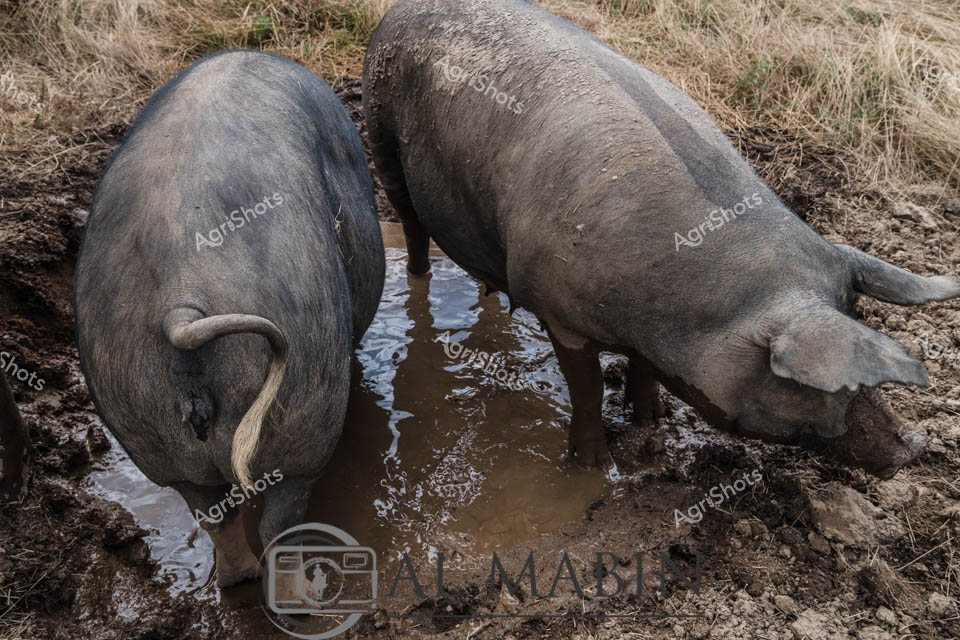
Two large free-range pigs drink from a muddy water puddle in the paddock at a piggery operation in Victoria's Heathcote Region. The grey-colored pigs demonstrate natural foraging behavior as they access water in their outdoor environment. This large-scale farming system allows the animals to exhibit normal behaviors while maintaining commercial production standards in the rural Victorian landscape.
Similar media
 Image
Image
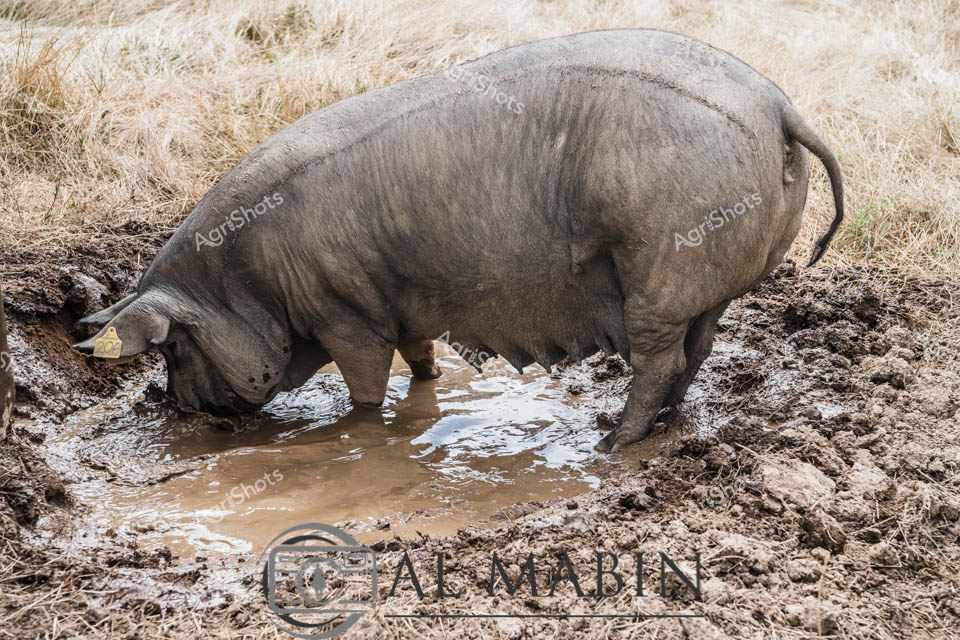
A heritage breed pig wallows contentedly in a muddy water hole, surrounded by dry golden grasslands typical of Victoria's Heathcote region. The robust, slate-grey swine appears to be a rare breed - possibly a Large Black or regional New South Wales - with thick, almost hairless skin perfectly adapted to the harsh Australian agricultural landscape. Its muscular body is partially submerged in the rich, clay-laden water, providing essential cooling and protection from the intense sunlight. The surrounding terrain suggests late summer conditions, with bleached grasses and cracked earth indicating the challenging environmental conditions of this rural farming area. The pig's yellow ear tag signals its role in a carefully managed free-range farming operation, where animal welfare and natural behaviors are prioritized. This image captures the raw, unfiltered essence of Australian livestock farming - resilient animals thriving in challenging conditions, demonstrating the intricate relationship between agricultural practice and the natural environment.
 Image
Image
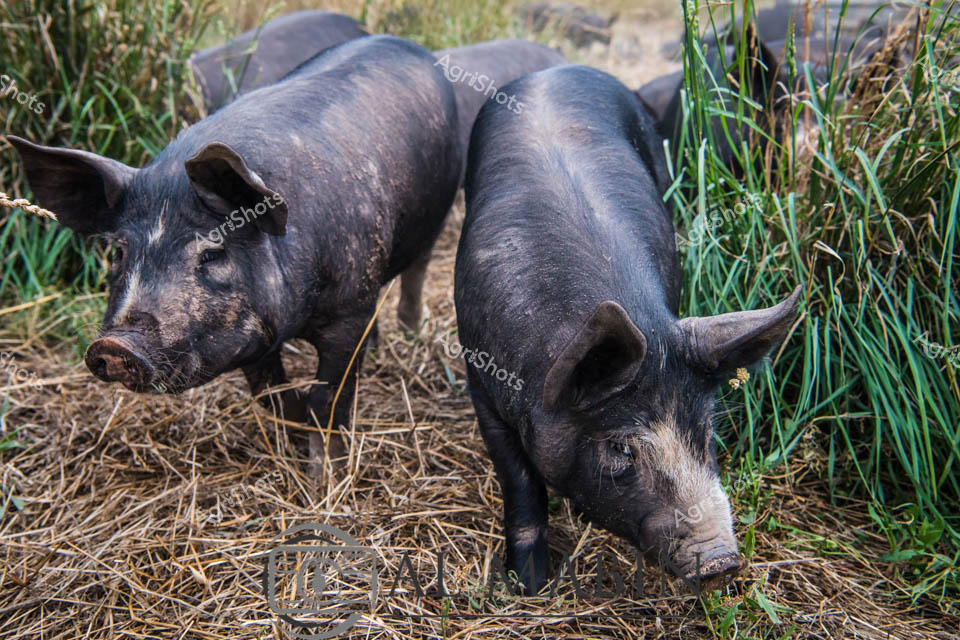
Black Berkshire heritage pigs rest among sun-dappled straw and verdant grasses in a pastoral Heathcote region paddock. These robust, dark-skinned swine display the characteristic deep charcoal and slate coloration of their breed, with subtle variations in tone across their muscular bodies. One pig grazes quietly near tussock grasses, while the other stands alert, representing the free-range farming approach prevalent in Victoria's progressive agricultural landscape. Their thick, bristled coats suggest excellent adaptation to the variable climate, with a rugged texture that speaks to generations of careful breeding. The golden straw and emerald grass create a rich, textural backdrop that highlights the animals' powerful physique and the sustainable farming practices of this regional piggery. Soft mid-morning light filters across the scene, casting gentle shadows and emphasizing the natural, unhurried environment these heritage pigs inhabit.
 Image
Image
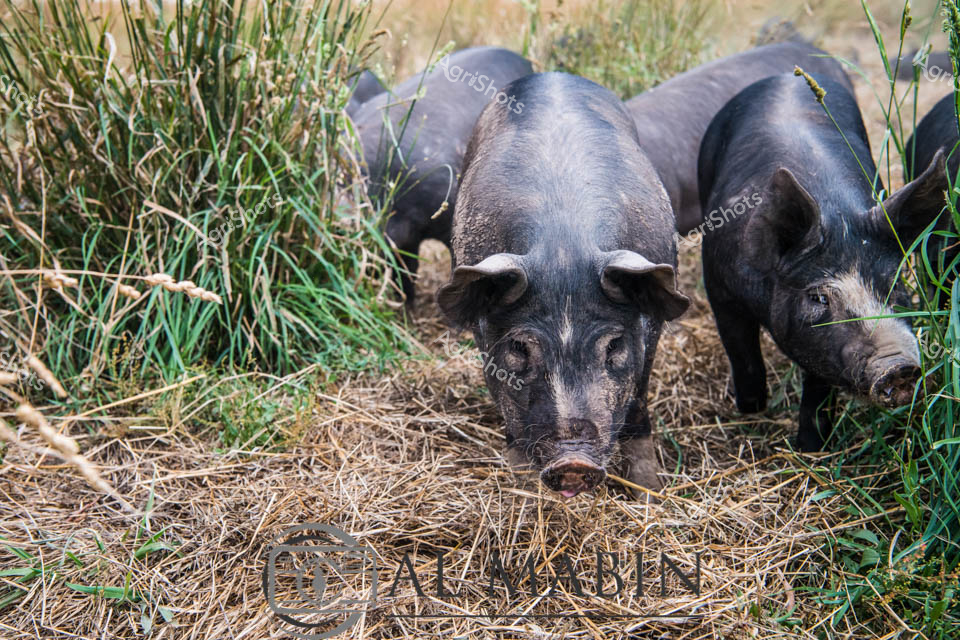
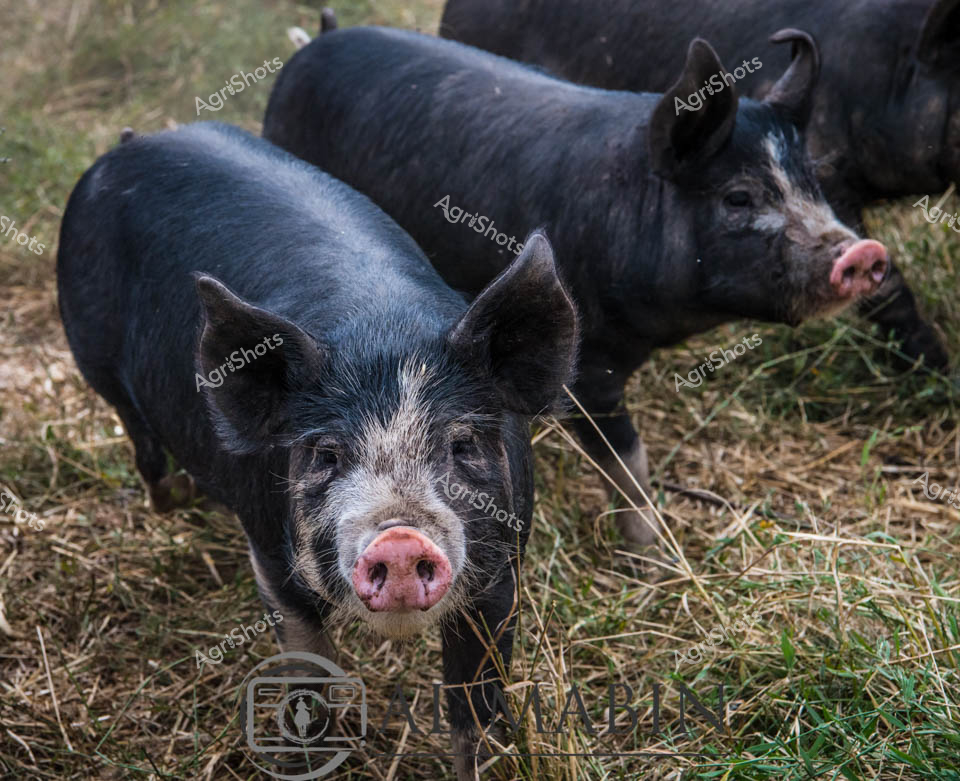
Berkshire cross pigs forage through dry grassland on a sun-drenched Victorian farm near Heathcote. Their sleek charcoal-black bodies contrast against the golden straw and verdant green grasses, highlighting the free-range farming practices of this rural property. The pigs' muscular frames and alert postures suggest they are mature breeding stock, carefully selected for their robust genetics and adaptability to the harsh Australian agricultural landscape. Soft morning light catches the subtle variations in their skin tone - deep blacks blending with slate greys and occasional lighter patches around their snouts and ears. The close proximity of the animals indicates a calm, well-managed herd environment, typical of sustainable small-scale piggery operations in central Victoria. Their natural foraging behavior amidst mixed native grasses demonstrates an agricultural approach that prioritizes animal welfare and ecological integration.
 Image
Image
Black Berkshire cross pigs rest among dry winter grasses in the undulating pastures of Victoria's Heathcote region. These heritage breed porkers display classic black coats with distinctive white facial markings, their pink snouts contrasting against their dark fur. The paddock's muted golden-brown grasses suggest late autumn or early winter, with sparse vegetation indicating a challenging grazing season. Each pig exhibits a robust, muscular frame typical of free-range livestock management, suggesting careful breeding and ethical agricultural practices. Their relaxed postures and proximity to each other demonstrate the social nature of these intelligent animals, thriving in an extensive farming environment that allows natural behaviors. The subtle textures of matted grass, dense pig fur, and the animals' varied skin tones create a nuanced agricultural tableau that speaks to sustainable farming methodologies in regional Victoria.
 Image
Image
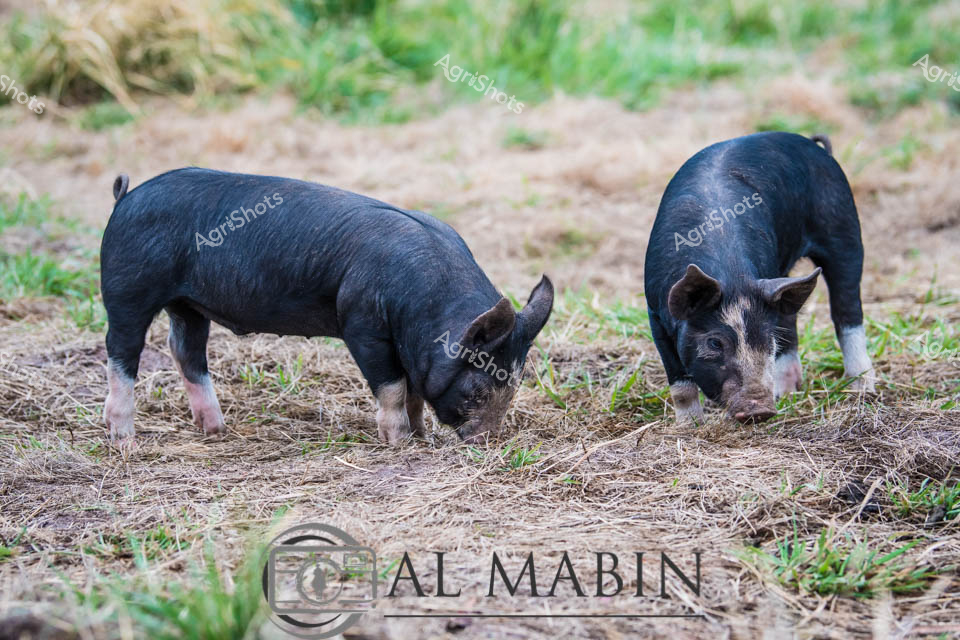
Black and white Hampshire-cross piglets explore a sun-dappled pasture in Victoria's Heathcote region, their dark charcoal bodies contrasting against the mottled green and brown ground. These young pigs display natural foraging behaviors, their snouts intently searching through sparse grasses and dry ground cover, demonstrating free-range farming practices. Their sleek black coats are marked with distinctive white patches on their lower legs, typical of Hampshire breed genetics, suggesting careful livestock breeding selection. The ground appears slightly worn but with emerging green shoots, indicating early spring or late winter conditions in this Australian agricultural landscape. Each piglet moves with purposeful curiosity, representing the next generation of sustainable meat production in rural Victoria. The soft natural lighting and textured terrain capture the essence of contemporary Australian pig farming - a blend of traditional agricultural methods and modern animal welfare considerations.
 Image
Image
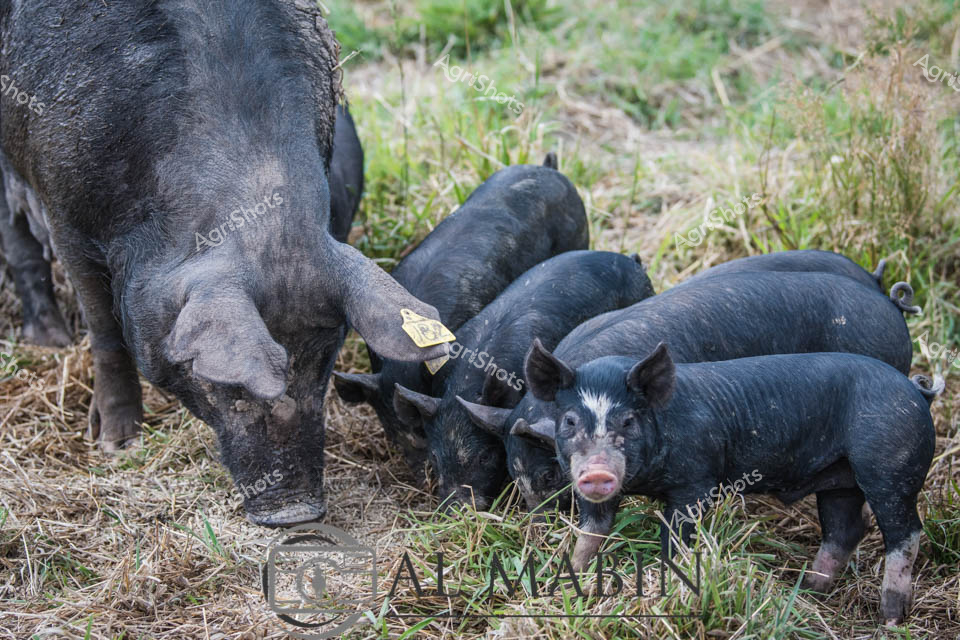
Black Berkshire piglets cluster around their mother in a rustic pasture setting, showcasing the robust genetics of heritage breed swine production. The sow and her young display the distinctive deep charcoal-black coloration characteristic of the Berkshire breed, with one piglet sporting a small white patch. Soft grasses and weathered ground beneath their hooves suggest a free-range farming environment typical of Victoria's pastoral landscapes. A yellow ear tag on one piglet indicates careful livestock management and traceability protocols essential to modern agricultural practice. The intimate family group demonstrates the nurturing behavior of sows, with young piglets staying close to their protective mother in a natural grazing setting. This scene captures the essence of ethical, small-scale pig farming - highlighting animal welfare, breed preservation, and the connection between livestock and landscape in regional Australian agriculture.
 Image
Image
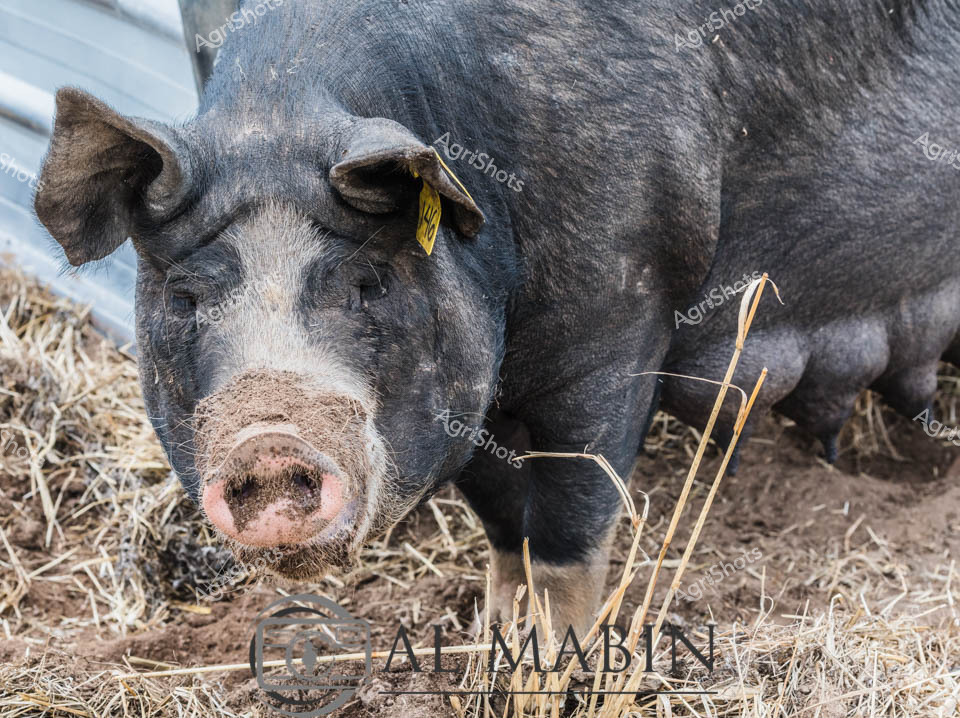
A robust heritage breed pig rests on a bed of golden straw, embodying the resilience of small-scale Australian livestock farming. This dark-skinned pig, bearing a yellow identification tag, displays the distinctive markings of a carefully managed breeding program in Victoria's Heathcote region. The animal's dense, slate-grey coat contrasts beautifully with the warm earth tones of the straw bedding, highlighting the careful attention to animal welfare and environmental conditions typical of modern Australian piggeries. Dry straw stalks punctuate the foreground, suggesting a spacious, well-maintained enclosure that allows natural movement and comfort. The pig's pink snout and alert ears communicate a sense of calm contentment, reflecting the ethical farming practices increasingly valued by Australian consumers and agricultural producers. This image captures the intersection of traditional farming knowledge and contemporary agricultural standards, showcasing the nuanced care that goes into sustainable meat production in rural Victoria.
 Image
Image
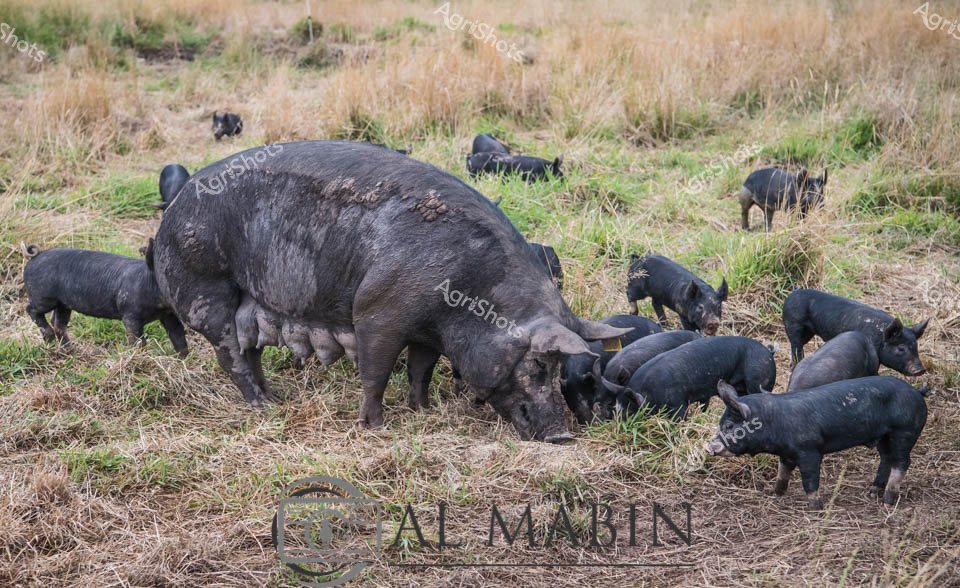
Black Iberian piglets forage alongside their robust matriarch across sun-dappled pasture grasslands in the rolling agricultural landscape of Victoria's Heathcote region. The sow, a substantial black breed with weathered, textured hide, anchors the scene, her multiple offspring ranging from tiny newborns to more developed juveniles exploring the grassy terrain. Soft golden grasses intermingle with patches of vibrant green, suggesting late spring or early summer conditions with ample moisture and growth. Each piglet displays the distinctive deep black coloration characteristic of free-range breeding practices, their small bodies moving independently yet remaining close to their maternal protector. The image captures the natural rhythms of extensive pig farming, where animals can roam and interact with their environment, demonstrating a more traditional approach to livestock management that prioritizes animal welfare and natural behaviors. The pastoral setting, with its undulating grasslands and scattered vegetation, epitomizes the sustainable agricultural practices of rural Victorian farming communities.