About this image
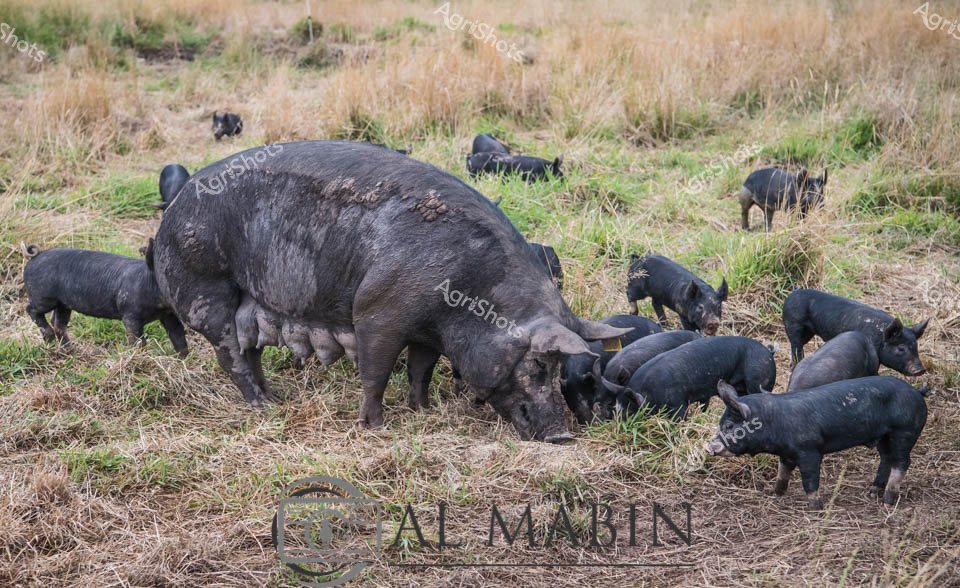
Black Iberian piglets forage alongside their robust matriarch across sun-dappled pasture grasslands in the rolling agricultural landscape of Victoria's Heathcote region. The sow, a substantial black breed with weathered, textured hide, anchors the scene, her multiple offspring ranging from tiny newborns to more developed juveniles exploring the grassy terrain. Soft golden grasses intermingle with patches of vibrant green, suggesting late spring or early summer conditions with ample moisture and growth. Each piglet displays the distinctive deep black coloration characteristic of free-range breeding practices, their small bodies moving independently yet remaining close to their maternal protector. The image captures the natural rhythms of extensive pig farming, where animals can roam and interact with their environment, demonstrating a more traditional approach to livestock management that prioritizes animal welfare and natural behaviors. The pastoral setting, with its undulating grasslands and scattered vegetation, epitomizes the sustainable agricultural practices of rural Victorian farming communities.
Similar media
Image
A robust sow and her litter of black piglets forage through the sun-dappled grasslands of Victoria's Heathcote region, embodying the raw essence of free-range agricultural practices. The mature pig, her hide weathered and textured like dark leather, moves deliberately through the dry golden grasses, with several young piglets clustered around her udders for feeding. Scattered farm infrastructure—including metallic sheds—punctuates the background, suggesting this is a carefully managed agricultural environment balancing natural behaviors with structured farming techniques. The scene captures the organic rhythm of small-scale pig husbandry, where animals are permitted to explore and interact with their natural surroundings. Soft greys and muted earth tones dominate the landscape, creating a sense of pastoral tranquility that speaks to sustainable farming methods. The piglets, uniformly charcoal-colored, demonstrate the genetic consistency of this carefully bred livestock strain, while their varied positions around the mother highlight the instinctive social dynamics of swine herds.
Image
Black Berkshire piglets cluster around their mother in a rustic pasture setting, showcasing the robust genetics of heritage breed swine production. The sow and her young display the distinctive deep charcoal-black coloration characteristic of the Berkshire breed, with one piglet sporting a small white patch. Soft grasses and weathered ground beneath their hooves suggest a free-range farming environment typical of Victoria's pastoral landscapes. A yellow ear tag on one piglet indicates careful livestock management and traceability protocols essential to modern agricultural practice. The intimate family group demonstrates the nurturing behavior of sows, with young piglets staying close to their protective mother in a natural grazing setting. This scene captures the essence of ethical, small-scale pig farming - highlighting animal welfare, breed preservation, and the connection between livestock and landscape in regional Australian agriculture.
Image
Berkshire heritage pigs forage across sun-drenched grasslands in Victoria's Heathcote region, embodying free-range agricultural practices. The small herd of deep charcoal-black pigs meander through dry summer grasses, their muscular bodies contrasting against pale wheat-colored undergrowth. Each pig displays the distinctive breed characteristics of Berkshires - compact frames, alert upright ears, and robust musculature typical of this heritage livestock variety. Their natural foraging behavior demonstrates a sustainable farming approach, allowing animals to explore and feed instinctively within a carefully managed pastoral landscape. The scene captures the intersection of traditional animal husbandry and modern agricultural techniques, where animal welfare and environmental sensitivity are paramount. Soft natural lighting highlights the pigs' sleek black coats, creating a textural landscape that speaks to the nuanced practices of small-scale Australian livestock production.
Image
Black Berkshire piglets forage across a windswept pasture near Heathcote, Victoria, their sleek charcoal-colored bodies moving purposefully through dry golden grasses. These robust heritage breed pigs display natural foraging behaviors, with young piglets exploring and grazing in a free-range agricultural setting. Their distinctive black coats with subtle pink-tinged extremities contrast beautifully against the muted green and straw-colored landscape, capturing the raw essence of sustainable small-scale livestock farming. The scene embodies the delicate balance between agricultural production and animal welfare, showcasing how ethical farming practices allow livestock to express innate behaviors in a semi-natural environment. Each piglet moves with a distinctive mixture of curiosity and instinctive purpose, representing the next generation of a carefully managed breeding program. The soft rural light suggests early morning, with scattered vegetation providing a textural backdrop that highlights the animals' muscular, compact forms.
Image
Black Berkshire pigs roam a sunlit, grassy paddock near Heathcote, Victoria, their midnight-dark coats contrasting against the dried summer grasses and scattered green shoots. A small herd of approximately 10-12 pigs browse and rest in the natural landscape, displaying the free-range farming approach characteristic of progressive Victorian livestock operations. Their robust, muscular bodies and distinctive white-striped markings reveal them as heritage breed pigs, allowed to move freely and exhibit natural foraging behaviors across the undulating terrain. Soft morning light casts gentle shadows across their sleek bodies, highlighting the texture of the dry grass and the pigs' smooth, dark skin. Some animals huddle close together, while others explore the margins of the grassy area, demonstrating the social and exploratory nature of the breed.
Image
Duroc-cross piglets forage intently through dry grasslands near Heathcote, Victoria, their sleek black coats contrasting against the muted browns and greens of late summer pasture. Each young pig moves with purposeful concentration, snouts buried in the earth searching for insects, roots, and organic matter - a natural behavior that speaks to free-range farming practices. Their muscular bodies and curled tails indicate robust health, showcasing the benefits of allowing livestock access to varied terrain and natural foraging opportunities. The sparse grasses, bleached and weathered, create a textural landscape that frames the piglets' dark silhouettes. Patches of green emerging between dried stalks suggest recent rainfall or the transition between dry and growing seasons. These young pigs represent a blend of traditional agricultural methods and modern animal husbandry, where animal welfare and environmental interaction are prioritized. The image captures a moment of collective activity, with four piglets moving almost in unison, their body language communicating both independence and herd mentality. This scene embodies the dynamic nature of Australian agricultural practices, where livestock are viewed as integral participants in the ecological system rather than mere production units.
Image
Black Berkshire sows and their piglets forage across a verdant pasture, embodying the free-range ethics of contemporary Australian pig farming. The mature sow in the foreground displays the breed's signature deep black coat and robust muscular frame, her ear tagged for identification, while her young offspring cluster nearby - alert, curious, and exploring the grassy terrain. Soft morning light filters across the mixed grassland, highlighting the textural variations between the pigs' dense bristled coats and the pale, dry ground cover interspersed with fresh green shoots. These heritage breed pigs represent a premium genetic lineage common in Victoria's Heathcote region, where small-scale, high-welfare agricultural practices prioritize animal welfare and environmental sustainability. The piglets' pink snouts and attentive postures suggest they are still nursing, moving closely around their protective mother as they learn foraging behaviors fundamental to natural pig development. This scene captures the nuanced intersection of traditional farming methods and contemporary agricultural innovation, showcasing how ethical livestock management can create healthier animals and more sustainable food production systems.
Image
Black Iberian piglets cluster together in a dusty, sun-dappled paddock near Heathcote, Victoria, their midnight-dark coats gleaming against the tawny winter grasses and sparse eucalyptus woodland. Hardy and robust, these heritage breed pigs demonstrate the free-range farming practices gaining momentum in rural Australian agriculture. Their compact bodies and alert ears suggest movement and curiosity, with several individuals standing closely packed, creating a living tapestry of muscular forms against the textured landscape. Late afternoon golden light casts long shadows across the dry pasture, highlighting the subtle variations in the pigs' charcoal and deep bronze skin tones. A weathered fence line and mature tree in the background frame the scene, emphasizing the pastoral quality of this agricultural setting. These Iberian piglets represent a growing trend in sustainable livestock management, where animal welfare and natural behaviors are prioritized alongside productive farming techniques.