About this image
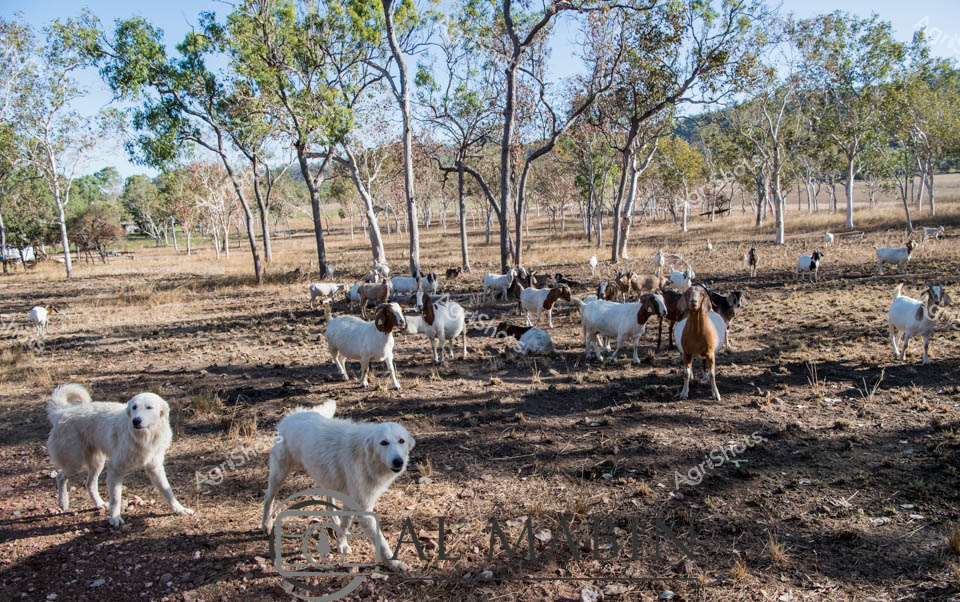
Maremma sheepdogs stand vigilant among a herd of mixed-breed goats in a sparse eucalyptus woodland, characteristic of inland Queensland's dry seasonal landscape. The pale-coated guardian dogs provide protective oversight across the dusty, sunbaked paddock, their thick white fur contrasting against the brown and white goats grazing among scattered grey-barked trees. Late afternoon sunlight filters through the sparse canopy, casting long shadows across the parched ground and highlighting the rugged pastoral terrain. These Maremma dogs, renowned for the livestock protection abilities, demonstrate the sophisticated agricultural management techniques used by Australian farmers to safeguard herds in challenging environmental conditions. The scene captures the resilience of both animal and landscape - goats adapted to browsing sparse vegetation, guardian dogs bred for endurance, and a ecosystem shaped by minimal rainfall and intense sunlight. Rich earth tones of brown, grey, and white create a textural tableau of survival and symbiosis in the Australian agricultural landscape.
Similar media
 Image
Image
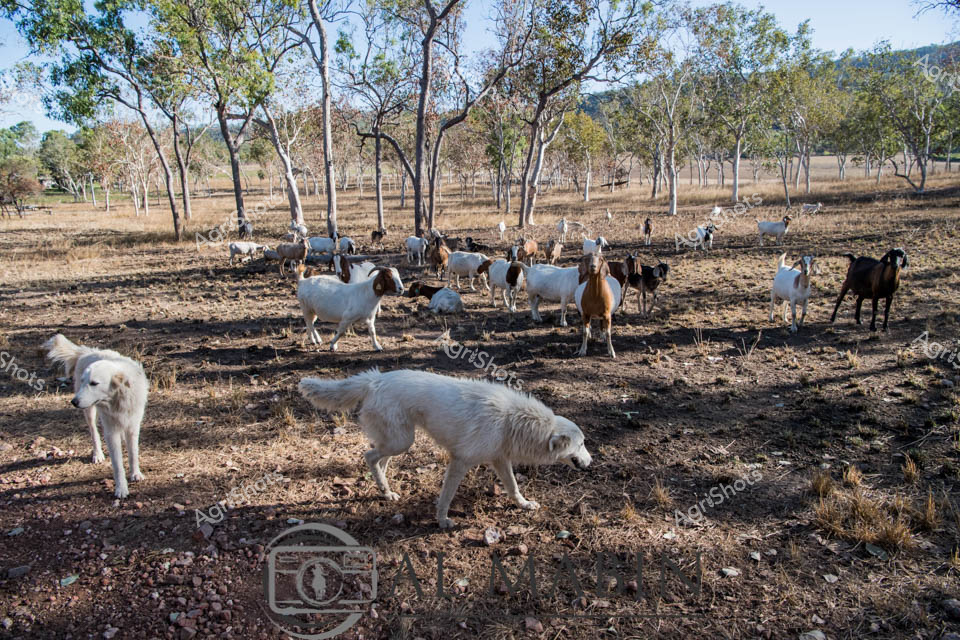
White Maremma guardian dogs patrol a sparse, dry woodland paddock in rural Queensland, standing watch over a mixed herd of white, brown, and black goats. The arid landscape reveals scattered eucalyptus trees casting sparse shadows across rocky, sun-baked ground, indicating a dry season typical of Australia's harsh interior. These skilled livestock protection dogs, bred to defend herds against predators, move strategically around the goats, their thick white coats a stark contrast against the dusty earth and pale tree bark. The scene captures the resilience of Australian agricultural practices, where carefully selected working dogs and adaptable livestock thrive in challenging environmental conditions. Sparse ground vegetation and scattered rocks suggest this is likely a grazing area in a semi-arid region, demonstrating the robust nature of pastoral farming in Queensland's challenging landscapes. The image embodies the symbiotic relationship between working dogs and livestock, a testament to the ingenuity of rural Australian farm management.
 Image
Image
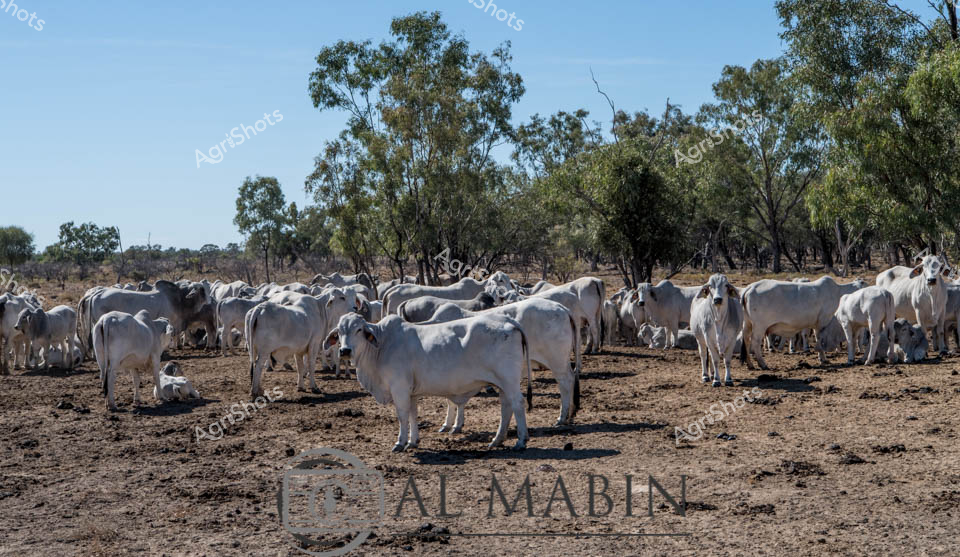
Brahman cattle cluster across the dusty paddock of a Queensland cattle station, their distinctive pale grey-white coats standing out against the dry earth and scattered eucalyptus woodland. These robust cattle, renowned for their heat tolerance and resilience, represent a quintessential scene of northern Australian beef production. The herd stands in tight formation, their muscular bodies casting long shadows in the harsh midday sunlight, surrounded by a landscape of sparse grassland and weathered gum trees. Each animal displays the breed's characteristic fatty hump and loose skin - adaptations that enable survival in challenging tropical environments. The ground is parched and compact, telling a story of challenging dry season conditions that test the endurance of both livestock and land. This image captures the essence of pastoral Australia - a testament to agricultural persistence, breed specialization, and the intricate relationship between cattle, landscape, and agricultural management in one of the world's most demanding farming environments.
 Image
Image
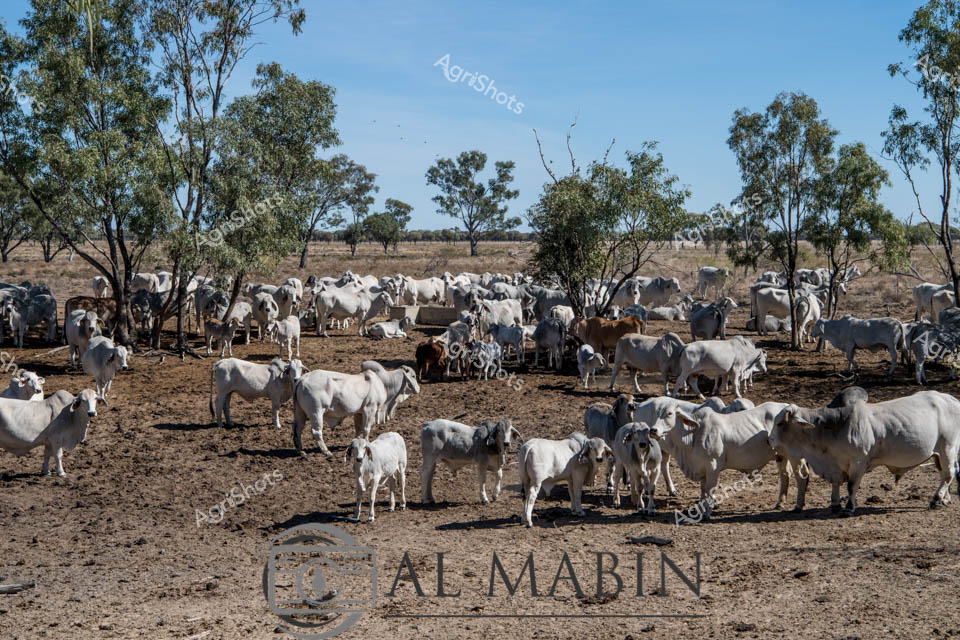
Dusty red earth and silver-grey gum trees frame a robust herd of Brahman cattle clustered across a sun-drenched northern Queensland pastoral landscape. Predominantly white with some brown-tinged individuals, these hardy cattle stand resilient in a densely populated paddock, showcasing the distinctive muscular build and loose skin characteristic of the Brahman breed - perfectly adapted to Australia's challenging tropical climate. Mature cows and younger calves intermingle beneath scattered eucalyptus, creating a living tableau of pastoral productivity that speaks to generations of agricultural expertise. The ground is parched and compact, indicating a dry season typical of the region, with the cattle clustered near sparse tree shade during the intense midday heat. This scene captures the essence of Australian extensive cattle farming - where robust livestock breeds thrive in seemingly sparse environments through generations of strategic breeding and management.
 Image
Image
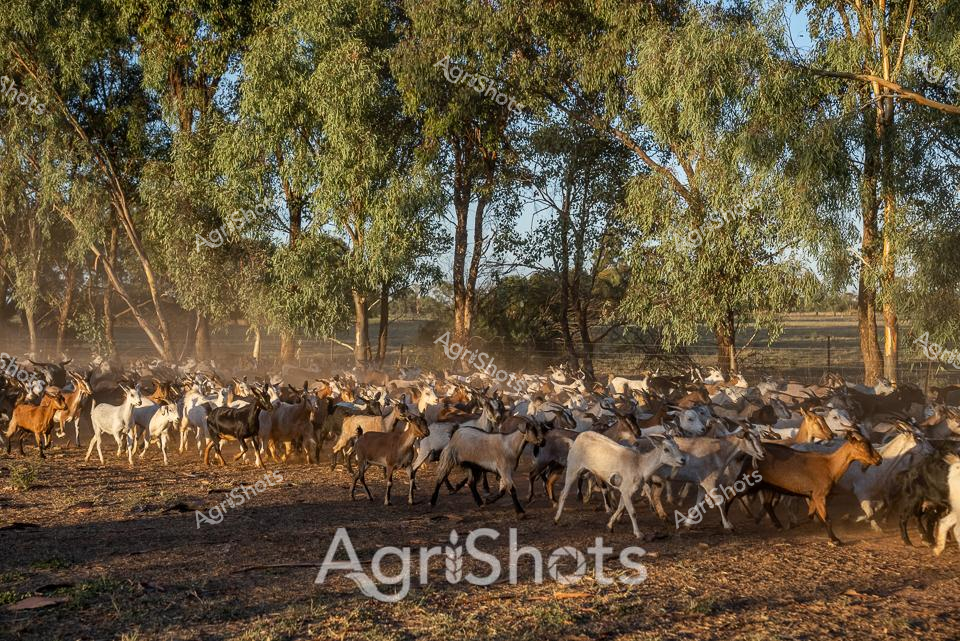
Golden dawn light filters through towering eucalyptus trees, casting long shadows across a rustic goat drafting yard in rural New South Wales. A dense mob of mixed breed goats - predominantly white, tan, and brown - cluster together in a swirling dust cloud, their movement creating a textured landscape of animal bodies and disturbed earth. The goats represent a typical small landholder or commercial rangeland herd, with varying sizes and coat colors suggesting mixed Boer, Anglo-Nubian, and local crossbred genetics. Weathered timber fencing and mature gum trees frame the scene, highlighting the classic Australian pastoral setting with its soft morning light and earthy color palette. Fine dust hangs in the air, capturing the dynamic energy of livestock movement and the subtle choreography of stock management. This quintessential agricultural moment captures the heart of Australian small livestock farming - a blend of traditional practice, environmental adaptation, and careful animal husbandry.
 Image
Image
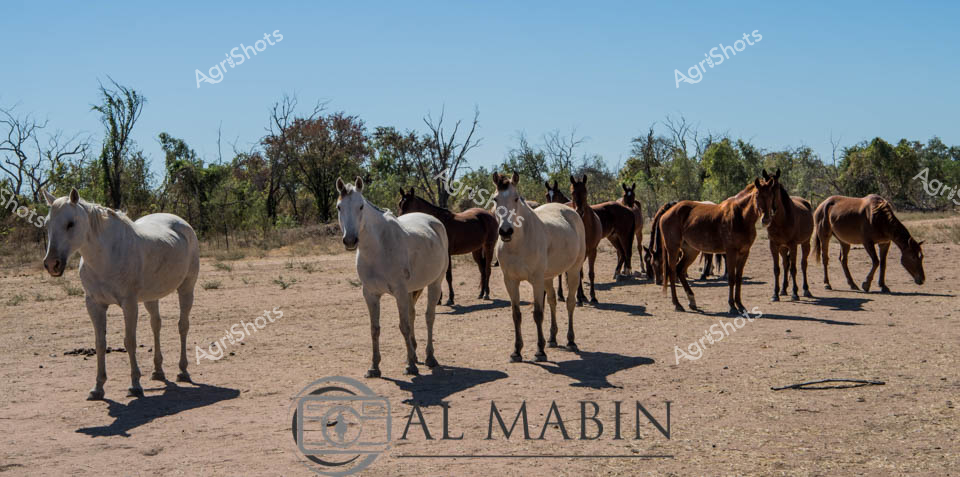
Magnificent stock horses stand resolute on a sun-drenched western Queensland cattle station, their muscular forms casting long shadows across the parched earth. A small herd of white and rich chestnut-brown horses congregate in a sparse landscape of bleached ground and scattered, weathered trees, showcasing the resilient nature of Australian livestock. The pristine white horses, likely carefully bred station horses, contrast beautifully with their darker companions, their coats gleaming under the harsh midday light. Bare trees in the background hint at the challenging environmental conditions of this rural landscape, typical of inland Queensland's arid pastoral zones. Each horse stands with a quiet dignity, representing generations of careful breeding and the critical role of horses in managing vast Australian agricultural properties.
 Image
Image
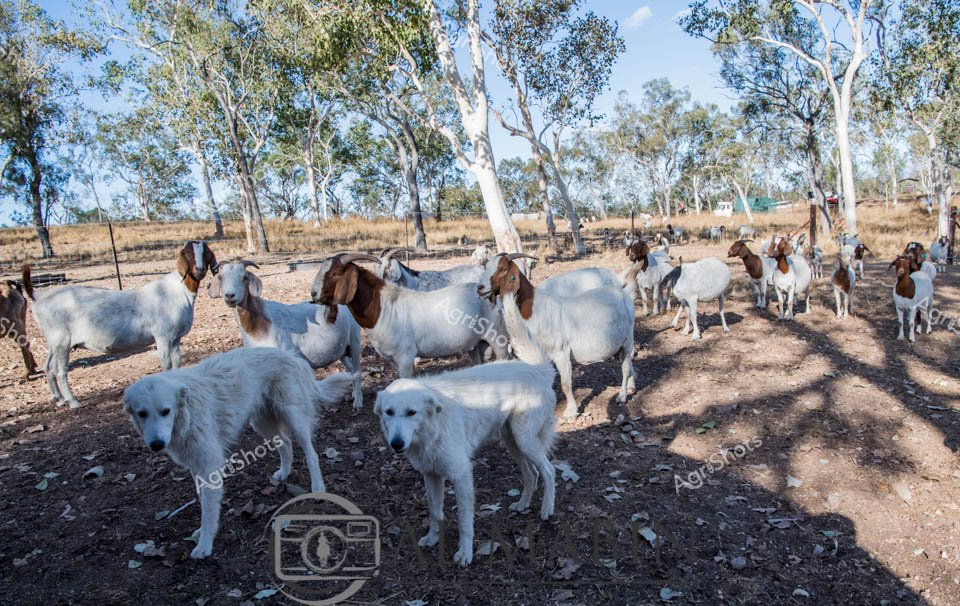
Australian Boer and dairy goat herd rests in the dappled shade of eucalyptus trees during a scorching mid-day in rural Queensland. White and brown-spotted Boer goats cluster together on dusty, rock-strewn ground, their robust frames and distinctive markings telling of careful pastoral breeding. Two magnificent white Great Pyrenees livestock guardian dogs stand vigilant among the herd, their thick coats providing protection against both sun and potential predators. The sparse woodland setting speaks to the challenging agricultural landscape of northern Queensland - sparse grass, weathered gum trees, and a fence line suggesting carefully managed grazing territory. Soft blue sky and golden earth tones create a sense of serene pastoral productivity, highlighting the symbiotic relationship between working dogs and livestock in Australia's agricultural ecosystem. This scene captures the resilience and strategic animal husbandry characteristic of Queensland's challenging rural environments.
 Image
Image
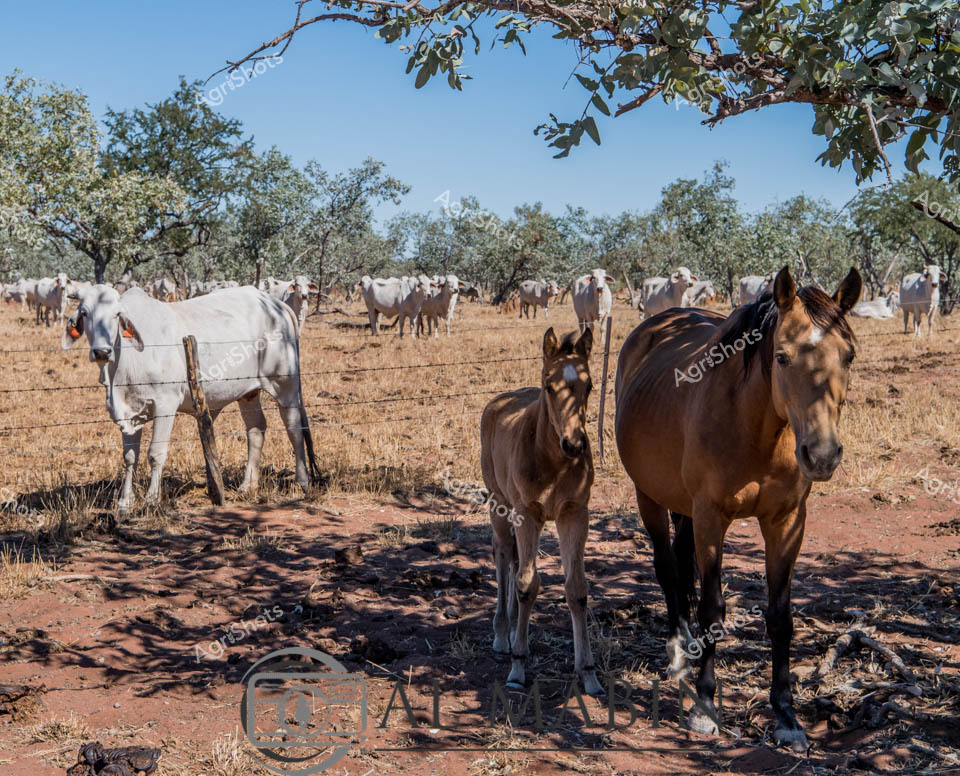
Australian Rural Pasture: Brahman Cattle and Station Horses A quintessential Queensland cattle station landscape unfolds under a crisp, azure sky, where silvery-white Brahman cattle graze across a sun-drenched paddock dotted with sparse eucalyptus trees. In the foreground, a rich bay mare and her delicate foal stand in sharp contrast against the reddish earth, embodying the resilient spirit of Australian pastoral life. The fenced grazing land reveals a classic station environment - dry, open grasslands with scattered trees providing minimal shade during the intense midday heat. Muscular Brahman cattle, renowned for their heat tolerance and distinctive humped shoulders, populate the background, their pale coats reflecting centuries of selective breeding for harsh tropical conditions. The scene captures the nuanced relationship between different livestock breeds sharing the same arid landscape, showcasing the adaptability and robust nature of Australian agricultural enterprises. Weathered fence posts and scattered ground vegetation underscore the challenging yet beautiful ecosystem of rural Queensland, where survival and productivity are intimately linked to the land.
 Image
Image
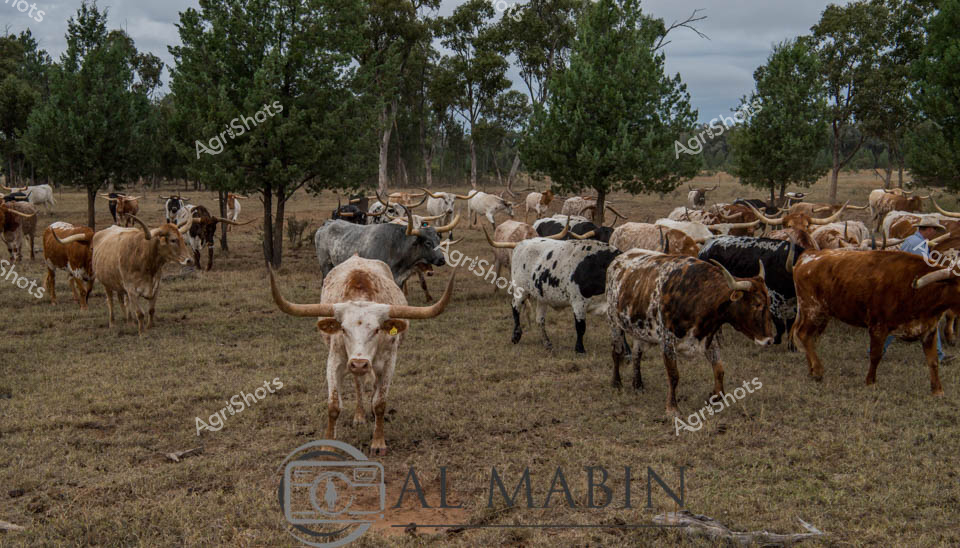
Texas Longhorn cattle graze across a weathered pastoral landscape in Queensland, their distinctive curved horns sweeping wide against a muted backdrop of eucalyptus trees and dry grasslands. The herd represents a diverse palette of coat colors - rich russet browns, speckled white and black patches, soft cream tones - reflecting the genetic diversity of this hardy breed renowned for its resilience in challenging Australian agricultural environments. Scattered mature trees provide sparse shade for the cattle, who move languidly across the sun-bleached paddock, their muscular frames testament to generations of adaptation to harsh station conditions. The overcast sky suggests an approaching season change, with the landscape displaying the characteristic golden-brown tones of a dry period. Each animal stands with a quiet strength, their broad horns and robust physiques embodying the rugged spirit of Australian beef production. The image captures the essence of extensive cattle farming - where large herds roam semi-wild across vast properties, representing a critical economic and cultural tradition of rural Queensland.