About this image
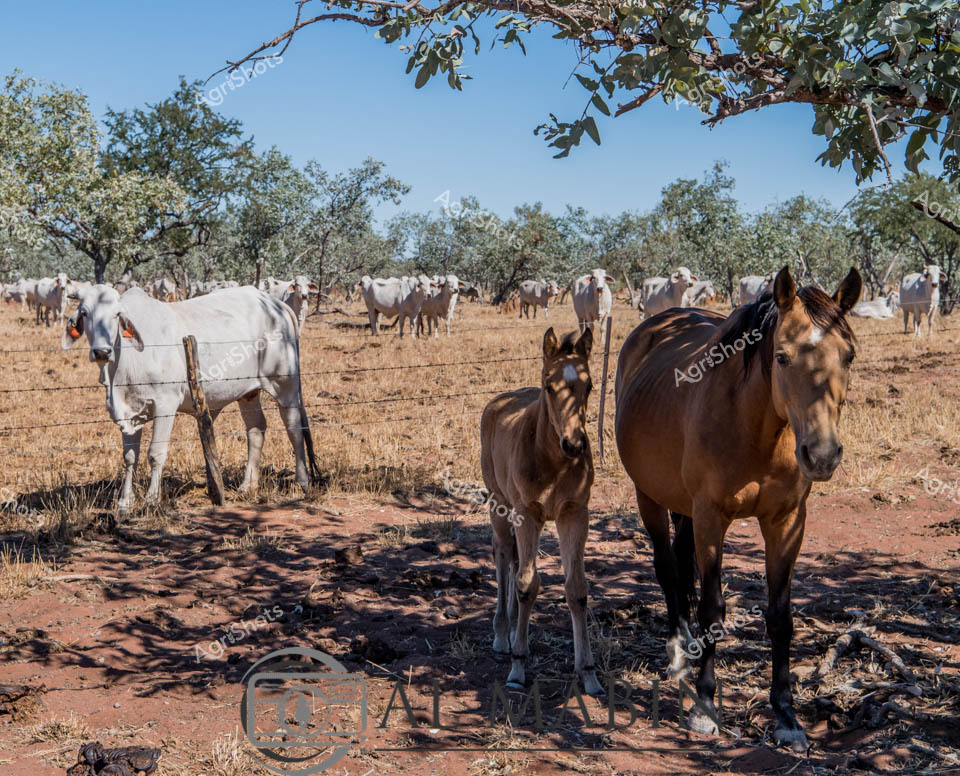
Australian Rural Pasture: Brahman Cattle and Station Horses A quintessential Queensland cattle station landscape unfolds under a crisp, azure sky, where silvery-white Brahman cattle graze across a sun-drenched paddock dotted with sparse eucalyptus trees. In the foreground, a rich bay mare and her delicate foal stand in sharp contrast against the reddish earth, embodying the resilient spirit of Australian pastoral life. The fenced grazing land reveals a classic station environment - dry, open grasslands with scattered trees providing minimal shade during the intense midday heat. Muscular Brahman cattle, renowned for their heat tolerance and distinctive humped shoulders, populate the background, their pale coats reflecting centuries of selective breeding for harsh tropical conditions. The scene captures the nuanced relationship between different livestock breeds sharing the same arid landscape, showcasing the adaptability and robust nature of Australian agricultural enterprises. Weathered fence posts and scattered ground vegetation underscore the challenging yet beautiful ecosystem of rural Queensland, where survival and productivity are intimately linked to the land.
Similar media
 Image
Image
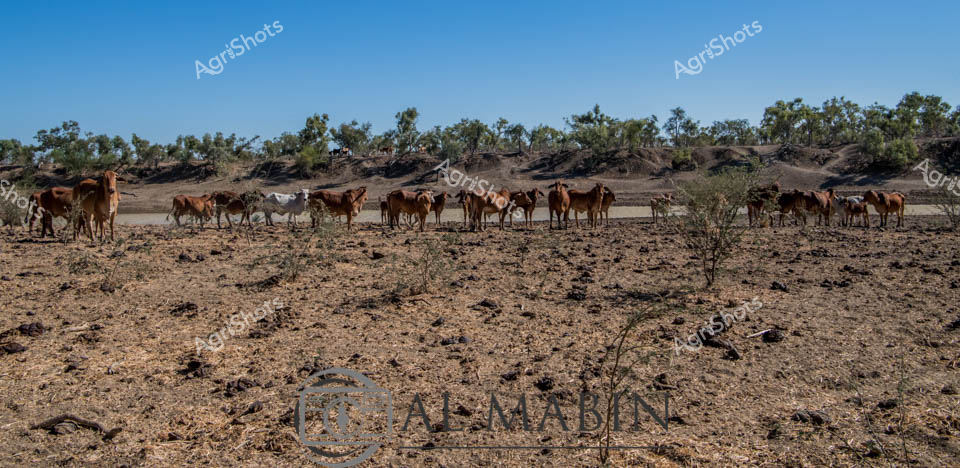
Brahman cattle cluster across a parched, ochre-toned landscape, their distinctive humped shoulders and heat-resistant coats revealing their adaptability to Australia's harsh northern pastoral zones. The dry, cracked earth and scattered sparse vegetation speak to the challenging environmental conditions of a Queensland cattle station during an extended dry season. Reddish-brown Brahman bulls and cows stand together in a tight, resilient herd, their muscular frames and loose skin demonstrating generations of genetic adaptation to survive in extreme temperatures and limited grazing conditions. Scrubby trees and a distant treeline provide minimal shade, highlighting the robust nature of these cattle and the agricultural resilience required in remote Australian pastoral regions. The clear blue sky and stark landscape create a sense of isolation and endurance, capturing the raw essence of Queensland's cattle industry and the intrinsic connection between livestock and landscape.
 Image
Image
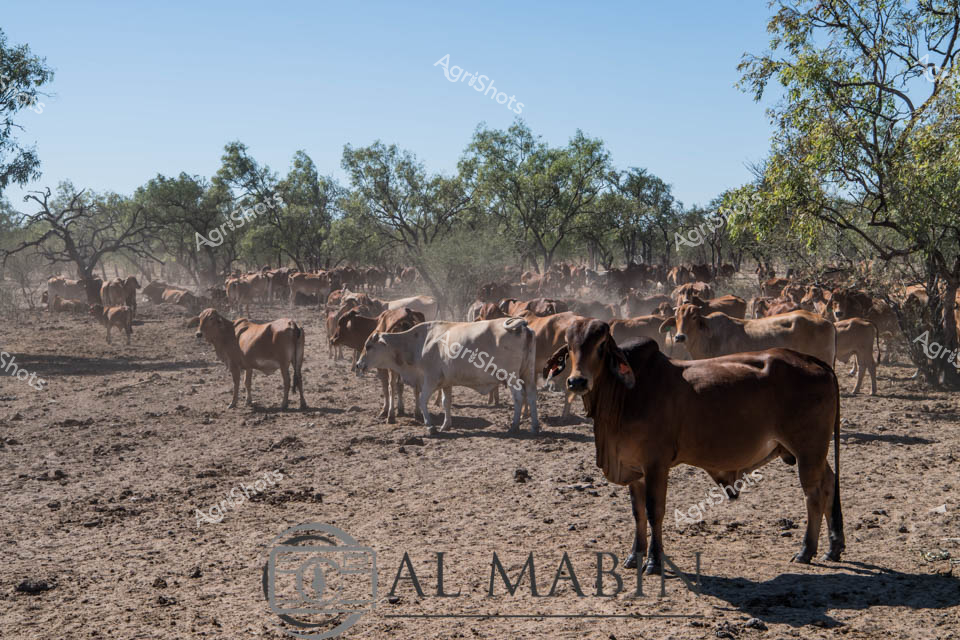
Dusty and resolute, a herd of Brahman cattle stands scattered across a parched station landscape in remote Queensland. The distinctive reddish-brown and white cattle, renowned for their heat tolerance and resilience, cluster among sparse eucalyptus trees under a cloudless blue sky. Their muscular bodies and characteristic humps reflect generations of adaptation to harsh Australian pastoral conditions, with some animals standing alert while others create small dust clouds with their movement. The dry, cracked earth surrounding the herd speaks to the challenging environment of northern Queensland's agricultural regions, where these robust cattle are critical to the beef production economy. Sparse grey-green trees provide minimal shade, highlighting the animals' incredible capacity to survive in extreme conditions.
 Image
Image
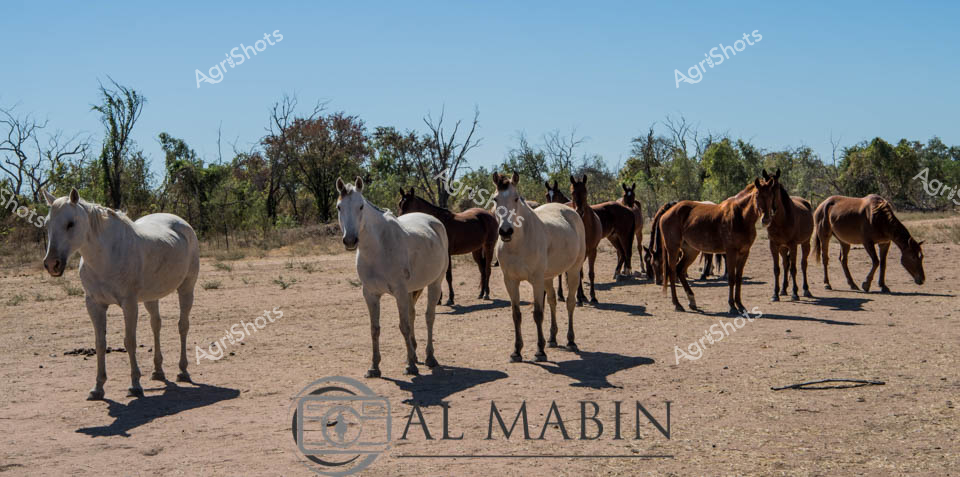
Magnificent stock horses stand resolute on a sun-drenched western Queensland cattle station, their muscular forms casting long shadows across the parched earth. A small herd of white and rich chestnut-brown horses congregate in a sparse landscape of bleached ground and scattered, weathered trees, showcasing the resilient nature of Australian livestock. The pristine white horses, likely carefully bred station horses, contrast beautifully with their darker companions, their coats gleaming under the harsh midday light. Bare trees in the background hint at the challenging environmental conditions of this rural landscape, typical of inland Queensland's arid pastoral zones. Each horse stands with a quiet dignity, representing generations of careful breeding and the critical role of horses in managing vast Australian agricultural properties.
 Image
Image
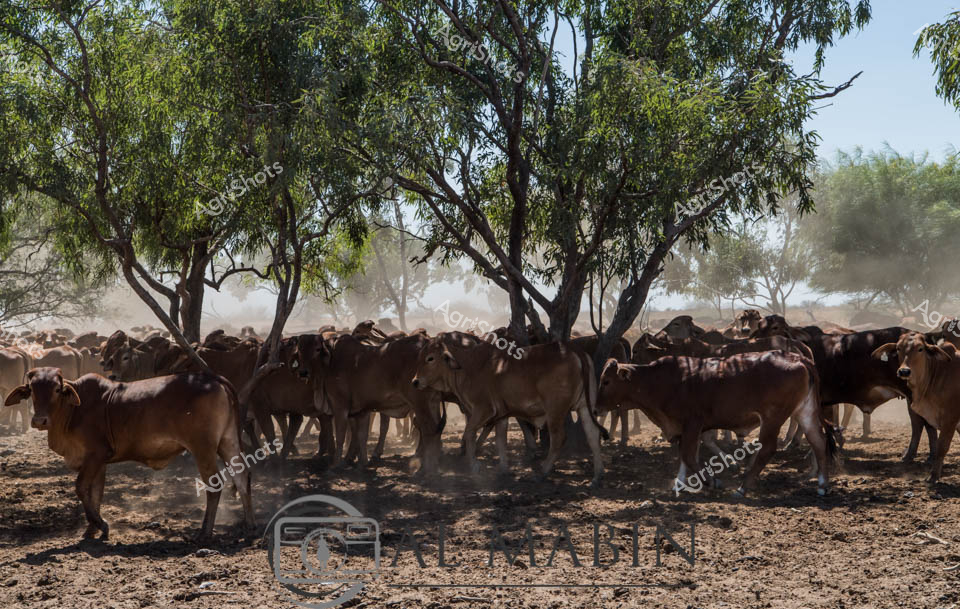
Under the dappled shade of eucalyptus trees, a dense herd of Brahman cattle cluster together on the parched earth of a Queensland cattle station. The robust, heat-tolerant cattle—distinguished by their distinctive loose skin and prominent humps—stand closely packed, creating a living landscape of muscular brown and grey bodies against the dusty, sun-baked ground. Soft plumes of dry earth rise around their feet, testament to the unforgiving arid environment of northern Australia. Brahman cattle, renowned for their resilience in harsh tropical conditions, demonstrate their adaptability in this quintessential pastoral scene, where the interplay of light, dust, and animal forms speaks to the challenging yet vital role of cattle production in Australian agriculture. The trees provide sparse but critical shelter, their silvery-green leaves contrasting with the earthy tones of the livestock, capturing the raw beauty of station life during the dry season.
 Image
Image
Merino ewes and beef cattle huddle together on the sun-baked earth of a drought-affected New South Wales pastoral landscape. The rich red soil contrasts sharply with the tawny wool of the densely packed sheep and the chestnut-brown coats of the cattle, creating a powerful tableau of agricultural resilience. Sparse eucalyptus and scrub trees dot the background, their muted green foliage highlighting the parched conditions of the landscape. The livestock cluster tightly, likely gathered for supplementary feeding - a critical survival strategy during periods of extreme dry weather. Cotton seed and grain feed supplements are likely scattered among the animals, providing essential nutrition in this challenging environment.
 Image
Image
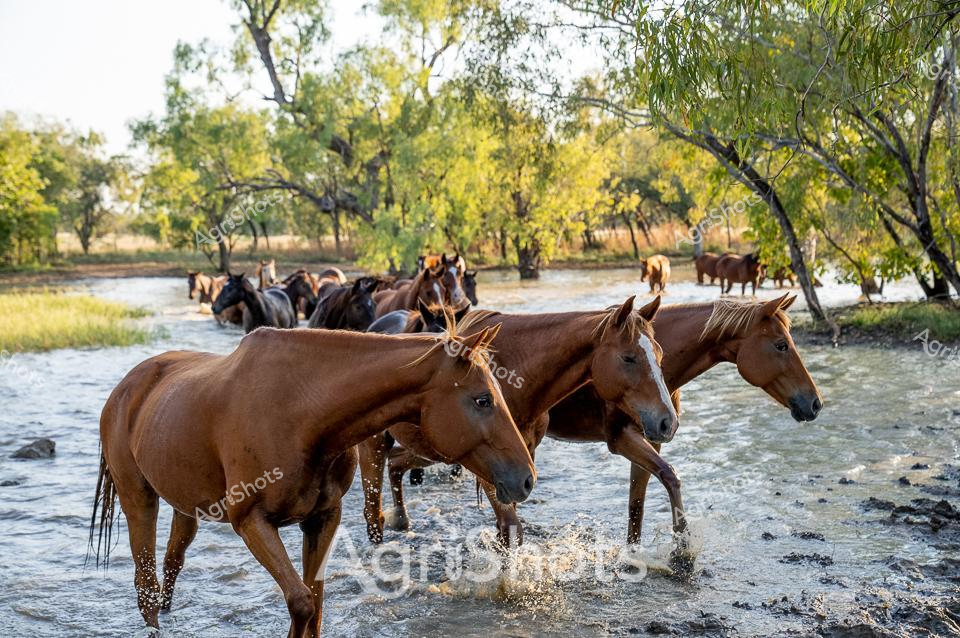
Wild Brumbies Rest in Woodland Creek Sanctuary Sun-drenched golden light filters through sparse eucalyptus woodland, illuminating a tranquil creek scene with a herd of chestnut and bay horses. These robust Australian stock horses stand ankle-deep in cool, muddy water, their muscular frames glistening with perspiration from a long muster across the rugged Western Australian landscape. The horses bunch together instinctively, their rich copper and brown coats contrasting against the silvery water and pale sandy creek bed, creating a tableau of natural harmony and pastoral resilience. Scattered trees with delicate yellow-green foliage frame the scene, suggesting late summer or early autumn when the harsh Australian heat begins to soften. Water splashes gently around their hooves as the horses pause to refresh themselves, their collective posture relaxed yet alert - a testament to the adaptability and strength of these remarkable station horses. This image captures the essence of outback horse management, where animals and landscape merge in a timeless dance of survival and companionship. The herd represents the heart of Western Australian pastoral culture - tough, elegant, and intimately connected to the challenging environments they inhabit.
 Image
Image
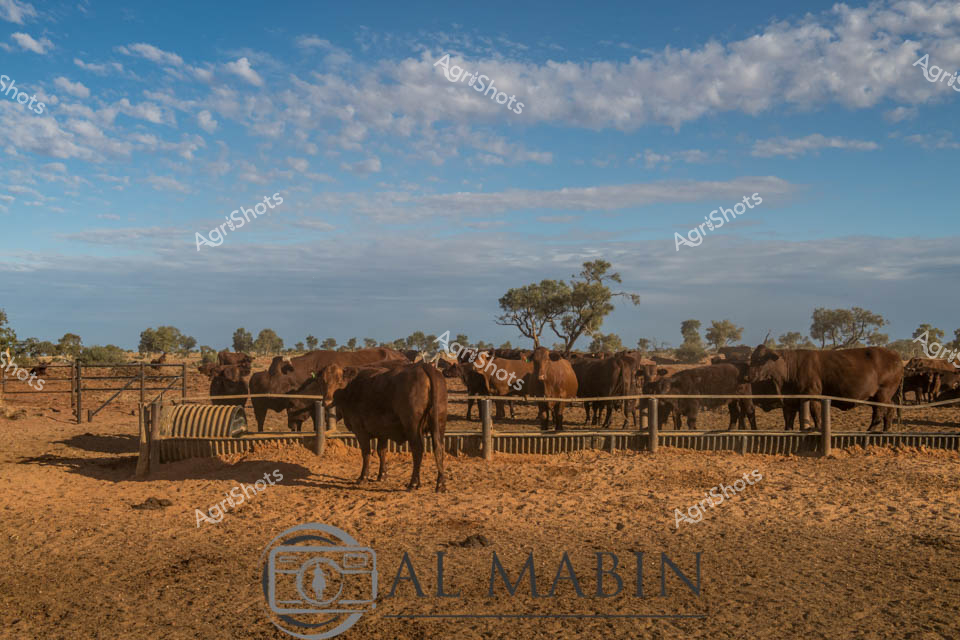
A herd of dark red-brown beef cattle stands in a dry, red-earth feedlot yard in outback Australia, gathered around a cylindrical hay feeder under a partly cloudy blue sky. Sparse native trees line the background horizon, and the warm late-afternoon light highlights the russet tones of the dusty ground and the cattle's coats. Metal panel fencing encloses the yard, with several animals visible near the feed station while others mill about in the background.
 Image
Image
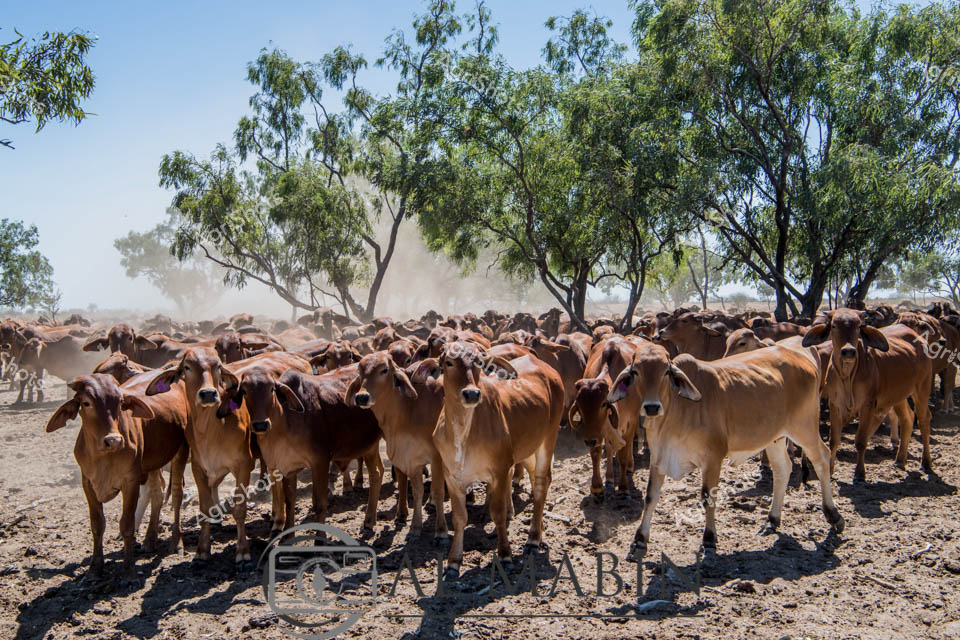
Brahman cattle cluster together beneath sparse eucalyptus trees, their rich russet and tan hides gleaming in the harsh midday sunlight of a Queensland cattle station. Fine dust rises around their muscular bodies, creating a soft atmospheric haze that softens the rugged landscape of packed earth and scattered gum trees. These heat-resistant cattle, renowned for their distinctive humped shoulders and loose skin, stand packed tightly in a disciplined herd, their alert ears and sturdy frames reflecting generations of breeding for Australia's challenging northern pastoral environments. The dry season landscape speaks of resilience - windswept trees casting dappled shadows, the ground parched and cracked, yet the cattle stand resolute, a testament to the adaptability of both animal and agricultural ecosystem. Their uniform coloration ranges from deep copper to pale fawn, with some animals displaying the characteristic light dewlap and prominent hump that defines the Brahman breed. This scene captures the essence of northern Australian cattle production: tough livestock thriving in an uncompromising landscape, representing generations of agricultural expertise and environmental adaptation.