About this image
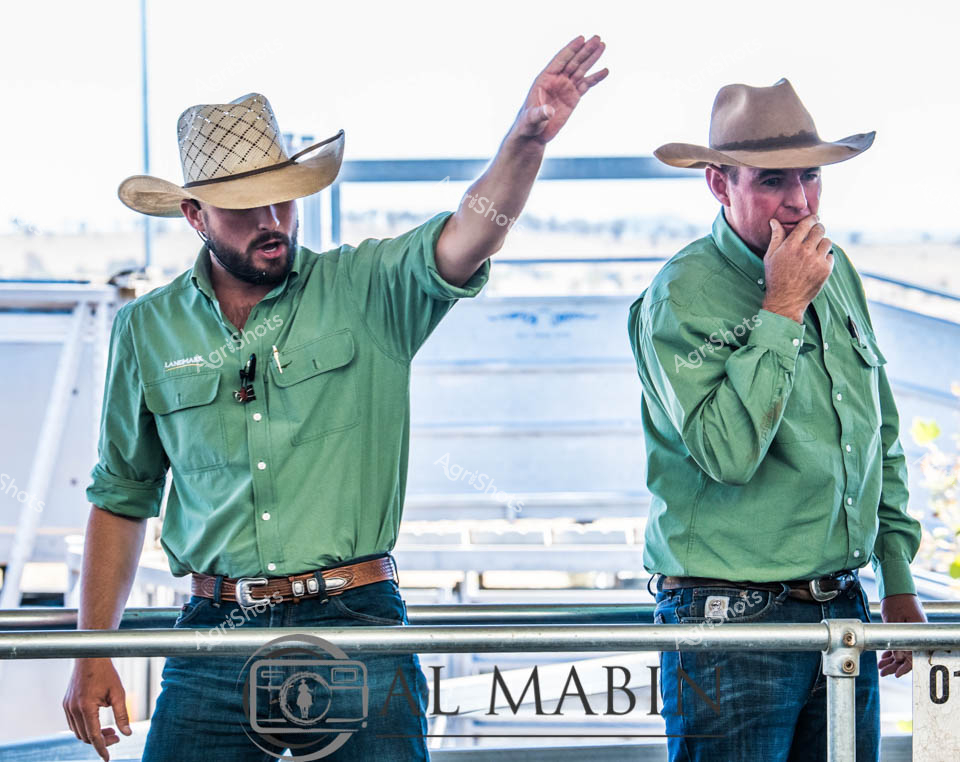
Two seasoned livestock agents stand poised at the sale yards, their coordinated green work shirts and wide-brimmed cattle country hats reflecting generations of agricultural expertise. One gestures decisively with an outstretched arm, likely signaling a bid or communicating subtle market insights, while his colleague thoughtfully rests his hand near his mouth, surveying the livestock auction environment. The New England Region's distinctive rural infrastructure frames their professional stance, with metallic railings and a crisp background suggesting a typical winter's morning in New South Wales. Their matching attire—pressed green shirts, blue denim jeans, and carefully worn stockman's hats—speaks to a long-standing professional culture of practical, no-nonsense rural business. Weathered leather belts and a confident demeanor underscore their deep understanding of cattle trading dynamics. This moment captures the nuanced communication and unspoken understanding that define successful livestock commerce in Australia's agricultural heartland.
Similar media
 Image
Image
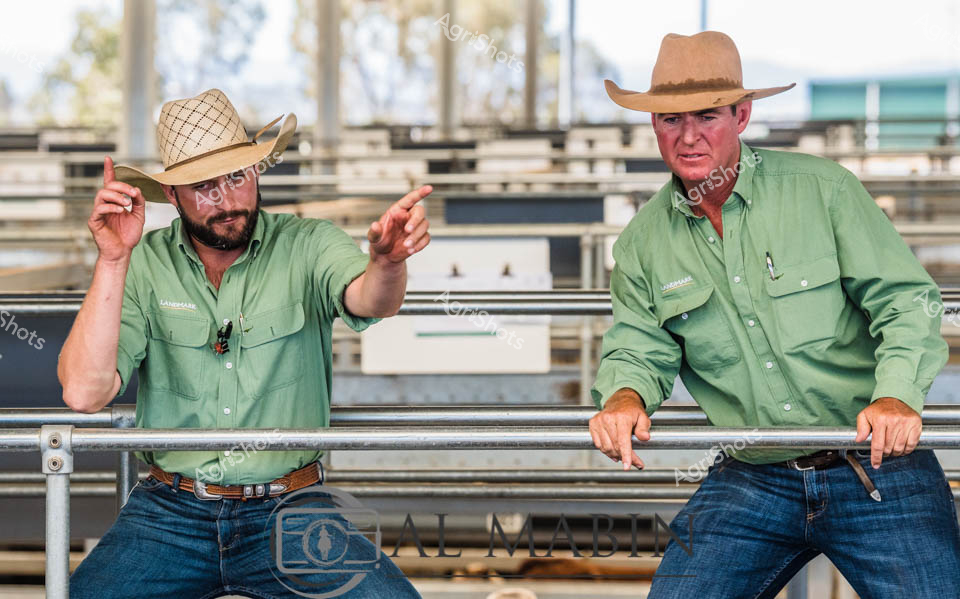
Landmark agents survey the livestock sale yards with practiced expertise, their sage green work shirts emblematic of professional agricultural management. Standing against a stark metal railing, these seasoned cattlemen communicate with subtle gestures and concentrated expressions, their broad-brimmed hats casting shadows across weathered faces. One agent in a straw hat and intricate leather belt leans forward, gesturing with authority, while his colleague in a felt brown hat maintains a measured stance, both embodying the quiet intensity of rural livestock trading. The New England region's crisp light illuminates their professional demeanor, highlighting the nuanced communication of cattle market professionals who negotiate complex transactions with minimal movement. Their coordinated Landmark branded workwear speaks to the sophisticated systems underlying Australia's beef industry, where decades of experience translate into subtle signals and unspoken understanding. The sale yards backdrop suggests a moment of strategic assessment, capturing the precise choreography of agricultural commerce.
 Image
Image
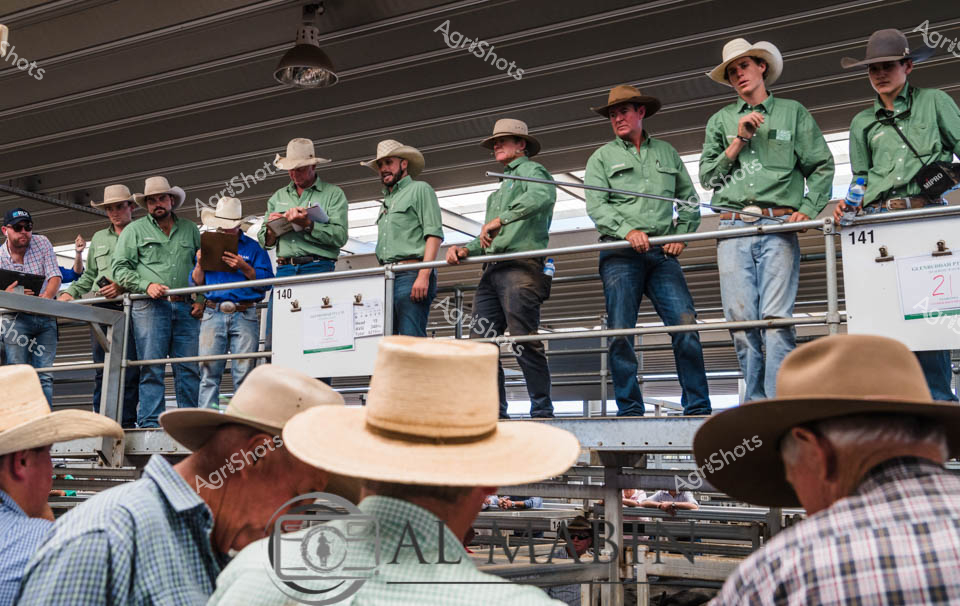
Rural livestock auction at a modern cattle sale yard in New England, New South Wales. Seasoned agricultural agents in coordinated sage green shirts and wide-brimmed straw hats stand on a multi-level steel viewing platform, surveying livestock pens below. The professionals cluster in small groups, leaning casually against railings marked with lot numbers, their postures reflecting years of collective experience in cattle trading. A sea of similar straw hats fills the lower viewing area, representing local farmers and regional buyers intently focused on the upcoming sale. The structured, industrial steel architecture of the sale yards contrasts with the traditional rural attire, symbolizing the blend of modern agricultural business practices and enduring pastoral traditions. Soft neutral tones of beige, green, and denim blue dominate the scene, creating a harmonious visual palette that speaks to the understated professionalism of Australian livestock trading.
 Image
Image
Two experienced livestock agents stand poised at the cattle sale yards of New England, New South Wales, their weathered presence embodying generations of agricultural expertise. Dressed in matching sage green work shirts and classic wide-brimmed akubra hats, they lean against the metal railings with a practiced, relaxed stance that speaks to countless cattle auctions. The agent on the left, sporting a salt-and-pepper beard, gestures with purpose, his straw hat tilted slightly as he appears to be discussing details of an upcoming sale. His companion, a seasoned cattleman with a stern, sun-weathered complexion, grips the railing with hands that tell stories of decades in the livestock trade. The sale yard's metal infrastructure stretches behind them, a testament to the systematic and professional nature of Australian cattle trading. Their coordinated green attire and confident body language capture the essence of rural professional collaboration, representing the backbone of Australia's robust beef industry.
 Image
Image
Rural auction dynamics unfold at a classic Australian livestock sale yard, capturing the essence of agricultural commerce in the New England or Riverina regions of New South Wales. Uniformed agents in sage green shirts and wide-brimmed hats stand positioned on a raised platform, overlooking the proceedings with professional scrutiny. In the foreground, three cattlemen wearing traditional wide-brimmed stockman's hats - in shades of straw, tan, and golden weave - sit with backs turned, their plaid and dotted shirts reflecting the classic rural fashion. The steel-and-corrugated infrastructure frames the scene, with numbered panels suggesting an organized, systematic approach to livestock trading. The atmosphere pulses with quiet intensity, a testament to the measured precision of agricultural transactions where significant economic decisions are made with minimal fanfare. Soft shadows and neutral tones communicate the pragmatic, no-nonsense environment of a cattle sale, where generations of farming knowledge converge in a single, crucial moment of economic exchange.
 Image
Image
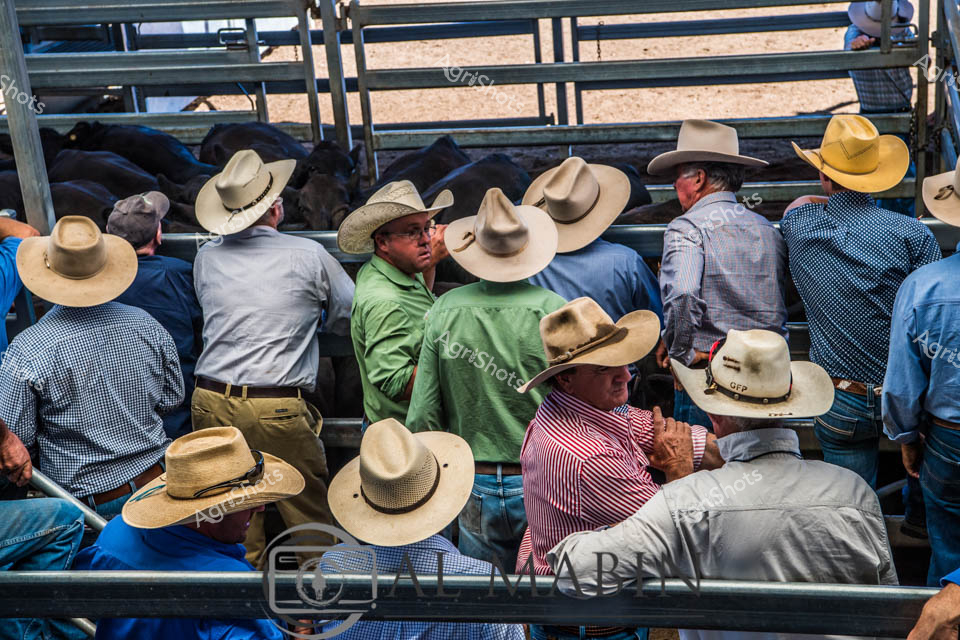
Cattle auction intensity fills the sale yards, a quintessential New England Region scene where rural professionals converge. Stockmen and agents cluster tightly within metal livestock yards, their signature wide-brimmed akubra hats creating a textural landscape of cream, tan, and golden tones. Dressed in checked shirts, pressed trousers, and working attire, these agricultural specialists lean against steel railings, engaged in concentrated discussion about incoming livestock. The overhead light casts sharp shadows, highlighting the crisp collars and professional demeanor of these beef cattle trading experts. Predominantly wearing neutral earth tones - sage greens, soft blues, and muted grays - the group represents the backbone of Australia's agricultural commerce. Their body language suggests focused negotiation, with subtle gestures and close positioning indicating the nuanced communication of livestock trading. These sale yards epitomize the strategic heart of rural economic exchange, where generations of agricultural knowledge converge to determine cattle values, breeding potential, and market trajectories. Each hat, each shirt, each subtle movement tells a story of rural professionalism and deep-rooted agricultural expertise.
 Image
Image
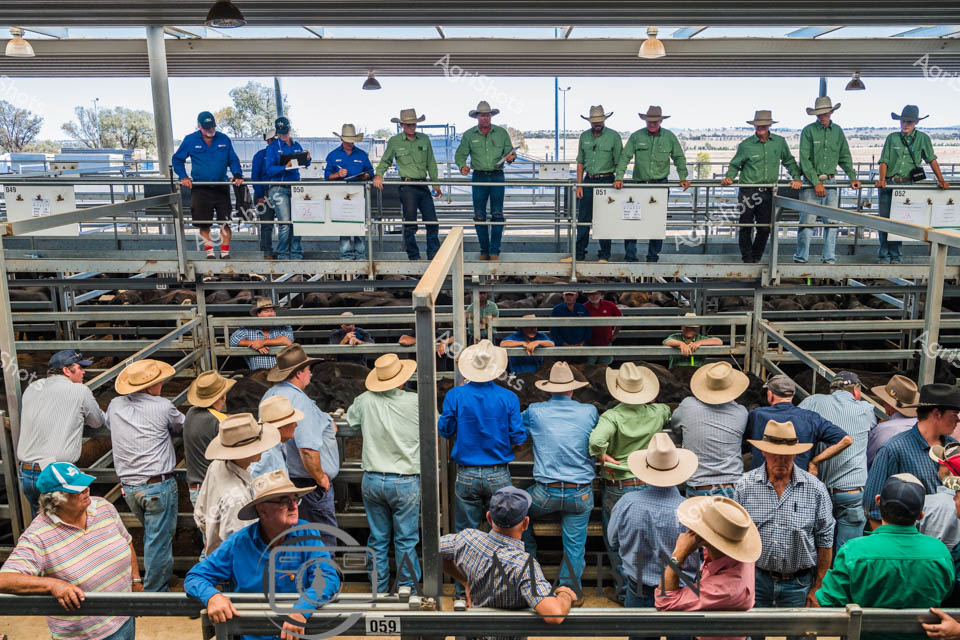
Cattle buyers and agents converge at the New England Region livestock sale yards, a bustling hub of agricultural commerce. Rows of stockmen in wide-brimmed akubra hats - a palette of blues, greens, and neutrals - crowd the multi-tiered metal pens, intently focused on assessing the quality of cattle below. The overhead industrial shed provides shelter, with natural light filtering through, illuminating the rhythmic process of rural livestock trading. Professionally dressed agents in blue uniforms stand on the upper level, clipboard and stock lists in hand, while farmers and buyers in classic rural attire examine potential purchases from multiple angles. This scene captures the precise, methodical nature of Australian cattle trading - a critical moment in the agricultural supply chain where livestock value is determined through expert evaluation and negotiation. The dense arrangement of hat-wearing professionals, the structured metal infrastructure, and the controlled environment reflect the sophisticated, business-like approach to primary industry in regional New South Wales.
 Image
Image
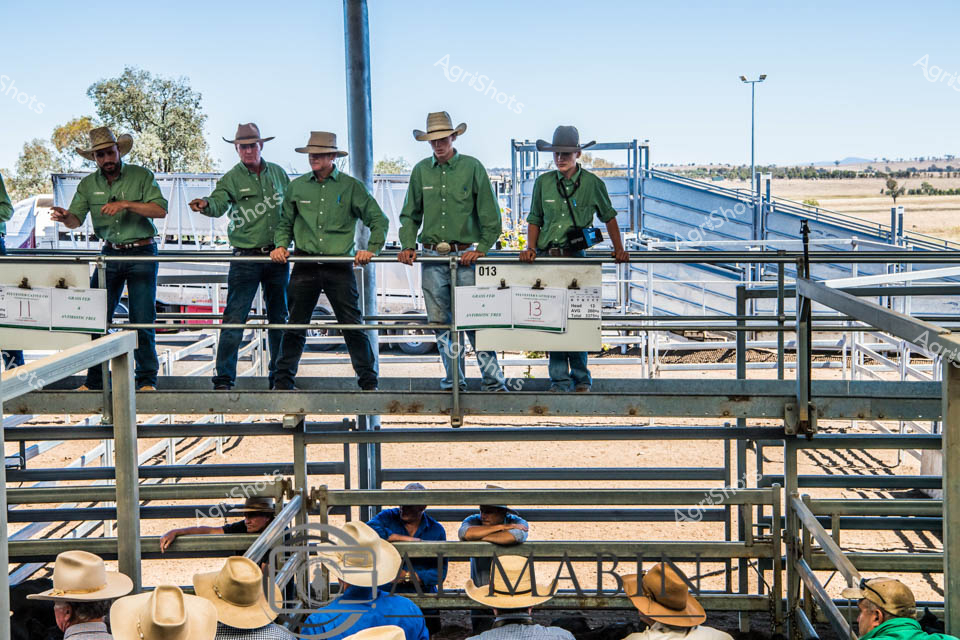
Livestock auctioneers stand sentinel in matching forest green work shirts and wide-brimmed bush hats, surveying the bustling sale yards of New England, New South Wales. Perched on elevated metal walkways above the holding pens, these agricultural professionals represent the critical interface between livestock producers and buyers in a quintessential Australian rural marketplace. The harsh midday sunlight casts sharp shadows across the dusty yards, highlighting the structured steel infrastructure and the sea of neutral-toned cowboy hats belonging to farmers and buyers below. Precise and methodical, the agents lean against the railings, ready to facilitate the complex dance of livestock trading that underpins the region's beef cattle economy. Their uniform attire - crisp green shirts, sturdy denim, and protective wide-brimmed hats - speaks to both professionalism and the practical demands of working in exposed agricultural environments. The scene captures a moment of focused anticipation, where generations of agricultural knowledge and commercial acumen converge in the timeless ritual of livestock trading.
 Image
Image
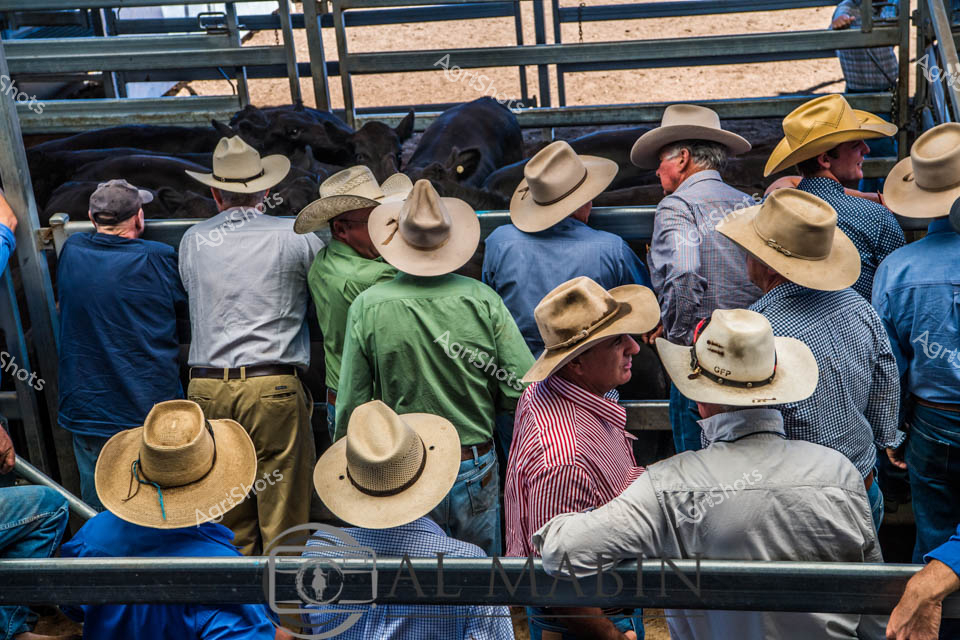
Weathered cowboy hats and crisp cotton shirts converge in the tight metal pens of a classic Australian cattle sale yard. Seasoned livestock agents and local farmers cluster shoulder-to-shoulder, their collective attention focused intently on the cattle behind the steel railings. Shades of khaki, navy, green, and soft beige blend together in a uniform of rural professional attire, each individual oriented towards the livestock with a practiced, unsentimental concentration. The overhead lighting casts sharp shadows across the working space, highlighting the textural differences between sun-bleached hats, checked shirts, and the sleek black coats of the cattle. This is a moment of serious commercial assessment - each agent scanning the herd, mentally calculating value, condition, and potential. The uniformity of their postures speaks to generations of agricultural knowledge and an unspoken professional language of livestock trading. The scene captures the quintessential Australian agricultural environment - a pragmatic, understated theatre of rural commerce where fortunes are negotiated and the nation's beef industry moves forward, one carefully evaluated beast at a time.