About this image
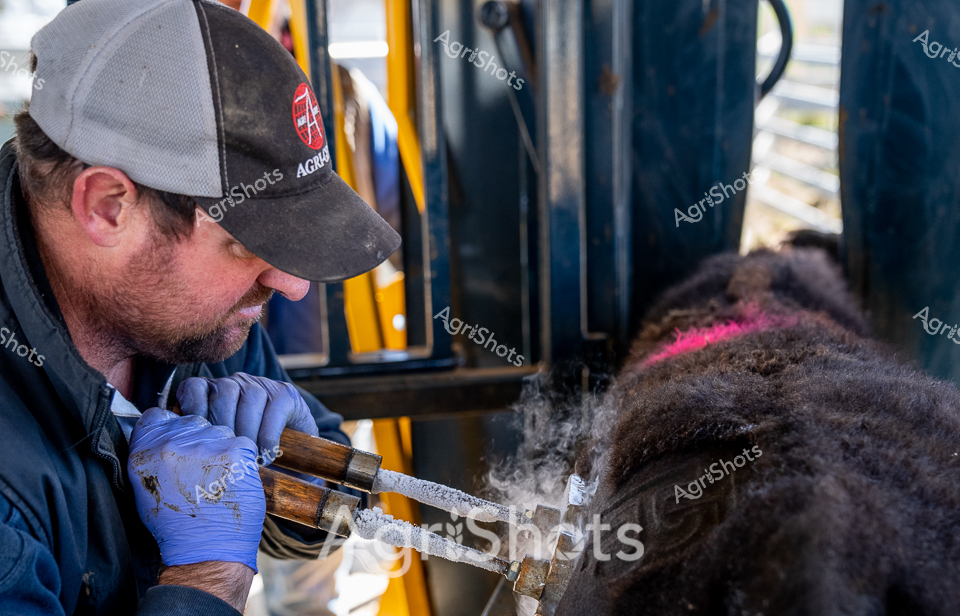
Branding irons glow with intense heat as a stockman in a dark and gray cap carefully marks a Wagyu bull in a sturdy cattle handling facility. Wearing protective blue nitrile gloves, the experienced agricultural worker leans in with precision, applying the hot iron to create a permanent identification mark on the animal's thick, dark hide. Steam rises from the branding point, capturing the intensity of this critical livestock management process. The metallic gates and industrial setting contrast with the organic, muscular form of the bull, highlighting the careful intersection of traditional farming practices and modern animal husbandry. A splash of bright pink marks another identification point on the bull's coat, suggesting a systematic approach to cattle management. This moment encapsulates the careful, deliberate work of Australian cattle farmers, particularly those specializing in premium Wagyu breeding stock in regions like New South Wales.
Similar media
 Image
Image
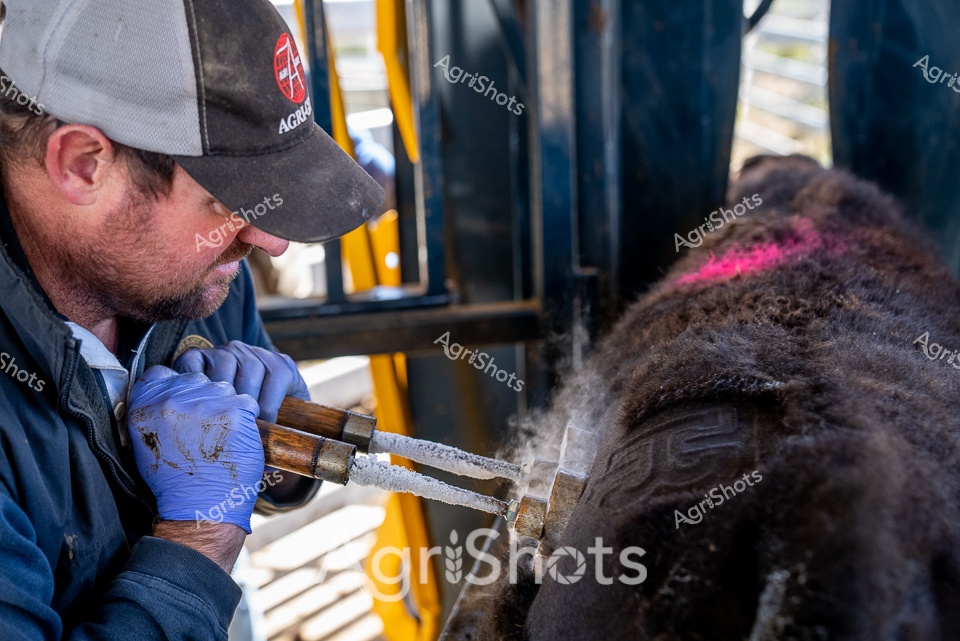
The industrial steel cattle chute frames the scene, with yellow safety structures visible, highlighting the controlled environment of modern cattle management. Muscular and stoic, the bull stands firmly while the experienced handler applies the traditional identification method with practiced skill and minimal stress to the animal. The close-up perspective reveals the textural details of the bull's dense winter coat and the technical expertise required in stud cattle operations, typical of progressive beef enterprises across New South Wales. This image encapsulates the intersection of time-honored agricultural practices and contemporary livestock management techniques, where animal welfare and precise identification go hand in hand.
 Image
Image
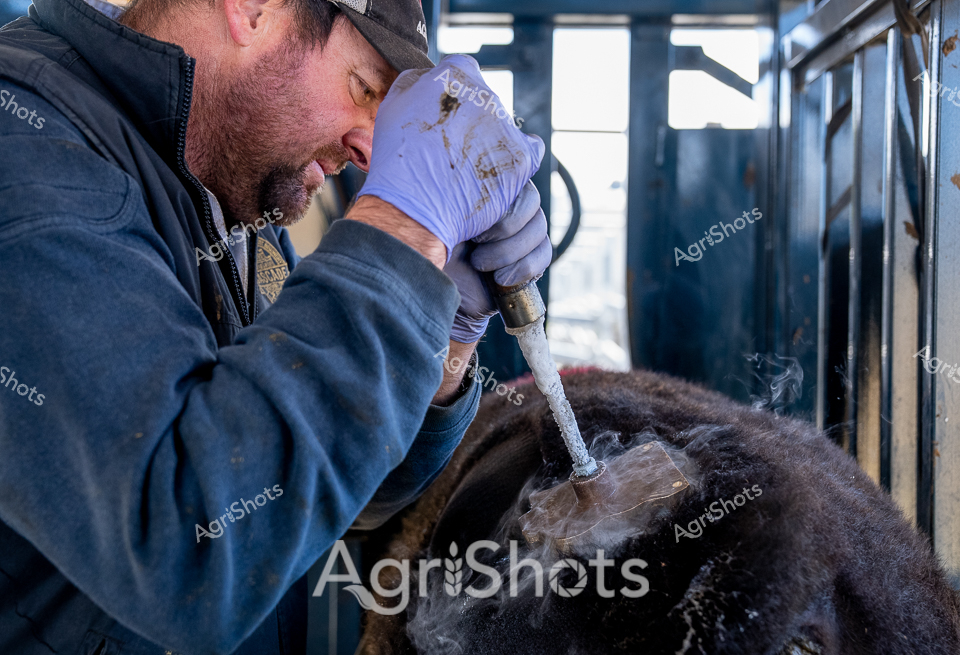
Searing heat radiates from the branding iron as a seasoned farmhand carefully marks a dark-coated Wagyu bull during livestock processing. Dressed in a navy blue jacket and protective gloves, the worker focuses intently on the precise application of the identifying mark, steam and smoke rising from the brief contact. The interior of the cattle handling facility is a steel-blue landscape of gates and chutes, creating a controlled environment for this essential agricultural practice. Harsh winter light filters through narrow windows, casting sharp shadows across the dense, glossy coat of the bull - a testament to the high-quality breeding of this prized Wagyu stock. Every movement is deliberate and practiced, reflecting generations of agricultural expertise in managing and identifying livestock. This moment captures the intersection of traditional farming techniques and modern cattle breeding, a quintessential scene of Australian agricultural life that speaks to the meticulous care and expertise required in stud cattle management.
 Image
Image
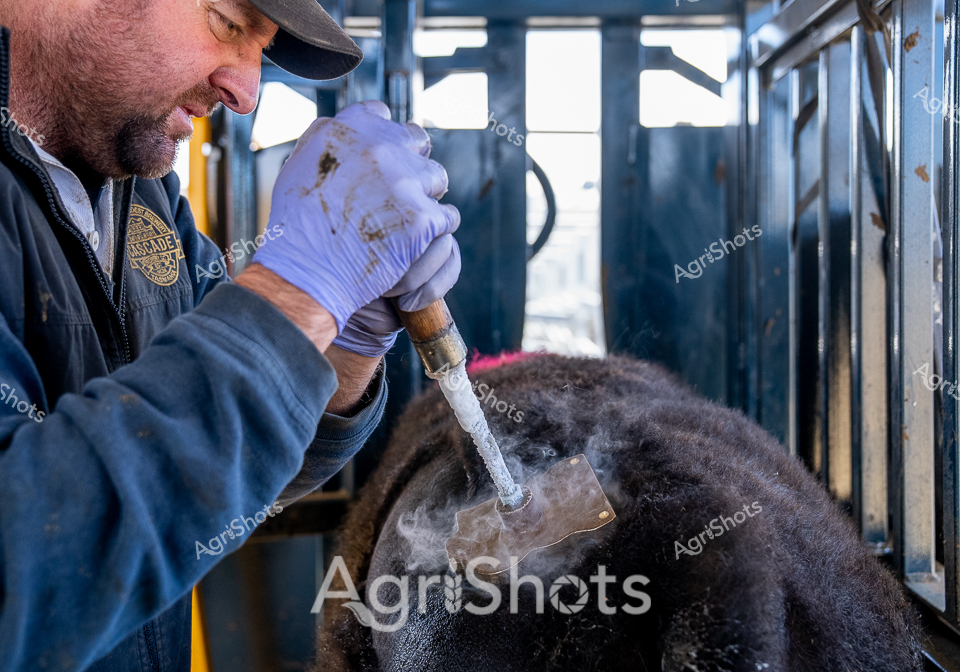
Searing heat and precision mark this intimate moment of cattle branding in a steel-framed livestock shed. A skilled livestock worker, wearing a dark jacket and protective lavender nitrile gloves, carefully applies a hot branding iron to the hide of a dark-coated Wagyu bull. Steam rises from the point of contact, capturing the age-old agricultural practice of permanent identification. The worker's focused expression and steady hand demonstrate the careful expertise required in modern cattle management, representing generations of farming knowledge passed down through Australian agricultural traditions. Muted blue and gray tones of the interior contrast with the intense white-hot branding tool, creating a dramatic scene of controlled intensity. This image captures the nuanced intersection of animal husbandry, tradition, and professional livestock management in rural Australia, showcasing the meticulous care and skill inherent in beef cattle production.
 Image
Image
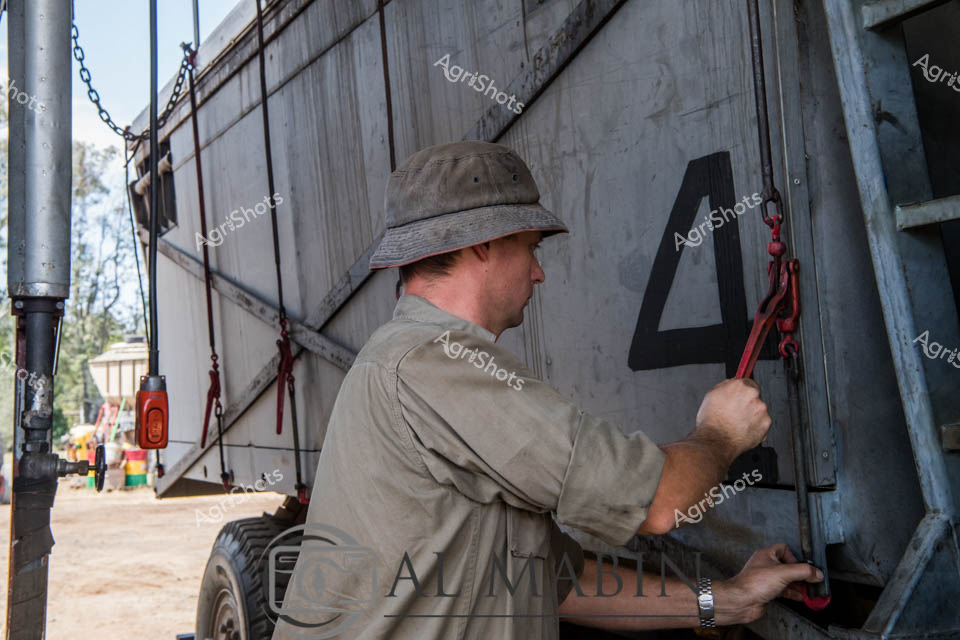
A farm worker meticulously secures the heavy cargo door of an agricultural transport trailer, wearing a weathered khaki bucket hat and utility shirt. The industrial-grade trailer, marked with a prominent number "4", stands in a rural setting with glimpses of trees and equipment in the background. Bright red securing chains and mechanism handles contrast against the silvery-gray metal surface of the trailer, highlighting the precision and care involved in agricultural logistics. The worker's focused posture and careful handling suggest the importance of equipment maintenance and transport preparation in modern farming operations. Soft natural light and the muted earth tones of the scene evoke the quiet diligence of agricultural work, capturing a moment of careful preparation in the supply chain. The image reflects the technical expertise and attention to detail required in contemporary agricultural transportation and logistics.
 Image
Image
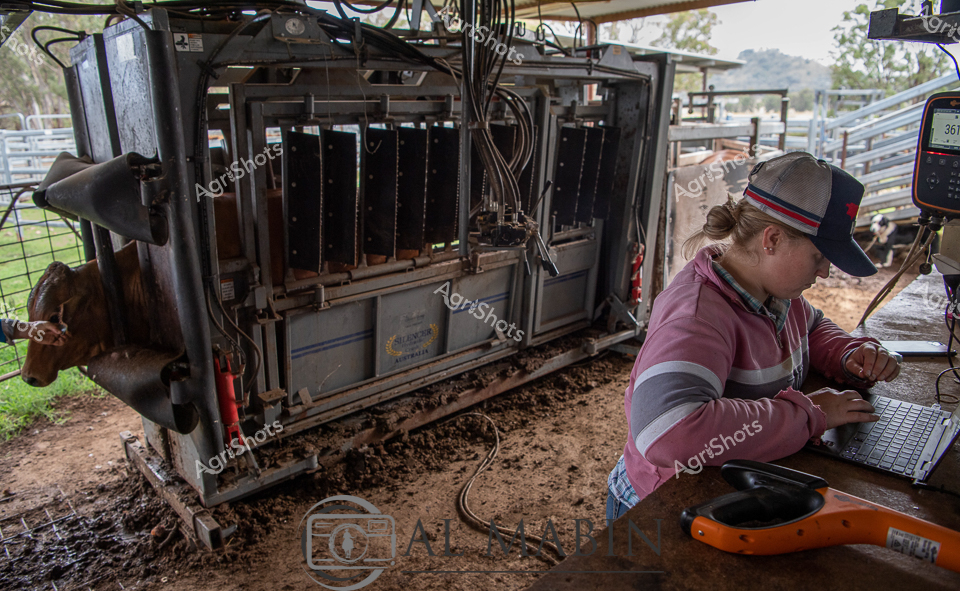
Cattle husbandry unfolds with precision at a rural livestock facility, where advanced agricultural technology meets skilled farm management. A technician wearing a pink and grey jacket and a branded cap operates a sophisticated cattle crush, meticulously recording data on a laptop while a dark-coated beast stands within the heavy-duty restraining equipment. The Gallagher cattle handling system, robust and methodical, enables safe vaccination, drenching, and health monitoring, representing the cutting edge of animal welfare and farm efficiency. Mud-splattered ground and metal infrastructure suggest a working environment that is pragmatic and purposeful, typical of Australian agricultural settings. Fencing and rural landscape glimpses in the background reinforce the scene's quintessential pastoral context, highlighting the critical role of technology and skilled professionals in modern livestock management. The image captures a moment of focused technical intervention, where animal health, data recording, and agricultural expertise converge in a single, dynamic interaction.
 Image
Image
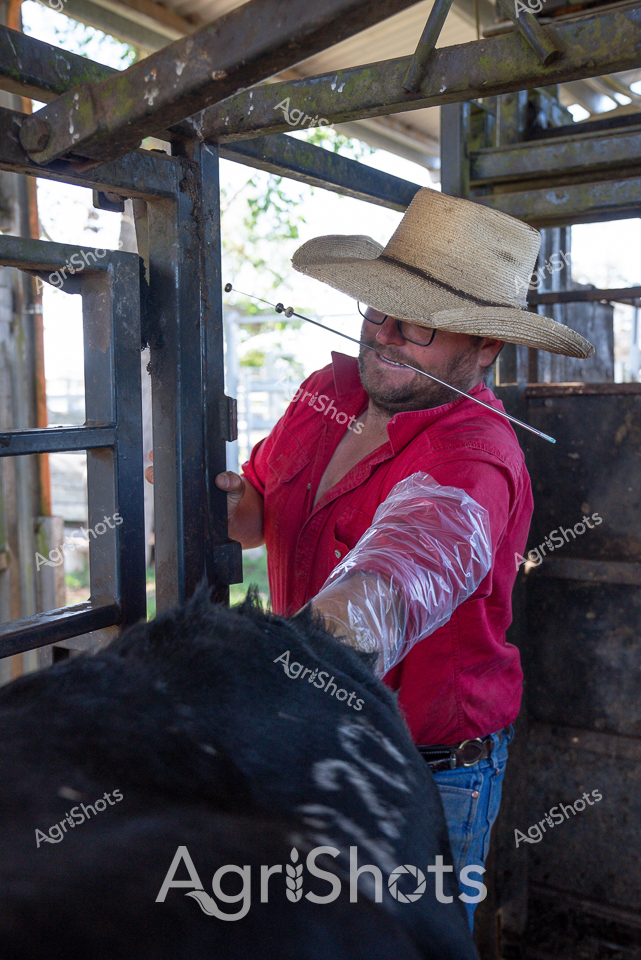
Nestled in the weathered cattle yards of New England, New South Wales, a skilled livestock technician prepares for artificial insemination of Angus cattle. Wearing a broad-brimmed straw hat and a vibrant red work shirt, the professional carefully navigates the steel livestock crush, with a protective clear plastic sleeve covering their arm. The metallic gates and framework of the yard create a grid-like backdrop, filtering soft natural light through weathered timber and steel structures. Precise and focused, the technician demonstrates the intricate skills of cattle breeding, a critical process in maintaining and improving stud livestock genetics. The deep black hide of an Angus cow dominates the foreground, representing the prized breed of the New England region. This moment captures the sophisticated intersection of agricultural science and traditional farming practice, where generations of breeding knowledge merge with modern reproductive techniques to ensure the continued excellence of Australian cattle production.
 Image
Image
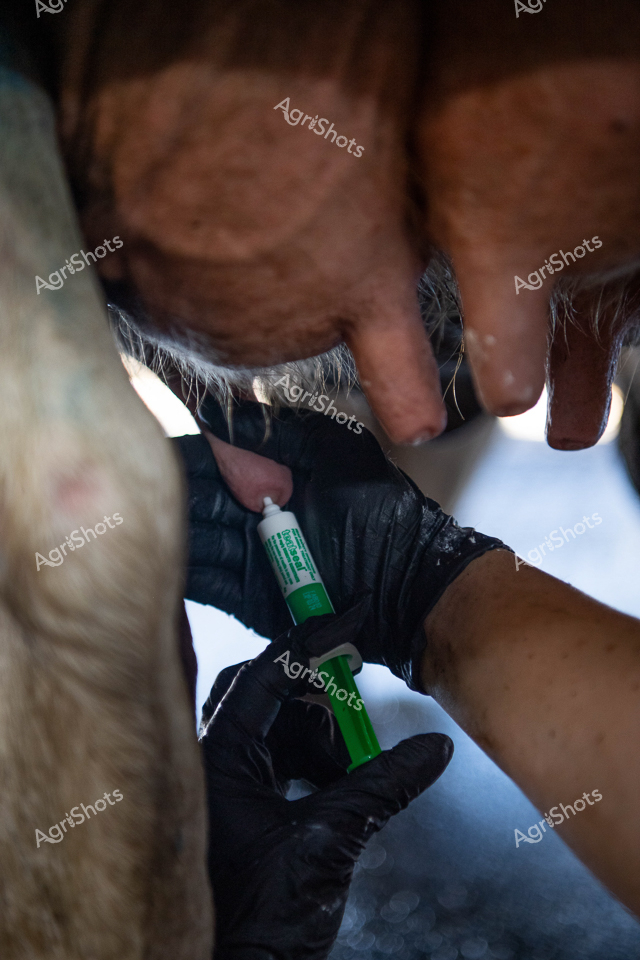
Precise veterinary care unfolds in an intimate dairy farm moment. Gloved hands skillfully apply a green-and-white teat seal injection to a dairy cow, a critical preventative health procedure performed during the drying off period before calving. The close-up reveals the meticulous technique, with black protective gloves handling the medical implement against the soft, pale hide of the bovine. White hair edges frame the udder, highlighting the delicate precision required in livestock management. This routine intervention protects the cow's mammary health, preventing potential bacterial infections during the non-lactating phase and ensuring optimal conditions for the next calving cycle. The image captures the quiet professionalism of modern agricultural animal care, where scientific intervention and compassionate husbandry intersect to maintain herd wellness.
 Image
Image
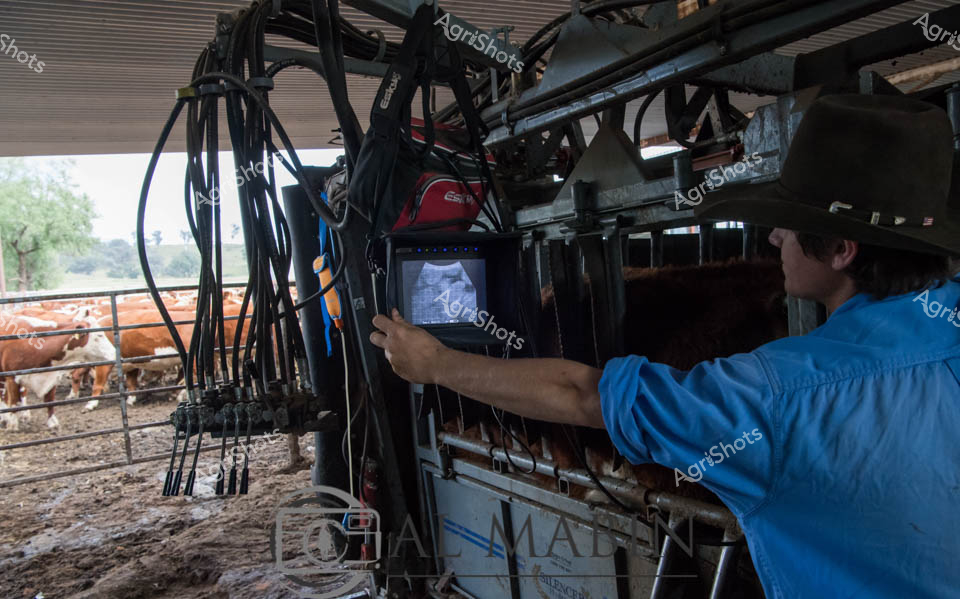
Precision meets technology in this intimate portrait of modern cattle management. A farm worker in a crisp blue shirt operates an ultrasound machine within a sturdy cattle shed, carefully examining a pregnancy test screen while Hereford cattle wait patiently in their adjacent pen. The complex network of black milking equipment and metal infrastructure frames the scene, highlighting the sophisticated agricultural practices of New England's renowned beef industry. Soft natural light filters through the shed's windows, casting a gentle illumination on the muddy floor and revealing the rugged pastoral landscape beyond. The ultrasound device represents the cutting-edge veterinary techniques used in contemporary cattle breeding, transforming traditional livestock management with precise diagnostic technology. This moment encapsulates the blend of scientific expertise and hands-on farming that defines New South Wales' sophisticated agricultural sector, where animal welfare and genetic monitoring are paramount to successful cattle production.