About this image
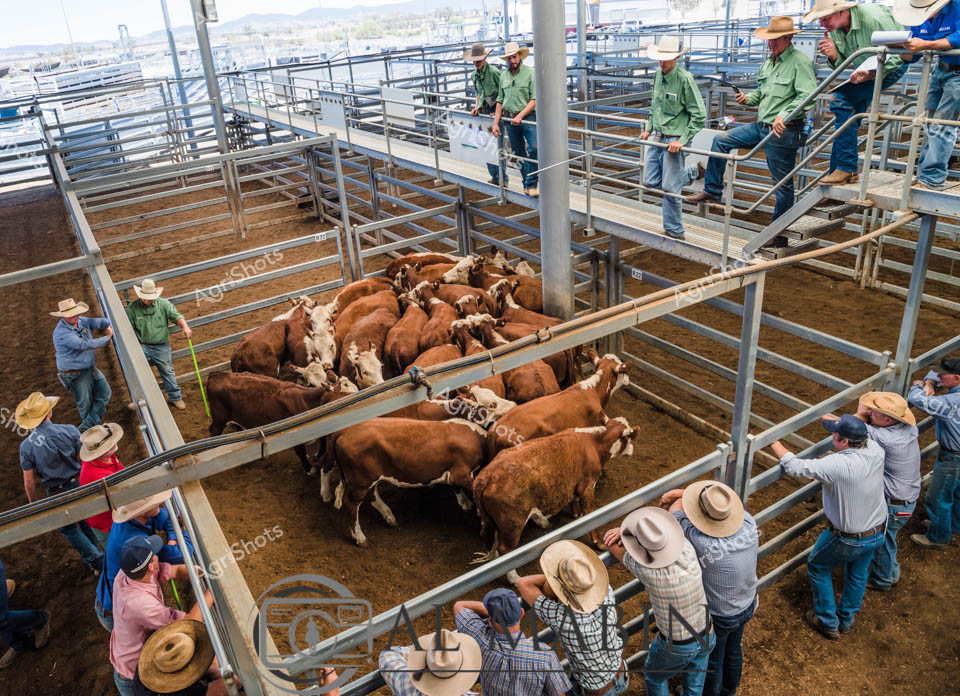
Seasoned cattle agents converge at the bustling regional livestock sale yards, their weathered Akubra hats casting shadows over a tightly packed pen of prime beef cattle. Rich russet and chestnut-colored bovines huddle together, their muscular frames testament to quality breeding from the New England tablelands of New South Wales. Handlers in crisp green work shirts and well-worn denim move with practiced efficiency around the metal livestock pens, their positions strategically arranged to monitor and guide the herd during the auction process. The multi-level steel framework creates a complex grid of observation points, allowing agents to assess the cattle from various angles. Sunlight streams across the indoor sale yard, highlighting the varied coat colors and markings of the cattle - some solid brown, others with distinctive white patches. The atmosphere crackles with professional concentration, a subtle tension of assessment and potential transaction hanging in the air. This scene captures the heartbeat of Australian agricultural commerce - a meticulously organized marketplace where experienced professionals evaluate livestock with expert precision, continuing a generations-old tradition of rural trade and animal husbandry.
Similar media
 Image
Image
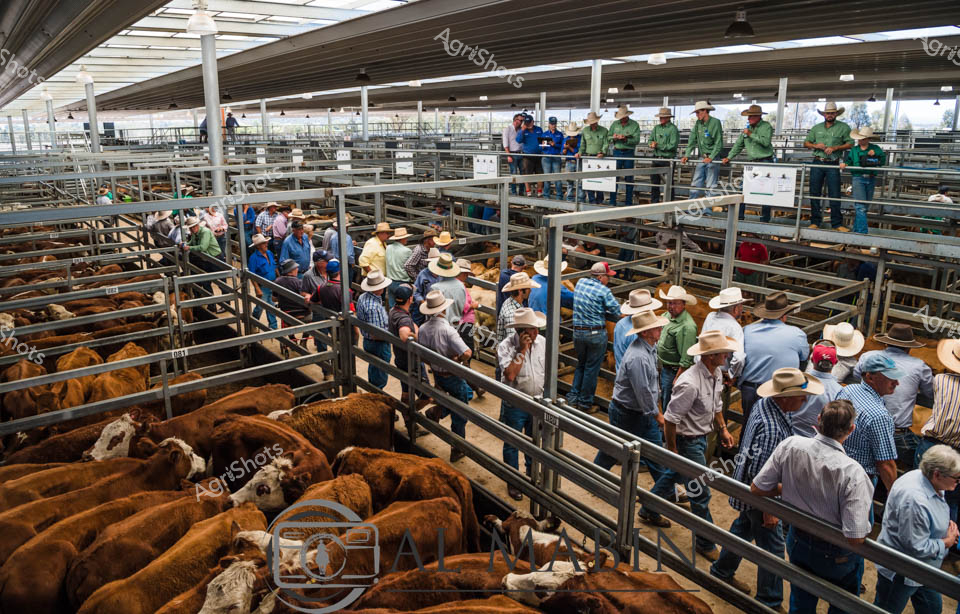
Australian cattle sale yards pulse with energy as seasoned graziers and livestock agents converge for a prime beef auction. Rows of steel cattle pens overflow with rich, russet-colored beef cattle - predominantly Hereford and Angus breeds - carefully sorted and positioned for evaluation. Clusters of professionals in wide-brimmed akubra hats, checked shirts, and working attire move methodically through the covered livestock marketplace, their stances deliberate and focused as they assess each animal's potential. The New England Region's agricultural heartland provides a classic backdrop of industrial precision meeting pastoral tradition, with overhead steel frameworks and natural light creating a cathedral-like atmosphere of commercial agricultural exchange. Buyers and sellers communicate through subtle gestures and experienced eye contact, their collective expertise driving the economic rhythm of rural Queensland and New South Wales. The scene captures the quintessential Australian livestock trading environment - a carefully choreographed ballet of commerce, animal husbandry, and generational agricultural knowledge.
 Image
Image
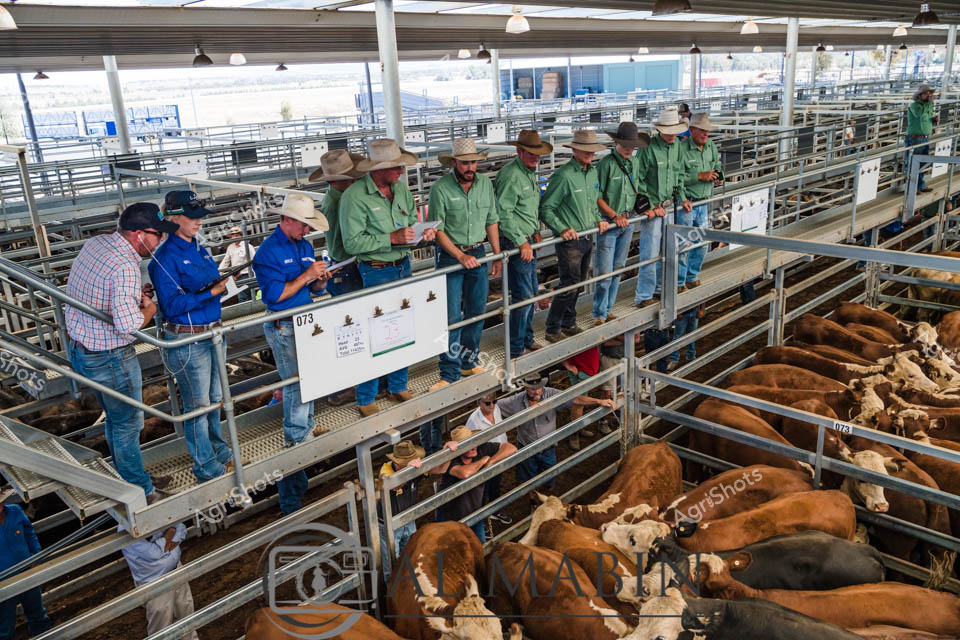
Cattle auction at a modern livestock sale yard in New South Wales' New England Region pulses with agricultural energy. Seasoned agents and buyers lean against steel railings, surveying a pen of robust beef cattle - a mix of rich brown, tan, and black hides clustered below. Dressed in classic rural workwear - crisp blue and green shirts, wide-brimmed protective hats, well-worn denim - the professionals stand in a precise line, intently assessing the livestock inventory. Industrial overhead lighting illuminates the metallic infrastructure of sorting pens, with numbered identification markers indicating each cattle lot. The scene captures the methodical choreography of agricultural commerce, where generations of farming expertise converge to evaluate and trade livestock. Cool, clinical, yet deeply connected to the rhythms of rural production, this snapshot represents a critical moment in Australia's beef supply chain, where individual animals transition from farm to market with calculated precision.
 Image
Image
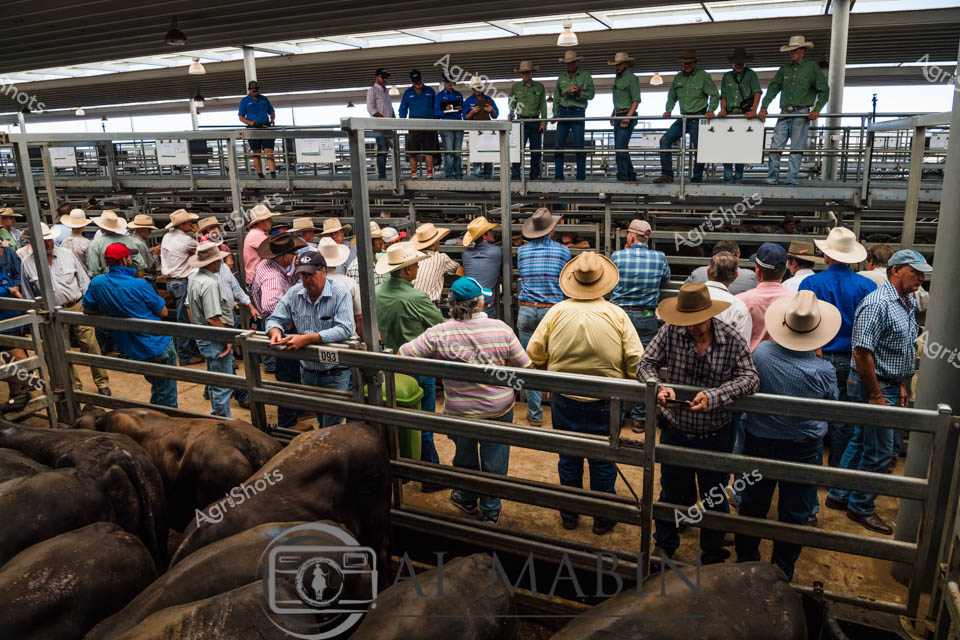
Cattle auction day pulses with anticipation at the New England Region livestock saleyards. Ranchers and agricultural workers cluster along steel-railed pens, their wide-brimmed stockman's hats creating a sea of neutral tones - cream, beige, khaki, and deep blue. Dark Angus cattle huddle compactly in the lower pen, their muscular black bodies creating a stark contrast against the industrial metal infrastructure. Observers stand on multiple levels of the covered pavilion, some in blue work shirts, others in green and plaid, collectively representing the region's farming community. The upper deck hosts what appear to be managers and senior agricultural professionals, overlooking the proceedings with professional detachment. This scene captures the quintessential rhythms of rural agricultural commerce - a meticulously organized marketplace where livestock are evaluated, traded, and the economic heartbeat of the region's pastoral industries continues its steady pulse.
 Image
Image
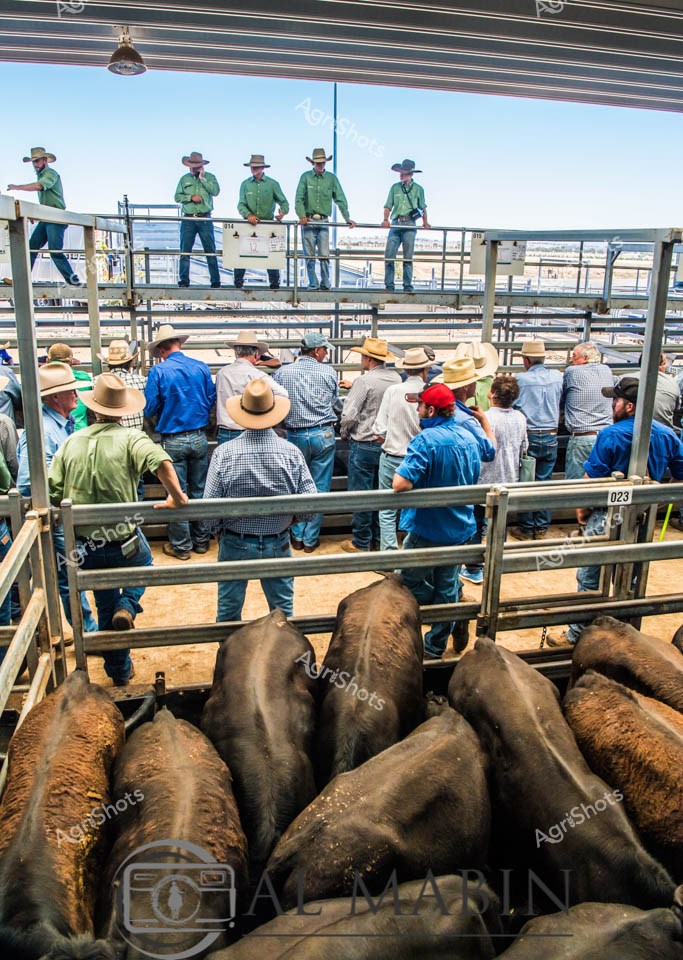
Cattle auctioneers and buyers converge at a bustling livestock sale yard in New South Wales' New England Region, a quintessential scene of rural agricultural commerce. Five professional agents in crisp green shirts and wide-brimmed hats survey the proceedings from an elevated metal walkway, overlooking a pen filled with robust beef cattle. Below them, a crowd of potential buyers dressed in classic rural attire - checkered shirts, denim jeans, and an array of straw and felt hats in shades of tan and cream - listen intently to the auction details. The cattle, a mix of rich brown and darker-coated animals, stand closely packed in a metal holding pen, their muscular forms a testament to the region's significant beef production. Harsh overhead lighting and the metallic infrastructure create a stark, utilitarian environment that speaks to the serious business of livestock trading. The scene captures the essence of Australian agricultural trade - methodical, professional, and deeply connected to the rural economic landscape.
 Image
Image
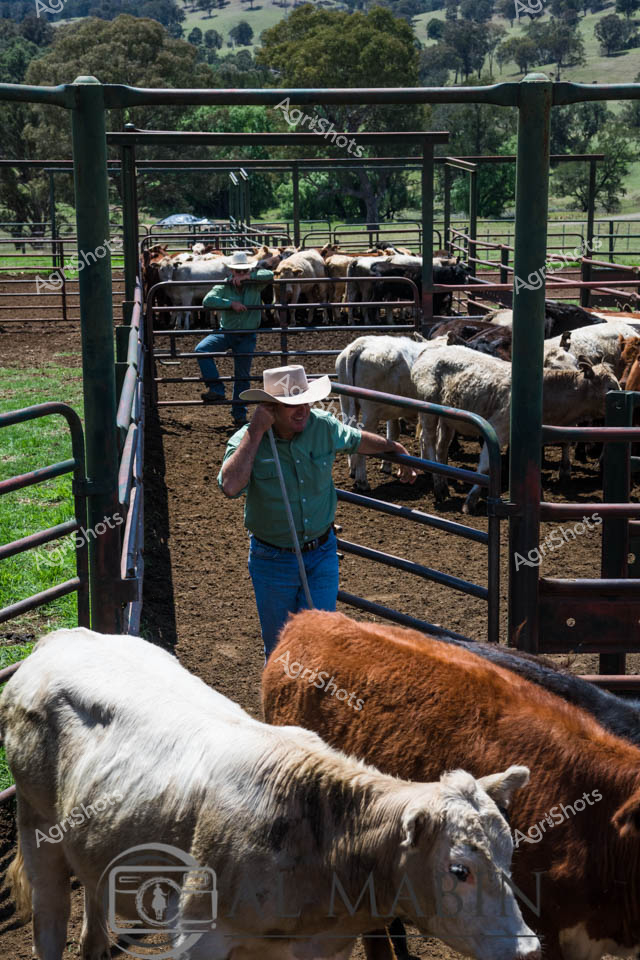
Weathered cattle yards nestled in a lush New South Wales pasture become a hub of agricultural activity during this mid-morning livestock management session. A stockman in a sage green shirt and light-colored wide-brimmed hat carefully monitors the cattle, his posture relaxed yet purposeful as he leans against the steel yard gates. Robust beef cattle - a mix of white and chestnut-colored animals - mill within the segmented metal yard, awaiting drafting and sorting. The verdant green grass of the surrounding paddock contrasts sharply with the dusty earth of the working yards, highlighting the dynamic interface between pastoral landscape and livestock management. Sturdy steel yard panels in deep green create a structured framework for moving and separating cattle, demonstrating the precision of modern Australian cattle farming techniques. The rolling tree-studded hills in the background frame this quintessential rural scene, capturing the essence of livestock production in the Australian agricultural landscape.
 Image
Image
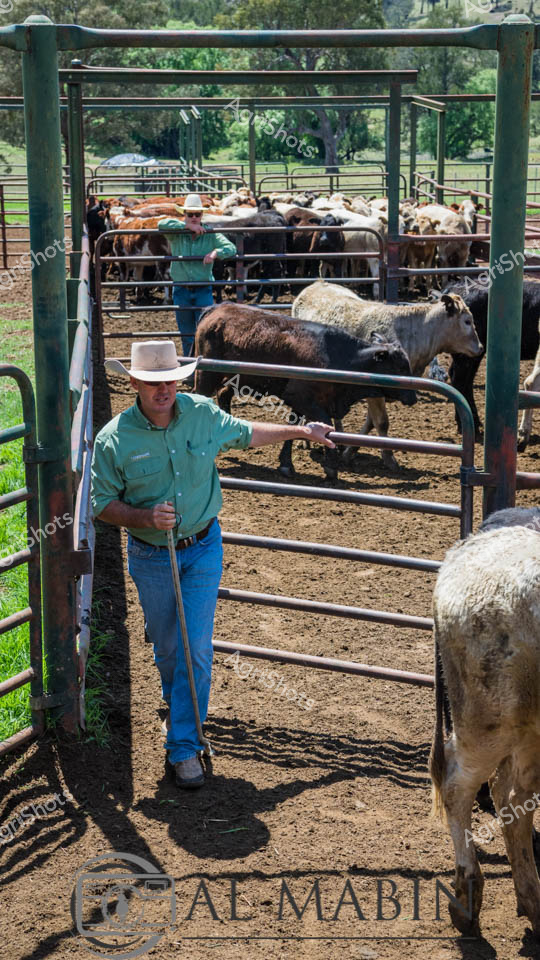
Cattle Yards: Rural NSW Livestock Management A seasoned stockman in a crisp light teal work shirt and classic blue jeans stands confidently within the green metal framework of a cattle drafting yard. Wearing a broad-brimmed white hat for sun protection, he commands the space with calm expertise, surrounded by a diverse herd of beef cattle in varying shades of black, brown, and white. The yard's metallic infrastructure creates geometric lines against the dusty earth and green pasture background, a testament to precision agricultural practices. Multiple pens filled with cattle suggest an active sorting or management process, with the stockman strategically positioned to guide and control livestock movement. Shadows cast by the yard's metal framework create dramatic texture on the ground, highlighting the careful choreography of rural livestock handling. The scene captures the essence of Australian cattle farming - a blend of traditional skills, modern infrastructure, and deep understanding of animal husbandry, set against the lush, green landscape typical of productive grazing regions in New South Wales.
 Image
Image
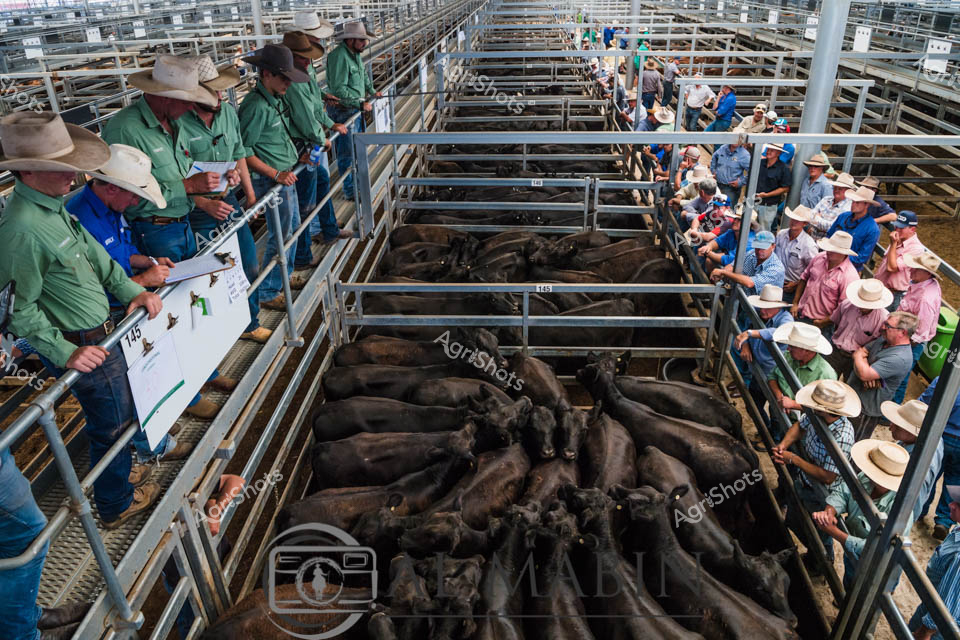
Crowded cattle pens bustle with activity at a quintessential Australian livestock auction, capturing the heart of rural commerce in New South Wales. Dark Angus cattle are tightly penned, their sleek black coats contrasting against the metallic silver yards, while a diverse group of ranchers and agricultural professionals line the walkways. Agents in green and blue work shirts, wide-brimmed sun hats, and pressed jeans lean over railings, intently evaluating the livestock with clipboards and keen agricultural expertise. The sale yard pulses with a concentrated energy - a choreographed dance of assessment, negotiation, and agricultural business where each animal represents significant economic potential for local farmers. Rows of steel pens create geometric pathways, with numbered sections organizing the auction's systematic flow, while groups of professionals cluster on both sides, their body language and attentive postures revealing years of accumulated livestock knowledge. This scene embodies the New England region's robust cattle trading tradition, where generations of farming families converge to conduct essential agricultural transactions.
 Image
Image
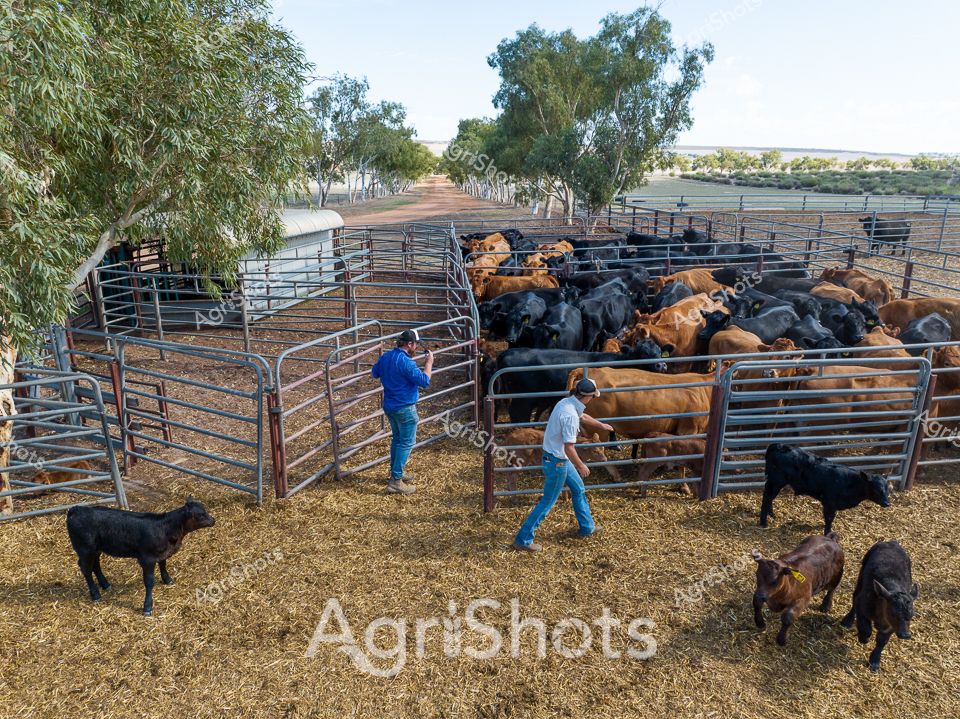
Limousin and Angus cattle crowd the steel-railed yards, a quintessential Western Australian cattle station scene bathed in warm afternoon light. Two farm workers, dressed in classic blue work attire, methodically navigate the packed pen, assessing the herd's condition with practiced ease. Robust brown and black cattle press against the metal gates, their muscular frames testament to the quality of local beef breeding. Surrounding the yards, eucalyptus trees cast dappled shade, their silvery-green leaves providing a natural windbreak in this expansive rural landscape. Young calves mingle among the mature stock, highlighting the ongoing regeneration of the herd. The ground is layered with straw, creating a textured golden base that contrasts with the rich earth tones and metallic yard infrastructure, capturing the resilience and orderly rhythm of Australian pastoral life.