About this image
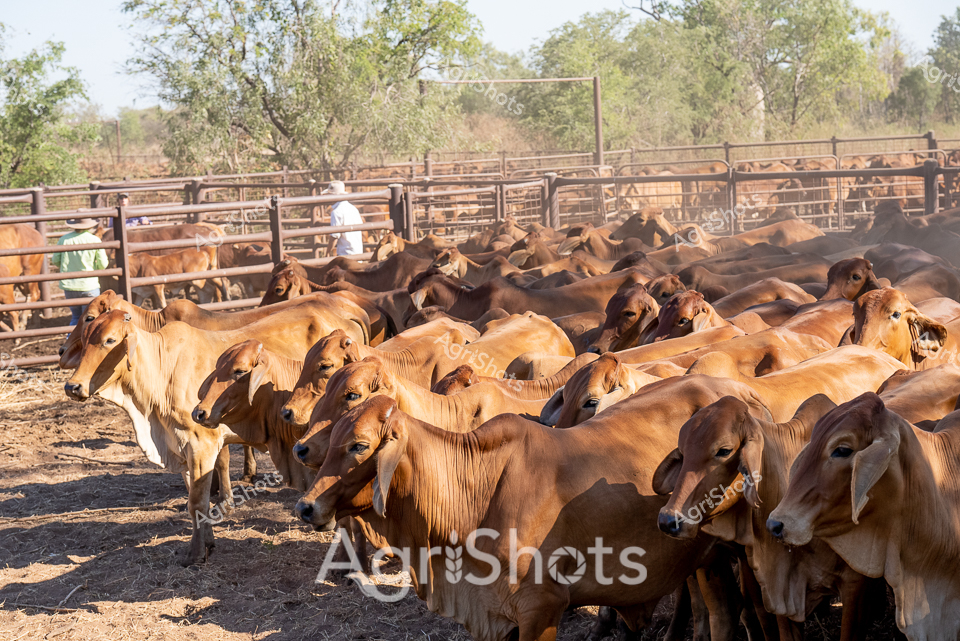
Brahman cattle cluster tightly in russet-toned herds within dusty steel cattle yards, their distinctive loose skin and prominent humps revealing their tropical breeding adaptations. The arid Kimberley landscape of Western Australia stretches behind the yards, sparse trees and shrub vegetation indicating the harsh pastoral environment. Golden-brown cattle with wrinkled necks and alert ears press against wooden fence railings, their uniform coloration broken only by subtle variations in hide texture and depth of bronze-like shading. A station worker in light clothing stands near the herd, overseeing the careful management of these resilient beef cattle bred to thrive in challenging northern Australian conditions. The scene pulses with quiet industry - a snapshot of agricultural production where generations of selective breeding and expert animal husbandry converge in this sun-drenched, red-earthed landscape. Dust hangs in the air, creating a soft atmospheric haze that speaks to the heat and movement of cattle being prepared for market or pastoral rotation.
Similar media
 Image
Image
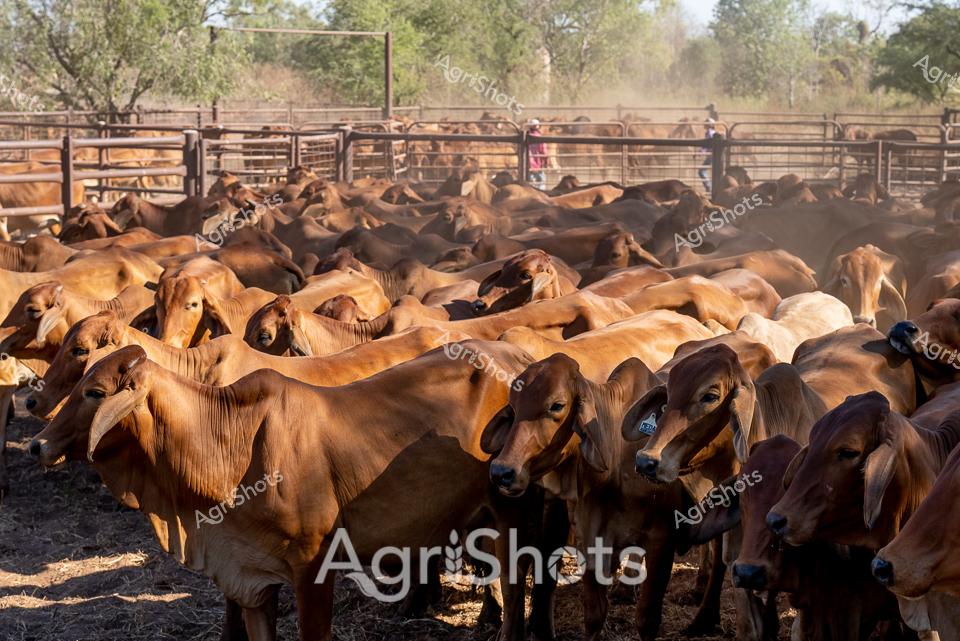
Brahman cattle cluster tightly in sun-drenched yards, their burnished copper-gold coats gleaming against weathered steel panel fencing. Dusty earth and scattered trees frame this quintessential Kimberley cattle station scene, where the dense herd radiates the heat and energy of mustering season in Western Australia. These robust Brahman cattle, renowned for their distinctive large ears and loose skin adapted to tropical conditions, stand shoulder-to-shoulder, their muscular bodies testament to generations of pastoral breeding and management. A hint of movement suggests stockworkers positioned around the yards, orchestrating this carefully managed livestock operation with generations of inherited skill. The harsh landscape backdrop speaks to the challenging environment of northern Western Australia, where pastoral enterprises demand resilience from both animals and humans. Soft morning light casts long shadows, highlighting the powerful physique of these cattle and the intricate dance of agricultural production that defines Australia's northern cattle country.
 Image
Image
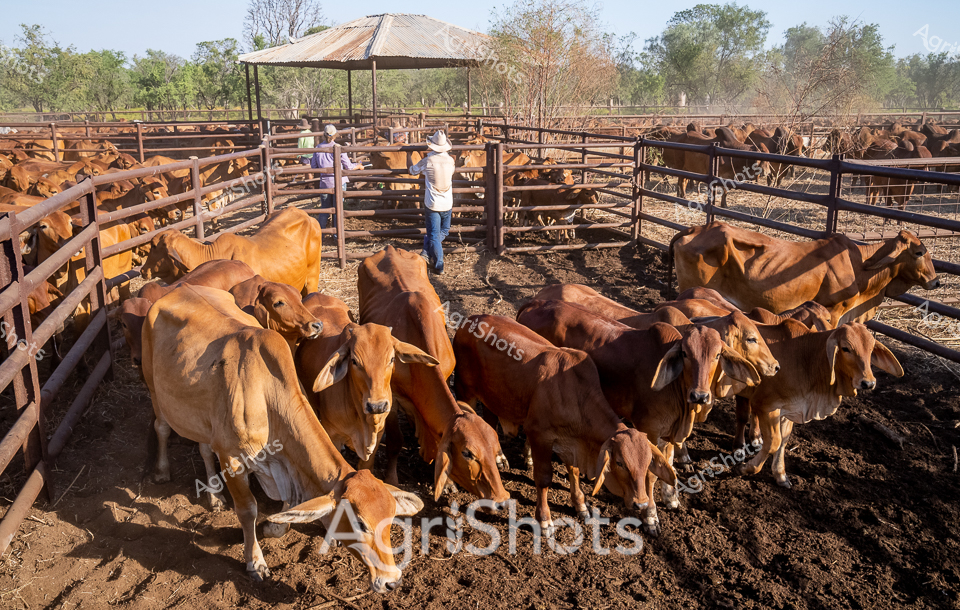
Burnished copper-red Brahman cattle crowd the dusty yards of a remote Kimberley station, their distinctive humped shoulders and loose skin adapting perfectly to Western Australia's harsh northern landscape. The golden-brown herd clusters tightly within robust steel yards, surrounded by sparse eucalyptus woodland under a bleached summer sky. A stockworker in a white hat and light clothing stands centrally, monitoring the cattle's movement with practiced calm, embodying generations of pastoral management. The earth is packed hard and dark, trampled by countless hooves, creating a textural contrast with the sleek, muscular cattle bodies. This scene captures the essence of Australia's northern cattle industry - resilient animals, skilled workers, and an unforgiving environment where survival demands strength and adaptation. The image pulses with the quiet intensity of a working station, where each animal and human plays a critical role in the rhythmic cycle of pastoral life.
 Image
Image
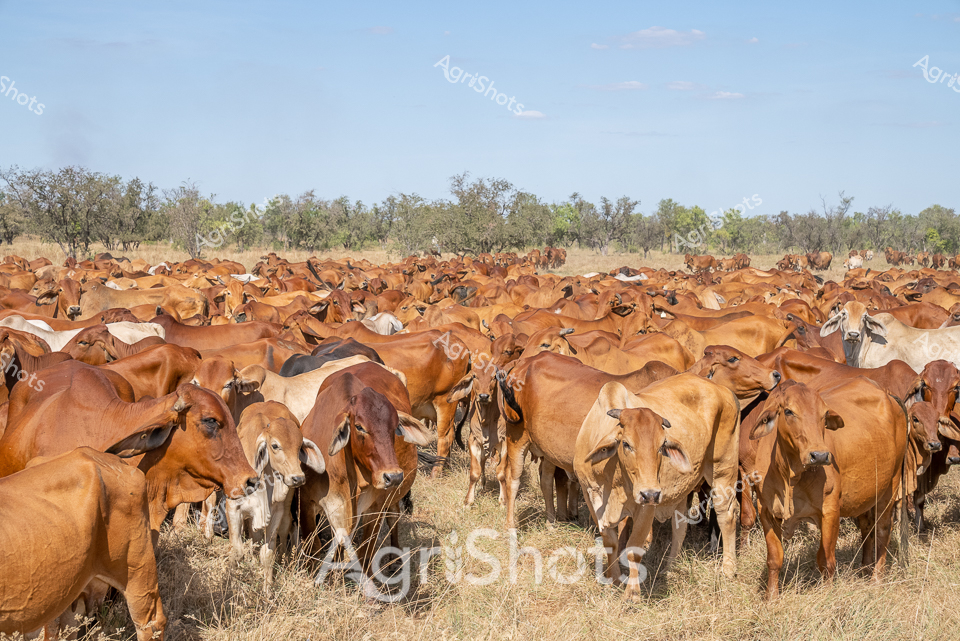
Burnished copper and rich russet bodies fill the frame - a magnificent herd of Brahman cattle clustered across the arid Kimberley grasslands. Muscular and heat-adapted, these distinctive cattle with their pronounced humps and loose skin stand clustered in the dry season's sparse pasture, surrounded by weathered eucalyptus and acacia trees. The mob represents the resilient bloodlines of northern Australian pastoral stations, bred to thrive in challenging environments where temperatures soar and water is precious. Each animal displays the breed's characteristic large ears, dewlap, and robust frame - evolutionary adaptations that enable survival in Western Australia's unforgiving rangelands. Soft morning light casts a pale blue backdrop, highlighting the herd's collective strength and the intricate social dynamics of cattle management in one of Australia's most demanding agricultural landscapes. This scene captures the essence of extensive cattle production - where thousands of head roam vast stations, representing generations of pastoral knowledge and agricultural persistence.
 Image
Image
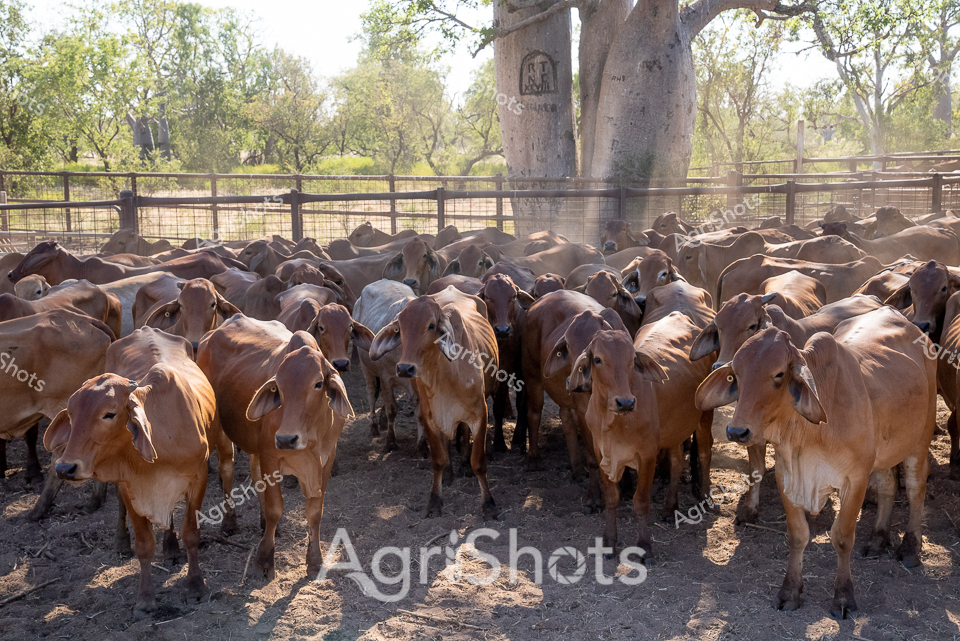
Burnished copper-red Brahman cattle cluster tightly in a dusty cattle yard, their distinctive large ears and loose skin defining the classic tropical beef breed. The powerful herd stands clustered beneath a towering boab tree, its massive pale trunk offering sparse midday shade in the harsh Kimberley landscape. Wire panel fencing contains the muscular animals, whose uniform rich tan coats gleam with health and genetic consistency, testament to careful station breeding practices. Sunlight filters through sparse woodland in the background, creating a soft haze that highlights the tight grouping of these robust cattle, bred for heat tolerance and resilience in Western Australia's unforgiving northern environments. The ground is packed earth, trampled and dry, speaking to the seasonal rhythms of cattle management in one of Australia's most challenging agricultural regions. Each animal stands solidly, their collective presence embodying the quiet strength of pastoral enterprise in remote northern Australia.
 Image
Image
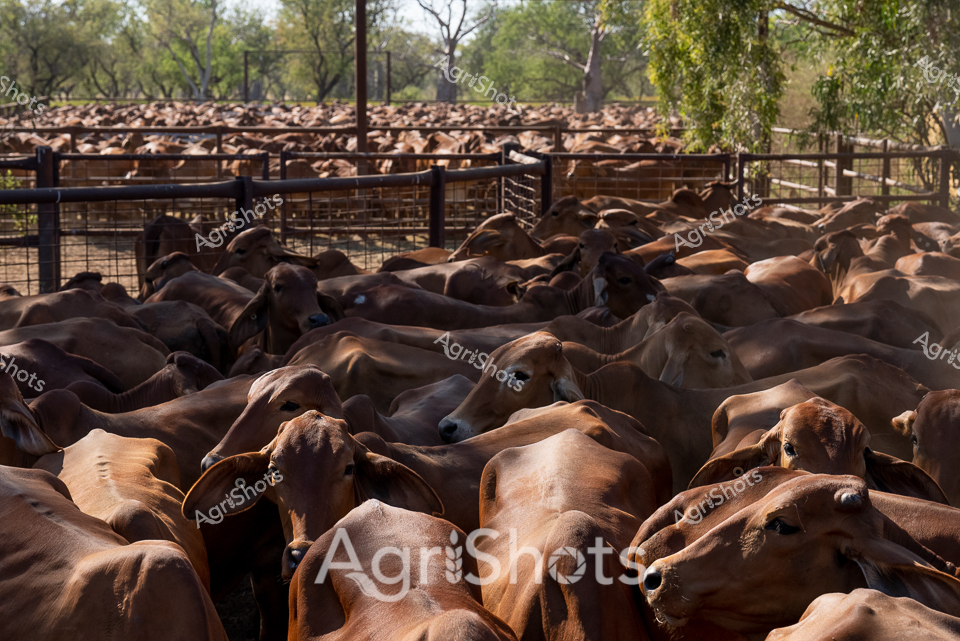
Brahman cattle crowd the steel-railed yards of a West Australian cattle station, their rich tawny-copper hides gleaming in the late morning sunlight. Tightly packed within the mesh-sided holding pens, these robust tropical beef cattle showcase the distinctive large ears and loose skin characteristic of the Brahman breed, perfectly adapted to Australia's harsh northern landscapes. Surrounding trees cast dappled shade, suggesting this is likely during the dry season when mustering operations are in full swing. The dense clustering of animals reveals the scale of modern pastoral operations, with hundreds of muscular bodies pressed closely together, demonstrating the efficient management of large herds across Western Australia's expansive cattle stations. Each animal's sleek form reflects the careful breeding and nutritional management that defines contemporary Australian beef production, highlighting the intersection of traditional pastoral skills and advanced agricultural techniques. The tight composition emphasizes the impressive density and uniformity of these resilient cattle, bred to thrive in challenging environmental conditions.
 Image
Image
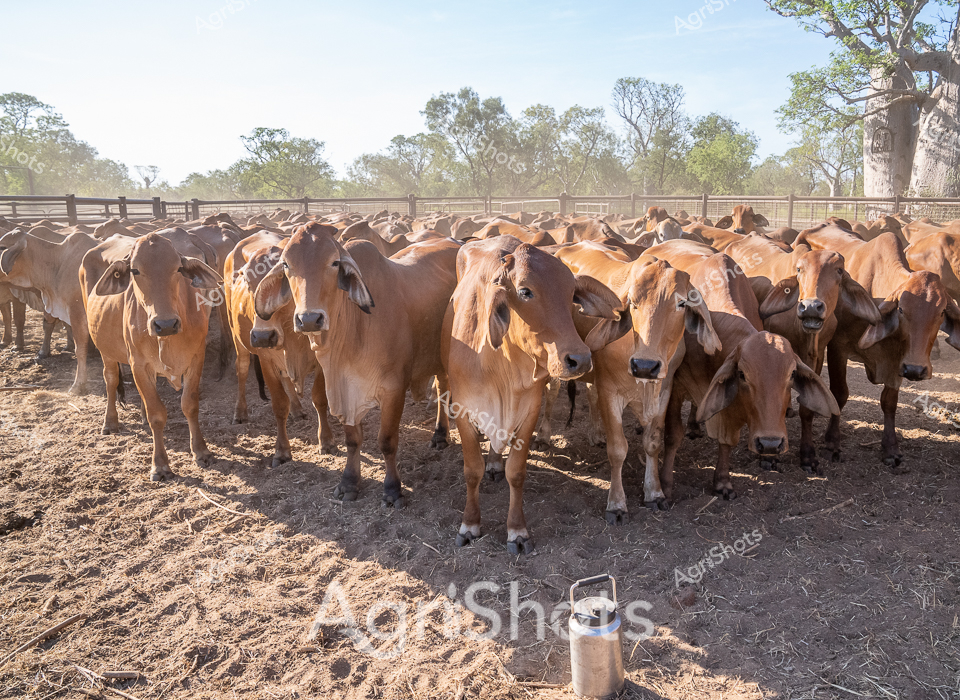
Burnished copper-brown Brahman cattle cluster tightly in a dusty pastoral yard, their distinctive large ears and loose skin defining the classic tropical beef breed. The herd stands amid the sun-drenched landscape of Western Australia's Kimberley region, surrounded by sparse eucalyptus trees and weathered wooden fencing that speaks to generations of pastoral farming. Fine red earth covers the ground, kicking up a subtle haze that softens the edges of the scene and highlights the muscular, heat-adapted bodies of these resilient cattle. A metal milk can in the foreground grounds the image in the practical realities of station life, while the tight grouping of animals suggests recent mustering - a critical activity in managing large cattle stations across Australia's northern expanses. The soft morning light bathes the scene in warm tones, capturing the robust vitality of these cattle bred to thrive in challenging agricultural environments. Each animal stands alert, their collective presence a testament to the enduring agricultural heritage of Western Australia's remote pastoral landscapes.
 Image
Image
Brahman cattle cluster together in the golden afternoon light of a Western Australian station, their burnished copper-toned hides gleaming against the muted green and grey landscape of the Kimberley region. A tight mob of sleek, muscular cattle with distinctive large ears and loose skin - hallmarks of the heat-tolerant Brahman breed - stand clustered in a dense group, their collective presence radiating a sense of pastoral strength and resilience. The herd represents the backbone of northern Australian beef production, perfectly adapted to survive in challenging tropical environments with minimal intervention. Soft grasses and scattered eucalyptus trees frame the background, suggesting this is likely a vast pastoral station during the dry season, where these robust cattle have been mustered and gathered. Each animal displays the breed's characteristic rich reddish-brown coloration, with slight variations in tone creating a living tapestry of movement and texture. The image captures the essence of Australian cattle farming - hardy animals, expansive landscapes, and the unbreakable connection between land, livestock, and generations of agricultural expertise.
 Image
Image
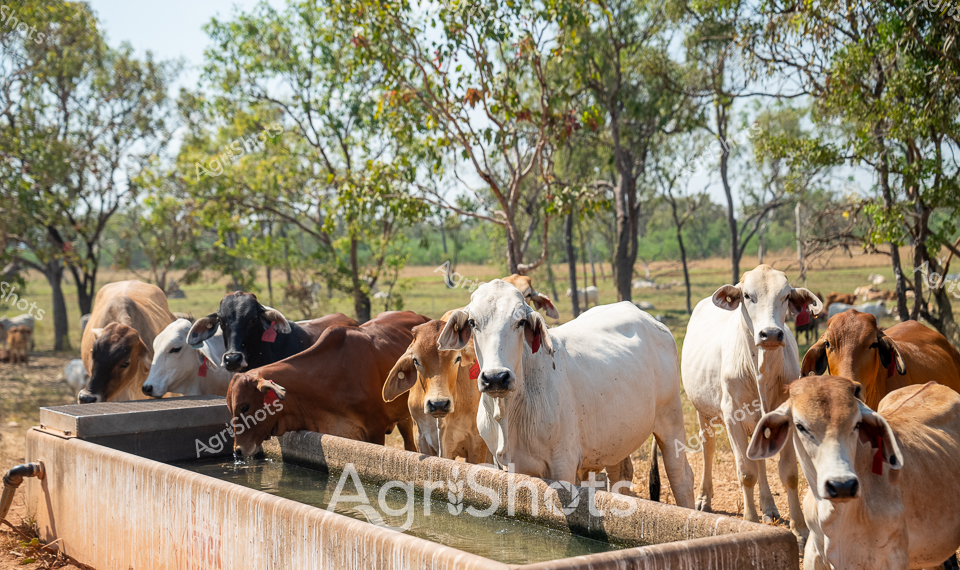
Brahman cattle cluster around a sturdy concrete water trough nestled in a sparse woodland landscape, capturing the essence of northern Australian pastoral life. Rich amber and white-coated bovines crowd together, their distinctive large ears and loose skin characteristic of the heat-tolerant Brahman breed, perfectly adapted to the challenging Northern Territory environment. Soft autumn light filters through scattered eucalyptus trees, casting dappled shadows across the dusty paddock as the herd refreshes themselves, their varied coat colors ranging from deep russet to pristine white. The weathered water trough stands as a critical lifeline in this arid landscape, surrounded by sparse grassland and mature trees that provide intermittent shade. Each animal displays a distinctive red ear tag, a standard identifier in professional cattle management, highlighting the systematic approach of modern Australian agricultural practices. The scene epitomizes the resilience of both livestock and farmers in the unforgiving yet beautiful expanses of Australia's northern agricultural regions.