About this image
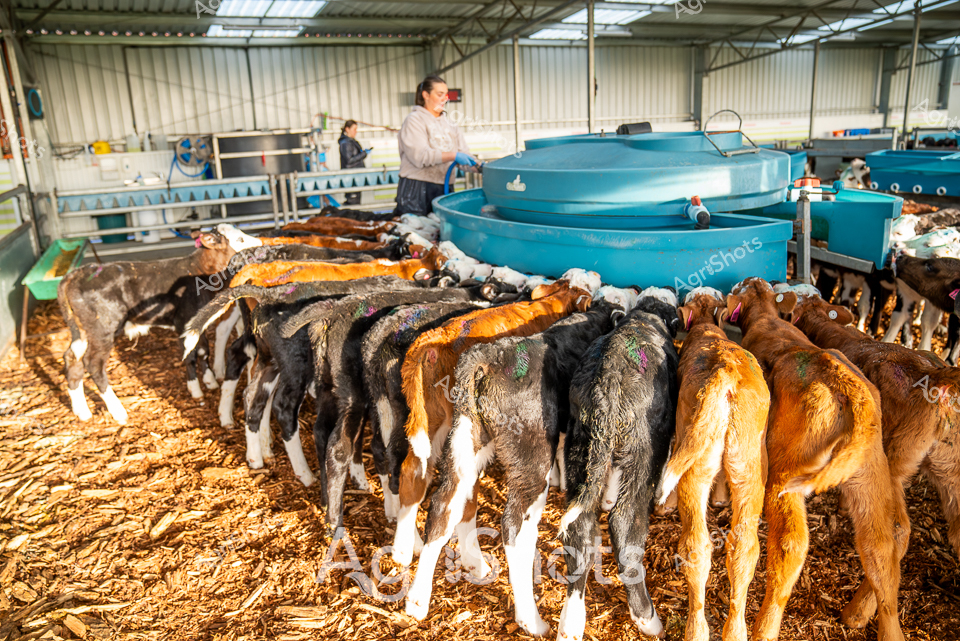
Dairy farmhands nurture a clutch of newborn bobby calves in a meticulously managed indoor rearing facility during the crisp Tasmanian winter. Soft wood chip bedding cushions the young livestock, their coats ranging from rich golden-orange to mottled grey and white, lined up systematically near large blue circular feeding tanks. A farmworker in a light-colored jacket tends to the calves with practiced efficiency, moving carefully among the young animals in the clean, structured shed with skylights casting even illumination across the space. Each calf displays careful identification markings, signaling the precise livestock management practices of modern dairy operations. The scene pulses with quiet productivity - a carefully controlled environment designed to ensure the health and development of the next generation of dairy herd. Gleaming equipment, organized layout, and attentive care reflect the sophisticated agricultural practices of Tasmania's dairy sector, where animal welfare and systematic production intertwine.
Similar media
 Image
Image
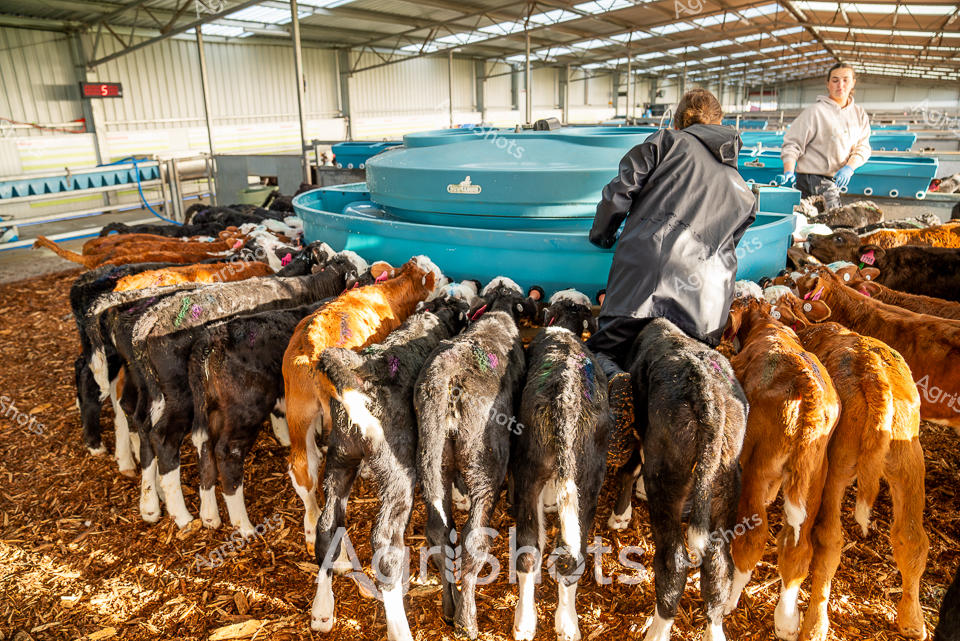
Dairy calves huddle around a large turquoise feeding station, their russet and charcoal-colored coats creating a vibrant patchwork against the golden straw bedding. Inside a spacious steel-framed agricultural shed, two workers carefully manage the young livestock, orchestrating a precise feeding routine typical of modern dairy operations. The calves - a mix of Holstein and Jersey breeds - stand shoulder to shoulder, their distinctive colored ear tags indicating individual tracking and management. Soft winter light filters through the high-ceiling structure, illuminating the carefully controlled environment designed to nurture these future milk producers. Woodchip bedding provides comfortable footing, while the industrial-blue feeding tanks suggest a high-tech approach to animal husbandry that balances efficiency with animal welfare. This scene captures the meticulous care and technological sophistication of contemporary Tasmanian dairy farming, where each calf represents a critical investment in the agricultural supply chain.
 ▶ Video
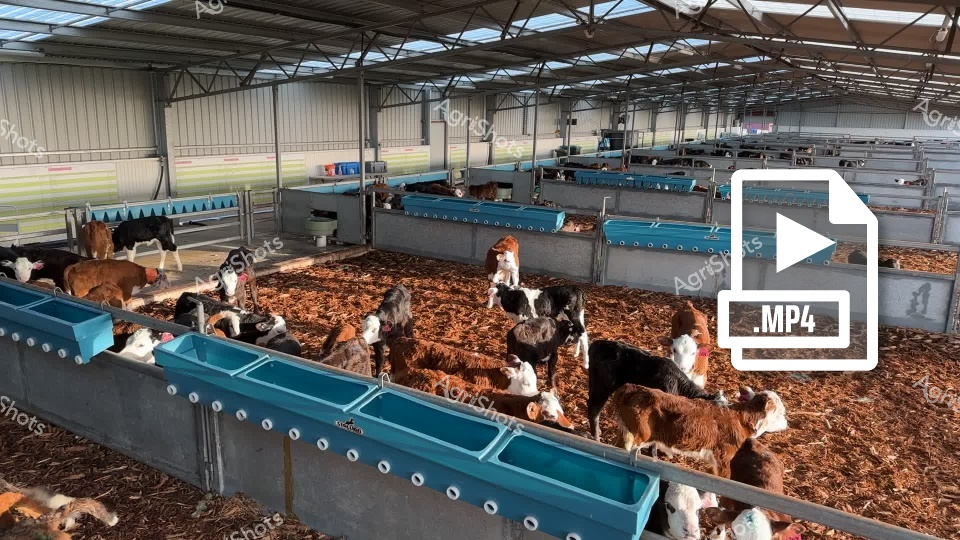
In this dairy farm scene from Tasmania during winter, young bobby calves are gathered in a large, structured indoor feeding area with blue feeding troughs. The calves, varying in brown and white colors, stand on a bed of wood shavings or straw, awaiting their milk feeding in a carefully managed agricultural environment designed for efficient dairy calf rearing.
 Image
Image
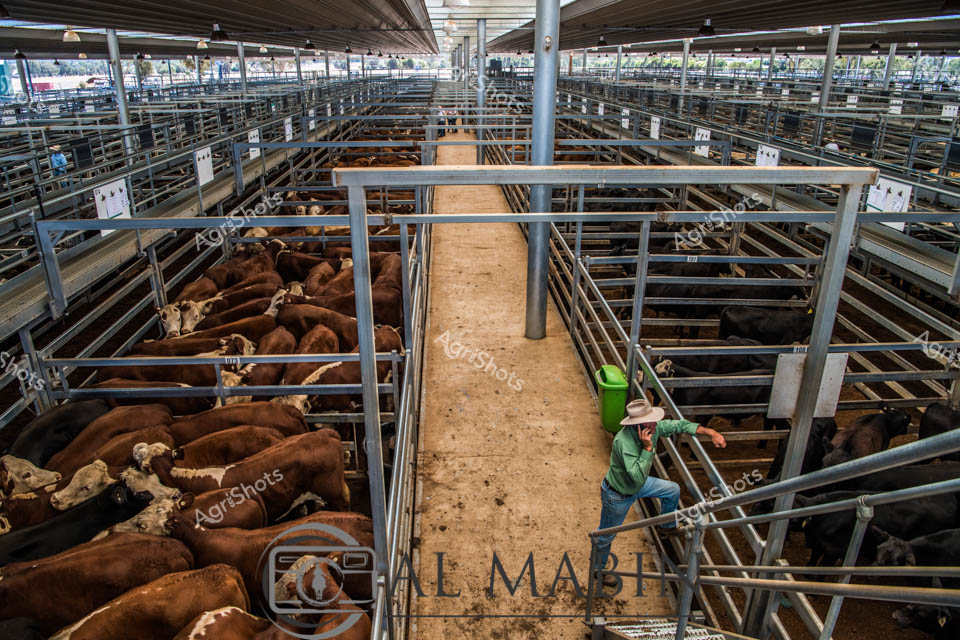
Corralled cattle stand shoulder to shoulder in neat metal pens at a bustling livestock sale yard, likely in the New England Region of New South Wales. A stockyard worker in a green shirt and wide-brimmed hat moves purposefully between the rows, navigating the narrow walkway separating dense groups of reddish-brown beef cattle. The expansive indoor facility features a grid of metallic fencing and support pillars, creating a systematic environment for agricultural commerce. Overhead lighting illuminates the sandy-colored floor and the varied tones of the cattle, from rich mahogany to lighter tan, highlighting their muscular frames and calm demeanor. This scene captures the rhythm of rural agricultural trading, where livestock are carefully sorted, assessed, and prepared for sale in a professional, structured setting. The methodical arrangement and controlled movement reflect the precision of modern cattle trading in Australian agricultural markets.
 Image
Image
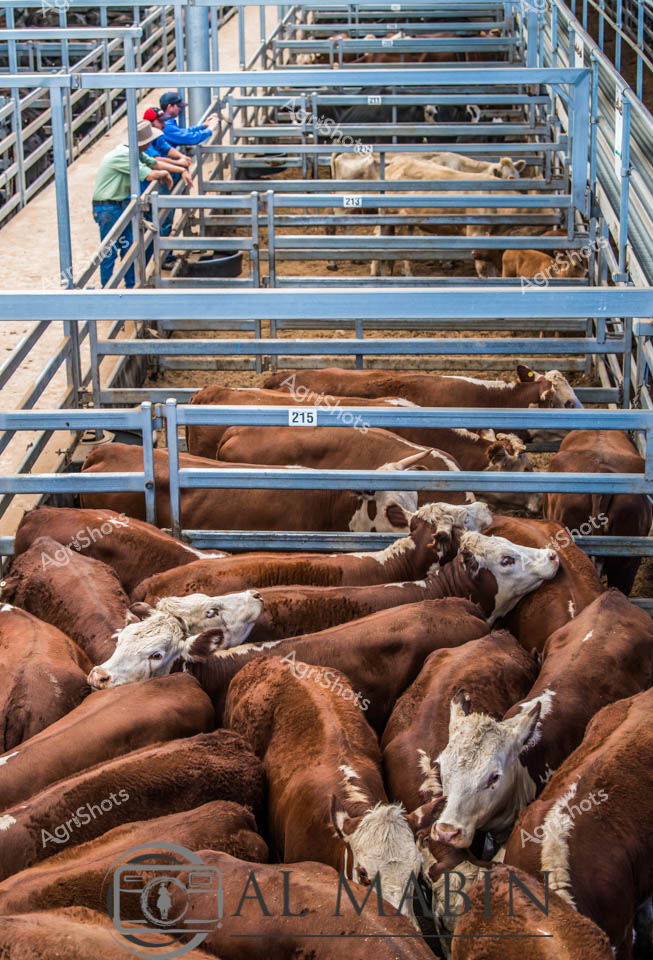
Hereford and mixed-breed cattle crowd tightly into numbered blue metal livestock pens at a regional sale yard in New England, New South Wales. The densely packed cattle - predominantly rich reddish-brown with white faces - huddle closely together, their muscular bodies creating a textured landscape of bovine forms. In the upper section of the image, agricultural workers wearing blue and green clothing sit observing the sale preparations, their postures relaxed yet attentive. Numbered pen tags (213, 215) indicate a systematic approach to livestock trading, highlighting the structured nature of rural agricultural commerce. The blue metal fencing creates geometric lines and divisions, contrasting sharply with the organic shapes of the cattle, while capturing the methodical process of livestock trading. This scene represents a quintessential moment in Australian agricultural commerce - a cattle auction where farmers, traders, and buyers converge to negotiate and trade livestock, embodying the economic heartbeat of rural agricultural communities.
 Image
Image
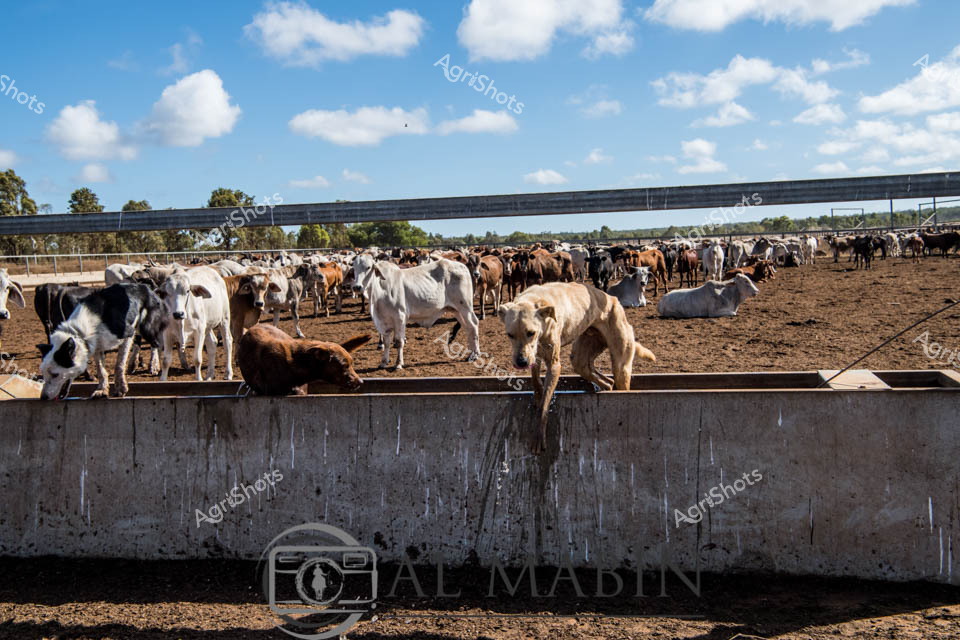
A large herd of mixed cattle, including Brahman and crossbred animals in white, grey, and brown coats, gather around a long concrete water trough at a feedlot under a sunny blue sky with scattered clouds. A pale yellow dog stands on the edge of the trough among the drinking cattle, while hundreds more animals fill the dry earthen yard stretching into the background. A horizontal steel shade structure spans the middle distance, with trees visible on the horizon.
 Image
Image
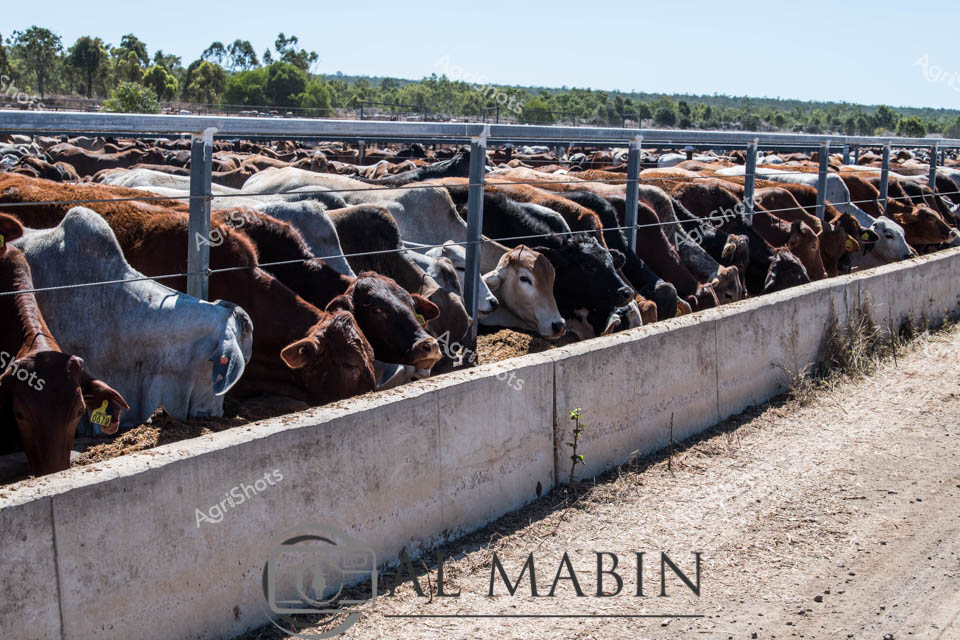
Brahman and composite beef cattle densely pack a concrete feedlot pen under the bright Queensland sun, their varied coats of gray, rust-brown, and black creating a textured mosaic of livestock. Sleek, muscular bodies press against metal railings, each animal tagged and carefully managed as part of a sophisticated beef production system. The neat concrete feed bunk runs the length of the pen, providing uniform access to carefully formulated nutrition that will optimize growth and market readiness. Towering gum trees and native bushland frame the background, a classic Australian agricultural landscape where modern farming practices merge with natural terrain. Yellow ear tags punctuate the herd, marking each animal for tracking and management in this precision agricultural environment. The crisp winter light and dusty ground underscore the robust, industrious character of Queensland's beef industry - a critical segment of the state's agricultural economy that represents generations of pastoral expertise and technological innovation.
 Image
Image
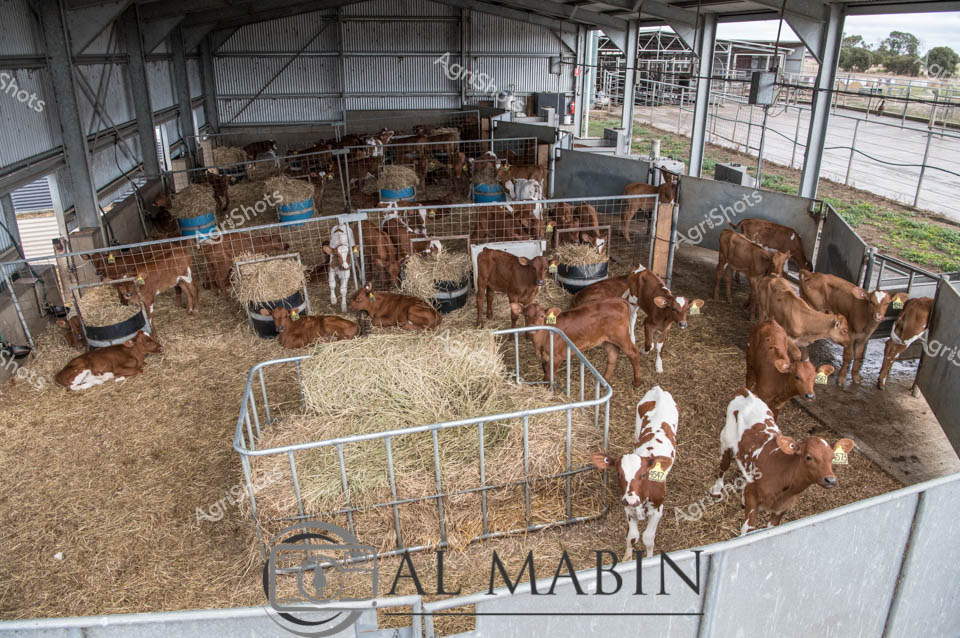
Under the steel-framed shelter of a modern dairy facility in South Australia's Limestone Coast region, a herd of rich russet and white dairy calves nestles on a golden bed of fresh straw. Blue feeding troughs and metal livestock barriers divide the spacious pen, creating a structured environment for these young cattle to rest and feed. The calves display varying ages and markings - some sprawled contentedly, others standing alert, each wearing a distinctive yellow ear tag identifying their individual status within the herd. The corrugated iron walls and open-sided design provide excellent ventilation and natural light, typical of contemporary Australian agricultural infrastructure. Soft hay creates a textured, insulating ground cover, offering comfort and warmth to the young animals. Metal fencing and strategic compartments allow careful management of the calves, ensuring optimal feeding and monitoring conditions. This scene captures the meticulous care and sophisticated approach of modern dairy farming, where animal welfare and systematic agricultural practices converge. The warm browns and whites of the cattle contrast beautifully with the industrial greys of the structure, representing the harmonious blend of nature and agricultural technology in the Australian farming landscape.
 Image
Image
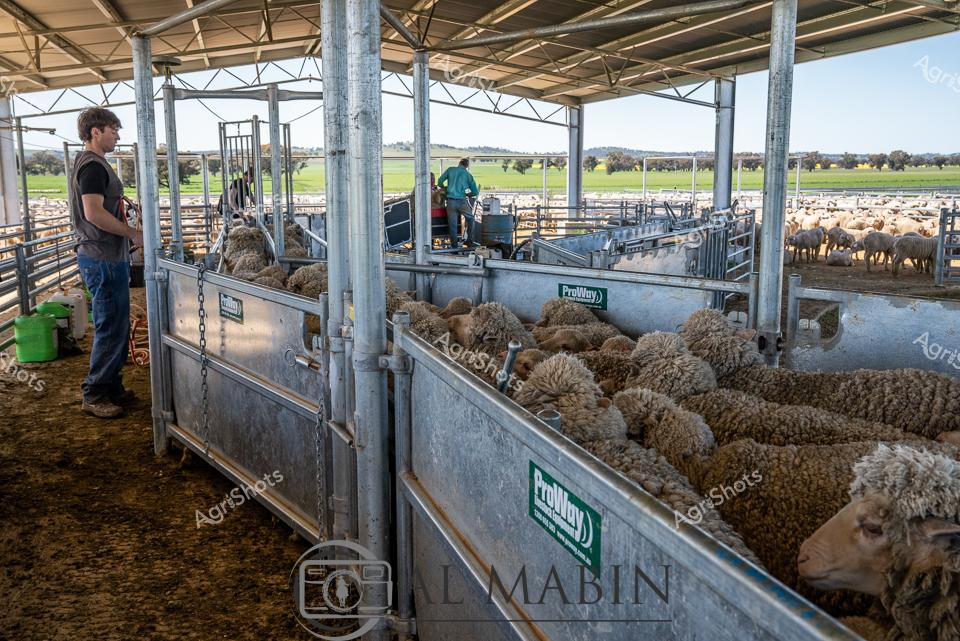
Merino ewes crowd the steel-framed Proway livestock yards, their dense, woolly fleeces a testament to Australia's premier sheep breeding country. Golden afternoon light filters across the paddocks beyond, illuminating a quintessential pastoral scene of rural agricultural workflow. A farmworker in well-worn denim and a dark shirt stands attentively near the sorting gates, overseeing the weaning process with practiced concentration. The metallic yard infrastructure - galvanized steel gates and robust support posts - provides a structured framework for managing the flock, with sheep carefully penned in systematic sections. Mud-packed ground and the orderly movement of livestock reveal the precision of modern sheep management techniques, where animal welfare and efficient processing converge. This scene captures the quiet intensity of Australian sheep farming, where generations of agricultural expertise are quietly expressed through controlled, purposeful handling of valuable Merino stock.