About this image
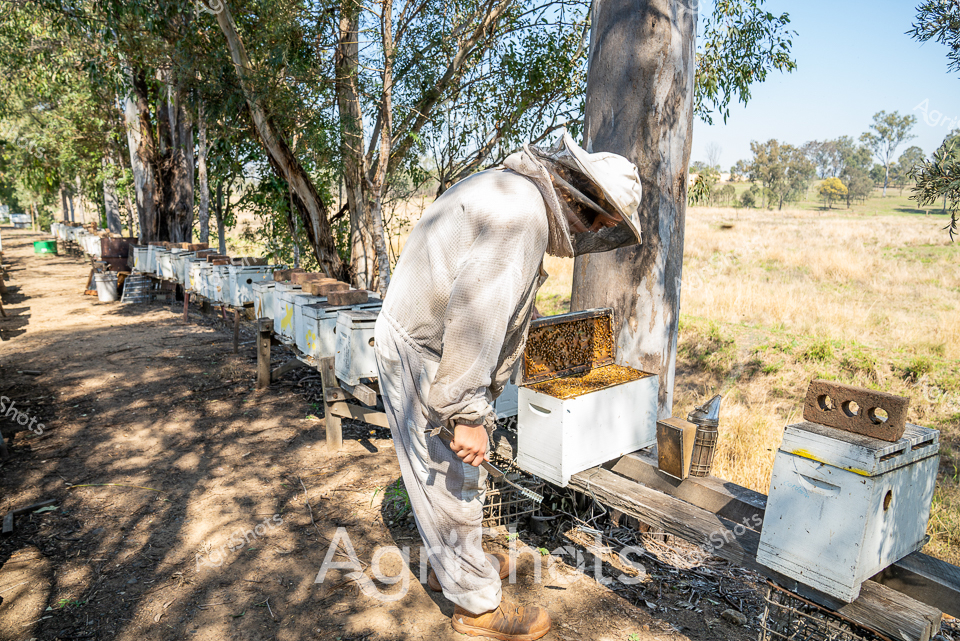
Bathed in soft golden light of a crisp spring morning, a beekeeper tends to a long row of white wooden hives nestled beneath eucalyptus trees in Queensland's fertile Lockyer Valley. Wearing a protective full-body white mesh suit and boots, the apiarist carefully inspects a honey-laden frame, surrounded by a landscape of weathered gum trees and dry grasslands. The neat line of bee boxes creates a rhythmic pattern against the dusty earth, each hive a precise agricultural unit in this carefully managed ecosystem. Gentle shadows cast by the overhead tree canopy dapple the ground, highlighting the meticulous arrangement of the apiary and the quiet concentration of the worker. Metallic smokers and additional equipment rest nearby, tools of a trade that demands patience, skill, and deep understanding of these complex pollinators. The scene captures the essence of Australian agricultural practice - methodical, respectful interaction with nature, where human expertise and insect collaboration produce one of the country's most precious natural commodities.
Similar media
 Image
Image
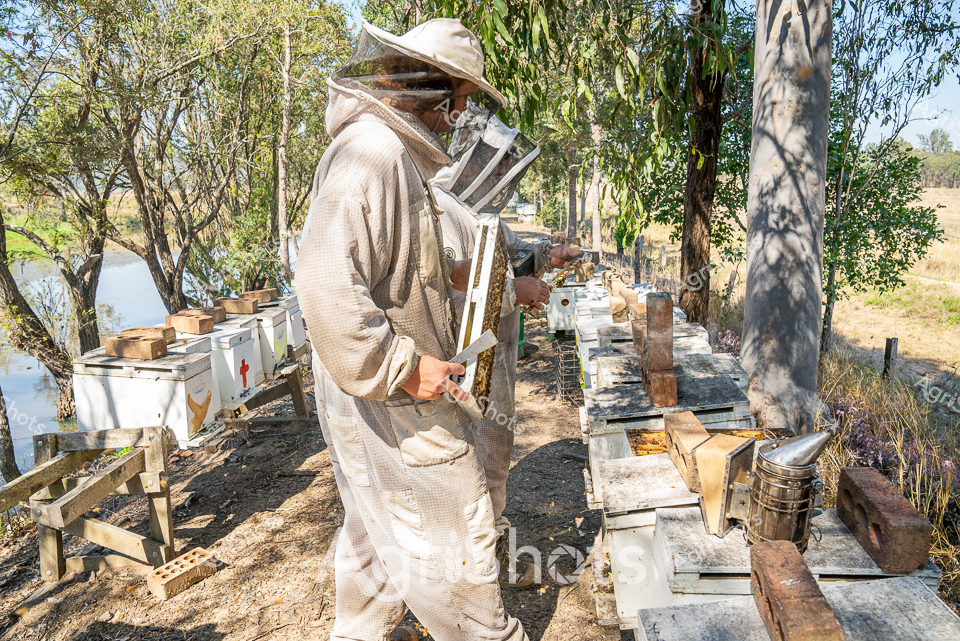
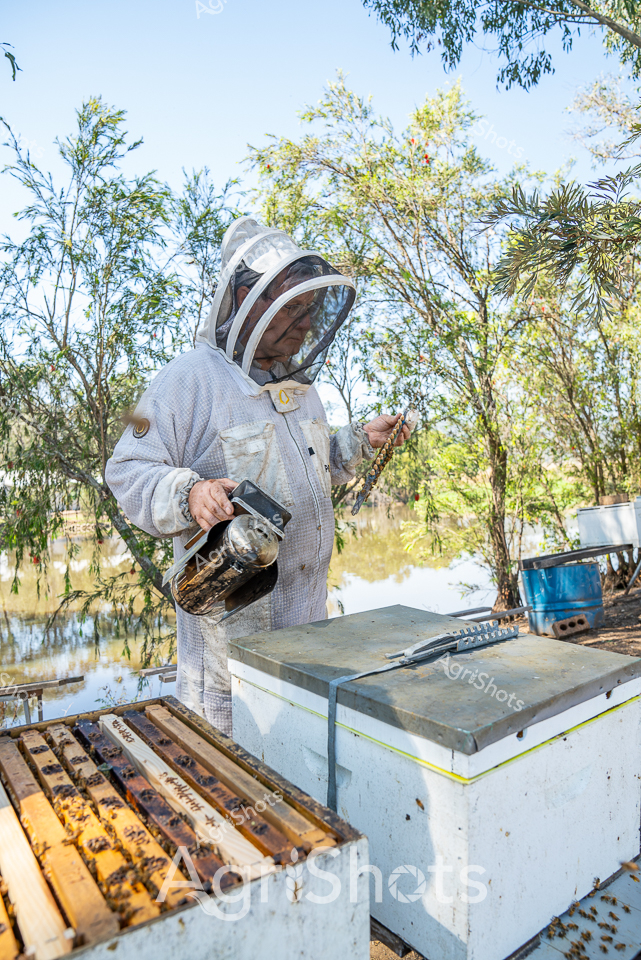
A beekeeper tends to a thriving apiary nestled alongside a tranquil waterway in Queensland's lush Lockyer Valley. Dressed in a full protective suit and mesh veil, the apiarist carefully inspects a honeycomb frame, surrounded by neat rows of white and wooden beehives. Dappled sunlight filters through the eucalyptus and river red gum trees, casting intricate shadows on the rich earth beneath. The scene captures the meticulous craft of honey production during the vibrant spring season, when bee colonies are at their most active. Specialized equipment like a stainless steel smoker sits nearby, used to calm the bees during hive management. This serene landscape represents the essential role of beekeepers in agricultural ecosystems, highlighting the delicate balance between human intervention and the remarkable natural processes of pollination and honey production.
 Image
Image
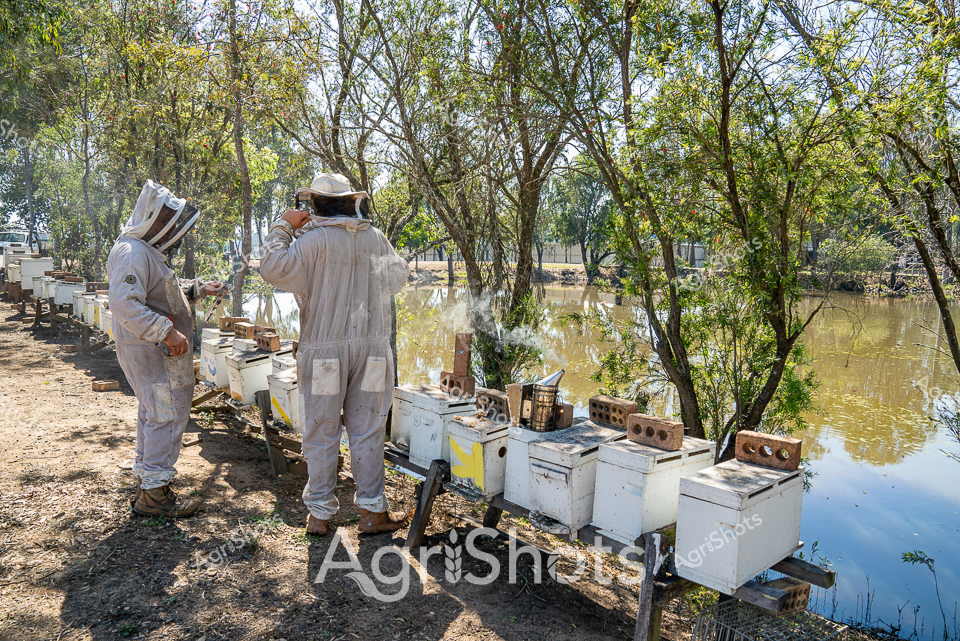
Beekeepers tend to a thriving apiary nestled along the water's edge in Queensland's lush Lockyer Valley. Dressed in protective white suits and veiled hats, the apiarists carefully manage a long row of white wooden hive boxes positioned near a tranquil pond surrounded by native trees. Soft spring sunlight filters through the greenery, casting dappled shadows on the rich earth and reflecting off the water's surface. Smoke drifts from a bee smoker, a traditional tool used to calm the honey bee colonies during inspection and maintenance. The scene captures the delicate balance of agricultural stewardship, where careful human intervention supports the critical ecological role of pollinators. Weathered and functional, the bee boxes stand as quiet sentinels of a sustainable agricultural practice that connects human nurturing with the intricate natural systems of the Australian landscape.
 Image
Image
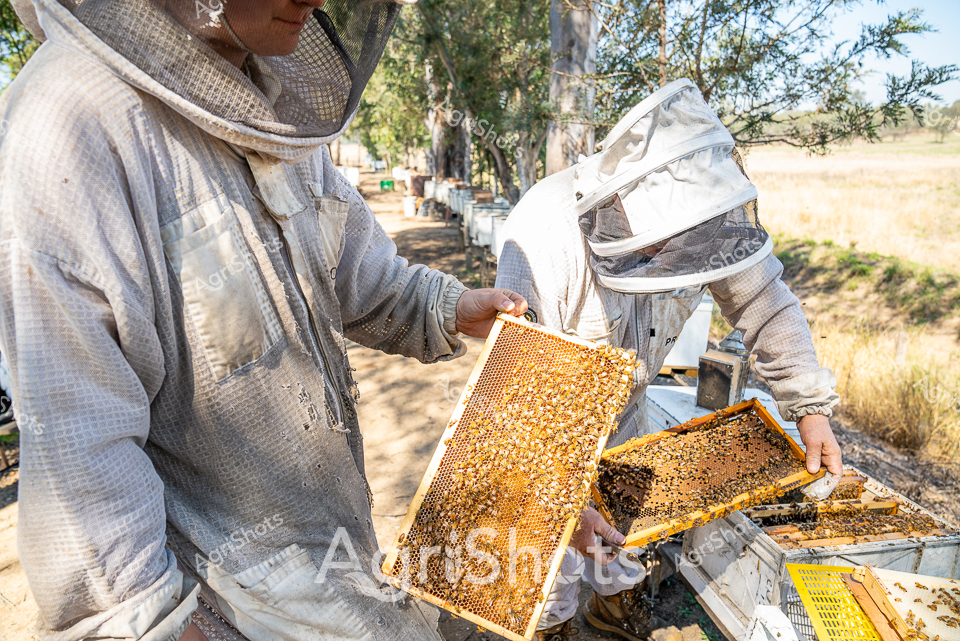
Beekeepers tend to a vibrant honey production site in Queensland's lush Lockyer Valley, their protective mesh veils and lightweight summer suits shielding them from potential stings. Sunlight filters through surrounding eucalyptus trees, casting dappled shadows across rows of pale wooden hive boxes nestled in golden grasslands. Skilled hands carefully lift honeycomb frames thick with golden-amber honey cells, revealing the intricate geometric patterns created by industrious worker bees. The light gauzy protective clothing in soft greys and whites contrasts beautifully with the rich amber and brown tones of the active hive, capturing the delicate yet precise work of apiary management during peak spring harvesting season. Each carefully extracted frame demonstrates the symbiotic relationship between human agricultural skill and the remarkable natural engineering of bee colonies. The scene radiates a sense of quiet concentration and deep respect for these essential pollinators and honey producers, fundamental to Australia's rich agricultural ecosystem.
 Image
Image
Swathed in a brilliant white protective suit, a skilled apiarist tends to a series of honey bee hives nestled among the soft, feathery foliage of a Queensland woodland. Delicate sunlight filters through the tree canopy, illuminating the scene with the gentle warmth of a spring morning in the Lockyer Valley. The beekeeper, completely covered with a mesh hood and thick protective gear, carefully manipulates a smoker to calm the industrious colony, preparing to inspect the wooden frames laden with golden honeycomb. Precise and methodical, the worker moves between the white hive boxes positioned strategically near a tranquil water source, ensuring the health and productivity of these crucial pollinators. Bees drift lazily around the apiary, their constant movement a testament to the vibrant ecosystem carefully managed by this agricultural professional. The surrounding landscape breathes with a sense of harmony - trees swaying gently, water reflecting the sky, and the bees continuing their ancient, essential work of pollination and honey production.
 Image
Image
Apiarists in crisp white protective suits carefully tend to a serene apiary nestled among eucalyptus trees in Queensland's lush Lockyer Valley. The morning light filters through the branches, illuminating rows of silvery-white bee boxes arranged methodically on metal stands. One beekeeper leans forward, intently examining a hive frame, while the other uses a smoker to calm the colony, their mesh-covered helmets protecting them from potential stings. The ground is dry and scattered with fallen leaves, suggesting it's a mild spring day with gentle sunlight warming the landscape. Precise and measured movements reveal the deep expertise of these agricultural professionals, who are essential to maintaining healthy bee populations critical for pollination and honey production. The metallic sheen of the hive boxes contrasts beautifully with the soft greens and browns of the surrounding woodland, capturing the harmonious intersection of human agricultural practice and natural ecosystem.
 ▶ Video
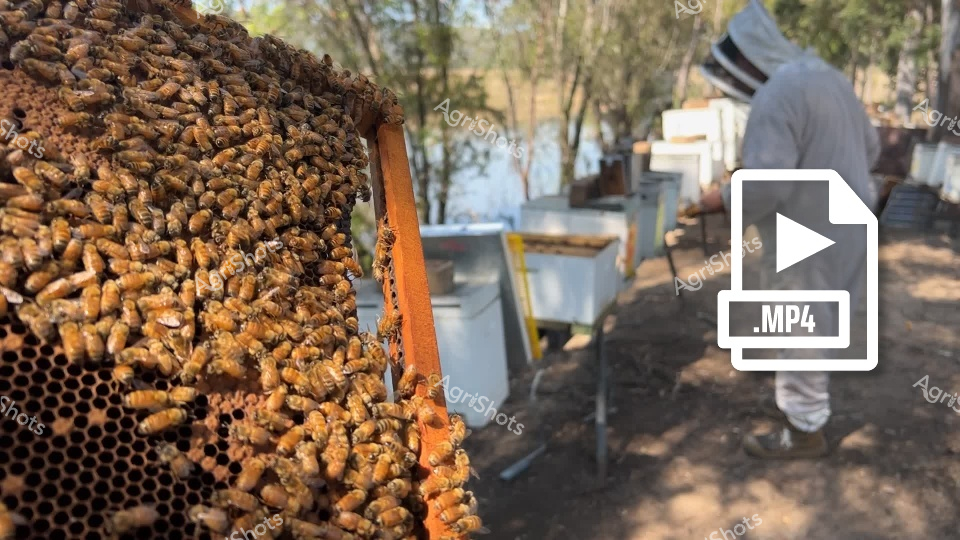
In the sunny Lockyer Valley region of Queensland, a beekeeper tends to multiple white bee hives nestled among trees during springtime. Hundreds of honey bees cluster densely on a honeycomb frame, showcasing the bustling activity of this thriving apiary during the productive spring season.
 Image
Image
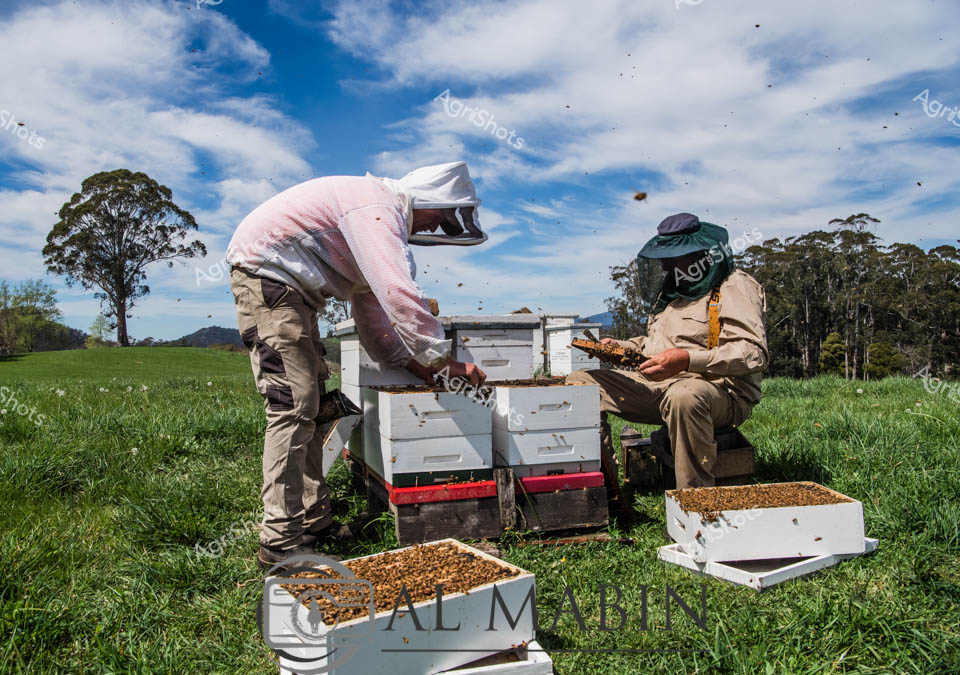
Two beekeepers work together managing bee hives in a spring apiary scene in Tasmania's Upper Mersey Valley Region. One beekeeper wearing protective gear and a veil inspects the hive boxes while bees swarm around the white wooden hive structures scattered across the green paddock. The second beekeeper sits nearby examining honeycomb frames, with both working to maintain the colony during the active pollination season. The rural landscape features eucalyptus trees under a partly cloudy sky, creating an ideal environment for honey production.
 Image
Image
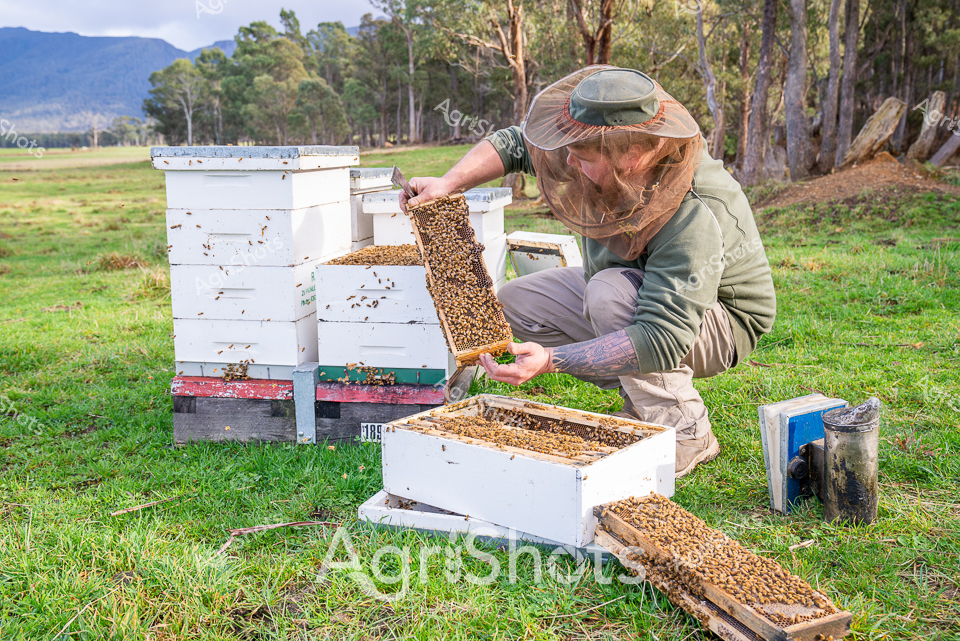
Shrouded in a protective mesh veil, an experienced apiarist tends to a cluster of white wooden beehives nestled in a lush Tasmanian pasture. Misty mountains rise in the soft winter background, framing a landscape of silvery-green eucalyptus trees and frost-tipped grass. The beekeeper carefully inspects a honeycomb frame teeming with thousands of industrious bees, their golden-brown bodies clustered densely across the hexagonal wax structure. Dressed in muted olive and khaki, the worker crouches methodically, surrounded by bee boxes marked with faded identification numbers, a smoker and additional equipment nearby. Soft winter light filters through the scene, highlighting the intricate movement of bees and the textured landscape, capturing the quiet dedication of agricultural work in Tasmania's rural heartland. The image embodies the precise, patient craft of honey production - a testament to the symbiotic relationship between human stewardship and the remarkable social organization of bee colonies.