About this image
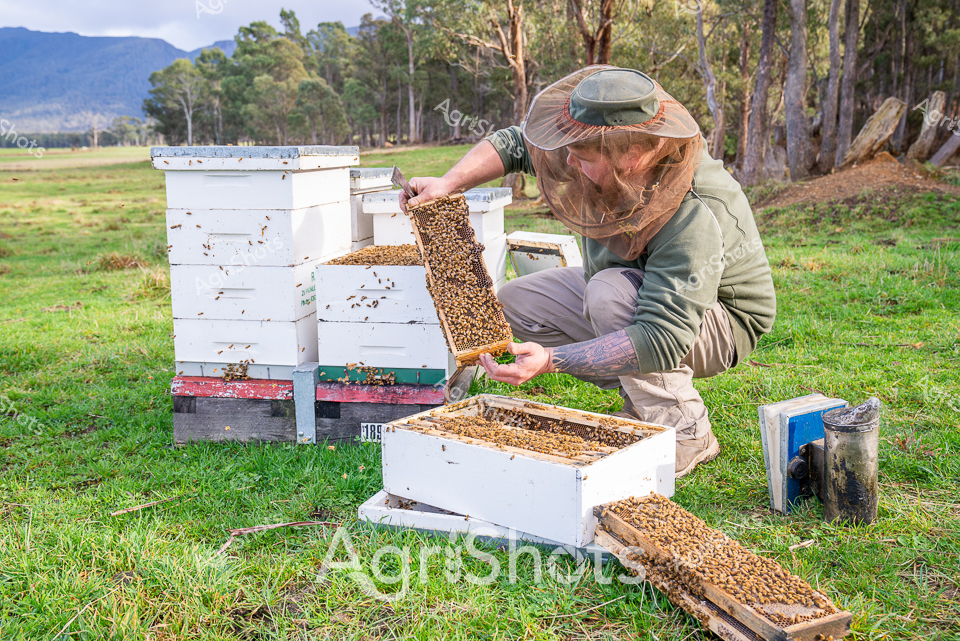
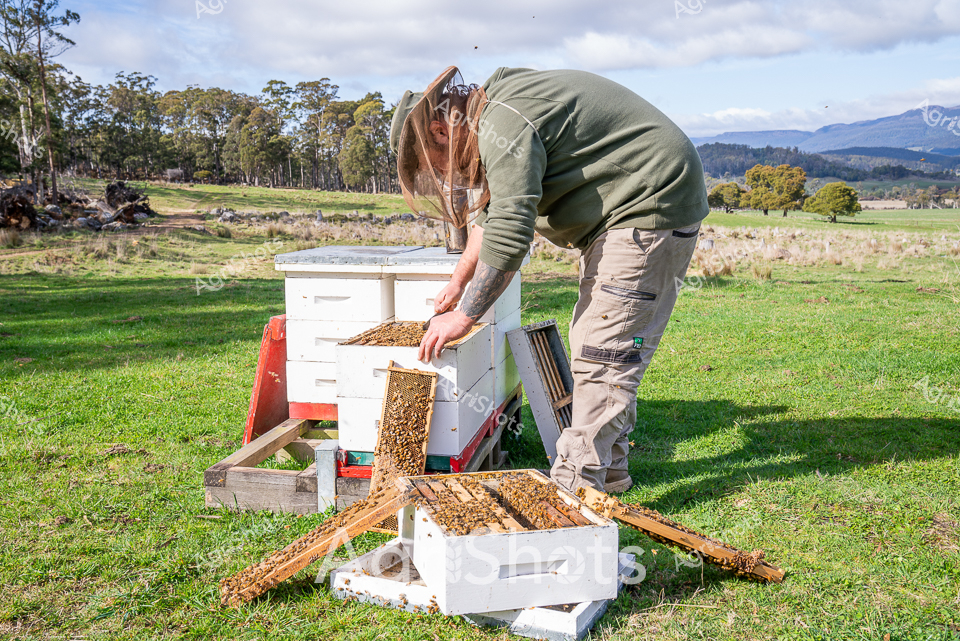
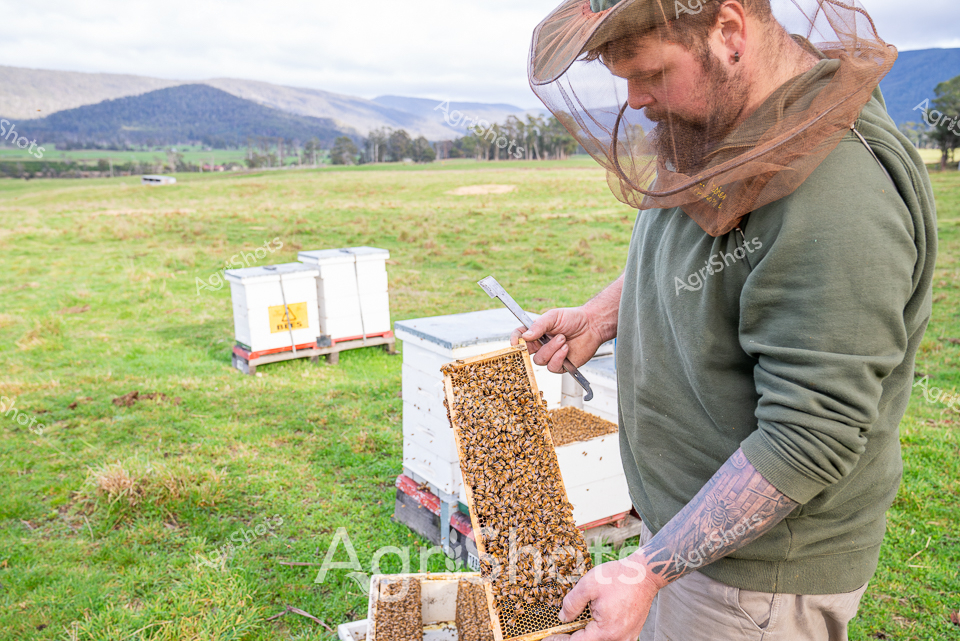
Shrouded in a protective mesh veil, an experienced apiarist tends to a cluster of white wooden beehives nestled in a lush Tasmanian pasture. Misty mountains rise in the soft winter background, framing a landscape of silvery-green eucalyptus trees and frost-tipped grass. The beekeeper carefully inspects a honeycomb frame teeming with thousands of industrious bees, their golden-brown bodies clustered densely across the hexagonal wax structure. Dressed in muted olive and khaki, the worker crouches methodically, surrounded by bee boxes marked with faded identification numbers, a smoker and additional equipment nearby. Soft winter light filters through the scene, highlighting the intricate movement of bees and the textured landscape, capturing the quiet dedication of agricultural work in Tasmania's rural heartland. The image embodies the precise, patient craft of honey production - a testament to the symbiotic relationship between human stewardship and the remarkable social organization of bee colonies.
Similar media
 Image
Image
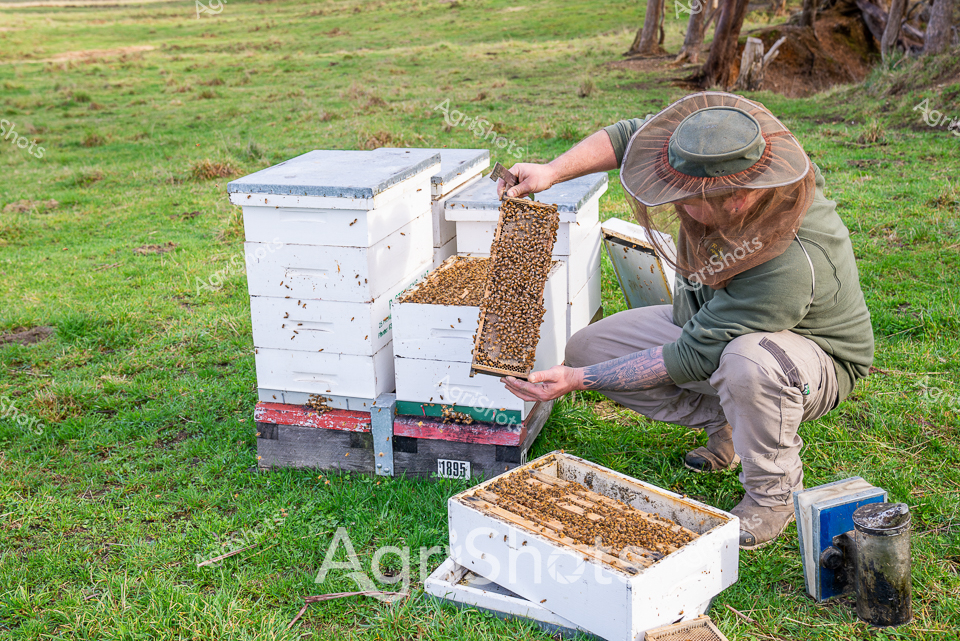
Beekeeping in Tasmania's Winter Pastures A dedicated apiarist tends to her buzzing colonies on a misty winter morning in rural Tasmania. Wrapped in protective gear and a wide-brimmed hat, she carefully inspects a honey-laden frame teeming with industrious bees. White wooden beehives stand in neat rows, their weathered surfaces contrasting against the soft green grass and distant tree line. The beekeeper, dressed in muted olive and khaki, crouches methodically, her movements slow and deliberate as she examines the intricate honeycomb. A smoker and additional hive boxes are positioned nearby, tools of a craft that requires patience and precision. Delicate clusters of bees cling to the wooden frames, their complex social structure and collective labor evident in the carefully constructed hexagonal cells filled with golden honey. This intimate scene captures the quiet dedication of Tasmanian beekeepers, who maintain crucial agricultural practices even during the cool, damp winter months, preserving one of nature's most remarkable collaborative ecosystems.
 Image
Image
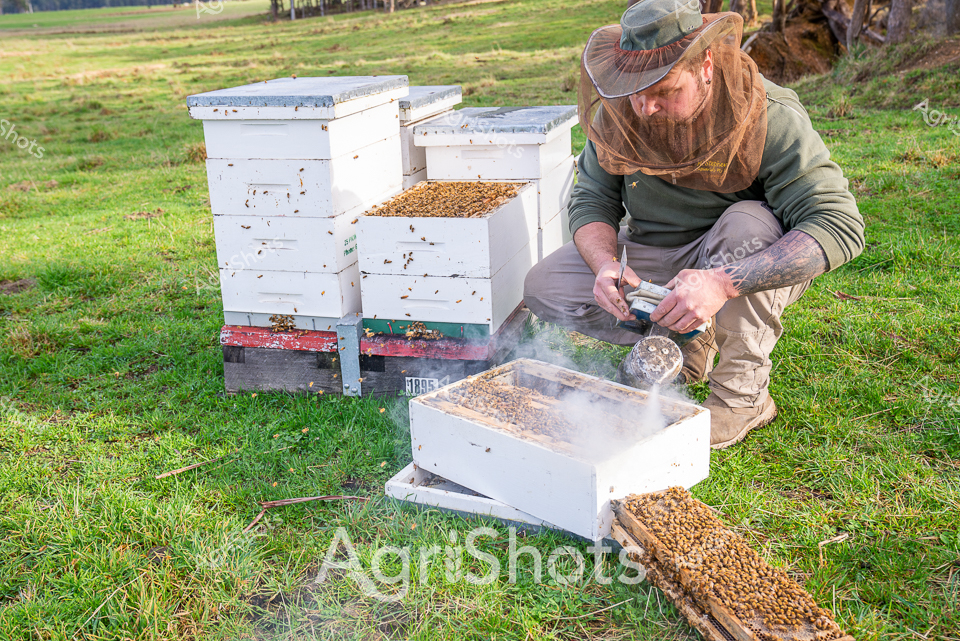
Beekeeping in the soft light of a Tasmanian winter morning, a seasoned apiarist tends to his white wooden hive boxes scattered across a misty green pasture. Wearing a protective olive-green jacket and a netted hat, the beekeeper carefully manages his buzzing colony, smoke curling from his smoker to calm the insects. Hundreds of bees crawl across the exterior of the hives, their golden-brown bodies creating intricate patterns against the weathered white woodwork. The surrounding landscape is a subtle palette of muted greens - dew-laden grass stretching into a backdrop of distant trees, creating a serene agricultural tableau. Each hive sits on a slightly raised base, with red and green trim adding a touch of color to the pristine white structures. The careful, methodical work of the beekeeper speaks to generations of agricultural tradition, capturing the delicate art of honey production in Tasmania's lush rural landscape.
 ▶ Video
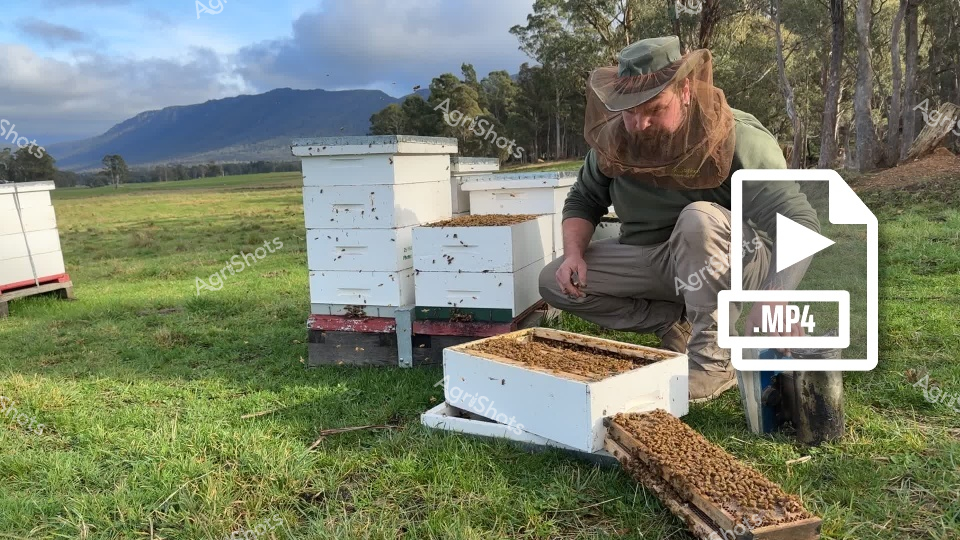
A beekeeper tends to white bee hives in a lush Tasmanian landscape during winter, wearing protective gear with a mountain range in the background. Bees swarm around the wooden hive boxes as the person carefully manages the apiary, with a tray of what appears to be bee feed or supplemental nutrition in the foreground.
 Image
Image
Bee husbandry unfolds across a verdant Tasmanian pasture, where a dedicated apiarist tends to a cluster of white wooden hive boxes against a backdrop of rolling green grasslands and distant misty mountains. Wearing protective mesh headgear and olive-green workwear, the beekeeper carefully manipulates honeycomb frames, harvesting and inspecting the intricate golden-brown wax structures teeming with industrious honeybees. Soft winter light filters through scattered eucalyptus trees, casting gentle shadows across the rural landscape and highlighting the meticulous work of managing these crucial pollinators. The white and red hive boxes stand in sharp contrast to the lush grass, representing the careful balance between agricultural practice and natural ecosystem management that defines Tasmania's sustainable farming traditions. Every deliberate movement speaks to the intimate knowledge and respect required in beekeeping - a craft that transforms landscape, livelihood, and the delicate networks of agricultural production. The scene captures the quiet concentration of rural work, where human skill and natural complexity converge in the production of one of Australia's most precious agricultural commodities.
 Image
Image
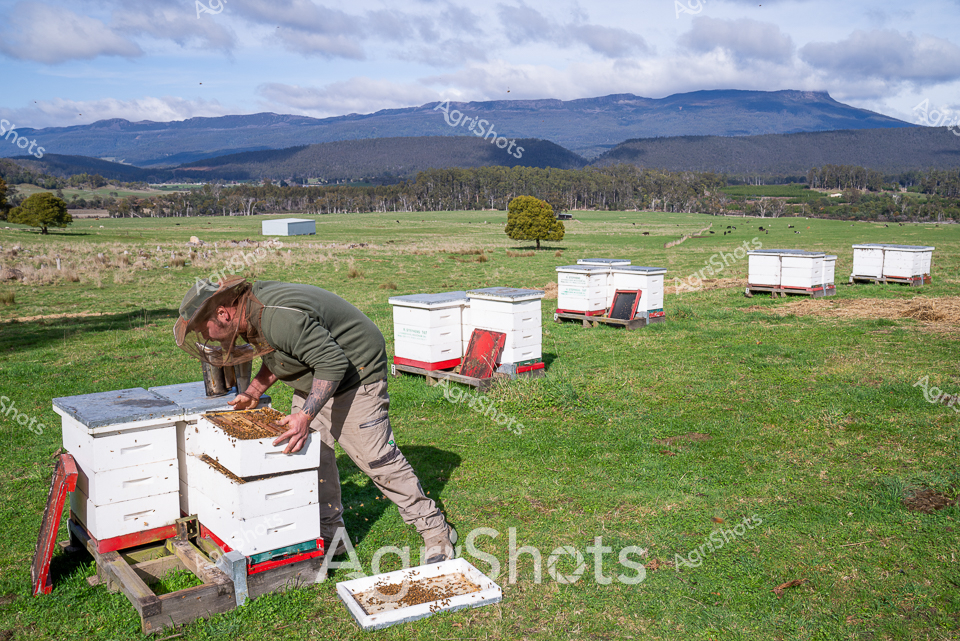
Rugged Tasmanian highlands frame a pristine winter apiary, where a dedicated apiarist carefully tends to a cluster of white and red-trimmed bee hives scattered across a misty green pasture. Leaning intently over the wooden hive boxes, the worker meticulously manages the delicate honey production ecosystem, surrounded by sparse winter grasslands and distant blue-grey mountain ranges. Soft cloud cover diffuses the winter sunlight, casting gentle shadows across the undulating landscape where a solitary yellow-green tree stands sentinel near a distant white farm building. The apiarist, dressed in earthy olive and khaki tones, moves with practiced precision, handling the hive components with a mix of technical skill and ecological care characteristic of Tasmania's sustainable agricultural practices. Neat rows of hives suggest a well-organized small-scale apiary operation, highlighting the intricate relationship between agricultural workers and the critical pollination systems that support regional biodiversity. The scene captures the quiet dedication of agricultural workers who maintain these essential but often unseen agricultural enterprises during the cooler seasonal months.
 ▶ Video
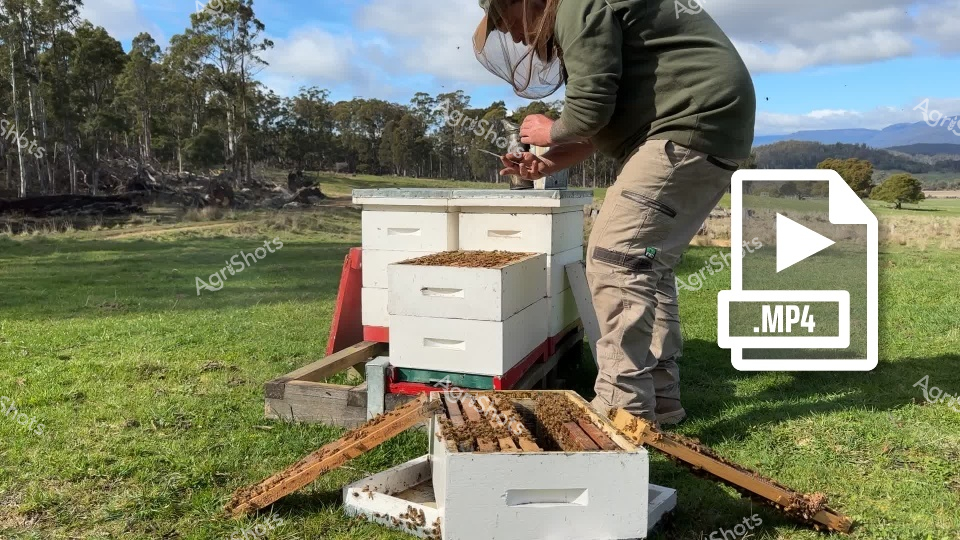
Expert apiarist tends to buzzing bee colonies on a crisp Tasmanian winter morning, surrounded by misty mountain ranges and silvery eucalyptus forests. Wearing olive green workwear and practical khaki cargo pants, the beekeeper carefully manages white wooden hive boxes mounted on a rustic red trailer, positioned on a verdant pasture. Intricate wooden hive frames are carefully extracted, revealing dense clusters of honeybees moving across their carefully constructed honeycomb structures. Mountain ranges softly blur in the background, creating a serene pastoral landscape that speaks to Tasmania's pristine agricultural environments. Delicate worker bees navigate entrance ramps to their multi-tiered white hive homes, representing the sophisticated and collaborative nature of these extraordinary pollinators. The scene captures the meticulous craft of apiculture, where human expertise and natural biological systems intersect with precision and respect.
 Image
Image
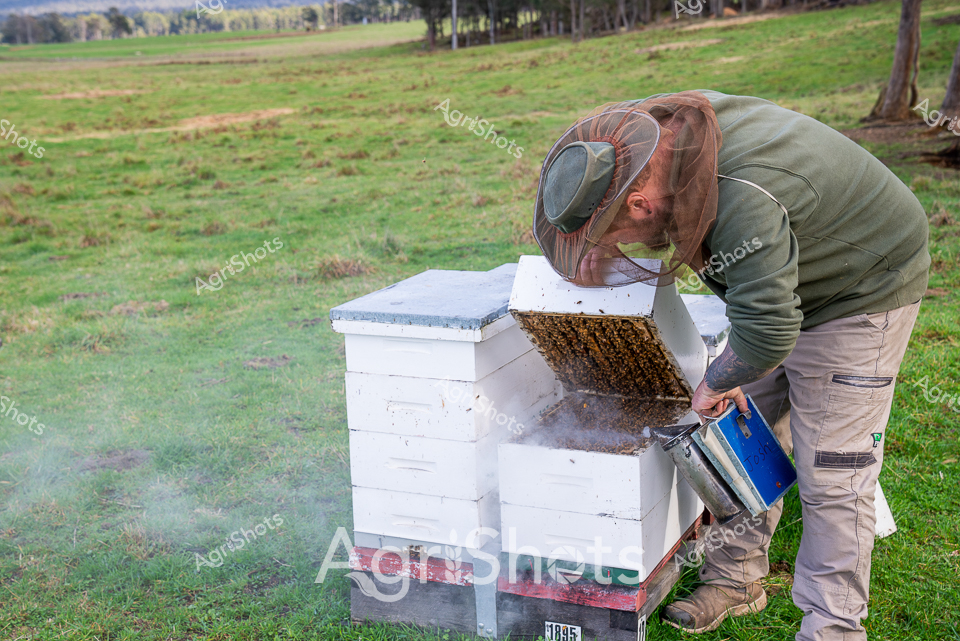
Shrouded in a protective mesh veil, a dedicated apiarist carefully tends to a white wooden beehive nestled in a misty Tasmanian pasture. Soft winter light filters through the surrounding eucalyptus trees, casting a gentle green-grey hue across the quiet landscape. The beekeeper leans forward, smoke canister in hand, methodically managing a frame covered in a dense cluster of honeybees. His olive green sweater and khaki cargo pants speak to the practical attire of rural agricultural workers, blending seamlessly with the subdued winter environment. A wisp of cool smoke drifts from the bee smoker, a crucial tool used to calm the colony during hive inspection and maintenance. This intimate moment captures the delicate relationship between human and insect, showcasing the meticulous care required in commercial honey production and agricultural pollination services characteristic of Tasmania's rich agricultural landscape.
 Image
Image
Rugged and methodical, a beekeeper tends to his buzzing apiary nestled against the misty Tasmanian mountain landscape. Wearing a protective olive-green sweater and mesh veil, he carefully inspects a honey frame densely covered with golden-brown bees, their collective movement creating a living, vibrant texture. White wooden hive boxes sit strategically positioned on wooden pallets across the verdant pasture, with rolling hills and distant blue mountain ranges forming a serene backdrop. The winter scene suggests a quiet, purposeful moment of agricultural craft, where precision and respect for these critical pollinators is paramount. Intricate tattoos peek from beneath the beekeeper's sleeve, hinting at a personal story as complex as the bee colony's intricate social structure. This image captures the delicate intersection of human expertise and natural wonder, showcasing Tasmania's rich agricultural heritage and the essential role of beekeeping in sustaining ecological balance.