About this image
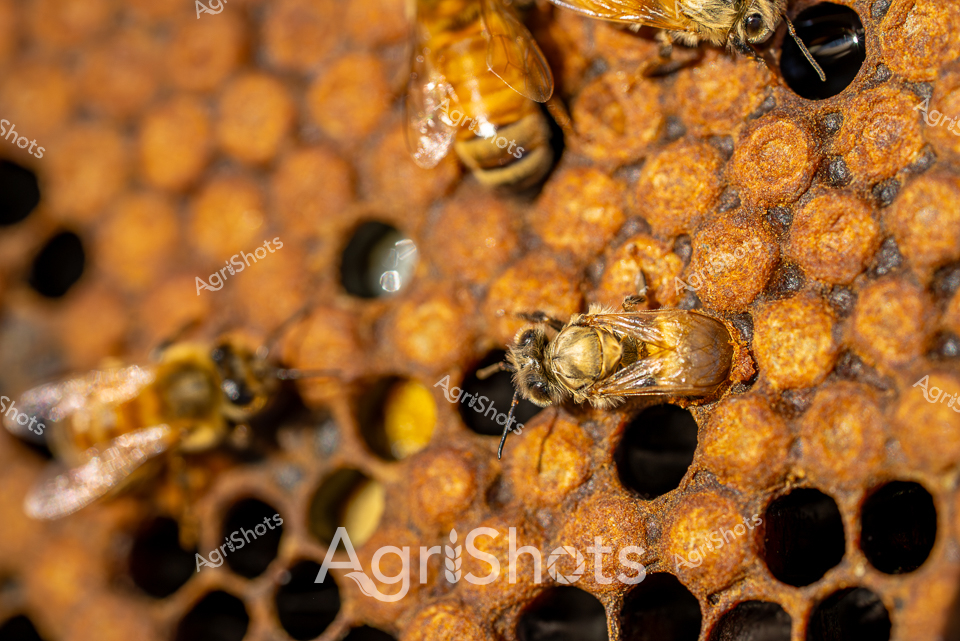
Golden honeycomb teems with life as worker bees cluster around newly emerging larvae in intricate hexagonal cells. The rich amber and ochre tones of the wax create a vibrant organic texture, with deep black spaces between the cells revealing the complex inner structure of the hive. Delicate bee wings catch the light, their bodies moving with purposeful precision across the surface of the brood chamber. Tiny larvae curl within their individual chambers, representing the next generation of this sophisticated agricultural ecosystem. This intimate macro view captures the remarkable micro-world of bee reproduction, highlighting the Lockyer Valley's crucial role in agricultural pollination and honey production during the fertile spring season. Each bee moves with choreographed efficiency, embodying the extraordinary collective intelligence of the hive - a living, breathing organism that is fundamental to Queensland's agricultural landscape.
Similar media
 Image
Image
Honeybees cluster across golden honeycomb, their translucent amber and bronze wings gleaming against the rich ochre surface of the hive. Delicate workers move purposefully among the hexagonal cells, tending to developing larvae nestled within the waxy chambers. The intricate texture of the honeycomb reveals a complex biological architecture - some cells sealed and incubating new life, others open and ready for nectar or pollen storage. Warm, amber tones suggest this is a thriving spring scene in Queensland's fertile Lockyer Valley, where agricultural landscapes support critical pollination ecosystems. Each bee moves with precise choreography, representing the sophisticated social organization of the colony - a living, breathing system of interdependence and collective survival. The macro perspective offers an intimate glimpse into the remarkable world of these essential agricultural partners, revealing the meticulous industry occurring within every square centimeter of the hive.
 Image
Image
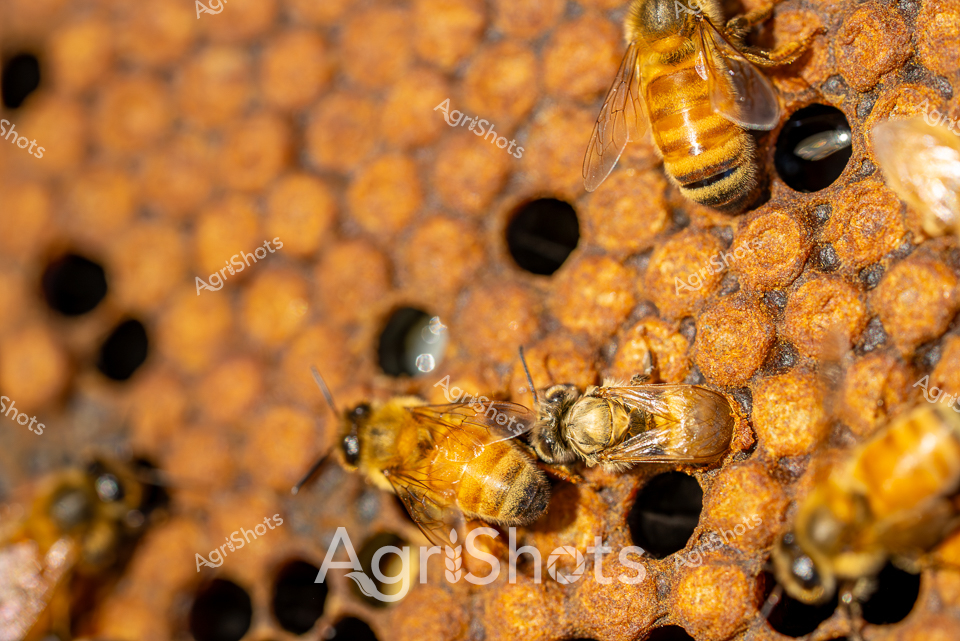
Honeybees swarm across the honeycomb's golden-amber surface, their striped bodies glistening with a rich, translucent amber and black pattern. Intricate hexagonal cells create a textured landscape of fertility and industry, some sealed with a waxy cap indicating developing larvae, while others remain open - revealing the pulsing microcosm of hive life. Each bee moves with precise purpose, clustered across the russet-toned wax surface, some emerging from dark cellular chambers, others tending to brood or communicating through complex choreography. The macro perspective reveals the extraordinary detail of these social insects - their segmented bodies, delicate translucent wings, and the organic architectural marvel of the honeycomb. This intimate view captures the vibrant spring season in Queensland's Lockyer Valley, where apiculture thrives amid rich agricultural landscapes. The image pulses with life, industry, and the complex symbiosis of a bee colony preparing for renewal and productivity.
 Image
Image
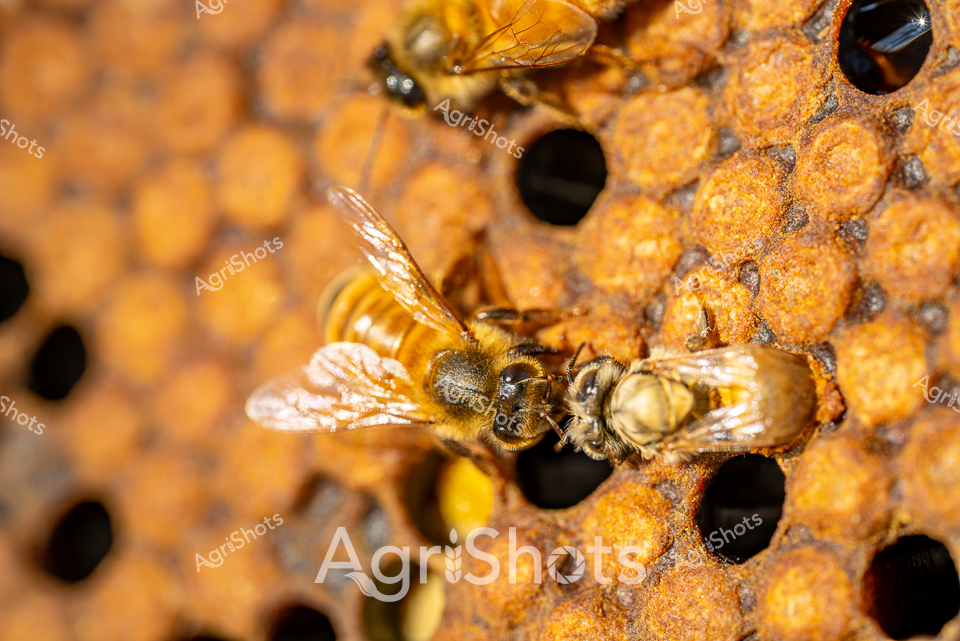
Honeybees cluster and communicate across the golden-amber honeycomb, their delicate translucent wings catching the soft light as they tend to emerging larvae in the intricate hexagonal chambers. Densely packed brood cells pulse with nascent life, each waxy compartment a miniature nursery in this vibrant spring hive from Queensland's fertile Lockyer Valley. The worker bees move with purposeful precision, their fuzzy bodies dusted with pollen, engaging in the complex social choreography of colony reproduction and care. Warm amber and rich ochre tones dominate the frame, highlighting the textural complexity of the hive's surface - a living, breathing ecosystem of interconnected cells and constant movement. Intimate and rhythmic, the scene captures the remarkable collective intelligence of these essential pollinators, their synchronized efforts ensuring the continuation of their remarkable community. Each bee plays a critical role in this microcosm of agricultural symbiosis, representing the intricate networks that sustain both natural and cultivated landscapes.
 Image
Image
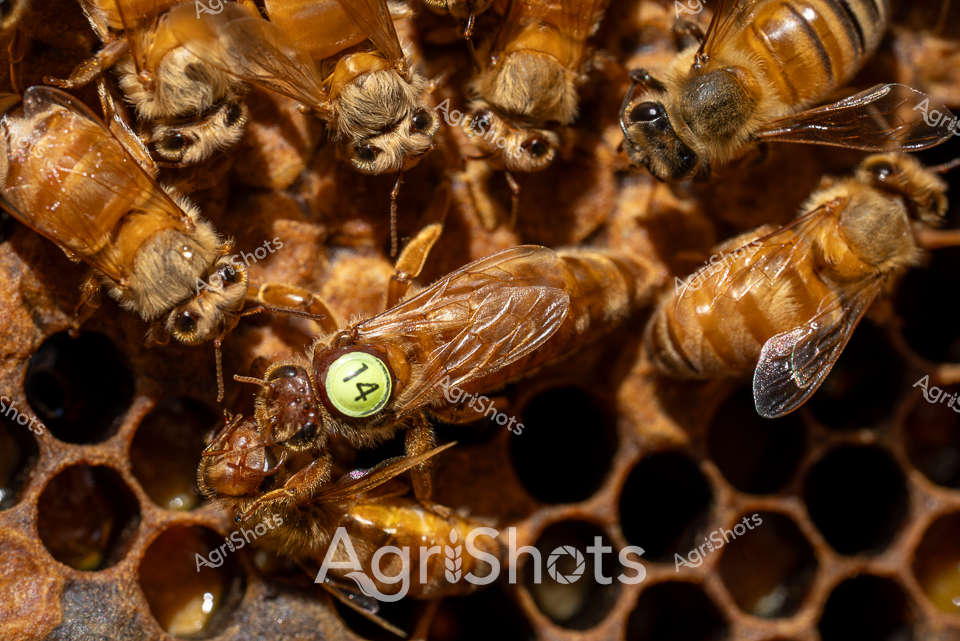
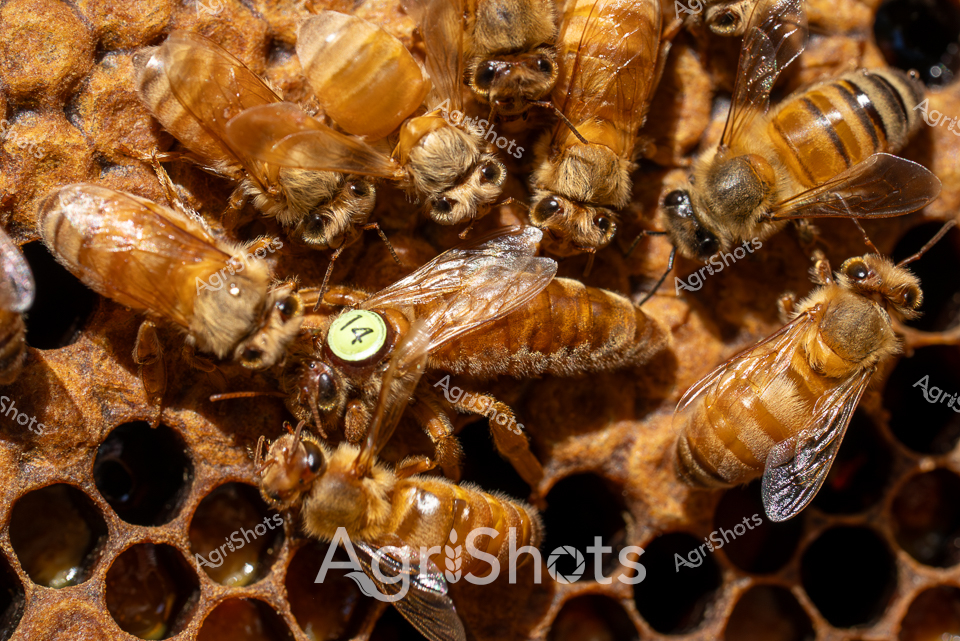
Queen bee marked with a fluorescent green number tag, central to a bustling hive of honey bees clustered across a honeycomb frame. Golden-amber bodies of worker bees fill the hexagonal cells, their translucent wings catching light and revealing intricate textures of their exoskeletons. The dense colony demonstrates the extraordinary social organization of these agricultural pollinators, with the queen moving purposefully among her workers in the warmth of a spring day. Rich brown and amber tones of the honeycomb and bee bodies suggest the fertile agricultural landscape of Queensland's Lockyer Valley, a region renowned for its diverse agricultural production. Each bee appears meticulously focused on its collective responsibilities - tending larvae, processing nectar, maintaining the hive's complex infrastructure. The macro perspective reveals the remarkable detail of these critical insects, whose agricultural importance extends far beyond honey production to essential crop pollination across Australian farming ecosystems.
 Image
Image
Golden honeybees swarm across a rich amber-hued honeycomb, their intricate social structure captured in stunning macro detail. At the center of the bustling hive, a marked queen bee (tagged with a small green numbered marker) moves deliberately among her workers, representing the precise scientific management of modern apiculture. The hexagonal wax cells create a complex architectural backdrop, some empty and shadowy, others filled with the warm golden tones of honey and bee bodies. Each bee displays remarkable textural detail - from their fuzzy thoraxes to translucent, veined wings - highlighting the extraordinary biological engineering of these critical pollinators. This close-up reveals the intricate world of a thriving bee colony in the Lockyer Valley region of Queensland, likely during the abundant flowering season of spring. The image speaks to the delicate complexity of bee colonies, where every individual plays a crucial role in the collective survival and productivity of the hive.
 Image
Image
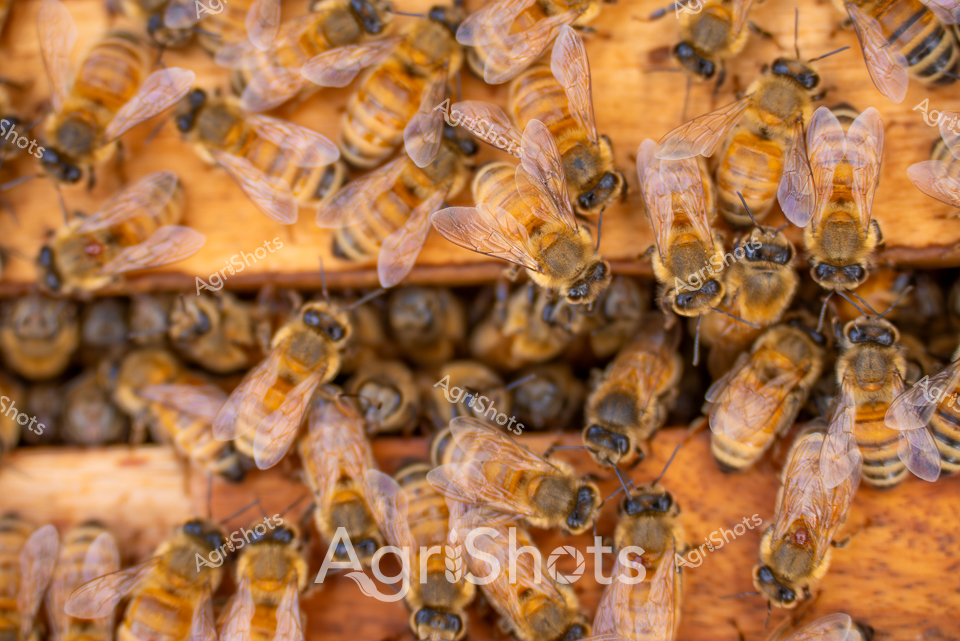
Honeybees cluster densely across a warm amber-toned wooden honeycomb frame, their translucent golden-brown wings overlapping in a mesmerizing collective pattern. Each bee displays intricate details - segmented bodies, delicate antennae, and subtle variations in amber and bronze coloration that capture the remarkable complexity of these social insects. The frame represents a snapshot of intense hive activity, with worker bees tightly packed together, likely managing brood cells, regulating hive temperature, or communicating through sophisticated chemical signals. This close-up reveals the extraordinary organizational structure of a bee colony, where every individual plays a critical role in the collective survival and productivity of the hive. The rich wooden textures and warm golden tones suggest a Tasmanian apiary during the quieter winter months, when bees cluster for warmth and conserve energy. The image celebrates the remarkable microcosm of bee society - a testament to nature's intricate design and the crucial role these pollinators play in agricultural ecosystems.
 Image
Image
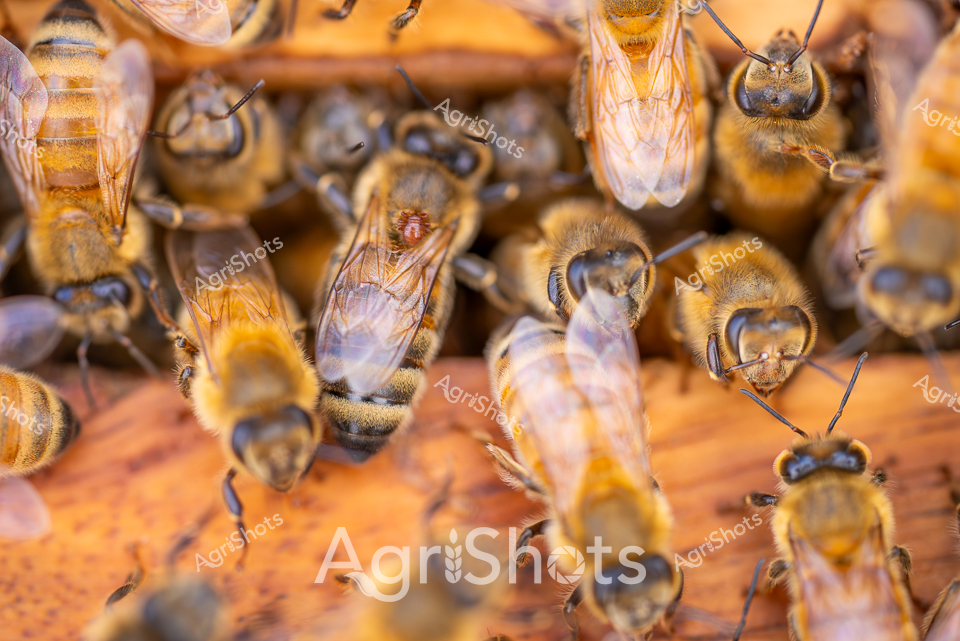
Honeybees surge across a warm amber-toned wooden hive surface, their intricate bodies gleaming with golden and bronze tones. A dense cluster of worker bees moves with synchronized purpose, their translucent wings catching delicate light, revealing complex striped abdomens and precise segmentation. At the center, a distinctive queen bee stands slightly larger, her body marked with a vibrant red identification dot - a critical marker for bee breeding and colony management. The tight, overlapping formation demonstrates the remarkable social structure of these pollinators, each bee positioned with geometric precision against the rich wooden textures of their hive environment. This intimate macro perspective reveals the extraordinary detail of apian life, showcasing the complex biological machinery that underpins Tasmania's critical agricultural ecosystems. The warm color palette and intense focus capture the vital role these industrious insects play in sustaining agricultural productivity across the island's diverse landscapes.
 Image
Image
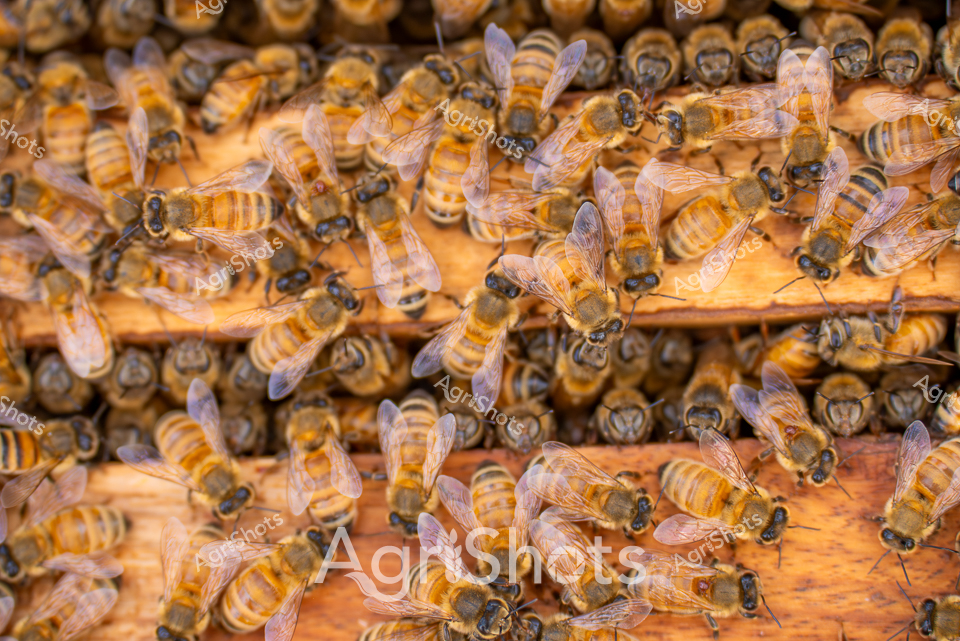
Honeybees swarm across golden wooden hive frames, their amber and black striped bodies creating a mesmerizing living tapestry. Translucent wings flutter and overlap as workers cluster densely, moving with purposeful coordination across the warm-toned timber surface. Each bee displays intricate details - segmented bodies, delicate wing membranes, and focused movements that speak to the complex social structure of their colony. The close-up perspective reveals the remarkable density of the hive, with dozens of insects moving in subtle synchronization, representing the extraordinary collective intelligence of these critical pollinators. Soft amber and golden tones dominate the image, suggesting the rich agricultural heritage of Tasmania's apiary industry during the quieter winter months. This intimate frame captures the heart of sustainable agricultural practice, showcasing the industrious nature of honeybees as they maintain their essential community through collaborative effort.