About this image
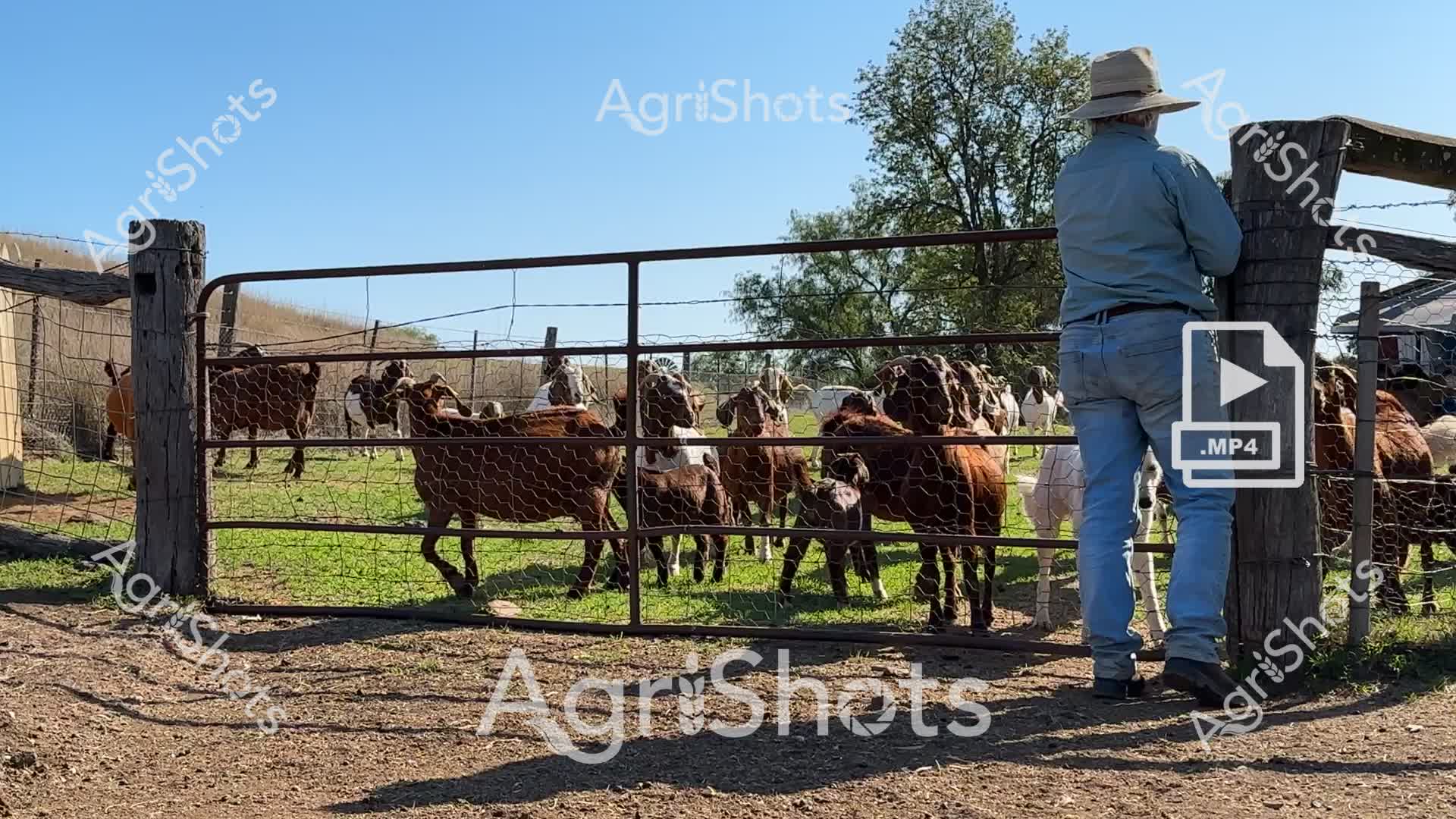
A man in a wide-brimmed hat and blue work attire stands observing a herd of boer goats within a robust metal livestock gate and fence enclosure. The goats, with their distinctive reddish-brown and white markings, cluster together on a green pasture surrounded by wooden fence posts and wire mesh. Located in Queensland's Darling Downs region, the scene captures a typical summer day with clear blue skies and bright sunlight casting sharp shadows across the dusty ground. The goats appear healthy and well-maintained, representing a carefully managed stud breeding operation. The farmer's back is turned, suggesting a calm, contemplative moment of livestock inspection, with the gate framing the pastoral scene and highlighting the careful containment and management of the herd. The composition emphasizes the structured agricultural environment, with the geometric lines of the fence contrasting against the organic clustering of the goats and the surrounding natural landscape. The image speaks to the precision and care inherent in Australian agricultural practices, particularly in livestock management.
Similar media
 ▶ Video
A seasoned stockman surveys a herd of boer goats in a well-fenced paddock on a Queensland property in the Darling Downs region. Wearing a classic wide-brimmed hat and blue denim work attire, the man stands with his back to the camera, carefully observing the livestock clustered behind the metal gate and chicken wire fence. The goats - a mix of rich brown and white coloration - crowd together on a green pasture, their muscular bodies and distinctive markings typical of the boer breed. Bright midday sunlight casts sharp shadows on the dusty ground, highlighting the pastoral scene's crisp details and the careful management of these valuable meat goats. The metal gate and wooden fence posts provide a classic Australian agricultural framing, emphasizing the structured yet natural environment of modern livestock farming. The scene captures the quintessential moments of livestock management - a quiet inspection that speaks to the careful husbandry of Australian agricultural practice. The boer goats, prized for their meat production, stand as a testament to the region's agricultural diversity and the skill of those who raise them.
 Image
Image
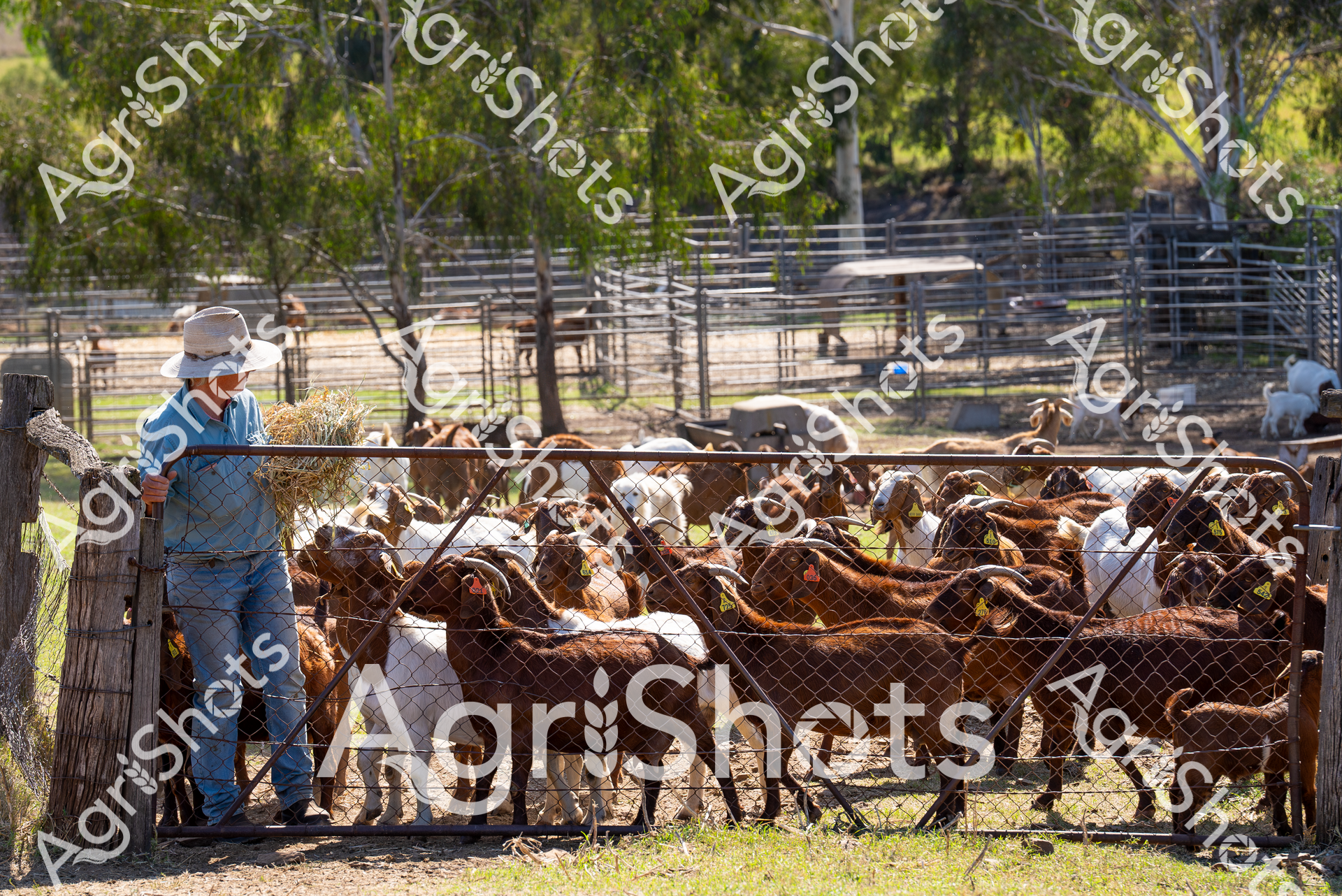
A seasoned goat farmer surveys her Boer goat herd within a meticulously organized paddock in Queensland's fertile Darling Downs region. Dressed in a classic wide-brimmed agricultural hat and sturdy blue work attire, she stands beside a chain-link fence, carefully inspecting a diverse mob of white and rich russet-brown goats. The summer sunlight casts warm highlights across the landscape, illuminating the lush green trees and dry ground of the enclosed livestock yards. Dozens of goats cluster together, their distinctive markings and muscular frames testament to a carefully managed stud breeding program. Yellow ear tags punctuate their coats, indicating systematic livestock management and breeding tracking. The scene captures the essence of contemporary Australian agricultural practice - a blend of traditional farming skill, careful animal husbandry, and professional livestock management, with a subtle celebration of women's critical role in agricultural production.
 Image
Image
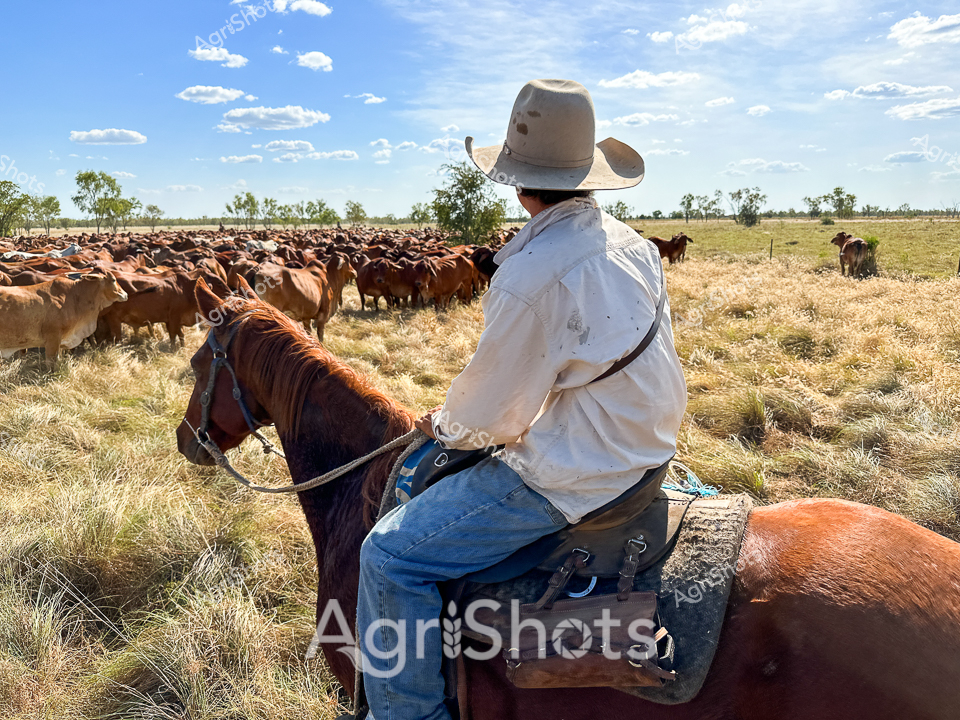
Beneath an expansive Kimberley sky studded with cotton-wool clouds, a stockman guides his chestnut horse through a sweeping grassland paddock, surrounded by a dense herd of rust-colored Brahman cattle. Wearing the quintessential attire of outback cattle work - a crisp white long-sleeved shirt, well-worn blue jeans, and a wide-brimmed akubra hat - the stockman sits atop his mount, surveying the herd with quiet concentration. The landscape stretches endlessly, a sea of golden spinifex and dry season grasses punctuated by sparse eucalyptus trees, typical of Western Australia's rugged northern terrain. His horse stands steady, trained to move with minimal direction, as hundreds of Brahman cattle - renowned for their heat and insect resistance - cluster together, their distinctive humped shoulders and loose skin reflecting generations of adaptation to harsh tropical conditions. This is the timeless ritual of mustering, an intricate dance of human, horse, and livestock that has defined Australian pastoral life for generations, capturing the raw essence of agricultural work in one of the world's most unforgiving yet beautiful landscapes.
 ▶ Video
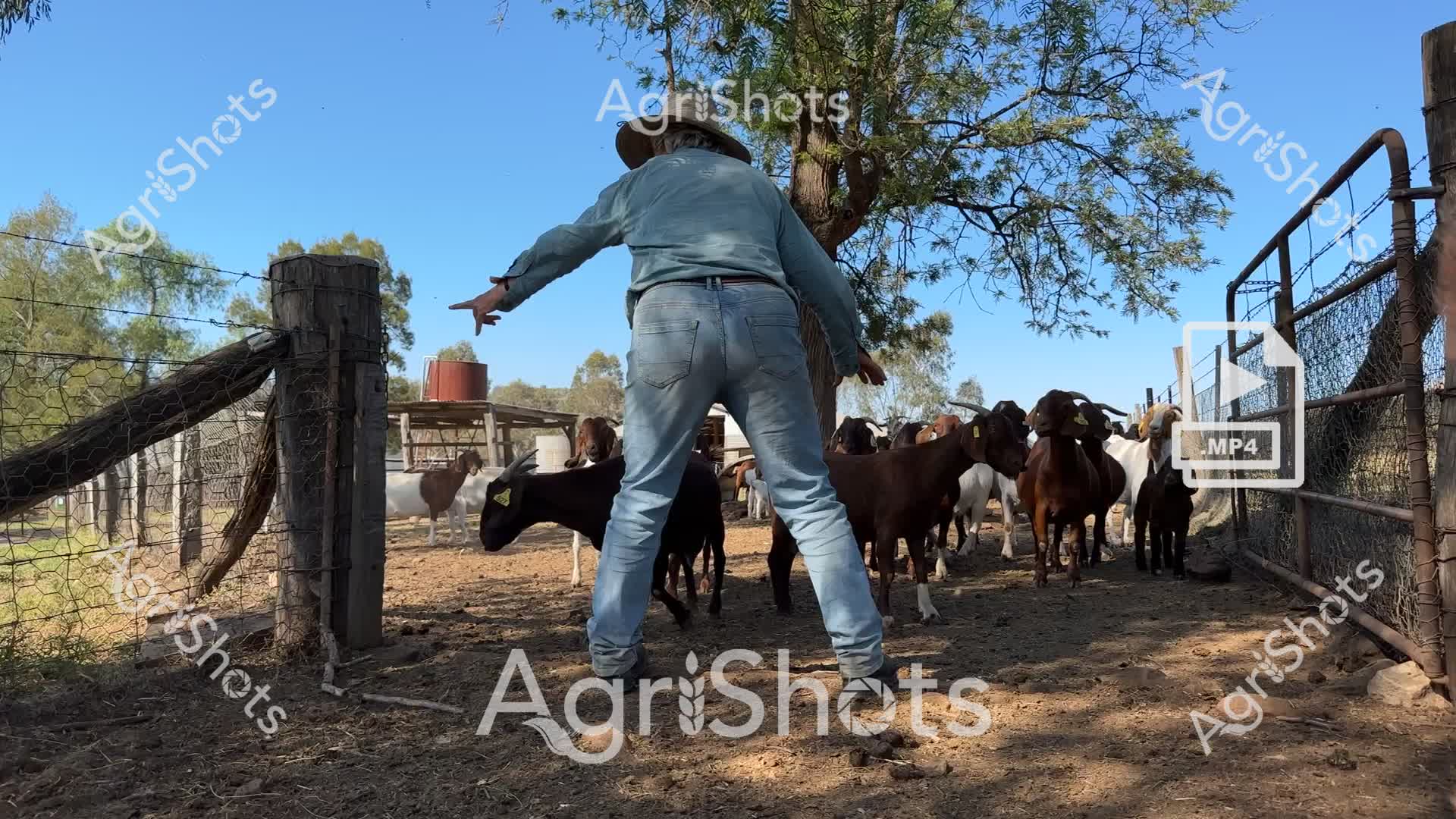
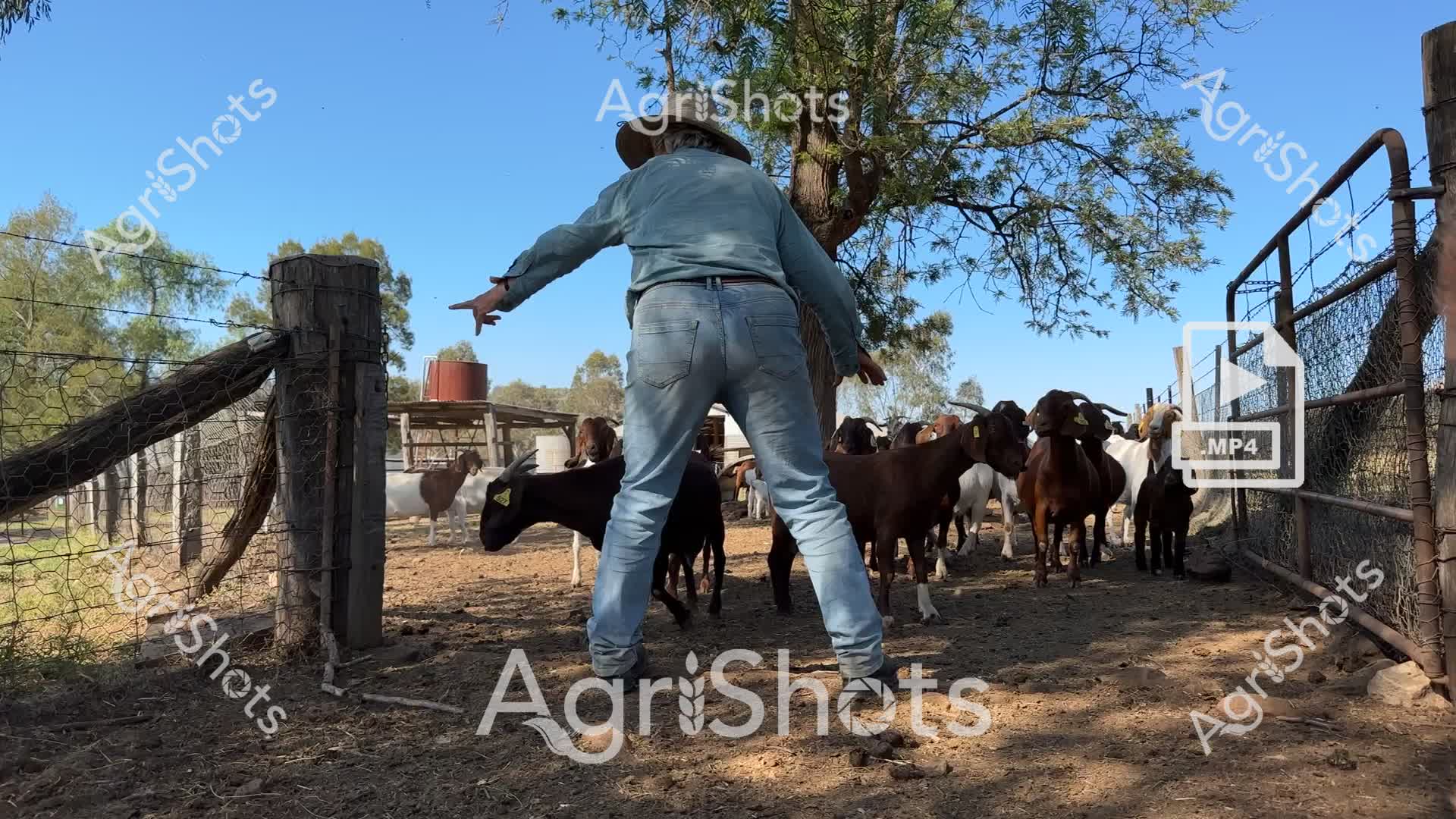
A stockman directs a herd of mixed-breed goats through a rustic livestock yard on a sun-drenched Queensland property. Standing with legs spread and arm outstretched, the individual in blue denim and a wide-brimmed hat guides the diverse group of black, white, and brown goats through a fenced paddock. Wooden fence posts and wire mesh define the boundaries of the yard, with a tree providing sparse shade against the brilliant blue sky. The dusty ground and compact goat herd suggest an experienced hand managing a typical scene from the Darling Downs region's livestock operations. Numerous goats cluster together, displaying a range of coat colors typical of a mixed stud herd, highlighting the diversity of agricultural breeding practices in rural Queensland. The scene captures the essence of Australian pastoral management, where careful stock handling and keen observation are critical to maintaining healthy livestock herds in challenging rural environments.
 ▶ Video
A man in blue denim and a light blue work shirt stands with his back to the camera, directing a herd of mixed-breed goats in a fenced paddock. His outstretched arm guides the livestock through a narrow gate, surrounded by wire fencing and a sparse tree providing minimal shade. The goats - a mix of black, white, and brown animals - cluster together on dry, dusty ground, suggesting this is a livestock management scene in a typical Australian rural setting. The bright blue sky and sunlight indicate a clear, warm day, likely during summer in a region like Queensland's Darling Downs. Wooden fence posts and wire mesh define the boundaries of the goat enclosure, with a rustic water tank visible in the background. The scene captures the everyday work of a livestock handler, demonstrating the careful management required in Australian agricultural practices. The composition highlights the interaction between the worker and the animals, showcasing the skill and patience needed to move and control a goat herd. The dry ground and sparse vegetation suggest this might be during a period of limited rainfall, a common challenge in Australian farming environments.
 Image
Image
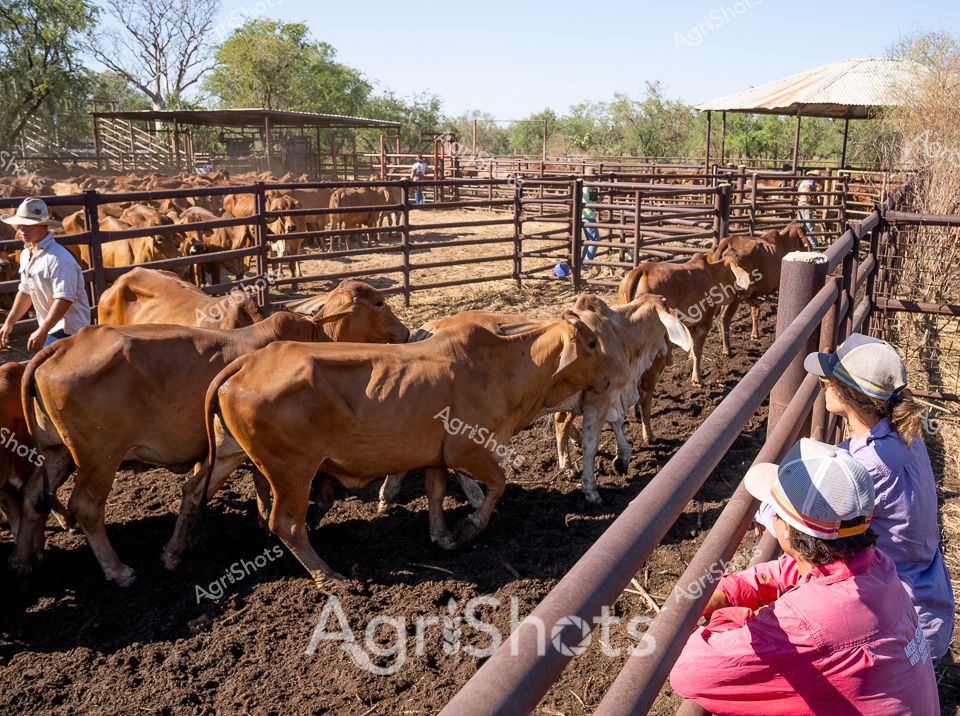
Burnished copper Brahman cattle crowd the dusty yards of a remote Kimberley station, their distinctive humped shoulders and loose skin highlighting their adaptability to harsh Australian pastoral landscapes. A pair of stockworkers in wide-brimmed hats and practical workwear - one in crisp white, another in soft purple and pink - observe the herd's movement through the metal cattle yards, their posture relaxed yet attentive. Dry season sunlight casts long shadows across the compacted earth, revealing the rustic corrugated iron shelters and sparse eucalyptus trees that frame this quintessential West Australian cattle processing scene. The animals' rich reddish-brown coats contrast against the weathered steel railings, embodying the resilience of both livestock and human workers in this unforgiving agricultural environment. Carefully positioned gates and experienced handlers signal the methodical process of drafting and managing the herd, a critical moment in the station's seasonal cattle management cycle. This image captures the quiet expertise and enduring spirit of Australian pastoral life, where generations of knowledge flow as naturally as the cattle through these well-worn yards.
 Image
Image
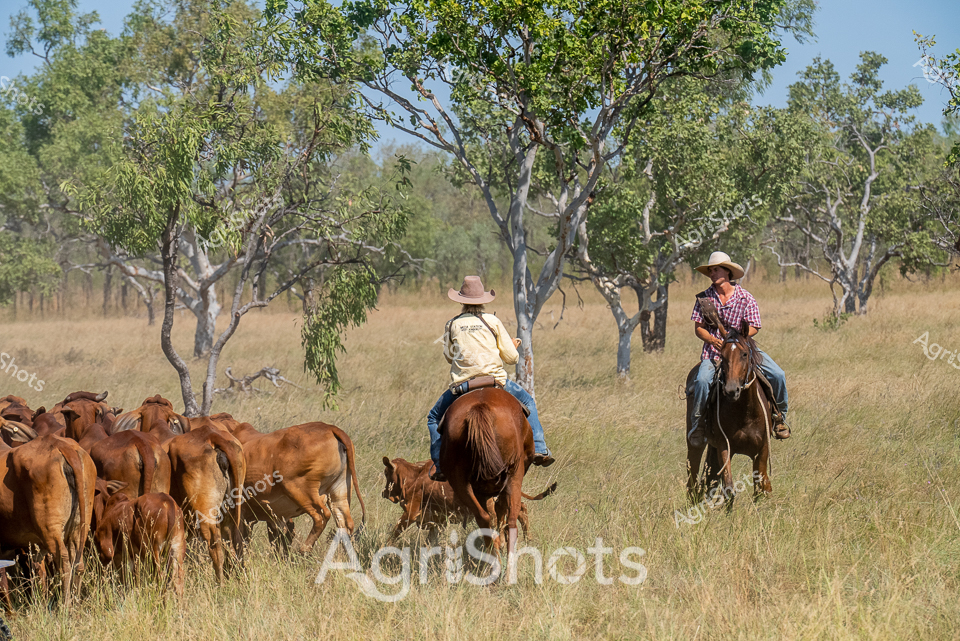
Northern Australian cattle mustering unfolds across a sun-drenched grassland studded with ghostly eucalyptus trees. Two stockmen on horseback guide a herd of rich copper-red Brahman cattle through the sparse woodland of Western Australia's rugged Kimberley region. The lead rider, dressed in a cream-colored shirt and wide-brimmed hat, carefully navigates through the dry golden grasses, while his companion in a checked red and white shirt provides support from the right flank. These hardy cattle, with their distinctive humped shoulders and heat-resistant coats, are perfectly adapted to the harsh tropical landscape, moving with a calm determination through the dappled shade of the native bushland. The scene captures the timeless rhythm of pastoral life - a delicate dance of human skill, animal instinct, and untamed wilderness that has defined Australia's agricultural heritage for generations. Sparse, twisted trees and endless horizons frame this quintessential moment of outback cattle management, where horsemanship and livestock knowledge converge in a landscape of raw, elemental beauty.
 ▶ Video
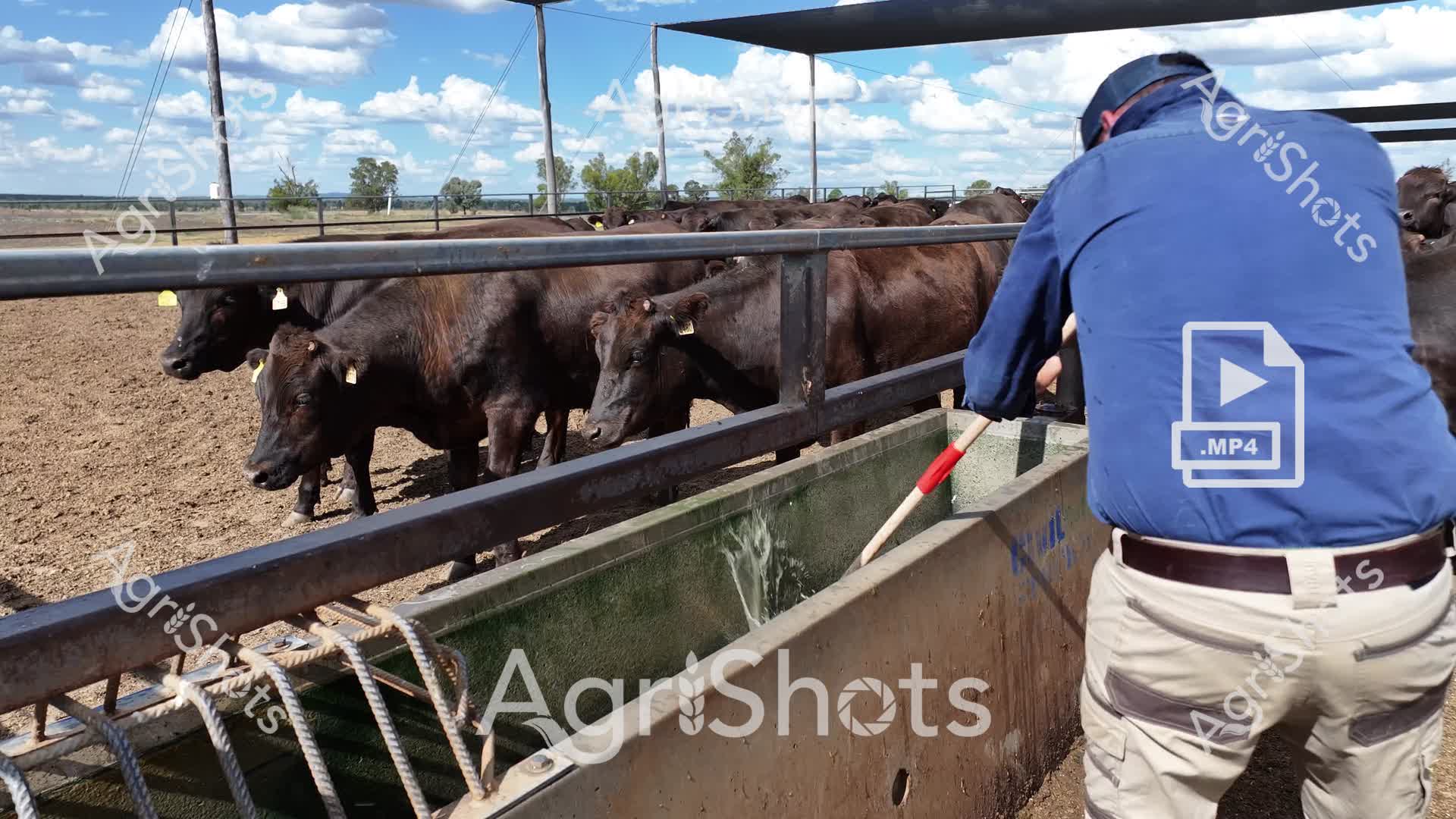
In the expansive cattle yards of rural Queensland, a lone agricultural worker tends to a herd of glossy black Wagyu cattle. The brilliant blue sky stretches overhead, dotted with fluffy white clouds, while the dry earth of the feedlot creates a stark backdrop for the sleek bovines. Dressed in a navy blue uniform, the worker carefully manages a water trough, ensuring the cattle have access to clean, fresh water - a critical aspect of animal husbandry in the harsh Australian agricultural landscape. The cattle, tagged and well-maintained, stand closely together behind sturdy metal railings, their rich dark coats gleaming in the bright midday sunlight. A red implement in the worker's hand suggests ongoing maintenance or care of the feeding infrastructure. This scene captures the meticulous care and professional management that defines modern Australian cattle farming, highlighting the intersection of animal welfare, agricultural technology, and the challenging environmental conditions of Queensland's pastoral regions.