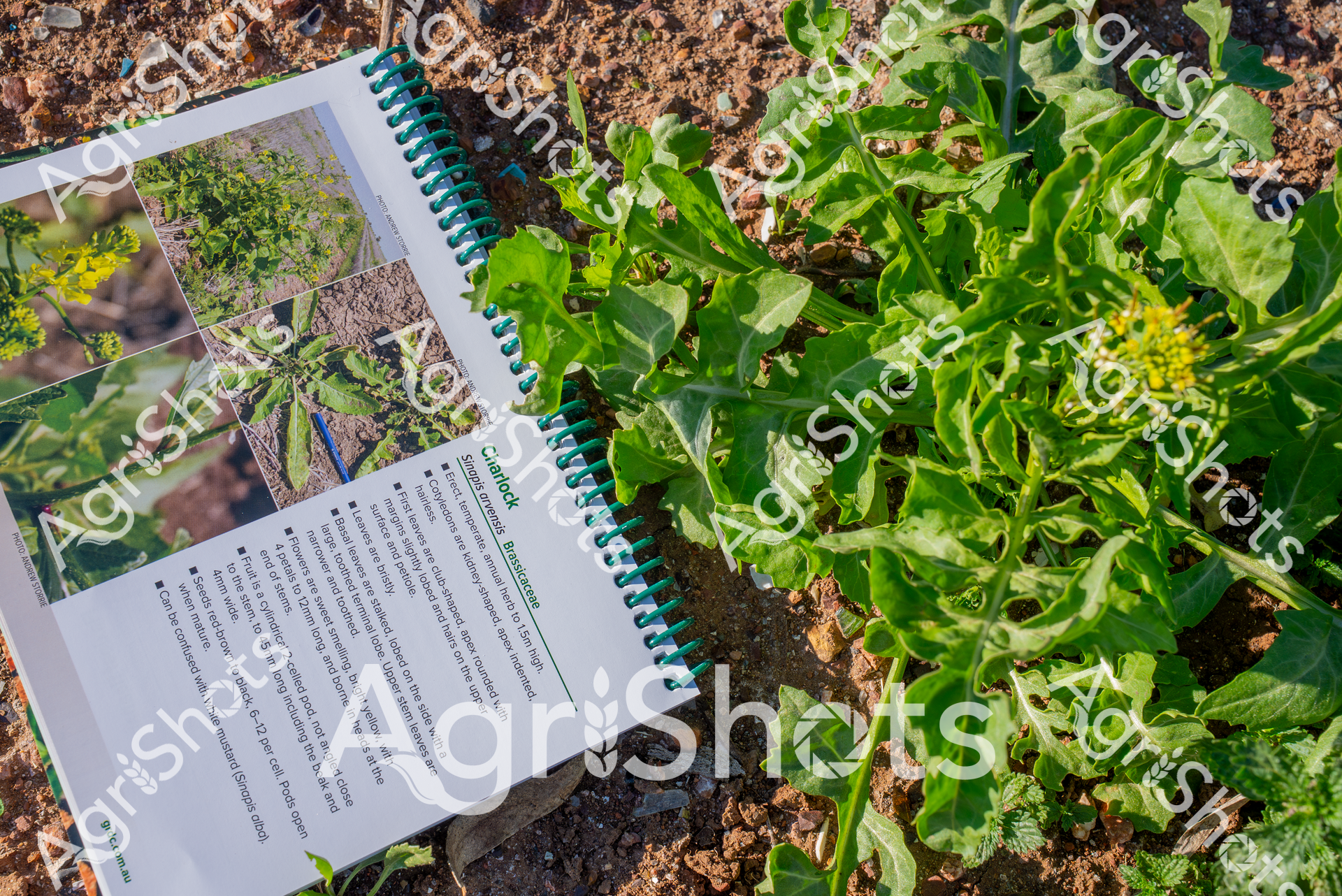
About this image
A detailed close-up of a charlock weed (Sinapis arvensis) growing in rocky soil, alongside an informative identification guide with multiple reference photos. The bright green, deeply lobed leaves and emerging yellow flower clusters are clearly visible, illustrating the plant's distinctive characteristics in the Riverina region of New South Wales.
Similar media
 Image
Image
Red sorrel (Rumex acetosella), a slender perennial herb, grows in a clustered pattern across nutrient-poor, acidic soils. The plant features distinctive green lance-shaped leaves and spreads via rhizomatous root systems, forming dense stands in pastures and disturbed ground. This informative botanical guide showcases the plant's key identifying characteristics, including leaf shape, growth habit, and seed structure.
 Image
Image
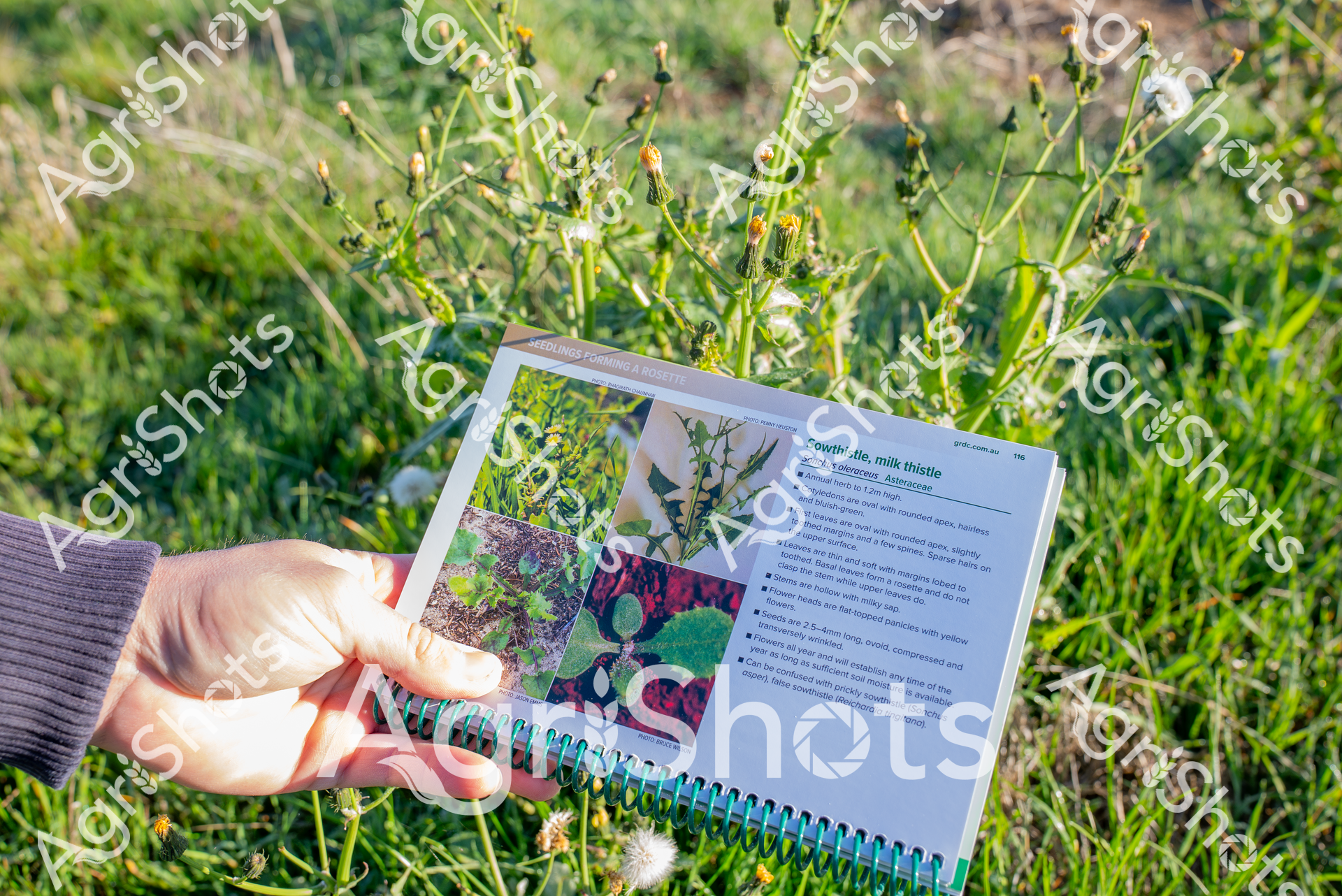
A detailed field guide page about sowthistle is held open against a background of green grass and wild plants. The informative page displays multiple images and descriptions of the milk thistle, providing botanical details and identification characteristics. A hand is visible holding the spiral-bound book, suggesting an educational or research context in the agricultural or botanical field.
 Image
Image
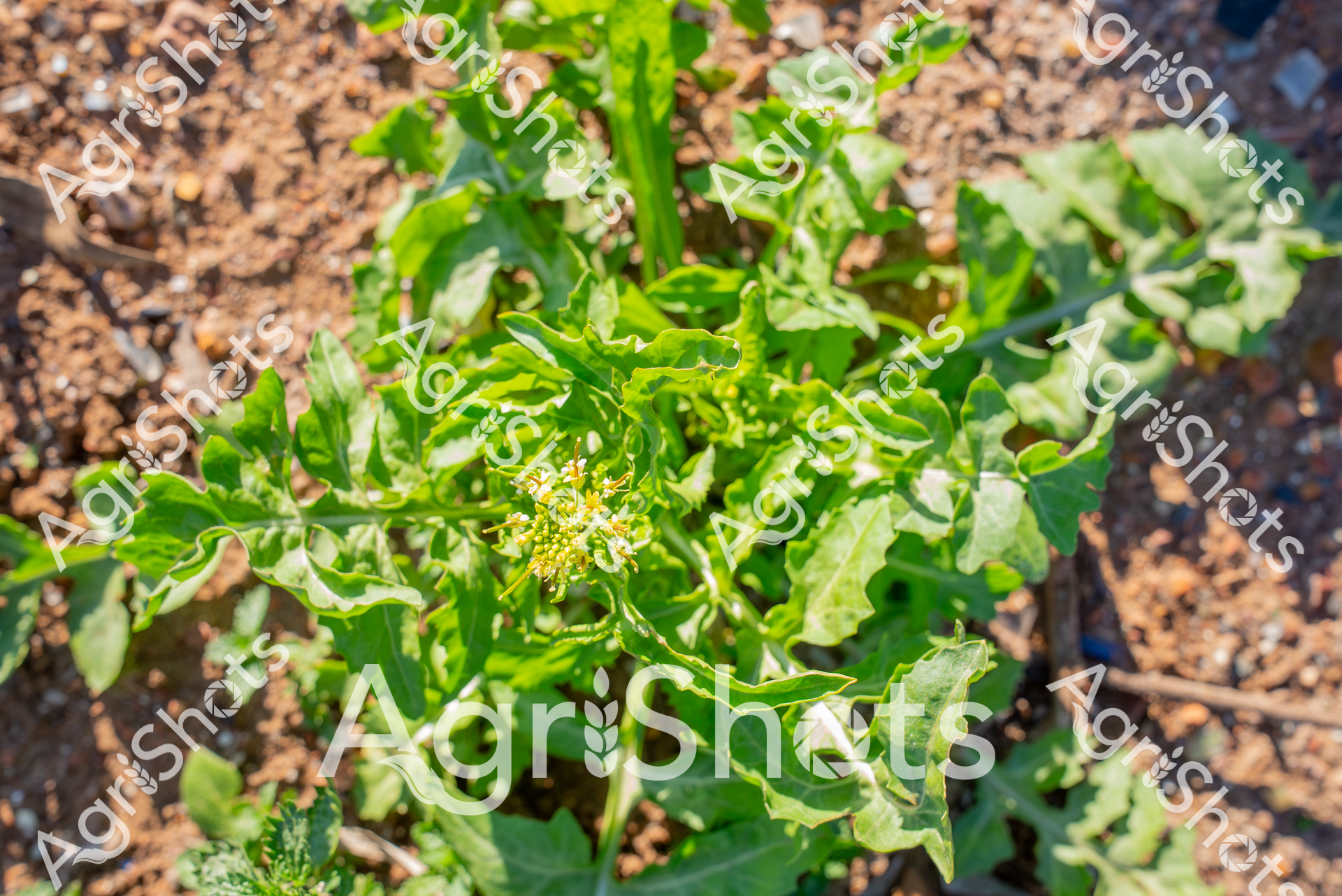
A vibrant green charlock weed grows amid dry, rocky soil in the Riverina region of New South Wales. The plant displays characteristic jagged leaves and a small cluster of delicate yellow-white flowers at its center, typical of this invasive agricultural species. The image captures the hardy nature of this weed thriving in challenging environmental conditions.
 Image
Image
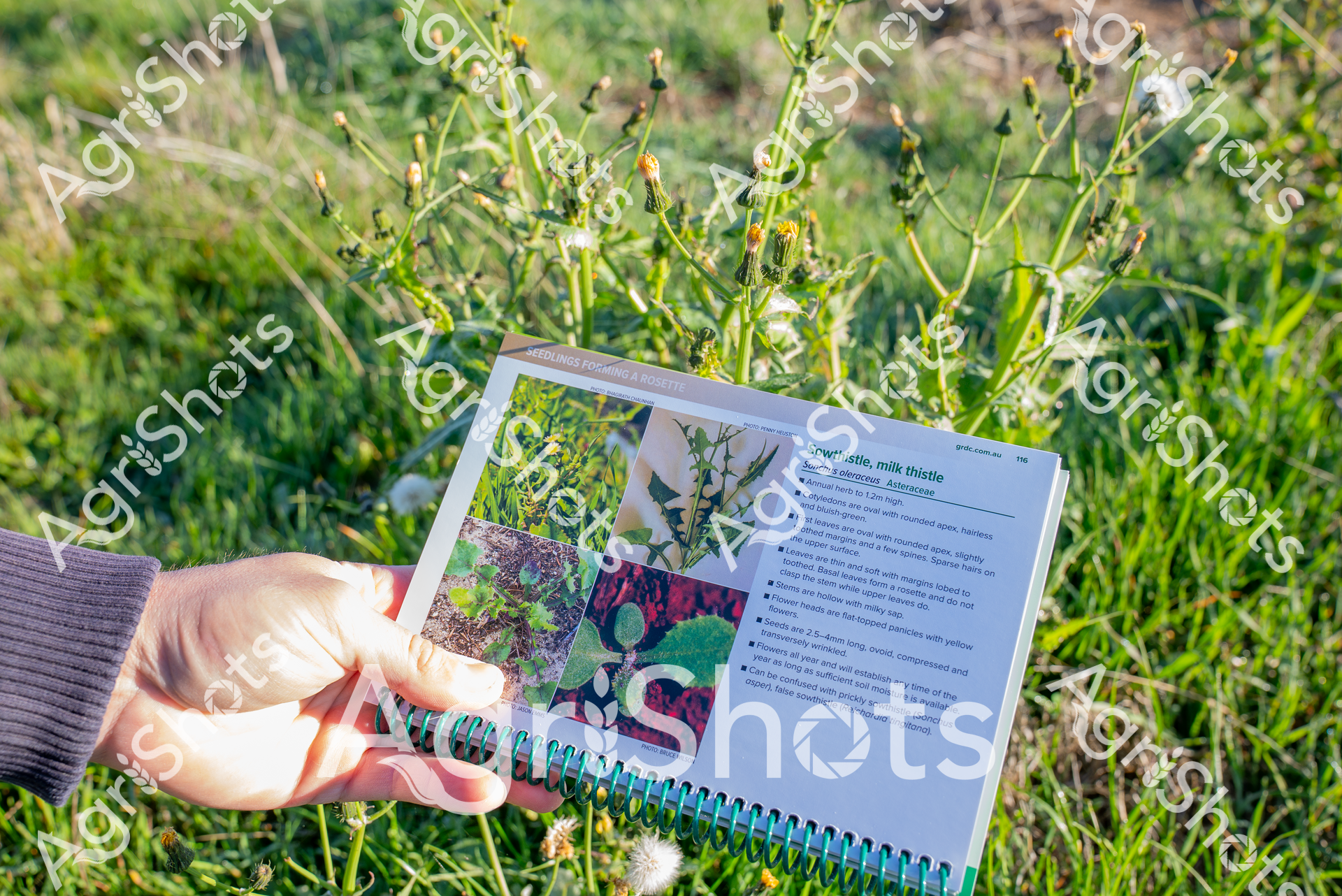
A hand holds an open informational book about sowthistle, with wild grassy vegetation in the background. The page details characteristics of the milk thistle plant, set against a natural green landscape. The image appears to be from an agricultural or botanical field guide, likely focusing on weed identification in the New South Wales Riverina region.
 Image
Image
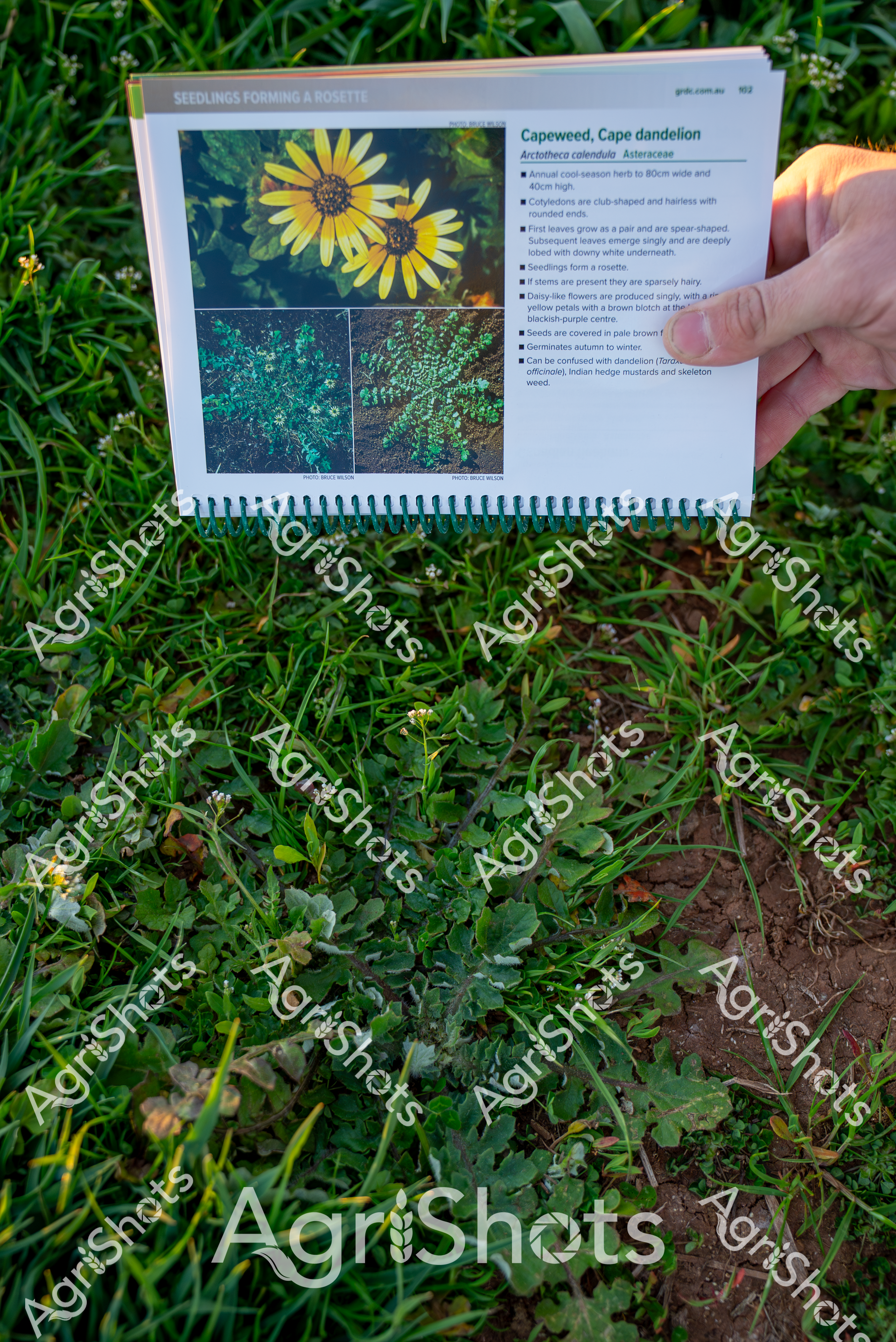
This image showcases a detailed botanical identification guide for Capeweed (Cape dandelion) featuring vibrant yellow flowers and seedling growth stages. The informational card is placed on a grassy background, highlighting the weed's characteristics and growth patterns in what appears to be a field or agricultural setting in the Riverina Region of New South Wales.
 Image
Image
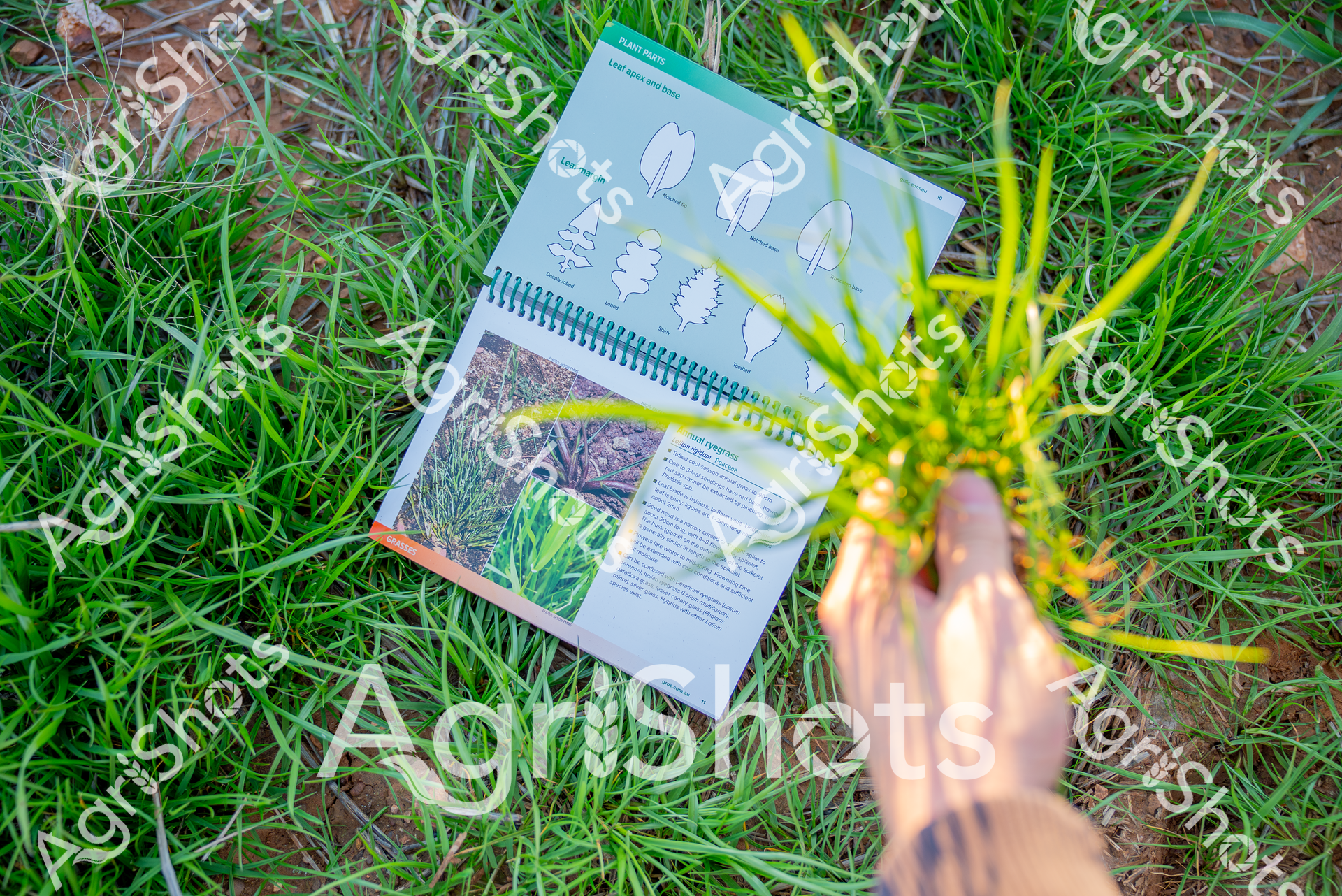
A botanical guide to leaf shapes and plant identification lies open on lush green grass, with a glimpse of a plant being held in the foreground. The book appears to be a resource for agricultural research, potentially focused on ryegrass and weed identification in the Riverina region of New South Wales.
 Image
Image
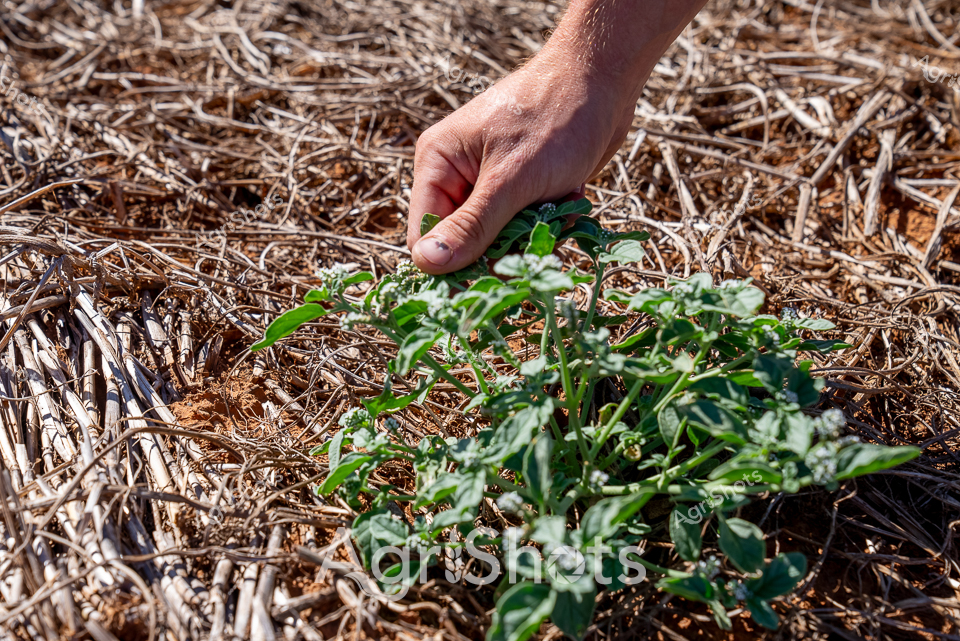
Summer's harsh embrace descends on the Riverina's cropping landscape, where a weathered hand gently investigates a cluster of resilient green weeds emerging through golden stubble. Dry wheat stalks blanket the ground in a intricate mat of weathered browns and tans, testament to the recent harvest and the unforgiving Australian agricultural cycle. The vibrant green plant stands in stark contrast - a defiant splash of life amidst the parched, post-harvest terrain, symbolizing nature's persistent regenerative power. A single, sun-tanned finger probes the weed's foliage, likely assessing its potential threat to future crop potential or soil health. This intimate moment captures the meticulous care and constant vigilance required of farmers managing their land through challenging seasonal conditions. The image epitomizes the nuanced relationship between human intervention and natural growth in the broad-acre farming systems of New South Wales, where every plant and every touch carries economic and ecological significance.
 Image
Image
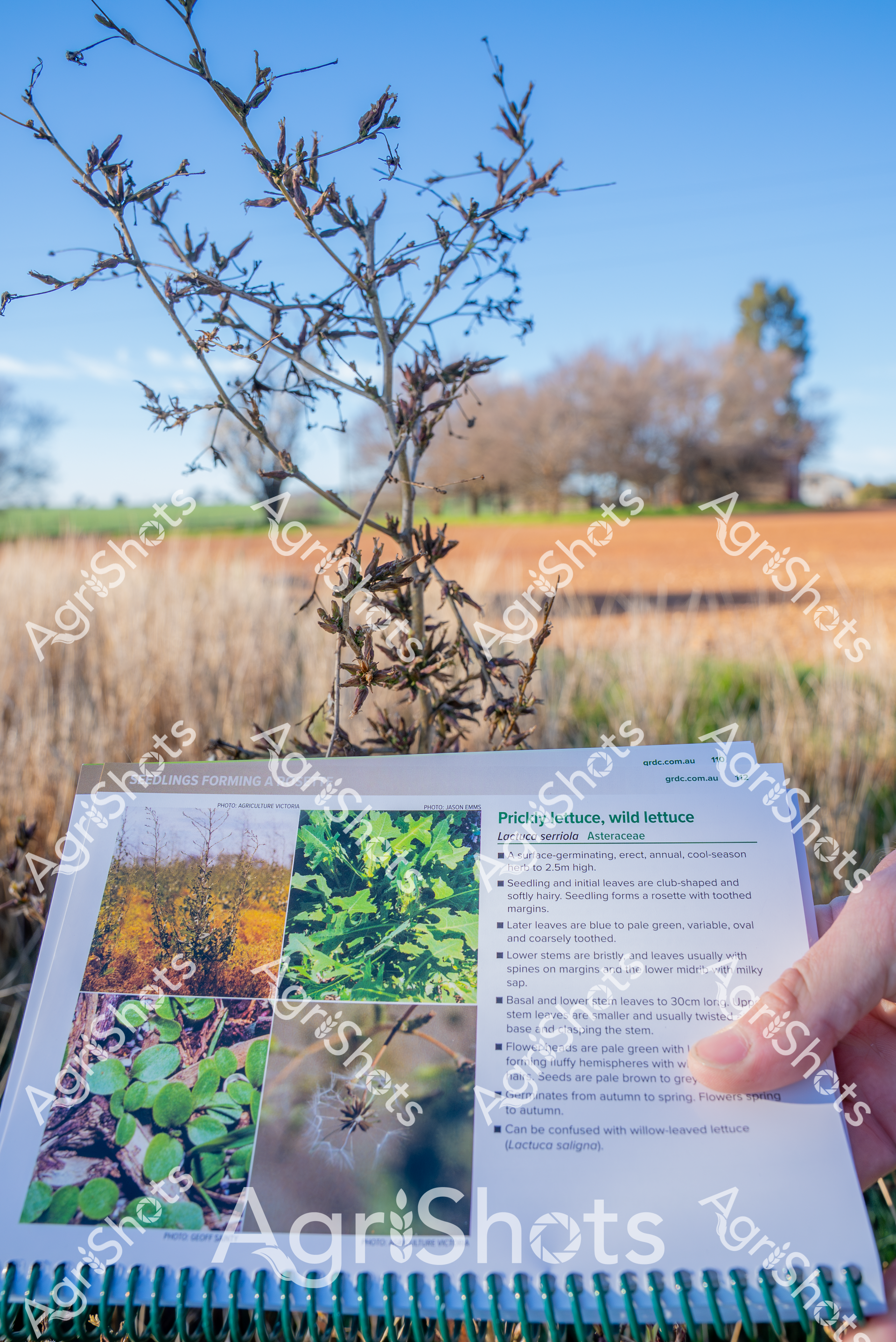
A detailed guide to prickly lettuce (Lactuca serriola) displayed in an agricultural field setting, featuring a close-up of the plant's sparse, spiny branches against a backdrop of golden grass and blue sky. The informative page shows multiple images of the weed at different growth stages, providing comprehensive identification information for agricultural professionals and researchers.