Results for “research”
 Image
Image
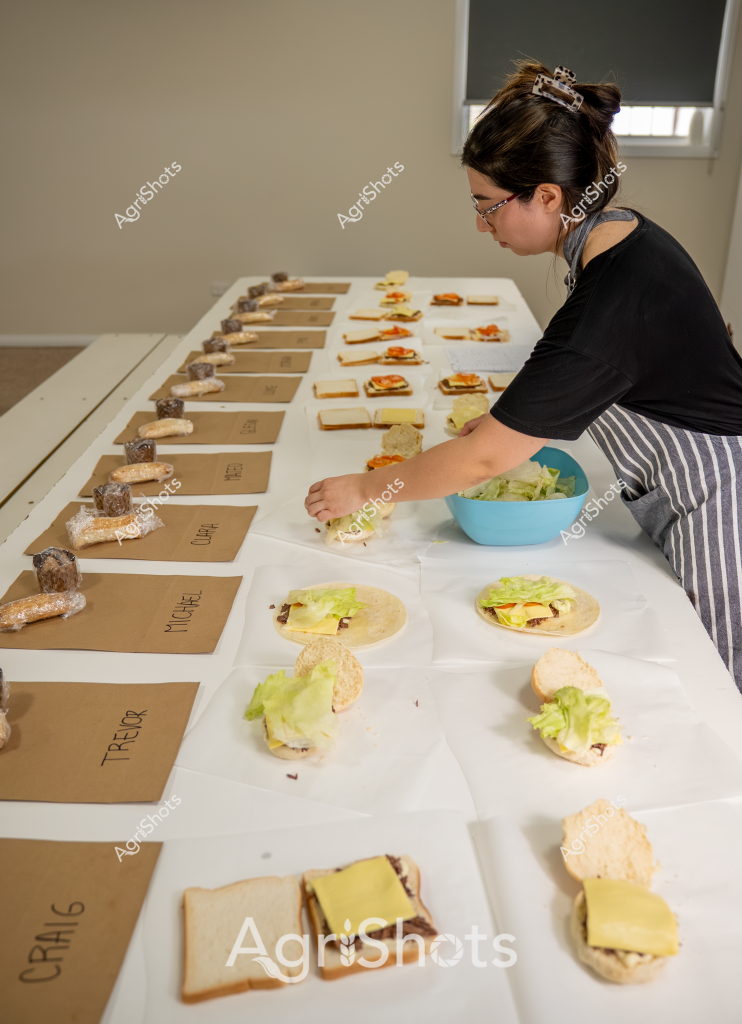
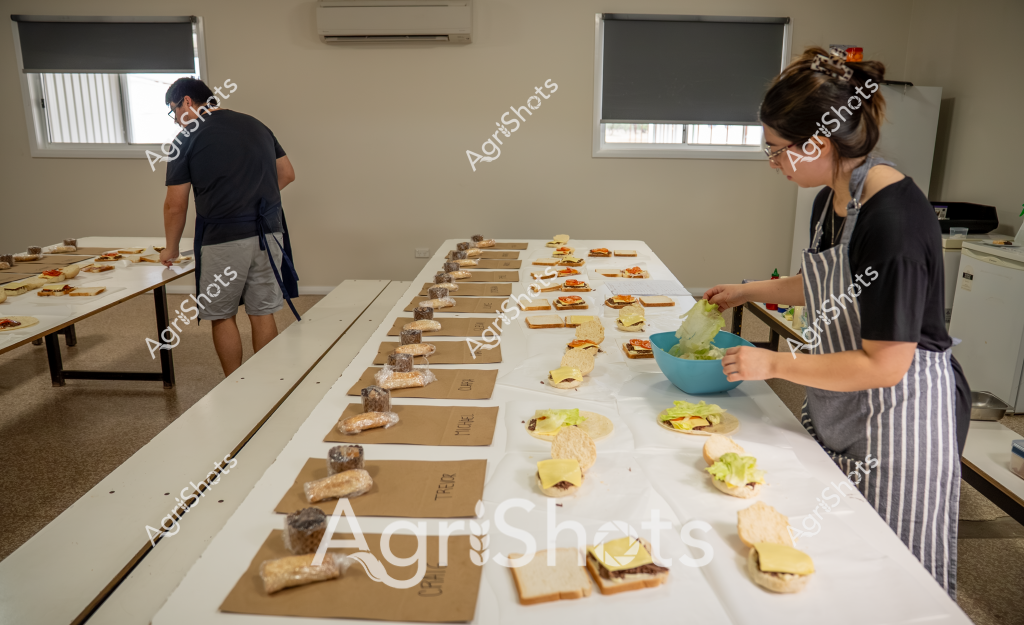
A woman in a black top and striped apron carefully prepares a series of sandwich samples in what appears to be a food testing or recipe development kitchen. Multiple brown paper labels are laid out, suggesting a systematic tasting or evaluation process. Sandwiches at various stages of preparation are arranged in neat rows, with fresh lettuce in a blue bowl and cheese slices being added to the components. The white table is covered with a clean cloth, and the setting looks like a professional culinary workspace with precise, methodical food preparation underway. The individual is meticulously arranging and constructing each sandwich, indicating a detailed and structured approach to food testing or recipe development.
 Image
Image
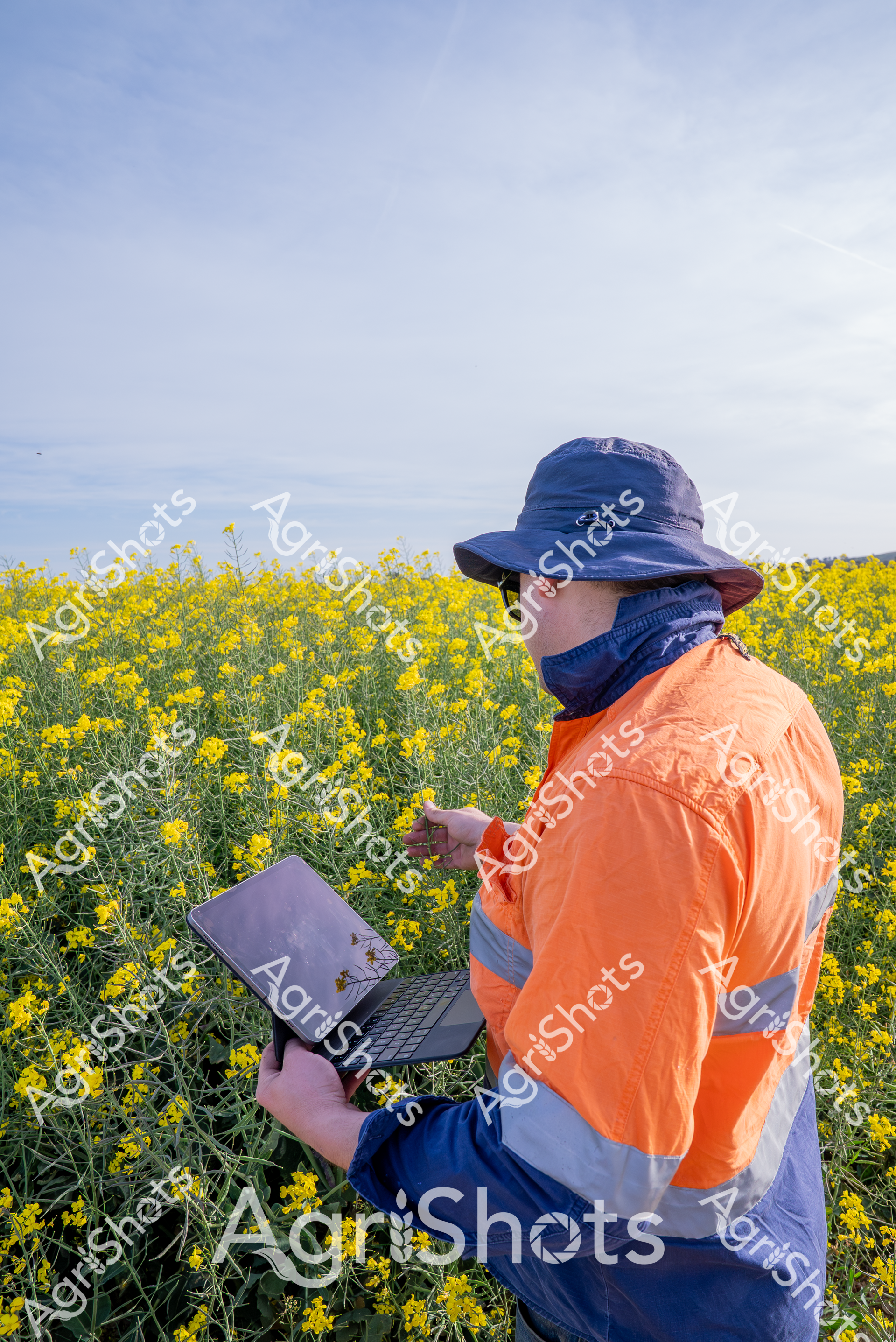
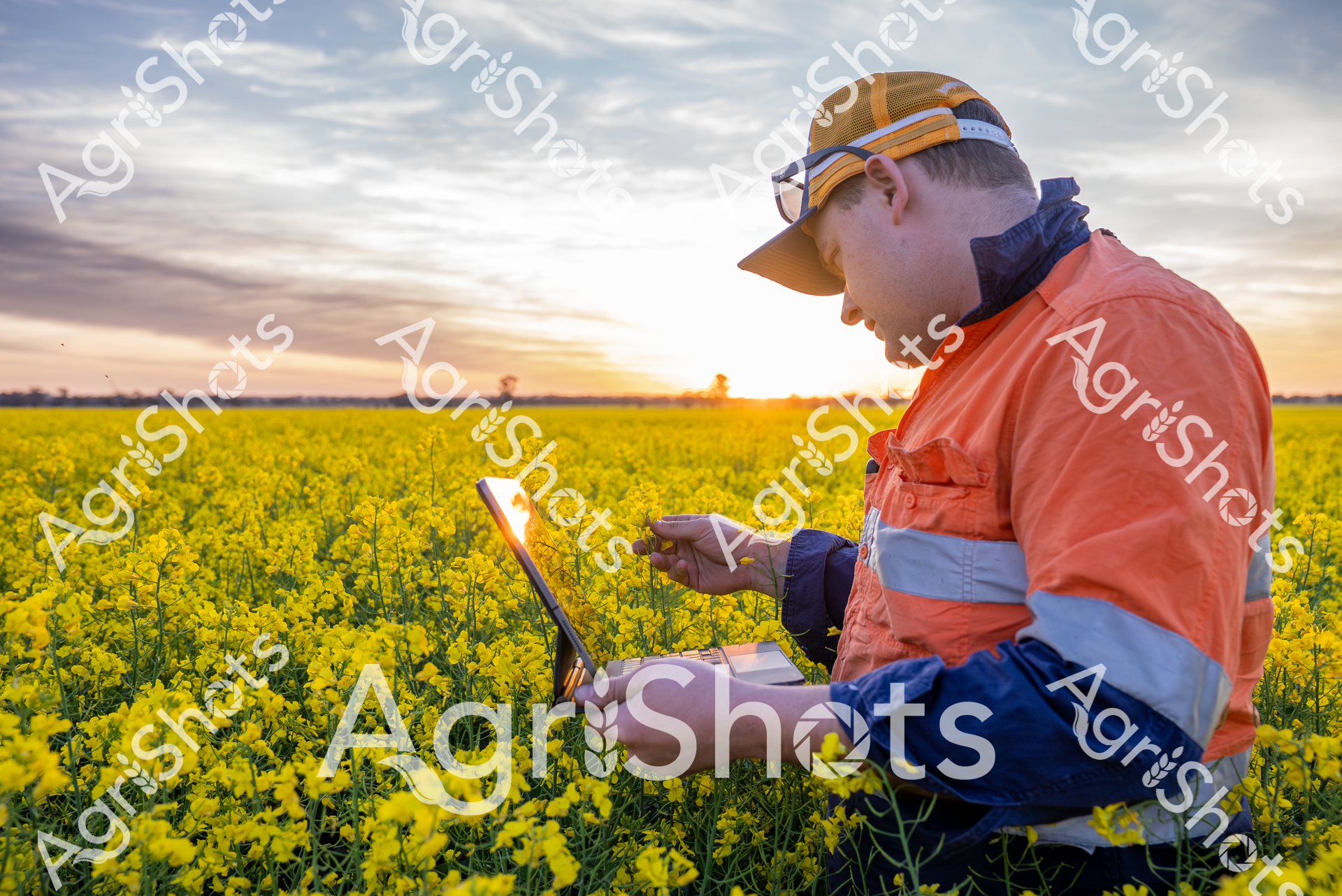
An agricultural worker in a bright orange high-visibility jacket and blue hat inspects a blooming canola field using a tablet computer. Standing amidst vibrant yellow flowers in the Riverina region of New South Wales, the person appears to be conducting a crop assessment during springtime, utilizing modern technology for agricultural research and monitoring.
 Image
Image
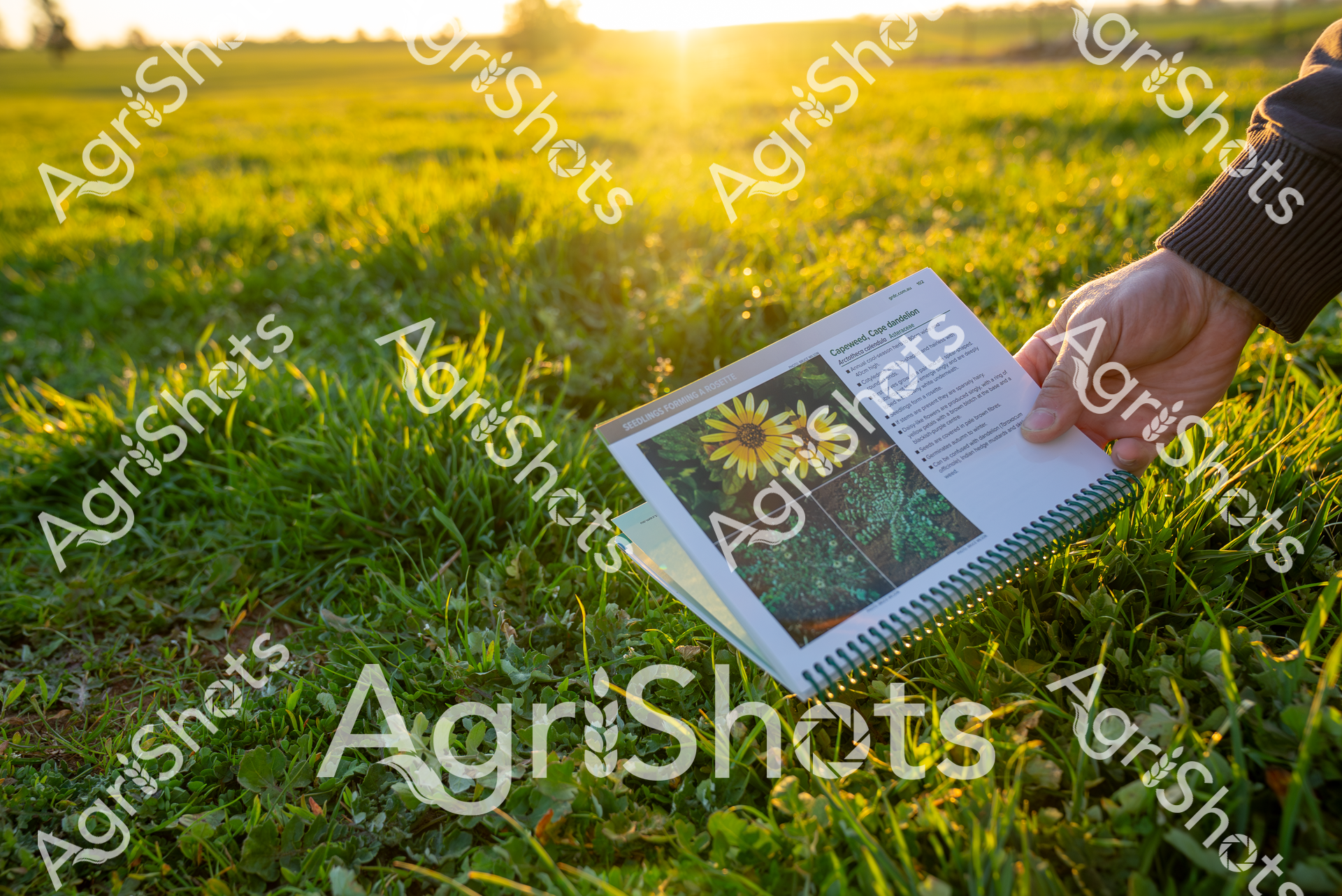
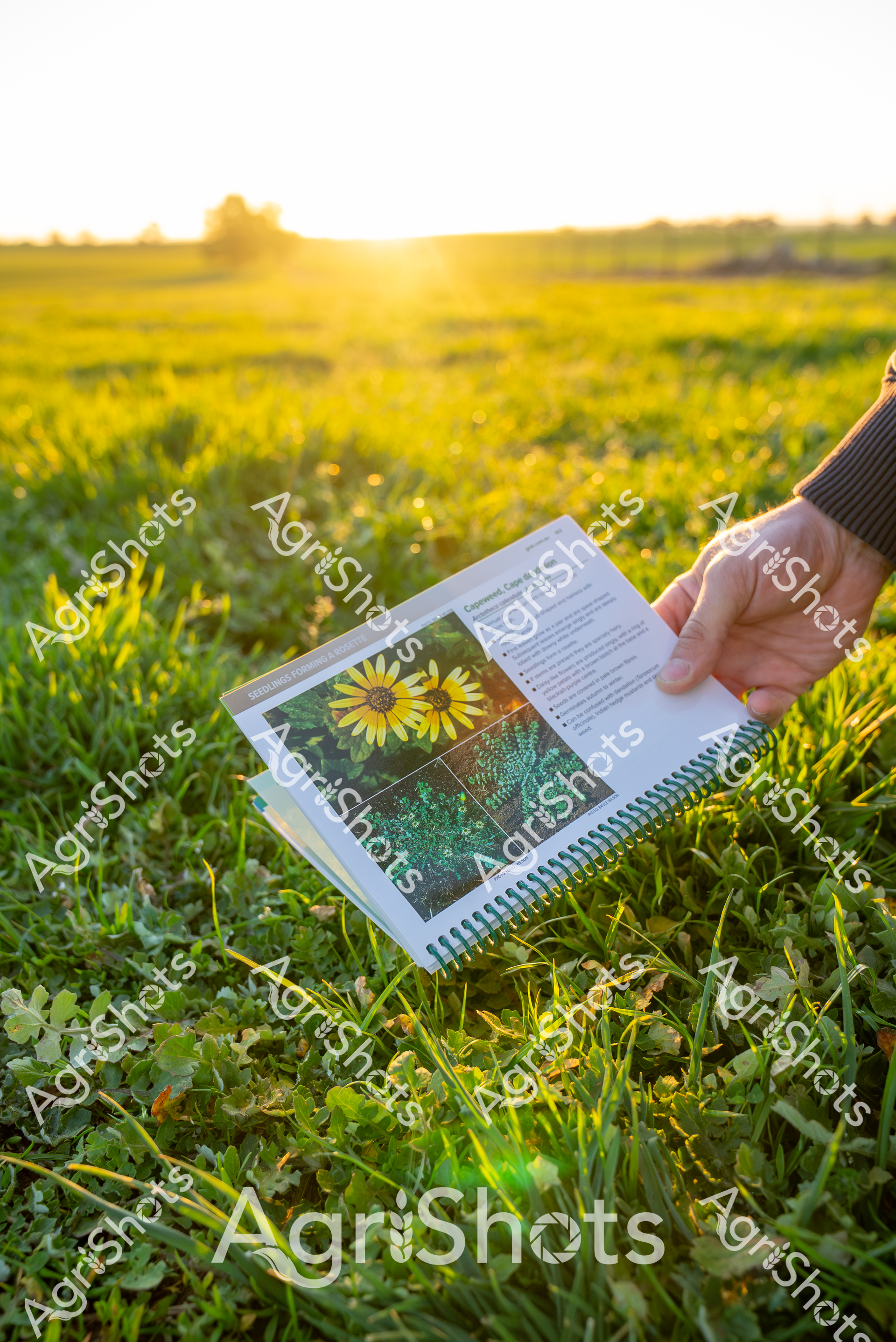
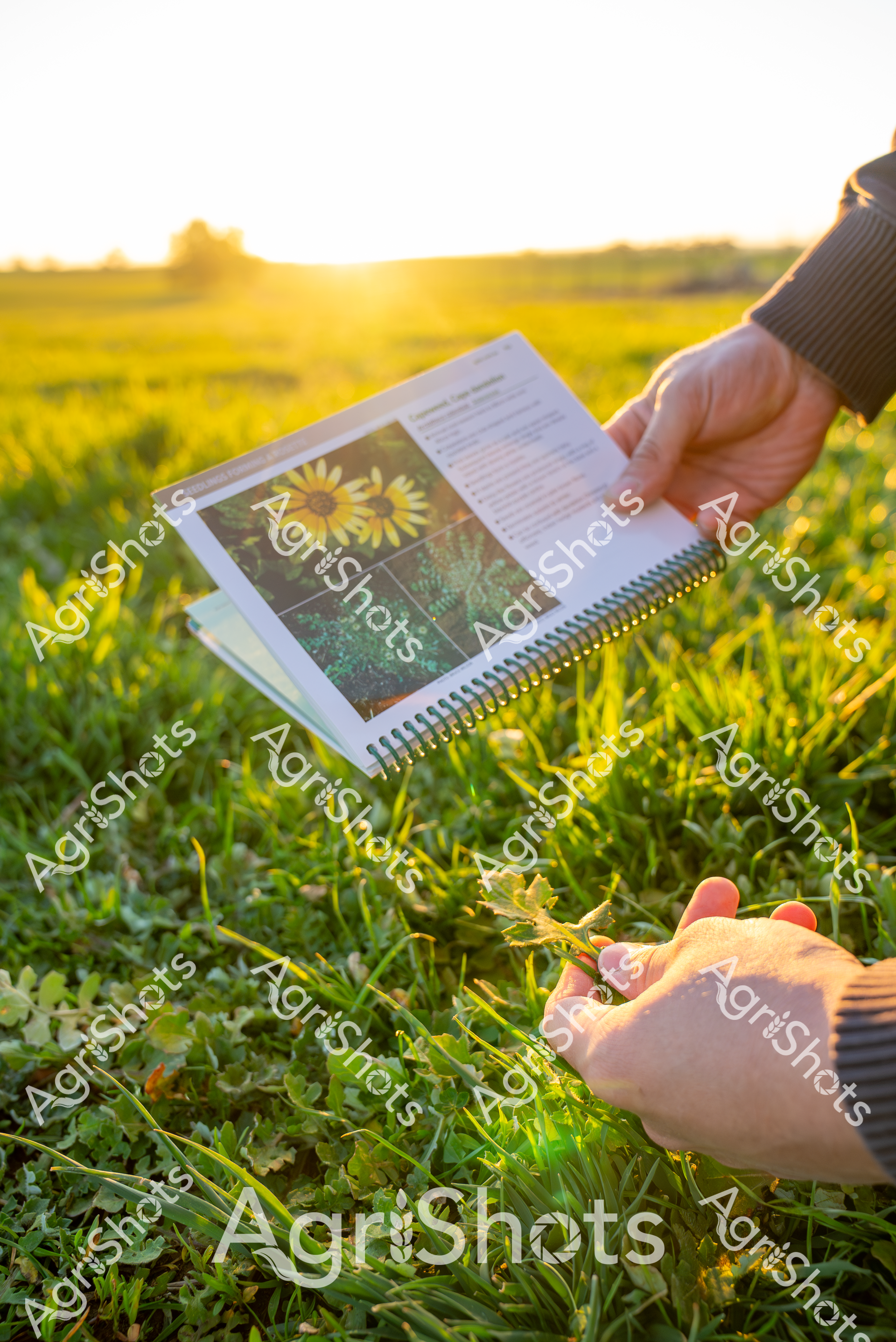
A hand holds an open guidebook featuring images of plants, set against a lush green field bathed in golden sunlight. The book appears to be a weed identification guide, likely focused on regional plant species in New South Wales, specifically the Riverina area. Capeweed is prominently displayed on the page, suggesting this is a resource for agricultural or botanical research.
 Image
Image
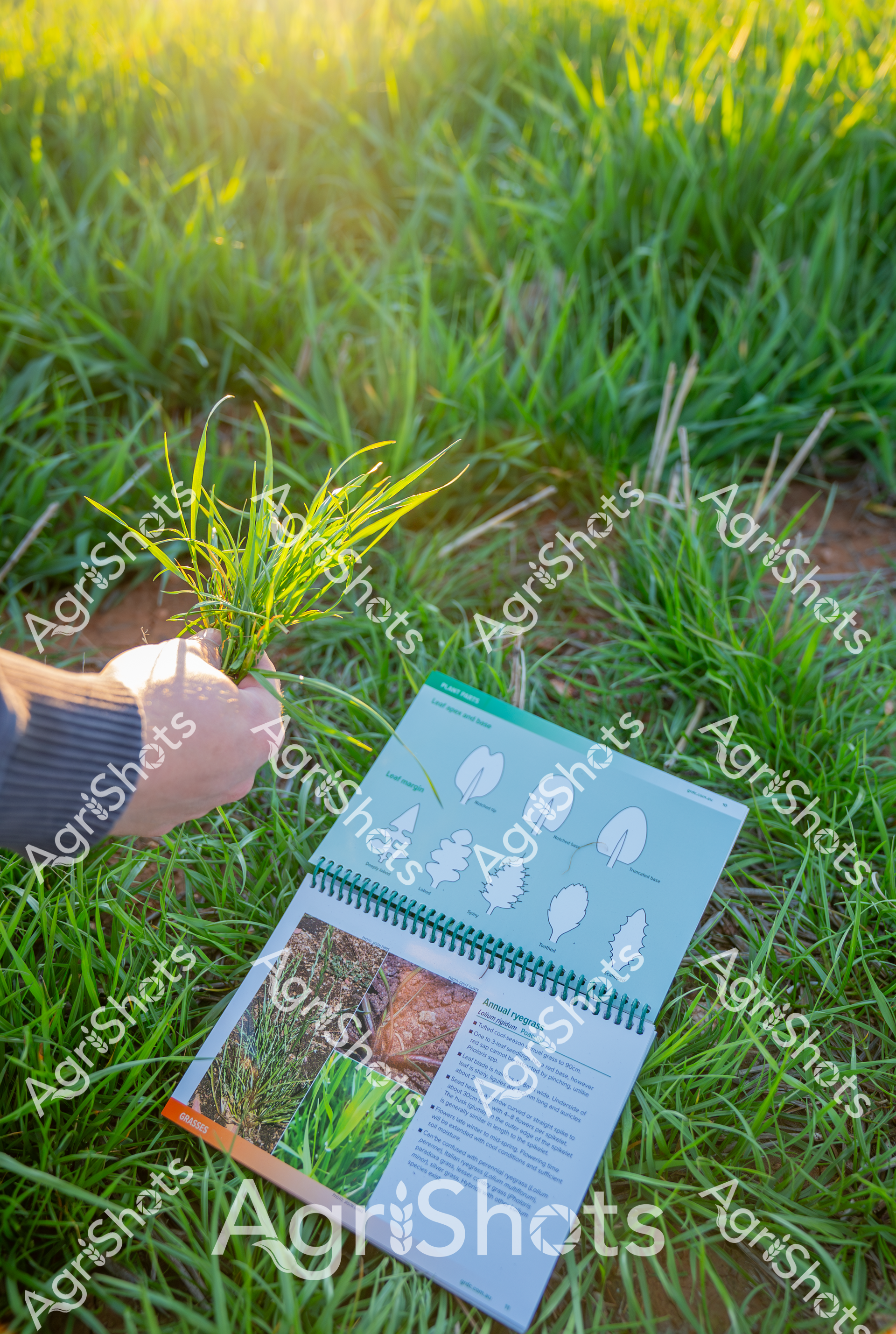
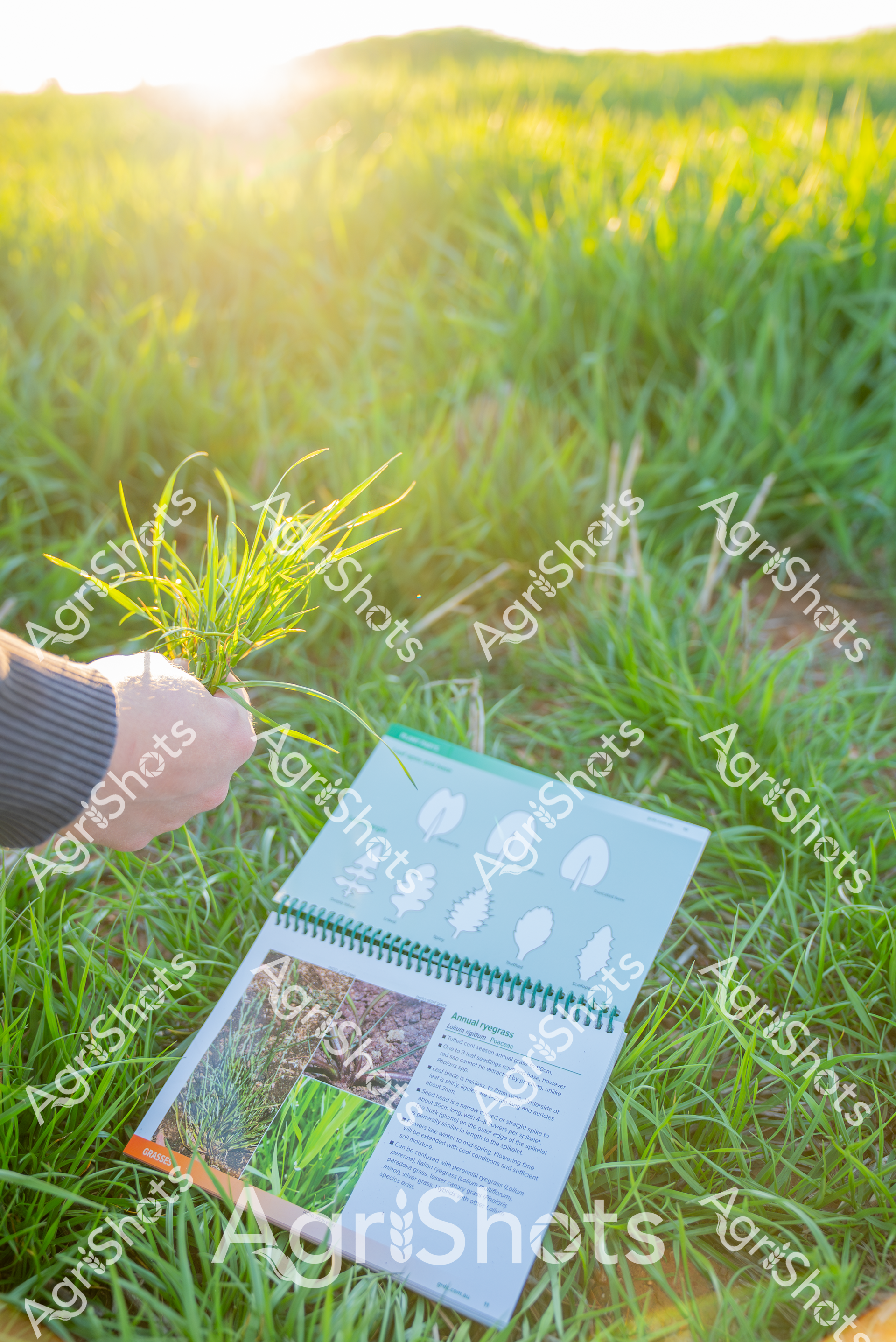
A hand holding a tuft of green ryegrass against a background of lush grass, accompanied by an informative identification guide. The blue-covered book displays leaf silhouettes and appears to be a weed identification resource from the Riverina region of New South Wales, highlighting agricultural research and vegetation management.
 Image
Image
A hand holds a tuft of ryegrass in a lush green field, with a GRDC (Grains Research and Development Corporation) weed identification book open beside it. The image captures the golden sunlight of early morning or late afternoon, highlighting the details of the grass against the backdrop of an agricultural landscape in New South Wales' Riverina region. The scene suggests a careful examination of weed species critical to crop management.
 Image
Image
A hand holds an open guidebook about weeds in a lush green field bathed in golden sunlight. The book displays images of yellow flowers, likely capeweed, against a backdrop of vibrant grasslands in the Riverina region of New South Wales. The scene captures the agricultural landscape and botanical research in a serene, natural setting.
 Image
Image
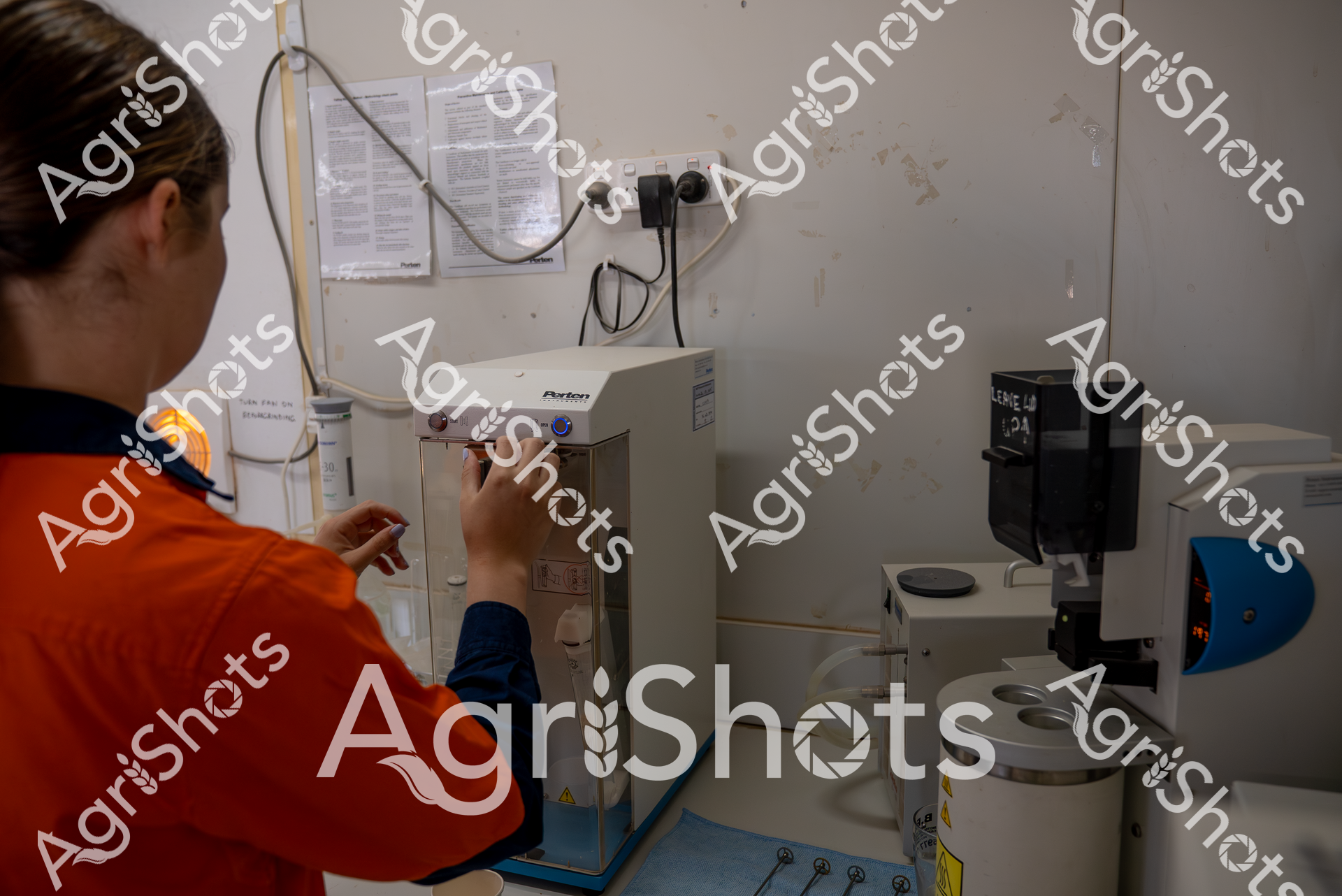
A laboratory technician in a bright orange high-visibility shirt operates a PerTen grain testing device in a modern grain quality assessment facility. The woman adjusts controls on the cream-colored analytical equipment, which sits among an array of specialized laboratory instruments used for evaluating wheat samples. Black equipment modules and additional testing devices fill the workbench, creating a functional workspace dedicated to grain analysis. The setting captures the critical quality control processes that underpin the New South Wales grain industry, particularly in the productive Riverina Region during the summer wheat harvest period. Documentation and testing protocols are posted on the wall above the equipment, ensuring standardized procedures are followed. Power leads snake down from overhead outlets, connecting the sophisticated array of instruments necessary for comprehensive grain sampling and testing. The scene embodies the essential intersection of technology and agriculture, where women in agricultural science play vital roles in maintaining grain quality standards. The laboratory environment, though clinical, represents the culmination of months of farming work—transforming field-grown wheat into precisely graded, market-ready commodities. Natural light from the right illuminates the workspace, highlighting the professional concentration required for accurate grain analysis in this important grain depot facility.
 Image
Image
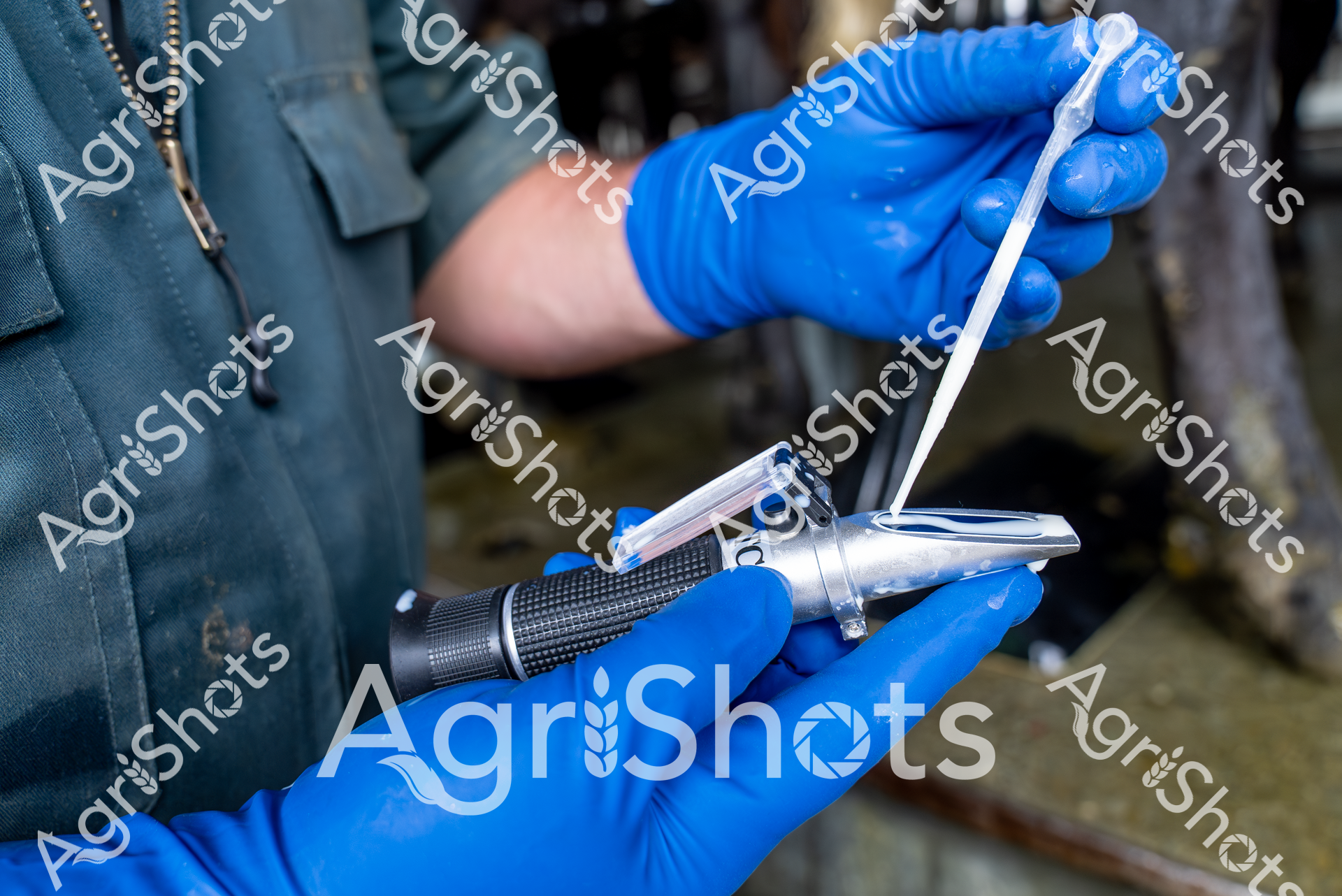
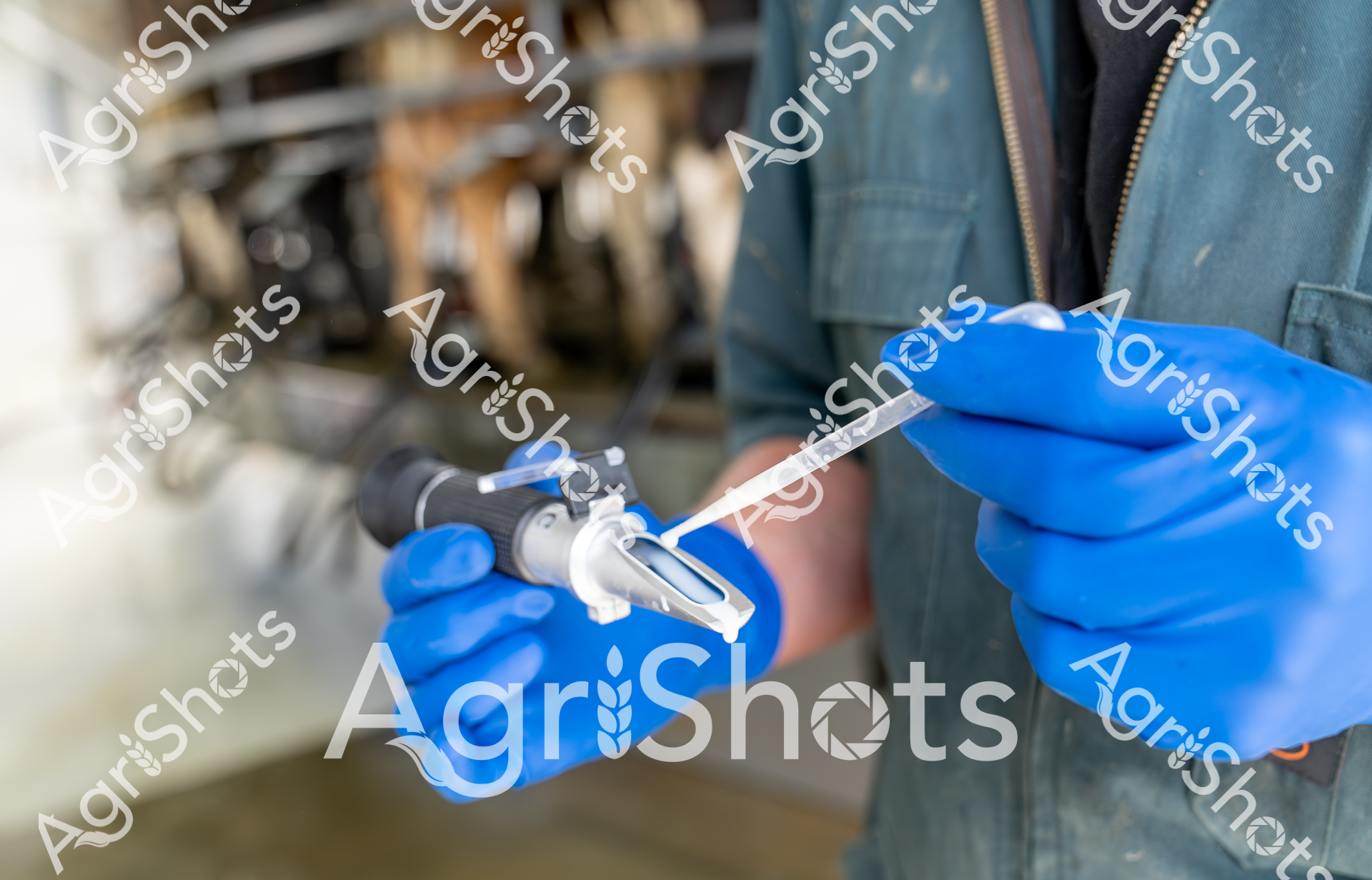
Blue-gloved hands carefully handle a precise agricultural testing instrument in a dairy environment. The stainless steel refractometer gleams under controlled lighting, its calibrated surface reflecting professional scientific methodology. These blue nitrile safety gloves - standard in livestock management and dairy testing - grip the optical instrument with careful precision, suggesting a meticulous approach to milk quality assessment. The close-up perspective emphasizes the technical skill required in modern agricultural testing, highlighting the intersection of scientific measurement and animal husbandry. Subtle textures of the gloves and metallic instrument suggest the rigorous standards of South Canterbury's dairy industry, where technological precision supports agricultural productivity. The scene communicates a moment of professional data collection, critical to maintaining high-quality dairy production standards.
 Image
Image
Precision dairy testing emerges in sharp focus, with blue-gloved hands delicately handling a refractometer within a rotary dairy environment. The technical instrument captures a critical moment of milk quality assessment, likely in the South Canterbury region of New Zealand. Crisp blue latex gloves provide essential biosecurity and hygiene protection, contrasting against the mechanical steel infrastructure of the milking shed. This close-up reveals the meticulous scientific approach of modern agricultural practice, where data and careful sampling underpin livestock management. The refined testing procedure represents the intersection of technological precision and pastoral farming expertise, highlighting the sophisticated monitoring techniques employed in contemporary dairy production. Each careful movement speaks to the rigorous standards maintained in New Zealand's world-renowned dairy industry.
 Image
Image
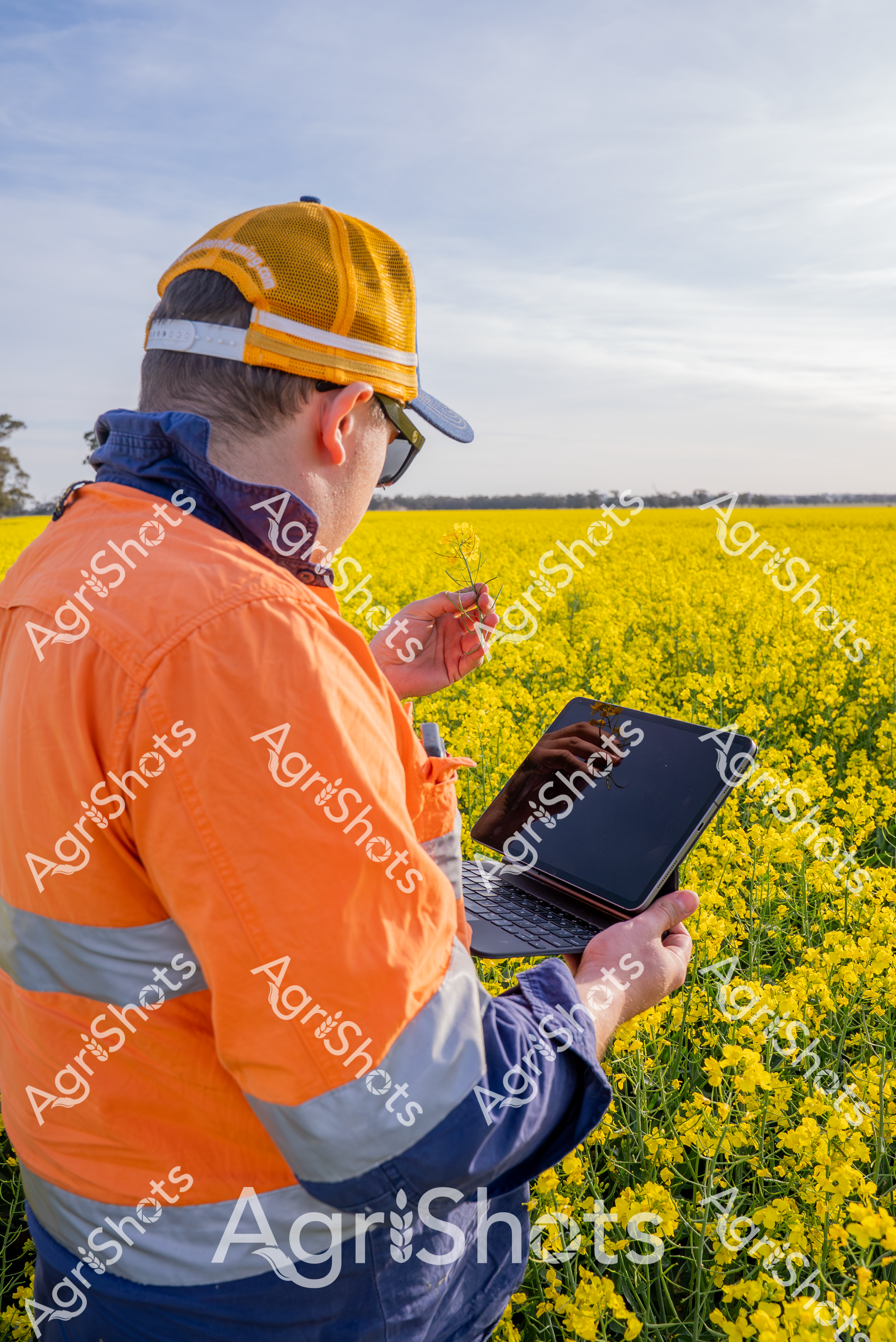
A man in a bright orange high-visibility jacket and yellow cap inspects a canola field in full golden bloom during springtime in the Riverina region of New South Wales. Holding a laptop and examining a plant, he appears to be conducting a crop inspection, demonstrating modern agricultural practices in this vibrant agricultural landscape.
 Image
Image
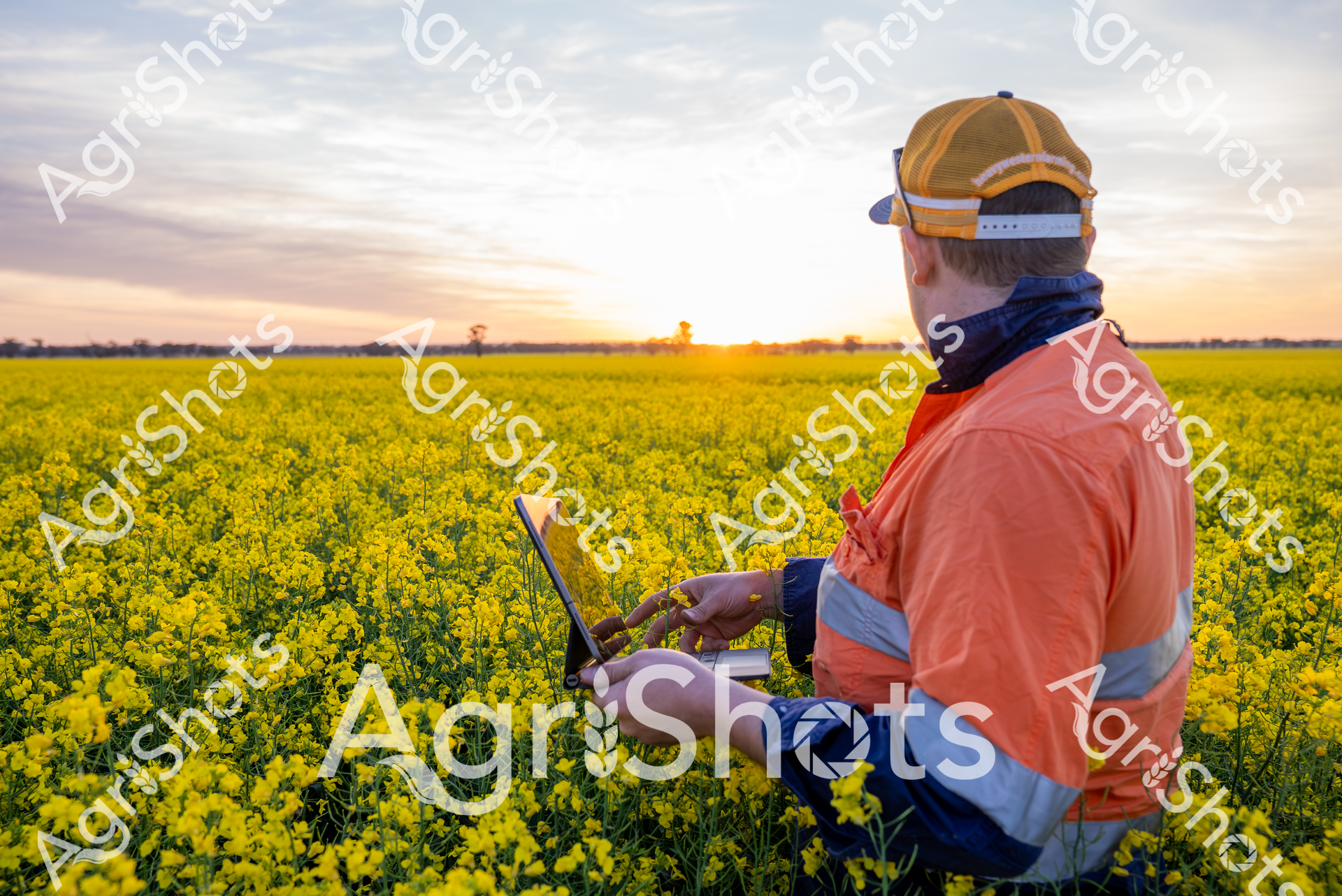
A man in a bright orange high-visibility jacket and cap stands amid a vibrant yellow canola field at sunset, using an iPad to inspect the crop. The scene captures the intersection of agricultural technology and traditional farming, with the golden flowering landscape of the Riverina region in New South Wales stretching out behind him.
 Image
Image
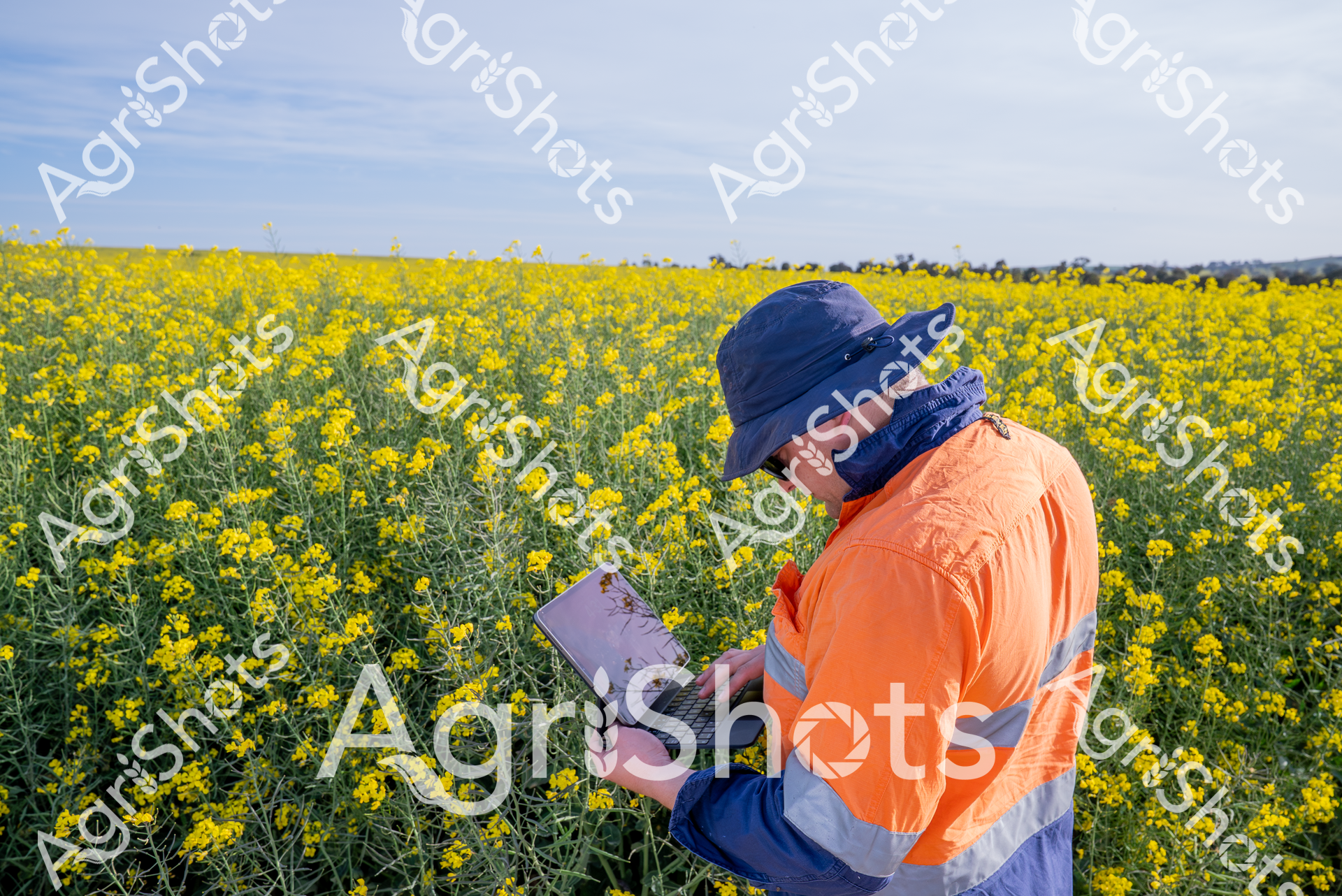
A worker in a bright orange high-visibility jacket and blue hat inspects a flourishing canola field in the Riverina region of New South Wales during spring. Using an iPad, the person carefully examines the vibrant yellow crop, demonstrating modern agricultural technology and precision farming techniques.
 Image
Image
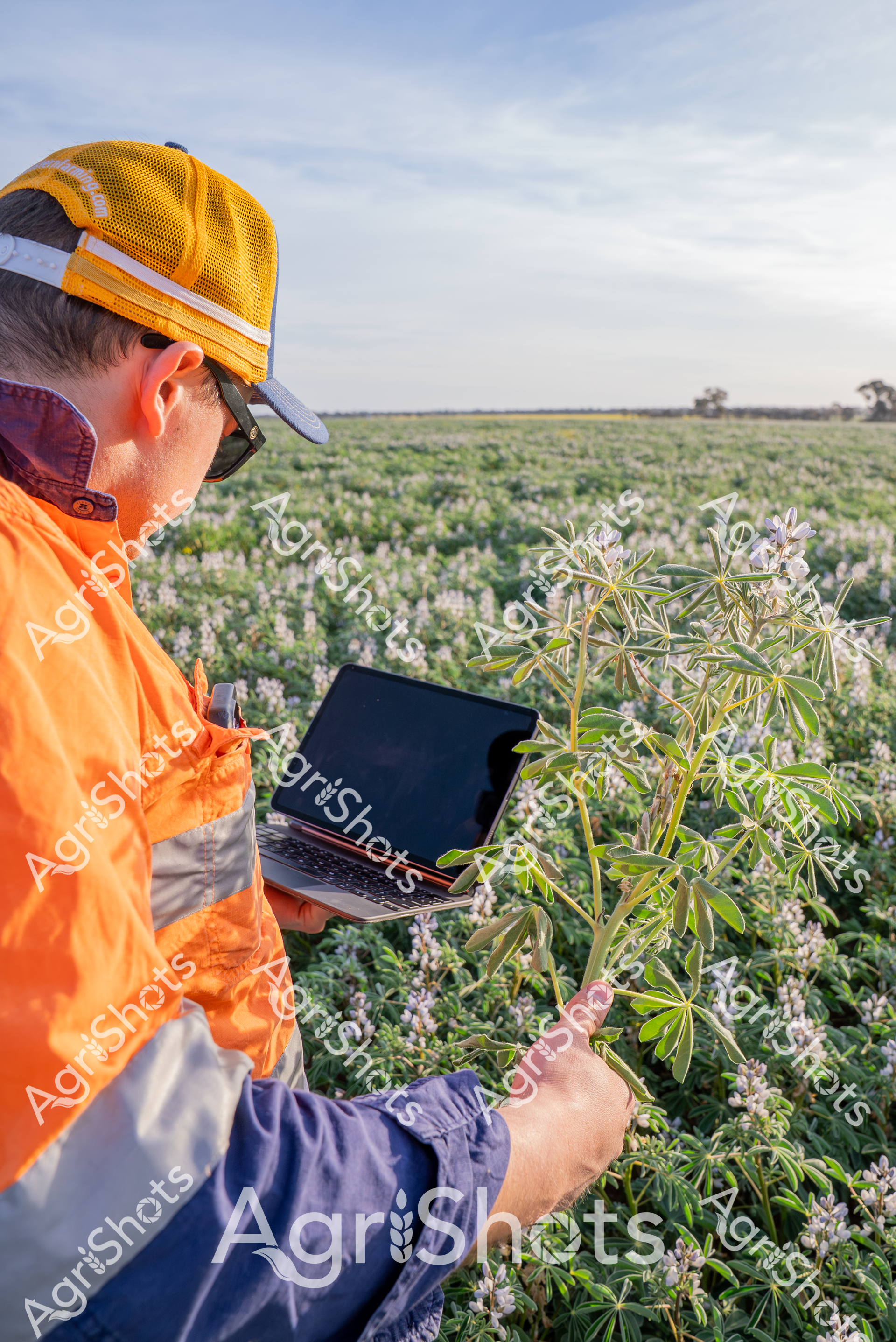
A worker in bright orange high-visibility safety clothing uses an iPad to inspect a field of blooming lupins in New South Wales' Riverina region during springtime. The scene captures modern agricultural technology at work, with the man carefully examining the crop amidst a vast landscape of white and purple lupin flowers.
 Image
Image
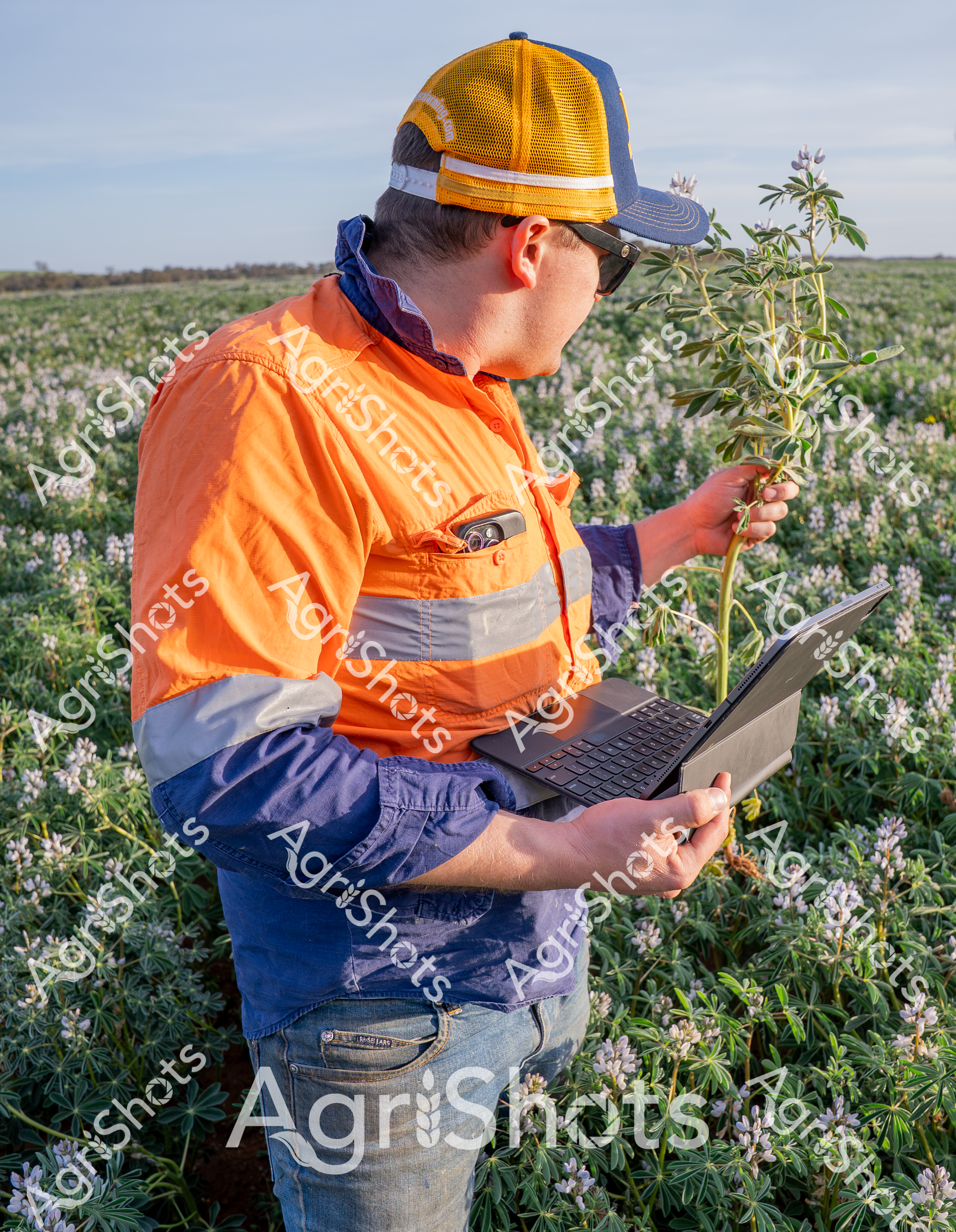
A man in a bright orange high-visibility shirt and blue jacket inspects a field of blooming lupins in New South Wales' Riverina region. Using an iPad, he carefully examines the crop's progress, demonstrating modern agricultural technology and safety practices during the spring season.
 Image
Image
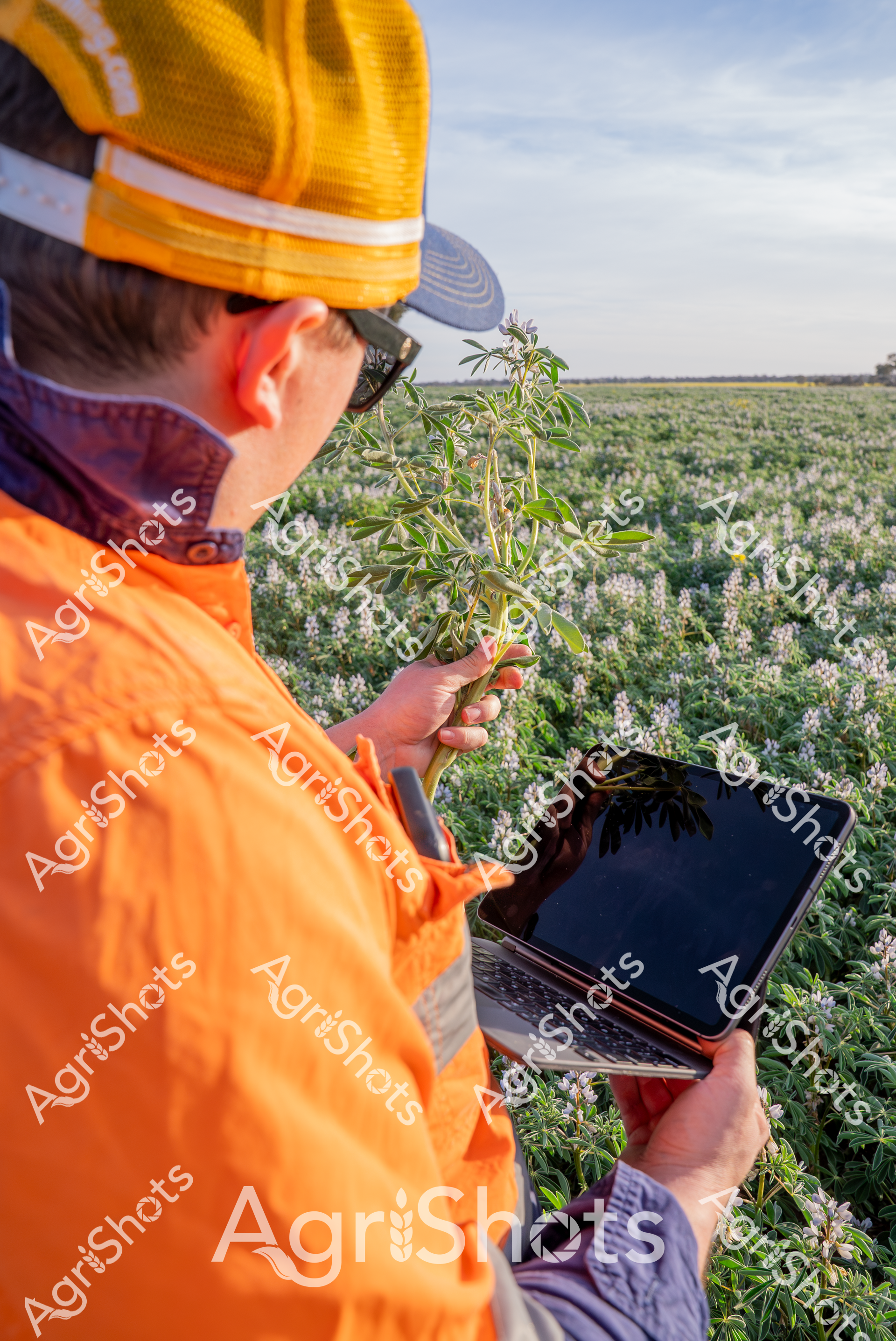
An agricultural worker in a bright orange high-visibility jacket inspects a flowering lupin crop in New South Wales' Riverina region during springtime. Using an iPad to document his observations, the man stands amidst a vast field of white-flowering lupins, carefully examining a branch of the plant while capturing digital data about the crop's condition.
 Image
Image
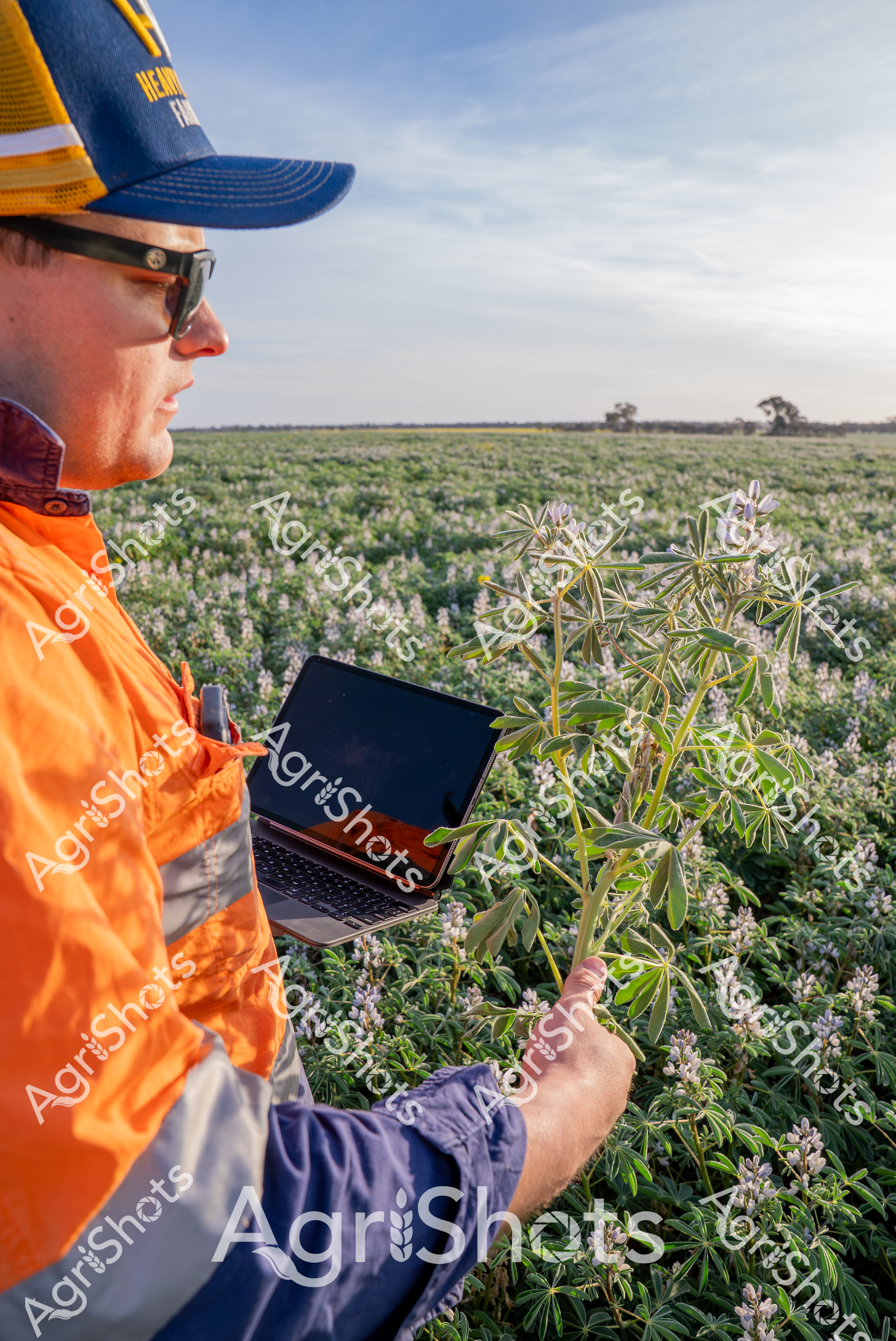
An agricultural worker wearing a bright orange high-visibility safety vest and blue cap inspects a field of flowering lupins in New South Wales' Riverina region. Using a tablet, he carefully examines the crop's progress against a backdrop of blooming white and purple lupin flowers stretching across the expansive farmland.
 Image
Image
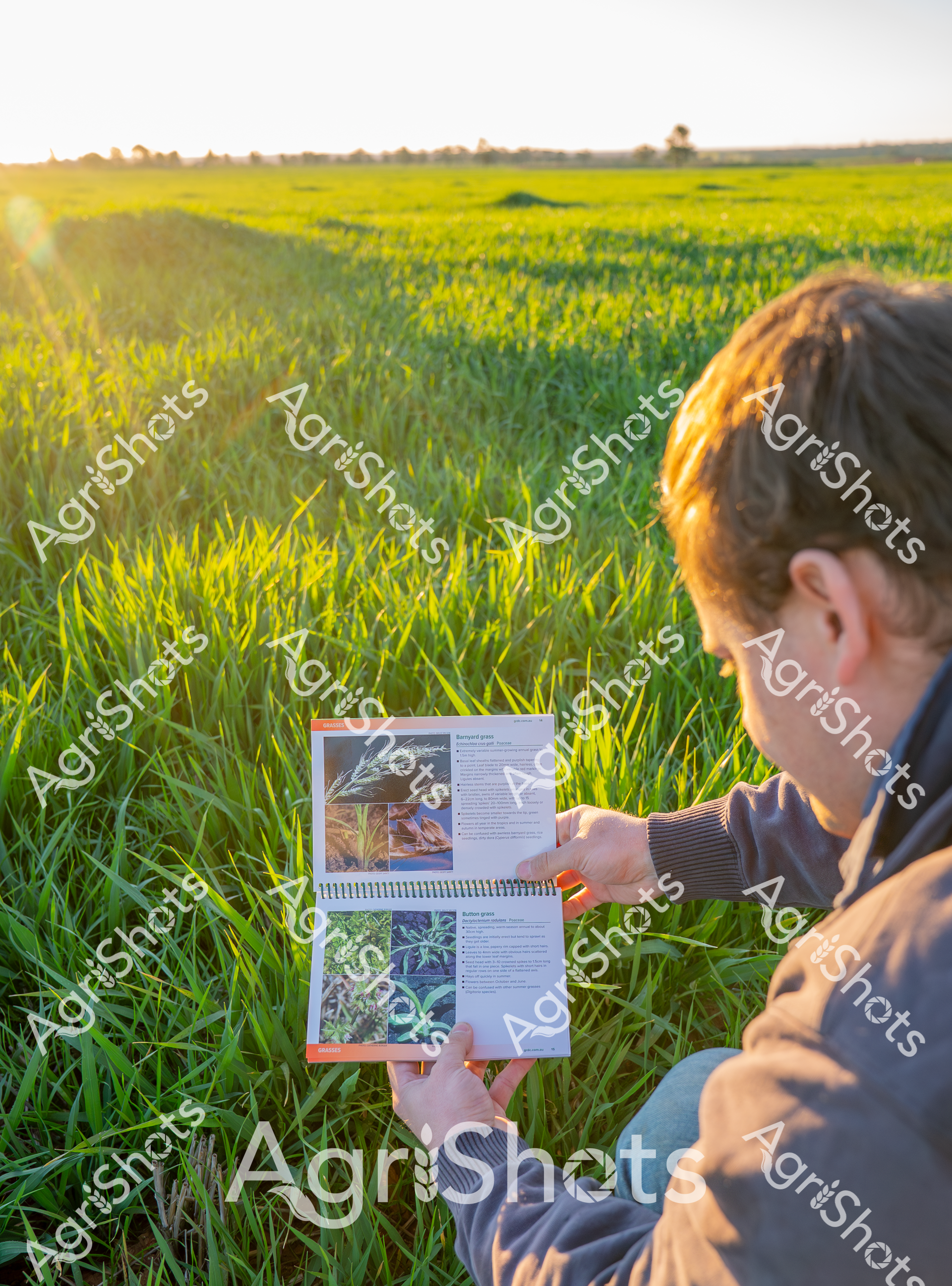
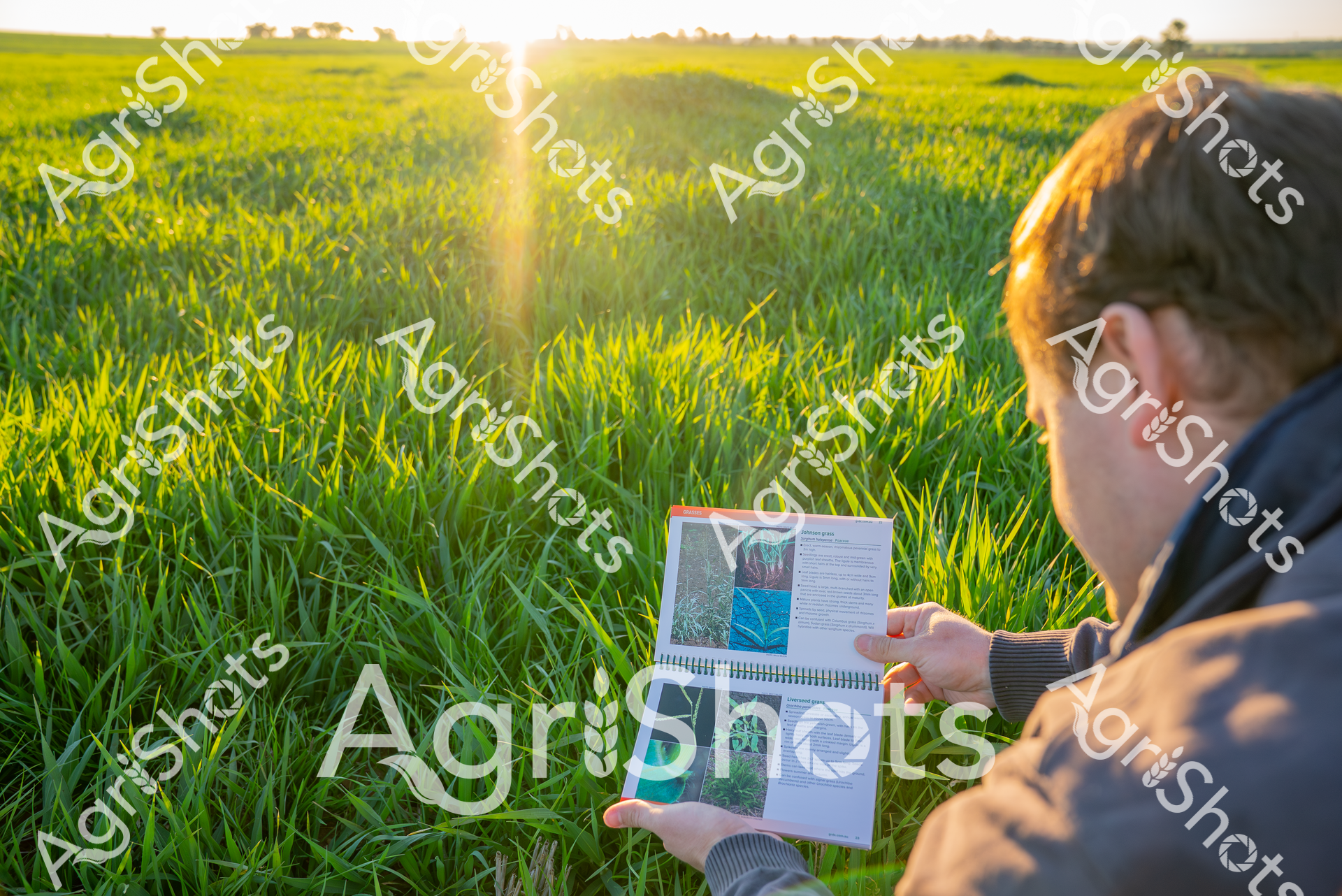
A man in a dark jacket studies a weed identification guide while standing in a lush green field during golden hour. The image captures an agricultural professional examining a detailed book with plant illustrations, surrounded by vibrant grass under warm sunlight in what appears to be the Riverina region of New South Wales.
 Image
Image
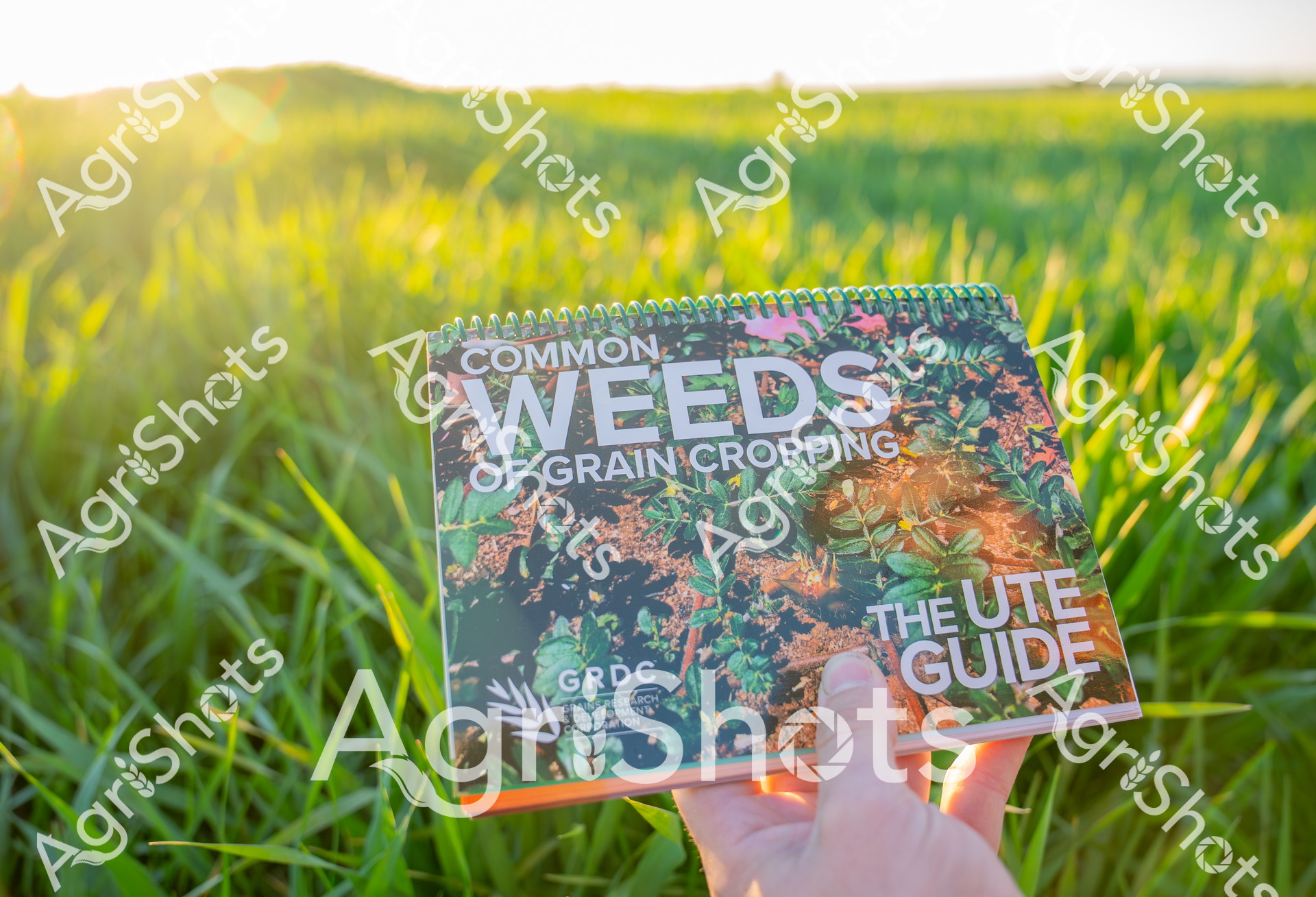
A hand holds a guide book titled "Common Weeds of Grain Cropping" against a lush green background of grass or crops bathed in golden sunlight. The book appears to be a comprehensive resource for identifying and managing weeds in agricultural settings, specifically focused on grain production. The image suggests a practical agricultural reference set in a vibrant, sunlit field.
 Image
Image
A person studies a weed identification guide outdoors in a grassy field, with sunlight casting a warm glow across the landscape. The book appears to be open to a page featuring yellow flowers, likely illustrating capeweed, which is common in the Riverina region of New South Wales. Hands carefully examine the pages while surrounded by lush green vegetation.
 Image
Image
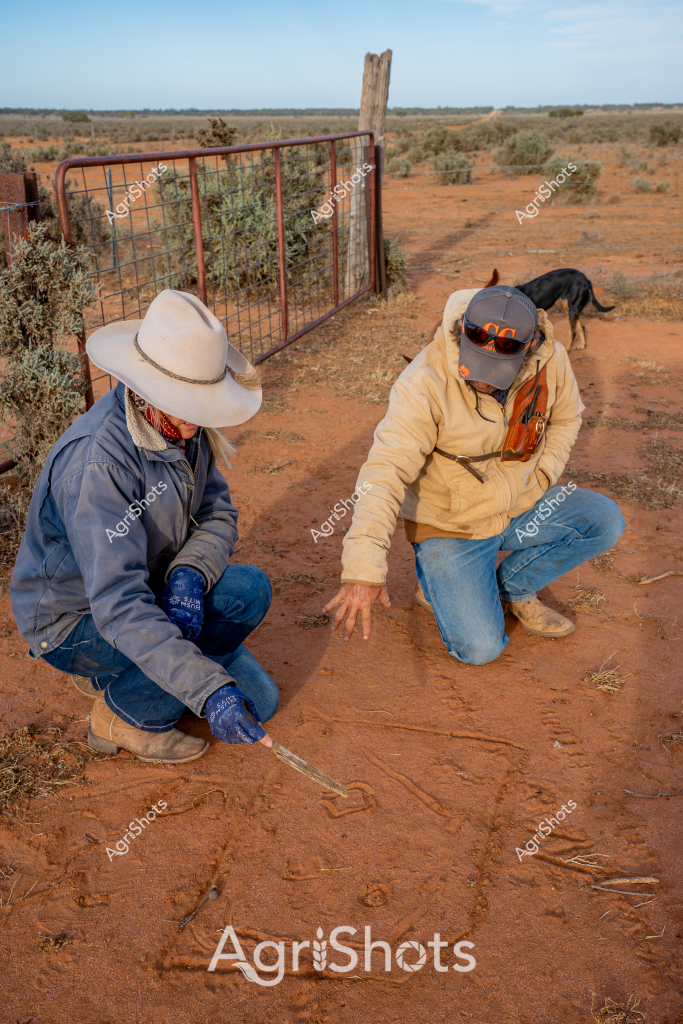
Two workers examine ground tracks in an arid Australian outback landscape, carefully studying animal or wildlife movement patterns. A man wearing a white wide-brimmed hat and blue work jacket and another worker in a light yellow jacket and cap crouch down on the deep rusty-red soil, intently tracing markings on the ground. A black dog stands in the background near a wire mesh gate, surveying the sparse landscape of low scrub and distant horizon. The environment suggests a remote station or rural property, with scattered saltbush and sparse vegetation typical of central Australian terrain. The workers appear to be conducting environmental tracking, wildlife monitoring, or land management research, demonstrating the meticulous observation skills required in rural Australian agricultural and conservation work. The scene captures the essence of outback fieldwork - two experienced professionals using close observation and local knowledge to understand subtle environmental indicators. Their careful postures and focused examination of ground tracks reveal the deep connection between agricultural workers and the landscape, highlighting the importance of detailed environmental understanding in managing remote Australian properties.
 Image
Image
A woman in a striped apron and glasses prepares food items in what appears to be a professional food preparation or testing kitchen. Multiple sandwiches, bread slices, and ingredient containers are meticulously arranged across long white tables. Brown paper labels are placed systematically beside different food components, suggesting a carefully organized culinary experiment or sensory evaluation process. A man in a dark shirt and gray shorts stands at the far end of the workspace, also engaged in food preparation. The room has a clean, clinical atmosphere with white walls, window blinds, and a mounted air conditioning unit, indicating a controlled environment for food research or product development. The scene looks like a professional food testing setup, with each sandwich or ingredient precisely positioned. The methodical arrangement suggests a scientific approach to food preparation, possibly for taste testing, recipe development, or quality control in a commercial food production setting. The neutral color palette - whites, grays, and browns - emphasizes the clinical, systematic nature of the workspace. The individuals are focused and deliberate in their actions, working with precision and attention to detail across the expansive preparation area.
 Image
Image
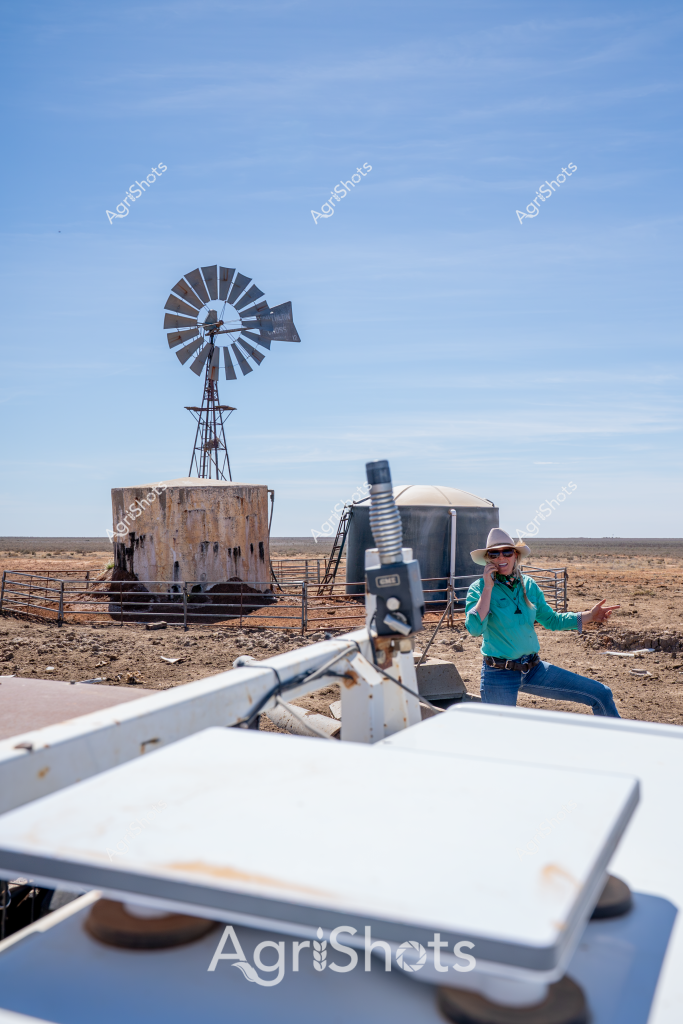
A woman in a turquoise shirt and wide-brimmed hat stands amid a stark, arid landscape, conducting agricultural field research or survey work near a classic windmill and water storage tank. The windmill, a quintessential feature of Australian rural infrastructure, rises against a clear blue sky, its metal blades poised to catch the slightest breeze. A white instrument or measurement device is mounted in the foreground, suggesting scientific data collection or environmental monitoring. The surrounding terrain is a palette of browns and tans - dry, compacted earth characteristic of drought-affected or semi-arid regions of Australia. This scene captures the resilience of agricultural workers and the essential infrastructure that supports farming in challenging environmental conditions, where water management and precise environmental measurements are critical to survival and productivity.