Results for “weeds”
 Image
Image
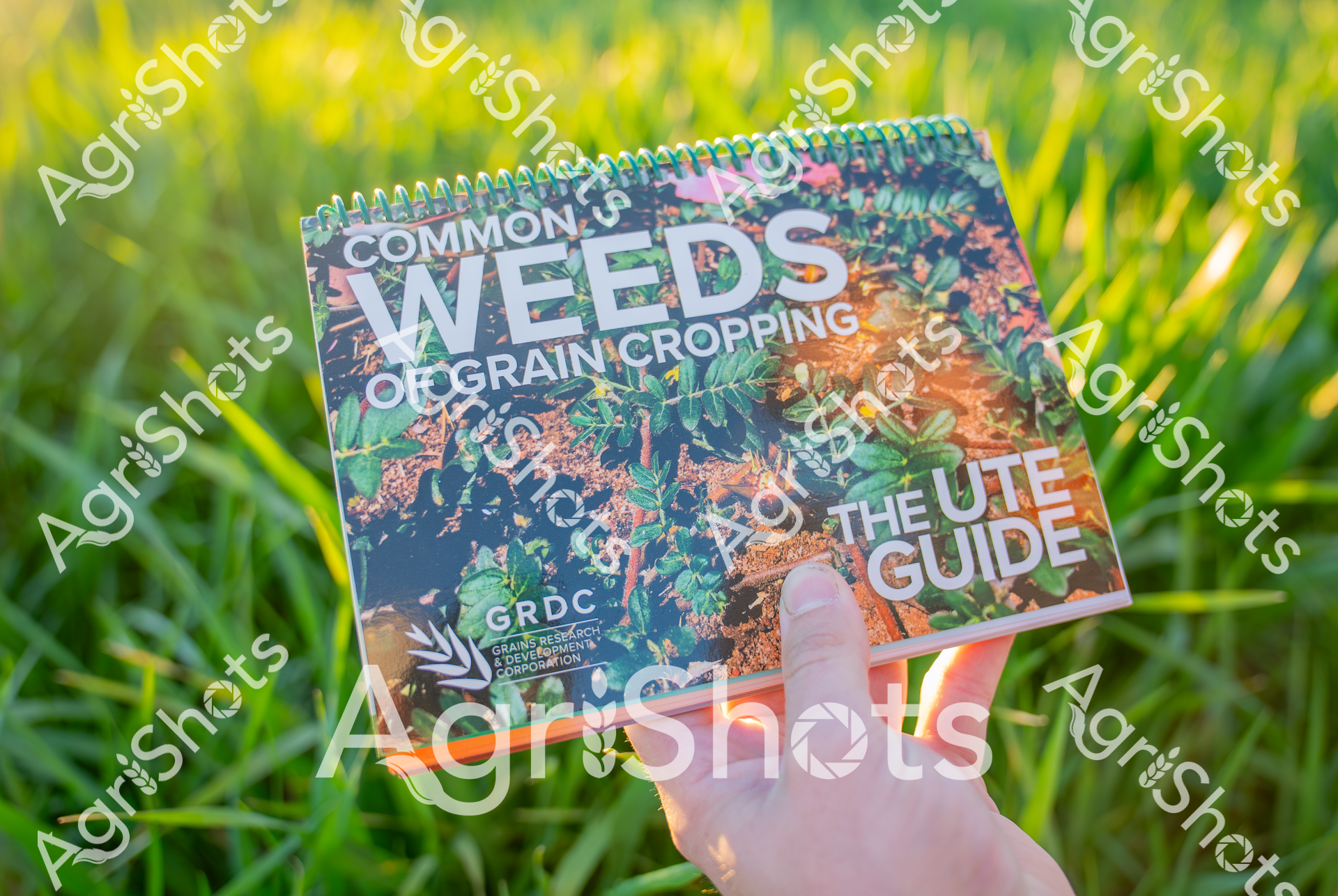
A hand holds a comprehensive guide titled "Common Weeds of Grain Cropping: The UTE Guide" published by GRDC (Grains Research and Development Corporation). The book is displayed against a lush green grassy background, suggesting an agricultural or farming context. This informative resource appears to be designed for farmers and agricultural professionals to identify and manage weed species in grain crop environments.
 Image
Image
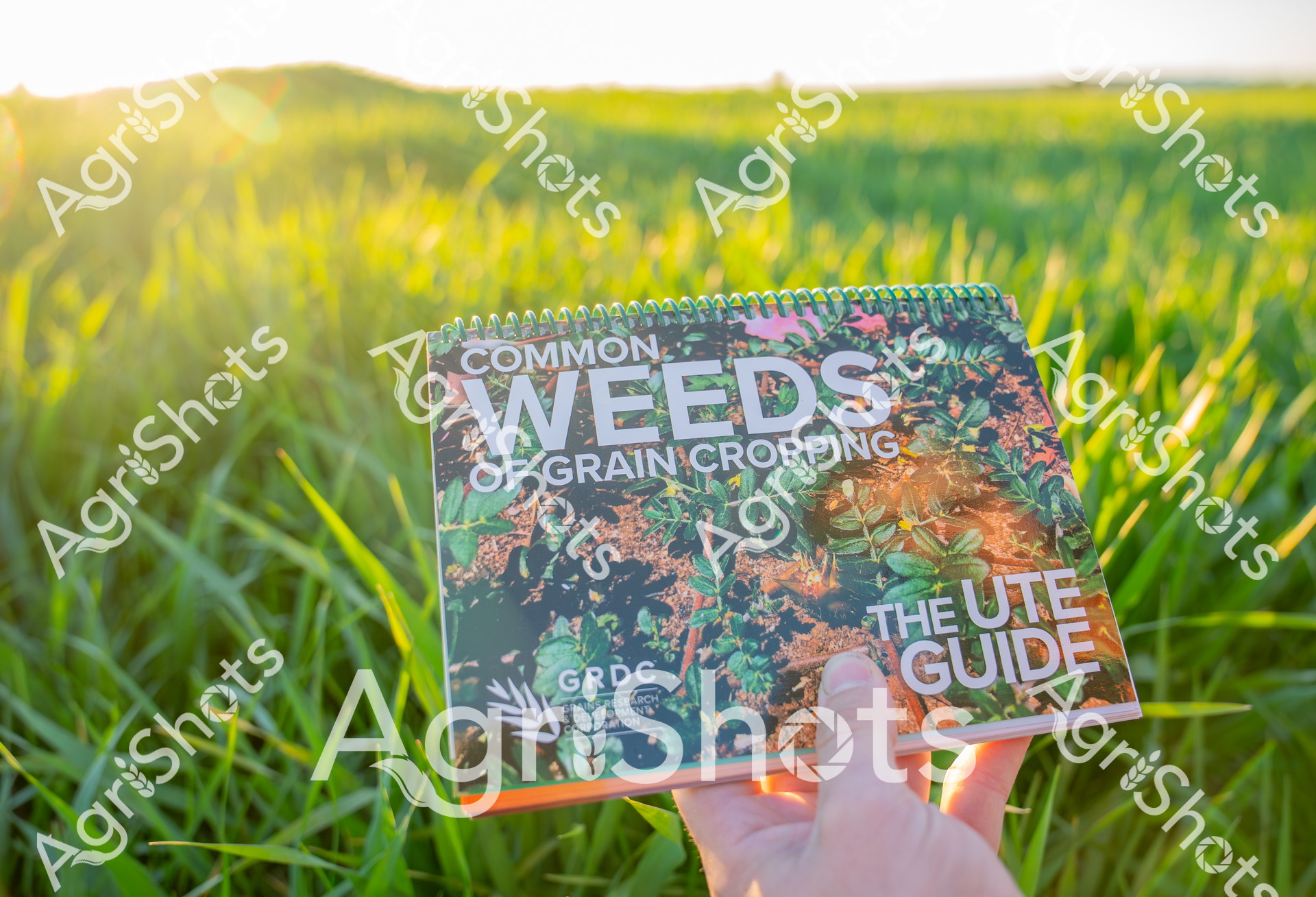
A hand holds a guide book titled "Common Weeds of Grain Cropping" against a lush green background of grass or crops bathed in golden sunlight. The book appears to be a comprehensive resource for identifying and managing weeds in agricultural settings, specifically focused on grain production. The image suggests a practical agricultural reference set in a vibrant, sunlit field.
 Image
Image
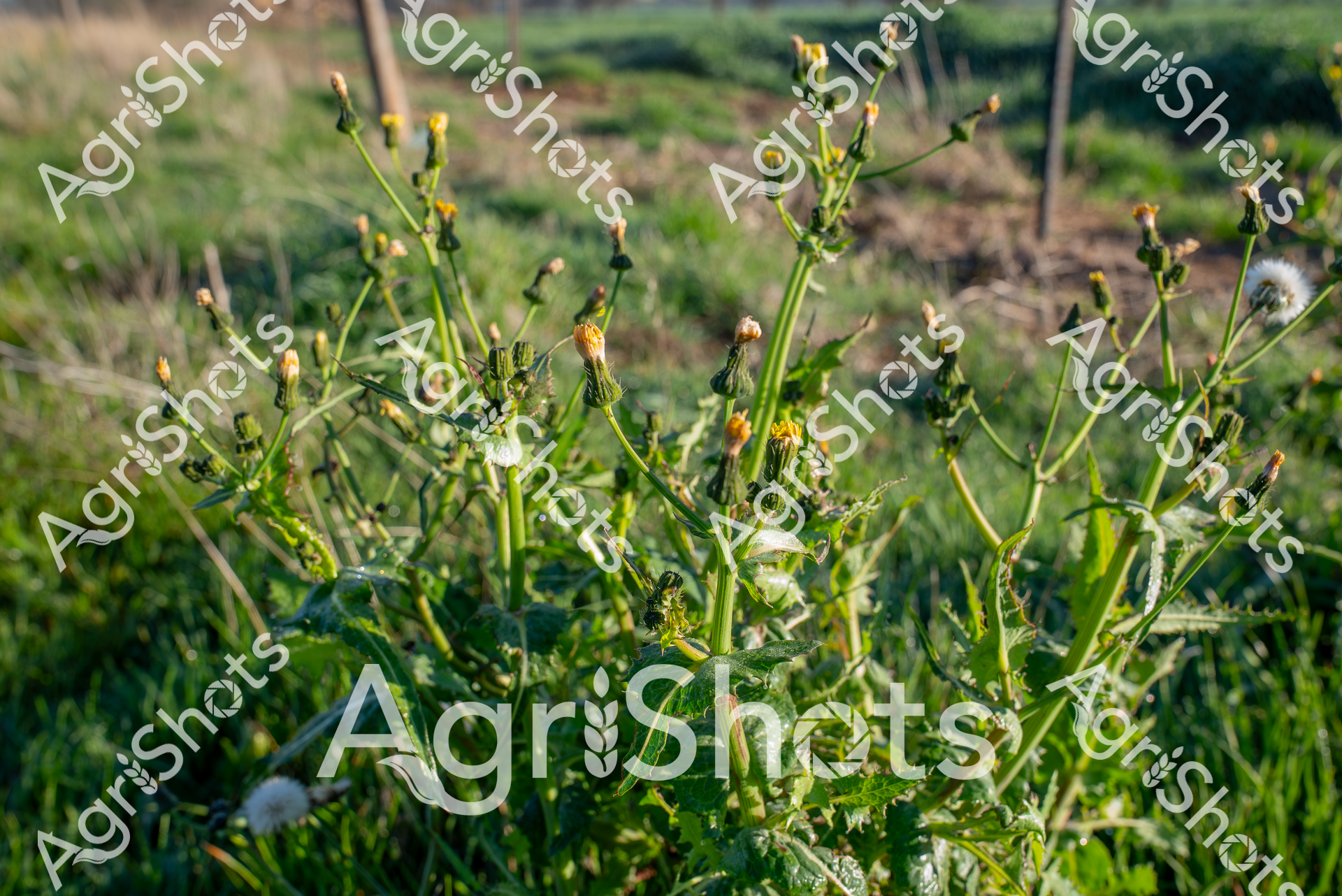
Sowthistle weeds proliferate in this lush Riverina region landscape in New South Wales, displaying vibrant green stems and yellow-budding flower heads. The invasive plants spread across the grassy field, showcasing their characteristic branching stems and clusters of emerging blossoms against a blurred agricultural background.
 Image
Image
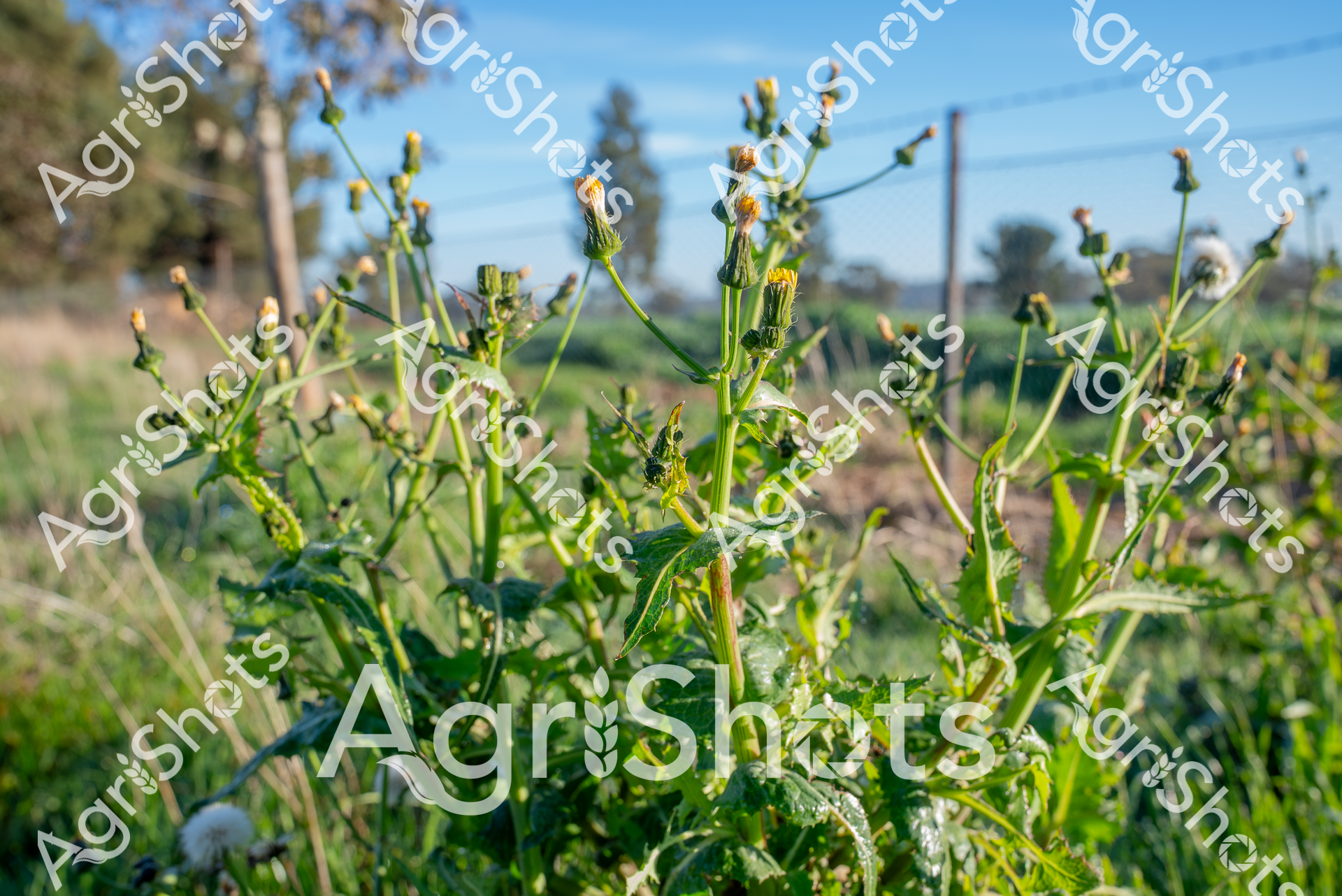
Sowthistle weeds grow prolifically in this rural New South Wales landscape, their green stems and yellow budding flowers standing tall against a backdrop of blue sky and distant trees in the Riverina region. The invasive plants demonstrate their hardiness, spreading across the open agricultural terrain with multiple branching stems and characteristic flower heads. This image captures the persistent nature of these agricultural weeds in a typical Australian farming environment.
 Image
Image
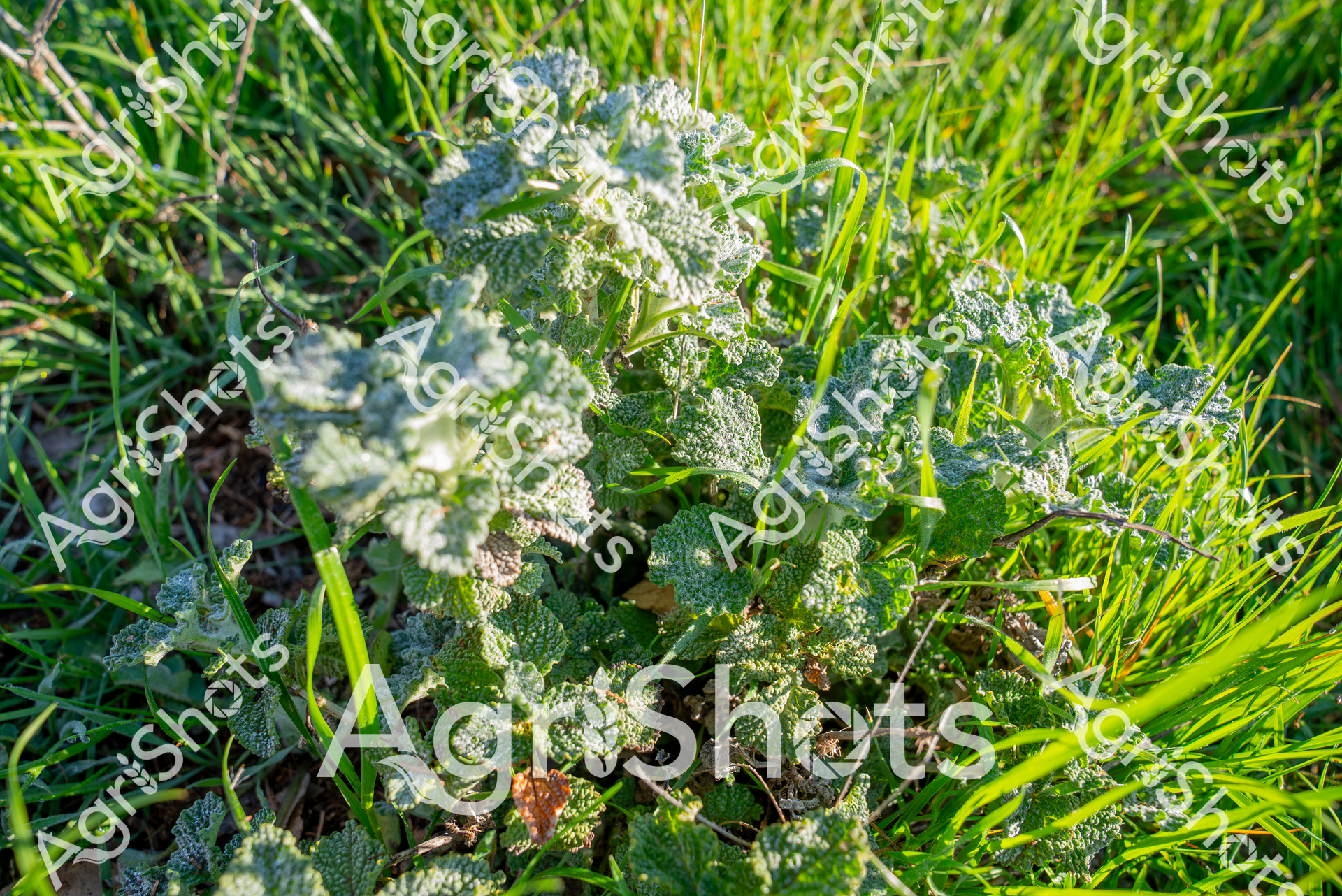
A cluster of horehound weeds, a grayish-green herbaceous plant, growing amidst lush green grass in what appears to be the Riverina region of New South Wales, Australia. The plant's distinctive wrinkled and fuzzy leaves stand out against the vibrant background, showcasing the invasive nature of this common agricultural weed. The image captures the plant's textural details and its ability to thrive in grassland environments.
 Image
Image
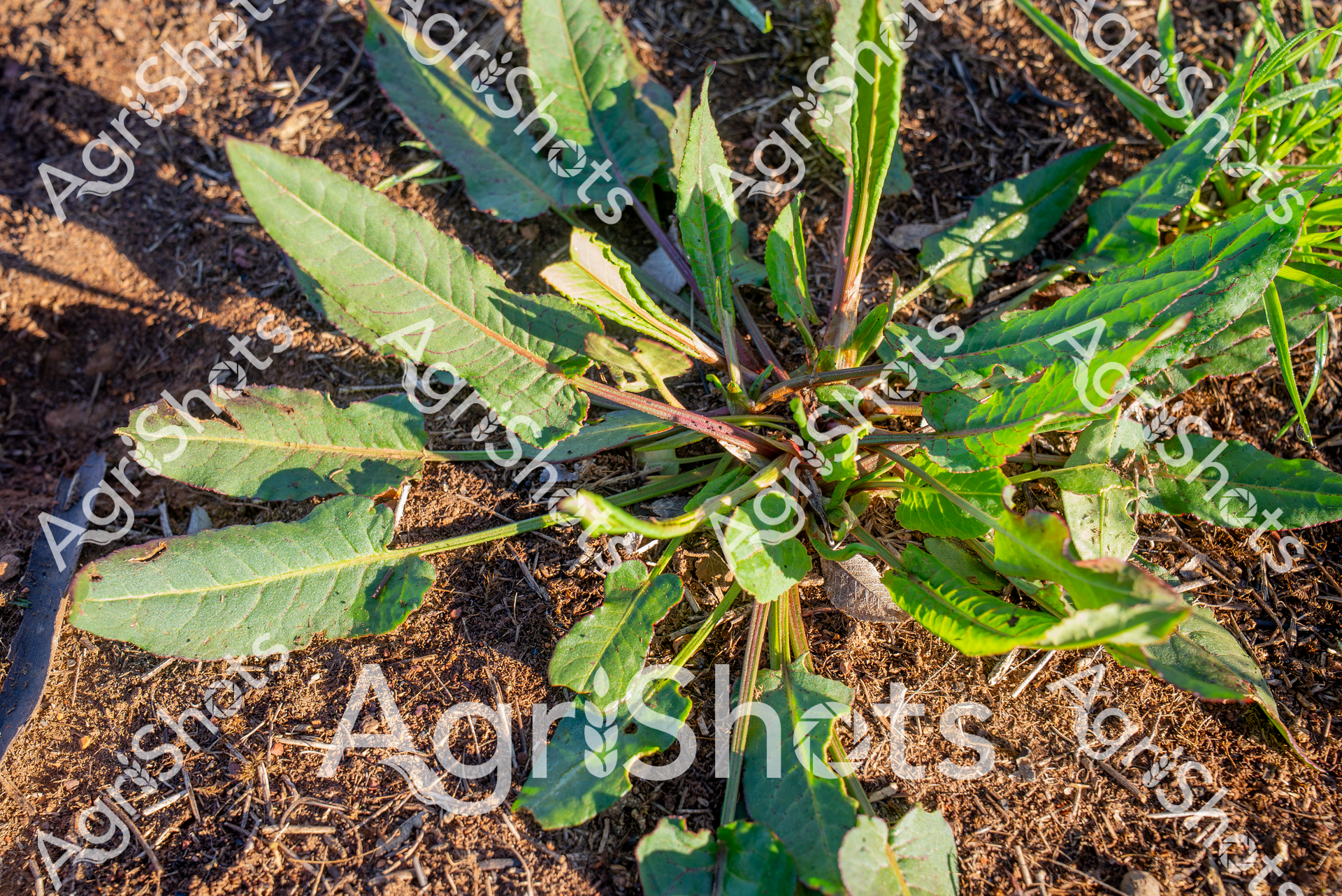
Sorrel, a low-growing perennial herb, spreads across dry soil in the Riverina region of New South Wales. Its distinctive green leaves grow in a rosette pattern, characteristic of this common weed found in agricultural and disturbed landscapes. The plant's elongated leaves showcase varying shades of green against the brown earth.
 Image
Image
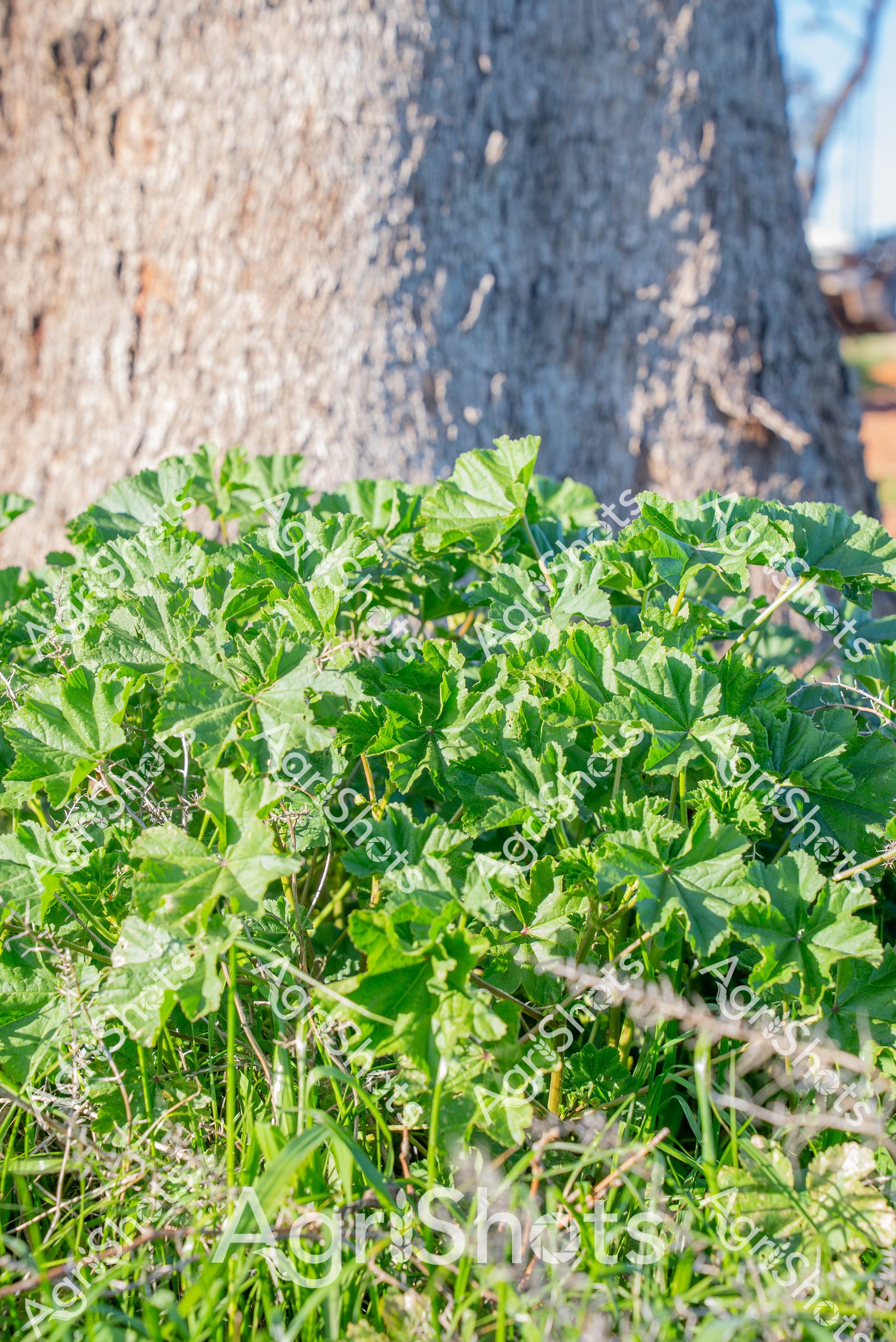
Vibrant green marshmallow weed (Malva parviflora) thrives at the base of a large tree trunk, showcasing its distinctive lobed leaves. Captured in the Riverina region of New South Wales, this invasive plant spreads across the grassy ground, demonstrating its robust nature in an Australian landscape. The image highlights the plant's aggressive growth and ecological impact in rural settings.
 Image
Image
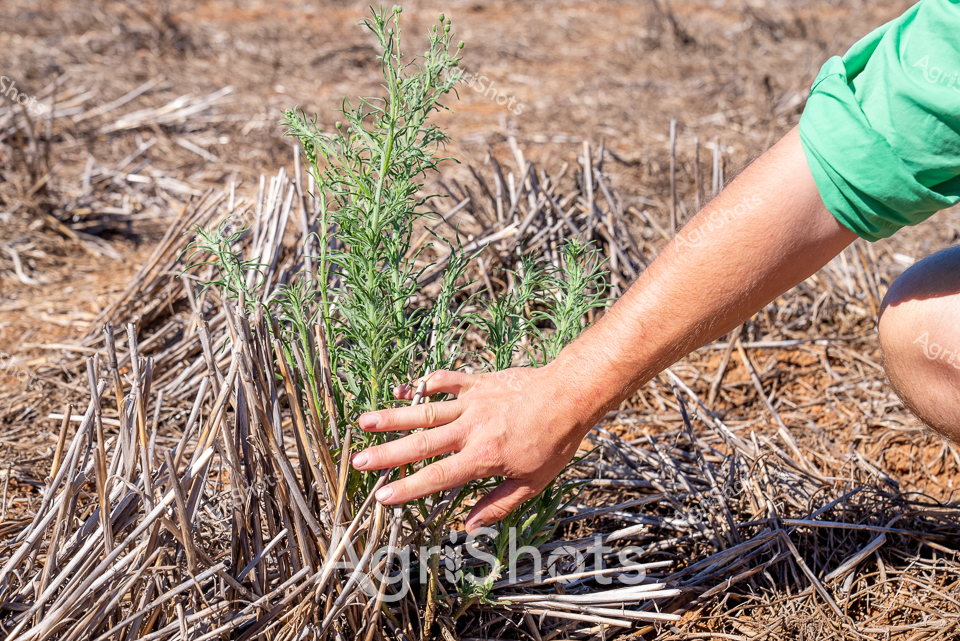
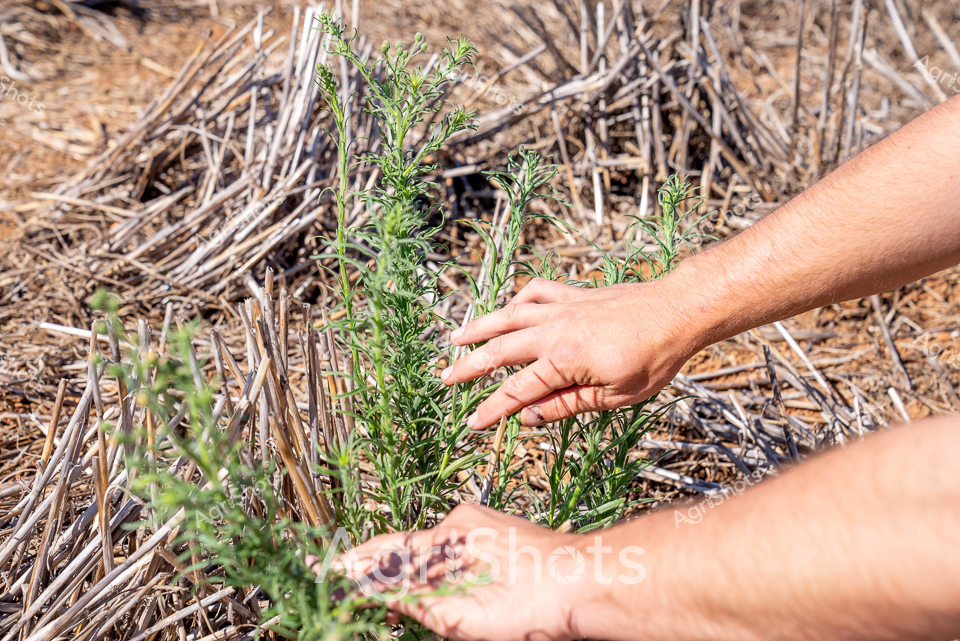
A weathered agricultural hand reaches into a dry, stubble-strewn field, grasping a vibrant green fleabane weed emerging amid the golden-brown remnants of a recent harvest. The scene captures the intricate dance of crop management in the Riverina region of New South Wales, where summer transitions into autumn and farmers battle invasive plant species. Dried wheat or barley stubble creates a textured carpet across the ground, its pale, brittle stalks a testament to the recently completed grain harvest. The green sleeve of the worker suggests careful, deliberate intervention - likely a strategic approach to weed control known as brown manure, where weeds are terminated before they can set seed, protecting the productivity of the agricultural landscape. Soft earth tones dominate the image, broken by the fresh green of the fleabane and the worker's bright clothing, symbolizing the constant human effort to maintain balance in dryland farming systems. This moment encapsulates the meticulous care and ongoing challenge of agricultural land management in the Australian grain belt.
 Image
Image
Autumn unfolds across the Riverina's golden stubble-strewn landscape, where hands carefully inspect a cluster of emerging fleabane weeds among the wheat or barley stubble. Weathered dry crop remnants create a complex textural backdrop of silvered and tawny stalks, contrasting with the vibrant green botanical intruders. A farmer's sun-bronzed hand reaches deliberately among the plant stems, likely assessing weed density and potential agricultural management strategies critical to sustainable cropping practices. The scene captures a moment of precise agricultural observation, where careful monitoring of emerging vegetation determines future field interventions. Stubble retention - visible in the intricate matrix of broken crop stalks - represents modern conservation farming techniques prevalent throughout New South Wales' broadacre agricultural zones. Soft autumnal light illuminates the delicate weed structures, highlighting the nuanced relationship between intentional crop management and opportunistic plant growth. This image eloquently portrays the continuous vigilance required in dryland farming systems, where every emerging plant represents a potential challenge or opportunity within the broader ecological management framework of contemporary Australian agriculture.
 Image
Image
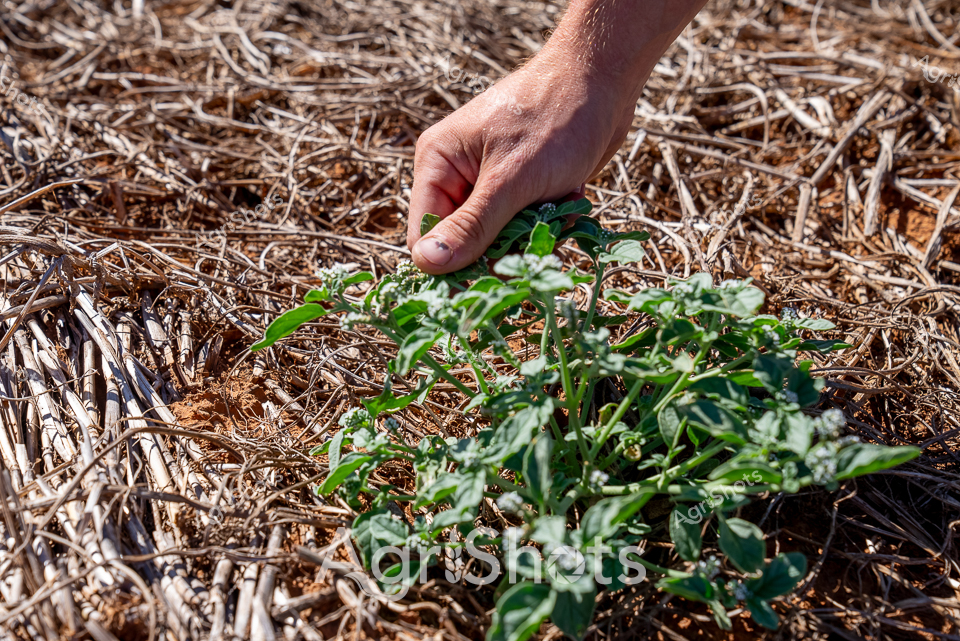
Summer's harsh embrace descends on the Riverina's cropping landscape, where a weathered hand gently investigates a cluster of resilient green weeds emerging through golden stubble. Dry wheat stalks blanket the ground in a intricate mat of weathered browns and tans, testament to the recent harvest and the unforgiving Australian agricultural cycle. The vibrant green plant stands in stark contrast - a defiant splash of life amidst the parched, post-harvest terrain, symbolizing nature's persistent regenerative power. A single, sun-tanned finger probes the weed's foliage, likely assessing its potential threat to future crop potential or soil health. This intimate moment captures the meticulous care and constant vigilance required of farmers managing their land through challenging seasonal conditions. The image epitomizes the nuanced relationship between human intervention and natural growth in the broad-acre farming systems of New South Wales, where every plant and every touch carries economic and ecological significance.
 Image
Image
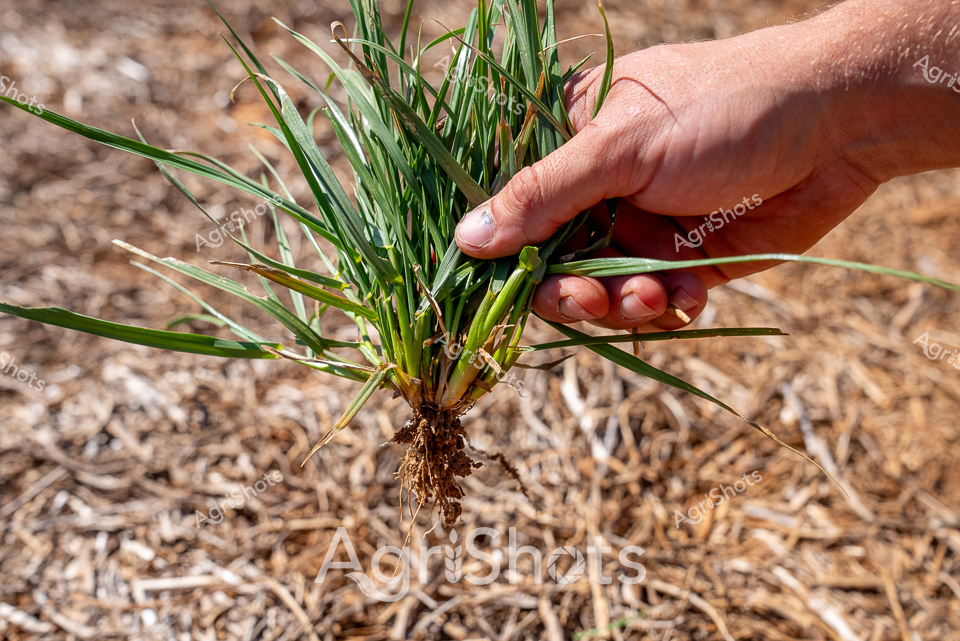
A weathered hand gently cradles a tussock of native grass, revealing the intricate root system against a backdrop of dry, textured stubble. The vibrant green blades contrast sharply with the parched earth, capturing the harsh resilience of agricultural landscapes in the Riverina region of New South Wales. This close-up reveals the delicate ecosystem of a paddock during the challenging transition between summer and autumn, where every plant tells a story of survival. The slender grass - potentially a ryegrass or hairy panic variety - demonstrates the complex relationship between farmers and unwanted vegetation. Roots exposed, the plant becomes a living specimen of the ongoing battle with weeds and managing ground cover in drought-affected regions. The intimate framing emphasizes the tactile connection between human intervention and natural growth, with each weathered finger telling its own story of agricultural expertise. The muted browns and rich earth tones speak to the cyclical nature of farming, where seemingly insignificant plants can dramatically impact crop health and soil management. This image captures a moment of careful assessment, a testament to the nuanced knowledge required in Australian agricultural practice.
 Image
Image
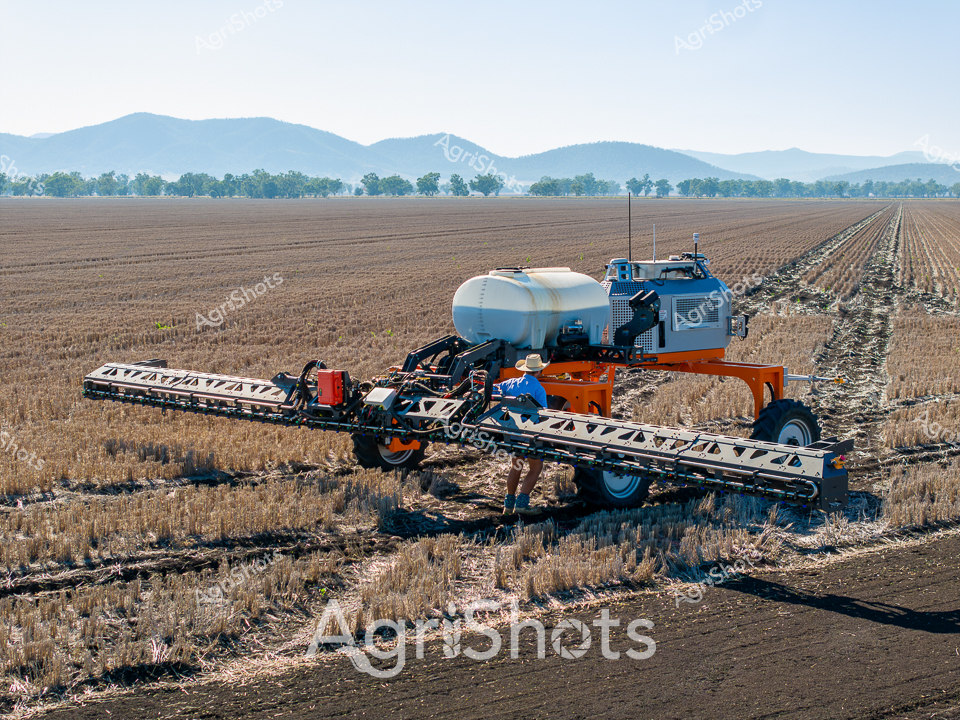
Agricultural innovation sweeps across the Liverpool Plains, where a cutting-edge camera sprayer navigates through golden wheat stubble against a backdrop of soft blue mountain ranges. The sophisticated robotic spray rig, painted in vibrant orange and blue, demonstrates precision agricultural technology designed to target weeds with exceptional efficiency. A farmer in a blue shirt and wide-brimmed hat stands near the machine, overseeing its autonomous navigation through the post-harvest landscape. The large white tank mounted on the rig suggests advanced chemical management, while the intricate mechanical design hints at the sophisticated sensors and targeting systems of the Weedseeker technology. Autumn's muted palette of browns and tans blankets the harvested field, with dried crop remnants creating a textured foreground that contrasts sharply with the sleek, high-tech agricultural machinery. This scene encapsulates the modern Australian agricultural landscape - where advanced robotics, precision farming, and environmental consciousness converge to revolutionize crop management and sustainability.
 Image
Image
Cutting-edge agricultural technology traverses the golden stubble-strewn fields of the Liverpool Plains, with a precision camera sprayer navigating the post-harvest landscape. The advanced robotic spray rig, adorned in striking blue, orange, and white, demonstrates the pinnacle of modern weed management techniques, featuring an expansive boom fitted with intelligent Weedseeker technology. Softly undulating mountains create a serene backdrop to this mechanized marvel, which carefully targets individual weeds with surgical accuracy, minimizing chemical usage and environmental impact. The autumn landscape reveals meticulously ordered crop rows, with dry wheat stubble creating a textured canvas of browns and tans, highlighting the precision of contemporary agricultural practices. This sophisticated autonomous system represents a new era of farming - where technology, sustainability, and efficiency converge to optimize agricultural productivity in the challenging Australian rural environment. The scene captures the intersection of high-tech innovation and traditional farming landscapes, showcasing how Australian agricultural technology is leading global advancements in precision agriculture.
 Image
Image
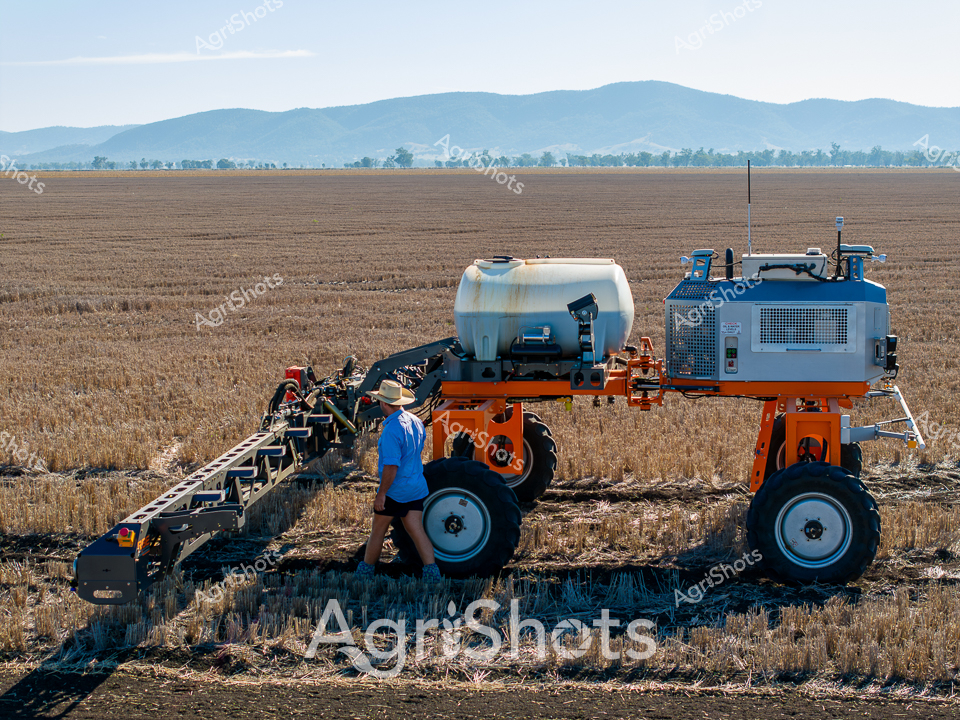
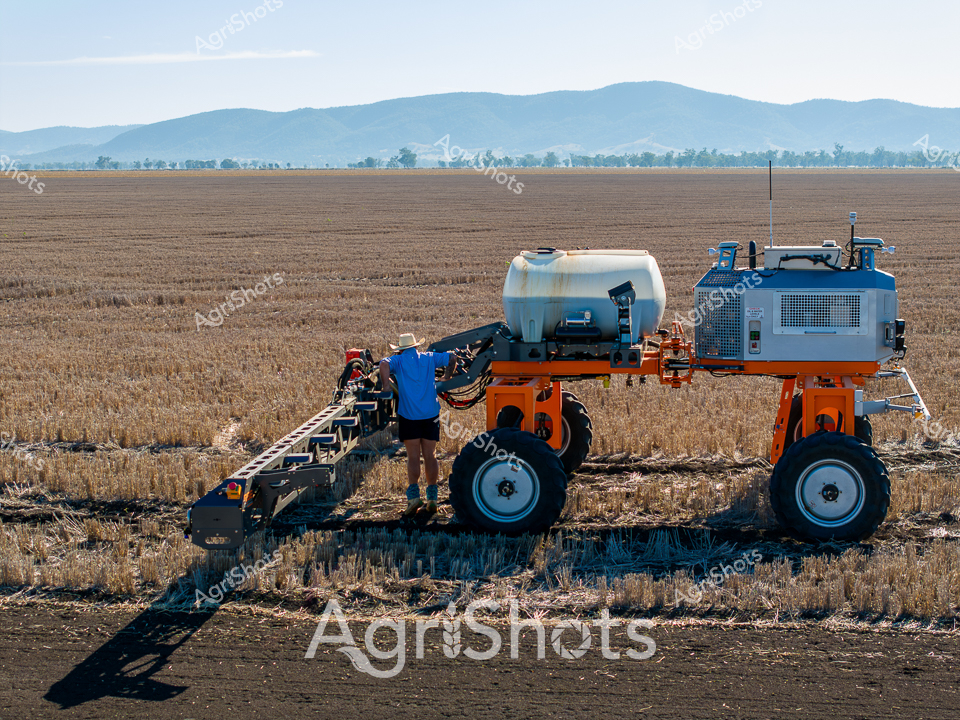
Emerging from the golden stubble of a post-harvest Liverpool Plains landscape, an advanced autonomous camera sprayer navigates the autumn fields with precision. The robust blue and orange agricultural robot, equipped with a white liquid tank and sophisticated sensing technology, stands ready to target weeds with surgical accuracy. A farm worker in a blue shirt climbs the machine's access ladder, preparing to calibrate or monitor its targeted spraying system, highlighting the cutting-edge intersection of agricultural robotics and traditional farming practices. The expansive paddock stretches toward soft blue mountain ranges in the distance, the stubble-covered ground revealing the recent grain harvest's remnants. This Weedseeker technology represents a new era of sustainable farming - using advanced sensors to detect and spray only where vegetation requires treatment, minimizing chemical use and environmental impact. The early morning light casts long shadows across the textured landscape, emphasizing the machine's impressive scale and the innovative spirit of modern Australian agricultural technology. The scene captures a pivotal moment in agricultural evolution, where precision, efficiency, and environmental consciousness converge on the Liverpool Plains of New South Wales.
 Image
Image
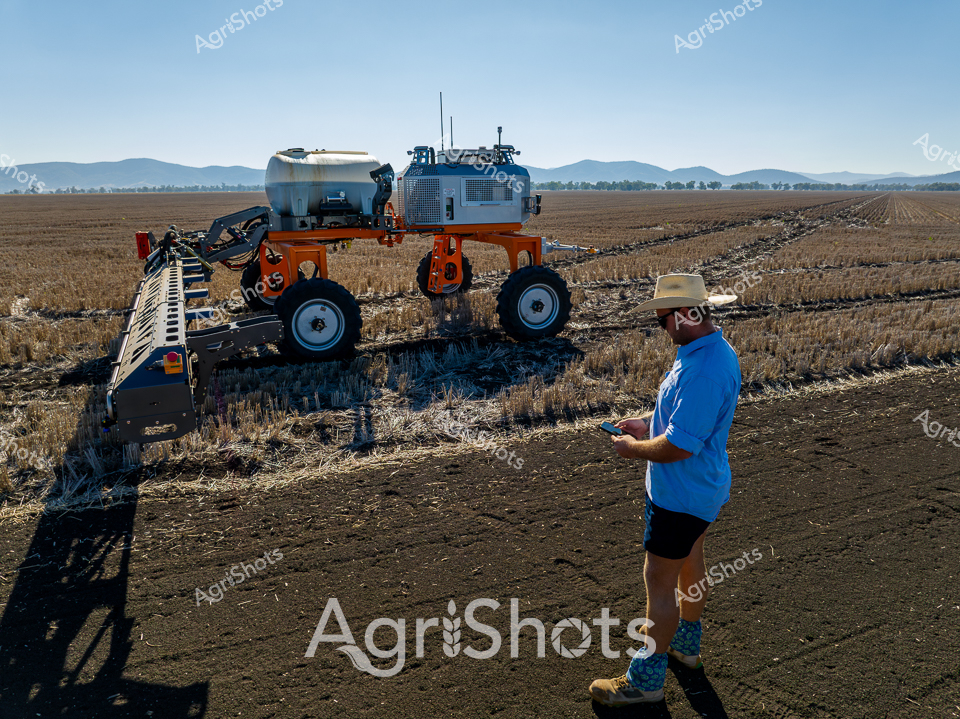
In the golden light of an autumn morning on the Liverpool Plains, a cutting-edge robotic sprayer stands sentinel across a harvested wheat field. The sophisticated orange and white precision agriculture machine towers against distant blue mountain ranges, its advanced sensors and GPS-enabled technology poised to selectively target weeds with surgical accuracy. A farmer in a bright blue shirt and wide-brimmed hat operates a handheld device, coordinating the autonomous Weedseeker's movements across the stubble-covered landscape. The machine's sleek design - featuring large wheels, a water tank, and sophisticated computing equipment - represents the pinnacle of modern agricultural technology, transforming traditional crop management through intelligent, targeted intervention. Shadows stretch long across the rich, dark earth, highlighting the machine's angular profile and the meticulous rows of the recently harvested field. This scene encapsulates the innovative spirit of Australian agricultural technology, where robotic systems and human expertise converge to optimize farming efficiency and sustainability.
 Image
Image
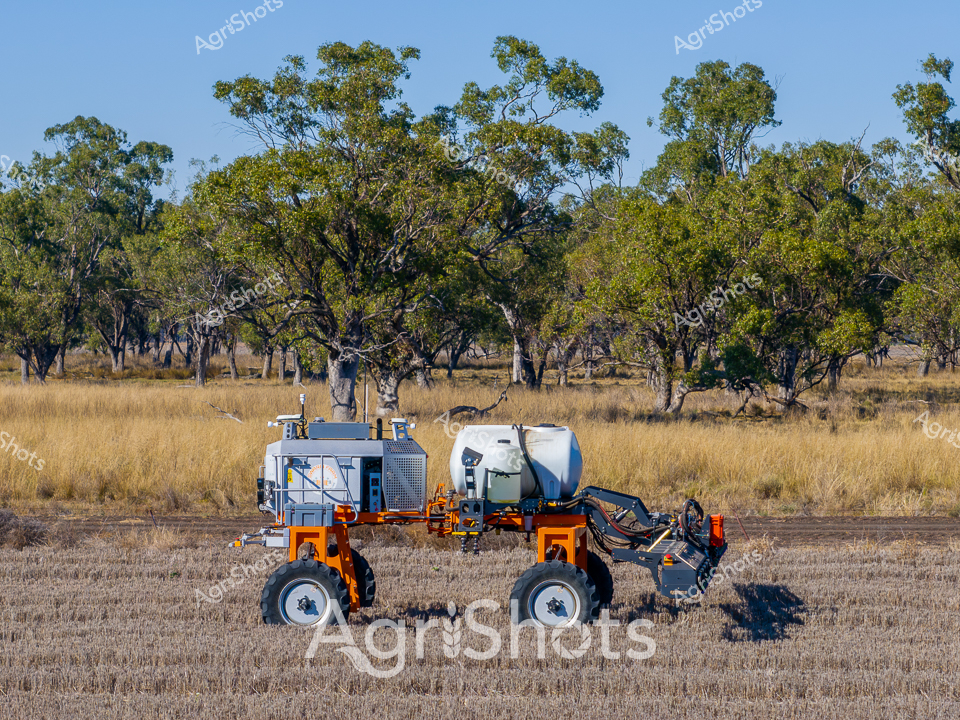
Autonomous agricultural innovation emerges against a classic Liverpool Plains landscape, where golden grasslands meet silvery eucalyptus woodlands under a crystalline azure sky. This cutting-edge camera sprayer - a sophisticated robotic agricultural implement - stands poised in a harvested stubble field, its striking orange and grey mechanical frame a testament to modern precision farming technologies. The advanced Weedseeker system represents the pinnacle of targeted agricultural intervention, using intelligent sensor arrays to detect and treat specific weed populations with unprecedented efficiency and minimal environmental impact. Swarm robotics technology transforms traditional broad-acre farming practices, allowing for microscopic precision in crop management. The machine's sophisticated design enables it to navigate through post-harvest terrain, identifying and treating weeds with surgical accuracy, drastically reducing chemical usage and environmental disruption. Its high-clearance chassis and intelligent guidance systems represent a quantum leap in agricultural machinery, bridging traditional farming wisdom with next-generation technological solutions. The surrounding landscape - characteristic of New South Wales' Liverpool Plains - speaks to generations of agricultural stewardship, with weathered gum trees standing as silent witnesses to ongoing agricultural evolution. This scene captures a powerful moment of technological transformation in one of Australia's most productive agricultural regions.
 Image
Image
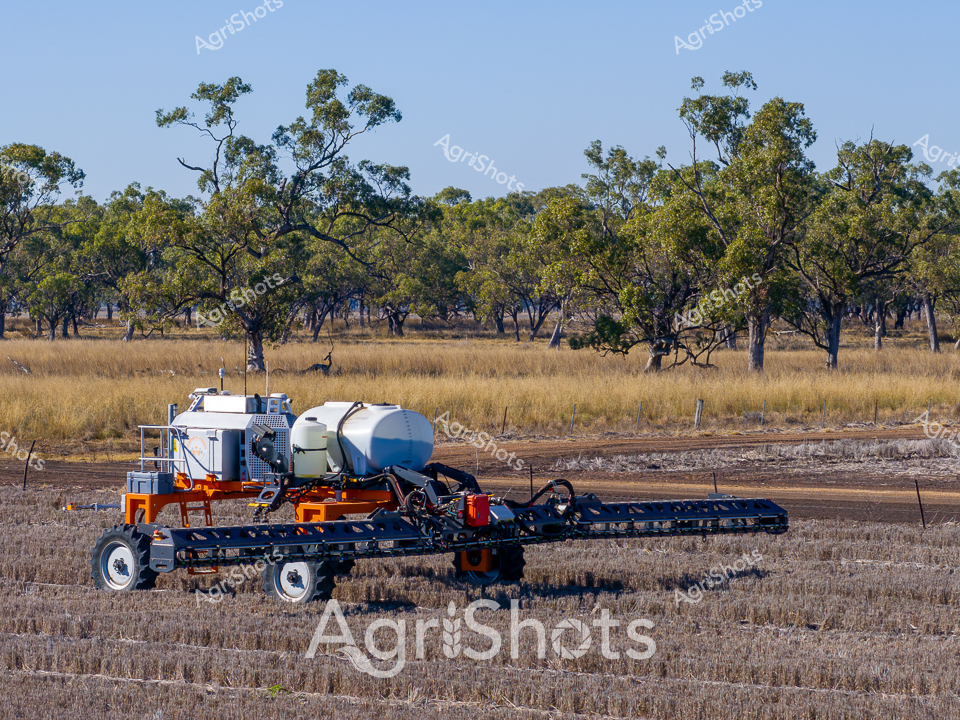
A state-of-the-art camera spray rig glides across a golden stubble field in the Liverpool Plains region of New South Wales, its long spray boom extended like a mechanical arm ready to precisely target weeds. The sophisticated Weedseeker technology represents the cutting edge of agricultural precision farming, utilizing advanced sensor and robotic technology to identify and treat specific areas with minimal chemical application. Mounted on a striking orange and white trailer with a large water tank, the sprayer moves through a classic Australian rural landscape of scattered eucalyptus trees and dry grasslands, capturing the essence of modern agricultural innovation against a timeless pastoral backdrop. The machine's sleek design and high-tech capabilities contrast beautifully with the rugged, sun-drenched environment, showcasing how advanced technology is transforming traditional farming practices. Autumn's soft light bathes the scene, highlighting the intricate mechanical details of the spray rig and the subtle textures of the post-harvest landscape. This image encapsulates the marriage of technological precision and natural agricultural rhythms, telling a powerful story of sustainable and intelligent farming in the Australian countryside.
 Image
Image
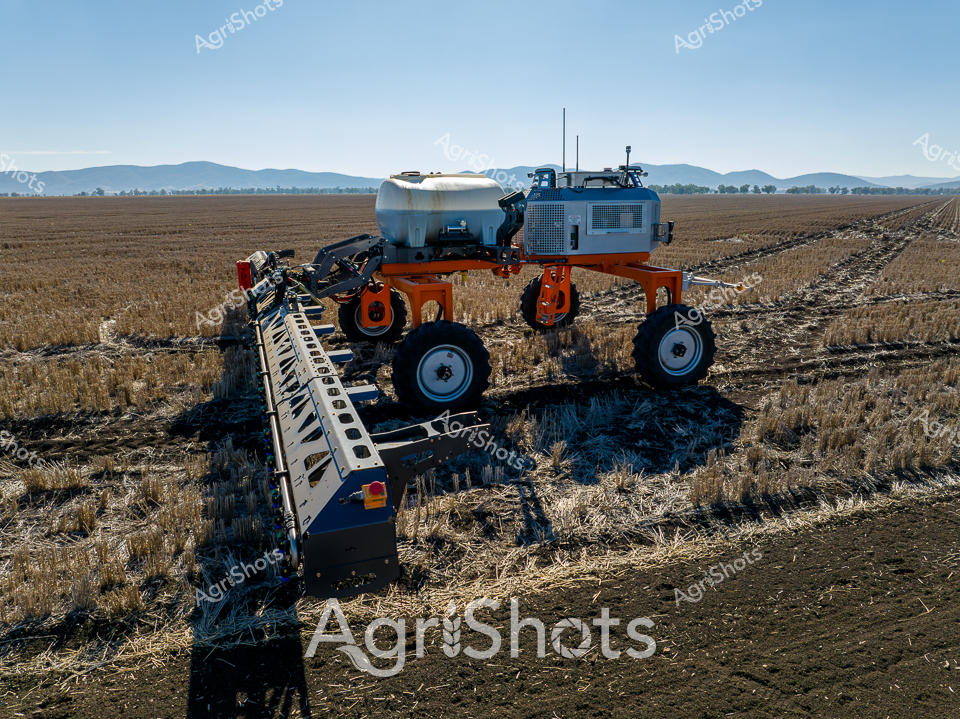
Under crisp autumn light across the Liverpool Plains of New South Wales, an advanced autonomous camera sprayer navigates through golden wheat stubble, representing the cutting edge of agricultural precision technology. The sleek orange and blue robotic sprayer moves with calculated purpose, its extended boom mounted with sophisticated sensing equipment designed to target individual weeds with surgical accuracy. A white water tank mounted on the vehicle suggests its primary function of selective chemical application, minimizing environmental impact and reducing overall agricultural chemical usage. Distant blue mountain ranges frame the landscape, providing a stark contrast to the meticulously managed agricultural terrain, where every pass of this intelligent machine represents a fusion of robotics, data analysis, and sustainable farming practices. The ground beneath tells a story of recent harvest - flattened wheat stubble and carefully tilled soil indicating the transition between crop cycles. This image captures the nuanced evolution of Australian agricultural technology, where swarm robotics and intelligent systems are transforming traditional farming methodologies with unprecedented efficiency and ecological sensitivity.
 Image
Image
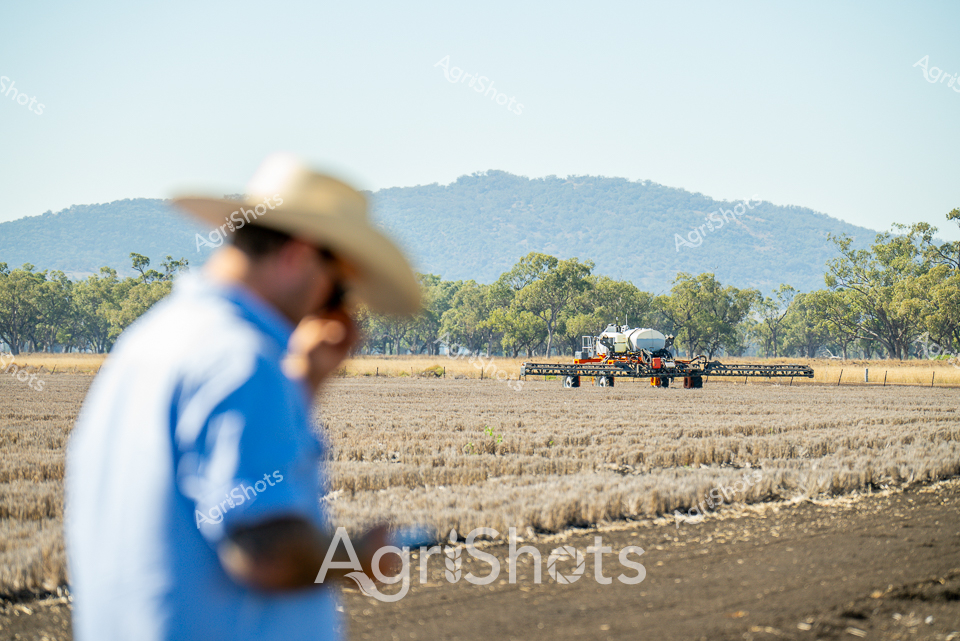
Dust motes dance in the golden autumn light of the Liverpool Plains, where agricultural innovation meets traditional farming wisdom. A high-tech camera sprayer moves methodically across a stubble-covered field, its long boom meticulously targeting weeds with precision technology. In the foreground, a farmer in a wide-brimmed sun hat and blue-and-white work shirt observes the Weedseeker in action, representing the modern agricultural approach that blends cutting-edge robotics with generations of farming expertise. The landscape unfolds in layers of earthy textures - the crisp, straw-colored stubble of the recently harvested field contrasts against the soft blue-green of distant eucalyptus trees and the misty mountain range on the horizon. The spraying rig, a marvel of agricultural engineering, moves with calculated efficiency, its sophisticated camera system identifying and treating weeds with minimal environmental impact. This scene captures the essence of contemporary Australian farming - a delicate balance of technological innovation, environmental stewardship, and the enduring spirit of rural enterprise. The expansive, sunlit landscape tells a story of adaptation, resilience, and the ongoing challenge of sustainable agricultural production in one of the world's most demanding farming environments.
 Image
Image
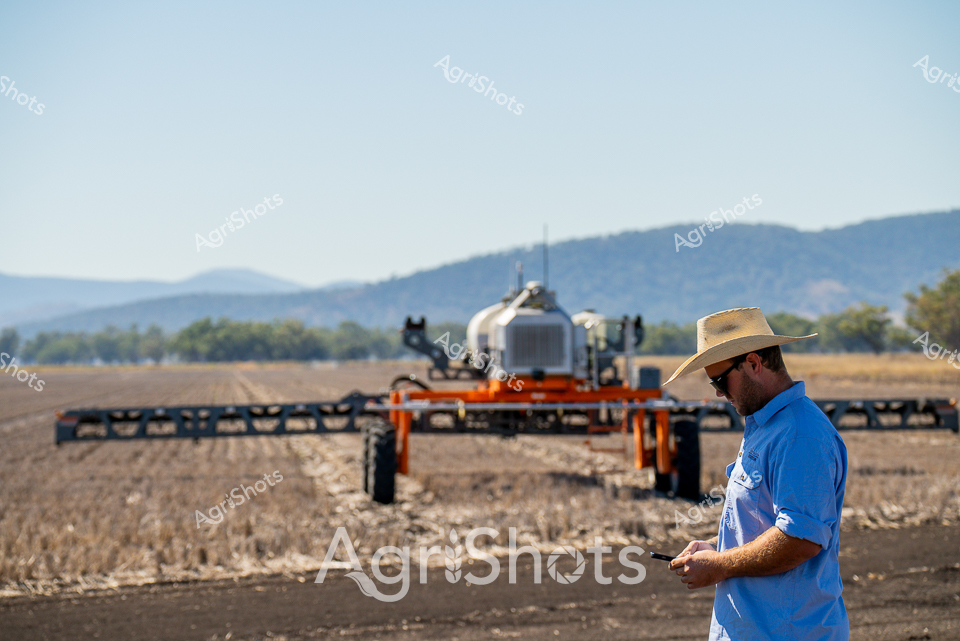
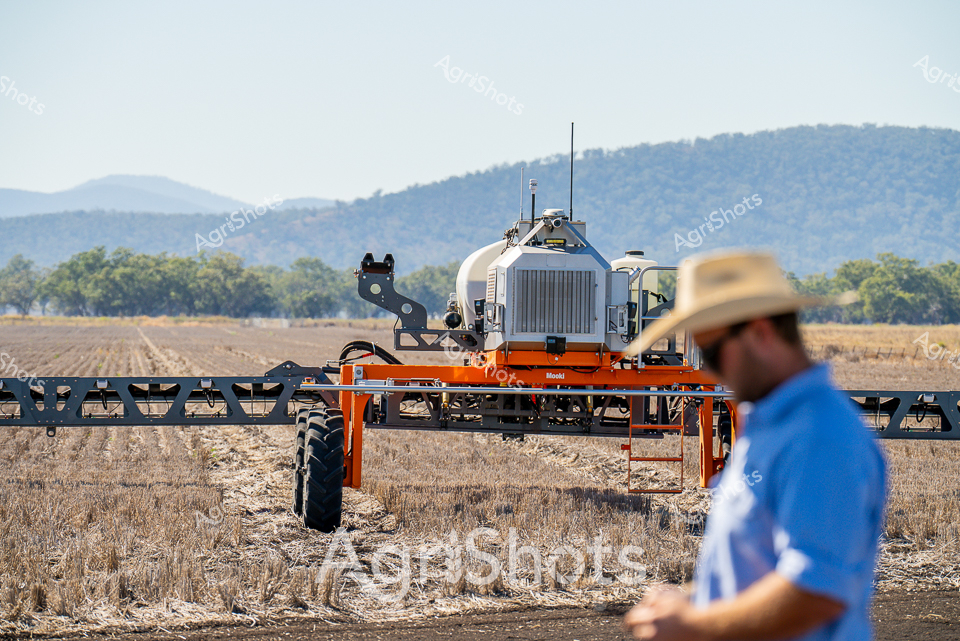
Autumn sunlight bathes the Liverpool Plains of New South Wales in soft, muted tones as a sophisticated agricultural spraying system stands ready across the harvested field. A farmer in a classic wide-brimmed Australian sun hat and crisp blue shirt operates a precision agricultural technology – a WeedSeeker camera sprayer mounted on a wide-span boom. The modern spray rig, painted in vibrant orange and white, represents cutting-edge agricultural innovation designed to target weeds with exceptional efficiency across the stubble-covered landscape. Distant blue-layered mountains frame the horizon, creating a quintessential Australian rural panorama of expansive agricultural terrain. The sophisticated spraying equipment demonstrates modern farming's technological evolution, where targeted chemical application minimizes environmental impact and optimizes resource use. The farmer's careful interaction with the machine suggests a nuanced understanding of precision agriculture, where every pass across the field is calculated and purposeful. The scene captures the intersection of traditional farming wisdom and advanced robotic technology, symbolizing the innovative spirit of contemporary Australian agricultural practice. Crisp, clear lines of the equipment contrast beautifully with the textured, post-harvest earth, telling a story of careful land management and technological sophistication.
 Image
Image
Autonomous agricultural innovation sweeps across the Liverpool Plains, where a cutting-edge robotic sprayer navigates a harvested wheat field with precision and technological sophistication. The gleaming white and orange machine stands mounted on robust wheels, its extended boom arms fitted with advanced sensor technology, poised to target specific weeds with surgical accuracy. A farmer in a blue shirt and wide-brimmed sun hat monitors the autonomous vehicle's progress, representing the modern intersection of agricultural expertise and robotic innovation. Mountain ranges rise softly in the misty background, creating a quintessential Australian rural landscape of golden stubble and distant blue-green hills. The scene captures the emerging world of agricultural technology, where swarm robotics and targeted spraying techniques promise more sustainable and efficient farming practices. Crisp autumn light bathes the landscape, highlighting the technological marvel against the textured, post-harvest terrain of the New South Wales countryside.
 Image
Image
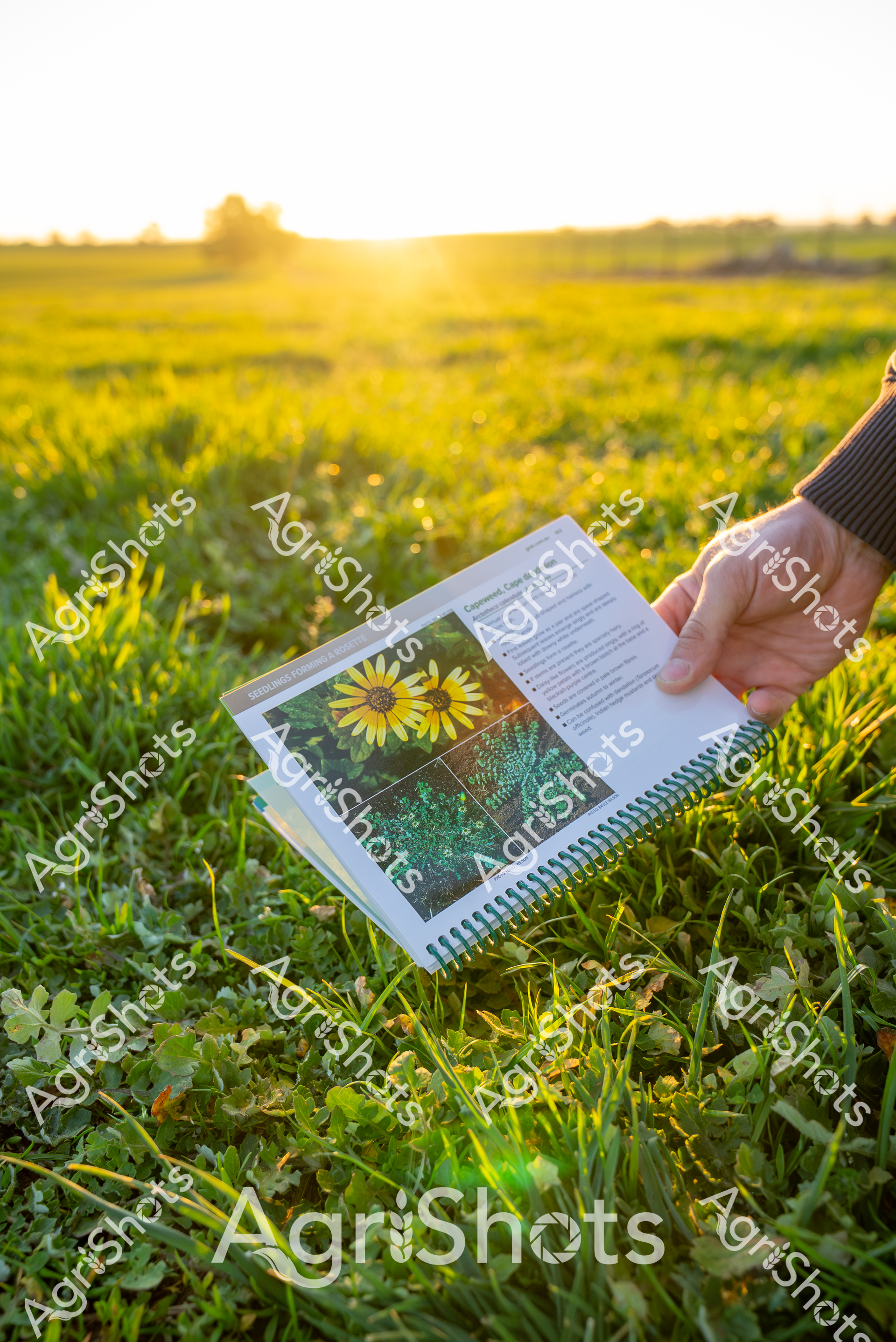
A hand holds an open guidebook about weeds in a lush green field bathed in golden sunlight. The book displays images of yellow flowers, likely capeweed, against a backdrop of vibrant grasslands in the Riverina region of New South Wales. The scene captures the agricultural landscape and botanical research in a serene, natural setting.
 Image
Image
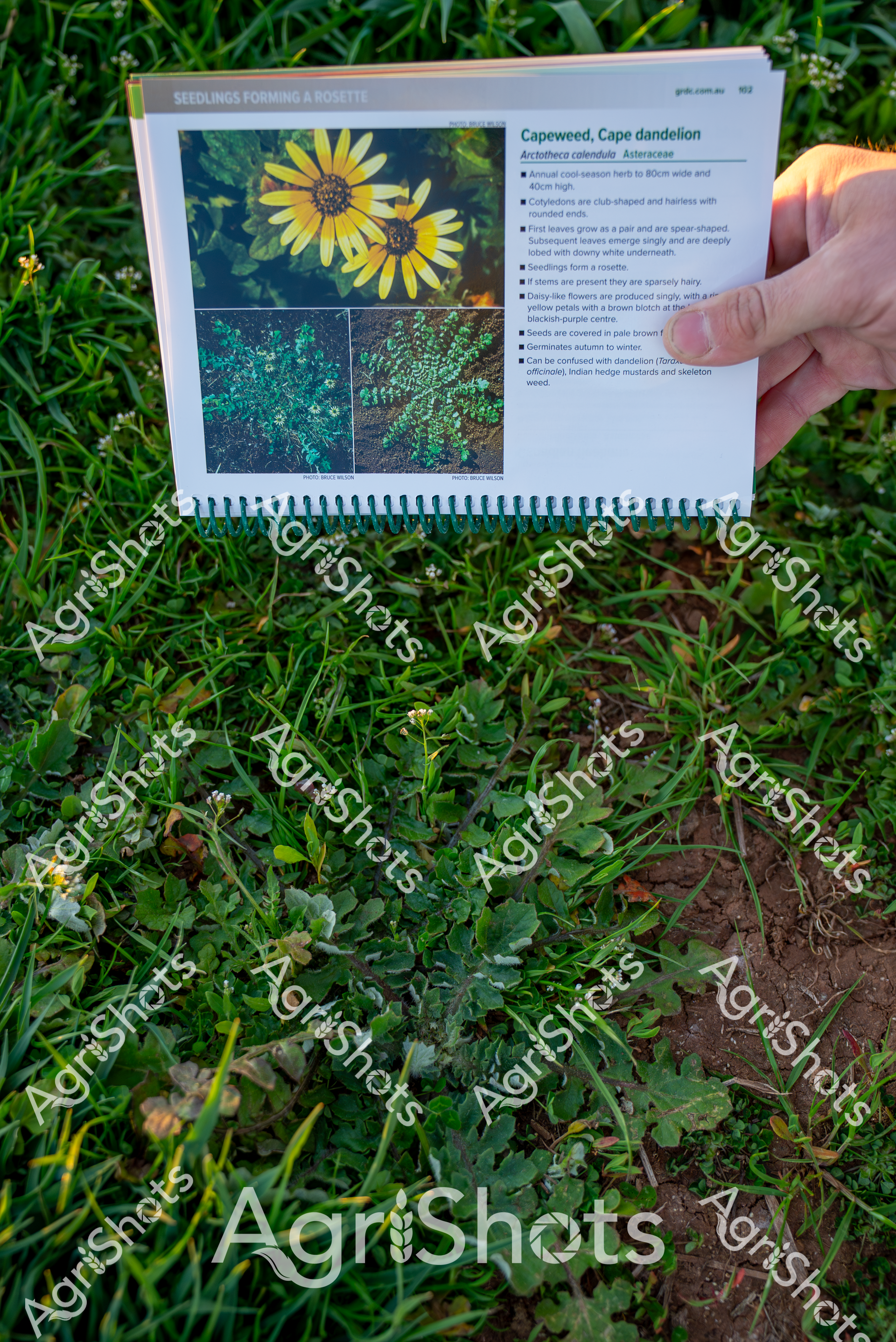
This image showcases a detailed botanical identification guide for Capeweed (Cape dandelion) featuring vibrant yellow flowers and seedling growth stages. The informational card is placed on a grassy background, highlighting the weed's characteristics and growth patterns in what appears to be a field or agricultural setting in the Riverina Region of New South Wales.
 Image
Image
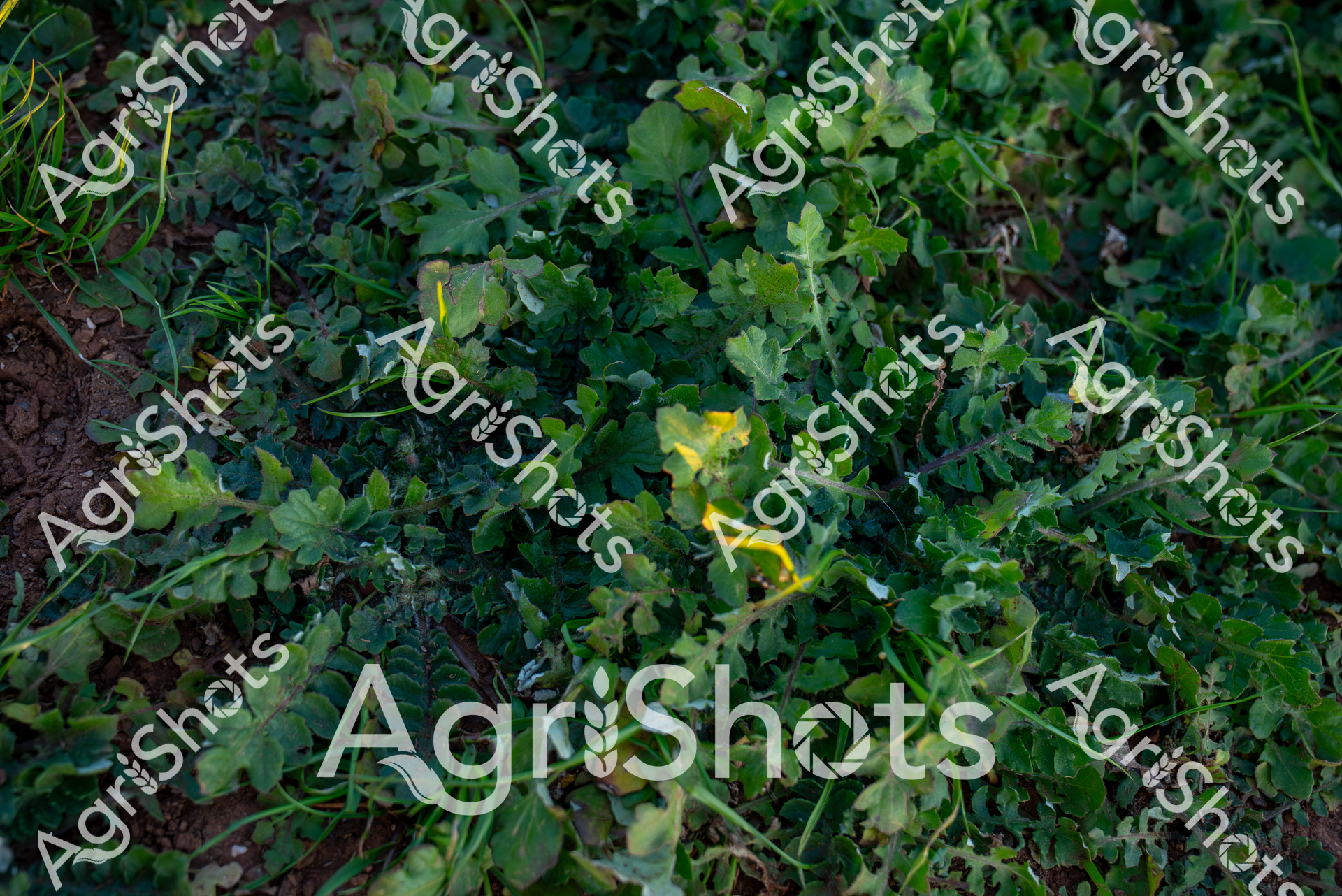
Dense clusters of capeweed with distinctive green serrated leaves and small yellow flowers, growing among soil and other vegetation in what appears to be an agricultural setting in the Riverina region of New South Wales. The weeds are thick and varied in green shades, spreading across the ground in a tangled, interconnected pattern typical of invasive plant species in Australian farmland.