Results for “mining”
 Image
Image
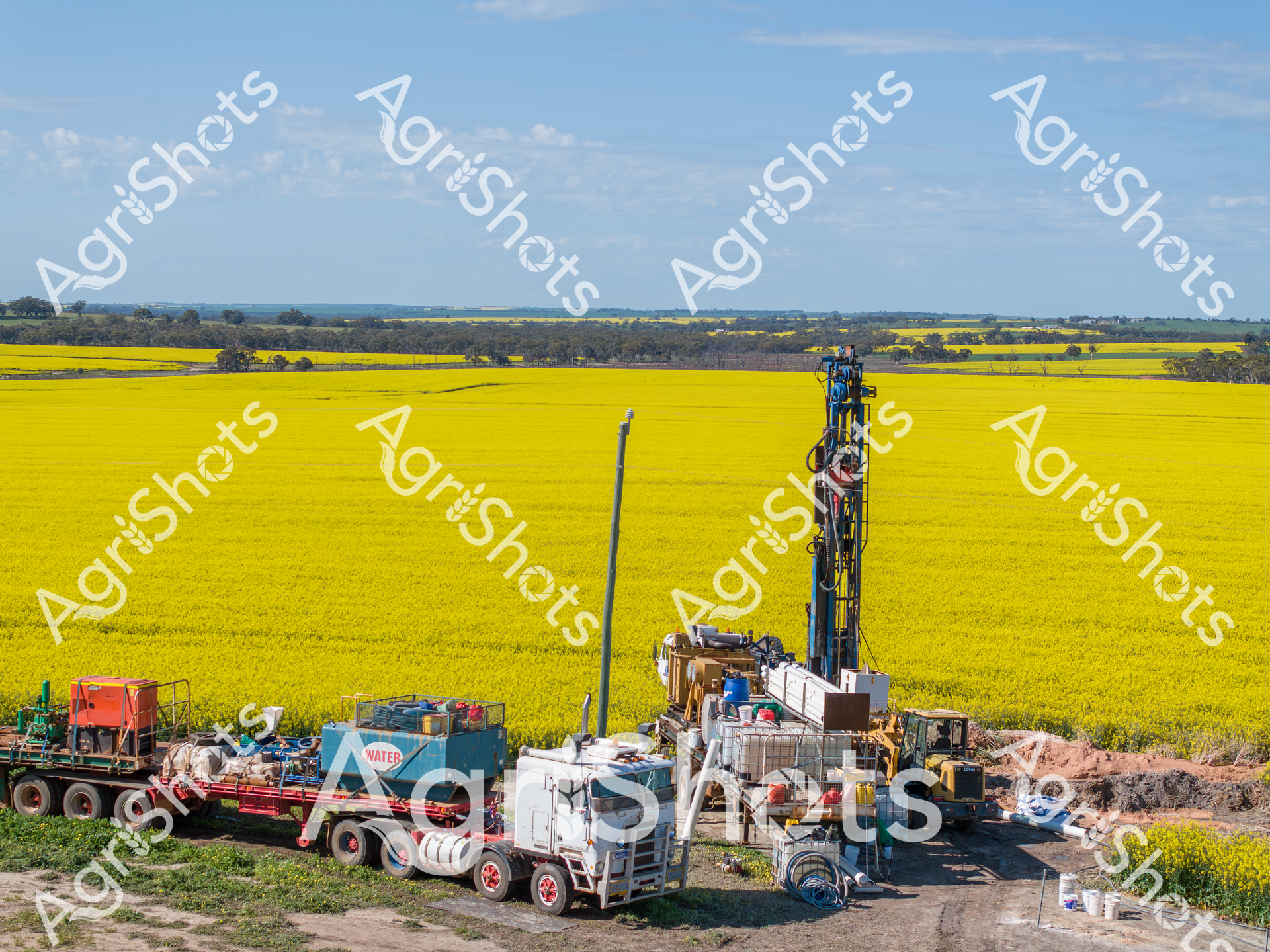
A water drilling rig operates in the midst of a vibrant yellow canola field in Western Australia's Wheatbelt region during springtime. The industrial machinery stands in stark contrast to the brilliant flowering crop, capturing the agricultural landscape's essence as workers drill a bore to access underground water resources.
 Image
Image
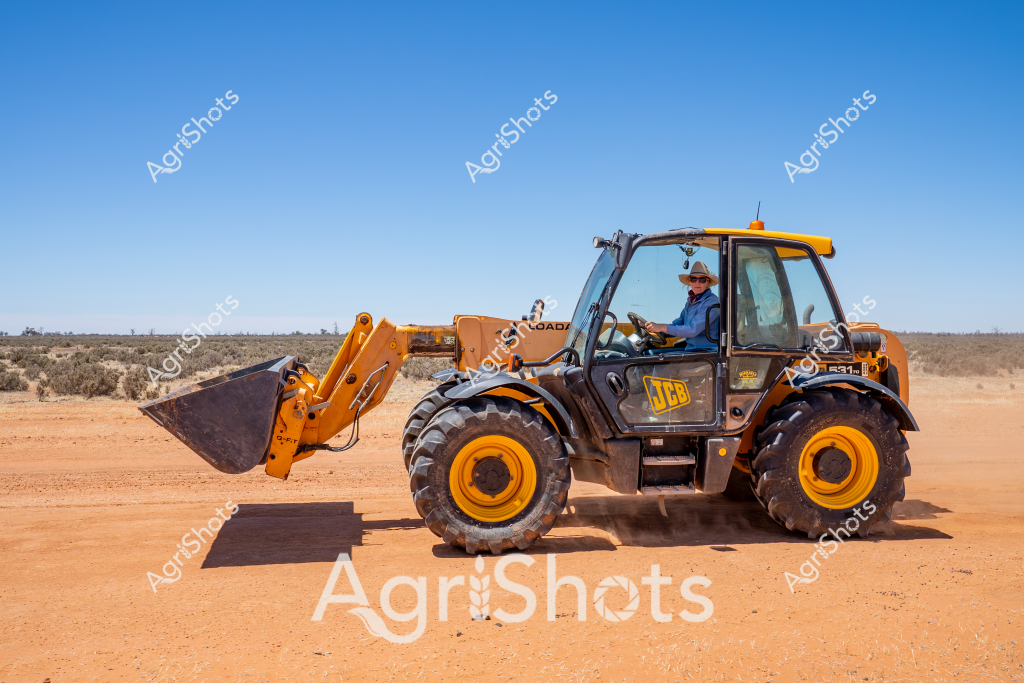
A JCB telehandler stands ready in a sun-drenched, arid landscape, its vibrant yellow and black color scheme contrasting sharply against the rich terracotta-colored dirt and sparse scrubland. A man wearing work attire and a broad-brimmed hat operates the heavy machinery, positioning the large front bucket against a clear blue sky. The robust agricultural vehicle features substantial chunky tyres designed for navigating challenging rural terrain, with the distinctive JCB branding prominently displayed on its side panel. The telehandler appears well-maintained and prepared for agricultural or construction work, typical of machinery used in remote Australian farming and resource extraction regions. Its muscular profile suggests powerful lifting capabilities, essential for tasks like moving materials, loading supplies, or supporting infrastructure development in challenging outback environments. The surrounding landscape hints at a remote location - possibly in Western Australia, South Australia, or the Northern Territory - with low scrub vegetation and a vast, open horizon stretching into the distance. The harsh, bright lighting and cloudless sky indicate midday conditions in a hot, dry agricultural or mining region.
 ▶ Video
Aerial view of a large agricultural sorting and storage facility with multiple concrete lanes and stockpiles of aggregate or mining materials. Multiple vehicles are parked around the structured grid, with industrial buildings and roadways visible in the surrounding landscape. The facility appears to be a well-organized material processing or recycling center with systematic storage and transportation infrastructure.
 Image
Image
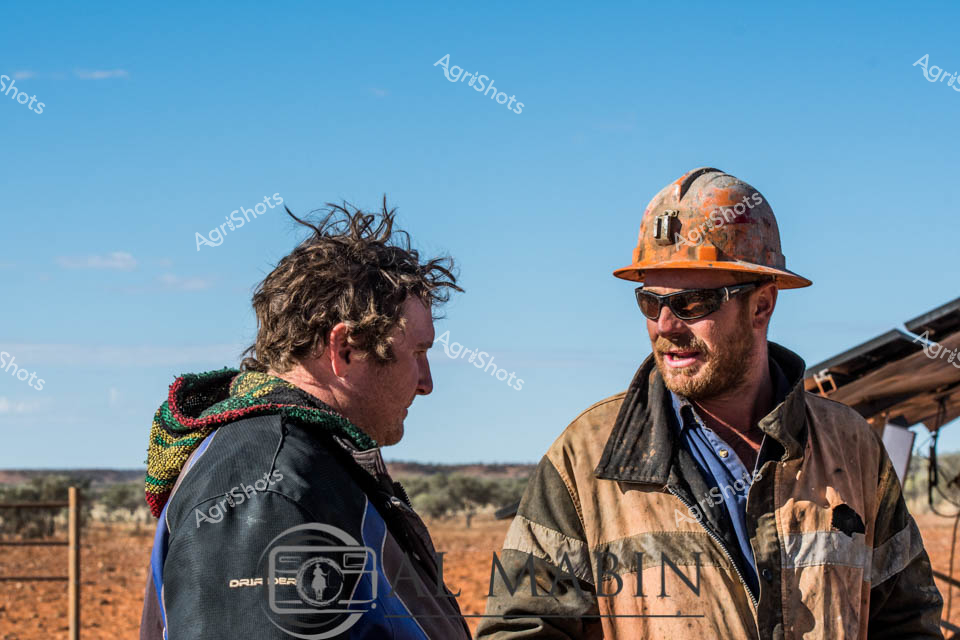
Dusty Outback Communication: Rural Workers Connect Harsh sunlight bathes a remote station landscape, where two workers engage in an intense conversation against a stark terracotta and blue horizon. One worker wears a weathered orange hard hat, protective sunglasses, and a rugged tan work jacket - typical of mining or exploration personnel in remote Australian terrain. His companion sports a dark jacket with a multicolored knitted hood, his wind-tousled hair suggesting hours of outdoor labor. Their body language suggests a focused discussion, perhaps troubleshooting a technical challenge or planning the next phase of work. The arid background reveals a classic Central Australian setting - sparse vegetation, reddish earth, and an expansive sky that speaks to the challenging environments where resource and agricultural workers build Australia's critical infrastructure. Their interaction captures the collaborative spirit of remote industry, where communication and mutual understanding are as crucial to survival as technical skill.
 Image
Image
Vast copper-red earth stretches to the horizon, punctuated by scattered eucalyptus and acacia trees, revealing the harsh beauty of a remote Queensland cattle station. A compact mining or water bore installation stands isolated in the arid landscape, its steel water tank and support infrastructure breaking the ochre monotony with industrial precision. Dusty vehicle tracks wind across the terracotta-colored ground, suggesting recent movement of equipment or personnel essential to pastoral operations. Sparse native vegetation clings tenaciously to the rocky soil, demonstrating the resilient ecosystem of Australia's interior. The brilliant clarity of the sky hints at a crisp, dry morning, typical of central Australian rangelands where agricultural infrastructure represents human endurance against an unforgiving environment. This aerial perspective captures the essence of remote resource extraction and agricultural enterprise - a testament to human adaptation in one of the world's most challenging landscapes.
 Image
Image
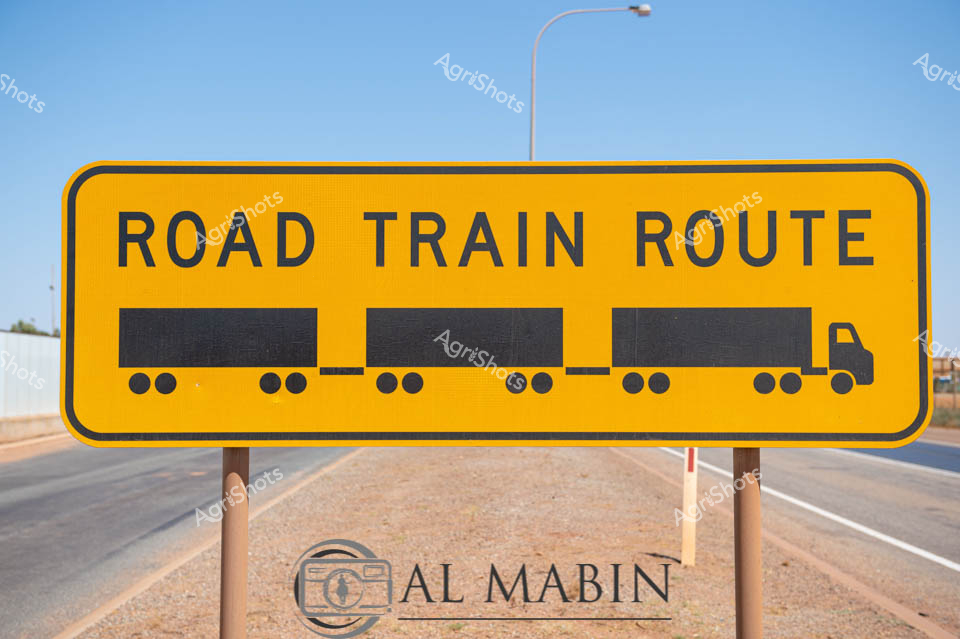
Road Train Route signage marks the arterial path of Australia's inland transportation network, capturing the essence of logistical infrastructure in the arid Northern Territory landscape. The vibrant yellow sign stands boldly against a clear blue sky, with a stylized truck and trailer configuration illustrating the unique long-haul vehicles that traverse vast distances across remote agricultural regions. Mounted on rusty brown poles against a dusty, ochre-colored roadside, the sign represents the critical lifeline of freight movement that connects isolated farming and mining communities. This road sign embodies the rugged spirit of Australian outback logistics, where road trains—massive multi-trailer trucks—are the primary means of transporting livestock, grain, mining equipment, and essential supplies across thousands of kilometers of challenging terrain. The crisp graphic design and industrial-strength signage speak to the resilience and efficiency required to sustain agricultural and resource industries in one of the world's most demanding environments.
 Image
Image
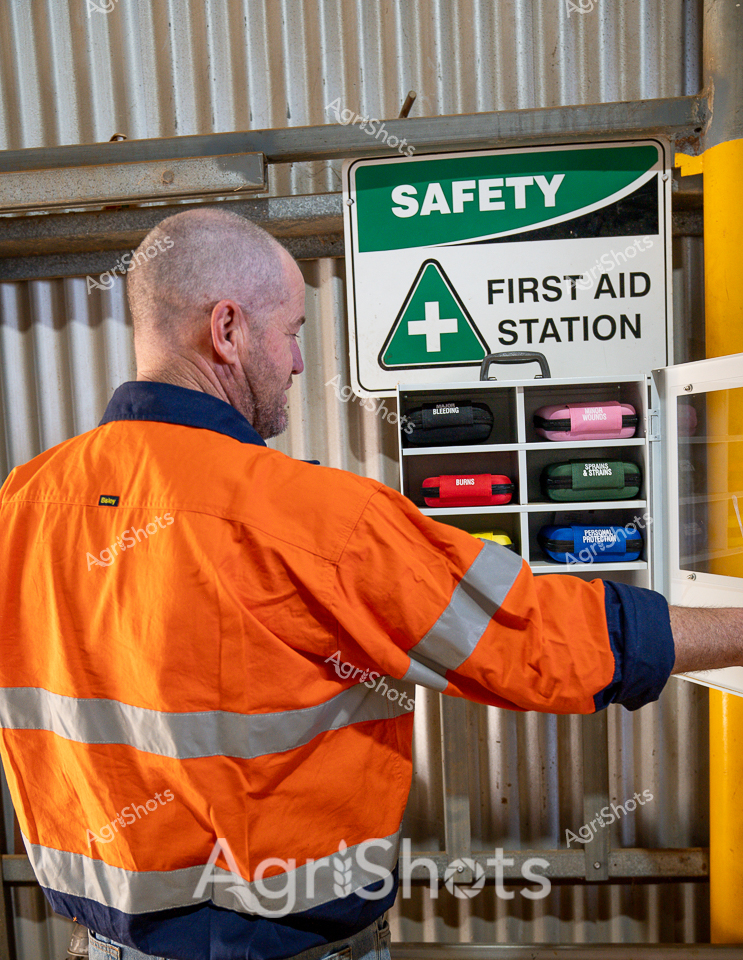
A workplace safety professional in a high-visibility orange safety vest with reflective stripes stands before a First Aid Station, meticulously organizing emergency response kits at what appears to be a rural industrial site in Western Australia. The corrugated metal backdrop and robust first aid cabinet suggest a remote agricultural or mining environment where rapid medical response is critical. Labeled kit bags in various colors - green, red, blue - are carefully arranged in the station's compartments, each designed for specific injury types like burns, small wounds, and serious emergencies. The worker's careful attention to the safety equipment reflects the agricultural sector's commitment to worker protection and proactive risk management. The green and white safety signage, crisp and prominent, underscores the systematic approach to workplace health in challenging rural environments. This scene captures the essential preparedness and care fundamental to Australia's agricultural and resource industries, where worker safety is paramount in harsh and demanding work conditions.
 Image
Image
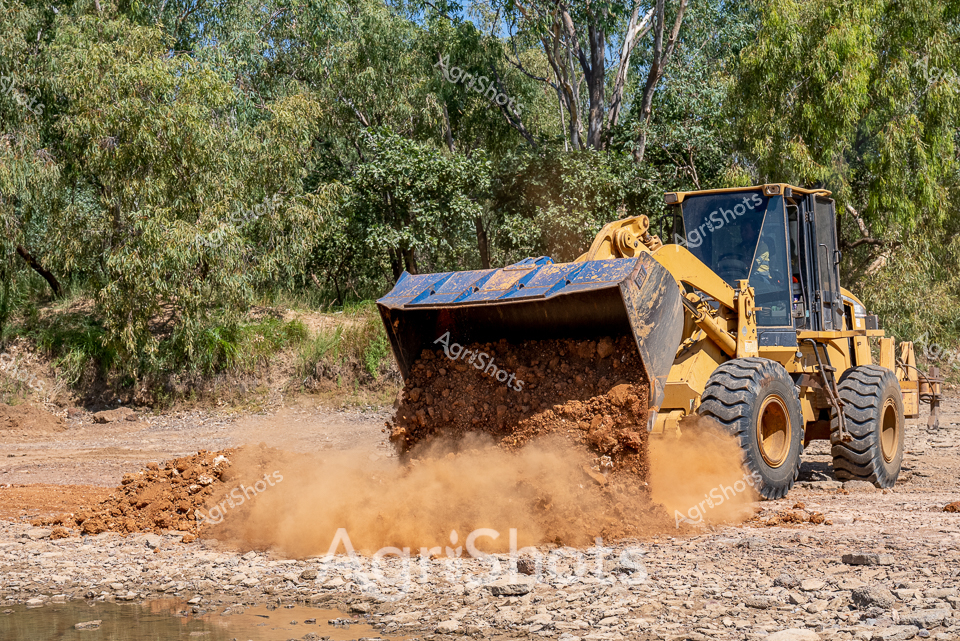
A yellow wheel loader rumbles across a dusty earthen clearing, its massive bucket loaded with reddish-brown soil and rock. Surrounded by the muted green and grey-blue foliage of native eucalyptus trees, the heavy machinery kicks up a billowing cloud of ochre dust as it dumps its load. The rugged landscape suggests a remote agricultural or mining site in Western Australia's expansive interior, where robust equipment is essential for land preparation and infrastructure development. Sunlight filters through the gum trees, casting sharp shadows and highlighting the powerful machinery's bright yellow paintwork against the earthy terrain. The scene captures the raw industrial energy of rural Australian resource management - a testament to the mechanical power required to work the continent's challenging landscapes. Sharp-edged stones and loose soil scatter beneath the loader's massive wheels, emphasizing the dynamic force of modern agricultural and earthmoving technology in shaping the Australian environment.
 Image
Image
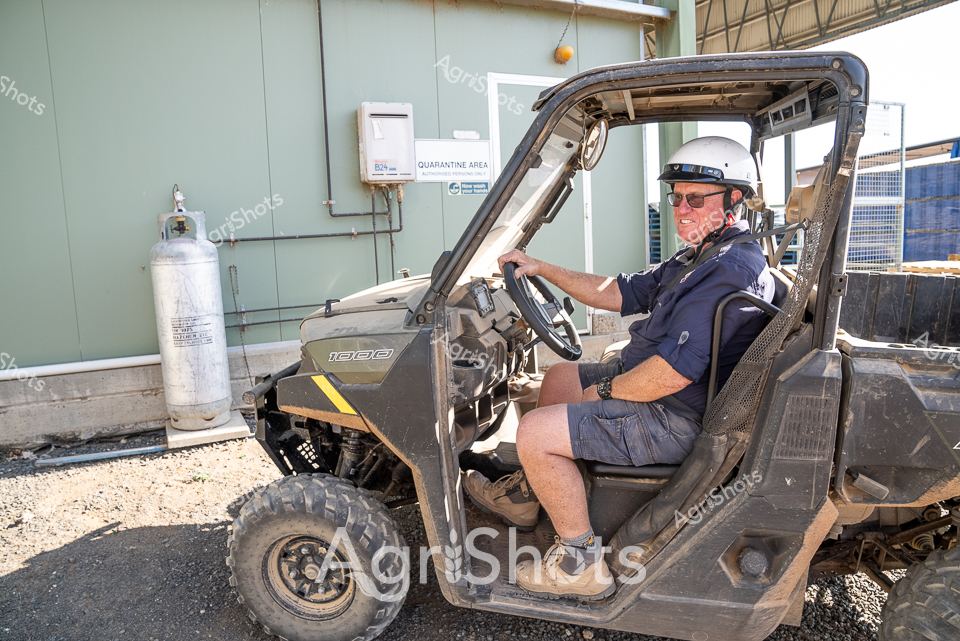
Navigating the quarantine area, a seasoned site worker controls a robust utility terrain vehicle (UTV) in a controlled industrial setting. Wearing a navy uniform and protective white helmet, the operator sits firmly behind the wheel of a rugged dark grey Can-Am Defender 1000, positioned near a gas cylinder and biosecurity signage. The compact off-road vehicle's aggressive all-terrain tires and robust construction suggest it's designed for challenging work environments like mining, agricultural, or construction sites. Sunlight casts sharp shadows across the gravel ground, highlighting the meticulous safety protocols evident in the carefully marked workspace. The operator's sunglasses and confident posture reflect years of experience managing complex workplace logistics, embodying the precise and safety-conscious culture of Australian industrial workplaces. This scene captures the intersection of modern agricultural technology, stringent workplace safety standards, and the human expertise required to manage sophisticated operational environments.
 Image
Image
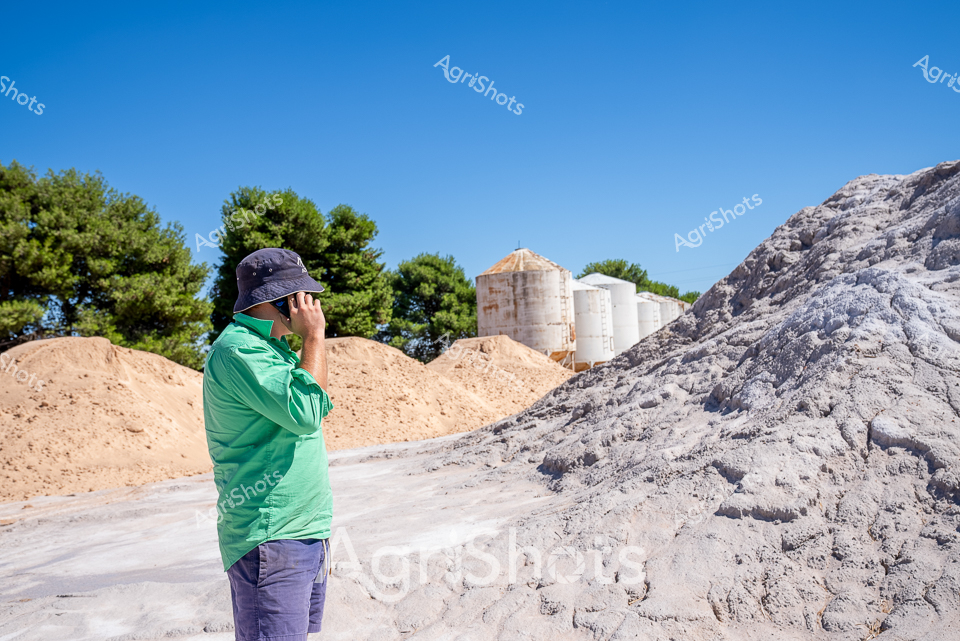
Limestone quarry under brilliant blue skies, a farm worker in vivid emerald green shirt and navy cap surveys vast piles of crushed white stone. Towering cylindrical storage silos rise in the background, weathered and functional against a backdrop of pine trees, marking this as an agricultural materials processing site. The worker stands contemplatively, observing the raw mineral landscape - mounds of pale sandy and ash-colored aggregate waiting to be sorted, transported, and utilized in construction and agricultural applications. Textural contrasts dominate the scene: smooth industrial containers, rough-hewn stone piles, and the crisp lines of the worker's protective workwear. Brilliant sunlight reveals every granular detail of the stone, suggesting this is a mid-morning moment during harvest season, when agricultural and mining operations are in full productive swing. The scene speaks to the essential infrastructure of rural industry - the unseen backbone of agricultural and construction supply chains that transform raw materials into essential resources.
 Image
Image
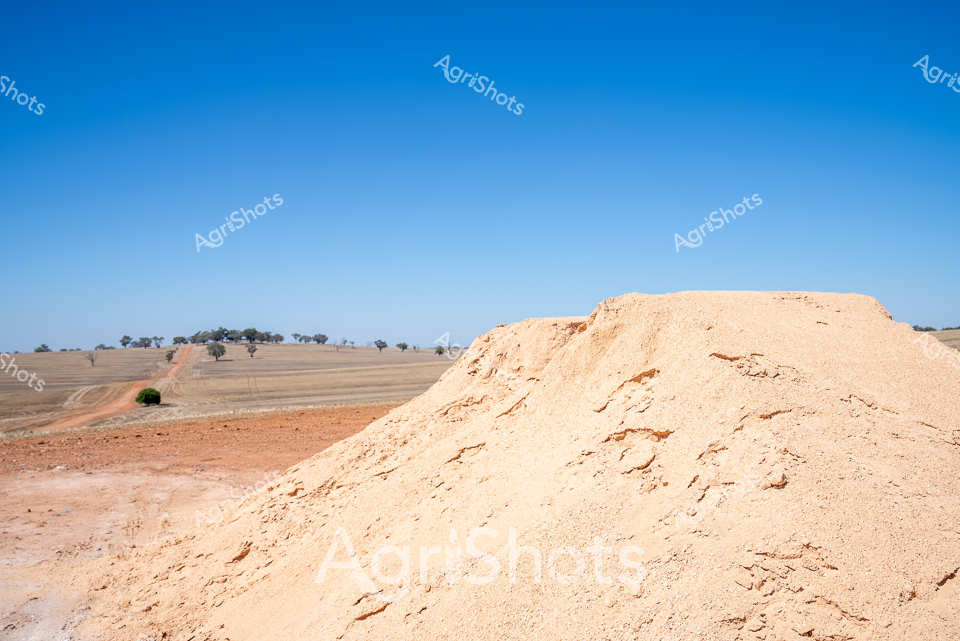
Towering against an expansive azure sky, a massive mound of gypsum rises from the arid agricultural landscape of the Riverina region in New South Wales. The pale sandy-beige pile dominates the foreground, its irregular surface textured with wind and machinery marks, suggesting recent mining or agricultural processing activity. In the mid-distance, a rust-colored dirt track winds through sparse paddocks, lined with scattered eucalyptus trees that punctuate the stark rural horizon. The harsh summer light bleaches the landscape, creating a palette of ochre, terracotta, and pale gold that speaks to the challenging agricultural environment of inland Australia. This gypsum heap represents a critical component of soil management - a mineral used to improve soil structure, reduce erosion, and enhance crop productivity in challenging dryland farming conditions. The image captures the raw, unadorned essence of agricultural resource management, where every element of the landscape is carefully considered and utilized to support farming sustainability.
 Image
Image
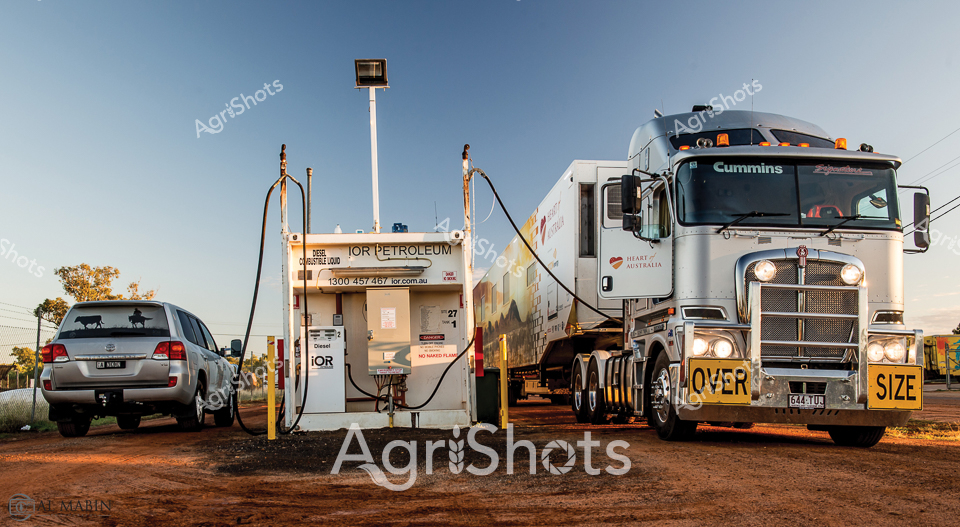
Blazing sunset light bathes a remote outback refueling station where a massive Cummins-branded road train stands ready for its next long-haul journey. The industrial-grade IOR Petroleum fuel pump towers over the white and silver heavy vehicle, its "OVERSIZE" warning plates signaling the truck's substantial dimensions across Australia's vast interior landscapes. Ruddy ochre ground contrasts against the crisp blue twilight sky, capturing the rugged infrastructure that connects remote communities and supports agricultural supply chains. Modern SUV and prime mover showcase the technological evolution of transportation in rural Australia, with precision engineering built to withstand extreme environmental conditions. The carefully positioned lighting and composition highlight the essential role of transportation infrastructure in supporting agricultural and mining industries across Queensland's challenging terrain. This scene epitomizes the resilience, scale, and technological sophistication of Australian rural logistics, where robust machinery and strategic fuel stations enable commerce across seemingly impossible distances.
 Image
Image
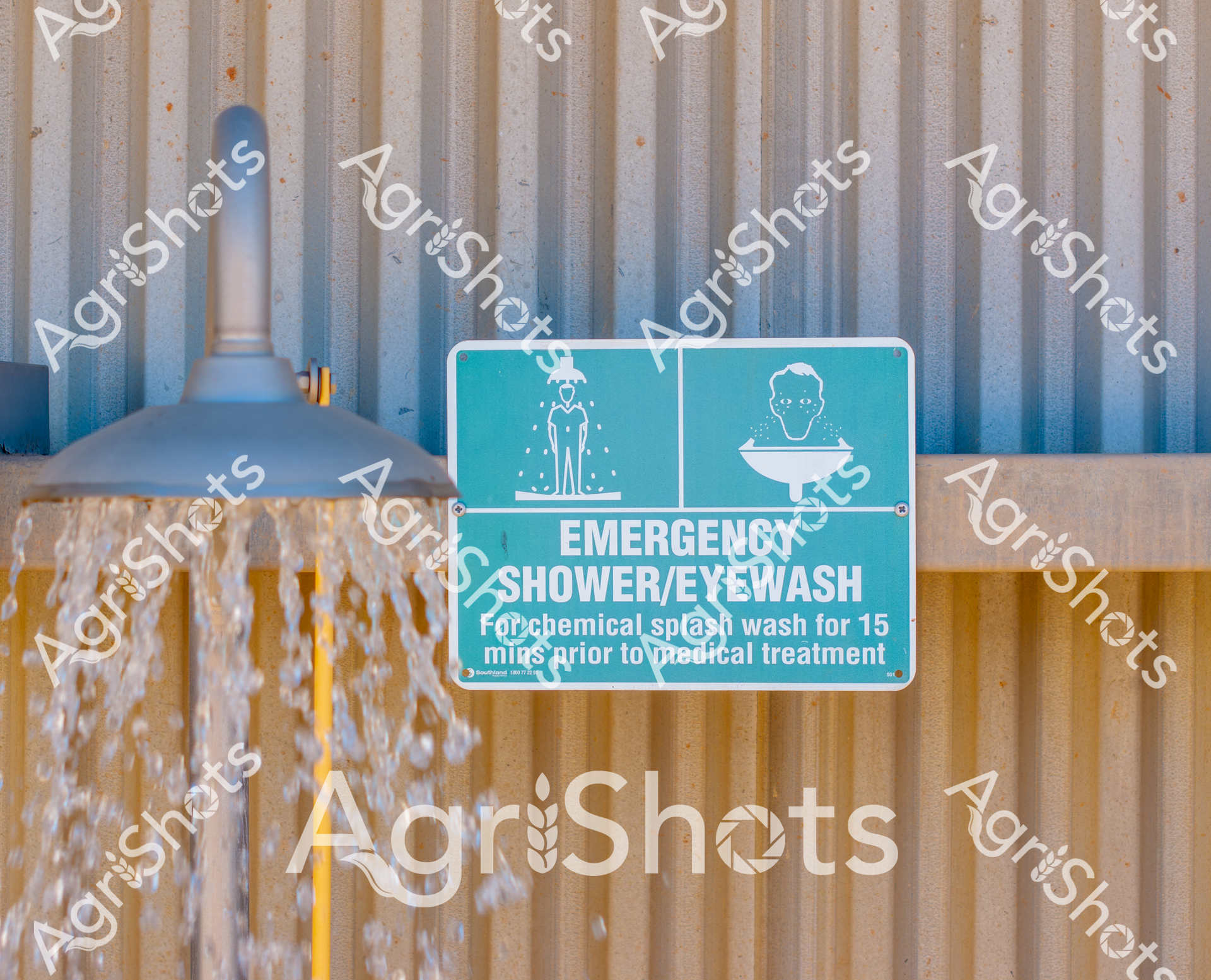
Emergency safety protocols come into sharp focus in this critical workplace snapshot. A teal-colored emergency shower and eyewash station stands ready against a weathered corrugated metal backdrop, its signage crystal clear and instructive. Cascading water streams dramatically from the blue safety shower head, representing the crucial first response to potential chemical exposure - a 15-minute decontamination procedure vital for preventing serious injury. The industrial setting suggests a harsh working environment, likely in agricultural processing, mining, or chemical handling where rapid emergency response can mean the difference between minor incident and major trauma. Crisp white iconography on the sign depicts a figure being doused with water, emphasizing the universal language of workplace safety communication.