Results for “interaction”
 Image
Image
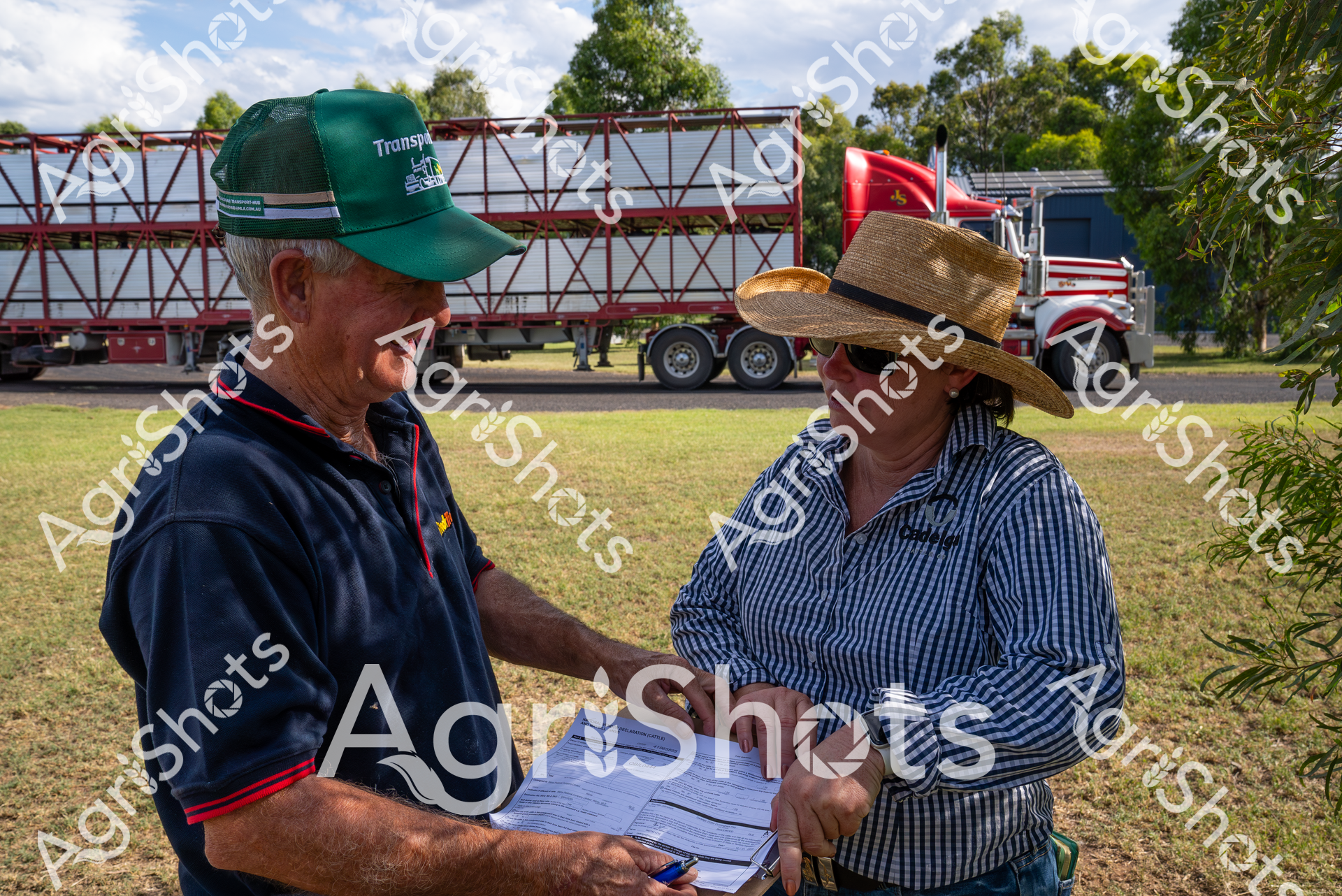
Rural transport and agricultural collaboration unfold against a backdrop of livestock trucks and open grasslands. A representative wearing a green Transit cap engages with a woman in a wide-brimmed straw hat, exchanging paperwork in what appears to be a vendor declaration interaction. The red semi-trailer and metal infrastructure suggest a transportation hub in rural New South Wales, with lush green grass and eucalyptus trees framing the scene. The pair's body language indicates a professional exchange, likely discussing livestock transportation or agricultural logistics. The man's navy polo and the woman's checked blue and white shirt reflect practical workwear typical of the agricultural sector. Their attentive posture and the documents between them highlight the importance of detailed record-keeping in rural industries. The summer landscape radiates warmth, with bright sunlight illuminating the grassy area and creating sharp shadows. This scene captures the collaborative spirit of Australian agriculture, where transportation, documentation, and interpersonal connections are crucial to maintaining efficient supply chains and livestock management.
 Image
Image
A woman in a black shirt opens a door to another woman wearing a pink floral top and sunglasses, sitting on a chair in a bright, minimalist interior space. The scene appears to be in a professional setting, possibly a beauty salon or business consultation room in the Riverina region of New South Wales.
 Image
Image
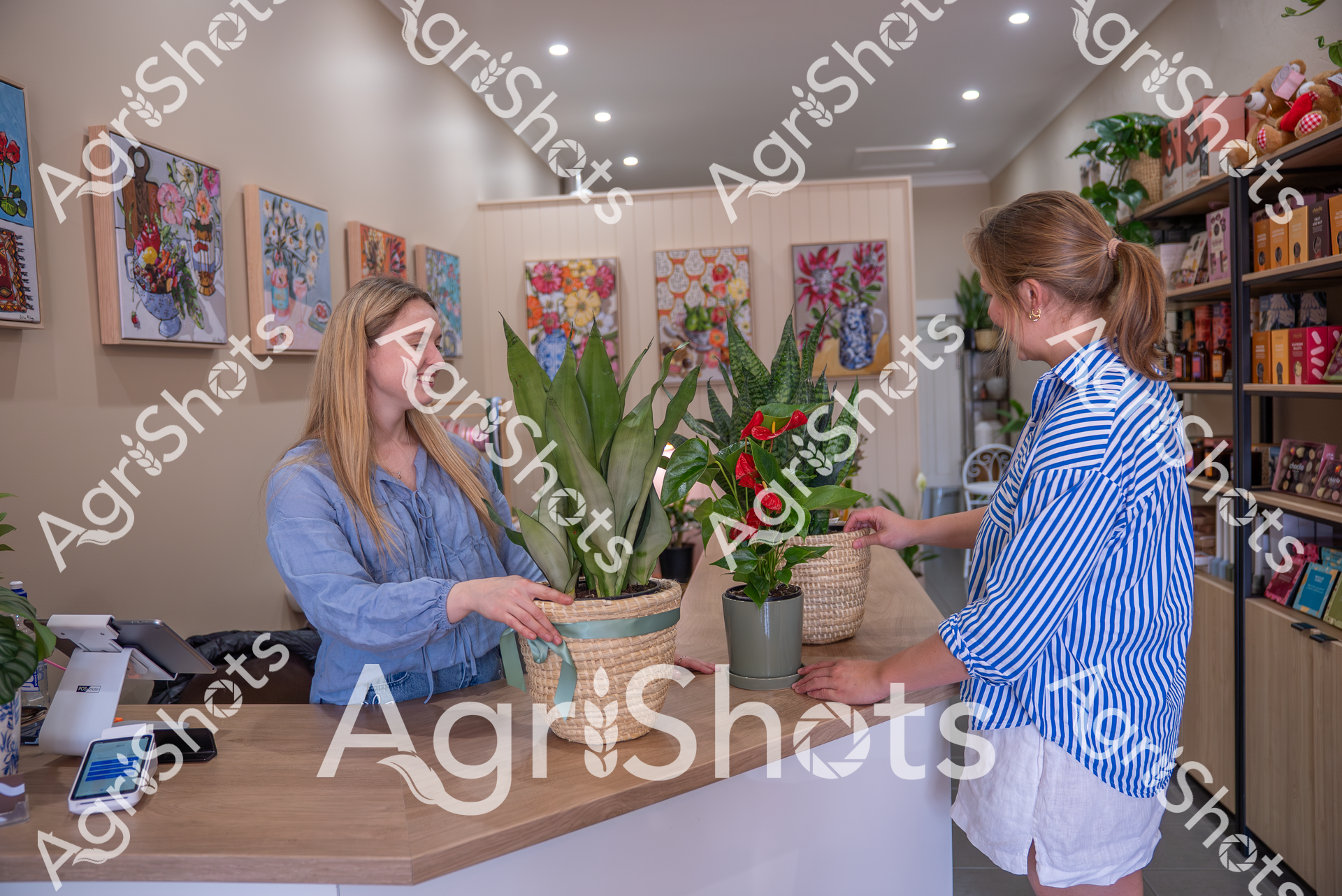
A woman in a blue shirt assists another woman in a blue and white striped shirt at a plant shop. Colorful floral paintings decorate the wall behind them, and potted plants are displayed on the counter. The interior looks bright and welcoming, with shelves of products in the background.
 Image
Image
Two women share a warm moment in a charming gift shop, with one in a patterned dress handing a flower to another woman in a white top. The shop is filled with home decor items, clothing, and accessories, creating a cozy retail atmosphere that suggests a local, community-focused business.
 Image
Image
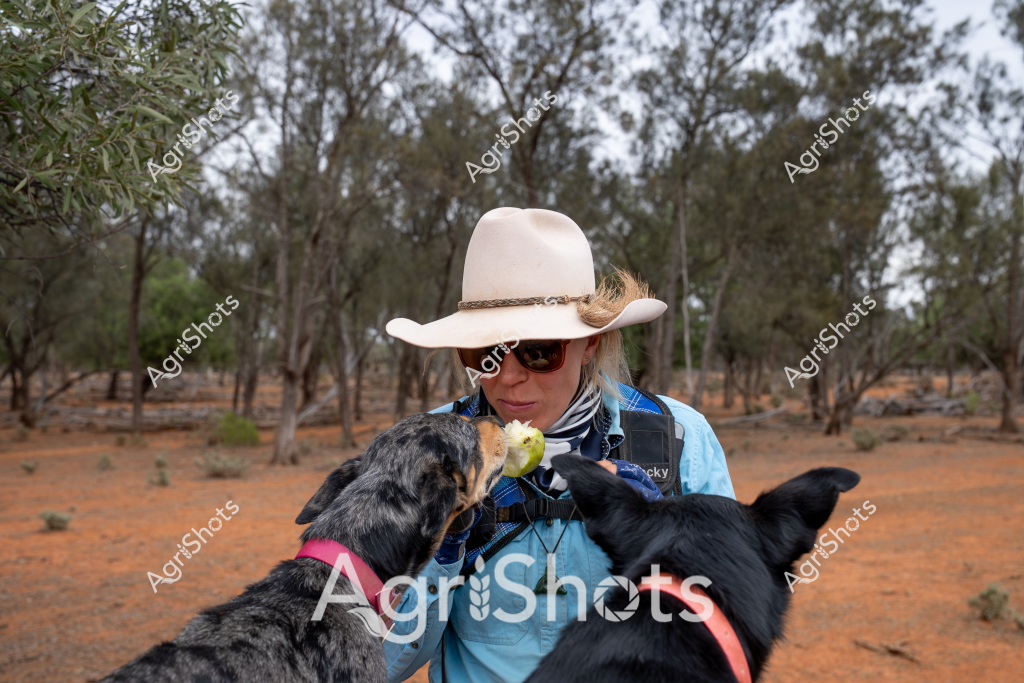
A woman wearing a white wide-brimmed hat and sunglasses stands in a dry, arid landscape with sparse trees and reddish soil, holding two working dogs. One dog appears to be taking a bite from an apple or similar fruit she is offering. The woman is dressed in a blue shirt with a patterned scarf, suggesting she is likely a livestock manager or farm worker in an outback or rural Australian setting. The surrounding landscape looks like a typical arid region, with scrubby trees and open ground, characteristic of many inland agricultural areas in Australia. Her interaction with the dogs indicates a close working relationship, common among rural workers who rely on well-trained canine companions for managing livestock or farm tasks. The scene captures the essence of rural Australian agricultural life - resilient, practical, and closely connected to the challenging landscape.
 Image
Image
A woman in a pink sweater stands near the entrance of a Country Health medical center, speaking with a man in a blue jacket and black beanie. The scene appears to be at a rural community health service location in South Australia's South East Region during winter, capturing a moment of local healthcare interaction.
 Image
Image
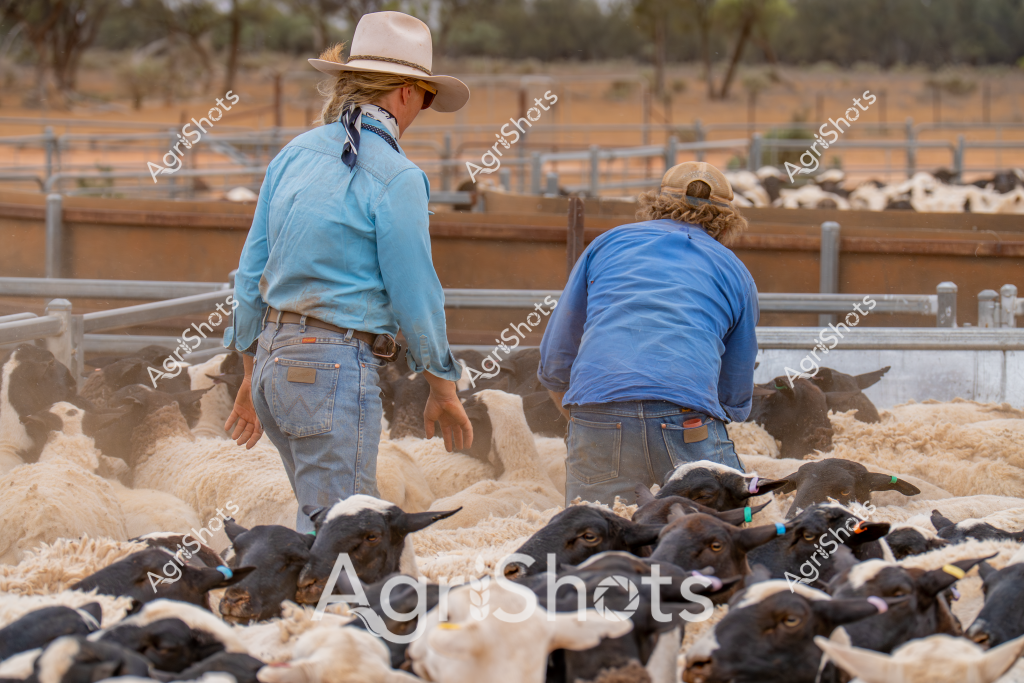
Two women workers manage a large flock of black and white sheep in a dusty livestock yard, wearing blue work shirts and wide-brimmed hats typical of Australian agricultural settings. The scene captures a moment of intense sheep handling, with the women carefully navigating through the densely packed animals, likely preparing them for shearing or movement between paddocks. The livestock yard features sturdy metal fencing in warm earth tones, creating a structured environment for managing the sheep herd. Black-faced sheep with white wool intermingle, creating a textured landscape of animal bodies against the dry, dusty ground. A wide-brimmed hat and blue work shirt provide protection from the harsh Australian sun, highlighting the practical clothing essential for rural workers. The image conveys the hard physical work and skill required in sheep farming, showcasing the close interaction between agricultural workers and the livestock in a quintessential Australian rural setting.
 Image
Image
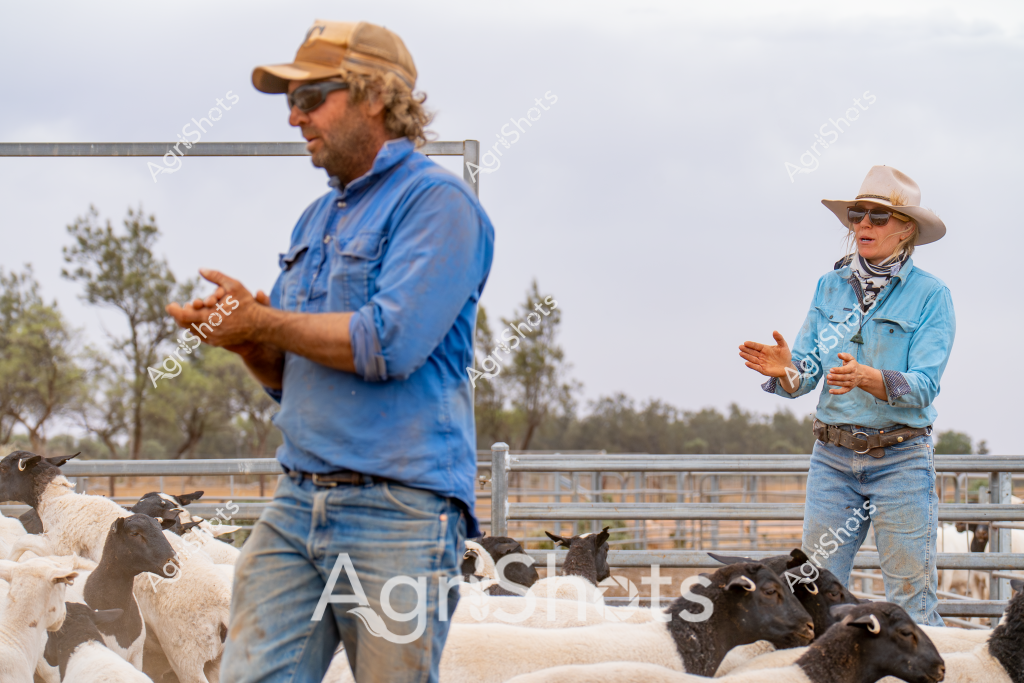
Two experienced farmers in blue work shirts and wide-brimmed hats manage a mixed flock of black and white sheep in a rural livestock yard. A man and a woman stand on opposite sides of a metal livestock pen, both using hand gestures to guide and control the movement of the sheep. The sheep appear to be a mix of dark and light-colored breeds, clustered tightly within the metal gate enclosure. The background reveals a sparse rural landscape with scattered trees and an overcast sky, typical of Australian agricultural settings. Both farmers are wearing practical farm attire - blue chambray shirts, denim jeans, and protective wide-brimmed hats with sunglasses, indicating their professional approach to livestock management. The scene captures the collaborative nature of sheep farming, where coordinated human interaction and careful animal handling are essential skills.
 Image
Image
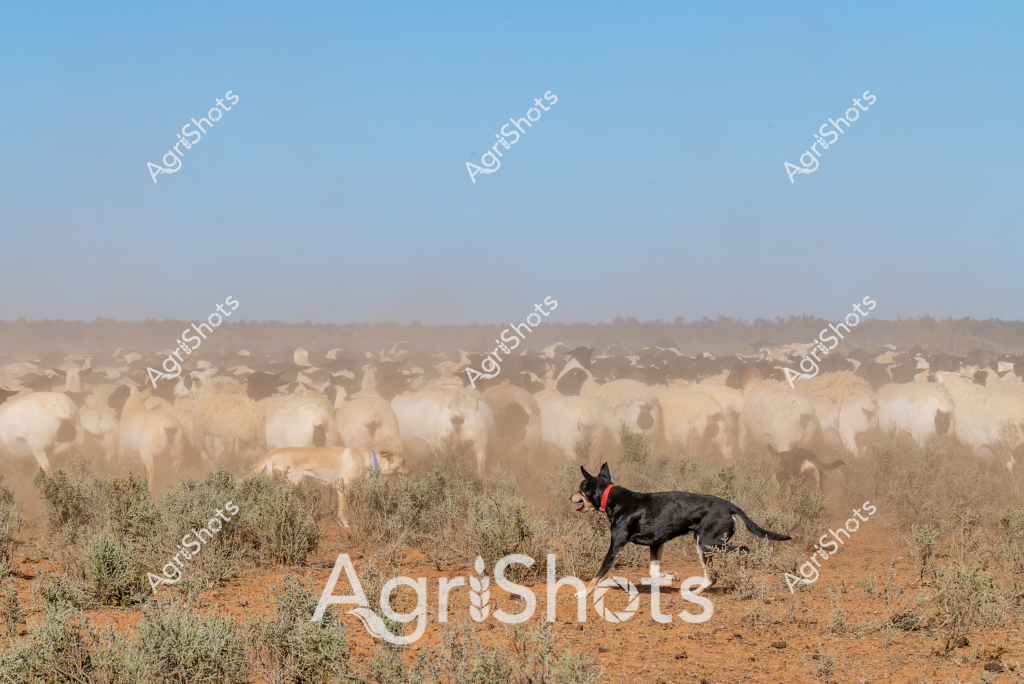
A black working dog expertly herds a large mob of light-colored goats through a dusty, arid landscape in rural Australia. The dense herd kicks up a substantial cloud of red dirt and dust, creating a hazy atmosphere across the sparse, scrubby terrain. Scattered low bushes and saltbush punctuate the reddish-orange ground, while a pale blue sky stretches overhead. The agile black dog, wearing a bright red collar, moves with precision around the goat herd, demonstrating the critical role of working dogs in managing livestock across challenging Australian outback environments. The scene captures the intense movement and dynamic interaction between the herding dog and the tightly clustered goats, highlighting the skill and partnership required in managing livestock across vast, challenging pastoral landscapes.
 Image
Image
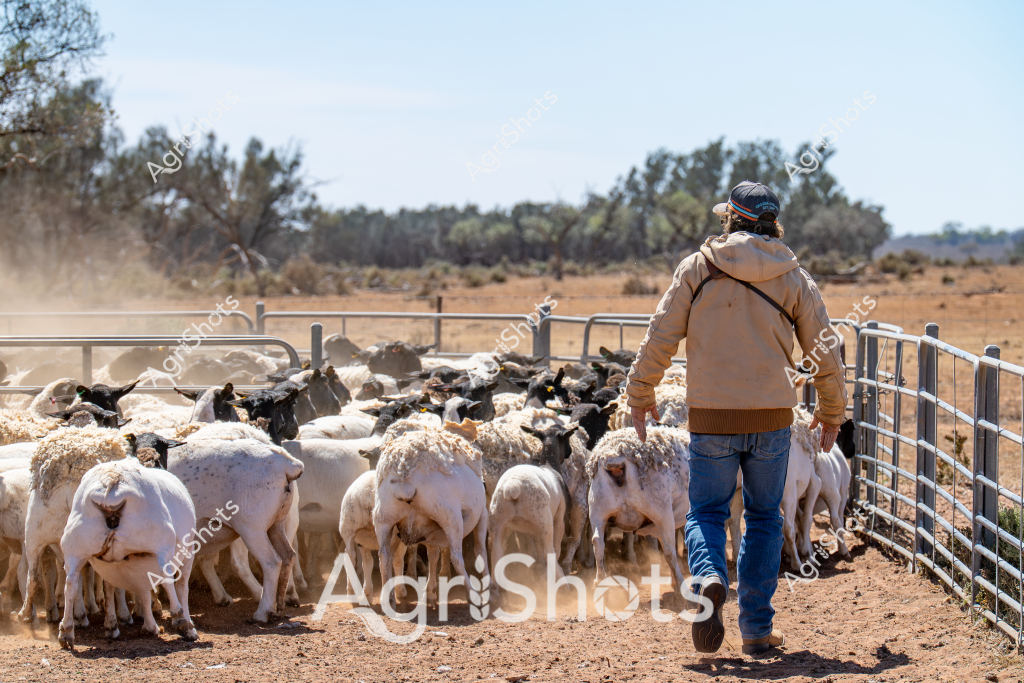
A man herder moves alongside a flock of white sheep through a dusty livestock yard in an arid Australian pastoral landscape. The sheep, predominantly white with some darker individuals mixed in, are tightly packed within metal stock gates and yard infrastructure. Dry, golden-brown earth kicks up dust around their hooves as they move, with scrubby trees and distant woodland visible on the horizon. The herder wears a tan jacket, blue jeans, and a cap, walking purposefully alongside the flock with a calm, practiced demeanor. The scene captures the routine of livestock management in a challenging rural environment, showcasing the close interaction between the stockman and the sheep in a typical Australian agricultural setting. The image represents the everyday work of sheep management, likely during a muster or movement between paddocks. The metal yard infrastructure and careful positioning of the herder demonstrate the skill and precision required in handling livestock in harsh agricultural landscapes.
 Image
Image
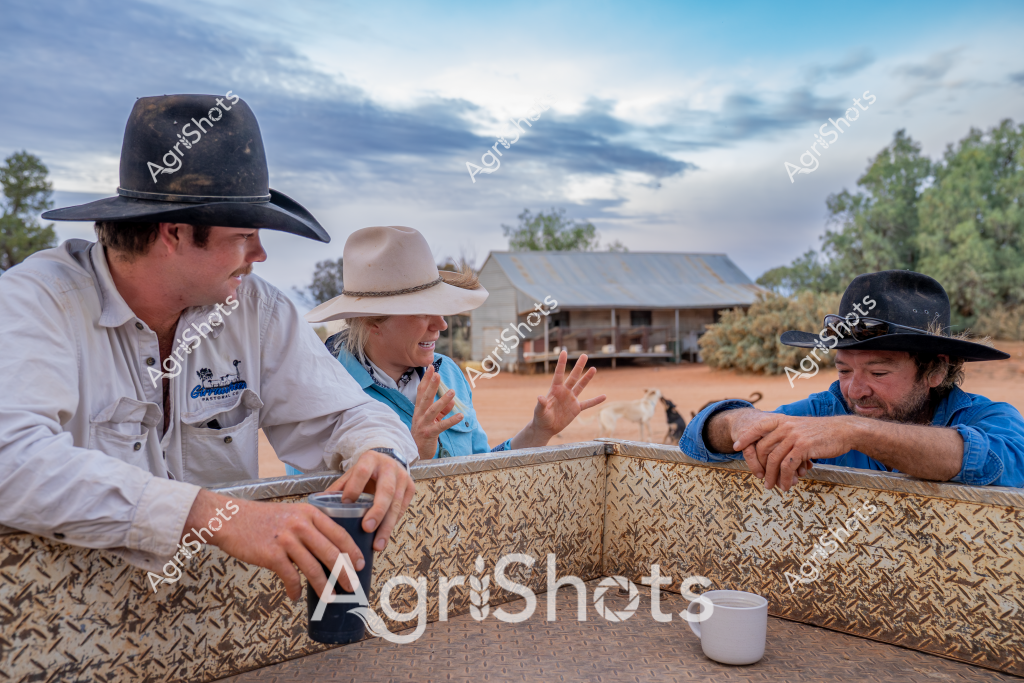
Three men in wide-brimmed Australian bush hats are engaged in conversation around a textured metal surface, with a rustic rural station building in the background. A white mug sits on the surface, suggesting an informal workplace discussion. The men are dressed in light-colored work shirts - white and blue - and appear to be agricultural workers or station hands, likely discussing daily operations or work plans. The setting looks like a remote Australian cattle station, with reddish dirt ground, scattered trees, and a corrugated iron shed, creating a quintessential outback rural atmosphere. The cloudy sky suggests early morning or late afternoon, with soft light casting subtle shadows across the landscape. Their body language and positioning indicate a collaborative, relaxed workplace interaction typical of Australian rural communities.
 Image
Image
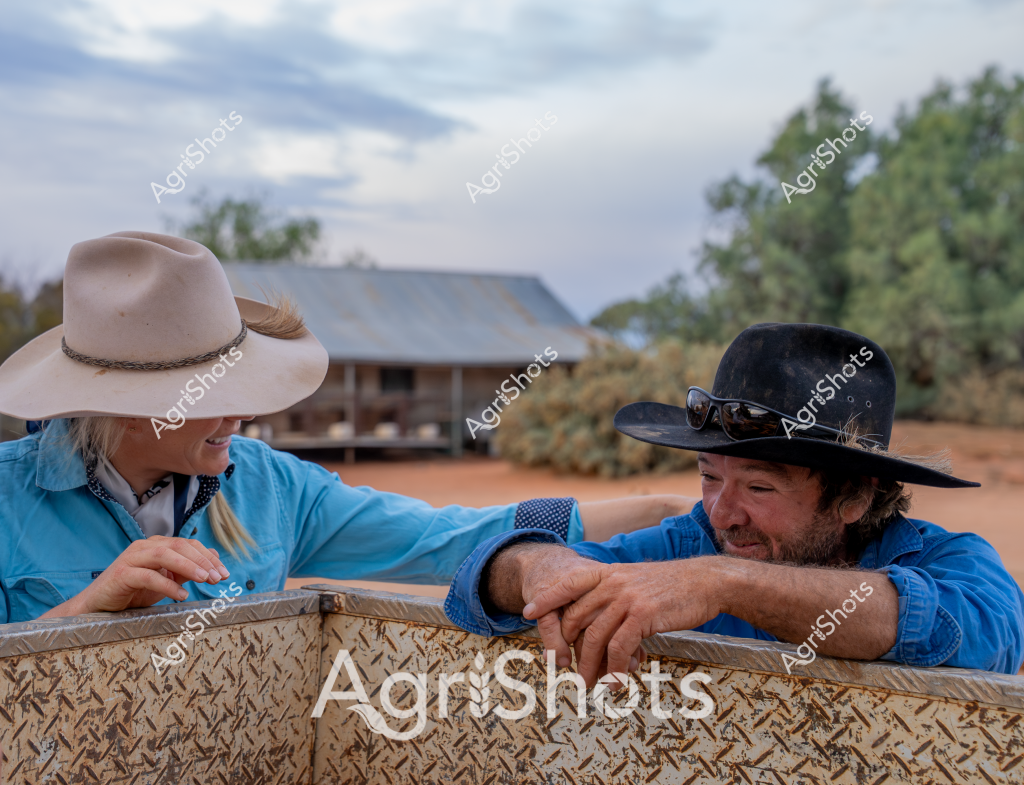
A man and a woman in blue work shirts and wide-brimmed hats lean against a textured metal container in a rural Australian setting. The scene captures a moment of quiet conversation on what appears to be a remote station, with a rustic shed and trees visible in the background. The woman wears a light-colored wide-brimmed hat, while the man sports a black hat with sunglasses, both dressed in practical workwear typical of Australian rural life. The reddish earth and relaxed posture suggest a pause during a long day of farm work, with the metal container providing a focal point for their interaction. The overcast sky and surrounding landscape evoke the vast, understated beauty of the Australian outback, highlighting the connection between rural workers and their challenging environment.
 Image
Image
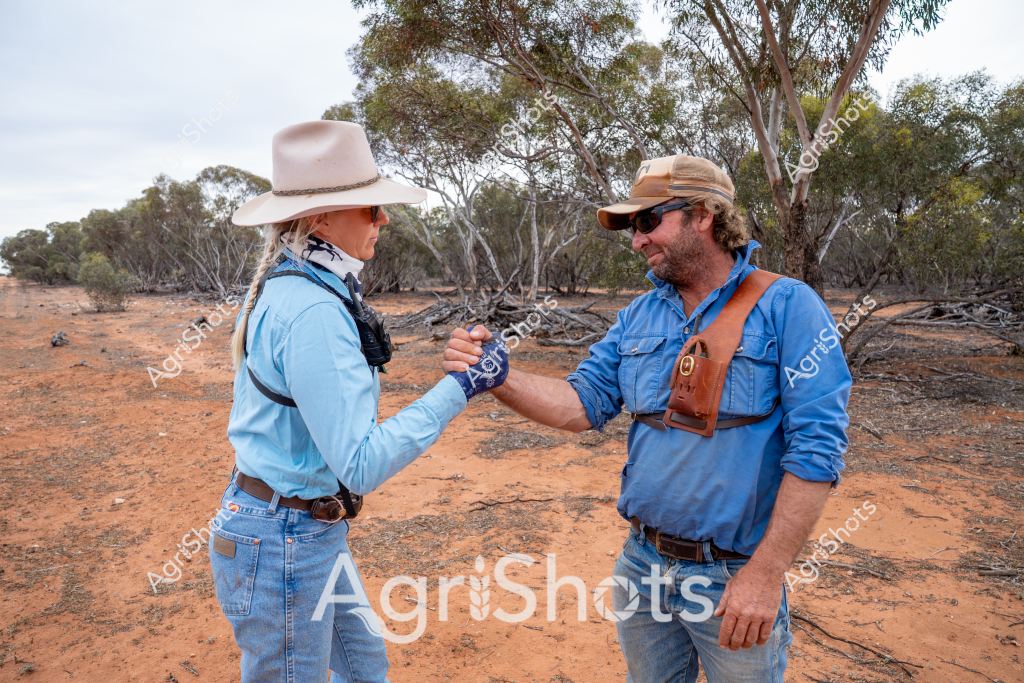
Two agricultural workers share a moment in a remote Australian landscape, standing on red earth surrounded by sparse eucalyptus trees. A woman wearing a wide-brimmed white hat and light blue work shirt stands facing a man in a blue work shirt, tan cap, and sunglasses. They are exchanging something - possibly water bottles or discussing field work - in what appears to be an arid, drought-affected region with scattered woodland in the background. The landscape is quintessentially Australian, with reddish soil, scattered fallen timber, and grey-green eucalyptus trees creating a stark, rugged backdrop. Both individuals are dressed in typical rural workwear - long-sleeved shirts, denim jeans, and protective headwear suited to harsh outdoor conditions. Their body language suggests a professional but collegial interaction, likely related to agricultural or environmental work in a challenging rural setting. The scene captures the resilience and camaraderie characteristic of Australian agricultural workers, who must navigate extreme environmental conditions while maintaining professional relationships and shared purpose in managing rural landscapes.
 Image
Image
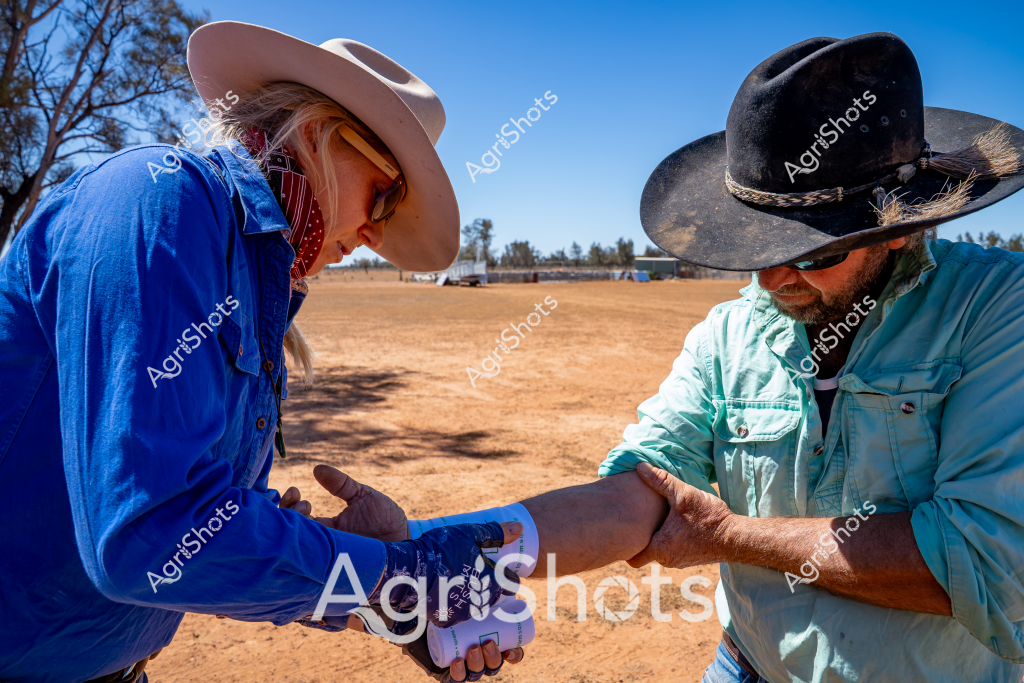
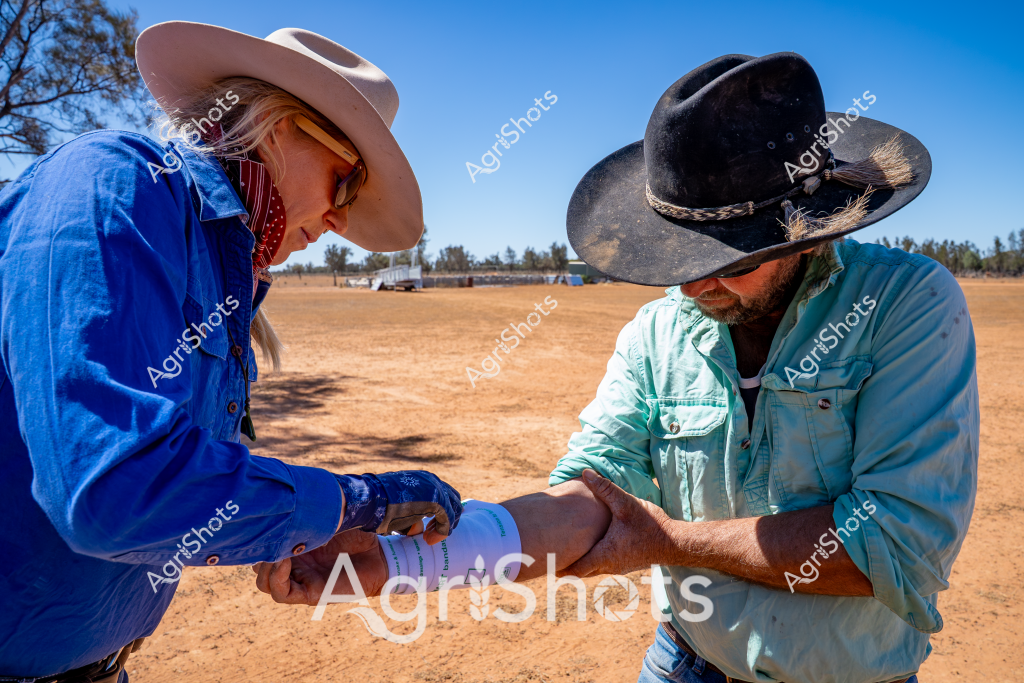
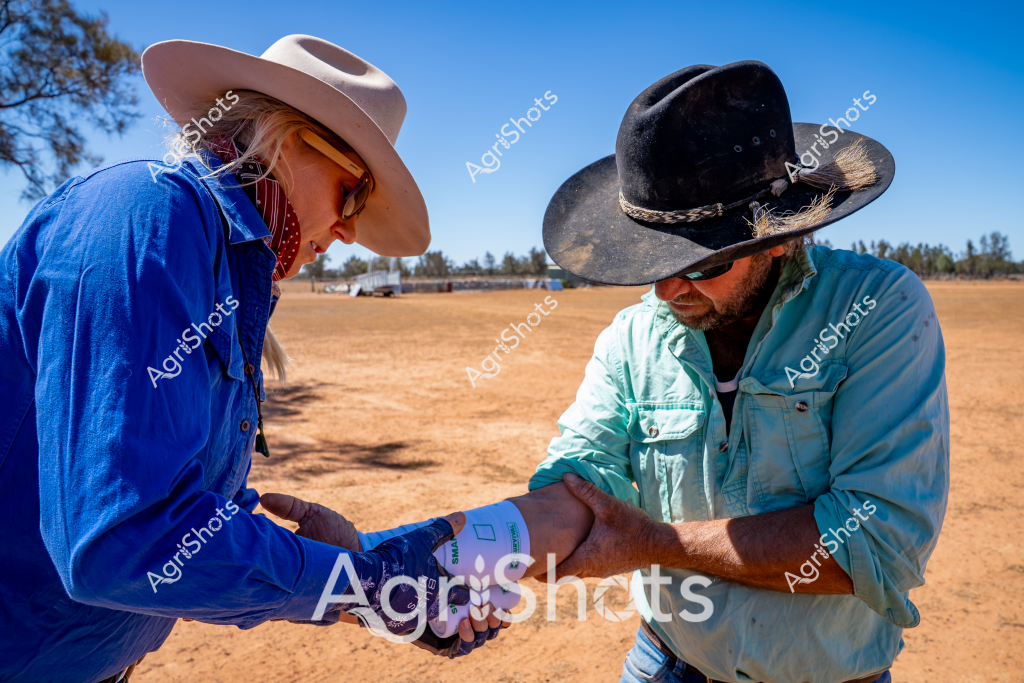
Two rural workers perform a medical check on an arm in an arid Australian landscape. A woman in a bright blue long-sleeved shirt and light-colored wide-brimmed hat carefully examines the arm of a man wearing a light blue shirt and a dark, well-worn wide-brimmed hat. The background reveals a dry, dusty paddock with sparse trees and farm infrastructure, indicating a remote station or rural property. The bright blue sky suggests a clear, hot day typical of the Australian outback. Their protective clothing, including long sleeves and wide-brimmed hats, demonstrates practical preparation for working in harsh environmental conditions. The careful, close interaction suggests a professional medical assessment or workplace injury check, highlighting the collaborative and supportive nature of rural work environments.
 Image
Image
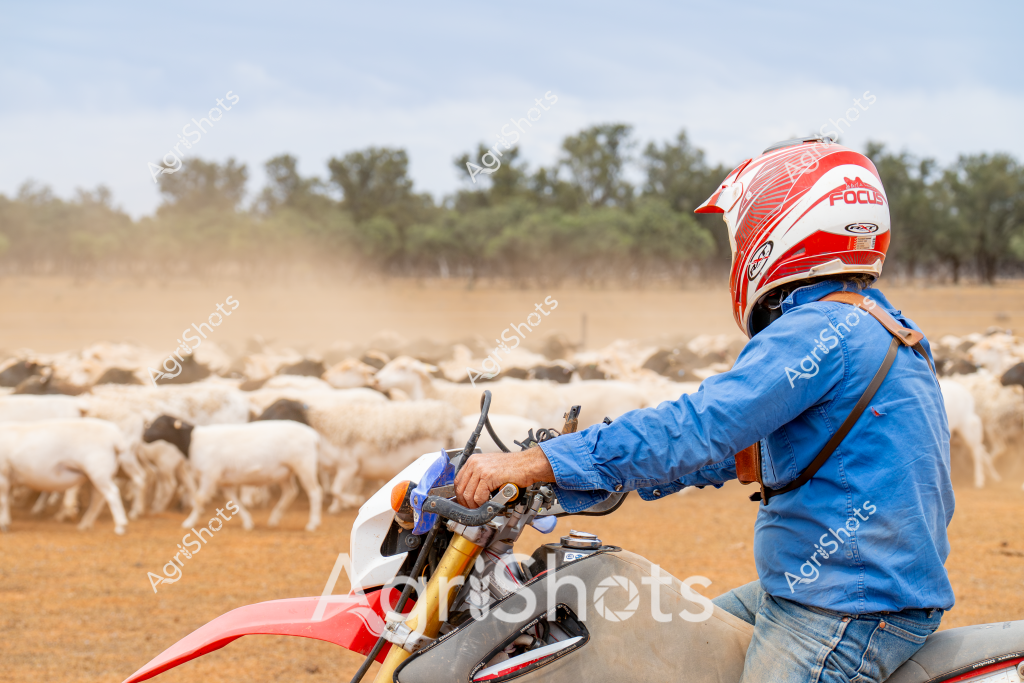
A man on a dirt trail rides a red and white motorcycle through a dusty paddock, herding a large flock of white sheep. Wearing a blue denim shirt and a red and white helmet, the rider skillfully navigates the motorcycle among the sheep, kicking up dry earth in his wake. The landscape is typical of an Australian rural setting, with sparse trees and golden-brown grassland stretching to the horizon. The scene captures the dynamic interaction between modern agricultural technology and traditional livestock management, showcasing the versatility of motorcycle mustering in managing sheep across vast, arid terrain. The red motorcycle provides a vibrant contrast against the muted tones of the dry landscape and the white woolly bodies of the sheep.
 Image
Image
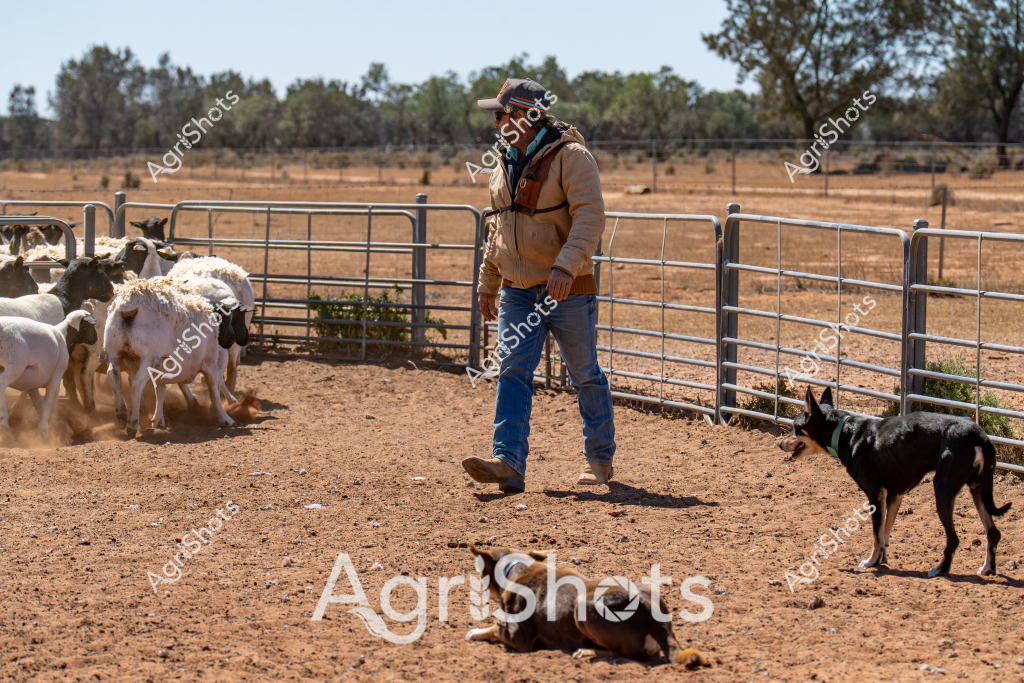
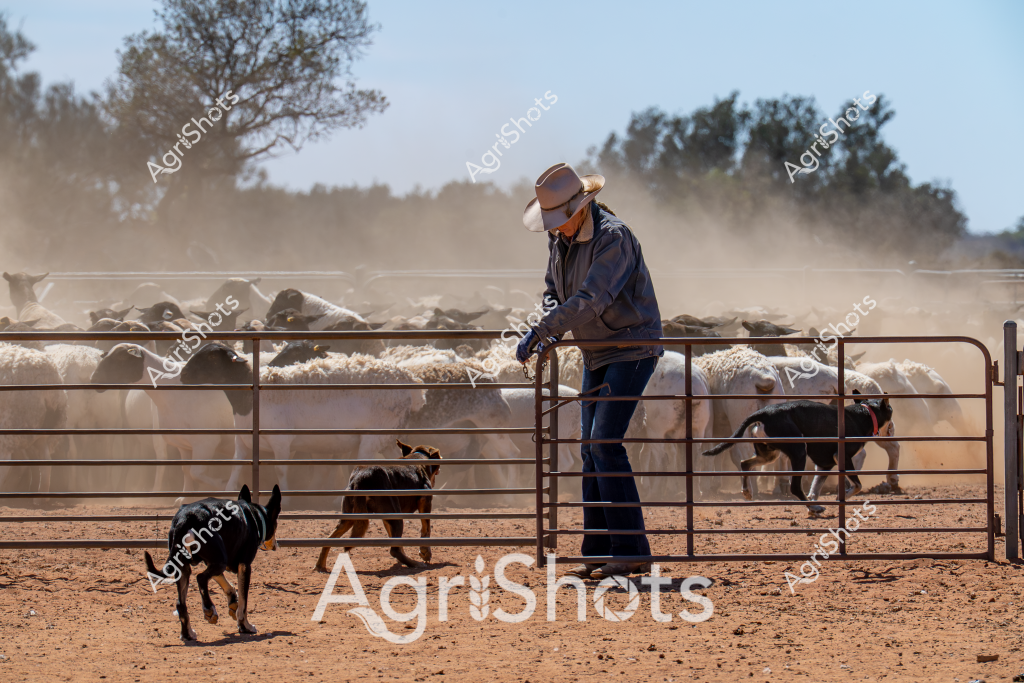
A man stockman stands in a dry, dusty yard managing a small flock of white sheep within metal livestock gates. A black working dog sits attentively nearby, while another dog lies on the ground, both ready to assist with stock movement. The landscape is typical of an Australian rural setting, with sparse paddocks and scattered eucalyptus trees visible in the background. The stockman wears traditional farm attire - a tan jacket, blue jeans, and a cap - suggesting a typical day of livestock management in what appears to be an arid or drought-affected region. The ground is hard-packed dirt, with minimal vegetation, highlighting the challenging environmental conditions common in Australian agricultural areas. The scene captures the essence of rural stock management, where skilled workers and their trained dogs work together to control and move livestock in harsh, dry conditions. The interaction between the stockman, his dogs, and the sheep demonstrates the precision and teamwork required in Australian farming.
 Image
Image
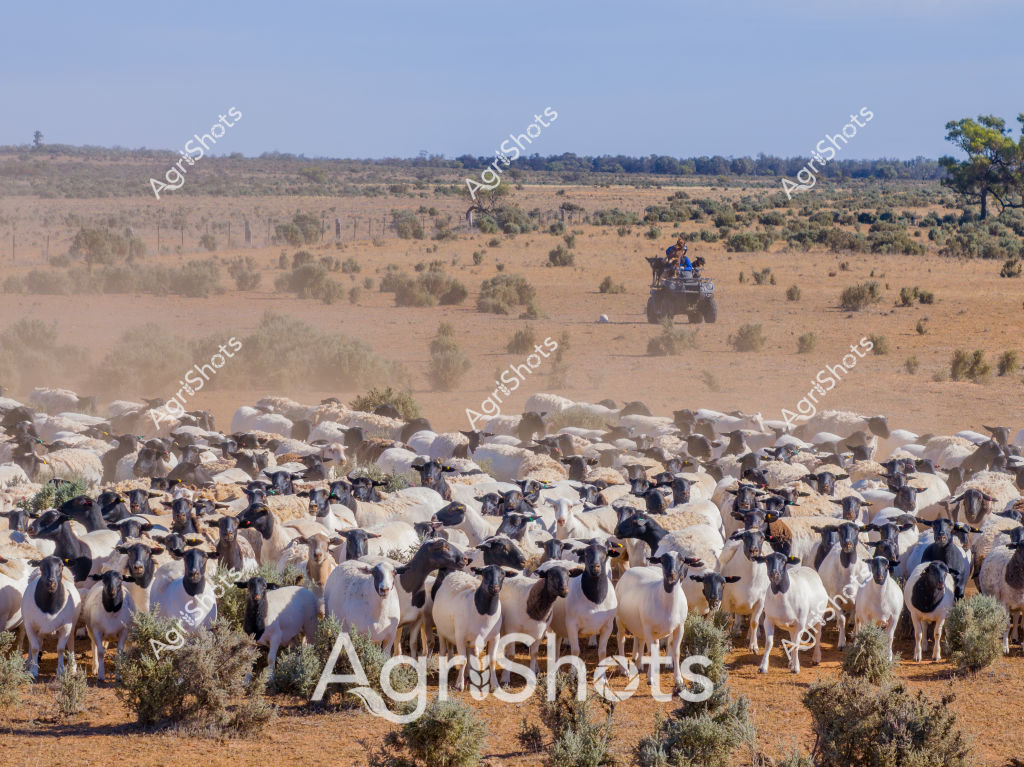
A large flock of white and black-faced sheep cluster tightly together in a dry, sparse outback landscape. An all-terrain vehicle drives in the dusty background, suggesting active livestock management. The sheep appear to be Dorper or Merino breeds, with distinctive white bodies and dark faces, standing among scattered saltbush and low scrub in a sun-baked paddock. The arid environment creates a golden-brown backdrop, with scattered vegetation and a distant treeline indicating a typical Australian pastoral setting. The dense grouping of sheep demonstrates careful mustering, with the vehicle likely guiding or monitoring the herd across the expansive station country. The scene captures the resilience of Australian livestock farming in challenging dry landscape conditions, showcasing the interaction between agricultural workers and their animals in remote rural terrain.
 Image
Image
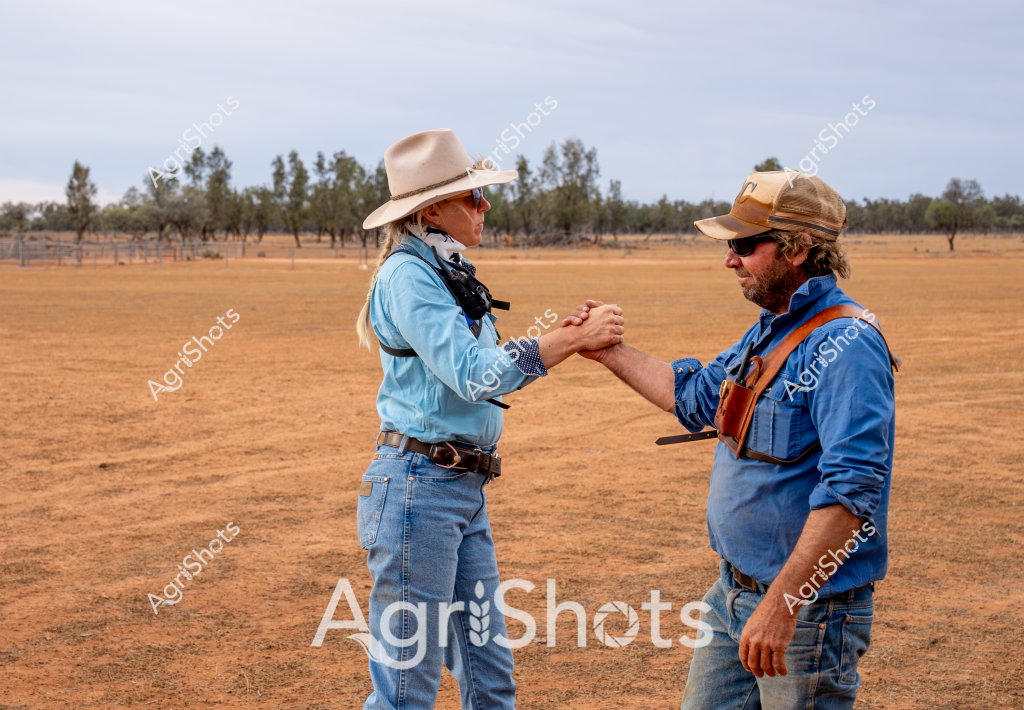
Two people stand in a dry, expansive paddock with scattered trees on the horizon, engaged in a firm handshake. A woman wearing a light blue long-sleeved shirt, light-colored wide-brimmed hat, and blue jeans grips hands with a man in a blue work shirt, brown cap, and denim pants. Their stance suggests a professional agricultural interaction, perhaps concluding a business agreement or land transaction. The landscape around them is characterized by a parched, ochre-colored ground typical of drought conditions in rural Australia. Sparse eucalyptus trees line the distant background, creating a sense of wide-open pastoral terrain. Both individuals are dressed in practical workwear that reflects the rugged demands of agricultural life, with rolled-up sleeves and sturdy boots suited to the harsh environment. The handshake symbolizes collaboration and mutual respect in the challenging world of Australian farming, where partnerships and shared understanding are crucial for survival in difficult conditions. Their body language communicates professionalism and a sense of shared purpose against the stark, sun-bleached landscape of what appears to be an inland agricultural property.
 Image
Image
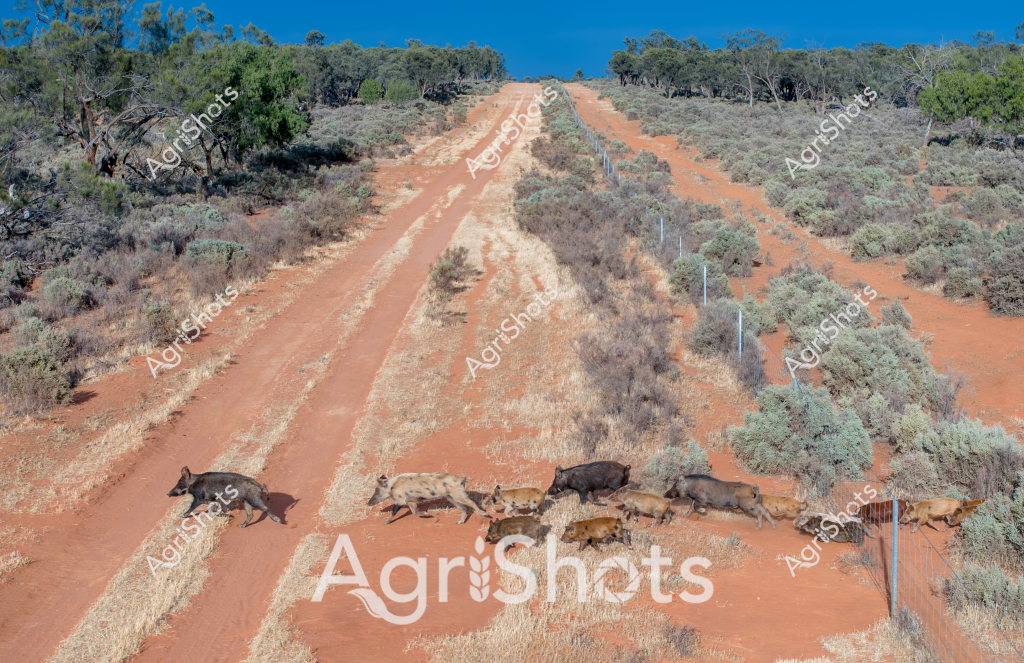
A group of feral pigs traverses a remote Australian dirt track, their dark and varied-colored bodies moving across the rusty-red earth. The landscape is classic Australian outback - sparse eucalyptus trees, silvery-green scrub vegetation, and a wide blue sky stretching across the horizon. These wild pigs, ranging in shades from dark brown to light tan, are crossing a well-worn rural access road that cuts through the arid landscape, likely moving between grazing areas. The surrounding terrain shows typical semi-arid vegetation with low shrubs and scattered trees, characteristic of inland Australian regions. The stark contrast between the reddish-orange soil and the muted green vegetation creates a visually striking scene that captures the rugged nature of Australia's interior landscapes. The image appears to be an aerial or drone perspective, providing a clear view of the pigs' movement across the landscape, highlighting the interaction between wildlife and the extensive rural infrastructure that connects remote areas. This scene represents the ongoing challenge of feral animal management in Australian agricultural regions, where introduced species like wild pigs can significantly impact native ecosystems and farming operations.
 Image
Image
A woman in a blue long-sleeved shirt and a light cowboy hat and a man wearing a light blue shirt and a black cowboy hat are standing in a dry, dusty rural setting. The scene appears to be on an Australian agricultural property, with sparse trees and farm infrastructure visible in the background. The two are engaged in what seems to be a medical or veterinary procedure, with the woman carefully attending to the man's arm, potentially applying a bandage or performing some kind of treatment. Their clothing and wide-brimmed hats suggest they are experienced rural workers, likely dealing with the challenging conditions of an arid agricultural landscape. The ground is a parched, reddish-brown color, indicating dry conditions typical of many parts of rural Australia. The detailed interaction and professional attire suggest this could be a routine medical check or emergency treatment in a remote farming environment, highlighting the self-reliant nature of agricultural workers who often must provide immediate care in isolated locations.
 Image
Image
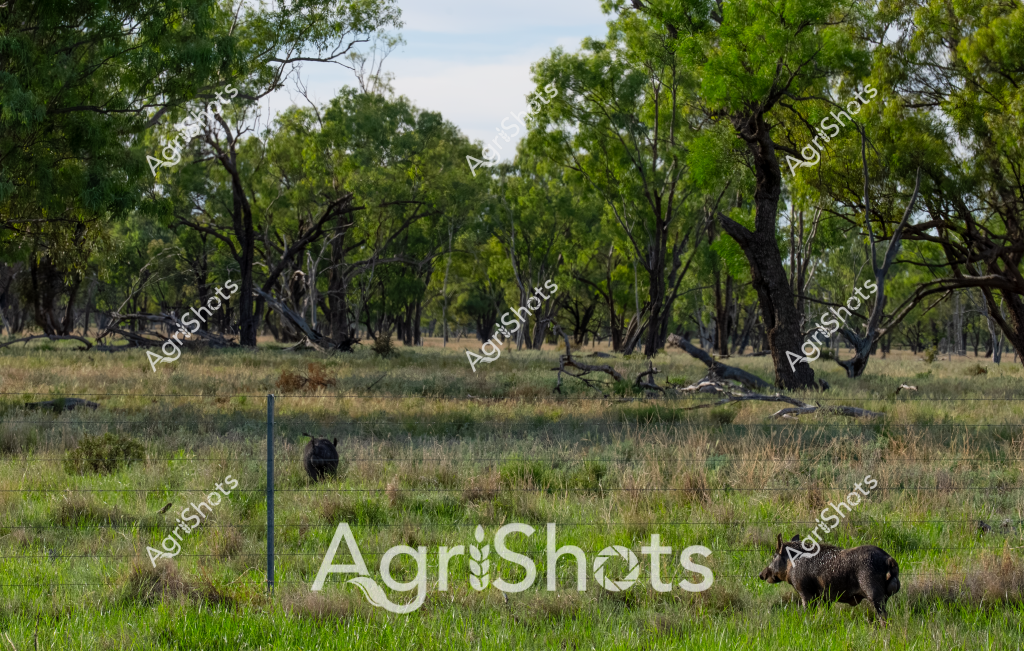
In this rural landscape, two black wild boars graze in a fenced grassland surrounded by mature eucalyptus trees. The scene captures a typical Australian woodland pasture, with scattered gray-green trees and dry grass creating a muted, natural backdrop. Fallen branches and weathered logs are scattered across the grassy field, suggesting an undisturbed natural environment. One boar stands closer to the foreground, while another is positioned further back near a fence line, both quietly foraging among the grass and low vegetation. The landscape appears to be in a temperate region, with the sparse, twisted trees and dry grass indicating potential drought or dry seasonal conditions typical of parts of rural Australia. The image provides a glimpse into the wild fauna inhabiting Australia's agricultural landscapes, showcasing the interaction between wildlife and traditional farming environments.
 Image
Image
A man stockman in a dusty brown Akubra hat and dark jacket manages a flock of white sheep within a metal livestock yard on a dry, arid paddock. Two working dogs - one black and one brown - assist in controlling the mob, moving strategically around the dusty enclosure. The sheep are tightly clustered behind metal gates, with dust billowing around their woolly bodies, creating a hazy atmospheric effect. The surrounding landscape features sparse trees and scrubland, indicating a typical Australian rural setting with harsh, sun-baked conditions. The stockman stands carefully positioned near the gate, demonstrating precise control and skill in managing the livestock. The scene captures the essential interaction between human, dogs, and sheep in the challenging environment of Australian pastoral agriculture.
 Image
Image
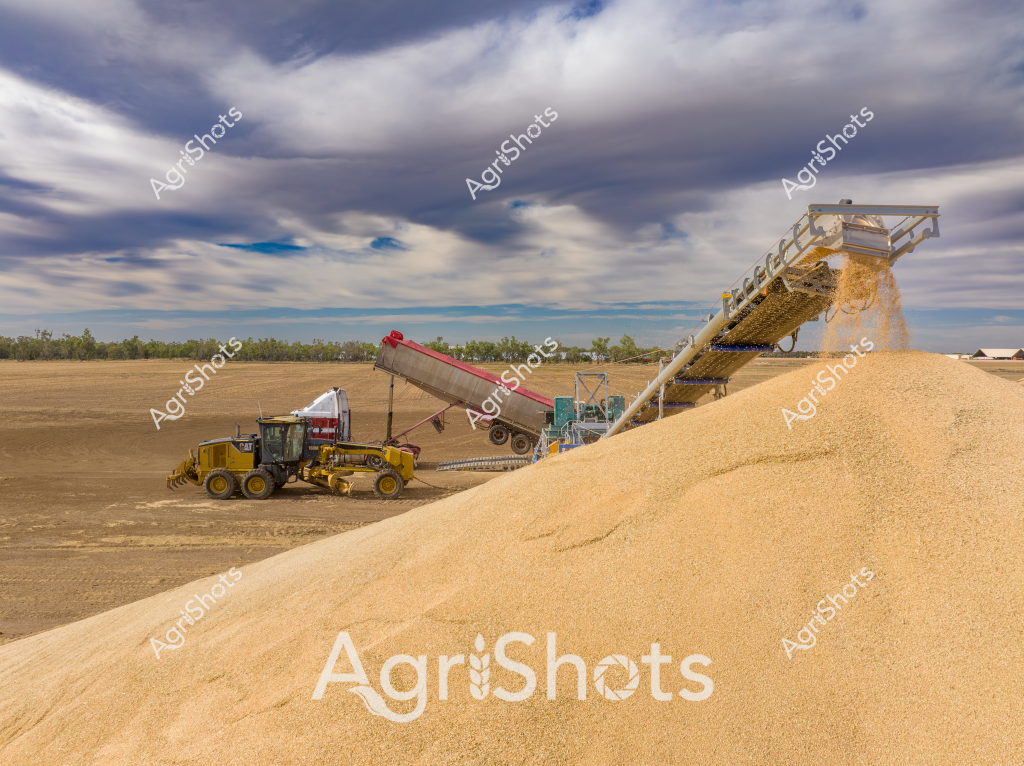
A massive grain harvest operation unfolds across a dusty agricultural landscape, capturing the precision and scale of modern Australian farming. A yellow motor grader positions itself near a towering grain handling system, which is actively unloading golden wheat or barley into an expansive ground pile. The conveyor belt cascades a steady stream of harvested grain, creating a dramatic golden mound against the dry, open paddock. Dramatic cloudy skies with hints of blue provide a moody backdrop to this industrial agricultural scene, highlighting the dramatic interaction between heavy machinery and the harvested crop. The landscape suggests a broad agricultural region, likely in a wheat-producing state like Western Australia, South Australia, or New South Wales, where large-scale grain production is a critical economic activity. The equipment's positioning and the substantial grain stockpile demonstrate the efficiency of contemporary harvesting techniques, where rapid unloading and storage are crucial to managing large crop volumes.
 Image
Image
Two people stand in a dry, sun-drenched rural landscape, engaged in a close interaction. A woman wearing a blue long-sleeved shirt and a light cream cowboy hat is carefully examining the arm of a man in a light blue-green shirt and a dark wide-brimmed hat. Their posture suggests a professional medical or veterinary assessment, with the landscape of dusty ground and sparse trees in the background indicating an outback or rural Australian setting. The scene appears to capture a moment of agricultural health monitoring, potentially a routine check or treatment process. Both individuals are wearing protective work clothing typical of rural Australian settings - sturdy shirts, wide-brimmed hats for sun protection, and work gloves. The bright blue sky and arid ground suggest a hot, dry day in a farming or station environment. Their focused body language and close proximity indicate a professional interaction, likely related to livestock health, farm work, or medical assessment. The landscape behind them is characteristic of Australian agricultural regions - open, sparse, with a sense of expansive remote terrain typical of cattle stations or rural properties.