Results for “fuel station”
 Image
Image
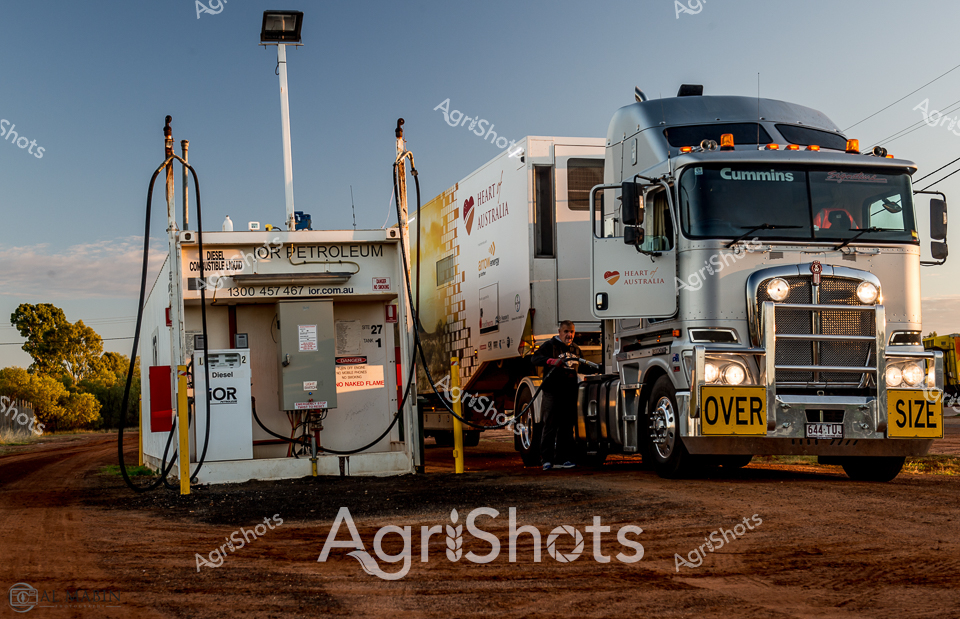
A Kenworth prime mover stands ready for refueling at a remote outback diesel station, its "Heart of Australia" livery highlighting the critical role of long-haul transport in supporting rural communities. The oversized truck, branded with a Cummins engine and marked with a yellow "OVER SIZE" sign, rests against a golden late afternoon landscape, capturing the rugged essence of Australian road freight logistics.
 Image
Image
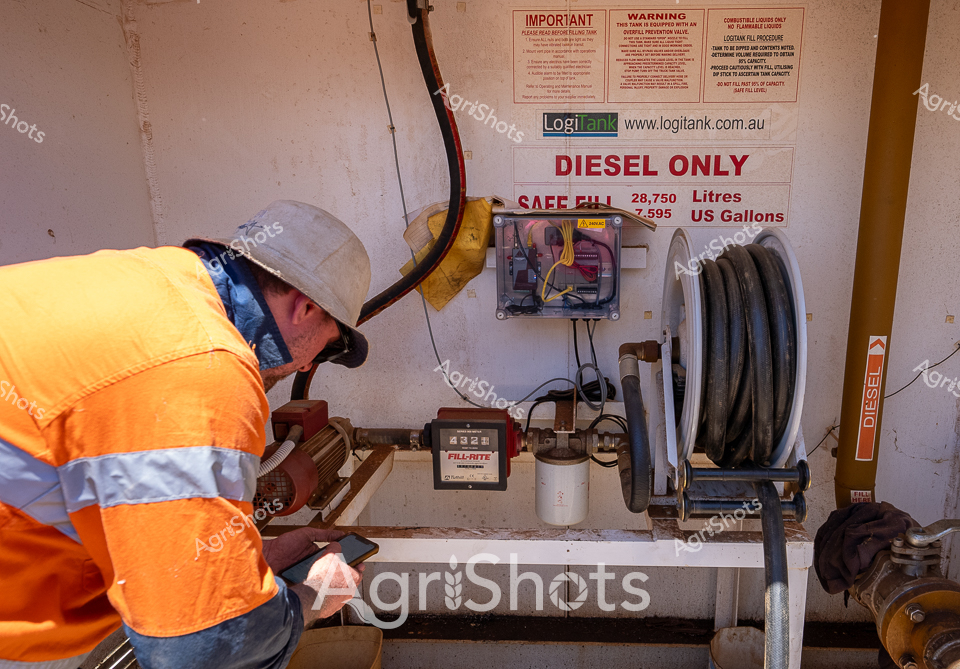
Diesel Tank Refueling Station: Rural Industrial Precision A worker in a high-visibility orange safety vest and white hard hat carefully manages the diesel refueling infrastructure at a Logitank station. Meticulously organized industrial equipment surrounds the central fuel meter, with coiled black hoses, warning signage, and precise measurement tools indicating a professional agricultural support environment. The stark white wall and carefully mounted equipment suggest a carefully maintained rural industrial space, likely located in the Riverina region of New South Wales during the intense summer season. Numerical displays track fuel volumes - 28,750 litres prominently marked - revealing the substantial energy requirements of modern agricultural operations. The worker's focused posture and protective gear underscore the technical precision and safety protocols essential in contemporary farming support systems. Industrial textures of metal, rubber, and high-visibility fabrics create a compelling visual narrative of behind-the-scenes agricultural infrastructure.
 Image
Image
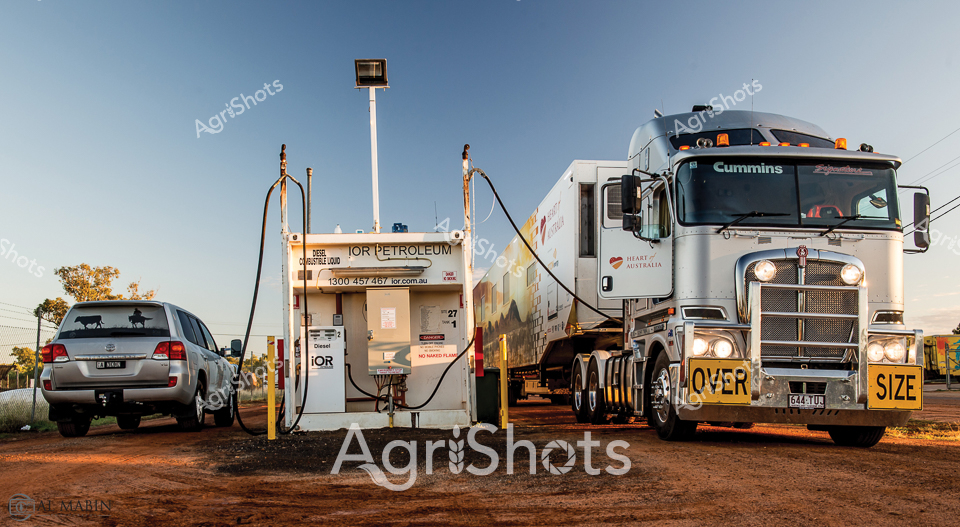
Blazing sunset light bathes a remote outback refueling station where a massive Cummins-branded road train stands ready for its next long-haul journey. The industrial-grade IOR Petroleum fuel pump towers over the white and silver heavy vehicle, its "OVERSIZE" warning plates signaling the truck's substantial dimensions across Australia's vast interior landscapes. Ruddy ochre ground contrasts against the crisp blue twilight sky, capturing the rugged infrastructure that connects remote communities and supports agricultural supply chains. Modern SUV and prime mover showcase the technological evolution of transportation in rural Australia, with precision engineering built to withstand extreme environmental conditions. The carefully positioned lighting and composition highlight the essential role of transportation infrastructure in supporting agricultural and mining industries across Queensland's challenging terrain. This scene epitomizes the resilience, scale, and technological sophistication of Australian rural logistics, where robust machinery and strategic fuel stations enable commerce across seemingly impossible distances.
 Image
Image
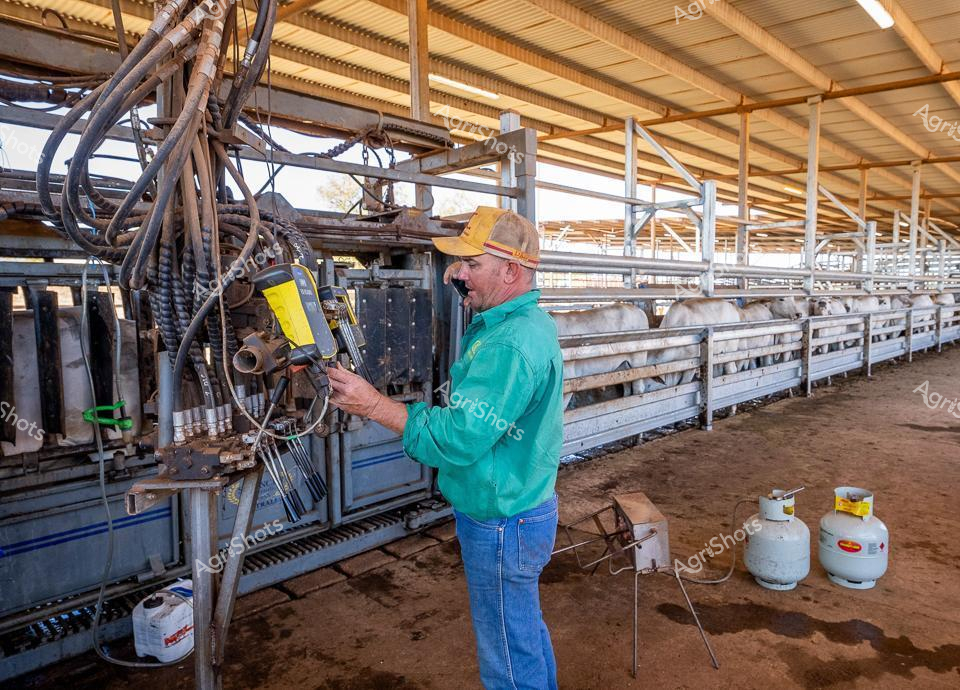
A seasoned station worker in a bright turquoise shirt and yellow cap operates a sophisticated cattle processing machine within a expansive steel-framed livestock yard. The robust machinery, part of a sophisticated cattle crush system, stands ready to safely manage and treat Brahman cattle, a breed renowned for its resilience in Northern Territory conditions. Propane tanks sit nearby, suggesting the equipment requires specialized fuel or heating elements for operational procedures. Sunlight filters through the corrugated metal roof, casting warm shadows across the concrete floor and highlighting the intricate network of hydraulic pipes and mechanical components. The worker's focused posture and careful handling of the control system reflect decades of agricultural expertise, embodying the precision and care integral to modern cattle station management. This scene captures the intersection of traditional pastoral skills and advanced agricultural technology, quintessential to Australia's beef production infrastructure.
 Image
Image
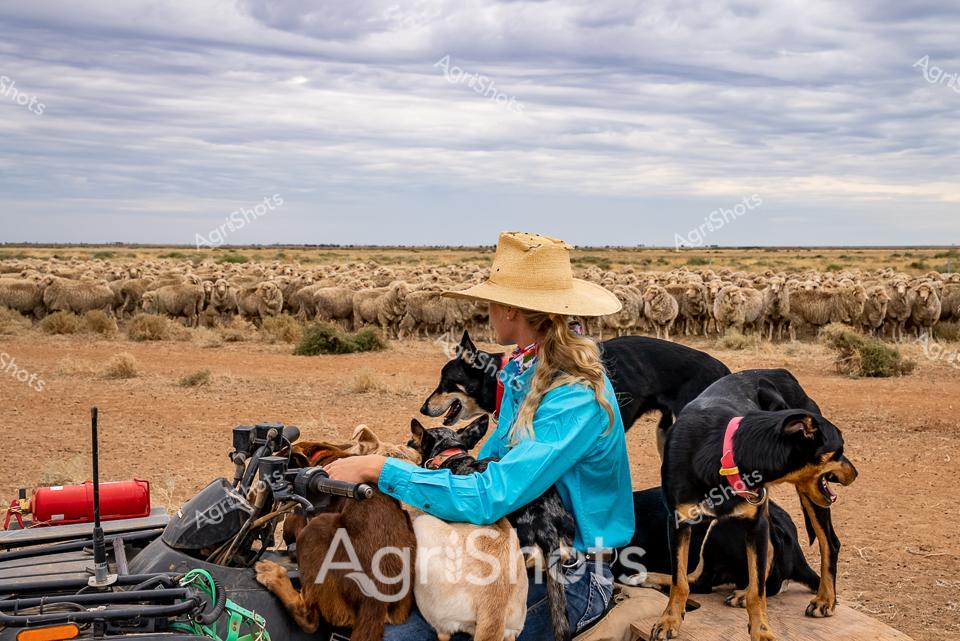
Merino sheep cluster across the arid, rust-colored landscape of a remote New South Wales station, stretching toward the horizon under a soft, pewter-toned sky. A station hand in a wide-brimmed sun hat and vibrant turquoise work shirt sits astride an all-terrain vehicle, surrounded by working dogs - alert kelpies and cattle dogs in black and tan coats. The rugged pastoral scene captures the essence of Australian sheep farming, where skilled handlers and their canine companions navigate vast, sparse terrains to manage extensive flocks. Multiple dogs perch on the motorbike's frame, trained and ready to assist in mustering, their compact muscular bodies reflecting generations of selective breeding for livestock management. Red fuel containers and robust agricultural equipment frame the scene, highlighting the practical, no-nonsense approach of rural workers who must be entirely self-sufficient in these challenging environments. The composition speaks to the resilience, skill, and deep connection between humans, animals, and landscape that defines Australian agricultural life.