Results for “farming infrastructure”
 Image
Image
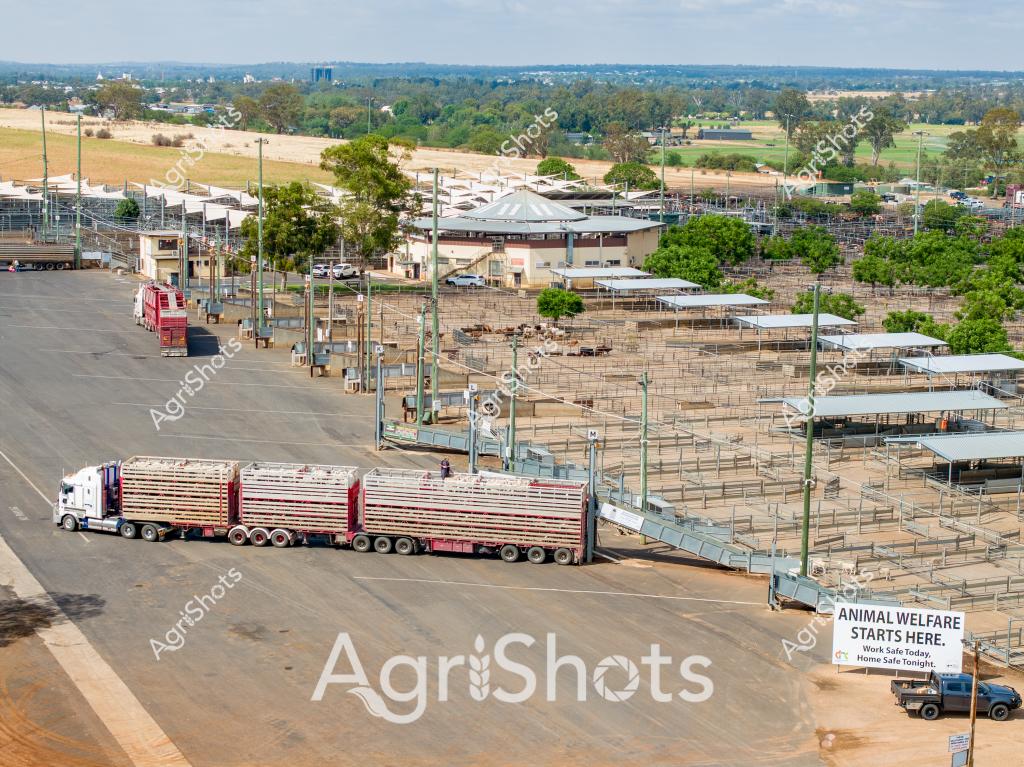
This image captures a comprehensive view of a livestock sale yard or agricultural processing facility, likely in an Australian rural setting. A large, multi-trailer livestock transport truck is positioned at the entry point of an expansive facility with multiple covered holding pens and infrastructure. The "Animal Welfare Starts Here" sign prominently indicates the facility's commitment to ethical livestock handling practices. The landscape reveals a broad agricultural setting with green trees and distant urban structures visible on the horizon, suggesting this is near a regional town or city. Multiple steel-framed holding pens with white shade covers are systematically arranged, demonstrating a modern, structured approach to livestock management. Green steel support poles create a grid-like framework throughout the facility, enabling efficient animal movement and processing. The transport truck appears to be a standard Australian road train configuration, with multiple trailers designed for long-distance livestock transportation, typical of cattle or sheep movements across vast pastoral regions. The facility's infrastructure suggests this is a sophisticated livestock sales yard, likely used for cattle or sheep auctions, with carefully designed loading ramps and holding areas to ensure animal welfare and efficient agricultural commerce. The scene represents a key node in Australia's agricultural supply chain, where livestock are professionally managed, transported, and traded with systematic precision and care.
 Image
Image
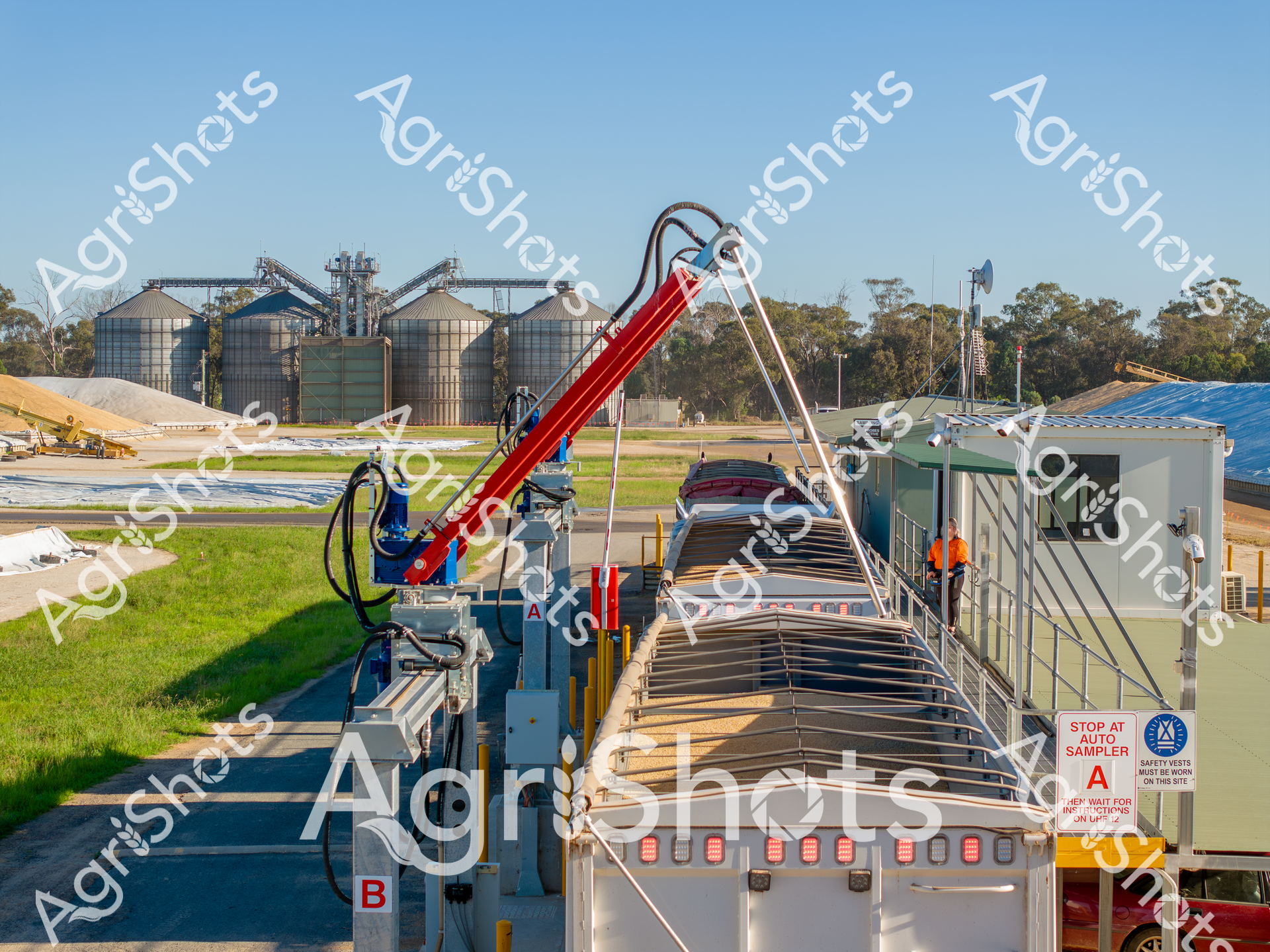
Grain sampling and testing station captures the precision of modern Australian agricultural logistics. A state-of-the-art auto sampler extends its bright red hydraulic arm over a long transport trailer loaded with harvested grain, positioned against the backdrop of massive steel grain silos in the Riverina region. Safety signage and high-visibility workwear mark this as a carefully managed grain intake and quality control point, with multiple technological systems ensuring accurate sampling and assessment. The clear summer sky and expansive grassland surrounding the facility highlight the industrial-scale infrastructure supporting Australia's critical grain export industry. Sophisticated equipment like the auto sampler represents the technological advancement of contemporary agricultural operations, transforming traditional harvest processes with automated, precise measurement techniques.
 Image
Image
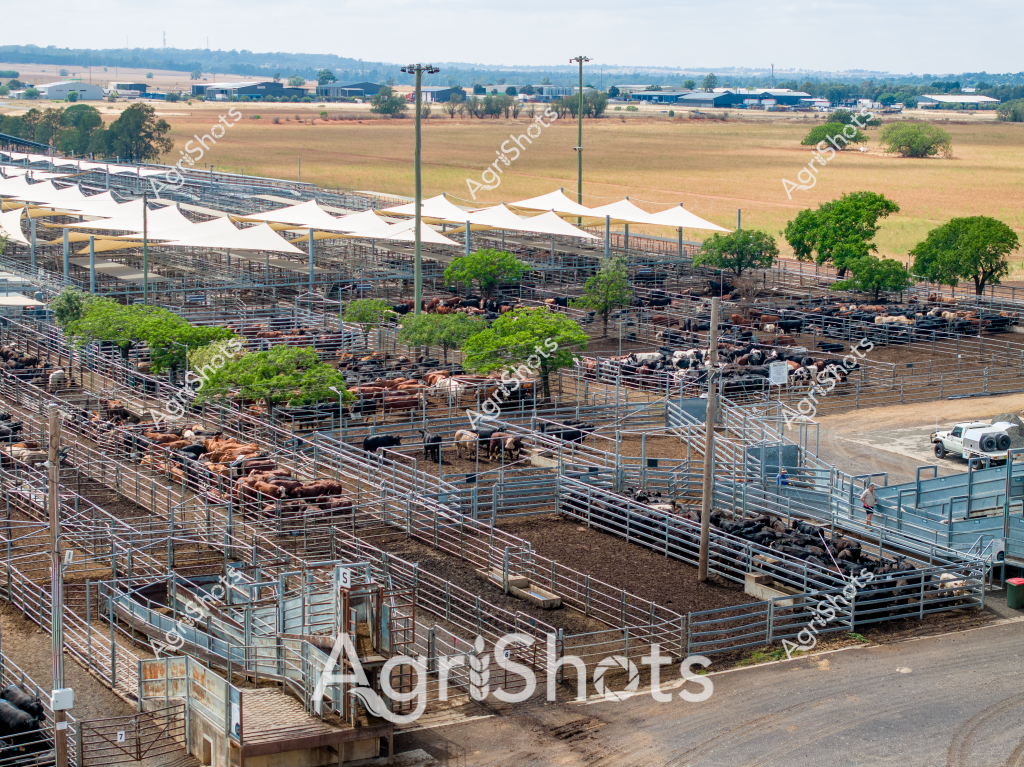
A comprehensive livestock holding facility spreads across a rural landscape, featuring multiple steel-fenced yards housing diverse cattle herds. White shade structures provide protection for the animals, while carefully positioned green trees offer additional shelter and visual breaks between the paddocks. Multiple breeds of cattle - including some with reddish-brown coats and others with darker markings - are grouped in separate enclosures, indicating a professional cattle management operation. Tall light poles provide illumination across the extensive yards, and a white utility vehicle is parked near the processing area, suggesting active agricultural management. The surrounding landscape reveals a broad, flat terrain with distant farm buildings and tree lines, typical of an Australian cattle station or agricultural precinct. The systematic layout demonstrates sophisticated livestock infrastructure, with meticulously organized zones for animal sorting, movement, and temporary holding.
 Image
Image
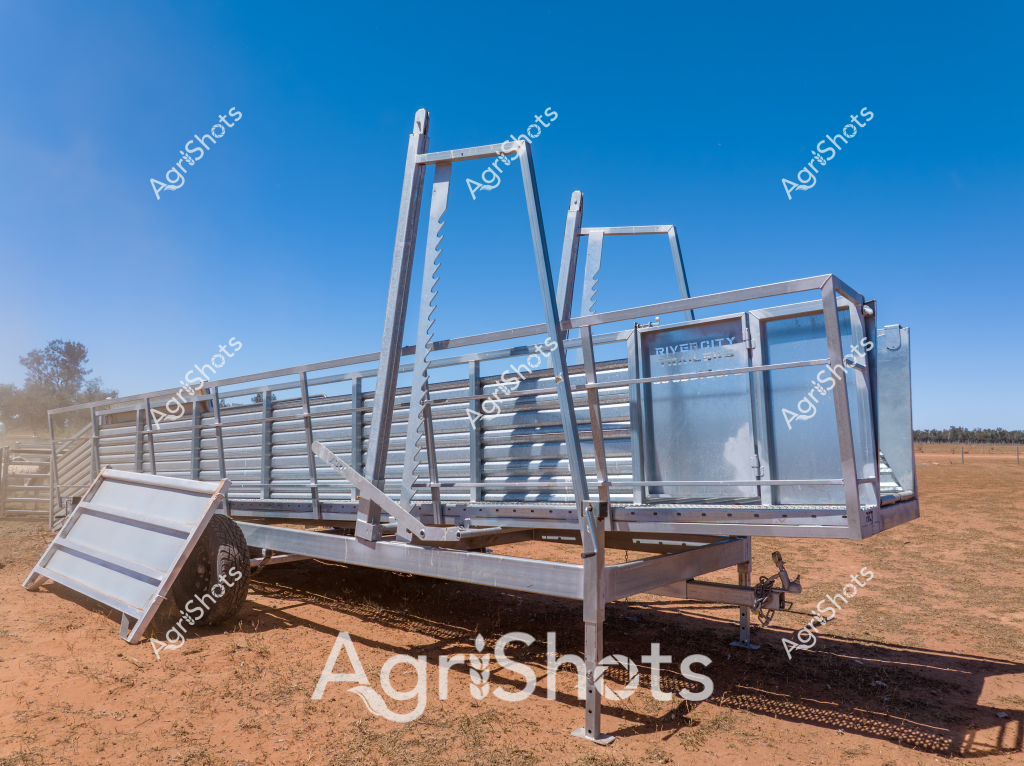
A River City livestock trailer sits ready on a dry, reddish-brown rural paddock under a brilliant blue Australian sky. This robust, all-aluminum stock trailer features multiple vertical support frames, adjustable gates, and a sturdy chassis designed for transporting livestock across challenging agricultural terrain. The trailer's metallic silver-gray construction suggests durability and professional-grade engineering, with carefully engineered loading ramps and side panels that provide ventilation and secure containment for cattle, sheep, or other farm animals. Its substantial build reflects the demanding requirements of Australian rural transportation, built to withstand harsh outback conditions and provide reliable stock movement for farmers and station managers. The clear, cloudless sky and arid ground indicate a typical dry season environment, characteristic of many agricultural regions across Australia's inland areas.
 Image
Image
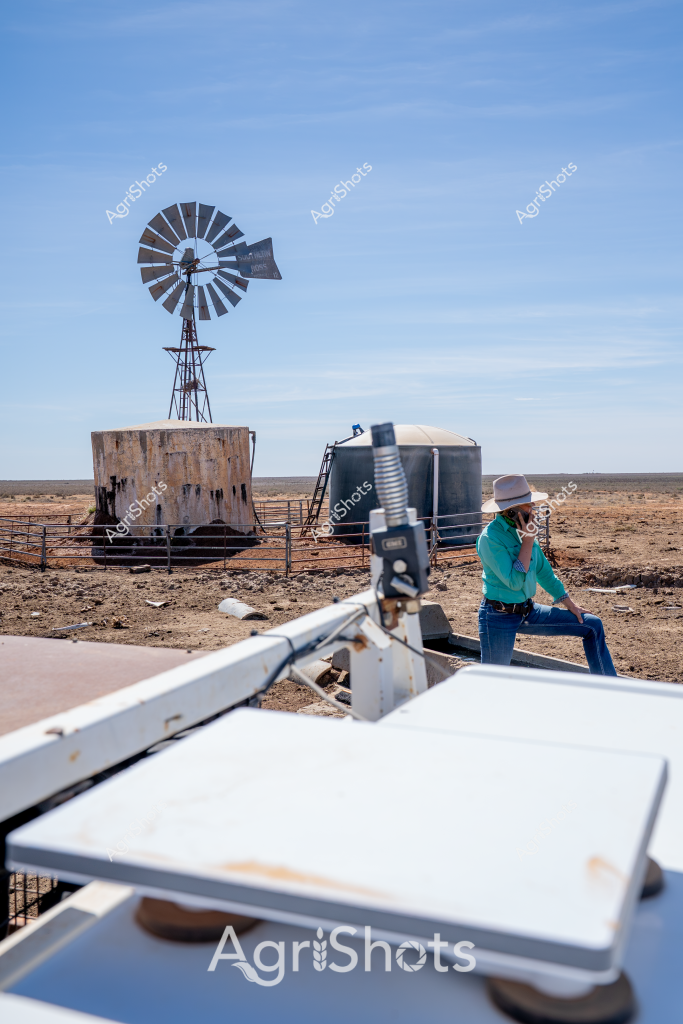
A windmill and water storage setup dominates this arid rural landscape, capturing the essence of remote Australian farming infrastructure. A person wearing a turquoise shirt and a wide-brimmed hat sits contemplatively near water tanks, surrounded by a stark, dusty terrain that stretches to a flat horizon under a clear blue sky. An old metal windmill stands prominently, its multiple blades positioned to catch even the slightest breeze, alongside a weathered concrete water storage tank enclosed by metal fencing. The scene epitomizes the resilience of agricultural operations in harsh, dry environments, where water management is critical for survival. Rusted equipment and minimal vegetation underscore the challenging conditions of this remote agricultural setting, highlighting the technological adaptations farmers use to sustain operations in Australia's unforgiving outback landscape.
 Image
Image
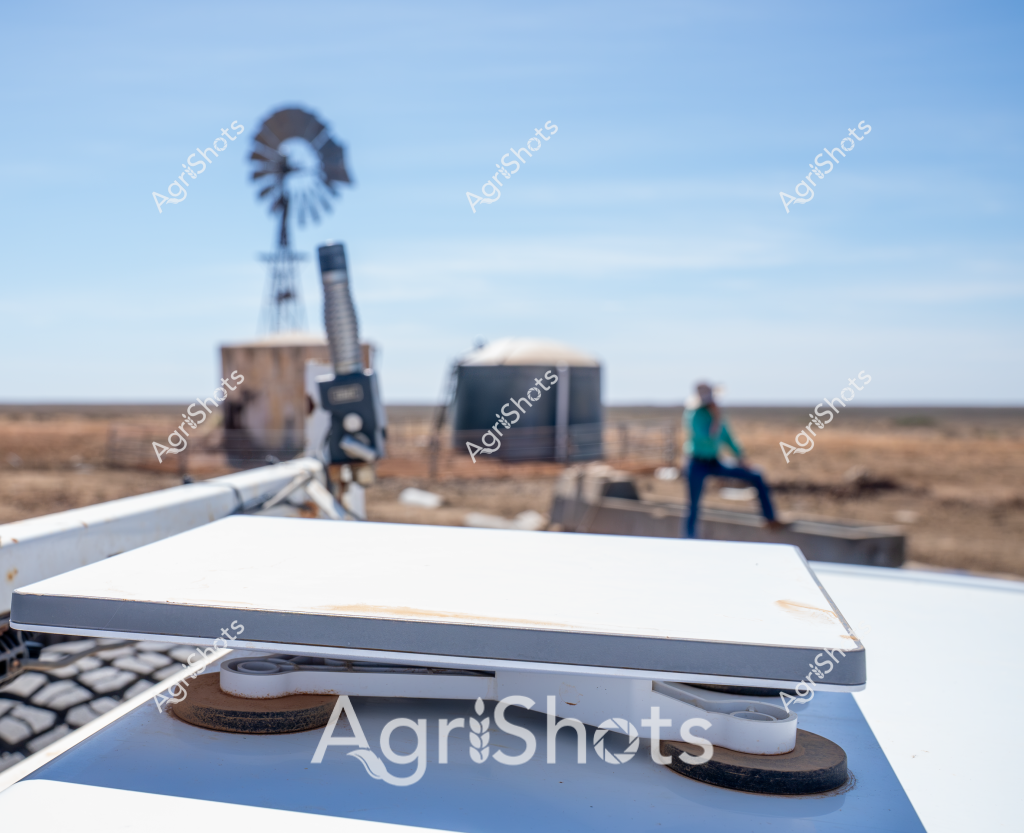
A rural scene captures an agricultural monitoring setup in a dry, expansive landscape, featuring a windmill and technical equipment in the background. In the foreground, a sophisticated white monitoring device with gray trim sits precisely positioned, its sensors and mounting points suggesting advanced data collection capabilities. A person wearing a teal-colored jacket stands near some equipment modules, indicating ongoing field research or environmental monitoring. The stark, arid terrain stretches to the horizon, with a classic Australian windmill standing tall against the clear blue sky, symbolizing traditional water management techniques alongside modern technological approaches. The muted earth tones of the landscape - browns and tans - contrast sharply with the crisp white of the monitoring equipment and the vibrant teal of the worker's clothing, creating a compelling visual narrative of contemporary agricultural science in action. The scene represents the intersection of traditional farming infrastructure and cutting-edge environmental monitoring technology, typical of agricultural research in Australia's challenging rural environments. The careful placement of equipment suggests precise data collection, potentially related to soil conditions, climate monitoring, or agricultural research.
 Image
Image
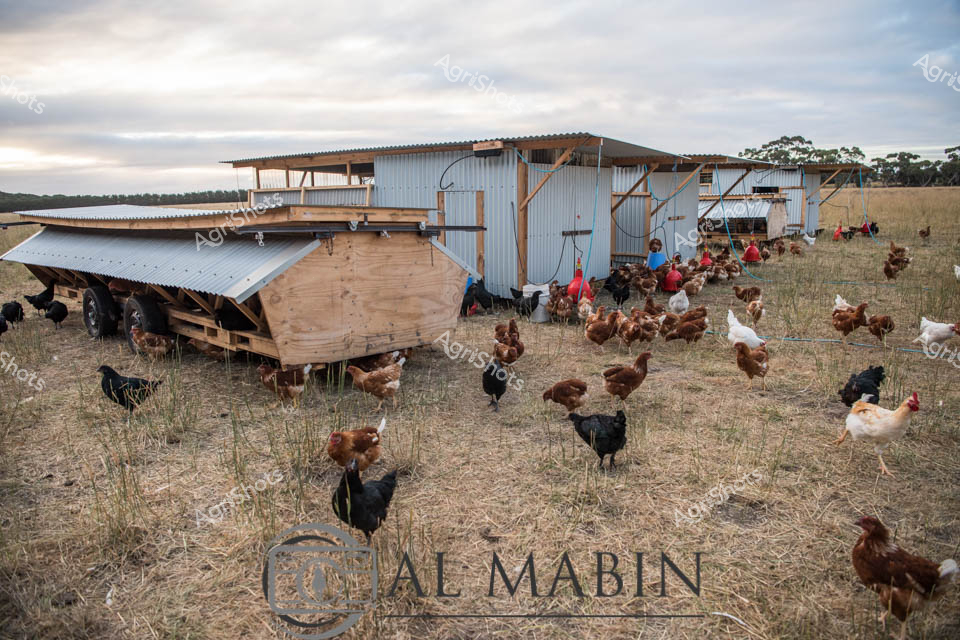
Free-range chicken farming flourishes under muted morning light at The pastoral property in Victoria. Rustic corrugated iron shelters and wooden nest boxes provide sanctuary for a diverse flock of brown, white, and black chickens roaming across a dry grassland paddock. Robust portable shelters with angled roofs offer protection and mobility, allowing the chickens to forage naturally across the textured, straw-colored landscape. The scene captures the essence of sustainable, small-scale poultry production - chickens wandering freely, pecking and scratching among sparse winter grasses, with meticulously constructed shelters representing thoughtful agricultural design. Soft overcast skies cast a gentle light across the scene, emphasizing the earthy tones of the chickens and the weathered metallic surfaces of their mobile homes. This image embodies the contemporary Australian approach to ethical, free-range egg production, balancing animal welfare with practical farming infrastructure.
 Image
Image
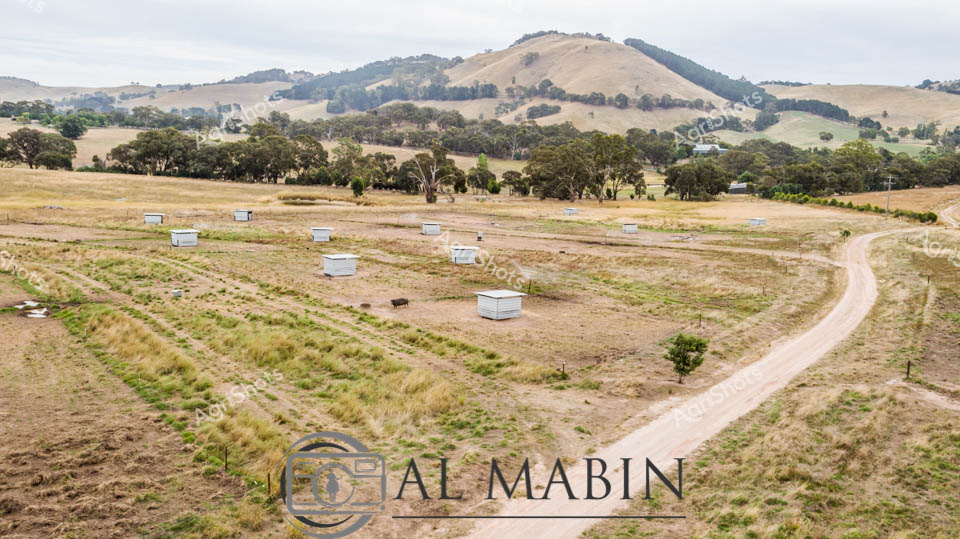
Rural pastureland near Heathcote reveals a meticulously planned piggery operation nestled among rolling golden hills and scattered eucalyptus trees. White rectangular shelters are strategically positioned across the dry grassland, providing shelter and protection for livestock in this expansive agricultural landscape. A pale dirt track winds through the property, offering access between the pig enclosures and highlighting the systematic layout of the farming infrastructure. The terrain showcases classic Victorian agricultural topography - undulating hills with patches of native woodland, dried grasses in summer tones of beige and amber, creating a textural backdrop of Australia's agricultural heartland. Careful land management is evident in the grid-like placement of pig shelters, demonstrating modern large-scale farming techniques integrated sensitively with the natural environment. The soft, overcast sky suggests early morning or late afternoon, casting gentle light across the scene and emphasizing the pastoral tranquility of this agricultural setting.
 Image
Image
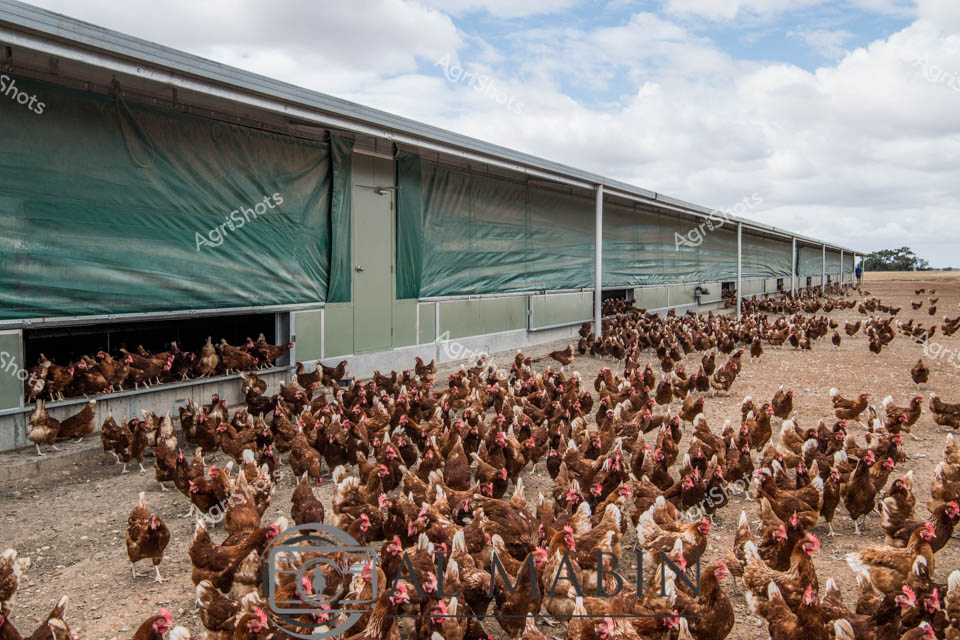
Free-range brown laying hens populate a spacious agricultural shed, representing contemporary egg production in rural Victoria. Hundreds of robust chickens with rich reddish-brown feathering and bright red combs mill across a dusty outdoor paddock area, with large green-tinted fabric sidewalls providing ventilation and shelter. The cloudy sky suggests a mild day, typical of southern Australian farming conditions, while the expansive metal-framed structure demonstrates modern poultry farming infrastructure. Chickens move freely between indoor and outdoor zones, showcasing a semi-large-scale farming approach that balances animal welfare with productive egg harvesting. The scene captures the scale of commercial egg production, with dense clusters of hens moving naturally across a carefully designed agricultural environment. Weathered ground and uniform shed design highlight the pragmatic, functional aesthetic of contemporary Australian agricultural facilities.
 Image
Image
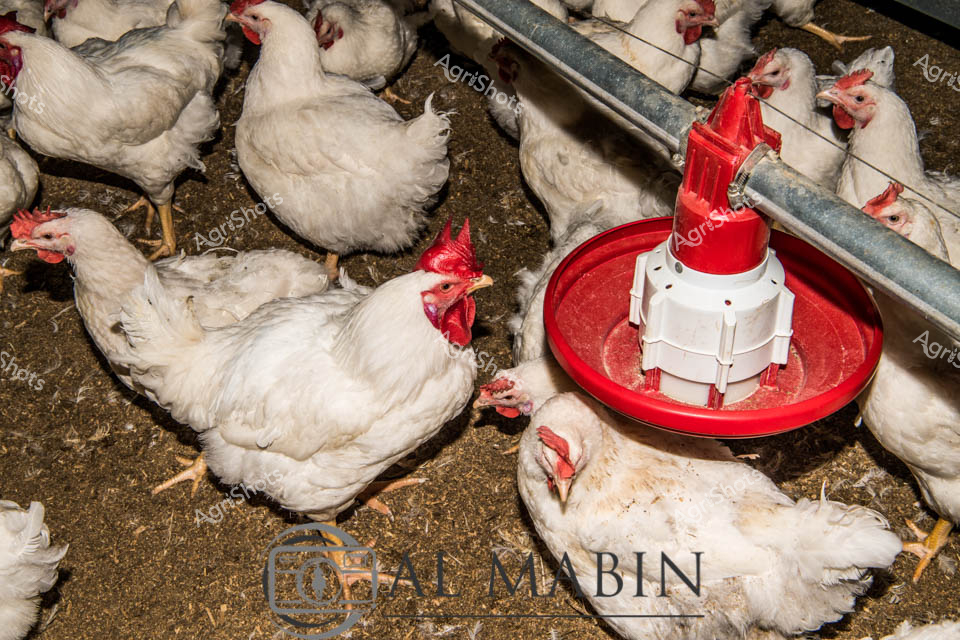
White leghorn broiler chickens crowd a modern large-scale poultry shed, clustered around a bright red and white automatic feeding mechanism. The densely packed birds showcase industrial agricultural production techniques, with pristine white feathered chickens resting on a ground of compressed organic matter. A galvanized steel support pole bisects the frame, highlighting the systematic, engineered nature of contemporary chicken farming infrastructure. The feeding device - a centralized, cylindrical dispenser with a vivid red top - stands as a mechanical centerpiece, demonstrating precision agricultural technology designed to efficiently manage large-scale livestock populations. Stark white chicken plumage contrasts dramatically against the earthy brown floor, while their bright red combs provide sharp accent points of color. The image captures the clinical efficiency of modern agricultural systems, where animal husbandry has been transformed into a carefully controlled, technologically mediated production environment typical of Tasmania's advanced farming practices.
 Image
Image
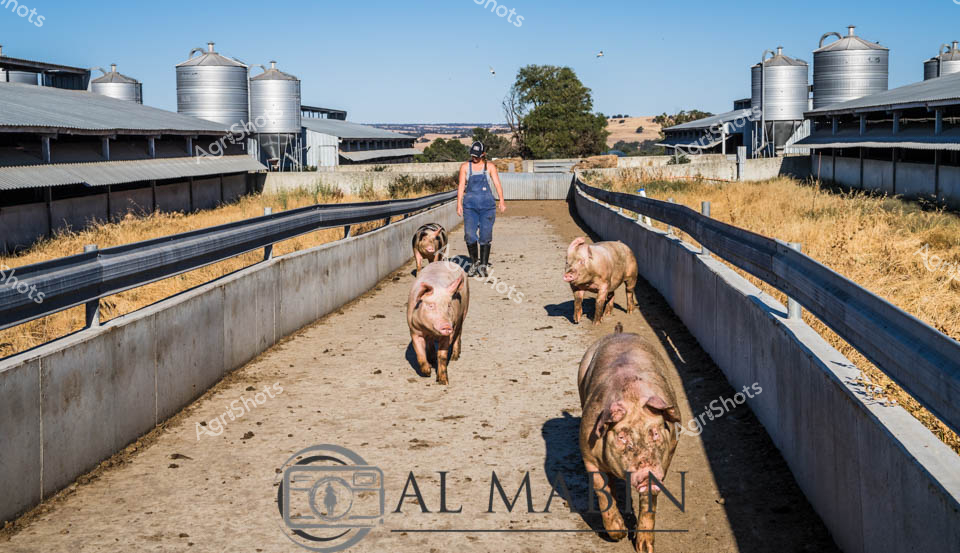
A farm worker guides a group of pigs along a concrete walkway at an large-scale piggery operation in Western Australia's South West Region. The pink and brown pigs move through the confined corridor system flanked by concrete barriers, with large grain silos and modern farming infrastructure visible in the background. The facility demonstrates the scale and industrial nature of contemporary pig farming, with purpose-built housing structures and feed storage systems supporting livestock production. Golden dried vegetation surrounding the concrete pathways indicates the rural agricultural setting typical of the region's farming operations.
 Image
Image
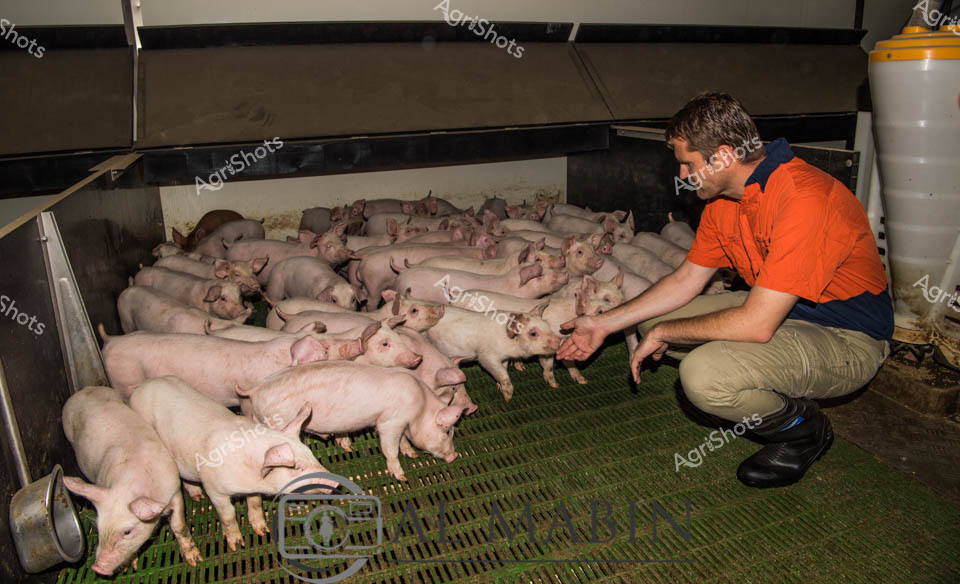
A man working as a pig farmer kneels beside young piglets in an large-scale piggery facility in Western Australia's South West Region. The farmer, wearing an orange high-visibility shirt, tends to dozens of pink piglets gathered on green plastic flooring within their pen. Modern large-scale farming infrastructure surrounds the scene, including ventilation systems and feeding equipment designed for efficient pig production. The piglets appear healthy and active as they cluster around the farmer during routine care and monitoring activities.
 Image
Image
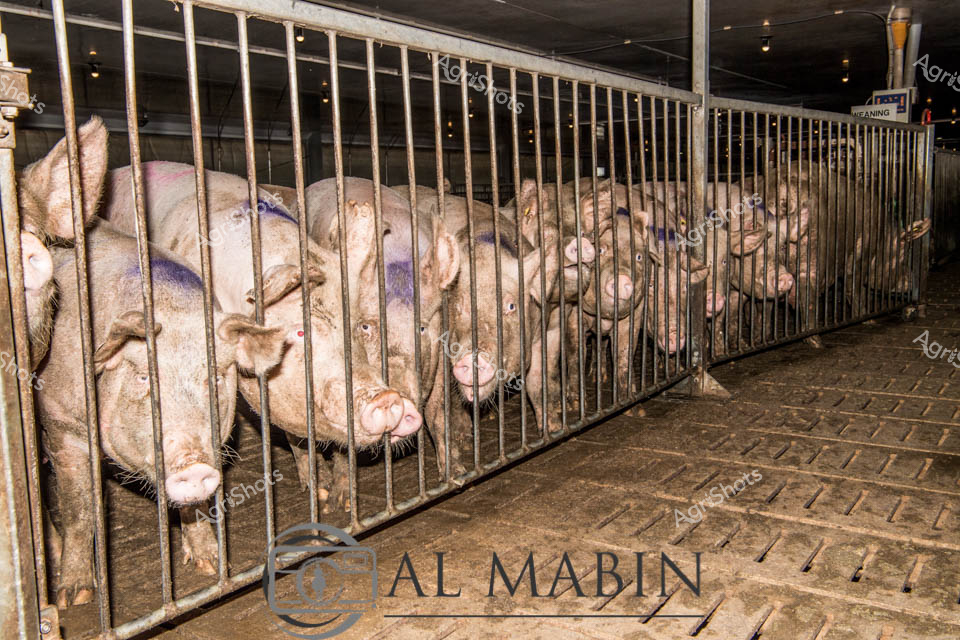
A group of pigs huddle together in a confined metal pen, their pale pink and grey bodies pressed tightly against metal bars at what appears to be a commercial livestock facility. The animals are packed closely, with limited movement space, standing on a textured concrete floor beneath overhead lighting. Purple markings are visible on some of the pigs, likely identification tags used in agricultural management. The metal barriers create a grid-like enclosure, typical of large-scale farming infrastructure. Several pigs turn their heads towards the camera, their distinctive snouts and ears visible through the narrow vertical bars, suggesting a standardized agricultural environment focused on efficient livestock production.
 Image
Image
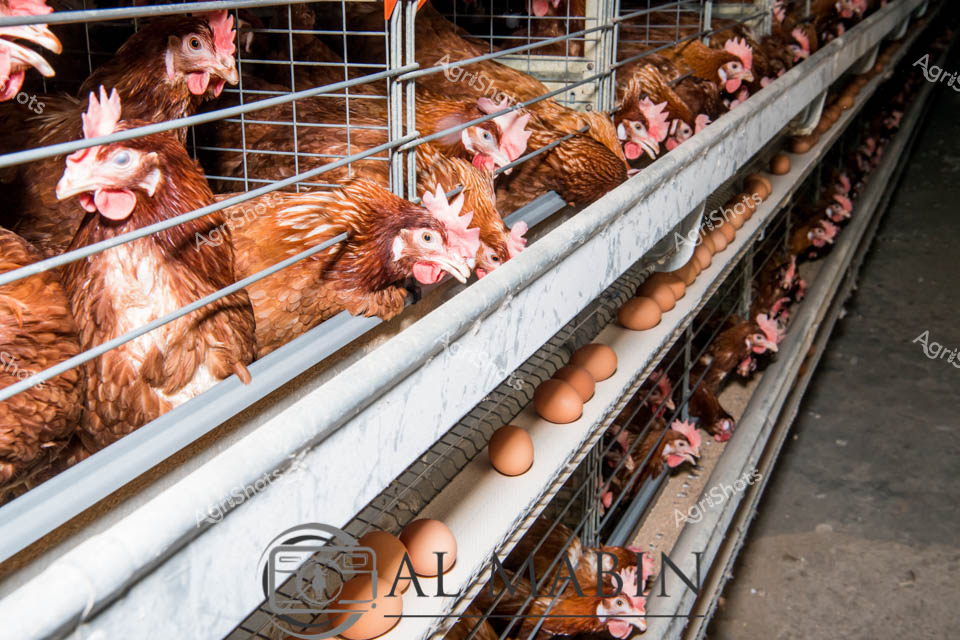
Battery hens crowd the wire cages of an large-scale egg production facility, their reddish-brown feathers pressed against metallic barriers. Pristine white conveyor systems beneath the cages efficiently collect a steady stream of fresh brown eggs, each one rolling smoothly along the mechanical pathway. The uniform rows of chickens demonstrate the industrialized nature of modern agricultural egg production, with tightly packed hens positioned in precise multiple-tier arrangements. Soft pink combs and alert eyes peek through the wire grid, revealing the living creatures behind this systematic food production process. Overhead lighting casts a clinical illumination across the metallic surfaces, highlighting the mechanical precision of contemporary poultry farming infrastructure. This image captures the complex intersection of animal husbandry and industrial efficiency, revealing the structured environment where protein production meets agricultural technology in rural Australia.
 Image
Image
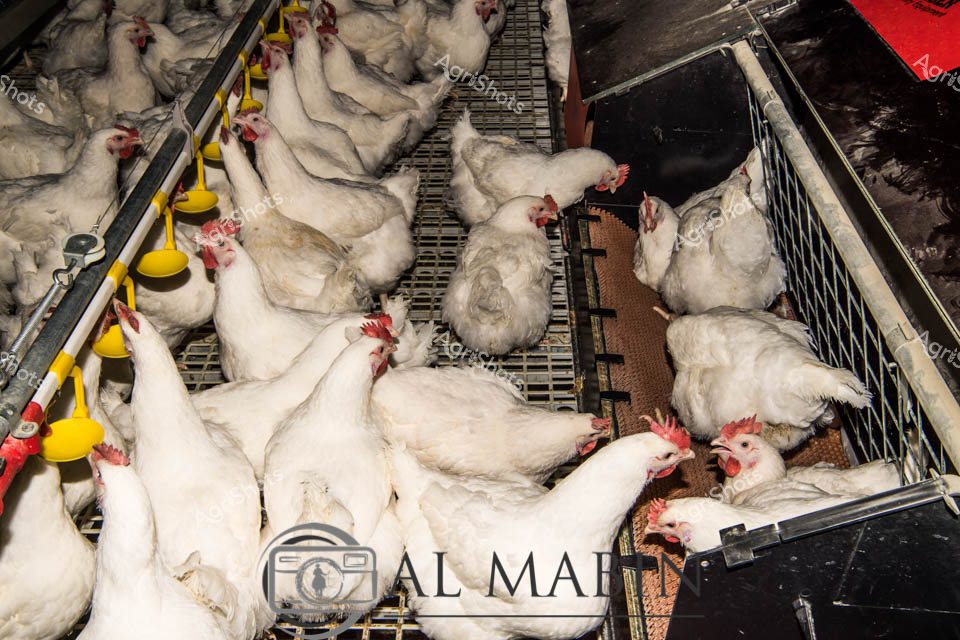
White commercial broiler chickens crowd a multilevel battery cage system, exemplifying large-scale poultry production techniques common in Australian agricultural operations. Tightly packed birds rest on metal wire flooring, surrounded by yellow water dispensers and structured metal framing typical of modern industrial chicken farming infrastructure. The pale white feathered chickens demonstrate uniform breeding, with similar body sizes and red combs characteristic of high-efficiency meat production breeds. Metallic greys, stark whites, and bright yellow accents define the mechanical, systematic environment, reflecting the precision of contemporary agricultural technology. Narrow passageways between cage sections allow limited movement, highlighting the densely optimized space management of commercial poultry facilities. The image captures the industrial scale and technological precision of Australian chicken farming, where genetic selection and standardized housing enable maximum protein production efficiency.
 Image
Image
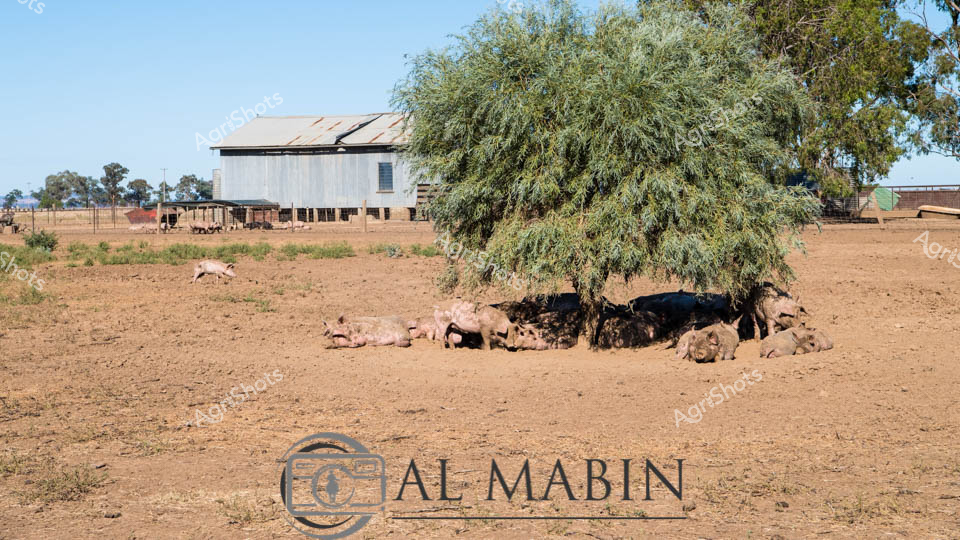
Dusty paddock shadows stretch across a sun-drenched pig farm in New England, New South Wales, where young piglets cluster beneath a sprawling shade tree. The dry, ochre-colored ground contrasts sharply with the lush green foliage offering sanctuary from the intense midday heat. A weathered agricultural shed stands in the background, typical of rural NSW farming infrastructure, while several pink-skinned piglets rest in tight groups, their soft bodies pressed against each other for comfort and coolness. The piglets appear healthy and relaxed, sheltering from the harsh sunlight, embodying the balance between large-scale farming practices and animal welfare. Sparse vegetation and the rustic metal shed speak to the resilient agricultural landscape of northern NSW, where farmers navigate challenging environmental conditions. The scene represents a moment of pastoral tranquility - young livestock finding respite, the subtle interplay of natural and constructed environments, and the quiet resilience of Australian agricultural life. Soft pink bodies, earthy browns, and deep green shadows create a nuanced visual narrative of contemporary farming.
 Image
Image
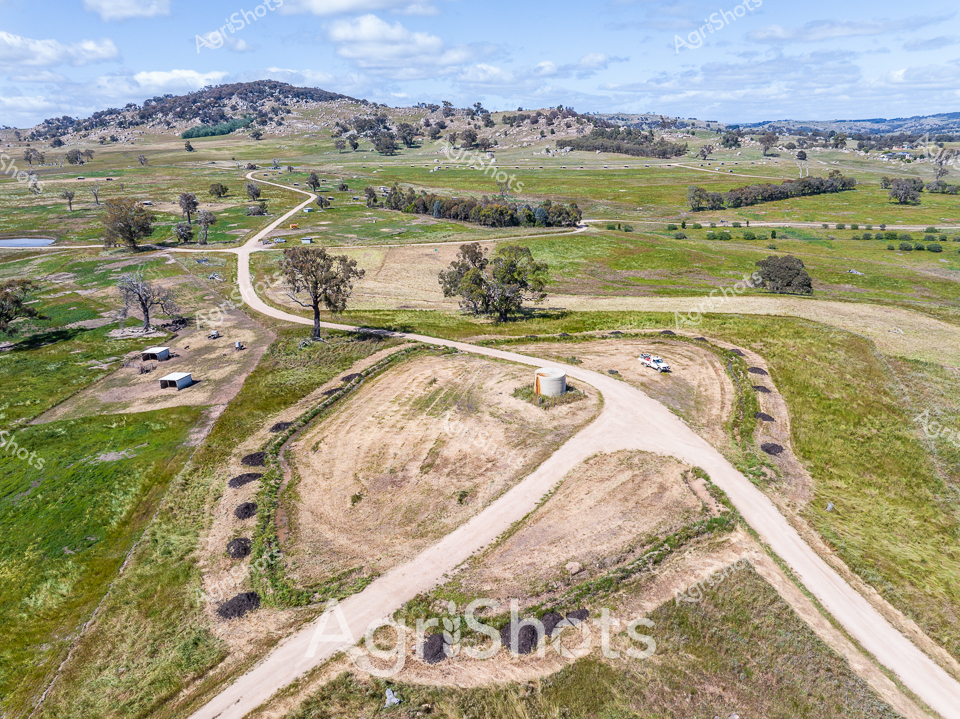
Aerial view of a regenerative agricultural landscape in regional Victoria, showcasing the intricate design of sustainable land management. Winding gravel roads trace gentle curves through a mosaic of green and golden pastures, punctuated by mature eucalyptus trees that provide natural windbreaks and habitat. A central circular formation, likely a regenerative farming infrastructure, features a central structure and carefully placed dark markers that suggest strategic land rehabilitation techniques. The surrounding terrain reveals a rolling topography typical of the Victorian countryside, with rocky outcrops and scattered woodland clusters creating a textured panorama under a soft, cloud-dappled sky. In the distance, rocky hills frame the scene, highlighting the rugged beauty of Australia's agricultural heartland and the innovative approaches farmers are adopting to restore ecological balance while maintaining productive landscapes.
 Image
Image
Black Berkshire breeding pigs graze across a sun-drenched pasture in Victoria's Heathcote region, representing contemporary regenerative farming practices. The robust, dark-coated animals stand confidently amid dry grasslands, with rolling green hills and scattered eucalyptus trees forming a quintessential Australian agricultural landscape in the background. A white shelter provides shade and shelter, typical of modern large-scale pig farming infrastructure that balances animal welfare with production efficiency. These heritage breed pigs, known for exceptional meat quality, demonstrate a sustainable farming approach that allows animals open-range movement while maintaining controlled breeding environments. The late morning light casts soft shadows across the paddock, highlighting the muscular frames and alert postures of the pigs against the golden-brown grass and verdant distant hills. This scene captures the evolving ethos of Australian livestock management - blending traditional breed characteristics with contemporary agricultural innovation.
 Image
Image
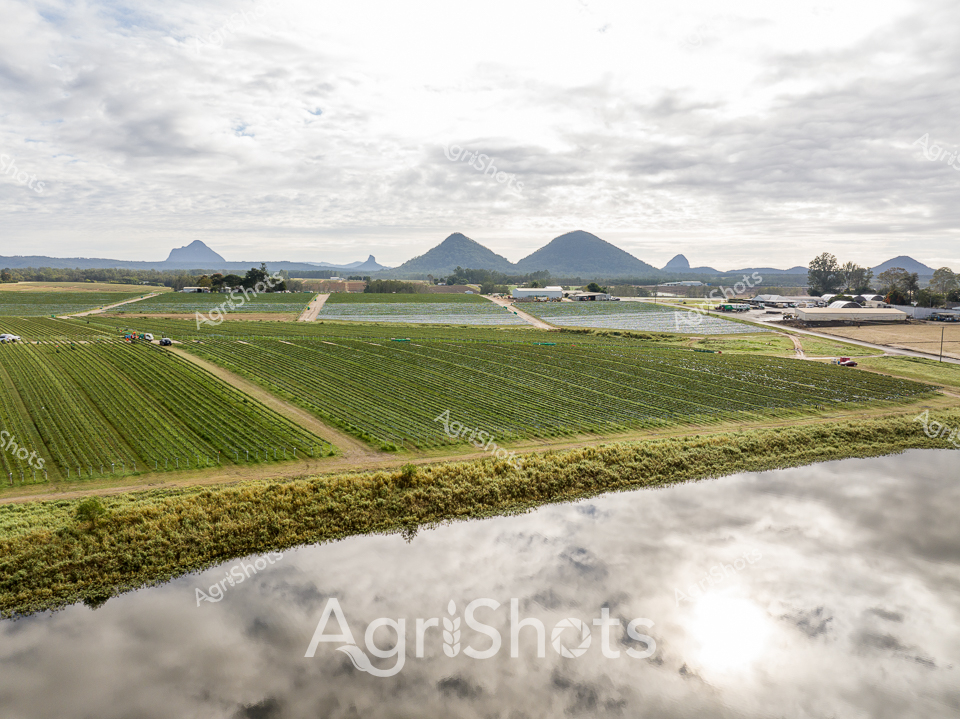
Undulating green pastures cascade across the New England landscape, where precision agricultural practices meet dramatic mountain horizons. Meticulously divided crop fields stretch toward distant volcanic peaks, creating a geometric tapestry of agricultural innovation. A pristine waterway winds along the foreground, its banks protected by carefully maintained vegetation, representing best-practice riparian zone management. The overcast winter sky casts soft, diffused light across verdant paddocks, highlighting the strategic layout of farming infrastructure and water management systems. Regenerative farming principles are evident in the carefully planned field divisions, erosion control, and strategic water exclusion fencing that protects both agricultural productivity and environmental sustainability. The scene captures the delicate balance between human agricultural intervention and the natural landscape, with geometric field patterns contrasting against the rounded silhouettes of distant mountain ranges in a quintessential Australian rural tableau.
 Image
Image
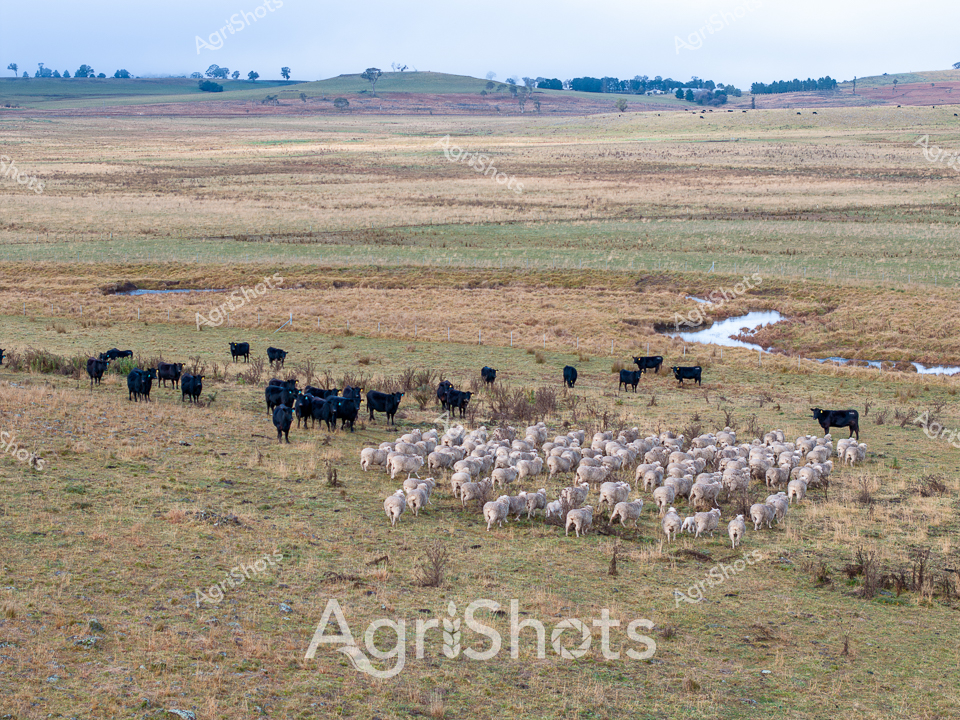
Windswept winter pastures of New England stretch across the New South Wales high country, where a carefully managed agricultural landscape unfolds. A robust herd of black Angus cattle stands sentinel alongside a dense flock of merino sheep, grazing near a meandering creek lined with subtle regenerative farming infrastructure. The riparian zone demonstrates sustainable land management practices, with strategic exclusion fencing protecting the watercourse while allowing controlled livestock access. Soft greys, browns, and muted greens characterize the winter palette, reflecting the austere beauty of this agricultural ecosystem. The livestock cluster near the water, their dark and light forms creating a striking contrast against the undulating paddock, with distant hills and scattered trees forming a classic Australian rural backdrop. This scene captures the essence of progressive pastoral farming - where animal husbandry, environmental stewardship, and landscape conservation converge in a delicate, productive balance.
 Image
Image
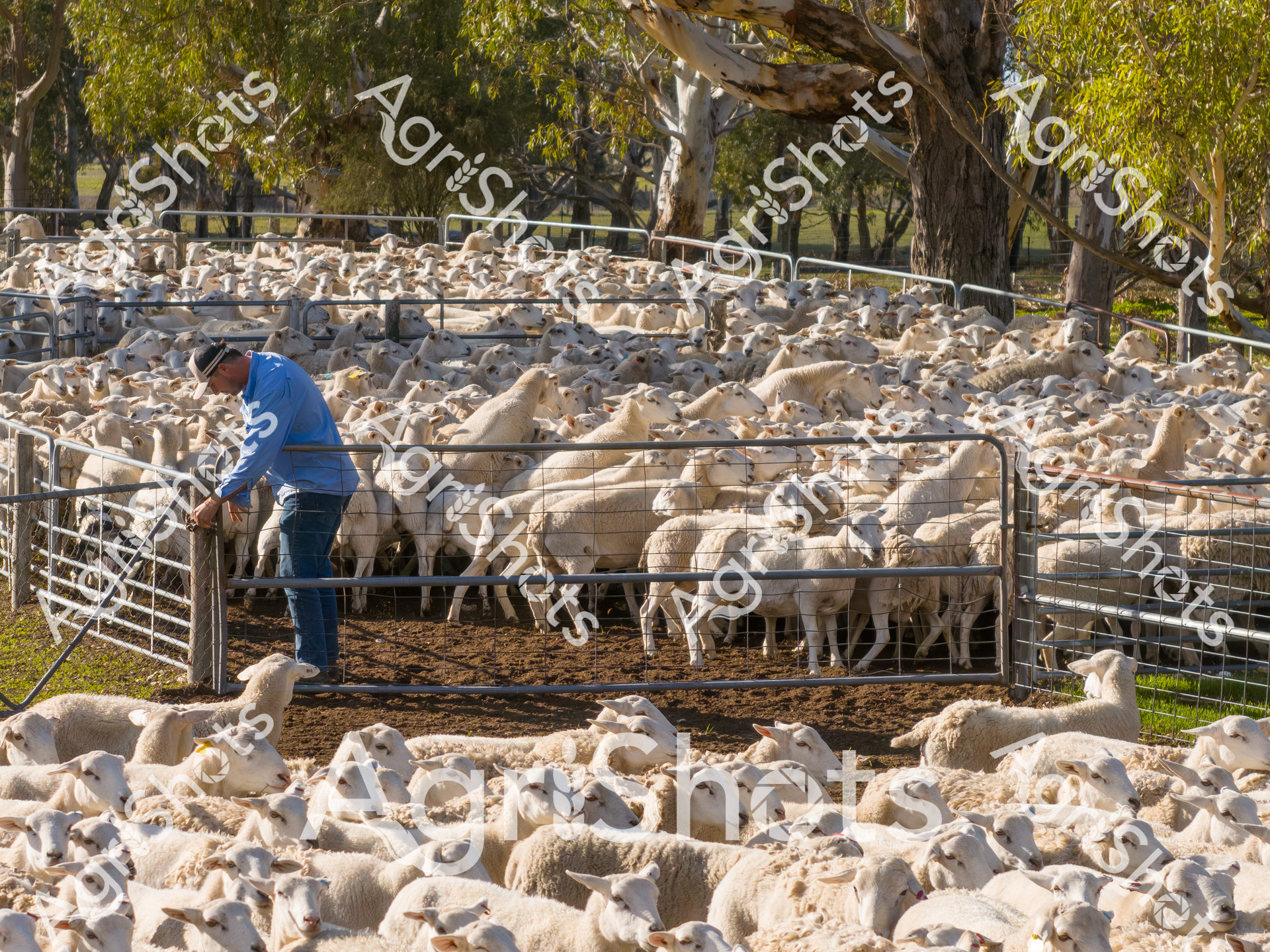
A dense mob of pristine Aussie White sheep crowds the meticulously managed livestock yards, their woolly forms creating a sea of creamy-white against the rich brown earth. A stockman in a vivid blue work shirt carefully manages the gate, strategically positioning himself to control the tightly packed flock. Majestic eucalyptus trees frame the scene, their silvery-green foliage providing a natural backdrop to this quintessential South Australian agricultural landscape. The tight clustering of sheep suggests careful stock management during what appears to be a winter or green drought season, where pasture conditions remain variable. Robust steel yards with multiple gates demonstrate the precision of modern sheep farming infrastructure, allowing controlled movement and management of livestock. The image captures the intricate relationship between farmer, animal, and landscape - a testament to the resilience and skill of Australian agricultural practices in the challenging environment of the South East region.
 ▶ Video
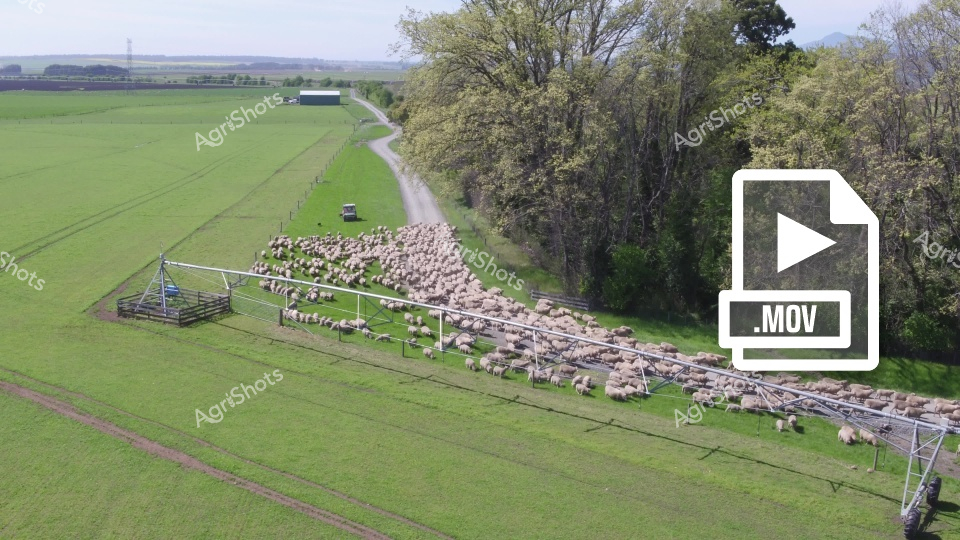
An expansive aerial view captures a large flock of sheep being guided through a lush green pasture using a sophisticated pivot irrigation system. Hundreds of woolly sheep move together along a narrow corridor created by the metal irrigation infrastructure, their white bodies contrasting sharply against the vibrant green grass. A distant farm shed and tree line mark the horizon, while a dirt track winds alongside the paddock, suggesting this is a well-managed agricultural property. The irrigation system, a classic example of modern farming technology, slowly traverses the field, demonstrating precision agricultural techniques used to maintain optimal grazing conditions. The scene represents the intricate relationship between livestock management and advanced farming infrastructure in a typical Australian rural landscape.
 ▶ Video
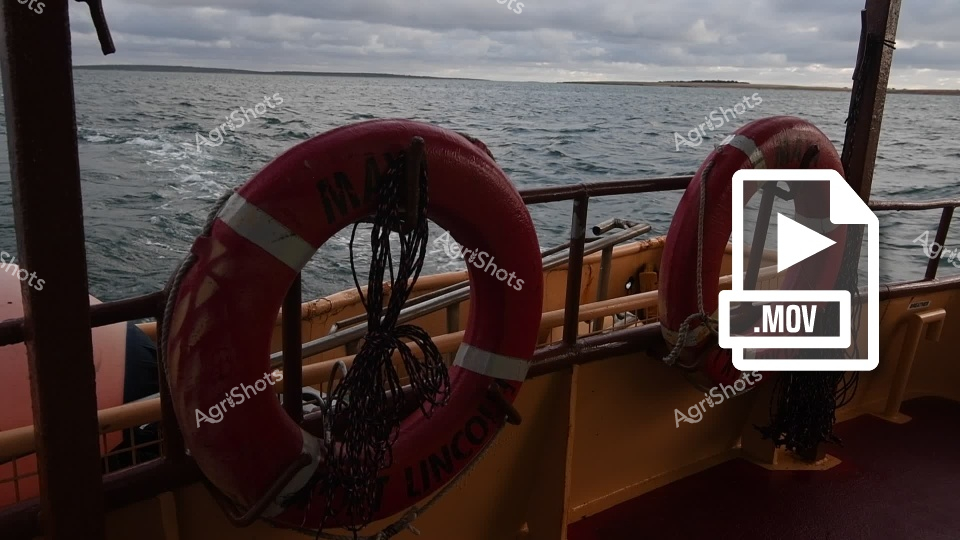
A fishing boat navigates the choppy waters off South Australia's coastline, with red and white life rings prominently displayed on the vessel's deck. The boat appears to be engaged in aquaculture operations, likely tending to mussel farming infrastructure in the waters around the Eyre Peninsula or Yorke Peninsula region. Ocean swells roll beneath the working vessel as it moves through the marine farming area under an overcast sky.
 ▶ Video
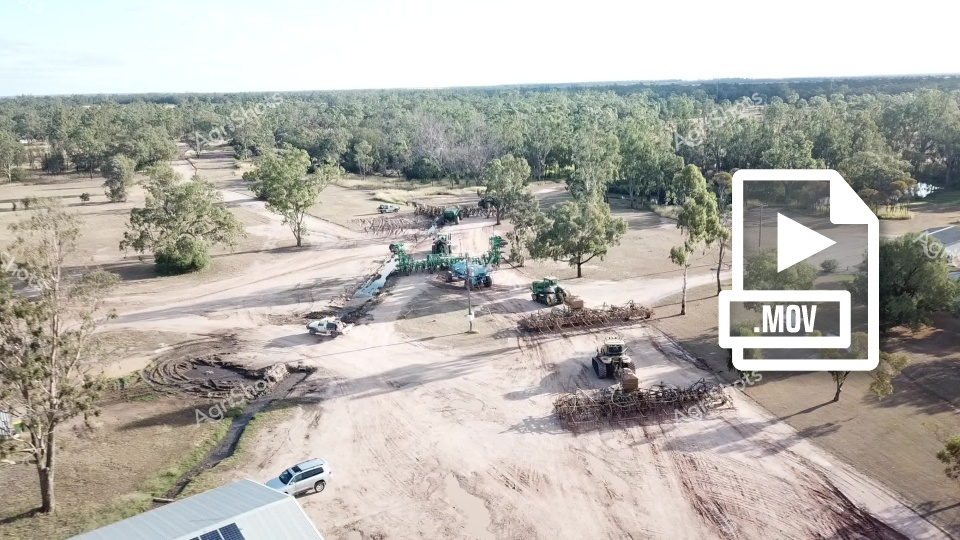
Aerial view captures agricultural machinery and equipment stationed across a Queensland cropping operation, with multiple tractors, air seeders, and chaser bins positioned throughout the expansive rural landscape. The farming equipment, including John Deere and Caterpillar machinery, sits ready for planting operations among scattered gum trees and cleared paddocks. A white utility vehicle provides scale to the impressive collection of agricultural implements, while organized piles of materials and farming infrastructure demonstrate the scale of modern grain cropping in Queensland's agricultural region.