Results for “dusty terrain”
 Image
Image
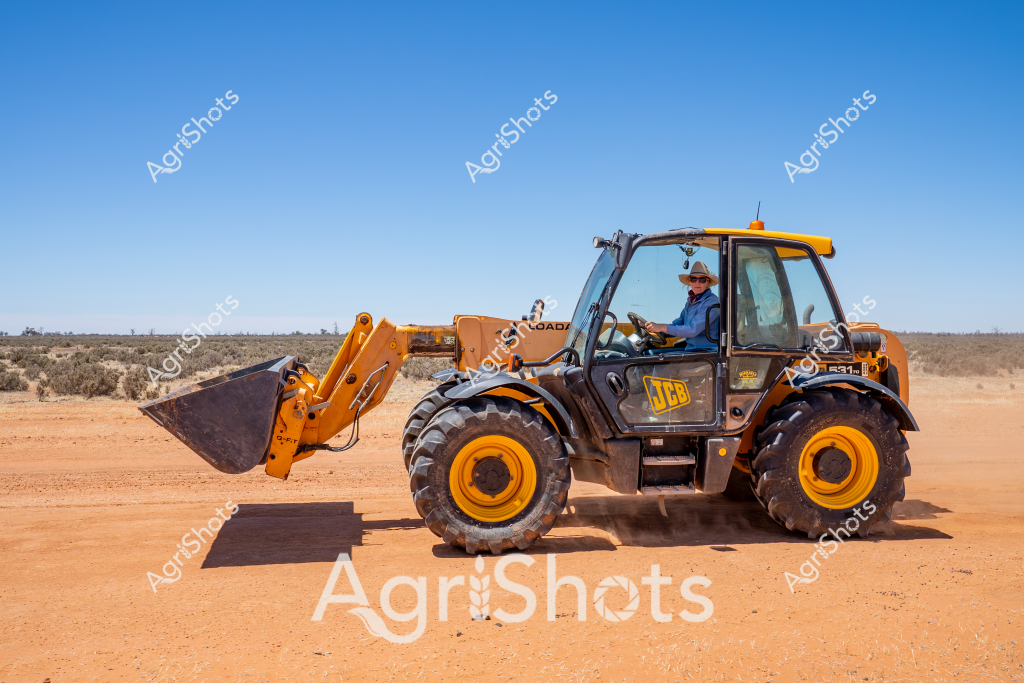
A JCB telehandler stands ready in a sun-drenched, arid landscape, its vibrant yellow and black color scheme contrasting sharply against the rich terracotta-colored dirt and sparse scrubland. A man wearing work attire and a broad-brimmed hat operates the heavy machinery, positioning the large front bucket against a clear blue sky. The robust agricultural vehicle features substantial chunky tyres designed for navigating challenging rural terrain, with the distinctive JCB branding prominently displayed on its side panel. The telehandler appears well-maintained and prepared for agricultural or construction work, typical of machinery used in remote Australian farming and resource extraction regions. Its muscular profile suggests powerful lifting capabilities, essential for tasks like moving materials, loading supplies, or supporting infrastructure development in challenging outback environments. The surrounding landscape hints at a remote location - possibly in Western Australia, South Australia, or the Northern Territory - with low scrub vegetation and a vast, open horizon stretching into the distance. The harsh, bright lighting and cloudless sky indicate midday conditions in a hot, dry agricultural or mining region.
 Image
Image
Two women working in the rugged Kimberley region of Western Australia, dressed in bright work attire, stand beside a white ute in a dry, bushy landscape. They appear to be engaged in agricultural or station work, with one woman in an orange and yellow shirt leaning against the vehicle and another in a red jacket sitting nearby, surrounded by sparse trees and red earth.
 Image
Image
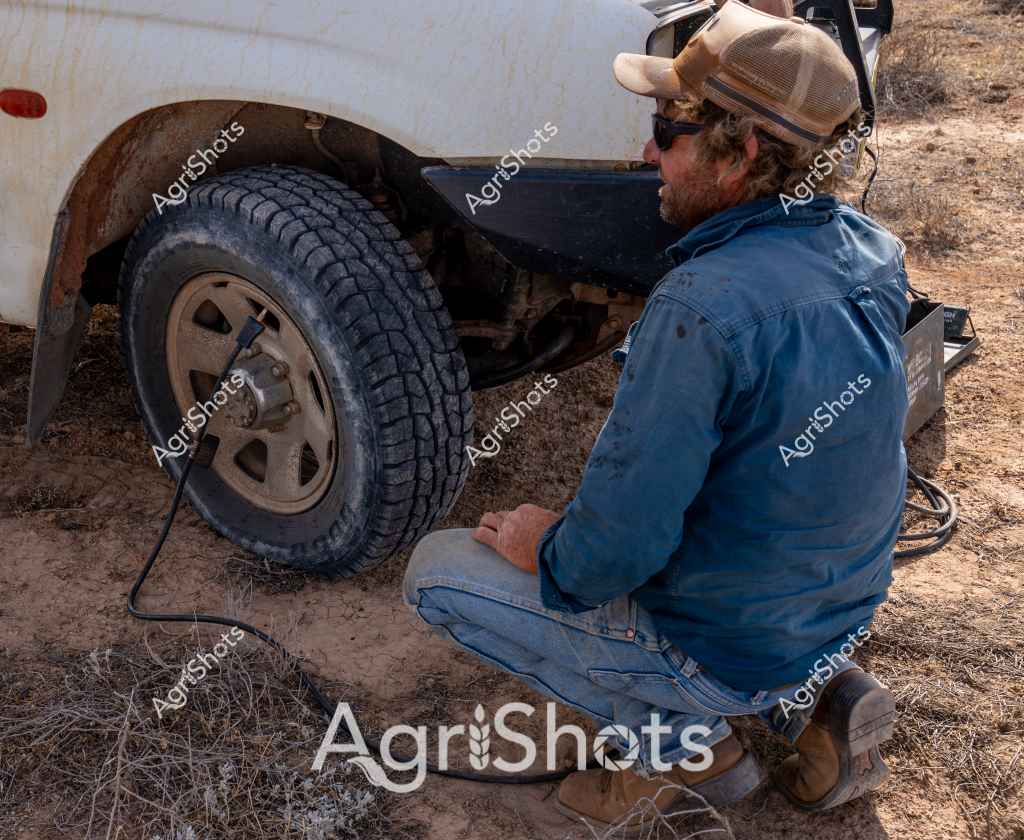
A man wearing a blue work jacket and tan cap carefully examines a vehicle tire while crouched on dry, rocky ground. The white vehicle has a rusted wheel arch, and the tire appears to be an all-terrain model with deep tread patterns suitable for rough rural terrain. He is wearing sunglasses and work boots, suggesting he is performing roadside maintenance or vehicle inspection in an isolated, arid landscape. The surrounding environment looks like a typical Australian outback or remote farming region, with sparse vegetation and dusty ground indicating challenging environmental conditions. The man's posture and attentive positioning suggest he is experienced in dealing with vehicle repairs in challenging outdoor settings.
 Image
Image
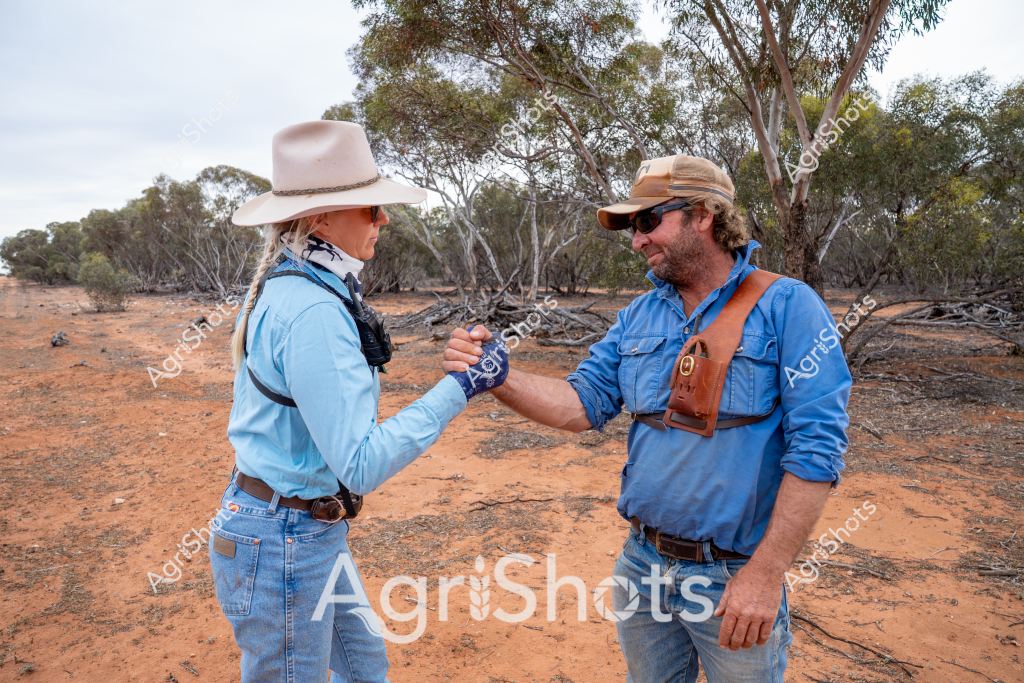
Two agricultural workers share a moment in a remote Australian landscape, standing on red earth surrounded by sparse eucalyptus trees. A woman wearing a wide-brimmed white hat and light blue work shirt stands facing a man in a blue work shirt, tan cap, and sunglasses. They are exchanging something - possibly water bottles or discussing field work - in what appears to be an arid, drought-affected region with scattered woodland in the background. The landscape is quintessentially Australian, with reddish soil, scattered fallen timber, and grey-green eucalyptus trees creating a stark, rugged backdrop. Both individuals are dressed in typical rural workwear - long-sleeved shirts, denim jeans, and protective headwear suited to harsh outdoor conditions. Their body language suggests a professional but collegial interaction, likely related to agricultural or environmental work in a challenging rural setting. The scene captures the resilience and camaraderie characteristic of Australian agricultural workers, who must navigate extreme environmental conditions while maintaining professional relationships and shared purpose in managing rural landscapes.
 Image
Image
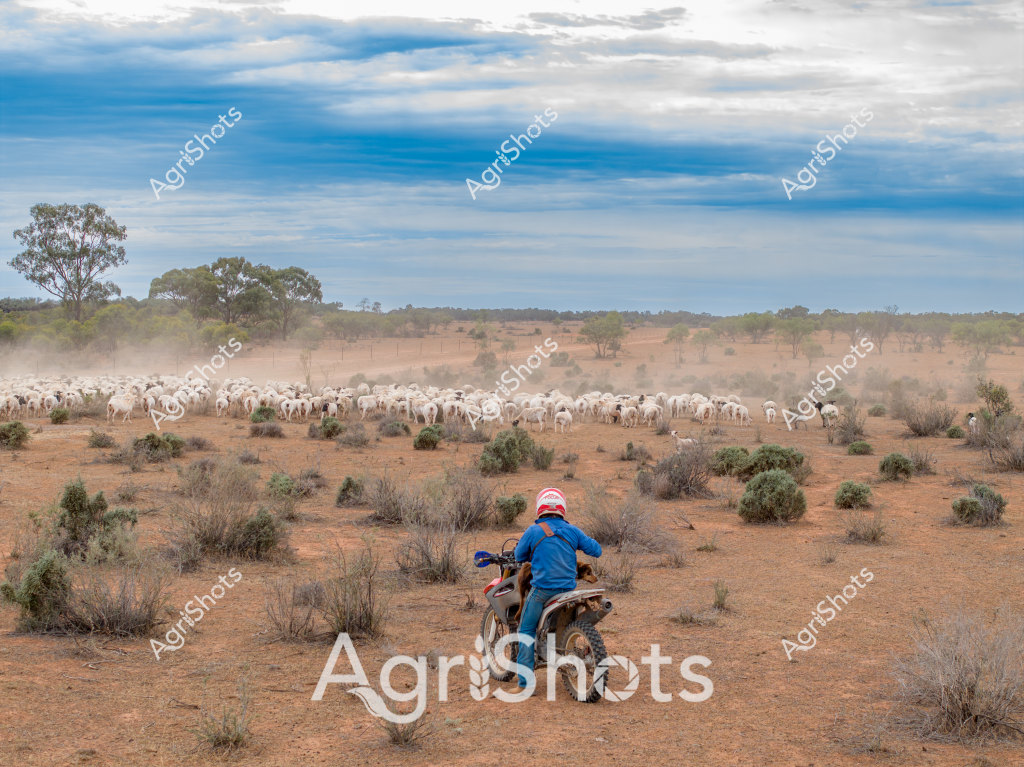
A motorcyclist herds a large flock of white sheep across a dry, expansive Australian outback landscape. The rider, wearing a blue jacket and distinctive helmet, navigates the dusty terrain on a trail bike, expertly guiding the sheep through sparse scrubland with scattered native bushes. The landscape is characterized by reddish-brown earth, low saltbush and bluebush shrubs, and eucalyptus trees dotting the distant horizon. Pale blue skies with soft cloud formations provide a dramatic backdrop to the pastoral scene, highlighting the challenging environment of inland Australia. A slight dust cloud rises from the sheep's movement, emphasizing the arid conditions and the dynamic nature of livestock mustering in remote agricultural regions. The image captures the quintessential Australian rural experience of managing livestock across vast, unforgiving landscapes.
 Image
Image
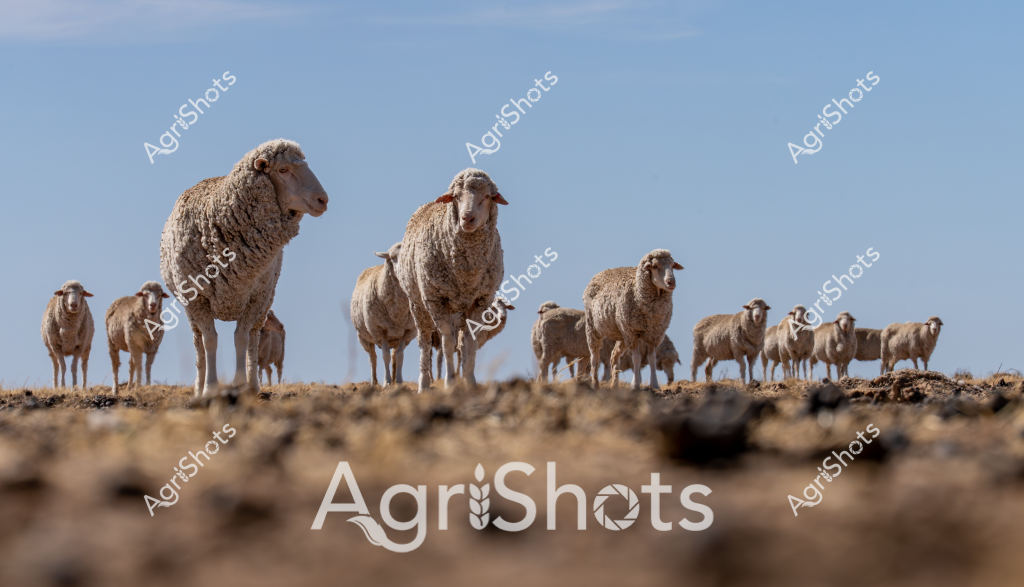
A majestic flock of Merino sheep stands poised across a dry, rocky landscape under a clear blue sky. The woolly animals are clustered in groups, with several larger sheep prominently positioned at different heights, creating a striking silhouette against the barren ground. Their dense, cream-colored fleece suggests these are mature sheep, likely on a vast Australian pastoral station during the dry season. The sheep appear alert and grouped together, displaying the characteristic tight clustering behavior of Merinos in open grazing lands. From the smallest lambs to the larger ewes and rams, the flock demonstrates the robust nature of this breed, which is renowned for its ability to thrive in harsh Australian agricultural environments. The foreground shows a rocky, dusty terrain typical of arid grazing regions, highlighting the resilience of both the landscape and the livestock. The composition captures the essence of Australian sheep farming - a testament to the endurance of both the animals and the farmers who manage them. The graduated positioning of the sheep, from smaller groups in the background to larger, more prominent individuals in the foreground, creates a sense of depth and scale that emphasizes the vastness of the Australian pastoral landscape.
 Image
Image
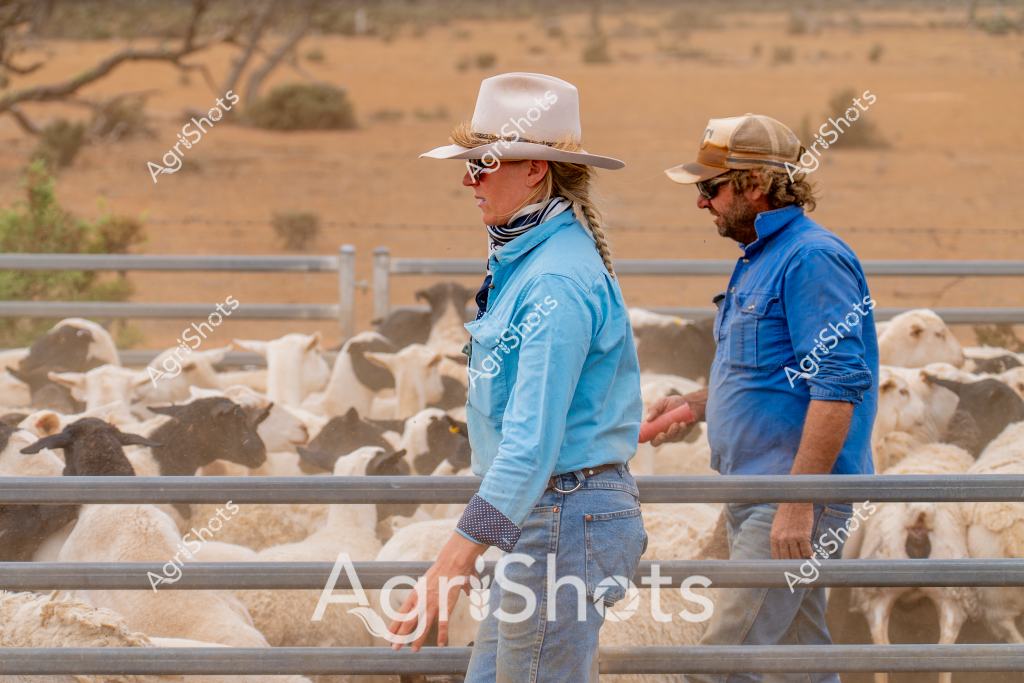
Two livestock managers stand beside a mob of mixed-breed sheep in a dry outback paddock, surveying the herd with professional focus. A woman wearing a white wide-brimmed hat, blue long-sleeved shirt, and jeans stands to the left, while a man in a blue work shirt and cap stands to her right. The sheep - a mix of white and dark-colored animals - are tightly clustered behind metal livestock yards, with sparse scrubland and dusty terrain visible in the background. The scene captures the typical rural Australian pastoral landscape, characterized by arid conditions and the essential work of stock management. Both individuals appear attentive and positioned strategically, suggesting they are assessing the condition of the flock or preparing for a mustering operation. Their coordinated blue work shirts and practical rural attire indicate professional farming practices, while the wide-brimmed hats provide protection from the intense outback sun. The landscape speaks to the challenging environment of Australian sheep farming, with dry ground, scattered vegetation, and a sense of vastness that defines remote agricultural regions. This image represents the resilience and skill required in managing livestock in tough, unforgiving terrain.
 Image
Image
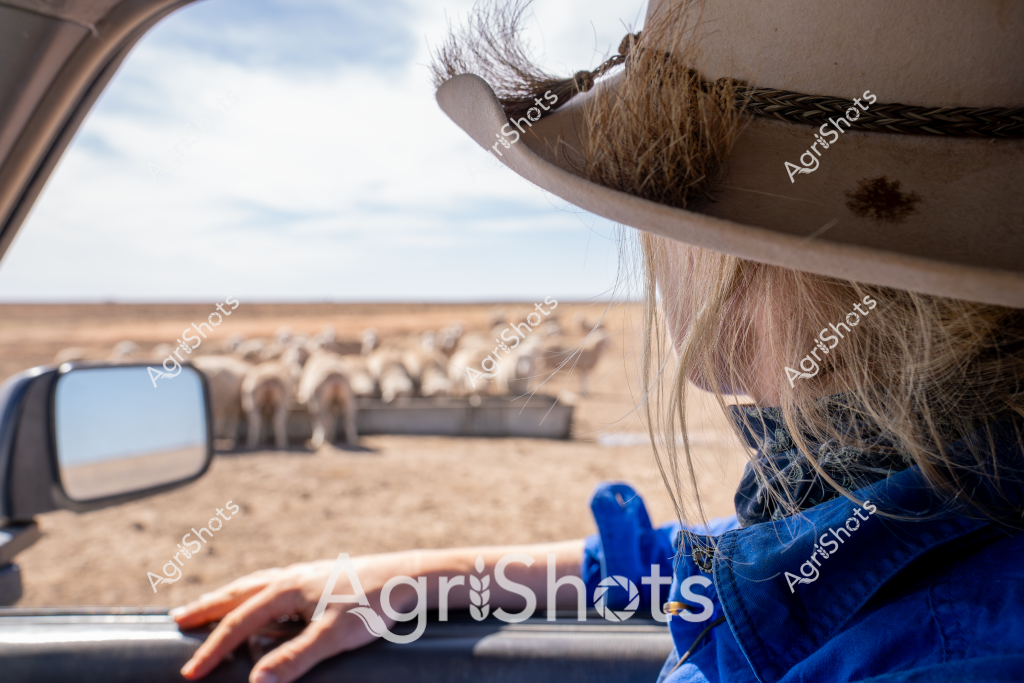
A woman stockman in a blue jacket and wide-brimmed hat looks out over a dry, expansive rural landscape, observing a flock of sheep clustered near a vehicle. The pastoral scene captures the essence of Australian sheep farming, with the arid paddock stretching to a distant horizon under a pale, hazy sky. From inside the vehicle, only part of her silhouette is visible, with stray hair wisps catching the light and her hand resting casually on the window frame. The mob of sheep appears tightly grouped, suggesting they are being moved or managed across the sparse, dusty terrain typical of inland agricultural regions. This image embodies the resilience and quiet concentration of rural Australian livestock management, showcasing the connection between a stockwoman and the flock in a challenging agricultural environment.
 Image
Image
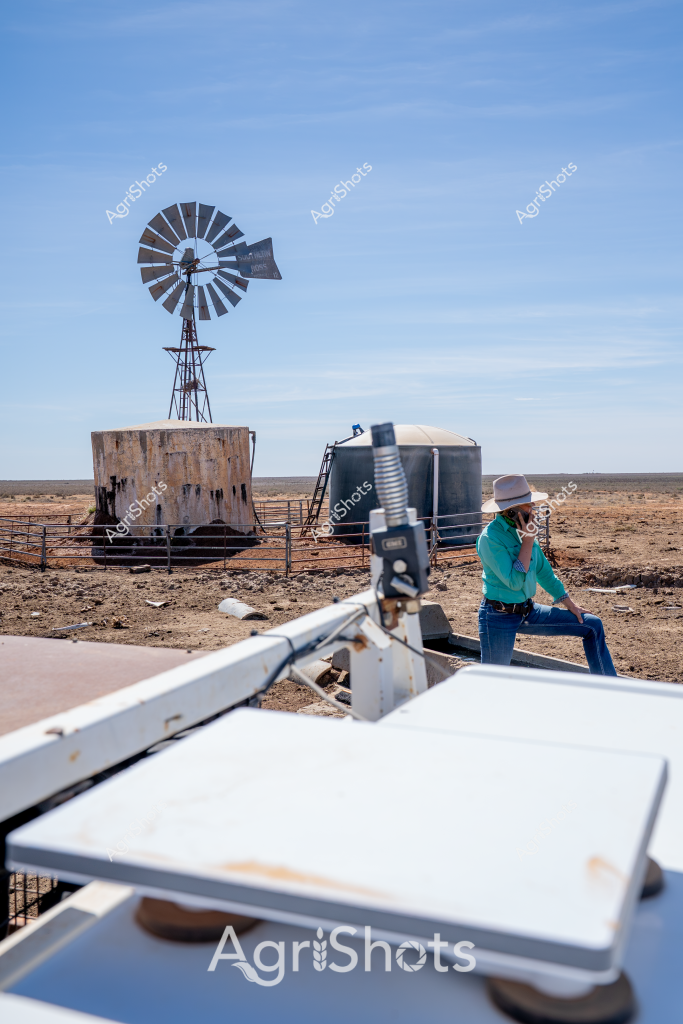
A windmill and water storage setup dominates this arid rural landscape, capturing the essence of remote Australian farming infrastructure. A person wearing a turquoise shirt and a wide-brimmed hat sits contemplatively near water tanks, surrounded by a stark, dusty terrain that stretches to a flat horizon under a clear blue sky. An old metal windmill stands prominently, its multiple blades positioned to catch even the slightest breeze, alongside a weathered concrete water storage tank enclosed by metal fencing. The scene epitomizes the resilience of agricultural operations in harsh, dry environments, where water management is critical for survival. Rusted equipment and minimal vegetation underscore the challenging conditions of this remote agricultural setting, highlighting the technological adaptations farmers use to sustain operations in Australia's unforgiving outback landscape.
 Image
Image
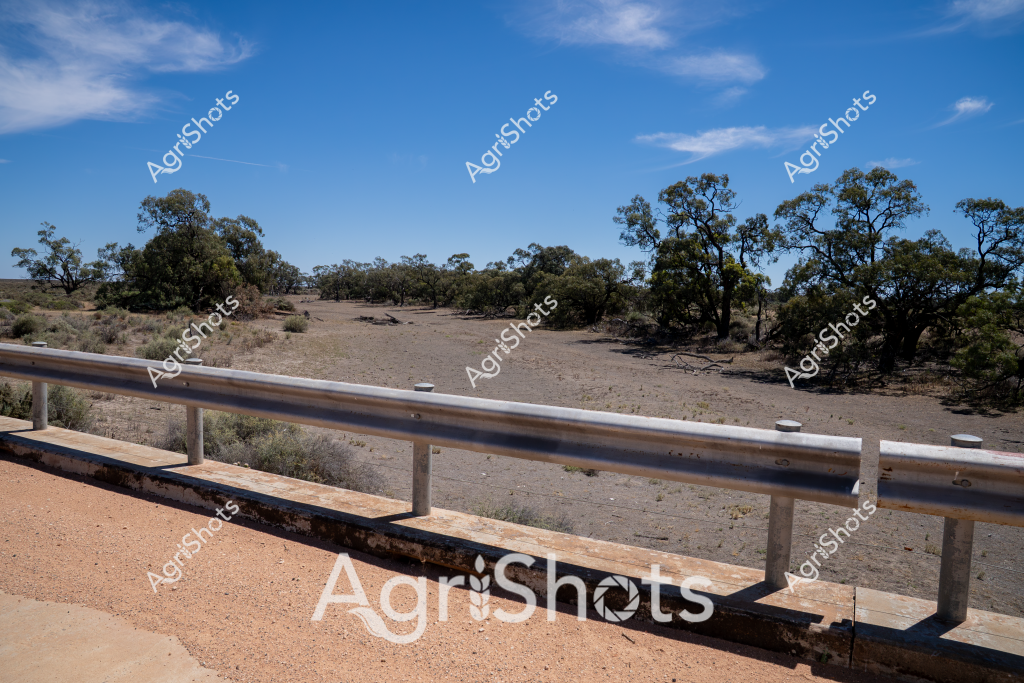
A dry, drought-affected landscape reveals the challenging environmental conditions of an Australian rural setting. Sparse trees and scrubby vegetation dot the dusty terrain, with a metal guardrail in the foreground marking what appears to be a rural road or access track. The ground is parched and cracked, with a pale brown earth tone stretching across the paddock, punctuated by scattered eucalyptus trees with their characteristic silvery-green foliage. The sky is a brilliant clear blue with wispy white clouds, providing a stark contrast to the arid landscape below. This scene captures the harsh reality of drought conditions in the Australian outback, where the land appears stressed and water-starved, highlighting the ongoing environmental challenges faced by rural and agricultural communities. The landscape suggests this is likely an area in western New South Wales or inland Queensland, where prolonged dry periods can dramatically transform the natural environment. The guardrail provides a sense of scale and human presence, though no people are visible in this stark representation of agricultural resilience in the face of challenging climatic conditions.
 Image
Image
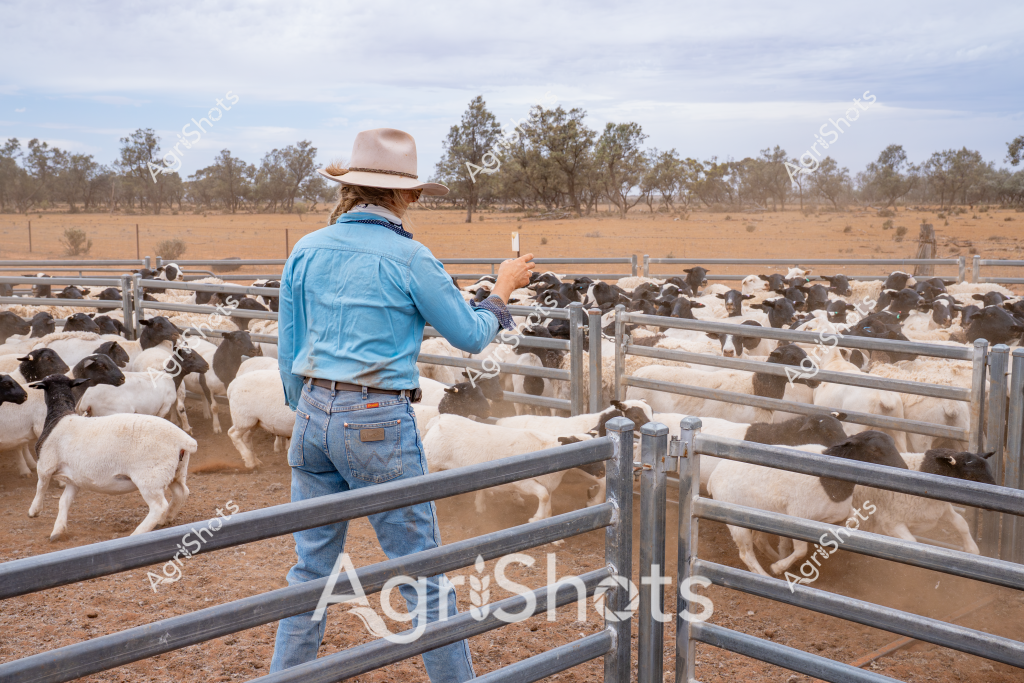
A woman stockman stands in a livestock yard, overseeing a herd of black and white goats in a dry, arid Australian landscape. Wearing a pale wide-brimmed hat, blue long-sleeved work shirt, and classic blue denim jeans, she leans against the metal livestock gates while monitoring the goats within the enclosed paddock. The surrounding environment reveals a sparse, dusty terrain with scattered eucalyptus trees in the background, typical of an inland Australian agricultural property during dry conditions. Numerous goats - a mix of white and black-colored animals - are clustered within the metal yard's fenced sections, suggesting this is likely a pastoral station in a region experiencing challenging drought conditions. The metallic gray yard infrastructure provides a structured containment for the livestock, with the woman's stance indicating careful and attentive farm management in a challenging rural environment.
 Image
Image
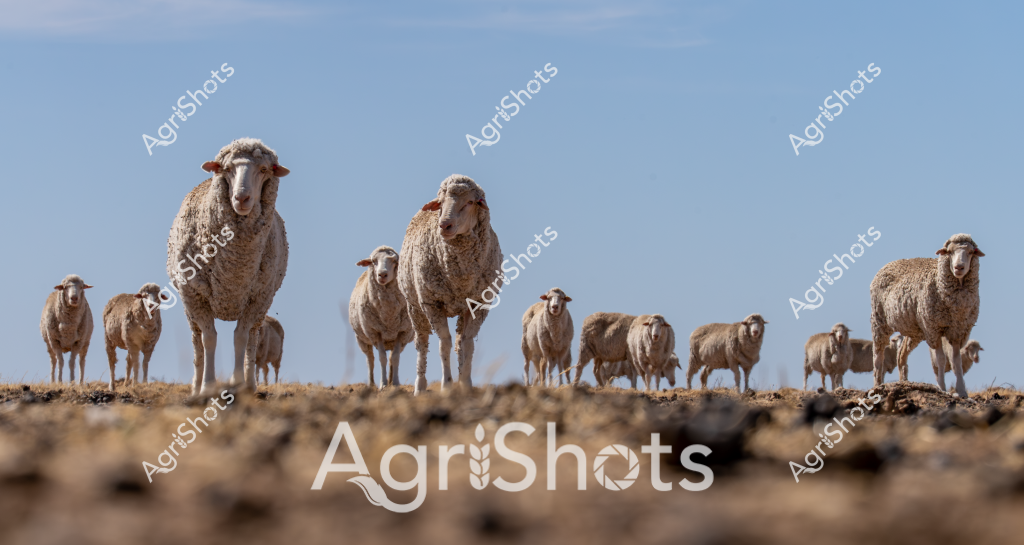
A flock of Merino sheep stands poised across a dry, rocky landscape under a clear blue sky, presenting a classic Australian pastoral scene. The woolly sheep, with their dense, creamy-white fleece, are strategically positioned at varying heights, creating a dynamic composition that highlights the breed's sturdy nature. Some sheep stand tall and alert, while others graze or move slowly across the barren ground, demonstrating the resilience of these animals in harsh agricultural environments. The foreground shows a rocky, dusty terrain typical of Australian rangelands, with stones and sparse ground cover indicating challenging farming conditions. The sheep's positioning suggests they are part of a carefully managed mob, potentially being moved between paddocks or prepared for shearing. Their thick, uniform fleece indicates these are high-quality Merino sheep, a breed renowned for producing some of the world's finest wool. The image captures the essence of Australian sheep farming - adaptability, endurance, and the intricate relationship between livestock and challenging landscapes. The clear sky and stark ground emphasize the open, expansive nature of rural Australian agricultural settings, where sheep farming remains a critical economic and cultural practice.
 Image
Image
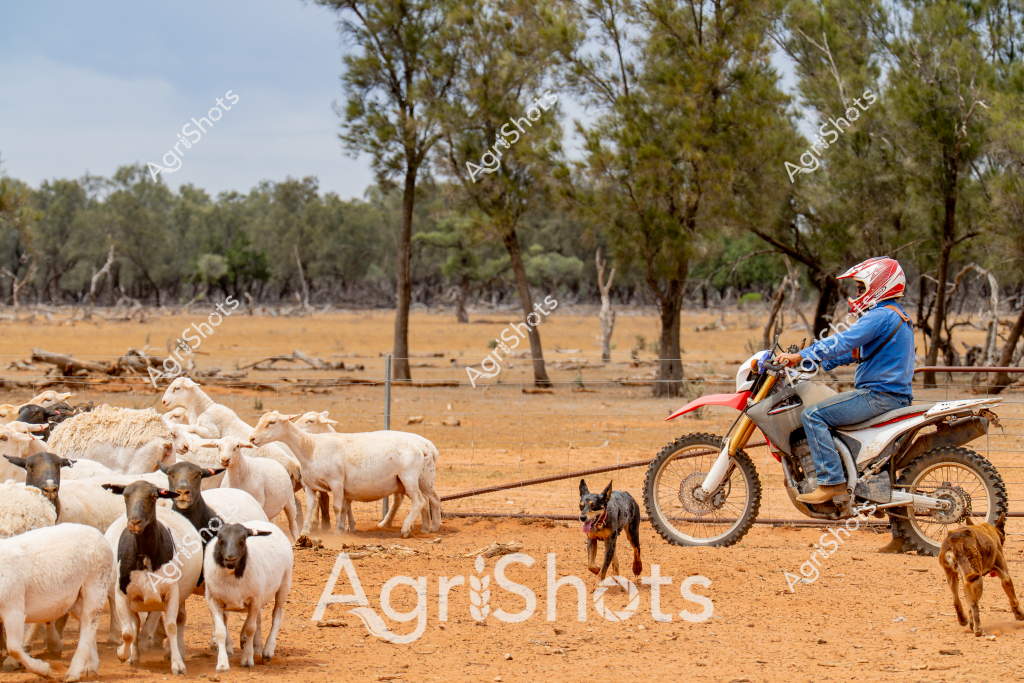
A man on a dirt bike herds a flock of white and black sheep across a dry, sparse paddock in what appears to be an arid Australian pastoral landscape. Accompanied by working dogs, he uses the motorcycle to navigate the dusty terrain, guiding the mixed-breed sheep through a grove of scattered eucalyptus trees. The rider, wearing a blue jacket and red motorcycle helmet, employs a long rope to help control the movement of the livestock, demonstrating a modern approach to mustering sheep in challenging drought-like conditions. Two alert working dogs - likely Australian Cattle Dogs or kelpies - assist in directing the sheep, running alongside the bike and helping to keep the flock together. The landscape is characterized by a golden-brown earth, sparse vegetation, and widely spaced trees, typical of inland Australian agricultural regions during dry seasons. This scene captures the adaptability of contemporary Australian farmers, using motorcycles and working dogs to manage livestock in harsh environmental conditions.
 Image
Image
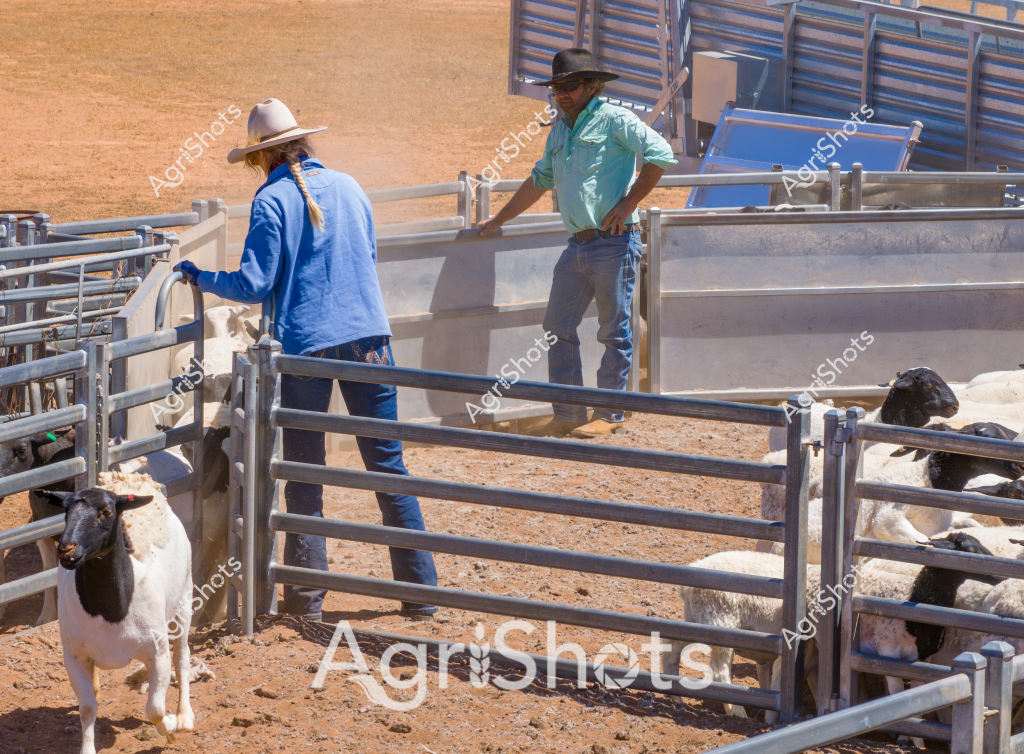
A woman in a bright blue long-sleeved shirt and a light-colored wide-brimmed hat stands alongside a man in a mint green shirt and dark hat within a livestock handling facility. They are working with a small group of sheep in metal livestock yards, with the ground being a sandy, dusty terrain typical of Australian agricultural settings. Several sheep, predominantly white with some dark markings, are contained within the metal gate pens, suggesting this is likely a sheep station or farm in an arid or semi-arid region. The metal yard infrastructure is modern and sturdy, with multiple gate sections and walkways designed for efficient animal movement and management. The scene captures the collaborative nature of livestock handling, with the two workers positioned at different points in the yard, suggesting they are coordinating the sheep's movement or preparation for processing, shearing, or veterinary procedures. The harsh, dry landscape and professional livestock management equipment highlight the resilience and technical expertise required in Australian sheep farming.
 Image
Image
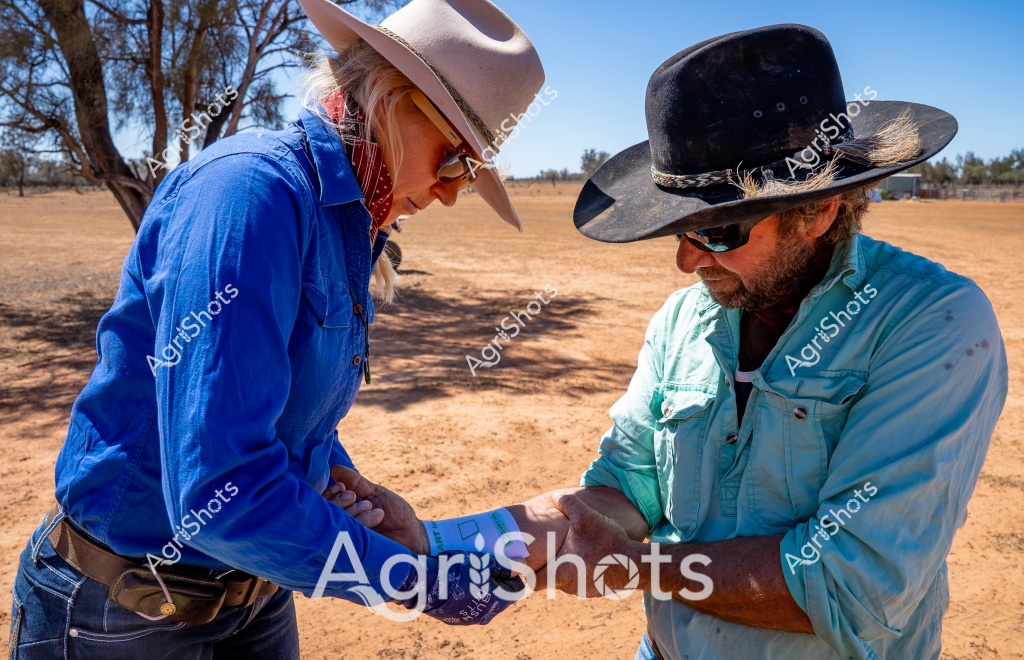
Two agricultural workers stand in a dry, arid landscape, shaking hands in what appears to be a moment of professional collaboration or agreement. A woman wearing a blue long-sleeved shirt and a light-colored wide-brimmed hat stands alongside a man in a light blue shirt and a black wide-brimmed hat with sunglasses. The background reveals a sparse, dusty terrain with scattered trees, indicating a remote rural Australian setting typical of drought-affected regions. The intense handshake suggests a serious discussion, potentially related to farming, livestock management, or agricultural operations. Their attire - robust work shirts, protective hats, and practical clothing - reflects the hardworking nature of rural professionals dealing with challenging environmental conditions. The sandy ground and sparse vegetation in the background highlight the tough agricultural landscape they are working in, potentially discussing strategies for managing livestock or crop production during difficult environmental circumstances. The image captures the spirit of Australian agricultural resilience, with two professionals engaged in what seems to be an important conversation amid a harsh, sun-drenched rural environment. Their body language and setting communicate the collaborative and determined nature of farming communities facing environmental challenges.
 ▶ Video
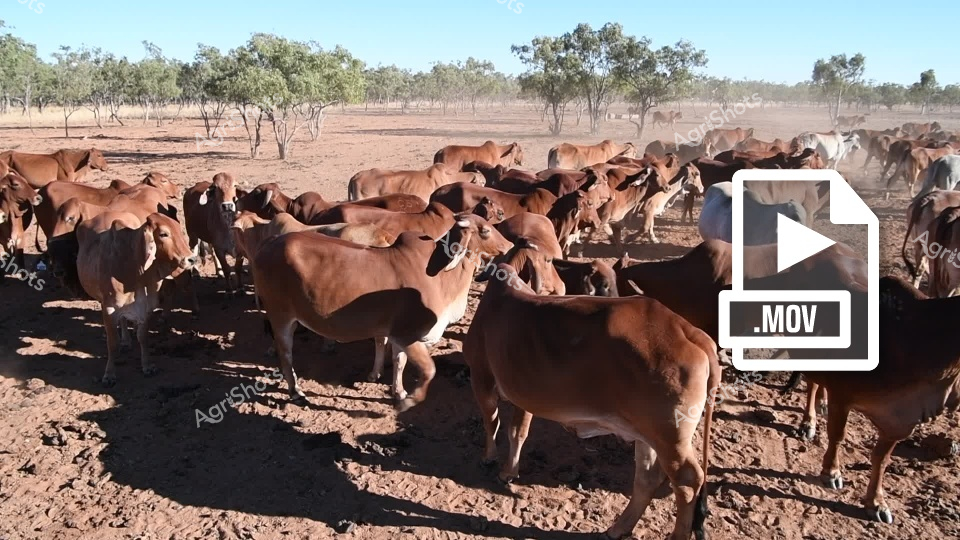
A herd of reddish-brown Brahman cattle stands clustered on dry, dusty terrain in what appears to be a drought-affected region of northern Australia, with sparse trees and compacted earth surrounding the livestock. These heat-tolerant cattle, known for their distinctive humped shoulders and loose skin, are typical of pastoral stations across Queensland and the Northern Territory, showcasing the challenging environmental conditions of extensive cattle farming in the Australian outback.
 ▶ Video
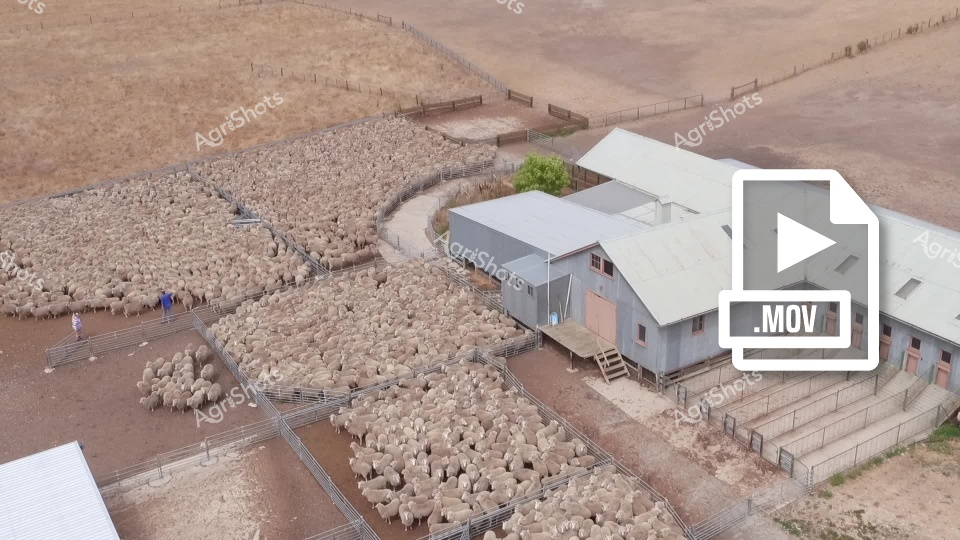
Aerial view of a large sheep farming operation with multiple livestock pens packed with hundreds of dense, woolly sheep. The farm features a gray metal shearing shed and corrals, situated on dry, dusty terrain with fenced paddocks extending into the surrounding arid landscape. Multiple sheep handling systems and gates are visible, indicating a professional and organized sheep breeding or wool production facility.
 ▶ Video
A damaged building with collapsed walls reveals Poll Dorset sheep sheltering inside the partially destroyed structure in Victoria's Mallee Region. The concrete and brick debris scattered across the dry ground tells a story of structural failure, while the white woolly sheep have found refuge in what remains of the building. The arid landscape stretches beyond the ruins, with sparse vegetation dotting the dusty terrain under clear skies. This scene captures the resilience of livestock finding shelter even in compromised farm infrastructure.
 ▶ Video
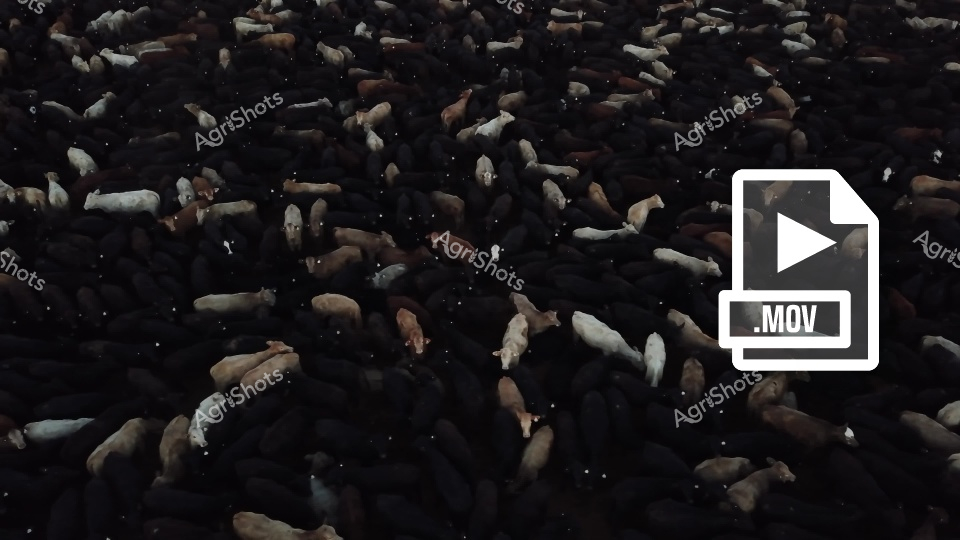
A massive herd of cattle moves across dusty terrain in this aerial footage, creating clouds of dust as hundreds of animals travel together along what appears to be a stock route. The brown, white, and mixed-colored cattle, including what looks like Brahman breeds, stretch across the landscape in a impressive display of droving operations. The golden lighting suggests sunrise conditions, illuminating the dust particles kicked up by the moving livestock as they make their way across the rural Australian terrain.
 ▶ Video
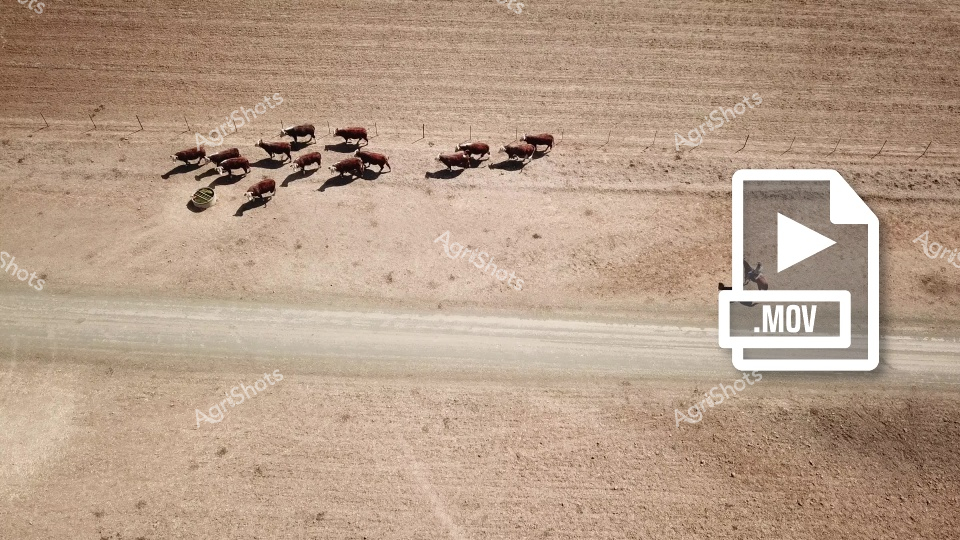
Aerial view captures a mob of Hereford cattle being mustered across a dusty paddock in the New England Region of New South Wales. The red and white-faced cattle create distinctive shadows on the dry earth as they move in formation across the rural landscape. This drone footage showcases traditional Australian cattle mustering operations on a working beef station, with the cattle's hoofprints visible in the dusty terrain below.
 ▶ Video
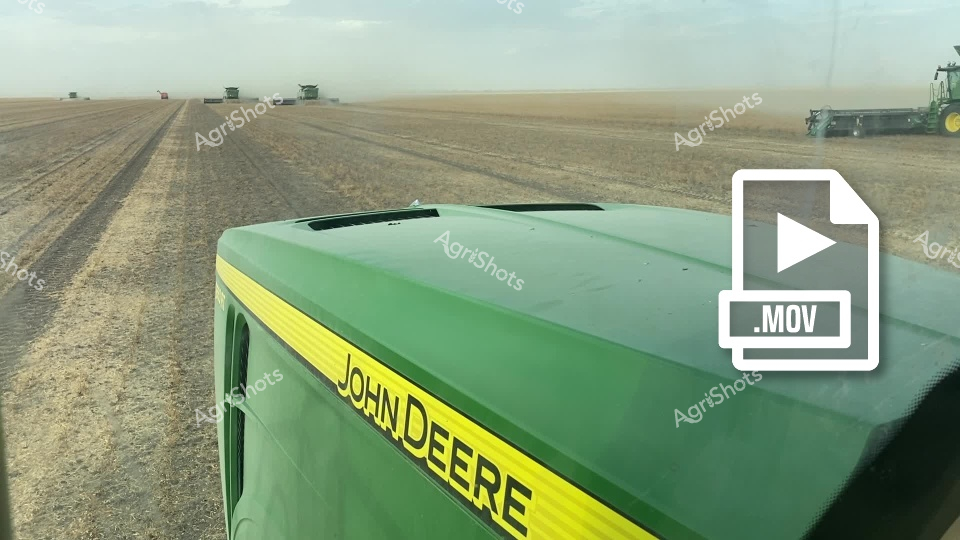
This engaging agricultural video footage captures a John Deere tractor working across a vast, expansive farming landscape during what appears to be early morning or late afternoon. The clip showcases a quintessential broad-acre farming scene, with multiple agricultural machines positioned across the flat, dusty terrain - highlighting the scale of modern Australian agricultural operations. The video focuses on the distinctive green and yellow John Deere tractor, positioned in the foreground with its hood prominently displaying the brand's logo. The surrounding landscape is a muted palette of browns and tans, suggesting a dry farming region, likely during harvest or post-harvest season when fields have been cleared and prepared for the next crop cycle. In the background, additional farming equipment can be seen working systematically across the immense paddock, creating parallel tracks and demonstrating the precision and mechanization of contemporary agricultural practices. The wide-open horizon and flat topography are characteristic of Australia's inland farming regions, emphasizing the massive scale of agricultural production in this environment. The footage provides a compelling visual narrative of agricultural machinery in action, showcasing the technology, scale, and methodical approach of modern farming techniques in an expansive Australian rural setting.
 ▶ Video
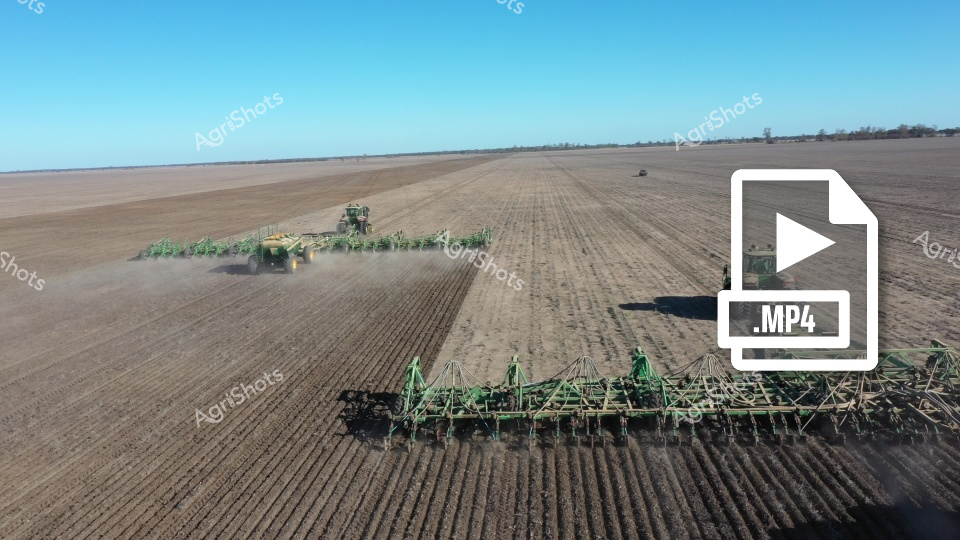
A massive green agricultural air seeder traverses a vast, meticulously prepared wheat field under a clear blue sky in New South Wales. The precision farming equipment methodically plants crops across the expansive, dusty terrain, showcasing modern agricultural techniques and the scale of grain production in the region.
 Image
Image
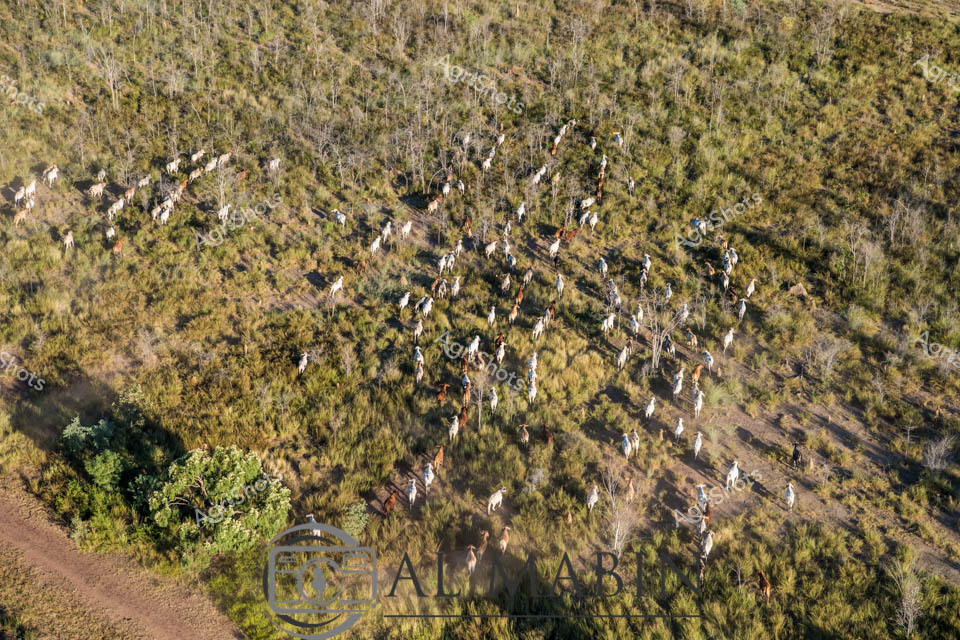
Brahman cattle stream across a sun-drenched pastoral landscape in Australia's rugged Northern Territory, captured in a sweeping aerial view that reveals the intricate choreography of mustering. The pale-coated herd moves as a living current through a sea of golden grasses and sparse woodland, their forms creating an organic pattern against the textured terrain. Dusty tracks border the scene, evidence of the station's extensive network of pathways guiding livestock movement. Robust Brahman cattle, renowned for their heat tolerance and distinctive humped shoulders, navigate the sparse woodland with a purposeful momentum that speaks to generations of pastoral management. The photograph captures the essence of northern Australian cattle farming - a delicate dance between human intervention and natural landscape, where livestock traverse vast, untamed territories under the watchful eye of stockmen. The muted earth tones of the landscape - sage greens, ochre browns, and pale dust - create a timeless canvas that epitomizes the resilience and beauty of Australia's agricultural heartland.
 Image
Image
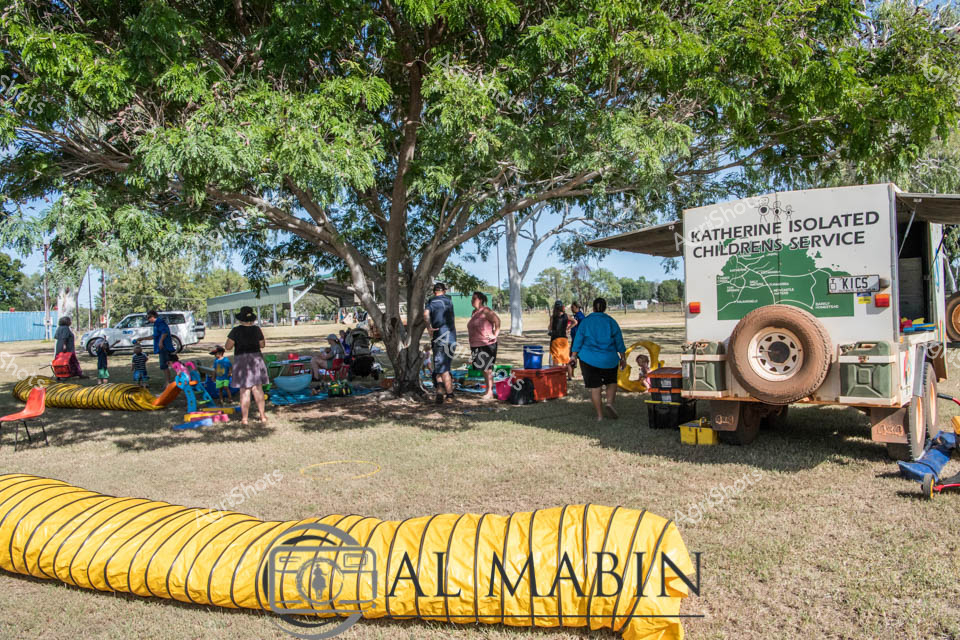
Katherine Isolated Children's Service vehicle nestles under a sprawling eucalyptus tree, anchoring a vibrant outback learning scene. Yellow ventilation tubes and scattered play equipment create a makeshift outdoor classroom in the sun-drenched Northern Territory landscape. Multiple children and adults gather in the dappled shade, representing the innovative remote education model that connects isolated rural students across vast distances. The rugged service vehicle, branded with "KICS" (Katherine Isolated Children's Service), symbolizes the resilience and adaptability of educational services in Australia's challenging geographic terrain. Dusty ground, intermittent grass, and hardy trees frame a quintessential outback educational moment that speaks to the unique challenges and community spirit of remote Australian schooling. The scene captures the intersection of technology, community, and determination in providing learning opportunities for children in some of the most geographically isolated regions of the world.