Results for “dry vegetation”
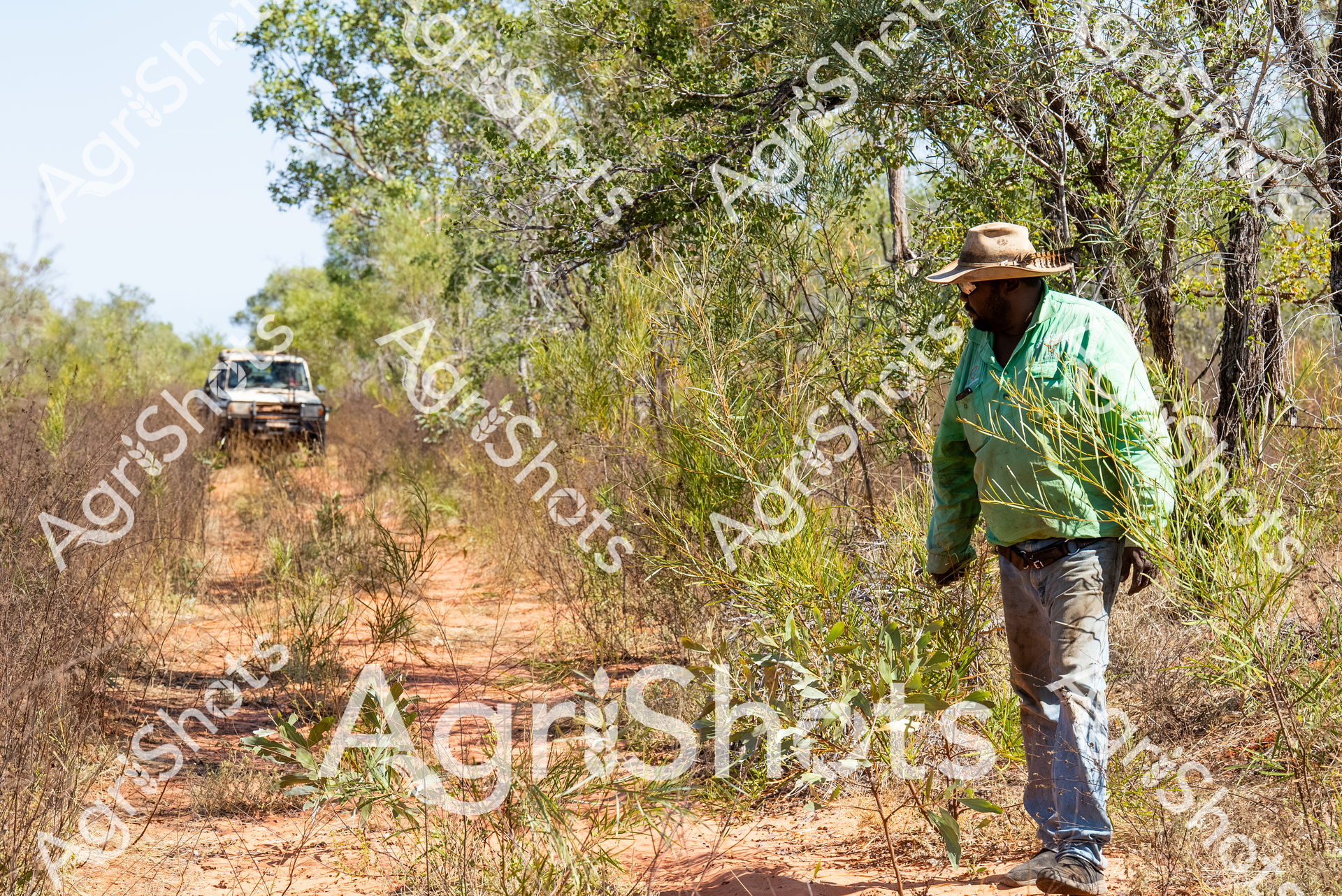
A man in a green shirt and wide-brimmed hat walks along a dusty dirt track through scrubland in Western Australia's Kimberley region. In the background, a four-wheel drive vehicle is parked, suggesting this might be part of a station or fencing work during springtime. Image

A man in a green shirt and wide-brimmed hat walks along a dusty dirt track through scrubland in Western Australia's Kimberley region. In the background, a four-wheel drive vehicle is parked, suggesting this might be part of a station or fencing work during springtime.

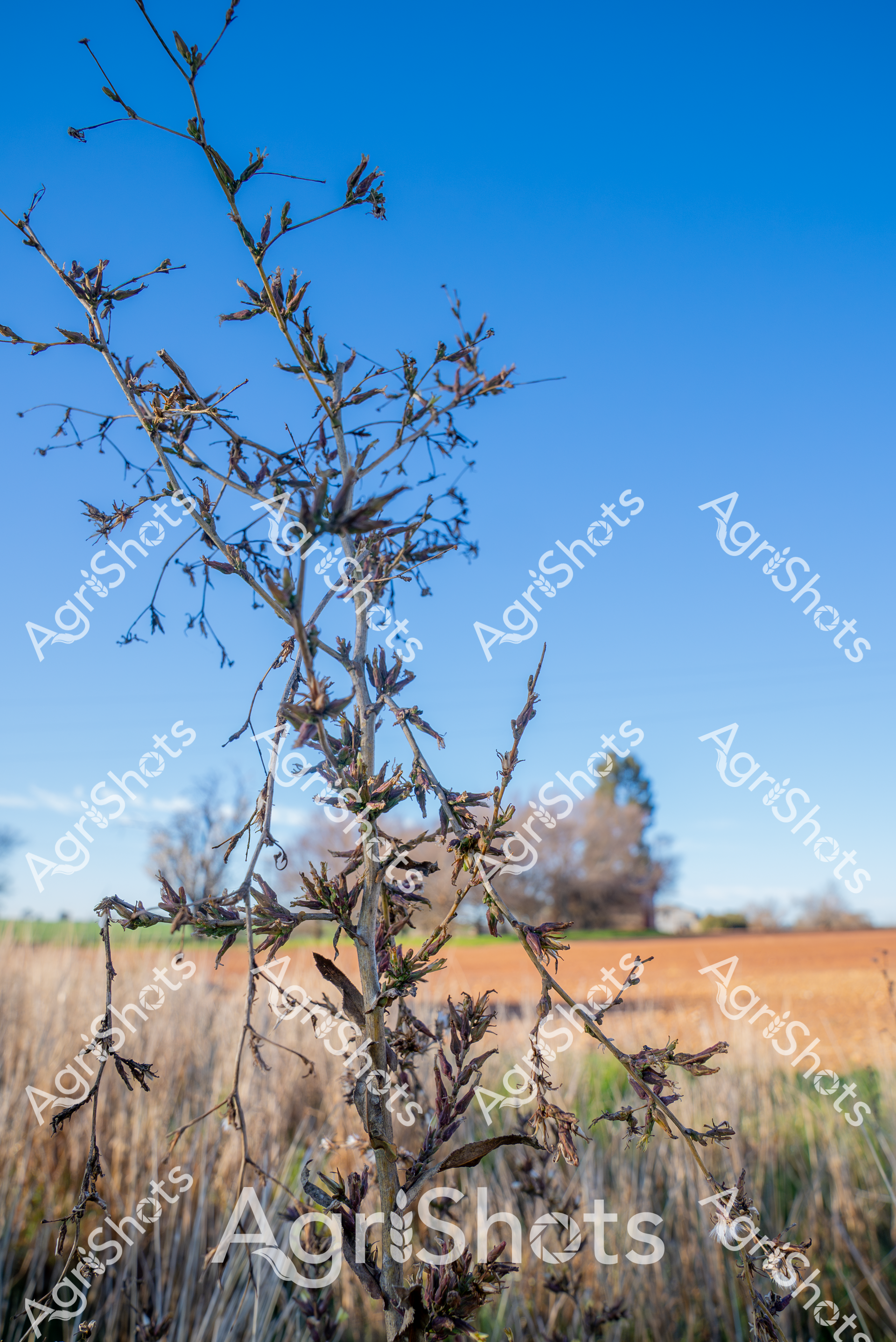
A detailed close-up of a dried prickly lettuce plant standing tall against a bright blue sky and golden field backdrop in the Riverina region of New South Wales. The plant's spindly, jagged branches are bare and weathered, showcasing the characteristic structure of this common agricultural weed. The image captures the plant's intricate branching pattern and dried seedheads, typical of prickly lettuce in late summer or autumn. Image

A detailed close-up of a dried prickly lettuce plant standing tall against a bright blue sky and golden field backdrop in the Riverina region of New South Wales. The plant's spindly, jagged branches are bare and weathered, showcasing the characteristic structure of this common agricultural weed. The image captures the plant's intricate branching pattern and dried seedheads, typical of prickly lettuce in late summer or autumn.
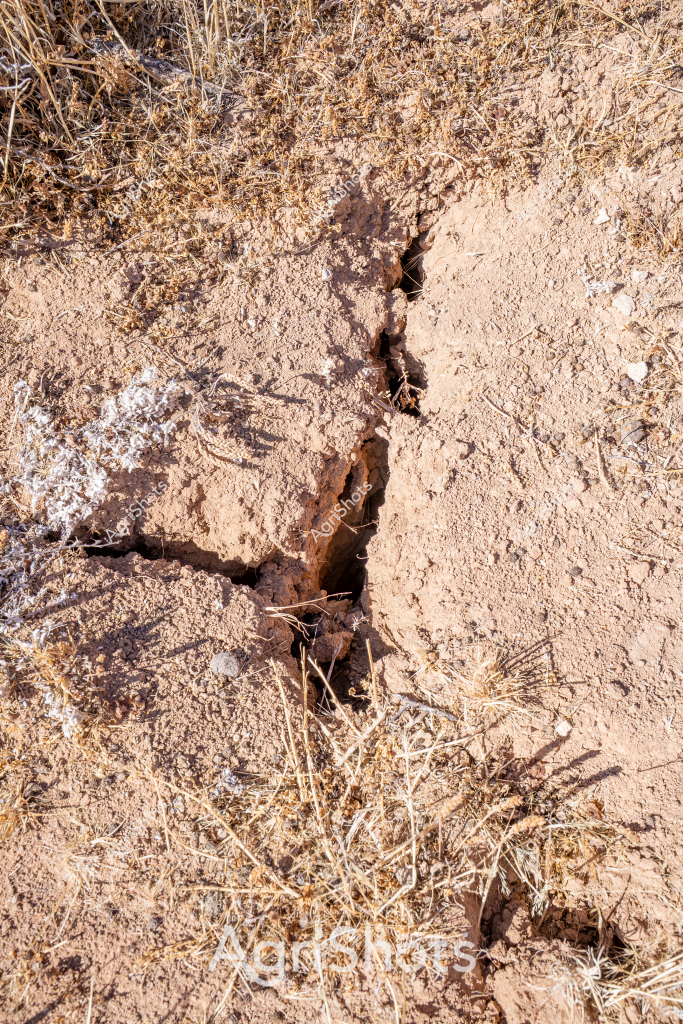
A deep, cracked earth reveals the harsh reality of drought conditions in this stark agricultural landscape. The ground is parched and fractured, with wide fissures splitting the dry, sandy soil, creating a network of deep crevices that stretch across the frame. Sparse, yellowed grass and dry vegetation cling to the edges of the cracking ground, highlighting the extreme dryness and water stress affecting the land. The earthy tones of tan, brown, and pale straw-colored vegetation emphasize the severity of the environmental conditions, presenting a raw and unforgiving portrayal of agricultural challenges during prolonged dry periods. This image powerfully captures the physical manifestation of drought, showing how the lack of moisture can literally tear the earth apart, creating a landscape that speaks to the resilience and hardship of Australian rural environments. Image

A deep, cracked earth reveals the harsh reality of drought conditions in this stark agricultural landscape. The ground is parched and fractured, with wide fissures splitting the dry, sandy soil, creating a network of deep crevices that stretch across the frame. Sparse, yellowed grass and dry vegetation cling to the edges of the cracking ground, highlighting the extreme dryness and water stress affecting the land. The earthy tones of tan, brown, and pale straw-colored vegetation emphasize the severity of the environmental conditions, presenting a raw and unforgiving portrayal of agricultural challenges during prolonged dry periods. This image powerfully captures the physical manifestation of drought, showing how the lack of moisture can literally tear the earth apart, creating a landscape that speaks to the resilience and hardship of Australian rural environments.
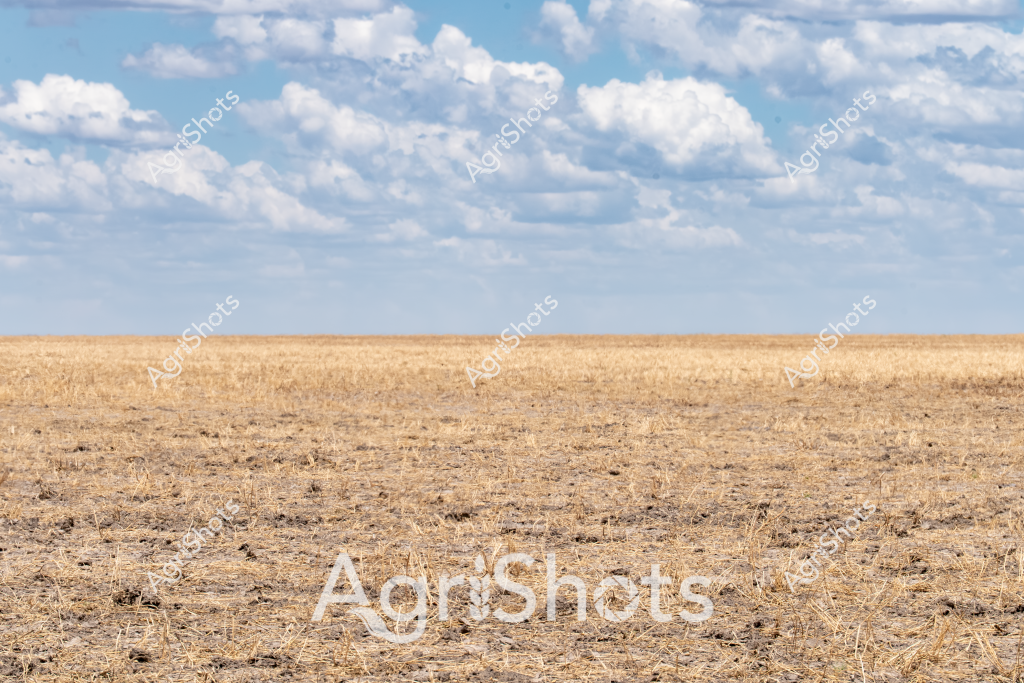
A vast, drought-affected landscape stretches beneath an expansive cloudy sky, capturing the harsh realities of Australian agricultural conditions. The foreground reveals a parched, golden-brown paddock with short stubble and scattered dry vegetation, indicating a severely water-stressed environment. Wispy white clouds drift across a pale blue sky, creating a sense of openness and desolation typical of arid rural regions. The landscape appears completely flat, extending to a distant horizon where the earth seems to merge seamlessly with the sky. The coloration suggests late summer or early autumn, when crops have been harvested and the land shows the intense effects of prolonged dry conditions. This image powerfully illustrates the challenging environmental context faced by Australian farmers, where drought can transform productive agricultural land into a seemingly barren expanse. Image

A vast, drought-affected landscape stretches beneath an expansive cloudy sky, capturing the harsh realities of Australian agricultural conditions. The foreground reveals a parched, golden-brown paddock with short stubble and scattered dry vegetation, indicating a severely water-stressed environment. Wispy white clouds drift across a pale blue sky, creating a sense of openness and desolation typical of arid rural regions. The landscape appears completely flat, extending to a distant horizon where the earth seems to merge seamlessly with the sky. The coloration suggests late summer or early autumn, when crops have been harvested and the land shows the intense effects of prolonged dry conditions. This image powerfully illustrates the challenging environmental context faced by Australian farmers, where drought can transform productive agricultural land into a seemingly barren expanse.
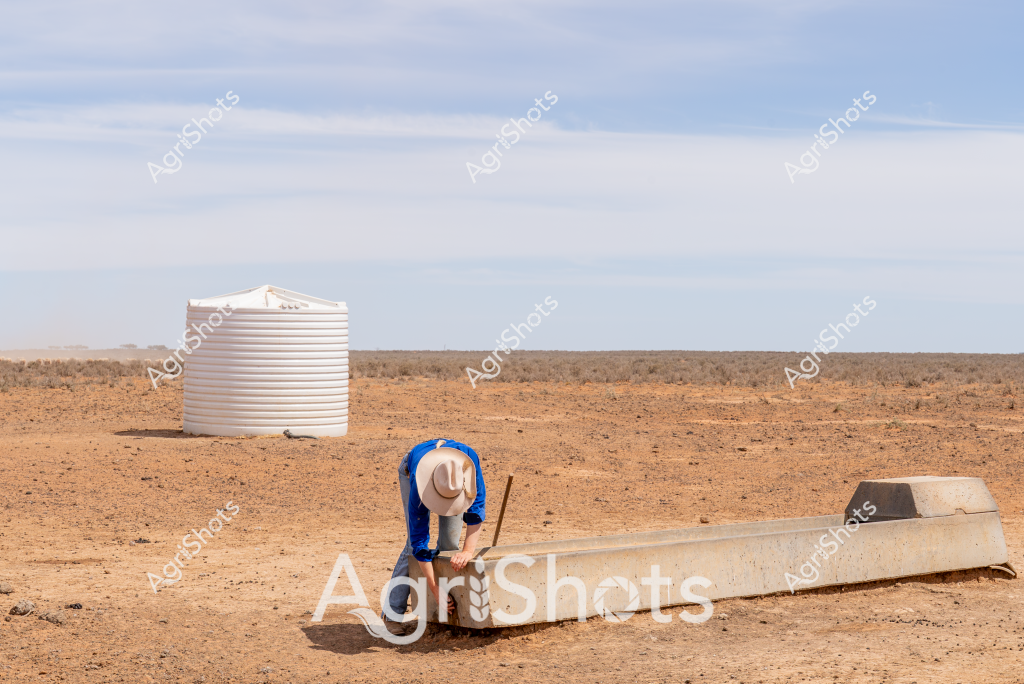
A man in a blue shirt and wide-brimmed hat bends over a concrete water trough in a sun-baked, arid landscape. The expansive paddock stretches to a distant horizon, with sparse, dry vegetation covering the reddish-brown earth. A large white water tank stands sentinel nearby, highlighting the critical importance of water infrastructure in this harsh, drought-affected environment. The scene captures the challenging conditions faced by farmers in rural Australia, with the lone figure working diligently to maintain essential water resources for livestock or agricultural needs. The pale blue sky and flat, open terrain emphasize the isolation and resilience required in such remote agricultural settings. Image

A man in a blue shirt and wide-brimmed hat bends over a concrete water trough in a sun-baked, arid landscape. The expansive paddock stretches to a distant horizon, with sparse, dry vegetation covering the reddish-brown earth. A large white water tank stands sentinel nearby, highlighting the critical importance of water infrastructure in this harsh, drought-affected environment. The scene captures the challenging conditions faced by farmers in rural Australia, with the lone figure working diligently to maintain essential water resources for livestock or agricultural needs. The pale blue sky and flat, open terrain emphasize the isolation and resilience required in such remote agricultural settings.
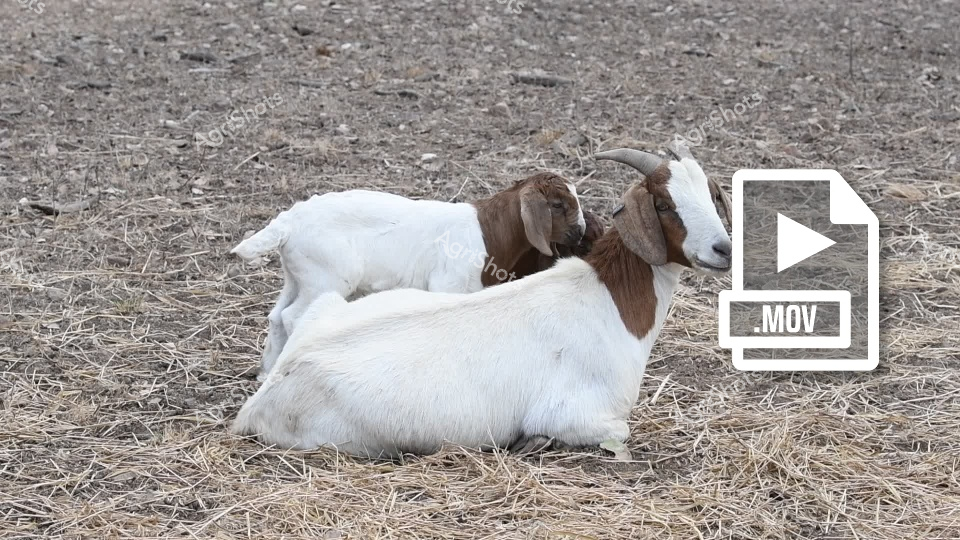
Two Boer goats rest together on dry straw-covered ground, with one white goat laying down and another brown and white goat nestled close beside it. The goats appear to be in a farm or pasture setting with sparse, dry vegetation in the background, suggesting an arid or late-season environment typical of goat farming regions. ▶ Video

Two Boer goats rest together on dry straw-covered ground, with one white goat laying down and another brown and white goat nestled close beside it. The goats appear to be in a farm or pasture setting with sparse, dry vegetation in the background, suggesting an arid or late-season environment typical of goat farming regions.
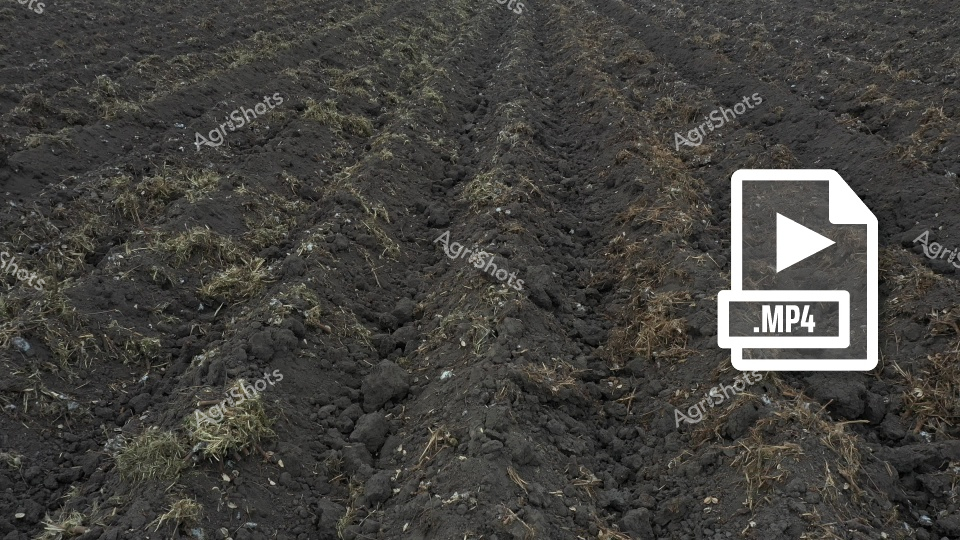
This image depicts a plowed agricultural field with dark, clumpy soil and scattered dry vegetation or crop remnants. The ground appears rough and uneven, with distinct furrows and ridges typical of prepared farmland. A file icon suggests this is part of a video sequence documenting agricultural activities. ▶ Video

This image depicts a plowed agricultural field with dark, clumpy soil and scattered dry vegetation or crop remnants. The ground appears rough and uneven, with distinct furrows and ridges typical of prepared farmland. A file icon suggests this is part of a video sequence documenting agricultural activities.
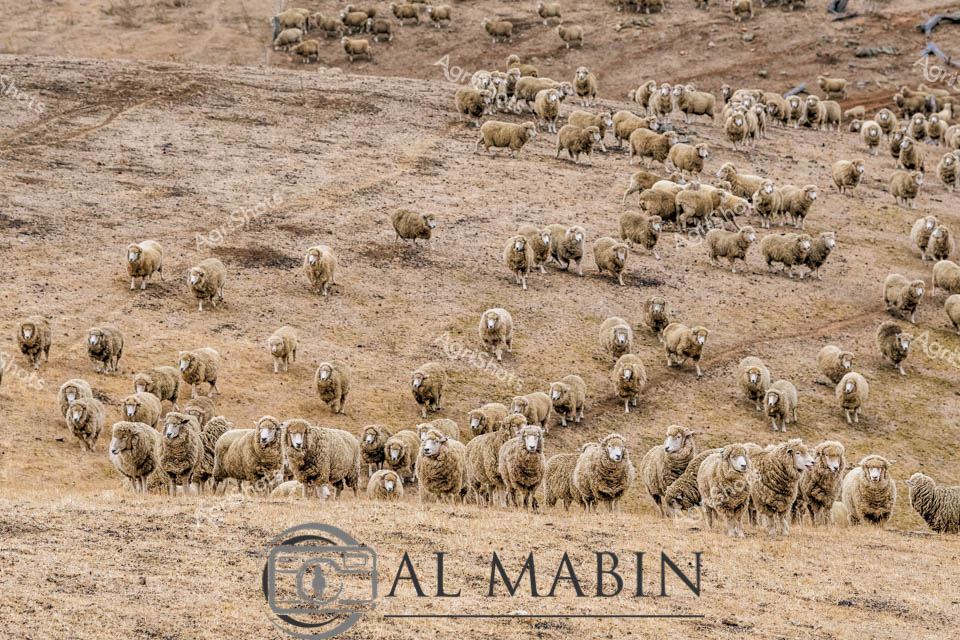
Large flock of Corriedale sheep scattered across drought-affected paddocks in rural South Australia, with the animals grazing on sparse, dry vegetation. The barren landscape shows the harsh conditions during mustering season, as hundreds of sheep move across the parched terrain under overcast skies. The scene captures the challenging reality of livestock farming during drought conditions, with the woolly sheep adapting to the arid environment while searching for available feed across the expansive station property. Image

Large flock of Corriedale sheep scattered across drought-affected paddocks in rural South Australia, with the animals grazing on sparse, dry vegetation. The barren landscape shows the harsh conditions during mustering season, as hundreds of sheep move across the parched terrain under overcast skies. The scene captures the challenging reality of livestock farming during drought conditions, with the woolly sheep adapting to the arid environment while searching for available feed across the expansive station property.
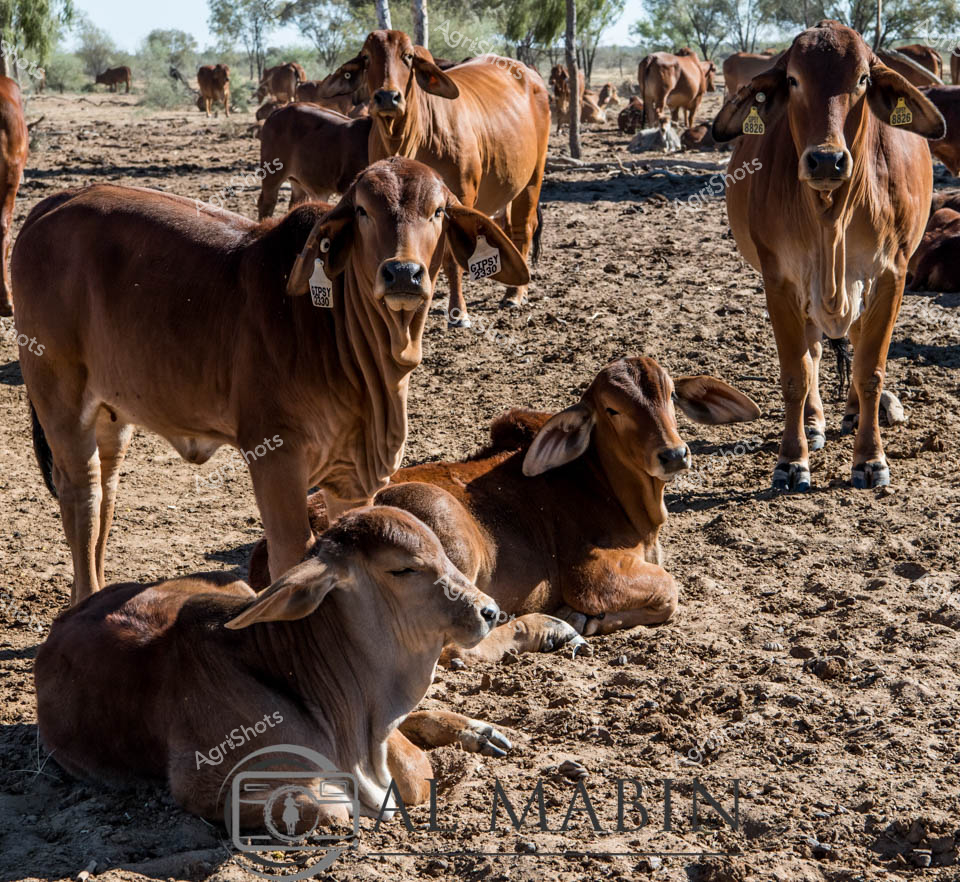
Brahman cattle cluster across a sun-baked, dusty paddock beneath scattered gum trees, capturing the resilient spirit of Queensland's pastoral landscape. Rich copper and mahogany-toned cattle bearing white ear tags stand and rest on the parched earth, their muscular frames and distinctive large ears testament to the breed's adaptation to harsh Australian conditions. Young calves rest close to their mothers, creating a tableau of pastoral productivity against a backdrop of sparse, dry vegetation typical of inland agricultural regions. The hard-packed ground and scattered trees speak to the challenging environment these robust cattle endure, with several animals standing alert while others seek momentary respite from the intense heat. Ear tags and the careful grouping suggest this is a well-managed cattle station, where careful breeding and pastoral expertise combine to produce high-quality beef stock. The scene radiates a sense of quiet endurance - a quintessential snapshot of Australian agricultural life where resilience is measured in the strength and adaptability of both livestock and landholders. Image

Brahman cattle cluster across a sun-baked, dusty paddock beneath scattered gum trees, capturing the resilient spirit of Queensland's pastoral landscape. Rich copper and mahogany-toned cattle bearing white ear tags stand and rest on the parched earth, their muscular frames and distinctive large ears testament to the breed's adaptation to harsh Australian conditions. Young calves rest close to their mothers, creating a tableau of pastoral productivity against a backdrop of sparse, dry vegetation typical of inland agricultural regions. The hard-packed ground and scattered trees speak to the challenging environment these robust cattle endure, with several animals standing alert while others seek momentary respite from the intense heat. Ear tags and the careful grouping suggest this is a well-managed cattle station, where careful breeding and pastoral expertise combine to produce high-quality beef stock. The scene radiates a sense of quiet endurance - a quintessential snapshot of Australian agricultural life where resilience is measured in the strength and adaptability of both livestock and landholders.

Night descends on a sugarcane field ablaze with controlled burning, a critical agricultural practice across New South Wales' fertile agricultural regions. Intense orange and red flames surge through dense grass and cane stalks, creating a dramatic landscape of managed destruction that prepares fields for harvest. The controlled burn eliminates dry vegetation, pest populations, and clears ground for more efficient cutting, representing a generations-old technique in Australian sugarcane cultivation. Brilliant flames lick across the undulating terrain, sending sparks and embers into the dark sky, transforming the agricultural landscape into a mesmerizing inferno of agricultural renewal. The fire's heat radiates across the scene, illuminating the surrounding darkness with an almost theatrical intensity that highlights the raw power of agricultural land management. This powerful image captures the intersection of traditional farming practice and environmental strategy, where fire becomes a tool of agricultural precision and regeneration. Image

Night descends on a sugarcane field ablaze with controlled burning, a critical agricultural practice across New South Wales' fertile agricultural regions. Intense orange and red flames surge through dense grass and cane stalks, creating a dramatic landscape of managed destruction that prepares fields for harvest. The controlled burn eliminates dry vegetation, pest populations, and clears ground for more efficient cutting, representing a generations-old technique in Australian sugarcane cultivation. Brilliant flames lick across the undulating terrain, sending sparks and embers into the dark sky, transforming the agricultural landscape into a mesmerizing inferno of agricultural renewal. The fire's heat radiates across the scene, illuminating the surrounding darkness with an almost theatrical intensity that highlights the raw power of agricultural land management. This powerful image captures the intersection of traditional farming practice and environmental strategy, where fire becomes a tool of agricultural precision and regeneration.
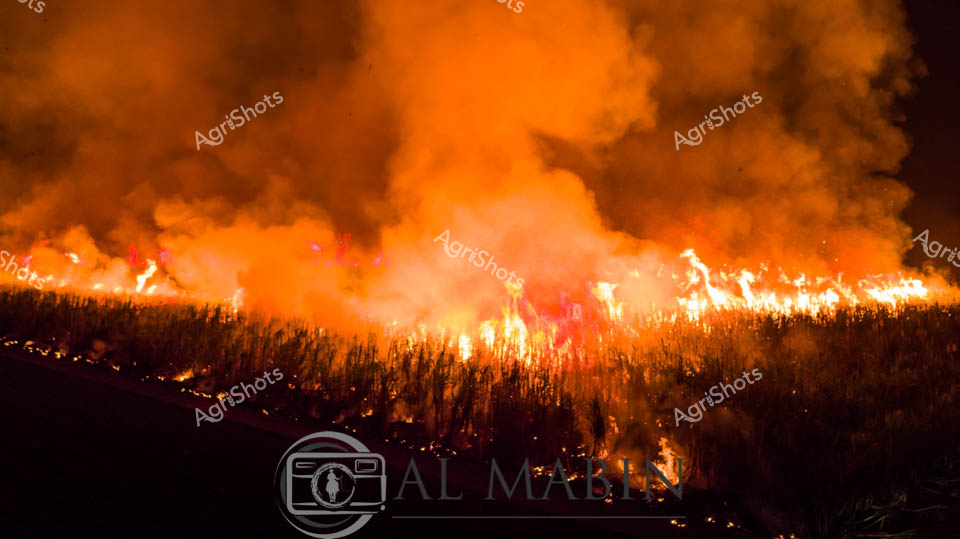
Flames surge across the sugarcane fields in a fierce nighttime burn, illuminating the dark landscape with intense orange and golden hues. The controlled agricultural burn transforms the expansive field into a dramatic tableau of agricultural management, with tall cane stalks consumed by methodical lines of fire. Glowing embers and billowing smoke create a mesmerizing pyrscape, revealing the strategic practice of pre-harvest burning used to clear unwanted leaf matter and prepare fields for cutting. This traditional harvesting technique, common in New South Wales sugarcane regions, demonstrates the precision and calculated risk of agricultural practices that have sustained rural communities for generations. The intense heat and sweeping flames represent a crucial step in sugar production, removing dry vegetation and making mechanical harvesting more efficient. The night sky becomes a canvas of elemental transformation, where fire cleanses and renews the agricultural landscape in a powerful display of human intervention and natural forces. Image

Flames surge across the sugarcane fields in a fierce nighttime burn, illuminating the dark landscape with intense orange and golden hues. The controlled agricultural burn transforms the expansive field into a dramatic tableau of agricultural management, with tall cane stalks consumed by methodical lines of fire. Glowing embers and billowing smoke create a mesmerizing pyrscape, revealing the strategic practice of pre-harvest burning used to clear unwanted leaf matter and prepare fields for cutting. This traditional harvesting technique, common in New South Wales sugarcane regions, demonstrates the precision and calculated risk of agricultural practices that have sustained rural communities for generations. The intense heat and sweeping flames represent a crucial step in sugar production, removing dry vegetation and making mechanical harvesting more efficient. The night sky becomes a canvas of elemental transformation, where fire cleanses and renews the agricultural landscape in a powerful display of human intervention and natural forces.

Flames surge through golden sugarcane stalks, illuminating the night with an intense amber glow across the agricultural landscape. The controlled burn transforms the field into a mesmerizing spectacle of agricultural practice, where fire cleanses and prepares the land for harvest in rural New South Wales. Burning sugarcane is a traditional method of clearing leaf matter and preparing fields before mechanical harvesting, with bright flames consuming the dry vegetation and creating a dramatic, flickering boundary between earth and sky. Embers dance upward, casting a warm radiance that highlights the intricate textures of the cane stalks, their slender forms backlit against the deep darkness. This nocturnal agricultural ritual represents generations of farming knowledge, where fire becomes a strategic tool in crop management, clearing ground and reducing external processing costs. The image captures the raw, elemental power of agricultural transformation, where fire serves as both destroyer and renewer in the delicate ecosystem of sugarcane production. Image

Flames surge through golden sugarcane stalks, illuminating the night with an intense amber glow across the agricultural landscape. The controlled burn transforms the field into a mesmerizing spectacle of agricultural practice, where fire cleanses and prepares the land for harvest in rural New South Wales. Burning sugarcane is a traditional method of clearing leaf matter and preparing fields before mechanical harvesting, with bright flames consuming the dry vegetation and creating a dramatic, flickering boundary between earth and sky. Embers dance upward, casting a warm radiance that highlights the intricate textures of the cane stalks, their slender forms backlit against the deep darkness. This nocturnal agricultural ritual represents generations of farming knowledge, where fire becomes a strategic tool in crop management, clearing ground and reducing external processing costs. The image captures the raw, elemental power of agricultural transformation, where fire serves as both destroyer and renewer in the delicate ecosystem of sugarcane production.
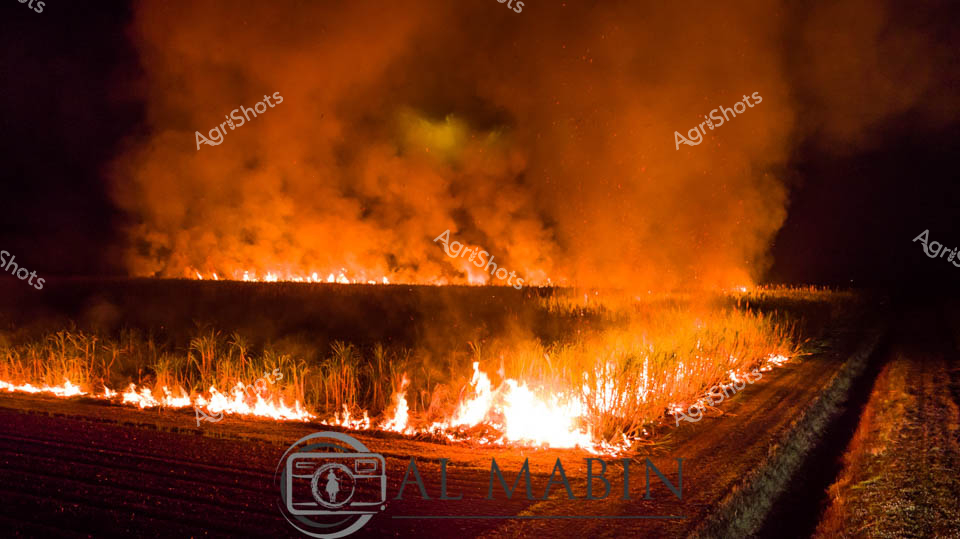
Flames lick across the night-dark landscape, transforming sugarcane fields into a blazing canvas of orange and yellow. Controlled burning illuminates the agricultural terrain, a critical stage of the pre-harvest ritual in New South Wales' sugarcane regions. Precise lines of fire consume dry vegetation, clearing fields and preparing for mechanical harvesting while naturally managing crop residue and pest populations. The intense heat radiates outward, casting dramatic shadows along carefully demarcated field boundaries and drainage channels. Smoke billows skyward, creating a primal tableau that speaks to generations of agricultural practice and the rhythmic renewal of the land. This striking nocturnal scene captures the raw, elemental process of agricultural management, where fire becomes a strategic tool in the complex choreography of crop production. Image

Flames lick across the night-dark landscape, transforming sugarcane fields into a blazing canvas of orange and yellow. Controlled burning illuminates the agricultural terrain, a critical stage of the pre-harvest ritual in New South Wales' sugarcane regions. Precise lines of fire consume dry vegetation, clearing fields and preparing for mechanical harvesting while naturally managing crop residue and pest populations. The intense heat radiates outward, casting dramatic shadows along carefully demarcated field boundaries and drainage channels. Smoke billows skyward, creating a primal tableau that speaks to generations of agricultural practice and the rhythmic renewal of the land. This striking nocturnal scene captures the raw, elemental process of agricultural management, where fire becomes a strategic tool in the complex choreography of crop production.

Flames consume the dry grasslands in a sweeping arc of brilliant orange and deep crimson, illuminating the nocturnal landscape with an intense, primal energy. This controlled burn across the agricultural terrain represents a critical agricultural practice in sugarcane cultivation, where strategic fire management prepares fields for harvest and regeneration. The fire traces dramatic lines across the undulating landscape, creating a mesmerizing pattern of active combustion that reveals the topography in stark relief against the dark background. Intense heat radiates from the deliberate flames, which consume dry vegetation with systematic precision, a time-honored technique used by farmers in New South Wales to clear fields, manage crop residue, and stimulate new growth. The night sky serves as a dramatic backdrop, emphasizing the raw power and calculated intention behind this agricultural intervention. Captured with expert timing, the image reveals the transformative moment when traditional land management techniques merge with the elemental force of fire, showcasing the intricate relationship between agricultural practice and natural processes. Image

Flames consume the dry grasslands in a sweeping arc of brilliant orange and deep crimson, illuminating the nocturnal landscape with an intense, primal energy. This controlled burn across the agricultural terrain represents a critical agricultural practice in sugarcane cultivation, where strategic fire management prepares fields for harvest and regeneration. The fire traces dramatic lines across the undulating landscape, creating a mesmerizing pattern of active combustion that reveals the topography in stark relief against the dark background. Intense heat radiates from the deliberate flames, which consume dry vegetation with systematic precision, a time-honored technique used by farmers in New South Wales to clear fields, manage crop residue, and stimulate new growth. The night sky serves as a dramatic backdrop, emphasizing the raw power and calculated intention behind this agricultural intervention. Captured with expert timing, the image reveals the transformative moment when traditional land management techniques merge with the elemental force of fire, showcasing the intricate relationship between agricultural practice and natural processes.
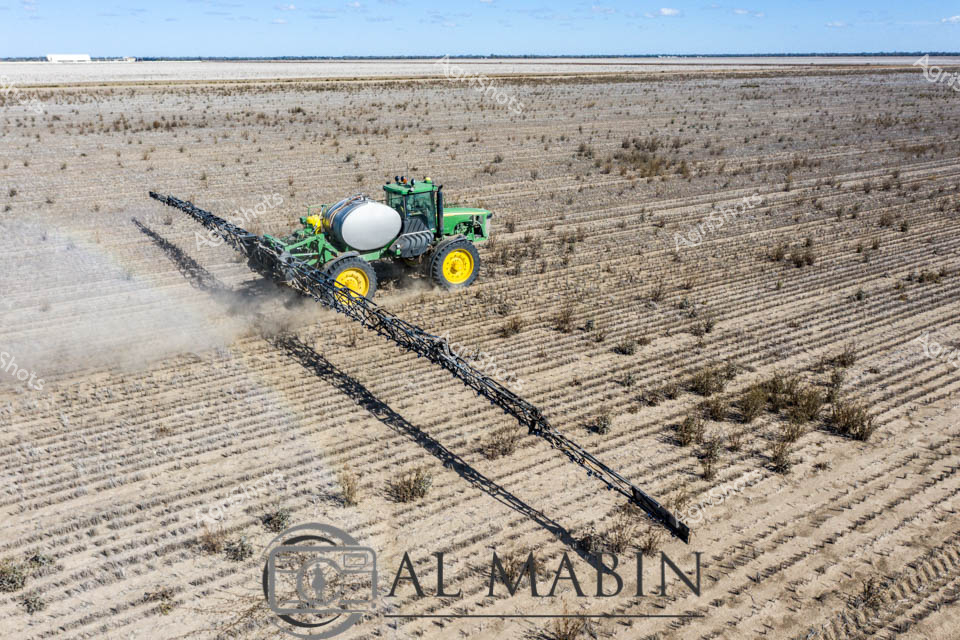
Dust billows behind a John Deere spray rig as it meticulously traverses a sparse, post-harvest agricultural landscape in rural New South Wales. The vibrant green tractor with its expansive black spray boom cuts a striking path across a weathered field of stubble and scattered dry vegetation, creating precise parallel lines against the pale, textured earth. A large white tank mounted on the machinery suggests sophisticated agricultural chemical application, likely preparing the field for the next planting cycle or managing crop residue and weed control. The extended spray arms stretch wide, demonstrating modern precision farming techniques that maximize efficiency across this vast, arid agricultural terrain. Pale blue skies stretch to the distant horizon, offering a sense of expansive openness characteristic of Australian agricultural regions. The image captures the intersection of advanced agricultural technology and challenging rural environments, showcasing the resilience and innovation of contemporary farming practices. Image

Dust billows behind a John Deere spray rig as it meticulously traverses a sparse, post-harvest agricultural landscape in rural New South Wales. The vibrant green tractor with its expansive black spray boom cuts a striking path across a weathered field of stubble and scattered dry vegetation, creating precise parallel lines against the pale, textured earth. A large white tank mounted on the machinery suggests sophisticated agricultural chemical application, likely preparing the field for the next planting cycle or managing crop residue and weed control. The extended spray arms stretch wide, demonstrating modern precision farming techniques that maximize efficiency across this vast, arid agricultural terrain. Pale blue skies stretch to the distant horizon, offering a sense of expansive openness characteristic of Australian agricultural regions. The image captures the intersection of advanced agricultural technology and challenging rural environments, showcasing the resilience and innovation of contemporary farming practices.
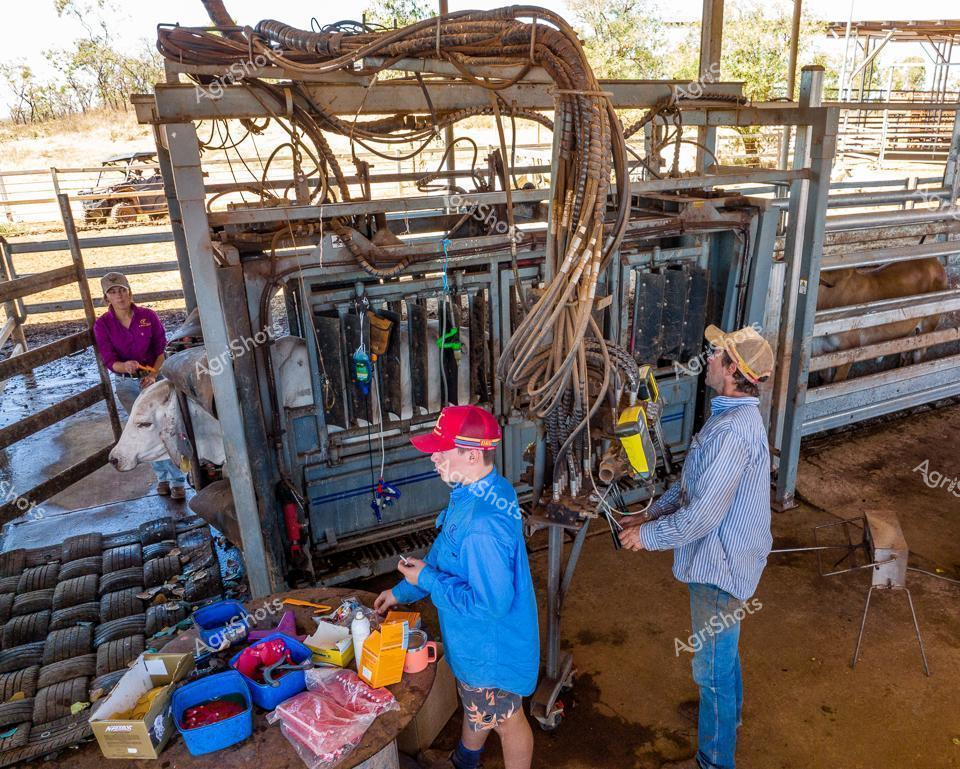
Northern Territory cattle station during mid-morning processing, with a sophisticated hydraulic cattle crush handling a pristine white Brahman breed. Three agricultural workers collaborate efficiently around the robust metal machinery, managing animal health procedures with practiced precision. A blue-shirted worker in a red cap manages equipment and supplies at the workstation, while a colleague in a striped shirt operates technical controls, and a woman in a purple shirt monitors the animal's movement. Tangled industrial cables and hydraulic lines drape across the steel frame, highlighting the complex mechanical infrastructure required for modern livestock management. Rugged outback landscape filters through the cattle yards, with dry vegetation and clear sunlight emphasizing the harsh yet systematic environment of large-scale cattle production. The scene captures the intersection of animal husbandry, technical innovation, and human expertise characteristic of Australia's northern pastoral industries. Image

Northern Territory cattle station during mid-morning processing, with a sophisticated hydraulic cattle crush handling a pristine white Brahman breed. Three agricultural workers collaborate efficiently around the robust metal machinery, managing animal health procedures with practiced precision. A blue-shirted worker in a red cap manages equipment and supplies at the workstation, while a colleague in a striped shirt operates technical controls, and a woman in a purple shirt monitors the animal's movement. Tangled industrial cables and hydraulic lines drape across the steel frame, highlighting the complex mechanical infrastructure required for modern livestock management. Rugged outback landscape filters through the cattle yards, with dry vegetation and clear sunlight emphasizing the harsh yet systematic environment of large-scale cattle production. The scene captures the intersection of animal husbandry, technical innovation, and human expertise characteristic of Australia's northern pastoral industries.
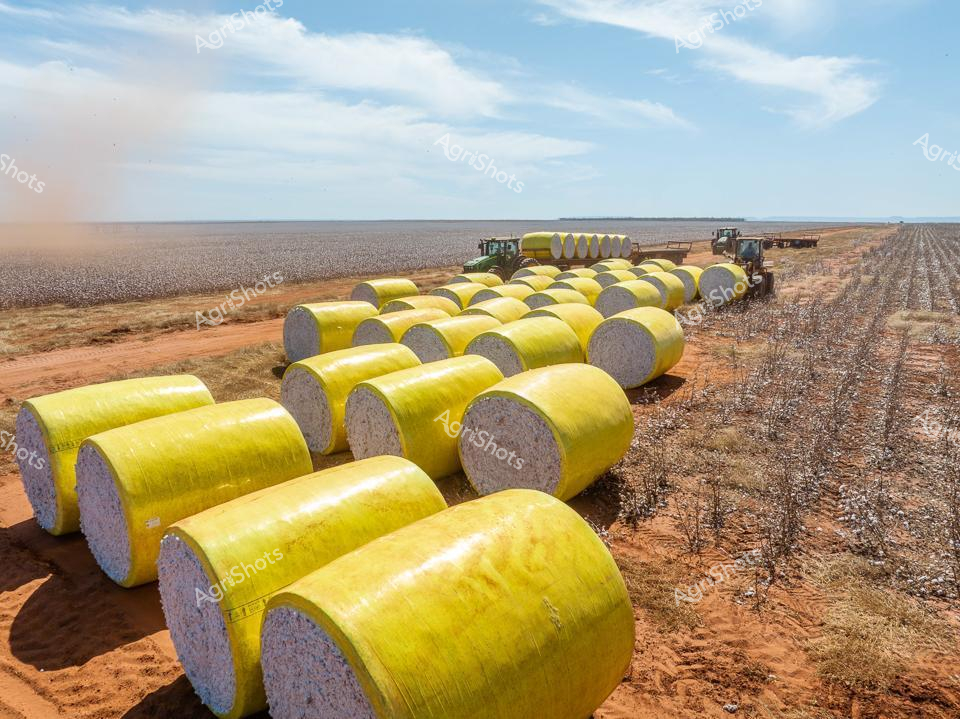
Vibrant yellow cotton bales stand like sentinels across the arid agricultural landscape of Northern Territory, stretching between red earth and expansive blue skies. Massive agricultural tractors move methodically along the edge of a harvested cotton field, strategically positioning these massive cylindrical bales for transport. The brilliant yellow plastic wrapping creates a striking contrast against the dusty ochre soil and scattered dry vegetation, highlighting the precision and scale of modern cotton production in Australia's challenging agricultural regions. Each bale represents hours of careful cultivation, capturing the remarkable resilience of farmers working in extreme environmental conditions. The crisp morning light accentuates the geometric patterns of the neatly arranged bales, transforming an industrial agricultural process into a compelling visual narrative of human ingenuity and agricultural productivity. This scene epitomizes the sophisticated agricultural practices of the Adelaide River Region, where advanced farming techniques transform harsh landscapes into productive agricultural zones. Image

Vibrant yellow cotton bales stand like sentinels across the arid agricultural landscape of Northern Territory, stretching between red earth and expansive blue skies. Massive agricultural tractors move methodically along the edge of a harvested cotton field, strategically positioning these massive cylindrical bales for transport. The brilliant yellow plastic wrapping creates a striking contrast against the dusty ochre soil and scattered dry vegetation, highlighting the precision and scale of modern cotton production in Australia's challenging agricultural regions. Each bale represents hours of careful cultivation, capturing the remarkable resilience of farmers working in extreme environmental conditions. The crisp morning light accentuates the geometric patterns of the neatly arranged bales, transforming an industrial agricultural process into a compelling visual narrative of human ingenuity and agricultural productivity. This scene epitomizes the sophisticated agricultural practices of the Adelaide River Region, where advanced farming techniques transform harsh landscapes into productive agricultural zones.
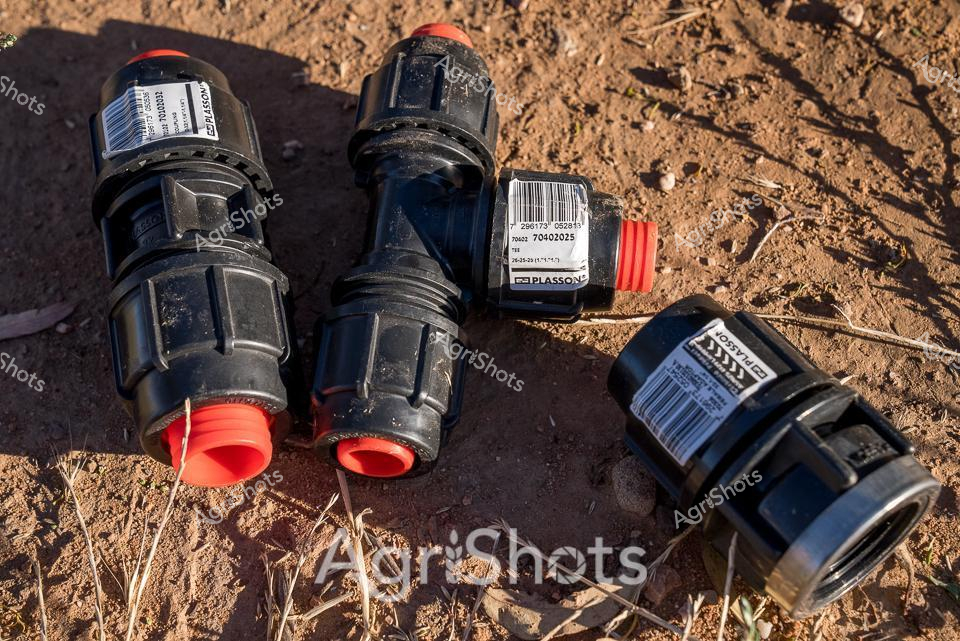
Scattered across sun-baked earth, a collection of robust Plasson compression fittings reveals the precision of modern agricultural irrigation technology. These heavy-duty black plastic connectors, marked with crisp white barcodes and accented with vibrant red end caps, demonstrate the engineering required for reliable water management in challenging rural environments. Each fitting - sturdy and utilitarian - speaks to the harsh conditions of Australian agricultural landscapes, where every connection must withstand intense heat, dust, and demanding operational requirements. The textured surface of the connectors shows subtle signs of use, with minor scuffs and dirt marks indicating their practical deployment in field infrastructure. Against the rich, textured brown soil with sparse dry vegetation, these hydraulic components represent the critical infrastructure that enables farmers to transport water efficiently across vast agricultural terrains. The sharp industrial design and professional branding of the Plasson fittings underscore the technological sophistication underlying contemporary farming practices. Image

Scattered across sun-baked earth, a collection of robust Plasson compression fittings reveals the precision of modern agricultural irrigation technology. These heavy-duty black plastic connectors, marked with crisp white barcodes and accented with vibrant red end caps, demonstrate the engineering required for reliable water management in challenging rural environments. Each fitting - sturdy and utilitarian - speaks to the harsh conditions of Australian agricultural landscapes, where every connection must withstand intense heat, dust, and demanding operational requirements. The textured surface of the connectors shows subtle signs of use, with minor scuffs and dirt marks indicating their practical deployment in field infrastructure. Against the rich, textured brown soil with sparse dry vegetation, these hydraulic components represent the critical infrastructure that enables farmers to transport water efficiently across vast agricultural terrains. The sharp industrial design and professional branding of the Plasson fittings underscore the technological sophistication underlying contemporary farming practices.
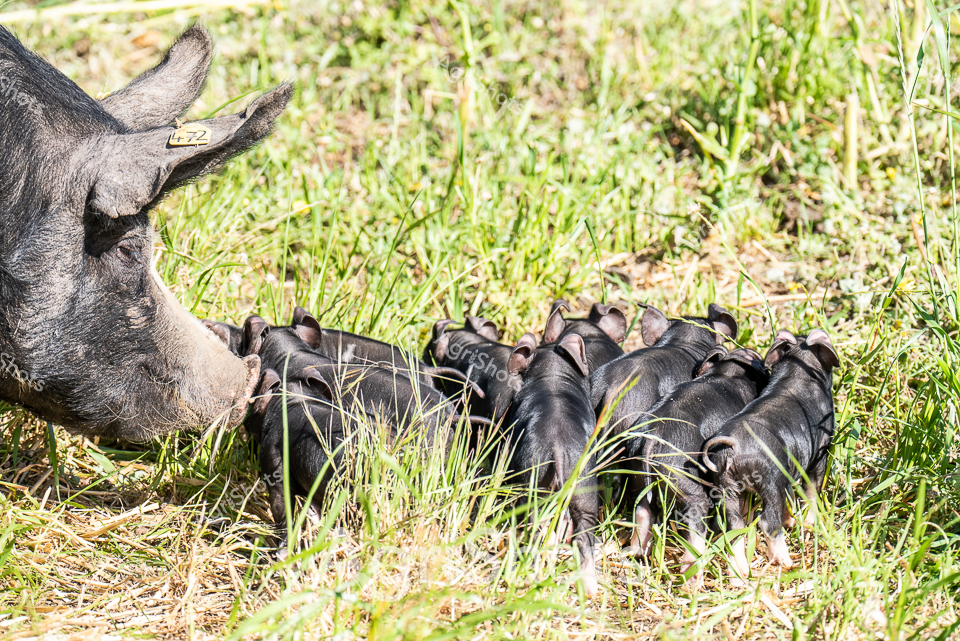
Black-coated piglets cluster tightly around their sow in a lush pasture grass setting, revealing an intimate moment of nurturing in a regenerative farming landscape. The mother pig, wearing a numbered ear tag, provides a protective presence as her young offspring huddle close, their sleek dark bodies pressed against each other and her side. Soft green grasses and scattered dry vegetation create a natural backdrop, suggesting this is likely a free-range or pasture-based pig farming environment in Victoria's Heathcote region. The scene captures the essence of modern sustainable agricultural practices, where animal welfare and natural behaviors are prioritized. Each piglet appears healthy and robust, with uniform dark coloration typical of specialized breeding programs. The soft natural lighting and organic setting highlight the progressive approach to livestock management, demonstrating how contemporary farmers are integrating animal welfare with ecological considerations. Image

Black-coated piglets cluster tightly around their sow in a lush pasture grass setting, revealing an intimate moment of nurturing in a regenerative farming landscape. The mother pig, wearing a numbered ear tag, provides a protective presence as her young offspring huddle close, their sleek dark bodies pressed against each other and her side. Soft green grasses and scattered dry vegetation create a natural backdrop, suggesting this is likely a free-range or pasture-based pig farming environment in Victoria's Heathcote region. The scene captures the essence of modern sustainable agricultural practices, where animal welfare and natural behaviors are prioritized. Each piglet appears healthy and robust, with uniform dark coloration typical of specialized breeding programs. The soft natural lighting and organic setting highlight the progressive approach to livestock management, demonstrating how contemporary farmers are integrating animal welfare with ecological considerations.
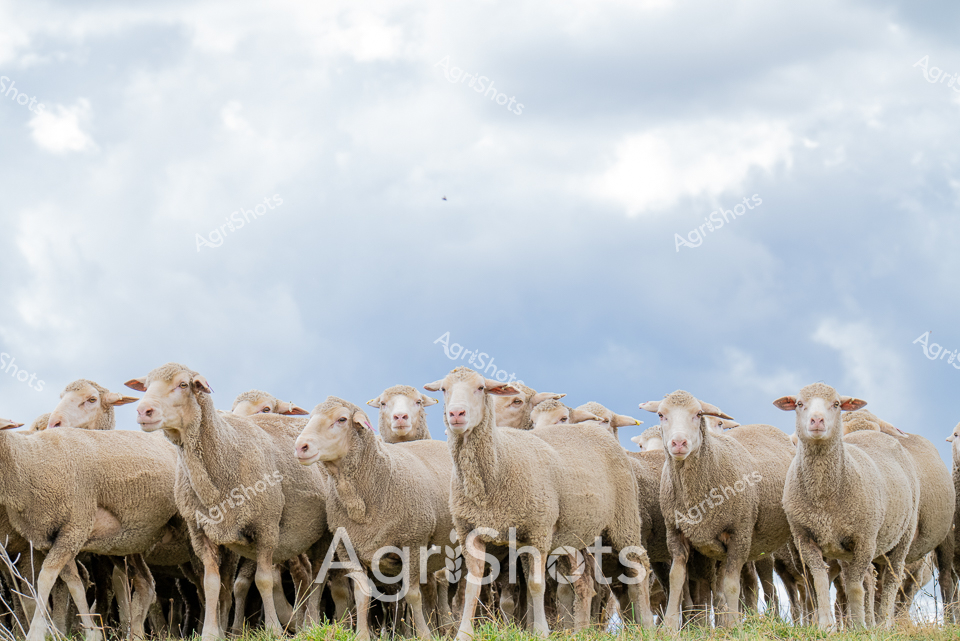
Merino ewes stand resolute against a soft, cloud-laden autumn sky, their dense fleece reflecting the muted pastels of the New England landscape in New South Wales. This stud flock represents the pinnacle of Australian sheep breeding - robust, uniform animals with distinctive pink-tinged ears and fine, tightly-packed wool that speaks to generations of careful genetic selection. Their muscular bodies are positioned uniformly, creating a living tableau of pastoral excellence, each animal subtly turned to showcase the quality of their conformation and woolly coverage. The muted green-grey grassland beneath their hooves hints at the transitional season, with scattered dry vegetation suggesting the challenging climate these resilient creatures navigate. Their collective gaze projects a sense of quiet strength and collective purpose, embodying the quiet dignity of Australian agricultural heritage. Each ewe represents not just an individual animal, but a critical component of a sophisticated agricultural ecosystem that has shaped rural economic and ecological landscapes for generations. Image

Merino ewes stand resolute against a soft, cloud-laden autumn sky, their dense fleece reflecting the muted pastels of the New England landscape in New South Wales. This stud flock represents the pinnacle of Australian sheep breeding - robust, uniform animals with distinctive pink-tinged ears and fine, tightly-packed wool that speaks to generations of careful genetic selection. Their muscular bodies are positioned uniformly, creating a living tableau of pastoral excellence, each animal subtly turned to showcase the quality of their conformation and woolly coverage. The muted green-grey grassland beneath their hooves hints at the transitional season, with scattered dry vegetation suggesting the challenging climate these resilient creatures navigate. Their collective gaze projects a sense of quiet strength and collective purpose, embodying the quiet dignity of Australian agricultural heritage. Each ewe represents not just an individual animal, but a critical component of a sophisticated agricultural ecosystem that has shaped rural economic and ecological landscapes for generations.
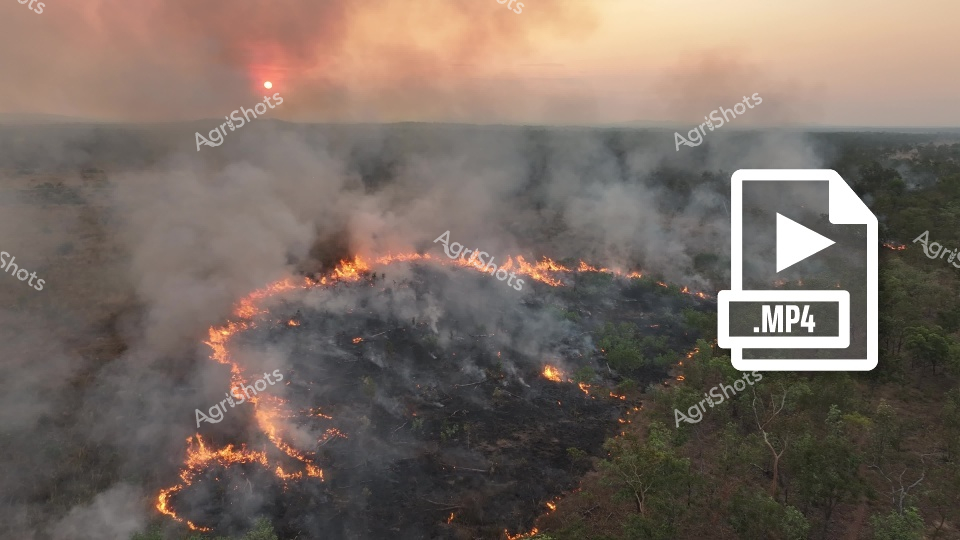
A controlled burn sweeps across the rugged landscape of Adelaide River region in the Northern Territory, creating a dramatic sunset scene. Flames and thick smoke engulf the dry vegetation, revealing the annual burning practices used to manage the ecosystem and reduce wildfire risks during the autumn season. ▶ Video

A controlled burn sweeps across the rugged landscape of Adelaide River region in the Northern Territory, creating a dramatic sunset scene. Flames and thick smoke engulf the dry vegetation, revealing the annual burning practices used to manage the ecosystem and reduce wildfire risks during the autumn season.
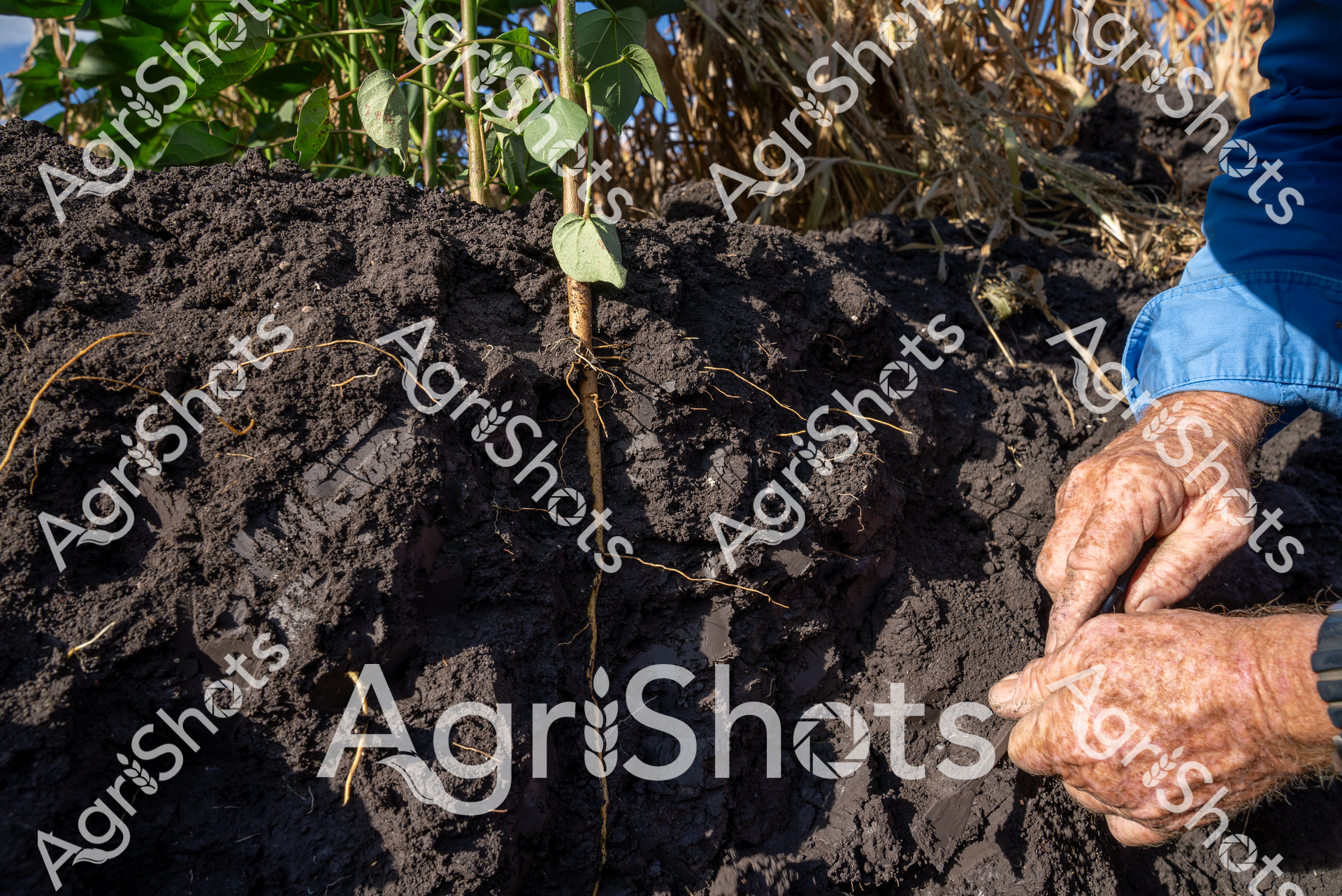
Rich, dark soil reveals its intricate layers in this intimate agricultural portrait, exposing the delicate root system of a young plant emerging from the earth. Weathered, experienced hands carefully examine the soil profile, highlighting the meticulous care and deep understanding of agricultural cultivation. The cross-section demonstrates the complex underground network of fine roots spreading through the fertile ground, with vibrant green leaves reaching upward against a backdrop of dry vegetation. Captured during the height of summer in Queensland's fertile Darling Downs region, the image speaks to the nuanced art of dual cropping - likely millet or cotton - where farmers work in harmony with the land's natural rhythms. The rich, chocolate-brown soil tells a story of generations of agricultural knowledge, with the hands of the farmer representing a connection between past farming traditions and contemporary agricultural practices. Every crack and texture of the soil tells a story of moisture, nutrients, and the delicate balance of ecosystem that sustains agricultural life. Image

Rich, dark soil reveals its intricate layers in this intimate agricultural portrait, exposing the delicate root system of a young plant emerging from the earth. Weathered, experienced hands carefully examine the soil profile, highlighting the meticulous care and deep understanding of agricultural cultivation. The cross-section demonstrates the complex underground network of fine roots spreading through the fertile ground, with vibrant green leaves reaching upward against a backdrop of dry vegetation. Captured during the height of summer in Queensland's fertile Darling Downs region, the image speaks to the nuanced art of dual cropping - likely millet or cotton - where farmers work in harmony with the land's natural rhythms. The rich, chocolate-brown soil tells a story of generations of agricultural knowledge, with the hands of the farmer representing a connection between past farming traditions and contemporary agricultural practices. Every crack and texture of the soil tells a story of moisture, nutrients, and the delicate balance of ecosystem that sustains agricultural life.
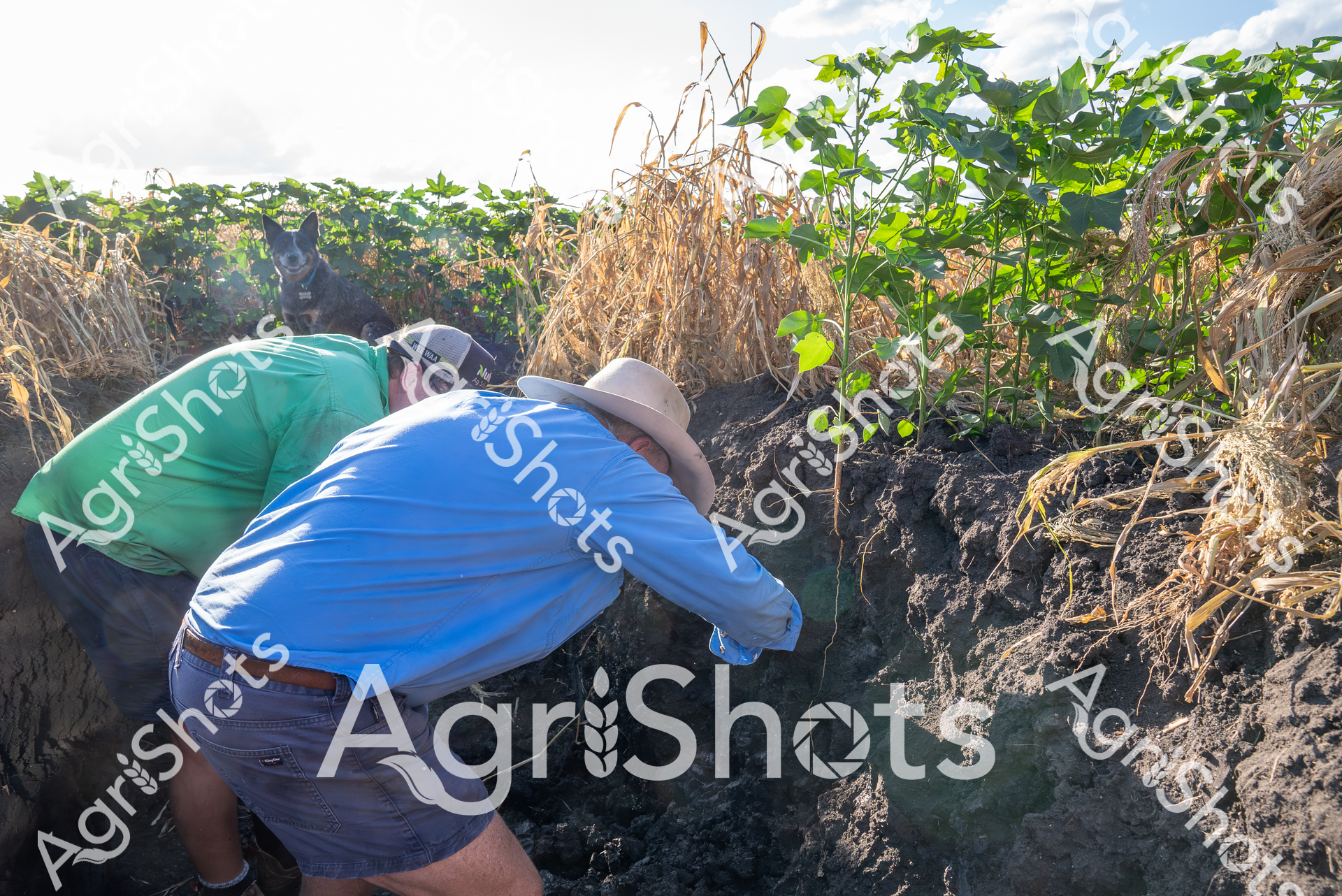
In the golden light of a Queensland summer, agricultural experts examine a soil profile on the Darling Downs, revealing the intricate root systems of a dual-cropping strategy. Two workers bend intently over a carefully excavated cross-section, their blue and green shirts contrasting against the rich, dark earth. Millet stalks and emerging cotton plants frame the scene, demonstrating the region's sophisticated agricultural practices. A keen-eyed working dog watches from the dry vegetation in the background, a silent sentinel of the farm. The exposed soil tells a story of careful land management, with dried and green plant matter illustrating the transition between crop cycles. This intimate moment captures the precision and dedication of modern agricultural science, where every layer of soil holds potential for productive farming. Image

In the golden light of a Queensland summer, agricultural experts examine a soil profile on the Darling Downs, revealing the intricate root systems of a dual-cropping strategy. Two workers bend intently over a carefully excavated cross-section, their blue and green shirts contrasting against the rich, dark earth. Millet stalks and emerging cotton plants frame the scene, demonstrating the region's sophisticated agricultural practices. A keen-eyed working dog watches from the dry vegetation in the background, a silent sentinel of the farm. The exposed soil tells a story of careful land management, with dried and green plant matter illustrating the transition between crop cycles. This intimate moment captures the precision and dedication of modern agricultural science, where every layer of soil holds potential for productive farming.
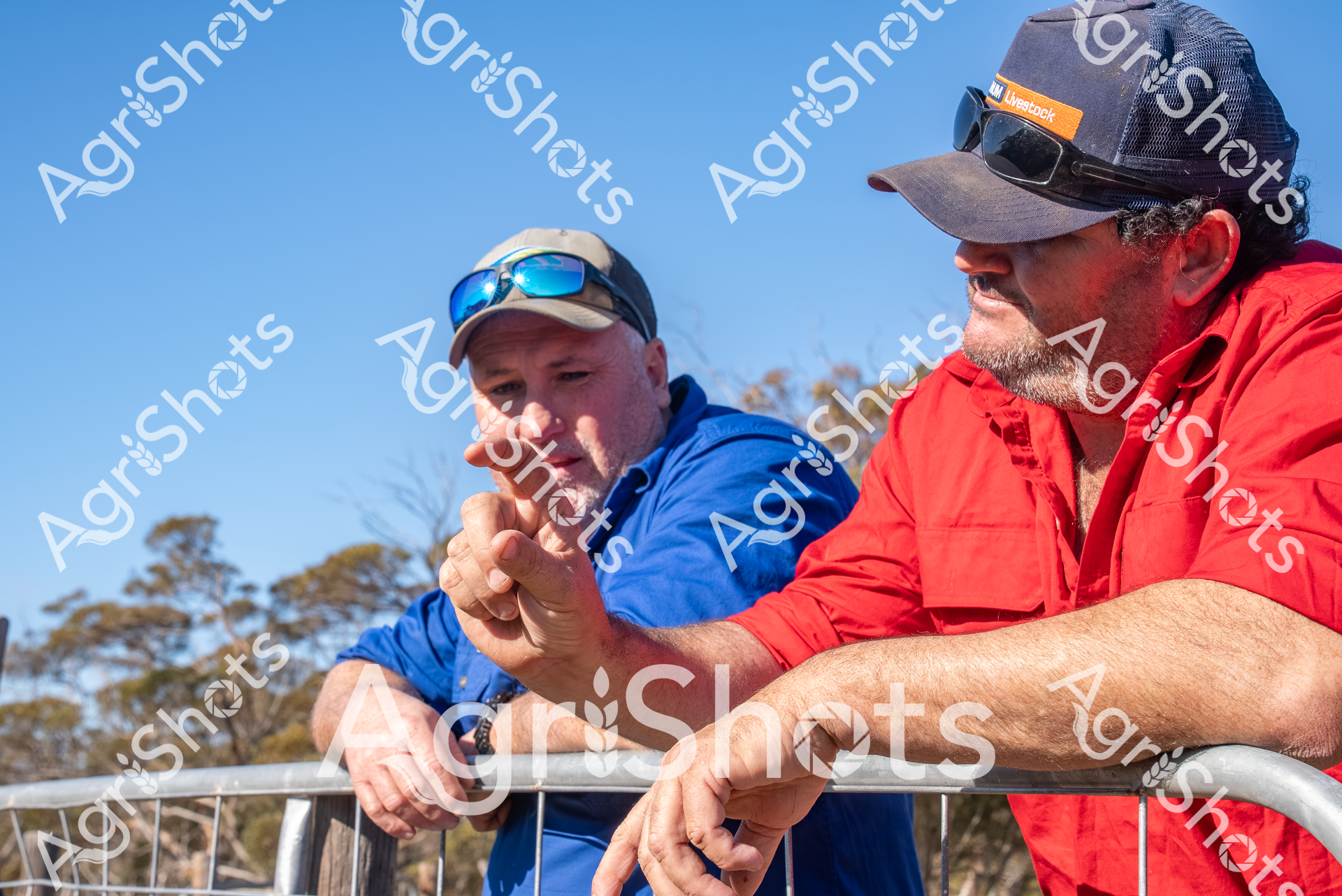
Seasoned livestock handlers lean against steel yard rails under the crisp azure winter sky of South Australia's Mallee region, their weathered expressions and intense focus reflecting the challenging realities of agricultural life. Dressed in vibrant blue and red technical outerwear, with protective sunglasses and LiveStock-branded caps, these experienced farmers survey the sheep yards with a sense of quiet determination. The surrounding landscape hints at drought conditions, with sparse trees and dry vegetation visible in the background, underscoring the resilience required in this unforgiving environment. One handler gestures with his hand, suggesting discussion of stock management or ongoing farm strategy, while the other maintains a steady, contemplative stance. Their clothing and equipment - robust, practical, and branded - tell a story of professional preparedness and deep connection to the land. The image captures a powerful moment of rural professional consultation, embodying the strength, expertise, and unspoken understanding that defines Australian agricultural communities. Image

Seasoned livestock handlers lean against steel yard rails under the crisp azure winter sky of South Australia's Mallee region, their weathered expressions and intense focus reflecting the challenging realities of agricultural life. Dressed in vibrant blue and red technical outerwear, with protective sunglasses and LiveStock-branded caps, these experienced farmers survey the sheep yards with a sense of quiet determination. The surrounding landscape hints at drought conditions, with sparse trees and dry vegetation visible in the background, underscoring the resilience required in this unforgiving environment. One handler gestures with his hand, suggesting discussion of stock management or ongoing farm strategy, while the other maintains a steady, contemplative stance. Their clothing and equipment - robust, practical, and branded - tell a story of professional preparedness and deep connection to the land. The image captures a powerful moment of rural professional consultation, embodying the strength, expertise, and unspoken understanding that defines Australian agricultural communities.