Results for “crowd”

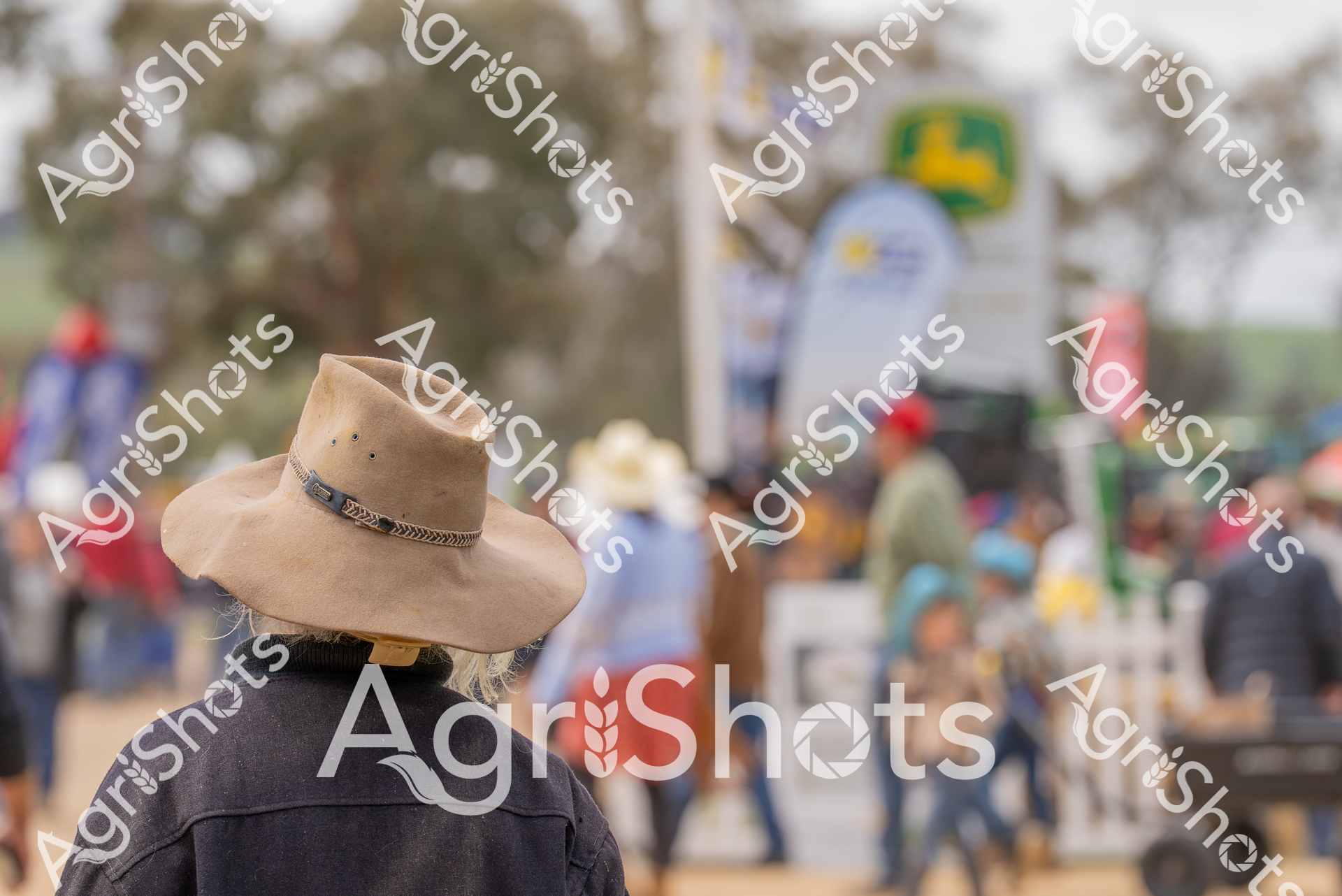
At the Henty Field Days in New South Wales, a woman in a black jacket and wide-brimmed tan hat stands amid a bustling crowd, capturing the vibrant atmosphere of this annual agricultural event in the Riverina region during springtime. The scene showcases the community spirit and agricultural innovation that brings farmers and industry professionals together. Image

At the Henty Field Days in New South Wales, a woman in a black jacket and wide-brimmed tan hat stands amid a bustling crowd, capturing the vibrant atmosphere of this annual agricultural event in the Riverina region during springtime. The scene showcases the community spirit and agricultural innovation that brings farmers and industry professionals together.
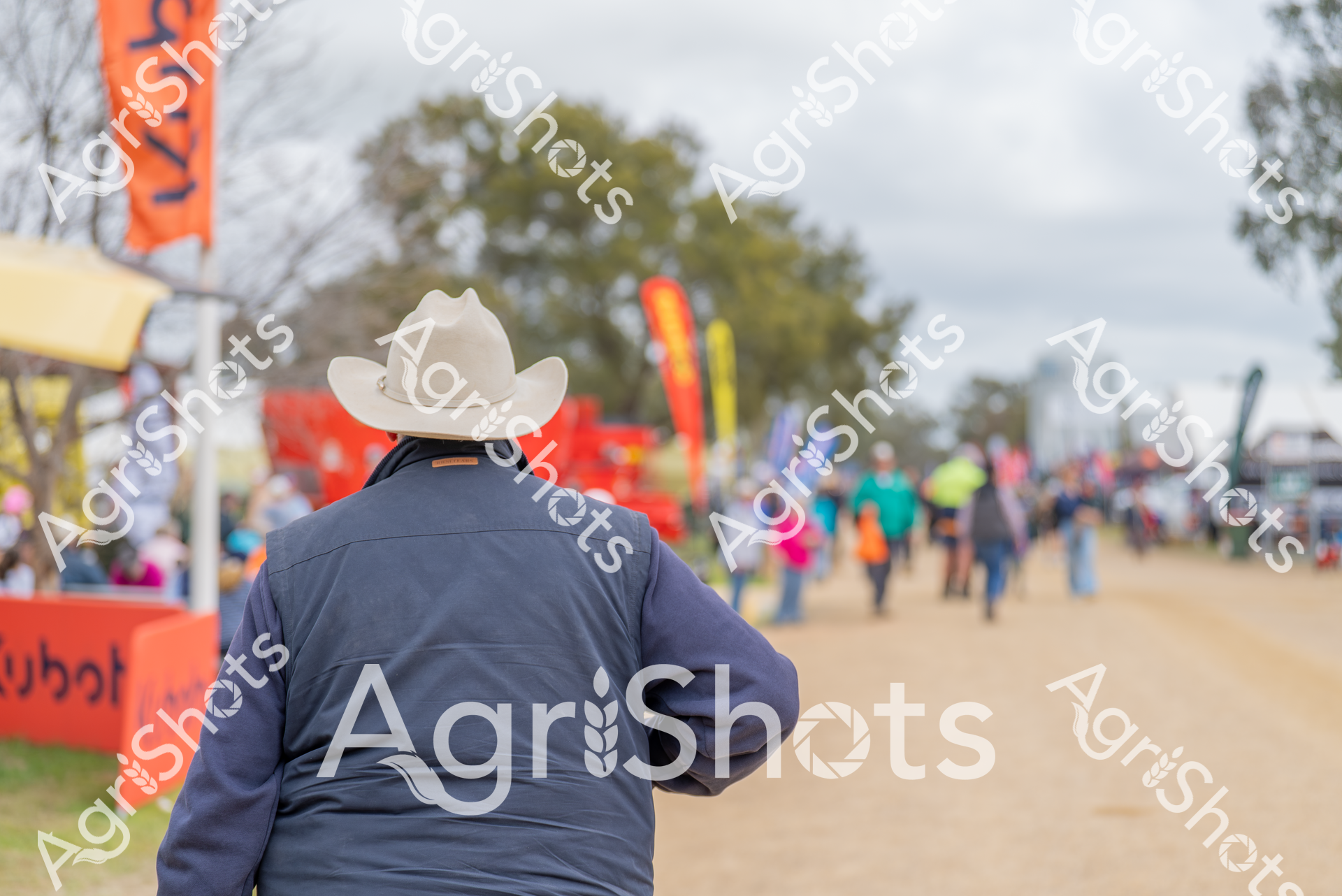
A man wearing a white cowboy hat and dark blue jacket stands with his back to the camera at an agricultural event. The scene captures the bustling atmosphere of a field days exhibition, with colorful banners and people moving around in the background. The event appears to be taking place outdoors on a cloudy day, with trees and exhibition stands visible. Image

A man wearing a white cowboy hat and dark blue jacket stands with his back to the camera at an agricultural event. The scene captures the bustling atmosphere of a field days exhibition, with colorful banners and people moving around in the background. The event appears to be taking place outdoors on a cloudy day, with trees and exhibition stands visible.
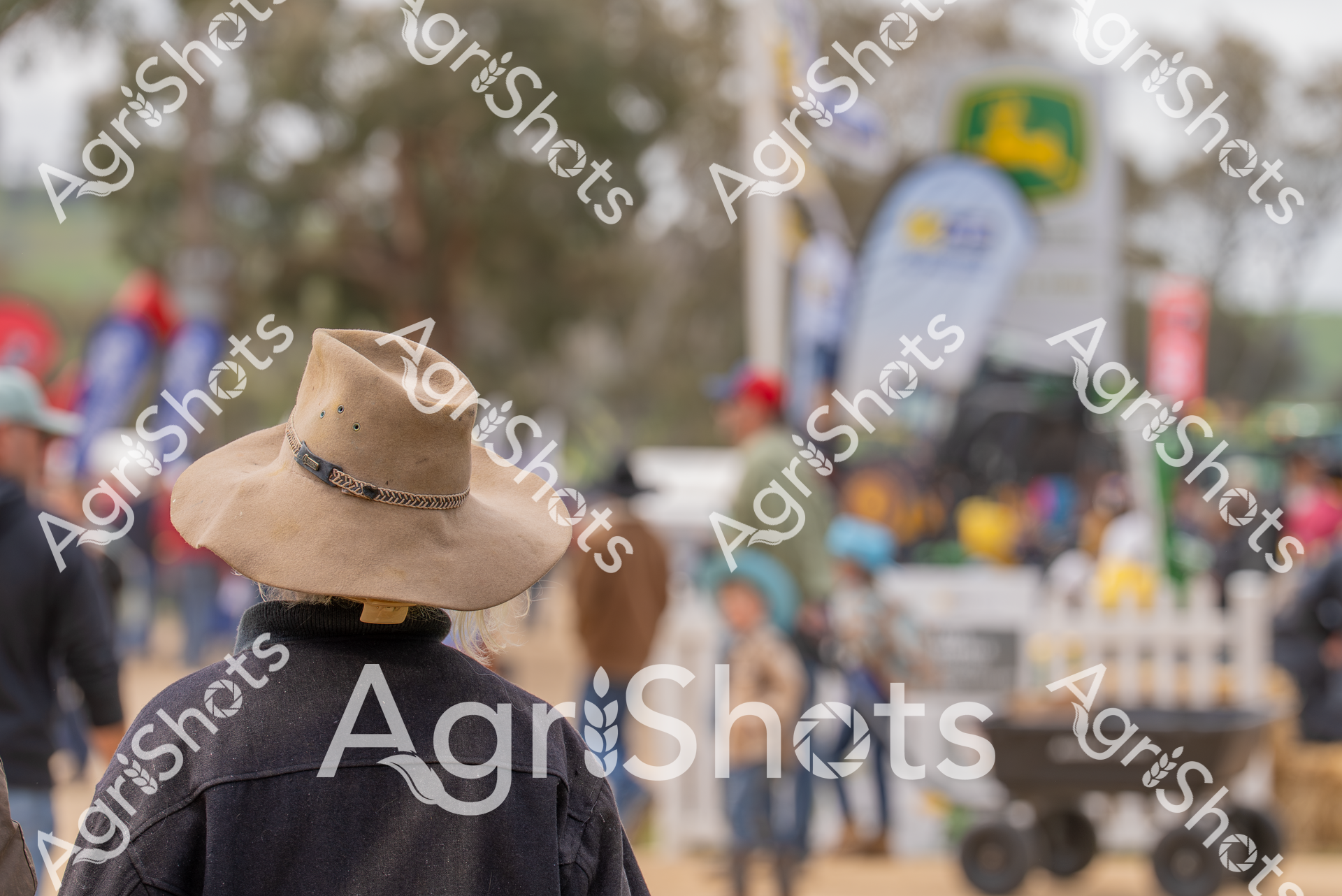
A person wearing a wide-brimmed tan hat stands with their back to the camera at an agricultural event. The scene appears to be a bustling field day with various displays and equipment in the background. The image captures the essence of rural agricultural gatherings in the Riverina region of New South Wales during springtime. Image

A person wearing a wide-brimmed tan hat stands with their back to the camera at an agricultural event. The scene appears to be a bustling field day with various displays and equipment in the background. The image captures the essence of rural agricultural gatherings in the Riverina region of New South Wales during springtime.
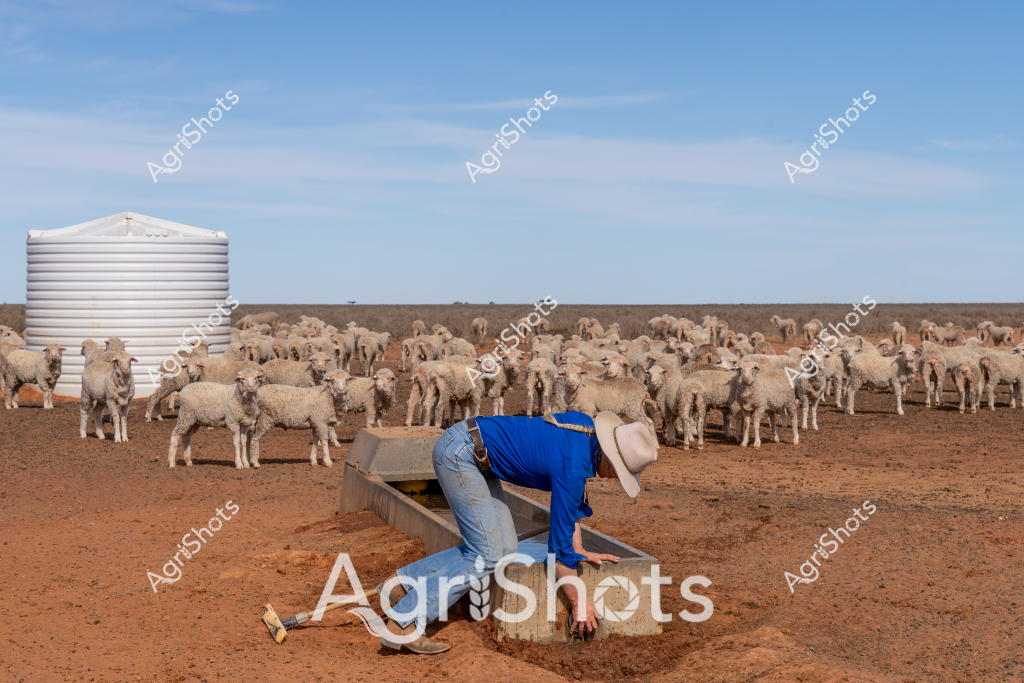
A man in a blue work shirt and wide-brimmed hat tends to a large flock of Merino sheep in a dry, arid landscape of central Australia. A large white water tank stands prominently in the background, while dozens of woolly sheep crowd the reddish-brown earth around a livestock water trough. The stockman is bent over, carefully managing the water supply for the flock, which appears to be a substantial breeding mob spread across the sparse paddock. The clear blue sky and open horizon emphasize the challenging environment of outback sheep farming, where water management is critical for livestock survival. Dusty ground and scattered vegetation highlight the harsh conditions of this rural agricultural setting, showcasing the resilience required in Australian sheep farming.

The scene captures the essential daily work of a sheep station worker, demonstrating the careful husbandry needed to maintain livestock in a drought-prone landscape. The white water tank and metal trough are crucial infrastructure that enables sheep farming in these challenging environmental conditions. Image

A man in a blue work shirt and wide-brimmed hat tends to a large flock of Merino sheep in a dry, arid landscape of central Australia. A large white water tank stands prominently in the background, while dozens of woolly sheep crowd the reddish-brown earth around a livestock water trough. The stockman is bent over, carefully managing the water supply for the flock, which appears to be a substantial breeding mob spread across the sparse paddock. The clear blue sky and open horizon emphasize the challenging environment of outback sheep farming, where water management is critical for livestock survival. Dusty ground and scattered vegetation highlight the harsh conditions of this rural agricultural setting, showcasing the resilience required in Australian sheep farming. The scene captures the essential daily work of a sheep station worker, demonstrating the careful husbandry needed to maintain livestock in a drought-prone landscape. The white water tank and metal trough are crucial infrastructure that enables sheep farming in these challenging environmental conditions.
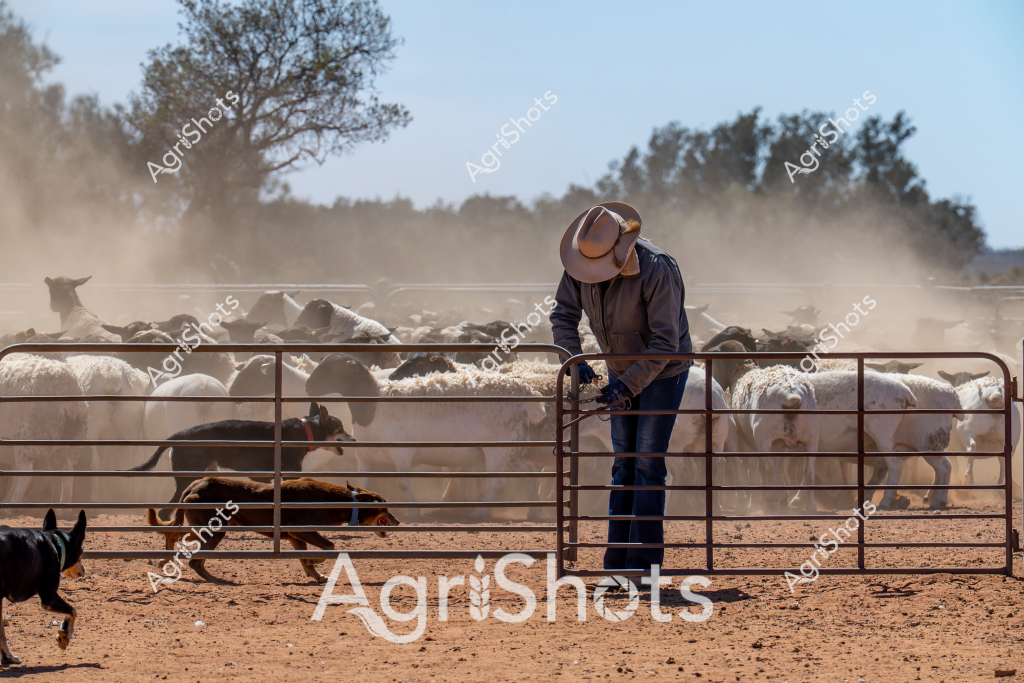
A man stockman wearing a wide-brimmed hat stands amid a dusty livestock yard, carefully managing a flock of white sheep and a few black and brown dogs. The scene captures a typical Australian sheep station during mustering, with dry, reddish-brown earth and sparse trees in the background creating a quintessential outback landscape. Dust rises around the metal livestock gates as the sheep crowd together, with the stockman's careful positioning and the working dogs suggesting an experienced team managing the herd. The man's dark clothing and sturdy stance reflect the challenging conditions of rural livestock management, where skill and precision are essential for moving and controlling sheep in arid environments. A gate separates different sections of the yard, allowing controlled movement and sorting of the animals during what appears to be a warm, dry day with minimal vegetation visible. Image

A man stockman wearing a wide-brimmed hat stands amid a dusty livestock yard, carefully managing a flock of white sheep and a few black and brown dogs. The scene captures a typical Australian sheep station during mustering, with dry, reddish-brown earth and sparse trees in the background creating a quintessential outback landscape. Dust rises around the metal livestock gates as the sheep crowd together, with the stockman's careful positioning and the working dogs suggesting an experienced team managing the herd. The man's dark clothing and sturdy stance reflect the challenging conditions of rural livestock management, where skill and precision are essential for moving and controlling sheep in arid environments. A gate separates different sections of the yard, allowing controlled movement and sorting of the animals during what appears to be a warm, dry day with minimal vegetation visible.
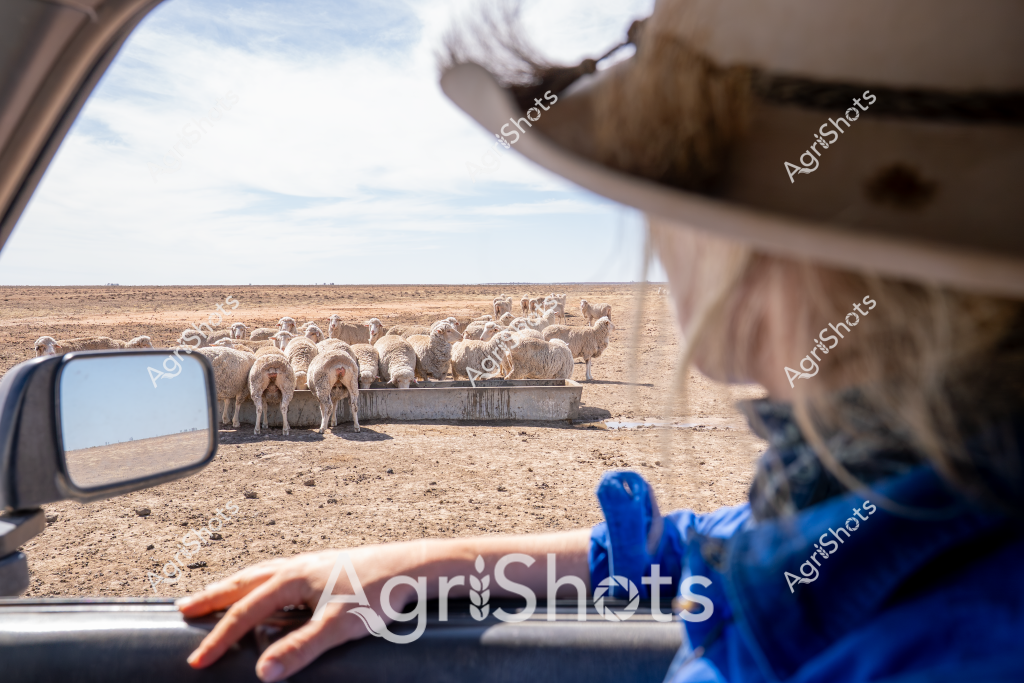
A woman farmer observes a flock of Merino sheep clustered around a water trough in a dry, expansive desert landscape. Viewed from inside a vehicle, with the side mirror and part of the driver's blue-sleeved arm visible, the scene captures the harsh realities of pastoral farming in an arid region. The sheep crowd tightly around the metal water trough, their woolly backs facing the camera, highlighting the critical importance of water sources in this parched environment. The horizon stretches endlessly, a flat, dusty plain meeting a pale blue sky, emphasizing the isolation and challenging conditions of Australian outback agriculture. The image conveys a sense of resilience - both of the livestock and the farmer who manages them in such unforgiving terrain. Image

A woman farmer observes a flock of Merino sheep clustered around a water trough in a dry, expansive desert landscape. Viewed from inside a vehicle, with the side mirror and part of the driver's blue-sleeved arm visible, the scene captures the harsh realities of pastoral farming in an arid region. The sheep crowd tightly around the metal water trough, their woolly backs facing the camera, highlighting the critical importance of water sources in this parched environment. The horizon stretches endlessly, a flat, dusty plain meeting a pale blue sky, emphasizing the isolation and challenging conditions of Australian outback agriculture. The image conveys a sense of resilience - both of the livestock and the farmer who manages them in such unforgiving terrain.
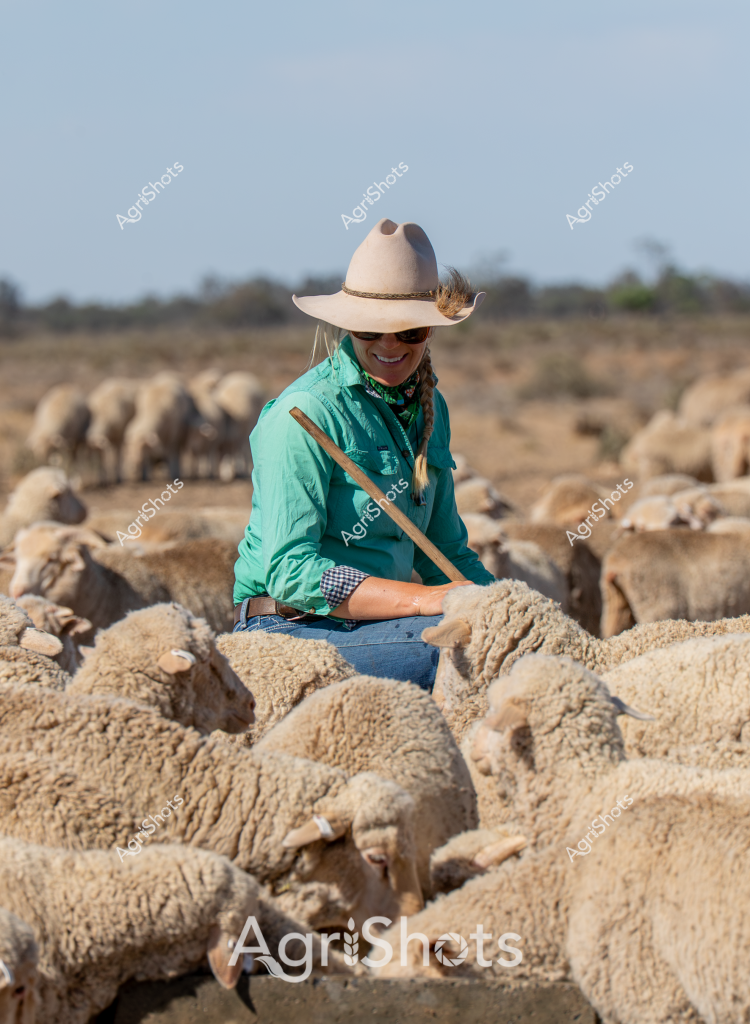
A woman shepherd sits among a flock of Merino sheep in a dry, sparse landscape, wearing a cream-colored wide-brimmed hat and a vibrant teal shirt. Her calm demeanor and confident posture suggest years of experience managing livestock across the Australian outback. The woolly sheep crowd around her, their thick fleeces a uniform beige that blends with the dusty, rocky terrain stretching to the distant horizon. Holding a herding staff and dressed in practical working attire - denim jeans and a checked shirt sleeve - she appears completely at ease in the midst of the flock. The clear sky and open landscape emphasize the isolation and challenging environment of sheep farming in rural Australia. Her outfit and positioning highlight the skill and resilience required to manage livestock in such demanding conditions, embodying the spirit of Australian agricultural workers. Image

A woman shepherd sits among a flock of Merino sheep in a dry, sparse landscape, wearing a cream-colored wide-brimmed hat and a vibrant teal shirt. Her calm demeanor and confident posture suggest years of experience managing livestock across the Australian outback. The woolly sheep crowd around her, their thick fleeces a uniform beige that blends with the dusty, rocky terrain stretching to the distant horizon. Holding a herding staff and dressed in practical working attire - denim jeans and a checked shirt sleeve - she appears completely at ease in the midst of the flock. The clear sky and open landscape emphasize the isolation and challenging environment of sheep farming in rural Australia. Her outfit and positioning highlight the skill and resilience required to manage livestock in such demanding conditions, embodying the spirit of Australian agricultural workers.
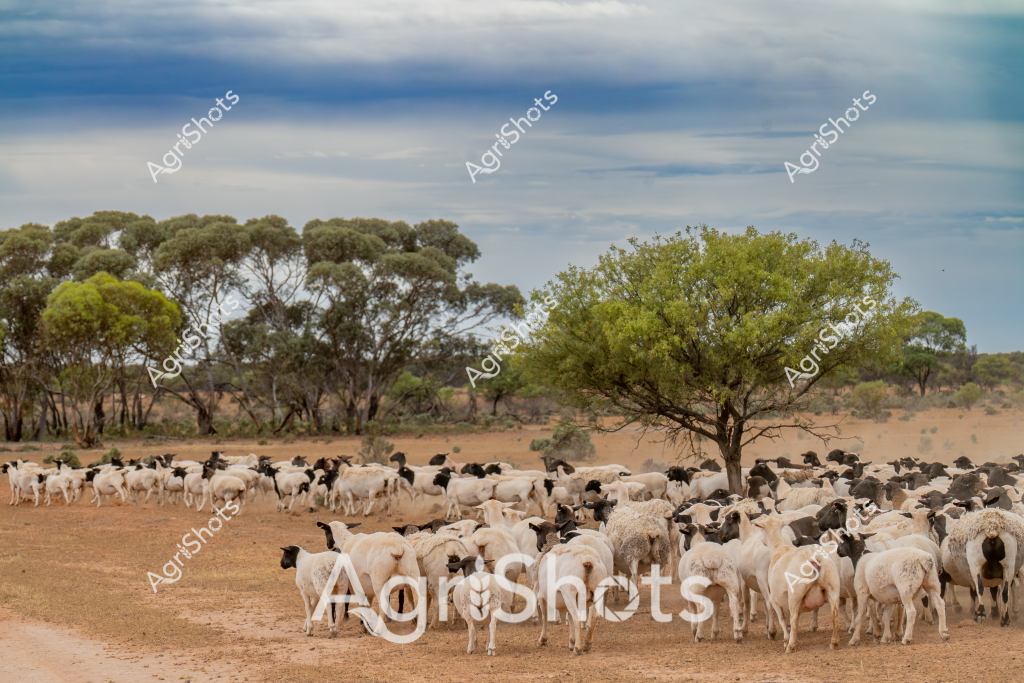
A dense flock of white and black-headed sheep crowd together on a dry, dusty paddock in an Australian rural landscape. The sheep, likely Merino or a similar wool breed, are tightly grouped near some scattered eucalyptus trees with a backdrop of blue-grey cloudy skies. The arid terrain suggests this is a pastoral region, potentially in western New South Wales or South Australia, where sheep farming is a critical agricultural industry. The landscape is characterised by sparse vegetation, reddish-brown earth, and sparse green trees scattered across the horizon, indicating challenging environmental conditions. The mob of sheep appears calm and clustered, possibly awaiting movement to another grazing area or seeking shade from the sparse tree cover. This image captures the essence of Australian sheep farming - resilient livestock adapted to harsh, expansive agricultural landscapes. Image

A dense flock of white and black-headed sheep crowd together on a dry, dusty paddock in an Australian rural landscape. The sheep, likely Merino or a similar wool breed, are tightly grouped near some scattered eucalyptus trees with a backdrop of blue-grey cloudy skies. The arid terrain suggests this is a pastoral region, potentially in western New South Wales or South Australia, where sheep farming is a critical agricultural industry. The landscape is characterised by sparse vegetation, reddish-brown earth, and sparse green trees scattered across the horizon, indicating challenging environmental conditions. The mob of sheep appears calm and clustered, possibly awaiting movement to another grazing area or seeking shade from the sparse tree cover. This image captures the essence of Australian sheep farming - resilient livestock adapted to harsh, expansive agricultural landscapes.
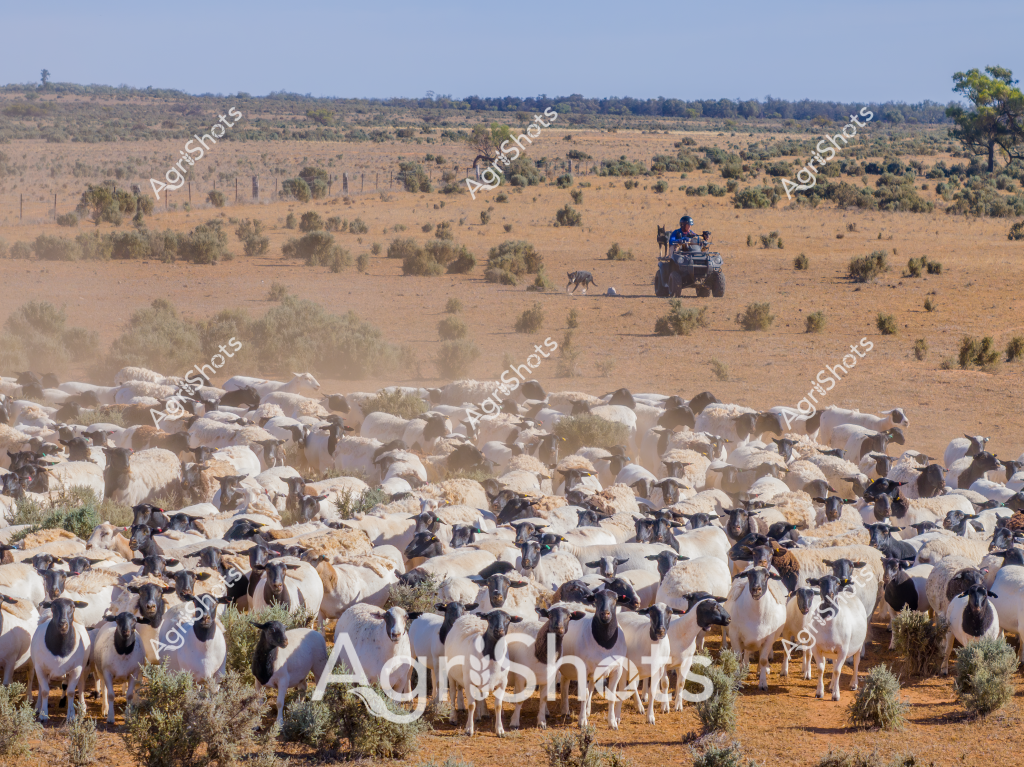
A large flock of white and black-faced sheep crowd together in an arid pastoral landscape, with sparse scrubland and dusty ground stretching to the distant horizon. A four-wheel drive vehicle and a working dog are visible in the background, indicating this is likely a station or large grazing property in inland Australia. The sheep appear to be Dorper or White Dorper breed, known for their hardiness in dry conditions, standing clustered among low saltbush and spinifex vegetation. A man in blue clothing sits on the quad bike, seemingly monitoring the mob as they graze and move across the parched landscape. The scene captures the essence of Australian sheep farming in a challenging, drought-affected environment, with the stark beauty of the arid rangelands providing a dramatic backdrop to the livestock operation.

The image reveals the resilience of both the animals and the agricultural workers who manage them in harsh, unforgiving terrain. Dust rises around the sheep's feet, highlighting the dry conditions and the careful movement of the herd. The quad bike and working dog demonstrate the modern tools and techniques used in managing large flocks across extensive grazing properties. Image

A large flock of white and black-faced sheep crowd together in an arid pastoral landscape, with sparse scrubland and dusty ground stretching to the distant horizon. A four-wheel drive vehicle and a working dog are visible in the background, indicating this is likely a station or large grazing property in inland Australia. The sheep appear to be Dorper or White Dorper breed, known for their hardiness in dry conditions, standing clustered among low saltbush and spinifex vegetation. A man in blue clothing sits on the quad bike, seemingly monitoring the mob as they graze and move across the parched landscape. The scene captures the essence of Australian sheep farming in a challenging, drought-affected environment, with the stark beauty of the arid rangelands providing a dramatic backdrop to the livestock operation. The image reveals the resilience of both the animals and the agricultural workers who manage them in harsh, unforgiving terrain. Dust rises around the sheep's feet, highlighting the dry conditions and the careful movement of the herd. The quad bike and working dog demonstrate the modern tools and techniques used in managing large flocks across extensive grazing properties.
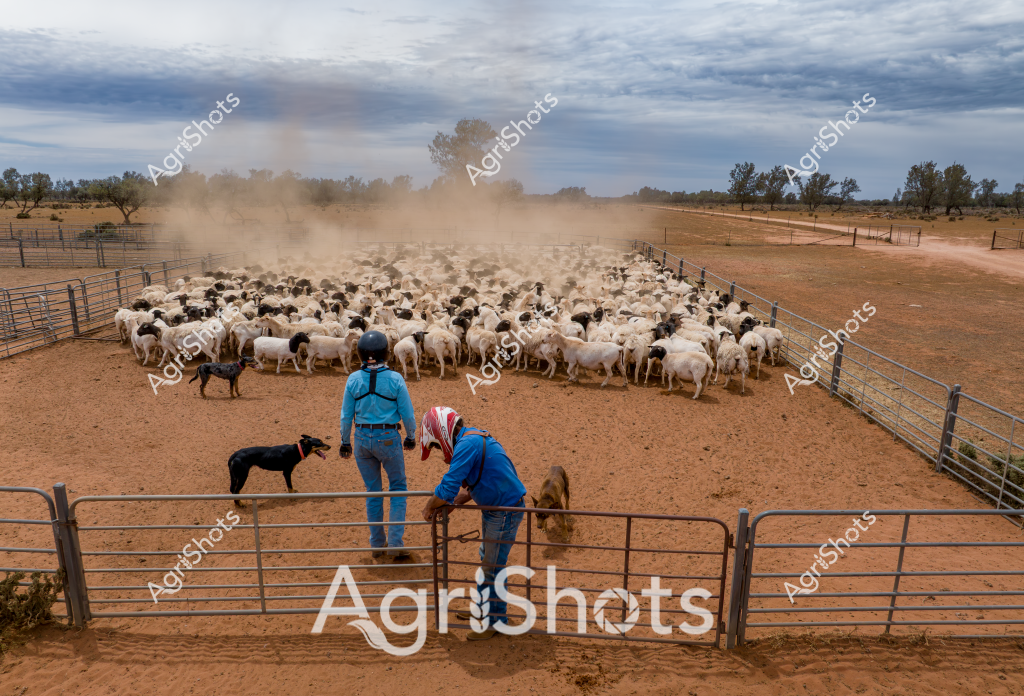
A substantial mob of white and dark-colored sheep crowd together, raising a fine cloud of reddish-brown dust against the overcast sky. A woman in blue clothing and a wide-brimmed hat stands near the metal gate, while another worker bends to interact with the livestock. Several working dogs are positioned around the flock, helping to control and direct the sheep's movements. The arid landscape features sparse trees in the background and metal livestock yards with multiple paddock sections, typical of Australian sheep station infrastructure. The scene captures the challenging and dynamic nature of sheep management in a dry rural environment, with the dust and tight grouping of animals suggesting active mustering or sorting activities. Image

A substantial mob of white and dark-colored sheep crowd together, raising a fine cloud of reddish-brown dust against the overcast sky. A woman in blue clothing and a wide-brimmed hat stands near the metal gate, while another worker bends to interact with the livestock. Several working dogs are positioned around the flock, helping to control and direct the sheep's movements. The arid landscape features sparse trees in the background and metal livestock yards with multiple paddock sections, typical of Australian sheep station infrastructure. The scene captures the challenging and dynamic nature of sheep management in a dry rural environment, with the dust and tight grouping of animals suggesting active mustering or sorting activities.
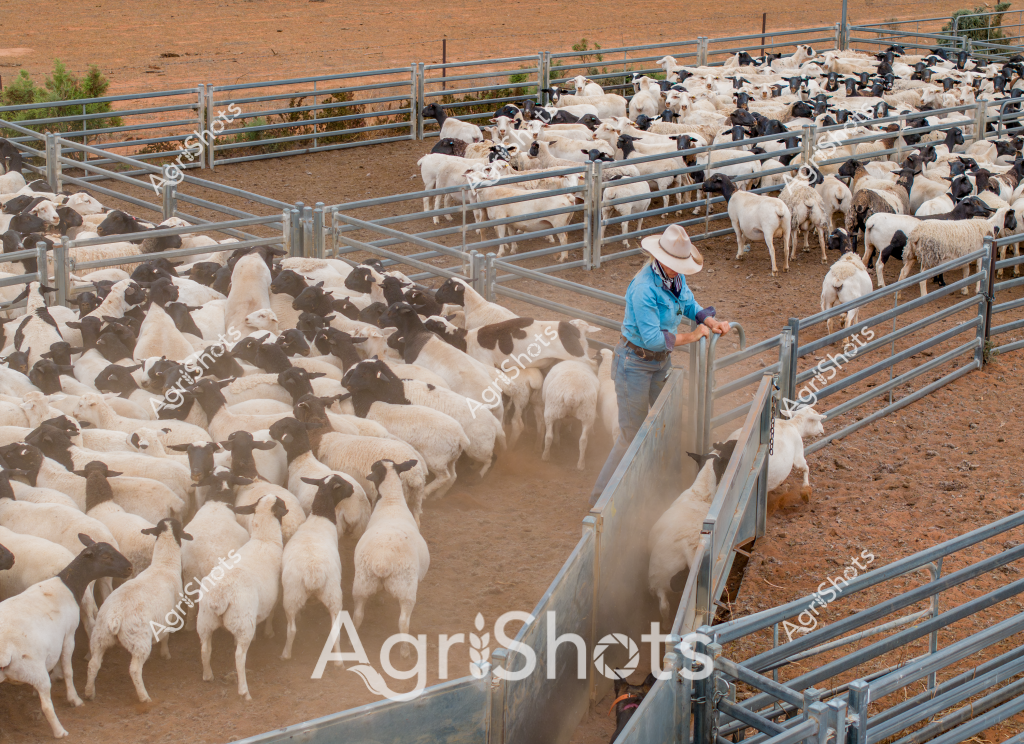
A man stockman wearing a wide-brimmed hat and blue work shirt manages a large mob of white and black-faced sheep in a metal livestock yard. The sheep - which appear to be a mix of Dorper and Merino breeds - are densely packed into interconnected metal cattle yards with a dusty, reddish-brown ground typical of Australian agricultural landscapes. The stockman carefully works the gate and sorting pens, guiding the sheep through the precise metal infrastructure designed for efficient livestock movement and management. Dozens of sheep with distinctive white bodies and black faces crowd together, creating a textured landscape of woolly forms and movement. The scene captures the precision and skill of Australian livestock management, with the man's controlled movements contrasting against the fluid, shifting mass of sheep. The environment suggests an arid or semi-arid region, with the bare earth and metal yards indicating a professional, well-maintained agricultural operation. Image

A man stockman wearing a wide-brimmed hat and blue work shirt manages a large mob of white and black-faced sheep in a metal livestock yard. The sheep - which appear to be a mix of Dorper and Merino breeds - are densely packed into interconnected metal cattle yards with a dusty, reddish-brown ground typical of Australian agricultural landscapes. The stockman carefully works the gate and sorting pens, guiding the sheep through the precise metal infrastructure designed for efficient livestock movement and management. Dozens of sheep with distinctive white bodies and black faces crowd together, creating a textured landscape of woolly forms and movement. The scene captures the precision and skill of Australian livestock management, with the man's controlled movements contrasting against the fluid, shifting mass of sheep. The environment suggests an arid or semi-arid region, with the bare earth and metal yards indicating a professional, well-maintained agricultural operation.
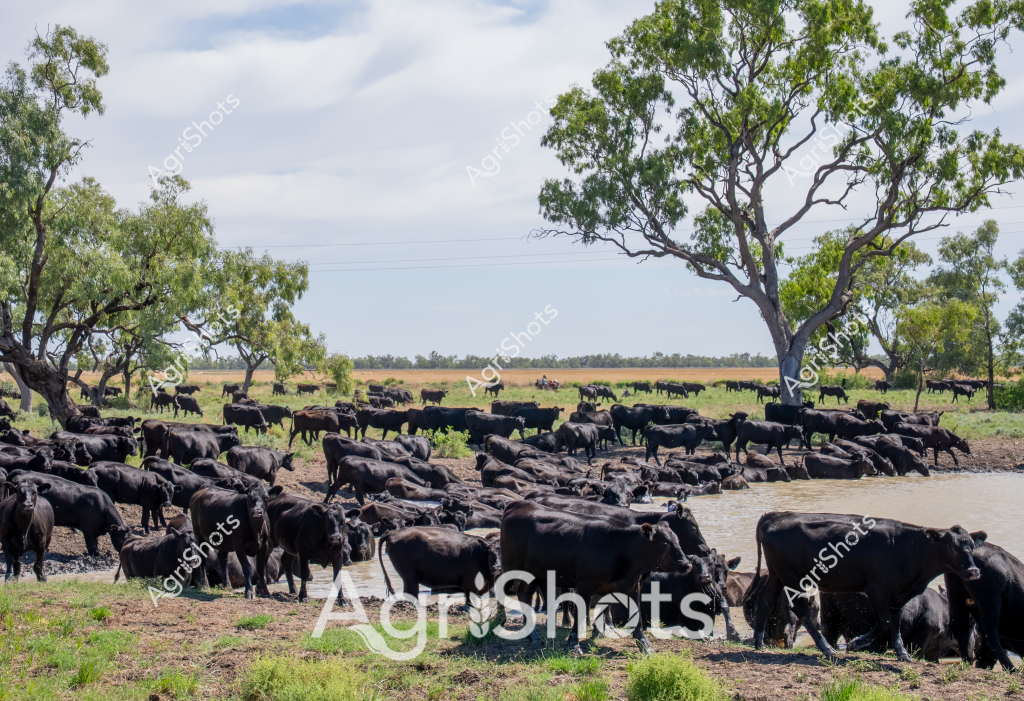
A large herd of black cattle congregates around a water point in a classic Australian pastoral landscape. Numerous dark-colored cattle crowd the waterhole, some standing in the shallow water while others wait at the edges, creating a dense group against the dry grassland and scattered eucalyptus trees. The landscape suggests a cattle station in northern Australia, with open grasslands stretching to the horizon and mature gum trees providing sparse shade. These appear to be beef cattle, likely Angus or Droughtmaster breed, gathering to drink during what seems to be a warm day with a pale, cloudy sky overhead. The scene captures the essential rhythm of cattle management in Australia's extensive grazing systems, where water sources are critical lifelines in often arid environments.

The image showcases the typical landscape of a large cattle property, with the animals clustered tightly around the water source, demonstrating the importance of strategic water points in managing livestock across vast pastoral lands. The green-grey foliage of the eucalyptus trees and the dusty ground highlight the challenging agricultural conditions of the region. Image

A large herd of black cattle congregates around a water point in a classic Australian pastoral landscape. Numerous dark-colored cattle crowd the waterhole, some standing in the shallow water while others wait at the edges, creating a dense group against the dry grassland and scattered eucalyptus trees. The landscape suggests a cattle station in northern Australia, with open grasslands stretching to the horizon and mature gum trees providing sparse shade. These appear to be beef cattle, likely Angus or Droughtmaster breed, gathering to drink during what seems to be a warm day with a pale, cloudy sky overhead. The scene captures the essential rhythm of cattle management in Australia's extensive grazing systems, where water sources are critical lifelines in often arid environments. The image showcases the typical landscape of a large cattle property, with the animals clustered tightly around the water source, demonstrating the importance of strategic water points in managing livestock across vast pastoral lands. The green-grey foliage of the eucalyptus trees and the dusty ground highlight the challenging agricultural conditions of the region.
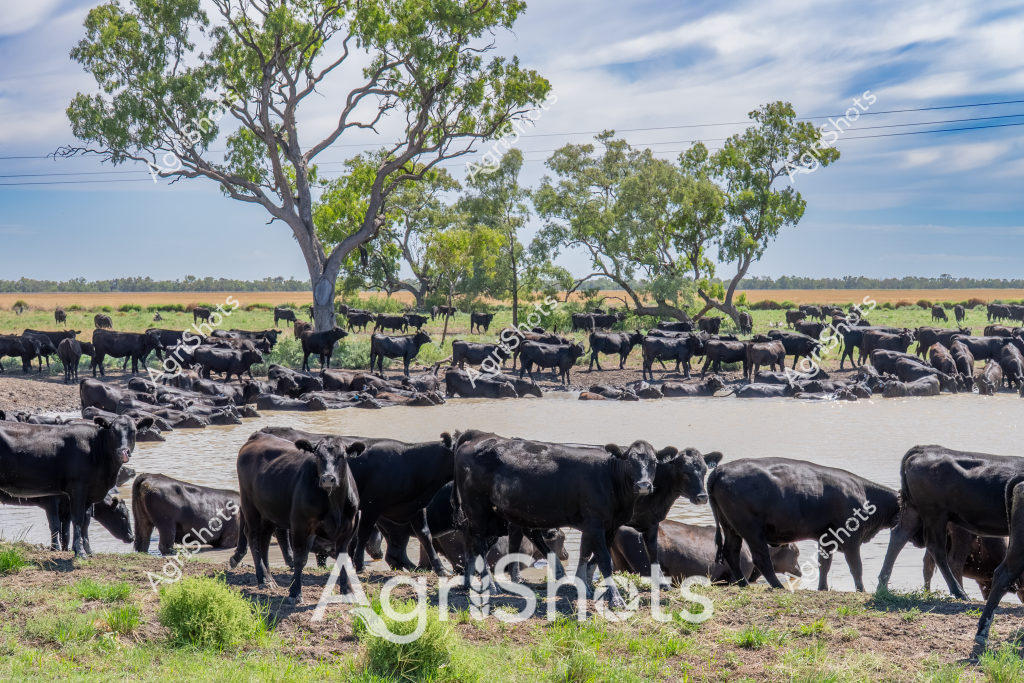
A large herd of black cattle crowd around a waterhole on a sprawling Australian cattle station, seeking relief from the heat. The mature beef cattle, likely Angus or Droughtmaster breed, stand partially submerged in the muddy water, with some lying down to cool off. Gnarled eucalyptus trees provide scattered shade across the dry grassland, creating a classic outback pastoral scene. Power lines in the distance hint at the property's infrastructure, while the wide-open landscape stretches to the horizon under a pale blue sky with wispy clouds. The cattle appear well-conditioned, clustered tightly around the water source, demonstrating typical livestock behavior during hot conditions. This image captures the essence of extensive cattle farming in rural Australia, showcasing the animals' adaptation to harsh environmental conditions. Image

A large herd of black cattle crowd around a waterhole on a sprawling Australian cattle station, seeking relief from the heat. The mature beef cattle, likely Angus or Droughtmaster breed, stand partially submerged in the muddy water, with some lying down to cool off. Gnarled eucalyptus trees provide scattered shade across the dry grassland, creating a classic outback pastoral scene. Power lines in the distance hint at the property's infrastructure, while the wide-open landscape stretches to the horizon under a pale blue sky with wispy clouds. The cattle appear well-conditioned, clustered tightly around the water source, demonstrating typical livestock behavior during hot conditions. This image captures the essence of extensive cattle farming in rural Australia, showcasing the animals' adaptation to harsh environmental conditions.
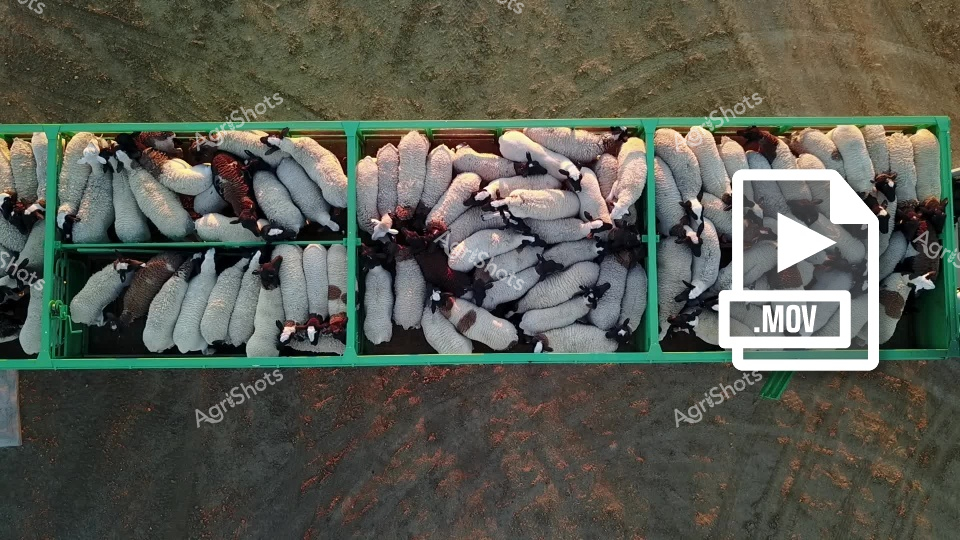
Dorper sheep crowd into green steel yard panels during what appears to be a sunrise mustering operation at a Queensland station. The hair sheep, displaying their characteristic white bodies with darker heads, are densely packed in the handling facility as station hands work to process the flock. The early morning light creates a golden atmosphere across the yards, while trucks wait nearby for loading in this typical Central West Queensland pastoral scene. ▶ Video

Dorper sheep crowd into green steel yard panels during what appears to be a sunrise mustering operation at a Queensland station. The hair sheep, displaying their characteristic white bodies with darker heads, are densely packed in the handling facility as station hands work to process the flock. The early morning light creates a golden atmosphere across the yards, while trucks wait nearby for loading in this typical Central West Queensland pastoral scene.
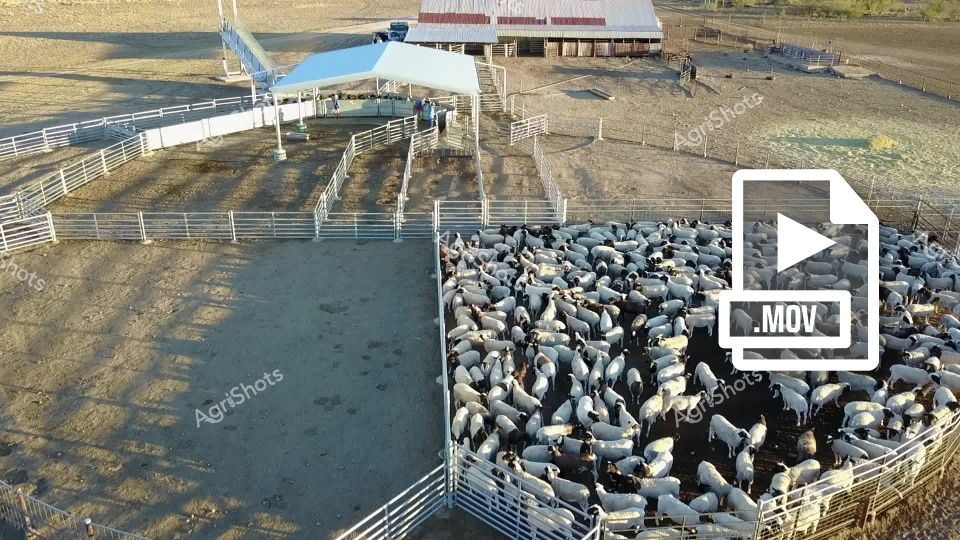
A large mob of Dorper sheep crowd together in circular steel yards at a Queensland station, with their characteristic white bodies and dark heads clearly visible from this aerial perspective. The well-designed sheep yards feature multiple drafting pens and races, with a blue shelter structure providing shade for livestock handling operations. A woman stockman can be seen working among the flock, demonstrating the scale of this Central West Queensland sheep operation where hundreds of animals are being processed through the efficient yard system. ▶ Video

A large mob of Dorper sheep crowd together in circular steel yards at a Queensland station, with their characteristic white bodies and dark heads clearly visible from this aerial perspective. The well-designed sheep yards feature multiple drafting pens and races, with a blue shelter structure providing shade for livestock handling operations. A woman stockman can be seen working among the flock, demonstrating the scale of this Central West Queensland sheep operation where hundreds of animals are being processed through the efficient yard system.
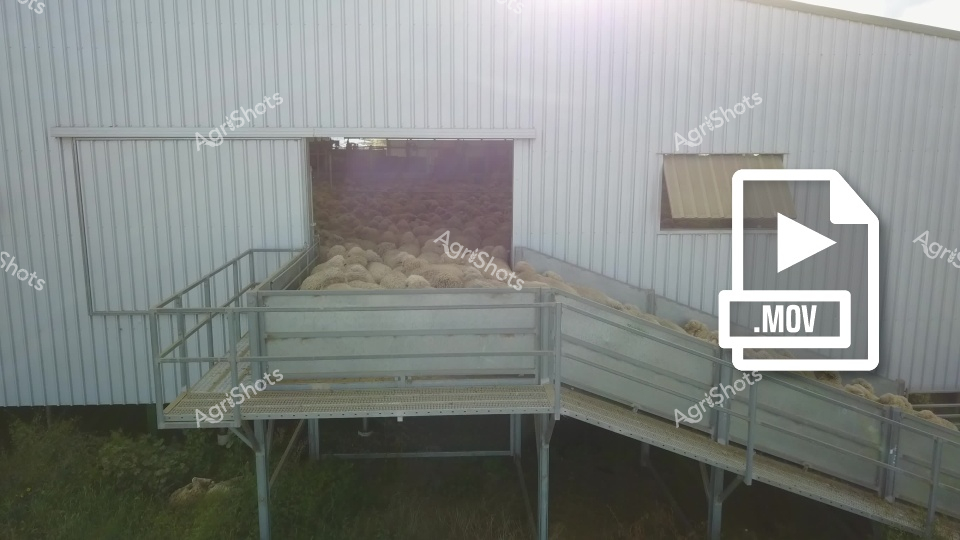
A sheep holding facility with metal yards extends from a corrugated iron woolshed, with Merino sheep visible inside the covered area awaiting shearing. The elevated walkway and ramp system provides efficient livestock handling access to the shearing shed, while sheep crowd together in the holding pens. The industrial wool processing setup demonstrates typical station infrastructure designed for managing large flocks during shearing season in New South Wales. ▶ Video

A sheep holding facility with metal yards extends from a corrugated iron woolshed, with Merino sheep visible inside the covered area awaiting shearing. The elevated walkway and ramp system provides efficient livestock handling access to the shearing shed, while sheep crowd together in the holding pens. The industrial wool processing setup demonstrates typical station infrastructure designed for managing large flocks during shearing season in New South Wales.
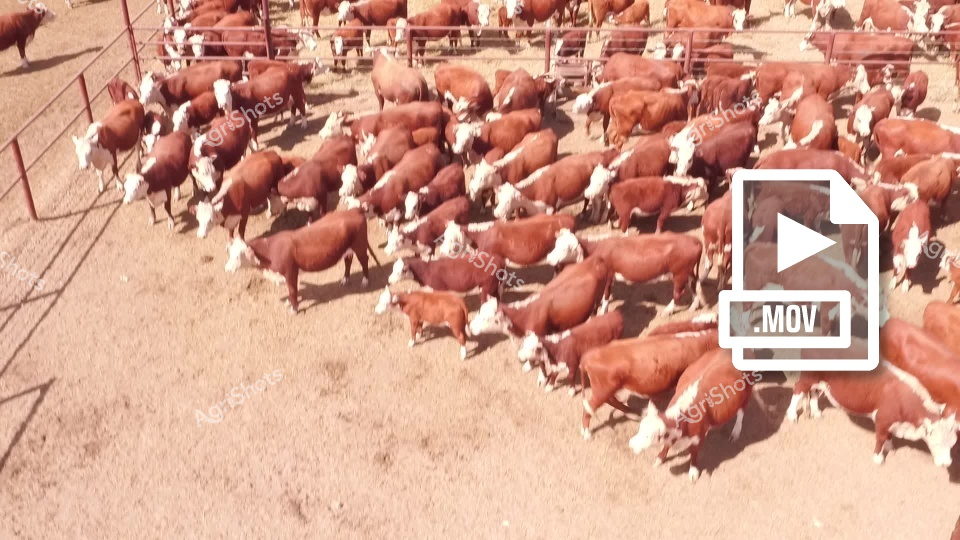
A large herd of Hereford cattle with distinctive red coats and white faces crowd together in dusty cattle yards at a Queensland station in the Queensland. The beef cattle are tightly packed within the holding pens, creating a sea of reddish-brown bodies as they await processing during mustering operations. Dust rises from the dry ground as the cattle move within the confined space, while wooden rail fencing contains the substantial mob. This aerial perspective captures the scale of cattle operations typical of Queensland's beef industry, with the Hereford breed's characteristic coloring clearly visible across the yards. ▶ Video

A large herd of Hereford cattle with distinctive red coats and white faces crowd together in dusty cattle yards at a Queensland station in the Queensland. The beef cattle are tightly packed within the holding pens, creating a sea of reddish-brown bodies as they await processing during mustering operations. Dust rises from the dry ground as the cattle move within the confined space, while wooden rail fencing contains the substantial mob. This aerial perspective captures the scale of cattle operations typical of Queensland's beef industry, with the Hereford breed's characteristic coloring clearly visible across the yards.
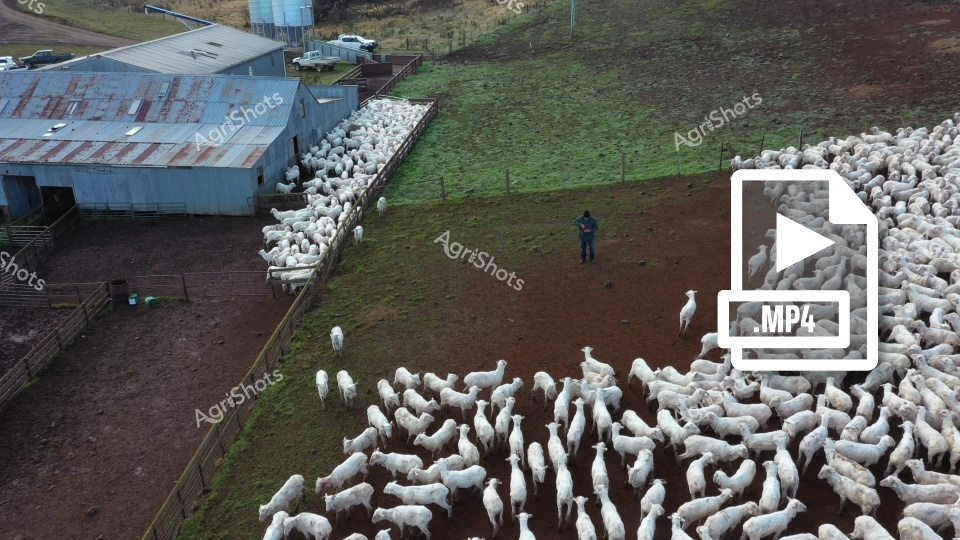
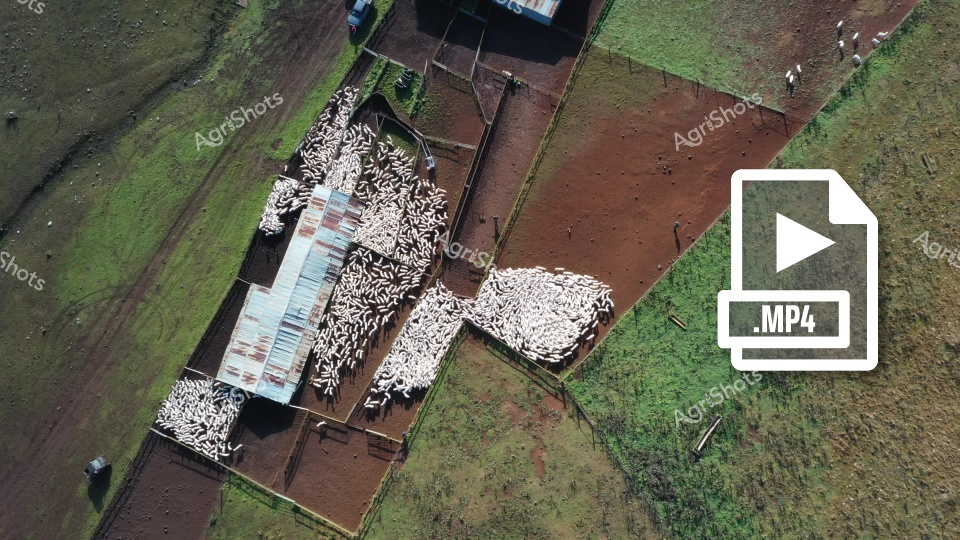
A massive flock of white Merino sheep gather in the yards of a rustic woolshed in rural New South Wales. A lone person stands amid the dense crowd of woolly livestock, with an industrial blue shearing shed in the background, capturing the essence of Australian sheep farming. ▶ Video

A massive flock of white Merino sheep gather in the yards of a rustic woolshed in rural New South Wales. A lone person stands amid the dense crowd of woolly livestock, with an industrial blue shearing shed in the background, capturing the essence of Australian sheep farming.

Aerial survey of a classic wool-production landscape in rural New South Wales. Dense clusters of pale Merino sheep crowd the corrugated steel shearing shed and adjacent dirt-packed yards, their woolly bodies creating organic shapes against the ruddy earth and emerald pasture edges. Precision-engineered fencing and yard structures guide the livestock movement, showcasing the structured efficiency of Australian agricultural infrastructure. The overhead perspective reveals the strategic layout - metal sheeting, carefully graded paddocks, and meticulously designed sheep handling systems that enable large-scale wool production. Soft morning light casts subtle shadows, highlighting the textural contrast between the sheep's dense fleece and the weathered metallic surfaces of the agricultural buildings. This panorama encapsulates the disciplined harmony between human agricultural engineering and the natural rhythms of livestock management, a quintessential scene of Australia's world-renowned wool industry. ▶ Video

Aerial survey of a classic wool-production landscape in rural New South Wales. Dense clusters of pale Merino sheep crowd the corrugated steel shearing shed and adjacent dirt-packed yards, their woolly bodies creating organic shapes against the ruddy earth and emerald pasture edges. Precision-engineered fencing and yard structures guide the livestock movement, showcasing the structured efficiency of Australian agricultural infrastructure. The overhead perspective reveals the strategic layout - metal sheeting, carefully graded paddocks, and meticulously designed sheep handling systems that enable large-scale wool production. Soft morning light casts subtle shadows, highlighting the textural contrast between the sheep's dense fleece and the weathered metallic surfaces of the agricultural buildings. This panorama encapsulates the disciplined harmony between human agricultural engineering and the natural rhythms of livestock management, a quintessential scene of Australia's world-renowned wool industry.
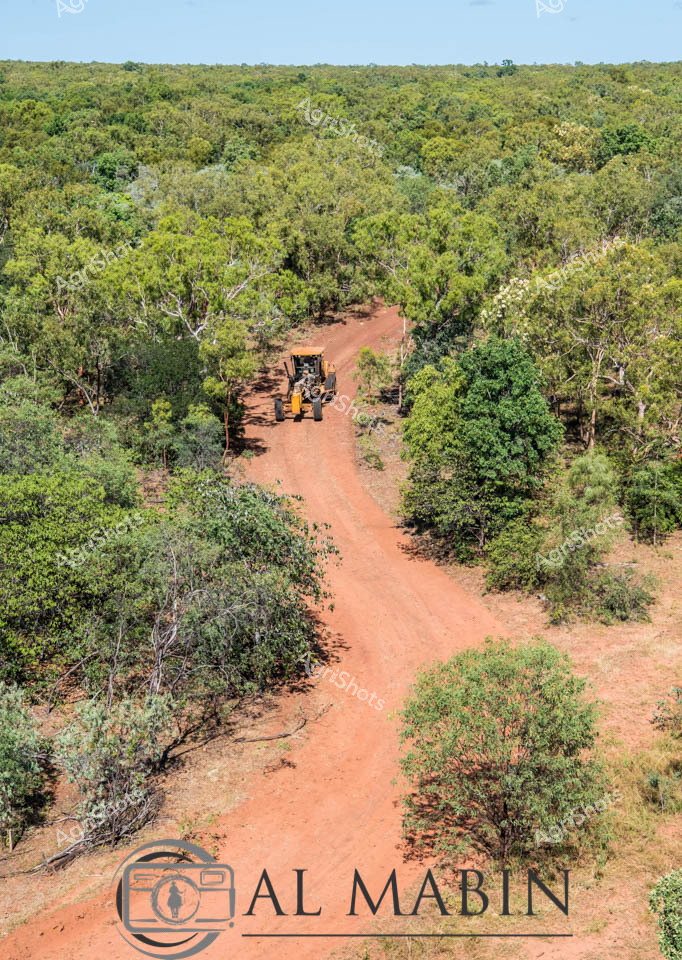
Golden sunlight bathes a rugged dirt track cutting through dense Australian bushland, revealing the robust machinery of rural infrastructure maintenance. A yellow motor grader navigates the rust-red earth, meticulously maintaining the station access road that winds through a landscape of muted greens and ochre tones. Eucalyptus and acacia trees crowd the road's edges, their variegated foliage creating a textured backdrop that speaks to the resilience of the Northern Territory's landscape. The grader's methodical progress represents the essential work of station management, ensuring vital transport routes remain passable through challenging terrain. Dust clouds rise subtly behind the machine, a testament to the dry season's grip on this remote agricultural region. The image captures the quiet determination of rural infrastructure work, where every carefully graded meter of road represents connection and survival in Australia's vast, unforgiving interior. Image

Golden sunlight bathes a rugged dirt track cutting through dense Australian bushland, revealing the robust machinery of rural infrastructure maintenance. A yellow motor grader navigates the rust-red earth, meticulously maintaining the station access road that winds through a landscape of muted greens and ochre tones. Eucalyptus and acacia trees crowd the road's edges, their variegated foliage creating a textured backdrop that speaks to the resilience of the Northern Territory's landscape. The grader's methodical progress represents the essential work of station management, ensuring vital transport routes remain passable through challenging terrain. Dust clouds rise subtly behind the machine, a testament to the dry season's grip on this remote agricultural region. The image captures the quiet determination of rural infrastructure work, where every carefully graded meter of road represents connection and survival in Australia's vast, unforgiving interior.
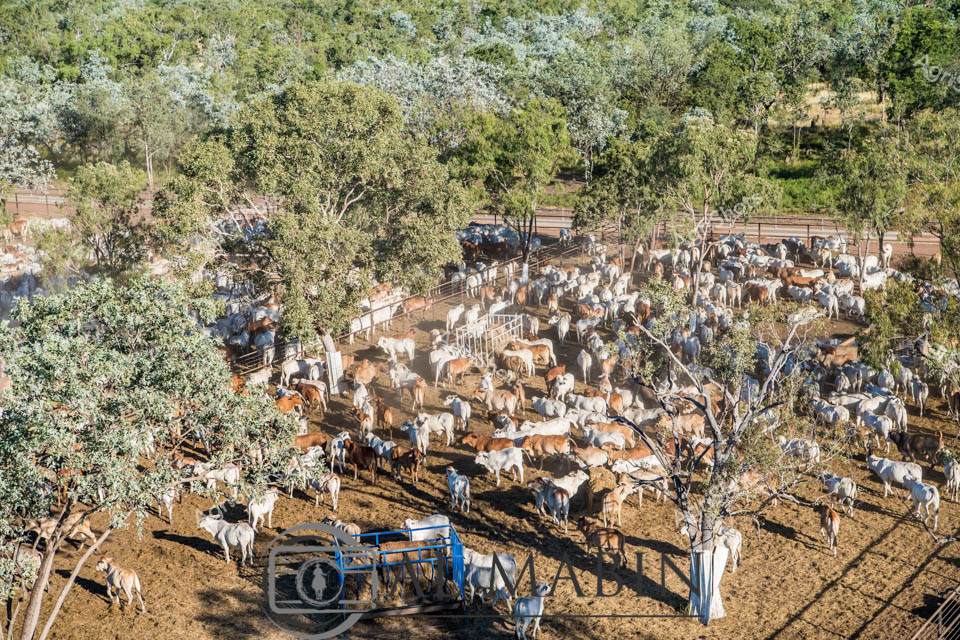
Brahman cattle crowd the shaded stockyards of a Northern Territory cattle station, their pale grey and light brown hides gleaming under the harsh midday sun. Scattered gum trees cast dappled shadows across the dusty paddock, providing intermittent relief from the intense tropical heat. The blue and white cattle yards create a geometric contrast against the rugged bushland, with wooden rails and gates defining the gathering space for this robust herd of heat-tolerant cattle. Brahman breeds, renowned for their distinctive humped shoulders and loose skin, stand clustered together, their resilient bodies testament to generations of adaptation to Australia's challenging northern landscapes. A water trough and feeding station anchors the scene, highlighting the careful management of livestock in this remote pastoral setting. The image captures the raw beauty of Australian cattle farming - a delicate balance of animal husbandry, environmental endurance, and agricultural expertise playing out against a backdrop of expansive, sun-drenched wilderness. Image

Brahman cattle crowd the shaded stockyards of a Northern Territory cattle station, their pale grey and light brown hides gleaming under the harsh midday sun. Scattered gum trees cast dappled shadows across the dusty paddock, providing intermittent relief from the intense tropical heat. The blue and white cattle yards create a geometric contrast against the rugged bushland, with wooden rails and gates defining the gathering space for this robust herd of heat-tolerant cattle. Brahman breeds, renowned for their distinctive humped shoulders and loose skin, stand clustered together, their resilient bodies testament to generations of adaptation to Australia's challenging northern landscapes. A water trough and feeding station anchors the scene, highlighting the careful management of livestock in this remote pastoral setting. The image captures the raw beauty of Australian cattle farming - a delicate balance of animal husbandry, environmental endurance, and agricultural expertise playing out against a backdrop of expansive, sun-drenched wilderness.
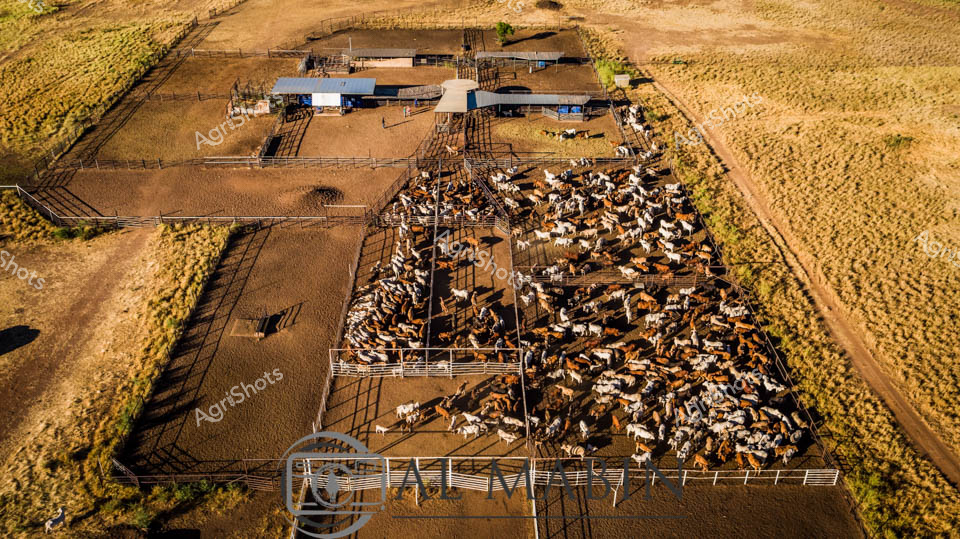
Aerial view of a sprawling cattle station in Western Australia's rugged Kimberley region, captured in the golden light of late afternoon. A dense cluster of Brahman cattle - recognizable by their distinctive humps and light-colored hides - crowd the meticulously designed livestock yards, their bodies creating a mottled tapestry of browns, whites, and greys. The surrounding landscape reveals the harsh beauty of the Australian outback, with dry grasslands and packed earth stretching to the horizon, punctuated by the station's blue-roofed buildings and intricate network of steel cattle yards and fencing.

The complex yard system demonstrates sophisticated cattle management techniques, with carefully engineered lanes and holding pens that allow for efficient mustering and movement of the herd. Shadows stretch long across the paddock, highlighting the geometric precision of the agricultural infrastructure against the organic, shifting mass of cattle. This snapshot encapsulates the scale and complexity of modern pastoral operations in one of Australia's most challenging and productive agricultural regions, where generations of expertise meet cutting-edge station management. Image

Aerial view of a sprawling cattle station in Western Australia's rugged Kimberley region, captured in the golden light of late afternoon. A dense cluster of Brahman cattle - recognizable by their distinctive humps and light-colored hides - crowd the meticulously designed livestock yards, their bodies creating a mottled tapestry of browns, whites, and greys. The surrounding landscape reveals the harsh beauty of the Australian outback, with dry grasslands and packed earth stretching to the horizon, punctuated by the station's blue-roofed buildings and intricate network of steel cattle yards and fencing. The complex yard system demonstrates sophisticated cattle management techniques, with carefully engineered lanes and holding pens that allow for efficient mustering and movement of the herd. Shadows stretch long across the paddock, highlighting the geometric precision of the agricultural infrastructure against the organic, shifting mass of cattle. This snapshot encapsulates the scale and complexity of modern pastoral operations in one of Australia's most challenging and productive agricultural regions, where generations of expertise meet cutting-edge station management.
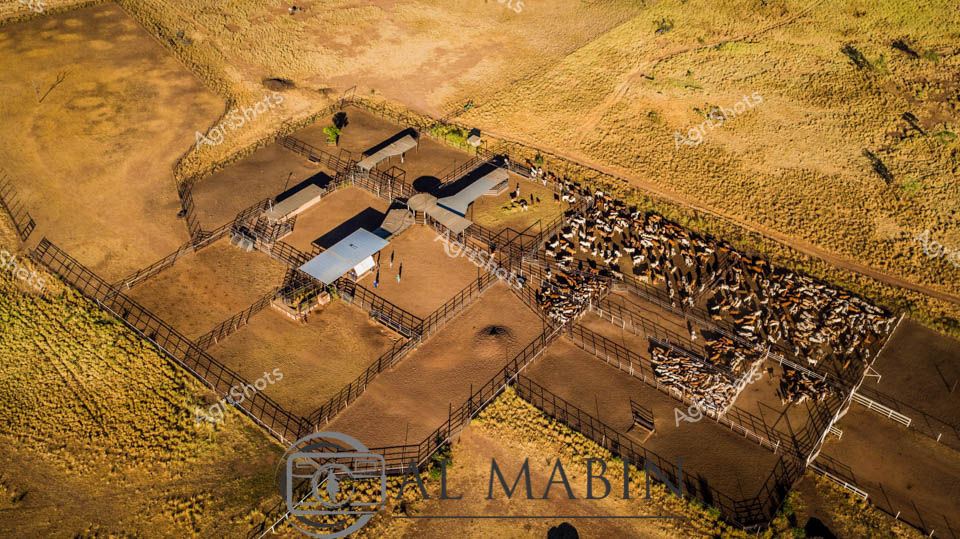
Aerial vista of a vast cattle station in Western Australia's rugged Kimberley region, captured in the golden light of late afternoon. Precision-engineered cattle yards stretch across the arid landscape, a geometric marvel of steel fencing and strategically positioned holding pens. A dense herd of Brahman cattle, their distinctive humped silhouettes and light-colored coats marking them as perfectly adapted to the harsh environment, crowd into the right-side enclosure. The surrounding landscape reveals a patchwork of ochre earth and sun-bleached grasses, telling the story of resilience in one of Australia's most challenging agricultural terrains. Metallic shed roofs glint against the earthy backdrop, providing essential shelter and infrastructure for cattle management operations. This meticulously planned agricultural infrastructure represents generations of pastoral expertise, showcasing how modern Australian cattle stations balance traditional farming techniques with sophisticated land management practices. Image

Aerial vista of a vast cattle station in Western Australia's rugged Kimberley region, captured in the golden light of late afternoon. Precision-engineered cattle yards stretch across the arid landscape, a geometric marvel of steel fencing and strategically positioned holding pens. A dense herd of Brahman cattle, their distinctive humped silhouettes and light-colored coats marking them as perfectly adapted to the harsh environment, crowd into the right-side enclosure. The surrounding landscape reveals a patchwork of ochre earth and sun-bleached grasses, telling the story of resilience in one of Australia's most challenging agricultural terrains. Metallic shed roofs glint against the earthy backdrop, providing essential shelter and infrastructure for cattle management operations. This meticulously planned agricultural infrastructure represents generations of pastoral expertise, showcasing how modern Australian cattle stations balance traditional farming techniques with sophisticated land management practices.
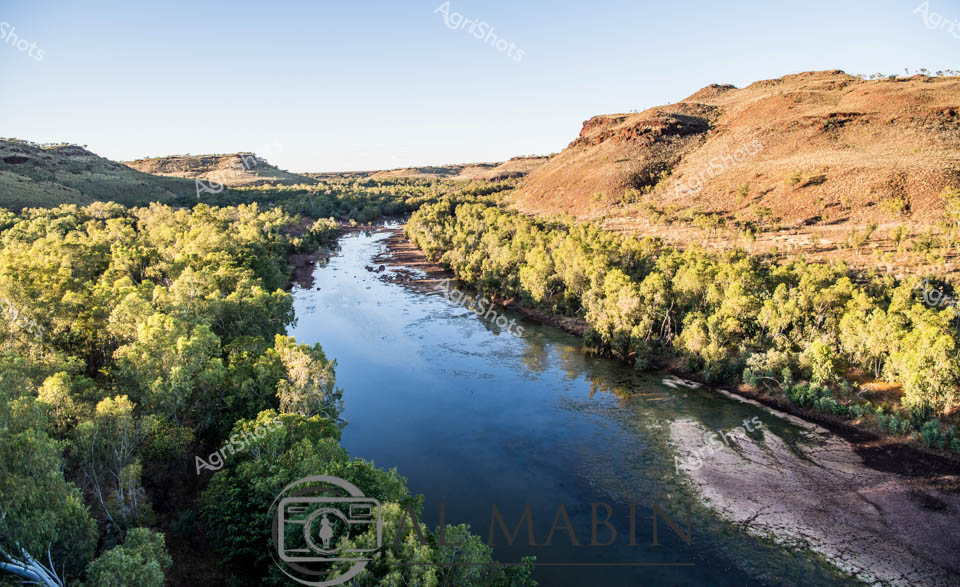
Northwest Western Australian river system winds through a golden-hued landscape of rocky escarpments and dense eucalyptus woodland. The azure waters of the river slice between rust-colored rocky banks, creating a serpentine pathway through an ancient landscape. Sunlight bathes the scene in warm tones, highlighting the lush riverine vegetation and casting long shadows across the weathered terrain. Dense stands of river gums and paperbarks crowd the waterway, their pale green and yellow foliage providing a stark contrast to the arid rocky hillsides. This timeless vista captures the remarkable resilience of Australian riparian ecosystems, where life clusters tenaciously around water sources in an otherwise harsh environment. The panoramic view reveals the intricate relationship between water, vegetation, and geological formations that define the continent's interior landscapes, showcasing the raw beauty of Western Australia's remote pastoral regions. Image

Northwest Western Australian river system winds through a golden-hued landscape of rocky escarpments and dense eucalyptus woodland. The azure waters of the river slice between rust-colored rocky banks, creating a serpentine pathway through an ancient landscape. Sunlight bathes the scene in warm tones, highlighting the lush riverine vegetation and casting long shadows across the weathered terrain. Dense stands of river gums and paperbarks crowd the waterway, their pale green and yellow foliage providing a stark contrast to the arid rocky hillsides. This timeless vista captures the remarkable resilience of Australian riparian ecosystems, where life clusters tenaciously around water sources in an otherwise harsh environment. The panoramic view reveals the intricate relationship between water, vegetation, and geological formations that define the continent's interior landscapes, showcasing the raw beauty of Western Australia's remote pastoral regions.