Results for “botany”
 Image
Image
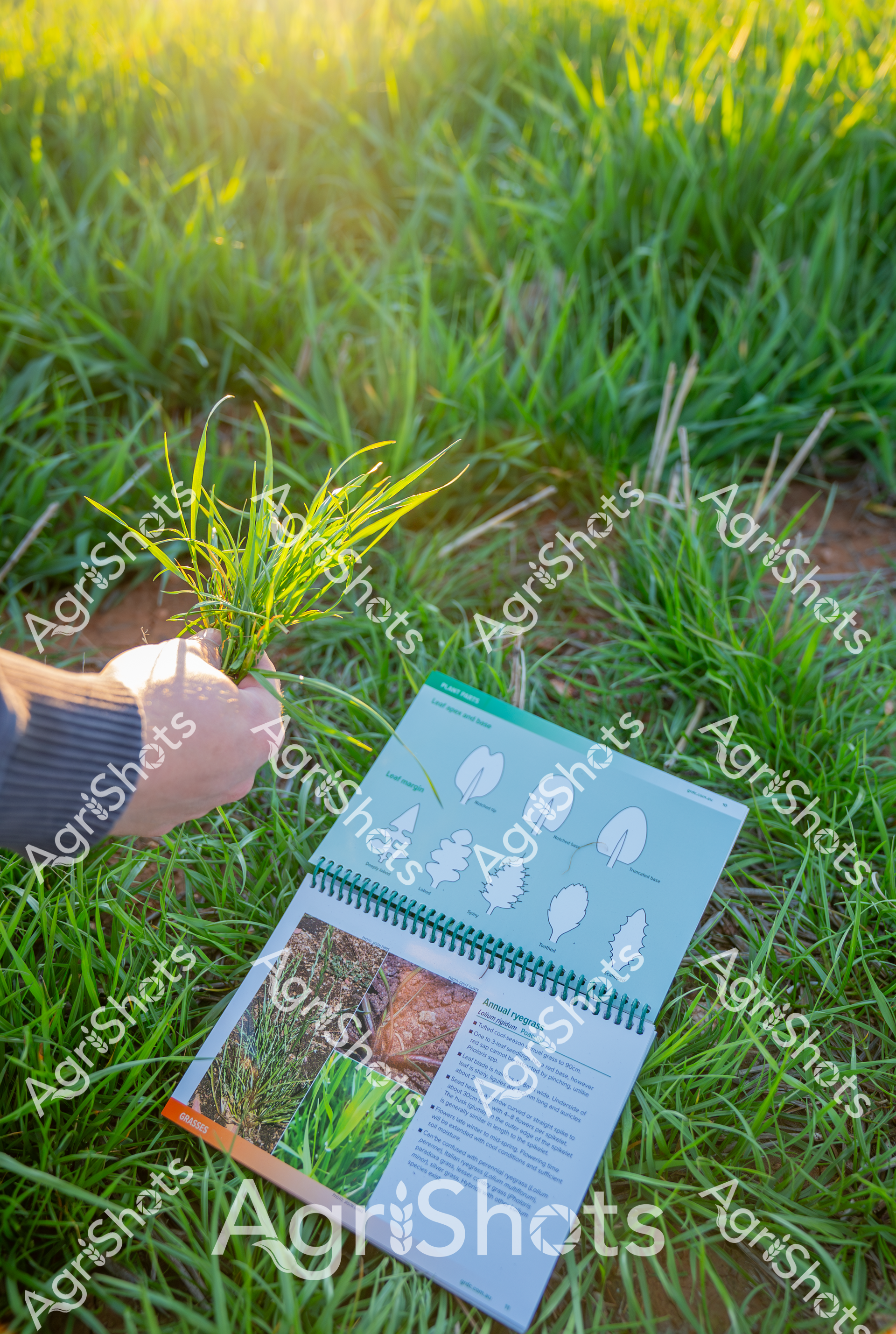
A hand holding a tuft of green ryegrass against a background of lush grass, accompanied by an informative identification guide. The blue-covered book displays leaf silhouettes and appears to be a weed identification resource from the Riverina region of New South Wales, highlighting agricultural research and vegetation management.
 Image
Image
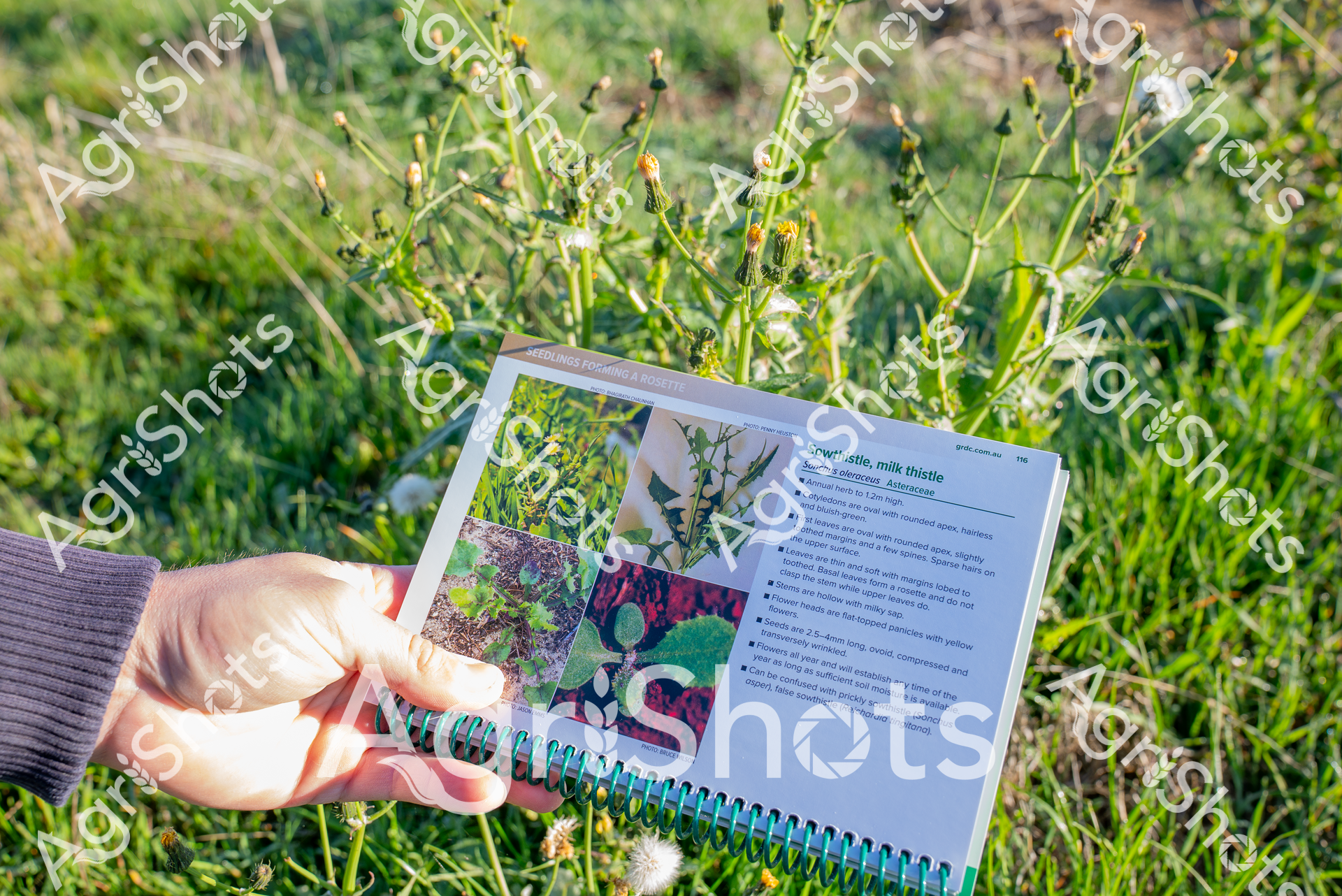
A hand holds an open informational book about sowthistle, with wild grassy vegetation in the background. The page details characteristics of the milk thistle plant, set against a natural green landscape. The image appears to be from an agricultural or botanical field guide, likely focusing on weed identification in the New South Wales Riverina region.
 Image
Image
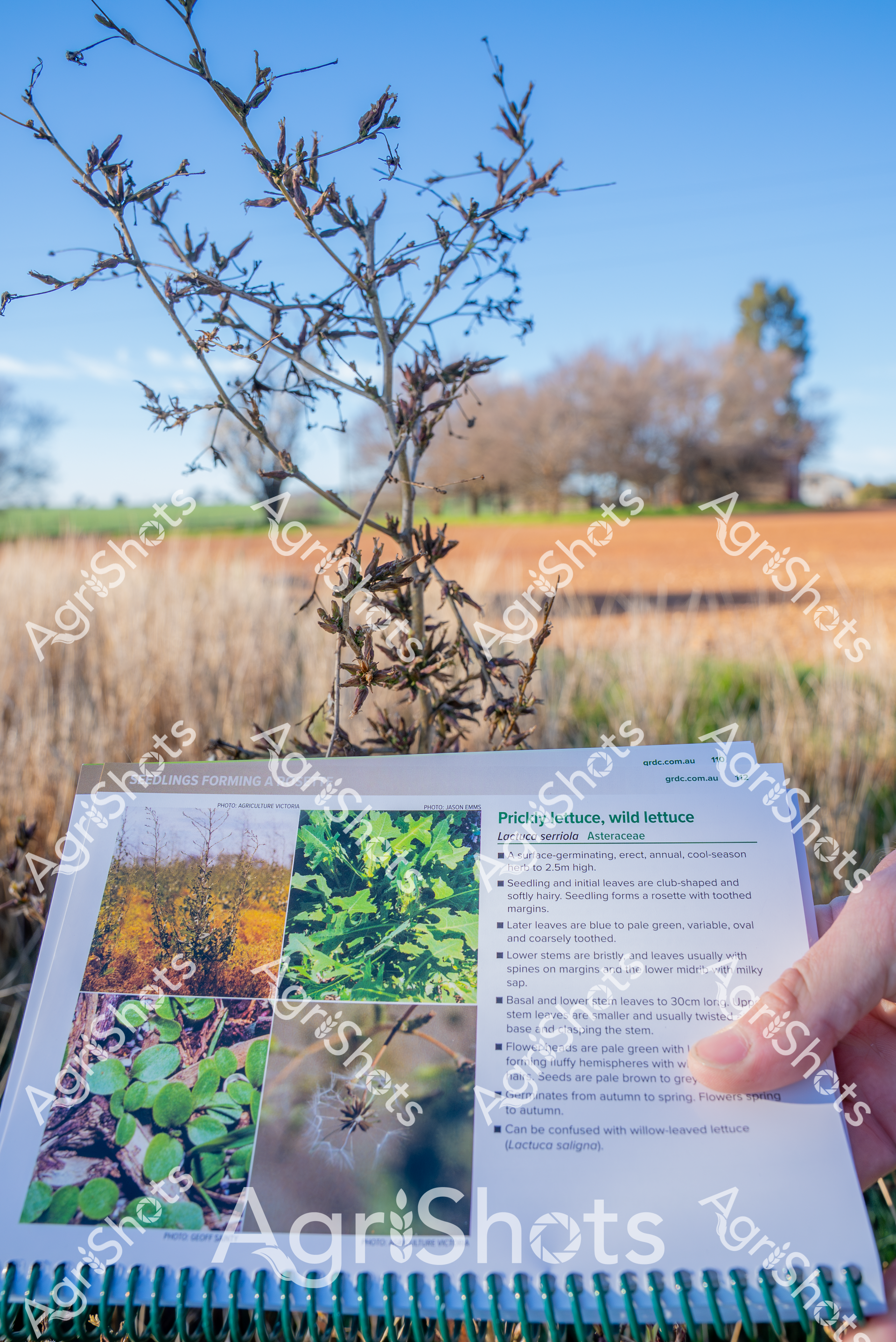
A detailed guide to prickly lettuce (Lactuca serriola) displayed in an agricultural field setting, featuring a close-up of the plant's sparse, spiny branches against a backdrop of golden grass and blue sky. The informative page shows multiple images of the weed at different growth stages, providing comprehensive identification information for agricultural professionals and researchers.
 Image
Image
Red sorrel (Rumex acetosella), a slender perennial herb, grows in a clustered pattern across nutrient-poor, acidic soils. The plant features distinctive green lance-shaped leaves and spreads via rhizomatous root systems, forming dense stands in pastures and disturbed ground. This informative botanical guide showcases the plant's key identifying characteristics, including leaf shape, growth habit, and seed structure.
 Image
Image
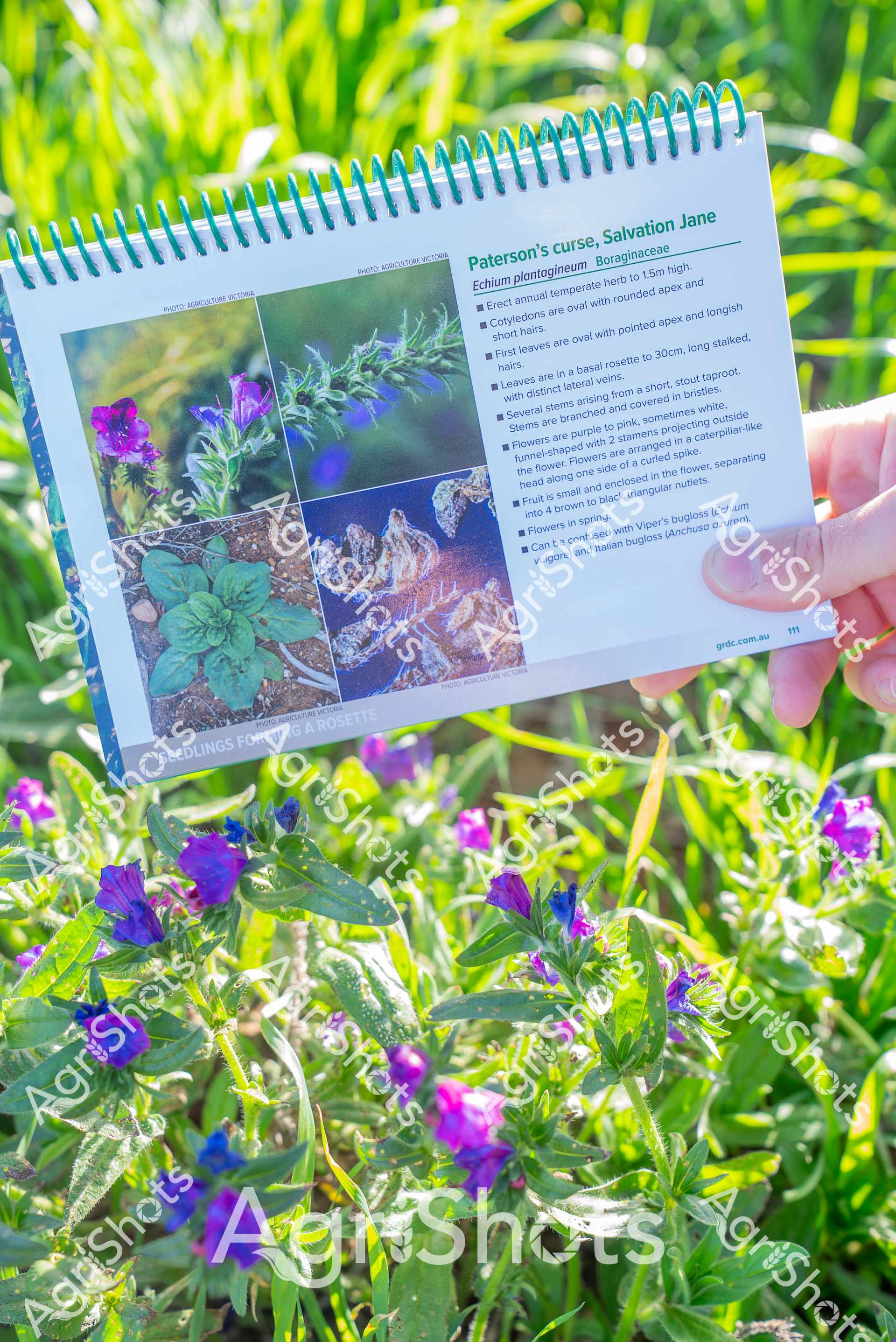
A detailed botanical information card for Paterson's curse (Echium plantagineum) is held in front of vibrant purple and blue wildflowers growing in a lush green field. The card provides scientific details about the invasive plant species, including its physical characteristics, flowering patterns, and botanical classification. The background showcases the plant's natural habitat with dense green foliage and blooming flowers.
 Image
Image
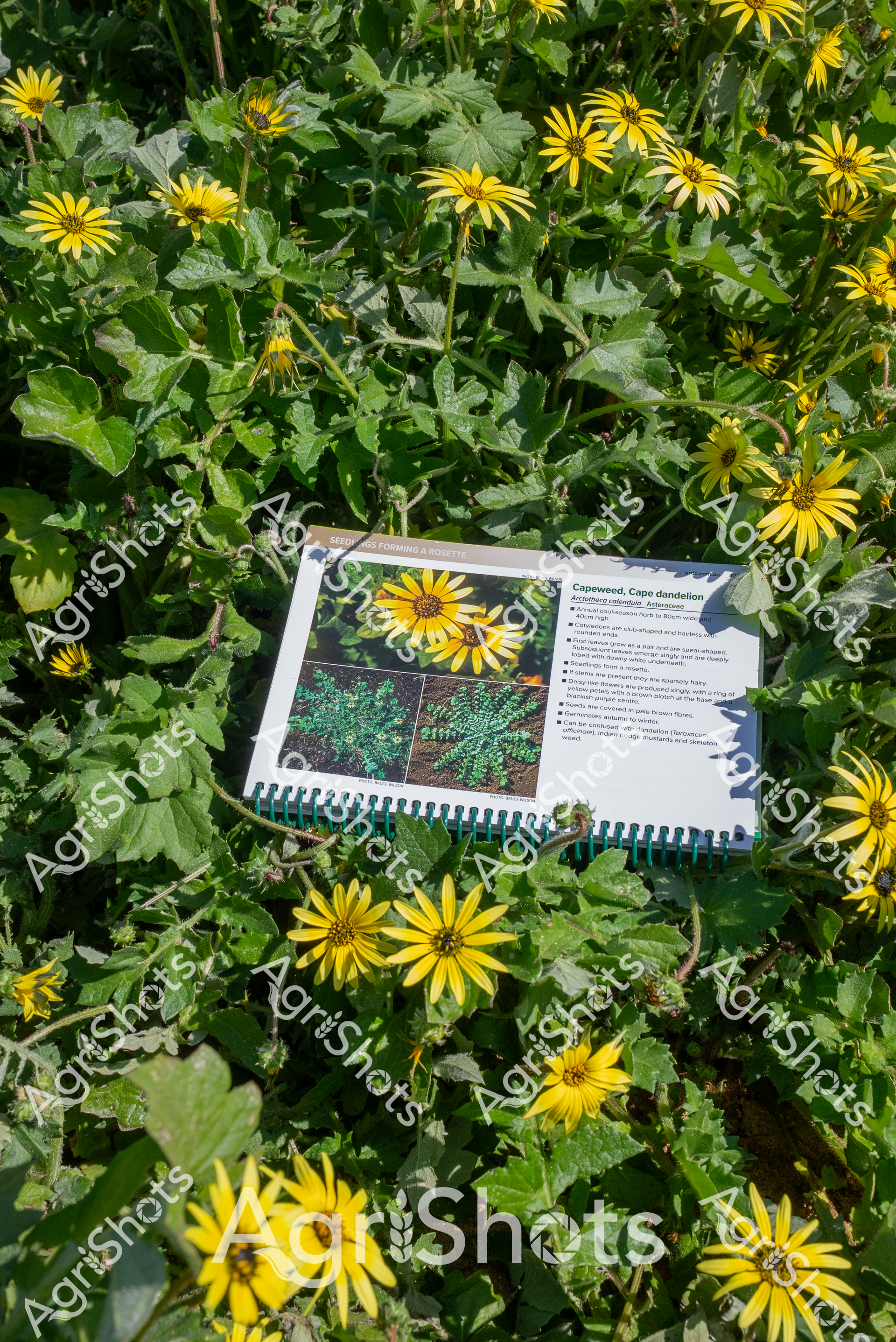
Capeweed (Cape dandelion) showcases bright yellow daisy-like flowers amidst vibrant green leaves in a dense agricultural setting. This informative identification guide from the GRDC Weeds Book provides details about the plant's characteristics, highlighting its prevalence in Western Australia's Wheatbelt region. The image captures the plant's distinctive appearance, with multiple blooming flowers surrounding an educational reference page.
 Image
Image
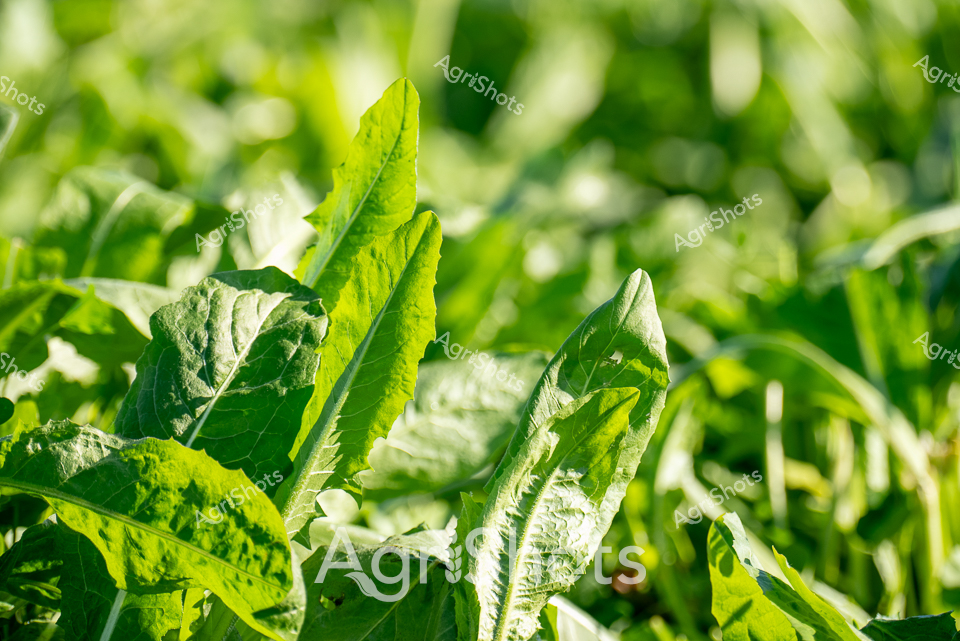
Emerald chicory leaves burst with vitality under bright sunlight, their intricate venation and crisp green surfaces revealing the vibrant agricultural potential of New South Wales pastures. Each leaf curves and twists with organic complexity, showcasing the robust nature of this nutritious forage crop cultivated across Australia's rich agricultural landscapes. The close-up perspective highlights the delicate yet resilient texture of the chicory plant, with its pronounced leaf structures suggesting strength and adaptability in challenging growing conditions. Subtle variations of lime and deep forest green create a nuanced palette that speaks to the plant's health and photosynthetic efficiency. This detailed view captures the microscopic world of agricultural botany, where every leaf represents potential nutrition for livestock and a critical component of sustainable pasture management. The image embodies the precision and care inherent in modern Australian agricultural practices, where every leaf tells a story of careful cultivation and environmental stewardship.
 Image
Image
Vibrant emerald chicory leaves surge with life, their serrated edges catching golden sunlight in this intimate agricultural close-up. Lush green foliage displays intricate vein patterns and textural variations, ranging from bright lime to deep forest hues, revealing the rich botanical detail of this robust crop. Captured with precision, likely in a cool morning light typical of New South Wales agricultural landscapes, the image celebrates the verdant potential of chicory as a valuable pasture and fodder crop. Each leaf demonstrates the plant's structural complexity - sharp-pointed, slightly crinkled, with a robust vitality that speaks to its resilience in Australian farming systems. The shallow depth of field creates a dreamy, immersive quality, drawing viewers into the microscopic world of agricultural botany and highlighting the intricate beauty of this versatile plant. This photograph encapsulates the essence of chicory's agricultural significance, showcasing its potential as a nutritious crop for livestock feed and soil health in rural Australian ecosystems.
 Image
Image
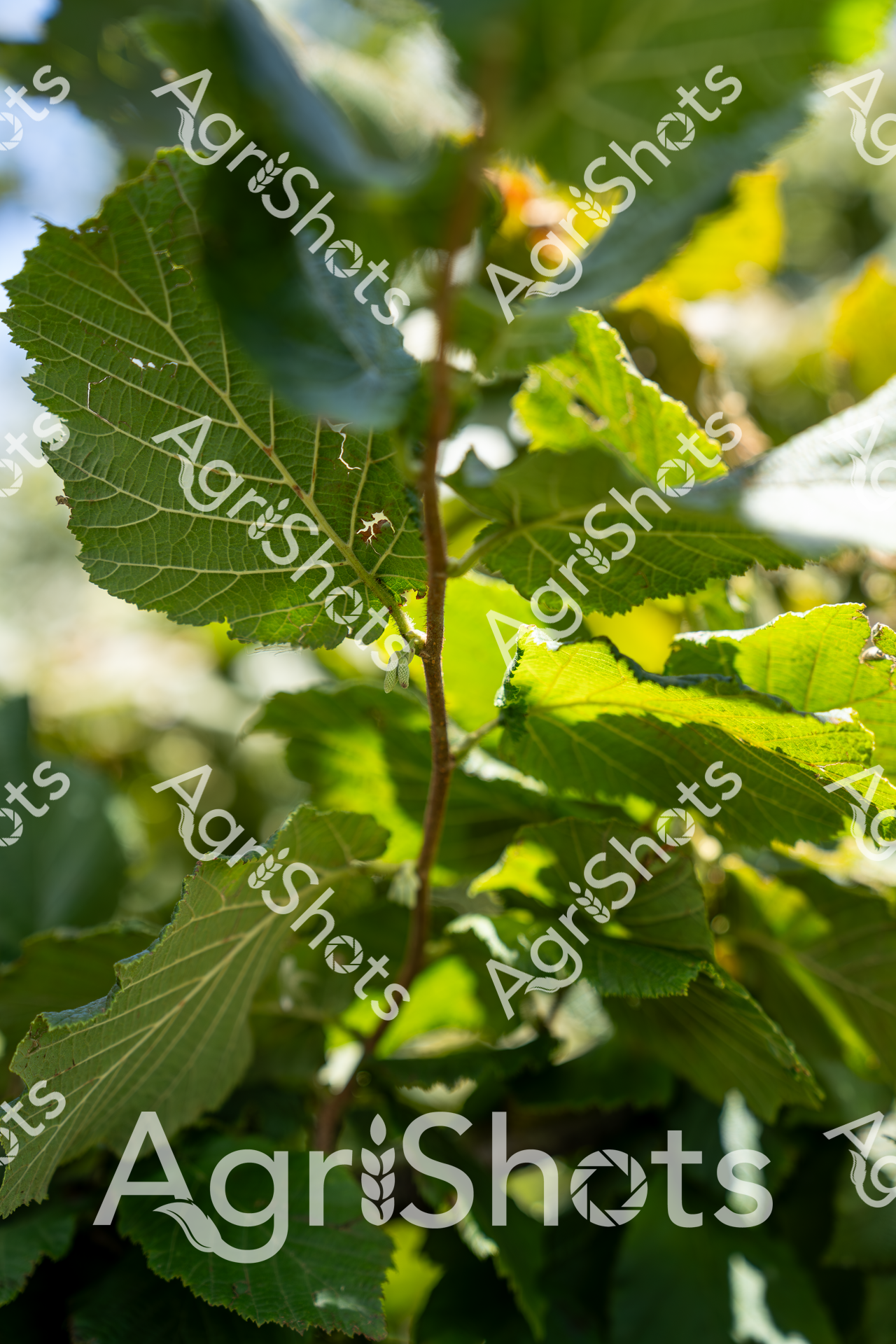
Close-up of vibrant green hazelnut leaves bathed in soft, dappled sunlight, revealing the intricate network of leaf veins and serrated edges. The lush foliage displays a rich gradient of green hues, from deep emerald to bright lime, highlighting the plant's healthy growth and vitality during the peak growing season. Delicate leaf textures are beautifully rendered, with subtle variations in light creating depth and dimension across the plant's canopy. Small hints of budding growth and the slender branch structure suggest this is a young hazelnut tree or shrub in an orchard or agricultural setting. The crisp, detailed macro perspective invites viewers to appreciate the microscopic details of agricultural botany, showcasing the meticulous care and natural beauty of crop cultivation. Soft background blur hints at a broader landscape, emphasizing the focused, intimate nature of this botanical portrait.