Results for “blue workshirts”
 Image
Image
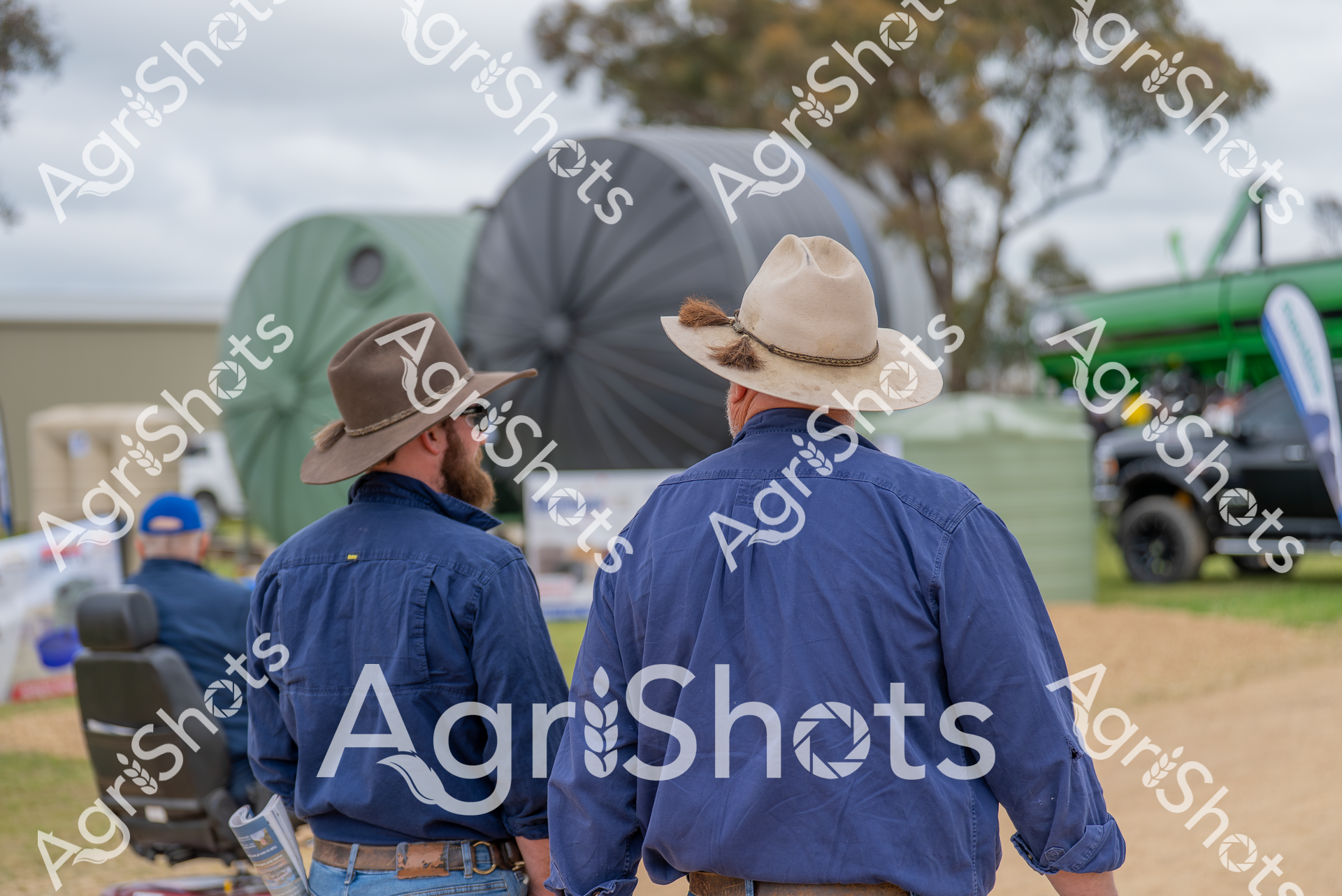
Two men in blue shirts and wide-brimmed hats stand with their backs to the camera, overlooking agricultural equipment at what appears to be the Henty Field Days in rural New South Wales. The scene captures the essence of Australian agricultural exhibitions, with large machinery and tents visible in the background under an overcast sky.
 Image
Image
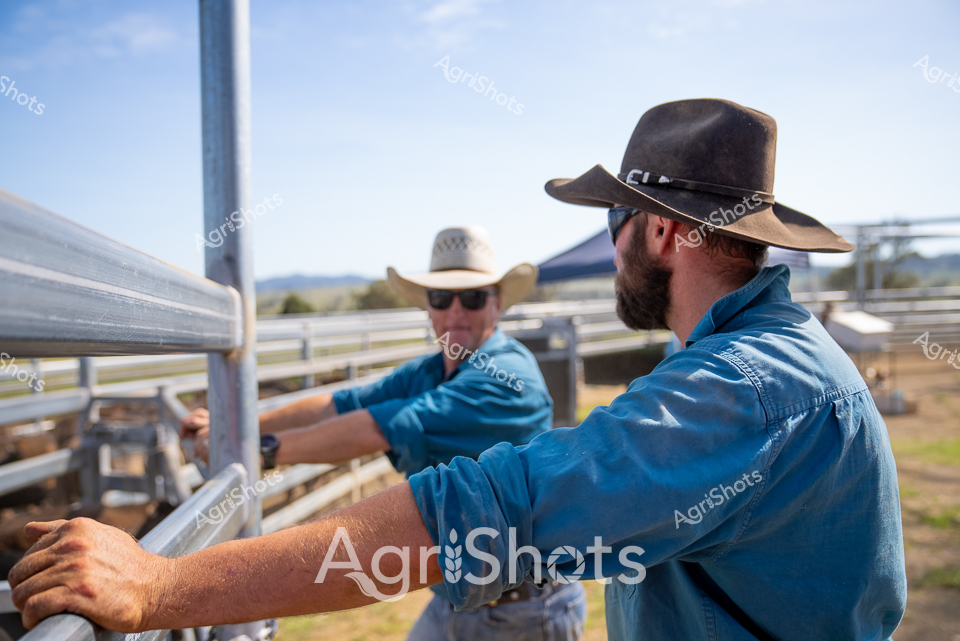
Dust motes dance in the crisp summer light of New England, New South Wales, as two seasoned farmhands work the cattle yards with practiced precision. Wearing matching azure blue workshirts and weathered wide-brimmed hats, they lean against the gleaming steel rails of the cattle crush, their body language speaking of decades of collective agricultural experience. Sunlight glints off sunglasses and highlights the rough texture of work-hardened hands gripping the metal fence, while mountains softly undulate in the distant background. The scene pulses with the quiet rhythm of rural preparation - a moment of concentrated focus before handling young calves, capturing the understated skill of Australian livestock management. Their side-by-side stance suggests seamless teamwork, each movement deliberate and synchronized, embodying the unspoken communication that defines successful farming partnerships. The clean lines of the modern cattle handling equipment contrast beautifully with the rugged pastoral landscape, a testament to the blend of traditional knowledge and contemporary agricultural innovation.
 Image
Image
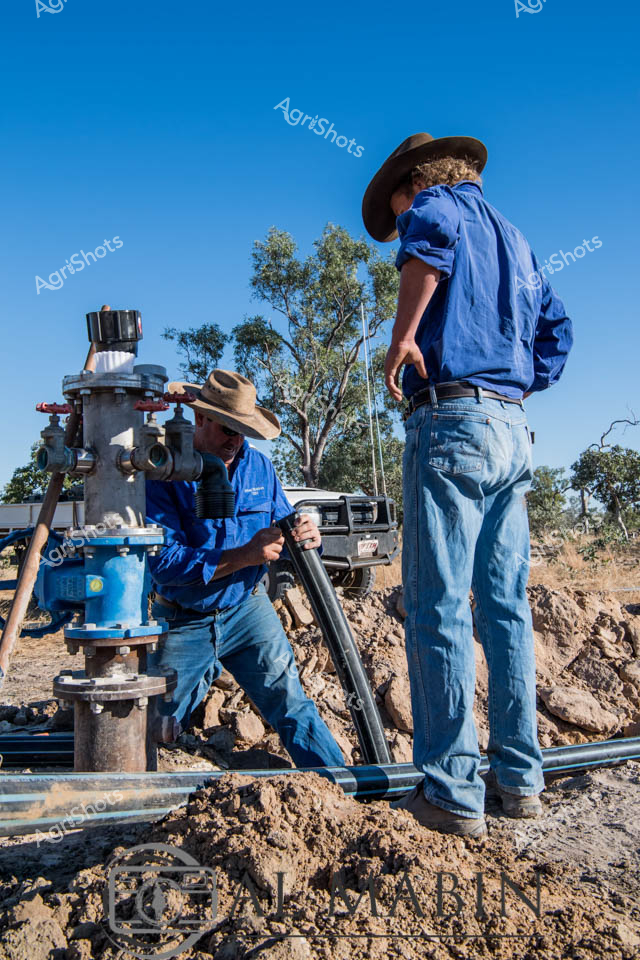
Remote Queensland bore maintenance under brilliant azure skies: two station workers in classic blue workshirts and wide-brimmed sun hats carefully inspect and manage critical water infrastructure. One worker crouches intently near a substantial blue industrial pump mechanism, manipulating a black poly pipe section, while his colleague stands observing the technical work. The rocky, ruddy earth surrounding the installation speaks to the harsh, unforgiving landscape of the outback, with sparse eucalyptus trees offering minimal shade against the intense midday sunlight. Their sturdy denim work pants, practical boots, and focused postures reveal generations of agricultural expertise - understanding that reliable water supply is the lifeblood of remote cattle stations. This scene captures the essential, unglamorous yet crucial work of maintaining rural water systems, where precision and resilience are as important as the heavy-duty equipment itself. The image radiates a sense of quiet competence, typical of skilled station hands who keep isolated properties functioning through meticulous attention to infrastructure.
 Image
Image
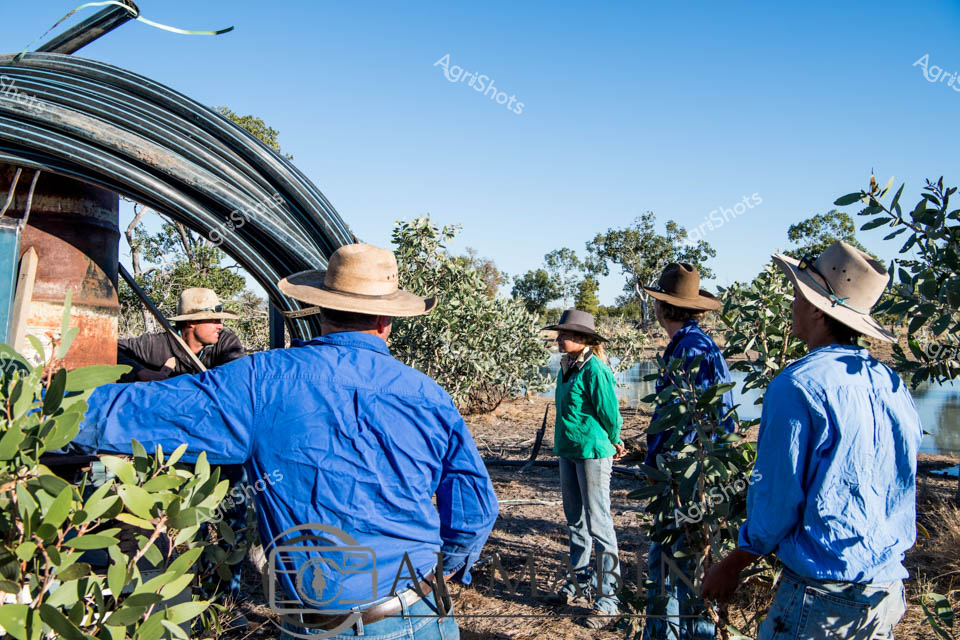
Queensland cattle station workers cluster around a water infrastructure setup, their blue workshirts and wide-brimmed akubra hats creating a uniform silhouette against the sparse, sun-drenched landscape. A curved metal bore structure arches overhead, with black poly pipes suggesting a complex water reticulation system for remote pastoral operations. The workers, positioned amid sparse grey-green eucalyptus and native scrub, appear focused on equipment maintenance or operational discussions, their body language suggesting collaborative problem-solving in a challenging agricultural environment. Bright mid-morning sunlight casts sharp shadows, highlighting the rugged terrain and highlighting the practical, hard-wearing nature of station work. A green-shirted worker provides a visual counterpoint to the predominantly blue workplace attire, breaking the visual monotony of the arid backdrop. The scene captures the essence of Australian agricultural resilience - workers managing critical water infrastructure in a landscape that demands constant attention and technical skill. The waterline infrastructure, poly pipes, and strategic positioning of the workers communicate the precision and planning required in remote cattle station management, where water supply can mean the difference between survival and loss in harsh pastoral conditions.
 Image
Image
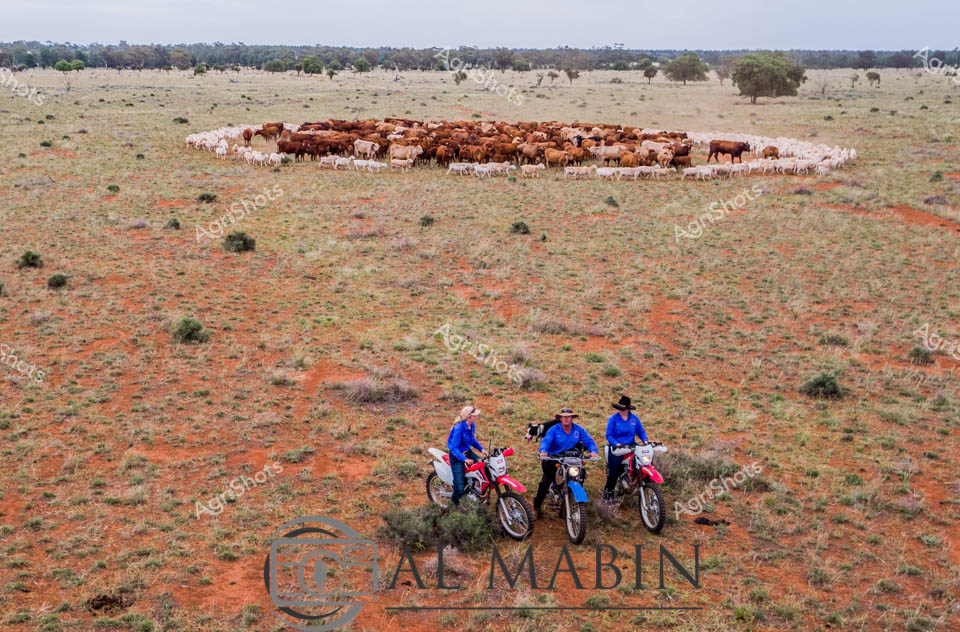
Merino and Dorper sheep form a tight circular mob across rusty red earth, surrounded by sparse eucalyptus woodlands under a slate-grey NSW western plains sky. Three stockmen in brilliant blue workshirts and wide-brimmed hats patrol the herd's perimeter on red and white Yamaha trail bikes, carefully maintaining the livestock's formation during mid-morning mustering. The landscape speaks of resilience - scattered saltbush and hardy grasses punctuate the oxidized soil, while mature trees provide occasional windbreak against the wide-open horizon. These riders demonstrate generations of Australian agricultural skill, using motorcycles to efficiently manage stock across challenging terrain where traditional horse and dog mustering would consume significantly more time and energy. The scene captures the precision and adaptability of modern pastoral work, where technology and traditional livestock management techniques merge seamlessly under the vast, unforgiving outback sky. Every element - from the tightly clustered animals to the strategically positioned riders - communicates a choreographed dance of agricultural expertise unique to Australian rural culture.
 Image
Image
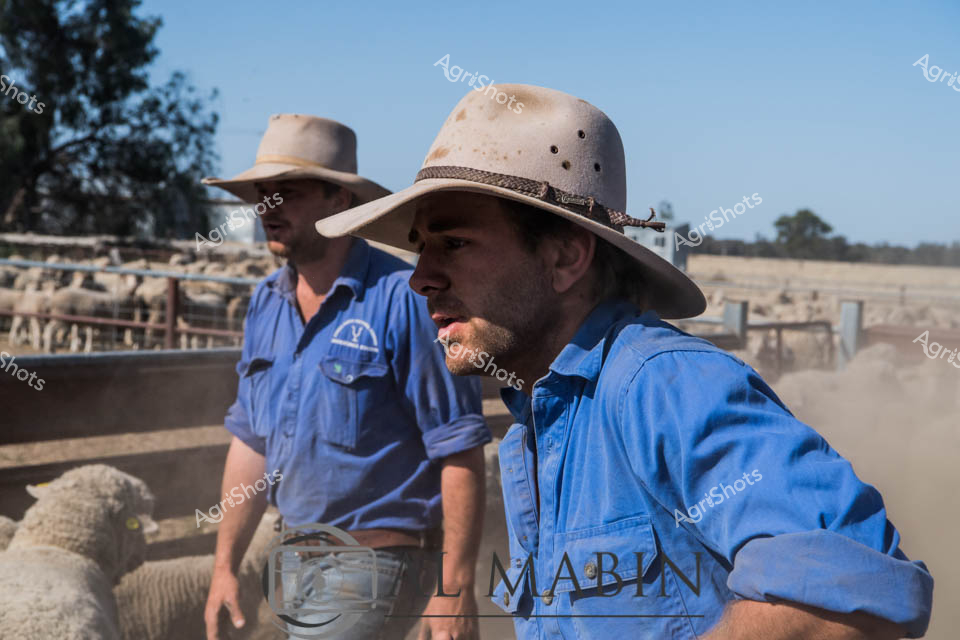
Merino wool producers stand resolute in the dusty yards of a New South Wales sheep station, their blue workshirts and wide-brimmed sun hats marking them as seasoned agricultural professionals. Swirling dry season dust rises around weathered wooden sheep yards, where a flock of robust Merino ewes and lambs await processing. The workers, positioned with quiet concentration, represent generations of Australian pastoral expertise - their postures and attire speaking to the demanding physical nature of livestock management. Soft beige felt hats provide critical sun protection, while rolled-up shirtsleeves suggest active, hands-on work in the unrelenting rural landscape. The scene captures the quintessential Australian agricultural moment - a blend of pragmatic skill, environmental resilience, and deep connection to the land. Muted blues of their uniforms contrast against the pale golden paddock and pale sky, creating a composition that epitomizes the stark beauty of Australian sheep farming.
 Image
Image
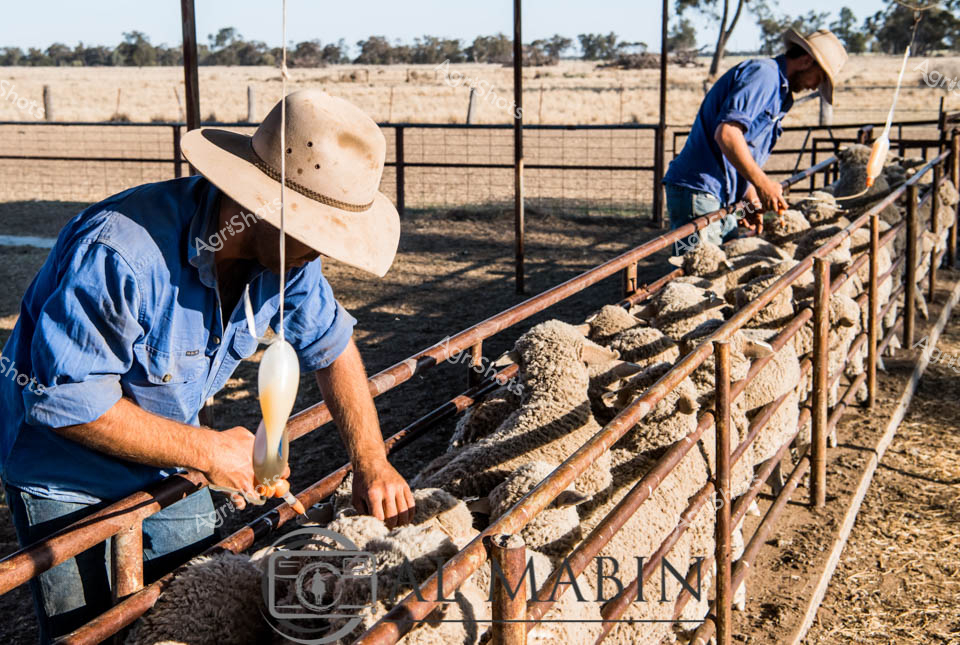
Merino wool producers work diligently in the harsh golden paddocks of rural New South Wales, carefully vaccinating a pen of woolly Merino lambs during shearing season. Wearing classic blue workshirts and wide-brimmed agricultural hats, the stockmen methodically move along the metal livestock yards, administering health treatments to each young sheep. The dry, dusty landscape stretches behind them, punctuated by sparse eucalyptus trees on the distant horizon, capturing the unforgiving yet beautiful Australian pastoral environment. Precise and practiced, one worker handles a vaccination tool while another manages the sheep's movement, their coordinated efforts reflecting generations of agricultural expertise. The lambs, tightly packed within the steel yard rails, represent the backbone of Australia's renowned wool industry - their dense, curling fleeces a testament to careful breeding and meticulous animal husbandry. Warm sunlight casts long shadows across the compacted earth, highlighting the textural details of woolly coats, weathered clothing, and rustic farm infrastructure.
 Image
Image
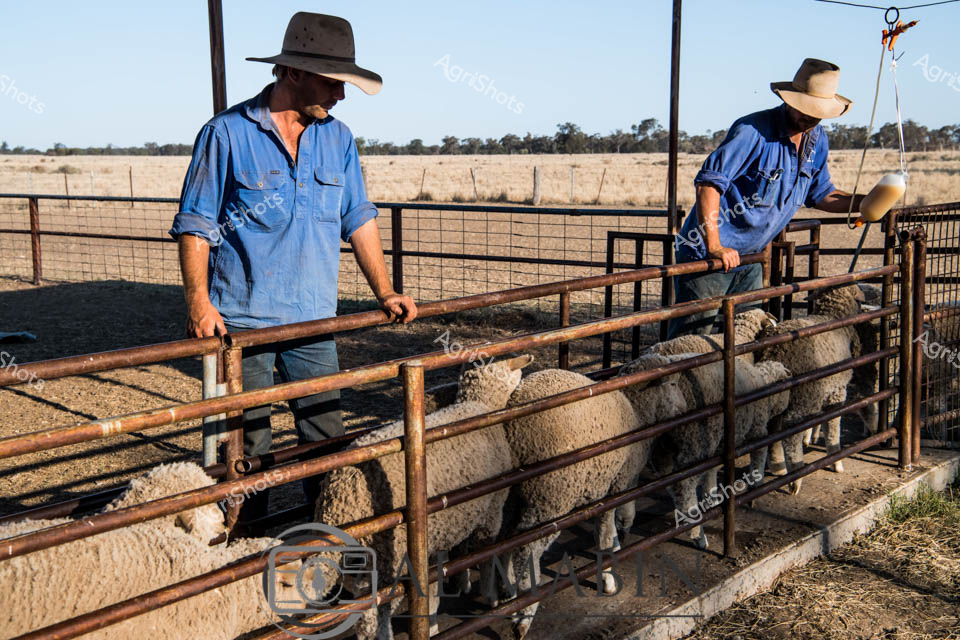
Merino sheep crowd the metal loading yards under the vast, open skies of rural New South Wales. Two farm workers in classic blue workshirts and wide-brimmed sun hats stand vigilant, leaning against rusty steel gates that contain the woolly flock. The golden, dry pasture stretches endlessly in the background, punctuated by distant eucalyptus trees - a quintessential Australian agricultural landscape bathed in harsh midday sunlight. These seasoned farmhands are preparing for livestock management, likely a routine vaccination or health check of the prized Merino sheep. Their weathered hands grip the yards' railings, a testament to generations of pastoral expertise. The sheep - compact, dense-fleeced, and uniform in their robust conditioning - represent the backbone of Australia's renowned wool industry, their soft grey-white coats contrasting against the rusty metalwork and dusty earth. The scene captures the unspoken rhythm of agricultural work: methodical, purposeful, connected to the land. Dust hangs subtly in the air, hinting at the day's heat and the constant movement of livestock, while the carefully constructed yards speak to the precision and care inherent in modern Australian sheep farming.
 Image
Image
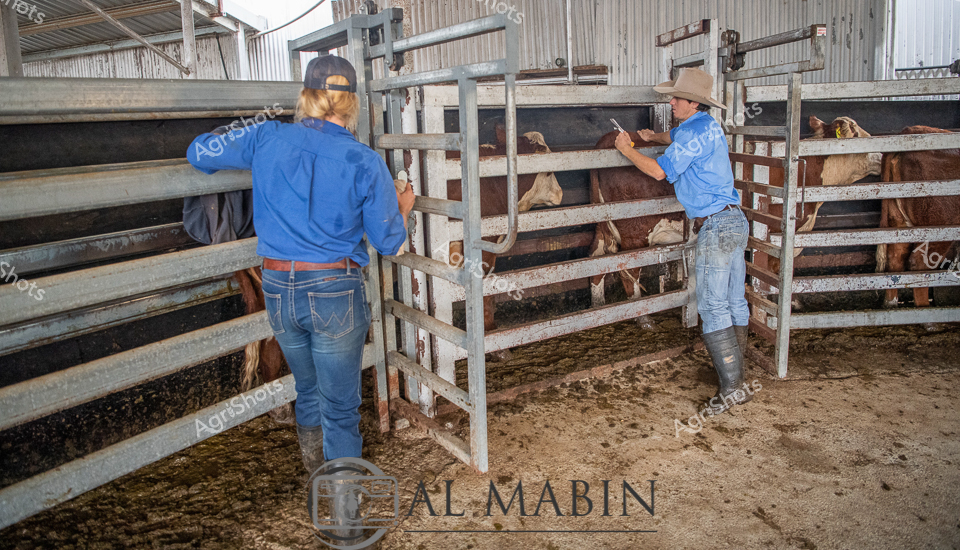
Cattlemen assess a pen of Hereford steers in a steel-framed livestock handling facility, their blue workshirts and denim creating a crisp uniform against the weathered metal infrastructure. One worker wearing a wide-brimmed hat carefully examines the herd, while the other stands ready to assist, both demonstrating the precise, methodical approach of professional cattle management. The sturdy metal gates and solid wooden flooring of the holding pen speak to generations of agricultural engineering designed for animal welfare and efficient stock handling. Rich brown and cream-colored Herefords press against the railings, their muscular frames and distinctive white faces characteristic of this prized beef breed, popular throughout New England's high country. Soft afternoon light filters through the corrugated steel shed, casting subtle shadows and highlighting the textured surfaces of earth, hide, and metal. This scene captures the quiet expertise of Australian livestock professionals, where generations of agricultural knowledge converge in a moment of careful stock assessment.
 Image
Image
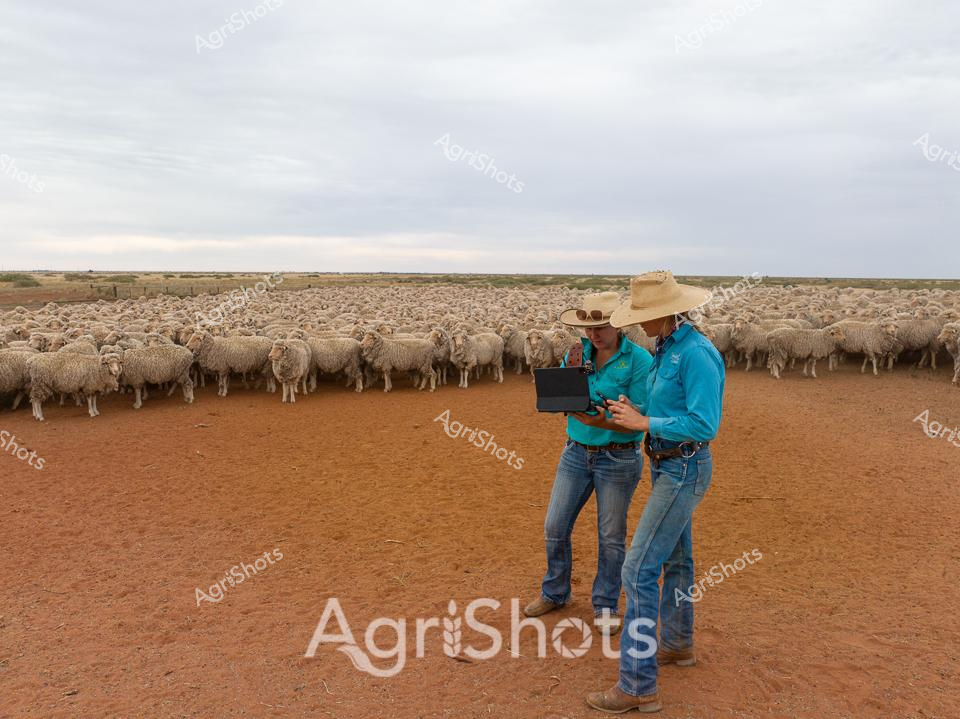
Sunburnt earth cradles a vast flock of Merino sheep, their dense woolly coats gleaming under the pale, overcast sky of rural New South Wales. Two station hands in crisp blue workshirts and wide-brimmed sun hats stand in stark contrast to the rusty red landscape, their postures intent as they collaborate over a digital tablet. The stockmen carefully track and manage the substantial mob, representing the precision of modern agricultural technology integrated with traditional livestock management techniques. Hundreds of sheep cluster tightly, their uniform fleeces creating a textural sea that stretches across the paddock, illustrating the scale of Australian pastoral agriculture. The expansive, flat horizon speaks to the challenging environment of the outback, where careful monitoring and technological support are critical to successful sheep farming. Every element of the scene - from the workers' coordinated attire to the uniformity of the flock - communicates a sense of disciplined, professional rural enterprise.
 ▶ Video
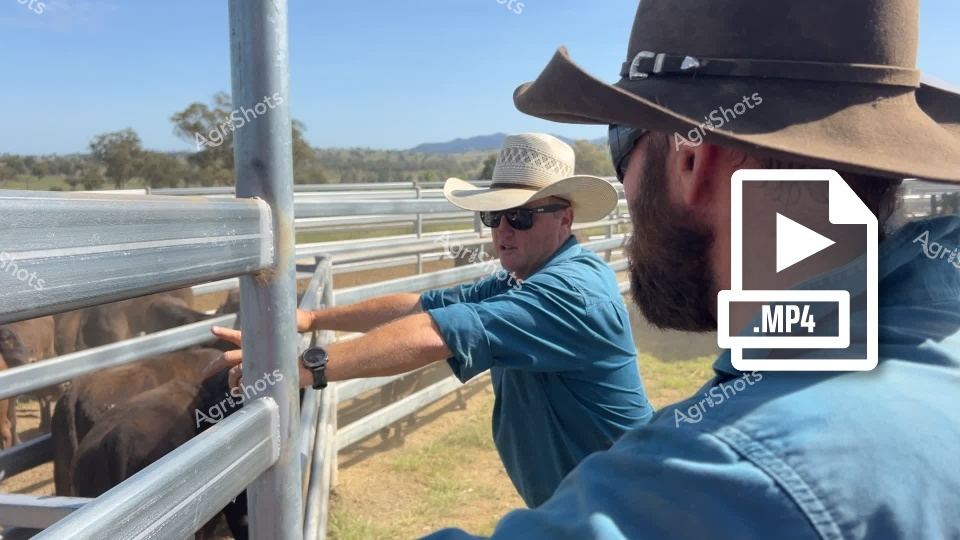
Rural cattle management unfolds on a sun-drenched summer day in the New England region of New South Wales. Two experienced stockmen, clad in blue workshirts and classic wide-brimmed Australian sun hats, work carefully within a modern metal cattle yard, managing a group of premium Wagyu calves. The sturdy steel yard gates gleam in the bright light, providing secure containment while allowing clear visibility across the golden grasslands and distant mountain ranges. One stockman, wearing sunglasses to shield against the intense Australian sunlight, reaches out to guide or inspect the dark-coated cattle, demonstrating the precise and calm approach of professional livestock handlers. The raw, unfiltered nature of agricultural work is captured in this moment - highlighting the skill, concentration, and connection between farmers and the livestock in a quintessential Australian rural landscape. The scene radiates a sense of competence, tradition, and the ongoing rhythms of cattle management in one of Australia's premier beef-producing regions.