Results for “blue shirts”
 Image
Image
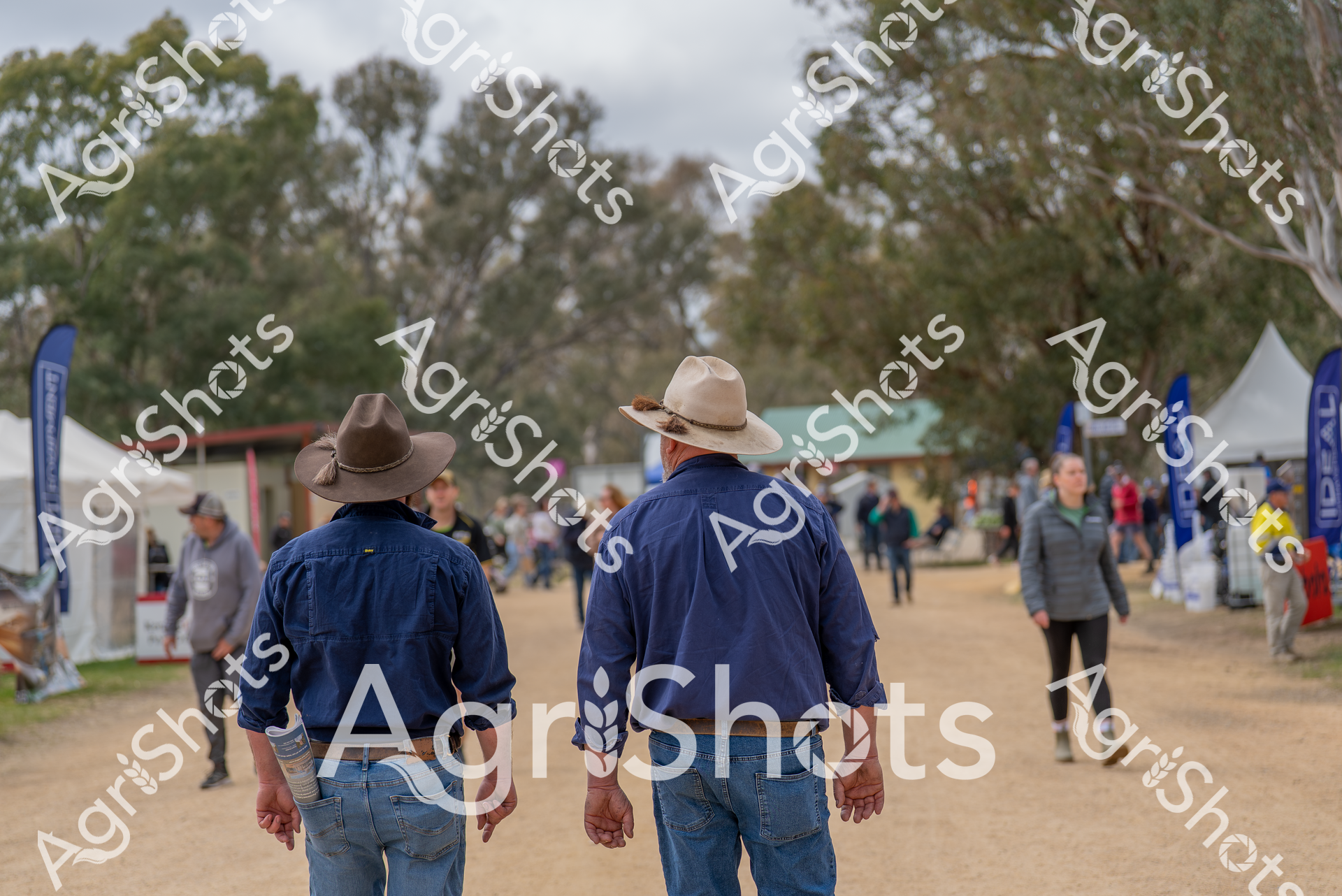
Two men wearing wide-brimmed hats and blue shirts walk through the Henty Field Days event in rural New South Wales. The agricultural expo takes place outdoors among trees, with white tents and various attendees visible in the background, capturing the essence of rural community gatherings in the Riverina region during springtime.
 Image
Image
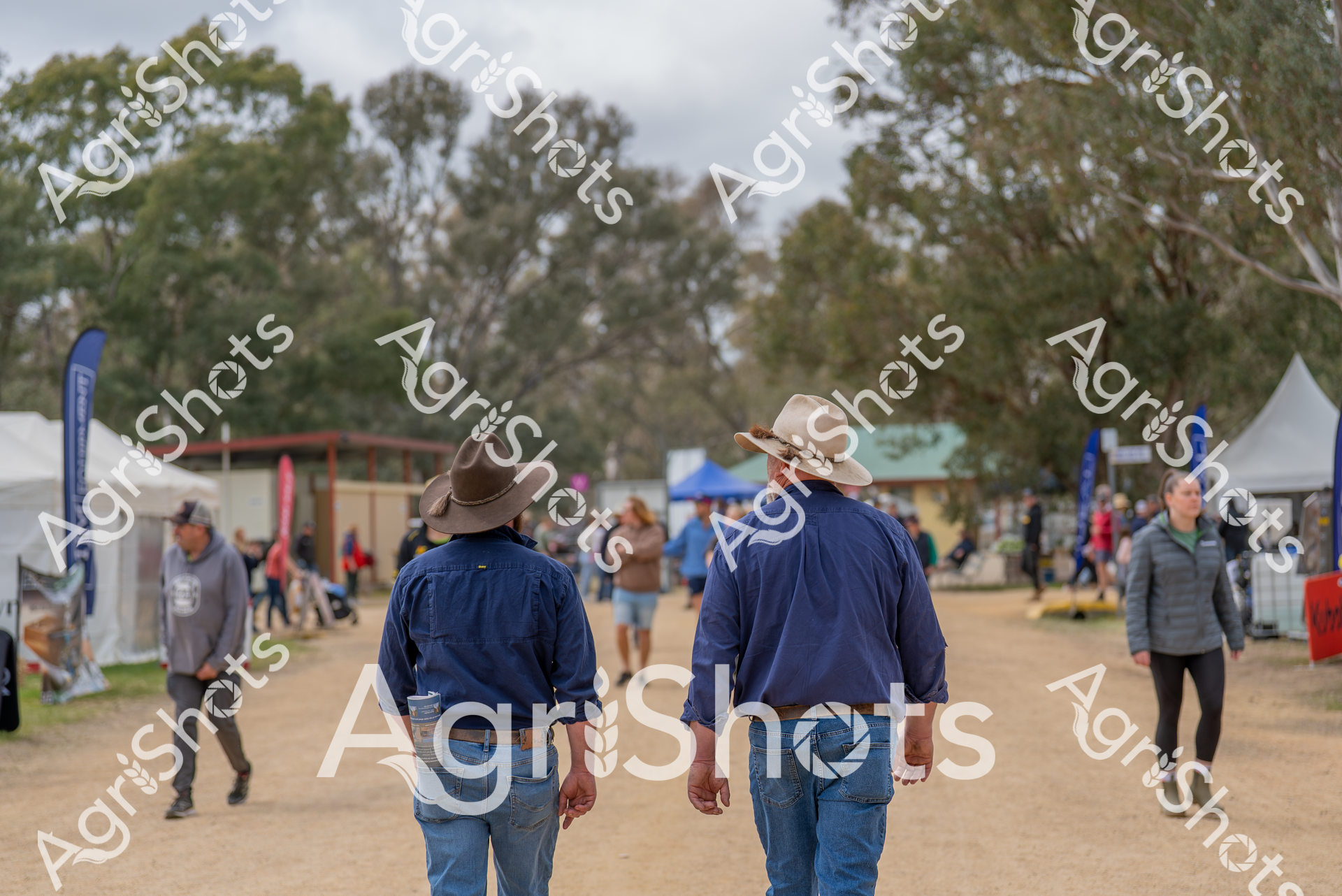
Two men in cowboy hats and blue shirts walk through the Henty Field Days event in rural New South Wales. The outdoor agricultural expo features white tents and a tree-lined background, with attendees exploring the spring gathering in the Riverina region. The scene captures the essence of agricultural community and rural networking.
 Image
Image
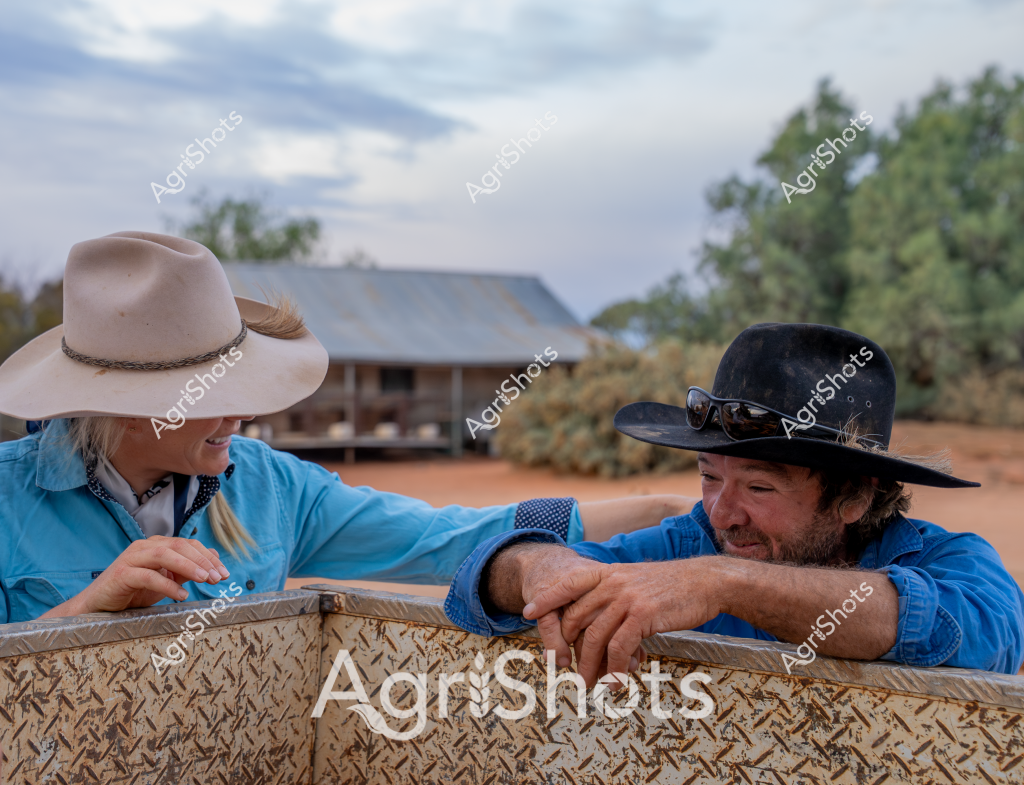
A man and a woman in blue work shirts and wide-brimmed hats lean against a textured metal container in a rural Australian setting. The scene captures a moment of quiet conversation on what appears to be a remote station, with a rustic shed and trees visible in the background. The woman wears a light-colored wide-brimmed hat, while the man sports a black hat with sunglasses, both dressed in practical workwear typical of Australian rural life. The reddish earth and relaxed posture suggest a pause during a long day of farm work, with the metal container providing a focal point for their interaction. The overcast sky and surrounding landscape evoke the vast, understated beauty of the Australian outback, highlighting the connection between rural workers and their challenging environment.
 Image
Image
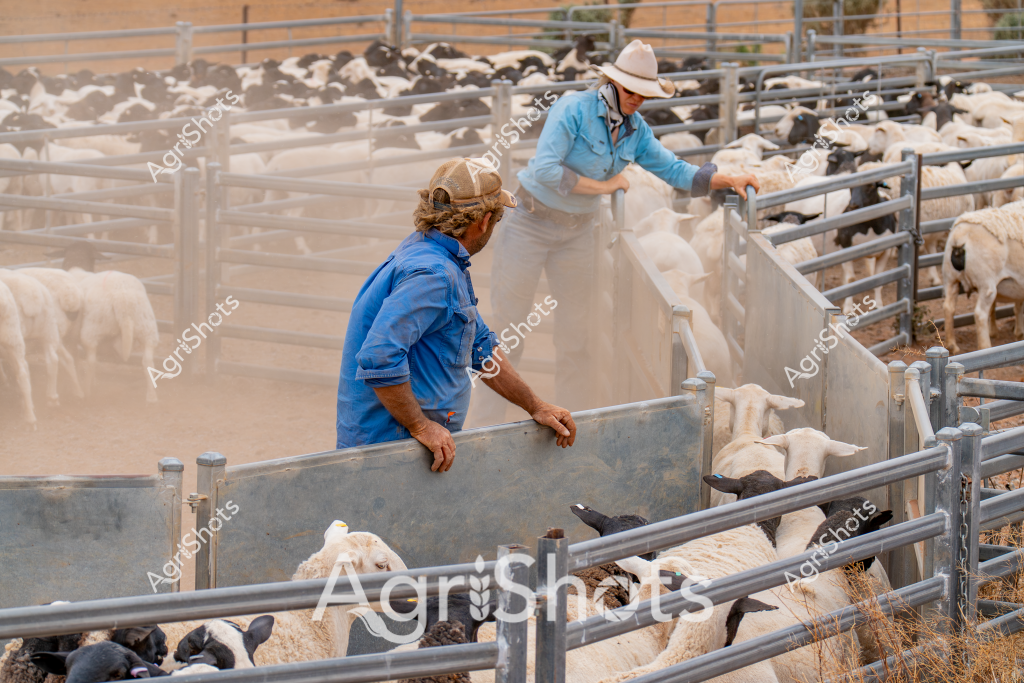
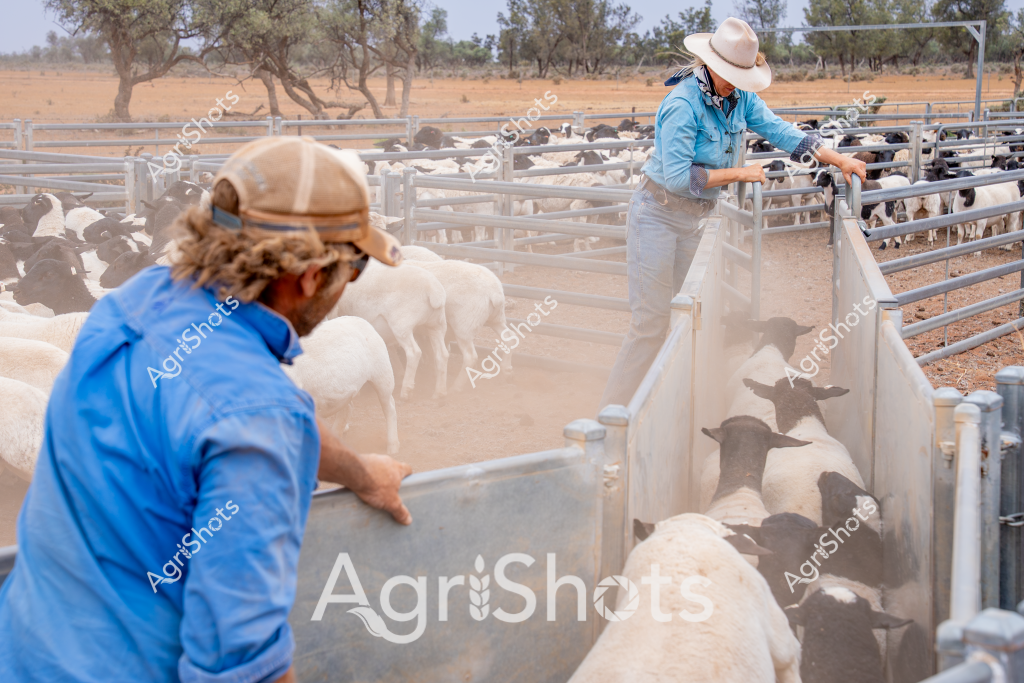
Two men farmers work together in a dusty sheep yard, carefully managing a flock of white and black sheep within metal livestock pens. One man in a blue shirt and cap stands near the gate, while another in a light blue shirt and white hat manages the gate and sheep movement. The metal yards are sturdy and well-constructed, with multiple interconnected pens allowing controlled livestock sorting and movement. Dust hangs in the air, indicating dry conditions typical of Australian agricultural landscapes, suggesting this is likely a rural station or farm in an arid or semi-arid region. The sheep appear to be a mixed breed, with white and darker-colored animals clustered together, waiting to be sorted or moved. The scene captures the practical, hands-on nature of Australian sheep farming, highlighting the skill and teamwork required in managing livestock in challenging environmental conditions.
 Image
Image
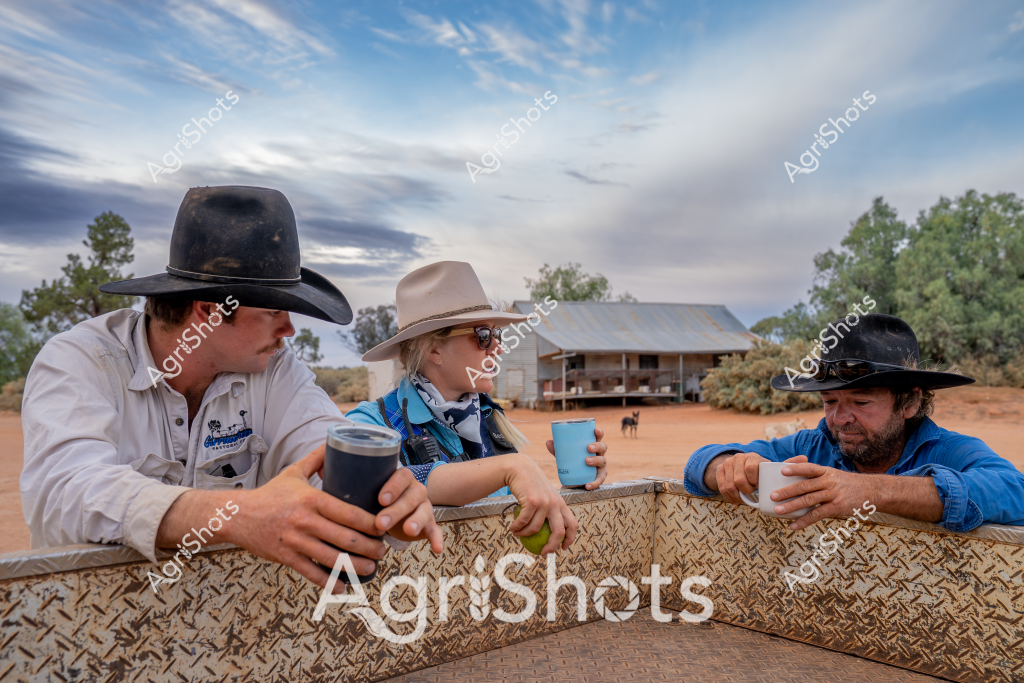
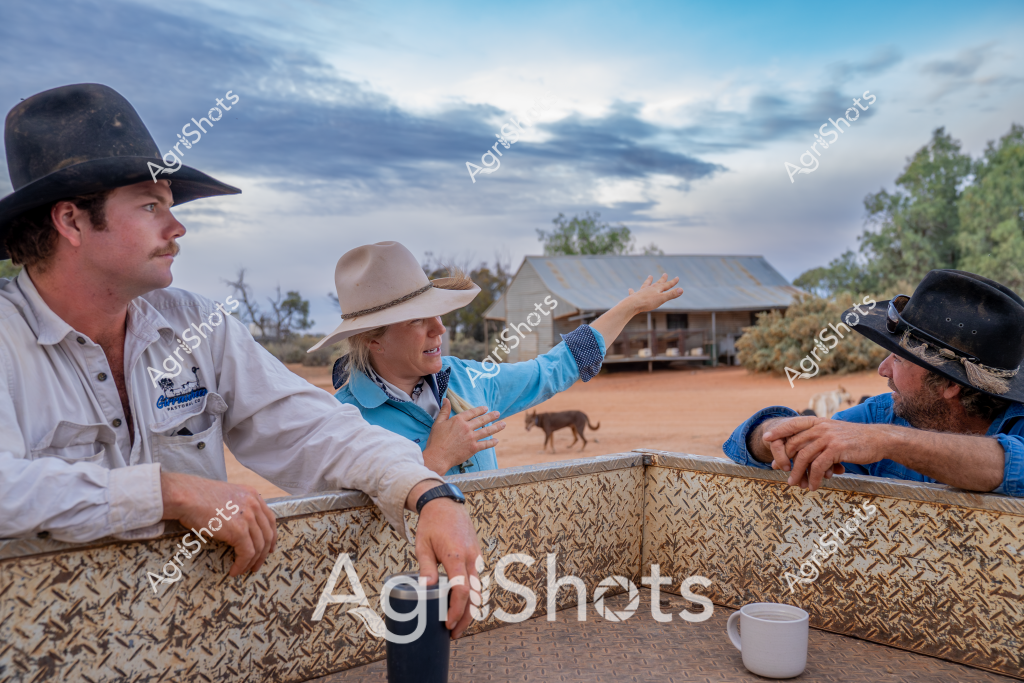
Three men wearing wide-brimmed Australian bush hats sit at a textured metal table in a remote rural setting, holding thermal mugs and sharing a moment of camaraderie. A weathered tin shed stands in the background, with sparse trees and an open dirt yard typical of an outback station or remote agricultural property. The sky is dramatic, with soft cloud formations creating a moody backdrop of blues and grays that suggest early morning or late afternoon light. The men are dressed in typical rural workwear - one in a white work shirt, another in a blue shirt, all wearing practical wide-brimmed hats that provide protection from the harsh Australian sun. Their posture and the shared moment around the table suggest a break from rural work, perhaps discussing the day's tasks or simply enjoying a moment of rest. A dog can be seen in the distant background, adding to the quintessential rural Australian scene. The landscape speaks of resilience - a dusty, open environment that characterizes much of Australia's agricultural heartland, where farming and station life demand strength and community. The textured metal table and the men's relaxed demeanor capture the essence of rural Australian working life, highlighting the social connections that are crucial to survival in challenging environments.
 Image
Image
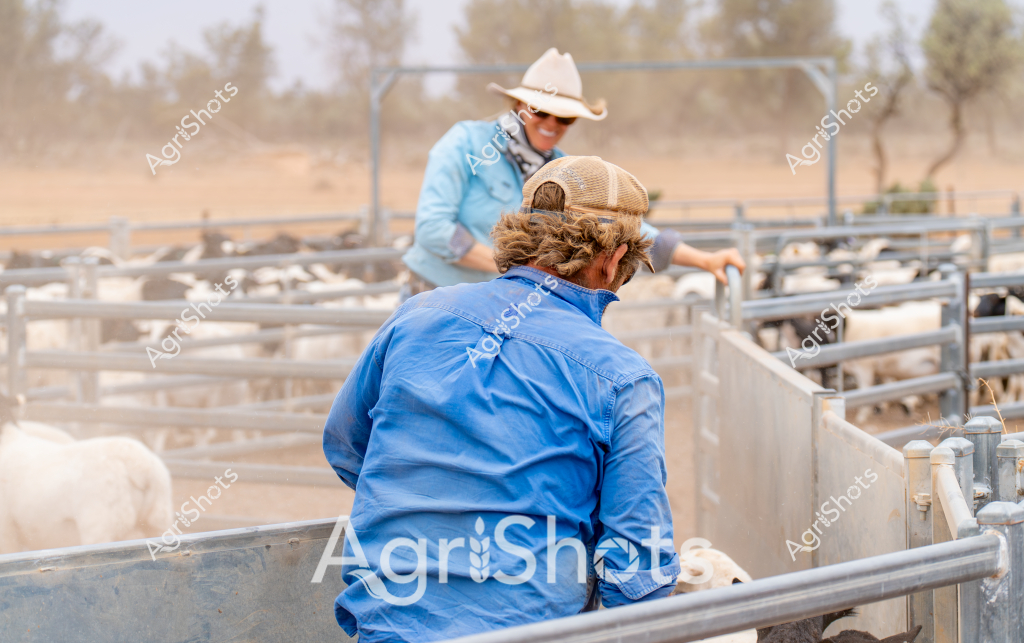
Two workers in blue shirts and protective hats manage a mob of sheep in a rural livestock yard during what appears to be a dry, dusty day. A woman in a light blue shirt and white cowboy hat stands at one end of the metal livestock pen, while another worker in a blue shirt faces away in the foreground. The metal cattle yards create a structured grid against a sparse, arid landscape with scattered trees visible in the background. Sunlight casts a warm, hazy atmosphere over the scene, highlighting the textured landscape and the workers' focused movements as they manage the livestock. The curly-haired worker's cap and protective clothing underscore the practical approach to stock management in challenging rural conditions. The image captures the essence of Australian livestock management - resilient workers navigating harsh environmental conditions while carefully handling the sheep herd. The metal infrastructure and protective clothing speak to the professional and methodical approach to agricultural work in challenging rural settings.
 Image
Image
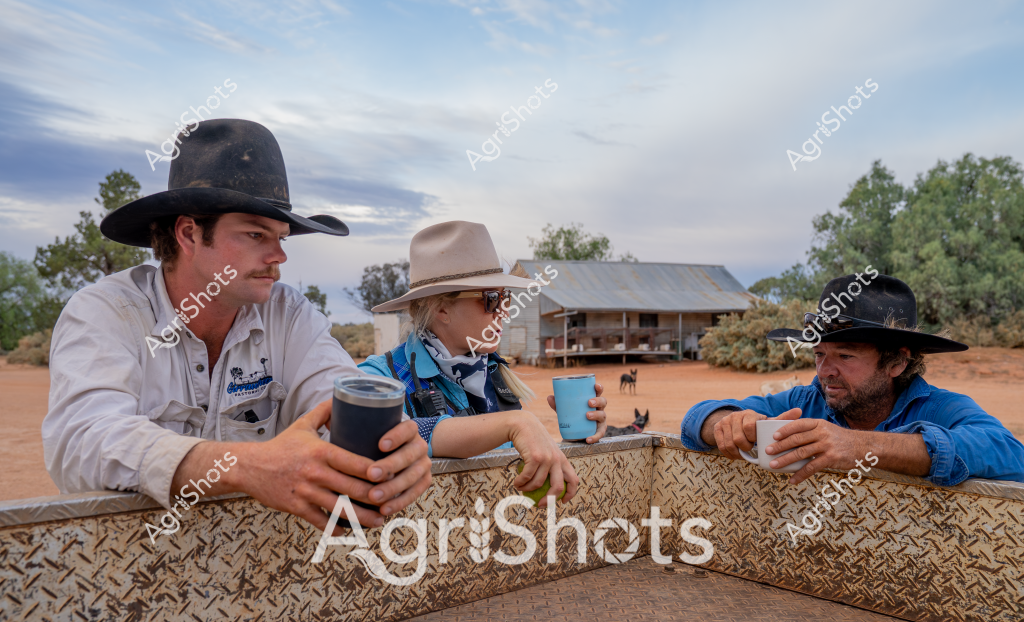
Three men in rural Australian workwear share a break moment on a dusty outback station, their blue shirts and wide-brimmed hats reflecting the classic pastoral style. Seated at a textured metal surface with a rustic tin shed and wandering dog in the background, they hold thermal mugs, suggesting a moment of rest during a long working day. The landscape is quintessentially Australian - a sandy, ochre-colored ground punctuated by sparse grey-green bushes and a soft, cloud-streaked sky typical of the arid interior. One man wears a black cowboy-style hat, another a light cream fedora, while the third sports a similar dark hat, all wearing long-sleeved work shirts in white and blue tones. The scene captures the camaraderie and quiet resilience of rural workers, with the weathered shed and open landscape emphasizing the challenging environment of Australian agricultural work. Their relaxed postures and shared drinks represent a universal moment of connection in the demanding world of station life.
 Image
Image
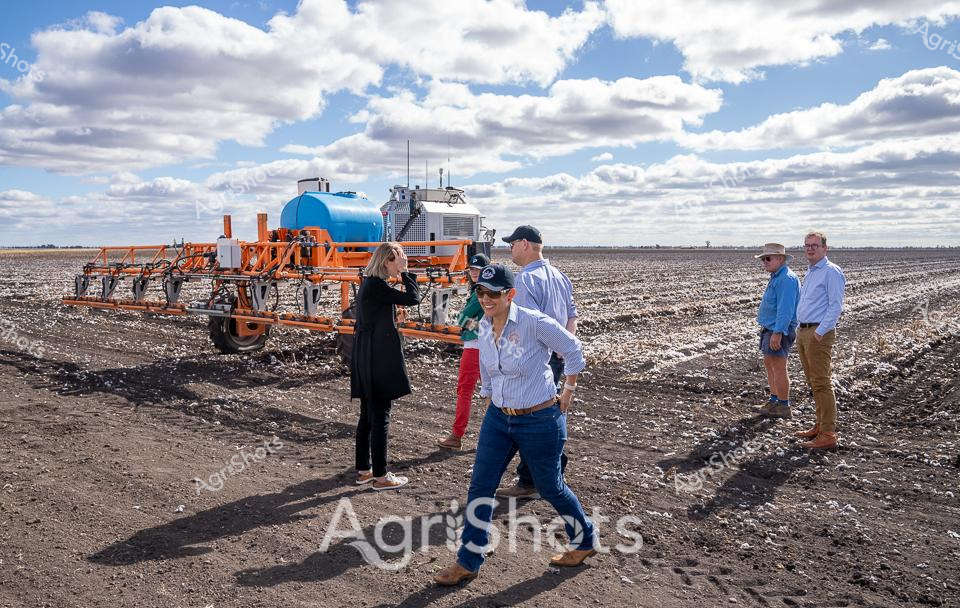
A precision agricultural technology demonstration unfolds across an expansive Queensland cotton field, where an advanced orange and blue spray rig stands sentinel against a dramatic cloudscape. Agricultural professionals gather around the cutting-edge robotic spraying system, examining its sophisticated capabilities and potential for revolutionizing crop management. The rich, dark soil of recently planted rows stretches to the horizon, punctuated by the gleaming machinery that represents the future of farming technology. Professionals dressed in smart casual attire - blue shirts, jeans, and caps - cluster thoughtfully around the equipment, suggesting an important technological evaluation or training session. The sweeping sky, filled with billowing white clouds against a deep blue backdrop, provides a stunning natural canvas that highlights the intersection of agricultural innovation and environmental awareness. This scene captures the essence of modern Australian agriculture: a blend of technological sophistication, expert knowledge, and the timeless connection between farmers and their land.
 Image
Image
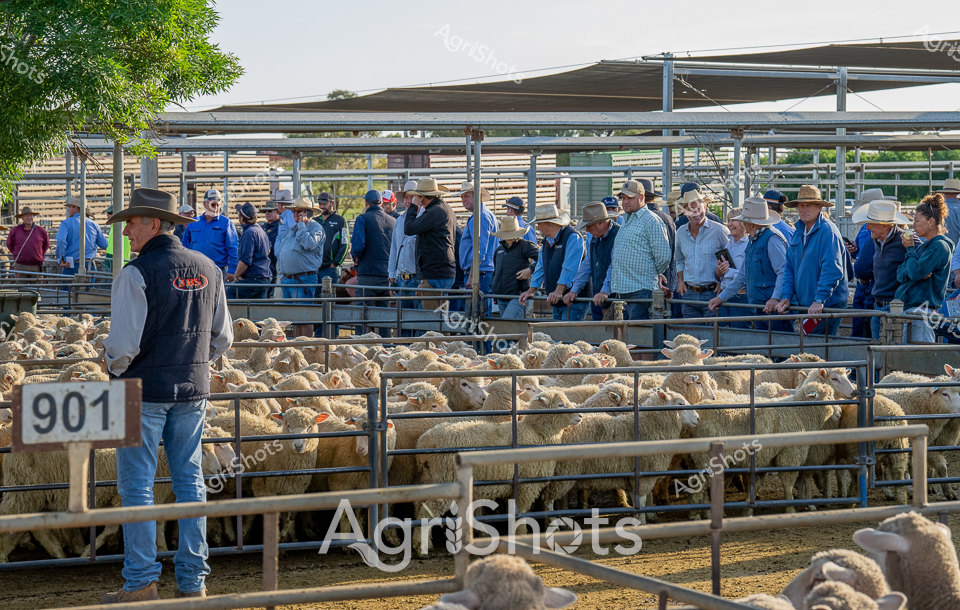
Merino sheep fill the steel-railed pens at a bustling livestock sale yard in the Riverina region of New South Wales. Farmers and rural agents cluster along the raised viewing platforms, dressed in classic rural workwear of blue shirts, denim jeans, and wide-brimmed sun hats that offer protection from the bright, clear day. The pen numbered 901 holds a tight mob of woolly sheep, their cream and off-white fleeces packed closely together, representing a typical line of commercial Merino stock ready for auction. Experienced buyers assess the animals' condition, discussing potential purchases while standing shoulder-to-shoulder in a time-honored ritual of agricultural commerce. The metal infrastructure of the sale yards gleams under the sunlight, with shade structures providing relief from the harsh Australian rural landscape. This scene captures the essential rhythm of agricultural trading - a quintessential moment of connection between producers, where livestock are evaluated, traded, and the economic pulse of the farming community beats strongly.
 Image
Image
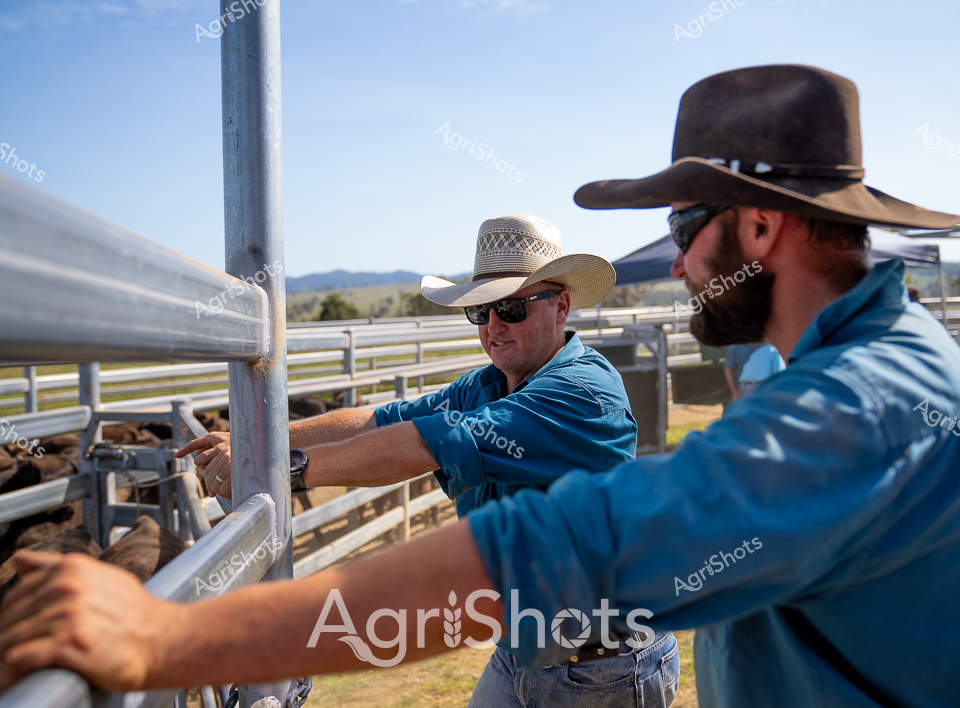
In the sun-drenched cattle yards of New England, New South Wales, two stockmen work with practiced precision during the peak of summer. Wearing crisp blue shirts and wide-brimmed hats that shield their eyes from the brilliant azure sky, they operate a robust cattle crush with quiet efficiency. One stockman in a straw hat and sunglasses grips the metal gates, his movements deliberate and controlled, while his colleague in a dark felt hat leans in to assist. The metallic yard infrastructure gleams against the dusty paddock backdrop, a testament to the robust engineering required in modern cattle management. Their coordinated actions reveal generations of agricultural knowledge - each movement purposeful, each gesture speaking to the deep understanding between human and livestock that defines Australian rural life. The scene captures the essence of pastoral work: disciplined, resilient, and intimately connected to the landscape.
 Image
Image
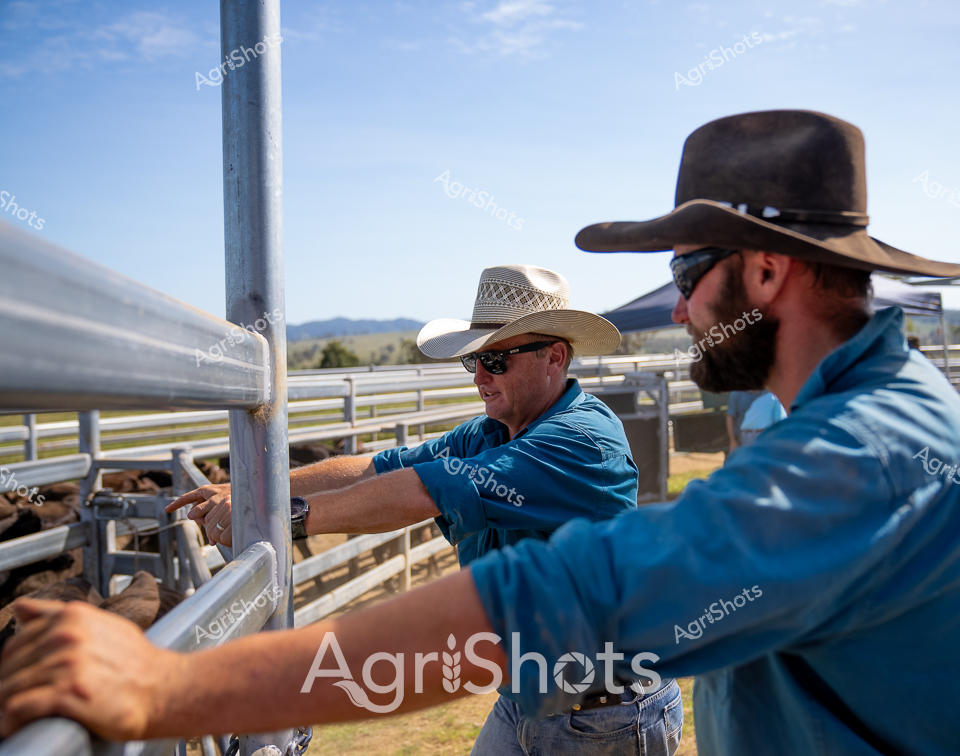
Two experienced stockmen in crisp blue shirts and wide-brimmed hats work methodically within the gleaming metal cattle yards of New England, New South Wales. The summer sunlight bathes the scene in warm clarity, highlighting the precision of their movements as they carefully manage young calves through the robust steel cattle crush. One worker, wearing a straw hat and sunglasses, leans confidently into the yard's infrastructure, his weathered hands guiding the livestock with practiced ease. His bearded colleague mirrors his stance, both demonstrating the quiet expertise of generations of Australian agricultural workers. The metallic yards reflect the brilliant blue sky, creating a sense of openness and possibility typical of the region's expansive pastoral landscapes. This moment captures the essence of livestock management - a blend of technical skill, physical strength, and deep understanding of animal behavior that defines rural Australian farming culture.
 Image
Image
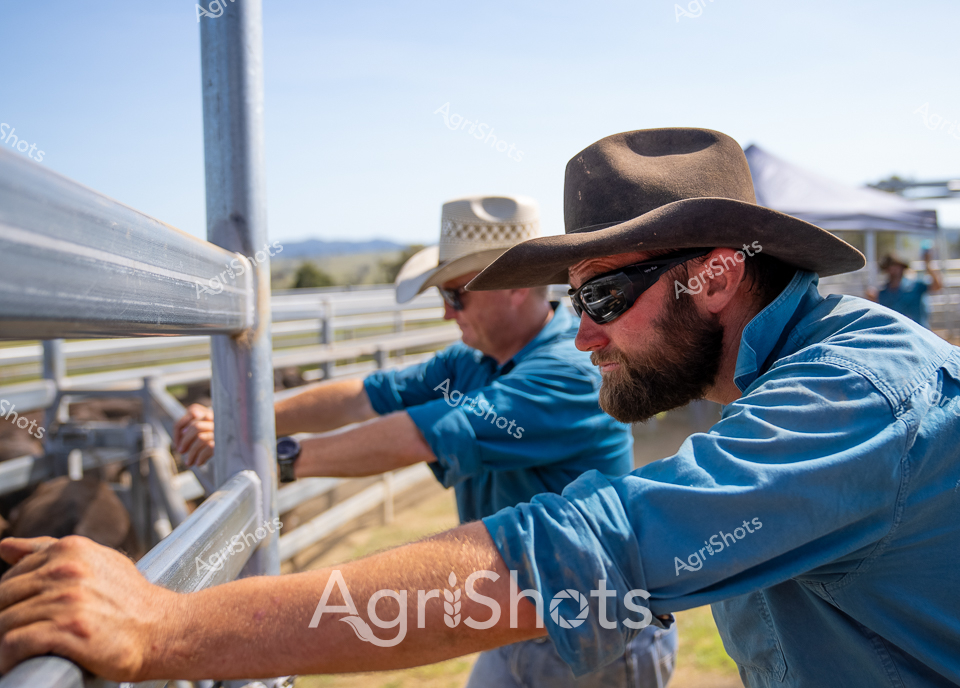
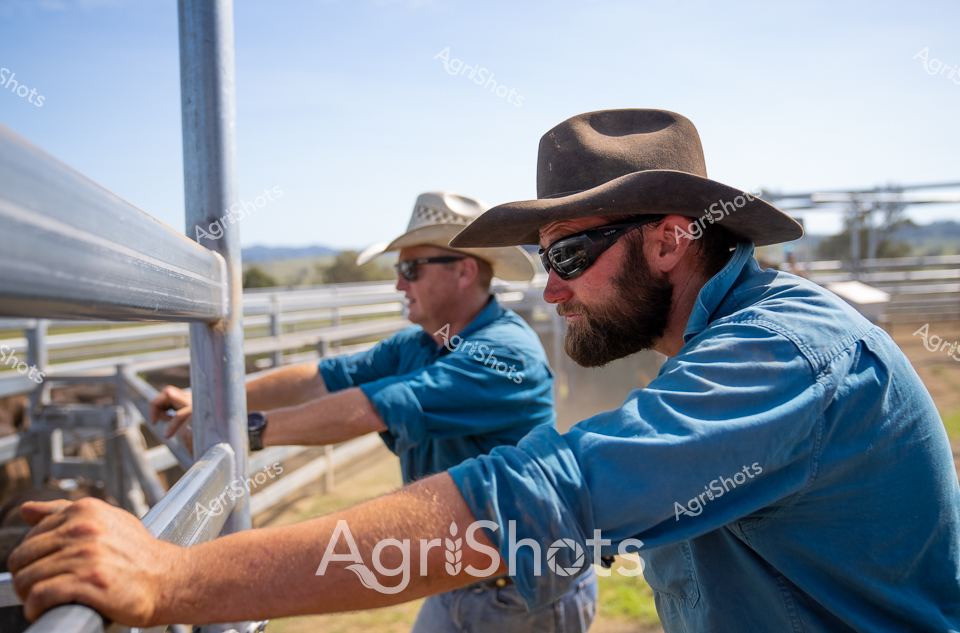
Stockmen in crisp blue shirts lean intently into the cattle yards, their weathered hands gripping steel railings under the expansive New England sky. Dark and light felt stockman's hats shield their eyes from the intense summer sunlight, while wraparound sunglasses protect against glare bouncing off the metallic cattle handling equipment. The silver metal of the cattle crush gleams against the pale landscape, a testament to the precision and care of agricultural infrastructure in rural New South Wales. These seasoned workers move with practiced synchronicity, their body language speaking to years of experience managing livestock in this challenging high country environment. Muscled forearms and steady grips reveal the physical strength and quiet concentration required in pastoral work, where every movement is deliberate and every action matters. The blue shirts and professional demeanor suggest these are likely agricultural specialists, perhaps from a livestock management team or local agricultural service, working methodically in the golden summer light of northern NSW.
 Image
Image
Rugged and focused, two agricultural workers lean against a steel cattle yard fence under the vast blue skies of New England, New South Wales. Dressed in matching azure blue shirts and wearing protective eyewear, they demonstrate the concentrated teamwork essential to livestock management. The worker in the foreground sports a classic dark felt cowboy hat, his bearded profile reflecting the weathered resilience of regional farming communities. Gleaming metal cattle yards stretch around them, a testament to modern agricultural infrastructure designed for safe and efficient livestock handling. Sunlight bathes the scene, suggesting a warm summer or early autumn day, with distant rolling hills providing a quintessential Australian rural backdrop. Their body language - slightly leaned forward, hands gripping the yard railings - speaks to the attentive care and technical skill required in managing livestock, capturing a moment of quiet professional collaboration in the heart of Australia's agricultural landscape.
 Image
Image
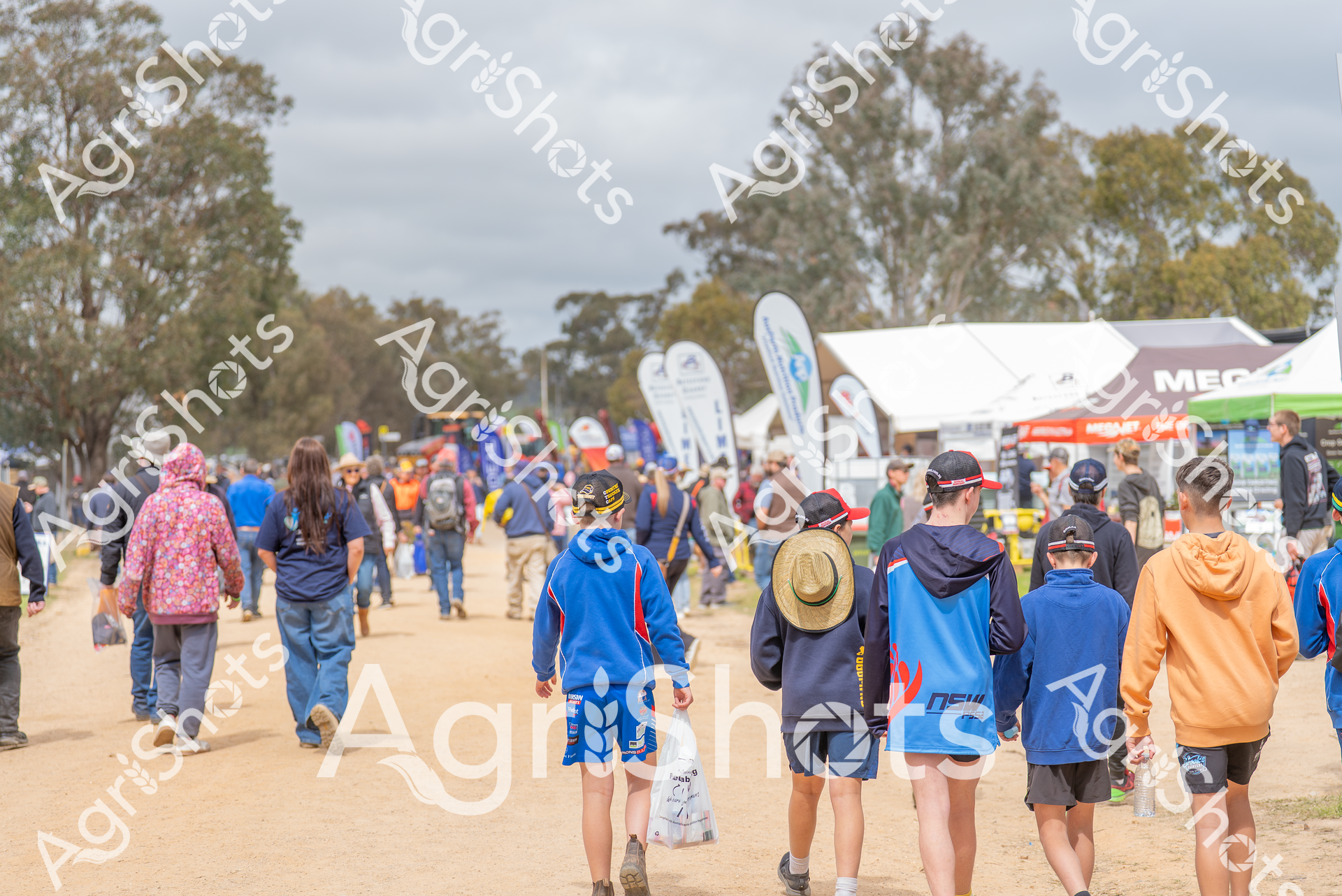
A crowd of people walks along a dusty path at an agricultural field day event, with white event tents and trees in the background. Attendees wear casual clothing in various colors, including blue shirts, a straw hat, and an orange hoodie, reflecting the relaxed atmosphere of this outdoor agricultural showcase in regional New South Wales.
 Image
Image
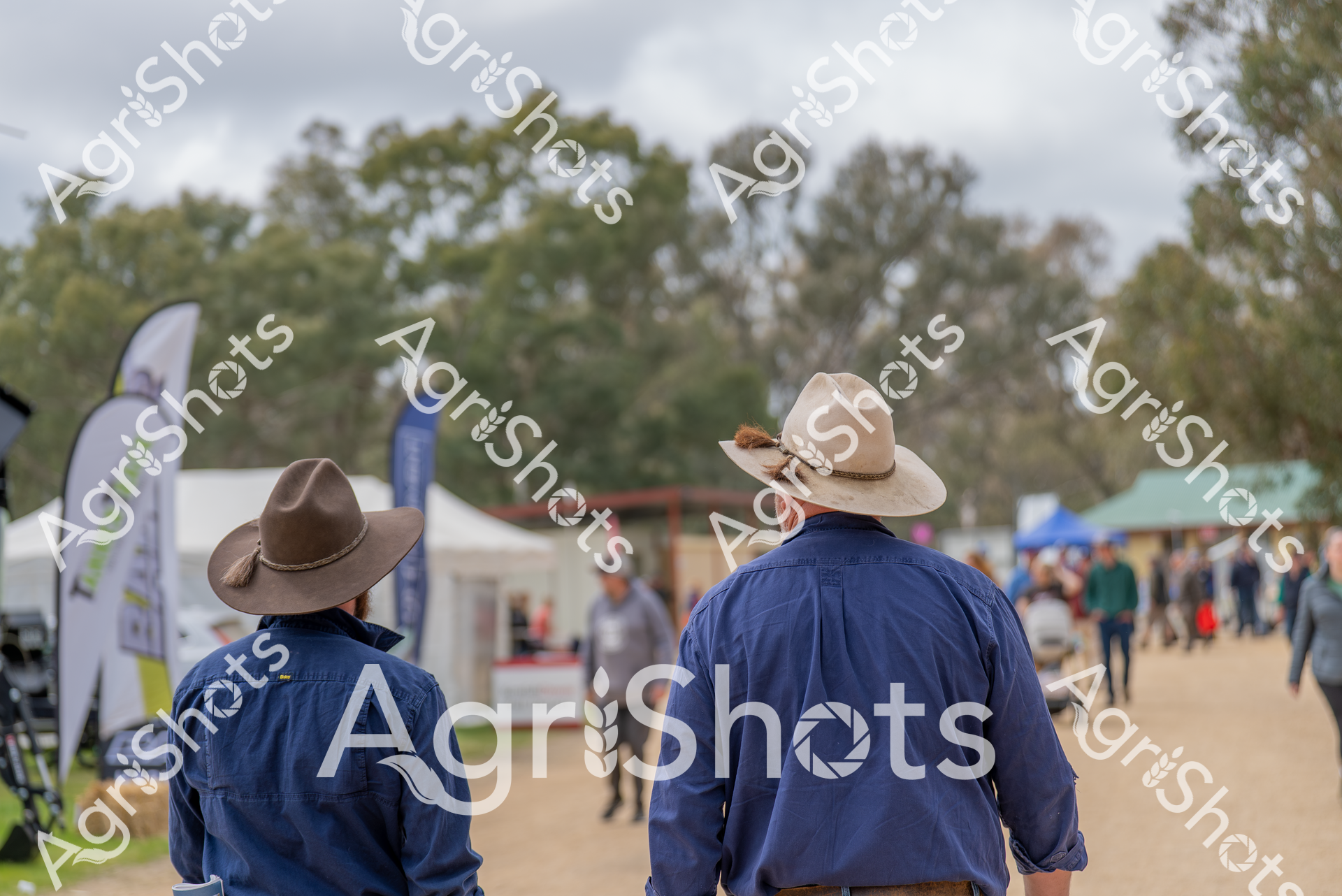
Two men in blue shirts and wide-brimmed hats stand facing away from the camera at a rural agricultural event, with event tents and attendees visible in the background. The scene appears to be the Henty Field Days in New South Wales, showcasing the region's agricultural community during springtime.
 Image
Image
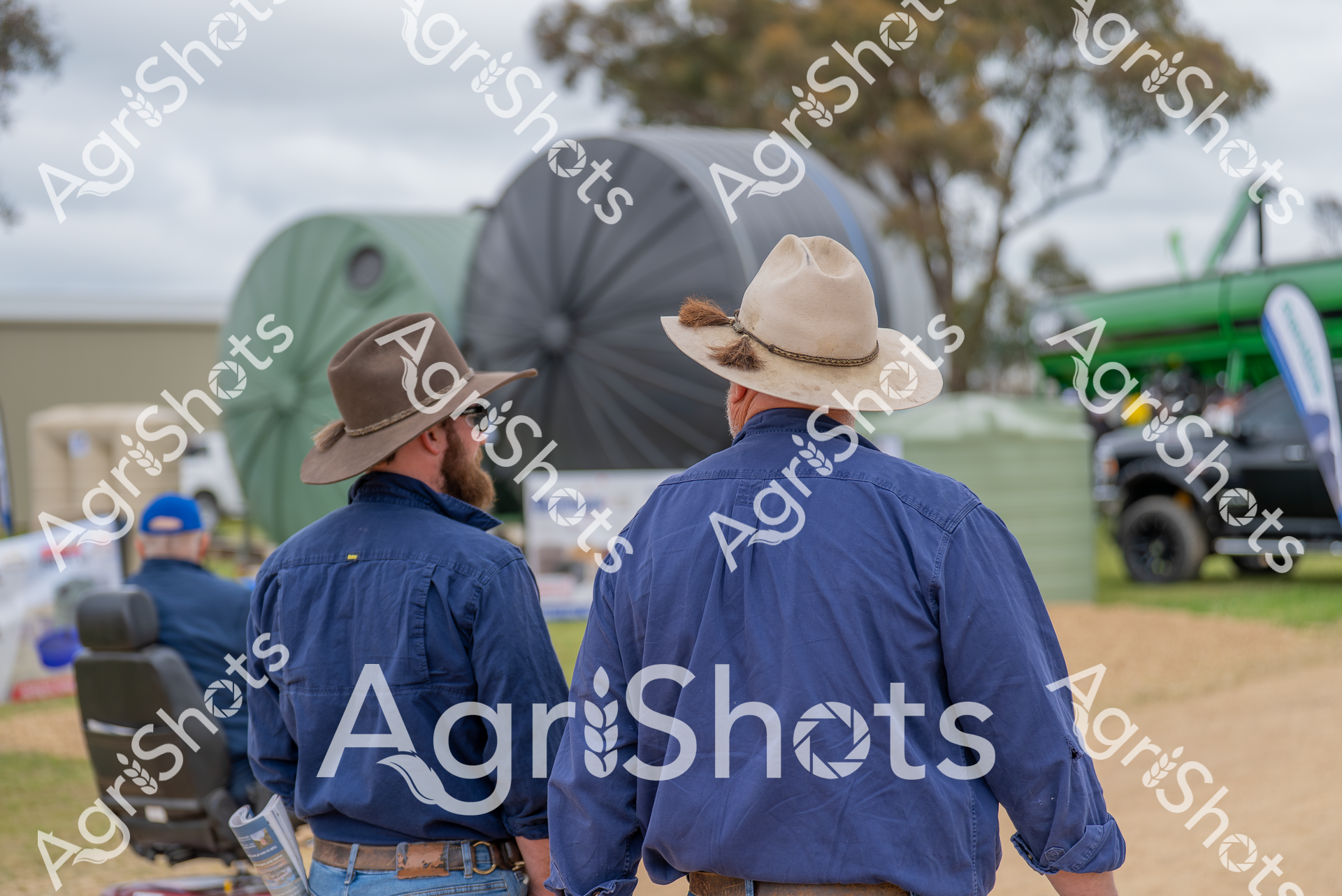
Two men in blue shirts and wide-brimmed hats stand with their backs to the camera, overlooking agricultural equipment at what appears to be the Henty Field Days in rural New South Wales. The scene captures the essence of Australian agricultural exhibitions, with large machinery and tents visible in the background under an overcast sky.
 Image
Image
Three men in work attire stand around a textured metal fence, gazing across a dusty rural Australian station yard. A weathered tin shed sits in the background, with a dog wandering across the rich ochre-colored ground. One woman in a blue shirt gestures animatedly, pointing towards something off-frame, while the men in white and blue shirts wearing wide-brimmed work hats listen intently. A white coffee mug sits on the fence, suggesting a break in farm activities or a morning planning discussion. The cloudy sky suggests early morning or late afternoon, with soft light casting subtle shadows across the rustic rural landscape. The scene captures the collaborative nature of station life, with workers seemingly discussing farm operations or livestock management in a classic Australian outback setting.
 Image
Image
Two rural workers in blue shirts and wide-brimmed hats manage a herd of white goats in a dry, dusty livestock yard. The yard features metal livestock gates and pens, with sparse trees and arid landscape visible in the background. A woman in a light-colored hat and blue long-sleeved shirt stands near the gate, carefully managing the goat movement through a narrow chute. Another worker in a blue shirt observes from a nearby position, suggesting a collaborative approach to livestock handling. The scene captures the challenging environment of Australian pastoral agriculture, with red earth, metallic infrastructure, and resilient livestock reflecting the tough conditions of rural stock management. The workers' protective clothing - long-sleeved shirts, wide-brimmed hats, and sturdy work pants - indicates careful preparation for working in harsh, sun-exposed conditions typical of Australia's agricultural regions.
 Image
Image
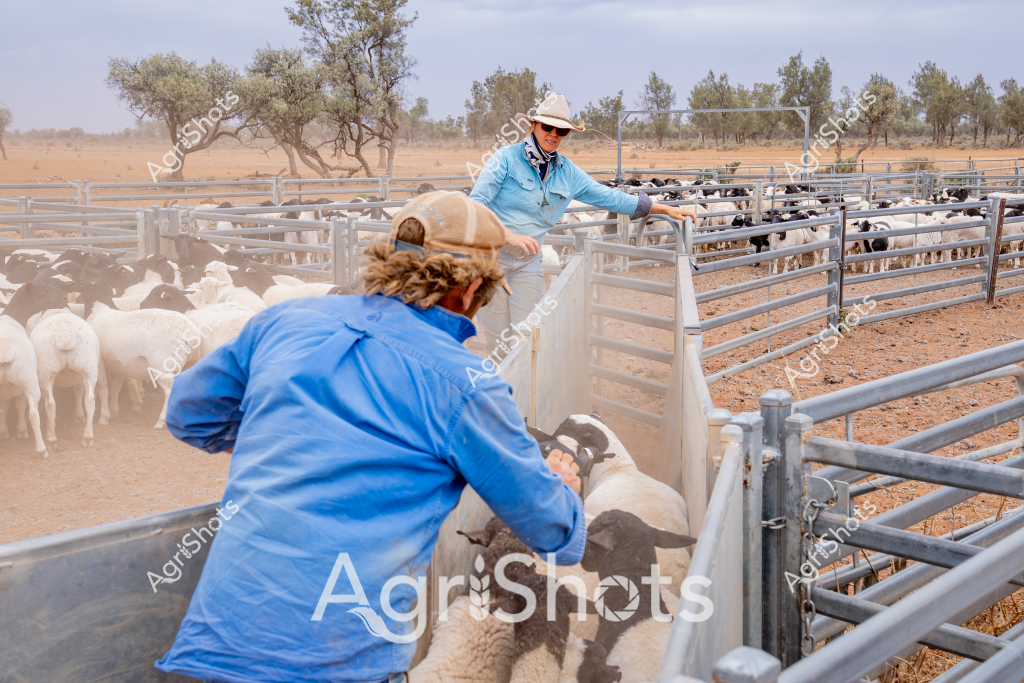
Two workers manage a flock of sheep in a dry, arid paddock with sparse trees in the background. A woman in a light blue long-sleeved shirt and white hat stands at a metal livestock yard gate, carefully handling the sheep with another worker in a blue shirt facing her. The dusty red earth and metal livestock yards suggest this is a sheep station in central or western Australia during a dry season. Multiple white sheep are being moved through the narrow metal gate sections, indicating a routine livestock management activity like drafting, sorting, or preparing for transportation. The scene captures the precision and skill required in Australian sheep farming, with professional workers efficiently managing the livestock in challenging environmental conditions. The landscape appears to be in an inland region, with scattered eucalyptus trees and a sparse, golden-brown landscape typical of Australia's agricultural interior. The workers' blue shirts and sun protection hats reflect the practical workwear needed for long days of livestock management in harsh, sunny conditions.
 Image
Image
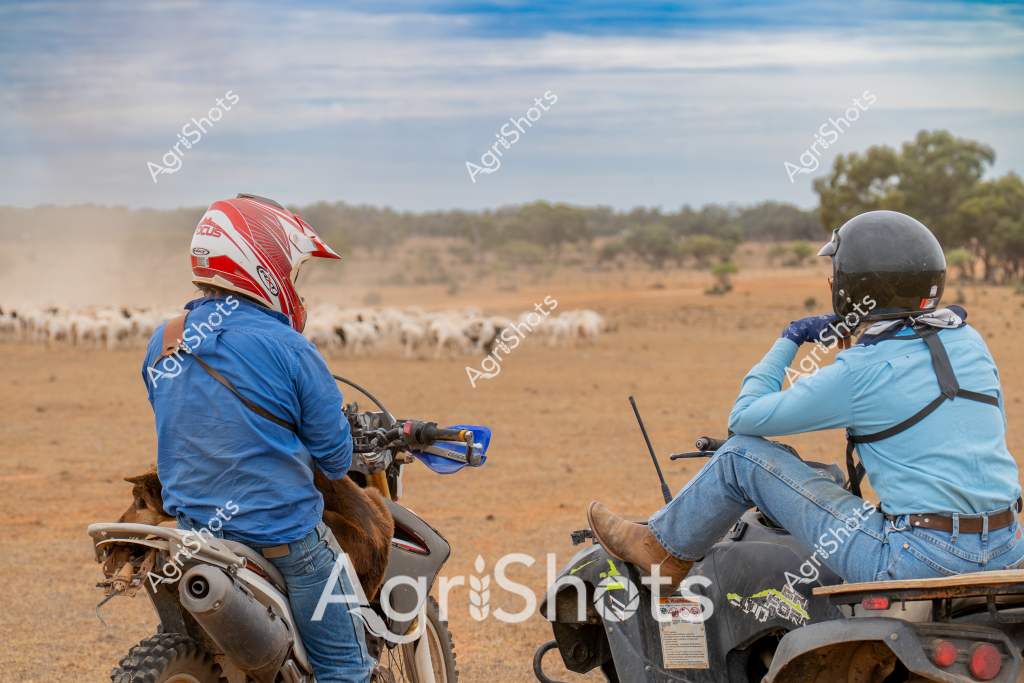
Two men on motorbikes survey a mob of white sheep across a dry, dusty paddock in rural Australia. The men wear blue shirts and protective helmets, with one in a red motocross helmet and the other in a black helmet, seated on an all-terrain vehicle and a motorcycle. The landscape is a typical Australian pastoral scene - golden-brown grass, sparse trees on the horizon, and a vast open sky with soft blue and white clouds. Several dozen sheep are grazing in the background, creating a light dust cloud as they move slowly across the arid terrain. The scene captures the essence of modern Australian livestock management, where motorcycles and quad bikes have replaced traditional horse-based mustering techniques. The dry conditions suggest this could be during a prolonged drought period, typical of many Australian agricultural regions.
 Image
Image
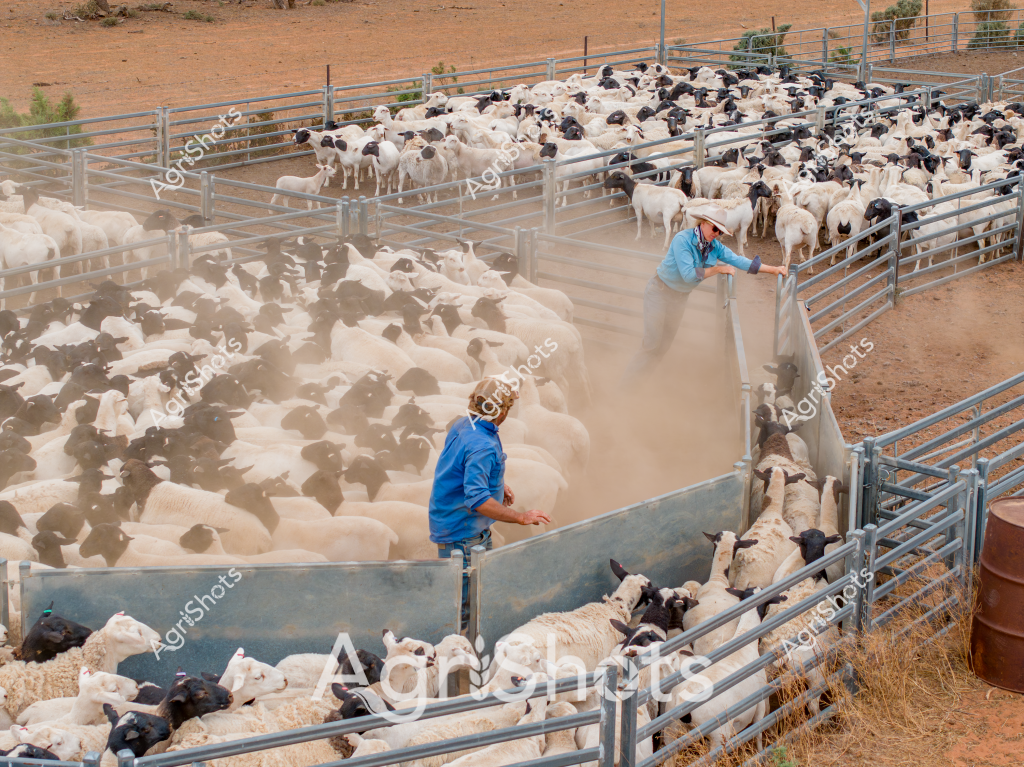
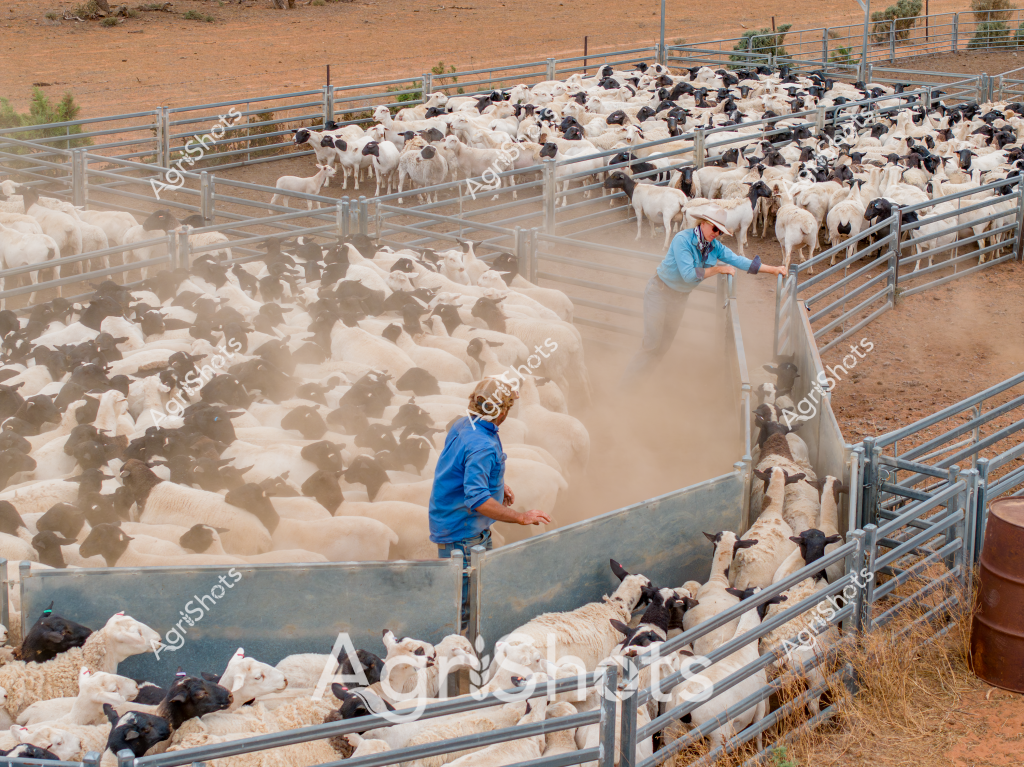
A man and a woman in blue shirts work amid a large flock of black and white sheep in a dusty livestock yard. Two workers carefully manage a mob of sheep through metal livestock gates and holding pens, creating clouds of fine red dirt as the animals move. The arid landscape surrounding the yards suggests this is likely a pastoral station in central or western Australia, where sheep farming is a critical agricultural industry. The workers appear experienced, skillfully guiding the sheep through the narrow metal gates and sorting areas with practiced movements. The sheep - a mix of white and black-faced breeds, likely Dorper or crossbred stock - are tightly clustered, demonstrating the controlled movement typical of professional livestock management. Metallic yard infrastructure, including sturdy gates and fencing, provides structured pathways for moving and sorting the animals in this quintessential Australian farm scene.
 Image
Image
In this dynamic livestock scene, two workers in blue shirts manage a large mob of black and white sheep in a dusty livestock yard. The sheep, a mix of white and black-faced breeds typical of Australian farming, are densely packed within metal livestock yards under an arid, reddish-brown landscape. One worker stands on the metal gate, directing the sheep's movement with practiced movements, while dust rises around the animals, creating a dramatic visual effect that captures the intensity of sheep management in a dry rural environment. The metal yard panels provide structure and control, allowing the workers to efficiently sort and move the livestock. The scene epitomizes the challenging and skilled work of Australian sheep farming, where precision and experience are crucial in managing large flocks in harsh, drought-prone landscapes. The blue shirts of the workers contrast sharply with the tan earth and white and black sheep, creating a visually compelling image of agricultural work.
 Image
Image
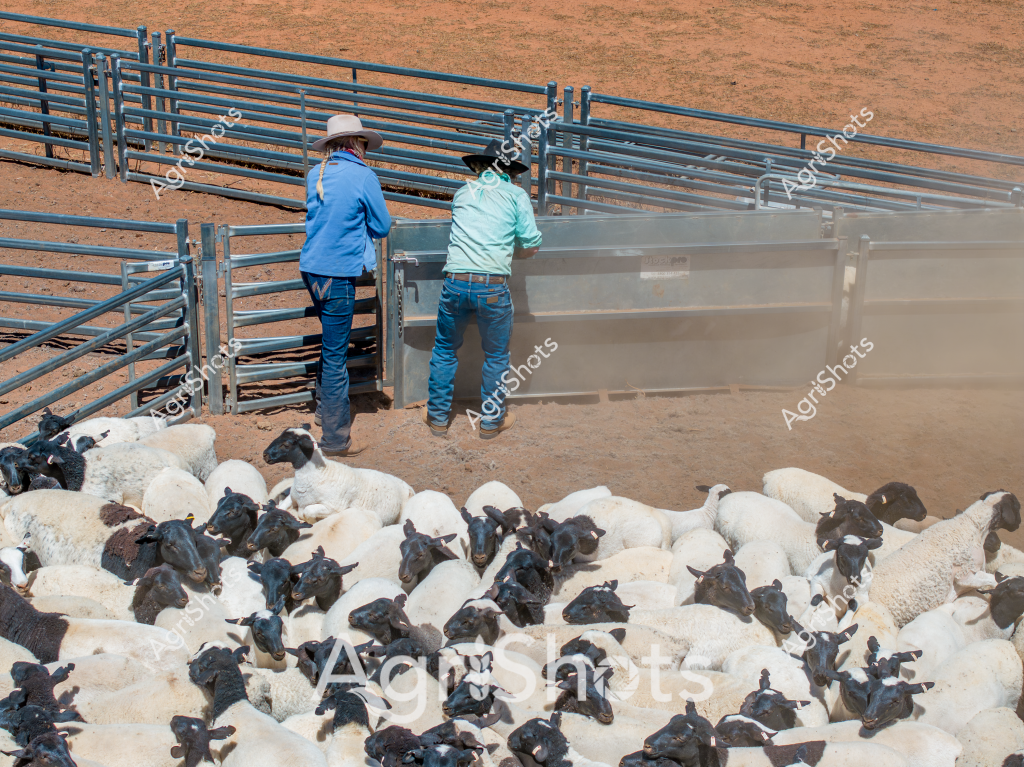
Two men in work attire operate a livestock handling system with a herd of black and white sheep clustered in the holding yards. The men, wearing blue shirts, jeans, and work hats, are positioned near a metal livestock chute and gate system on a dry, reddish-brown earth paddock. A dense group of sheep - predominantly white with black-faced individuals mixed throughout - are tightly packed in the lower portion of the image, waiting to be processed through the metal handling equipment. The metal gates and chute appear to be a standard design for efficiently moving and managing sheep, typical of Australian livestock management practices. The dusty environment and metal infrastructure suggest this is a working sheep station, likely in an arid or semi-arid region of Australia where sheep farming is a critical agricultural activity. The scene captures the methodical nature of livestock management, with the workers carefully positioning the animals through controlled infrastructure, demonstrating the precision and skill required in modern agricultural practices. The mix of white and black-faced sheep indicates a potentially diverse breeding program or mixed flock composition, which is common in Australian sheep production.
 ▶ Video
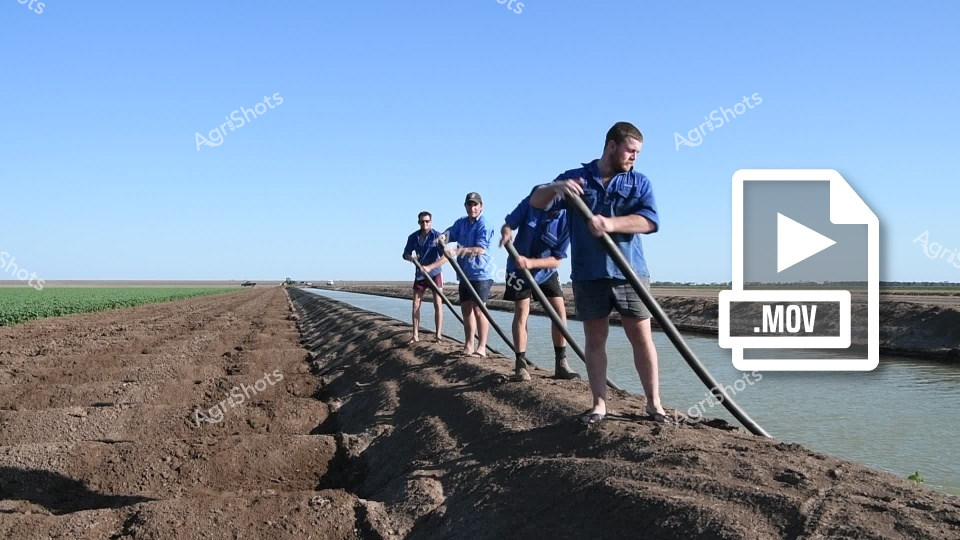
Four men in blue shirts work together to dig or maintain an irrigation canal on a flat, expansive agricultural landscape. Standing in a line along a dirt embankment beside a water channel, they use long-handled tools to shape or clear the waterway. The scene captures a collaborative agricultural water management task under a clear blue sky, with green fields stretching to the horizon.