Results for “bees”

A vibrant watermelon flower bursts with golden-yellow petals, revealing the intricate reproductive heart of the plant where bees are actively engaged in pollination. Delicate honeybees traverse the flower's rich, textured surface, collecting and transferring pollen in a crucial agricultural dance that will ultimately yield fruit. The bright yellow bloom stands in sharp contrast to the lush green background, highlighting the precision and beauty of horticultural reproductive processes. Soft, velvet-like petal edges curve dramatically, creating an almost sculptural form that demonstrates the remarkable engineering of plant reproduction. This close-up captures the minute details of agricultural ecosystems, where pollinators play an essential role in crop production. The image represents the intricate symbiosis between insects and flowering plants, a fundamental mechanism of food production in the Northern Territory's agricultural landscape. Image

A vibrant watermelon flower bursts with golden-yellow petals, revealing the intricate reproductive heart of the plant where bees are actively engaged in pollination. Delicate honeybees traverse the flower's rich, textured surface, collecting and transferring pollen in a crucial agricultural dance that will ultimately yield fruit. The bright yellow bloom stands in sharp contrast to the lush green background, highlighting the precision and beauty of horticultural reproductive processes. Soft, velvet-like petal edges curve dramatically, creating an almost sculptural form that demonstrates the remarkable engineering of plant reproduction. This close-up captures the minute details of agricultural ecosystems, where pollinators play an essential role in crop production. The image represents the intricate symbiosis between insects and flowering plants, a fundamental mechanism of food production in the Northern Territory's agricultural landscape.

A honey bee collects pollen from a delicate pink cherry blossom in full bloom. The detailed macro shot captures the intricate relationship between pollinators and spring flowers, showcasing the bee's golden body against the soft pink petals of the flower. Image

A honey bee collects pollen from a delicate pink cherry blossom in full bloom. The detailed macro shot captures the intricate relationship between pollinators and spring flowers, showcasing the bee's golden body against the soft pink petals of the flower.

A bustling beehive reveals thousands of honey bees clustered densely across wooden frames during spring in Tasmania's Upper Mersey Valley Region. The active colony showcases the intricate work of pollination and honey production, with worker bees covering every surface of the hive structure in golden-brown masses. This apiary scene captures the essential agricultural partnership between beekeepers and their hives, highlighting the critical role of bees in supporting crop pollination and honey harvesting throughout the region's farming landscape. ▶ Video

A bustling beehive reveals thousands of honey bees clustered densely across wooden frames during spring in Tasmania's Upper Mersey Valley Region. The active colony showcases the intricate work of pollination and honey production, with worker bees covering every surface of the hive structure in golden-brown masses. This apiary scene captures the essential agricultural partnership between beekeepers and their hives, highlighting the critical role of bees in supporting crop pollination and honey harvesting throughout the region's farming landscape.
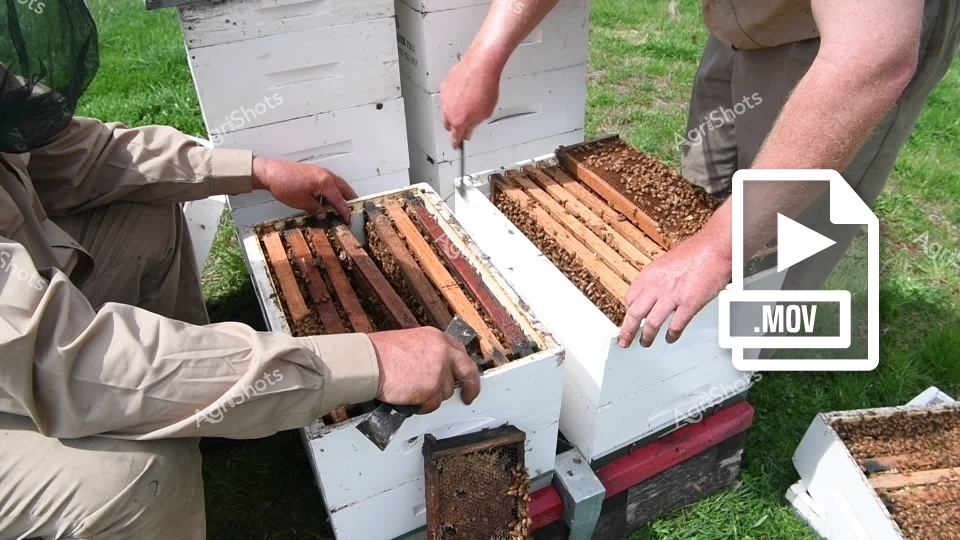
Two men working as beekeepers carefully inspect an active beehive during spring in Tasmania's Upper Mersey Valley Region, lifting frames heavy with bees and honeycomb from the white wooden hive boxes. The apiary work demonstrates hands-on hive management essential for honey production and pollination services, with multiple hive boxes visible containing thriving bee colonies. Their methodical inspection of the frames reveals the intricate work of maintaining healthy bee populations in this productive agricultural region. ▶ Video

Two men working as beekeepers carefully inspect an active beehive during spring in Tasmania's Upper Mersey Valley Region, lifting frames heavy with bees and honeycomb from the white wooden hive boxes. The apiary work demonstrates hands-on hive management essential for honey production and pollination services, with multiple hive boxes visible containing thriving bee colonies. Their methodical inspection of the frames reveals the intricate work of maintaining healthy bee populations in this productive agricultural region.
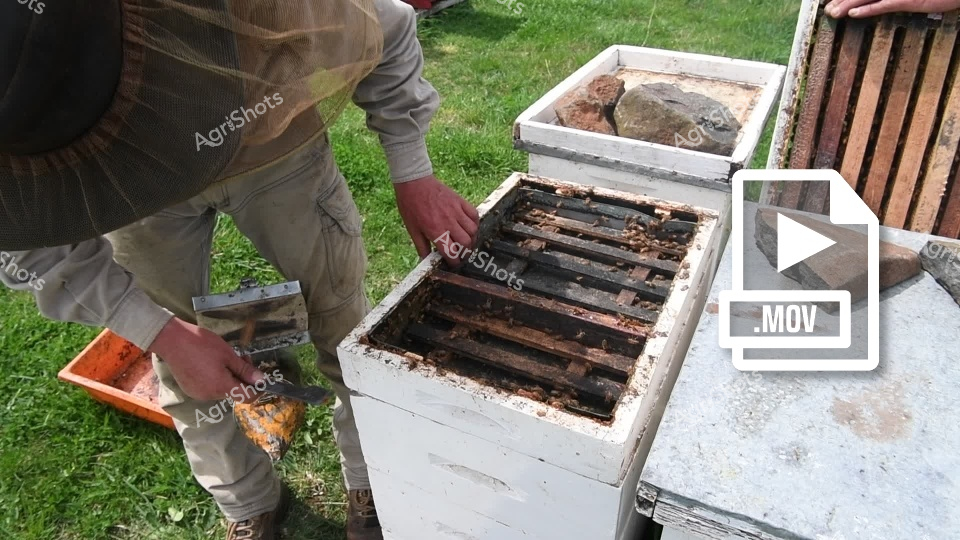
A man working as a beekeeper examines frames from white wooden hives in the Upper Mersey Valley Region of Tasmania during spring. The apiary setup shows multiple hive boxes with exposed frames revealing the internal structure where bees produce honey and carry out pollination activities. The beekeeper carefully inspects the hive components on the grassy ground, demonstrating the hands-on management required for successful honey production in this Tasmanian location. ▶ Video

A man working as a beekeeper examines frames from white wooden hives in the Upper Mersey Valley Region of Tasmania during spring. The apiary setup shows multiple hive boxes with exposed frames revealing the internal structure where bees produce honey and carry out pollination activities. The beekeeper carefully inspects the hive components on the grassy ground, demonstrating the hands-on management required for successful honey production in this Tasmanian location.
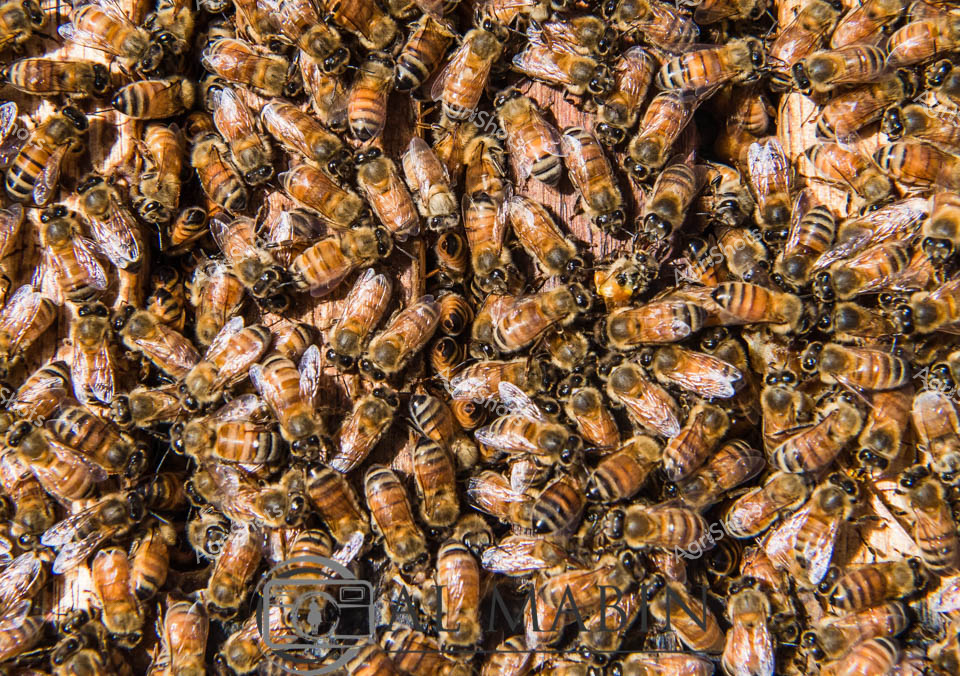
Thousands of honeybees cluster densely together on their hive frames during spring in Tasmania's Upper Mersey Valley Region. The working bees display their distinctive golden-brown striped bodies as they tend to their hive duties, creating the intricate patterns essential for honey production and pollination activities. This bustling apiary scene captures the industrious nature of these vital pollinators as they work collectively within their bee hives. Image

Thousands of honeybees cluster densely together on their hive frames during spring in Tasmania's Upper Mersey Valley Region. The working bees display their distinctive golden-brown striped bodies as they tend to their hive duties, creating the intricate patterns essential for honey production and pollination activities. This bustling apiary scene captures the industrious nature of these vital pollinators as they work collectively within their bee hives.

A bustling apiary scene captures hundreds of bees swarming across wooden hive frames during spring pollination season in Tasmania's Upper Mersey Valley Region. White smoke drifts through the active bee colony as the insects move energetically across the honey-laden hive structures. The wooden bee hives reveal the intricate workings of a productive apiary, with bees clustered densely on multiple frames. This dynamic spring activity showcases the essential role of bees in Tasmania's agricultural pollination cycle. Image

A bustling apiary scene captures hundreds of bees swarming across wooden hive frames during spring pollination season in Tasmania's Upper Mersey Valley Region. White smoke drifts through the active bee colony as the insects move energetically across the honey-laden hive structures. The wooden bee hives reveal the intricate workings of a productive apiary, with bees clustered densely on multiple frames. This dynamic spring activity showcases the essential role of bees in Tasmania's agricultural pollination cycle.

A honeybee delicately collects nectar from a soft pink cherry blossom in full bloom, showcasing the intricate dance of pollination. The vibrant flower, with its delicate petals and prominent stamen, provides a stunning backdrop for the industrious bee, capturing the essence of spring in Western Australia. Image

A honeybee delicately collects nectar from a soft pink cherry blossom in full bloom, showcasing the intricate dance of pollination. The vibrant flower, with its delicate petals and prominent stamen, provides a stunning backdrop for the industrious bee, capturing the essence of spring in Western Australia.

Honey Harvest in the Upper Mersey Valley

A weathered hand carefully lifts a honey-laden frame teeming with thousands of industrious honeybees in the lush green pastures of Tasmania's Upper Mersey Valley. The wooden frame is almost completely obscured by a dense carpet of golden-brown bees, their bodies clustered together in an intricate living mosaic that speaks to the remarkable social structure of these crucial pollinators. Soft morning light filters through a misty background of distant trees, suggesting early spring when bee colonies are at their most active. Each bee moves with purposeful precision, a testament to the sophisticated communication and collective effort that defines their species. The intimate connection between the beekeeper's experienced hand and the vibrant bee colony captures the delicate symbiosis of apiary management - a critical agricultural practice that supports both local ecosystems and broader agricultural productivity. This moment of harvest represents the culmination of months of careful hive management, where human skill and natural wonder converge in the production of pure, golden honey. Image

Honey Harvest in the Upper Mersey Valley A weathered hand carefully lifts a honey-laden frame teeming with thousands of industrious honeybees in the lush green pastures of Tasmania's Upper Mersey Valley. The wooden frame is almost completely obscured by a dense carpet of golden-brown bees, their bodies clustered together in an intricate living mosaic that speaks to the remarkable social structure of these crucial pollinators. Soft morning light filters through a misty background of distant trees, suggesting early spring when bee colonies are at their most active. Each bee moves with purposeful precision, a testament to the sophisticated communication and collective effort that defines their species. The intimate connection between the beekeeper's experienced hand and the vibrant bee colony captures the delicate symbiosis of apiary management - a critical agricultural practice that supports both local ecosystems and broader agricultural productivity. This moment of harvest represents the culmination of months of careful hive management, where human skill and natural wonder converge in the production of pure, golden honey.
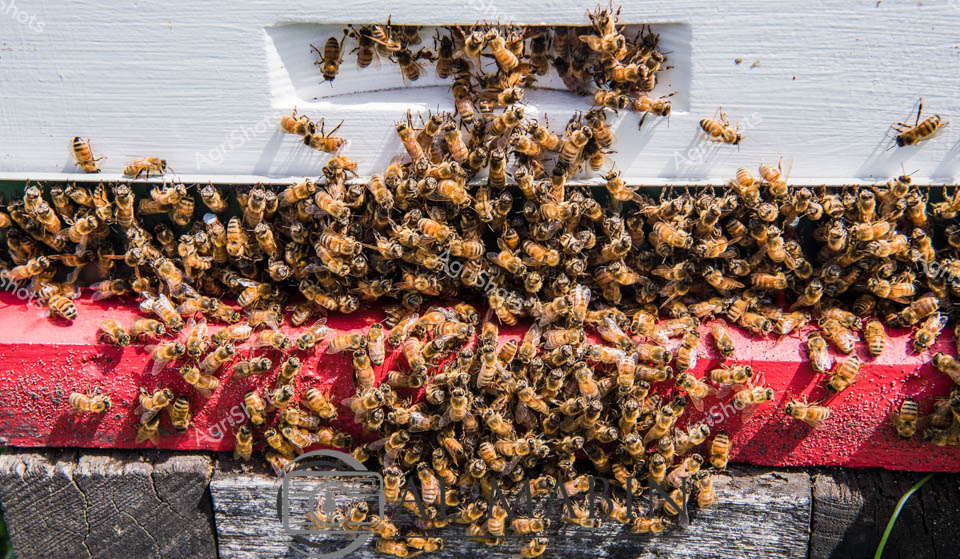
Hundreds of honey bees cluster densely around the entrance of a white wooden hive box in this active apiary scene from Tasmania's Upper Mersey Valley Region. The industrious bees cover the bright red landing board and wooden frames, with many more flying around the hive entrance during this busy spring pollination period. The thriving colony demonstrates the vital role these bees play in honey production and agricultural pollination across the region. Image

Hundreds of honey bees cluster densely around the entrance of a white wooden hive box in this active apiary scene from Tasmania's Upper Mersey Valley Region. The industrious bees cover the bright red landing board and wooden frames, with many more flying around the hive entrance during this busy spring pollination period. The thriving colony demonstrates the vital role these bees play in honey production and agricultural pollination across the region.
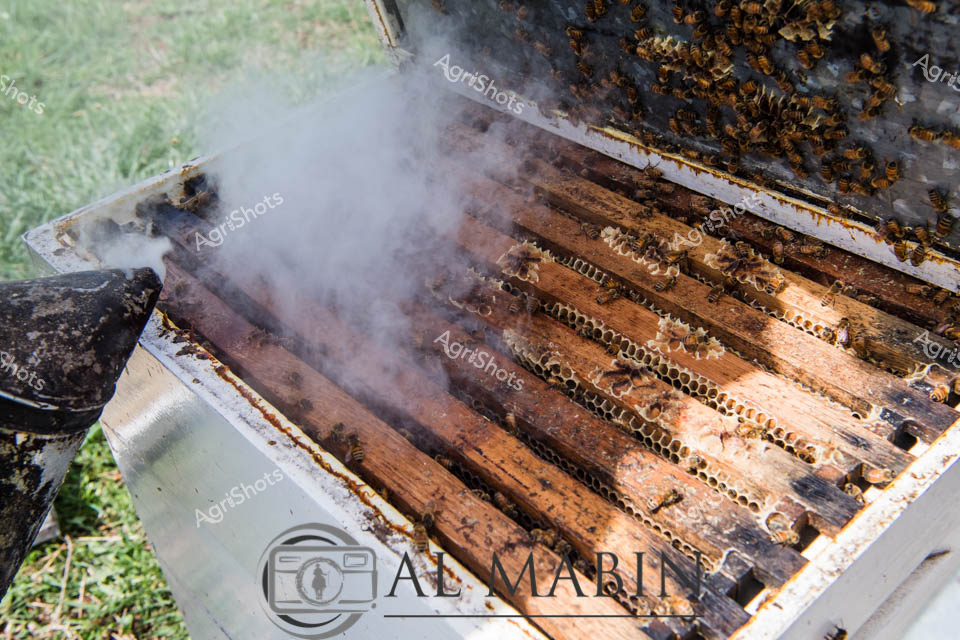
Smoke billows gently from a bee smoker, calming a bustling hive of honeybees in the lush Upper Mersey Valley region of Tasmania. Wooden frames reveal intricate honeycomb structures, golden with fresh honey and teeming with industrious bees moving across their carefully constructed chambers. The soft grey smoke drifts through the apiary, a traditional beekeeping technique that helps manage the colony during inspection, allowing the beekeeper to carefully assess the hive's health and honey production. Weathered wooden hive boxes sit against a backdrop of verdant green grass, capturing the essence of spring in Tasmania's rich agricultural landscape. Sunlight catches the hexagonal wax cells, highlighting the remarkable precision of these tiny pollinators as they work tirelessly within their carefully organized community. This intimate glimpse into apiculture reveals the delicate balance between human intervention and the remarkable natural systems of honeybee colonies. Image

Smoke billows gently from a bee smoker, calming a bustling hive of honeybees in the lush Upper Mersey Valley region of Tasmania. Wooden frames reveal intricate honeycomb structures, golden with fresh honey and teeming with industrious bees moving across their carefully constructed chambers. The soft grey smoke drifts through the apiary, a traditional beekeeping technique that helps manage the colony during inspection, allowing the beekeeper to carefully assess the hive's health and honey production. Weathered wooden hive boxes sit against a backdrop of verdant green grass, capturing the essence of spring in Tasmania's rich agricultural landscape. Sunlight catches the hexagonal wax cells, highlighting the remarkable precision of these tiny pollinators as they work tirelessly within their carefully organized community. This intimate glimpse into apiculture reveals the delicate balance between human intervention and the remarkable natural systems of honeybee colonies.
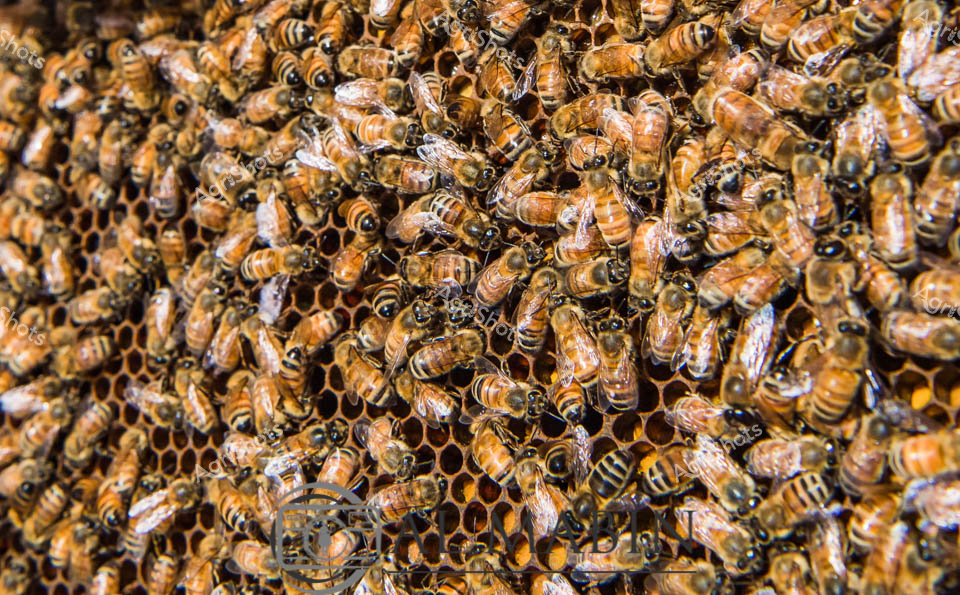
A bustling bee hive reveals hundreds of honey bees clustered densely across dark hexagonal honeycomb cells during spring in Tasmania's Upper Mersey Valley Region. The amber-colored worker bees with distinctive black and brown striped abdomens move actively across the comb structure, their busy activity highlighting the essential pollination work and honey production that sustains both the apiary and surrounding agricultural landscape. The intricate hexagonal pattern of the hive provides a geometric backdrop to this fascinating glimpse into the complex social organization of these vital pollinators, showcasing the industrious nature that makes bee hives such crucial components of Tasmania's spring agricultural ecosystem. Image

A bustling bee hive reveals hundreds of honey bees clustered densely across dark hexagonal honeycomb cells during spring in Tasmania's Upper Mersey Valley Region. The amber-colored worker bees with distinctive black and brown striped abdomens move actively across the comb structure, their busy activity highlighting the essential pollination work and honey production that sustains both the apiary and surrounding agricultural landscape. The intricate hexagonal pattern of the hive provides a geometric backdrop to this fascinating glimpse into the complex social organization of these vital pollinators, showcasing the industrious nature that makes bee hives such crucial components of Tasmania's spring agricultural ecosystem.
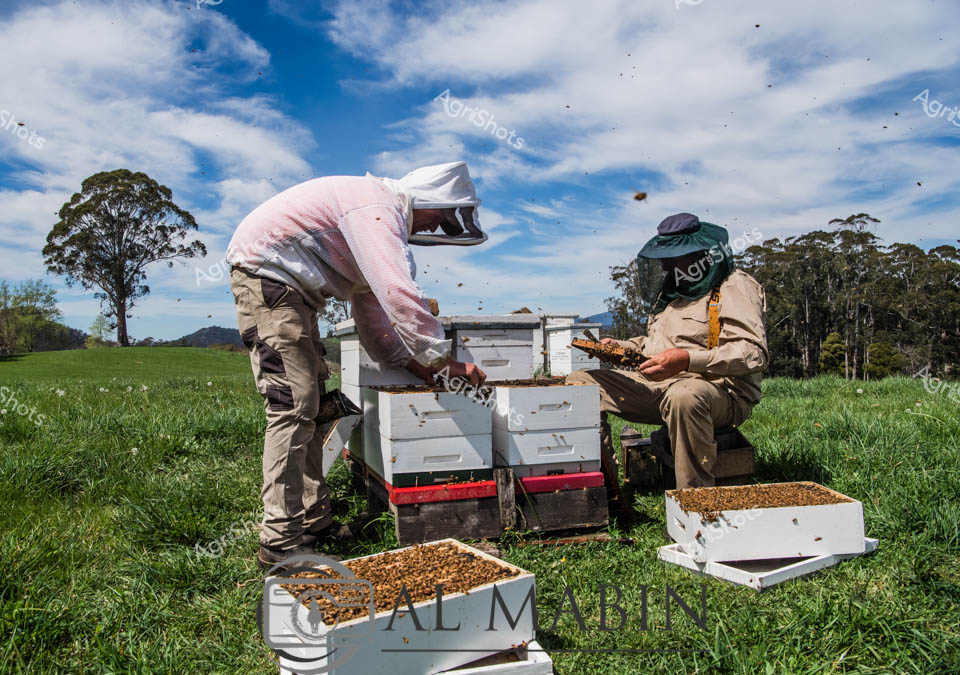
Two beekeepers work together managing bee hives in a spring apiary scene in Tasmania's Upper Mersey Valley Region. One beekeeper wearing protective gear and a veil inspects the hive boxes while bees swarm around the white wooden hive structures scattered across the green paddock. The second beekeeper sits nearby examining honeycomb frames, with both working to maintain the colony during the active pollination season. The rural landscape features eucalyptus trees under a partly cloudy sky, creating an ideal environment for honey production. Image

Two beekeepers work together managing bee hives in a spring apiary scene in Tasmania's Upper Mersey Valley Region. One beekeeper wearing protective gear and a veil inspects the hive boxes while bees swarm around the white wooden hive structures scattered across the green paddock. The second beekeeper sits nearby examining honeycomb frames, with both working to maintain the colony during the active pollination season. The rural landscape features eucalyptus trees under a partly cloudy sky, creating an ideal environment for honey production.
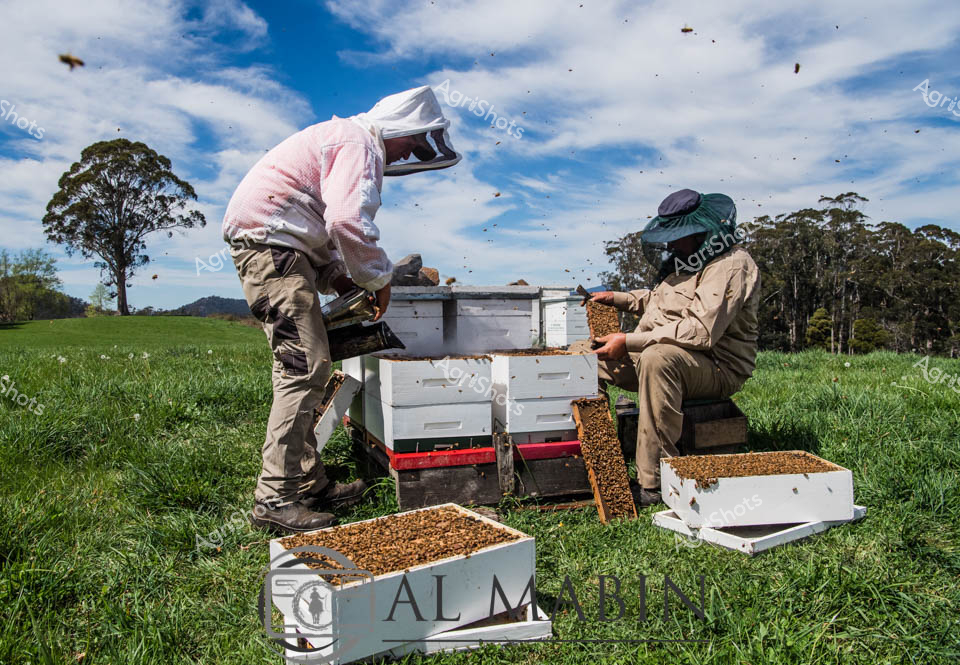
Two beekeepers work methodically with their bee hives in a lush green paddock during spring in Tasmania's Upper Mersey Valley Region. The beekeepers wear protective gear including hats with veils as they inspect frames thick with bees from their white wooden hive boxes. Multiple hive supers are stacked and spread across the grass, with thousands of bees actively flying around the apiary site. This pollination operation showcases the vital role of beekeeping in Tasmania's agricultural landscape, with the scenic rural setting providing an ideal environment for honey production. Image

Two beekeepers work methodically with their bee hives in a lush green paddock during spring in Tasmania's Upper Mersey Valley Region. The beekeepers wear protective gear including hats with veils as they inspect frames thick with bees from their white wooden hive boxes. Multiple hive supers are stacked and spread across the grass, with thousands of bees actively flying around the apiary site. This pollination operation showcases the vital role of beekeeping in Tasmania's agricultural landscape, with the scenic rural setting providing an ideal environment for honey production.

A beekeeper in protective gear tends to a busy hive frame covered with hundreds of honey bees during spring in Tasmania's Upper Mersey Valley Region. The figure works carefully with the active colony, placing their hand near the wooden frame as the bees cluster densely across the honeycomb structure. This close-up view captures the essential work of apiary management and the vital role of bees in pollination throughout the agricultural landscape. Image

A beekeeper in protective gear tends to a busy hive frame covered with hundreds of honey bees during spring in Tasmania's Upper Mersey Valley Region. The figure works carefully with the active colony, placing their hand near the wooden frame as the bees cluster densely across the honeycomb structure. This close-up view captures the essential work of apiary management and the vital role of bees in pollination throughout the agricultural landscape.

A detailed close-up view reveals hundreds of busy honeybees working diligently across the hexagonal honeycomb structure of their hive in Tasmania's Upper Mersey Valley Region. The wooden frame is densely populated with worker bees, their golden-brown bodies creating a living carpet as they tend to their spring pollination duties. The intricate wax comb displays the classic six-sided cell pattern where bees store honey and raise their young, showcasing the remarkable engineering of these industrious insects. This intimate apiary scene captures the essential agricultural partnership between beekeepers and their hives, highlighting the critical role these pollinators play in Tasmania's farming ecosystem during the active spring season. Image

A detailed close-up view reveals hundreds of busy honeybees working diligently across the hexagonal honeycomb structure of their hive in Tasmania's Upper Mersey Valley Region. The wooden frame is densely populated with worker bees, their golden-brown bodies creating a living carpet as they tend to their spring pollination duties. The intricate wax comb displays the classic six-sided cell pattern where bees store honey and raise their young, showcasing the remarkable engineering of these industrious insects. This intimate apiary scene captures the essential agricultural partnership between beekeepers and their hives, highlighting the critical role these pollinators play in Tasmania's farming ecosystem during the active spring season.

A beekeeper's gloved hand carefully examines a thriving honeycomb frame teeming with busy bees during spring in Tasmania's Upper Mersey Valley Region. The active hive displays hundreds of worker bees clustered across the golden honeycomb cells, showcasing the vital pollination work occurring within this well-maintained apiary. The close-up perspective captures the intricate detail of the bees' natural behavior as they tend to their honey production and hive maintenance activities. Image

A beekeeper's gloved hand carefully examines a thriving honeycomb frame teeming with busy bees during spring in Tasmania's Upper Mersey Valley Region. The active hive displays hundreds of worker bees clustered across the golden honeycomb cells, showcasing the vital pollination work occurring within this well-maintained apiary. The close-up perspective captures the intricate detail of the bees' natural behavior as they tend to their honey production and hive maintenance activities.
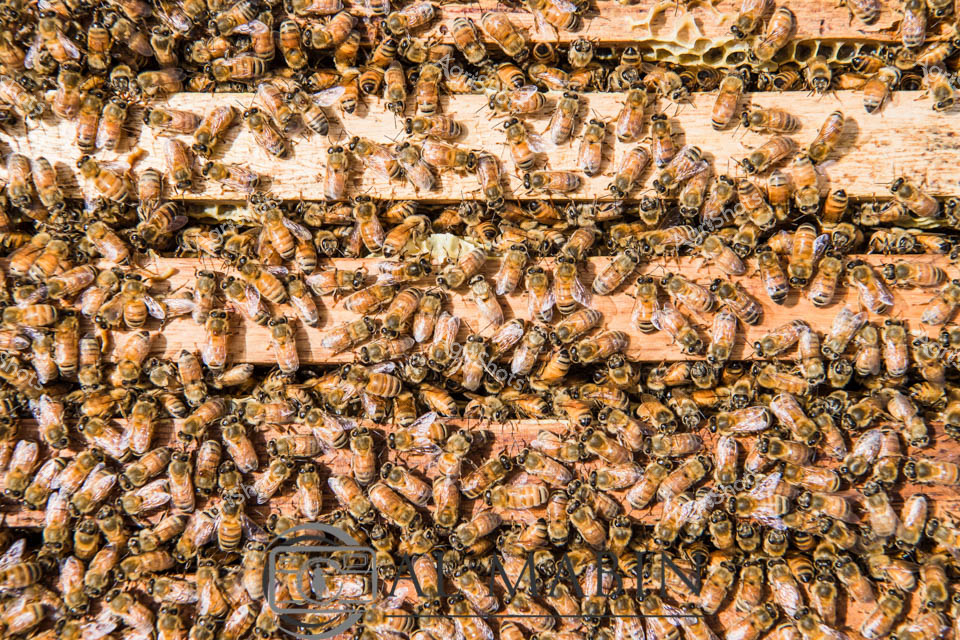
A bustling apiary scene captures hundreds of honeybees densely clustered across wooden hive frames in Tasmania's Upper Mersey Valley Region during spring. The golden-brown bees work industriously on their honeycomb structures, their striped bodies creating a mesmerizing pattern of constant movement and activity. This thriving bee colony demonstrates the vital pollination work that supports agricultural ecosystems, with the wooden hive boxes providing the perfect framework for honey production. The close-up perspective reveals the intricate social organization of the hive, where worker bees tend to their precious honeycomb in preparation for the productive spring season ahead. Image

A bustling apiary scene captures hundreds of honeybees densely clustered across wooden hive frames in Tasmania's Upper Mersey Valley Region during spring. The golden-brown bees work industriously on their honeycomb structures, their striped bodies creating a mesmerizing pattern of constant movement and activity. This thriving bee colony demonstrates the vital pollination work that supports agricultural ecosystems, with the wooden hive boxes providing the perfect framework for honey production. The close-up perspective reveals the intricate social organization of the hive, where worker bees tend to their precious honeycomb in preparation for the productive spring season ahead.
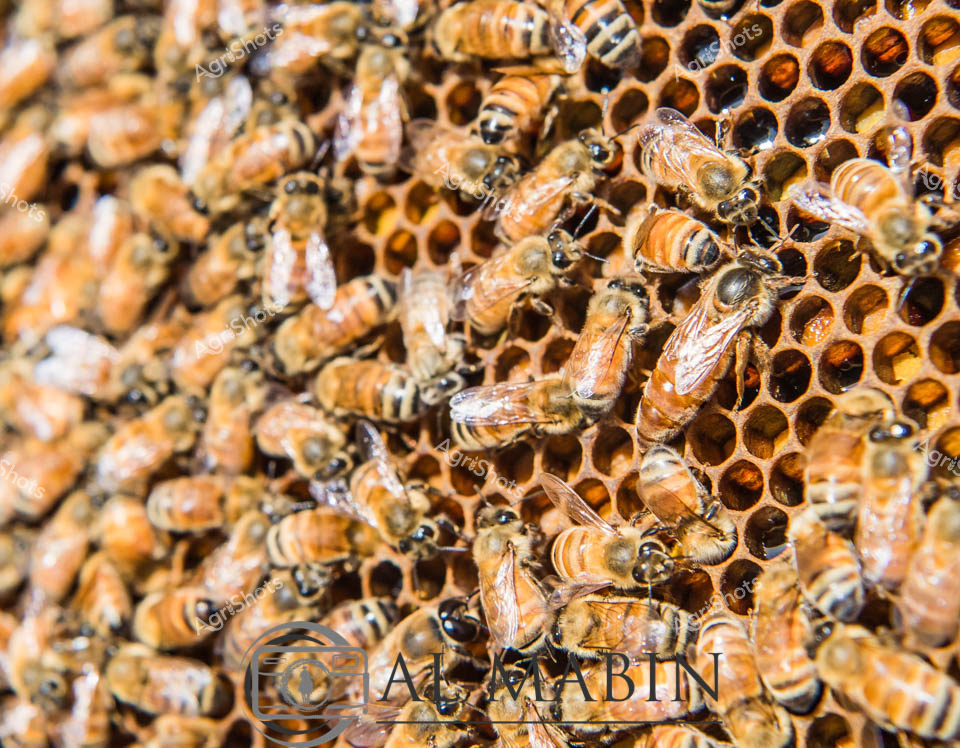
A bustling honeybee colony thrives on their hexagonal honeycomb structure in this detailed apiary scene from Tasmania's Upper Mersey Valley Region. Worker bees with distinctive striped abdomens move purposefully across the wax cells, some filled with golden honey while others contain developing brood, capturing the essential pollination activities of spring. The intricate geometric patterns of the hive reveal the remarkable engineering skills of these industrious insects as they tend to their colony's needs. This intimate view showcases the vital role of bee hives in agricultural ecosystems, where these pollinators support crop production and honey harvesting throughout the Tasmanian countryside. Image

A bustling honeybee colony thrives on their hexagonal honeycomb structure in this detailed apiary scene from Tasmania's Upper Mersey Valley Region. Worker bees with distinctive striped abdomens move purposefully across the wax cells, some filled with golden honey while others contain developing brood, capturing the essential pollination activities of spring. The intricate geometric patterns of the hive reveal the remarkable engineering skills of these industrious insects as they tend to their colony's needs. This intimate view showcases the vital role of bee hives in agricultural ecosystems, where these pollinators support crop production and honey harvesting throughout the Tasmanian countryside.

A close-up view of a bustling bee hive reveals hundreds of honey bees clustered densely across the hexagonal honeycomb structure in Tasmania's Upper Mersey Valley Region. A beekeeper's finger gently points into the frame, demonstrating hands-on apiary management during the active spring pollination season. The golden-brown bees move purposefully across their wax cells, some with heads deep in the comb tending to brood or honey stores, while others patrol the surface in the organized chaos typical of a thriving hive. This intimate perspective captures the intricate world of bee hives and the vital role these industrious insects play in agricultural pollination throughout the Tasmanian landscape. Image

A close-up view of a bustling bee hive reveals hundreds of honey bees clustered densely across the hexagonal honeycomb structure in Tasmania's Upper Mersey Valley Region. A beekeeper's finger gently points into the frame, demonstrating hands-on apiary management during the active spring pollination season. The golden-brown bees move purposefully across their wax cells, some with heads deep in the comb tending to brood or honey stores, while others patrol the surface in the organized chaos typical of a thriving hive. This intimate perspective captures the intricate world of bee hives and the vital role these industrious insects play in agricultural pollination throughout the Tasmanian landscape.

Thousands of honeybees cluster densely across the surface of a hive, their golden-amber bodies creating a living, undulating carpet of intricate movement. Captured in stunning macro detail, this image reveals the extraordinary collective behavior of a thriving bee colony in Tasmania's Upper Mersey Valley region. The bees press tightly together, their bodies forming a protective, breathing mass that speaks to the complex social structure of these remarkable pollinators. Warm amber and brown tones dominate the frame, highlighting the texture and interconnectedness of the swarm against what appears to be a structured hive background. Spring light seems to illuminate the scene, suggesting the peak of bee activity during pollination season. Image

Thousands of honeybees cluster densely across the surface of a hive, their golden-amber bodies creating a living, undulating carpet of intricate movement. Captured in stunning macro detail, this image reveals the extraordinary collective behavior of a thriving bee colony in Tasmania's Upper Mersey Valley region. The bees press tightly together, their bodies forming a protective, breathing mass that speaks to the complex social structure of these remarkable pollinators. Warm amber and brown tones dominate the frame, highlighting the texture and interconnectedness of the swarm against what appears to be a structured hive background. Spring light seems to illuminate the scene, suggesting the peak of bee activity during pollination season.
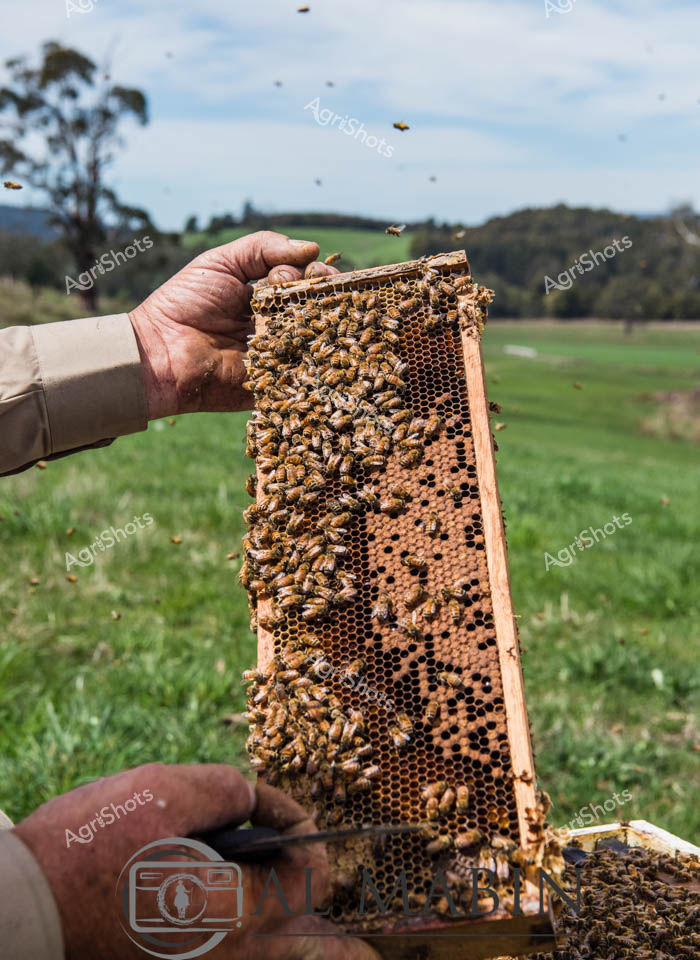
A beekeeper holds up a wooden hive frame densely covered with honeybees in Tasmania's Upper Mersey Valley Region during spring. The frame displays the intricate hexagonal honeycomb structure filled with busy bees, while more bees fly in the background above the green pastoral landscape. This scene captures the essential work of apiary management and the vital role of bee pollination in agricultural systems across the Tasmanian countryside. Image

A beekeeper holds up a wooden hive frame densely covered with honeybees in Tasmania's Upper Mersey Valley Region during spring. The frame displays the intricate hexagonal honeycomb structure filled with busy bees, while more bees fly in the background above the green pastoral landscape. This scene captures the essential work of apiary management and the vital role of bee pollination in agricultural systems across the Tasmanian countryside.
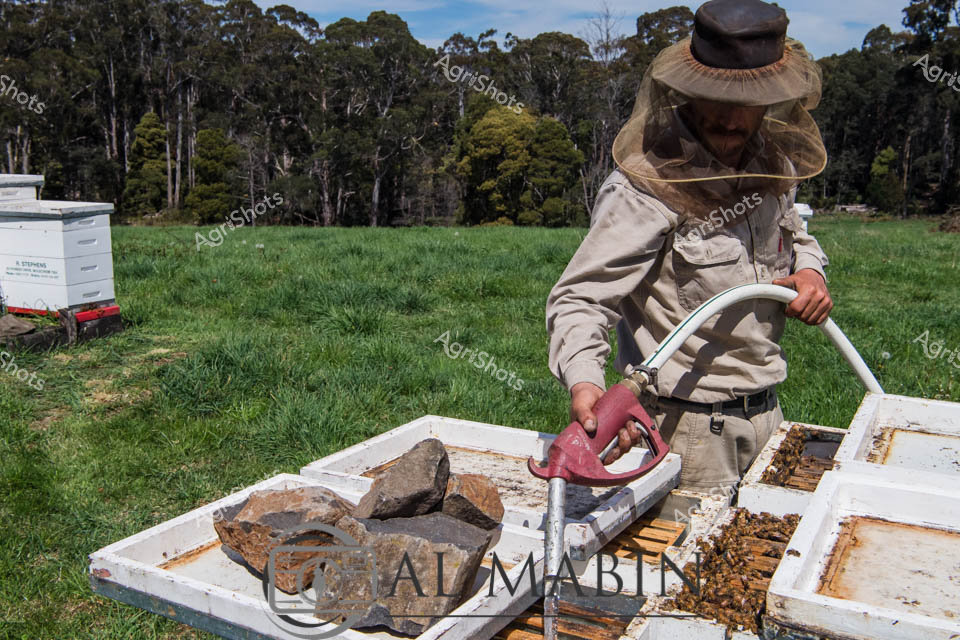
Draped in protective mesh and khaki workwear, a dedicated apiarist carefully tends to honey bee hives nestled in the lush grasslands of Tasmania's Upper Mersey Valley. The verdant pasture stretches between stands of eucalyptus and native forest, creating an idyllic backdrop for this essential agricultural practice. Rocks are strategically placed on the white hive boxes, likely to secure them against potential wind or disturbance, while the beekeeper manages the delicate ecosystem of these critical pollinators. Soft morning light illuminates the scene, suggesting early spring - a crucial time for bee colony management and honey production. The intricate work requires precision and calm, with the beekeeper's protective gear highlighting the careful balance between human intervention and natural bee behavior. This image captures the heart of sustainable agricultural practice, showcasing Tasmania's rich agricultural heritage and the vital role of bees in ecosystem health and food production. Image

Draped in protective mesh and khaki workwear, a dedicated apiarist carefully tends to honey bee hives nestled in the lush grasslands of Tasmania's Upper Mersey Valley. The verdant pasture stretches between stands of eucalyptus and native forest, creating an idyllic backdrop for this essential agricultural practice. Rocks are strategically placed on the white hive boxes, likely to secure them against potential wind or disturbance, while the beekeeper manages the delicate ecosystem of these critical pollinators. Soft morning light illuminates the scene, suggesting early spring - a crucial time for bee colony management and honey production. The intricate work requires precision and calm, with the beekeeper's protective gear highlighting the careful balance between human intervention and natural bee behavior. This image captures the heart of sustainable agricultural practice, showcasing Tasmania's rich agricultural heritage and the vital role of bees in ecosystem health and food production.

Pale wooden beehives stand sentinel along the edge of a dormant almond orchard, their weathered surfaces casting long shadows across the early spring landscape. Bare-branched trees line a neat gravel pathway, their delicate buds just beginning to swell with the promise of blossoms to come. The crisp blue sky stretches overhead, promising warmth and renewal to this carefully tended agricultural space in regional New South Wales. These strategic hive placements represent a crucial symbiosis between pollination and crop production, with the industrious bees about to play their vital role in the coming almond harvest. Soft ground between the orderly tree rows shows hints of new growth, a palette of muted browns and emerging greens signaling the seasonal transition. The meticulous arrangement speaks to precision agricultural practices, where every element - from the positioned beehives to the precisely planted orchard rows - contributes to a carefully managed ecosystem of food production. Image

Pale wooden beehives stand sentinel along the edge of a dormant almond orchard, their weathered surfaces casting long shadows across the early spring landscape. Bare-branched trees line a neat gravel pathway, their delicate buds just beginning to swell with the promise of blossoms to come. The crisp blue sky stretches overhead, promising warmth and renewal to this carefully tended agricultural space in regional New South Wales. These strategic hive placements represent a crucial symbiosis between pollination and crop production, with the industrious bees about to play their vital role in the coming almond harvest. Soft ground between the orderly tree rows shows hints of new growth, a palette of muted browns and emerging greens signaling the seasonal transition. The meticulous arrangement speaks to precision agricultural practices, where every element - from the positioned beehives to the precisely planted orchard rows - contributes to a carefully managed ecosystem of food production.