Results for “Windmill”
 Image
Image
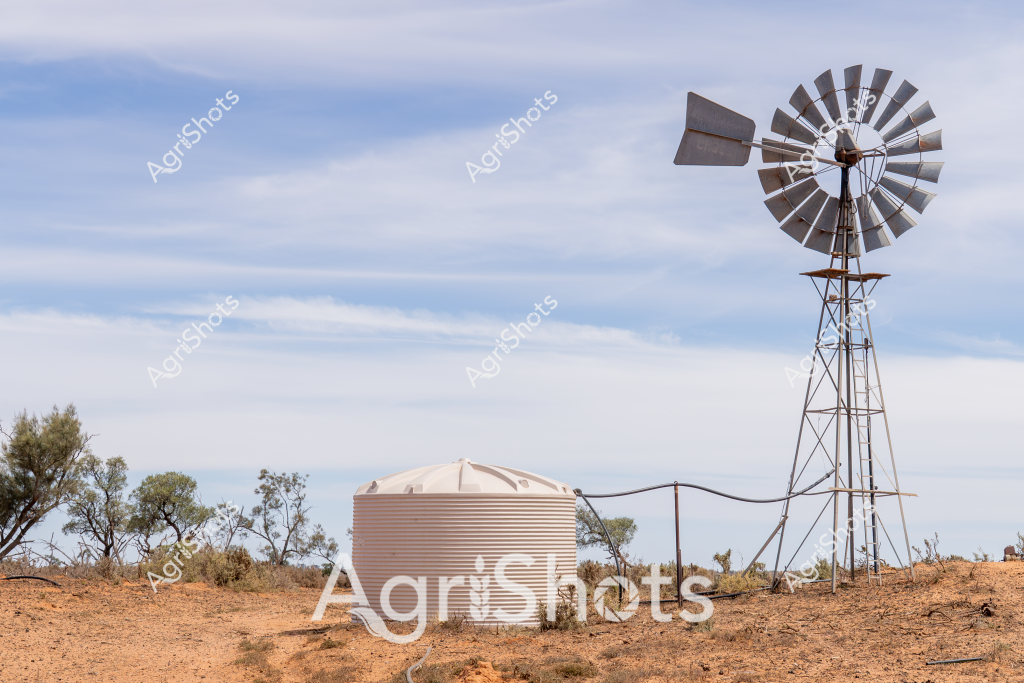
A classic Australian rural landscape captures a weathered windmill and water tank in an arid, drought-affected setting. The tall metal windmill stands prominently against a soft blue sky, its metal blades positioned to catch any available breeze. A corrugated steel water tank sits nearby, providing crucial water storage for the surrounding sparse landscape. Scattered native scrub and sparse trees dot the reddish-brown earth, highlighting the challenging environmental conditions typical of inland Australia. The scene embodies the resilience of rural infrastructure, with the windmill representing generations of agricultural adaptation to harsh, dry environments. The muted color palette of dusty browns, soft blues, and silvery metal tones speaks to the austere beauty of Australia's agricultural heartland.
 Image
Image
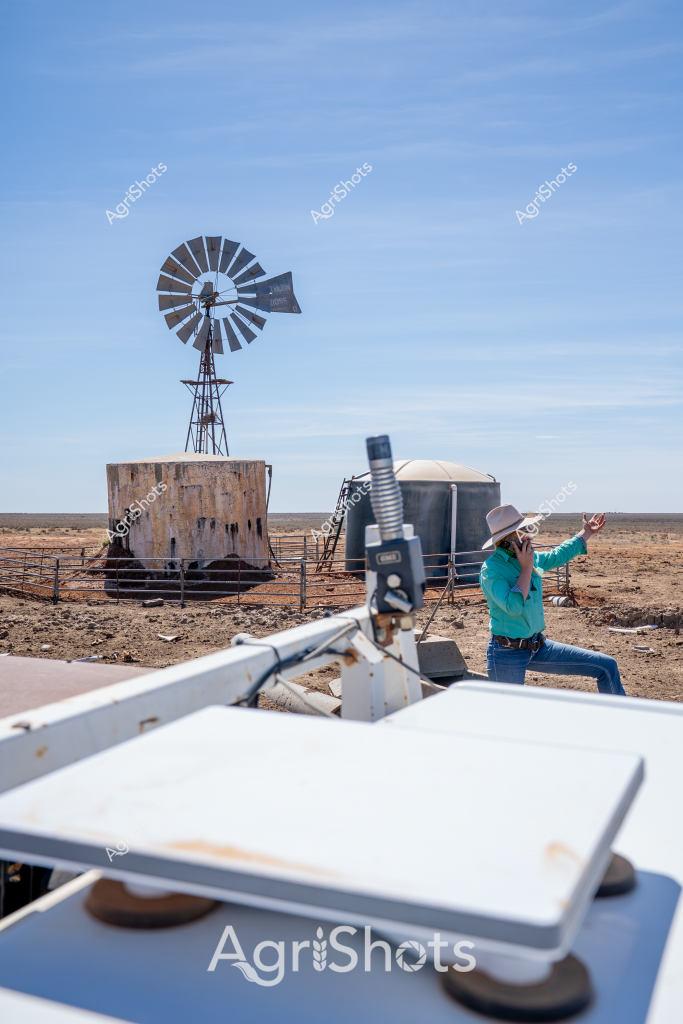
A woman in a teal shirt and wide-brimmed hat stands near a classic windmill and water tank in a stark, arid landscape. The windmill's metal blades rise against a clear blue sky, positioned next to a weathered cylindrical water tank enclosed by a metal fence. In the foreground, scientific or surveying equipment is visible, suggesting the woman is conducting environmental or agricultural research in this remote, dry terrain. The landscape appears to be a typical Australian outback scene - flat, dusty ground stretching to a distant horizon, with minimal vegetation indicating challenging drought conditions. The bright turquoise of the woman's shirt provides a vivid contrast to the muted browns and grays of the surrounding environment, highlighting human presence in this harsh but essential agricultural setting.
 Image
Image
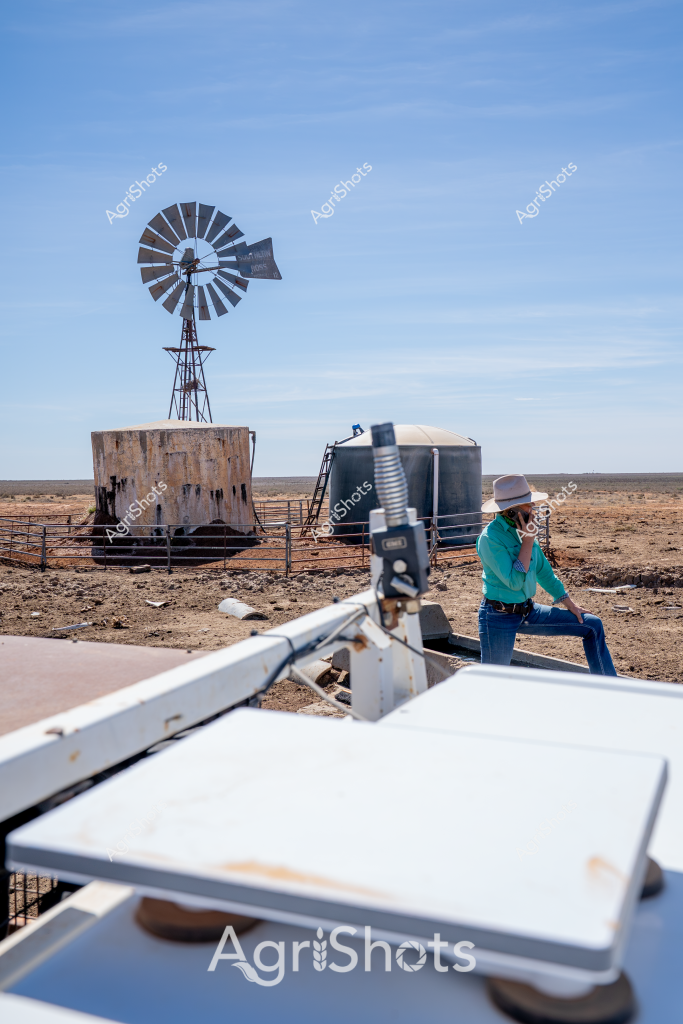
A windmill and water storage setup dominates this arid rural landscape, capturing the essence of remote Australian farming infrastructure. A person wearing a turquoise shirt and a wide-brimmed hat sits contemplatively near water tanks, surrounded by a stark, dusty terrain that stretches to a flat horizon under a clear blue sky. An old metal windmill stands prominently, its multiple blades positioned to catch even the slightest breeze, alongside a weathered concrete water storage tank enclosed by metal fencing. The scene epitomizes the resilience of agricultural operations in harsh, dry environments, where water management is critical for survival. Rusted equipment and minimal vegetation underscore the challenging conditions of this remote agricultural setting, highlighting the technological adaptations farmers use to sustain operations in Australia's unforgiving outback landscape.
 Image
Image
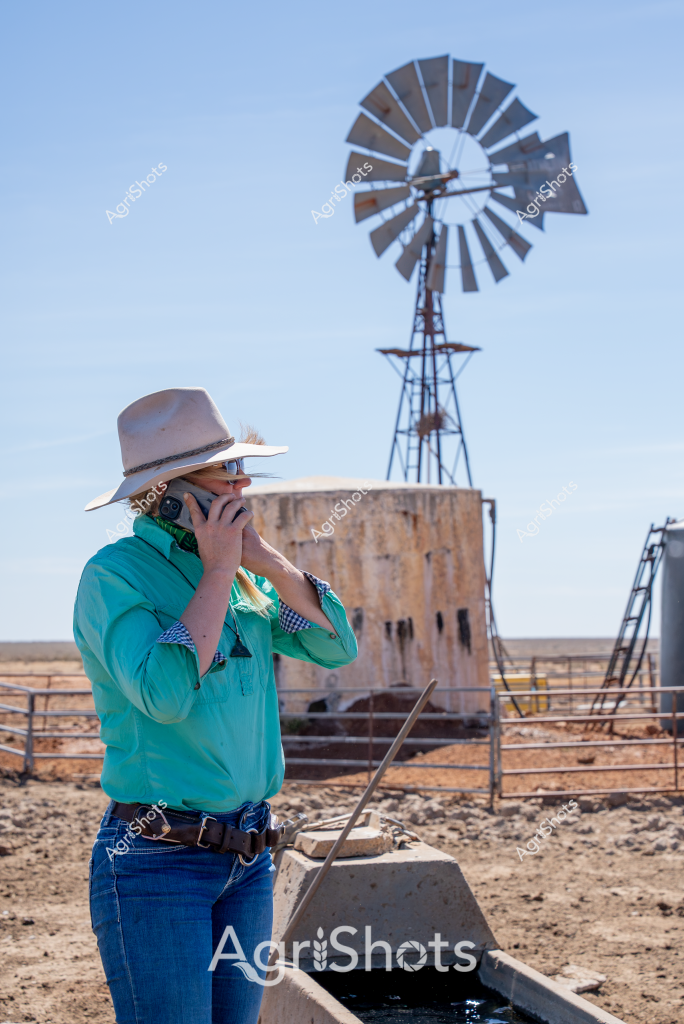
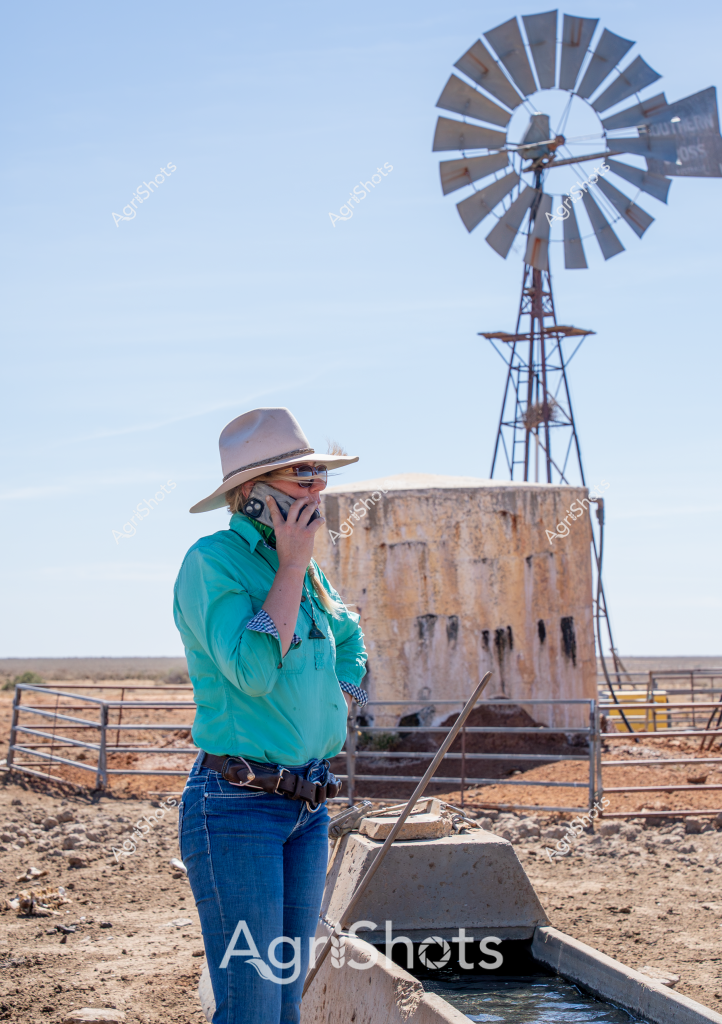
A woman in a teal work shirt and wide-brimmed hat stands amid a dry, arid rural landscape, talking on a mobile phone near a classic Australian windmill and water tank. The rural setting captures the essence of remote station life, with a metal windmill towering against a clear blue sky and a concrete water trough in the foreground. Her outfit - a bright turquoise long-sleeved shirt, blue jeans, and a neutral-toned rural work hat - speaks to practical station wear for harsh outback conditions. The windmill, a quintessential piece of Australian agricultural infrastructure, stands tall on a metal tower, its multiple metal blades designed to pump groundwater in this seemingly dry, rocky terrain. The landscape suggests a remote farming or cattle station location, likely in Western Australia, Northern Territory, or Queensland, where water infrastructure is critical for livestock and agricultural survival.
 Image
Image
A woman farmer stands in a sun-bleached rural landscape, talking on a mobile phone beside a classic Australian windmill and water tank. Wearing a cream Akubra hat, turquoise long-sleeved shirt, and blue jeans, she appears to be managing a remote pastoral property. The metal windmill towers above a concrete water trough, with a rusted water storage tank visible in the background. The surrounding terrain is arid and rocky, typical of Australia's inland agricultural regions, with a clear blue sky suggesting a hot, dry day. Her stance and communication suggest she is coordinating farm operations or checking on livestock in this challenging outback environment. The scene captures the essence of contemporary rural Australian agriculture - a blend of traditional infrastructure like the windmill and modern communication technology, with a resilient farmer adapting to the demands of managing agricultural land in a harsh landscape.
 Image
Image
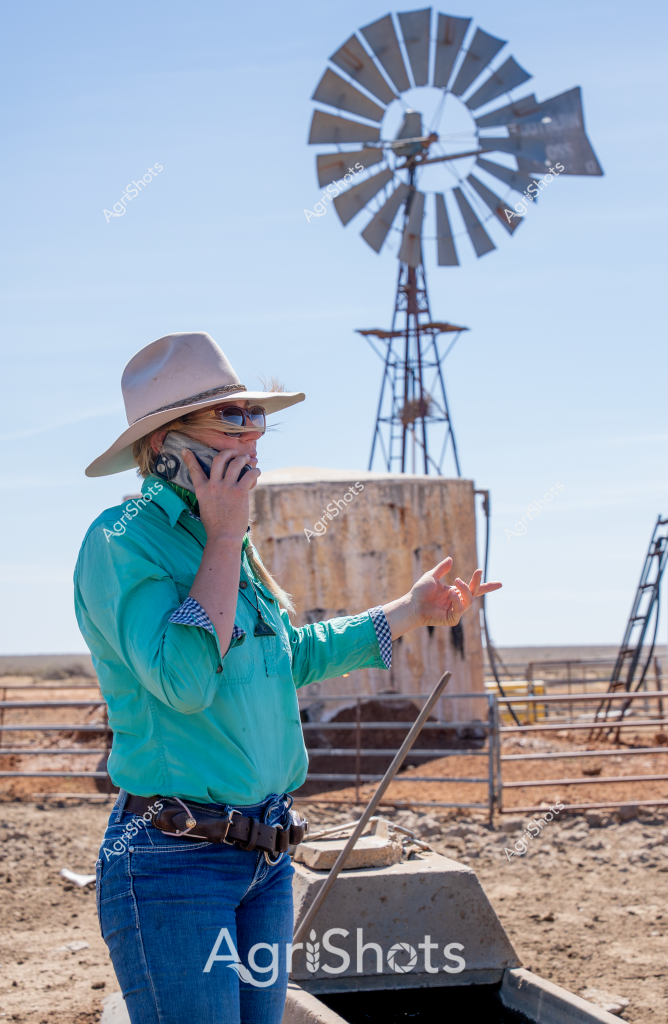
A woman wearing a broad-brimmed hat and teal work shirt stands in a dry, arid landscape beside a classic windmill and water tank. She is talking on a mobile phone while gesturing with her other hand, her stance conveying a sense of focused communication amid the stark rural setting. The windmill's metal blades stand silhouetted against a clear blue sky, while a concrete water tank and sparse fencing suggest this is a remote agricultural property. Her outfit - a crisp turquoise shirt, blue jeans, and a neutral-toned hat - reflects typical Australian rural workwear, highlighting the resilience and practical nature of farmers working in challenging outback conditions. The scene captures the essence of modern agricultural communication, where technology meets traditional farming landscapes.
 Image
Image
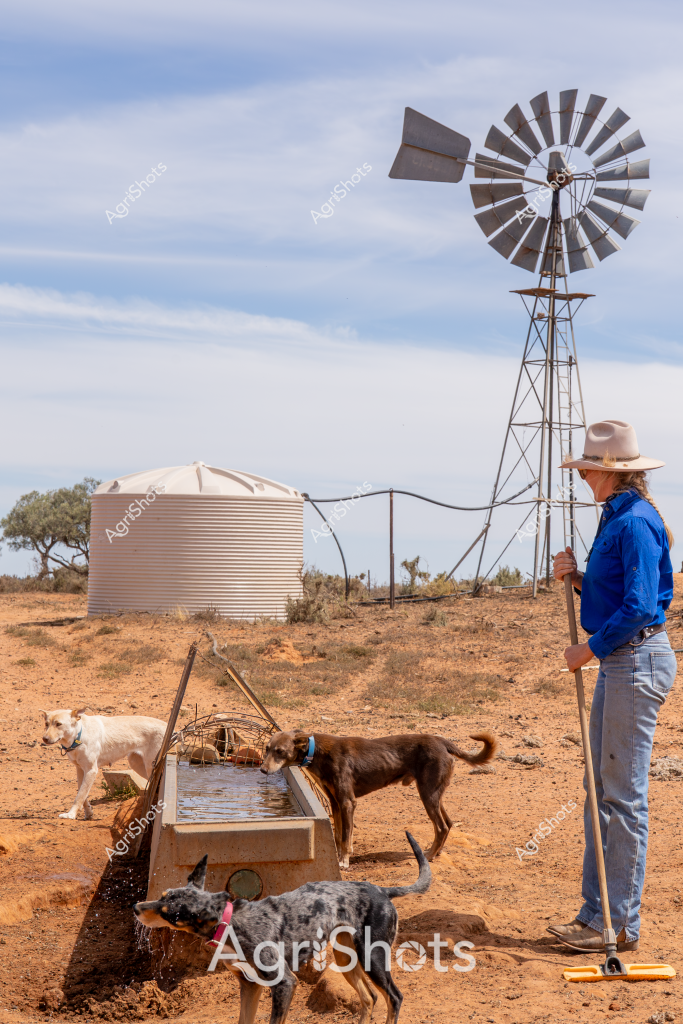
A woman farmer stands beside a windmill on an arid rural property, surveying the dry landscape with three working dogs around a water trough. The scene captures a typical Australian outback setting, with reddish-brown earth, a large corrugated water tank, and a classic metal windmill tower against a pale blue sky. The woman wears a blue long-sleeved shirt, light-colored jeans, and a broad-brimmed hat, embodying the resilient spirit of rural Australian agriculture. Three dogs - a white dog, a brown dog, and a blue merle dog - are gathered around a concrete water trough, drinking or waiting attentively. The windmill, a crucial piece of infrastructure in remote agricultural areas, stands ready to pump groundwater, highlighting the importance of water management in harsh, dry environments. The sparse vegetation and rocky ground underscore the challenging conditions faced by farmers in this region, with sparse trees and scrub vegetation scattered across the background.
 Image
Image
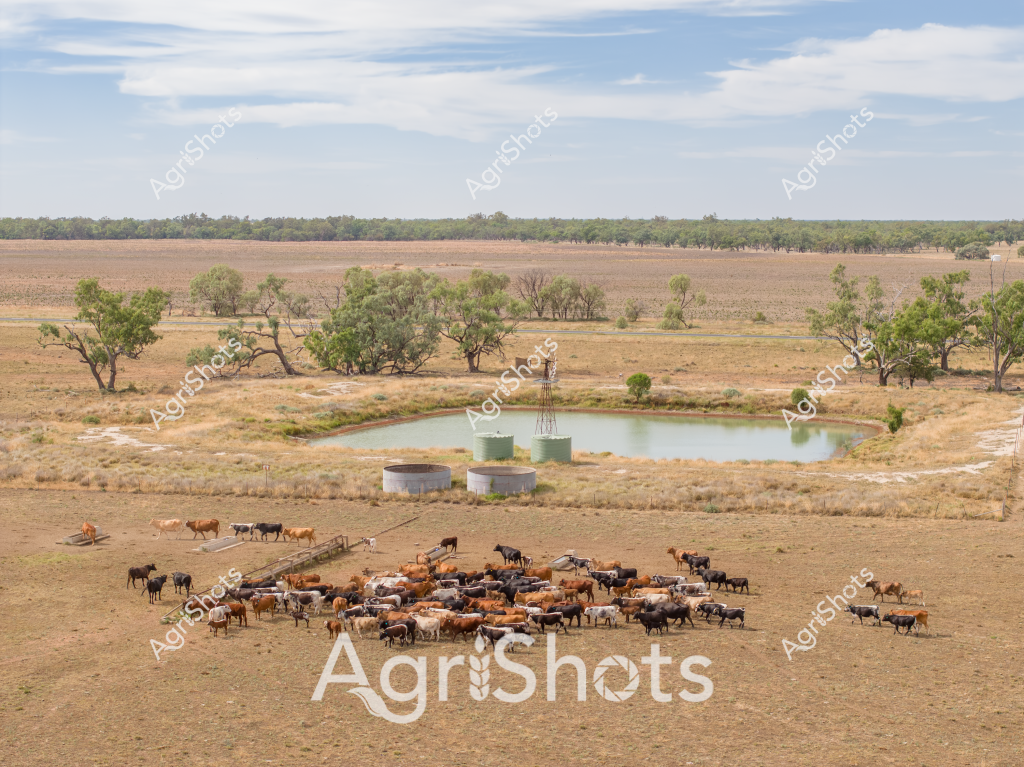
A classic Australian pastoral scene captures a small herd of mixed-breed cattle clustered around a water dam in a dry, expansive landscape. The circular water dam, accompanied by windmill and water storage tanks, sits in the center of a parched paddock with scattered eucalyptus trees and sparse grassland stretching toward distant tree lines. Multiple cattle breeds are represented - including black, brown, and white animals - huddled together near the water source in what appears to be a challenging dry season environment. The landscape suggests an inland Queensland or New South Wales pastoral station, with its characteristic wide-open terrain and minimal vegetation indicative of prolonged drought conditions. A windmill stands sentinel beside the water dam, a quintessential feature of Australian rural infrastructure, providing critical water access for livestock in arid agricultural regions. The scene powerfully illustrates the resilience of Australian cattle farming, where strategic water management is essential for survival during harsh environmental conditions.
 Image
Image
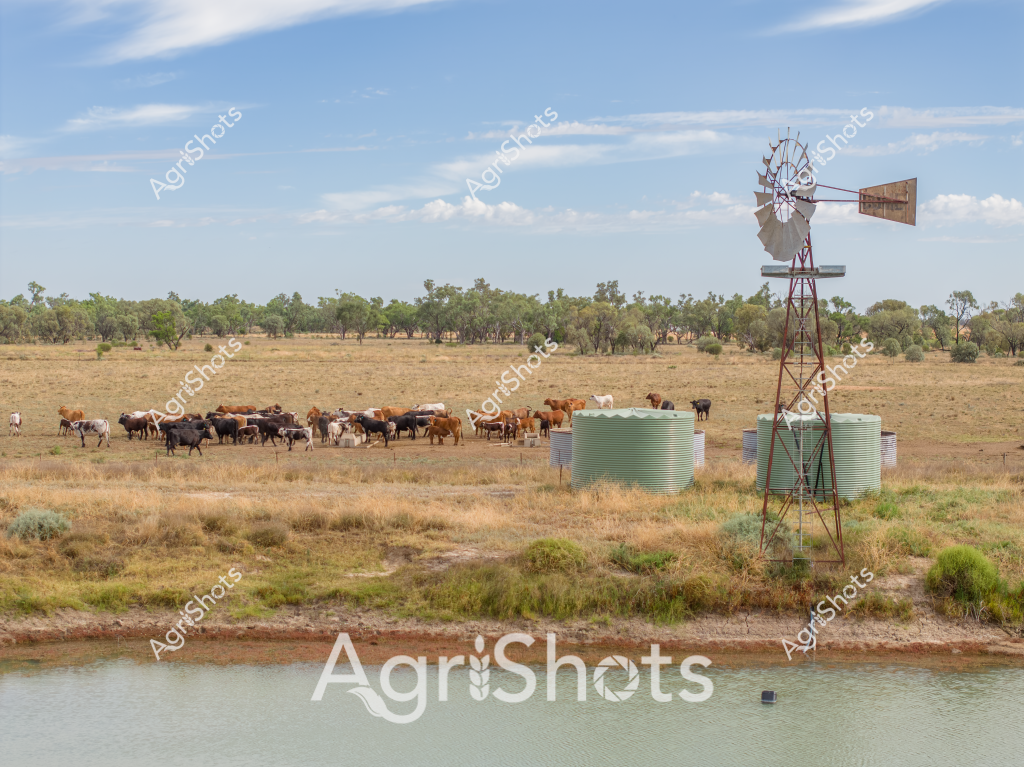
A classic Australian rural landscape captures a herd of mixed-breed cattle gathered near water storage tanks and a traditional windmill. Approximately 30-40 cattle of various colors - including brown, white, and black - cluster together in a dry, golden-grassed paddock with scattered eucalyptus trees in the background. A classic green corrugated water tank and tall metal windmill stand sentinel near a small dam or water hole in the foreground, providing essential water infrastructure for the livestock. The scene epitomizes a typical pastoral setting in rural Australia, likely in an inland region such as western New South Wales or Queensland. The landscape appears dry and somewhat sparse, with low grasses and scattered vegetation suggesting potential drought conditions. A bright blue sky with wispy clouds creates a sense of expansive openness characteristic of Australian agricultural regions. The windmill, a quintessential feature of outback farming, represents traditional water management techniques still used in many rural properties. The cattle seem to be resting and grazing, demonstrating the resilience of livestock in challenging environmental conditions. This image captures the essence of Australian cattle farming - adaptability, resourcefulness, and the stark beauty of rural landscapes.
 Image
Image
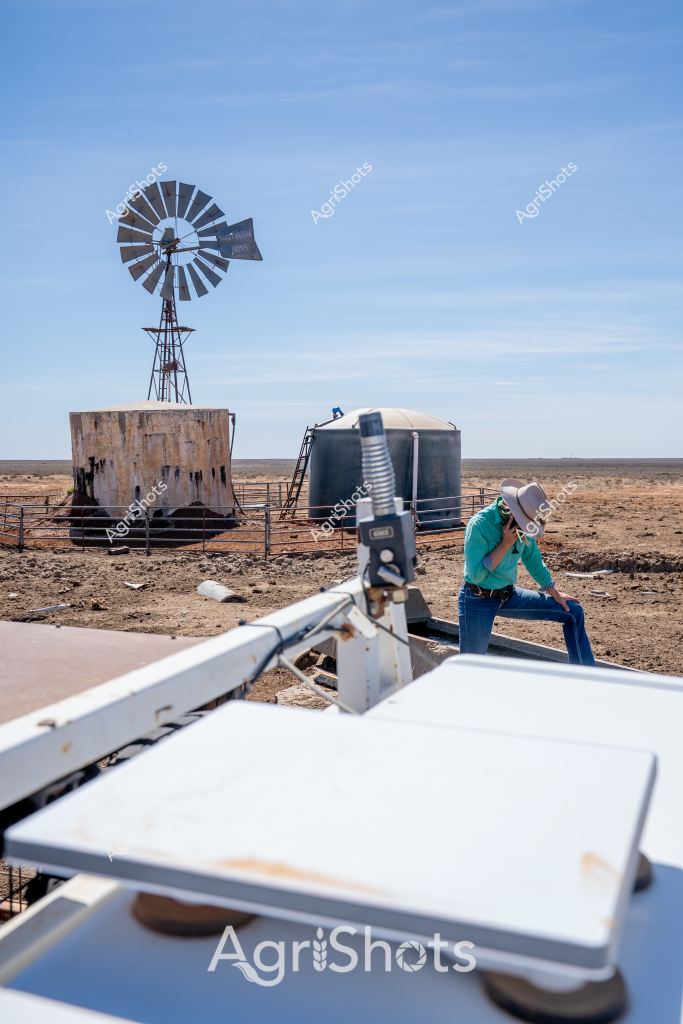
A lone figure in a turquoise shirt and wide-brimmed hat sits contemplatively beside a classic Australian windmill in an expansive, arid landscape. The rusted metal windmill stands tall next to weathered water tanks, surrounded by a barren, rocky terrain that epitomizes the challenging conditions of outback farming. A white equipment surface dominates the foreground, suggesting this is a working agricultural site where water infrastructure is critical for survival in a dry environment. The clear blue sky stretches endlessly, emphasizing the isolation and resilience required in remote agricultural settings. Water storage tanks and the iconic windmill represent the essential infrastructure that enables farming and livestock management in Australia's harsh, drought-prone regions. The scene captures the solitude and quiet determination of rural workers who maintain agricultural operations in extremely challenging environments.
 ▶ Video
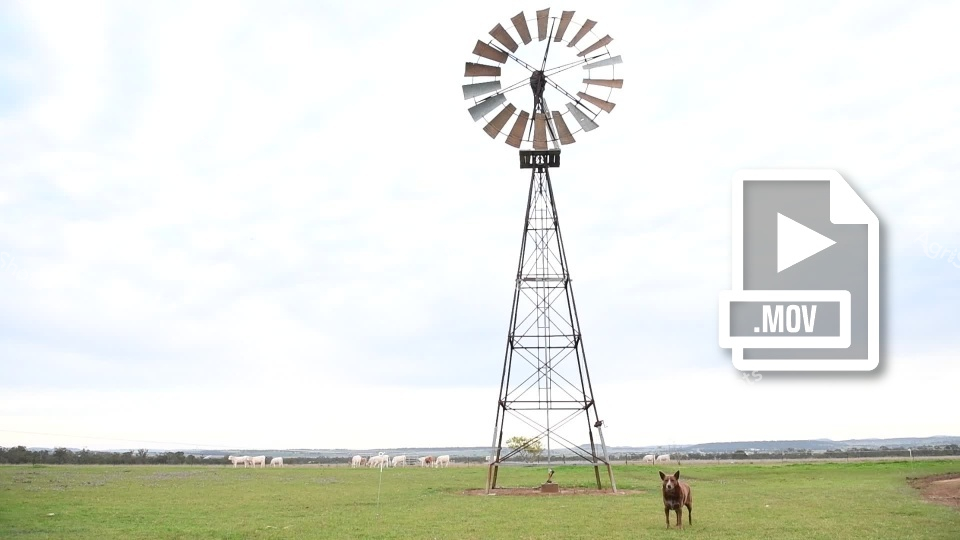
In this serene pastoral scene, a lone horse stands near a classic windmill on a green pasture, with farm structures and distant treelines visible on the horizon. The tall metal windmill, with its distinctive multi-bladed design, dominates the landscape, representing traditional agricultural infrastructure used for water pumping and land management.
 Image
Image
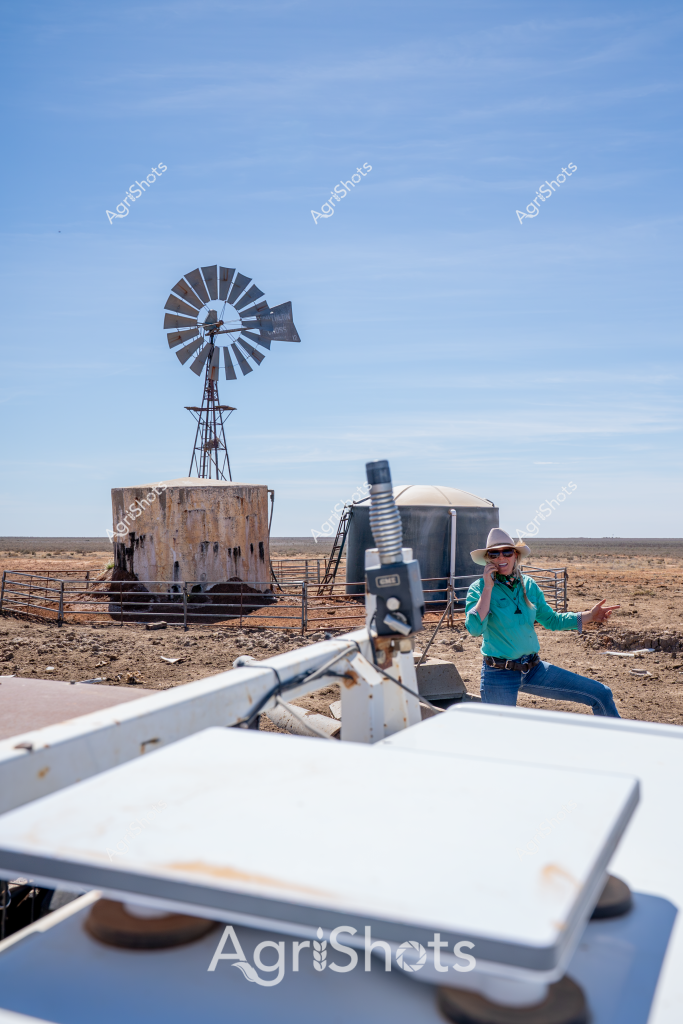
A woman in a turquoise shirt and wide-brimmed hat stands amid a stark, arid landscape, conducting agricultural field research or survey work near a classic windmill and water storage tank. The windmill, a quintessential feature of Australian rural infrastructure, rises against a clear blue sky, its metal blades poised to catch the slightest breeze. A white instrument or measurement device is mounted in the foreground, suggesting scientific data collection or environmental monitoring. The surrounding terrain is a palette of browns and tans - dry, compacted earth characteristic of drought-affected or semi-arid regions of Australia. This scene captures the resilience of agricultural workers and the essential infrastructure that supports farming in challenging environmental conditions, where water management and precise environmental measurements are critical to survival and productivity.
 Image
Image
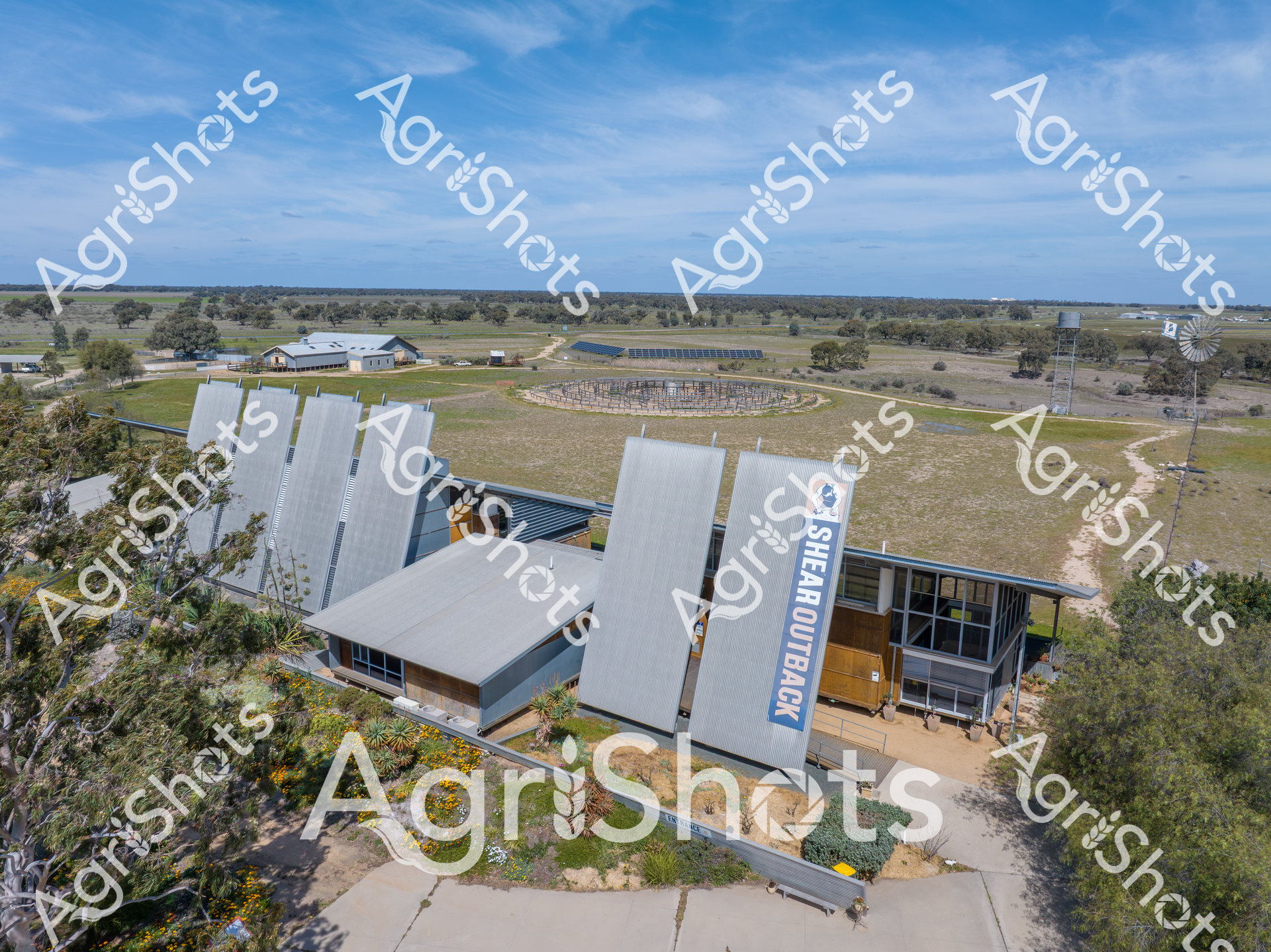
Aerial view of Shear Outback, a unique agritourism destination in the Riverina region of New South Wales. The site features modern architectural buildings with distinctive angled roofs, solar panels, and a circular sheep yard, showcasing the region's rich sheep farming heritage against a backdrop of expansive Australian countryside.
 Image
Image
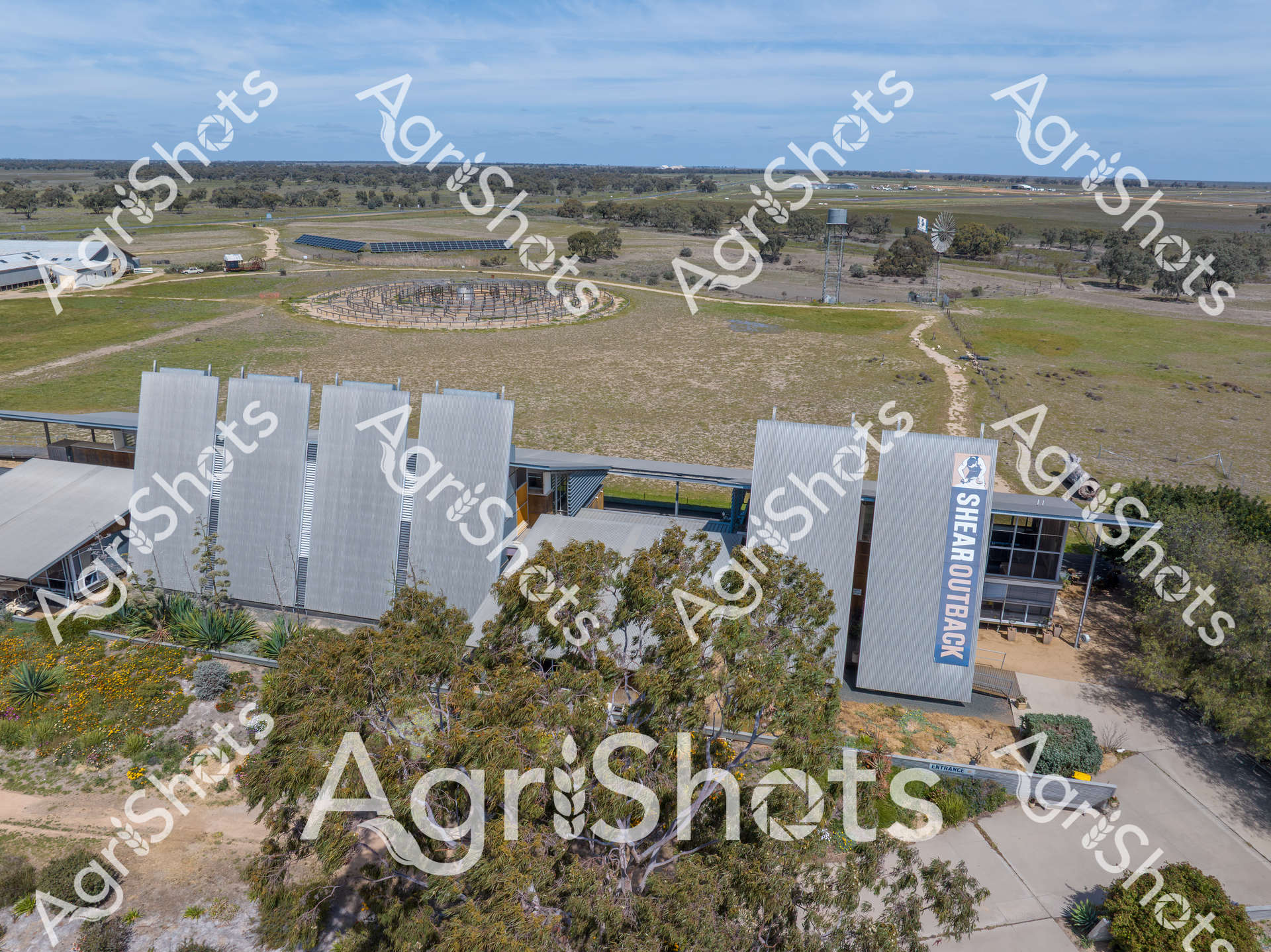
An aerial view of Shear Outback, a rural agricultural tourism site in New South Wales' Riverina region. The landscape features modern shearing facilities, solar panels, a circular sheep yard, and native trees, highlighting the area's sheep farming heritage and sustainable agricultural practices.
 ▶ Video
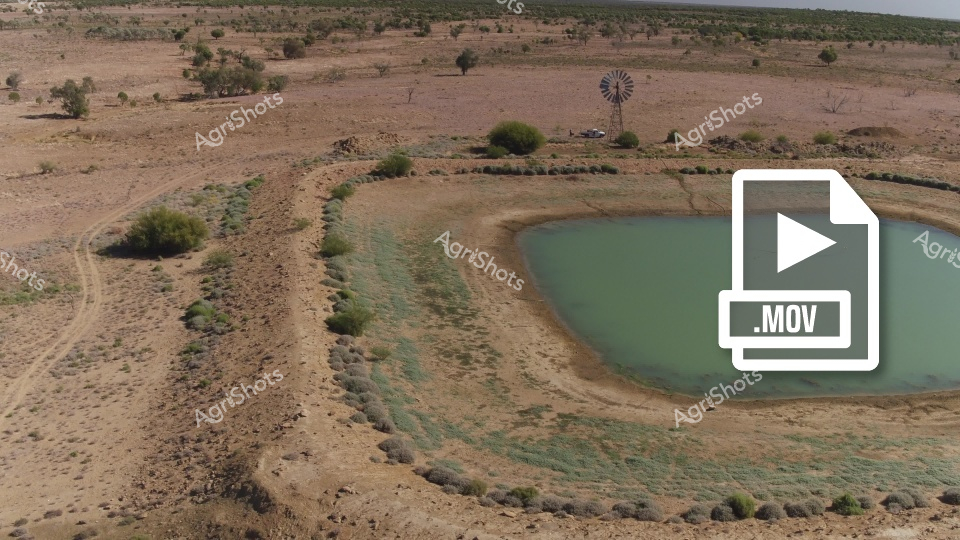
An aerial view captures a water dam nestled in drought-affected Queensland station country, where a traditional windmill stands sentinel beside the precious water source. The arid landscape stretches endlessly with sparse vegetation scattered across the parched earth, while the dam's green-tinted water provides a vital lifeline during these harsh drought conditions. Stone embankments carefully contain the water resource, demonstrating the critical infrastructure required for station operations in Australia's challenging outback environment.
 Image
Image
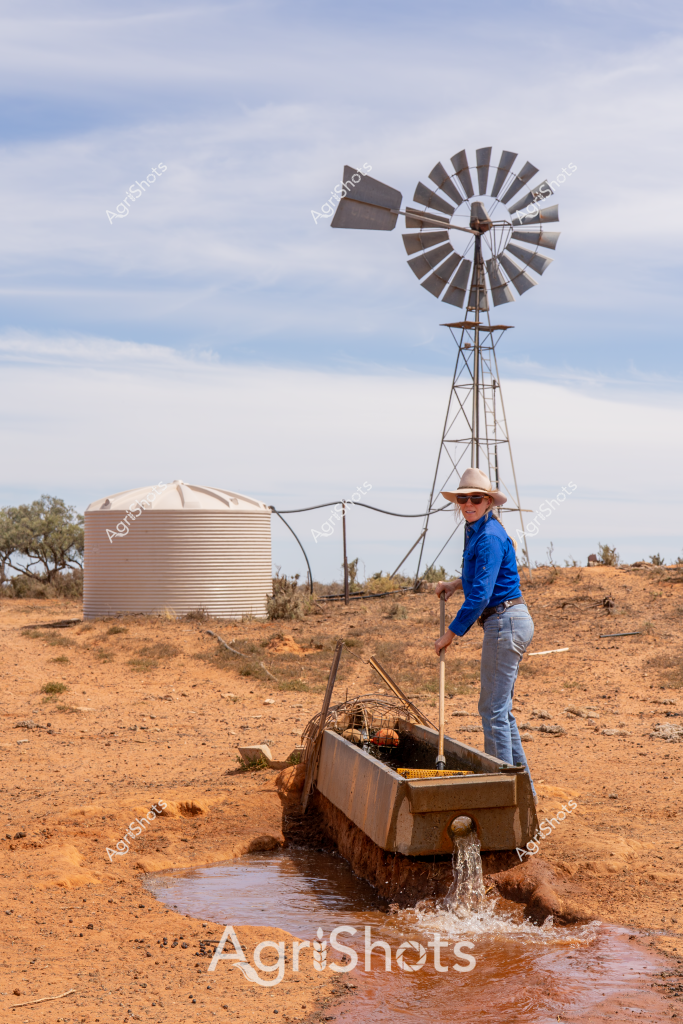
A woman in a blue long-sleeved shirt and wide-brimmed hat stands beside a windmill and water tank in a stark, arid Australian outback landscape. She is positioned near a rustic water trough where water is flowing, indicating a critical rural water infrastructure setup typical of remote pastoral properties. The scene captures the challenging environment of inland Australia, with reddish-brown soil, sparse vegetation, and a pale blue sky suggesting dry, hot conditions. The traditional windmill towers overhead, its metal blades positioned to catch wind and pump groundwater, while the corrugated steel water tank provides essential water storage. This image exemplifies the resilience and ingenuity of Australian farmers in managing water resources in harsh, drought-prone regions, showcasing the essential infrastructure that supports agricultural activities in remote areas.
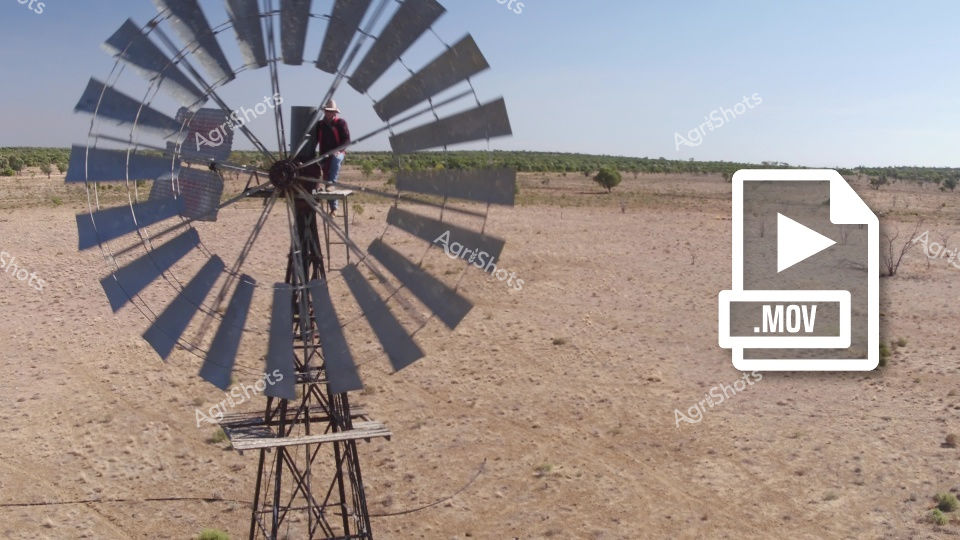 ▶ Video
A traditional windmill stands prominently in the drought-affected Queensland landscape, its metal blades catching the wind as a man farm worker maintains the structure. The arid station property stretches to the horizon under clear skies, with sparse vegetation highlighting the challenging water conditions across this rural area. The windmill serves as a vital water source for the property, pumping groundwater to sustain operations during extended dry periods.
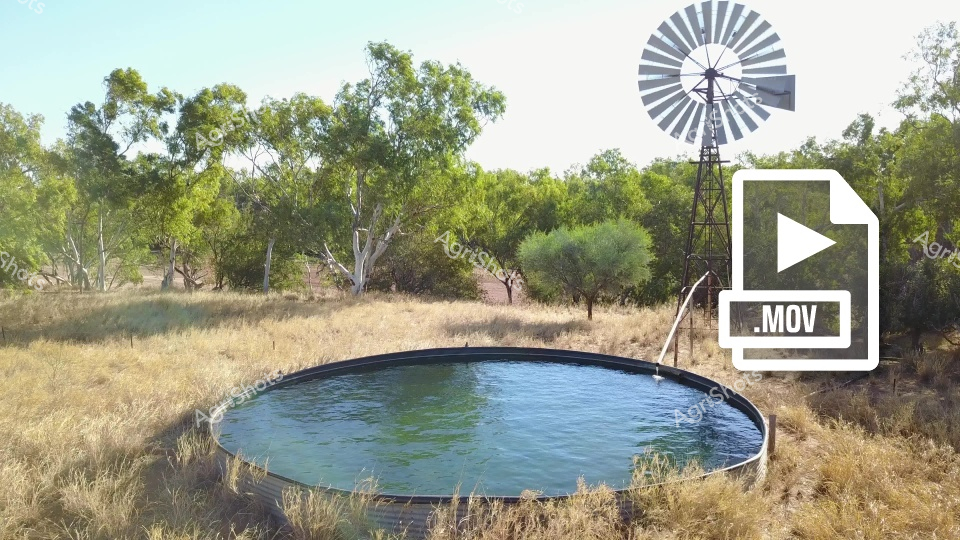 ▶ Video
A rural landscape featuring a large circular water tank surrounded by dry grass and scattered trees, with a classic windmill standing tall in the background. The metal water tank is filled with blue-green water, providing a vital water source in this arid environment. The scene captures the essence of Australian outback farming, showcasing traditional water management techniques in a rugged, sun-drenched setting.
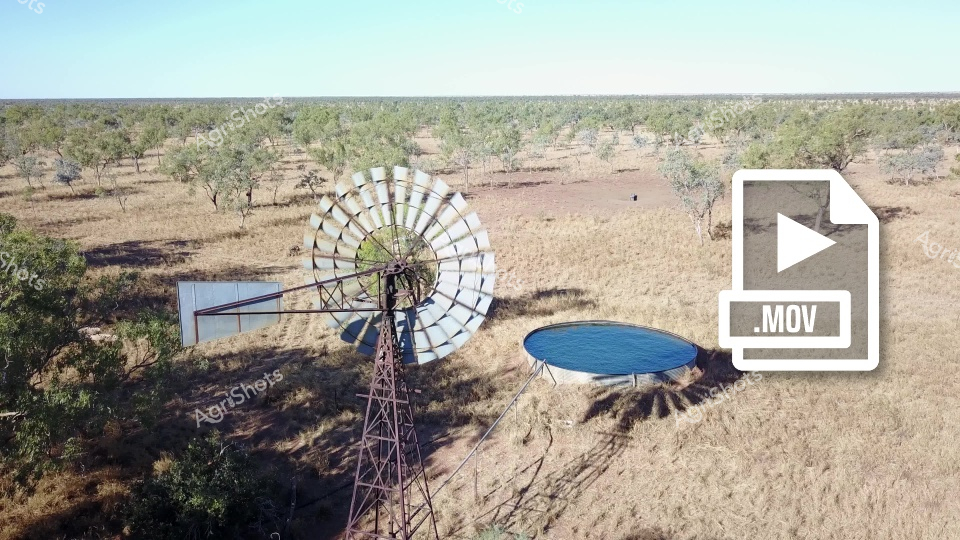 ▶ Video
A classic Australian windmill stands sentinel over a dry pastoral landscape, its large metal wheel capturing the breeze beside a blue water tank. Scattered gum trees and sparse grassland stretch to the horizon, revealing a typical scene from the arid inland regions, likely in rural Queensland or the Northern Territory during a dry season.
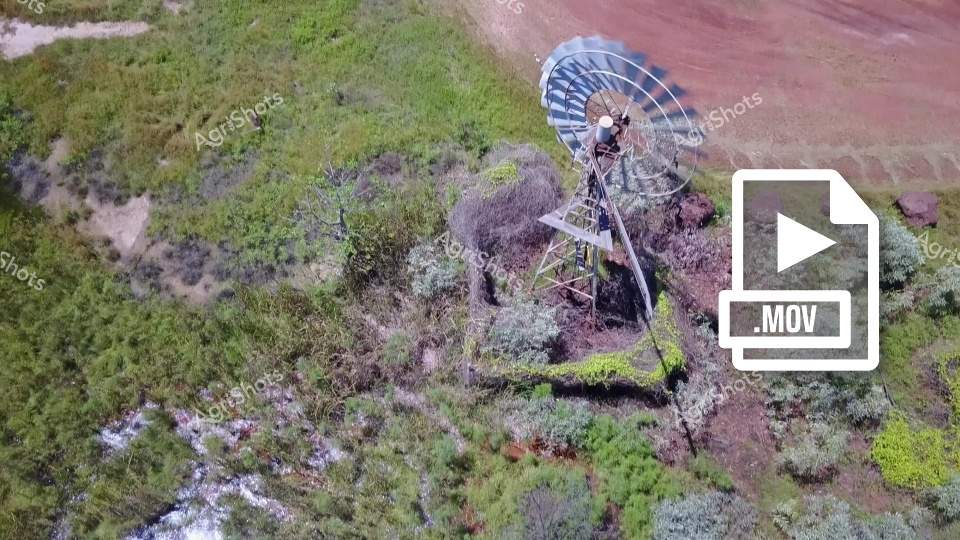 ▶ Video
Aerial drone view of a rustic windmill standing in a diverse, textured landscape with green vegetation, exposed earth, and rocky terrain. The windmill's metal structure and large circular fan are prominently positioned amid scrubby plants and uneven ground, suggesting a remote, rural setting typical of agricultural or pastoral regions.
 ▶ Video
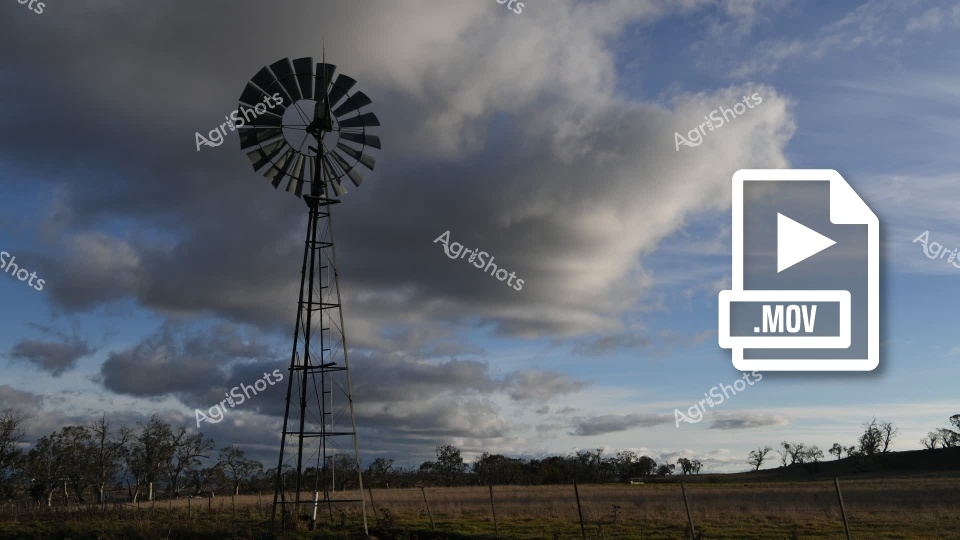
A classic rural windmill stands tall against a dramatic sky in the Australian countryside of New South Wales. Dark clouds swirl around the steel structure, casting a moody atmosphere over the open grassland and scattered trees, capturing the raw essence of a remote agricultural landscape.
 Image
Image
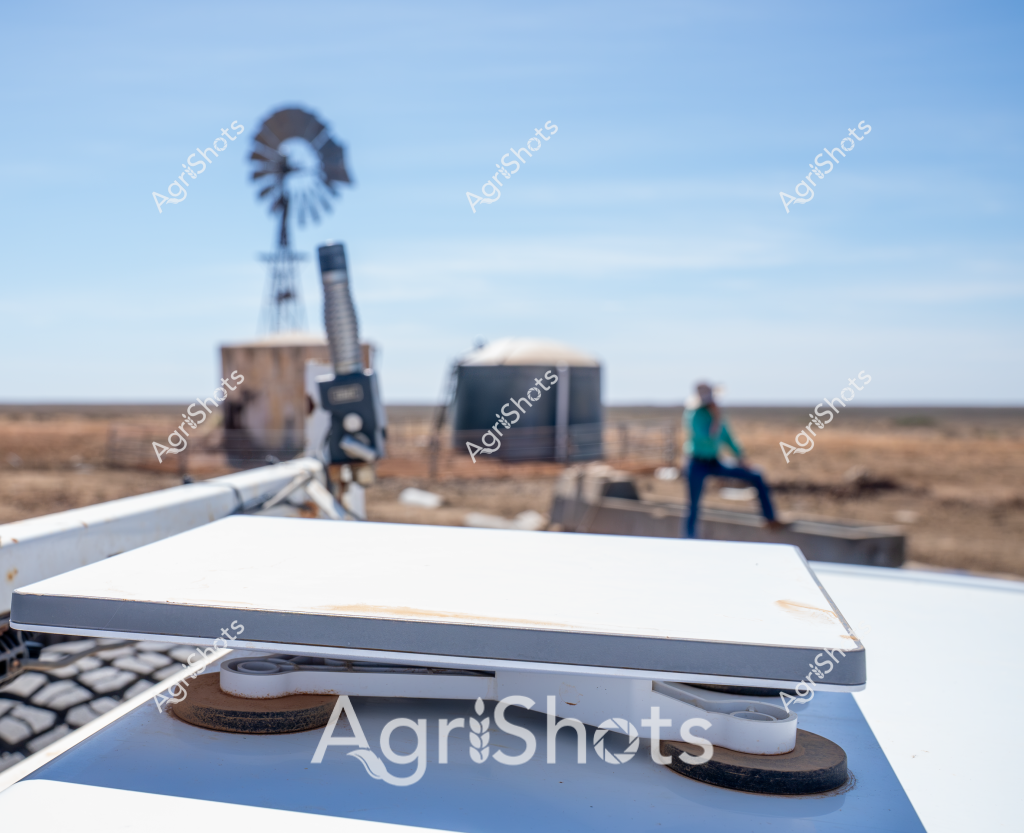
A rural scene captures an agricultural monitoring setup in a dry, expansive landscape, featuring a windmill and technical equipment in the background. In the foreground, a sophisticated white monitoring device with gray trim sits precisely positioned, its sensors and mounting points suggesting advanced data collection capabilities. A person wearing a teal-colored jacket stands near some equipment modules, indicating ongoing field research or environmental monitoring. The stark, arid terrain stretches to the horizon, with a classic Australian windmill standing tall against the clear blue sky, symbolizing traditional water management techniques alongside modern technological approaches. The muted earth tones of the landscape - browns and tans - contrast sharply with the crisp white of the monitoring equipment and the vibrant teal of the worker's clothing, creating a compelling visual narrative of contemporary agricultural science in action. The scene represents the intersection of traditional farming infrastructure and cutting-edge environmental monitoring technology, typical of agricultural research in Australia's challenging rural environments. The careful placement of equipment suggests precise data collection, potentially related to soil conditions, climate monitoring, or agricultural research.
 Image
Image
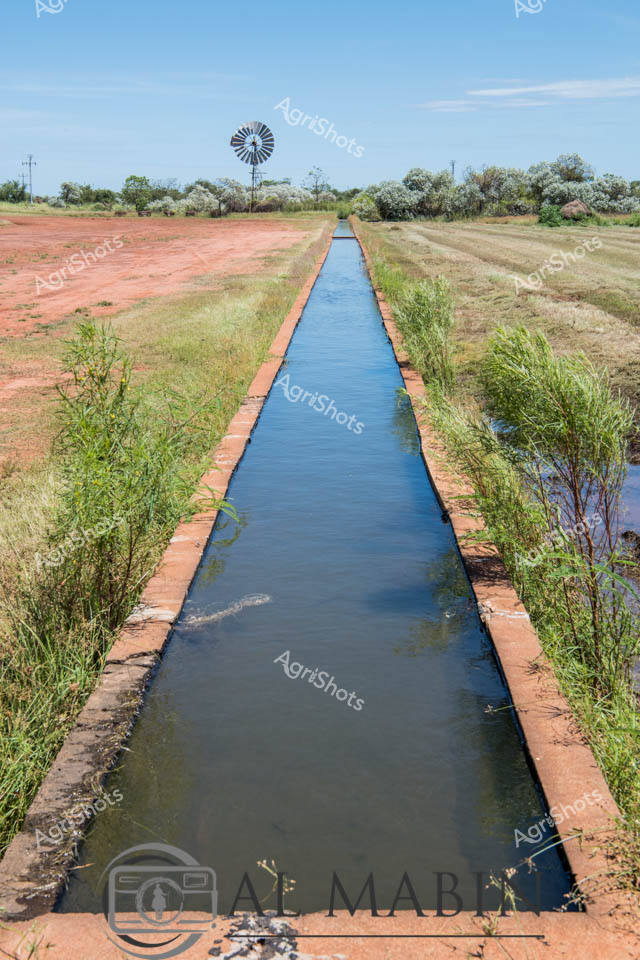
Ochre earth and azure water define this quintessential West Australian irrigation landscape. A precise concrete water channel slices through rust-red soil, its clean geometric lines contrasting with wild grasses sprouting along its weathered brick edges. In the distance, a classic multi-bladed windmill stands sentinel, a timeless symbol of agricultural persistence in an arid landscape. Crisp blue sky and soft green vegetation frame the scene, revealing the delicate balance between engineered water management and natural ecosystem. This channel represents the lifeblood of agricultural productivity, channeling precious water across dry pastoral lands, transforming seemingly barren ground into potential agricultural abundance. The linear composition draws the eye toward the horizon, capturing the expansive, meditative quality of rural Western Australian agricultural terrain.
 Image
Image
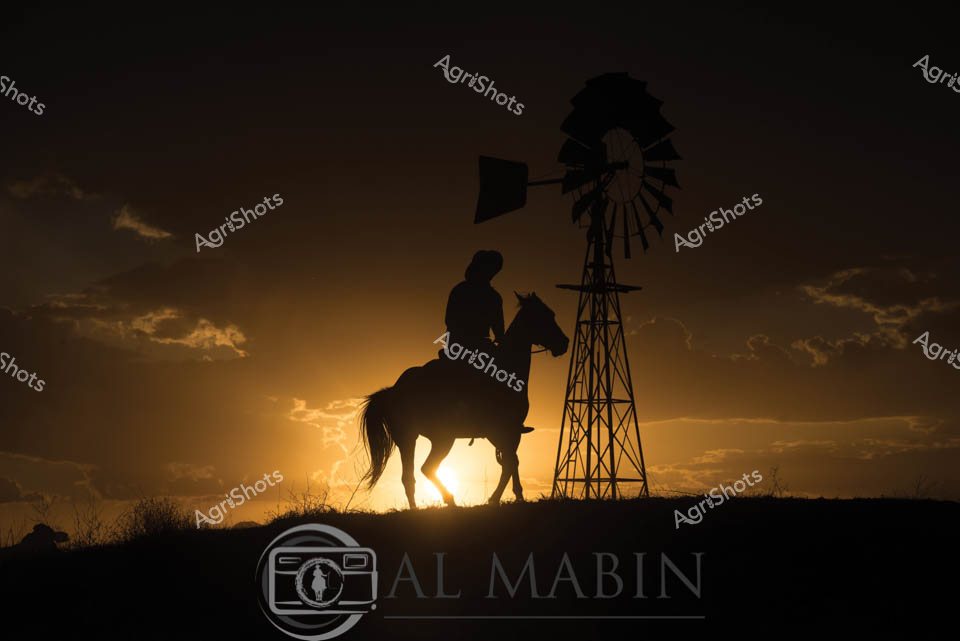
A figure on horseback is silhouetted against a dramatic sunset sky beside a classic farm windmill, creating an iconic scene of Australian rural life. The rider and horse appear as dark silhouettes against the golden light, capturing the timeless connection between stockwork and the land. The windmill's distinctive lattice tower and multi-bladed wheel structure stands prominently against the moody sky, representing essential water infrastructure on remote stations. This evocative scene embodies the enduring spirit of droving and stock route traditions across Australia's pastoral landscapes.