Results for “Turquoise Shirt”
 Image
Image
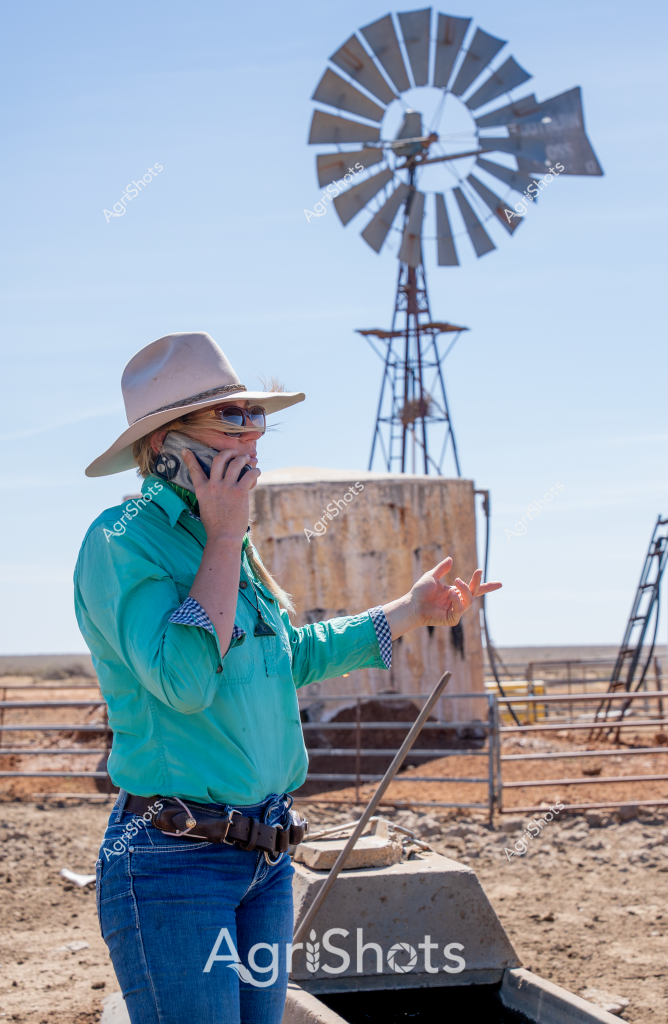
A woman wearing a broad-brimmed hat and teal work shirt stands in a dry, arid landscape beside a classic windmill and water tank. She is talking on a mobile phone while gesturing with her other hand, her stance conveying a sense of focused communication amid the stark rural setting. The windmill's metal blades stand silhouetted against a clear blue sky, while a concrete water tank and sparse fencing suggest this is a remote agricultural property. Her outfit - a crisp turquoise shirt, blue jeans, and a neutral-toned hat - reflects typical Australian rural workwear, highlighting the resilience and practical nature of farmers working in challenging outback conditions. The scene captures the essence of modern agricultural communication, where technology meets traditional farming landscapes.
 Image
Image
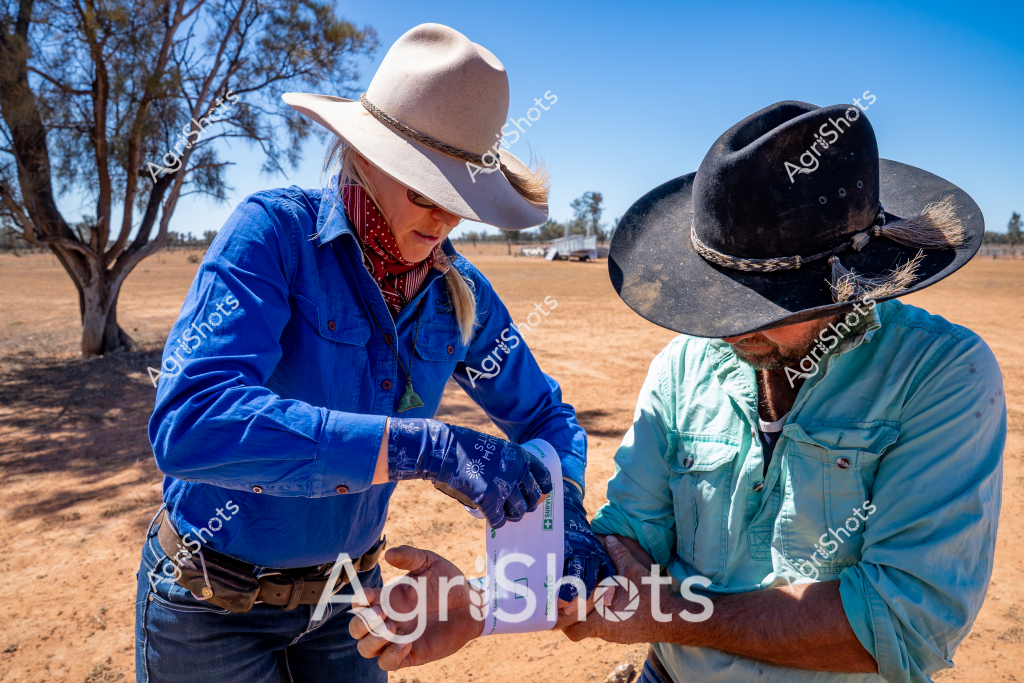
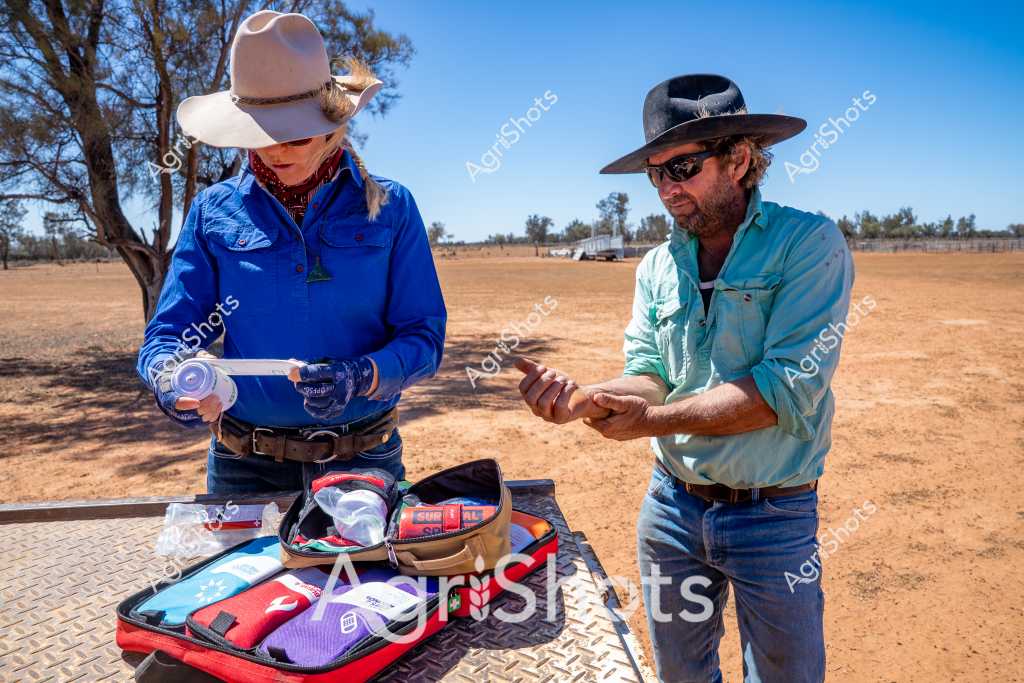
In the arid Australian outback, a woman in a bright blue work shirt and white wide-brimmed hat carefully handles what appears to be a sample or testing container alongside a man wearing a light turquoise shirt and a dark black stockman's hat. The dry, dusty landscape surrounds them, with a lone tree and parched ground stretching into the distance under a brilliant blue sky. Both workers are wearing protective gloves, suggesting they are conducting some form of agricultural testing or livestock health assessment. Their clothing - sturdy work shirts, robust hats, and practical work gear - speaks to the rugged nature of rural Australian agricultural work, where professionals must be prepared for harsh environmental conditions. The scene captures the essence of professional agricultural fieldwork, with careful attention to detail and protection against the unforgiving Australian rural environment.
 Image
Image
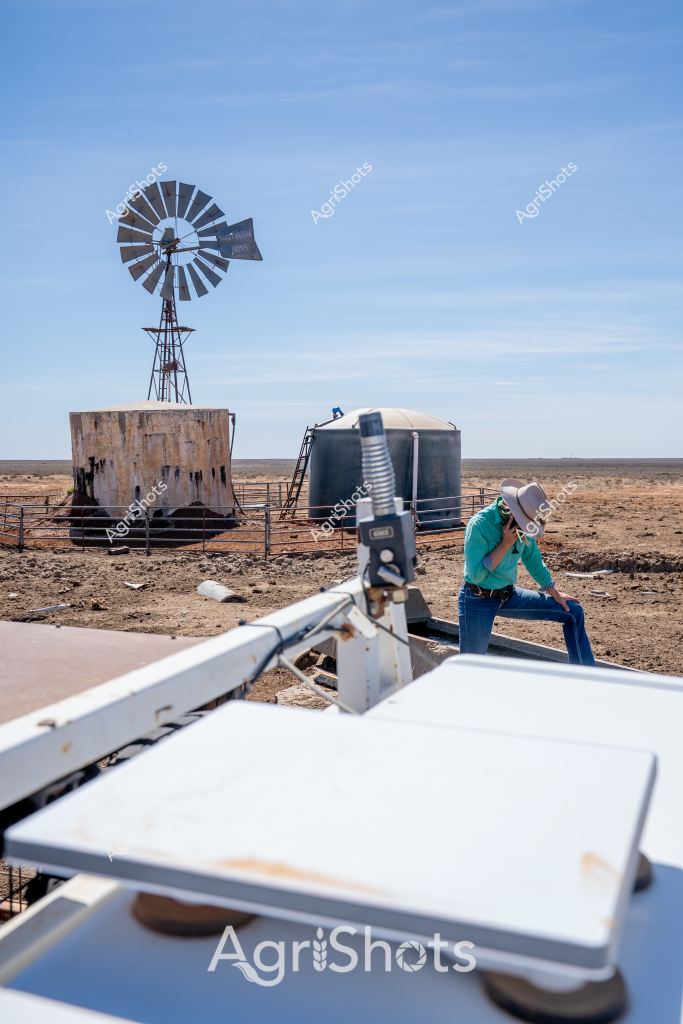
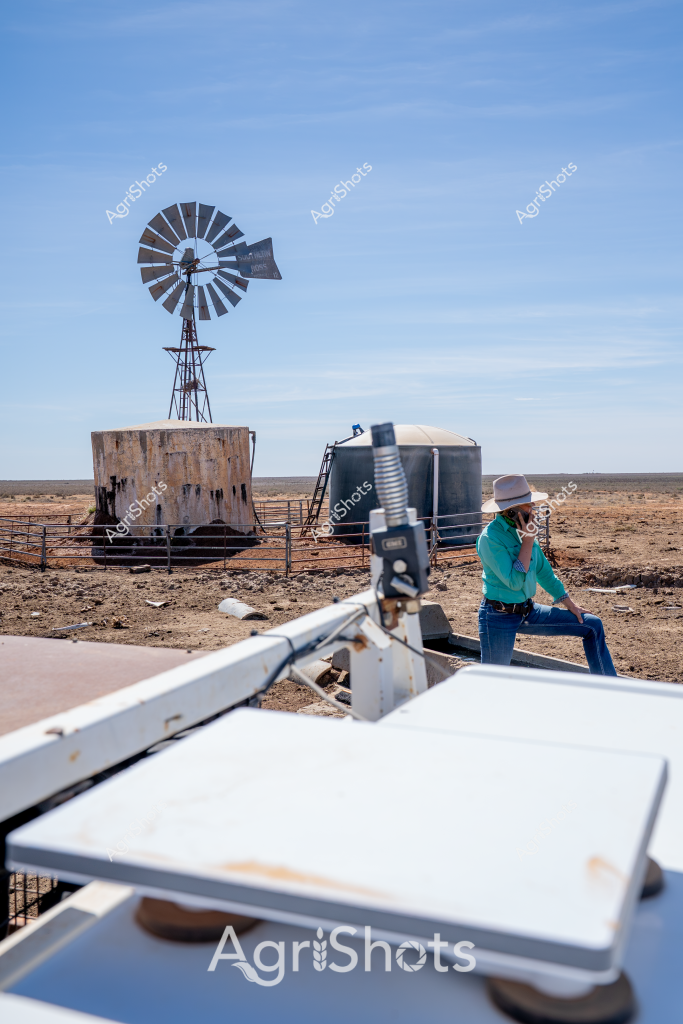
A lone figure in a turquoise shirt and wide-brimmed hat sits contemplatively beside a classic Australian windmill in an expansive, arid landscape. The rusted metal windmill stands tall next to weathered water tanks, surrounded by a barren, rocky terrain that epitomizes the challenging conditions of outback farming. A white equipment surface dominates the foreground, suggesting this is a working agricultural site where water infrastructure is critical for survival in a dry environment. The clear blue sky stretches endlessly, emphasizing the isolation and resilience required in remote agricultural settings. Water storage tanks and the iconic windmill represent the essential infrastructure that enables farming and livestock management in Australia's harsh, drought-prone regions. The scene captures the solitude and quiet determination of rural workers who maintain agricultural operations in extremely challenging environments.
 Image
Image
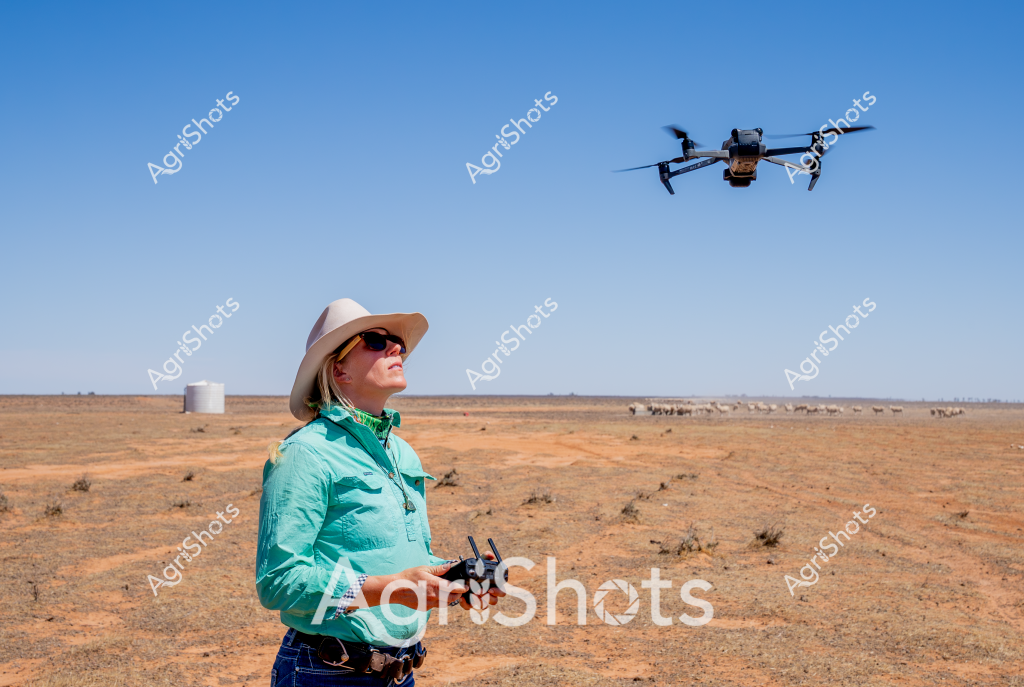
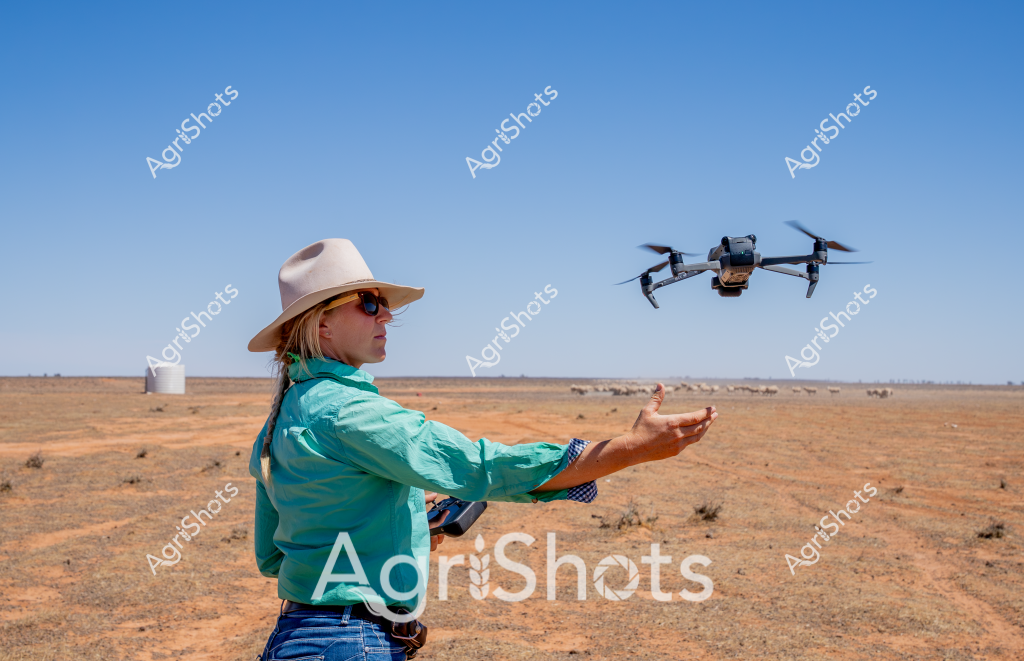
A woman in a turquoise shirt and wide-brimmed hat operates a drone in an arid, expansive Australian outback landscape. Standing confidently with a drone controller in her hands, she pilots an unmanned aerial vehicle (UAV) above a dry, reddish-brown paddock with scattered sparse vegetation. In the background, a distant water tank and a small herd of cattle can be seen, highlighting the remote agricultural setting. The clear blue sky and open terrain suggest this is a typical drone reconnaissance mission for modern farm management, likely used for monitoring livestock, assessing land conditions, or surveying crop and pasture health. Her protective clothing - including sunglasses and a wide-brimmed hat - demonstrates the harsh environmental conditions of rural Australian rangelands.
 Image
Image
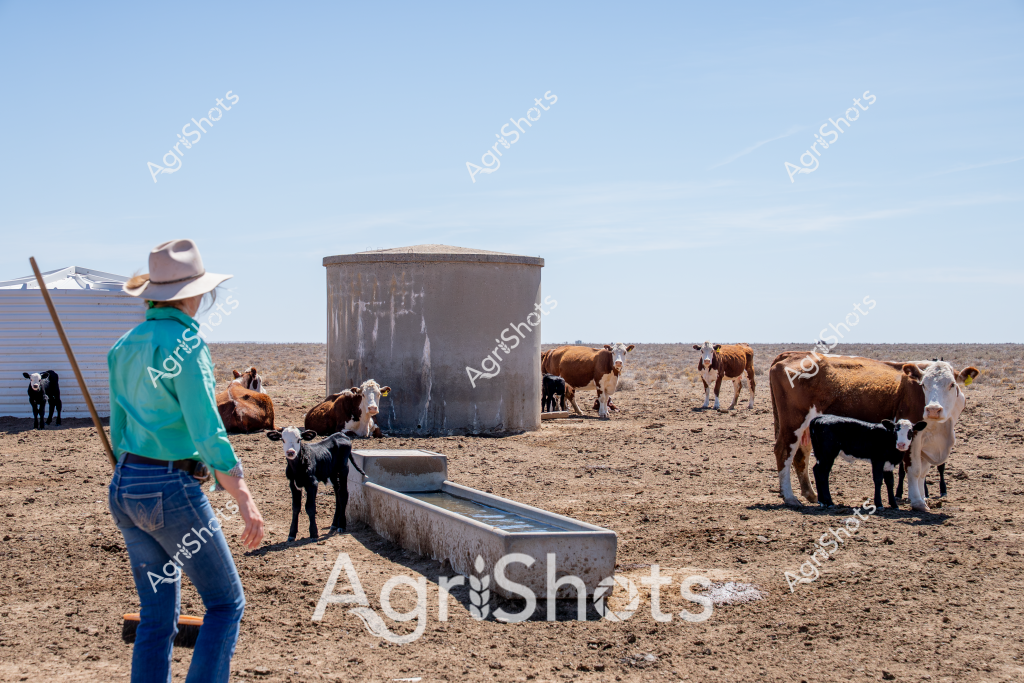
A man stockman in a turquoise shirt and wide-brimmed hat surveys a dry, arid cattle paddock with several brown and white beef cattle. A large grey water storage tank and concrete water trough stand in the center of the barren landscape, providing essential hydration for the small herd. Multiple cows and calves, including some black and some brown and white-marked animals, are scattered around the water infrastructure, indicating a typical rural Australian cattle station environment. The ground is dusty and brown, suggesting drought or dry seasonal conditions typical of Australia's interior regions. The stockman's stance - with a long stick or staff - suggests he is monitoring the livestock and checking their access to water in this harsh, open landscape.
 Image
Image
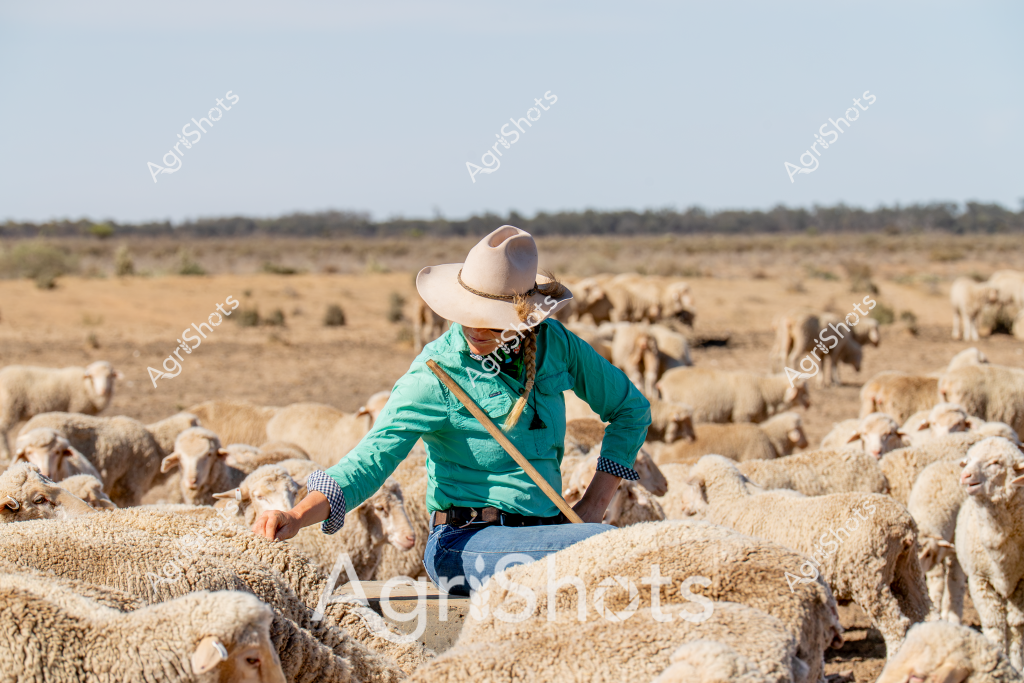
A woman livestock manager wearing a wide-brimmed hat and a bright turquoise shirt carefully moves through a dense flock of merino sheep in an expansive, dry Australian pastoral landscape. Her green shirt and denim jeans contrast with the golden-brown grasslands stretching to a distant treeline, while she uses a long wooden staff to guide and check the woolly flock. The sheep, with their thick, creamy-white fleeces, are tightly clustered across the arid paddock, representing a typical scene of sheep management in rural Australia's challenging dry interior. Her positioning among the animals suggests careful inspection, perhaps checking their health or preparing them for mustering or shearing. The wide-brimmed hat shields her from the intense outback sun, highlighting the practical clothing and equipment essential for livestock management in harsh agricultural environments. The scene captures the resilience of Australian agricultural workers and the livestock, demonstrating the close relationship between farmer and flock in managing stock across vast, challenging terrain. The muted earth tones of the landscape and the dense cluster of merino sheep create a compelling visual narrative of rural Australian farming practices.
 Image
Image
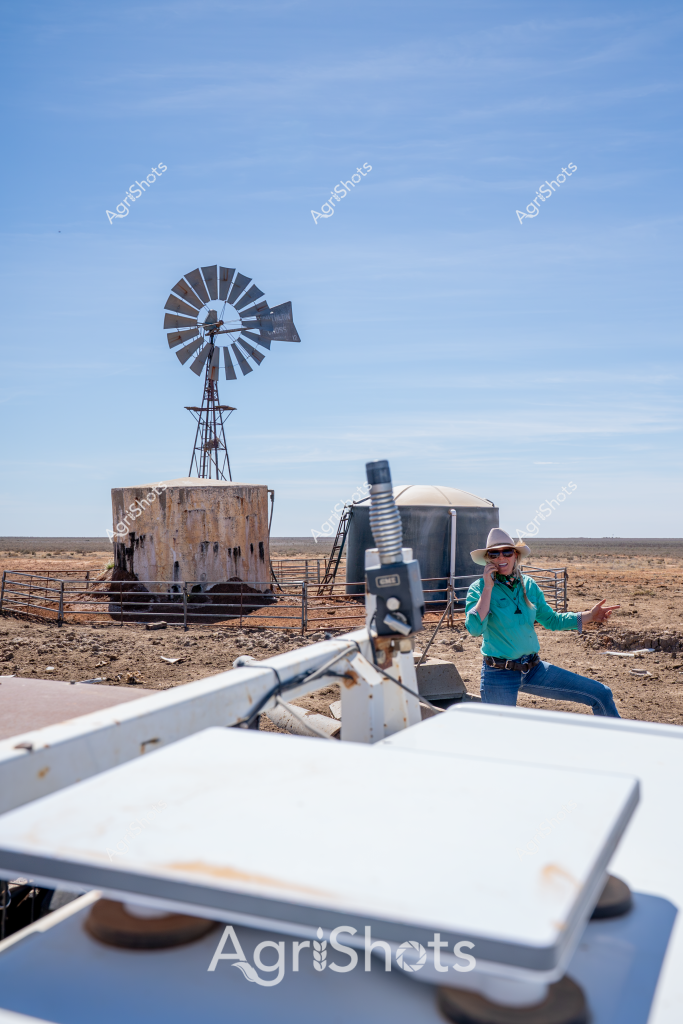
A woman in a turquoise shirt and wide-brimmed hat stands amid a stark, arid landscape, conducting agricultural field research or survey work near a classic windmill and water storage tank. The windmill, a quintessential feature of Australian rural infrastructure, rises against a clear blue sky, its metal blades poised to catch the slightest breeze. A white instrument or measurement device is mounted in the foreground, suggesting scientific data collection or environmental monitoring. The surrounding terrain is a palette of browns and tans - dry, compacted earth characteristic of drought-affected or semi-arid regions of Australia. This scene captures the resilience of agricultural workers and the essential infrastructure that supports farming in challenging environmental conditions, where water management and precise environmental measurements are critical to survival and productivity.
 Image
Image
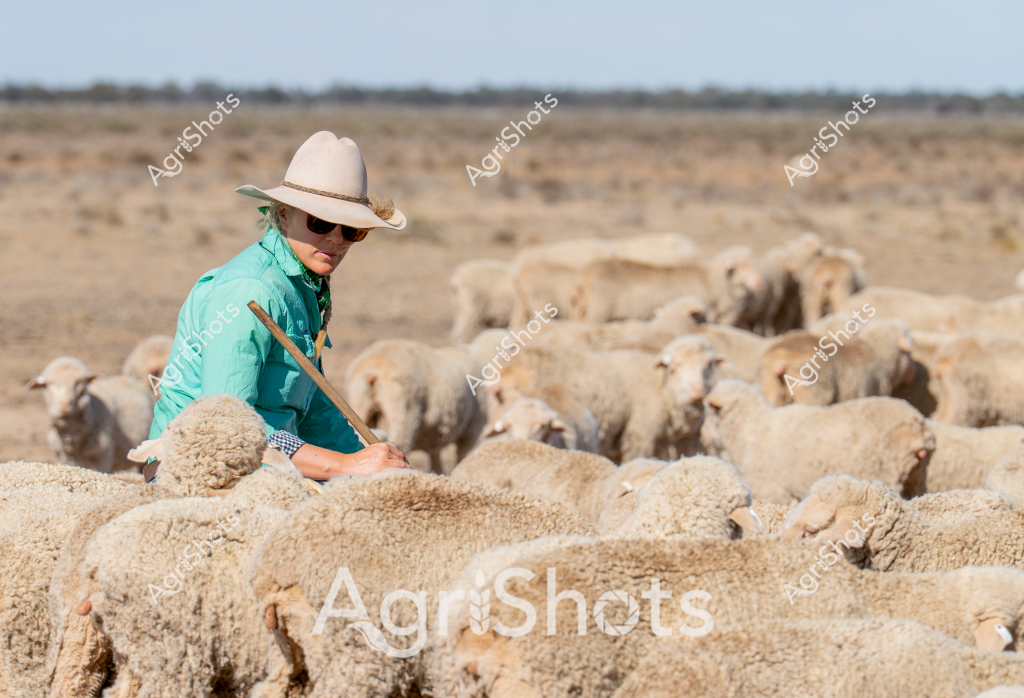
A woman stockman in a bright turquoise shirt and wide-brimmed sun hat carefully moves among a dense flock of Merino sheep in a dry, expansive Australian pastoral landscape. The woolly sheep, with their thick creamy fleece, are tightly clustered across the arid paddock, their bodies creating a uniform sea of soft texture against the dusty brown ground. She carries a long wooden stock stick, using it to gently guide and manage the flock, demonstrating the skilled and attentive work of a professional livestock manager in the harsh Australian outback. The surrounding environment is characteristically sparse - a wide horizon of muted greys and browns stretches out behind her, with scattered low scrub and distant treelines indicating the challenging agricultural terrain. Her protective clothing - sunhat, sunglasses, and long-sleeved shirt - speaks to the intense solar conditions typical of rural Australian sheep country. This scene captures the essence of Australian pastoral agriculture: a lone skilled worker carefully tending a valuable Merino wool flock in a demanding landscape, representing generations of agricultural expertise and resilience.
 Image
Image
A windmill and water storage setup dominates this arid rural landscape, capturing the essence of remote Australian farming infrastructure. A person wearing a turquoise shirt and a wide-brimmed hat sits contemplatively near water tanks, surrounded by a stark, dusty terrain that stretches to a flat horizon under a clear blue sky. An old metal windmill stands prominently, its multiple blades positioned to catch even the slightest breeze, alongside a weathered concrete water storage tank enclosed by metal fencing. The scene epitomizes the resilience of agricultural operations in harsh, dry environments, where water management is critical for survival. Rusted equipment and minimal vegetation underscore the challenging conditions of this remote agricultural setting, highlighting the technological adaptations farmers use to sustain operations in Australia's unforgiving outback landscape.
 Image
Image
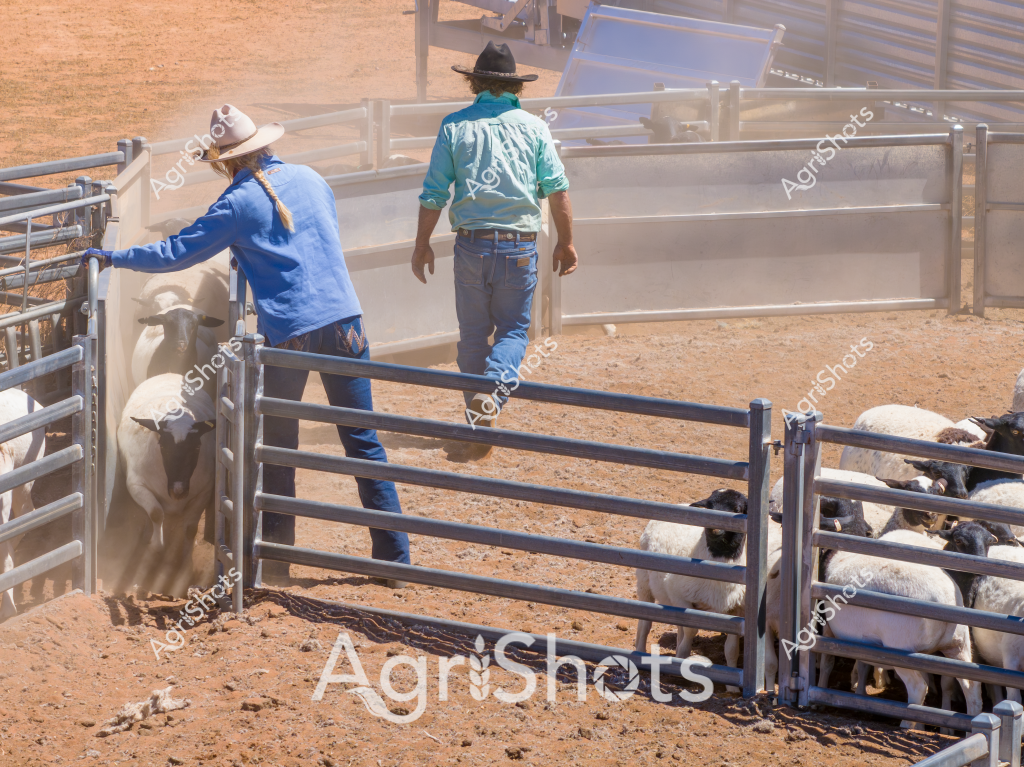
Two people work in a dusty livestock yard, managing sheep in metal holding pens. A woman in a blue jacket and a person in a turquoise shirt with a wide-brimmed hat are positioning themselves near the metal gates and fencing. The ground is a dry, packed earth color, typical of an arid Australian agricultural setting. Multiple white sheep are contained within the sturdy metal yard sections, suggesting this is a routine livestock management activity. The scene captures the practical, no-nonsense approach of Australian farm workers handling livestock in a challenging rural environment, with the metal infrastructure providing structured control and movement of the animals. The workers are positioned strategically around the pens, likely preparing to move, sort, or inspect the sheep. Their robust clothing - denim jeans, practical shirts, and protective hats - reflects the functional nature of agricultural work. The metallic gray of the livestock yards contrasts with the earthy tones of the ground and the white of the sheep, creating a typical Australian rural landscape scene focused on livestock management.
 Image
Image
A woman in a turquoise shirt and wide-brimmed sun hat operates a drone in an arid, expansive Australian agricultural landscape. Standing amid a dry, reddish-brown paddock with scattered sparse vegetation, she launches a quadcopter drone with an outstretched arm, controlling its flight with precision. A white water tank stands in the distant background, highlighting the remote rural setting characteristic of Australia's inland regions. The bright blue sky and ochre-colored earth create a stark contrast, emphasizing the challenging environmental conditions typical of agricultural zones during dry periods. The scene captures the intersection of modern agricultural technology and traditional farming practices, with the drone likely being used for land surveying, crop monitoring, or livestock tracking in this remote agricultural environment.
 Image
Image
A woman in a wide-brimmed hat and blue long-sleeved shirt and a man in a turquoise shirt and wide-brimmed hat stand beside an open first aid kit on a dusty, sun-baked rural landscape. They appear to be checking medical supplies or preparing emergency equipment, with the arid Australian outback stretching behind them - sparse trees and dry ground indicating a challenging environmental setting. The red first aid kit is open, revealing various medical items and supplies, suggesting they are likely agricultural workers or rural health professionals preparing for potential medical needs in a remote location. The bright blue sky and harsh, open terrain speak to the rugged conditions of Australian rural work environments. Their protective clothing - wide-brimmed hats, long-sleeved shirts, and sturdy work attire - reflects practical preparation for working in intense sunlight and challenging outdoor conditions.
 Image
Image
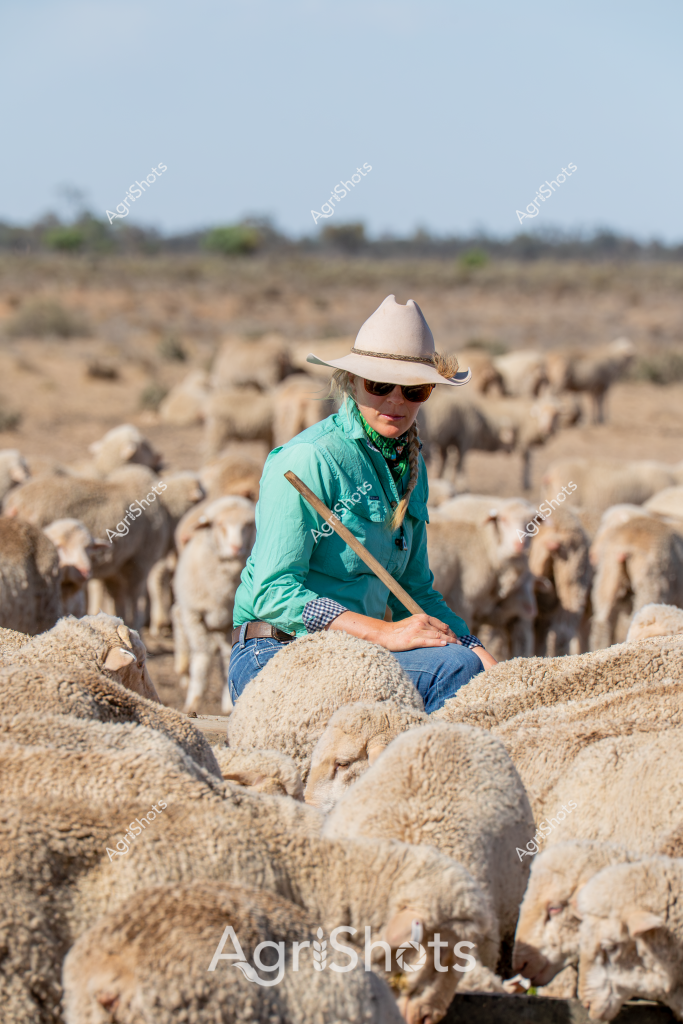
A woman stockman in a turquoise shirt and cream cowboy hat sits amid a large flock of Merino sheep in an arid Australian landscape. Wearing sunglasses and a green bandana, she rests on the woolly backs of the sheep, holding a long herding staff, demonstrating the traditional skills of rural sheep management. The landscape is a dusty, sparse paddock with scattered vegetation and distant trees on the horizon, typical of Australia's dry interior regions. The dense flock of cream-colored Merino sheep, known for their fine wool, are tightly clustered around her, creating a textural landscape of woolly bodies. Her posture suggests calm expertise, balancing comfortably among the animals she tends, embodying the resilience and skill of Australian rural workers. The muted earth tones of the background contrast with her bright turquoise shirt, creating a vibrant image of contemporary agricultural work.
 Image
Image
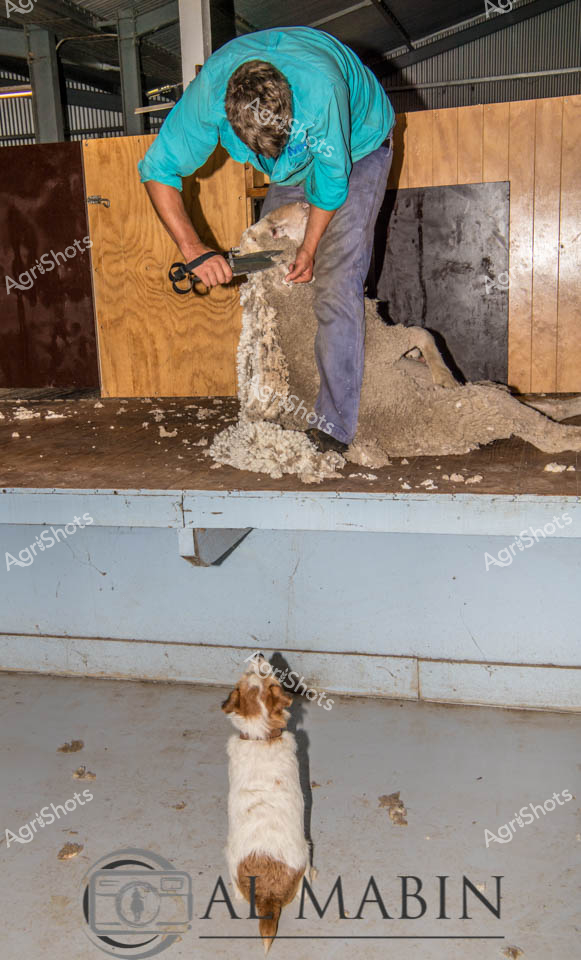
A skilled male shearer in a turquoise shirt uses electric clippers to shear the thick fleece from a Merino sheep in a Victorian shearing shed. The sheep stands patiently as the wool falls away in continuous strips onto the wooden floor below. A loyal working dog waits attentively in the foreground, demonstrating the partnership between shearers and their canine companions during the demanding shearing season. The industrial shed setting with corrugated walls captures the authentic atmosphere of this essential agricultural practice.
 Image
Image
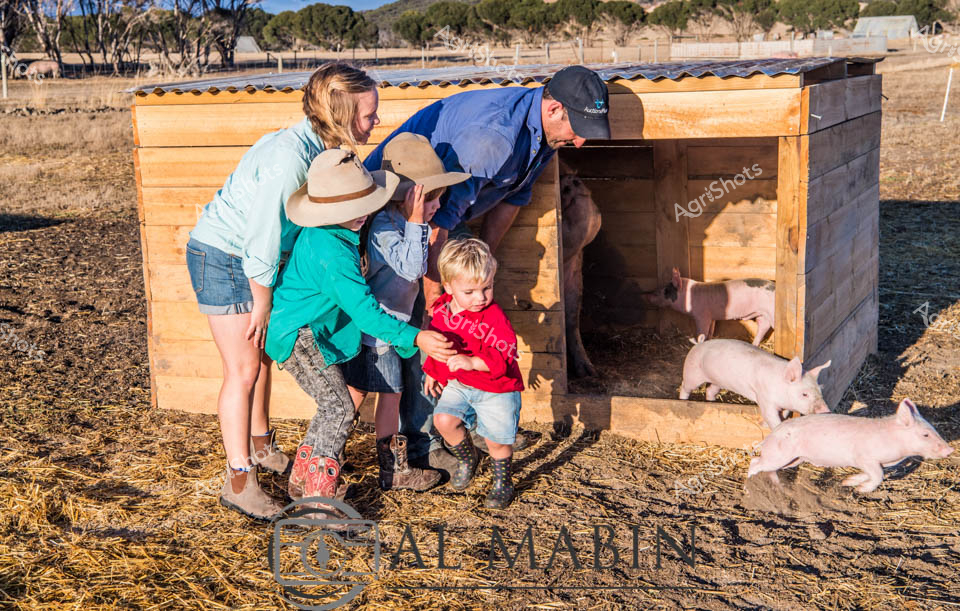
Rural Family Pig Farming on Kangaroo Island Sunlight bathes a rustic wooden pig shelter where generations of a farming family gather around young piglets on a dry, straw-covered paddock. A woman in a turquoise shirt and straw hat gently guides a small child in a bright red top, while another family member in blue bends into the shelter, collectively nurturing the pale pink piglets exploring their enclosure. The golden-hued landscape of Kangaroo Island stretches behind them, sparse gum trees punctuating the distant horizon, capturing the essence of South Australian free-range agricultural life. Weathered boots, wide-brimmed hats, and casual rural attire speak to the hands-on, multigenerational nature of sustainable livestock farming. The scene radiates a sense of connection - between family members, between humans and animals, and between people and the land, embodying the patient, collaborative spirit of Australian agricultural communities.
 Image
Image
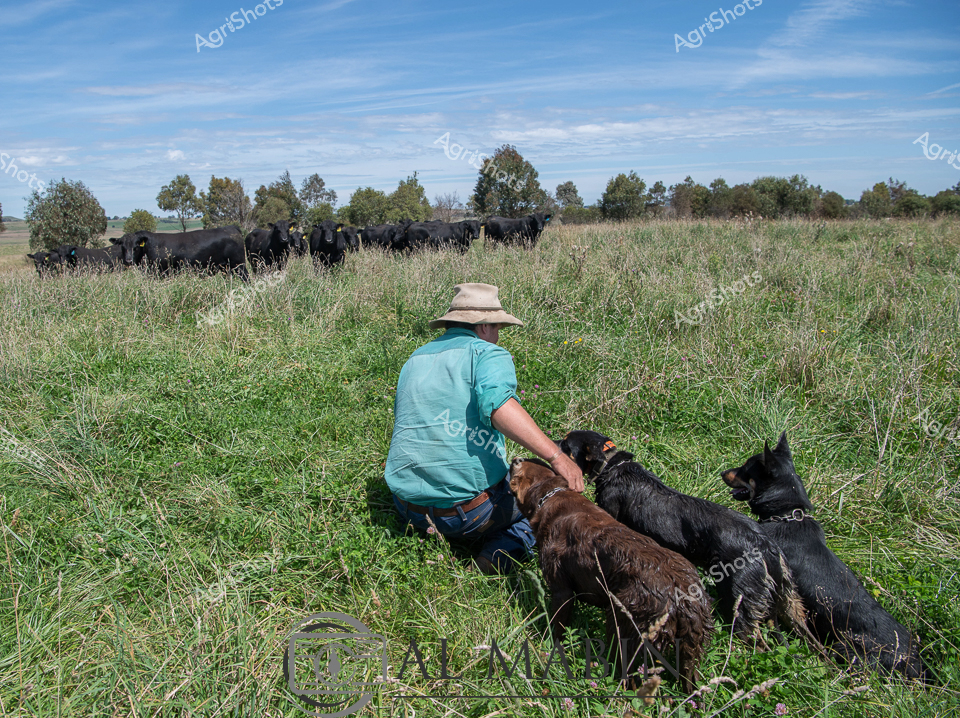
Crouched in a lush pasture under a soft blue sky, a stockworker in a turquoise shirt and wide-brimmed sun hat works alongside three cattle dogs, carefully managing a herd of Black Angus cattle grazing in the distant background. The verdant grasslands of New England stretch out, revealing the rich agricultural landscape of New South Wales, with scattered gum trees marking the paddock's boundaries. Dark, muscular Angus cattle cluster together, their sleek black coats contrasting against the green and golden grasses, while the close-working dogs demonstrate their disciplined herding instincts. The scene captures the essence of Australian pastoral life - a delicate choreography of human, canine, and livestock working in harmony amid the expansive rural terrain. Soft wispy clouds drift overhead, suggesting a mild day perfect for stock management, with the intimate interaction between the worker and dogs highlighting the skill and partnership required in modern cattle farming. This image embodies the quiet expertise of rural Australian agricultural practice, where generations of knowledge are translated through subtle movements and unspoken communication.
 Image
Image
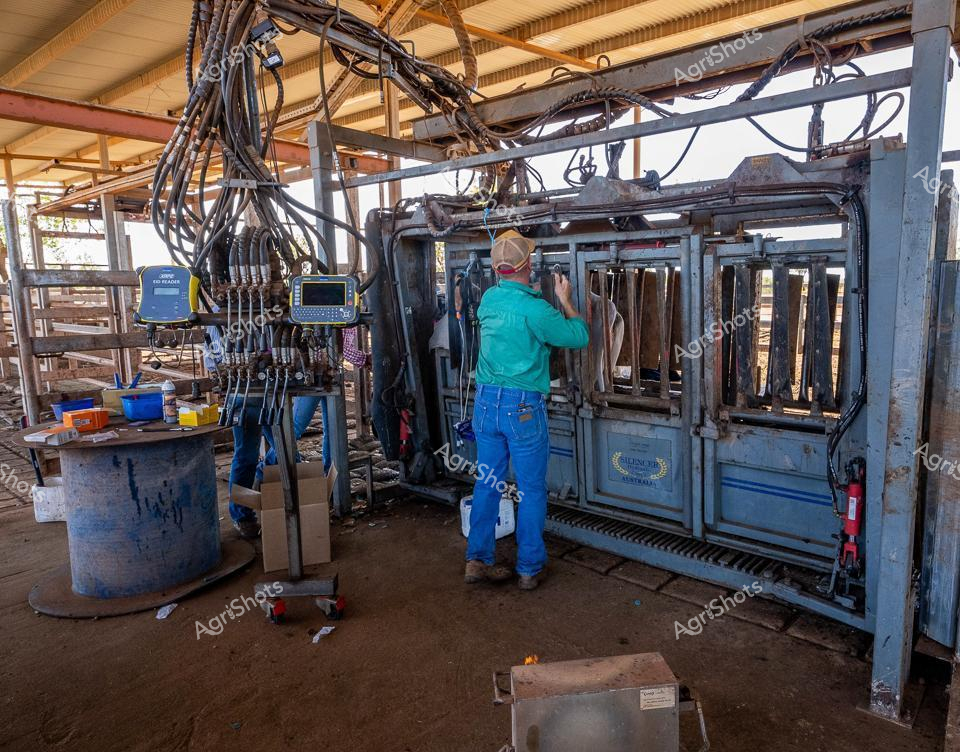
In the heart of Australia's Northern Territory, a seasoned livestock handler works methodically within a robust cattle processing facility. Dressed in a bright turquoise shirt and classic blue jeans, the worker operates a sophisticated Catagra cattle crush, a precision-engineered piece of equipment designed to safely manage and assess livestock during station operations. Intricate hydraulic systems and control panels surround the blue metal infrastructure, with tangled cables and mechanisms highlighting the technical complexity of modern agricultural handling. The interior of the shed reveals a weathered, functional space typical of remote cattle stations - rugged, efficient, and purpose-built to withstand harsh environmental conditions. A blue digital monitoring system stands ready, indicating the station's commitment to data-driven livestock management and animal welfare protocols. The scene captures the sophisticated intersection of traditional pastoral skills and contemporary agricultural technology, showcasing the meticulous care and technological precision required in Australia's expansive beef production industry.
 Image
Image
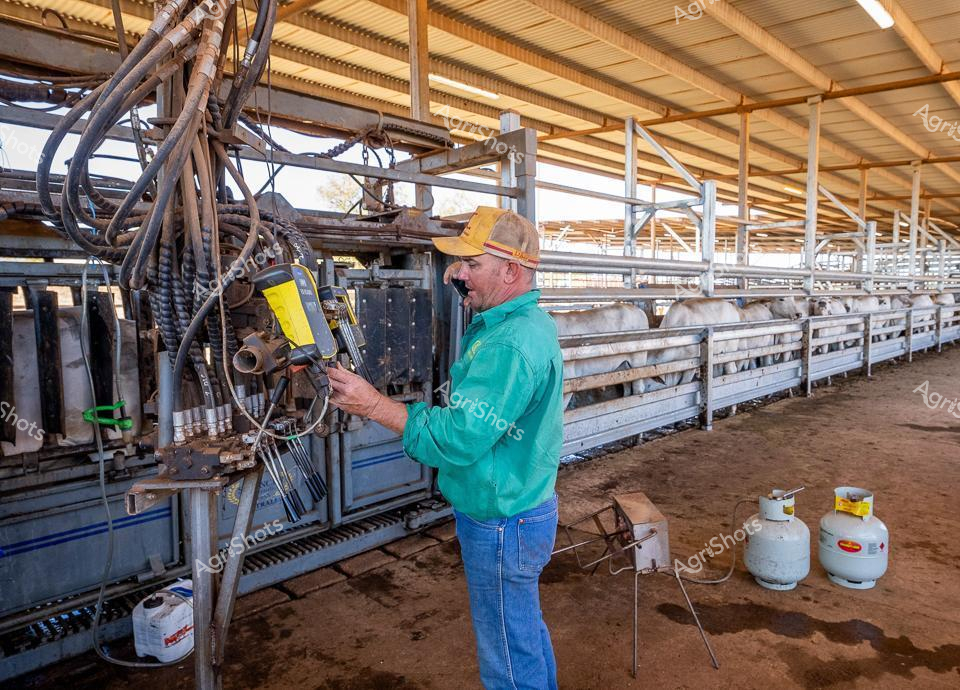
A seasoned station worker in a bright turquoise shirt and yellow cap operates a sophisticated cattle processing machine within a expansive steel-framed livestock yard. The robust machinery, part of a sophisticated cattle crush system, stands ready to safely manage and treat Brahman cattle, a breed renowned for its resilience in Northern Territory conditions. Propane tanks sit nearby, suggesting the equipment requires specialized fuel or heating elements for operational procedures. Sunlight filters through the corrugated metal roof, casting warm shadows across the concrete floor and highlighting the intricate network of hydraulic pipes and mechanical components. The worker's focused posture and careful handling of the control system reflect decades of agricultural expertise, embodying the precision and care integral to modern cattle station management. This scene captures the intersection of traditional pastoral skills and advanced agricultural technology, quintessential to Australia's beef production infrastructure.
 Image
Image
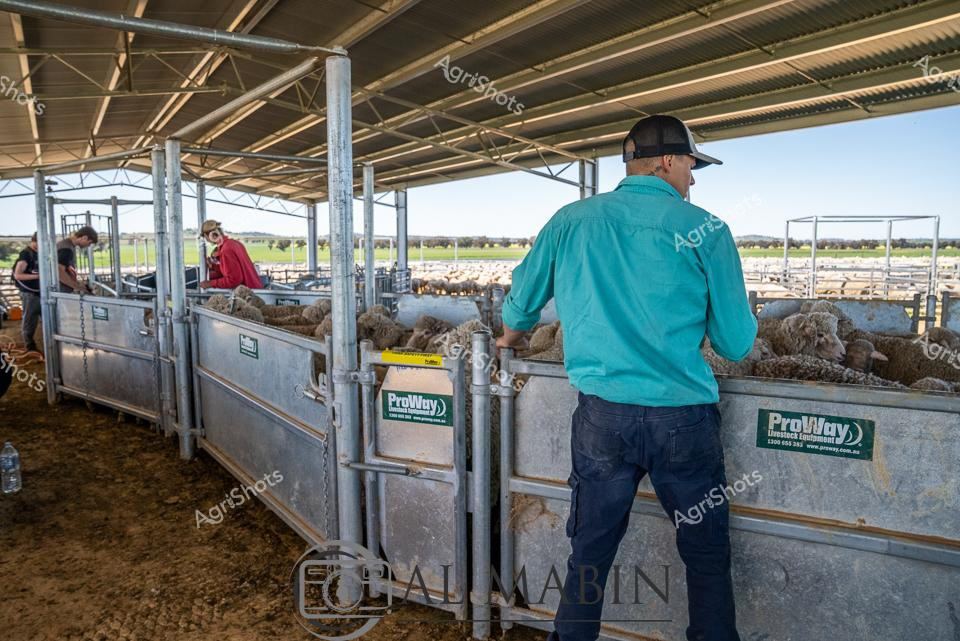
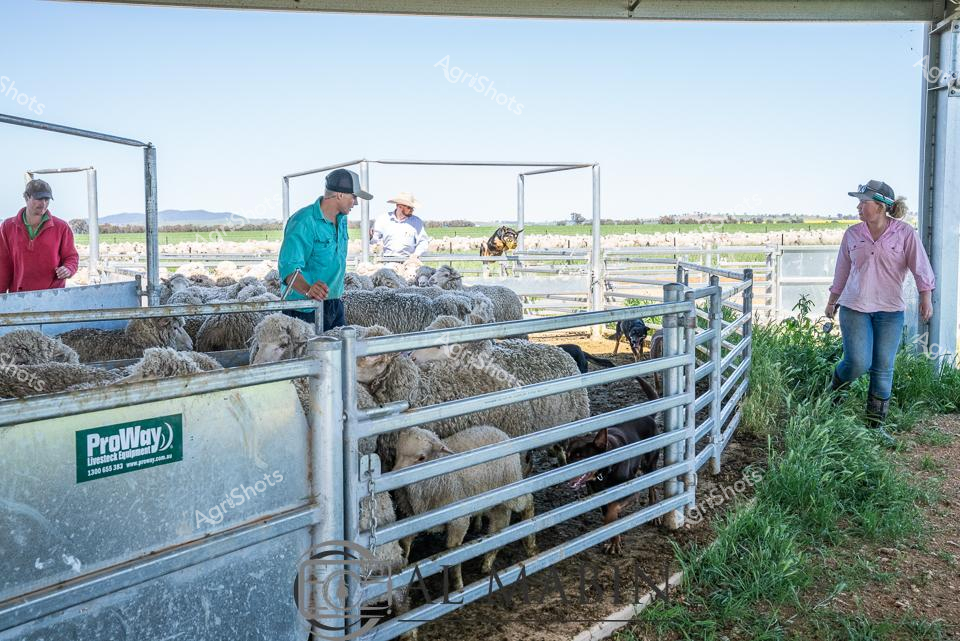
Merino sheep cluster in galvanized steel yards under the expansive corrugated roof of a rural livestock handling facility. A worker in a bright turquoise shirt and black cap manages the drafting gate, carefully separating animals for routine farm husbandry tasks. ProWay livestock equipment frames the scene, with multiple steel pens creating systematic pathways for managing the flock. Dusty earth and distant paddocks stretch beyond the sheltered working area, capturing the quintessential Australian agricultural landscape of open grazing country. The deliberate, methodical movements of the farm workers suggest a well-practiced routine of weaning, vaccination, and livestock management - a critical process in maintaining the health and productivity of a valuable Merino sheep enterprise. Soft morning light filters through the structure, highlighting the weathered metal gates and the woolly, pale-fleeced sheep waiting to be processed.
 Image
Image
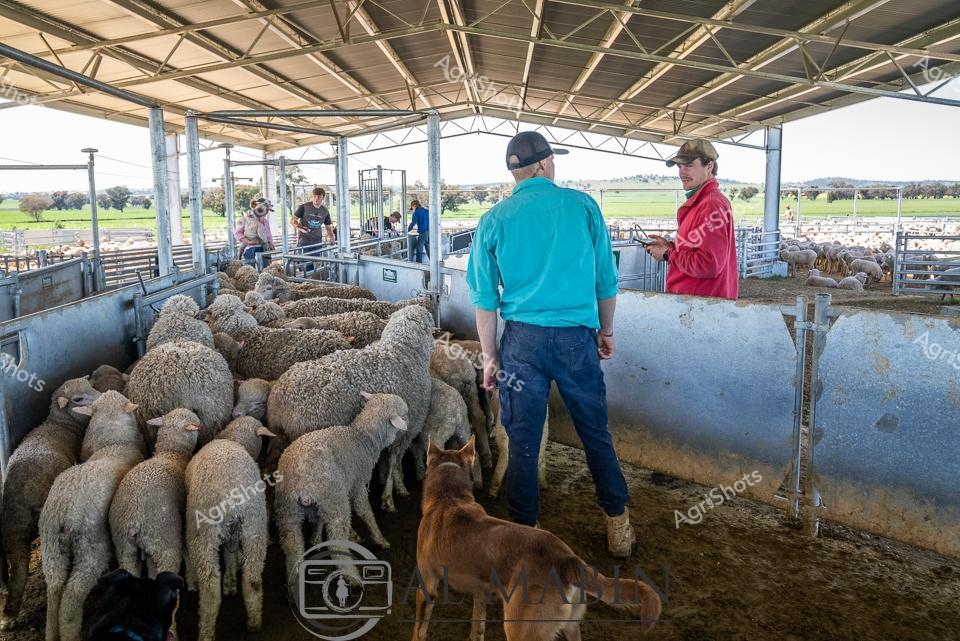
Merino ewes cluster tightly in steel-framed loading yards under a galvanized steel shelter, preparing for weaning season on a expansive pastoral property in New South Wales. A seasoned farmhand in a bright turquoise shirt stands with his working dog, observing the flock's movement and assessing each animal's condition. Another worker in a vivid red jacket manages the yard gates, orchestrating the careful separation of lambs from their mothers with practiced efficiency. The surrounding landscape reveals a classic Australian agricultural vista - rolling green pastures dotted with scattered trees, stretching toward a distant horizon under soft, diffused light. Woolly Merino sheep, prized for their fine, dense fleece, press together with a collective tension typical of livestock in transition, their varied shades of gray and white creating a textured mosaic against the metallic yard infrastructure. This scene captures the methodical precision of modern sheep farming, where animal welfare, genetic management, and seasonal rhythms converge in the ongoing cycle of agricultural production.
 Image
Image
Merino ewes cluster together in a Proway livestock handling system, awaiting processing during lamb weaning season. Farmworkers dressed in vibrant rural workwear - a salmon pink shirt, turquoise work shirt, and pale pink top - navigate the steel yard gates with practiced ease. A cloudless sky and distant mountain range suggest a crisp morning in rural New South Wales, with lush green grass bordering the meticulously organized sheep pens. The metallic yards gleam in the soft light, their robust design allowing smooth movement and careful management of the woolly flock. A working dog sits attentively in the background, ready to assist with livestock control, embodying the collaborative spirit of Australian agricultural practice. This scene captures the precision and care integral to modern sheep farming, where technology and traditional skills merge to support sustainable livestock management.
 Image
Image
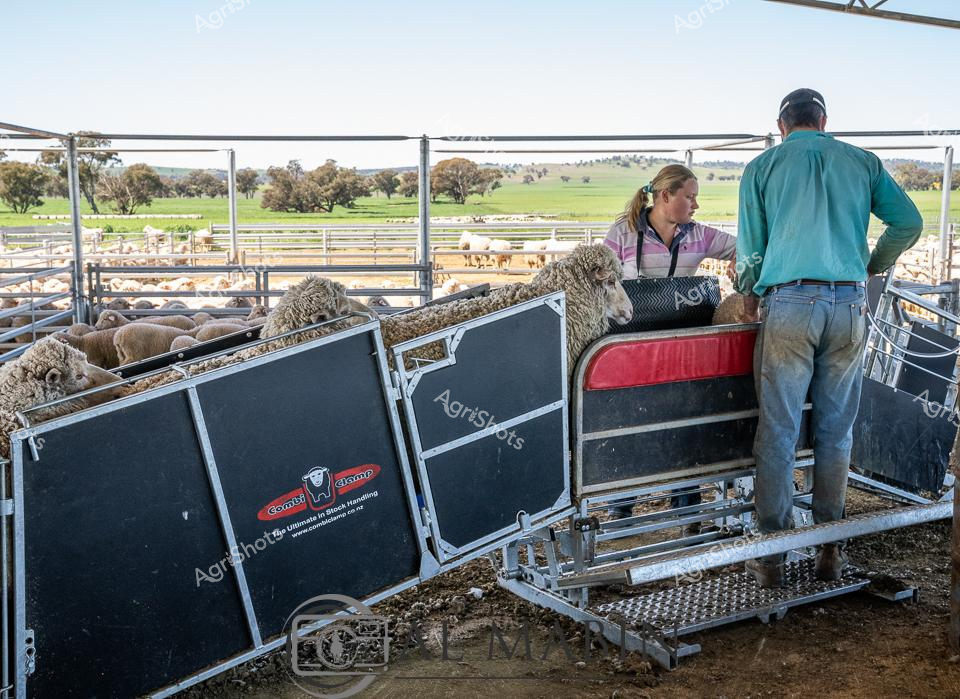
Merino lambs cluster in steel-railed yards beneath scattered eucalyptus trees, awaiting processing in the crisp light of a classic New South Wales agricultural morning. A woman in a lavender and pink top works alongside a colleague in a turquoise shirt, operating a sophisticated Combi Clamp drafting system with practiced efficiency. The sophisticated livestock handling equipment - featuring dark panels marked with agricultural branding - allows precise movement and management of the woolly young stock. Rolling paddocks of emerald green stretch into the distance, framed by grey metal yard infrastructure, capturing the quintessential Australian sheep farming landscape. Dusty ground and metal mesh platforms underscore the practical, functional environment where careful animal husbandry techniques ensure the health and productivity of the flock. The scene epitomizes modern agricultural practice: technological innovation meeting generations of pastoral expertise, with careful attention to livestock welfare and farm management.
 Image
Image
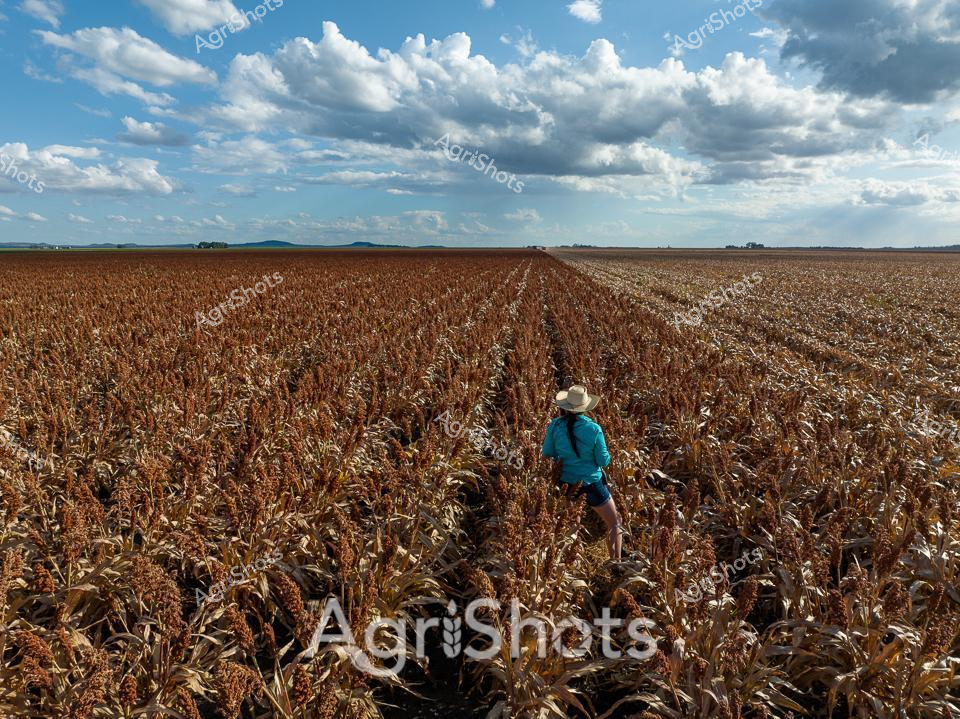
Sweeping golden sorghum fields stretch toward the distant horizon under a dramatic cloudscape of billowing white and steel-blue formations. A farmer in a vivid turquoise shirt and wide-brimmed sun hat walks methodically through the ripened crop rows, surveying the mature grain with expert precision. The rich auburn and bronze tones of the sorghum create a textural landscape that undulates with subtle variations, reflecting Queensland's agricultural heartland during harvest season. Neat parallel rows demonstrate meticulous agricultural planning, with each carefully planted line representing weeks of careful cultivation and management. The expansive agricultural vista captures the immense scale of grain production in Australia's broadacre farming systems, where individual farmers manage thousands of hectares of crops. The luminous sky and mature crop suggest late summer or early autumn, a critical period when farmers assess yield potential and prepare for harvesting equipment to move across these substantial agricultural landscapes.
 Image
Image
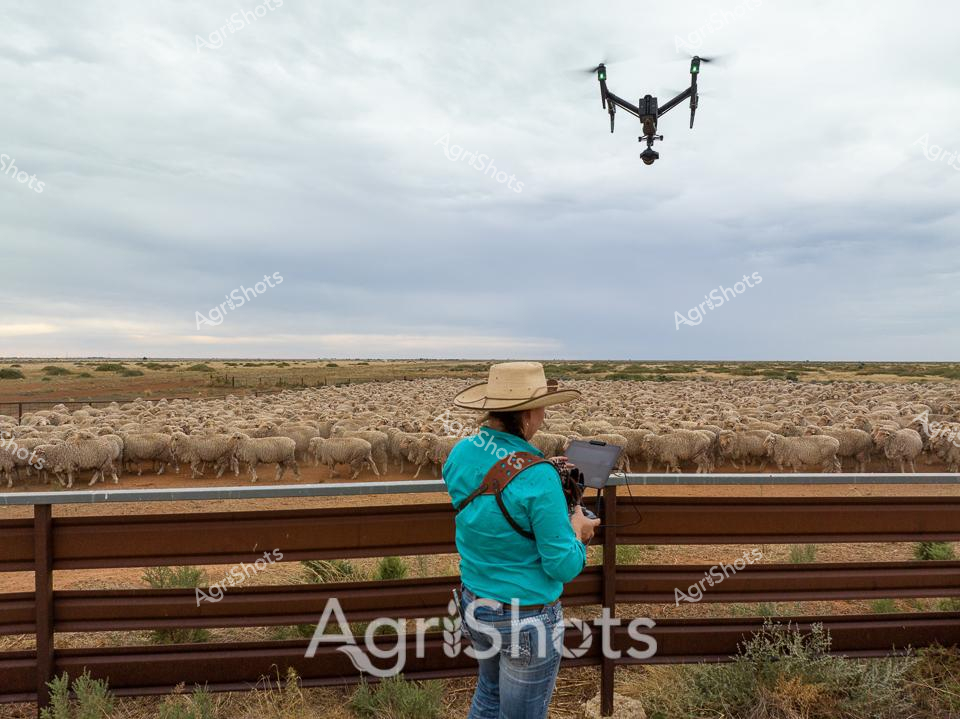
An experienced station hand in a bright turquoise shirt and wide-brimmed sun hat operates a drone over a vast Merino sheep flock, capturing precision agricultural data across an expansive western New South Wales pastoral landscape. The sweeping paddock stretches beneath an overcast, pewter-colored sky, with wooden stock yards and sparse native vegetation framing the dense woolly flock. Leaning against sturdy timber rails, the worker carefully maneuvers the quadcopter drone, likely collecting critical information about mob density, animal health, and grazing patterns using advanced aerial imaging technology. The sleek black drone hovers methodically above the sea of cream and tan-fleeced sheep, representing the sophisticated intersection of traditional livestock management and cutting-edge agricultural innovation. Merino rams and ewes cluster tightly, their fine wool suggesting a high-quality station with meticulous breeding practices. This scene eloquently captures the modern Australian agricultural approach - blending hands-on pastoral expertise with intelligent technological monitoring across the wide-open rangelands.