Results for “Livestock Breeds”
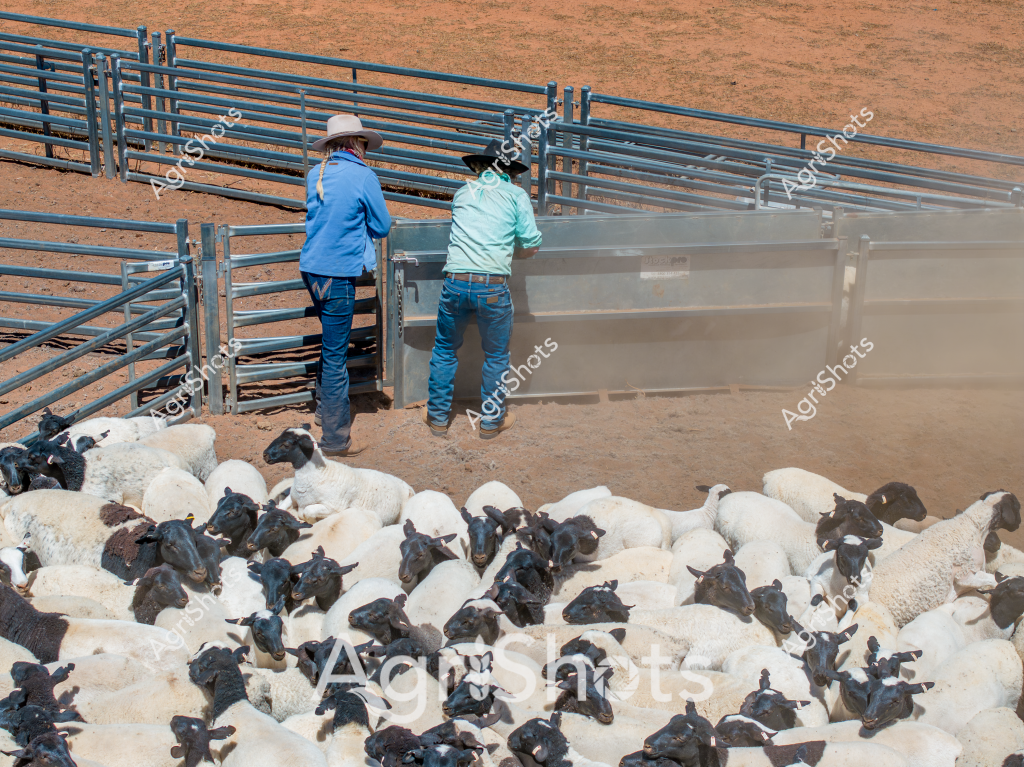
Two men in work attire operate a livestock handling system with a herd of black and white sheep clustered in the holding yards. The men, wearing blue shirts, jeans, and work hats, are positioned near a metal livestock chute and gate system on a dry, reddish-brown earth paddock. A dense group of sheep - predominantly white with black-faced individuals mixed throughout - are tightly packed in the lower portion of the image, waiting to be processed through the metal handling equipment. The metal gates and chute appear to be a standard design for efficiently moving and managing sheep, typical of Australian livestock management practices. The dusty environment and metal infrastructure suggest this is a working sheep station, likely in an arid or semi-arid region of Australia where sheep farming is a critical agricultural activity.

The scene captures the methodical nature of livestock management, with the workers carefully positioning the animals through controlled infrastructure, demonstrating the precision and skill required in modern agricultural practices. The mix of white and black-faced sheep indicates a potentially diverse breeding program or mixed flock composition, which is common in Australian sheep production. Image

Two men in work attire operate a livestock handling system with a herd of black and white sheep clustered in the holding yards. The men, wearing blue shirts, jeans, and work hats, are positioned near a metal livestock chute and gate system on a dry, reddish-brown earth paddock. A dense group of sheep - predominantly white with black-faced individuals mixed throughout - are tightly packed in the lower portion of the image, waiting to be processed through the metal handling equipment. The metal gates and chute appear to be a standard design for efficiently moving and managing sheep, typical of Australian livestock management practices. The dusty environment and metal infrastructure suggest this is a working sheep station, likely in an arid or semi-arid region of Australia where sheep farming is a critical agricultural activity. The scene captures the methodical nature of livestock management, with the workers carefully positioning the animals through controlled infrastructure, demonstrating the precision and skill required in modern agricultural practices. The mix of white and black-faced sheep indicates a potentially diverse breeding program or mixed flock composition, which is common in Australian sheep production.
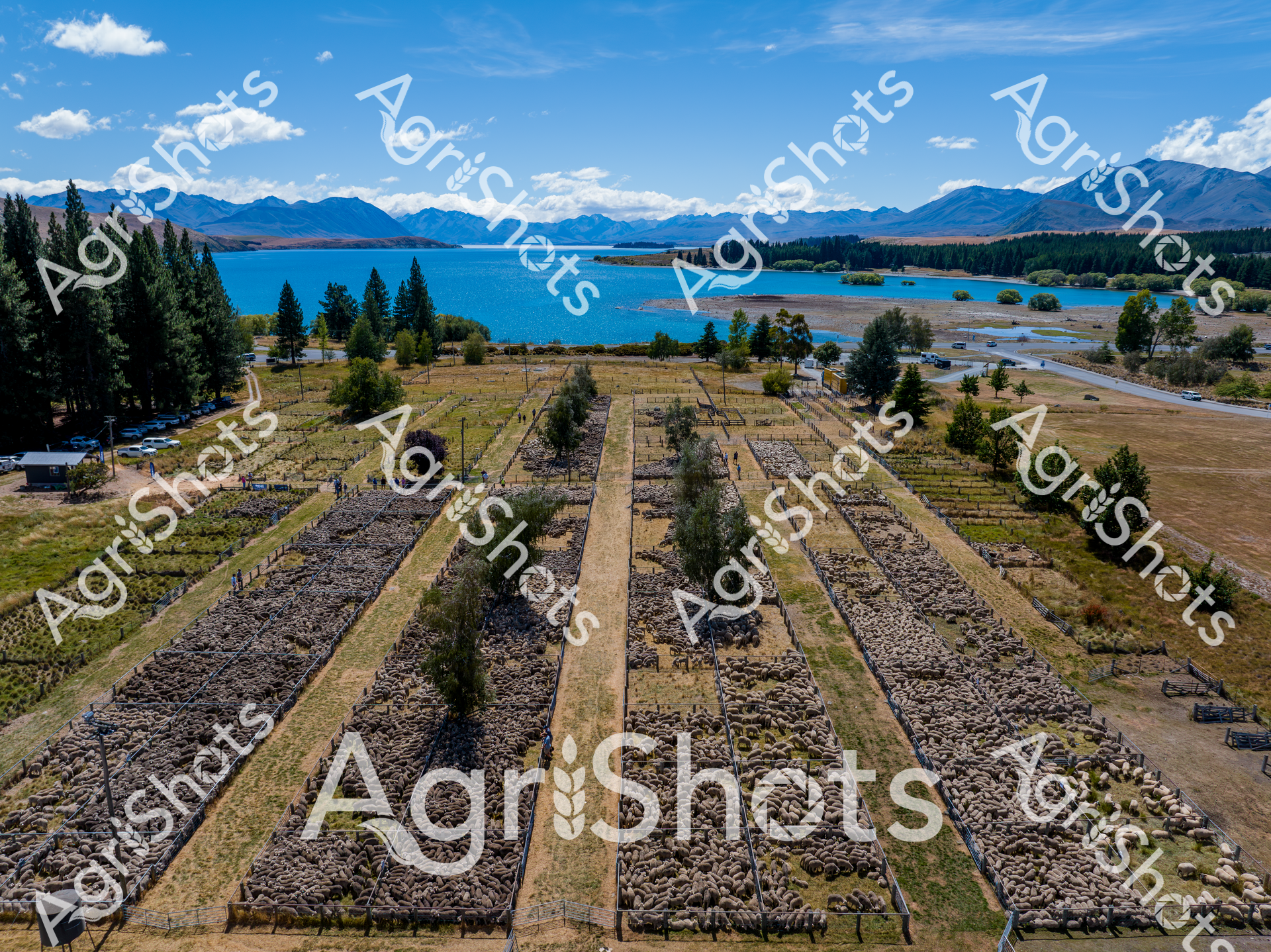
Sweeping pastoral panorama of Lake Tekapo's high country sheep sale yards, where hundreds of Merino lambs are densely gathered across meticulously organized rectangular paddocks. The breathtaking South Canterbury landscape unfolds behind the livestock, featuring an electric turquoise lake nestled between rugged mountain ranges under a brilliant summer sky. Neat grass pathways divide the sale yards, allowing livestock agents strategic access between densely packed groups of woolly lambs, their pale fleeces creating a textural mosaic across the fenced sections. Pine trees frame the periphery, providing subtle shade and breaking the expansive grassland backdrop, while the surrounding terrain transitions from golden dry pastures to alpine forest and mountain terrain. This aerial perspective captures the sophisticated organization of New Zealand's livestock trading infrastructure, highlighting the precision and scale of agricultural operations in this stunning high country environment. The scene embodies the intersection of natural beauty and agricultural productivity, showcasing how carefully managed livestock sales occur against one of the most spectacular landscape backdrops in the Southern Hemisphere. Image

Sweeping pastoral panorama of Lake Tekapo's high country sheep sale yards, where hundreds of Merino lambs are densely gathered across meticulously organized rectangular paddocks. The breathtaking South Canterbury landscape unfolds behind the livestock, featuring an electric turquoise lake nestled between rugged mountain ranges under a brilliant summer sky. Neat grass pathways divide the sale yards, allowing livestock agents strategic access between densely packed groups of woolly lambs, their pale fleeces creating a textural mosaic across the fenced sections. Pine trees frame the periphery, providing subtle shade and breaking the expansive grassland backdrop, while the surrounding terrain transitions from golden dry pastures to alpine forest and mountain terrain. This aerial perspective captures the sophisticated organization of New Zealand's livestock trading infrastructure, highlighting the precision and scale of agricultural operations in this stunning high country environment. The scene embodies the intersection of natural beauty and agricultural productivity, showcasing how carefully managed livestock sales occur against one of the most spectacular landscape backdrops in the Southern Hemisphere.
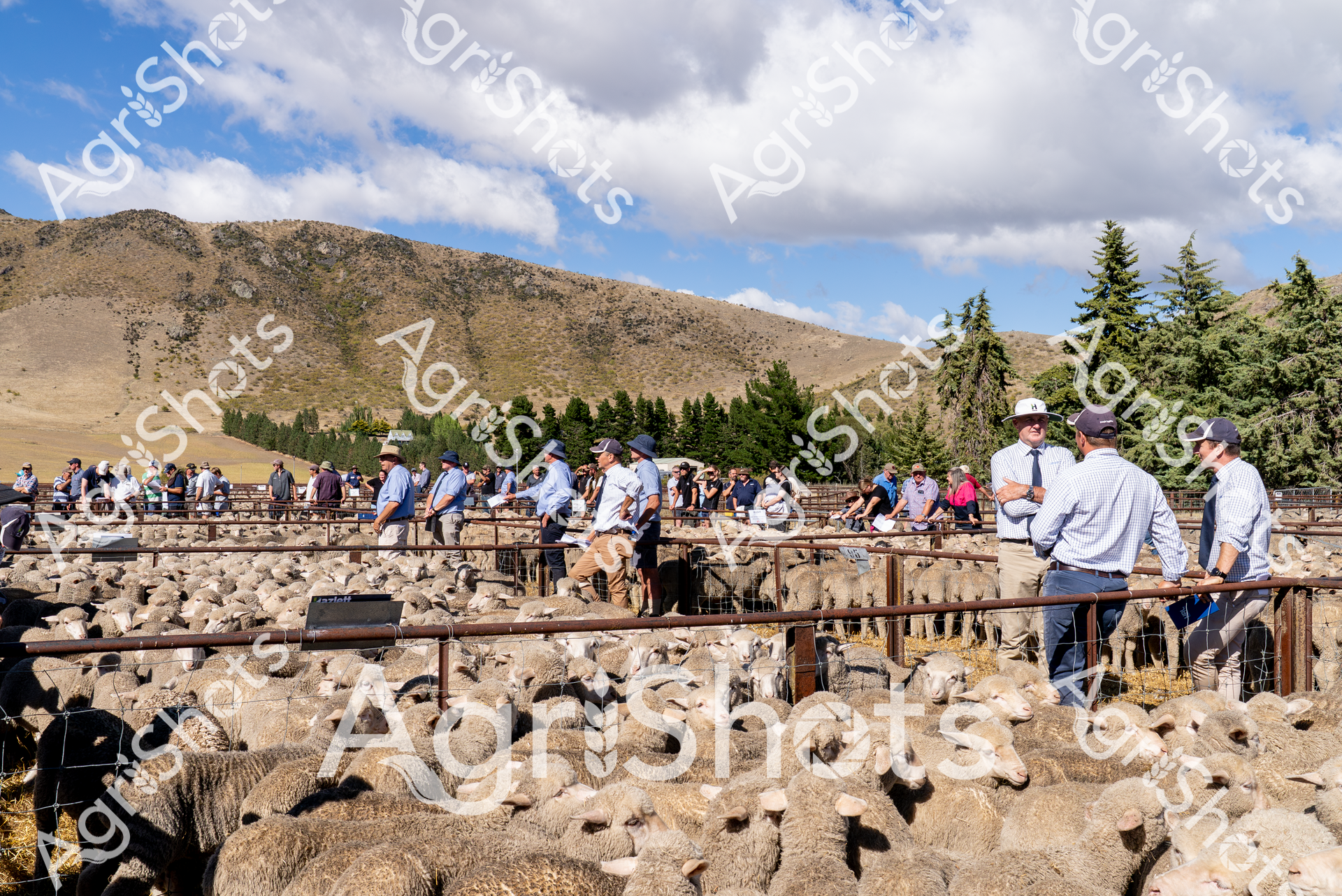
A bustling livestock sale yard in the high country of New Zealand's South Island captures the essence of rural agricultural commerce. Hundreds of Merino sheep are packed tightly within metal livestock yards, their dense, creamy-white wool creating a sea of texture against the dry golden landscape. Experienced livestock agents in crisp button-up shirts and wide-brimmed hats move strategically around the pens, evaluating the flock with practiced eyes. The summer scene unfolds beneath a dramatic sky of blue and billowing white clouds, with rugged brown hills and evergreen pine trees forming a spectacular backdrop. This Omarama sale yard in North Otago represents a critical moment in the sheep farming economy, where careful stock assessment and trading determines the livelihood of rural agricultural communities. The meticulously organized yards demonstrate the precision and professionalism of New Zealand's agricultural sector, with each agent positioned to assess the quality and potential of the Merino mob. Image

A bustling livestock sale yard in the high country of New Zealand's South Island captures the essence of rural agricultural commerce. Hundreds of Merino sheep are packed tightly within metal livestock yards, their dense, creamy-white wool creating a sea of texture against the dry golden landscape. Experienced livestock agents in crisp button-up shirts and wide-brimmed hats move strategically around the pens, evaluating the flock with practiced eyes. The summer scene unfolds beneath a dramatic sky of blue and billowing white clouds, with rugged brown hills and evergreen pine trees forming a spectacular backdrop. This Omarama sale yard in North Otago represents a critical moment in the sheep farming economy, where careful stock assessment and trading determines the livelihood of rural agricultural communities. The meticulously organized yards demonstrate the precision and professionalism of New Zealand's agricultural sector, with each agent positioned to assess the quality and potential of the Merino mob.
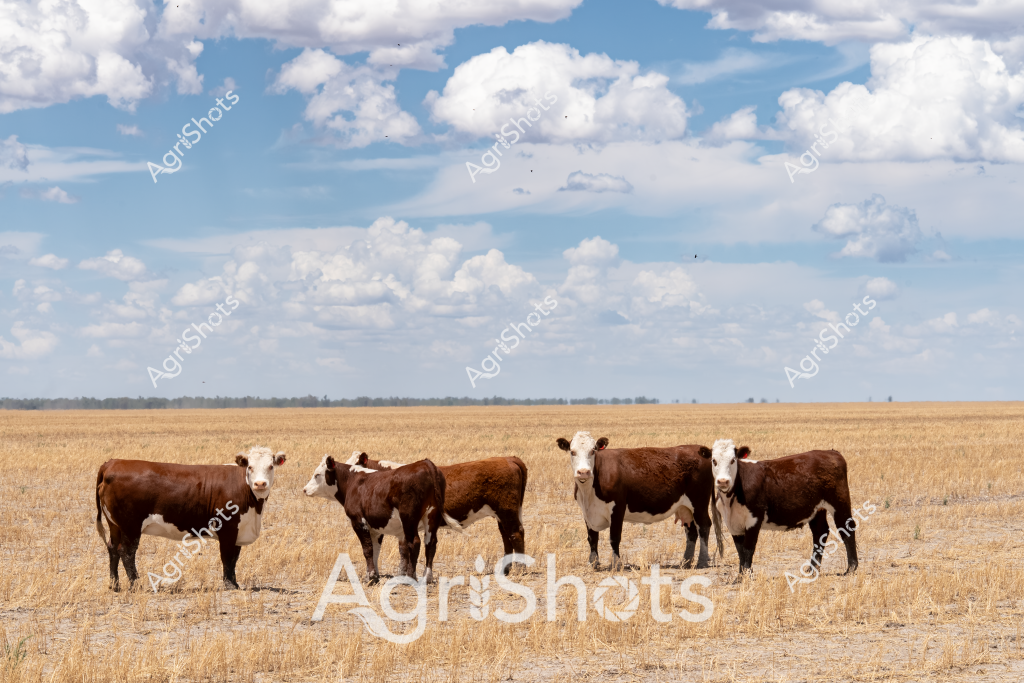
A small herd of Hereford-cross cattle stand quietly in a dry, golden stubble paddock under a dramatic sky filled with puffy white clouds. The six cattle - a mix of brown and white-faced animals - are clustered together, appearing calm in the expansive agricultural landscape that stretches to a distant treeline on the horizon. Their coats range from rich chocolate brown to white-faced variations, typical of crossbred beef cattle common in Australian pastoral regions. The landscape suggests a late summer or early autumn scene, with the harvested field's pale golden stubble indicating a recently completed grain crop. The wide-open sky and flat terrain are quintessential of Australian agricultural regions, likely in a state like Queensland, New South Wales, or Western Australia. The cattle appear healthy and well-conditioned, standing steadily in the open paddock, representing the robust beef cattle breeding typical of extensive Australian agricultural systems. Image

A small herd of Hereford-cross cattle stand quietly in a dry, golden stubble paddock under a dramatic sky filled with puffy white clouds. The six cattle - a mix of brown and white-faced animals - are clustered together, appearing calm in the expansive agricultural landscape that stretches to a distant treeline on the horizon. Their coats range from rich chocolate brown to white-faced variations, typical of crossbred beef cattle common in Australian pastoral regions. The landscape suggests a late summer or early autumn scene, with the harvested field's pale golden stubble indicating a recently completed grain crop. The wide-open sky and flat terrain are quintessential of Australian agricultural regions, likely in a state like Queensland, New South Wales, or Western Australia. The cattle appear healthy and well-conditioned, standing steadily in the open paddock, representing the robust beef cattle breeding typical of extensive Australian agricultural systems.
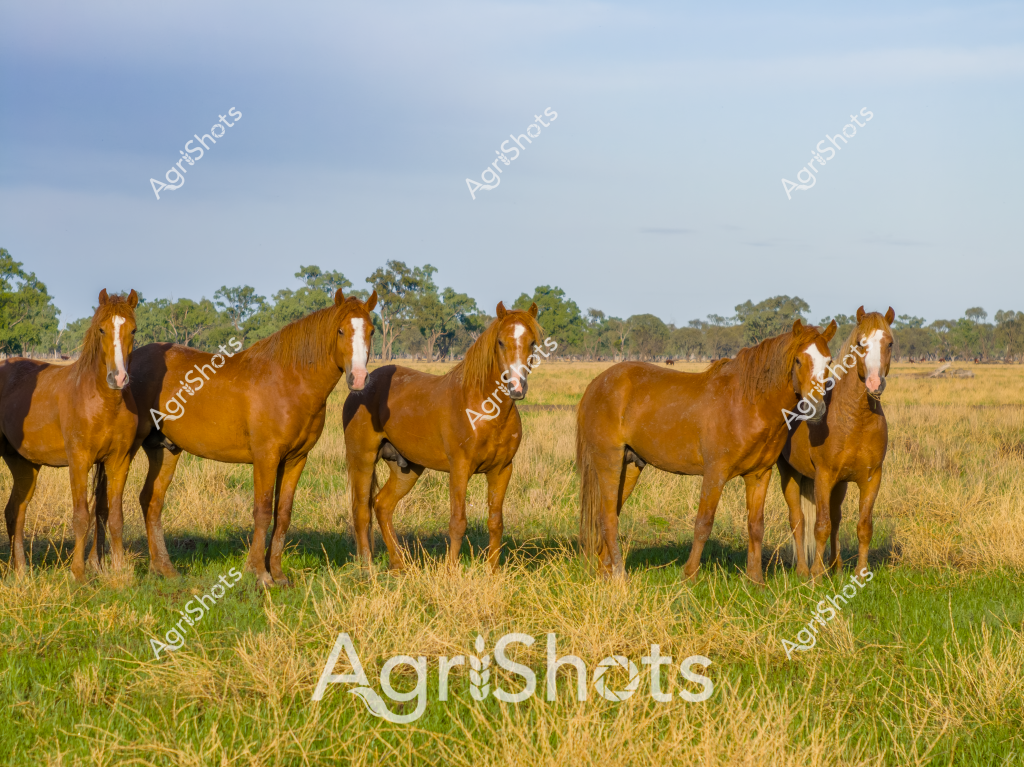
Here's a detailed description for this agricultural stock photo:

A striking lineup of chestnut horses stands alert in a golden grassland, showcasing the magnificent conformation of what appears to be a pure breed. The horses have similar rich copper-brown coats with distinctive white facial markings, suggesting they are from a carefully managed stud or station. Set against a backdrop of eucalyptus trees and soft blue sky, the horses are positioned across a dry pasture with varying shades of green and yellow grass. Their muscular bodies and confident stance indicate they are well-bred and likely used for performance or breeding purposes. The soft natural lighting and expansive rural landscape emphasize the beauty of these animals in their native Australian agricultural environment. Each horse stands with an elegant, balanced posture, highlighting the quality of their breeding and the care they receive. Image

Here's a detailed description for this agricultural stock photo: A striking lineup of chestnut horses stands alert in a golden grassland, showcasing the magnificent conformation of what appears to be a pure breed. The horses have similar rich copper-brown coats with distinctive white facial markings, suggesting they are from a carefully managed stud or station. Set against a backdrop of eucalyptus trees and soft blue sky, the horses are positioned across a dry pasture with varying shades of green and yellow grass. Their muscular bodies and confident stance indicate they are well-bred and likely used for performance or breeding purposes. The soft natural lighting and expansive rural landscape emphasize the beauty of these animals in their native Australian agricultural environment. Each horse stands with an elegant, balanced posture, highlighting the quality of their breeding and the care they receive.
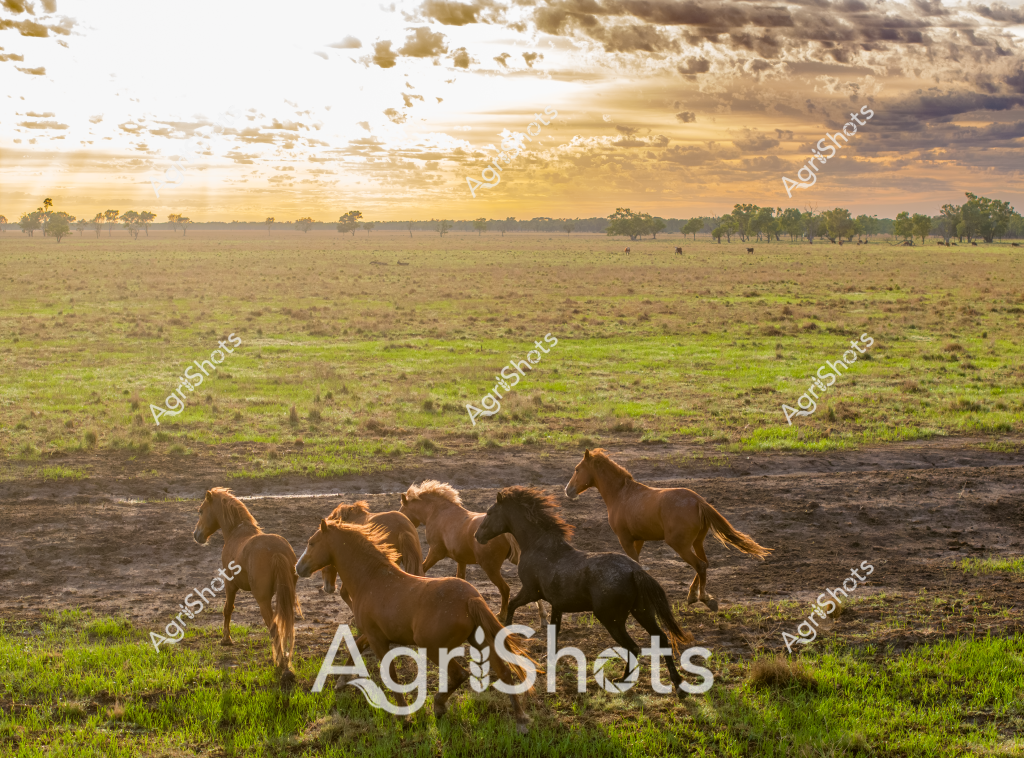
A dynamic scene captures a herd of horses galloping across a sunlit rural landscape at dawn or dusk. Six horses - a mix of chestnut and dark brown coats - thunder across a dry dirt track bordered by lush green grass, their manes and tails flowing with motion against a dramatic cloudy sky. The expansive paddock stretches toward the horizon, dotted with scattered eucalyptus trees and creating a quintessential Australian rural vista. Soft golden light bathes the landscape, highlighting the muscular forms of the horses and casting long shadows across the terrain. The horses appear to be moving with purpose, perhaps being mustered or simply enjoying the freedom of the open grassland. The scene epitomizes the wild spirit of Australian horse breeding and rural landscapes, capturing a moment of raw energy and natural beauty. Image

A dynamic scene captures a herd of horses galloping across a sunlit rural landscape at dawn or dusk. Six horses - a mix of chestnut and dark brown coats - thunder across a dry dirt track bordered by lush green grass, their manes and tails flowing with motion against a dramatic cloudy sky. The expansive paddock stretches toward the horizon, dotted with scattered eucalyptus trees and creating a quintessential Australian rural vista. Soft golden light bathes the landscape, highlighting the muscular forms of the horses and casting long shadows across the terrain. The horses appear to be moving with purpose, perhaps being mustered or simply enjoying the freedom of the open grassland. The scene epitomizes the wild spirit of Australian horse breeding and rural landscapes, capturing a moment of raw energy and natural beauty.
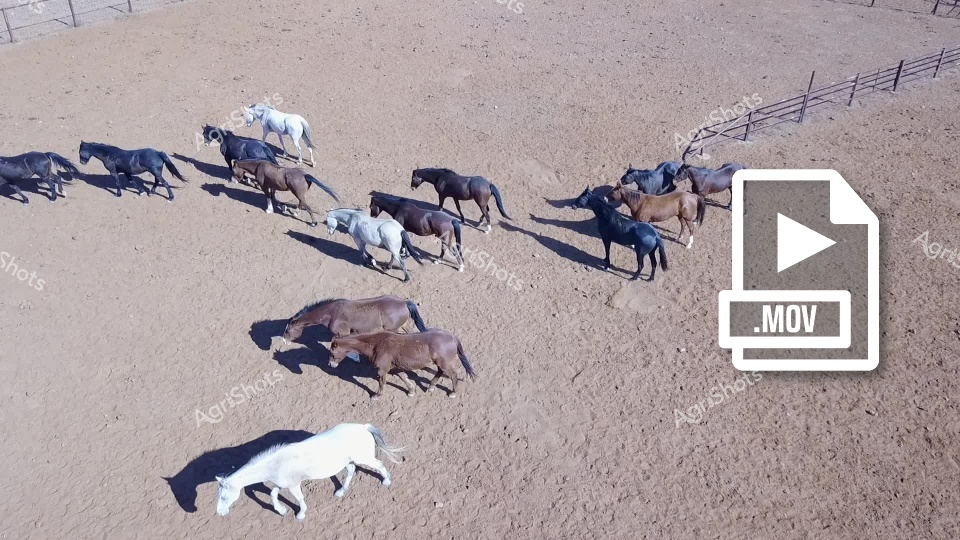
An aerial view of a diverse herd of horses grazes across a dusty, fenced paddock with horses in varying coat colors - white, black, brown, and chestnut. The dry, packed earth and expansive yard suggest an arid agricultural setting, with horses moving in loose groups and casting long shadows under what appears to be bright, midday sunlight. The overhead perspective captures the natural movement and varied coloration of the herd, highlighting the grace and diversity of these livestock. ▶ Video

An aerial view of a diverse herd of horses grazes across a dusty, fenced paddock with horses in varying coat colors - white, black, brown, and chestnut. The dry, packed earth and expansive yard suggest an arid agricultural setting, with horses moving in loose groups and casting long shadows under what appears to be bright, midday sunlight. The overhead perspective captures the natural movement and varied coloration of the herd, highlighting the grace and diversity of these livestock.
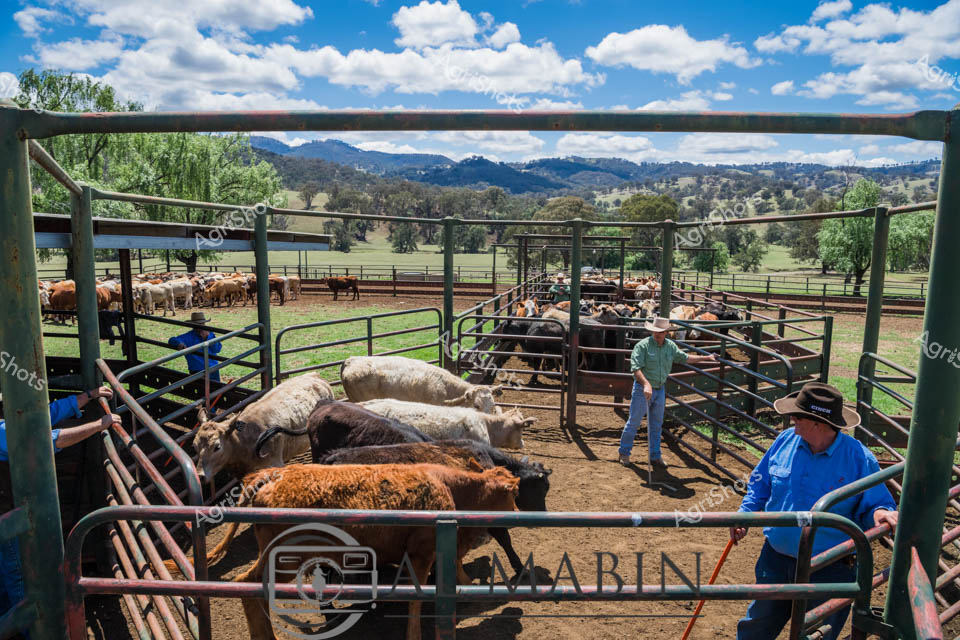
A team of cattle handlers work the yards, drafting and managing a mixed herd of beef cattle in a picturesque New South Wales rural landscape. Varied colored cattle - including rust-red, white, and dark brown animals - stand within sturdy metal stock yards, with rolling hills and eucalyptus-dotted paddocks stretching into the distant mountain ranges. Experienced stockmen in blue shirts and wide-brimmed hats move carefully among the livestock, managing the cattle with quiet expertise against a backdrop of fluffy white clouds and brilliant blue sky. Image

A team of cattle handlers work the yards, drafting and managing a mixed herd of beef cattle in a picturesque New South Wales rural landscape. Varied colored cattle - including rust-red, white, and dark brown animals - stand within sturdy metal stock yards, with rolling hills and eucalyptus-dotted paddocks stretching into the distant mountain ranges. Experienced stockmen in blue shirts and wide-brimmed hats move carefully among the livestock, managing the cattle with quiet expertise against a backdrop of fluffy white clouds and brilliant blue sky.
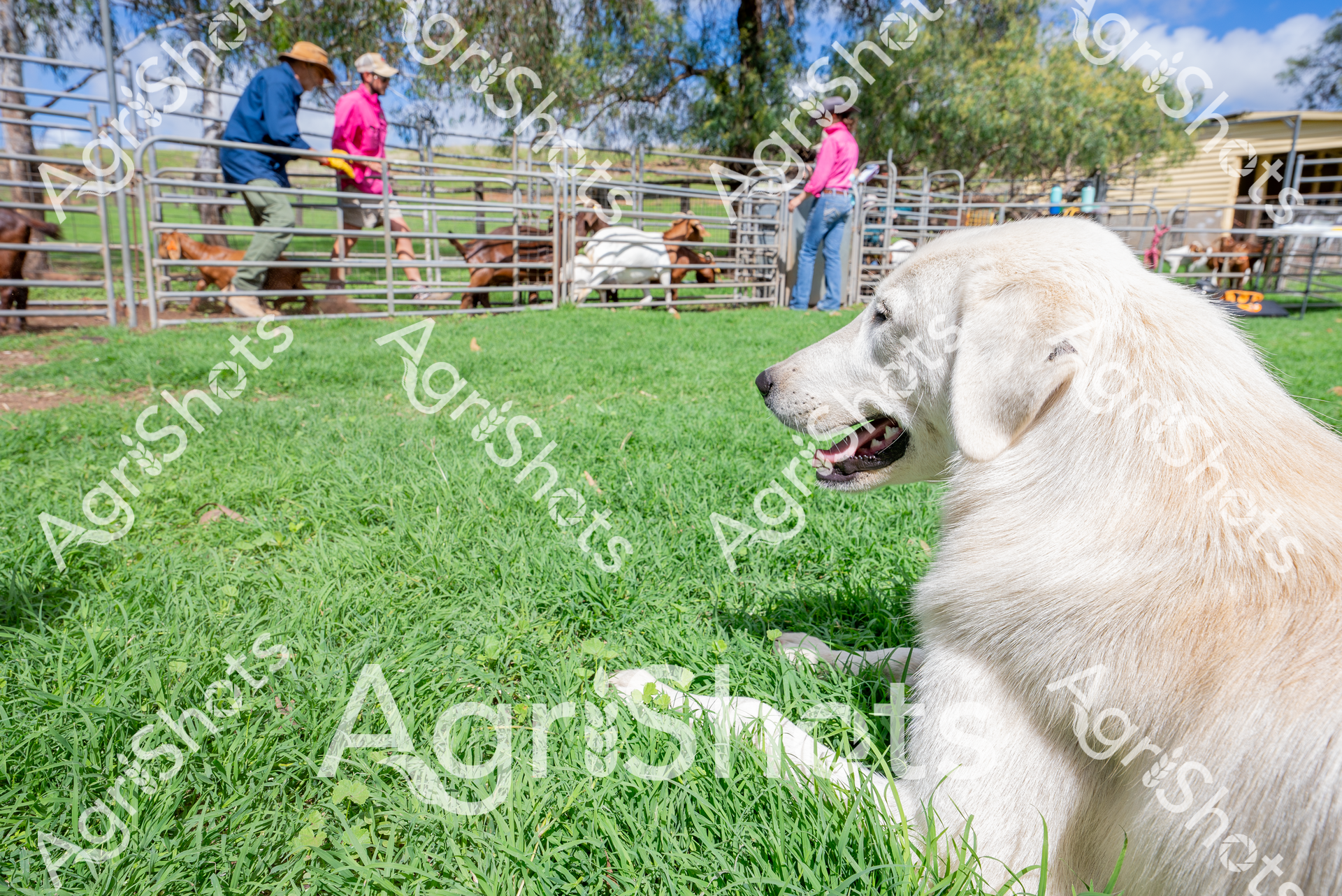
A magnificent Maremma guardian dog stands alert in a rural livestock setting, his cream-white coat gleaming against the lush green pasture of the Darling Downs region in Queensland. Behind him, experienced stock handlers in blue and pink work attire manage a small herd of Boer goats within sturdy metal stock yards, their movements deliberate and practiced. The summer sunlight casts sharp shadows across the paddock, highlighting the verdant grass and creating a sense of vibrant agricultural activity. This working dog, traditionally bred to protect livestock, watches intently with an open, confident expression, embodying the partnership between animals that defines Australian pastoral life. The scene captures the essence of modern agricultural management - skilled human intervention balanced with the natural guardianship of livestock protection dogs. Eucalyptus trees frame the background, providing dappled shade and a quintessential Australian rural landscape context. Image

A magnificent Maremma guardian dog stands alert in a rural livestock setting, his cream-white coat gleaming against the lush green pasture of the Darling Downs region in Queensland. Behind him, experienced stock handlers in blue and pink work attire manage a small herd of Boer goats within sturdy metal stock yards, their movements deliberate and practiced. The summer sunlight casts sharp shadows across the paddock, highlighting the verdant grass and creating a sense of vibrant agricultural activity. This working dog, traditionally bred to protect livestock, watches intently with an open, confident expression, embodying the partnership between animals that defines Australian pastoral life. The scene captures the essence of modern agricultural management - skilled human intervention balanced with the natural guardianship of livestock protection dogs. Eucalyptus trees frame the background, providing dappled shade and a quintessential Australian rural landscape context.
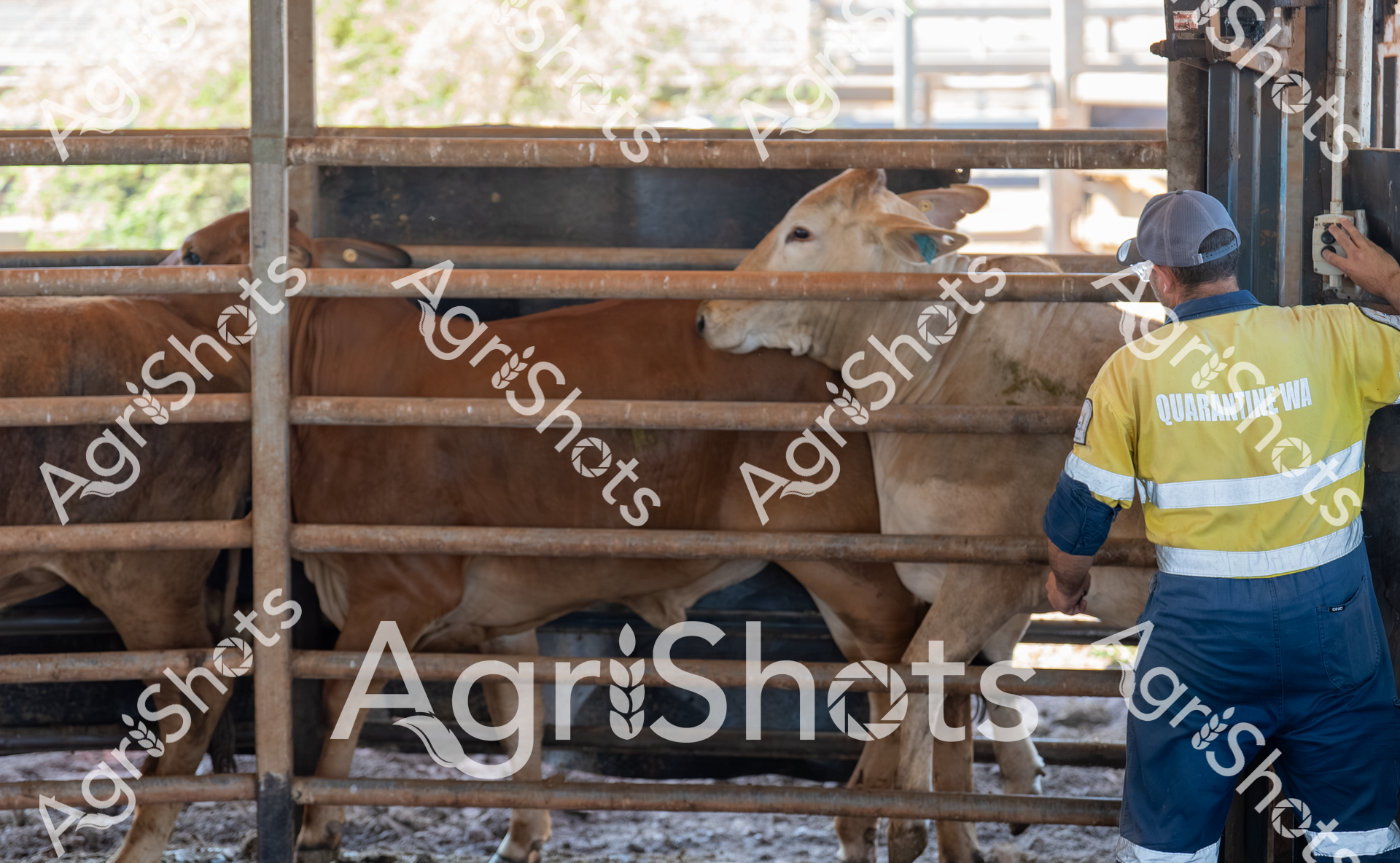
A quarantine worker in a high-visibility yellow vest monitors a group of light-brown cattle in a metal livestock pen. The cattle appear to be undergoing a veterinary health check, likely in preparation for export from Western Australia's Kimberley region during the spring season. Image

A quarantine worker in a high-visibility yellow vest monitors a group of light-brown cattle in a metal livestock pen. The cattle appear to be undergoing a veterinary health check, likely in preparation for export from Western Australia's Kimberley region during the spring season.

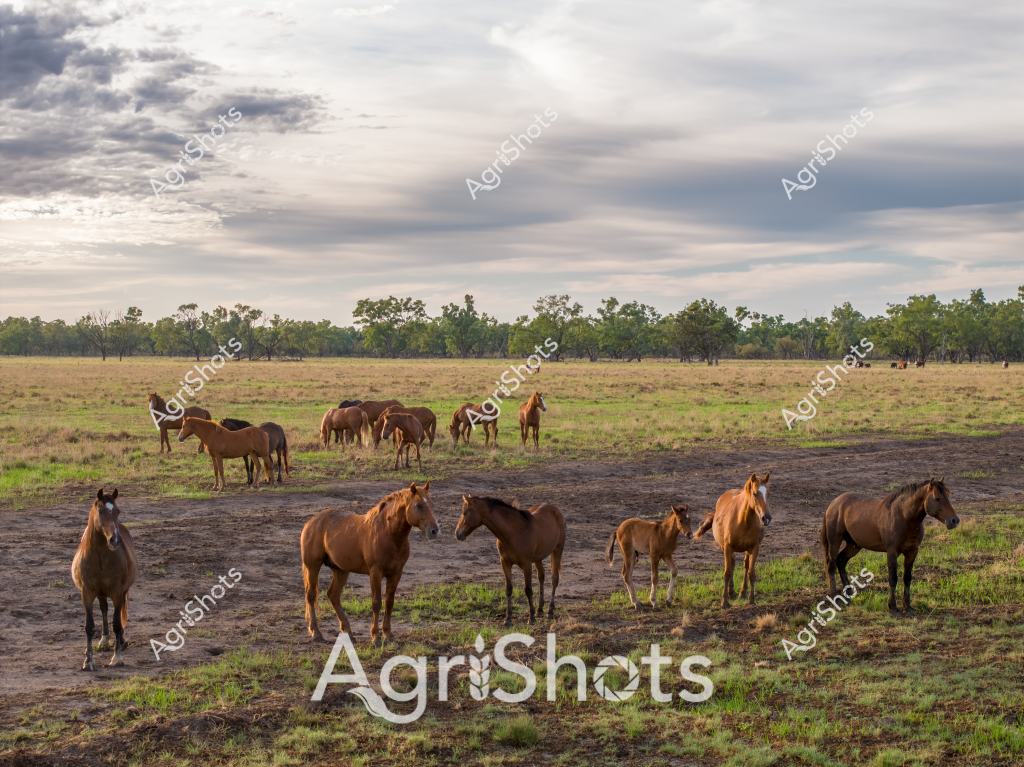
A serene rural landscape featuring a herd of horses grazing and standing in a sprawling paddock under an overcast sky. The horses, ranging in color from rich chestnut to darker brown, are dispersed across a muddy and grassy terrain with scattered trees lining the distant horizon. Some horses stand individually while others cluster in small groups, suggesting a relaxed and peaceful rural setting typical of Australian horse breeding or agistment properties. The cloudy, soft-lit environment creates a muted color palette of browns, greens, and grays, highlighting the natural beauty of the pastoral scene. The ground shows a mix of bare earth and patchy grass, indicating the transitional nature of the landscape, possibly during a dry season or in an area experiencing variable rainfall conditions. The horses appear healthy and well-maintained, moving and standing with a sense of calm and freedom within their expansive paddock environment. Image

A serene rural landscape featuring a herd of horses grazing and standing in a sprawling paddock under an overcast sky. The horses, ranging in color from rich chestnut to darker brown, are dispersed across a muddy and grassy terrain with scattered trees lining the distant horizon. Some horses stand individually while others cluster in small groups, suggesting a relaxed and peaceful rural setting typical of Australian horse breeding or agistment properties. The cloudy, soft-lit environment creates a muted color palette of browns, greens, and grays, highlighting the natural beauty of the pastoral scene. The ground shows a mix of bare earth and patchy grass, indicating the transitional nature of the landscape, possibly during a dry season or in an area experiencing variable rainfall conditions. The horses appear healthy and well-maintained, moving and standing with a sense of calm and freedom within their expansive paddock environment.
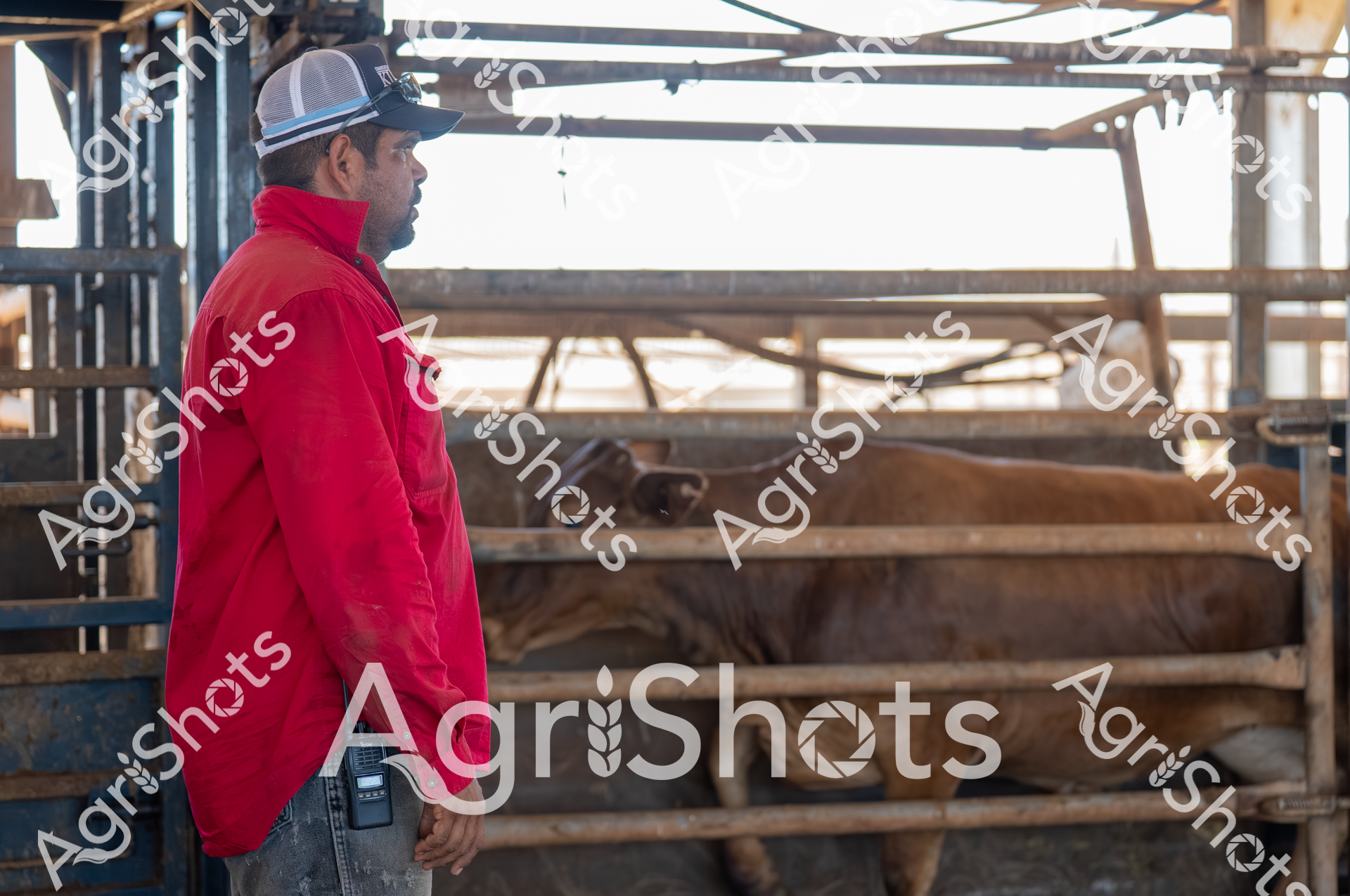
A man in a bright red jacket and cap stands in a cattle yard, overlooking several brown cattle in holding pens. The scene appears to be in the Kimberley region of Western Australia, likely during a veterinary check or export preparation at a station. The structural elements and lighting suggest this is a professional agricultural setting focused on animal health and livestock management. Image

A man in a bright red jacket and cap stands in a cattle yard, overlooking several brown cattle in holding pens. The scene appears to be in the Kimberley region of Western Australia, likely during a veterinary check or export preparation at a station. The structural elements and lighting suggest this is a professional agricultural setting focused on animal health and livestock management.

A large cattle yard in the Kimberley Region of Western Australia, filled with reddish-brown Brahman or Brahman-cross cattle. The expansive pen system features multiple compartments with hay bales and straw bedding, surrounded by metal fencing and set against a backdrop of dry bushland. This export-ready station demonstrates modern cattle farming practices in the rugged Australian landscape during springtime. Image

A large cattle yard in the Kimberley Region of Western Australia, filled with reddish-brown Brahman or Brahman-cross cattle. The expansive pen system features multiple compartments with hay bales and straw bedding, surrounded by metal fencing and set against a backdrop of dry bushland. This export-ready station demonstrates modern cattle farming practices in the rugged Australian landscape during springtime.
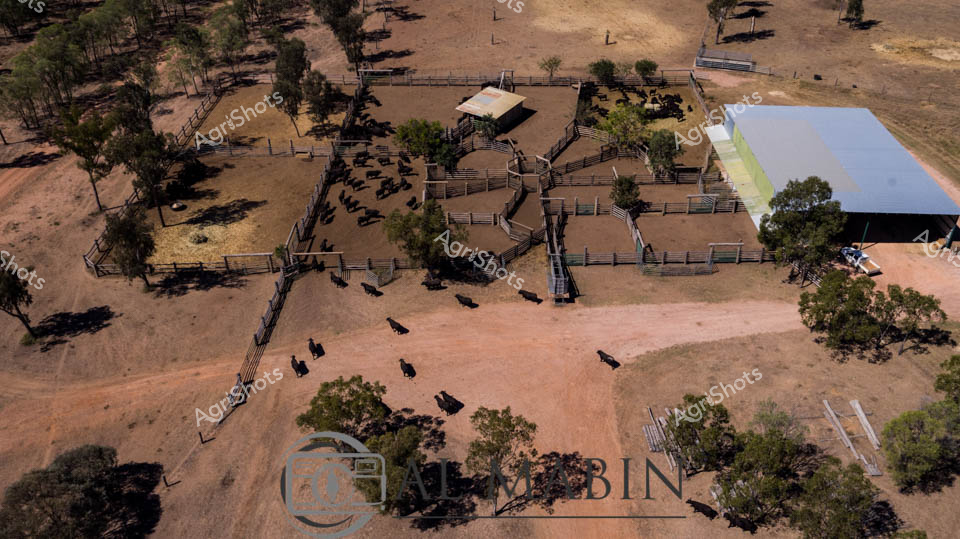
A sprawling cattle yard in rural Queensland reveals a network of wooden yards and paddocks, with black beef cattle scattered across the dry, reddish-brown landscape. Strategically placed trees cast long shadows across the dusty ground, highlighting the extensive infrastructure of this cattle station. The aerial perspective captures the intricate layout of holding pens, walkways, and a large shed, showcasing the sophisticated management of cattle in an arid Australian agricultural setting. Image

A sprawling cattle yard in rural Queensland reveals a network of wooden yards and paddocks, with black beef cattle scattered across the dry, reddish-brown landscape. Strategically placed trees cast long shadows across the dusty ground, highlighting the extensive infrastructure of this cattle station. The aerial perspective captures the intricate layout of holding pens, walkways, and a large shed, showcasing the sophisticated management of cattle in an arid Australian agricultural setting.
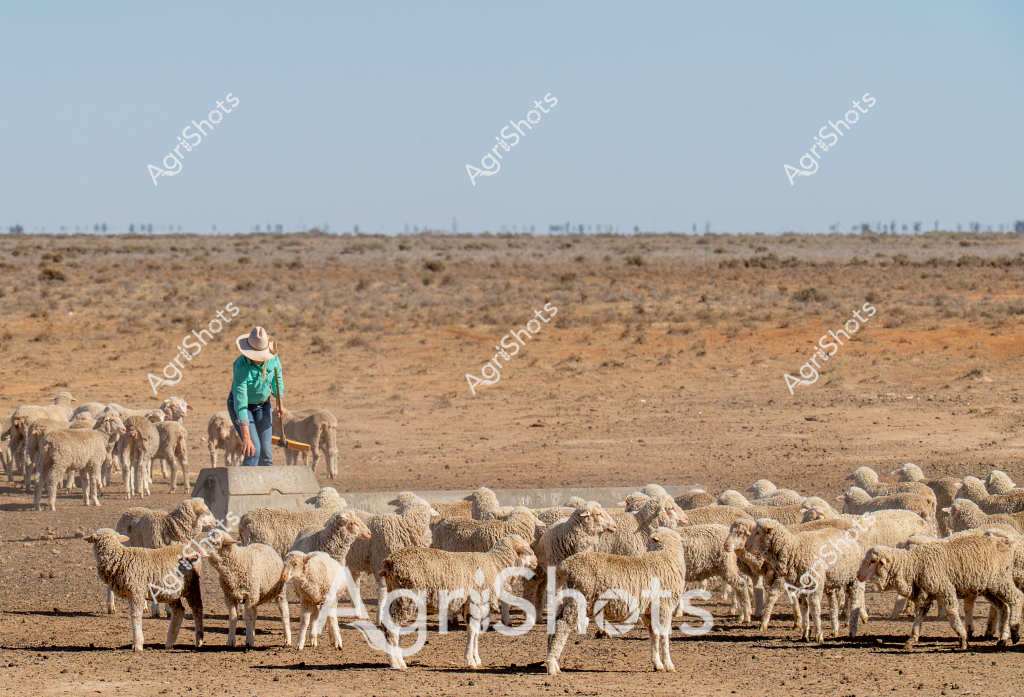
A woman stockman stands atop a concrete water trough, surrounded by a large flock of merino sheep in a dry, expansive outback landscape. The parched paddock stretches toward a distant horizon, with sparse vegetation and a pale blue sky indicating harsh drought conditions. Wearing a teal work shirt, white hat, and sturdy work pants, the stockman carefully monitors the sheep gathered around the water source. The woolly merino sheep, with their dense cream-colored fleece, cluster tightly around the trough, seeking water in the arid environment. The landscape is a palette of dusty browns and ochres, emphasizing the challenging conditions of rural Australian sheep farming. This image captures the resilience of both the livestock and the people who manage them in one of the world's most unforgiving agricultural environments. Image

A woman stockman stands atop a concrete water trough, surrounded by a large flock of merino sheep in a dry, expansive outback landscape. The parched paddock stretches toward a distant horizon, with sparse vegetation and a pale blue sky indicating harsh drought conditions. Wearing a teal work shirt, white hat, and sturdy work pants, the stockman carefully monitors the sheep gathered around the water source. The woolly merino sheep, with their dense cream-colored fleece, cluster tightly around the trough, seeking water in the arid environment. The landscape is a palette of dusty browns and ochres, emphasizing the challenging conditions of rural Australian sheep farming. This image captures the resilience of both the livestock and the people who manage them in one of the world's most unforgiving agricultural environments.
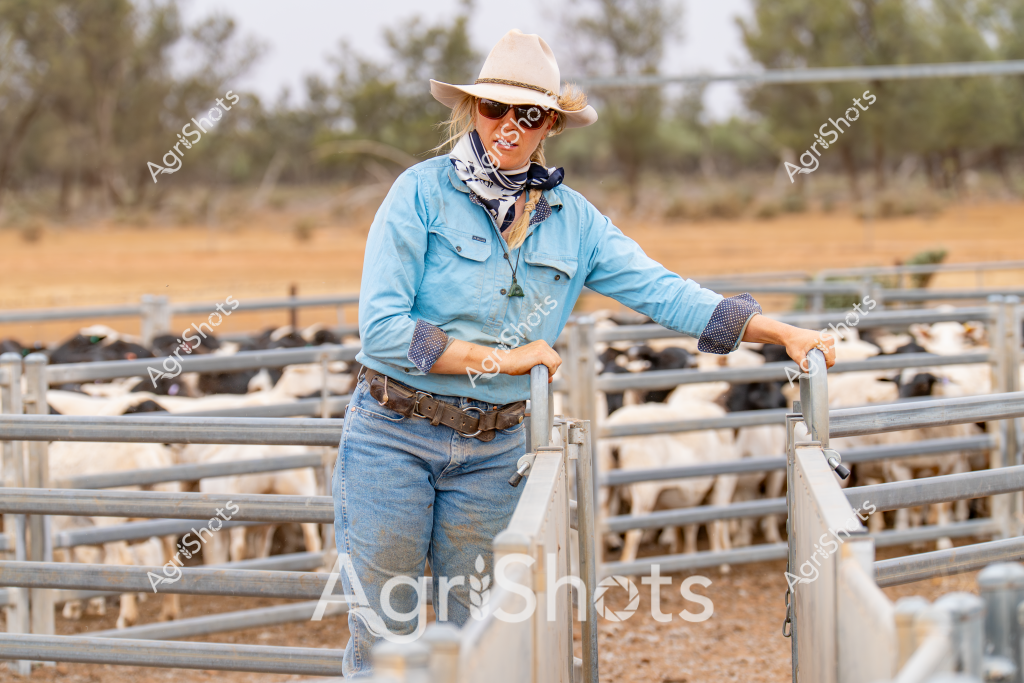
A woman stockman stands confidently among sheep yards in an arid Australian landscape, wearing classic rural workwear. Dressed in a light blue long-sleeved shirt, faded denim jeans, and a wide-brimmed protective hat, she leans casually against metal livestock gates with a herd of sheep visible in the background paddock. Her outfit is completed with sunglasses and a navy neck scarf, typical attire for managing livestock in harsh outback conditions. The surrounding environment shows a dry, golden-brown landscape with sparse trees and shrubs, characteristic of inland Australian pastoral regions. Her relaxed posture and professional stance suggest extensive experience handling livestock in challenging rural environments. The metal livestock yards and fencing provide a structured backdrop to the scene, highlighting the essential infrastructure of Australian sheep farming. Image

A woman stockman stands confidently among sheep yards in an arid Australian landscape, wearing classic rural workwear. Dressed in a light blue long-sleeved shirt, faded denim jeans, and a wide-brimmed protective hat, she leans casually against metal livestock gates with a herd of sheep visible in the background paddock. Her outfit is completed with sunglasses and a navy neck scarf, typical attire for managing livestock in harsh outback conditions. The surrounding environment shows a dry, golden-brown landscape with sparse trees and shrubs, characteristic of inland Australian pastoral regions. Her relaxed posture and professional stance suggest extensive experience handling livestock in challenging rural environments. The metal livestock yards and fencing provide a structured backdrop to the scene, highlighting the essential infrastructure of Australian sheep farming.
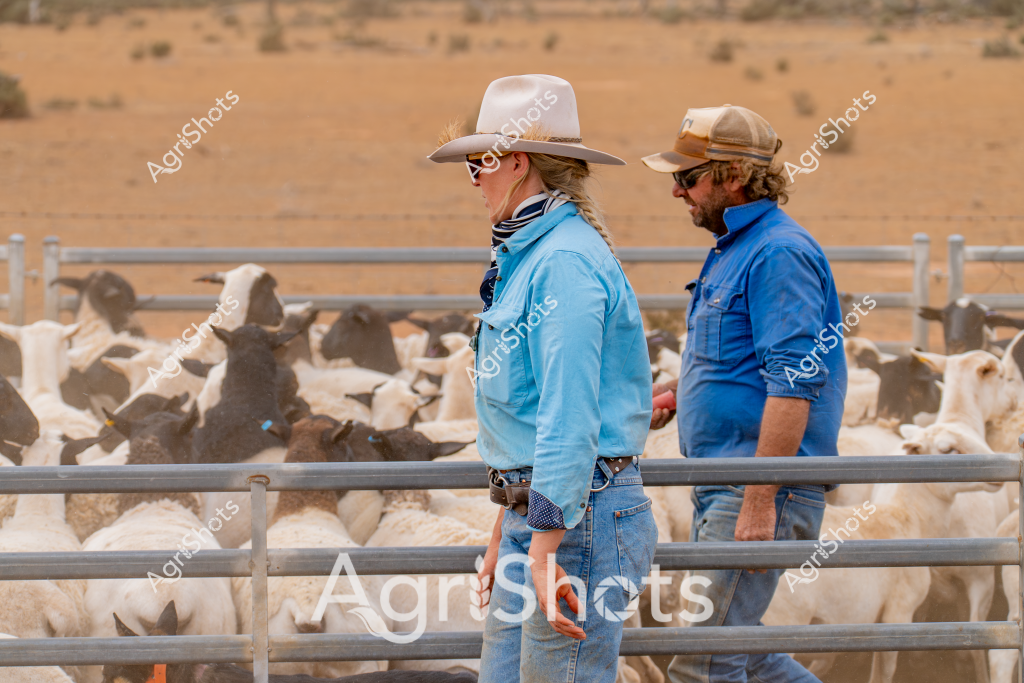
Two people work together managing a herd of goats in an arid, dusty paddock with scattered vegetation. A woman in a white wide-brimmed hat, blue long-sleeved shirt, and denim jeans stands alongside a man in a blue work shirt and cap, both observing the mixed-color goat herd within a metal stock fence. The landscape is a golden-brown expanse typical of Australian outback or pastoral regions, with sparse shrubs and dry ground stretching to the horizon. Their professional stance and coordinated blue clothing suggest they are experienced livestock managers monitoring the herd during what appears to be a dry season. The goats cluster together, a mixture of white, black, and brown animals pressed close within the metal yard, representing the challenges of livestock management in an arid agricultural environment. Image

Two people work together managing a herd of goats in an arid, dusty paddock with scattered vegetation. A woman in a white wide-brimmed hat, blue long-sleeved shirt, and denim jeans stands alongside a man in a blue work shirt and cap, both observing the mixed-color goat herd within a metal stock fence. The landscape is a golden-brown expanse typical of Australian outback or pastoral regions, with sparse shrubs and dry ground stretching to the horizon. Their professional stance and coordinated blue clothing suggest they are experienced livestock managers monitoring the herd during what appears to be a dry season. The goats cluster together, a mixture of white, black, and brown animals pressed close within the metal yard, representing the challenges of livestock management in an arid agricultural environment.
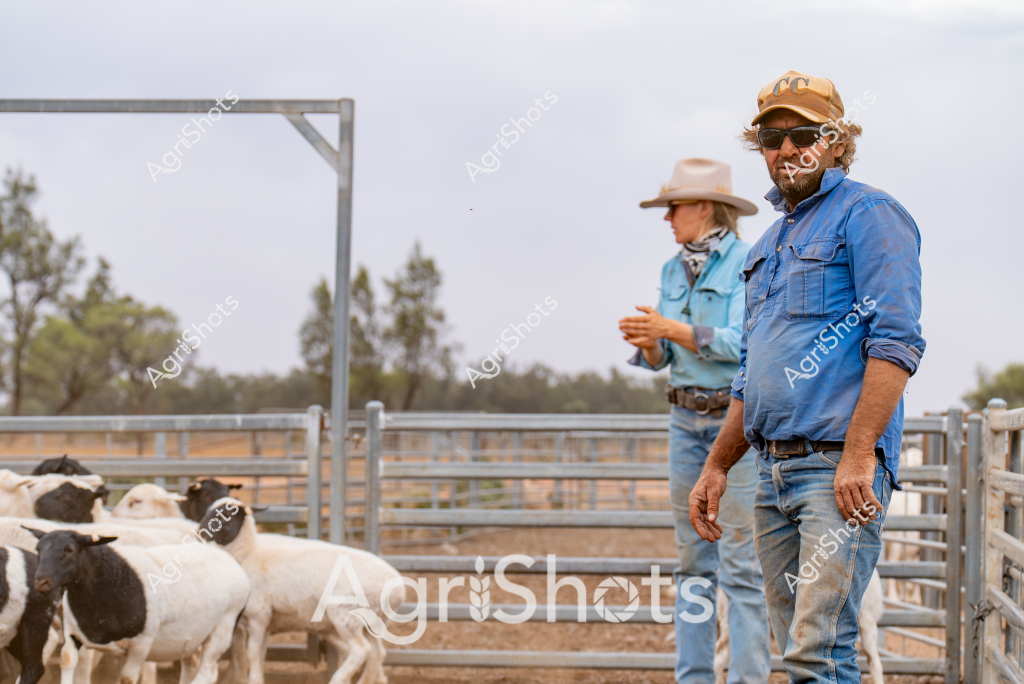
A seasoned man stockman and a woman worker supervise a small herd of black and white sheep in a rural livestock yard, surrounded by metal livestock fencing and distant eucalyptus trees. The man wears a tan cap, sunglasses, and a blue chambray work shirt with rolled-up sleeves, standing confidently in worn denim jeans and boots. His companion, wearing a light-colored wide-brimmed hat and a blue work shirt, stands nearby, both carefully observing the flock of mixed-color sheep clustered in the steel holding pen. The overcast sky and dusty ground suggest a typical Australian pastoral scene, highlighting the ongoing management of livestock in a challenging rural environment. Their professional stance and attentive posture demonstrate the careful husbandry and daily work required in managing a sheep production operation. Image

A seasoned man stockman and a woman worker supervise a small herd of black and white sheep in a rural livestock yard, surrounded by metal livestock fencing and distant eucalyptus trees. The man wears a tan cap, sunglasses, and a blue chambray work shirt with rolled-up sleeves, standing confidently in worn denim jeans and boots. His companion, wearing a light-colored wide-brimmed hat and a blue work shirt, stands nearby, both carefully observing the flock of mixed-color sheep clustered in the steel holding pen. The overcast sky and dusty ground suggest a typical Australian pastoral scene, highlighting the ongoing management of livestock in a challenging rural environment. Their professional stance and attentive posture demonstrate the careful husbandry and daily work required in managing a sheep production operation.
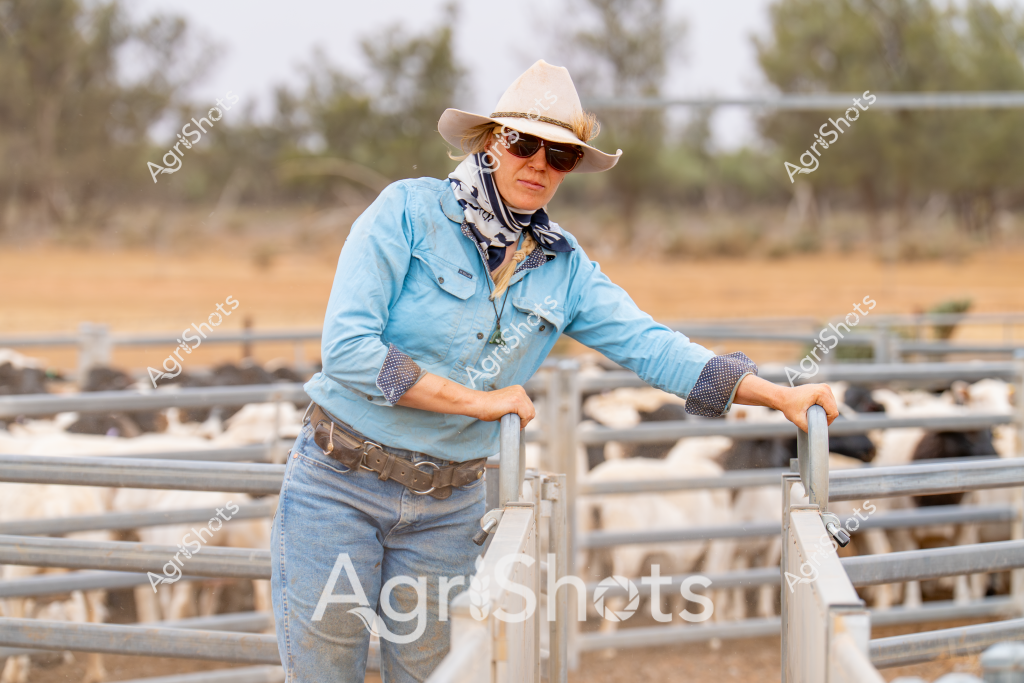
A woman stockman stands confidently beside sheep yards in a dry Australian rural landscape, wearing classic pastoral work attire. Dressed in a light blue long-sleeved chambray shirt with rolled cuffs, faded denim jeans, and a wide-brimmed cream cowboy hat, she leans against the metal livestock gates with sunglasses protecting her eyes from the harsh outback sunlight. The background reveals a sparse paddock with scattered trees and dusty ground, typical of arid agricultural regions. Her navy neck scarf and sturdy leather belt complete the practical workwear ensemble, highlighting the professional preparedness of contemporary Australian rural workers. She appears ready to manage livestock, with the metal cattle yards behind her suggesting an active agricultural setting during what seems to be a warm, dry season. Image

A woman stockman stands confidently beside sheep yards in a dry Australian rural landscape, wearing classic pastoral work attire. Dressed in a light blue long-sleeved chambray shirt with rolled cuffs, faded denim jeans, and a wide-brimmed cream cowboy hat, she leans against the metal livestock gates with sunglasses protecting her eyes from the harsh outback sunlight. The background reveals a sparse paddock with scattered trees and dusty ground, typical of arid agricultural regions. Her navy neck scarf and sturdy leather belt complete the practical workwear ensemble, highlighting the professional preparedness of contemporary Australian rural workers. She appears ready to manage livestock, with the metal cattle yards behind her suggesting an active agricultural setting during what seems to be a warm, dry season.
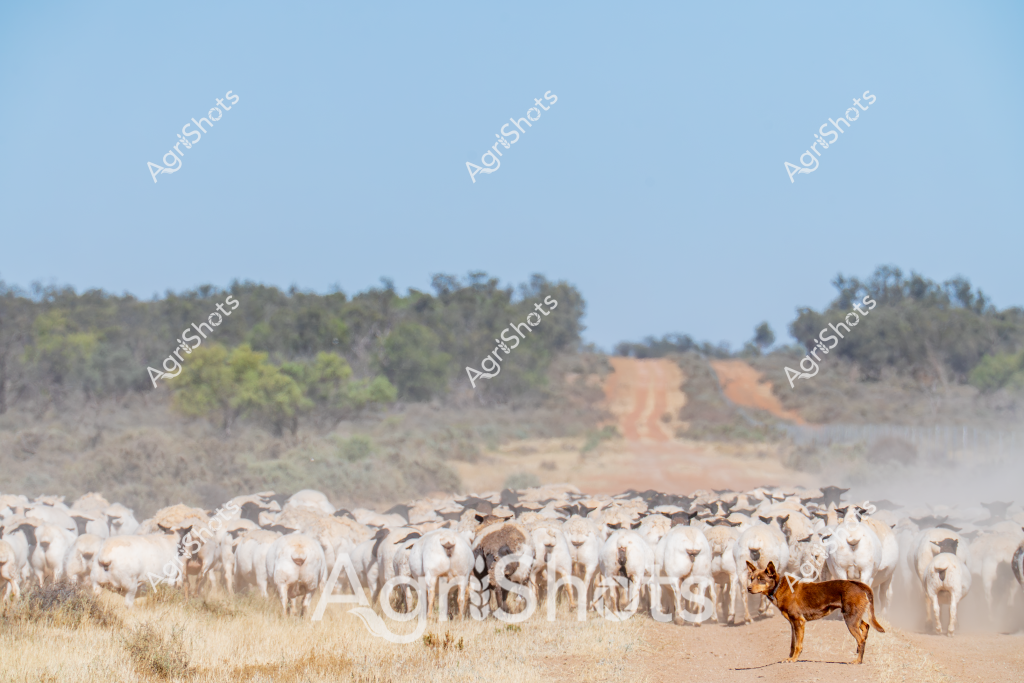
A dingo stands alert on a dusty rural track, watching over a large flock of white sheep being herded across an arid Australian landscape. The compact, reddish-brown canine appears vigilant and focused, positioned to the side of the sheep mob as they raise a cloud of fine dust along the dirt road. In the background, sparse eucalyptus trees and scrubland stretch toward a distant treeline under a clear blue sky, typical of an Australian pastoral setting. The image captures the essential working relationship between livestock guardian dogs and sheep herds, highlighting the dog's crucial role in managing and protecting the flock across vast, open grazing lands. The scene represents the rugged and challenging environment of Australian livestock farming, where animals and working dogs must be resilient and adaptable to survive in harsh conditions. Image

A dingo stands alert on a dusty rural track, watching over a large flock of white sheep being herded across an arid Australian landscape. The compact, reddish-brown canine appears vigilant and focused, positioned to the side of the sheep mob as they raise a cloud of fine dust along the dirt road. In the background, sparse eucalyptus trees and scrubland stretch toward a distant treeline under a clear blue sky, typical of an Australian pastoral setting. The image captures the essential working relationship between livestock guardian dogs and sheep herds, highlighting the dog's crucial role in managing and protecting the flock across vast, open grazing lands. The scene represents the rugged and challenging environment of Australian livestock farming, where animals and working dogs must be resilient and adaptable to survive in harsh conditions.
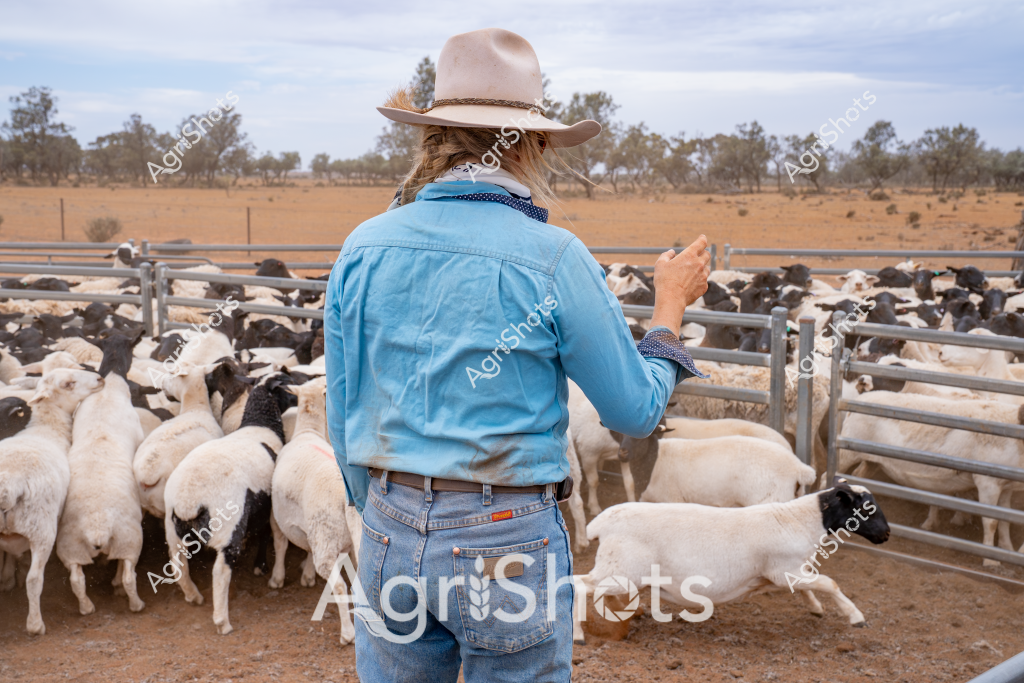
A woman stockman stands with her back to the camera, surveying a mob of black and white sheep in a dry, arid paddock. Wearing a light blue long-sleeved work shirt, faded blue jeans, and a classic Australian wide-brimmed hat, she appears to be managing the livestock in a metal stock yard. The background reveals a typical Australian rural landscape - sparse trees and golden-brown grasslands stretching to the horizon, indicating challenging drought conditions.

The sheep are tightly packed within metal fence panels, a mix of white and black woolly bodies creating a textured scene. The woman's raised hand suggests she is guiding or directing the flock, demonstrating the skilled livestock management typical of Australian agricultural practices. The dry, rocky ground and sparse vegetation underscore the harsh environmental conditions faced by farmers in this region.

Her outfit - practical and hard-wearing - speaks to the demanding nature of rural work. The wide-brimmed hat provides essential sun protection, while her blue shirt and denim jeans are standard attire for stockmen and women working with livestock across Australian stations and farms. Image

A woman stockman stands with her back to the camera, surveying a mob of black and white sheep in a dry, arid paddock. Wearing a light blue long-sleeved work shirt, faded blue jeans, and a classic Australian wide-brimmed hat, she appears to be managing the livestock in a metal stock yard. The background reveals a typical Australian rural landscape - sparse trees and golden-brown grasslands stretching to the horizon, indicating challenging drought conditions. The sheep are tightly packed within metal fence panels, a mix of white and black woolly bodies creating a textured scene. The woman's raised hand suggests she is guiding or directing the flock, demonstrating the skilled livestock management typical of Australian agricultural practices. The dry, rocky ground and sparse vegetation underscore the harsh environmental conditions faced by farmers in this region. Her outfit - practical and hard-wearing - speaks to the demanding nature of rural work. The wide-brimmed hat provides essential sun protection, while her blue shirt and denim jeans are standard attire for stockmen and women working with livestock across Australian stations and farms.
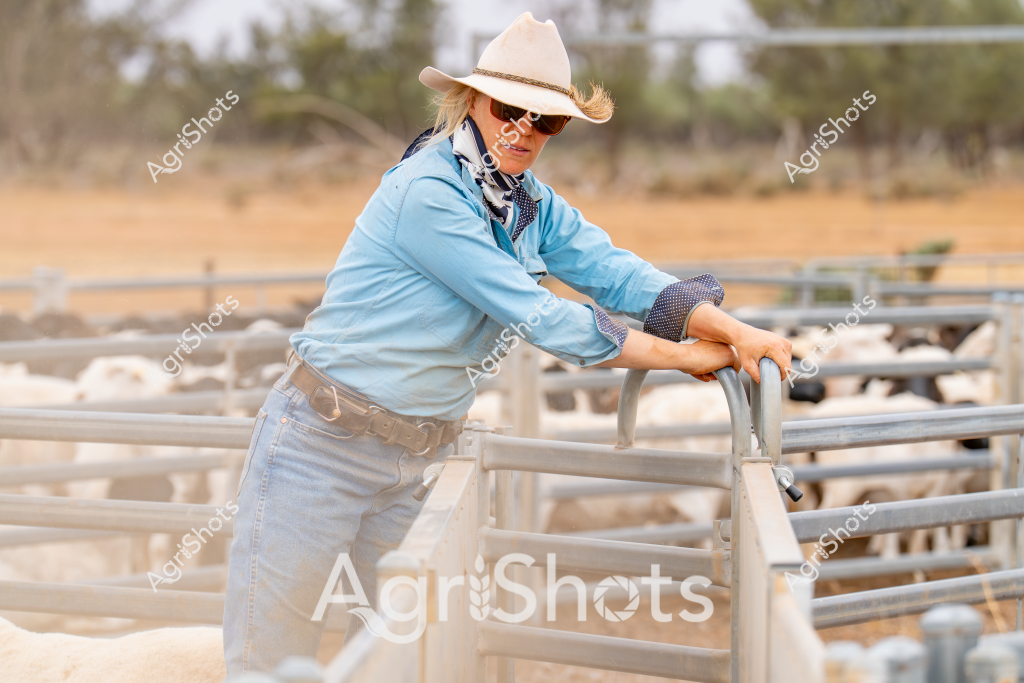
A woman stockman in a light blue long-sleeved shirt, white cowboy hat, and denim jeans leans against a metal livestock gate in a dry, sparse Australian rural landscape. Her posture suggests focused concentration as she surveys a group of sheep in the background, with metal yard panels and fence lines defining the pastoral setting. The environment appears arid, with sandy-colored ground and scattered trees or shrubs visible in the distance, typical of inland Australian grazing country. Her outfit - complete with sunglasses and a patterned neckerchief - represents practical workwear designed for harsh rural conditions. The scene captures the everyday experience of livestock management, where careful observation and strategic positioning are crucial to managing herds in challenging agricultural environments. Image

A woman stockman in a light blue long-sleeved shirt, white cowboy hat, and denim jeans leans against a metal livestock gate in a dry, sparse Australian rural landscape. Her posture suggests focused concentration as she surveys a group of sheep in the background, with metal yard panels and fence lines defining the pastoral setting. The environment appears arid, with sandy-colored ground and scattered trees or shrubs visible in the distance, typical of inland Australian grazing country. Her outfit - complete with sunglasses and a patterned neckerchief - represents practical workwear designed for harsh rural conditions. The scene captures the everyday experience of livestock management, where careful observation and strategic positioning are crucial to managing herds in challenging agricultural environments.
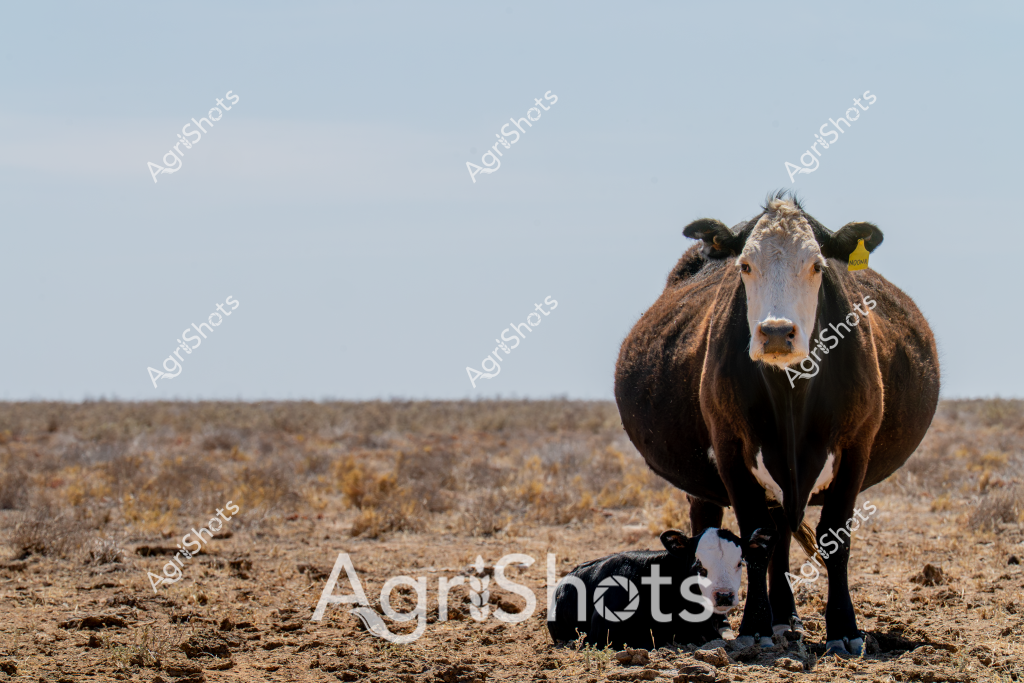
A robust beef cow stands confidently on a dry, sparse paddock, with her newborn black and white calf nestled beside her. The mature cow, likely a Angus or Angus-cross breed, wears a yellow ear tag and displays a sturdy, well-developed physique typical of Australian beef cattle. The landscape is characteristically arid, with brown, sparse vegetation and a flat horizon stretching to a pale blue sky, suggesting a challenging drought-affected environment.

The cow's protective stance and close proximity to her calf indicate the strong maternal instincts critical for survival in harsh agricultural conditions. Her rich dark brown coat contrasts against the pale, dusty ground, highlighting the resilience of livestock in Australian agricultural settings. The image captures the essence of pastoral farming - where animals must be hardy and adaptable to survive in challenging terrain.

This scene represents the realities of cattle farming in Australia's more marginal grazing lands, where animals must be tough and farmers must be strategic in managing livestock through difficult environmental conditions. The proximity of the mother and calf demonstrates the ongoing cycle of agricultural production and the fundamental relationship between farmers and their herds. Image

A robust beef cow stands confidently on a dry, sparse paddock, with her newborn black and white calf nestled beside her. The mature cow, likely a Angus or Angus-cross breed, wears a yellow ear tag and displays a sturdy, well-developed physique typical of Australian beef cattle. The landscape is characteristically arid, with brown, sparse vegetation and a flat horizon stretching to a pale blue sky, suggesting a challenging drought-affected environment. The cow's protective stance and close proximity to her calf indicate the strong maternal instincts critical for survival in harsh agricultural conditions. Her rich dark brown coat contrasts against the pale, dusty ground, highlighting the resilience of livestock in Australian agricultural settings. The image captures the essence of pastoral farming - where animals must be hardy and adaptable to survive in challenging terrain. This scene represents the realities of cattle farming in Australia's more marginal grazing lands, where animals must be tough and farmers must be strategic in managing livestock through difficult environmental conditions. The proximity of the mother and calf demonstrates the ongoing cycle of agricultural production and the fundamental relationship between farmers and their herds.
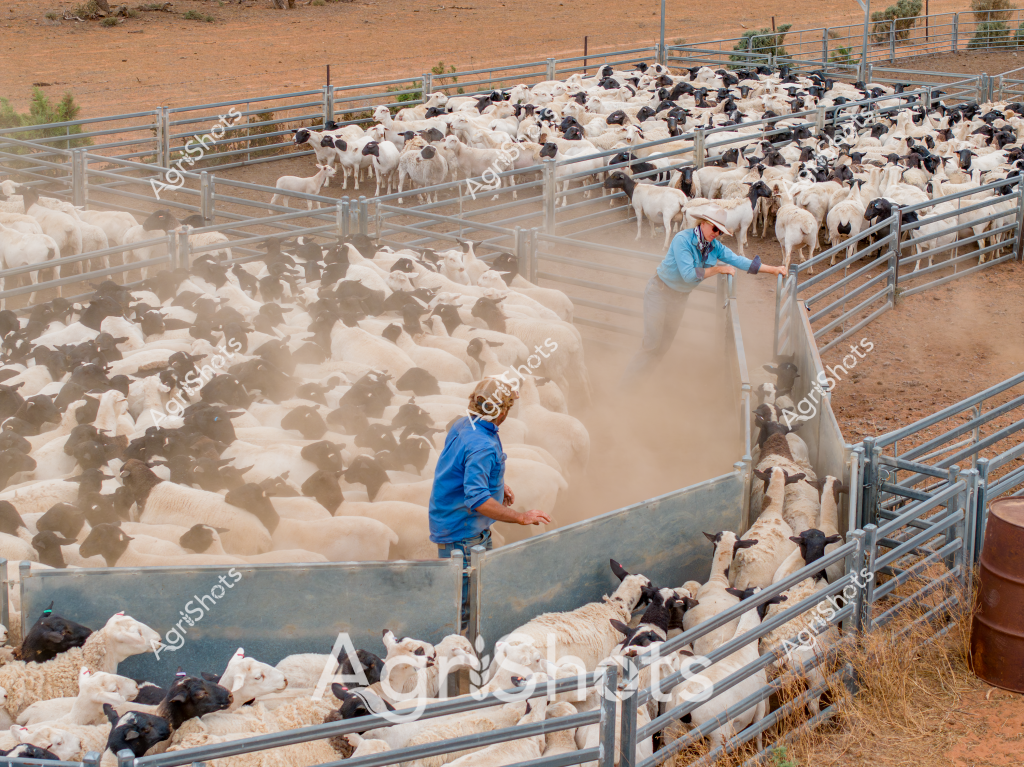
In this dynamic livestock scene, two workers in blue shirts manage a large mob of black and white sheep in a dusty livestock yard. The sheep, a mix of white and black-faced breeds typical of Australian farming, are densely packed within metal livestock yards under an arid, reddish-brown landscape. One worker stands on the metal gate, directing the sheep's movement with practiced movements, while dust rises around the animals, creating a dramatic visual effect that captures the intensity of sheep management in a dry rural environment. The metal yard panels provide structure and control, allowing the workers to efficiently sort and move the livestock. The scene epitomizes the challenging and skilled work of Australian sheep farming, where precision and experience are crucial in managing large flocks in harsh, drought-prone landscapes. The blue shirts of the workers contrast sharply with the tan earth and white and black sheep, creating a visually compelling image of agricultural work. Image

In this dynamic livestock scene, two workers in blue shirts manage a large mob of black and white sheep in a dusty livestock yard. The sheep, a mix of white and black-faced breeds typical of Australian farming, are densely packed within metal livestock yards under an arid, reddish-brown landscape. One worker stands on the metal gate, directing the sheep's movement with practiced movements, while dust rises around the animals, creating a dramatic visual effect that captures the intensity of sheep management in a dry rural environment. The metal yard panels provide structure and control, allowing the workers to efficiently sort and move the livestock. The scene epitomizes the challenging and skilled work of Australian sheep farming, where precision and experience are crucial in managing large flocks in harsh, drought-prone landscapes. The blue shirts of the workers contrast sharply with the tan earth and white and black sheep, creating a visually compelling image of agricultural work.