Results for “Food Testing”
 Image
Image
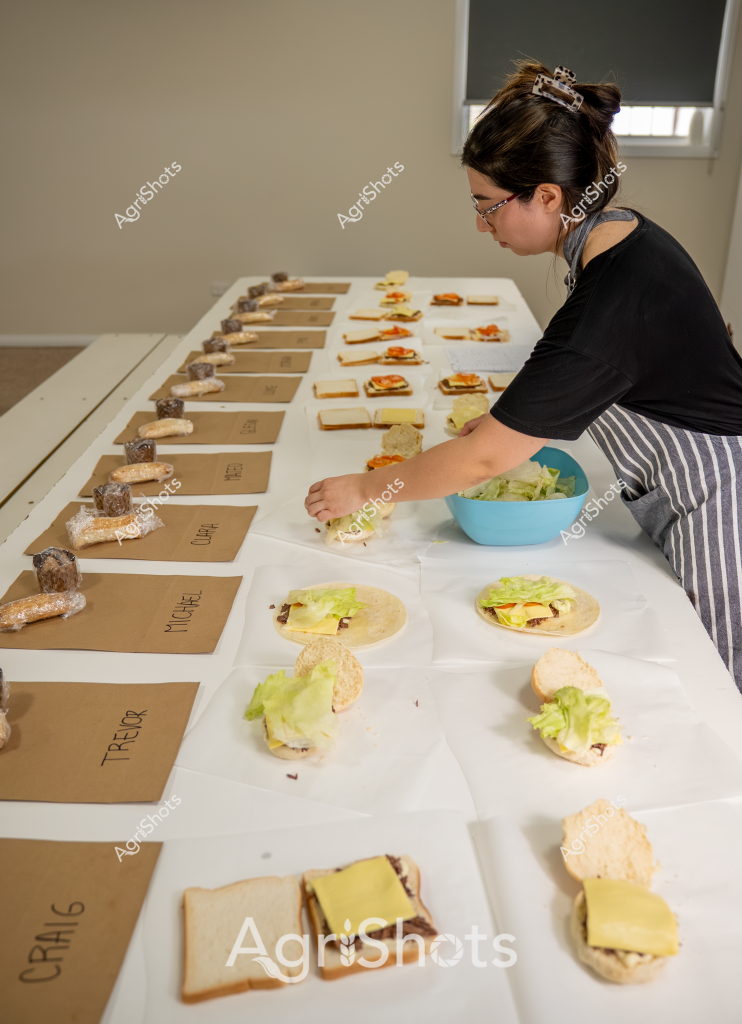
A woman in a black top and striped apron carefully prepares a series of sandwich samples in what appears to be a food testing or recipe development kitchen. Multiple brown paper labels are laid out, suggesting a systematic tasting or evaluation process. Sandwiches at various stages of preparation are arranged in neat rows, with fresh lettuce in a blue bowl and cheese slices being added to the components. The white table is covered with a clean cloth, and the setting looks like a professional culinary workspace with precise, methodical food preparation underway. The individual is meticulously arranging and constructing each sandwich, indicating a detailed and structured approach to food testing or recipe development.
 Image
Image
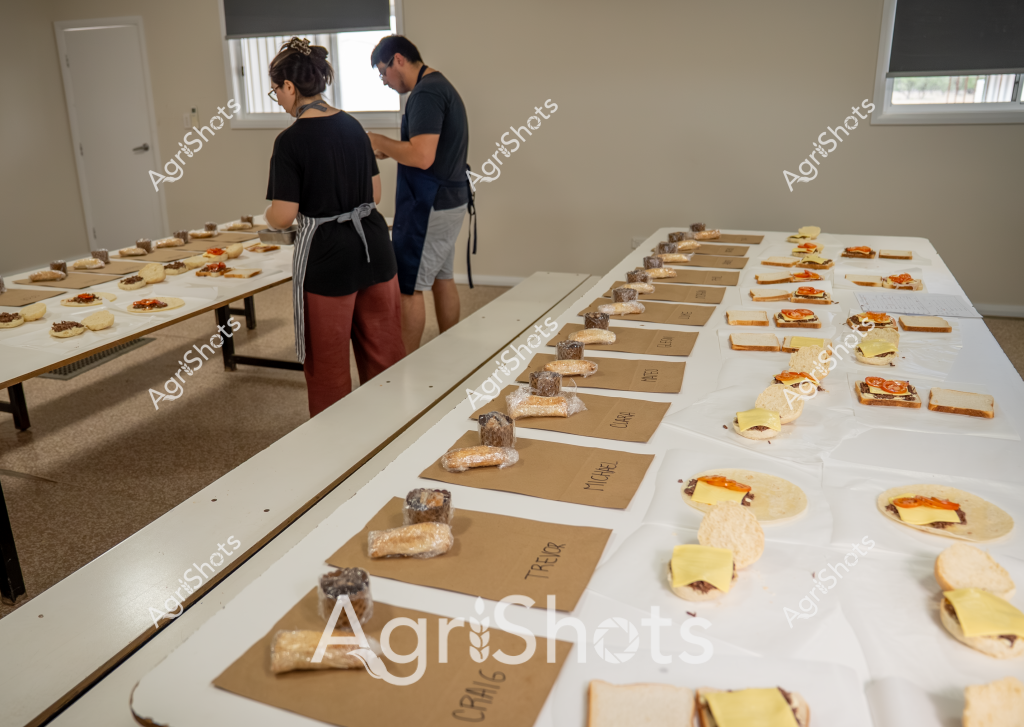
Two people are working on a food preparation and testing setup in an indoor professional kitchen or laboratory environment. A woman and a man, both wearing dark-colored tops and aprons, are arranging multiple food items across several white tables. Kraft paper labels are placed beside various prepared food products - what appear to be sandwiches, pastries, and other prepared dishes. The scene looks like a systematic food evaluation or sensory testing process, with each item carefully positioned and labeled. Multiple identical food items are arranged in neat rows, suggesting a controlled comparative tasting or recipe development session. The room has neutral beige walls, window blinds, and a professional, organized atmosphere typical of a culinary research or food product development workspace. The precise arrangement indicates a methodical approach, with each food item positioned with careful consideration. The neutral color palette and clean setup emphasize the professional nature of the food preparation and assessment process taking place.
 Image
Image
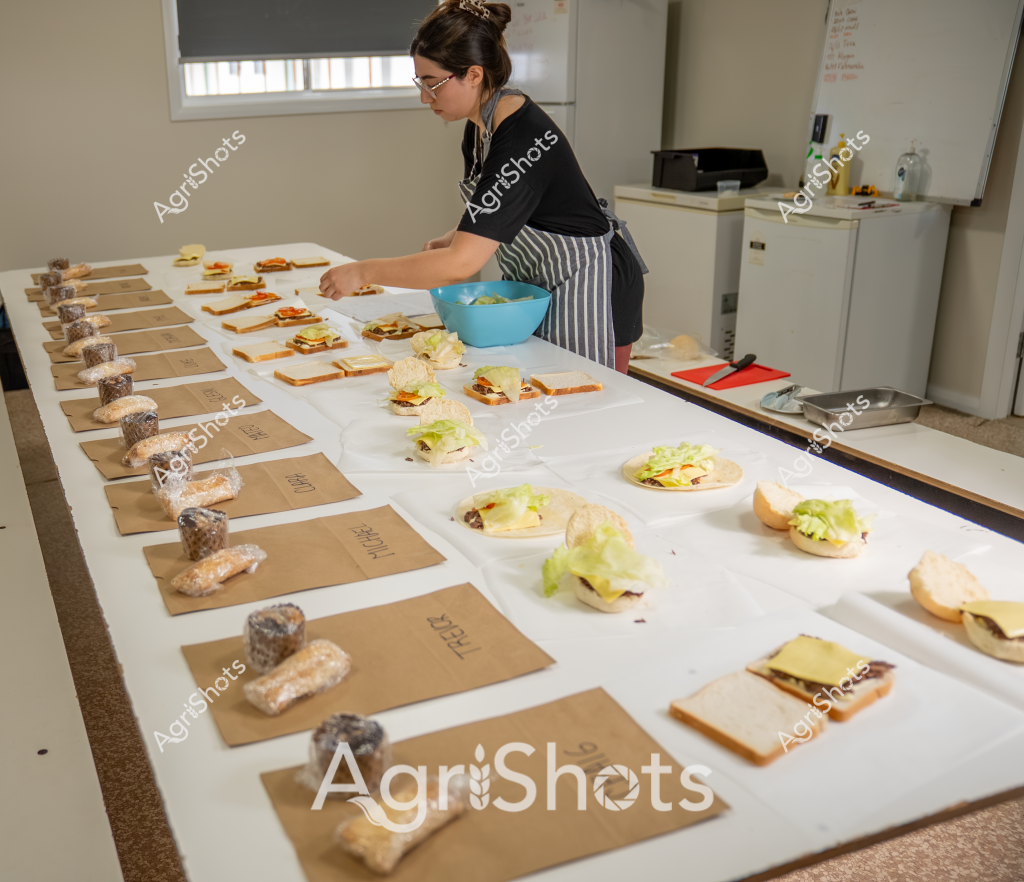
A woman in a black top and striped apron carefully prepares multiple sandwiches in what appears to be a professional food preparation area. The workspace is meticulously organized, with brown paper bags labeled and lined up on one side and an array of sandwich components systematically arranged across a white surface. A blue mixing bowl sits nearby as she arranges lettuce, bread, and various fillings with precise attention to detail. The scene looks like a food testing or recipe development kitchen, with multiple identical sandwich variations being constructed. Each sandwich seems to be part of a controlled culinary experiment, with carefully measured ingredients and a methodical approach to assembly. The environment is clean and professional, with white walls, a window with blinds, and a neutral color palette that emphasizes the focus on food preparation. The woman's concentration is evident as she works, positioning ingredients with care and maintaining a structured workflow. This could be a commercial kitchen, a food research facility, or a professional culinary testing environment where precision and consistency are key objectives.
 Image
Image
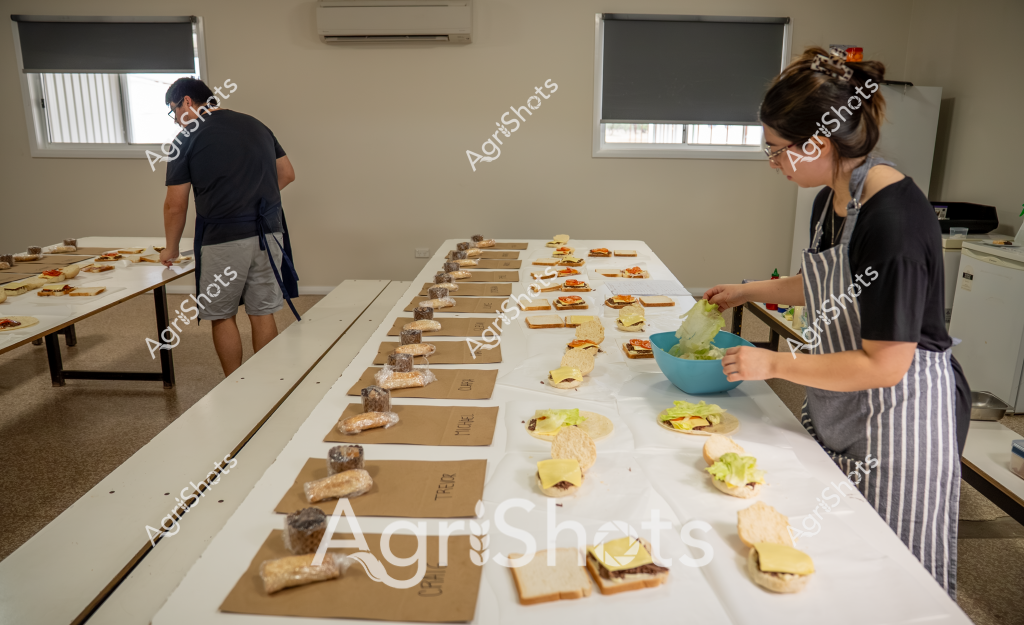
A woman in a striped apron and glasses prepares food items in what appears to be a professional food preparation or testing kitchen. Multiple sandwiches, bread slices, and ingredient containers are meticulously arranged across long white tables. Brown paper labels are placed systematically beside different food components, suggesting a carefully organized culinary experiment or sensory evaluation process. A man in a dark shirt and gray shorts stands at the far end of the workspace, also engaged in food preparation. The room has a clean, clinical atmosphere with white walls, window blinds, and a mounted air conditioning unit, indicating a controlled environment for food research or product development. The scene looks like a professional food testing setup, with each sandwich or ingredient precisely positioned. The methodical arrangement suggests a scientific approach to food preparation, possibly for taste testing, recipe development, or quality control in a commercial food production setting. The neutral color palette - whites, grays, and browns - emphasizes the clinical, systematic nature of the workspace. The individuals are focused and deliberate in their actions, working with precision and attention to detail across the expansive preparation area.
 Image
Image
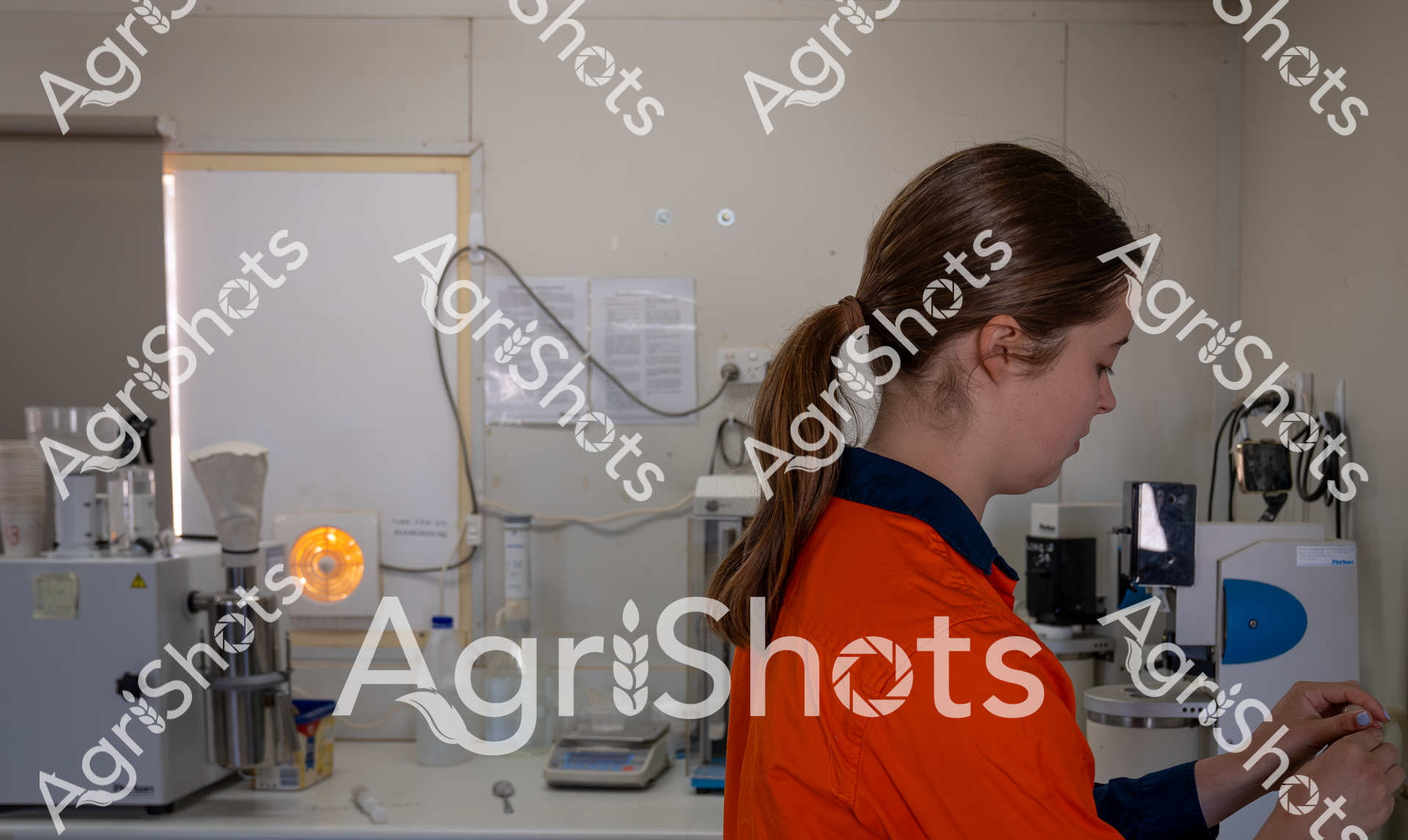
In the crisp, technical environment of a grain testing laboratory, a focused laboratory technician stands at her workstation, wearing a vibrant orange and navy work uniform. Precise scientific equipment surrounds her, including analytical scales, sampling devices, and specialized measurement instruments. A glowing orange test sample illuminates the workspace, suggesting detailed quality assessment of grain products. The clean, white-walled laboratory captures the meticulous nature of agricultural research, with sophisticated machinery indicating advanced technological processes in grain analysis. Her ponytailed profile and concentrated posture reveal the professional dedication required in agricultural science, highlighting the critical role of precision testing in ensuring grain quality and food security. The scene epitomizes the sophisticated technical expertise behind Australia's agricultural sector, particularly in grain production regions like the Riverina in New South Wales.
 Image
Image
A skilled livestock veterinarian stands confidently in a modern cattle yard, embodying the progressive spirit of contemporary agricultural practice. Dressed in a blue shirt, dark protective apron, and a branded cap, she holds agricultural diagnostic equipment with professional ease. The surrounding steel cattle yards reflect the high-tech infrastructure of modern Australian farming, with clean, structured metal pens and robust infrastructure visible in the background. Her gloved hand grips a yellow scanning tool, suggesting she is conducting pregnancy testing on a herd of Angus cattle, a critical process for maintaining reproductive efficiency in beef production. The image captures the intersection of data-driven agriculture and hands-on veterinary expertise, highlighting the critical role of women in agricultural science and livestock management. Her warm, confident smile communicates the satisfaction of precision work and the deep connection between agricultural professionals and their essential role in food production.
 Image
Image
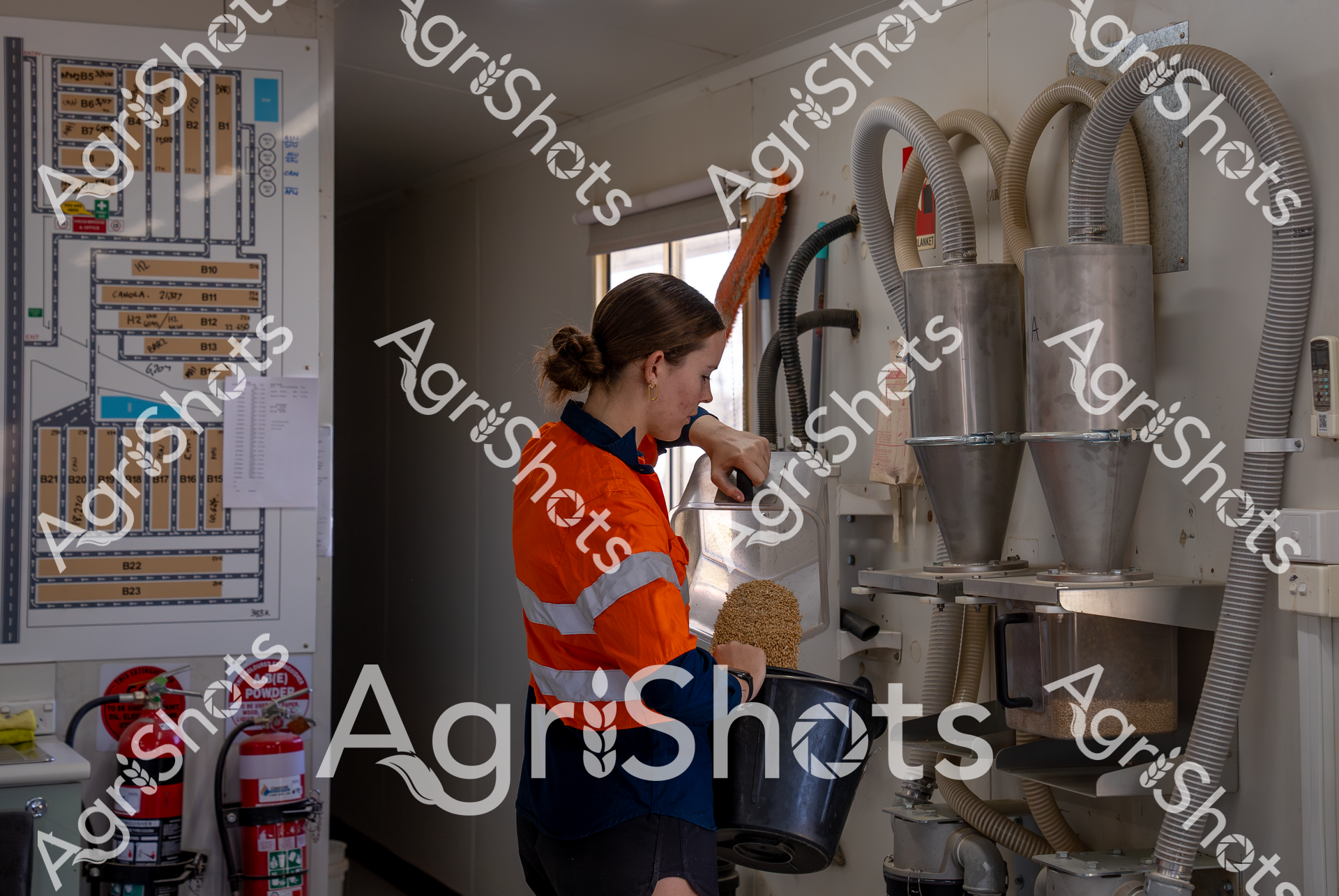
In the heart of the Riverina's grain testing laboratory, a focused agricultural worker in a high-visibility orange safety vest carefully collects a wheat sample from a precision grain testing station. Sleek metal hoppers and flexible ducting surround her, creating a technical backdrop of industrial agricultural science. Her hair neatly pulled back, she demonstrates the meticulous process of grain sampling, holding a dark bucket while examining the golden wheat kernels with professional concentration. Detailed site maps and fire safety equipment frame the scene, highlighting the systematic approach to agricultural research and quality control. Bright natural light streams through a window, illuminating the crisp white laboratory walls and the sophisticated sampling equipment. This image captures the precision, professionalism, and technical expertise of modern agricultural testing, showcasing the critical behind-the-scenes work that ensures grain quality and food security.
 Image
Image
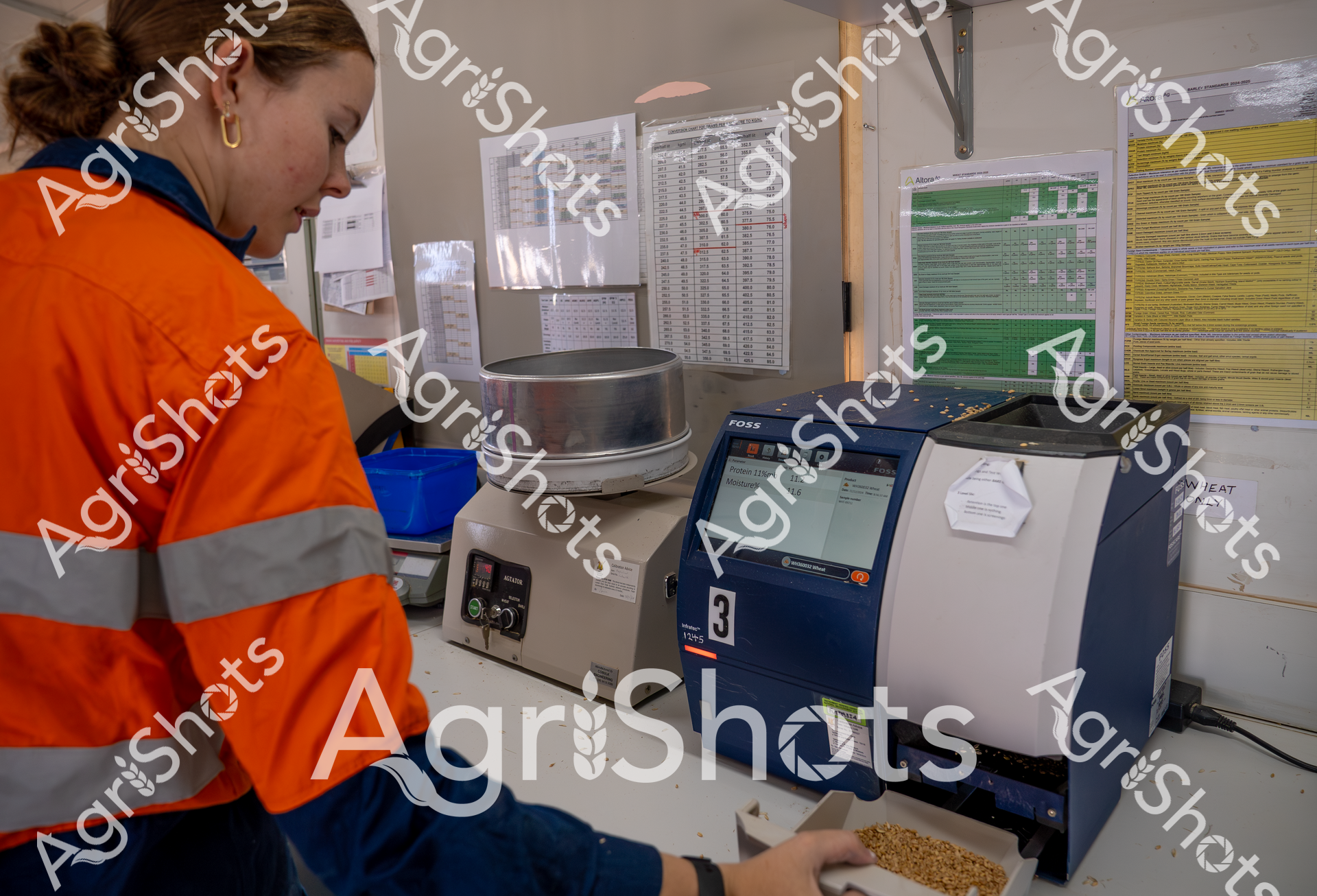
A grain technician wearing a high-visibility orange safety vest with reflective stripes carefully inspects a grain sample in a precision agricultural testing laboratory. Sophisticated analysis equipment, including a digital grain testing machine and precision scale, stands ready to assess the quality and characteristics of the wheat sample. Detailed charts and procedural documents line the walls, indicating a rigorous scientific approach to grain quality control. The technician's concentrated posture and professional workwear reflect the meticulous nature of agricultural research in the Riverina region of New South Wales. Crisp white and blue electronic displays contrast with the warm orange of the safety clothing, while scattered wheat kernels hint at the agricultural product being meticulously evaluated. The scene captures the intersection of modern technology and agricultural science, showcasing the sophisticated processes behind ensuring grain quality and food security.
 Image
Image
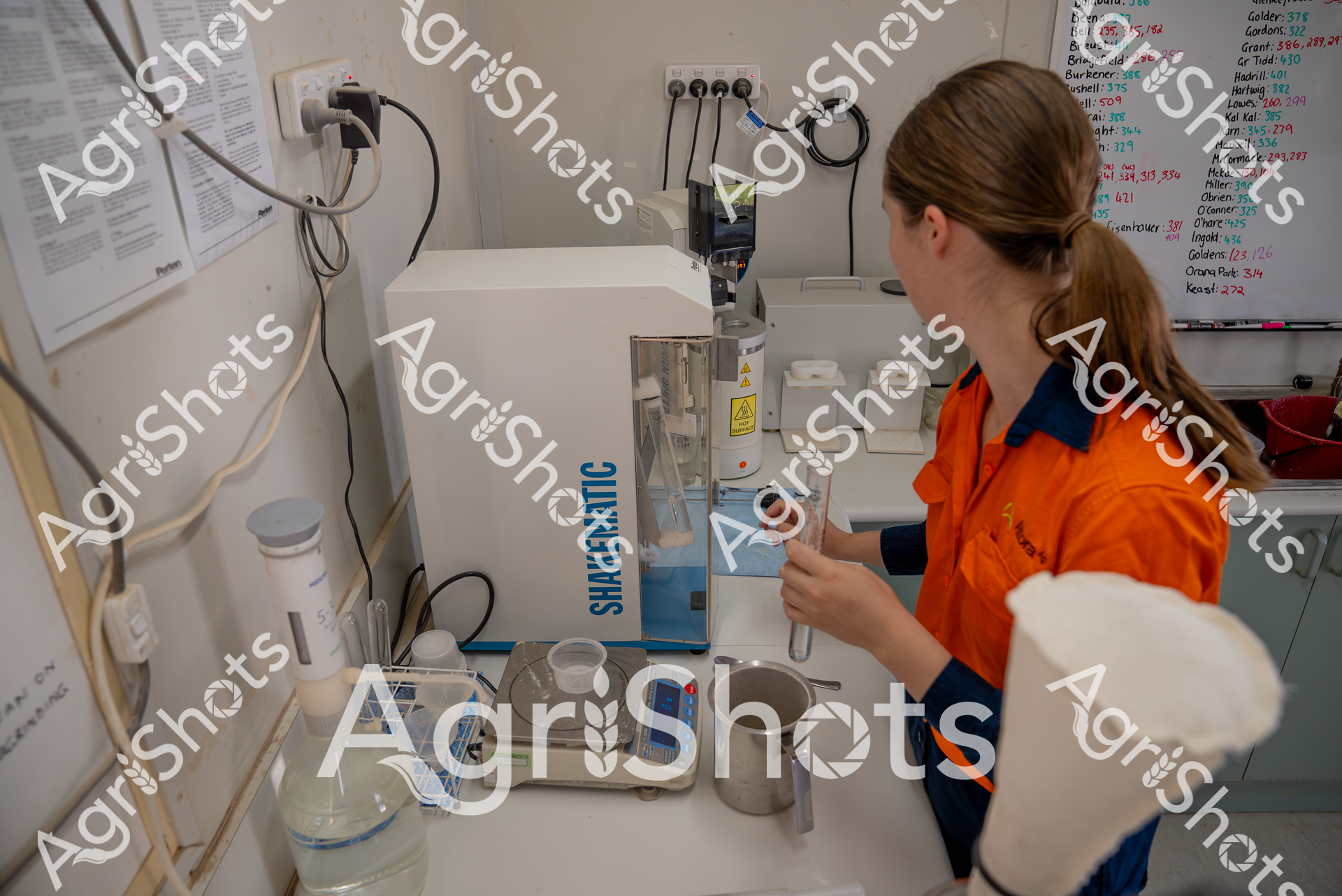
In a crisp laboratory setting, a professional in a bright orange and navy work shirt meticulously conducts grain sample analysis. The Shaking apparatus stands prominently on the bench, surrounded by precise scientific glassware and measuring instruments. Electrical outlets and a whiteboard filled with handwritten data codes suggest a high-precision agricultural testing environment, likely located in the Riverina region of New South Wales. Sunlight streams into the space, illuminating the careful methodology of grain quality assessment - a critical process in agricultural production and quality control. The technician's focused posture and professional attire reflect the technical expertise required in modern agricultural science, highlighting the sophisticated systems that underpin Australia's grain industry. This scene captures the intersection of scientific rigor and agricultural innovation, showcasing the behind-the-scenes work that ensures the quality and reliability of grain exports and domestic food production.
 Image
Image
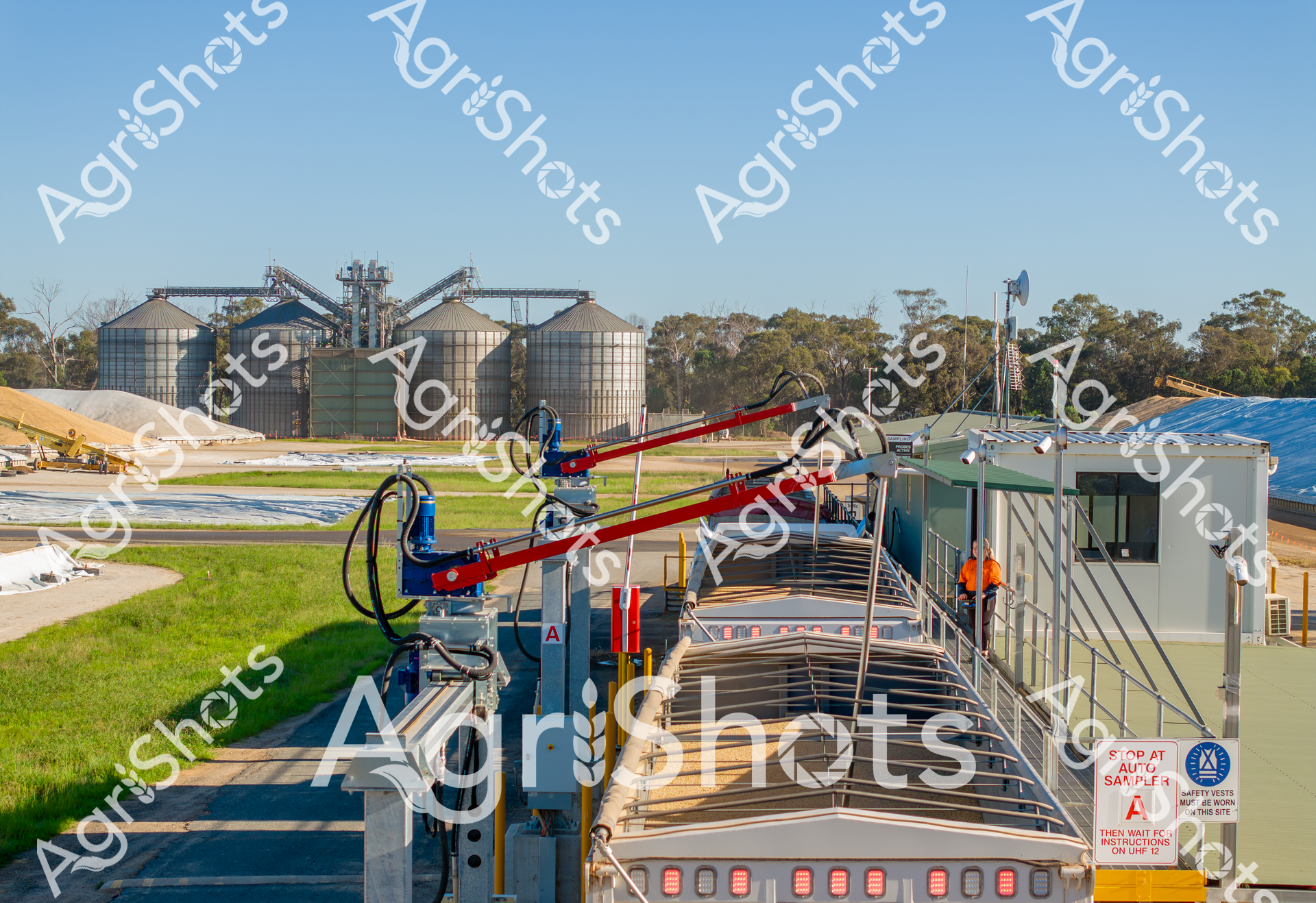
Gleaming steel grain silos rise against a cloudless summer sky in the heart of New South Wales' Riverina region, anchoring a sophisticated agricultural sampling and testing facility. Hydraulic sampling arms extend over a pristine weigh bridge, their vibrant red and blue hydraulics contrasting sharply with the metallic silver storage bins and lush green surrounds. A compact control station with safety signage stands sentinel, highlighting the precision and care inherent in modern grain logistics. The scene captures the technical sophistication of Australian grain handling - an intricate dance of engineering, agricultural science, and quality control where every grain is meticulously assessed before entering the global food supply chain. Crisp morning light bathes the installation, revealing clean lines, well-maintained infrastructure, and the quiet efficiency of a critical agricultural processing node. The "Stop at Auto Sample" sign underscores the automated, safety-conscious approach to grain assessment, symbolizing Australia's world-class agricultural standards.
 Image
Image
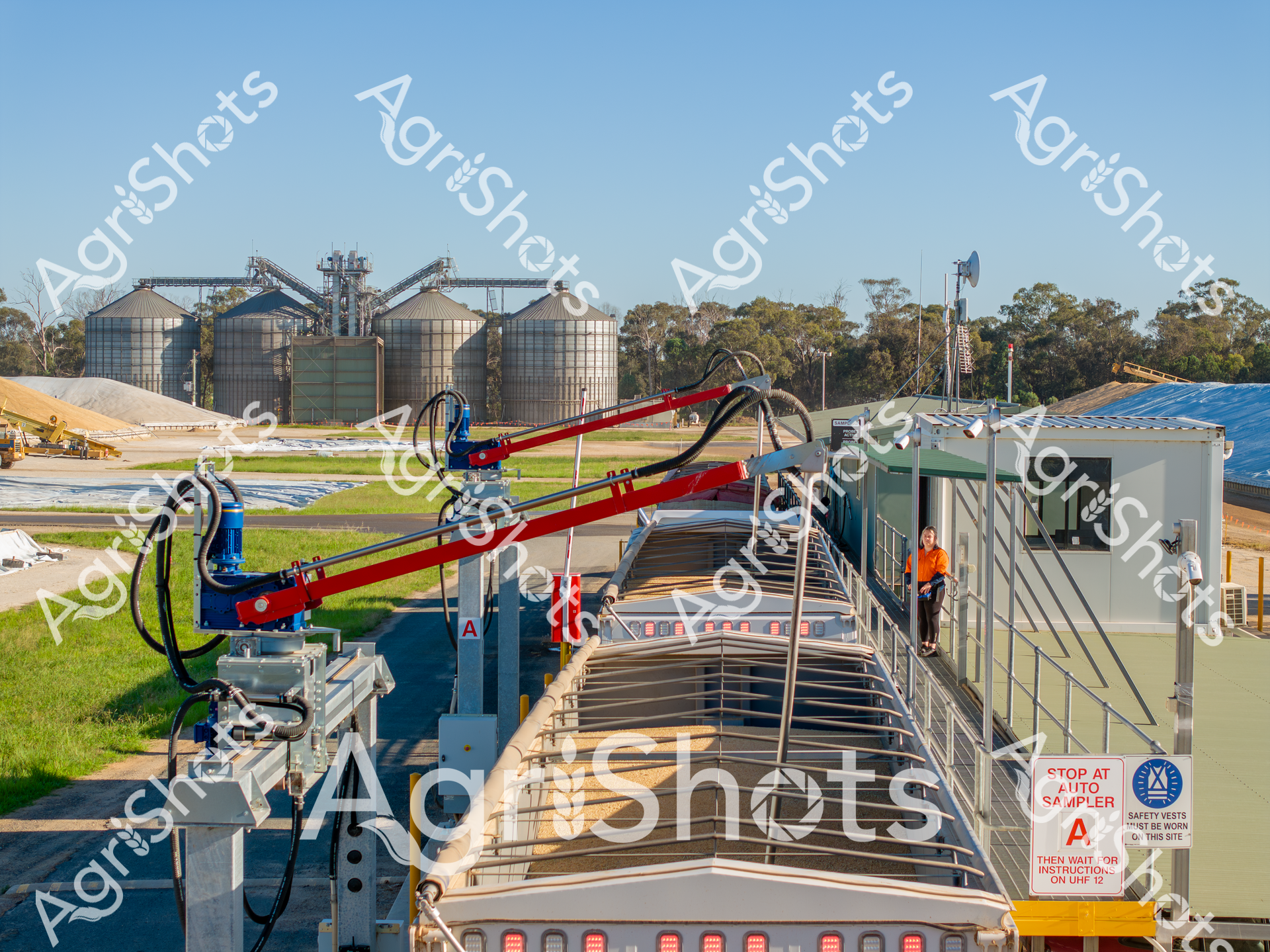
Gleaming grain silos rise against a cloudless summer sky in the heart of New South Wales's Riverina region. An automated sampling arm extends over a grain delivery truck, poised to extract precise samples for quality testing at this sophisticated agricultural processing facility. A worker in a high-visibility orange shirt stands on the metallic walkway, overseeing the critical grain intake process. Hydraulic systems in vivid blue and red articulate the precision sampling equipment, contrasting with the silvery grain storage bins and blue-roofed facility buildings. Safety signage warns operators to "Stop at Auto Sampler" and wait for instructions, highlighting the meticulous protocols of modern grain handling. The scene captures the intersection of agricultural technology and human expertise, where every kernel is assessed with scientific precision before entering the complex global food supply chain.
 Image
Image
Precision and care converge in this intimate agricultural diagnostic moment, capturing the meticulous quality control of dairy production. Robust blue nitrile gloves cradle a handheld refractometer, an essential instrument for measuring milk quality and composition, likely situated in a South Canterbury dairy processing facility. The gleaming metallic and transparent surfaces of the precision optical instrument contrast sharply with the deep blue protective handwear, symbolizing the scientific rigor underlying New Zealand's world-renowned dairy industry. Every careful movement suggests the importance of sampling and testing protocols that maintain international standards of agricultural excellence. The cool, clinical grey background emphasizes the professional, technical nature of modern dairy science, where each drop of milk represents a complex ecosystem of nutritional potential. These gloved hands represent the intersection of agricultural tradition and cutting-edge technological expertise, ensuring the purity and nutritional integrity of a critical global food resource.
 Image
Image
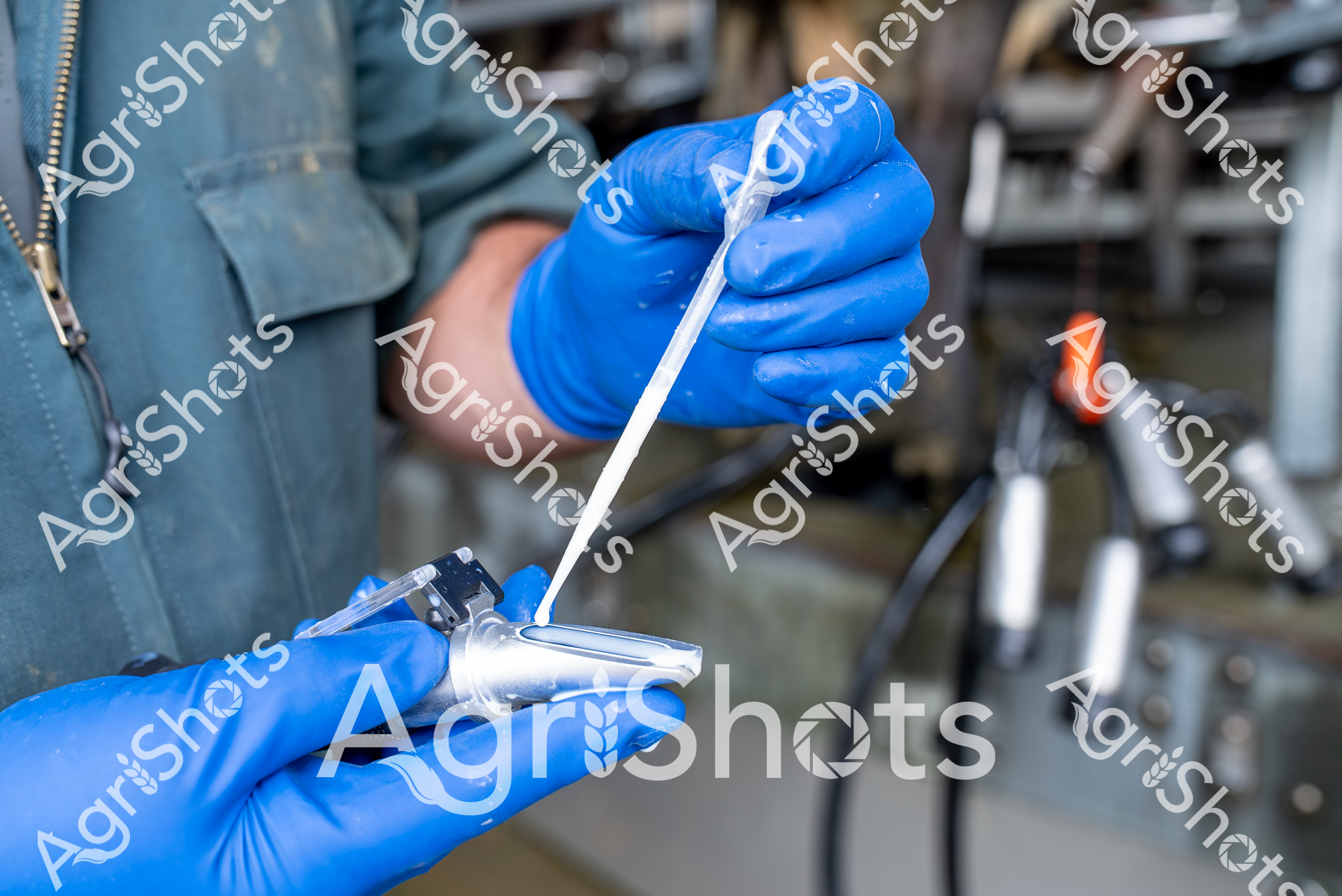
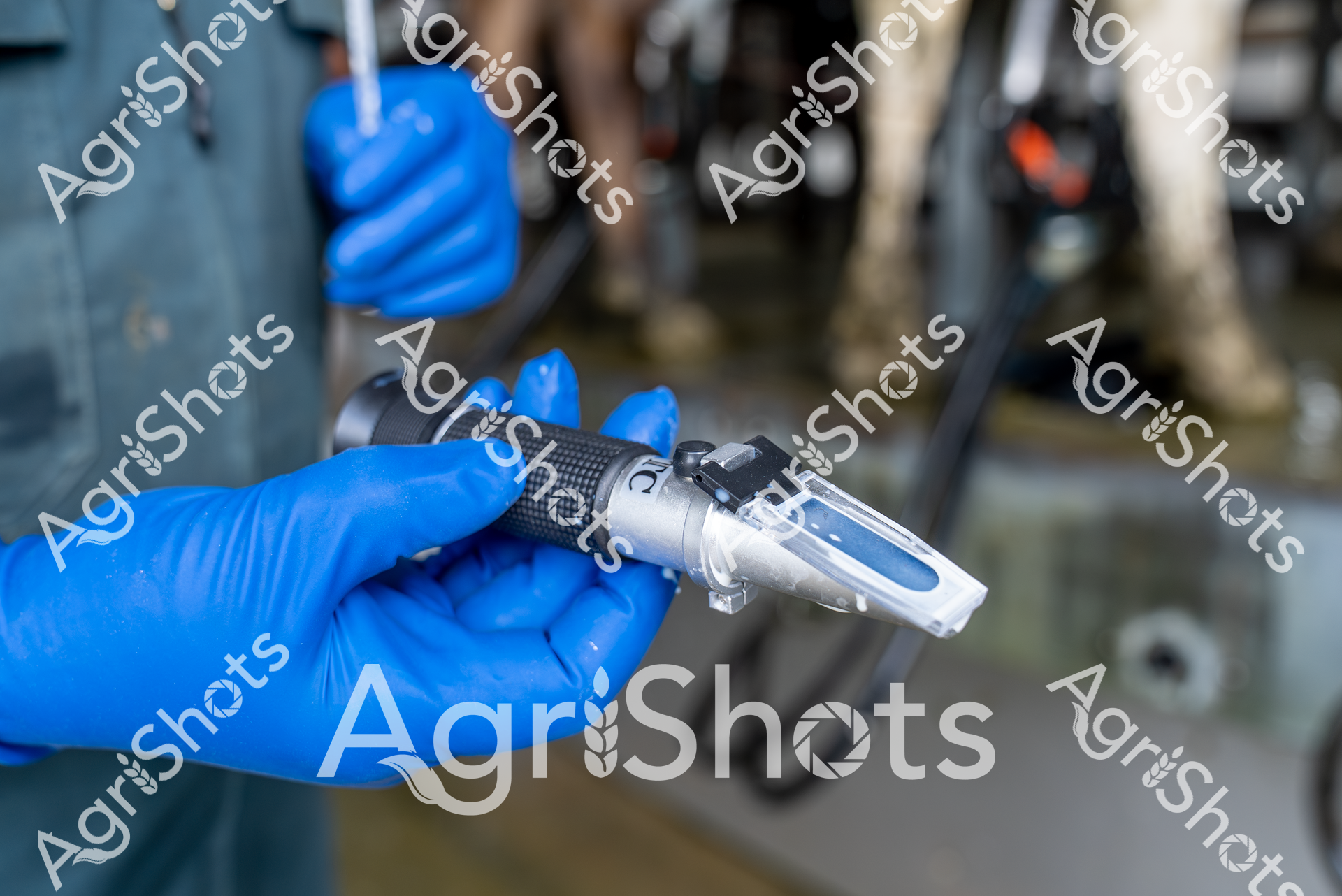
Expert dairy technicians in deep blue nitrile safety gloves carefully conduct milk quality sampling using a precision handheld refractometer. The gloved hands grip the delicate scientific instrument with expert care, extracting a thin stream of milk for precise testing and analysis. Set within the mechanical interior of a rotary dairy installation in South Canterbury, this moment captures the meticulous quality control process essential to New Zealand's world-renowned dairy industry. The cool blue of the protective gloves contrasts sharply with the metallic industrial surroundings, highlighting the critical intersection of scientific precision and agricultural production. Each careful movement represents the stringent standards and technical expertise required to maintain exceptional milk quality and food safety. The close-up perspective emphasizes the technical skill and attention to detail that underpins New Zealand's agricultural excellence.
 Image
Image
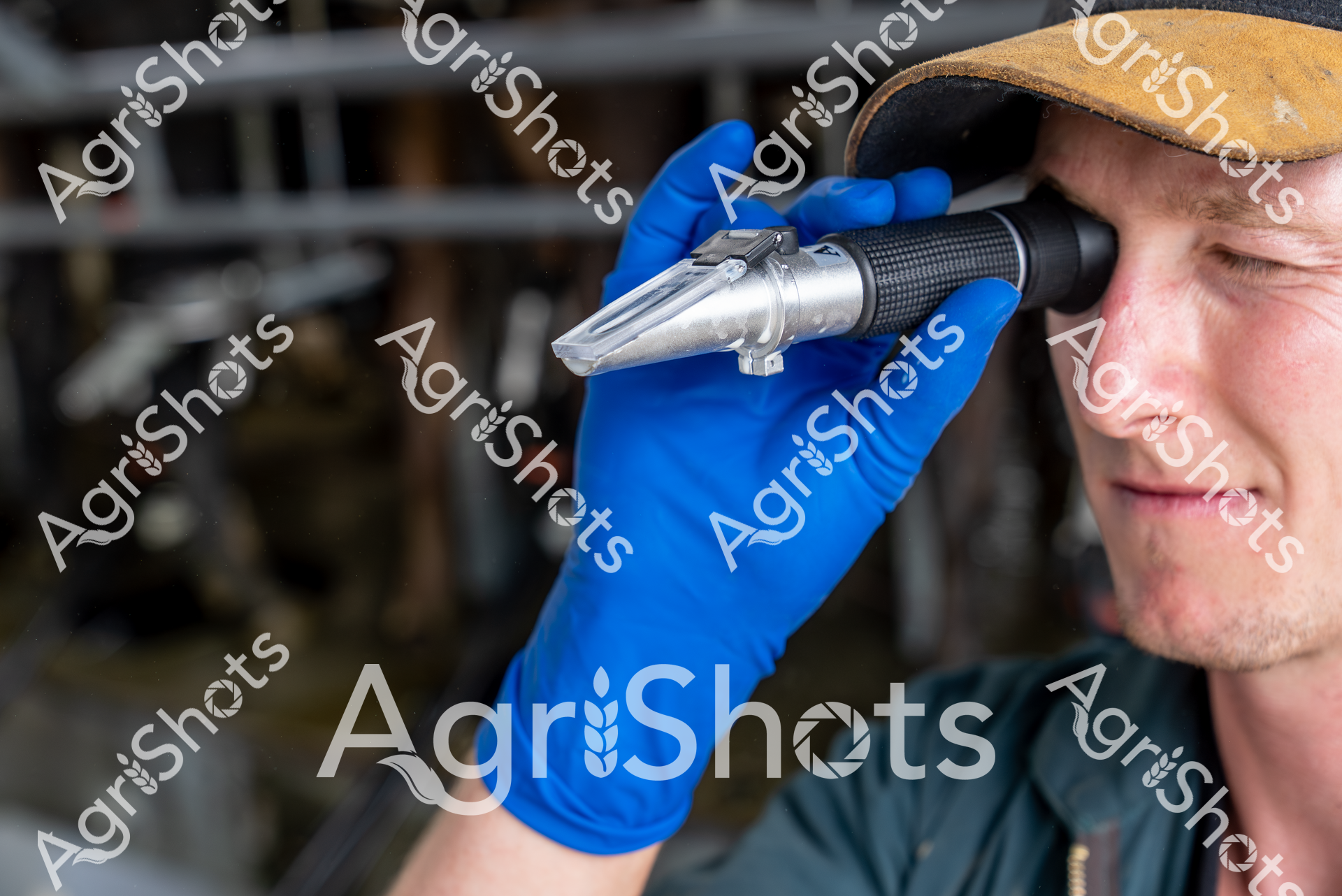
A skilled dairy technician carefully calibrates a handheld refractometer while wearing vivid blue nitrile safety gloves, his focused gaze peering through the precision optical instrument. The scene captures a critical moment of milk quality testing within a modern rotary dairy, likely situated in the rich agricultural landscape of South Canterbury, New Zealand. Soft ambient light illuminates the technician's careful movements, highlighting the metallic sheen of the refractometer against the protective blue glove. A tan-brimmed cap partially frames the worker's concentrated profile, suggesting the meticulous nature of dairy science and quality control. This image embodies the intersection of agricultural expertise, technological precision, and rigorous food safety protocols that define contemporary dairy production. The close-up perspective emphasizes the importance of individual skill and attention to detail in maintaining the high standards of New Zealand's renowned dairy industry.
 Image
Image
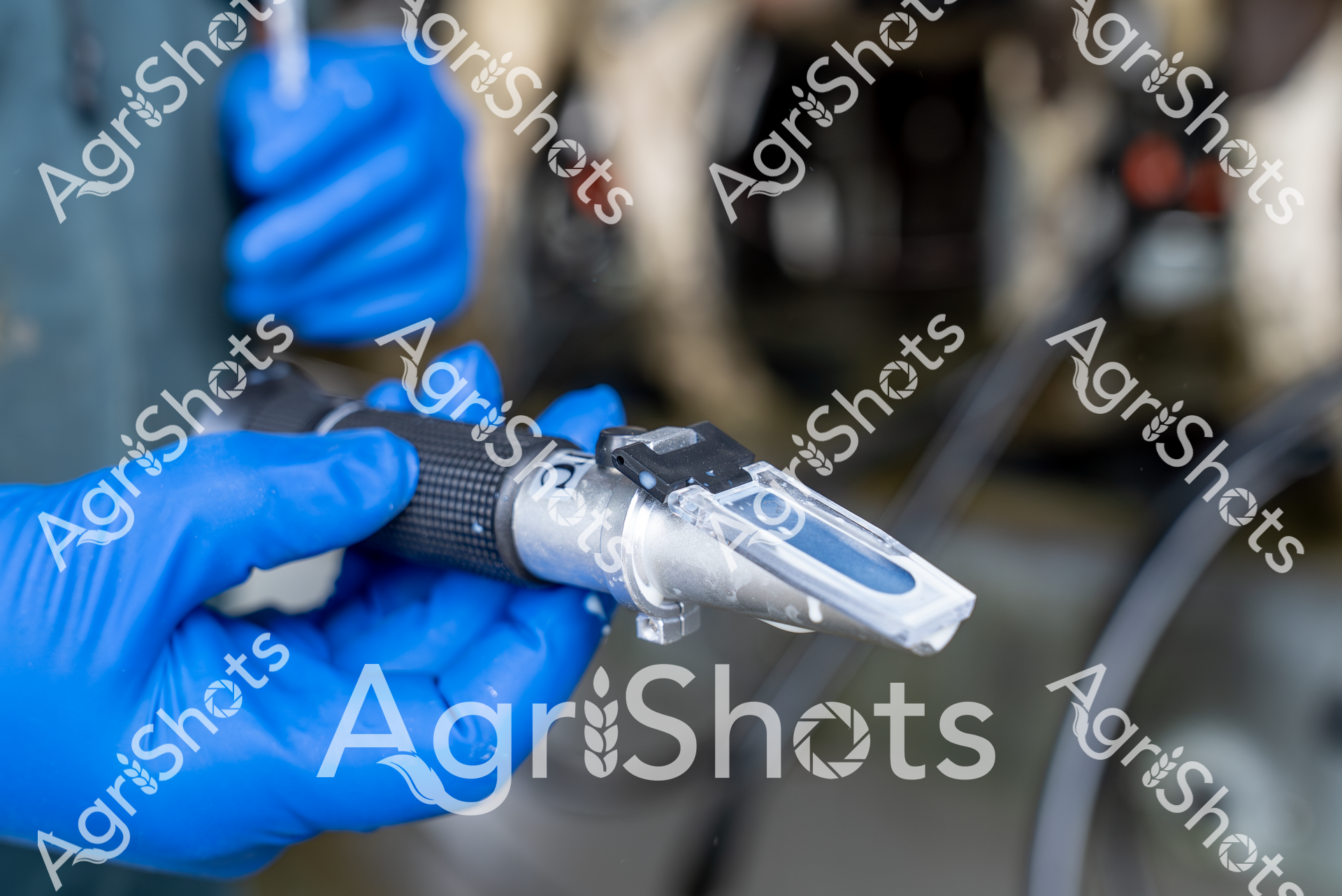
In the controlled environment of a modern dairy facility, a gloved hand carefully operates a precision refractometer, a critical instrument for monitoring milk quality. The technician, wearing deep blue protective gloves, grips the metallic handheld device with focused attention, representing the meticulous scientific approach of contemporary agricultural testing. Soft industrial lighting illuminates the sophisticated sampling equipment against a blurred background of dairy infrastructure, suggesting the high-tech precision of New Zealand's agricultural sector. The textured grip of the protective glove and the sleek silver refractometer highlight the intersection of human expertise and advanced technological monitoring in milk production. This image captures the rigorous quality control processes fundamental to South Canterbury's renowned dairy industry, where every sample represents a commitment to excellence and food safety. The scene embodies the professional, methodical approach that has positioned New Zealand as a global leader in dairy research and production.
 Image
Image
In the crisp, precise environment of a modern dairy facility, a gloved hand carefully operates a handheld refractometer - a critical tool for quality control in milk production. The vivid blue nitrile glove provides a stark contrast against the metallic and transparent surfaces of the precision instrument, symbolizing the meticulous hygiene and scientific approach of contemporary agricultural testing. This close-up captures the moment of technical analysis, where each droplet of milk undergoes rigorous examination to ensure optimal nutritional quality and food safety standards. The sophisticated refractometer, with its sleek design and technical components, represents the intersection of agricultural tradition and cutting-edge technology prevalent in New Zealand's world-renowned dairy industry. The blurred background hints at the complex machinery of a rotary dairy milking platform, suggesting the broader context of systematic milk production in the South Canterbury region. Every element in the frame - from the carefully positioned instrument to the protective glove - communicates a narrative of professionalism, precision, and commitment to agricultural excellence.
 Image
Image
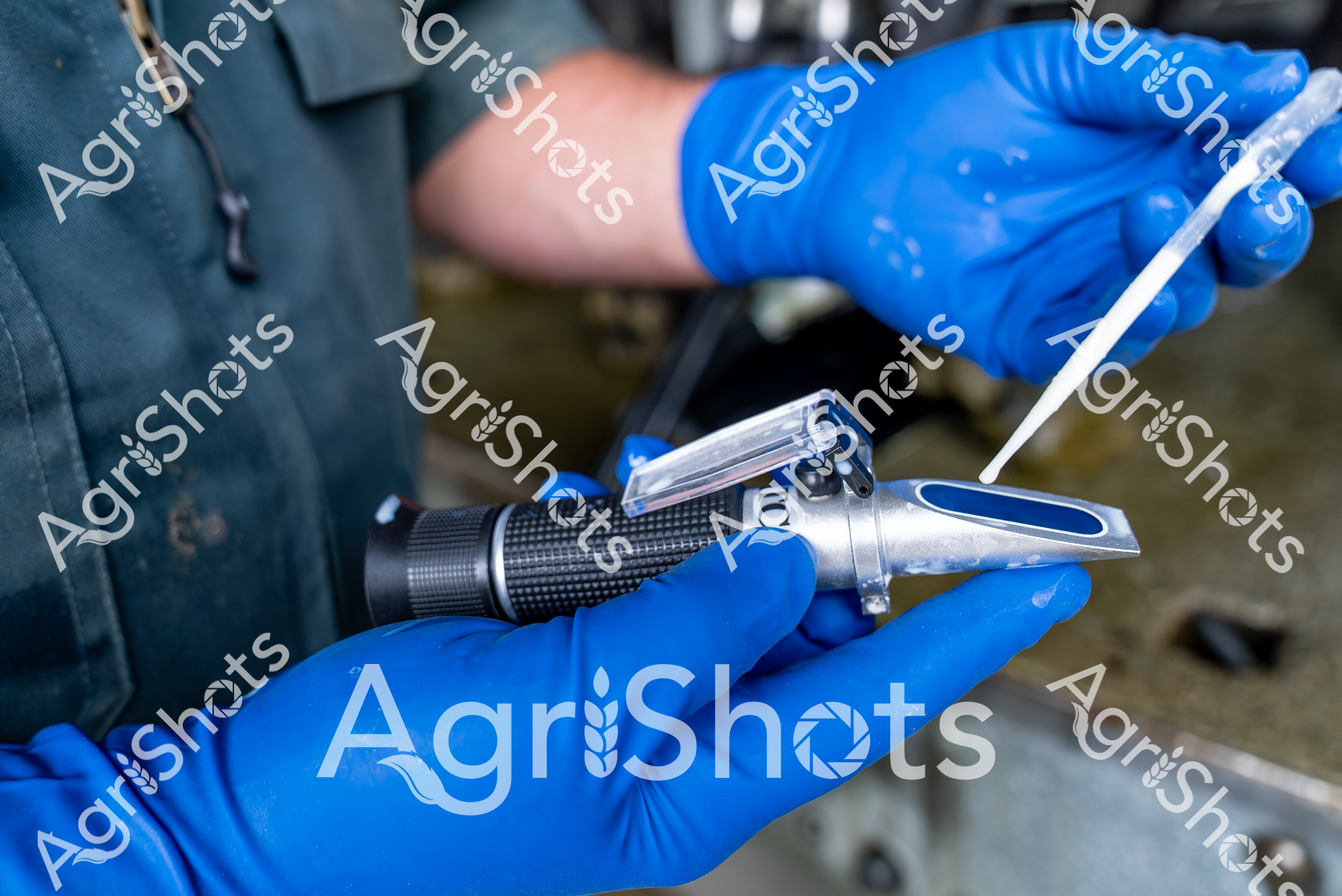
Precision and scientific rigor define this agricultural testing scene, capturing the meticulous quality control inherent in dairy production. Gloved hands in vibrant blue nitrile protection delicately manipulate a handheld refractometer, an essential instrument for measuring milk quality and composition. The industrial setting suggests a modern rotary dairy facility, likely situated in the fertile dairy lands of South Canterbury, New Zealand. Crisp, technical details emerge through the close-up perspective - the textured grip of the refractometer, the immaculate blue gloves, and the careful handling that speaks to professional agricultural testing protocols. The image radiates a sense of methodical expertise, highlighting the sophisticated science behind New Zealand's world-renowned dairy industry. Every precise movement represents the intersection of agricultural tradition and cutting-edge technological innovation, ensuring the highest standards of milk production and food safety.
 Image
Image
In the precise world of dairy production, a gloved hand carefully holds a refractometer, a critical instrument for milk quality assessment. The vivid blue nitrile glove signifies rigorous hygiene protocols standard in modern agricultural testing procedures. This close-up reveals the metallic and clear precision of the handheld testing device, capturing the meticulous care taken in monitoring milk composition and health. Set within the technological environment of a rotary dairy in New Zealand's South Canterbury region, the scene speaks to the sophisticated scientific approach of contemporary agricultural practices. The gleaming instrument and protective equipment underscore the commitment to food safety and quality control that defines this region's renowned dairy industry. Every subtle interaction between human and technology represents the intersection of tradition and innovation in agricultural science.
 Image
Image
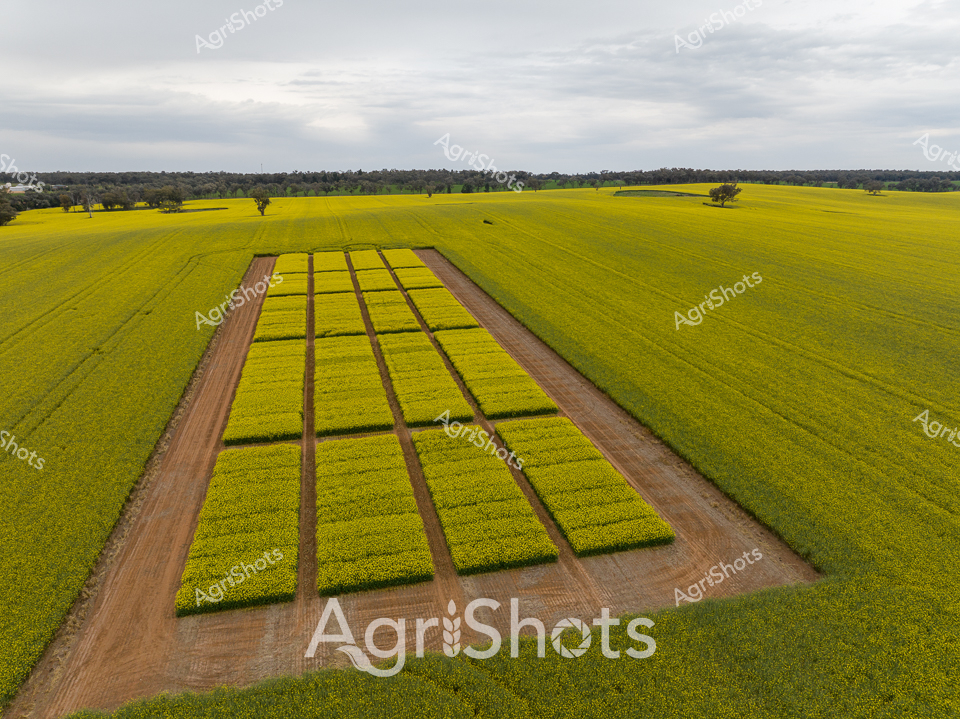
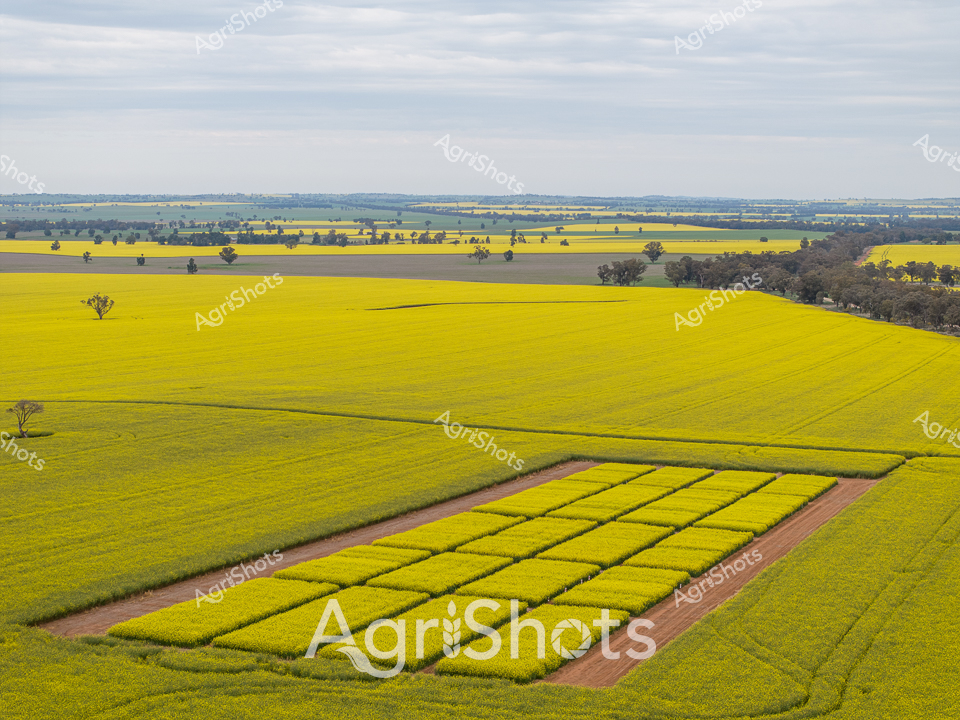
Golden waves of canola undulate across the landscape, punctuated by a precise grid of trial plots meticulously laid out in the heart of the field. Rich yellow blossoms carpet the expansive farmland, broken only by rust-colored earthen pathways that divide experimental crop sections. This aerial view reveals a scientific approach to agricultural innovation, where each carefully demarcated plot represents potential advances in crop development, likely testing different seed varieties, growing conditions, or agricultural techniques. Soft grey clouds drift above the vibrant yellow terrain, suggesting a cool morning in late winter or early spring - the prime flowering season for canola in New South Wales. The geometric precision of the trial plots contrasts beautifully with the organic rolling landscape, with isolated paddock trees standing as silent sentinels in the distance. The methodical layout speaks to the sophisticated science of modern farming - each plot a potential key to improved yield, drought resistance, or nutritional content, representing Australia's cutting-edge approach to agricultural research and food security.
 Image
Image
Vibrant golden canola fields stretch across the undulating landscape of rural New South Wales, creating a stunning mosaic of agricultural precision. In the foreground, a meticulously organized trial plot reveals carefully sectioned research zones, where agricultural scientists are likely testing new crop varieties and farming techniques. The bright yellow flowering canola blankets the countryside, intersected by neat dirt tracks and punctuated by scattered eucalyptus trees that provide natural breaks in the expansive agricultural terrain. Soft gray clouds drift overhead, suggesting early morning or late afternoon light that bathes the fields in a gentle, diffused glow. The geometric patterns of the experimental plot stand in sharp contrast to the broader sweeping canola fields, highlighting the sophisticated approach to agricultural research and crop development. This landscape epitomizes the innovative spirit of Australian agriculture - a harmonious blend of natural beauty and scientific advancement, where every squared meter represents potential improvement in crop yield, sustainability, and food production.
 Image
Image
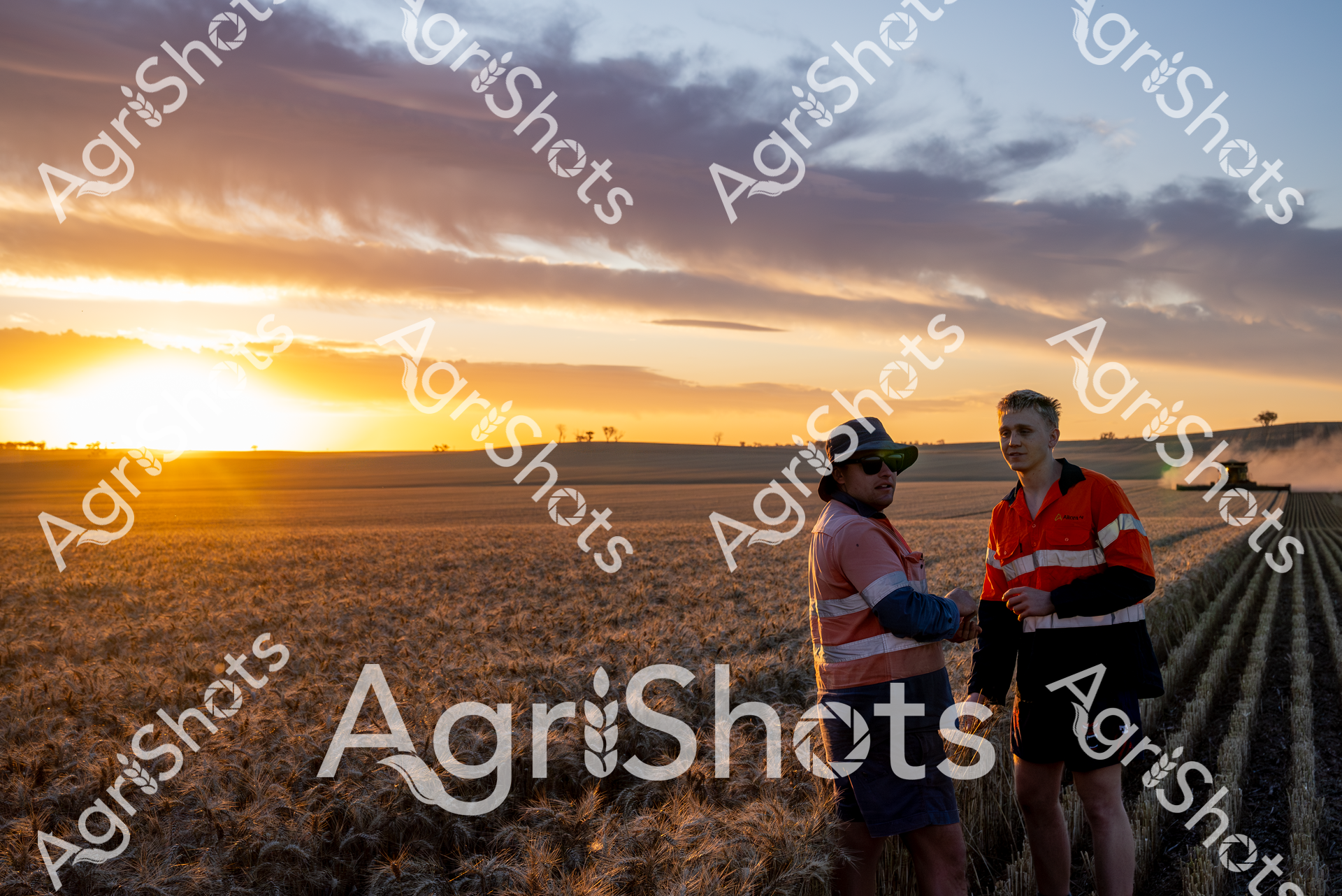
Golden wheat fields stretch to the horizon under a spectacular sunset, capturing the essence of Australian agricultural excellence. Two workers stand amid the ripened crop, their high-visibility safety wear contrasting against the warm golden and amber tones of the harvest-ready wheat. One worker wears a pink and white striped safety vest and cap, while the other sports a bright orange shirt with reflective strips, both wearing protective eyewear typical of rural agricultural work. The dramatic sky blazes with sunset colors - deep oranges and soft yellows melting into dusty blues - illuminating the meticulously planted rows of wheat that demonstrate precision farming techniques. These workers appear to be conducting a final crop assessment, likely performing moisture testing or evaluating the wheat's readiness for harvest, a critical moment in the agricultural calendar. The image encapsulates the dedication, expertise, and careful management required in modern Australian grain production, where every detail matters in bringing food from paddock to plate.
 Image
Image
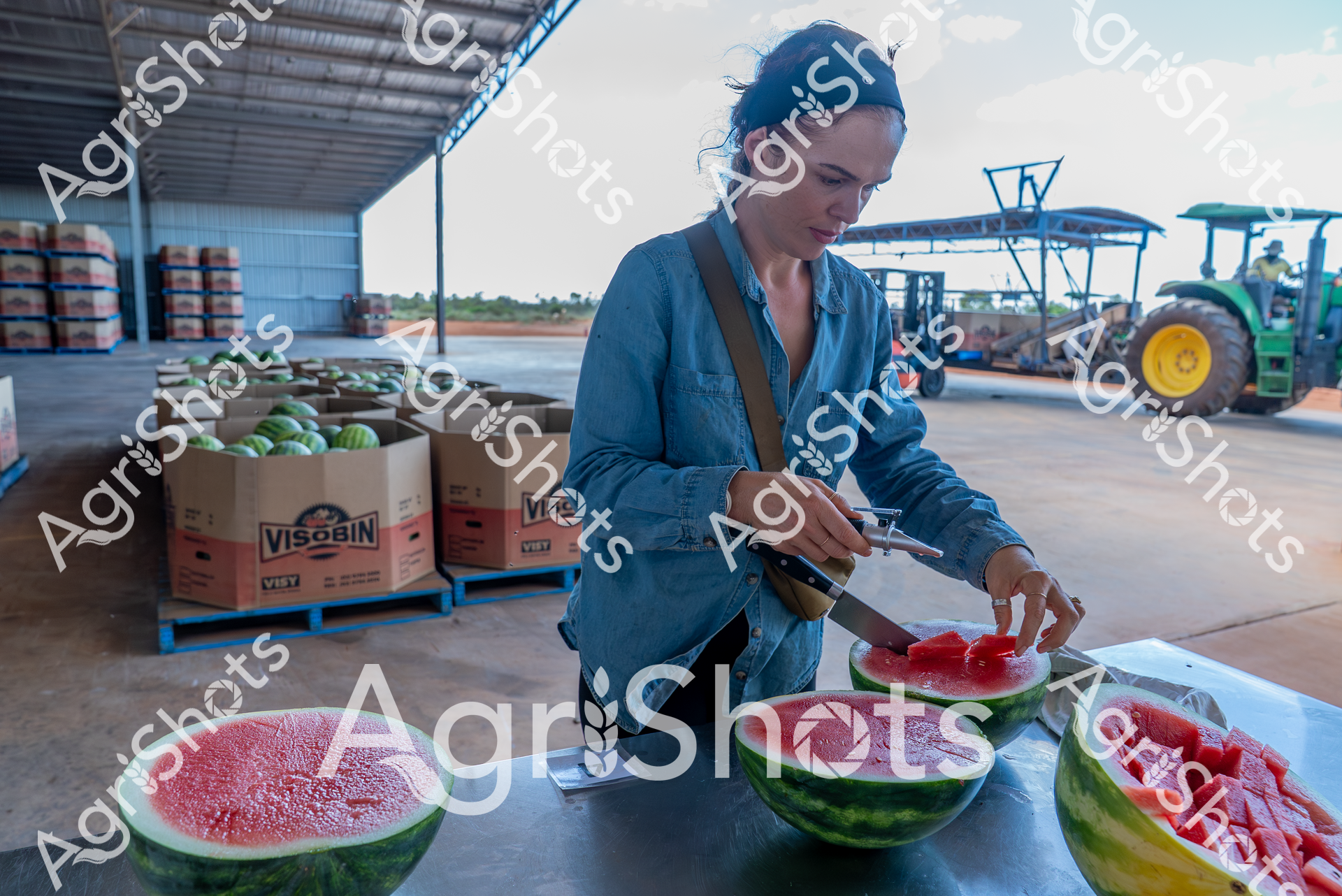
A woman in a denim shirt carefully tests the sugar content of watermelons using a refractometer at an agricultural facility. Stacked Visobin boxes and a green tractor are visible in the background, suggesting this is a professional produce testing environment in the Northern Territory's Barkly Region during winter.
 Image
Image
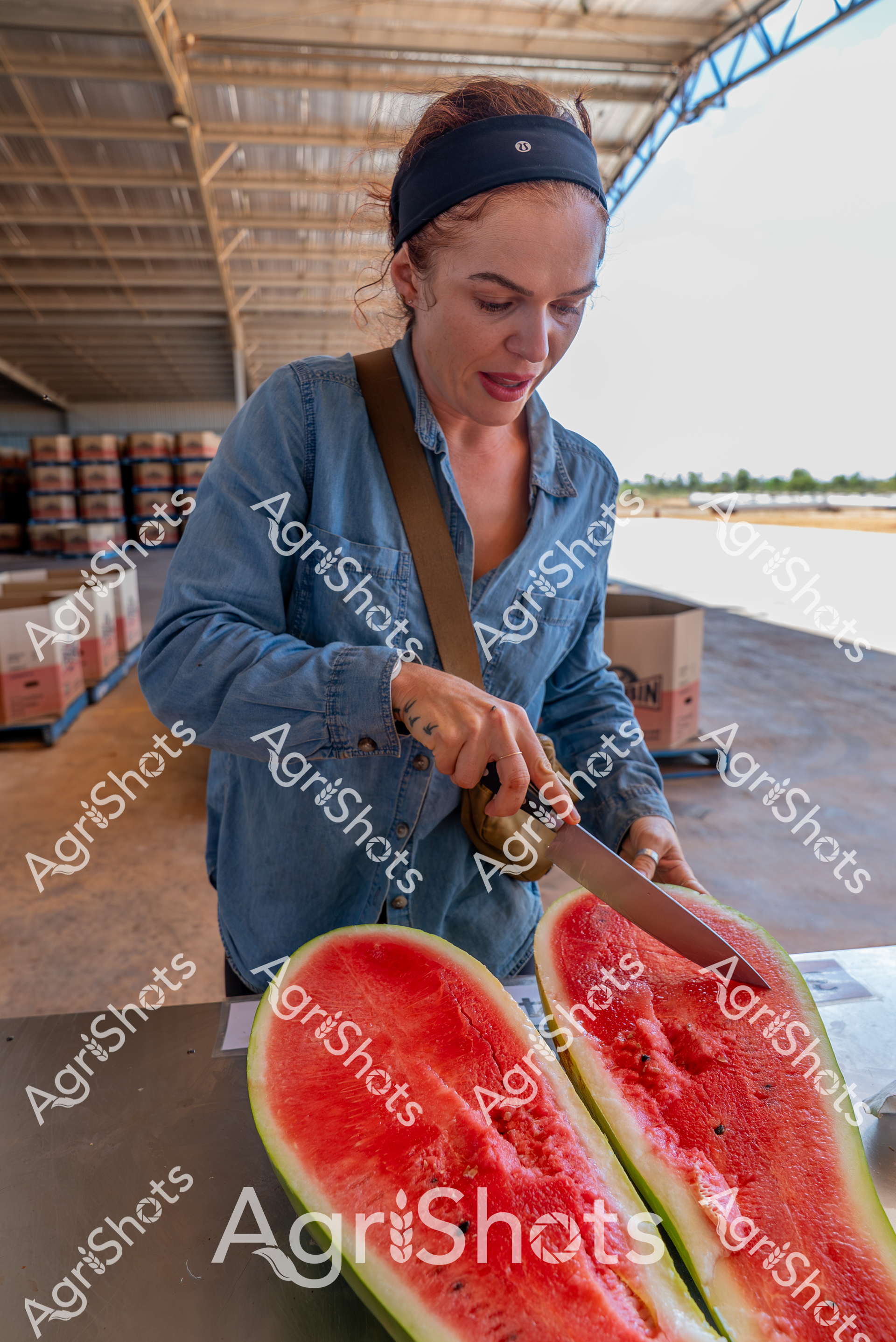
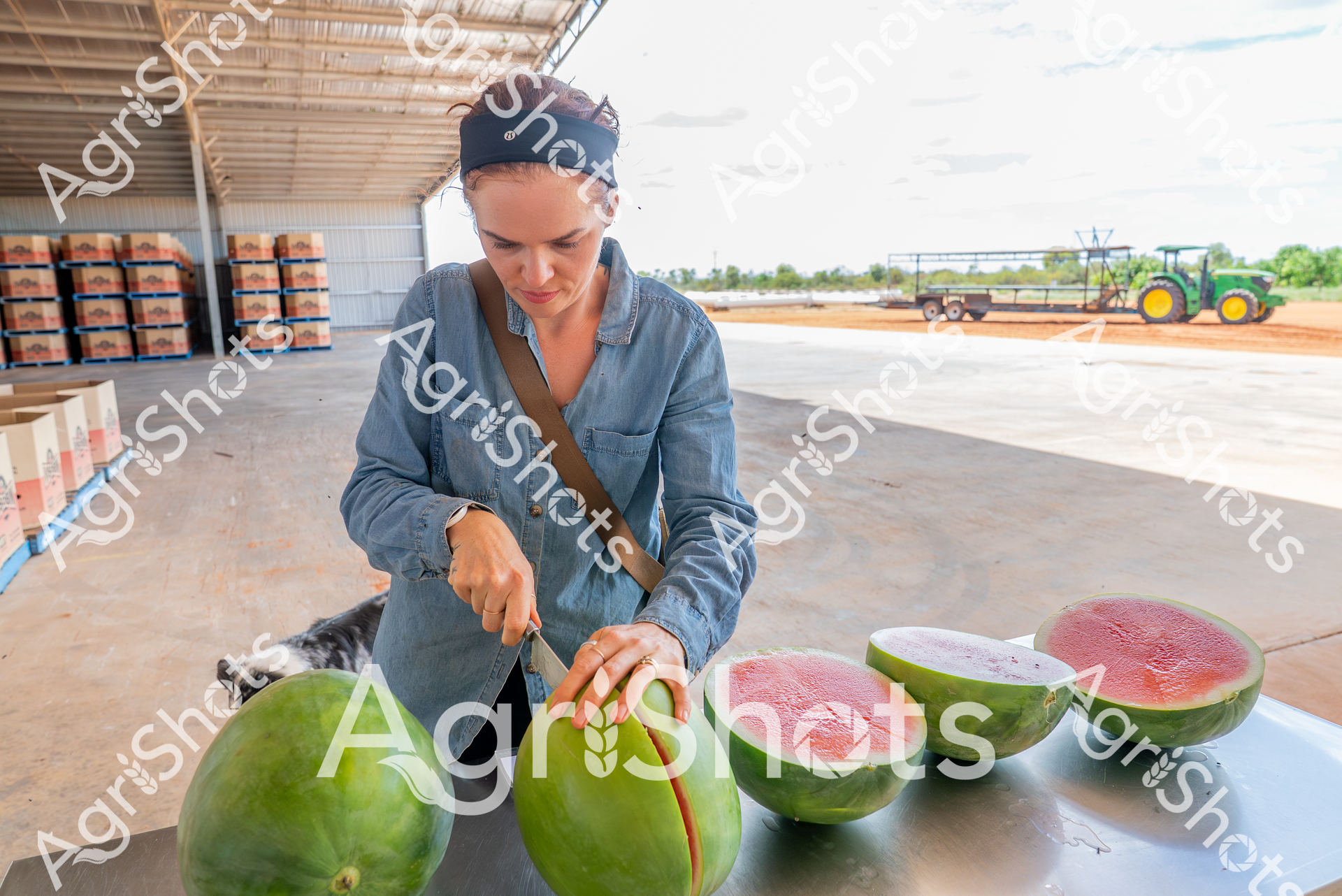
A woman in a denim shirt carefully cuts a large, ripe watermelon in an agricultural warehouse. She is wearing a dark headband and appears to be testing or examining the fruit's quality, with stacked produce crates visible in the background. The bright red watermelon contrasts with the industrial setting, highlighting the fresh produce inspection process.
 Image
Image
A woman in a denim shirt carefully cuts open large green watermelons in a warehouse setting, with stacked produce crates and a green tractor visible in the background. She appears to be conducting sugar content testing or quality assessment as part of agricultural research or production in the Northern Territory's Barkly Region during winter.