Results for “Dirt Paddock”
 Image
Image
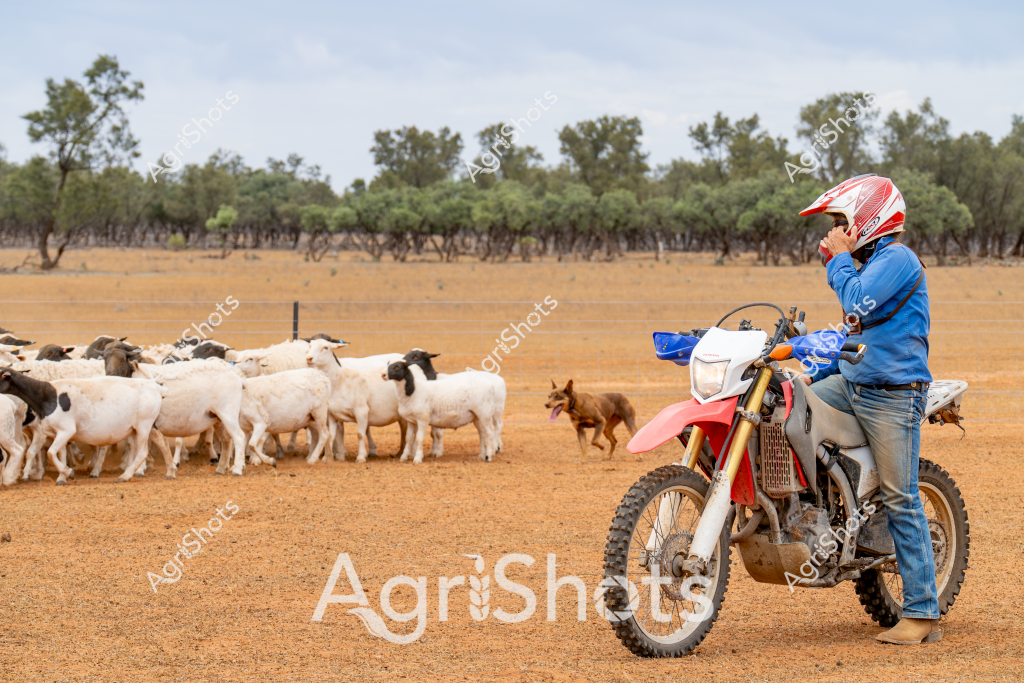
A man on a dirt track is herding a flock of white and black sheep using a dirt bike and a working dog in a dry, sparse Australian landscape. The rider, wearing a blue jacket and red and white motocross helmet, sits astride a red and white dirt bike, carefully navigating the terrain. A brown working dog runs near the tightly clustered group of sheep, helping to guide and control their movement. Sparse eucalyptus trees line the background, creating a typical Australian rural scene with a golden-brown paddock stretching out across the landscape. The image captures the practical and efficient approach to livestock management in Australian agricultural settings, where motorcycles and working dogs have replaced traditional horse-based mustering techniques. The scene illustrates the adaptability of modern farming practices, showcasing how technology and working dogs are used to manage livestock in challenging, arid environments. The dry ground, sparse vegetation, and the rider's focused posture emphasize the demanding nature of sheep farming in rural Australia.
 Image
Image
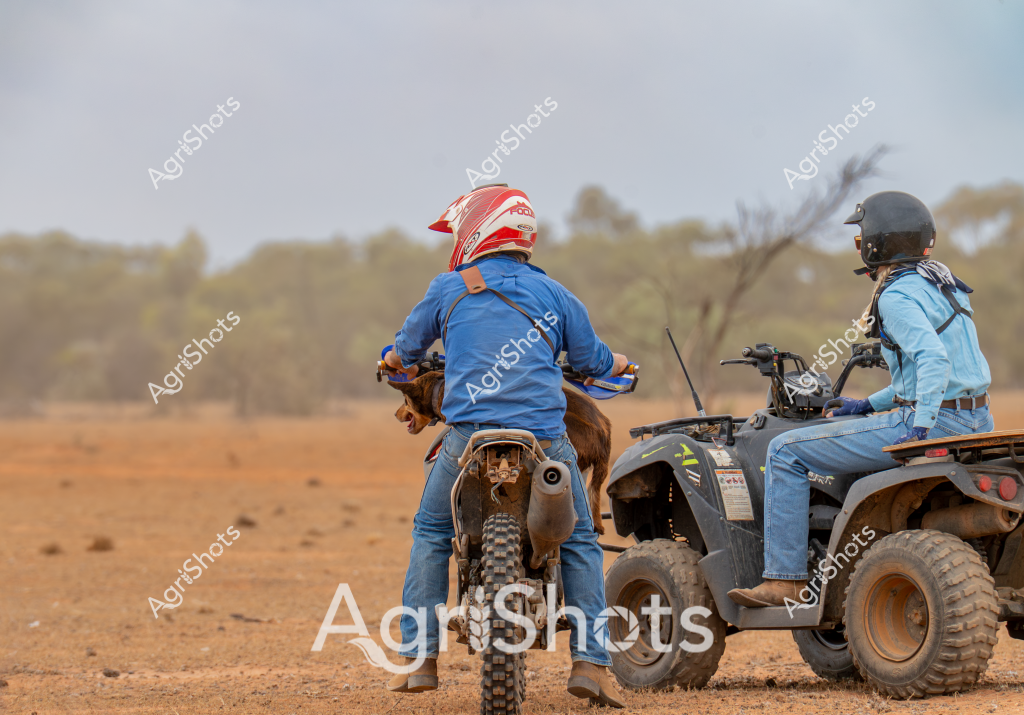
A man on a dirt motorbike and another on an all-terrain vehicle (ATV) traverse a dry, dusty rural landscape. The motorbike rider wears a red and white racing-style helmet and a blue jacket, straddling a dirt bike with knobby off-road tires. His companion sits on a grey ATV, both wearing protective helmets and denim clothing suitable for rugged rural terrain. The background reveals a sparse Australian landscape with scattered trees and shrubs, typical of an arid or semi-arid region. The ground is a reddish-brown earth, indicating dry conditions and potentially drought-affected terrain. Bare trees and minimal ground vegetation suggest a challenging agricultural environment. The scene captures the resilience and adaptability of rural workers navigating challenging landscapes using robust off-road vehicles. Their positioning and equipment suggest they might be performing farm maintenance, checking livestock, or managing property boundaries in a remote agricultural setting. The muted color palette of browns, blues, and greys, combined with the dusty atmosphere, evokes the harsh yet beautiful nature of Australian rural landscapes. Their protective gear and vehicles highlight the practical approach to working in challenging environmental conditions.
 Image
Image
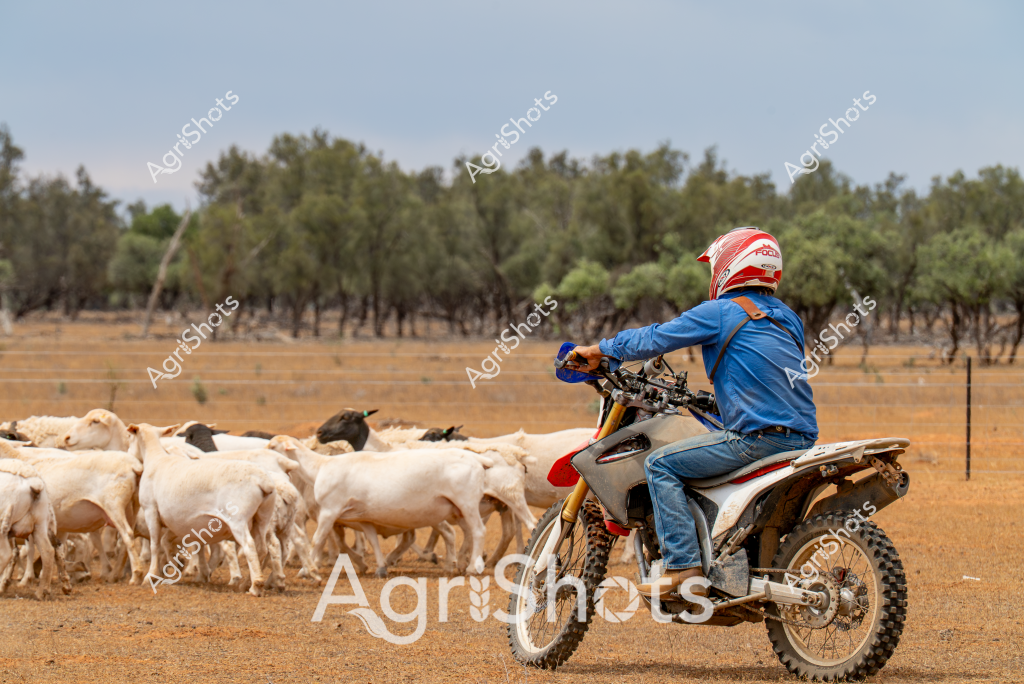
A man on a dirt bike carefully herds a flock of white sheep across a dry, golden paddock with scattered trees in the background. Wearing a blue long-sleeved shirt and a red and white helmet, the rider uses the motorcycle to guide the compact group of sheep, which appear to be predominantly light-colored with a few dark-marked animals mixed in. The landscape suggests an arid Australian rural setting, with sparse vegetation and a muted color palette of browns and greens. The dirt bike serves as a modern tool for livestock management, allowing the rider to efficiently move and control the sheep across the open terrain. This scene captures the essence of Australian pastoral farming, where technology and traditional livestock management techniques converge in the challenging outback environment.
 Image
Image
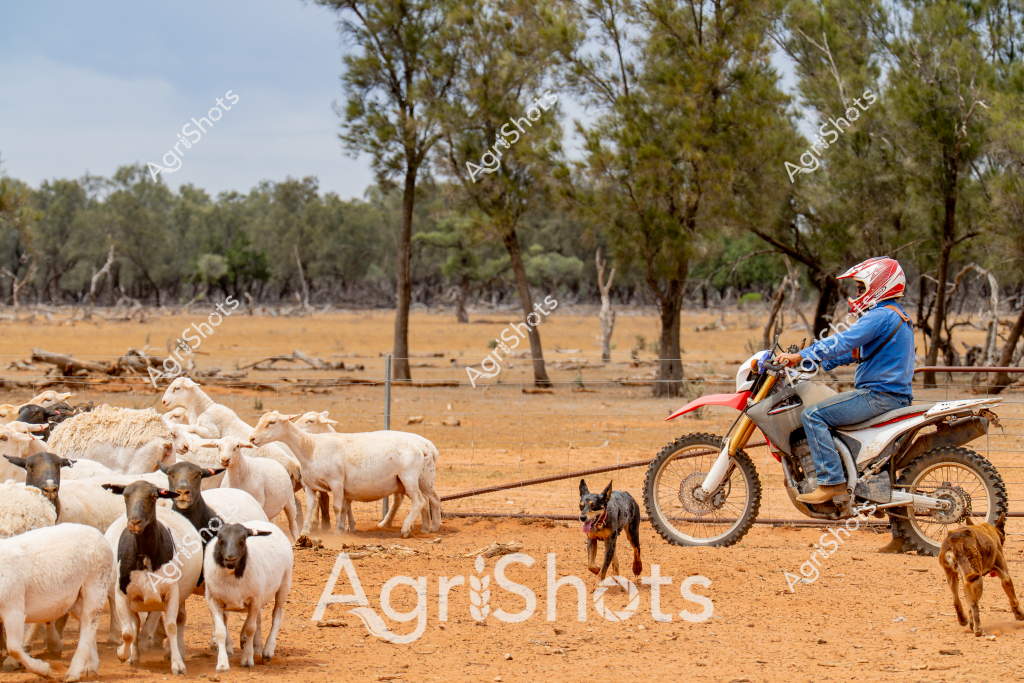
A man on a dirt bike herds a flock of white and black sheep across a dry, sparse paddock in what appears to be an arid Australian pastoral landscape. Accompanied by working dogs, he uses the motorcycle to navigate the dusty terrain, guiding the mixed-breed sheep through a grove of scattered eucalyptus trees. The rider, wearing a blue jacket and red motorcycle helmet, employs a long rope to help control the movement of the livestock, demonstrating a modern approach to mustering sheep in challenging drought-like conditions. Two alert working dogs - likely Australian Cattle Dogs or kelpies - assist in directing the sheep, running alongside the bike and helping to keep the flock together. The landscape is characterized by a golden-brown earth, sparse vegetation, and widely spaced trees, typical of inland Australian agricultural regions during dry seasons. This scene captures the adaptability of contemporary Australian farmers, using motorcycles and working dogs to manage livestock in harsh environmental conditions.
 Image
Image
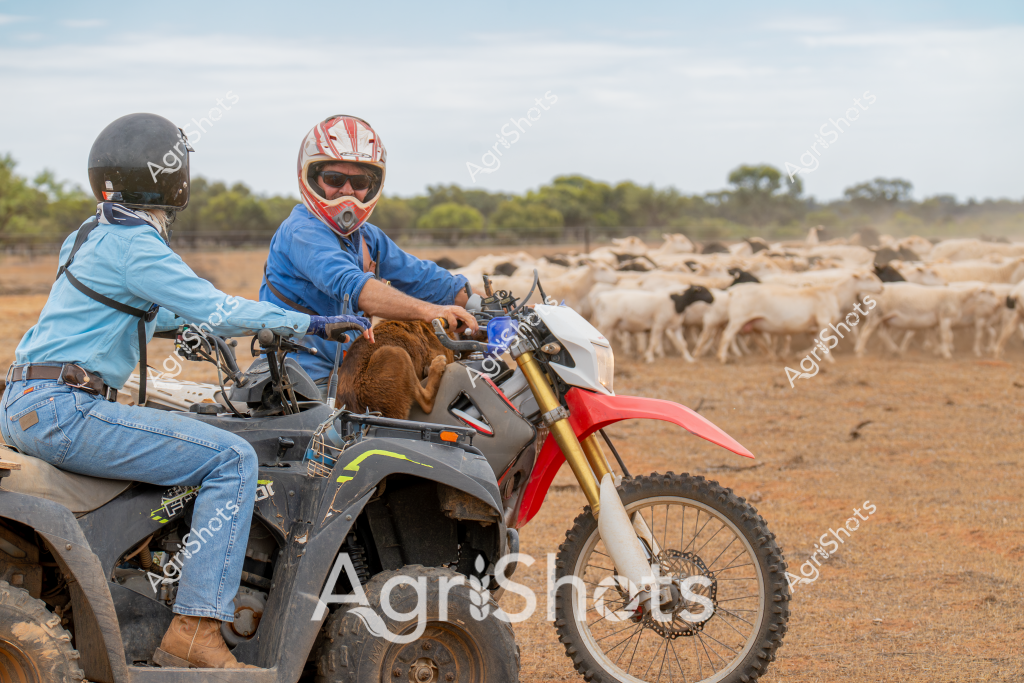
Two riders on off-road motorcycles guide a flock of white sheep across a dry, golden paddock in rural Australia. A woman in a light blue shirt and denim jeans sits on a quad bike, while a man in a blue shirt and red-and-white motocross helmet rides a dirt bike beside her. The landscape is typical of the Australian interior - sparse, dusty ground with scattered trees on the horizon and a herd of woolly sheep clustered in the background. The motorcycles appear well-equipped for farm work, with the dirt bike featuring a striking red and white color scheme and the quad bike looking robust and functional. Both riders are wearing protective gear, including helmets and sturdy clothing, suggesting they are actively mustering or moving the livestock across the property. The scene captures the essence of modern Australian livestock management, where motorized vehicles have replaced traditional horse-based mustering, demonstrating the evolving techniques of farm work in the contemporary agricultural landscape. The dry terrain and sparse vegetation hint at challenging environmental conditions typical of many Australian grazing regions.
 ▶ Video
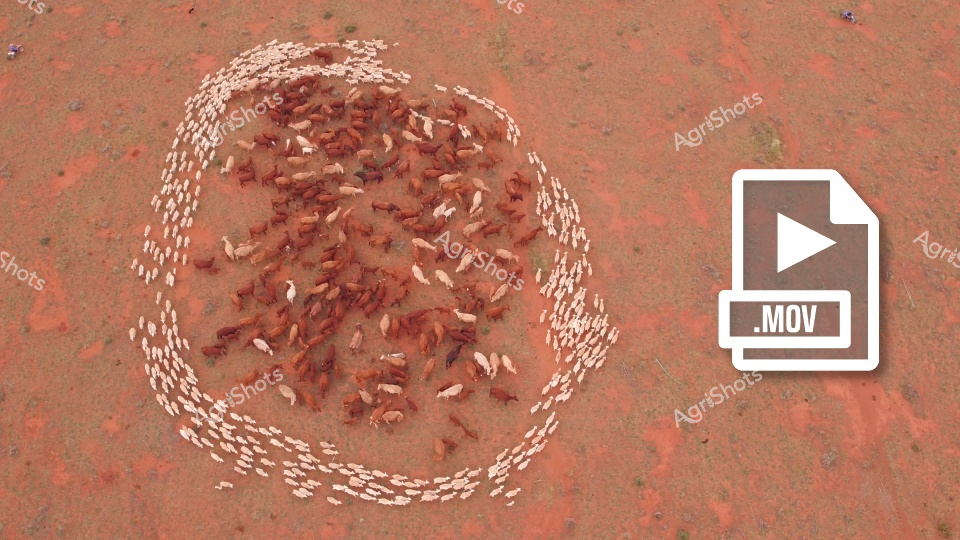
Aerial footage captures a spectacular display of sheep art in New South Wales' Western Plains Region, where hundreds of Dorper sheep form a perfect circular pattern in a red dirt paddock. The mustering demonstration showcases the remarkable coordination between stockmen, working dogs, and motorbikes as they guide the flock into this artistic formation. The contrast between the white and brown sheep against the russet earth creates a striking visual pattern, highlighting the skill and precision required in modern Australian sheep mustering techniques.
 Image
Image
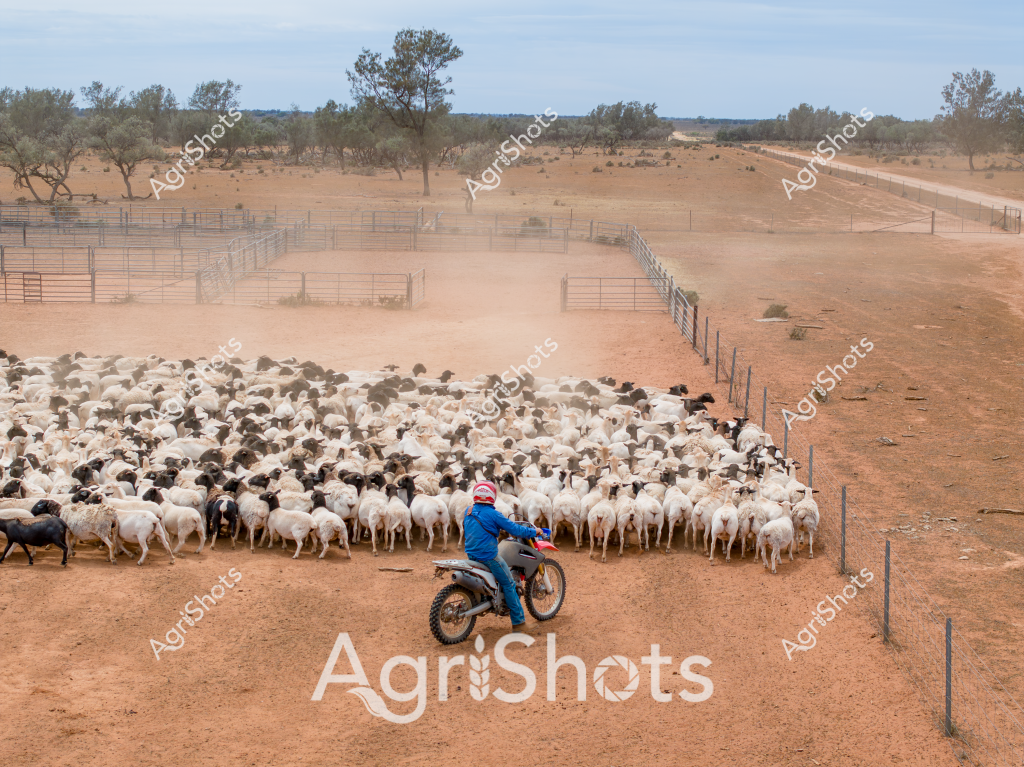
A man on a motorbike herds a large, tightly-packed flock of mixed black and white sheep through a dry, dusty paddock in outback Australia. The livestock are densely clustered within a fenced area, creating a swirling pattern of woolly bodies against the reddish-brown earth. Sparse trees and scrub vegetation frame the landscape, highlighting the arid conditions typical of rural Australian sheep stations. The rider, dressed in a bright blue jacket, skillfully navigates the dirt track alongside the flock, using the motorcycle to guide and control the movement of the animals. Fencing divides the paddock into structured sections, demonstrating the careful management of livestock in challenging agricultural terrain. The scene captures the rugged essence of Australian sheep farming, with its vast open spaces and the critical role of skilled stockmen in managing large herds across expansive properties.
 Image
Image
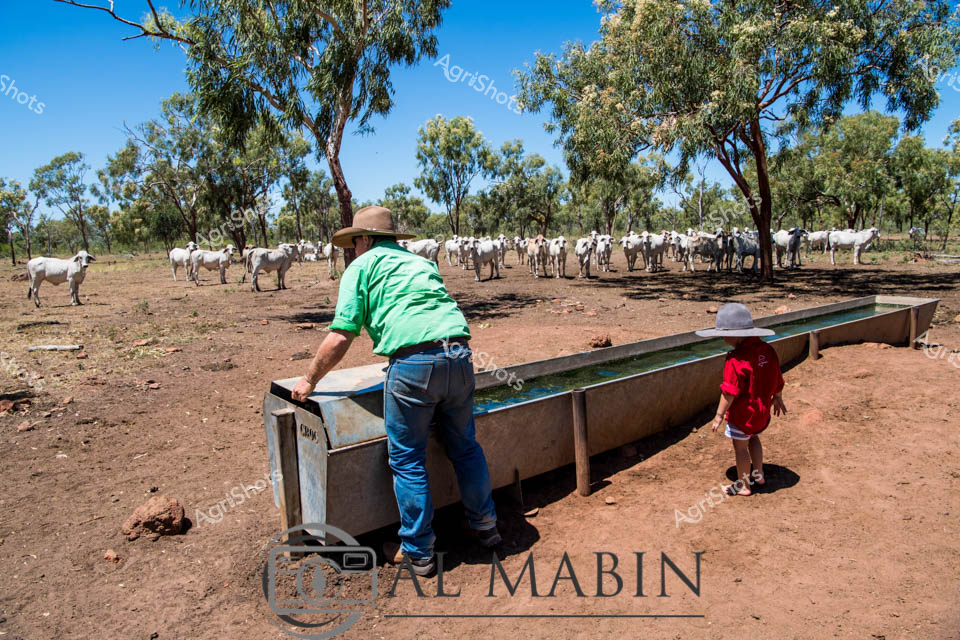
A man working as a station hand fills water troughs for Brahman cattle in the Northern Territory outback. The beef cattle, identifiable by their characteristic humped backs, gather in the shade of eucalyptus trees across the red dirt paddock. A child in a red shirt stands nearby watching the watering process, while the expansive station landscape stretches under clear blue skies. This essential daily task ensures the cattle herd maintains access to fresh water in the arid Australian conditions.
 Image
Image
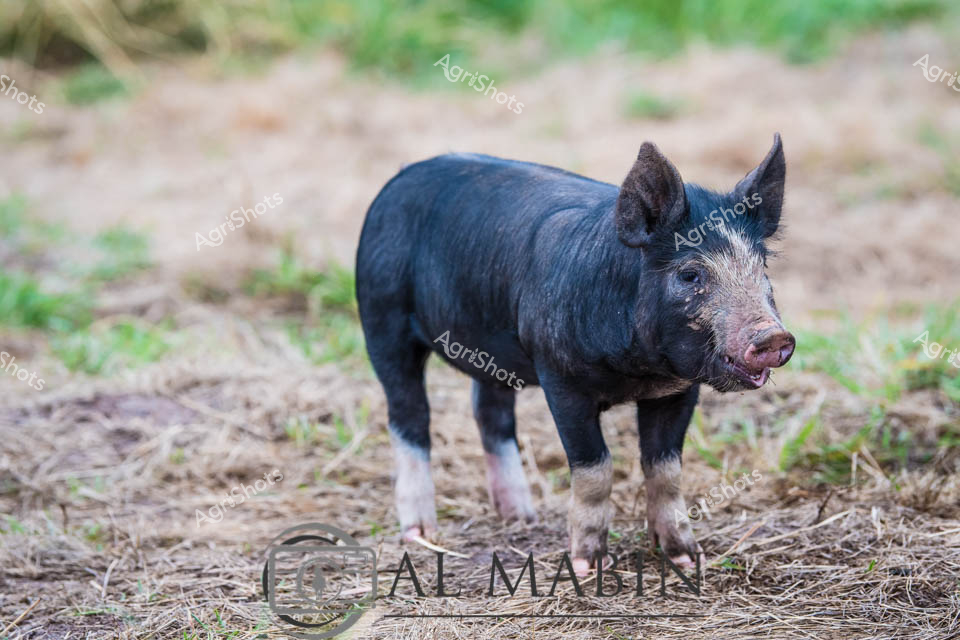
A black pig with distinctive white markings on its legs stands in a dirt paddock in Victoria's Heathcote Region. The free-range pig displays the characteristic coloring of large-scale farming operations, with its dark coat contrasting against the muddy ground scattered with patches of green grass. The piggery setting showcases modern livestock management practices, where pigs have access to outdoor areas for natural foraging behavior.
 Image
Image
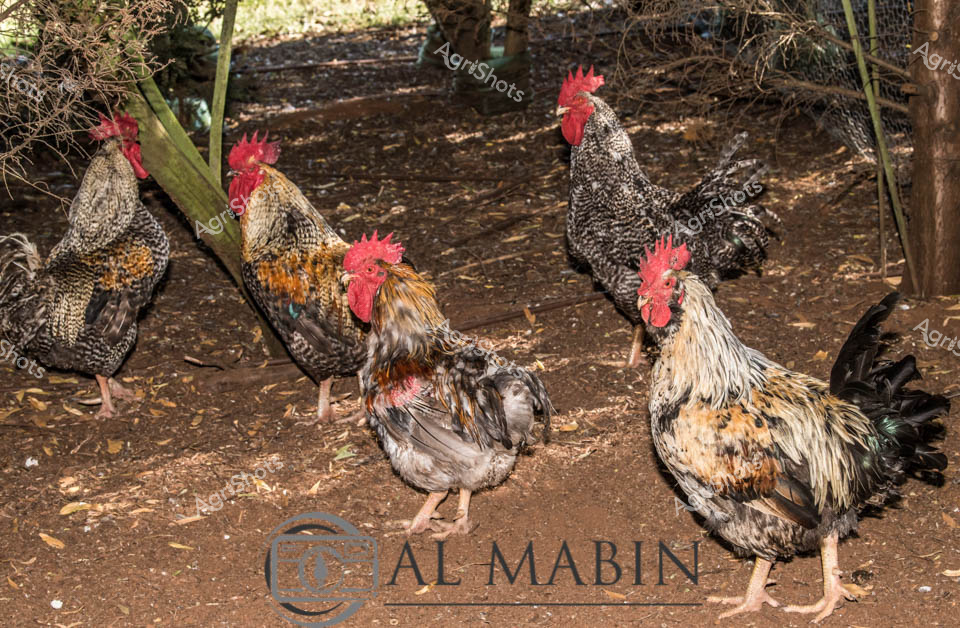
A group of free-range chickens and roosters forage in a dirt paddock area in Victoria, displaying the natural behaviors of poultry in an extensive farming system. The mixed flock includes several roosters with prominent red combs and colorful plumage, along with hens showing various feather patterns typical of heritage breed chooks. The birds move freely across the bare earth surface, demonstrating the contrast between free-range and large-scale farming practices where poultry can express natural foraging behaviors.
 Image
Image
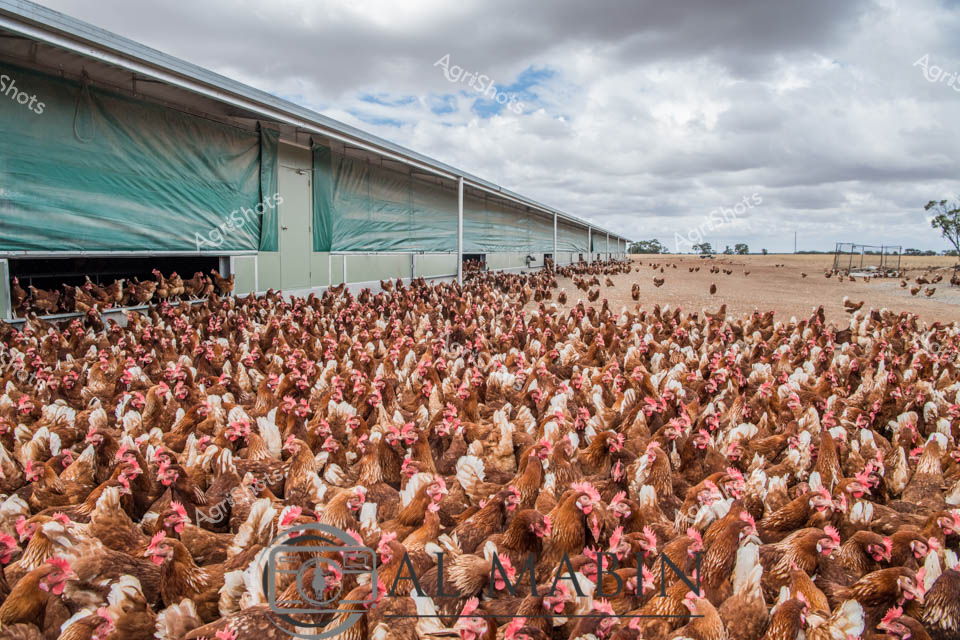
Hundreds of free-range chickens congregate around a large poultry shed in Victoria, creating a bustling scene of large-scale farming operations. The brown and white hens roam freely across the dirt paddock under overcast skies, with many birds gathering near the open shed entrance while others spread across the expansive outdoor area. This free-range poultry system demonstrates modern egg production methods, allowing the chooks natural movement and outdoor access while maintaining commercial viability in the agricultural landscape.
 Image
Image
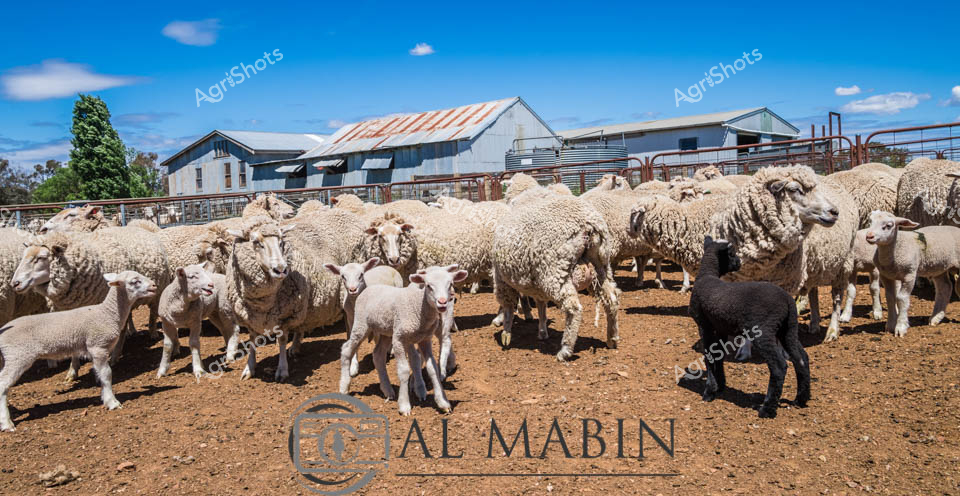
Merino ewes and their young lambs cluster in rustic steel-fenced yards beneath a classic weathered corrugated iron shearing shed, capturing the quintessential Australian pastoral landscape. Crisp blue skies and scattered cumulus clouds frame the scene, highlighting the rich earthy tones of the packed dirt paddock. A striking contrast emerges with two jet-black lambs amid the sea of cream-fleeced Merinos, their woolly coats dense and textured, reflecting generations of selective breeding for premium wool production. The flock stands clustered and attentive, suggesting recent mustering - a vital seasonal ritual of rural agricultural life in regional New South Wales. Rusted farm infrastructure and mature eucalyptus trees in the background evoke generations of agricultural heritage, while the lambs' playful proximity to their protective mothers speaks to the rhythmic cycles of pastoral farming. This image encapsulates the resilience, beauty, and intricate social dynamics of Australian sheep farming, where landscape, livestock, and human enterprise converge in a delicate ecological balance.
 Image
Image
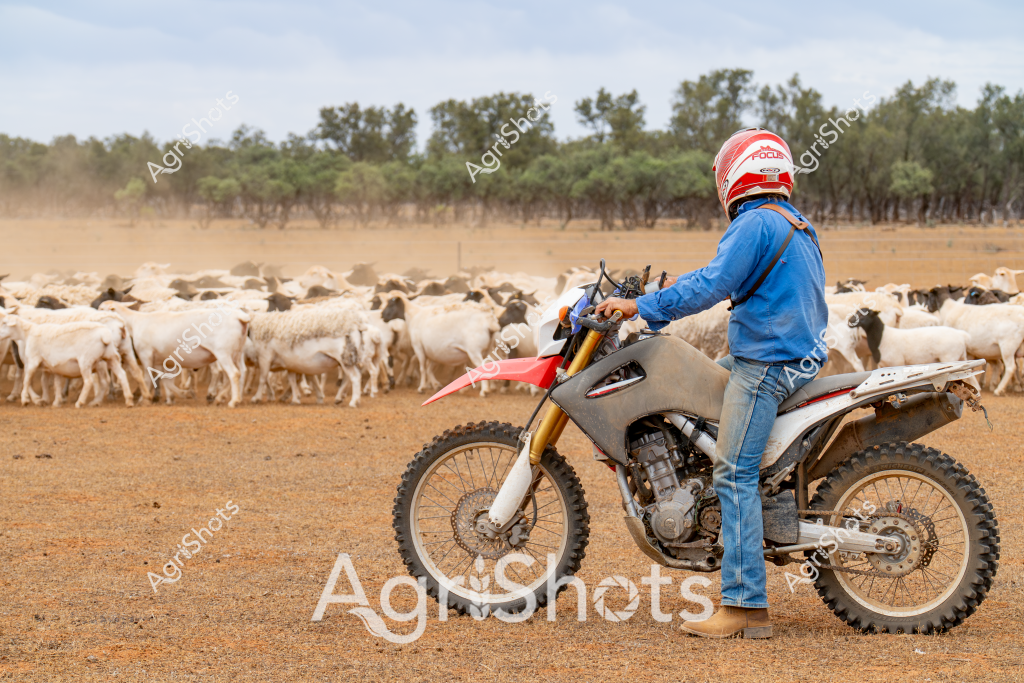
A man on a dirt bike manages a large herd of white goats in a dry, sparse landscape. Wearing a blue long-sleeved shirt, jeans, and a red and white protective helmet, the rider navigates his off-road motorcycle through the dusty paddock. A substantial mob of goats, predominantly white with some darker-colored animals, clusters together in the background, surrounded by sparse trees and scrubland. The arid environment suggests this is likely a station or large pastoral property in outback Australia, where motorcycles have become an essential tool for livestock management. The scene captures the modern approach to mustering and moving livestock, showcasing how technology and traditional farming practices intersect in rural Australian agriculture.
 Image
Image
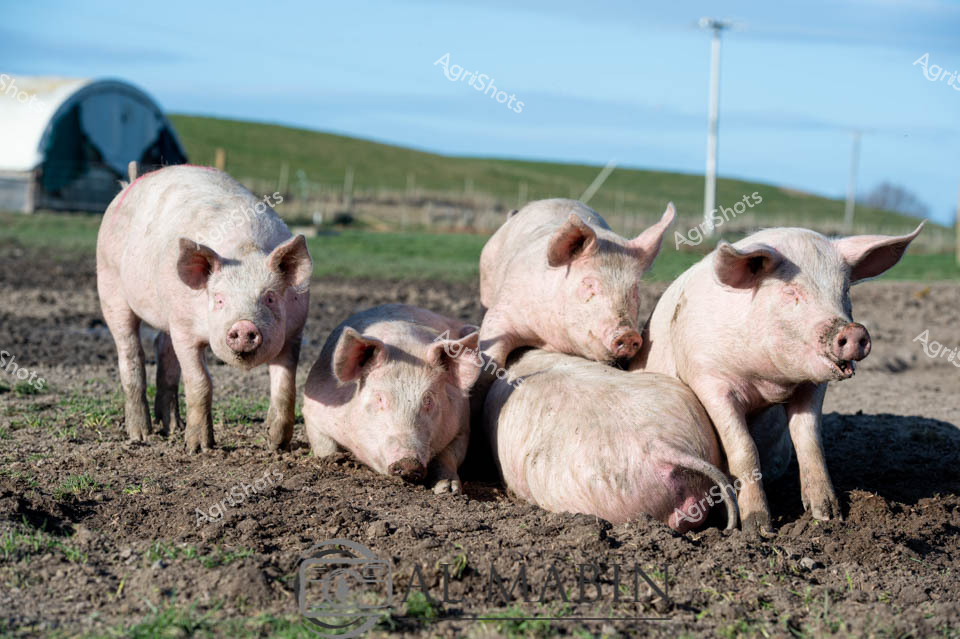
Pink-skinned Yorkshire and Large White crossbred pigs luxuriate on a sun-drenched dirt paddock, capturing a crisp early morning moment in New South Wales' New England agricultural region. Five robust porkers occupy various resting positions - some standing alert, others sprawled comfortably in the cool earth, displaying the relaxed demeanor of free-range livestock. The clay-toned ground contrasts beautifully with their pale pink skin, while a distant blue-grey barn and rolling green pasture provide a quintessential rural Australian backdrop. Soft morning light casts gentle shadows, highlighting the pigs' muscular frames and the textured landscape. Their varied postures suggest a peaceful, unstressed environment typical of ethical small-scale pig farming practices. The scene represents the intersection of traditional agricultural husbandry and modern animal welfare standards, showcasing how contemporary Australian farmers balance productivity with animal comfort.
 ▶ Video
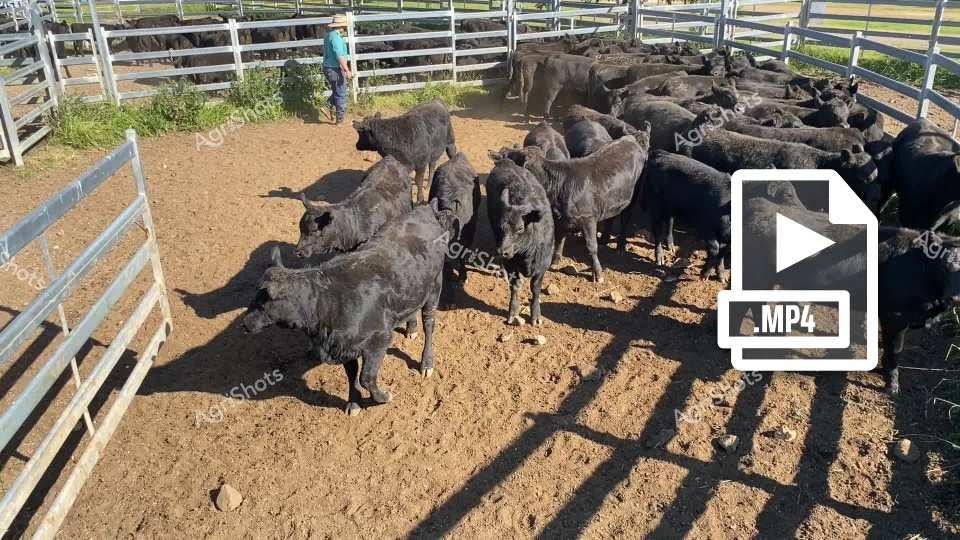
Black Angus calves cluster in a sunlit cattle yard, their glossy midnight-black coats creating a dense mosaic against the golden dirt paddock. Neat white steel fencing frames the scene, casting long parallel shadows across the compact livestock enclosure. A worker in a teal shirt stands quietly among the herd, overseeing the morning's weaning draft in the New England region of New South Wales. The young cattle press together, their muscular bodies reflecting the stud breeding quality of this agricultural operation, with each animal showing the hallmark smooth, solid black coloration characteristic of premium Angus genetics. Soft morning light emphasizes the varied textures - from the sleek animal coats to the dusty yard surface and weathered fence rails. This quintessential Australian cattle management scene captures the precision and quiet expertise of modern pastoral farming, where generations of breeding knowledge meet contemporary agricultural practices.
 ▶ Video
Midnight-black Angus cattle cluster tightly in a sun-drenched livestock yard nestled in the New England region of New South Wales. The compact dirt paddock, bordered by crisp white steel fencing, captures the essence of spring cattle management - a critical time for weaning and herd assessment. A worker in a teal shirt stands quietly to the side, observing the herd with practiced precision, casting long shadows across the compact earth. These robust stud cattle represent the pinnacle of beef breeding, their uniform coal-black coats gleaming with health and genetic potential. The tight clustering suggests a recent muster, with the animals carefully contained and ready for sorting or drafting - a quintessential moment in Australian agricultural practice. The stark contrast between the rich dark cattle, pale sandy ground, and bright white fencing creates a visually striking composition that speaks to the meticulous care and professional management of this high-quality beef operation.
 ▶ Video
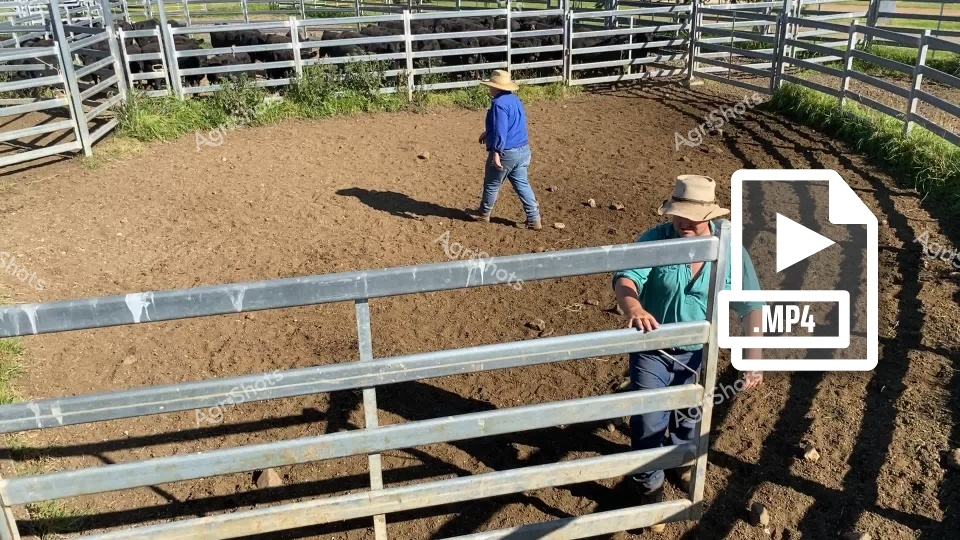
Farmers work in a fenced cattle yard during a cattle drafting session, separating calves from cows in the spring season. Two men are busy managing a herd of what appears to be Angus cattle in the New England region of New South Wales, with one standing in the dirt paddock and another leaning on the yard gate.
 Image
Image
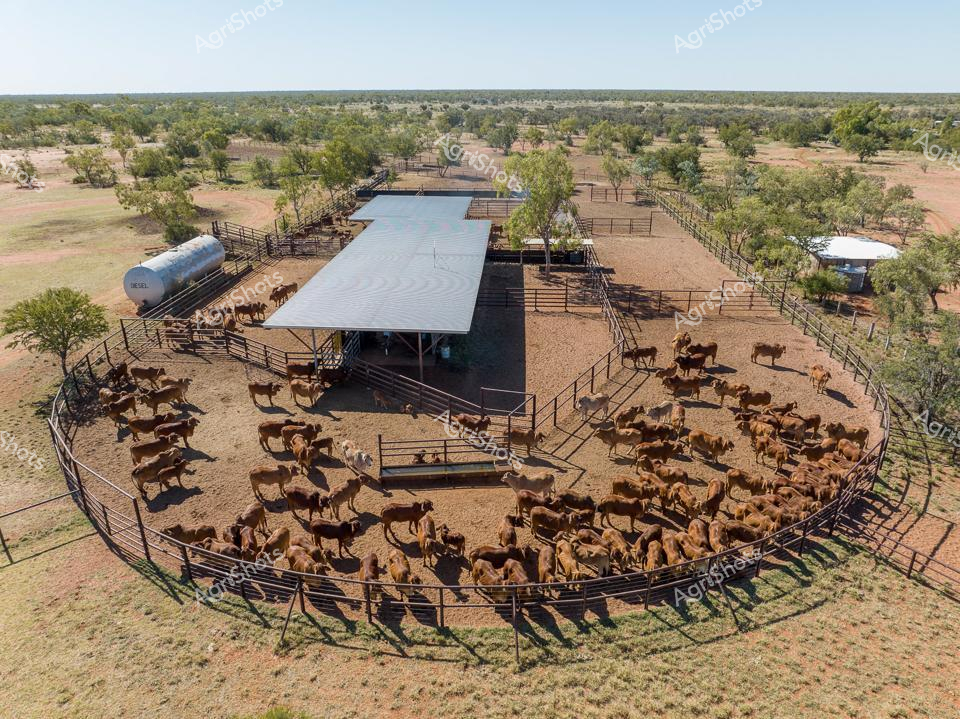
Dusty red earth and silvery gum trees frame a meticulously organized cattle yard on a vast Queensland cattle station. A dense herd of robust Brahman cattle - recognizable by their distinctive humps and loose, heat-resistant skin - cluster within a circular yard, their rich russet-brown coats gleaming under the harsh midday sunlight. The central shed provides critical shade and shelter, its long corrugated iron roof casting sharp geometric shadows across the packed dirt paddock. Robust steel fencing creates a precise circular containment, suggesting this is likely a weaning or sorting operation where young cattle are systematically separated and managed. A large silver water tank stands sentinel nearby, critical infrastructure in this unforgiving pastoral landscape where water management is essential to agricultural survival. The scene captures the disciplined yet organic nature of northern Australian cattle farming - a testament to generations of agricultural expertise adapting to an challenging environment through careful infrastructure, animal husbandry, and deep understanding of the land.
 Image
Image
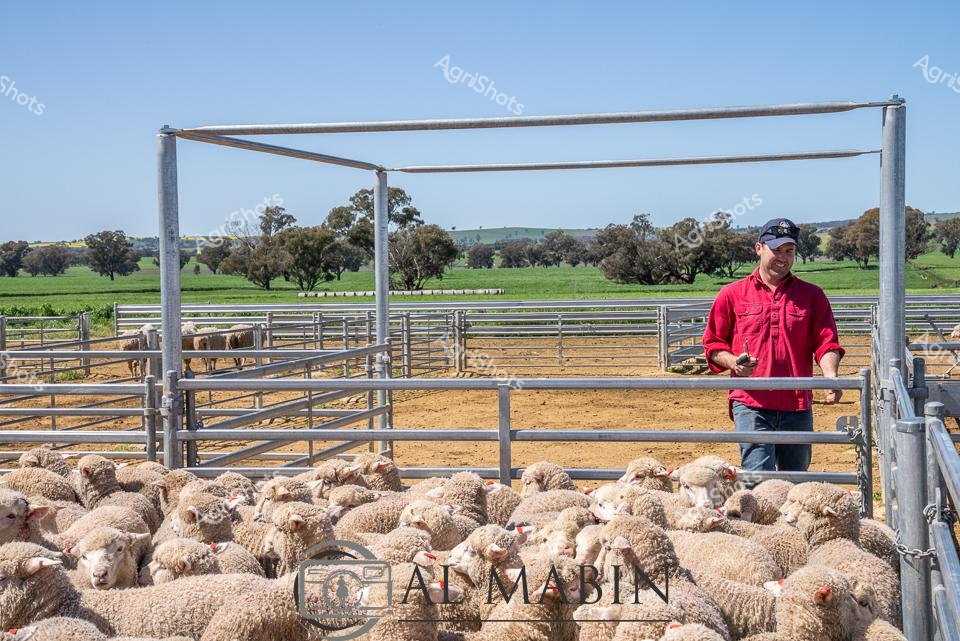
Merino lambs cluster tightly in galvanized steel yards, their dense, creamy fleece creating a textural carpet against the sun-bleached dirt paddock. A farm worker in a vibrant red shirt and navy cap stands vigilant, overseeing the weaning process under brilliant blue skies typical of rural New South Wales. Rolling green pastures and scattered eucalyptus trees frame the background, creating a quintessential Australian agricultural landscape. The metal sheep yards - constructed with robust horizontal rails and a square overhead frame - provide structured containment for the young livestock, reflecting professional farm management practices. Soft shadows and crisp morning light suggest early agricultural work, with the carefully managed flock representing the precision of modern sheep production.
 Image
Image
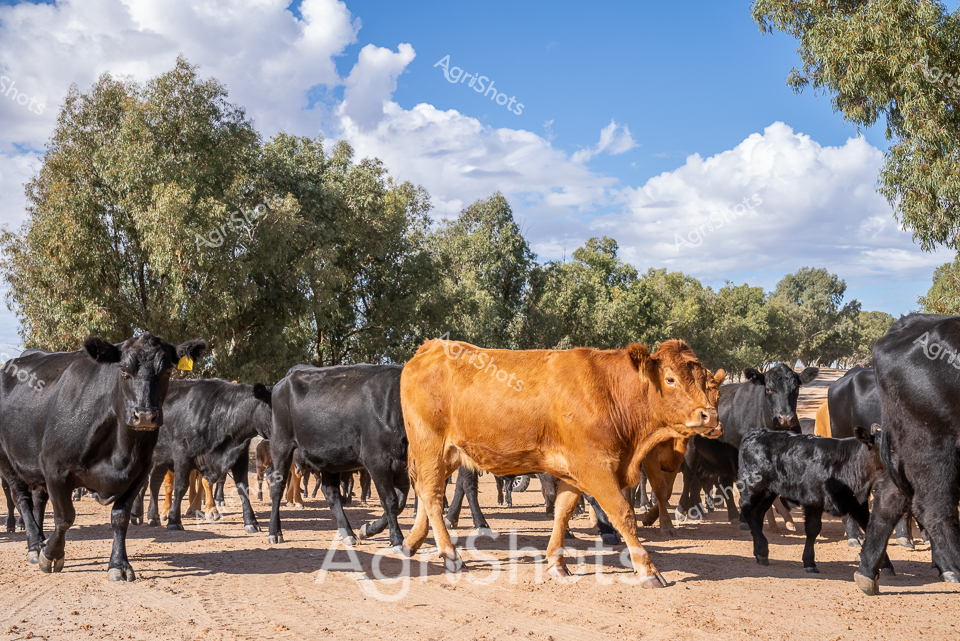
Limousin gold stands radiant among a sea of black Angus cattle, creating a striking visual contrast in this Western Australian pastoral landscape. The herd moves across sun-drenched earth, framed by silvery-green eucalyptus trees and a brilliant blue sky scattered with puffy white clouds. A typical spring muster captures the rhythmic movement of cattle, with the rich golden-brown Limousin cow standing boldly among her darker companions, highlighting the genetic diversity of modern beef production. The compact dirt paddock, dotted with dappled shade from mature trees, speaks to the expansive and carefully managed agricultural environments of Western Australia's cattle country. Each animal moves with a purposeful stride, reflecting the health and careful breeding of this professional cattle operation. The scene epitomizes the robust and dynamic nature of Australian beef farming - resilient, diverse, and perfectly adapted to the challenging yet beautiful rural landscape.
 Image
Image
Brahman cattle cluster in the sun-baked yards of a remote Kimberley station, their burnished copper coats gleaming against the rich dark earth. Stockyard rails cast long shadows across the compact dirt paddock, where two workers move with practiced efficiency, preparing to draft the herd. A woman in a pink jacket and another in blue observe from the side fence, their broad-brimmed hats protecting them from the harsh Western Australian midday light. These robust Brahman cattle, renowned for their heat and tick resistance, stand clustered in tight groups, their muscular bodies testament to generations of breeding for harsh northern Australian conditions. The weathered tin roof shelters provide minimal shade, reflecting the uncompromising landscape of Western Australia's northwestern cattle country. Dusty, well-worn yards speak to decades of pastoral management, where every movement is purposeful and every action is part of the rhythmic cycle of station life. The scene captures the quintessential Australian agricultural landscape - a moment of quiet concentration amid the demanding work of cattle management, where human skill and animal resilience converge under an expansive, cloudless sky.
 Image
Image
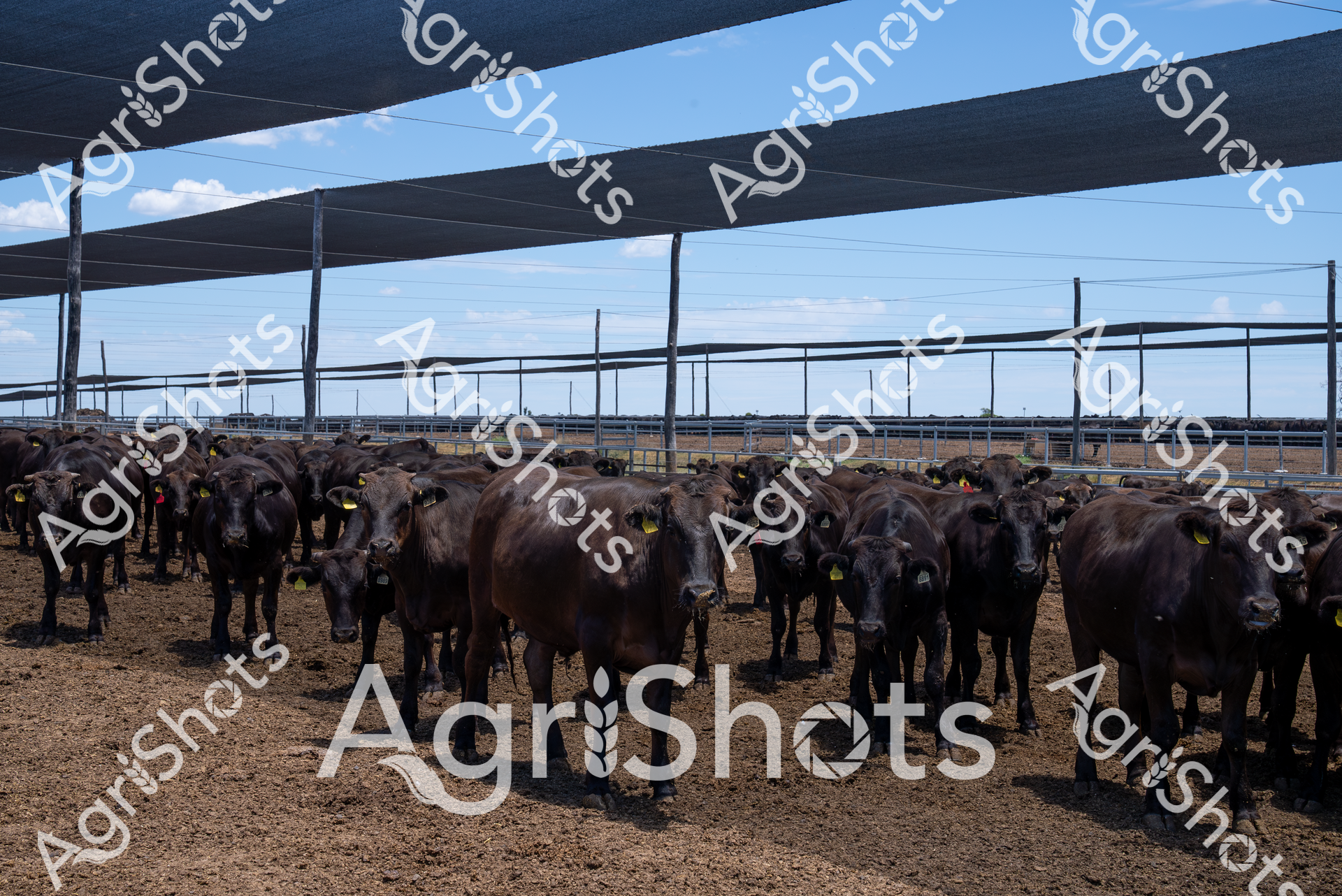
Black Wagyu cattle cluster beneath expansive shade sails at a modern feedlot in the Queensland of Queensland, their sleek dark coats gleaming under the intense summer sunlight. The carefully designed shade structures - alternating navy and pale blue panels - create a precise geometric landscape above the densely packed cattle, offering critical protection from the harsh Australian heat. Yellow ear tags punctuate the uniform dark coloration of the cattle, each marking an individual in this meticulously managed herd, highlighting the precision of contemporary agricultural practices. The compact dirt paddock surrounds the cattle, its uniform brown texture contrasting with the bright blue sky, while the robust steel fence and shade support structures frame the scene with industrial symmetry. These premium Wagyu cattle represent significant agricultural investment, their careful breeding and controlled environment designed to produce some of the world's most sought-after beef. The image captures the intersection of advanced animal husbandry, technological intervention, and the challenging environmental conditions of Queensland's agricultural heartland.
 ▶ Video
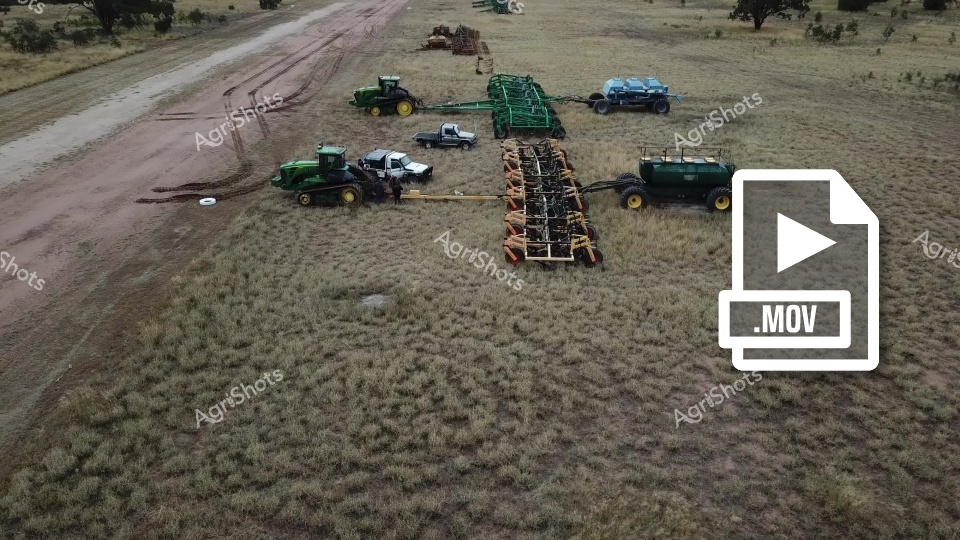
A comprehensive agricultural operation unfolds across Queensland farmland as multiple John Deere tractors work in coordination with specialized cropping equipment including air seeders and seed carts. The aerial perspective captures the systematic planting process, with green tractors positioned alongside implements designed for wheat and crop establishment across the expansive paddock. A dirt road runs parallel to the operation, while the organized arrangement of machinery demonstrates the scale and precision required for modern broadacre cropping in Queensland's agricultural regions.
 Image
Image
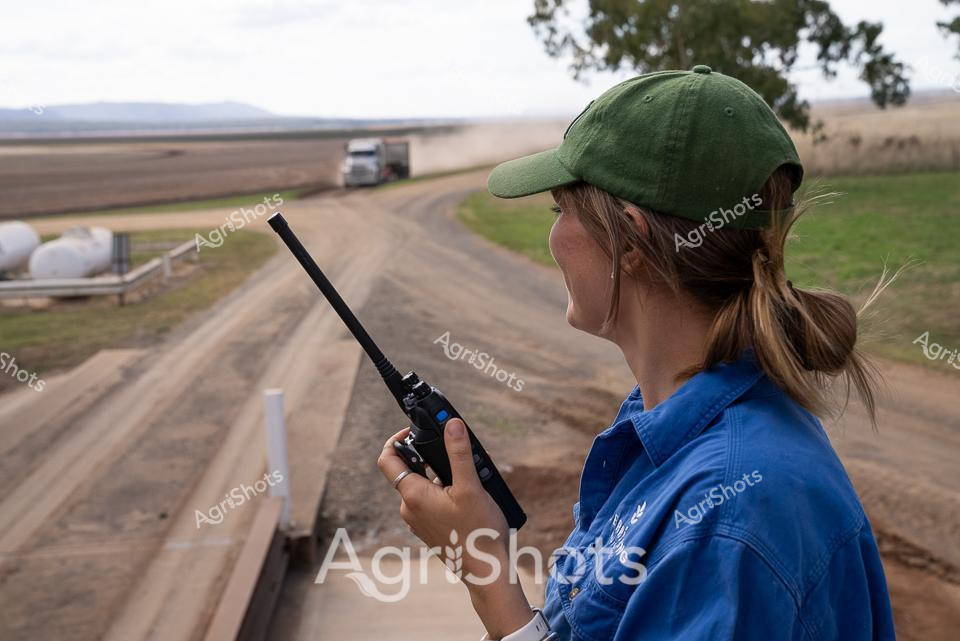
A field supervisor surveys the dusty rural landscape during sorghum harvest, her green cap and blue work shirt signaling her agricultural role. Standing near the weigh bridge, she holds a handheld radio, communicating with truck drivers transporting grain across the undulating paddock. The dirt road winds through golden crop fields, with dry grasslands and distant hills creating a classic Australian agricultural vista. A semi-trailer truck moves slowly in the background, loaded with harvested grain, while white storage tanks and agricultural infrastructure punctuate the scene. The late afternoon sunlight casts long shadows across the harvested field, highlighting the textures of recently cut sorghum and compacted earth. This moment captures the precision and communication essential to modern broadacre farming in rural New South Wales, where technology and human expertise combine to manage complex agricultural operations.