Browse the collection
 Image
A pristine flock of merino ewes stands resolute in the golden grasslands of New South Wales' Orana Region, their pure white fleeces gleaming against the sun-drenched pasture. The closely grouped sheep demonstrate the hallmarks of a carefully managed stud - each animal bearing a distinctive yellow ear tag, indicating systematic breeding and tracking. Soft, dense wool covers their muscular frames, a testament to generations of selective breeding for quality textile production and meat yield. Their alert expressions and uniform stance reflect the precision of modern regenerative farming practices, where animal welfare and landscape management intersect. The depth of field captures multiple layers of the flock, with some animals in sharp focus while others recede softly into the background, creating a sense of depth and movement across the undulating dry grassland. This image encapsulates the quiet resilience of Australian pastoral agriculture - a delicate balance of nature, science, and generational expertise that sustains both livestock and landscape.
 Image
A pristine flock of white-fleeced merino ewes stands resolute in the golden grasslands of New South Wales' Orana Region, embodying the quiet resilience of Australian pastoral landscapes. The carefully managed mob demonstrates the precision of modern regenerative farming practices, with each animal positioned deliberately against a backdrop of weathered eucalyptus trees and sun-bleached native grasses. Crisp, clean woolly coats suggest these are high-quality stud sheep, likely selected for superior genetic traits and adaptability to challenging inland conditions. Soft undulations of dry pasture provide textural contrast to the uniform white bodies, creating a compelling visual rhythm that speaks to the careful balance of agricultural stewardship. The soft midday light emphasizes the muscular definition and health of the flock, highlighting their robust breeding and the meticulous care of their stock managers. This image captures the essence of Australian sheep farming - a delicate interplay between human management and natural landscape, where every animal represents both economic potential and ecological harmony.
 Image
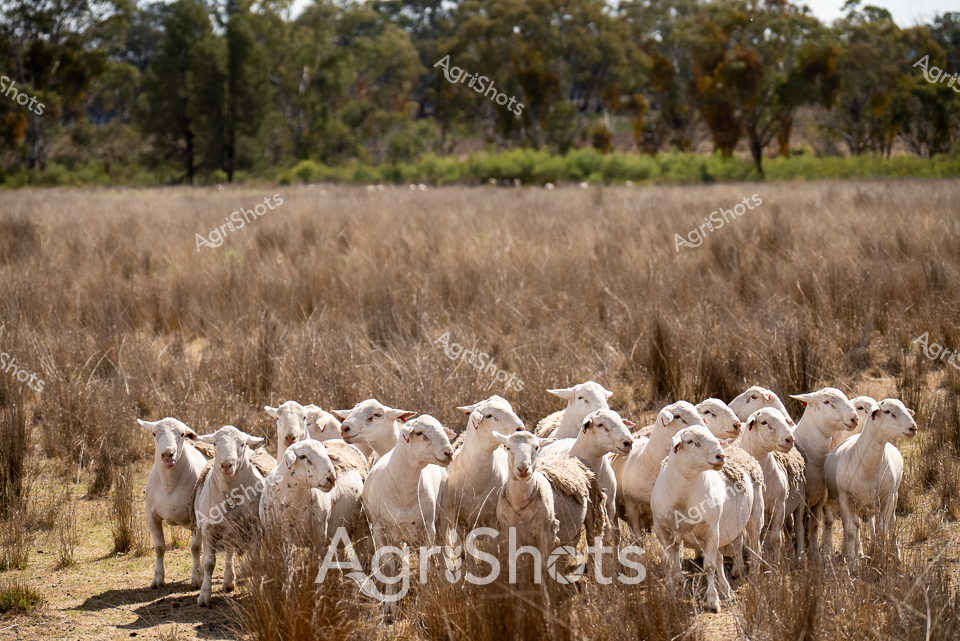
Merino rams cluster tightly in a golden wheat-colored grassland, their pristine white fleeces luminous against the dry pasture. A red and black utility vehicle navigates the rugged terrain, driven by a worker in a green shirt, signaling active farm management in the expansive Orana Region of New South Wales. The surrounding eucalyptus woodland creates a classic Australian rural backdrop, suggesting late summer or early autumn when the landscape turns a rich, burnished palette of browns and soft greens. These robust Merino sheep, likely part of a carefully managed stud breeding program, demonstrate the resilience of Australian livestock in challenging dryland agricultural environments. The scene captures the essence of regenerative farming - a careful balance of animal husbandry, landscape stewardship, and practical agricultural technology. The utility vehicle's presence highlights the modern approach to sheep farming, where traditional animal care meets contemporary agricultural equipment and management techniques.
 Image
Merino rams cluster together in a golden grassland, their pristine white fleeces contrasting against drought-stressed pasture and weathered eucalyptus woodland. The flock stands resolute on compacted earth, representing the resilience of Australian sheep breeding in the challenging Orana Region of New South Wales. Late afternoon sunlight casts long shadows across the dry landscape, highlighting the muscular frames and alert postures of these carefully selected stud rams. Each animal displays the hallmark characteristics of superior genetic lines - compact bodies, strong bone structure, and dense, uniform wool coverage that speaks to generations of careful agricultural management. The scene captures a moment of quiet strength, where these rams embody the principles of regenerative farming: sustainability, genetic diversity, and adaptation to harsh environmental conditions. This image represents the backbone of Australia's agricultural heritage - a testament to the skill of pastoral farmers who nurture livestock through challenging climatic extremes.
 Image
White-fleeced merino ewes and their young lambs cluster together in a sun-dappled paddock bordered by classic Australian eucalyptus woodland. The golden grasses of late summer stretch across the landscape, punctuated by weathered gum trees creating a quintessential pastoral scene in New South Wales' Orana Region. These robust stud sheep represent the resilience of regenerative farming practices, their sturdy frames and dense wool coats adapted perfectly to the challenging inland agricultural environment. Generations of selective breeding are evident in the uniform quality of the flock, with mature ewes protectively surrounding smaller lambs, highlighting the cyclical nature of pastoral agriculture. Soft shadows and filtered sunlight create a sense of quiet productivity, capturing the timeless rhythm of sheep farming that has shaped Australia's agricultural heritage. The mob stands quietly on dry ground, a testament to the adaptability of merino sheep in managing challenging drought-prone landscapes.
 Image
Precision and care define this moment in a Victorian sheep yard, where an experienced livestock handler operates a Tru-Test electronic weighing and management system. Dressed in a light beige work shirt and cap, the worker carefully manages a young lamb within a blue and galvanized steel livestock handler, surrounded by the textured straw and dusty ground of a rural holding pen. The sophisticated electronic display provides instant data tracking, reflecting modern agricultural technology's role in animal health and farm management. Soft natural light filters through the overhead shelter, highlighting the metallic blues of the equipment and the earthy tones of the working environment. Every movement speaks to the careful, methodical approach of contemporary Australian sheep farming - balancing animal welfare with efficient technological support. The scene captures the quiet expertise of rural professionals who blend traditional livestock handling skills with cutting-edge agricultural innovations.
 Image
Merino rams cluster together in the golden grasslands of New South Wales' Orana Region, their pristine white fleeces contrasting against the drought-burnished landscape. These robust stud sheep represent the pinnacle of Australian agricultural breeding - muscular, alert, and perfectly adapted to challenging inland environments. Their dense, fine wool and strong conformation showcase generations of careful genetic selection, embodying the resilience of pastoral farming in arid landscapes. The rams stand closely grouped, presenting a unified presence amid the crackling dry pasture, their collective stance suggesting both vulnerability and strength. Soft afternoon light highlights the texture of their woolly coats, revealing subtle variations of cream and ecru against the monochromatic background of weathered grasses. Each animal displays the characteristic alertness of Merino genetics - intelligent eyes tracking the horizon, ears pricked with quiet attentiveness. This image captures the essence of regenerative agricultural practices - hardy livestock thriving in marginal country, representing sustainable management and adaptive farming strategies that have defined Australian rural enterprise for generations. The scene speaks to resilience, careful husbandry, and the intimate connection between land, animal, and farmer.
 Image
Merino rams cluster together in a sun-drenched paddock of silvery dry grasses, their pristine white fleeces gleaming against the muted browns and greens of the surrounding woodland. Located in the rugged Orana Region of New South Wales, this pastoral scene captures the resilience of Australian sheep breeding under challenging agricultural conditions. The tight mob of muscular rams stands alert, their refined heads and sturdy frames reflecting generations of careful stud breeding and genetic selection. Sparse eucalyptus trees frame the background, suggesting a landscape shaped by drought and regenerative farming practices. These high-quality Merino rams represent the pinnacle of Australian agricultural innovation - robust, adaptable livestock bred to thrive in harsh inland environments. The image embodies the quiet strength of rural enterprise: patient cultivation, careful animal husbandry, and an intimate understanding of land and livestock working in harmony.
 Image
Australian White Merino rams cluster together on a sun-drenched, arid paddock in the expansive Orana Region of New South Wales. The flock stands resolute against a backdrop of sparse, golden grasslands and distant grey-green eucalyptus woodland, capturing the stark beauty of regenerative farming landscapes. These pristine white sheep, with their muscular frames and alert expressions, represent a high-quality stud breeding line, showcasing the genetic excellence of Australian sheep farming. Their woolly coats gleam under the harsh midday light, creating a striking contrast with the dry, textured ground beneath their hooves. The image embodies the resilience of agricultural communities in challenging rural environments, where careful livestock management and adaptive farming practices are essential for survival. This powerful composition speaks to the heritage and ongoing innovation of Australian agricultural systems, highlighting the critical role of selective breeding and sustainable land management in maintaining productive pastoral ecosystems.
 Image
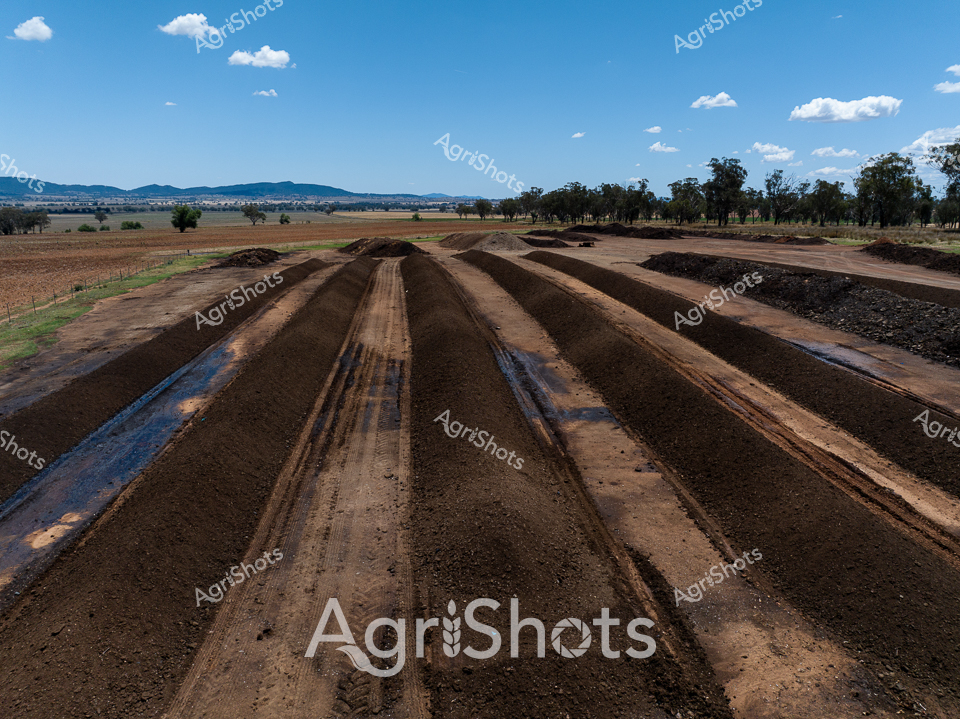
Sprawling rows of rich, dark earth rise like agricultural waves across this expansive composting facility in rural New South Wales. Carefully cultivated mounds of organic matter stretch toward distant blue mountain ranges, revealing a sophisticated regenerative farming process that transforms agricultural waste into nutrient-dense soil amendments. The precisely formed windrows - long, methodical heaps of decomposing material - showcase an intricate recycling technique that captures carbon, rebuilds soil biodiversity, and reduces waste through controlled biological breakdown. Warm sunlight casts distinct shadows across the varying brown and charcoal textures, highlighting the methodical ridges and troughs of each composting row. In the background, scattered eucalyptus trees and a wide-open landscape frame this innovative agricultural practice, symbolizing Australia's commitment to sustainable farming technologies. This landscape represents more than mere waste management - it's a critical ecological restoration process that reconnects agricultural systems with natural regenerative cycles.
 Image
An experienced agricultural professional surveys the sun-bleached landscape, her keen gaze protected by wraparound sunglasses and a well-worn wide-brimmed hat. Dressed in a vibrant lime-green shirt that speaks to the practical comfort of rural workwear, she embodies the resilience of women in Australian agriculture. The weathered texture of her hat and the smile lines around her eyes tell a story of years spent working closely with the land, likely in a sheep-farming region of Victoria. Her confident posture and protective eyewear suggest careful attention to sun safety - a critical consideration for those who spend long hours outdoors managing livestock and agricultural operations. The blurred background hints at the expansive, arid terrain typical of Australia's pastoral zones, where generations of farmers have learned to thrive in challenging environmental conditions. Her expression radiates a sense of quiet pride and deep connection to the agricultural landscape.
 Image
Regenerative Composting Landscape in Rural New South Wales Undulating mounds of rich, dark compost rise like earthen waves across a meticulously prepared agricultural site, capturing the essence of sustainable farming practices. The raw organic material—a blend of agricultural waste, manure, and plant residues—transforms into nutrient-dense soil amendments, promising renewed fertility for the surrounding farmlands. Rolling hills and scattered eucalyptus trees frame the distant landscape, creating a quintessential Australian rural backdrop of muted greens and soft blues. Each carefully constructed compost windrow represents a critical step in regenerative agriculture, where waste becomes a valuable resource and soil health is paramount. The textured browns of the decomposing material contrast sharply with the dusty earth paths between the rows, highlighting the meticulous process of organic matter recycling. This scene embodies the innovative spirit of modern Australian agriculture—turning waste into wealth, rebuilding soil ecosystems, and creating sustainable solutions for food production in a challenging environment.
 Image
Expansive windrows of dark, rich compost stretch across the foreground, their carefully constructed mounds rising and falling like agricultural waves against a backdrop of rolling rural New South Wales farmland. These meticulously managed organic waste piles represent cutting-edge regenerative farming techniques, transforming agricultural and organic waste into nutrient-dense fertiliser through controlled decomposition. Neat rows of mature trees punctuate the distant landscape, their silhouettes standing sentinel over verdant fields and blue-hued mountain ranges that fade softly into the horizon. Each compost windrow demonstrates precision agricultural engineering - strategically positioned to maximize microbial activity, moisture retention, and organic matter transformation. The earthy brown tones of the decomposing material contrast beautifully with the pale dirt paths and the vibrant green margins, highlighting the sophisticated process of converting waste into valuable soil enrichment. This scene epitomizes contemporary sustainable agricultural practices, where waste reduction, recycling, and soil health converge in a harmonious landscape of environmental stewardship.
 Image
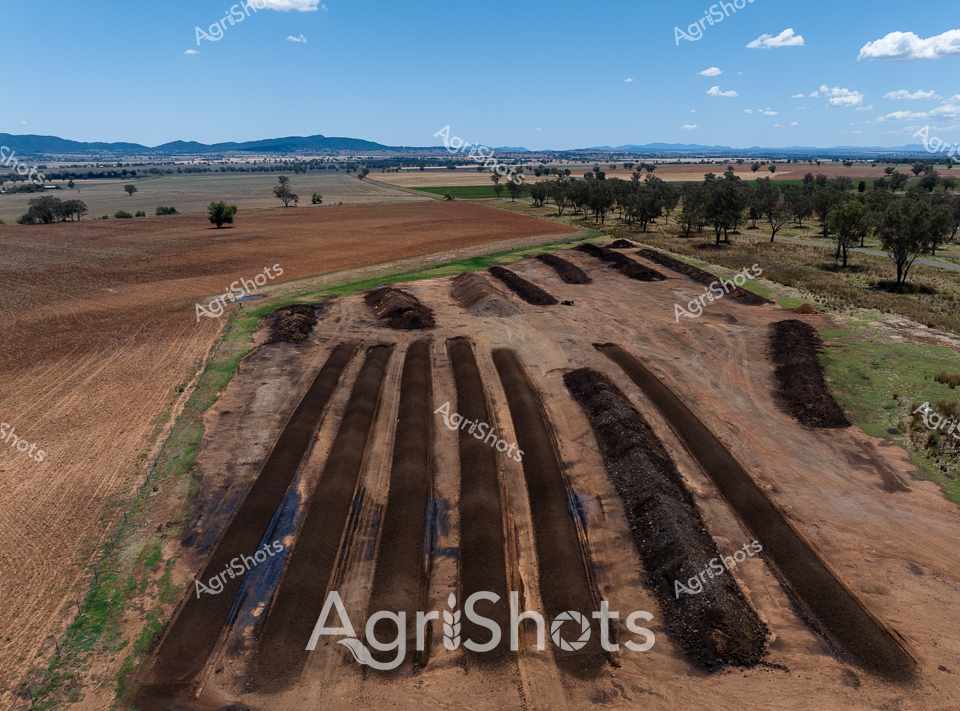
Sweeping rows of dark, rich organic material cascade across this rural landscape, revealing the intricate science of regenerative composting. Carefully engineered windrows of decomposing agricultural waste create a geometric pattern against the rusty red earth, transforming potential waste into valuable soil nutrition. The composting site sits nestled between expansive farmland and scattered eucalyptus trees, with distant mountain ranges and a soft blue sky providing a quintessential Australian agricultural backdrop. Each carefully constructed row represents a methodical approach to sustainable farming practices, where organic matter is systematically processed to rebuild soil health and reduce waste. The earthy browns and blacks of the compost mounds contrast dramatically with the surrounding golden-brown paddocks, highlighting the critical work of recycling and regenerating agricultural resources. This aerial perspective captures the precision and innovation of modern Australian farming, where every element of production is considered for maximum environmental and economic efficiency.
 Image
Merino rams cluster in a golden, sun-drenched paddock near a cluster of eucalyptus trees, their woolly forms standing stoically against the dry grasslands of New South Wales' Orana Region. A vibrant red utility vehicle sits behind the flock, suggesting active farm management and modern agricultural practices. These pristine white rams, likely part of a carefully managed stud breeding program, represent the pinnacle of genetic selection in regenerative farming approaches. The landscape speaks of resilience - sparse grasses, scattered trees, and an expansive sky with soft cloud formations typical of the Australian pastoral environment. The scene captures the intersection of traditional livestock husbandry and contemporary agricultural technology, with the robust utility vehicle ready to support stock managering and farm operations. Soft natural light bathes the scene, highlighting the rams' muscular forms and dense fleece, embodying the strength and adaptability of Australian agricultural enterprises.
 Image
Rural livestock management in full swing, with an agricultural worker in a bright lime-green long-sleeved shirt and protective sun hat operating a sophisticated blue Racewell sheep handling system. The precise mechanical yards create an efficient workflow for processing lambs, with careful attention to animal health protocols like vaccination and backlining. Straw-covered ground and metal livestock yards stretch across a dry pastoral landscape, suggesting late summer or early autumn conditions in regional Victoria. Another worker stands in the background, monitoring the operation with professional concentration. The sophisticated equipment demonstrates modern farming techniques that prioritize animal welfare and operational efficiency, with ergonomic design allowing careful, low-stress management of the livestock. Muted earth tones of the landscape contrast sharply with the vibrant safety wear of the agricultural workers, highlighting the dynamic intersection of technology, human skill, and natural environment in contemporary sheep farming.
 Image
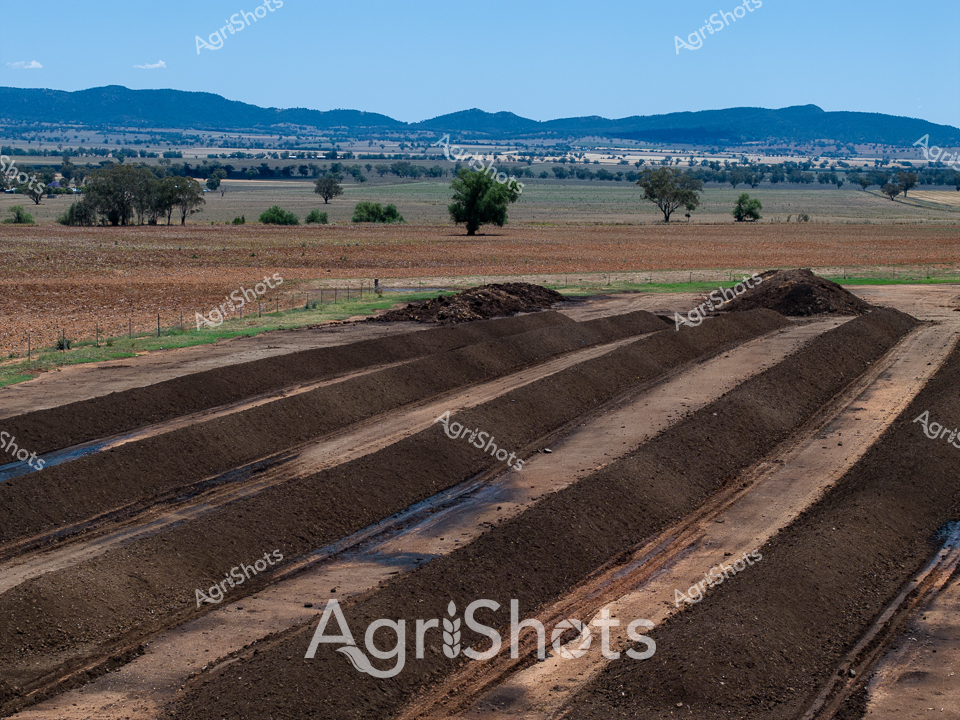
Expansive rolling mounds of rich, dark organic compost stretch across a prepared agricultural landscape in rural New South Wales. These carefully constructed windrows represent cutting-edge regenerative farming techniques, transforming agricultural waste into nutrient-dense soil amendments that will rejuvenate farmland. The orderly rows of composting material sit against a backdrop of undulating mountain ranges and scattered eucalyptus trees, capturing the essence of Australian agricultural innovation. Carefully engineered channels between the compost mounds allow for controlled moisture and oxygen circulation, supporting the biological breakdown of organic matter. The earthy brown textures of the compost contrast beautifully with the soft greens and blues of the distant agricultural plains, highlighting the sustainable practices of modern farming. This scene embodies the sophisticated approach to soil management and waste reduction in contemporary Australian agriculture, demonstrating how strategic composting can enhance biodiversity and agricultural productivity.
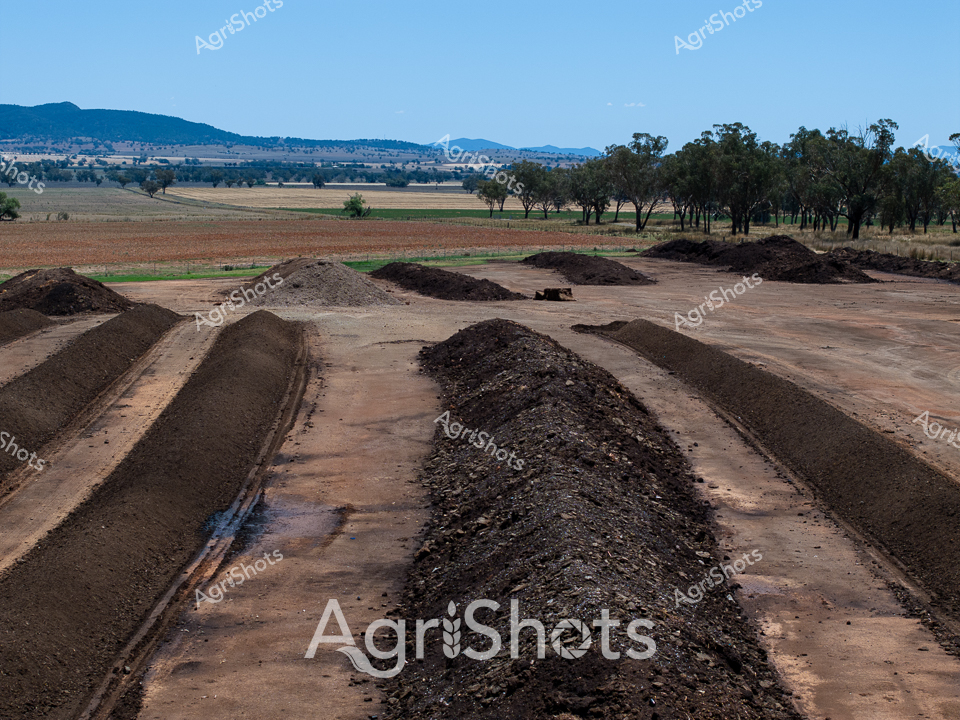 Image
Windrows of rich, dark compost stretch across a sun-drenched rural landscape in New South Wales, revealing the intricate process of regenerative farming. Carefully constructed organic matter mounds rise in parallel lines, transforming agricultural waste into nutrient-dense soil amendment against a backdrop of rolling hills and sparse eucalyptus trees. The earthy browns and greys of the composting material contrast sharply with the terracotta-hued earth and distant green pastures, showcasing a sustainable approach to land management. These meticulously arranged composting bays represent a critical technique in modern agricultural practice, where waste recycling and soil health become interconnected strategies for environmental stewardship. Distant blue mountains frame the scene, suggesting a vast, open agricultural region where innovative farming techniques are transforming traditional land use. The crisp, clear light and expansive horizon speak to the potential of regenerative agricultural methods in restoring and enhancing ecosystem vitality.
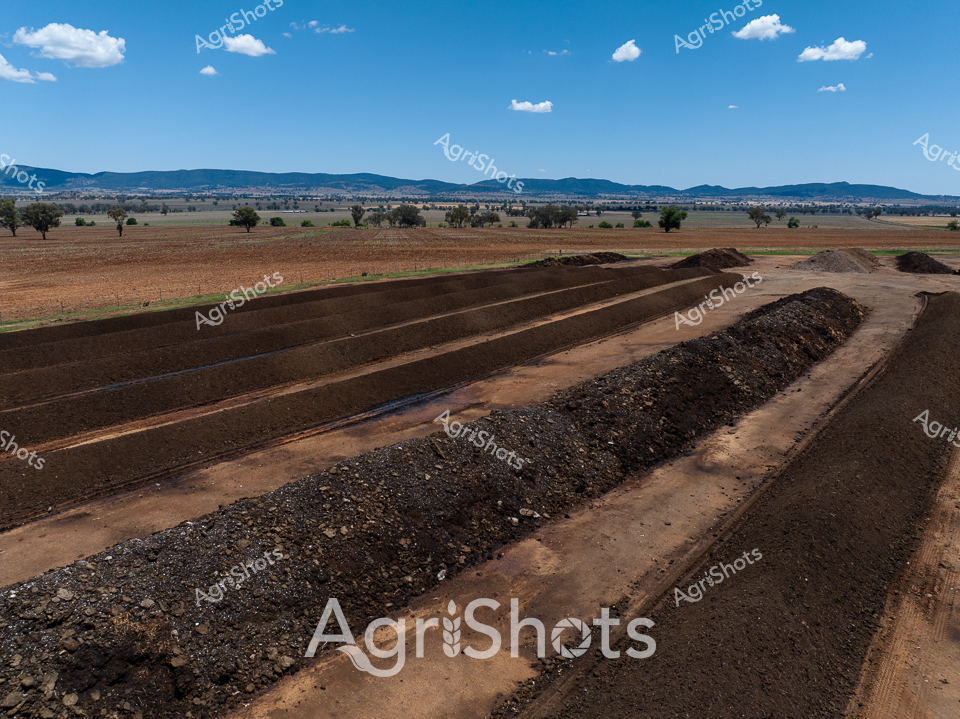 Image
Rows of meticulously arranged organic compost stretch across a sun-drenched rural landscape in New South Wales, revealing the innovative techniques of regenerative farming. Dark, rich soil amendments are carefully layered in long parallel mounds, capturing the intricate process of transforming agricultural waste into nutrient-dense fertiliser. The surrounding panorama showcases a classic Australian agricultural vista - gently undulating fields punctuated by scattered eucalyptus trees, with distant blue mountain ranges creating a stunning backdrop under a crisp, cloud-spotted sky. This expansive composting operation demonstrates sophisticated waste reduction and soil restoration strategies, where organic materials are systematically transformed to enhance biodiversity and agricultural productivity. The earthy browns and deep charcoal tones of the compost beds contrast beautifully with the terracotta-hued soil and verdant green patches, illustrating the dynamic cycle of nutrient recycling. The precise geometry of the compost rows speaks to the methodical approach of modern sustainable farming practices, where every element of agricultural production is considered with scientific precision and environmental consciousness. The scene captures the essence of regenerative agriculture - a harmonious blend of technological innovation and natural ecological processes, showcasing how Australian farmers are pioneering sustainable land management techniques.
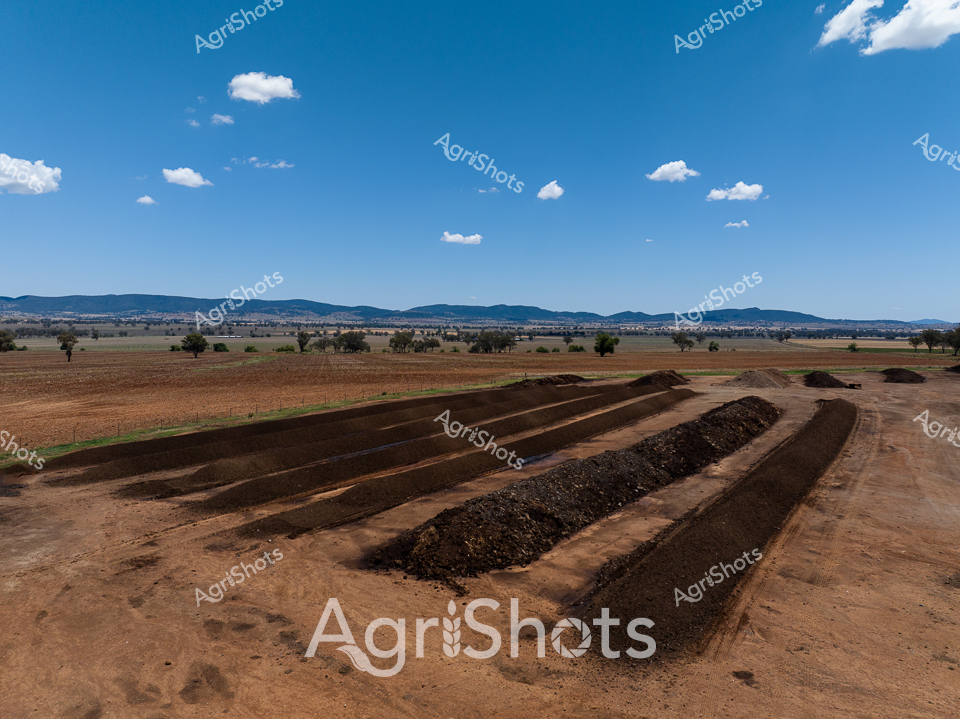 Image
Sweeping across the sunbaked landscape of rural New South Wales, long windrows of dark, rich organic compost stretch out in precise parallel lines against a backdrop of distant blue mountains and scattered eucalyptus trees. The expansive agricultural scene reveals a critical regenerative farming practice, where carefully managed organic waste is transformed into nutrient-dense soil amendment. Rich chocolate-brown compost mounds rise from the terracotta-colored earth, capturing the essence of sustainable agricultural recycling and soil health restoration. Puffy white clouds drift lazily across an intense azure sky, casting subtle shadows on the meticulously arranged composting rows that represent an innovative approach to waste reduction and soil fertility. The geometric precision of the windrows contrasts beautifully with the undulating natural landscape, demonstrating how modern agricultural techniques can work in harmony with the traditional rural Australian environment. This image encapsulates the progressive spirit of contemporary farming - turning waste into a valuable resource that nurtures the land and supports sustainable food production.
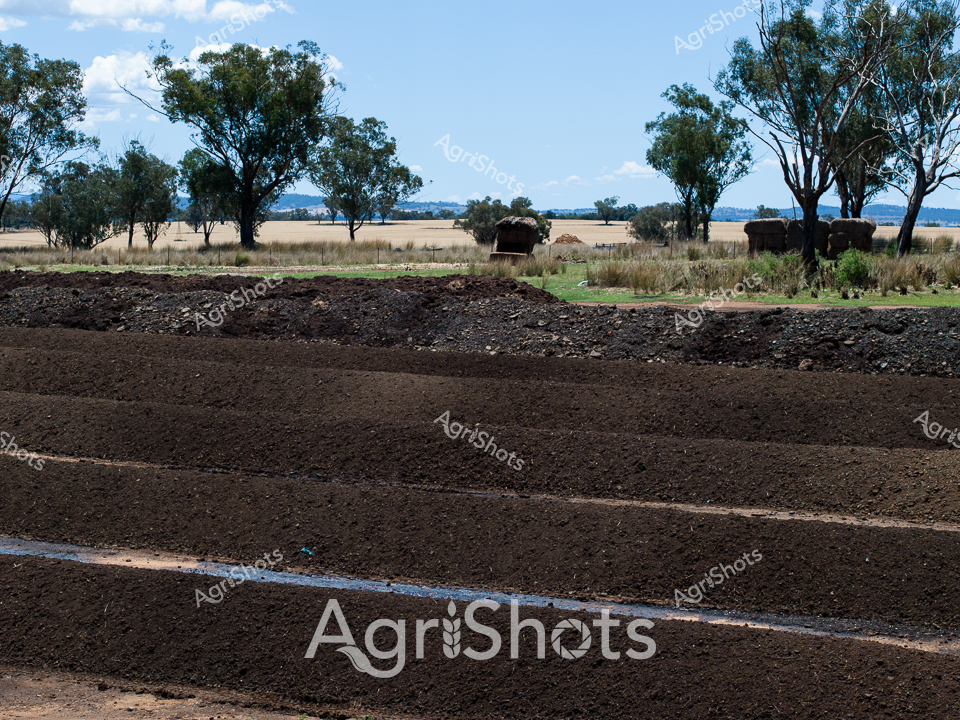 Image
Dark, rich soil mounds terrace the foreground in precise, leveled rows, revealing an innovative composting and soil regeneration site in rural New South Wales. Eucalyptus trees frame the distant horizon, casting gentle shadows across the golden grasslands and creating a quintessential Australian agricultural landscape. These carefully constructed soil beds suggest an advanced regenerative farming approach, where organic matter is systematically processed to restore soil health, enhance biodiversity, and reduce agricultural waste. The deep chocolate-brown soil texture indicates high organic content, likely derived from carefully managed agricultural and livestock waste streams. Neat irrigation channels run between the soil rows, demonstrating a methodical and scientific approach to sustainable land management. The expansive, open landscape speaks to the innovative spirit of Australian farmers who are pioneering ecological farming techniques that balance productivity with environmental stewardship.
 Image
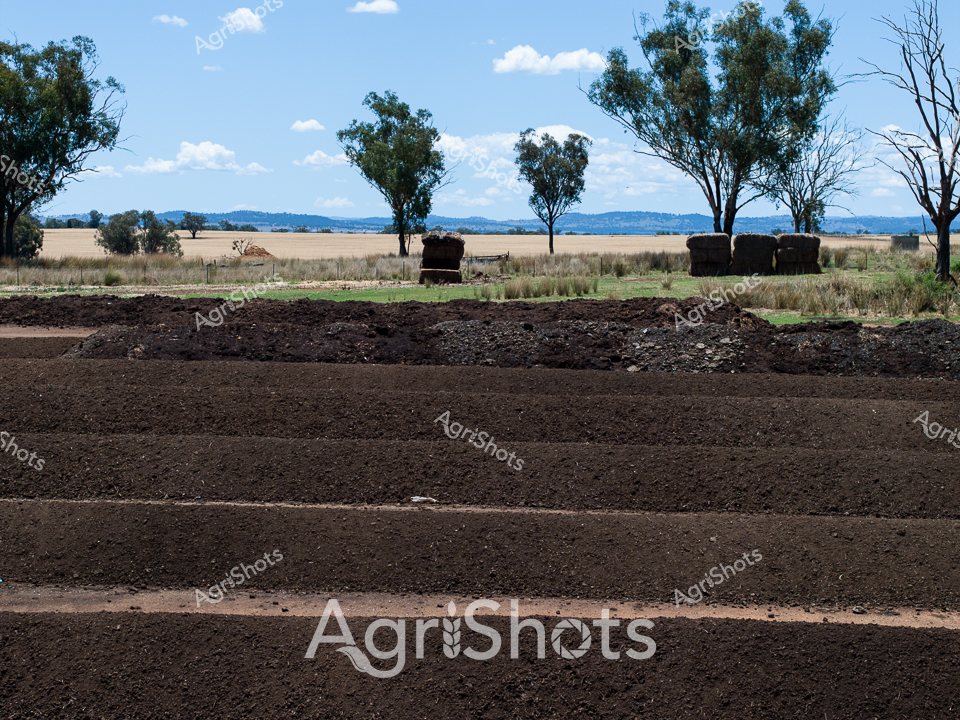
Dark, freshly turned soil beds stretch across the foreground, revealing the meticulous preparation of agricultural land in rural New South Wales. Rows of rich, dark earth create a geometric pattern, showcasing regenerative farming practices that focus on soil health and organic matter recycling. Hay bales and weathered gum trees punctuate the distant landscape, with rolling hills and a soft blue sky creating a quintessential Australian pastoral scene. The composting area demonstrates an innovative approach to waste reduction and sustainable agriculture, transforming organic materials into nutrient-rich fertilizer that will nurture future crops. Soft clouds drift overhead, suggesting a mild day perfect for agricultural work, with the carefully cultivated soil representing the intersection of traditional farming wisdom and modern ecological practices. The image captures the essence of Australian agricultural innovation - a careful balance of land management, resource recycling, and environmental stewardship.
 Image
Rows of rich, dark compost mounds stretch across a rural paddock in New South Wales, revealing the intricate process of regenerative agricultural practices. Carefully constructed windrows of organic matter create a textured landscape of browns and blacks, demonstrating sophisticated waste recycling techniques. Surrounding eucalyptus trees frame the scene, providing a quintessential Australian agricultural backdrop of open grasslands and scattered woodland. These meticulously arranged compost banks represent an innovative approach to soil health, transforming agricultural waste into valuable fertiliser through controlled decomposition. The earthy tones of the compost piles contrast beautifully with the pale dirt pathways and the soft blue sky, highlighting the sustainable farming methods that are crucial to modern agricultural resilience. Each carefully managed mound represents a commitment to soil biodiversity, carbon sequestration, and reducing agricultural waste through intelligent organic recycling techniques.
 Image
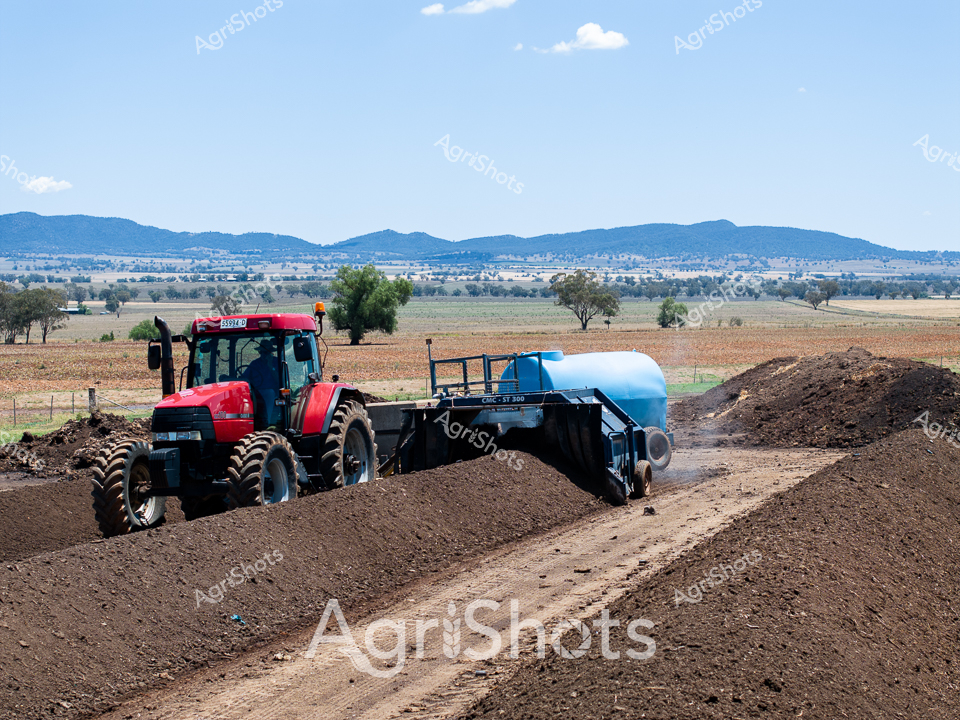
Red Case tractor navigates a serpentine path through expansive brown compost windrows at a cutting-edge regenerative agriculture site in rural New South Wales. Rolling blue mountain ranges frame the distant horizon, creating a quintessential Australian agricultural landscape of scattered eucalyptus trees and golden-brown pastures. The robust tractor pulls a substantial blue tank and waste management trailer, methodically turning and aerating organic matter into rich, dark soil amendments that will rejuvenate local farmland. Intricate soil recycling operations demonstrate sophisticated waste reduction techniques, transforming agricultural by-products into valuable nutrients through precise, machinery-enabled composting processes. Bright sunlight illuminates the rich textures of turned earth, highlighting the deep chocolate-brown layers of decomposing organic material against the clear azure sky. This image captures the intersection of technological innovation and sustainable farming practices, showcasing how modern agricultural techniques can regenerate soil health and support environmental stewardship in the challenging Australian agricultural landscape.