Browse the collection
 Image
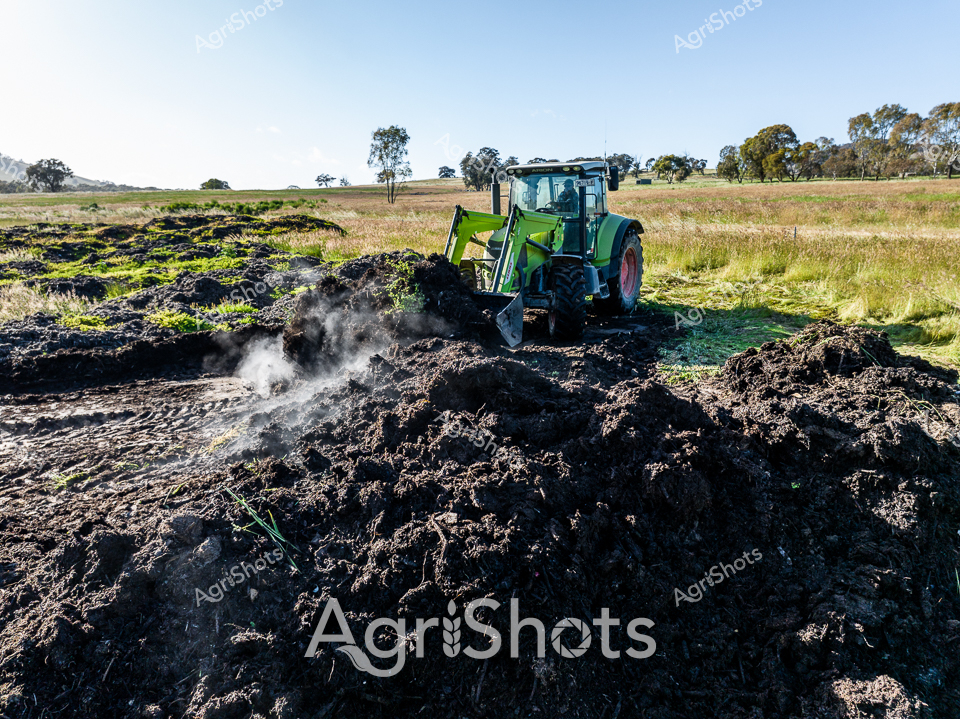
Steam rises from a massive mound of rich, dark compost as a vibrant green Claas tractor meticulously turns organic matter in a sweeping Victorian agricultural landscape. The early morning sunlight casts long shadows across the undulating pasture, revealing scattered eucalyptus trees on the horizon and highlighting the textural complexity of the decomposing materials. This regenerative farming practice demonstrates a sophisticated approach to soil health, recycling green waste and agricultural byproducts into nutrient-dense fertiliser that will reinvigorate the surrounding fields. The tractor's powerful front loader carefully manipulates the steaming compost heap, breaking down organic matter and facilitating the microbial processes that transform waste into valuable agricultural resources. Patches of moss and emerging vegetation hint at the biological activity within the composting mound, symbolizing the interconnected cycles of growth, decay, and renewal that are fundamental to sustainable agricultural practices. The scene captures the intersection of technological innovation and ecological wisdom, showcasing how modern farming techniques can work in harmony with natural systems to enhance biodiversity and soil vitality.
 Image
A verdant Victorian landscape unfolds as a robust green Claas tractor meticulously manages a substantial mound of rich, dark organic compost. Set against a backdrop of scattered eucalyptus trees and rolling hills, the machine's bright lime-green loader carefully manipulates dark, nutrient-dense material - likely a blend of green waste, agricultural residue, and composted manure. The vibrant machinery stands in stark contrast to the deep brown soil, symbolizing the progressive spirit of regenerative farming practices that prioritize sustainability and soil health. The scene captures the intricate dance of modern agricultural technology and ecological restoration, with the tractor's precise movements transforming waste into valuable fertilizer. Sunlight filters through the surrounding woodland, casting a golden-green hue across the grasslands and highlighting the textural complexity of the composting process. This image embodies the innovative approach of Australian farmers who are reimagining waste management and soil regeneration as critical components of sustainable agricultural systems. The composition speaks to the broader narrative of environmental stewardship, showcasing how strategic waste recycling and intensive composting can revitalize agricultural landscapes, enhance biodiversity, and support more resilient farming ecosystems.
 Image
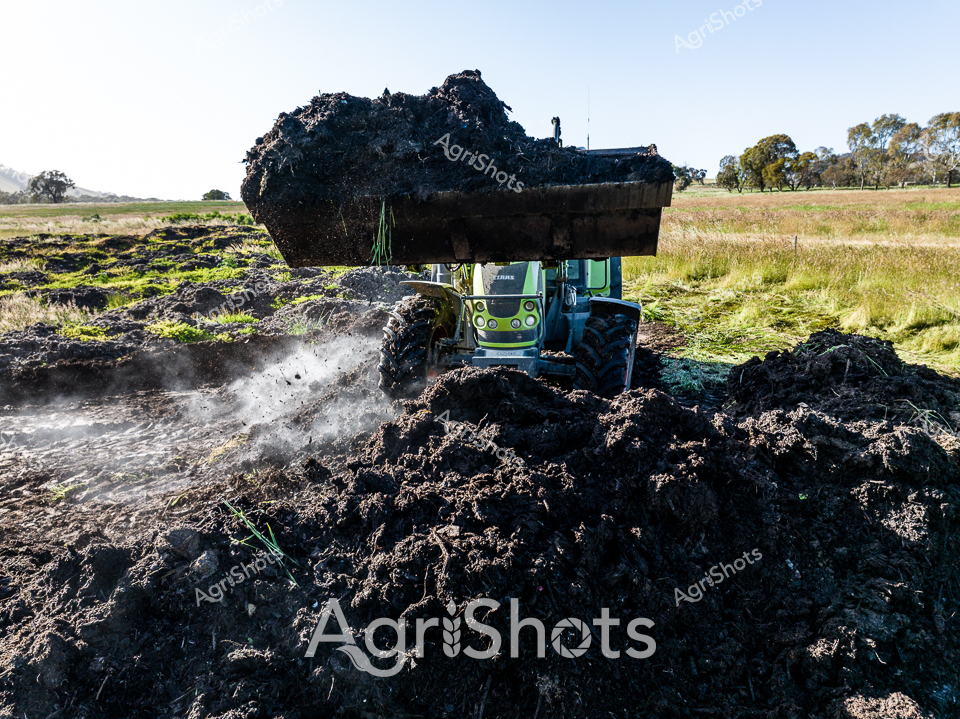
Organic matter cascades from a vibrant green Claas tractor, steam rising from dark, nutrient-rich compost piles in a golden Victorian grassland. The machine stands resolute amidst mounds of decomposing green waste and agricultural residue, embodying the principles of regenerative farming and sustainable land management. Rich, dark soil tells a story of ecological renewal, with moss-tinged edges and billowing steam indicating active biological transformation. Surrounding paddocks stretch out in soft, undulating plains punctuated by scattered eucalyptus trees, capturing the quintessential Australian agricultural landscape. This scene represents a critical intersection of waste reduction, soil health, and advanced agricultural practices, where technology and natural processes collaborate to restore and nourish the earth. The composting operation demonstrates a sophisticated approach to recycling organic materials, turning potential waste into valuable fertiliser that will support future crop growth and maintain biodiversity.
 Image
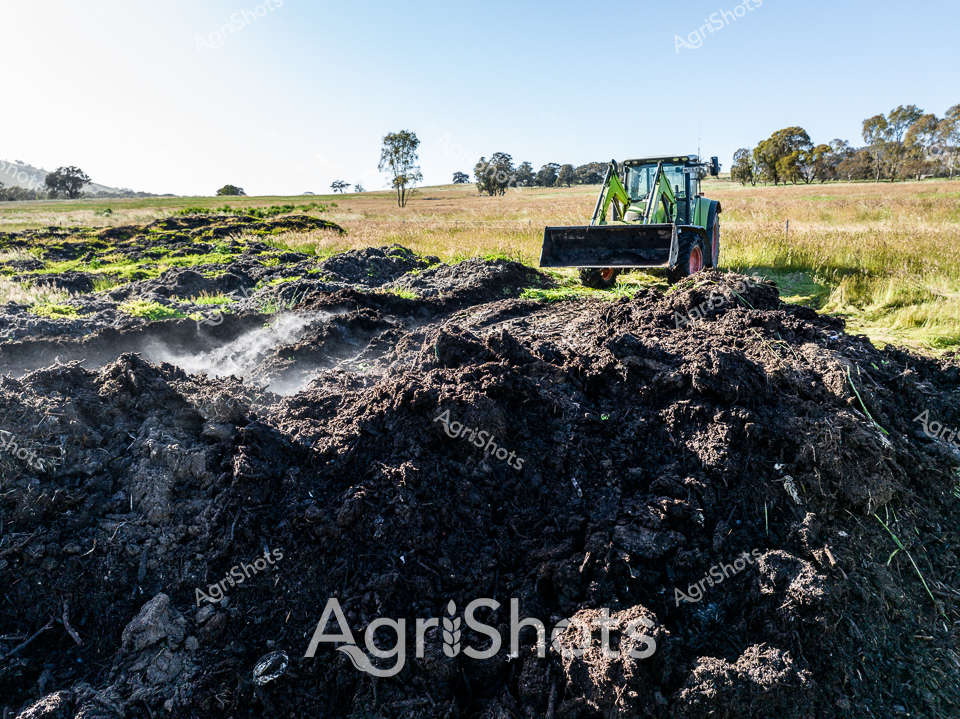
Steaming organic compost rises in wisps from dark, rich mounds of decomposing green waste and manure, capturing the essence of regenerative agricultural practices in rural Victoria. A vibrant green Claas tractor stands sentinel in the golden grassland, its front loader poised to manage the composting process, symbolizing the innovative approach to sustainable farming. The landscape stretches out in soft undulations, scattered eucalyptus trees punctuating the horizon, while morning light casts long shadows across the paddock, highlighting the textural complexity of the decomposing organic matter. Wisps of steam suggest active biological transformation, where waste materials are being carefully converted into nutrient-rich soil amendment, a critical process in modern sustainable agriculture. The rich blacks, deep browns, and hints of mossy green in the compost heap contrast beautifully with the pale straw-colored grassland, creating a visual narrative of renewal and ecological balance. This scene embodies the principles of regenerative farming: recycling, waste reduction, and building soil biodiversity through intelligent organic matter management.
 Image
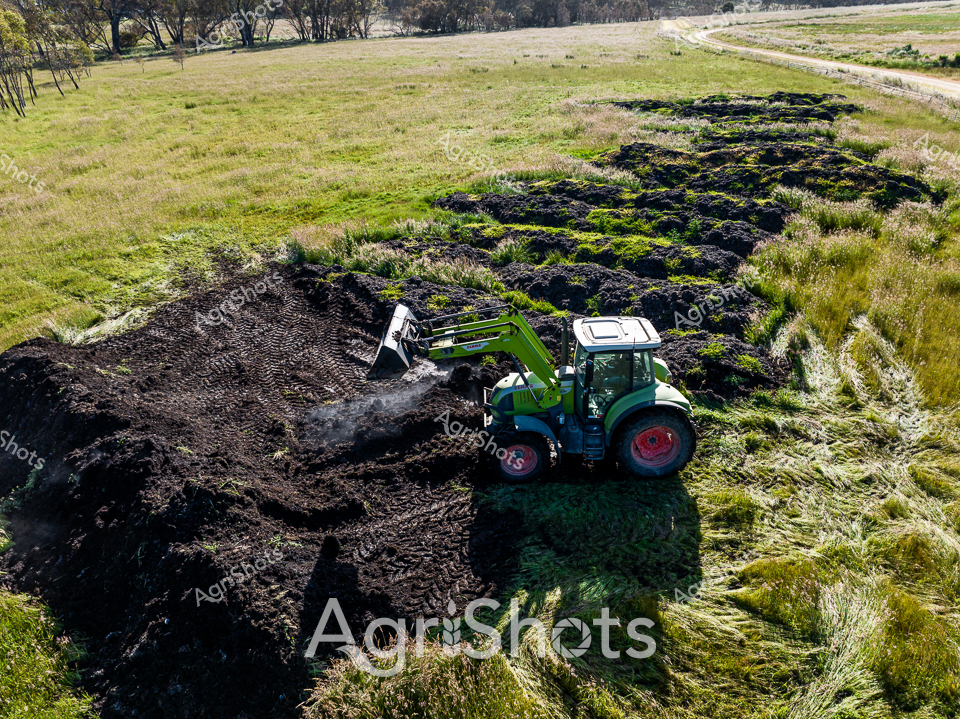
A vibrant green Claas tractor navigates through an expansive paddock, methodically turning and spreading rich, dark organic compost across the undulating pasture. The machine's hydraulic loader carefully manipulates large windrows of decomposing green waste and agricultural residue, creating a textural landscape of deep charcoal and emerging green hues. Victorian farmland stretches out in the background, with scattered eucalyptus trees and a gently curving dirt track highlighting the quintessential Australian rural setting. This regenerative agriculture technique demonstrates sustainable waste management and soil enrichment, transforming agricultural by-products into valuable nutrients that will revitalize the grasslands. The meticulous process of composting represents a critical intervention in modern farming practices, reducing waste while simultaneously improving soil biodiversity and potential crop yields. The aerial perspective captures the precision of contemporary agricultural machinery and the intricate relationship between technology, waste recycling, and ecological restoration.
 Image
Agricultural construction specialists assemble a large steel grain storage silo on a rural property, likely in New South Wales. Two workers in high-visibility yellow safety jackets carefully align and secure corrugated metal panels to the circular concrete base, with one worker positioned on the roof and another climbing the structure's exterior. The overcast sky and sparse eucalyptus trees in the background suggest a typical Australian agricultural landscape, potentially during early winter or late autumn. Precision and teamwork are evident in their methodical installation process, with each worker carefully positioning structural components to create a robust grain storage solution. The metallic silver silo stands in stark contrast to the reddish-brown earth beneath, highlighting the industrial infrastructure crucial to modern farming operations.
 Image
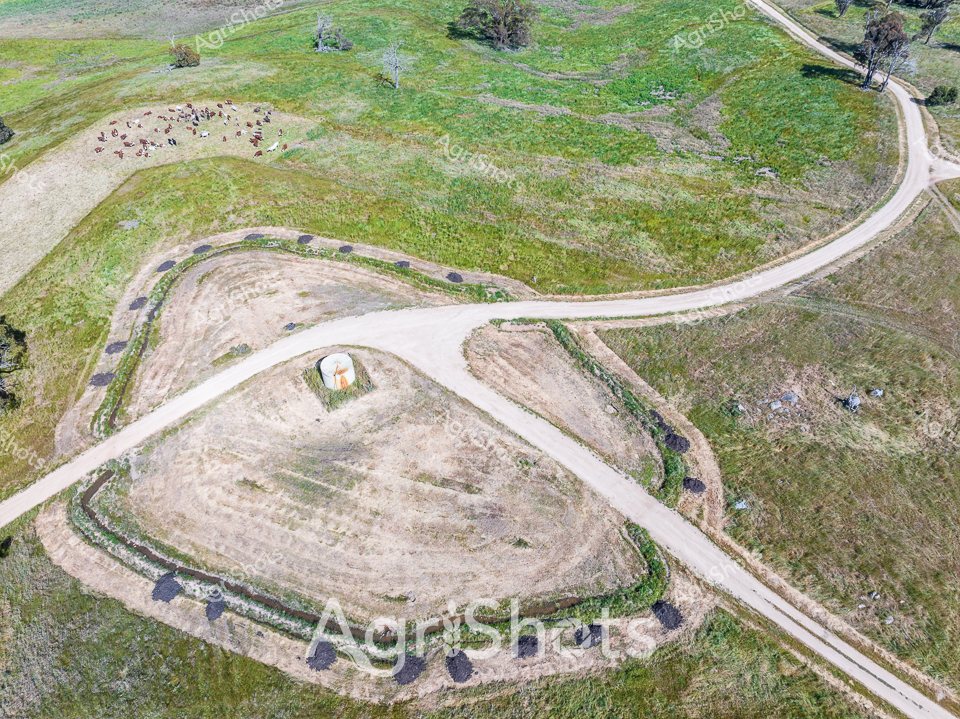
Aerial view of an innovative regenerative agriculture site near Heathcote, Victoria, revealing a sophisticated landscape of sustainable farming practices. A circular composting and green waste management zone dominates the foreground, with carefully constructed terraced levels and white gravel pathways creating geometric patterns across the undulating terrain. In the upper pasture, a herd of robust Hereford cattle clusters together, their rich reddish-brown coats contrasting against the soft green and tan grasslands, embodying the holistic approach to land management. The site demonstrates advanced ecological farming techniques, with strategic land contouring that minimizes erosion and maximizes water retention. Sparse eucalyptus trees punctuate the periphery, providing natural windbreaks and ecological diversity. The meticulously designed infrastructure suggests a commitment to soil health, waste reduction, and regenerative agricultural principles. Subtle variations in earth tones - from pale ochre to deep green - reveal the nuanced landscape's seasonal transitions, capturing the resilience and adaptability of Australian agricultural ecosystems. This vista represents a forward-thinking approach to farming that balances productivity with environmental stewardship.
 Image
Nestled in the undulating pastoral landscape of Victoria's Heathcote region, a cutting-edge composting and regenerative farming facility emerges from the golden-green grasslands. A circular earthen platform dominates the foreground, strategically designed for organic waste processing and soil enrichment, with carefully arranged mounds of rich, dark compost surrounding its perimeter. Nearby, a herd of robust Hereford cattle grazes on the verdant pastures, their rich chestnut and white coats contrasting against the soft, rolling hills and scattered eucalyptus trees that define the quintessential Australian rural landscape. The composting site represents an innovative approach to sustainable agriculture, transforming green waste and agricultural byproducts into nutrient-rich soil amendments that support the health of the surrounding farmland. Winding dirt roads trace gentle contours through the landscape, connecting various paddocks and agricultural zones, while the expansive blue sky with wispy clouds provides a sense of openness and possibility. This aerial perspective captures the intricate balance of modern regenerative farming—where waste reduction, soil health, and livestock management converge to create a holistic, environmentally conscious agricultural ecosystem. The scene embodies the progressive spirit of Australian agricultural practices, showcasing how innovative techniques can transform traditional farming landscapes.
 Image
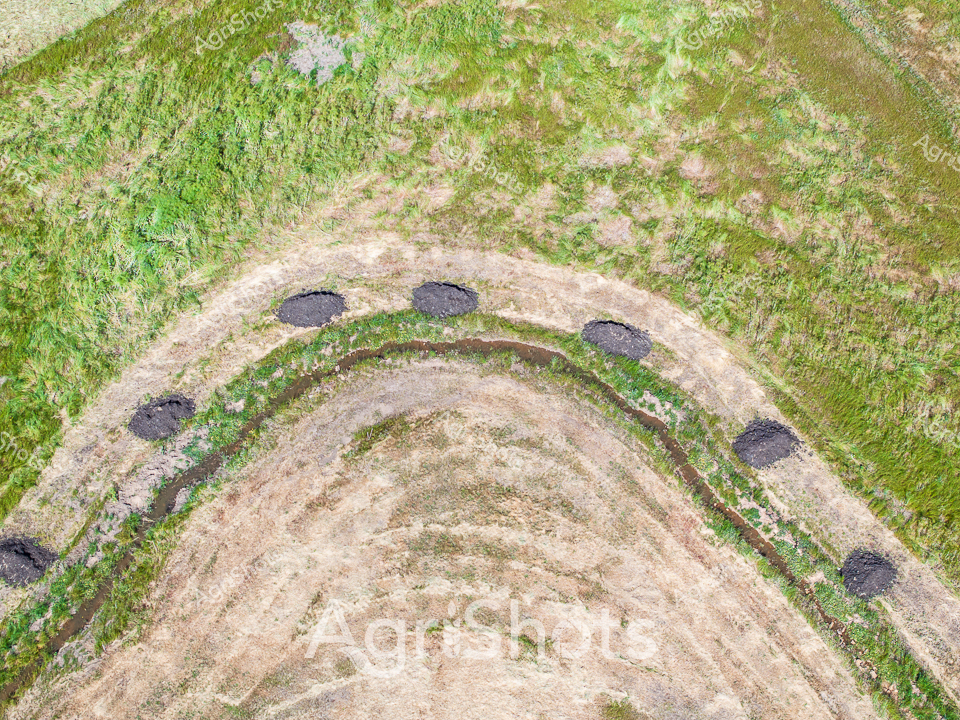
Aerial view of a precisely engineered composting facility nestled in the verdant agricultural landscape of Victoria, revealing the intricate science of organic waste recycling. Dark circular processing zones punctuate a pale earthen platform, creating a geometric pattern that transforms green waste and agricultural residues into nutrient-rich soil amendments. Lush green margins frame the composting installation, highlighting the sustainable intersection between waste reduction and regenerative farming practices. The strategic layout demonstrates modern agricultural techniques that convert organic matter into valuable fertiliser, supporting large-scale farming while maintaining ecological balance. Soft greens and earthy beiges blend seamlessly, illustrating the harmonious relationship between technological intervention and natural systems. This meticulously designed infrastructure represents cutting-edge Australian agricultural innovation in sustainable waste management and soil health restoration.
 Image
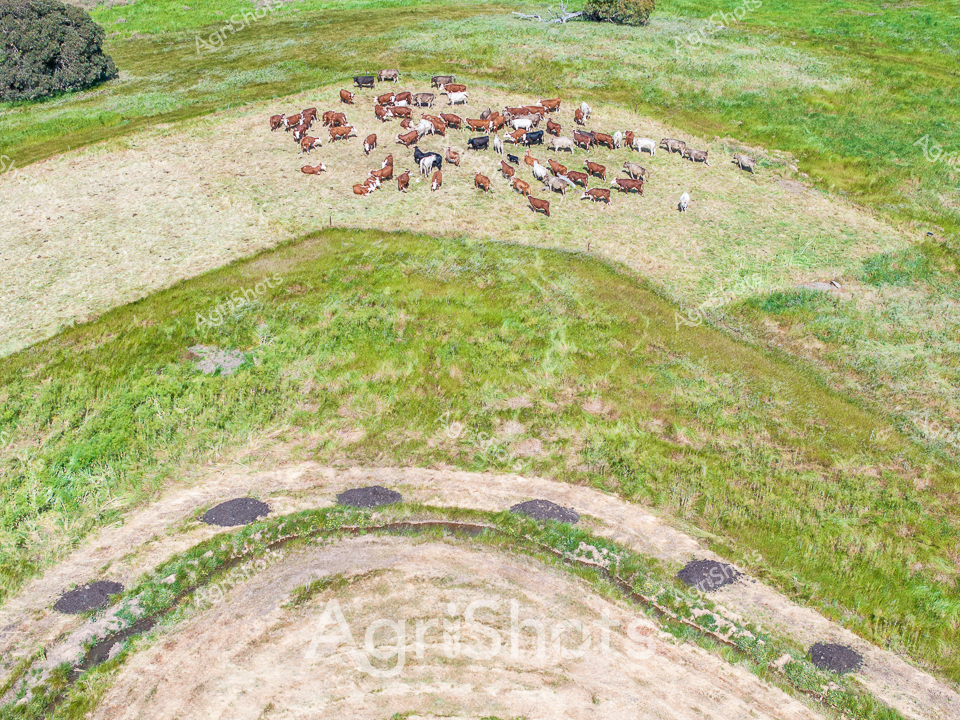
A vibrant pastoral landscape unfolds across the Victorian countryside near Heathcote, revealing a carefully managed regenerative farming scene. A robust herd of Hereford cattle, characterized by their distinctive red and white coats, cluster together on a lush green pasture, demonstrating sustainable grazing practices. The cattle represent a mix of ages, from mature cows to younger calves, grazing contentedly on carefully managed grasslands dotted with native shrubs and established eucalyptus trees. A winding dirt track meanders through the undulating terrain, highlighting the natural contours of the landscape and providing access across the expansive property. The scene captures the essence of Australian agricultural stewardship - a harmonious blend of productive livestock management and ecological preservation, with varying shades of green grasslands, scattered bushes, and mature trees creating a textured, verdant backdrop. The soft natural lighting suggests early morning or late afternoon, casting gentle shadows and emphasizing the rich, earthy tones of the land and the healthy, well-conditioned cattle grazing peacefully in their native environment.
 Image
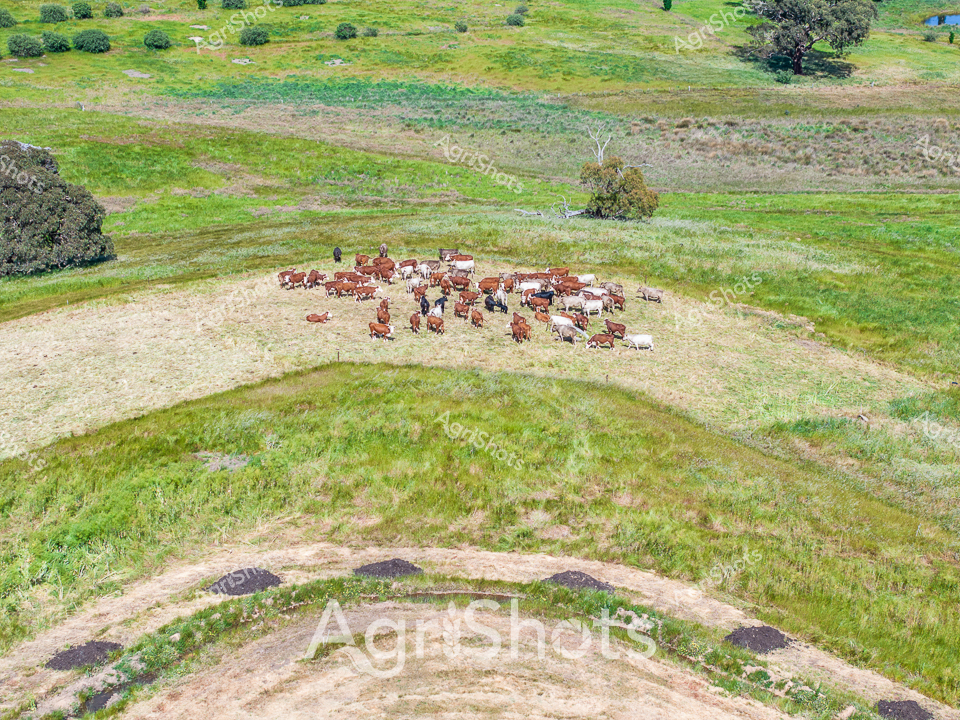
Aerial view of a regenerative cattle farm in Victoria's Heathcote region, showcasing a meticulously managed pasture with a vibrant herd of Hereford and mixed-breed cattle. The livestock cluster on a carefully grazed strip of land, their rich reddish-brown and white coats creating a living tapestry against the verdant green landscape. This strip grazing technique demonstrates a sophisticated approach to land management, with the cattle strategically positioned to optimize pasture utilization and soil health. The undulating terrain reveals a patchwork of grasslands, with distinct zones of intense grazing and recovery, highlighting the principles of regenerative agriculture. Circular patterns in the soil and strategic dark patches suggest innovative composting and fertilization methods, likely using organic matter and green waste recycling techniques. The overhead perspective captures the intricate balance between animal husbandry and ecological stewardship, showcasing how modern Australian farmers are reimagining sustainable agricultural practices. The soft morning light bathes the landscape, casting gentle shadows that accentuate the contours of the land and the organic movement of the cattle herd. This image is a testament to the sophisticated, environmentally conscious approach of contemporary Australian farming.
 Image
Verdant pastures undulate across a classic Victorian agricultural landscape, where rolling green hills meet a scattered eucalyptus woodland. In the foreground, a meticulously prepared composting area reveals dark, rich soil beds interspersed with emerging green shoots - a testament to regenerative farming practices. A robust agricultural tractor sits nearby, suggesting active land management and organic waste recycling efforts. The carefully arranged compost mounds create a striking geometric pattern against the lush grassland, highlighting the deliberate and scientific approach to soil health and sustainability. Soft morning light bathes the scene, casting gentle shadows across the textured landscape and emphasizing the vibrant greens of the pasture and the deep, nutrient-rich blacks of the composting area. This image captures the essence of modern Australian agricultural innovation - where traditional farming meets cutting-edge environmental stewardship, transforming waste into valuable organic matter that nurtures the land.
 Image
Hereford cattle cluster together on a lush pasture in Victoria's undulating Heathcote region, embodying the principles of regenerative farming. Rich chestnut and white-coated animals rest and graze across a gently textured grassland, with scattered green trees and rolling hills creating a serene rural backdrop. Soft grey clouds diffuse warm light across the landscape, suggesting early morning or late afternoon in late spring or early summer. The herd demonstrates careful strip grazing management, with animals clustered strategically across a defined grazing area, highlighting sustainable agricultural practices that nurture both livestock and landscape. Verdant green grasses intermingle with dry golden patches, revealing the dynamic ecosystem of this carefully tended agricultural environment. Native eucalyptus trees punctuate the distant hills, their muted greys and greens complementing the warm tones of the cattle and providing a quintessential Australian pastoral scene that speaks to generations of agricultural stewardship.
 Image
Sweeping pastoral panorama captures the essence of regenerative agricultural practice in Victoria's undulating farmlands. Scattered grey farm sheds punctuate a verdant landscape of soft greens and straw-colored grasses, with mature eucalyptus and deciduous trees providing structural anchors across the expansive paddocks. Strategic tree plantings form windbreaks and shelterbelts, demonstrating a holistic approach to land management that balances productive capacity with ecological restoration. The gently rolling terrain suggests a mixed farming environment, likely supporting livestock grazing and potentially crop rotation strategies that promote soil health and biodiversity. Soft overcast lighting diffuses across the scene, highlighting the textural transitions between pasture, woodland, and cultivated zones - a testament to sustainable agricultural principles that work in harmony with natural landscape dynamics. The image embodies the progressive spirit of contemporary Australian farming, where environmental stewardship and agricultural productivity coexist with thoughtful, adaptive land use strategies.
 Image
Dark, rich compost mounds rise across a verdant pasture, with a lime-green and white Claas tractor positioned nearby in a rural Victorian landscape. The tractor's front loader stands ready to manipulate massive heaps of decomposing organic material, representing a critical process in regenerative agricultural practices. Gnarled eucalyptus trees frame the background, their silvery-green foliage contrasting against the deep charcoal and brown tones of the composting piles. Tufts of native grasses emerge between the compost mounds, highlighting the interconnected ecosystem of sustainable farming. This scene captures the essence of waste reduction and soil regeneration, where green waste and potentially manure are transformed into nutrient-rich fertiliser that will nurture future crops. The crisp, clear light suggests an early morning in late winter or early spring, when farmers prepare their lands for upcoming planting seasons, embodying the cyclical and regenerative nature of progressive agricultural techniques.
 Image
Aerial vista of a verdant pastoral landscape near Heathcote, Victoria, revealing a carefully managed cattle herd clustered on a carefully demarcated grazing paddock. Rich brown and white Hereford cattle congregate tightly, representing a regenerative agriculture approach to strip grazing - a sustainable livestock management technique that promotes soil health and biodiversity. The surrounding grasslands undulate in soft green hues, punctuated by scattered eucalyptus trees and subtle terrain variations, suggesting a carefully curated agricultural ecosystem. The cattle huddle demonstrates strategic livestock positioning, maximizing pasture utilization while minimizing environmental impact. Varying shades of reddish-brown and white coats create a textural mosaic against the pale golden ground, highlighting the intentional design of this regenerative farming practice. Subtle earth tones and strategic grazing patterns reveal a sophisticated approach to land management that balances animal husbandry with ecological preservation. This expansive agricultural tableau captures the essence of contemporary Australian rural practice - where innovative farming techniques meet traditional landscape stewardship, transforming grasslands into dynamic, productive ecosystems through intelligent, sustainable methodologies.
 Image
Russet and cream Hereford cattle cluster across a sun-drenched pasture in Victoria's undulating Heathcote region, embodying the principles of regenerative agriculture. Ancient eucalyptus trees frame the landscape, their silvery-green foliage contrasting against rolling hills of soft green and golden grasslands. The herd, a vibrant mix of mature cows and calves, stands peacefully on a lush paddock, demonstrating sustainable grazing practices that nurture both land and livestock. Scattered native trees punctuate the mid-ground, providing natural shelter and biodiversity within the agricultural ecosystem. Soft cloud cover diffuses the sunlight, creating a gentle, expansive atmosphere that speaks to the harmony between agricultural production and natural landscape. This pastoral scene captures the essence of Victoria's rural heartland - a dynamic, living environment where careful land management and animal husbandry create a sustainable, productive agricultural system.
 Image
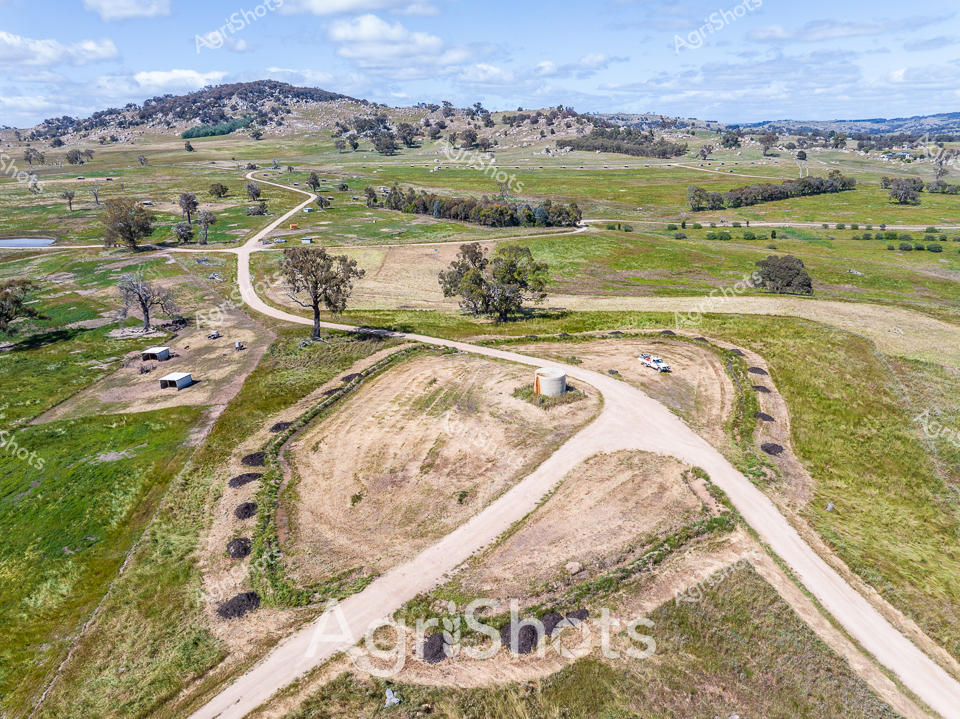
Aerial view of a regenerative agricultural landscape in regional Victoria, showcasing the intricate design of sustainable land management. Winding gravel roads trace gentle curves through a mosaic of green and golden pastures, punctuated by mature eucalyptus trees that provide natural windbreaks and habitat. A central circular formation, likely a regenerative farming infrastructure, features a central structure and carefully placed dark markers that suggest strategic land rehabilitation techniques. The surrounding terrain reveals a rolling topography typical of the Victorian countryside, with rocky outcrops and scattered woodland clusters creating a textured panorama under a soft, cloud-dappled sky. In the distance, rocky hills frame the scene, highlighting the rugged beauty of Australia's agricultural heartland and the innovative approaches farmers are adopting to restore ecological balance while maintaining productive landscapes.
 Image
Rolling pastoral landscapes of central Victoria unfold in a panoramic vista of sustainable agriculture. A herd of robust Hereford cattle grazes methodically across a verdant paddock, their rich chestnut and white coats contrasting against the sun-dappled grasslands. Mature eucalyptus trees punctuate the mid-ground, casting gentle shadows across undulating terrain that stretches toward distant blue-tinged mountain ranges. Foreground dirt tracks and strategically placed compost mounds suggest regenerative farming practices, highlighting a holistic approach to land management and soil health. The soft, clouded sky suggests early morning light, creating a serene atmosphere of quiet productivity and ecological balance. This landscape embodies the nuanced relationship between livestock, landscape, and sustainable agricultural methodologies characteristic of Victoria's sophisticated rural ecosystems.
 Image
Expansive Victorian grazing landscape reveals a masterclass in regenerative agricultural practices. Rolling hills studded with scattered eucalyptus and weathered granite boulders frame a verdant pastoral scene, where strategic tree plantings create natural windbreaks and ecological corridors across undulating paddocks. Carefully placed blue shelters and infrastructure suggest a holistic farming approach that prioritizes animal welfare and landscape restoration. The foreground demonstrates intentional land management, with a diverse tree line offering habitat complexity and soil stabilization, while the mid-ground displays a mosaic of green pastures punctuated by strategic grazing infrastructure. Soft blue-grey sky and muted landscape tones evoke the gentle resilience of Australian agricultural ecosystems, highlighting the delicate balance between productive farmland and natural restoration. This vista represents a progressive model of sustainable land stewardship, where agricultural productivity harmonizes with ecological regeneration in the challenging Victorian rural landscape.
 Image
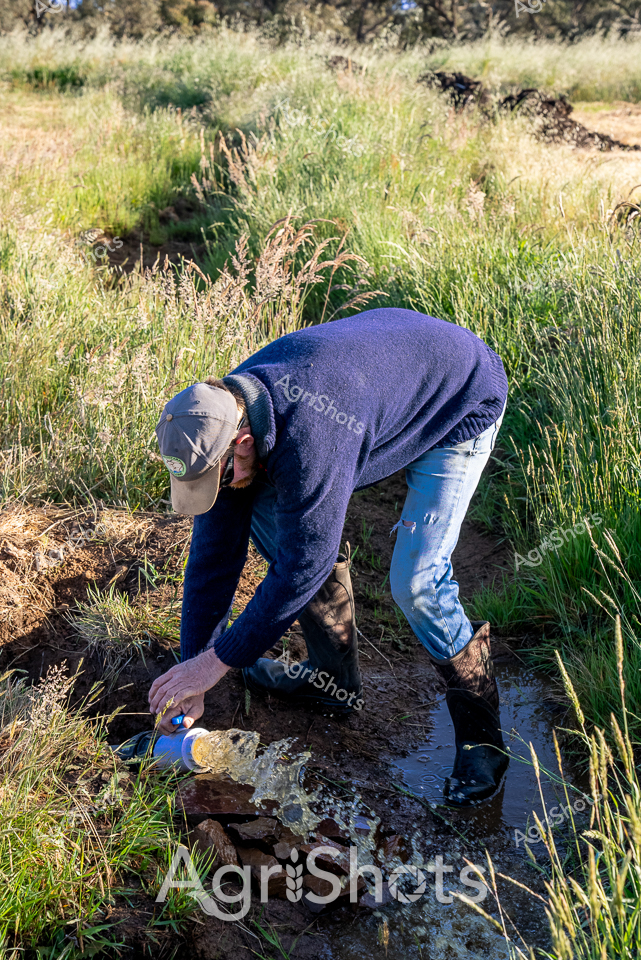
Crouched in a lush grassland, a dedicated farm worker carefully collects a water sample from a small creek or drainage line. Dressed in a navy blue sweater, light blue jeans, and a protective cap, the worker bends intently near a rocky watercourse surrounded by tall, swaying grasses. The scene captures a critical moment of environmental monitoring, likely assessing water quality or ecosystem health as part of a regenerative farming practice. The soft, golden-green landscape suggests early morning or late afternoon light, with wild grasses creating a textured backdrop of native vegetation. Moisture glistens in the soil, indicating recent rain or the natural dampness of the drainage area. The worker's careful, precise movements reflect the meticulous approach of modern agricultural stewardship, focusing on water resources and environmental sustainability. This image embodies the essence of contemporary agricultural research and ecological management, highlighting the intricate relationship between farming practices and environmental conservation. The waterway, surrounded by native grasses, represents a vital ecosystem component that farmers carefully monitor and protect.
 Image
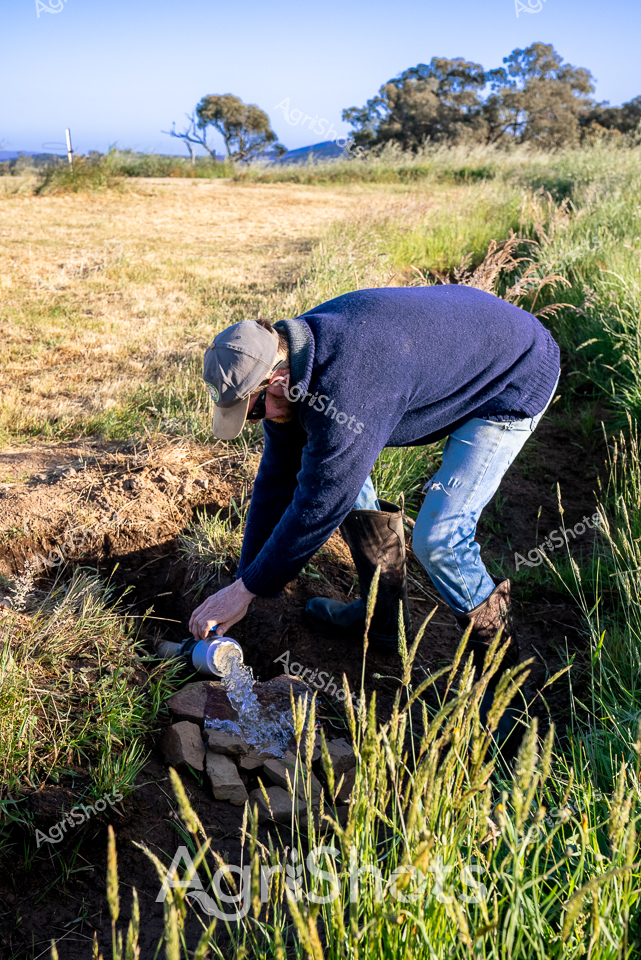
Rural Water Management: A Dedicated Farmer's Terrain Assessment Bent carefully over a rocky drainage channel, a farmer in a navy blue pullover and worn denim examines water flow and soil conditions. The rugged Victorian landscape stretches behind him - golden dry grasslands merging with scattered eucalyptus trees under a clear azure sky. Meticulous attention defines his posture as he pours water, likely assessing drainage patterns, soil moisture, or potential erosion risks in this challenging agricultural terrain. Vibrant green grasses frame the rocky channel, contrasting with the parched yellow field, revealing the delicate ecological balance of sustainable land management. His baseball cap and sturdy work attire speak to generations of agricultural wisdom and hands-on environmental stewardship. This scene captures the nuanced art of regenerative farming - where every interaction with the land is a careful, considered process of understanding and supporting natural systems.
 Image
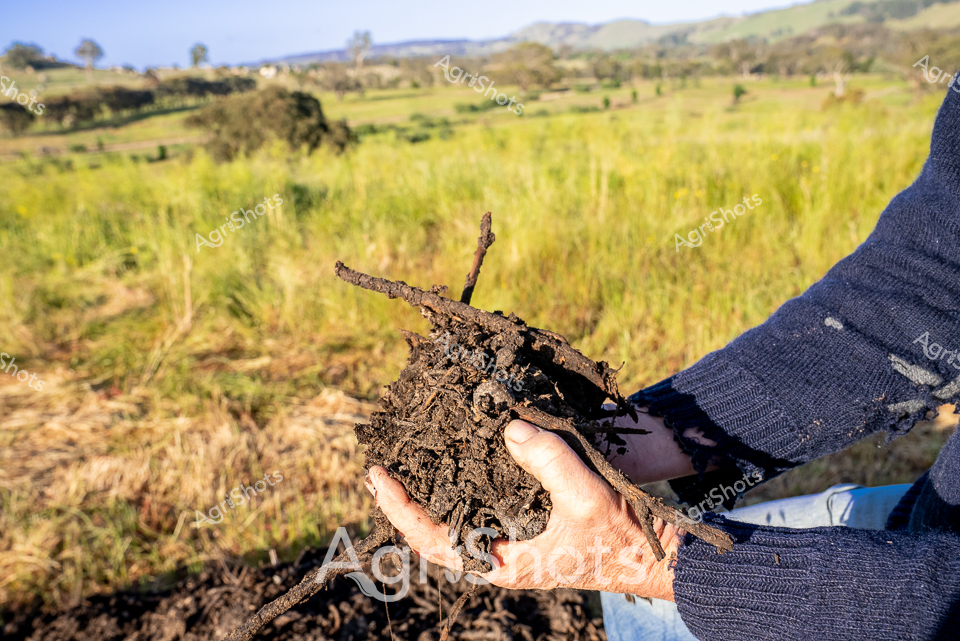
Weathered hands cradle a clump of rich, dark soil studded with organic matter and decaying roots, revealing the intricate ecosystem thriving beneath the surface of this golden grassland in rural Victoria. The late afternoon sunlight bathes the undulating paddock in warm hues, highlighting the textural complexity of regenerative agricultural practices that prioritize soil health and biodiversity. A gnarled branch emerges from the soil cluster, symbolizing the interconnected network of underground life that supports sustainable farming approaches. The deep navy blue sleeve of a worker's garment contrasts against the earthy browns and vibrant greens of the landscape, suggesting the human connection to land restoration and ecological stewardship. This image captures a moment of careful examination, where every handful of soil represents a microcosm of potential - a testament to the intricate relationships between waste reduction, organic recycling, and sustainable agricultural innovation. The expansive backdrop of rolling hills and scattered trees frames this intimate interaction, emphasizing the broader ecological context of regenerative land management.
 Image
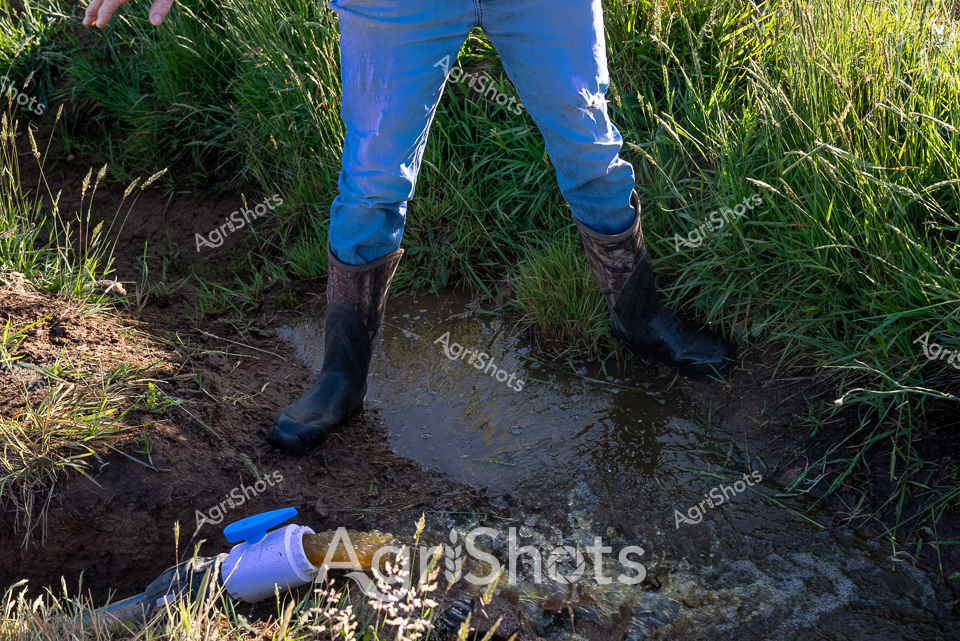
Resilient agricultural fieldwork emerges in this evocative rural landscape, capturing the essence of farm maintenance and environmental stewardship. A pair of weathered rubber boots stands planted firmly in a muddy waterway, blue denim trousers breaking the soft green grassland surroundings. A blue agricultural irrigation or water management tool lies nearby, suggesting ongoing water conservation or drainage efforts typical of progressive farming practices in Victoria. The scene speaks to the intricate relationship between human intervention and natural landscape, with saturated earth tones and vibrant green grasses framing a moment of practical agricultural work. Wet soil and standing water indicate recent rainfall or active irrigation, highlighting the critical role of water management in sustainable farming ecosystems. The robust rubber boots - worn and clearly functional - symbolize the hard-working spirit of rural professionals who navigate challenging terrain with practical, no-nonsense equipment. This image captures the nuanced choreography of regenerative agricultural practices, where every interaction with the land is deliberate, measured, and focused on long-term ecological balance. The composition invites viewers to appreciate the quiet, unglamorous moments that underpin successful farming strategies.