Browse the collection
 Image
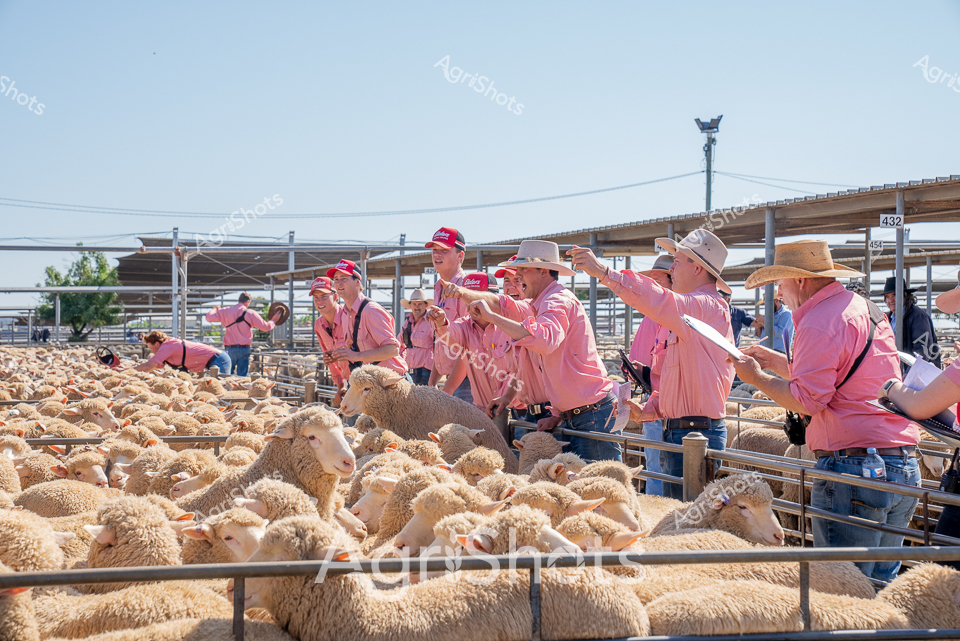
Australian Merino sheep auction in full swing at a bustling livestock sale yard in the Riverina region of New South Wales. Experienced agents in distinctive pink shirts and an array of classic Australian bush hats crowd the metal railings, intently tracking each animal as the sale progresses. A dense flock of woolly Merino sheep fills the holding pen, their creamy fleeces creating a textural landscape of soft curves and intersecting lines. The bright, clear sky and open-sided sale yard suggest a crisp mid-morning in late spring, with harsh sunlight casting minimal shadows across the meticulously organized agricultural space. Auctioneers gesture and call, their movements precise and practiced, signaling bids and guiding the rapid transactions that are crucial to the regional sheep trading economy. The scene captures the quintessential Australian agricultural ritual - a high-stakes, highly choreographed livestock market where generations of farming expertise converge in a vibrant, dynamic exchange.
 Image
Golden dawn breaks over the expansive livestock sale yards, casting long shadows across rows of steel pens filled with merino sheep. A lone stockman stands silhouetted against the brilliant sunrise, surveying the morning's auction preparations in the Riverina region of New South Wales. Hundreds of woolly sheep huddle together, their pale fleeces catching the first amber light, creating a textural landscape of wool and metal infrastructure. The precise geometric lines of the sale yard's barriers contrast with the organic clusters of livestock, highlighting the structured nature of agricultural commerce. Early morning sunlight streams through the shed's slatted roof, creating a dramatic backlighting effect that transforms the routine of livestock trading into a moment of visual poetry. This scene captures the timeless rhythm of rural Australian agricultural markets - a blend of human expertise, animal husbandry, and the raw beauty of the working landscape.
 Image
Sunlight blazes across the saleyards as a team of rural agents in coordinated pink shirts and varied hats survey a dense flock of merino sheep. Standing along steel livestock pens, the experienced agents methodically assess the woolly mob, their keen eyes tracking each animal's potential during this regional livestock auction. Crisp white and red caps contrast with their soft pink work shirts, a traditional uniform signaling professionalism in the Riverina's agricultural trading environment. Orange ear tags punctuate the sea of cream-colored fleece, identifying each animal amid the tightly packed pen. Overhead power lines and metal loading infrastructure frame the scene, capturing the pragmatic functionality of Australian livestock trading. The agents' body language - relaxed yet attentive - speaks to generations of rural market experience, their collective focus embodying the precise, unsentimental rhythm of agricultural commerce.
 Image
Merino sheep crowd the sale yards on a brilliant clear day, packed tightly within metal livestock pens at a regional agricultural auction. Agents wearing distinctive salmon-pink shirts and red caps survey the flock with practiced eyes, assessing the quality of the woolly mob. An auctioneer in a checked shirt and wide-brimmed hat moves strategically, scanning the animals with a professional's keen assessment of their potential value. The numbered pens (visible at 421 and 422) indicate a systematic approach to livestock trading, typical of Australian agricultural markets. Soft beige and cream fleeces contrast against the steel blue sky and metal yard infrastructure, creating a quintessential rural Australian scene of commerce and agricultural expertise. The image captures the precise choreography of livestock trading - a moment where economic opportunity, animal husbandry, and regional agricultural tradition converge in the expansive, sun-drenched landscape of rural New South Wales.
 Image
Merino ewes cluster tightly in steel-railed pens, their dense golden-cream fleeces glowing under the bright midday sunlight of a classic Riverina livestock sale yard. Seasoned Elders agricultural agents in coordinated salmon-pink shirts and wide-brimmed sun protection survey the quality of the mob, their professional stance and clipboards revealing decades of livestock trading expertise. The expansive metal-roofed auction facility stretches into the distance, with numbered pens systematically holding groups of prime woolly stock ready for assessment and sale. These well-conditioned sheep represent the backbone of Australian agricultural productivity, their uniform blue ear tags marking individual provenance in a meticulously managed industry. Crisp winter light illuminates the scene, highlighting the textural contrast between the soft, dense sheep fleeces and the hard industrial infrastructure of the sale yards. The agents' concentrated expressions and methodical positioning communicate the serious commercial choreography of rural livestock trading - a quintessential moment capturing the economic and cultural rhythms of Australian agricultural commerce.
 Image
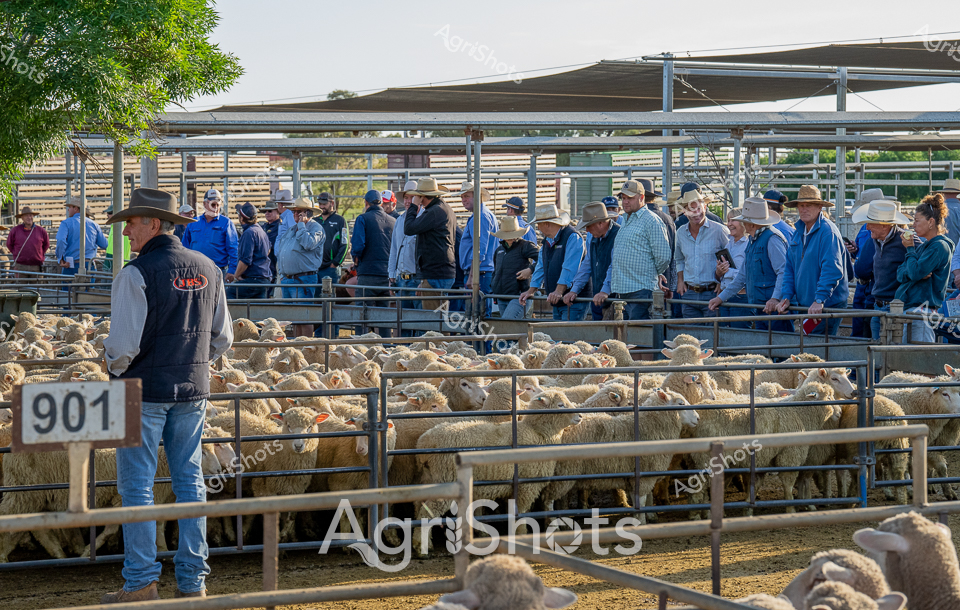
Merino sheep fill the steel-railed pens at a bustling livestock sale yard in the Riverina region of New South Wales. Farmers and rural agents cluster along the raised viewing platforms, dressed in classic rural workwear of blue shirts, denim jeans, and wide-brimmed sun hats that offer protection from the bright, clear day. The pen numbered 901 holds a tight mob of woolly sheep, their cream and off-white fleeces packed closely together, representing a typical line of commercial Merino stock ready for auction. Experienced buyers assess the animals' condition, discussing potential purchases while standing shoulder-to-shoulder in a time-honored ritual of agricultural commerce. The metal infrastructure of the sale yards gleams under the sunlight, with shade structures providing relief from the harsh Australian rural landscape. This scene captures the essential rhythm of agricultural trading - a quintessential moment of connection between producers, where livestock are evaluated, traded, and the economic pulse of the farming community beats strongly.
 Image
In the heart of New South Wales' Riverina region, a seasoned livestock auctioneer stands amid a sea of woolly merino sheep, his weathered cowboy hat and navy fleece marking him as a quintessential rural professional. Surrounded by tightly packed pens of premium sheep, he communicates intently on a mobile phone, coordinating the intricate details of an upcoming livestock sale. The metal yards create a geometric backdrop of steel rails and posts, casting subtle shadows across the dense flock of cream and tan-fleeced animals. Sheep press close together, their thick wool suggesting prime breeding stock ready for market, their collective presence a testament to the region's robust agricultural economy. Soft morning light filters through the sale yard infrastructure, highlighting the textural richness of the animals' coats and the methodical organization of the auction environment. This scene encapsulates the rhythmic pulse of Australian agricultural commerce - a moment of focused connection between livestock, land, and the experienced professionals who navigate its complex markets.
 Image
Merino sheep crowd the sale yards of a regional livestock market, their woolly bodies packed tightly within steel-railed pens. A seasoned stock agent in a wide-brimmed sun hat and light work shirt patrols the narrow walkway, surveying the flock with practiced expertise. The crisp morning light illuminates the dusty holding pens, revealing rows of numbered sections stretching across the agricultural precinct, with power lines and rural infrastructure visible in the background. These premium Merino sheep, distinguished by their dense, creamy fleece and alert expressions, represent the lifeblood of Australia's wool industry - each animal a potential investment for farmers and traders. The scene captures the rhythmic pulse of agricultural commerce, where generations of farming knowledge converge in the careful assessment of livestock quality. Overhead signage and numbered pen markers hint at the systematic organization of this quintessential Australian livestock auction, a ritual that has sustained rural economies for generations.
 Image
Merino wethers crowd the steel-railed pens at a regional livestock sale yard, their dense, creamy-white fleece gleaming in the golden late afternoon light. A seasoned stock agent in a wide-brimmed akubra and crisp work shirt surveys the flock, assessing their condition and market potential. A keen working dog sits attentively at his side, ready to assist with any cattle or sheep movement needed during the auction process. The background reveals rows of numbered pens stretching into the distance, with a neat line of four-wheel drive vehicles parked beyond, typical of rural NSW's Riverina district. The scene captures the rhythmic pulse of Australian agricultural commerce - a moment of quiet evaluation before the competitive bidding begins. Dust-laden ground, weathered metal infrastructure, and the calm concentration of the worker reflect the pragmatic, no-nonsense spirit of Australia's livestock trading culture.
 ▶ Video
A picturesque Australian alpaca farm showcases a diverse herd grazing on lush green pastures with forested hills in the background. Approximately 30-40 alpacas, predominantly dark brown with a few white individuals, are clustered across the verdant paddock, creating a striking visual contrast against the emerald grass and blue-green mountain landscape. The animals stand in loose groups, some grazing while others appear alert, their long necks and fluffy coats characteristic of these South American camelids now thriving in Australian agricultural settings. Rolling hills with dense tree cover provide a scenic backdrop, suggesting this is likely a rural property in a temperate region with abundant rainfall and rich pasture lands. The well-maintained fencing and healthy appearance of the alpacas indicate a professional, carefully managed breeding or fiber production operation. Soft clouds drift across a bright blue sky, enhancing the pastoral beauty of this tranquil agricultural scene.
 ▶ Video
A serene pasture in New South Wales' Shoalhaven region showcases a herd of black alpacas grazing against a backdrop of lush green hills and a vibrant blue sky. The peaceful scene captures these woolly creatures standing alert in a verdant field, highlighting the natural beauty of the Australian countryside.
 Image
Merino ewes crowd the sale yard pens at a bustling livestock auction in the Riverina region of New South Wales. Golden morning sunlight bathes the densely packed sheep, their woolly backs creating a textured sea of cream and tan hues stretching between numbered holding pens. Numbered signage (87, 88) marks the infrastructure of this critical agricultural marketplace, where farmers and traders converge to buy and sell livestock. The sheep, predominantly white to light tan Merinos, huddle closely, their soft fleeces pressed against one another, with alert pink ears and gentle faces visible amongst the woolly mass. Overhead power lines and rural infrastructure frame the background, highlighting the functional industrial landscape of agricultural commerce. This scene captures a quintessential moment in Australian livestock trading - a precise, economic choreography where each animal represents not just a living creature, but a valuable agricultural asset in the complex network of rural production.
 Image
Rural livestock auction in full swing at a regional sale yards, capturing the quintessential Australian agricultural trading environment. Dozens of farmers and livestock agents cluster around metal pens filled with dense flocks of woolly sheep, intently examining stock and preparing for bidding. The covered selling area, marked with numbered bays (53, 54, 83), provides shade against the bright, clear blue sky typical of a crisp morning in the Riverina region of New South Wales. Predominantly dressed in classic rural workwear - light blue chambray shirts, well-worn denim jeans, and wide-brimmed akubra hats - the attendees move with practiced efficiency, their body language revealing years of agricultural experience. Sheep huddle tightly in galvanized steel pens, their varied wool tones of cream, off-white, and soft gray creating a textural landscape of agricultural productivity. The scene pulses with a focused, professional atmosphere - a methodical dance of commerce, livestock assessment, and rural community connection that has sustained Australian agriculture for generations.
 ▶ Video
A crowded pig farm in New South Wales shows numerous young white piglets huddled together on straw bedding. These animals are part of an large-scale farming operation, demonstrating the tight, confined conditions common in industrial livestock production. The piglets appear close in age and size, tightly packed in a shared indoor space.
 Image
Merino lambs crowd the sale yards of a bustling livestock market in the heart of New South Wales' Riverina region. Golden morning light bathes the dense pens, highlighting the woolly cream and white fleeces of hundreds of tightly packed sheep. Steel rail fences and overhead shelters create a geometric backdrop, with numbered pens indicating the systematic organization of this critical agricultural marketplace. The animals huddle close, their pink ears and alert faces suggesting the anticipation of an upcoming livestock auction. Industrial infrastructure - power poles, metal frameworks, and expansive concrete spaces - frame the scene, reflecting the sophisticated agricultural infrastructure that supports Australia's sheep farming industry. This image captures the rhythm of rural commerce, where generations of farming expertise converge in a meticulously managed environment designed to efficiently trade livestock.
 Image
Riverina Livestock Auction: A Symphony of Rural Commerce Rows of numbered pens stretch beneath a sturdy timber-and-steel shelter, hosting a vibrant sheep sale at a regional livestock market. Seasoned agricultural agents in wide-brimmed akubra hats and work shirts stand shoulder-to-shoulder, their backs turned as they methodically assess each pen of woolly merino and crossbred sheep. Soft golden light bathes the scene, highlighting the textured fleeces of tightly clustered sheep waiting to be evaluated and traded. The numbered sections from 20 to 47 create a structured grid, representing the systematic approach of Australian agricultural commerce. Utility poles and distant trees frame the background, typical of a Riverina district sale yard where generations of farmers have conducted the essential livestock trading. The scene pulses with quiet intensity - a choreographed ritual of rural enterprise where each animal represents potential, and every agent's subtle gesture could determine market values.
 Image
Merino sheep crowd the numbered pens at a bustling rural livestock sale yard in the Riverina region of New South Wales. Farmers and agricultural agents, dressed in a palette of blues, khakis, and working attire, line the walkways between the pens, their broad-brimmed hats silhouetted against the clear blue sky. The meticulously organized sale yards stretch out with numbered bays from 20 to 47, reflecting the systematic approach of Australian agricultural commerce. Woolly merino sheep huddle together, their cream and tan fleeces creating a textured carpet across the holding pens, awaiting their turn in the auction process. The scene captures the essence of rural Australian agricultural trading - a blend of professional assessment, community interaction, and the practical business of livestock commerce. Utility poles and distant trees frame the backdrop, highlighting the open, functional landscape where agricultural transactions have been conducted for generations.
 Image
Merino lambs crowd the marked sale yards at a bustling livestock auction in the Riverina region of New South Wales. Numbered pens stretch across the expansive facility, with sections labeled from 86 to 88 visible, indicating a large-scale commercial sheep trading event. The late morning sunlight casts a warm glow across the dense flock, highlighting the woolly, cream-colored fleeces of the lambs packed tightly together. Sturdy metal infrastructure - galvanized steel gates, robust support posts, and elevated walkways - provides the structured framework for this critical agricultural marketplace. Each pen is carefully organized to efficiently manage and display the livestock for potential buyers, representing a key moment in the agricultural supply chain where farmers, traders, and producers converge to conduct business. The scene captures the essence of Australian agricultural commerce, with the lambs' alert expressions and the crisp, clear sky symbolizing the vitality and economic importance of livestock trading in rural Australia.
 Image
Merino ewes crowd the sale yards of a classic Australian livestock auction, their woolly bodies creating a sea of cream and tan beneath the numbered steel-framed pens. Late morning sunlight casts long shadows across the Riverina region sale yards, highlighting the densely packed animals waiting to be assessed and traded. Bright red ear tags punctuate the woolly landscape, identifying each animal while providing a vibrant contrast against their natural fleece tones. The meticulously organized infrastructure - numbered pens stretching into the distance, sturdy galvanized steel fencing, and overhead shelter - speaks to the sophisticated agricultural systems of rural New South Wales. These sale yards represent a critical node in Australia's sheep production ecosystem, where farmers, buyers, and livestock converge in a carefully choreographed economic dance. The tight clustering of the sheep, their varied postures and attentive ears, captures the anticipation and energy of a typical livestock auction day, a quintessential scene of Australian agricultural commerce.
 Image
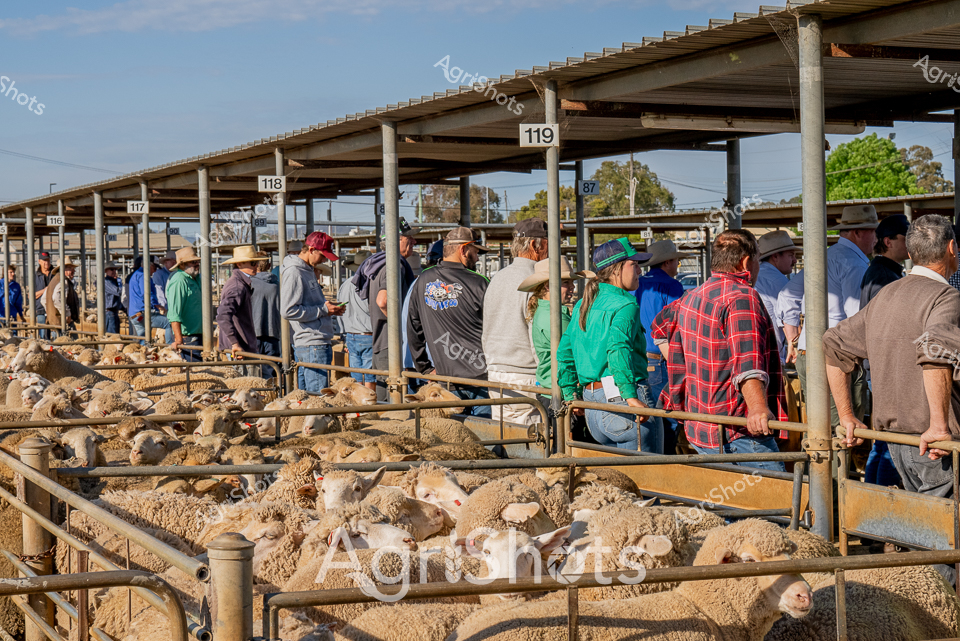
Merino sheep crowd the steel-railed pens at a bustling livestock sale yard in the Riverina region of New South Wales. Clustered behind the animals, a diverse group of rural professionals and farmers stand shoulder-to-shoulder, their backs to the camera, scanning the woolly mob with practiced eyes. Sunlight filters across the corrugated metal roof, casting long shadows over numbered pen sections marked with identifiers like 117, 118, and 119. The crowd wears a uniform of rural workwear - broad-brimmed sun hats, checked flannel shirts, denim jeans, and weathered work jackets in muted blues, greens, and earth tones. These are the agents, buyers, and local farmers who form the backbone of Australia's critical sheep trading ecosystem, their collective attention focused on evaluating the quality and potential of this year's prime Merino flock. The scene captures a quintessential moment of agricultural commerce - a fluid, unspoken dialogue of subtle gestures and keen assessment that has sustained rural communities for generations.
 Image
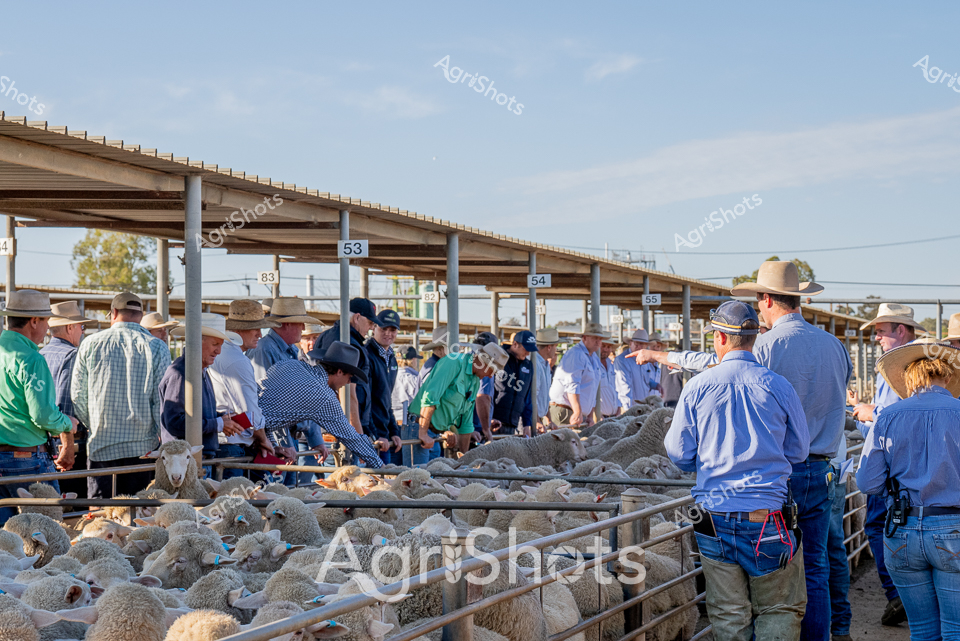
Livestock buyers and station hands converge at a bustling sheep sale in the Riverina region of New South Wales, the midday sun casting sharp shadows across the sale yards. Woolly merino sheep crowd the metal holding pens, their thick fleeces a muted palette of greys and creams, while experienced agents in wide-brimmed akubra hats and blue work shirts survey the livestock with practiced eyes. Numbered pens (53, 54, 55) divide the sale area, creating a methodical grid where potential buyers assess each mob's quality and potential. The scene pulses with quiet intensity - a choreographed agricultural ritual where livestock values are negotiated and rural livelihoods are determined through subtle gestures and murmured conversations. Crisp winter light and the metallic infrastructure of the sale yards frame a quintessential Australian agricultural moment, where generations of farming knowledge converge in a single, purposeful gathering. This is more than a transaction; it's a living cultural practice that connects farmers, traders, and the pastoral economy of rural Australia.
 ▶ Video
Packed tightly within a stark industrial shed, a dense herd of pale pink-grey market pigs cluster together, their muscular bodies pressing against one another under diffused overhead light. The interior of this large metal-framed agricultural building reveals the realities of modern large-scale livestock production, with uniform rows of mature swine occupying every available space. Uniform in coloration and size, these commercial breeding animals represent the industrial scale of pork agriculture, their pale skins marked with subtle variations of tone and texture. Ventilation beams arch overhead, creating a cathedral-like structural rhythm that frames the teeming mass of livestock below. The pigs appear calm but constrained, their collective presence a testament to efficient animal husbandry practices prevalent in contemporary agricultural systems. The crisp MP4 video icon suggests this is a raw, unedited documentation of standard commercial pig farming conditions, likely captured in a New South Wales agricultural facility.
 Image
Riverina Livestock Auction: A Symphony of Commerce and Canine Skill Seasoned stock agents stand resolute along metal livestock pens, their experienced gazes surveying a sprawling sheep sale yard under soft, overcast skies. Working dogs - a mix of sharp-eyed black and tan kelpies and alert brown companions - wait intently at their handlers' feet, ready to assist with precise livestock movement. The metal infrastructure of multiple covered sale yards creates a geometric backdrop of steel and timber, casting long shadows across the dusty ground where hundreds of woolly merino sheep cluster in tight groups. The agents, dressed in practical rural workwear - blue shirts, denim, and signature wide-brimmed hats - represent generations of agricultural trading expertise, their body language communicating a quiet, professional assessment of the livestock before them. This scene captures the rhythmic pulse of Australian agricultural commerce, where human skill, canine intelligence, and livestock commerce intersect in a timeless rural tableau of the Riverina region.
 Image
Wool market agents cluster along the metal railings of a sun-drenched livestock sale yard, their keen eyes surveying a dense flock of merino sheep. Dressed in a uniform of blue work shirts, broad-brimmed agricultural hats, and weathered jackets, these rural professionals stand shoulder-to-shoulder in the Riverina region of New South Wales. A shade structure provides minimal relief from the harsh Australian midday light, while the tightly packed sheep fill the concrete holding pens below, their woolly backs creating a textured landscape of cream and pale gold. Each agent leans intently forward, assessing the quality, age, and potential market value of the livestock, their body language speaking to generations of agricultural trading expertise. The scene captures the quintessential rhythm of Australian rural commerce - a precise, unspoken choreography of evaluation, where decades of experience are measured in subtle glances and minimal gestures. This is more than a transaction; it's a cultural ritual that connects farmers, traders, and the fundamental economic pulse of the agricultural heartland.