Browse the collection
 Image
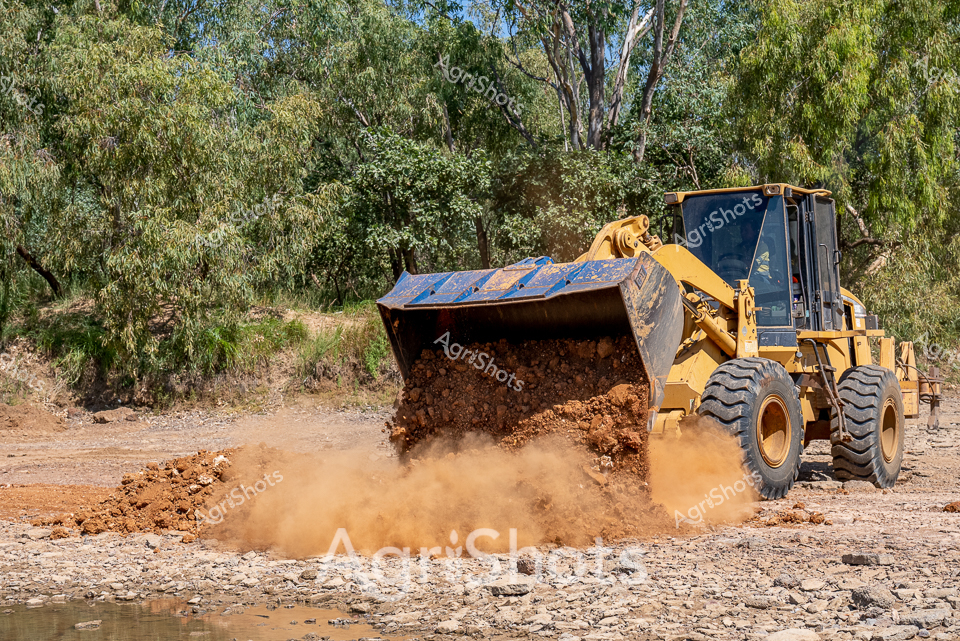
A yellow wheel loader rumbles across a dusty earthen clearing, its massive bucket loaded with reddish-brown soil and rock. Surrounded by the muted green and grey-blue foliage of native eucalyptus trees, the heavy machinery kicks up a billowing cloud of ochre dust as it dumps its load. The rugged landscape suggests a remote agricultural or mining site in Western Australia's expansive interior, where robust equipment is essential for land preparation and infrastructure development. Sunlight filters through the gum trees, casting sharp shadows and highlighting the powerful machinery's bright yellow paintwork against the earthy terrain. The scene captures the raw industrial energy of rural Australian resource management - a testament to the mechanical power required to work the continent's challenging landscapes. Sharp-edged stones and loose soil scatter beneath the loader's massive wheels, emphasizing the dynamic force of modern agricultural and earthmoving technology in shaping the Australian environment.
 Image
Caterpillar wheel loader sculpting the earth beside a dry creek bed, its brilliant yellow chassis gleaming against the muted ochre tones of a West Australian landscape. The heavy machinery sits amid a rugged bushland setting, surrounded by silvery-green eucalyptus trees and scattered rocky terrain, suggesting remote pastoral infrastructure work. Reddish-brown soil mounds reveal recent earthmoving activity, with water pooling in the foreground reflecting the machine's profile - a testament to the challenging hydrology of arid agricultural regions. The loader's robust wheels and powerful front bucket indicate precision engineering designed to withstand harsh rural environments, representing the critical mechanical support that enables agricultural and pastoral development across Western Australia's challenging landscapes. Sunlight filters through the woodland, casting soft shadows and highlighting the textural complexity of the ground - a mix of stones, packed clay, and scattered vegetation. This scene captures the intersection of human engineering and natural terrain, embodying the resilient spirit of Australian agricultural infrastructure development.
 Image
Earthmoving Power in the Kimberley Outback A robust Caterpillar wheel loader thunders through a dusty rural landscape, churning rich ochre earth with remarkable precision. Positioned against a backdrop of silvery-green eucalyptus woodland, the yellow heavy machinery kicks up a dramatic plume of russet-colored dust as its massive bucket scoops and redistributes soil. The scene captures the raw mechanical energy of agricultural infrastructure development, likely part of a station or rural property maintenance project in Western Australia's expansive Kimberley region. Rugged wheel tracks mark the ground, while loose stones and a small water body in the foreground suggest challenging terrain typical of northern Australian landscapes. The machine's powerful diesel engine and articulated frame demonstrate the engineering required to transform and manage remote agricultural environments, where robust equipment is essential for land preparation, road maintenance, and construction tasks.
 Image
Yellow Caterpillar wheel loader moving reddish-brown earth in a rugged West Australian pastoral landscape. Powerful machinery churns dusty soil, creating a dramatic plume of ochre-colored particles against a backdrop of silvery-green eucalyptus woodland. The heavy-duty equipment sits on rocky ground near a shallow water course, suggesting land preparation or site maintenance work typical of remote agricultural stations. Massive wheel treads grip the uneven terrain, demonstrating the robust engineering required to operate in challenging Western Australian environments. Sunlight filters through the woodland, casting dynamic shadows and highlighting the machine's bright yellow paintwork against the muted earth tones. This scene captures the uncompromising spirit of agricultural infrastructure and landscape management in one of Australia's most demanding rural regions.
 Image
A Caterpillar wheel loader carves through the rugged terrain of a Western Australian pastoral landscape, its bright yellow chassis striking against the muted earth tones and silvery-green eucalyptus woodland. The heavy machinery sits amidst a dirt track, surrounded by native bushland, actively sculpting and moving reddish-brown earth with its substantial bucket. Sunlight filters through the gnarled branches overhead, casting dappled shadows on the ground and highlighting the robust machinery's powerful stance. This scene captures the persistent engineering and land management essential to agricultural operations in Australia's challenging interior environments - where advanced equipment meets untamed landscape. The loader's muscular wheels and precisely angled bucket represent the precision technology required to transform and maintain pastoral terrain, bridging human agricultural ambition with the raw, expansive character of the Western Australian outback. The image resonates with the resilience and mechanical innovation that defines contemporary agricultural practice in one of the world's most demanding rural environments.
 Image
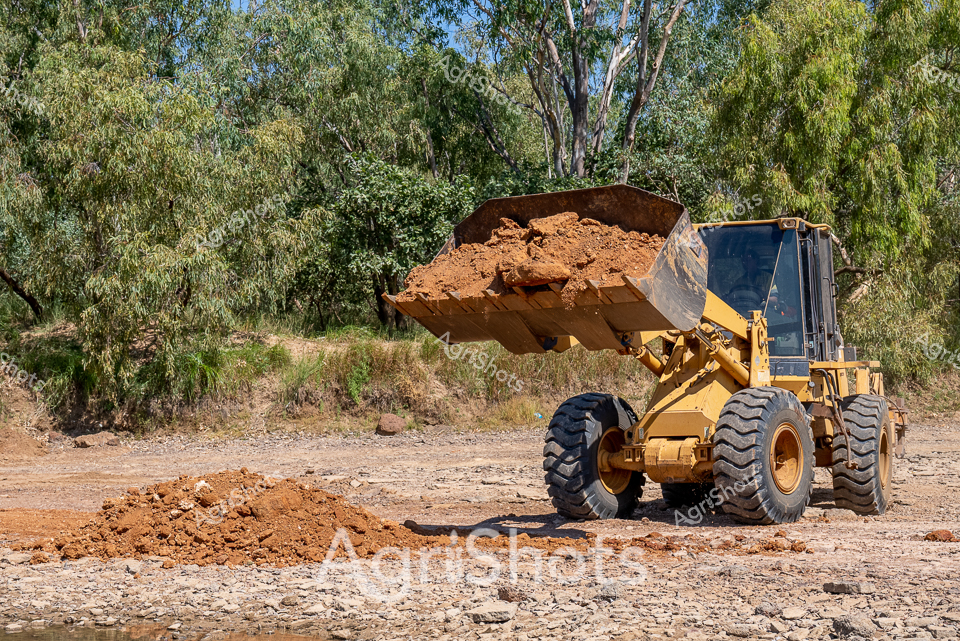
A yellow front-end loader carves a powerful silhouette against the muted eucalyptus woodland of a remote Western Australian station. The machine's robust bucket is loaded with rich, ochre-colored earth, suspended mid-movement across the rugged terrain. Weathered wheel tracks and scattered mounds of excavated soil tell a story of landscape transformation, highlighting the persistent human intervention in Australia's agricultural landscapes. Towering gum trees provide a verdant backdrop, their silvery-green foliage contrasting sharply with the golden machinery and rusty ground. The harsh midday sunlight casts crisp shadows, emphasizing the mechanical precision of the loader against the organic textures of the bush. This scene captures the quintessential spirit of outback infrastructure - resilient, purposeful machinery reshaping the ancient landscape with methodical determination, a testament to the ongoing agricultural development in Western Australia's challenging rural environments.
 Image
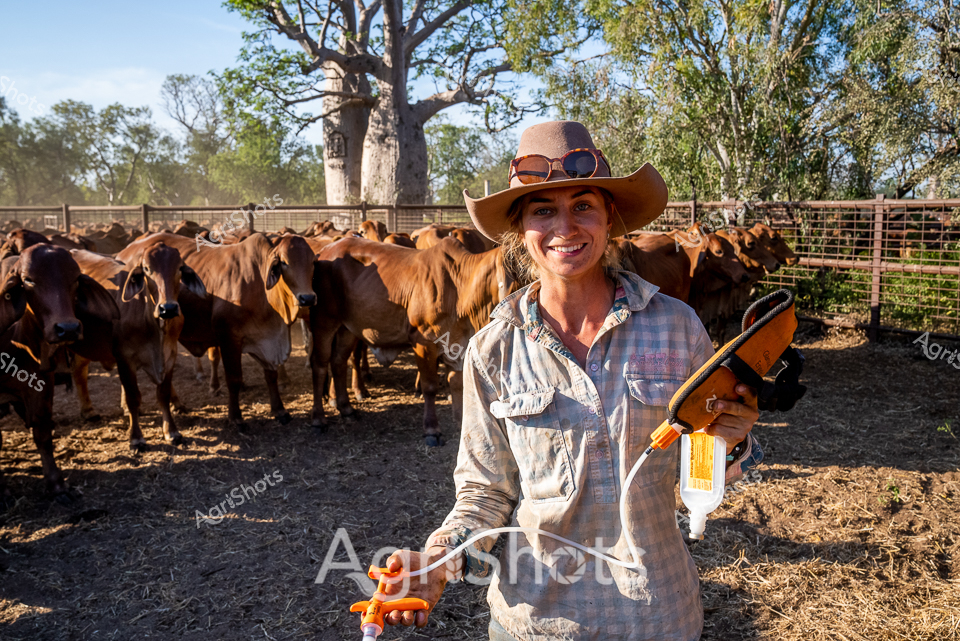
Burnished copper Brahman cattle crowd the dusty cattle yards, their muscular frames testament to the resilience of northern Australian livestock. A confident agricultural worker stands amid the herd, wearing a classic wide-brimmed stockman's hat and rolled-sleeve checked shirt, embodying the spirit of rural Western Australia's Kimberley region. Her hands grip veterinary equipment - an orange and yellow vaccination tool suggesting routine animal health management at this remote station. The backdrop reveals a classic pastoral landscape, with a massive boab tree silhouetted against a clear blue sky, while weathered steel yard fencing defines the working space. Sunlight catches the fine details of the cattle's sleek coats, highlighting their distinctive humps and adaptations to harsh tropical conditions. Her relaxed, confident smile communicates the pride and expertise of contemporary agricultural professionals, showcasing the critical role of women in modern farming operations.
 Image
Under the vast, pale blue skies of Western Australia's pastoral landscape, a precision agricultural support operation unfolds. Vibrant red bulk bags of stock supplements stand ready for distribution across the dry, golden grasslands dotted with sparse eucalyptus trees. A sophisticated hydraulic crane mounted on a white utility vehicle carefully lifts and positions these nutrient-dense feed bags, designed to provide critical minerals and nutrition for livestock grazing in challenging arid station environments. The mechanical precision of the crane contrasts beautifully with the rugged, untamed wilderness of the Western Australian station - a landscape of resilience and agricultural adaptation. These large red bulk bags represent a critical link in remote cattle and sheep production, ensuring animal health and productivity in regions where natural pasture nutrition can be marginal. The scene captures the intersection of modern agricultural technology and traditional pastoral management - a testament to the innovation required to sustainably manage livestock across Australia's demanding agricultural frontier.
 Image
Golden light filters through gnarled boab trees at dawn, casting long shadows across the weathered cattle yards of a remote Kimberley station in Western Australia. A cluster of rich copper-red Brahman cattle huddle together in the dusty yards, their muscular bodies and distinctive humps reflecting the resilience of this iconic northern cattle breed. In the background, a stockworker perches on the yard fence, silhouetted against the rising sun, surveying the morning's mustering preparations. The scene captures the raw essence of pastoral life - a delicate balance of human skill and animal endurance under the harsh yet beautiful landscape of Western Australia's northern frontier. Rusted metal yards and scattered trees frame the composition, telling a story of generations of cattle management in one of Australia's most challenging agricultural environments. The soft dawn light and tightly grouped cattle suggest a moment of quiet anticipation before the day's work begins, embodying the timeless rhythm of station life in the Kimberley.
 Image
In the sun-drenched grasslands of Western Australia, a robust agricultural workflow unfolds around brilliant red bulk bags of stock supplements. A worker in a teal shirt manages a sophisticated crane-like lifting mechanism, carefully positioning heavy nutrient bags for distribution across the station's expansive pastoral landscape. Sparse eucalyptus trees dot the dry golden grassland, casting long shadows across the dusty ground, revealing the harsh yet productive environment of a working agricultural property. The heavy-duty handling equipment, painted in industrial whites and grays, contrasts sharply with the vibrant red bulk bags, signaling a professional and methodical approach to livestock nutrition and farm management. The scene captures the essence of modern Australian agricultural practice - technological precision meeting rugged rural terrain, where every element of animal husbandry is carefully considered and executed. The cloudless sky and wide-open landscape communicate a sense of boundless potential and the critical role of strategic supplementation in maintaining livestock health across challenging agricultural environments.
 Image
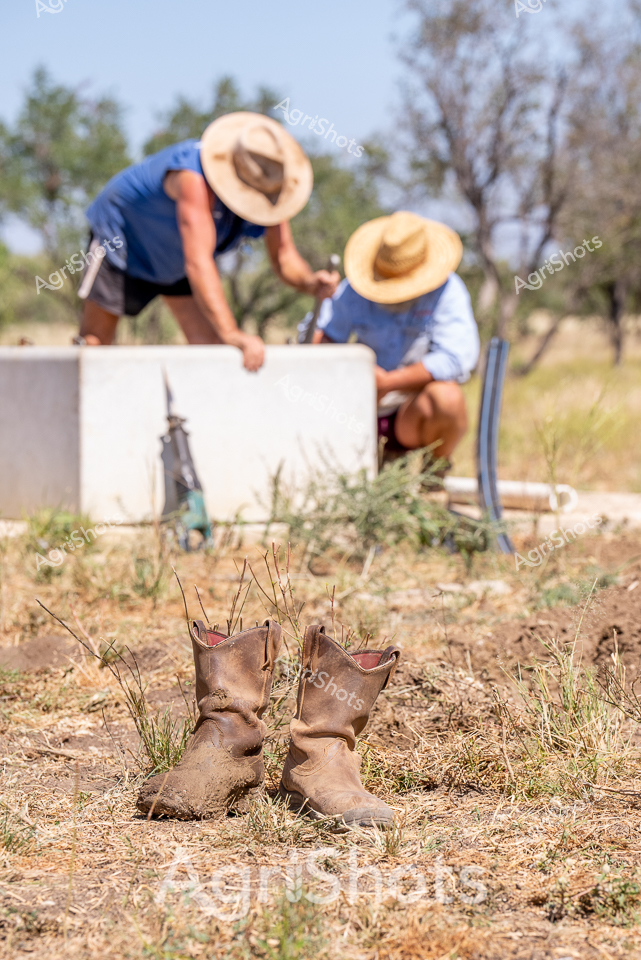
Weathered leather work boots stand sentinel in the foreground, rooted in sun-baked earth dotted with sparse grass and scrub. Two farm workers wearing wide-brimmed straw hats bend over a concrete water trough, their blue shirts a stark contrast against the parched landscape of a remote Western Australian cattle station. The harsh midday light casts sharp shadows across the rocky ground, highlighting the rugged infrastructure essential to survival in this unforgiving pastoral environment. Carefully positioning a water infrastructure component - likely a Plasson pipe fitting - the workers demonstrate the meticulous maintenance required to keep stock water systems operational in the arid northern regions. Their deliberate movements speak to generations of agricultural knowledge, working in harmony with the challenging terrain. Scattered tools and the robust concrete trough underscore the practical, no-nonsense approach to water management crucial for livestock survival in Western Australia's challenging agricultural landscapes. The scene captures the essence of station life: resilience, precision, and an intimate connection with the land that sustains both humans and livestock through careful stewardship and technical expertise.
 Image
Inland River at Midday: Kimberley Waterway A tranquil river meanders through the rugged Kimberley landscape, its olive-green waters reflecting the stark beauty of Western Australia's remote station country. Weathered eucalyptus trees with silvery bark and long, pendulous leaves line the riverbanks, their branches reaching out over the water's smooth surface. The midday sun casts sharp light across the scene, highlighting the textured earth of the riverbed and the subtle variations of green and grey in the surrounding bushland. This is a quintessential moment of Australian pastoral terrain - a vital water source that sustains both wildlife and pastoral operations across thousands of hectares of arid station country. The river represents lifelines in these harsh landscapes, providing critical hydration for livestock and maintaining the delicate ecological balance of the region. The stillness of the scene speaks to the patient endurance required of those who work and live in these remote, challenging environments.
 Image
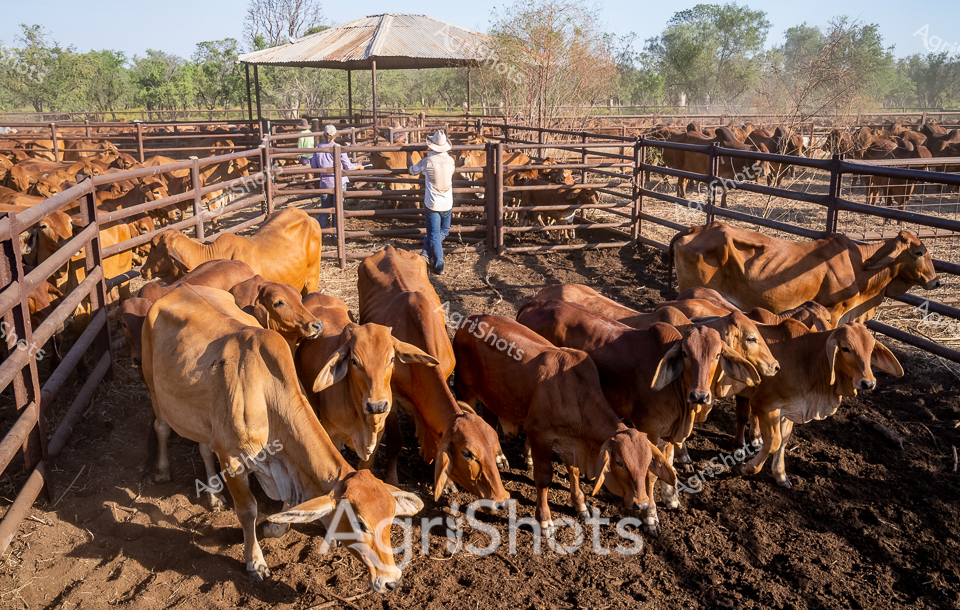
Burnished copper-red Brahman cattle crowd the dusty yards of a remote Kimberley station, their distinctive humped shoulders and loose skin adapting perfectly to Western Australia's harsh northern landscape. The golden-brown herd clusters tightly within robust steel yards, surrounded by sparse eucalyptus woodland under a bleached summer sky. A stockworker in a white hat and light clothing stands centrally, monitoring the cattle's movement with practiced calm, embodying generations of pastoral management. The earth is packed hard and dark, trampled by countless hooves, creating a textural contrast with the sleek, muscular cattle bodies. This scene captures the essence of Australia's northern cattle industry - resilient animals, skilled workers, and an unforgiving environment where survival demands strength and adaptation. The image pulses with the quiet intensity of a working station, where each animal and human plays a critical role in the rhythmic cycle of pastoral life.
 Image
Golden herds of Brahman cattle crowd together in the dusty yards of a remote Kimberley station, their distinctive loose, golden-tan skin and prominent humps testament to their adaptation to Australia's harsh northern landscapes. The tightly packed mob displays the breed's characteristic resilience - muscular bodies gleaming in the warm sunlight, with alert ears and broad, intelligent faces reflecting generations of genetic selection for tropical conditions. Wooden stockyard fencing frames the scene, suggesting the vast pastoral infrastructure of Western Australia's cattle country, where these animals are critical to the region's agricultural economy. Each beast stands shoulder-to-shoulder, creating a living tapestry of burnished copper tones that undulates with subtle movements and shifting perspectives. The morning light casts soft shadows across their sleek hides, highlighting the communal nature of these remarkable cattle bred to survive and thrive in some of Australia's most challenging agricultural terrains. This tableau captures the essence of northern Australian cattle production - resilience, strength, and the enduring connection between land, livestock, and generations of pastoral tradition.
 Image
Dusty dawn breaks over a rugged Kimberley cattle station, where a stockman in a high-visibility lime-green long-sleeve shirt and dark cap stands watchful amid a tight cluster of sleek Brahman cattle. The distinctive humped cattle, with their light sandy to rich chestnut coats, crowd together in a well-worn earthen yard, kicking up a fine ochre dust that hangs like a veil in the cool morning light. Trees silhouette the horizon, creating a quintessential West Australian pastoral backdrop that speaks to generations of pastoral management and stock handling. The stockman maintains a calm, professional stance - a guardian of the herd, positioned strategically to monitor and control the cattle's movement during what appears to be a routine drafting or processing operation. His posture and attentive gaze reflect the skill and quiet concentration required in managing these robust Brahman cattle, renowned for their heat tolerance and resilience in Australia's challenging northern landscapes. The scene captures the essence of Australian pastoral life - a delicate dance of human skill and animal husbandry against a timeless, sun-drenched landscape.
 Image
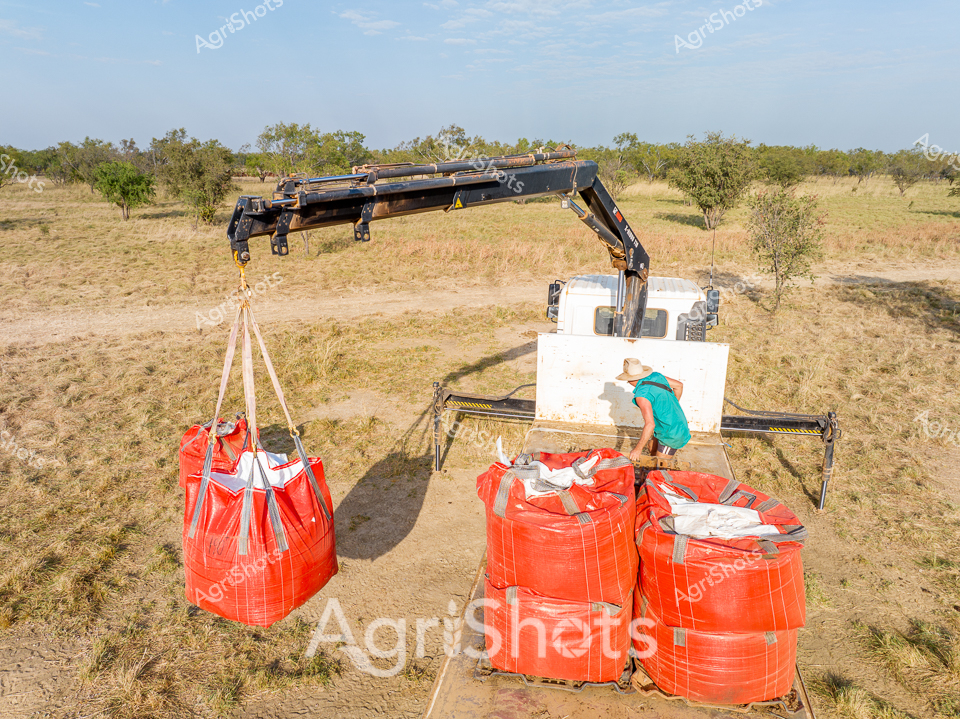
A scorching Western Australian station landscape unfolds beneath a pale blue sky, punctuated by scattered eucalyptus trees and sun-bleached grasslands. A robust truck-mounted crane carefully lifts vibrant red bulk bags of stock supplements, essential nutritional feed for cattle grazing across these arid pastoral lands. The brilliant orange-red bulk bags, reinforced with white lifting straps, contrast sharply against the dusty earth, highlighting the critical agricultural support infrastructure of remote farming operations. A worker in a teal-colored shirt stands near the machine, monitoring the precise placement of these heavy supplementary feed packages, demonstrating the meticulous care required in managing livestock nutrition in challenging environments. The mechanical precision of the lifting equipment and the strategic positioning of the feed bags reveal the sophisticated logistical approaches used by modern Australian agricultural enterprises to sustain livestock health in harsh, expansive terrain. This scene captures the intersection of human skill, technological innovation, and environmental adaptation that defines contemporary pastoral management in Western Australia's rugged interior.
 Image
In the sun-drenched grasslands of Western Australia, a robust agricultural loading operation unfolds across a sparse station landscape. A mobile feed supplementation truck stands ready, its hydraulic crane extended, carefully lifting massive bright red bulk bags of mineral lick supplement. The vivid crimson bags contrast sharply against the pale golden grasses and scattered eucalyptus trees, creating a quintessential outback scene. A worker in a teal green shirt and broad-brimmed hat manages the loading process, positioning the heavy supplementary feed bags for distribution across the station's vast pastoral terrain. The machinery represents critical infrastructure for cattle nutrition management, ensuring livestock receive essential minerals and nutrients in challenging arid environments. The clear blue sky and soft cloud cover suggest early morning conditions, with soft light casting long shadows across the dry landscape, capturing the precise, methodical nature of modern agricultural resource management.
 Image
Dusty light bathes the cattle yards as golden hour settles over the Kimberley landscape, casting long shadows across a dense herd of rich burgundy-brown Brahman cattle. Two stockmen in classic blue work attire stand sentinel near the yard's fence, surveying the tightly clustered livestock with practiced eyes. The rugged pastoral setting unfolds with weathered wooden fencing, native trees silhouetted against a soft sunset sky, and a massive boab tree anchoring the background - a quintessential Western Australian cattle station scene. These hardy Brahman cattle, renowned for their heat tolerance and distinctive muscular build, are packed tightly in the holding yard, their sleek coats reflecting the day's final warm light. The environment speaks of generations of agricultural practice - the careful management of livestock in one of Australia's most challenging and beautiful rural landscapes. Every element captures the resilience and quiet expertise of northern Australian cattle farming: the precise positioning of the stockmen, the controlled movement of the herd, and the timeless interaction between humans, animals, and an unforgiving but magnificent terrain.
 Image
Under the soft, cloud-dappled sky of a Western Australian station, a worker in a teal shirt and wide-brimmed hat stands beside vibrant red bulk bags of stock supplements. The sparse, golden grassland stretches between weathered trees, creating a quintessential pastoral landscape that speaks to the resilience of agricultural life. A compact mobile loading station with a hydraulic crane is positioned to manage the large red bulk bags, which are designed for efficient feed and mineral supplementation for livestock in remote grazing regions. The scene captures the critical infrastructure of rural agricultural operations - portable, robust equipment that supports cattle and sheep management across vast, challenging terrains. The bright red bags stand in stark contrast to the muted earth tones of the surrounding landscape, symbolizing the critical nutritional resources that sustain herds through challenging dry seasons. This image embodies the pragmatic, resourceful spirit of Australian agricultural workers who maintain productivity in harsh, expansive environments.
 Image
Dusty cattle yards sprawl beneath a golden Kimberley sunset, where Brahman cattle cluster in weathered wooden pens. Rich russet-brown cattle press against timber rails, their muscular bodies telling stories of resilience in Western Australia's harsh pastoral landscape. Several stockworkers in blue and orange work attire move purposefully around the yards, managing the afternoon's mustering activities near a majestic boab tree silhouetted against the pastel sky. The scene captures the rhythmic energy of station life - horses stand quietly within the yards, essential partners in the cattle management process. Twisted gum trees and scrubland stretch to the horizon, framing a quintessential moment of Australian agricultural work where generations of skill and endurance converge. The fading light bathes the scene in warm ochre tones, highlighting the textured interaction between human, animal, and landscape in this remote cattle station environment.
 Image
In the sun-drenched landscape of Western Australia's pastoral country, a vibrant agricultural scene unfolds. A robust lifting mechanism stands ready, surrounded by large crimson bulk bags of mineral supplement feed, positioned strategically on the dry golden grasslands. Scattered sparse eucalyptus trees dot the horizon, creating a quintessential Australian station backdrop under a soft, pale blue sky. A worker in a teal shirt stands near the equipment, suggesting preparation for cattle supplementation - a critical process in maintaining livestock nutrition across expansive, arid grazing territories. The brilliant red bulk bags - likely Range Stock Supplements - contrast dramatically against the muted earth tones of the surrounding landscape, highlighting the precision and care integral to modern agricultural practice. This image captures the essence of remote agricultural operations, where specialized equipment and strategic nutritional management enable sustainable livestock production in challenging environmental conditions.
 Image
Meandering through the heart of a Western Australian station, this tranquil river captures the essence of the region's rugged landscape. Eucalyptus trees line the banks, their silvery-green foliage creating a soft, textured border along the water's calm surface. The river reflects the clear blue sky, creating a mirror-like expanse that speaks to the quiet resilience of the Australian outback. Weathered trees lean into the water, their gnarled branches telling stories of decades of surviving in this harsh yet beautiful environment. The scene epitomizes the raw beauty of rural Western Australia - a landscape of subtle colors, patient waterways, and enduring vegetation that defines the agricultural heartland of the continent. This image breathes the spirit of station life, where water is the lifeblood of the land, nurturing both the environment and the agricultural endeavors that shape this remarkable region.
 Image
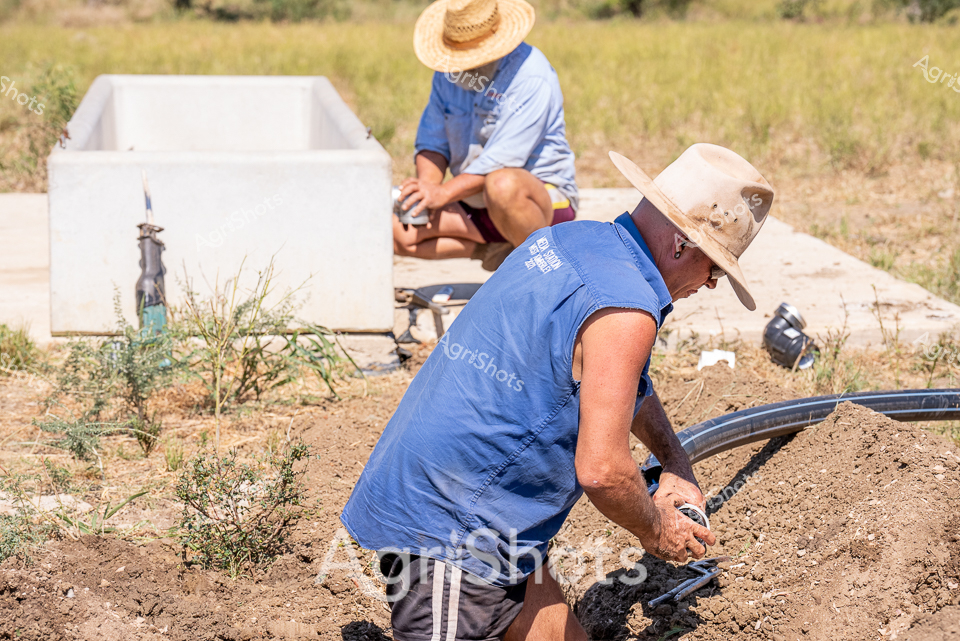
Rural water infrastructure maintenance in the arid landscape of Western Australia. A farm worker in a blue shirt and wide-brimmed sun hat carefully manages water pipe connections near a white water trough, surrounded by sparse dry grassland. The rugged terrain suggests a remote pastoral station where reliable water supply is critical for livestock survival. Weathered hands manipulate black pipe fittings, likely a Plasson connection system designed for durability in harsh agricultural environments. Intense midday sunlight casts sharp shadows, highlighting the physical labor required to maintain essential water infrastructure in this challenging landscape. The scene captures the quiet determination of agricultural workers who ensure critical water resources remain functional in remote Australian stations, where every drop of water is precious for survival.
 Image
Dusty tracks wind through a sun-drenched landscape of silvery eucalyptus and emerald grasslands, where a shallow river crossing breaks the rugged terrain of a remote Western Australian cattle station. The dry riverbed, marked with vehicle tracks and scattered rocky outcrops, reveals the harsh yet beautiful environmental conditions of the inland pastoral region. Weathered gum trees cast dappled shadows across the sandy path, their twisted branches testament to decades of enduring extreme seasonal variations. Coarse river grasses cluster along the water's edge, creating a textural contrast with the smooth water and sandy ground. This scene captures the quintessential Australian pastoral landscape - resilient, sparse, and dramatically beautiful, where agricultural enterprise meets untamed wilderness. The muted earth tones of ochre, sage, and stone speak to the enduring spirit of station life in Western Australia's challenging interior.