Browse the collection
 Image
Burnished copper and amber tones dominate this tight cluster of Brahman cattle, their distinctive large ears and dewlaps marking them as quintessential tropical beef breed survivors. Set against the dappled golden grasslands and sparse woodland backdrop of Western Australia's rugged Kimberley region, these robust cattle huddle together with an almost familial intimacy. The animals' sleek, loose-skinned coats reflect the harsh sunlight, highlighting their adaptation to challenging pastoral environments where resilience is paramount. Ear tags glint like metallic sentinels, signaling careful station management and livestock tracking in this expansive northern agricultural landscape. A younger, darker-hued calf nestles protectively among the larger beasts, embodying the generational continuity of pastoral enterprise in one of Australia's most demanding agricultural frontiers. The image captures the raw, unvarnished beauty of northern Australian cattle production - a testament to generations of agricultural skill and the profound connection between land, livestock, and those who work with them.
 Image
Brahman cattle cluster together in the golden afternoon light of a Western Australian station, their burnished copper-toned hides gleaming against the muted green and grey landscape of the Kimberley region. A tight mob of sleek, muscular cattle with distinctive large ears and loose skin - hallmarks of the heat-tolerant Brahman breed - stand clustered in a dense group, their collective presence radiating a sense of pastoral strength and resilience. The herd represents the backbone of northern Australian beef production, perfectly adapted to survive in challenging tropical environments with minimal intervention. Soft grasses and scattered eucalyptus trees frame the background, suggesting this is likely a vast pastoral station during the dry season, where these robust cattle have been mustered and gathered. Each animal displays the breed's characteristic rich reddish-brown coloration, with slight variations in tone creating a living tapestry of movement and texture. The image captures the essence of Australian cattle farming - hardy animals, expansive landscapes, and the unbreakable connection between land, livestock, and generations of agricultural expertise.
 Image
Burnished copper-hued Brahman cattle cluster tightly around a towering termite mound in the sun-drenched Kimberley grasslands. The herd's sleek, muscular bodies showcase the distinctive loose skin and large ears characteristic of this heat-tolerant breed, perfectly adapted to Western Australia's harsh northern landscape. Soft golden grasses and scattered eucalyptus trees frame the scene, creating a quintessential pastoral tableau that speaks to generations of cattle farming in this rugged region. Each animal stands with quiet alertness, their uniform reddish-brown coats gleaming under the intense Australian sunlight, embodying the resilience of both the livestock and the agricultural traditions of the area. The ancient termite mound - a sculptural, textured beacon of ochre - rises organically from the ground, a natural landmark amidst the living landscape of cattle. This image captures the essence of extensive cattle production in remote Western Australia, where traditional mustering techniques and hardy livestock thrive in challenging environmental conditions.
 Image
Burnished copper and rich amber, a herd of Brahman cattle stands clustered in the sun-drenched grasslands of Western Australia's rugged Kimberley region. These robust beef cattle, with their distinctive large ears and loose skin, represent the quintessential northern Australian pastoral landscape - hardy animals perfectly adapted to the harsh, tropical environment. Tight clusters of lean, muscular bodies showcase the breed's remarkable resilience, their uniform reddish-brown coats gleaming against the dry golden grasses and distant woodland backdrop. Each animal displays the characteristic Brahman traits - prominent humps, pendulous dewlaps, and alert, intelligent expressions that speak to generations of selective breeding for heat tolerance and insect resistance. The composition captures the essence of station life, where these cattle are more than livestock - they are the lifeblood of remote agricultural enterprises that have shaped Australia's agricultural heritage. The tight grouping suggests a recent muster, with the animals gathered closely, their collective presence a testament to the skilled stockmen and the enduring spirit of Australia's northern cattle country.
 Image
Brahman cattle pack tightly into a dusty fenced yard under the harsh Western Australian sun, their tawny brown hides gleaming and casting intricate shadows across the densely clustered herd. Aerial perspective reveals the extraordinary density of animals, clustered so closely that individual bodies merge into a living, undulating landscape of bovine forms. The Kimberley region's characteristic red earth and sparse grassland surrounds the yard, highlighting the intense concentration of livestock in this managed agricultural space. Each animal stands pressed against its neighbours, creating a remarkable textural mosaic of muscled flanks, curved backs, and occasional glimpses of white or lighter-coloured individuals breaking the uniform russet tone. The image captures the scale and intensity of cattle production in Australia's northern pastoral zones, where extensive station management and mustering techniques create these tightly controlled livestock environments. Harsh sunlight and sharp shadows emphasize the physicality and economic significance of these carefully tended herds, central to the agricultural economy of Western Australia's remote cattle country.
 Image
Sun-drenched Kimberley Station: A powerful herd of burnished copper-toned Brahman cattle cluster beneath a gnarled white-barked tree, their muscular frames radiating the resilience of northern Australian pastoral landscapes. These heat-tolerant cattle, distinguished by their prominent humps and loose skin, stand clustered in dappled shade, their rich auburn coats gleaming against the dusty grasses and silvery-green foliage. The scene captures the essence of remote Western Australian cattle country - where rugged landscape and robust livestock merge in a timeless tableau of agricultural endurance. Dry season grasses underfoot, scattered trees providing intermittent shelter, suggest this is a moment during mustering season, when cattle are gathered and moved across vast station territories. The tight grouping of the herd speaks to their instinctive behavior, seeking collective protection and coolness under the expansive Kimberley sky. Every muscular flank and curved horn tells a story of adaptation, of cattle bred to thrive in one of Australia's most challenging agricultural environments.
 Image
Outback Cattle Muster: Traditional Horsemanship Meets Modern Transport A rugged pastoral scene unfolds across the golden grasslands of Western Australia's Kimberley region, where traditional cattle mustering techniques blend seamlessly with modern technology. A stockman in a pink shirt and wide-brimmed sun hat sits atop a chestnut horse, surveying the sparse woodland landscape dotted with weathered eucalyptus trees. Alongside, a rider on a blue dirt bike provides mechanical support to the horse-mounted drover, representing the evolving methods of stock management in remote Australian stations. The dry season landscape stretches out in muted yellows and greens, with sparse vegetation and a clear blue sky suggesting the harsh, unforgiving climate of northern Western Australia. Dressed in practical work gear - sturdy denim, protective helmets, and practical backpacks - these stockmen embody the resilient spirit of Australian agricultural workers. The blue motocross bike and brown horse stand in stark contrast, symbolizing the intersection of traditional pastoral skills and contemporary agricultural technologies. This image captures the essence of contemporary cattle management in Australia's vast northern territories, where innovation and heritage ride side by side across the expansive station country.
 Image
Burnished copper bodies gleam under the midday Kimberley sun, a dense herd of Brahman cattle clustered tightly among sparse eucalyptus woodland. Muscular beasts with distinctive humps and loose skin stand resilient in the dry season grasslands, their rich terracotta coats providing natural camouflage against the sun-bleached landscape. Mature cows and younger calves press together, creating a living tapestry of interconnected forms, their collective presence a testament to the robust cattle breeding traditions of Western Australia's northern pastoral stations. Weathered white-barked trees punctuate the scene, casting dappled shadows across the herd, while golden grasses whisper beneath their hooves. The landscape speaks of endurance - a harsh yet beautiful environment where these hardy Brahman cattle have evolved to thrive, their genetic adaptations perfectly suited to the challenging tropical grasslands of the Kimberley region. This image captures the raw essence of Australian cattle farming: resilience, community, and the profound connection between livestock, landscape, and generations of pastoral expertise. The tightly grouped herd represents not just animals, but a sophisticated agricultural ecosystem finely tuned to one of the continent's most demanding environments.
 Image
Dusty golden light bathes a massive herd of Brahman cattle clustered tightly on a dry pastoral track, their burnished copper-red coats gleaming against the sparse Kimberley landscape. Lean, muscular beasts with distinctive humps and loose dewlaps crowd together, raising a fine ochre cloud of pindan dust that softens the surrounding scrub trees and creates a hazy atmospheric backdrop. These hardy cattle - bred for tropical resilience - represent the robust genetics developed for surviving Western Australia's challenging northern pastoral regions, where massive stations stretch across hundreds of thousands of hectares. The muster captures the essence of Australian beef production: patient movement, strategic handling, and the seamless collaboration between stockmen and these heat-tolerant Bos indicus cattle. Scattered white animals amid the predominantly red herd highlight the genetic diversity carefully maintained by experienced station managers. The scene pulses with quiet energy - a moment of controlled movement in the vast, uncompromising Australian rangeland, where generations of agricultural expertise meet the raw potential of the landscape.
 Image
Kimberley River Crossing: Serpentine Waters A tranquil river winds through the rugged Kimberley landscape, its blue-green waters reflecting the dense eucalyptus woodland along its banks. Rocky sandy shores frame the waterway, revealing the harsh yet beautiful terrain of Western Australia's northern frontier. Weathered river gum trees lean towards the slow-moving stream, their silvery-green foliage softening the stark landscape. The scene captures the essence of remote Australian pastoral country - a vital water source threading through an arid environment, sustaining both native ecosystems and pastoral operations. Smooth water surfaces contrast with the textured rocky foreground, creating a serene vista that speaks to the resilience of life in this challenging landscape. The clear sky and soft light suggest early morning, a magical time when the landscape awakens and the day's potential stretches out like the river itself.
 Image
Burnished copper bodies gleam under the harsh midday sun as a massive herd of Brahman cattle kicks up golden dust across the rugged Kimberley landscape. Tightly packed and moving with collective purpose, these robust beef cattle - distinguished by their distinctive humped shoulders and loose skin - navigate the parched earth between weathered acacia and boab trees. The herd represents the resilience of northern Australian pastoral enterprise, where vast cattle stations stretch across challenging terrain. Muscular and heat-tolerant, these Brahmans are perfectly adapted to the unforgiving West Australian environment, their warm terracotta coats reflecting generations of selective breeding for tropical conditions. A gentle haze of ochre dust surrounds their movement, creating an atmospheric scene that captures the raw energy of cattle mustering - a quintessential ritual of outback agriculture. The image breathes with the rhythm of station life, where every animal is a testament to the skill of generational cattlemen and the enduring spirit of rural Western Australia.
 Image
Dusty red earth and weathered timber yards cradle a dense herd of mahogany-coated Brahman cattle, their distinctive humped shoulders and loose skin reflecting generations of adaptation to Australia's harsh northern landscapes. Located in the rugged Kimberley region of Western Australia, this aerial view captures the intricate choreography of cattle mustering - a quintessential pastoral scene where stockmen manage large herds across expansive station country. Wooden fencing and strategically placed gates create a complex network of holding pens, with cattle clustered tightly, their bodies radiating heat under the clear azure sky. Surrounding eucalyptus and acacia trees provide sparse shade, their silvery-green foliage a stark contrast to the parched ground, highlighting the unforgiving beauty of this remote agricultural landscape. A central metal-roofed shelter offers minimal respite from the intense sunlight, while the surrounding woodland stretches to the horizon - a timeless vista of Australian pastoral enterprise where human skill and animal resilience converge in the daily rhythm of station life.
 Image
Burnished bronze Brahman cattle crowd the dusty cattle yards of a vast Kimberley station in Western Australia, their distinctive humped shoulders and loose skin revealing their tropical breeding. A weathered working stockman in blue attire moves deliberately through the densely packed pens, guiding the herd with calm expertise beneath a sun-bleached shade structure. The surrounding landscape reveals a classic pastoral setting - sparse eucalyptus trees dotting the horizon, golden earth cracked and dry, suggesting the unforgiving heat of the dry season. Metal stock yards create a geometric precision against the organic movement of hundreds of lean cattle, their uniform tawny coats reflecting generations of adaptation to Australia's challenging northern landscapes. This scene captures the raw essence of pastoral life - the intricate dance between human skill and animal management that defines agricultural practice in one of the world's most demanding environments. The clear azure sky and meticulously organized yards speak to the professional discipline required to run a successful cattle station in remote Western Australia.
 Image
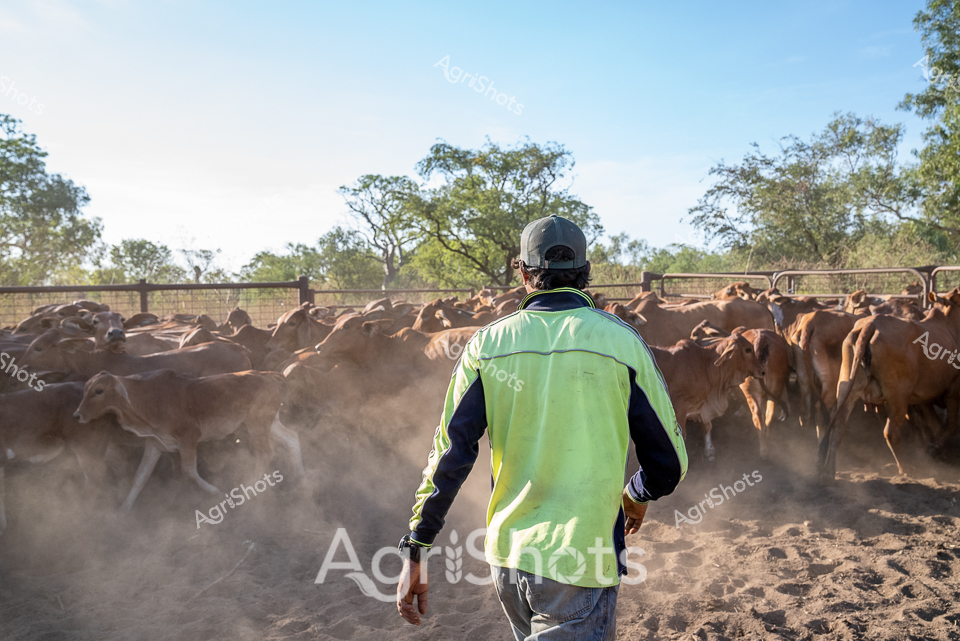
Dust billows around a stockman in a high-visibility green and black work jacket, walking deliberately through a densely packed mob of rust-red Brahman cattle in a rugged Kimberley station yard. The harsh West Australian landscape frames the scene, with weathered gum trees and a sturdy timber stock fence defining the boundaries of this quintessential pastoral environment. Midday sunlight casts sharp shadows, highlighting the muscular bodies of the heat-tolerant Brahman breed, their distinctive humps and loose skin perfectly adapted to the unforgiving northern Australian climate. The stockman moves with practiced confidence, guiding the herd through a routine drafting process, his body language communicating calm control amidst the swirling dust and restless cattle. This image captures the raw essence of Australian cattle management - a delicate dance of human skill and animal instinct played out against a backdrop of remote, sun-scorched terrain. Every element speaks to the resilience and expertise required in northern Australian cattle production, where generations of knowledge are embodied in each measured step.
 Image
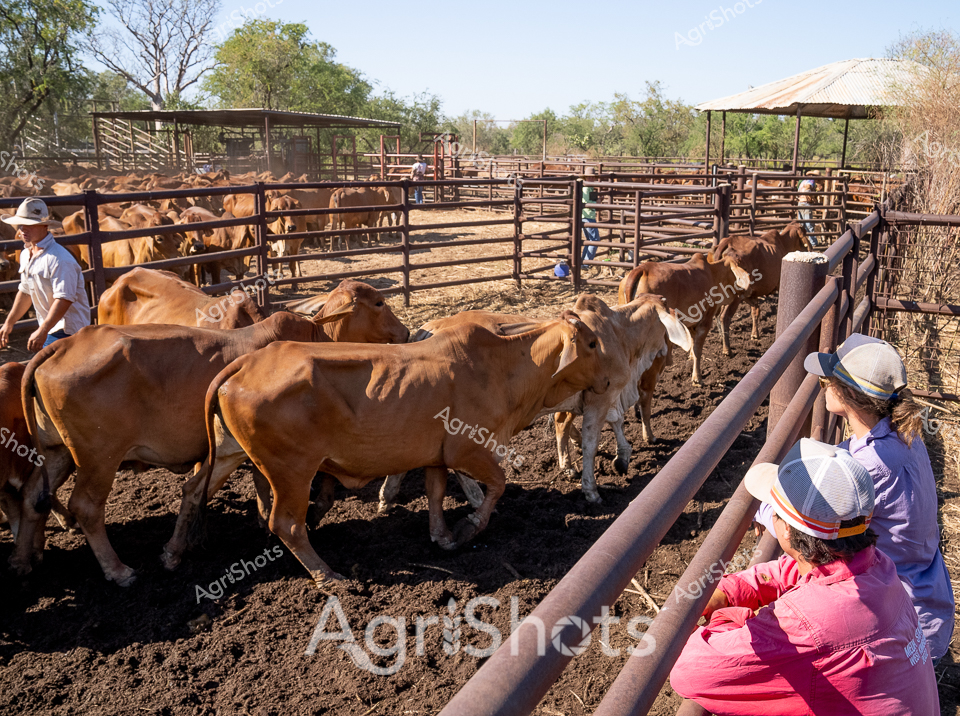
Burnished copper Brahman cattle crowd the dusty yards of a remote Kimberley station, their distinctive humped shoulders and loose skin highlighting their adaptability to harsh Australian pastoral landscapes. A pair of stockworkers in wide-brimmed hats and practical workwear - one in crisp white, another in soft purple and pink - observe the herd's movement through the metal cattle yards, their posture relaxed yet attentive. Dry season sunlight casts long shadows across the compacted earth, revealing the rustic corrugated iron shelters and sparse eucalyptus trees that frame this quintessential West Australian cattle processing scene. The animals' rich reddish-brown coats contrast against the weathered steel railings, embodying the resilience of both livestock and human workers in this unforgiving agricultural environment. Carefully positioned gates and experienced handlers signal the methodical process of drafting and managing the herd, a critical moment in the station's seasonal cattle management cycle. This image captures the quiet expertise and enduring spirit of Australian pastoral life, where generations of knowledge flow as naturally as the cattle through these well-worn yards.
 Image
A dense herd of burnished golden-copper Brahman cattle fills the cattle yards, their distinctive loose skin and prominent humps creating a rippling landscape of muscular bodies. The luminous afternoon light highlights the uniform sandy-tan coloration of these heat-tolerant cattle, perfectly adapted to the harsh Kimberley region of Western Australia. Tightly packed within sturdy metal yards, the cattle display the remarkable genetic traits of the Brahman breed - compact bodies, large ears, and resilient physiques developed to thrive in challenging tropical environments. Each animal shares a similar rich amber-bronze tone, their bodies pressed close together creating an almost sculptural mass of bovine forms. The background reveals glimpses of dry bushland and metal fencing, typical of a remote station setting, suggesting this is likely a mustering or pre-sale preparation scene. The photograph captures the extraordinary density and uniformity of a carefully managed beef cattle operation, showcasing the robust livestock that are critical to Australia's northern agricultural economy.
 Image
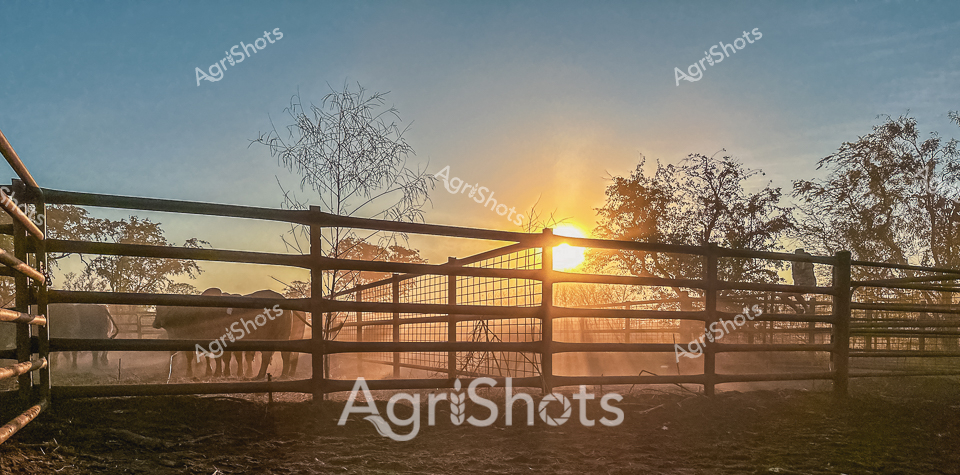
Golden morning light pierces through the steel cattle yards, illuminating a misty pastoral landscape that captures the raw essence of Western Australian station life. Silhouetted Brahman cattle stand quietly behind sturdy metal gates, their distinctive humped frames casting long shadows across the dusty ground. The soft amber glow of sunrise filters through sparse trees, creating a luminous backdrop that transforms the utilitarian cattle yards into a scene of pastoral poetry. Condensation rises from the ground, suggesting the cool early hours before a day of mustering begins, with the metallic yard infrastructure framing the tranquil moment between night and full daylight. The rigid geometric lines of the fencing contrast beautifully with the organic shapes of the cattle and surrounding vegetation, representing the structured yet harmonious relationship between agricultural workers and the livestock. This image captures the timeless rhythm of station life - a moment of quiet anticipation before the day's work begins in the vast, challenging landscape of outback Western Australia.
 Image
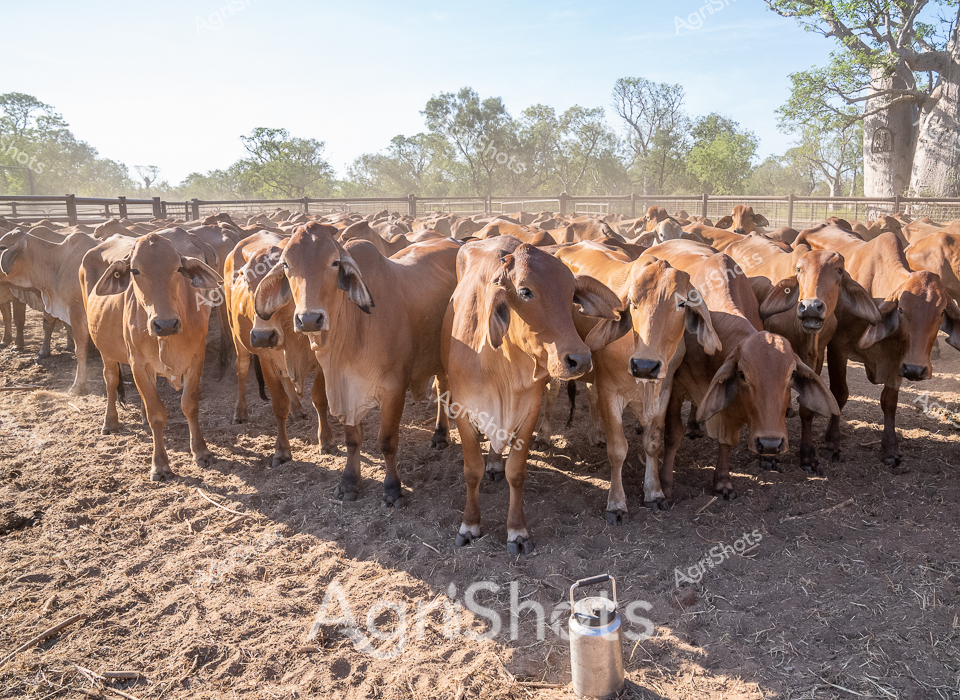
Burnished copper-brown Brahman cattle cluster tightly in a dusty pastoral yard, their distinctive large ears and loose skin defining the classic tropical beef breed. The herd stands amid the sun-drenched landscape of Western Australia's Kimberley region, surrounded by sparse eucalyptus trees and weathered wooden fencing that speaks to generations of pastoral farming. Fine red earth covers the ground, kicking up a subtle haze that softens the edges of the scene and highlights the muscular, heat-adapted bodies of these resilient cattle. A metal milk can in the foreground grounds the image in the practical realities of station life, while the tight grouping of animals suggests recent mustering - a critical activity in managing large cattle stations across Australia's northern expanses. The soft morning light bathes the scene in warm tones, capturing the robust vitality of these cattle bred to thrive in challenging agricultural environments. Each animal stands alert, their collective presence a testament to the enduring agricultural heritage of Western Australia's remote pastoral landscapes.
 Image
Burnished gold Brahman cattle crowd the sturdy metal yards of a remote Kimberley station, their muscular bodies pressed together under the dappled shade of eucalyptus trees. A stockman in a crisp white shirt and wide-brimmed hat moves deliberately among the herd, guiding them with practiced ease through the drafting process. The rich terracotta earth beneath their hooves contrasts sharply with the golden-brown coats of the cattle, highlighting the rugged beauty of Western Australia's pastoral landscape. Two other workers stand quietly at the yard's edge, their weathered clothing and relaxed postures speaking to generations of agricultural expertise. The harsh midday light emphasizes the lean, heat-adapted bodies of these Brahman cattle, bred to thrive in Australia's challenging northern environments. This scene captures the essence of northern Australian cattle management - a delicate dance of human skill and animal resilience under an unforgiving sun.
 Image
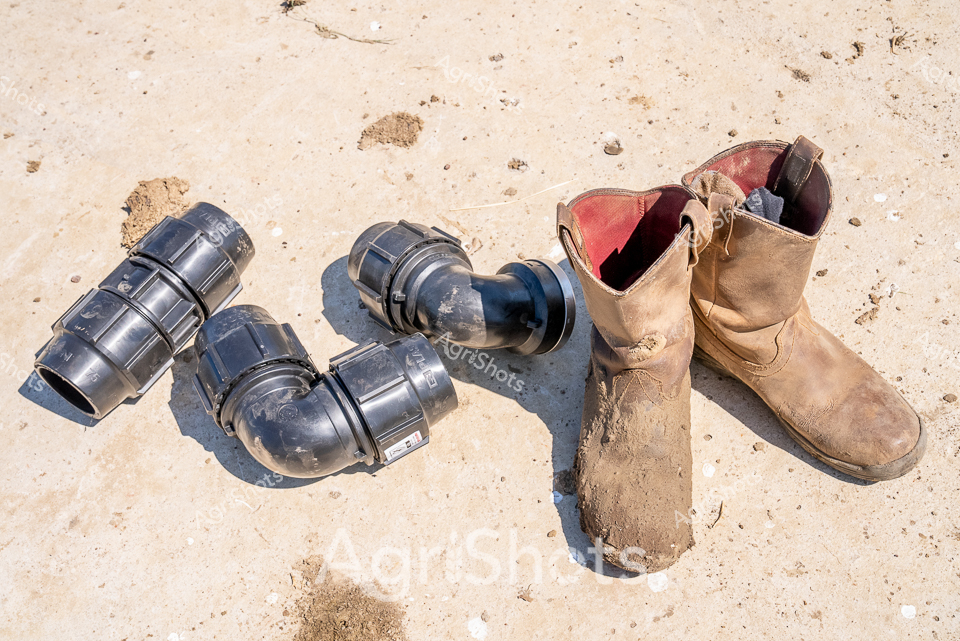
Sun-baked earth cradles a collection of robust Plasson pipe fittings beside a weathered work boot, capturing the stark beauty of remote Western Australian agricultural infrastructure. Navy blue compression joints curve and connect with precise engineering, their industrial form a stark contrast to the soft sandy ground. A well-worn leather boot, faded to a dusty tan from countless days of hard labor, anchors the scene with its rugged authenticity. These hydraulic and irrigation components speak to the sophisticated water management systems essential in Australia's challenging agricultural landscapes, where every drop of water is precious. The metallic fittings' smooth, curved surfaces reflect the harsh midday light, while the boot's scuffed leather tells stories of endless kilometers walked across station country. This image encapsulates the pragmatic resilience of agricultural workers who transform unforgiving terrain through careful engineering and persistent effort.
 Image
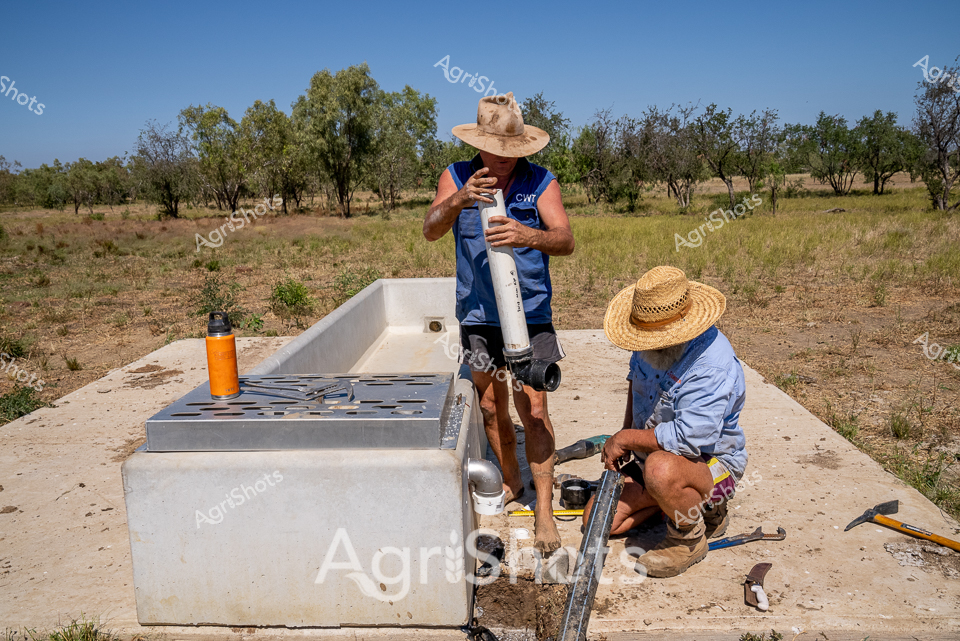
Dusty outback terrain stretches beneath a cloudless azure sky as two rural workers service a remote water infrastructure installation. Wearing wide-brimmed straw hats to shield from intense midday sunlight, they carefully inspect and maintain a concrete water trough positioned on a cleared concrete pad. One worker in a blue vest crouches, manipulating pipe connections with practiced hands, while the other stands nearby holding a white cylindrical component. Sparse eucalyptus trees dot the surrounding landscape, suggesting this is a pastoral region of inland Queensland or Northern Territory. Weathered work equipment - an orange water bottle, tools scattered nearby - tells a story of constant maintenance in challenging agricultural environments. The scene captures the quiet dedication required to sustain livestock and agricultural operations in Australia's harsh rural interior, where reliable water infrastructure is critical to survival.
 Image
Northern Australian cattle station in the dry season: A stockworker wearing a wide-brimmed tan hat and light green shirt stands in a rusty red metal cattle yard, carefully reviewing notes on a blue clipboard. Golden-hued Brahman cattle, with their distinctive muscular build and loose skin adapted to tropical climates, cluster together in the dusty paddock. Sparse eucalyptus trees and dry scrubland form the background, indicating this is likely in Western Australia's remote Kimberley region. The harsh sunlight and bare landscape suggest late dry season conditions, when cattle management and careful monitoring are critical for herd health. The stockworker's attentive posture and systematic approach reflect the precise, challenging work of cattle drafting and processing on a vast Australian pastoral station.
 Image
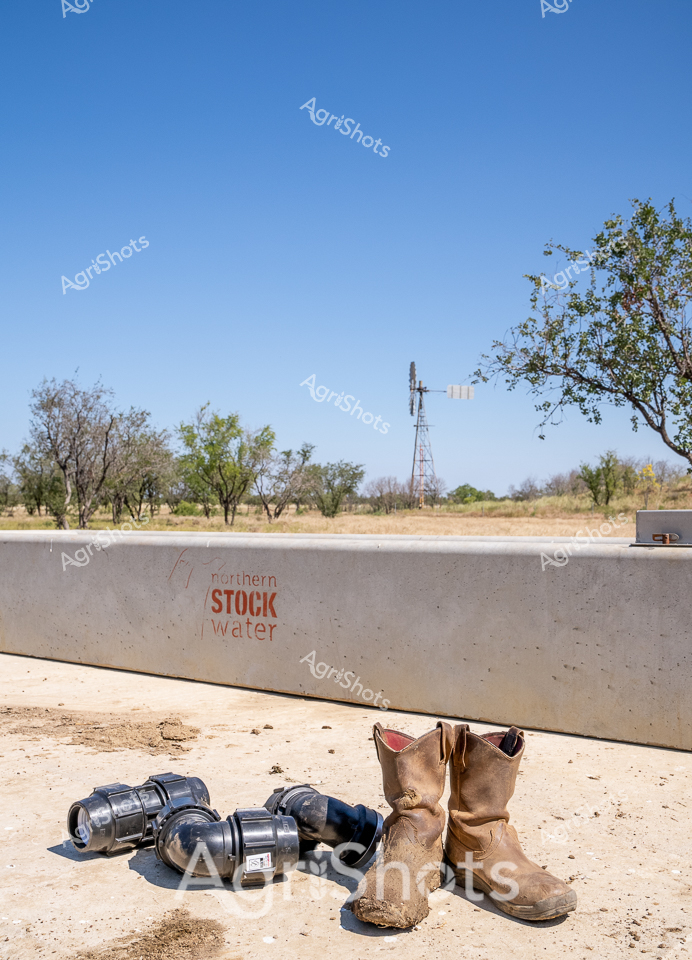
Weathered cowboy boots stand sentinel beside heavy-duty water pipe fittings, capturing the rugged essence of Northern Territory stock water infrastructure. A stark concrete water trough bearing the "Northern Stock Water" branding stretches across the foreground, set against a quintessential Australian pastoral landscape of scattered eucalyptus trees and a distant windmill. The parched earth and clear azure sky speak to the harsh yet magnificent environment of outback Western Australia, where reliable water supply is critical to pastoral operations. Blackened pipe connections rest in the sandy soil, their industrial precision contrasting with the organic, sun-bleached landscape. These robust water management components represent the lifeline of cattle stations - enabling livestock survival in unforgiving terrain through carefully engineered water reticulation systems. The scene embodies the resilience and technical innovation required to sustain agricultural production in one of the world's most challenging agricultural environments.
 Image
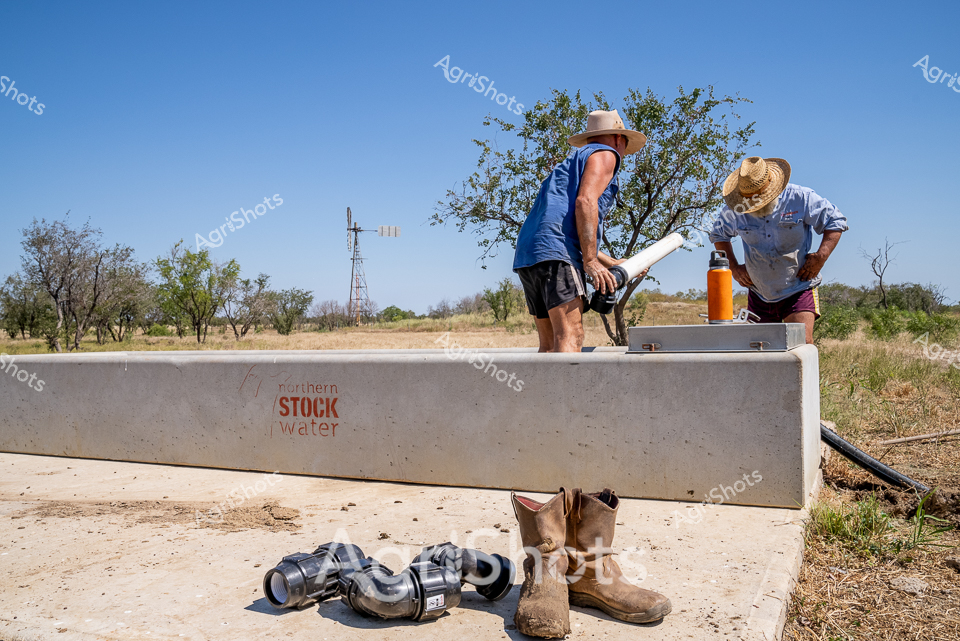
Rural Water Infrastructure: Northern Territory Stock Water Management Scorching midday sunlight bathes a remote pastoral landscape, where two rural workers service a concrete stock water trough. A weathered windmill stands sentinel in the background, punctuating the sparse grassland with its skeletal metal frame. Wearing wide-brimmed sun hats and practical workwear, the workers lean over the substantial concrete water infrastructure, carefully managing pipe connections and equipment. Brown leather work boots and rugged shorts speak to the harsh environmental conditions of this agricultural setting. Gray-blue concrete emblazoned with "Northern Stock Water" branding identifies the robust water distribution point, critical for sustaining livestock in this arid region. Flexible gray piping and mechanical fittings lie ready for installation, while an orange water bottle suggests the essential hydration required for outdoor labor. The scene captures the meticulous maintenance required to support pastoral operations in Western Australia's unforgiving agricultural landscapes, where water infrastructure represents the lifeline of rural production.