Browse the collection
 Image
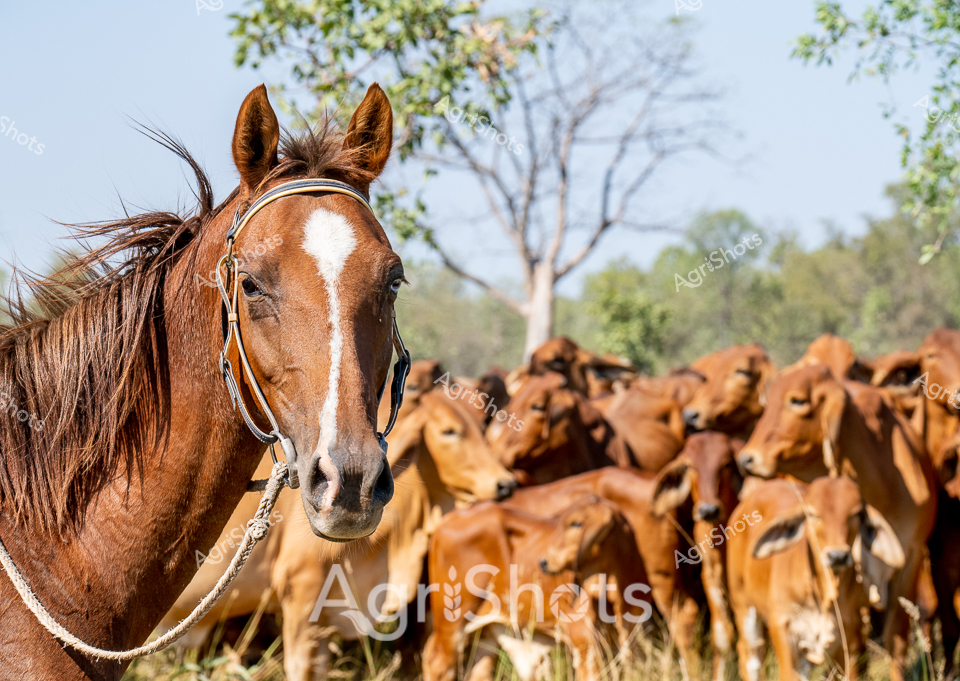
Burnished copper light bathes a chestnut stock horse standing sentinel amid a herd of golden Brahman cattle, capturing the raw essence of mustering in Western Australia's rugged Kimberley region. The horse's alert ears and measured stance speak to generations of pastoral skill, its gleaming coat and intricate leather bridle a testament to the care and precision of station life. Behind the horse, a sea of lean Brahman cattle—their distinctive humps and loose skin perfectly adapted to harsh tropical landscapes—cluster together, their rich terracotta hides blending with the sun-drenched grasslands and distant silvery gum trees. This is a landscape of endurance, where horse and herd move as one across vast stations that stretch toward the horizon, embodying the unbreakable partnership between stockmen, horses, and cattle that has defined Australian agriculture for centuries. The crisp morning light and wide-open terrain evoke a sense of timeless freedom, where skill, resilience, and an intimate understanding of the land converge in a quintessential Australian pastoral scene.
 Image
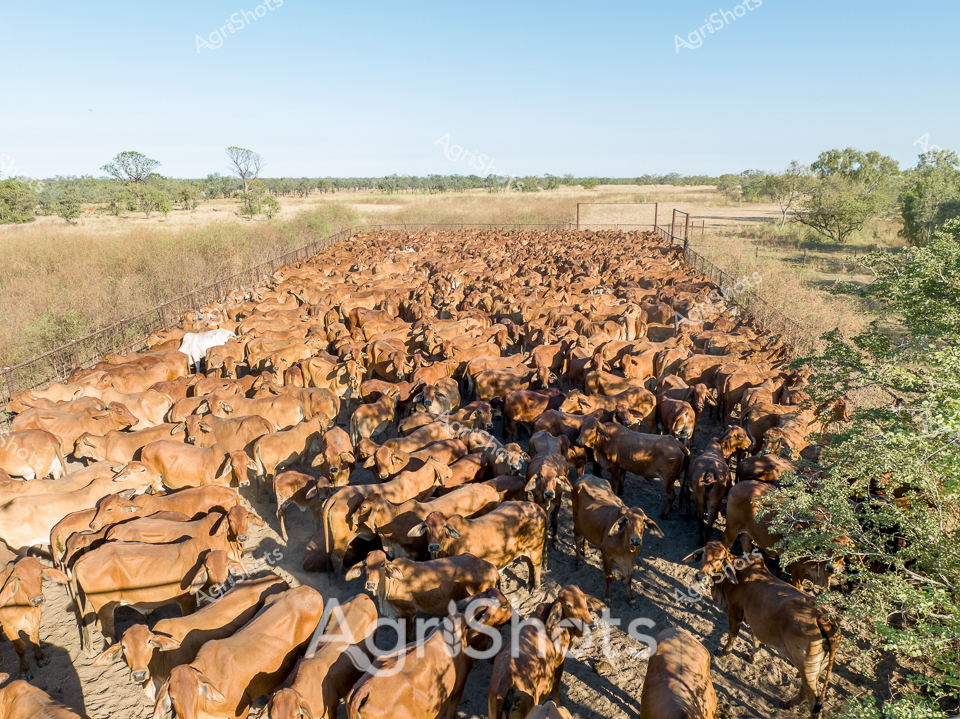
Burnished copper-hued Brahman cattle crowd the dusty yards of a remote Kimberley station, their muscular bodies tightly packed beneath the vast azure skies of Western Australia. The harsh midday sunlight casts sharp shadows across the parched landscape, highlighting the resilience of these heat-adapted cattle with their distinctive humps and loose skin. Fenced yards and scattered eucalyptus trees frame the scene, revealing the expansive pastoral landscape typical of northern Australia's cattle country. Each beast displays the characteristic rich reddish-brown coloration of the Brahman breed, their bodies a testament to generations of adaptation to the unforgiving tropical climate. The tight clustering suggests a recent muster, with the animals gathered efficiently within the carefully constructed metal fencing, representing the precision and hard work of station life. This image captures the raw essence of Australia's northern cattle industry - a world of space, heat, and unrelenting agricultural endeavour where livestock are the lifeblood of remote communities.
 Image
Dusty golden light bathes the rugged Kimberley landscape, revealing a quintessential Western Australian cattle station scene of strategic livestock management. A dense mob of rust-colored Brahman cattle congregates within carefully constructed timber yards, their distinctive humped shoulders and heat-resistant coats perfectly adapted to this unforgiving terrain. Surrounding paddocks stretch toward distant horizons, punctuated by scattered eucalyptus trees and sparse woodland, with strategic dirt tracks winding through the expansive property. The aerial perspective captures the intricate infrastructure of the station - processing areas, water points, and carefully designed cattle movement pathways revealing generations of pastoral expertise. Weathered fencing and functional structures speak to the resilient agricultural practices that transform this arid landscape into a productive beef production ecosystem. The early morning light casts long shadows, highlighting the textured landscape and suggesting the day's mustering activities are about to commence, with horses and working dogs likely waiting just out of frame to guide these magnificent cattle.
 Image
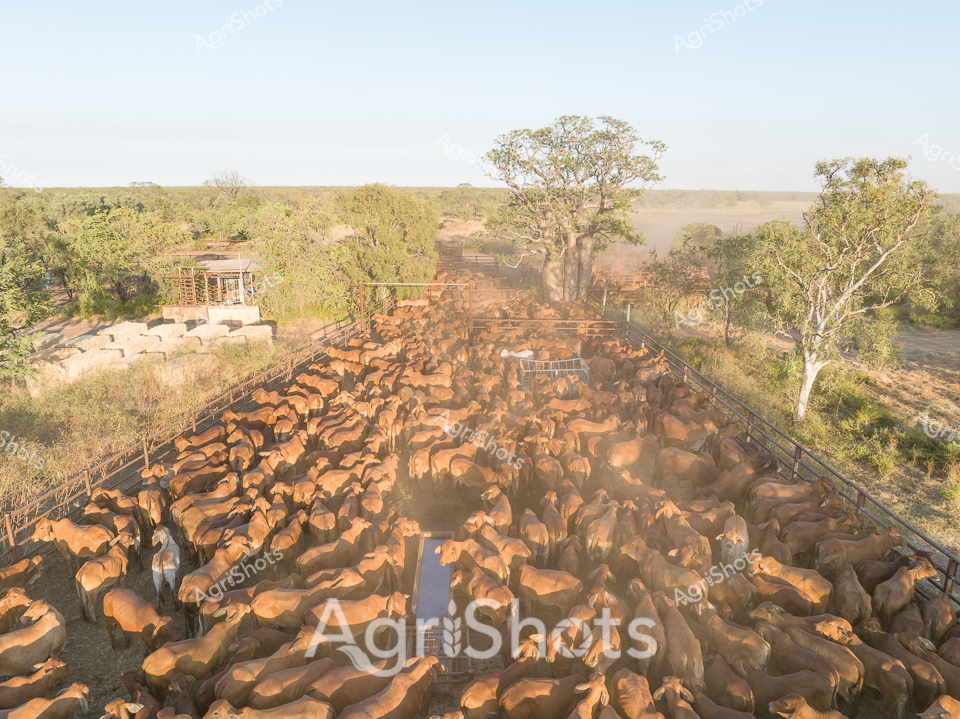
In the golden light of dawn, a vast cattle yard in Western Australia's rugged Kimberley region pulses with the energy of a fresh muster. Hundreds of muscular Brahman cattle, their burnished copper-red coats gleaming with dust and sweat, crowd tightly within the steel-railed holding pens. The landscape surrounding the yards is a textured canvas of pale grasses, scattered gum trees, and the soft ochre earth characteristic of this remote pastoral terrain. Stockmen have carefully herded these resilient cattle, bred for thriving in harsh tropical conditions, through the early morning coolness before the intense heat settles over the land. The dense mass of cattle creates a living, breathing landscape of muscle and hide, each animal pressed close to its companions, creating an almost geometric pattern of curved backs and angular fence lines. This scene captures the raw essence of Australian cattle station life - a delicate choreography of human skill, animal endurance, and the unforgiving beauty of the northern Australian wilderness.
 Image
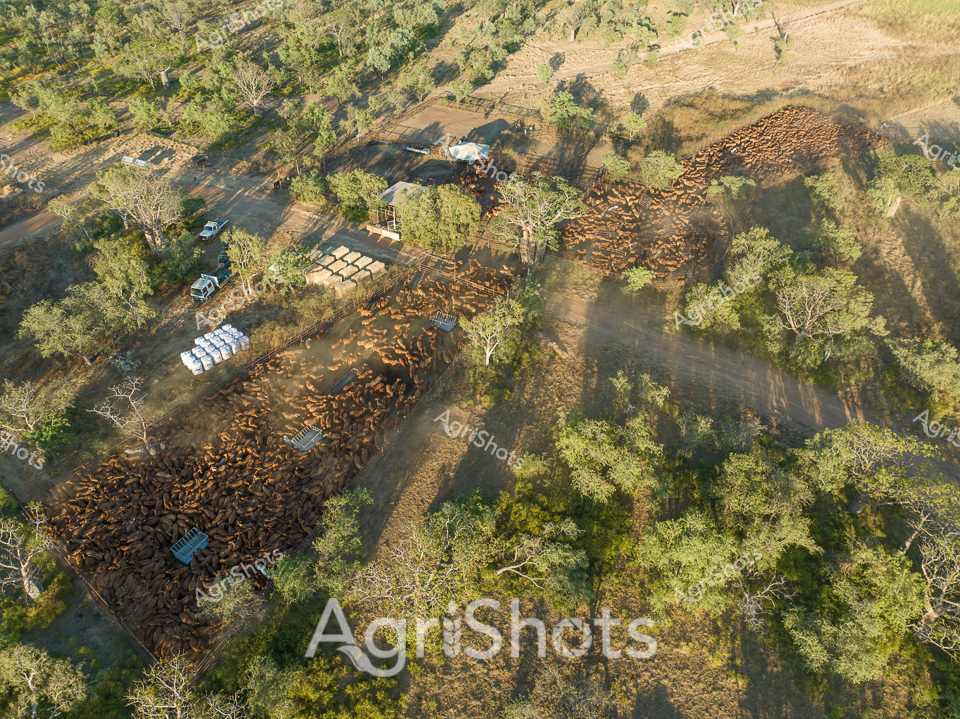
Brahman cattle crowd the dusty stockyards of a remote Kimberley station in Western Australia, their distinctive humped silhouettes creating a dense russet-brown carpet against the sun-drenched landscape. Aerial perspective reveals the intricate infrastructure of rural cattle management - white water tanks, weathered timber yards, and scattered gum trees punctuating the golden-brown terrain. Early morning light casts long shadows across the paddocks, highlighting the recent muster with vehicles strategically positioned around the yards. These hardy cattle, perfectly adapted to the harsh tropical environment, represent the resilience of Northern Australian pastoral operations, their tightly packed bodies testament to a successful mustering run. Vehicles and infrastructure blend seamlessly into the rugged bushland, showcasing the delicate balance between agricultural enterprise and untamed wilderness. The scene captures the essence of Western Australian cattle farming - a dynamic, challenging industry that transforms raw landscape into productive agricultural space.
 Image
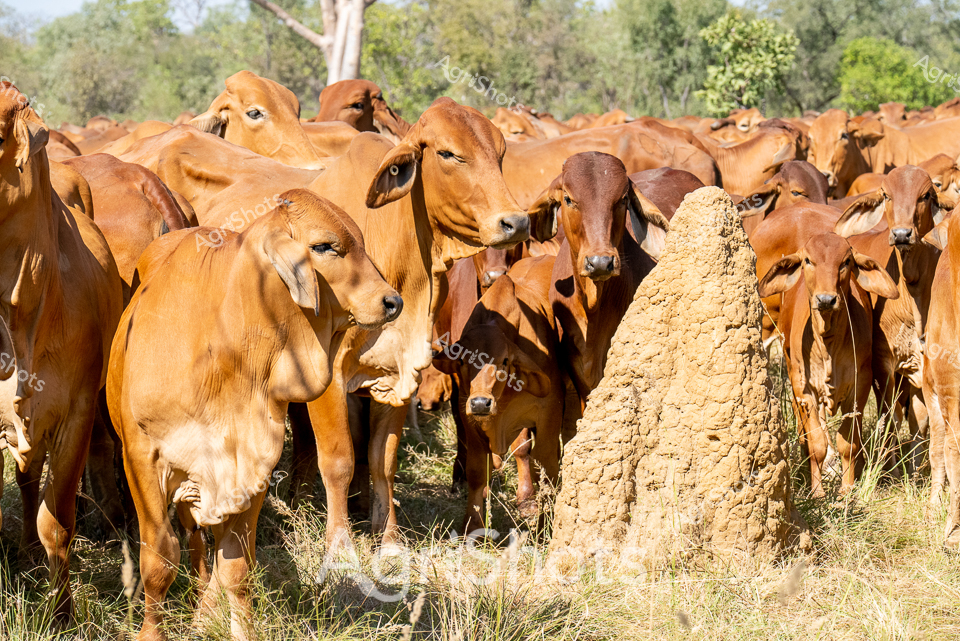
Burnished copper-gold Brahman cattle cluster tightly around a weathered termite mound in the sun-drenched Kimberley grasslands. These robust northern Australian beef cattle, with their distinctive loose skin and prominent humps, radiate heat-adaptive resilience typical of the breed. Soft afternoon light highlights their uniform tawny coats, creating a living landscape of muscular forms against sparse dry grasses and distant eucalyptus woodland. The close-packed herd suggests recent mustering, their alert expressions and compact formation revealing generations of careful station management. Each animal displays the breed's characteristic large ears and wrinkled dewlap - evolutionary adaptations enabling survival in harsh tropical environments. The towering ochre termite mound - a natural landmark of the landscape - provides textural contrast, its complex architectural form standing as a silent sentinel amidst the living tide of cattle.
 Image
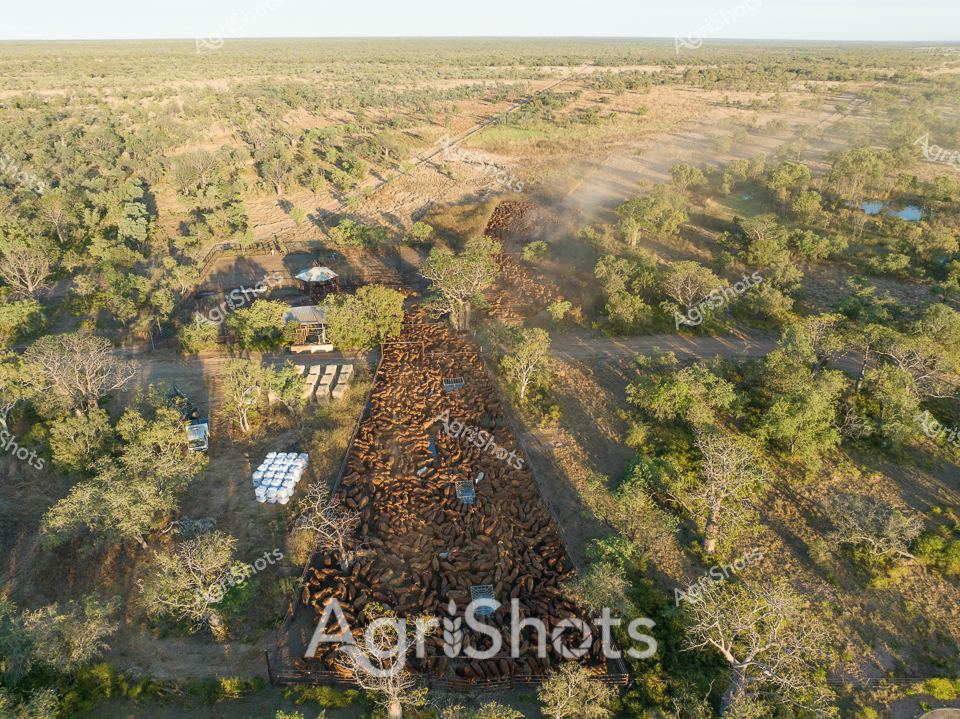
Brahman cattle crowd a dusty stockyard nestled in the expansive Kimberley landscape of Western Australia, their rich russet and sandy-colored hides creating a dense, living carpet against the golden-green savanna. Surrounded by weathered gum trees and sparse scrubland stretching to the distant horizon, the cattle bunch tightly in the yard, likely recently mustered from the sprawling station paddocks. Morning light casts long shadows across the scene, highlighting the intricate network of wooden fencing and the subtle undulations of the rugged terrain. A few supportive structures - including a classic station building and some white supply containers - punctuate the edges of the yard, testament to the robust infrastructure required for cattle management in this remote and challenging environment. The image captures the essence of northern Australian pastoral life: resilient livestock, endless landscapes, and the quiet industry of cattle station operations under the vast, open sky.
 Image
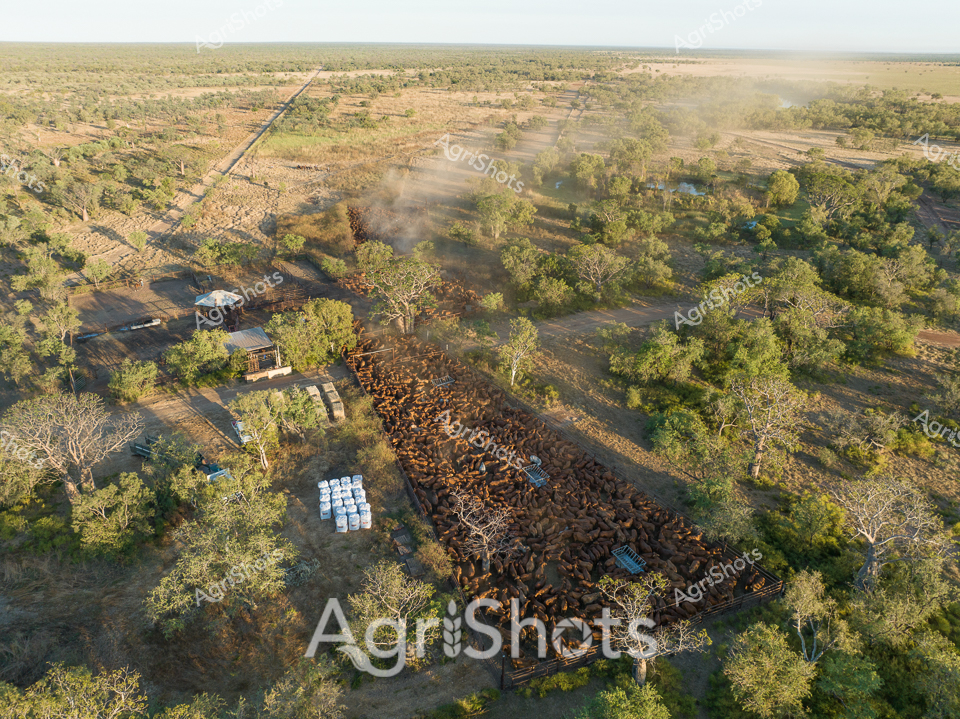
Dusty golden light bathes a rugged Kimberley cattle station, where a dense herd of distinctive Brahman cattle clusters in a yard surrounded by sparse eucalyptus woodland. The aerial perspective reveals the expansive landscape's subtle gradations of green and brown, with weathered fencing and stockyard infrastructure nestled among wind-sculpted trees. A tight mass of rust-red and cream-colored cattle, their characteristic humps and loose skin adapted to harsh tropical conditions, generates a soft cloud of fine dust that hangs in the morning air. White feed bags and rustic farm infrastructure hint at the complex logistics of cattle management in this remote Western Australian landscape. The scene captures the raw essence of northern Australian pastoral life - a delicate choreography of human intervention and natural environment, where generations of agricultural knowledge meet the challenging rhythms of the outback. Soft shadows and warm light suggest early morning, a critical time for mustering and managing livestock in this unforgiving but beautiful terrain.
 Image
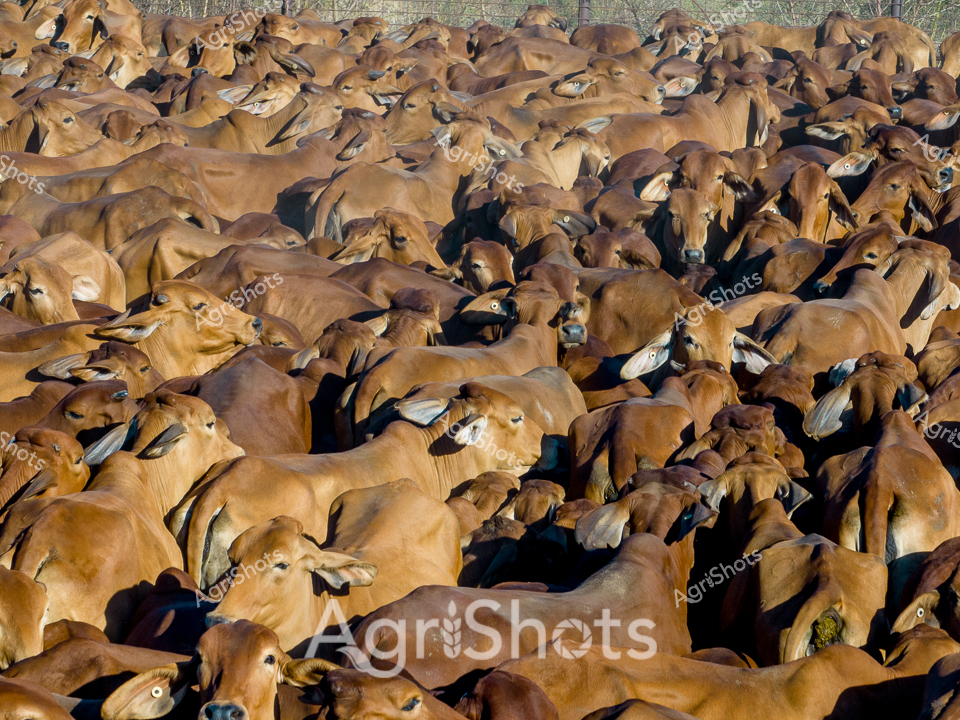
A thundering sea of burnished copper-gold Brahman cattle crowd together in a tight, restless mass at a Western Australian cattle station in the rugged Kimberley region. These robust, heat-tolerant cattle with their distinctive large humps and loose skin are perfectly adapted to the harsh tropical landscape, their uniform golden-tan coats gleaming in the intense sunlight. Tightly packed and strategically gathered in a holding yard, these animals represent the resilience and scale of Australia's extensive cattle farming operations, where herds can number in the thousands across sprawling pastoral stations. Sharp shadows create dramatic contrast between the animals, highlighting their muscular forms and the intricate textures of their skin and subtle variations in their coloration. The dense congregation suggests a moment during mustering - a critical practice of gathering and managing livestock across the vast, challenging terrain of northern Australia. This image captures the raw energy, economic significance, and sheer biological power of the beef cattle industry in one of the country's most remote and unforgiving agricultural landscapes.
 Image
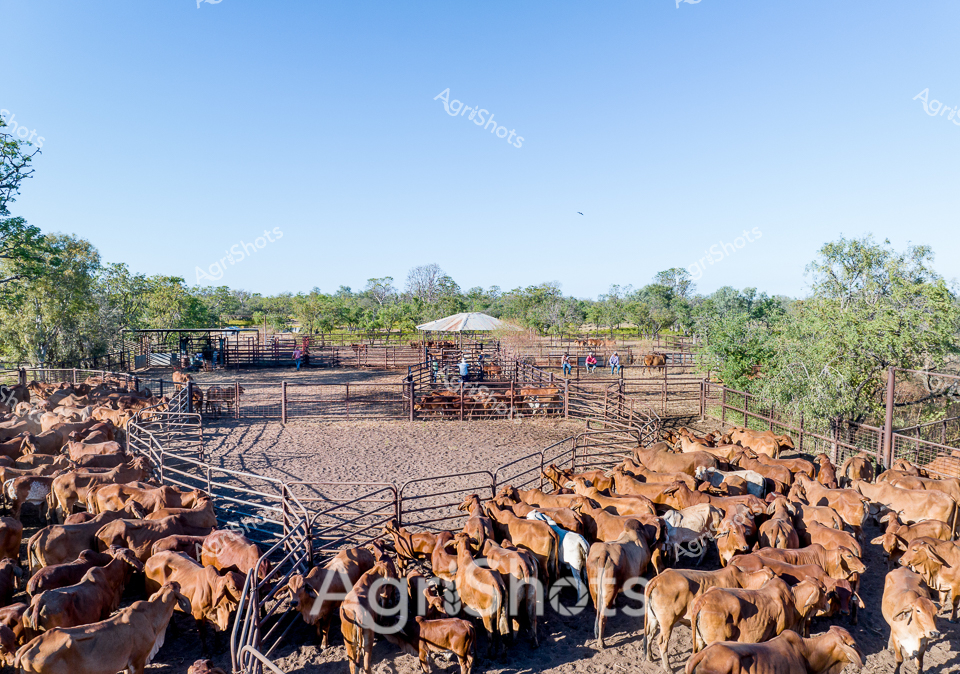
Under the vast, clear blue skies of Western Australia's Kimberley region, a bustling cattle yard pulses with the energy of mustering season. Burnished reddish-brown Brahman cattle crowd the sandy yards, their distinctive humped shoulders and loose skin reflecting generations of adaptation to harsh tropical conditions. Sturdy steel panel fences create a geometric landscape of corrals, with a central working area sheltered by a practical shade umbrella where station workers are positioned. The surrounding landscape reveals a classic northern Australian pastoral setting - sparse eucalyptus trees and scrubland stretching to the horizon, capturing the rugged essence of remote cattle station operations. A handful of working horses stand quietly within the yards, their presence a testament to the enduring partnership between stockmen and their equine companions in managing these extensive herds. The scene breathes with the methodical rhythm of agricultural work - precise, purposeful, and deeply connected to the land, showcasing the sophisticated livestock management techniques of modern Australian cattle stations.
 Image
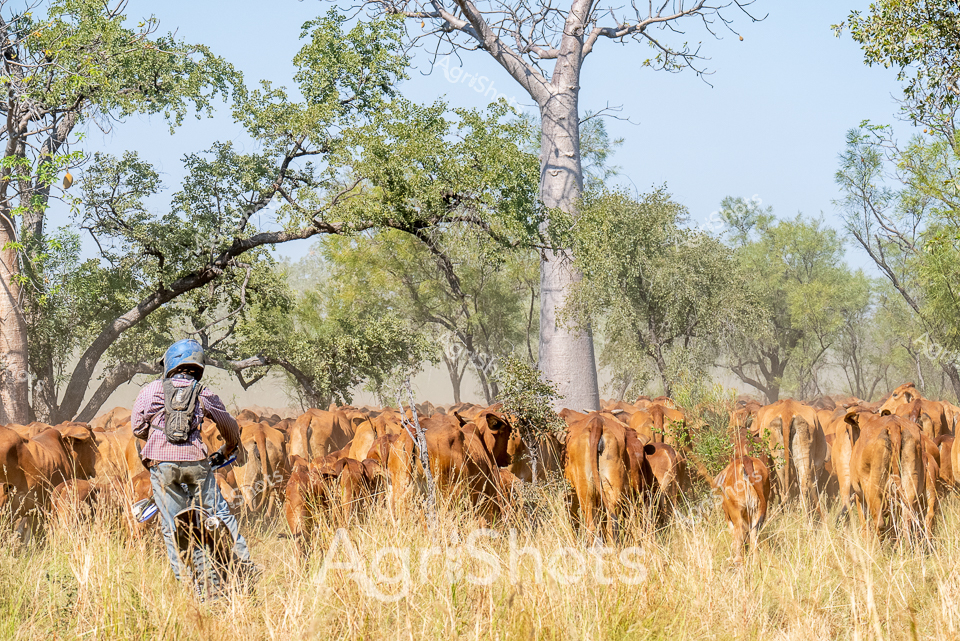
Dusty golden grasslands stretch beneath a scattering of weathered boab and eucalyptus trees in Western Australia's rugged Kimberley region. A cattle musterer navigates through a dense herd of rusty-red Brahman cattle, his motorbike a critical tool for managing the livestock across this expansive pastoral landscape. Dressed in practical station wear - a checked shirt, wide-brimmed hat, and robust work gear - the stockman guides the herd with practiced skill through the dry season's sun-bleached terrain. The muscular Brahman cattle, renowned for their heat tolerance and adaptability, bunch tightly together, their sleek reddish-brown coats gleaming against the muted earth tones of the surrounding bushland. Wisps of dust rise from the ground, creating a hazy atmosphere that captures the challenging environmental conditions of northern Australian cattle farming. This image encapsulates the resilience and expertise required in managing livestock across Australia's demanding tropical rangelands, where traditional mustering techniques blend with modern agricultural technologies.
 Image
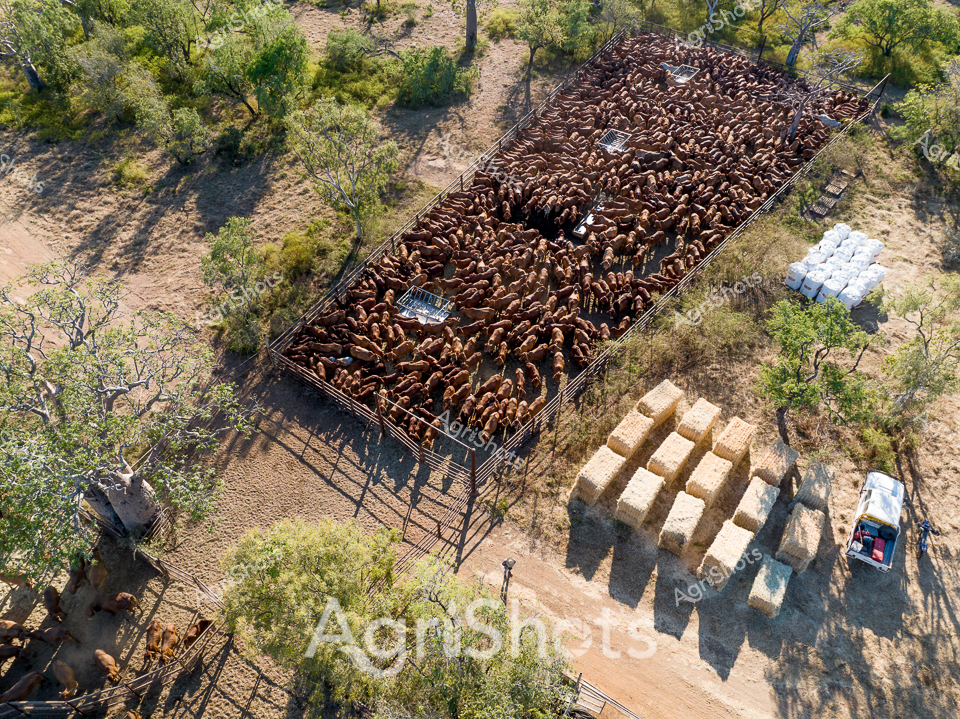
Brahman cattle crowd a dusty rectangular stockyard under the dappled shade of boab trees in Western Australia's rugged Kimberley region. The aerial perspective reveals a dense herd of reddish-brown cattle tightly packed within sturdy metal fencing, their muscular bodies casting intricate shadows across the parched earth. Hay bales and white supply bags sit neatly stacked nearby, suggesting careful livestock management in this remote pastoral landscape. The scene captures the harsh beauty of Australian cattle station operations, where precise infrastructure and strategic livestock handling are critical to survival in an unforgiving environment. Scattered gum trees and weathered ground speak to the challenging conditions of northern Western Australia, where pastoral traditions and agricultural resilience converge. The compact yard represents a moment of controlled stillness in the dynamic process of cattle mustering, highlighting the skill and infrastructure required to manage livestock in one of Australia's most demanding agricultural frontiers.
 Image
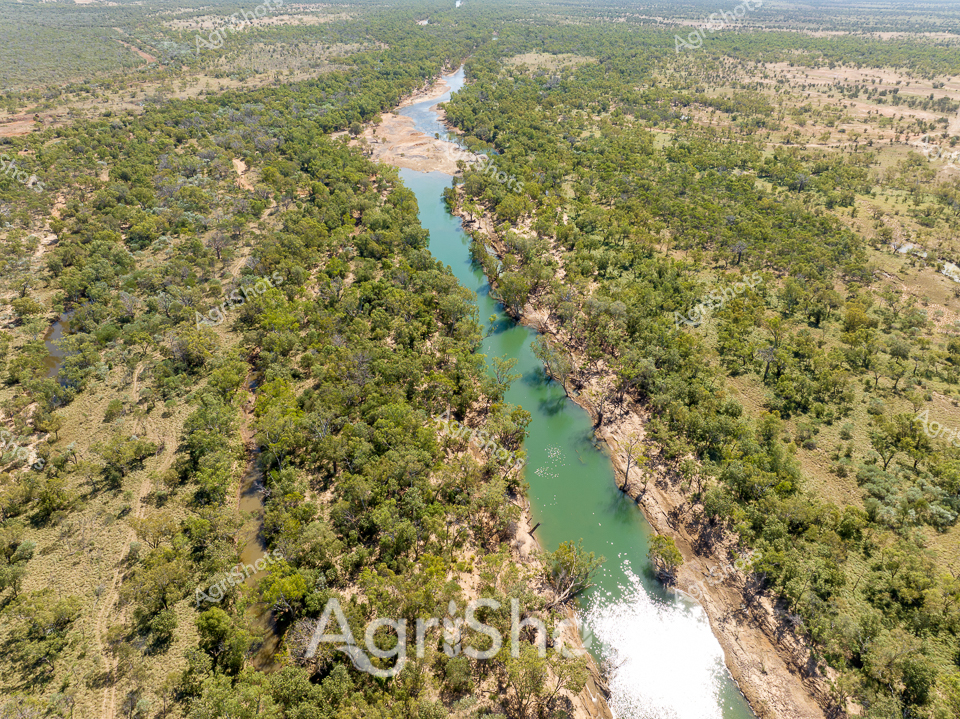
Serpentine River cuts a vibrant turquoise pathway through the rugged Kimberley landscape, revealing the raw beauty of Western Australia's remote pastoral estates. Dense eucalyptus woodland flanks the waterway, creating a rich emerald and olive tapestry that speaks to the resilient ecosystem of the region. The river's sinuous form meanders through rocky banks, its jade-green waters reflecting the harsh sunlight of the dry season, where sparse grasslands transition into woodland territories. Aerial perspective captures the expansive scale of the station country, highlighting the intricate relationship between water and land in this unforgiving agricultural frontier. Weathered rocky outcrops and scattered tree lines demonstrate the remarkable adaptability of vegetation in this challenging environment, where water is both a precious resource and a dynamic sculptural element of the landscape. The image embodies the quintessential Australian pastoral narrative - a testament to the enduring connection between land, water, and agricultural stewardship.
 Image
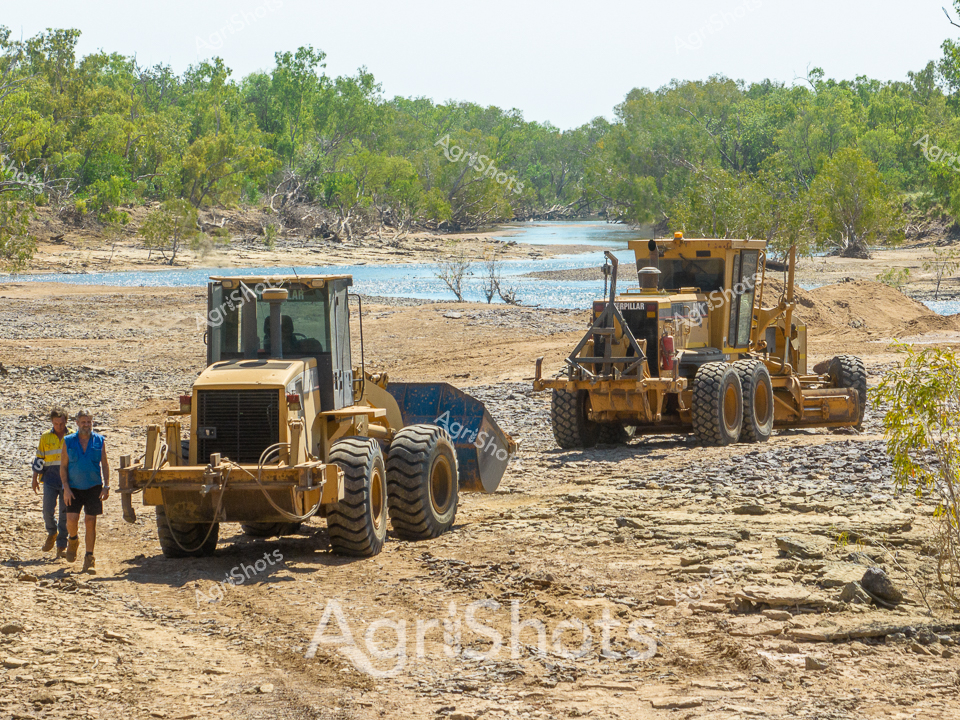
Road Maintenance on the Station Riverbed Caterpillar motor graders gleam golden-yellow against the dusty riverbed, their massive wheels pressing into weathered rock and sand. Two workers stand alongside the heavy machinery, their blue work shirts a stark contrast to the arid landscape of sparse gum trees and rocky terrain in Western Australia. The water channel meanders in the background, a thin blue ribbon cutting through the dry landscape, suggesting this is likely a seasonal river crossing on a vast pastoral station. Large earth-moving equipment suggests critical infrastructure maintenance, with the graders carefully sculpting and leveling the riverbed to maintain critical access routes across the property. The scene captures the harsh beauty of remote Australian agricultural landscapes - where sophisticated machinery and human skill combine to manage challenging environments. Rocks, sand, and sparse vegetation create a textural palette of browns, greys, and muted greens, highlighting the resilience required in agricultural operations across Western Australia's challenging terrain.
 Image
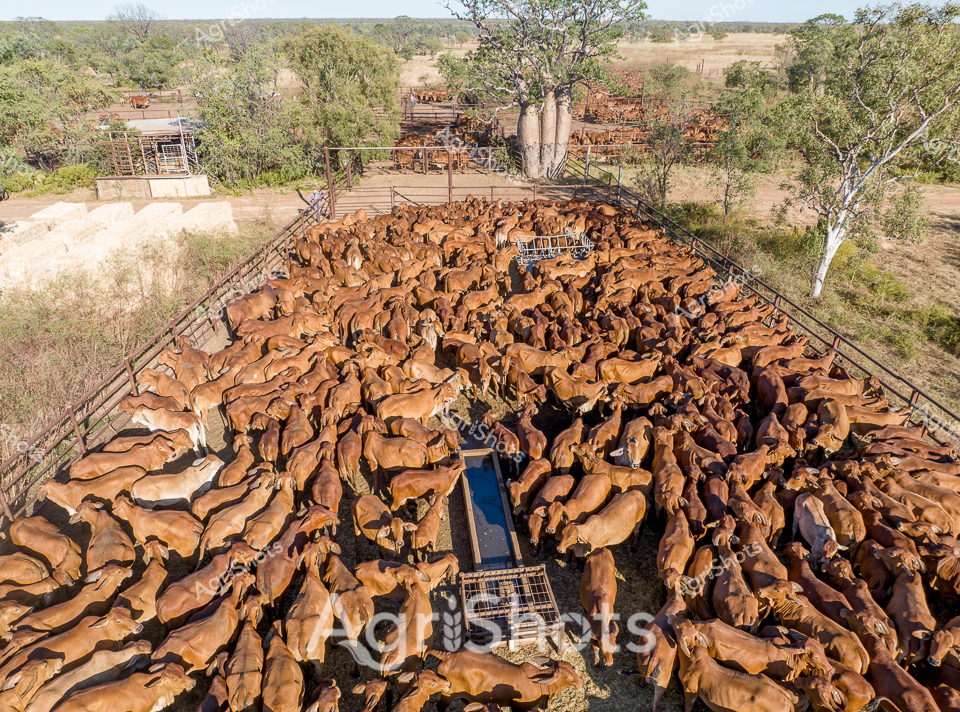
Brahman cattle pack tightly into rustic steel yard pens, their burnished copper-red coats creating a dense, undulating landscape of muscular livestock against the sun-bleached pastoral backdrop of Western Australia's Kimberley region. The aerial perspective reveals the intricate choreography of station management, with strategically placed water troughs and yard infrastructure designed to efficiently handle large herds in this rugged agricultural terrain. Sparse gum trees and dusty paddocks frame the scene, capturing the unforgiving yet productive environment of a working cattle station where generations of pastoral expertise converge with robust livestock breeding. The herd - predominantly Brahman cattle known for their heat tolerance and distinctive humped shoulders - demonstrates the resilience required to thrive in this challenging northern Australian landscape. Tight clustering suggests recent mustering, with the animals closely contained within robust metal yards that speak to the engineering and planning essential to large-scale cattle production. Warm earth tones dominate the image - rich terracotta of the cattle, pale ochre of the ground, muted greens of sparse vegetation - creating a quintessential Australian agricultural tableau that epitomizes the nation's cattle farming heritage.
 Image
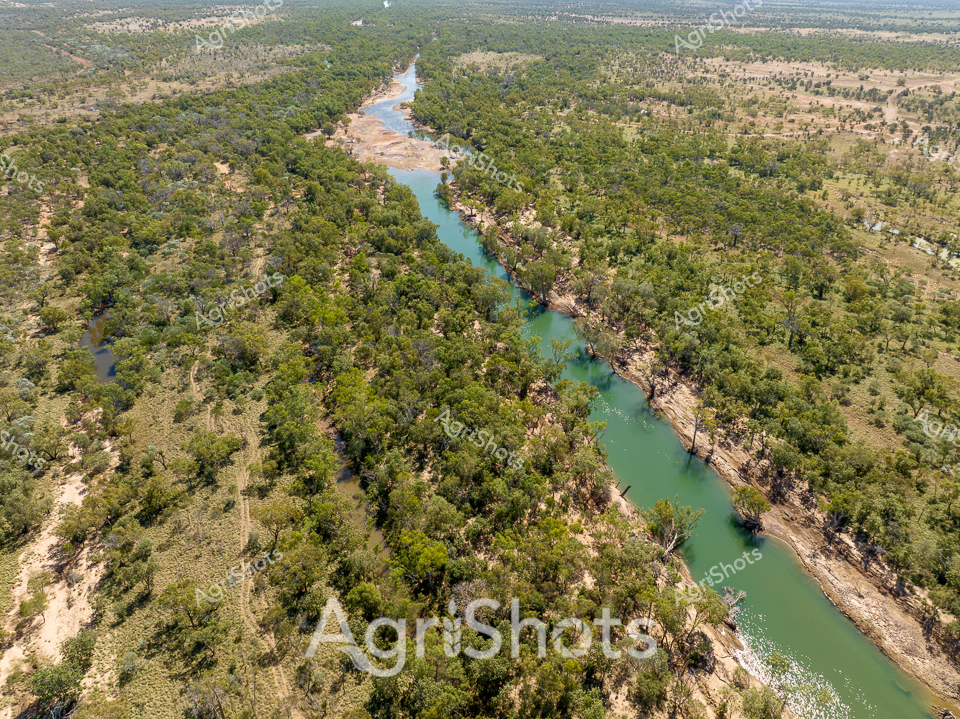
Meandering through the rugged landscape of Western Australia, this jade-green river cuts a sinuous path between dense eucalyptus woodlands and sun-bleached grasslands. The aerial view reveals the complex ecosystem of a remote cattle station, where water is the lifeblood of the terrain. Ancient river red gums line the banks, their gnarled branches reaching out over the water, casting shadows on the stream's surface and providing critical shade and habitat. The surrounding landscape tells a story of resilience - patches of sparse vegetation interspersed with clusters of trees, showcasing the delicate balance of flora in this arid environment. The river's turquoise waters contrast sharply with the ochre and olive tones of the land, creating a stunning mosaic that speaks to the harsh beauty of Australia's interior. This landscape embodies the essence of pastoral Australia - a testament to the endurance of life in one of the world's most challenging environments.
 Image
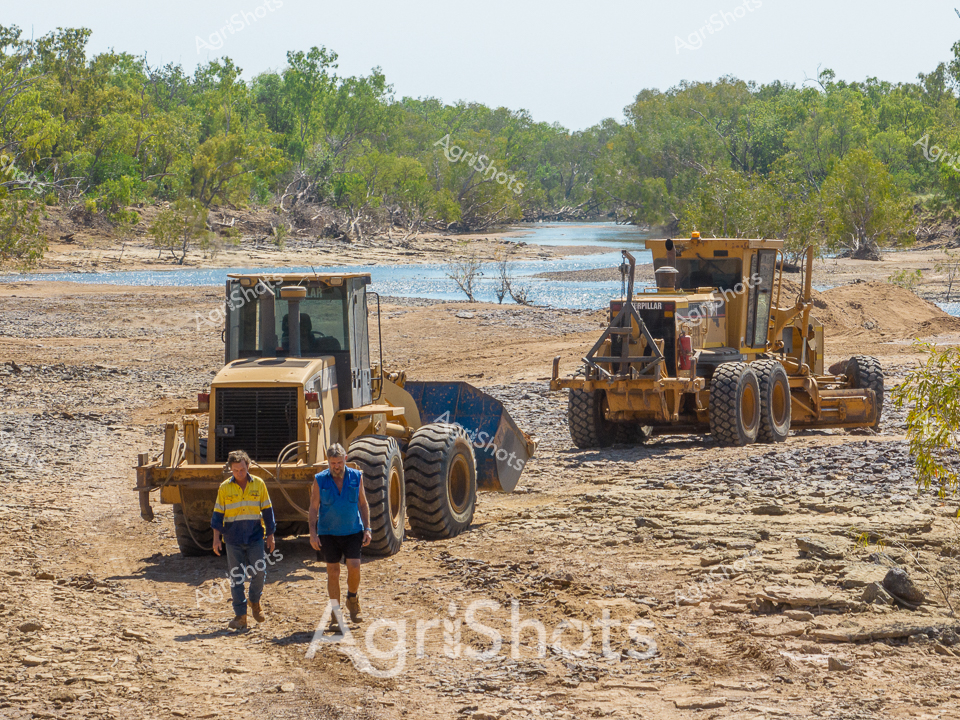
Dusty earthmovers rest beside a serpentine river cutting through the arid Kimberley landscape, where sparse eucalyptus and acacia trees punctuate the rocky terrain. Two workers in high-visibility yellow and blue workwear stand beside heavy Caterpillar graders, surveying the landscape of a remote Western Australian pastoral station. The golden-brown earth reveals a challenging work environment, with water-carved channels and scattered stones telling a story of seasonal extremes. Massive yellow machinery - a motor grader and loader - represent the sophisticated engineering required to manage infrastructure in this unforgiving environment. Worn tire tracks and disturbed earth suggest ongoing road maintenance or infrastructure development critical to supporting agricultural operations in this isolated region. The scene captures the resilience of human enterprise against a backdrop of raw, untamed Australian wilderness, where every mechanical intervention is a testament to survival and progress.
 Image
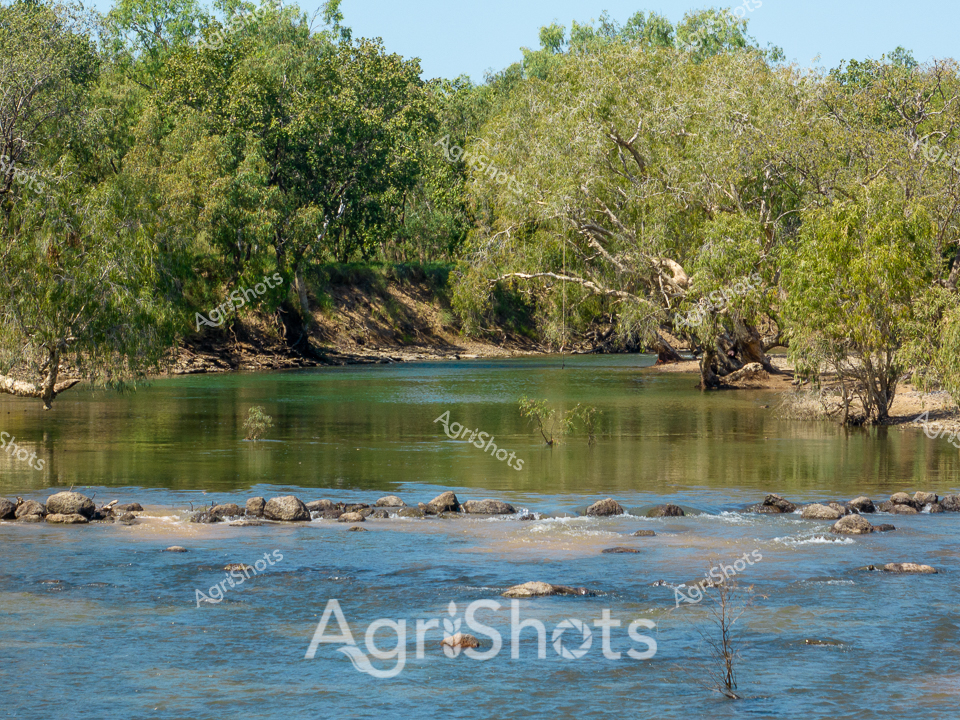
Flowing through the rugged pastoral landscape of Western Australia, this tranquil river scene captures the essence of a remote station environment. Rocky rapids in the foreground create a dynamic blue-white water texture, contrasting with the deep green and olive tones of mature eucalyptus trees lining the riverbanks. The calm mid-section of the waterway reflects a rich emerald green, revealing the subtle contours of the landscape and the weathered, gnarled tree roots embedded in the eroded earth banks. Sunlight filters through the canopy, highlighting the intricate textures of bark and foliage, and casting gentle shadows across the water's surface. This image embodies the raw, untamed beauty of Australia's inland waterways - a critical lifeline for agricultural operations across vast, challenging terrains. The composition speaks to the resilience of both the natural environment and the pastoral communities that depend on these precious water resources for livestock, farming, and survival.
 Image
Kimberley River Crossing: A Tranquil Pastoral Scene Emerald waters of a remote Kimberley river meander between weathered rocky banks, framed by silvery-green eucalyptus and river gum trees. The landscape breathes with the quiet resilience of Western Australian pastoral country, where water is liquid gold and every stream tells a story of survival. Smooth river stones break the current's surface, creating gentle rapids that reflect the crystalline blue sky overhead. Gnarled tree roots clutch the eroded banks, testament to countless dry seasons and fleeting wet season floods that shape this unforgiving landscape. The scene captures the raw beauty of a working station waterway - a critical lifeline for cattle, wildlife, and generations of pastoral workers who have navigated these ancient waterways. Rich olive and blue-green tones create a serene tableau that speaks to the enduring spirit of Australian rural landscapes.
 Image
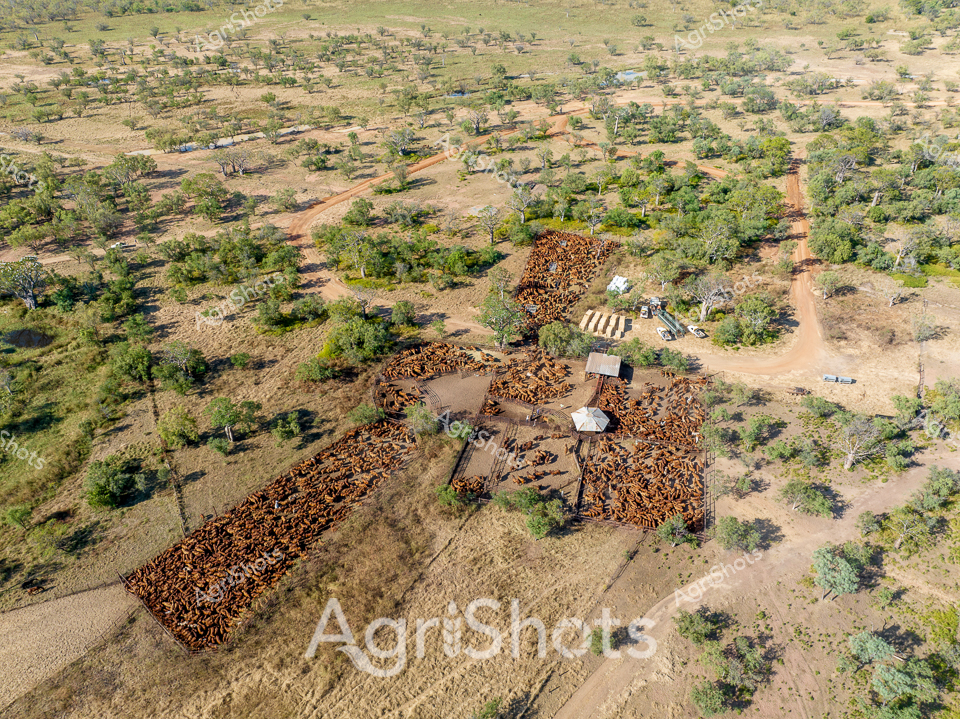
Aerial view of a classic Kimberley cattle station, revealing the intricate choreography of pastoral life in Western Australia's rugged northwest. A dense herd of distinctive red Brahman cattle fills carefully constructed yard sections, their rusty-colored bodies creating a living mosaic against the sparse, green-dotted landscape. Dusty dirt tracks wind between scattered eucalyptus trees, connecting the central livestock complex with surrounding paddocks, showcasing the expansive scale of station operations. The cattle yards feature multiple holding pens and a central processing area, likely used for mustering, sorting, and preparing livestock for market or station management. Surrounding vegetation tells the story of a semi-arid environment - resilient trees and scrub scattered across ochre-toned ground, indicating the dry season typical of the region. This aerial perspective captures the essence of Australian cattle farming: a testament to human resilience and agricultural expertise in one of the world's most challenging yet productive landscapes.
 Image
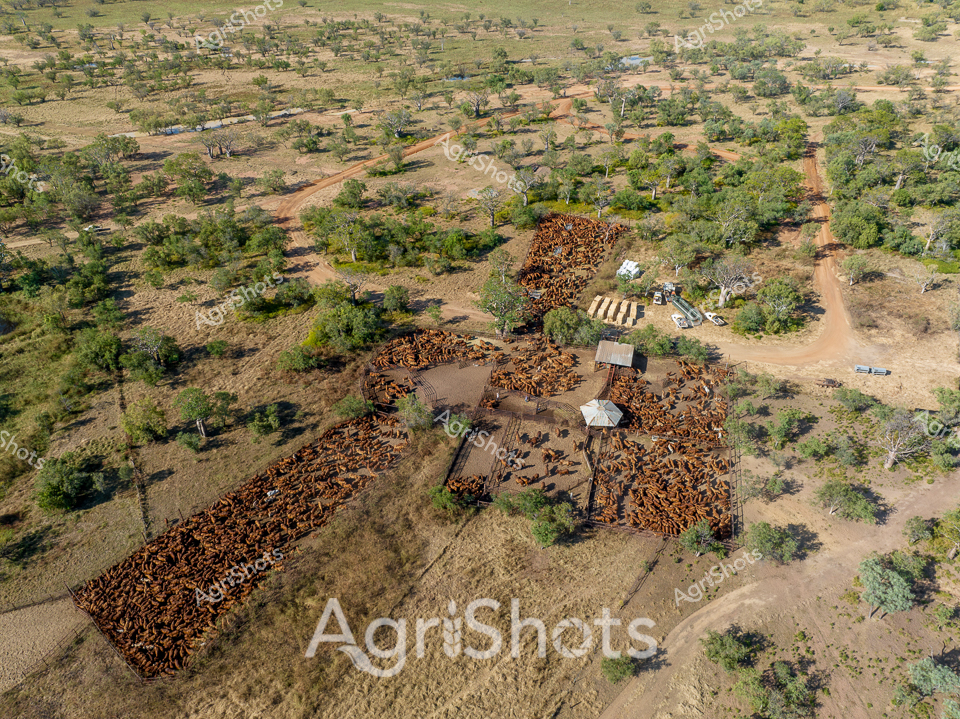
Aerial panorama of a bustling cattle station in Western Australia's rugged Kimberley region, where a vast herd of distinctive rust-red Brahman cattle congregates in carefully designed yards. The landscape is a patchwork of sparse eucalyptus woodland and golden grasslands, punctuated by dusty dirt tracks and strategically positioned infrastructure. Hundreds of heat-tolerant cattle bunch tightly, their compact bodies creating a dense russet carpet against the weathered earth, while stockmen's vehicles and a central processing shed indicate an active mustering operation. The harsh sunlight casts crisp shadows across the terrain, highlighting the intricate network of fences, holding pens, and working areas that enable efficient livestock management in this challenging agricultural environment. This scene captures the essence of northern Australian pastoral life - a delicate choreography of human skill, animal husbandry, and unforgiving landscape that defines beef production in one of the world's most demanding agricultural regions.
 Image
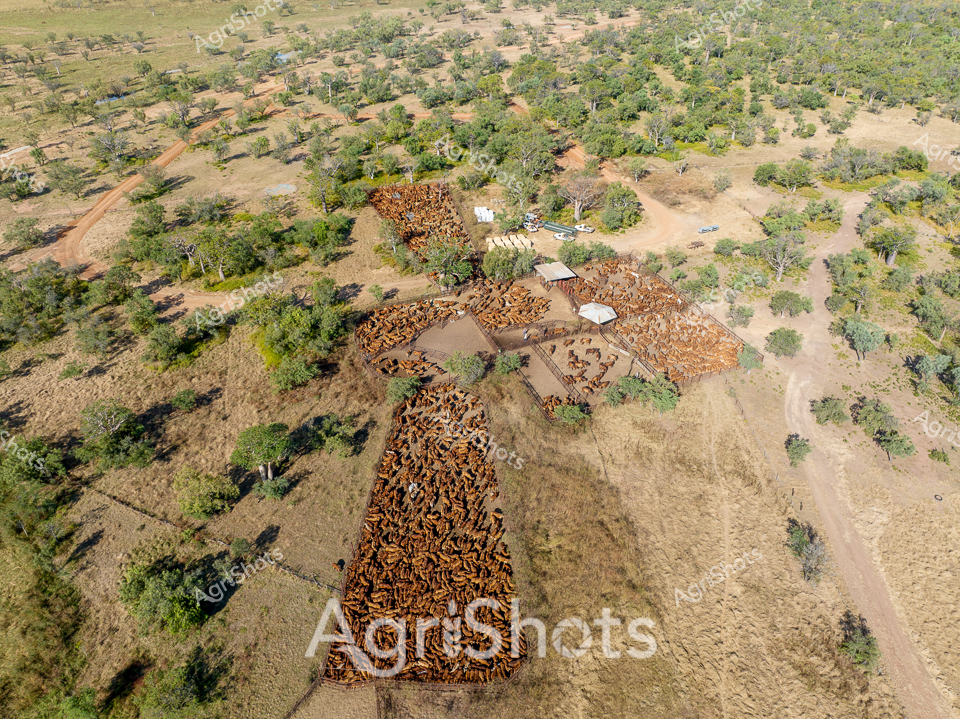
Brahman cattle crowd together in a distinctive V-shaped formation within expansive cattle yards, nestled in the rugged Kimberley landscape of Western Australia. The aerial perspective reveals a dense mass of rusty-brown cattle, their distinctive humped silhouettes creating a striking contrast against the muted green and ochre tones of the surrounding woodland and grassland. Sturdy metal yard infrastructure and scattered outbuildings punctuate the scene, suggesting an active pastoral station where cattle mustering is a critical seasonal activity. Sparse eucalyptus trees cast long shadows across the dry earth, indicating the harsh midday light of the Australian north. The image captures the disciplined choreography of cattle handling, with the animals carefully channeled through strategic yard design - a testament to generations of agricultural expertise in managing livestock in challenging environmental conditions. This landscape speaks to the resilience of both the cattle and the farmers who work the challenging terrain of Western Australia's remote pastoral regions.
 Image
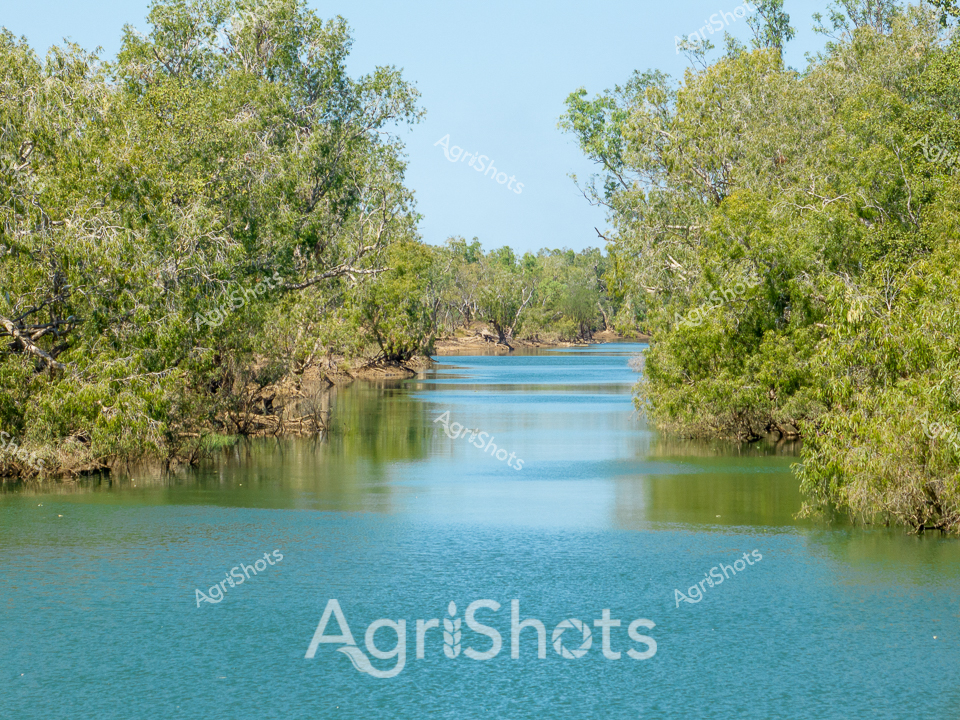
Meandering through the lush riverine landscape of Western Australia, this serene waterway captures the untamed beauty of a remote station environment. Emerald and sage-hued eucalyptus trees frame the tranquil blue-green waters, their gnarled branches reaching out over rocky banks and creating a natural corridor. The river reflects a pristine palette of azure and turquoise, suggesting the rich water resources that sustain agricultural life in this rugged terrain. Soft light indicates an early morning or late afternoon moment, when the landscape is bathed in gentle illumination that highlights the intricate textures of bark and water surface. The scene embodies the quiet resilience of Australian pastoral landscapes - a delicate ecosystem where water represents life and sustenance for vast station properties. This image speaks to the fundamental connection between land, water, and agricultural survival in Western Australia's expansive interior.
 Image
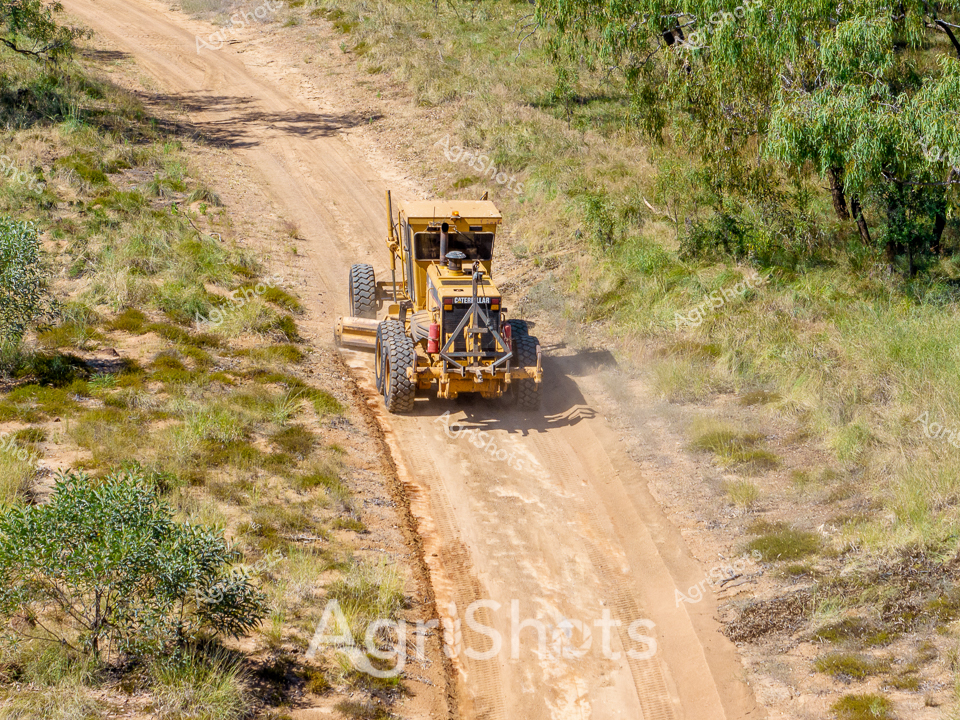
A Caterpillar motor grader sculpts the dusty rural track through the sun-drenched West Australian landscape, its brilliant yellow chassis gleaming against the muted greens and browns of sparse eucalyptus woodland. The heavy machinery methodically grades and levels the unsealed station road, kicking up a fine cloud of ochre-toned earth as its massive wheels systematically smooth the terrain. Rugged grasslands and scattered scrub stretch out on either side, typical of the expansive pastoral regions of Western Australia's interior, where such precision road maintenance is critical for station access and connectivity. The mid-morning light casts sharp shadows, highlighting the grader's mechanical precision against the organic, textured landscape of scattered trees and windswept grasses. This scene captures the essential infrastructure work that supports remote agricultural communities, where robust equipment and skilled operators transform challenging terrain into functional transport routes. The grader represents the backbone of rural infrastructure - powerful, purposeful, and perfectly adapted to the harsh but beautiful Australian outback environment.