Browse the collection
 Image
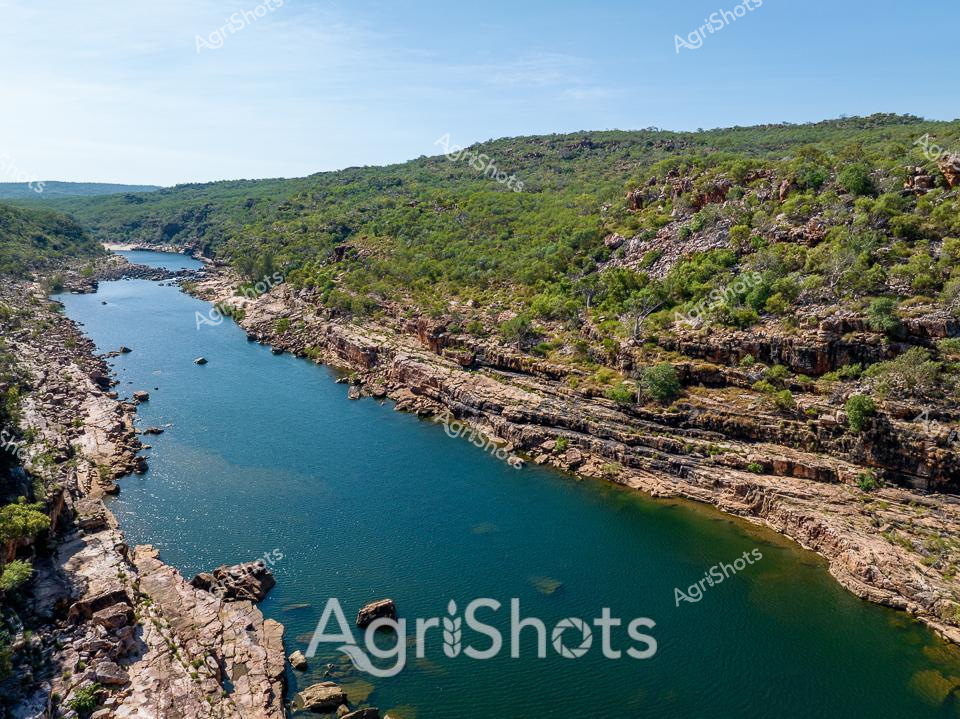
Serpentine River winds through the rugged Kimberley landscape, revealing a breathtaking tableau of ancient geological formations and lush native vegetation. Deep blue waters carve a sinuous path between steep rocky escarpments, their layered sedimentary walls telling millennia of geological history. Weathered stone terraces rise dramatically from the river's edge, creating a complex topography of rocky outcrops and sparse eucalypt woodland. The landscape speaks of resilience - hardy vegetation clings to rocky surfaces, demonstrating the extraordinary adaptability of Western Australian ecosystems. Sunlight illuminates the scene with crystalline clarity, casting sharp shadows and highlighting the contrasting textures of stone and greenery. This vista epitomizes the raw, untamed beauty of Australia's northwestern frontier, a landscape that has shaped pastoral and agricultural endeavors for generations.
 Image
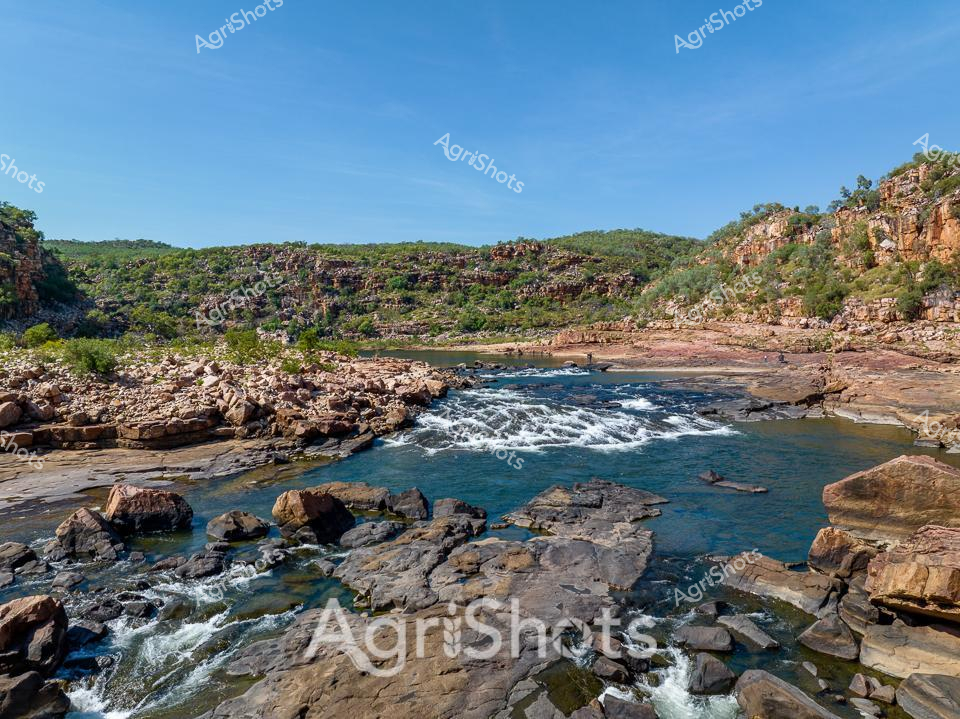
Katherine River carves a dramatic path through the rugged Kimberley landscape, its blue waters threading between weathered ochre-colored rock formations and boulder-strewn rapids. Ancient stone escarpments rise from the riverbanks, their layered surfaces telling geological stories of millennia, while sparse green vegetation clings tenaciously to rocky outcrops. Turbulent white water cascades over granite boulders, creating a dynamic interplay of movement and stillness in this quintessential northern Australian wilderness scene. The cloudless azure sky suggests a classic dry season day, where harsh sunlight illuminates the raw, uncompromising beauty of Western Australia's remote interior. This landscape embodies the untamed spirit of pastoral country - a challenging yet magnificent environment where pastoral stations and indigenous ecological knowledge have coexisted for generations. The river's flow represents both the lifeline and the enduring resilience of Australia's northern landscapes, where water is a precious and transformative element in an otherwise arid terrain.
 Image
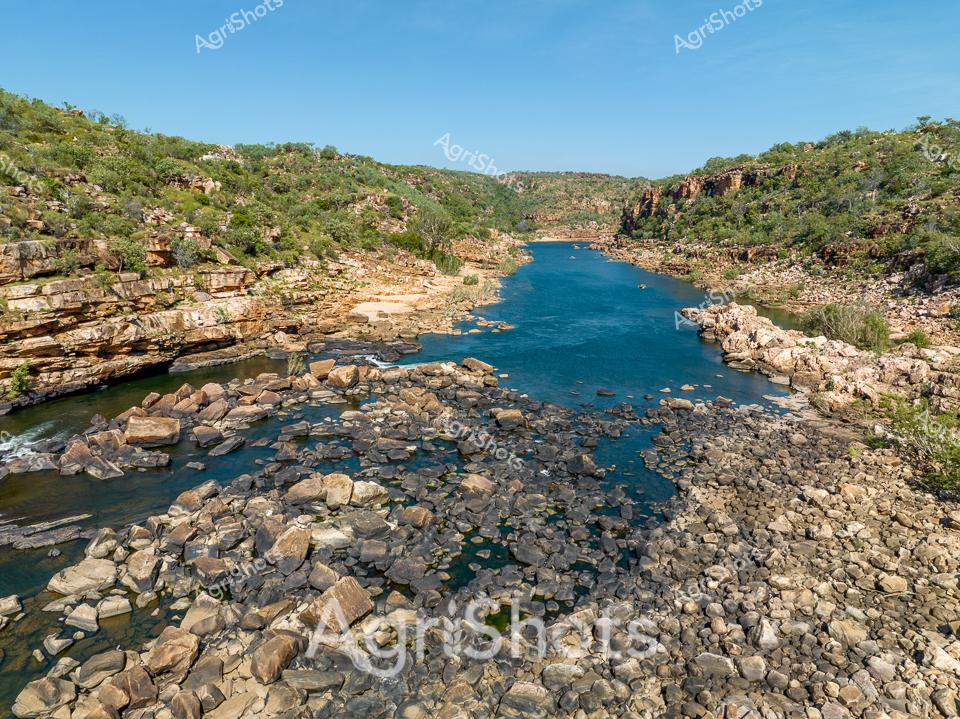
The ancient Katherine Gorge in the Northern Territory carves a stunning path through rugged sandstone escarpments, its deep blue waters threading between massive rocky outcrops and sun-bleached boulders. Rich ochre-colored rock formations create dramatic terraced layers along the riverbanks, punctuated by sparse vegetation clinging tenaciously to the rocky terrain. The river's brilliant azure waters contrast sharply with the warm earth tones of the surrounding landscape, revealing the stark beauty of Australia's remote wilderness regions. Weathered stones of various sizes and shapes populate the riverbed, creating a textured foreground that speaks to millennia of geological transformation. Pristine blue skies stretch overhead, highlighting the incredible geological formations and the raw, untamed character of this remarkable landscape. This vista captures the essence of Australia's harsh yet breathtaking interior - a landscape of endurance, ancient geological processes, and profound natural beauty that defines the continent's most iconic wilderness regions.
 Image
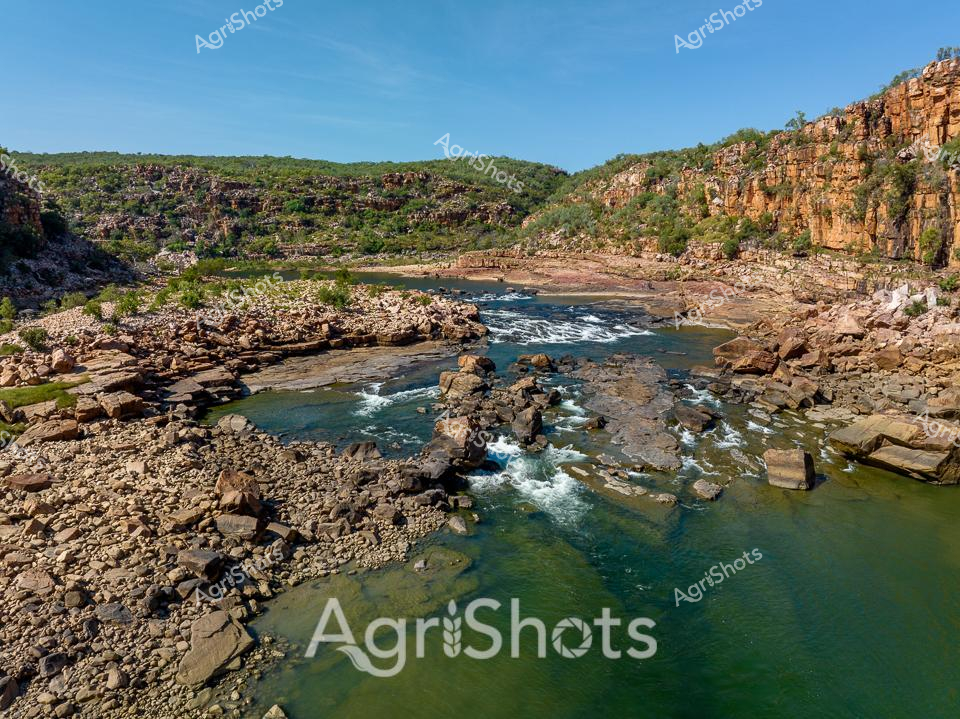
Rugged beauty emerges in this striking landscape of the Katherine River in Western Australia's remote northern territory. Massive ochre-colored rock formations frame a dynamic waterway, where turbulent rapids cascade between weathered stone boulders, creating intricate water patterns in emerald and sapphire hues. The rocky riverbed tells a story of geological endurance, with scattered stones and smooth river-worn surfaces revealing centuries of water's persistent movement. Sparse vegetation clings to the rocky cliff faces, highlighting the resilient ecosystem of this arid landscape, with green scrubland contrasting against the warm terracotta rock walls. Brilliant azure skies stretch overhead, suggesting a clear, sun-drenched day typical of the region's dry season. This image captures the raw, untamed essence of Australia's northwestern frontier - a landscape of profound geological complexity and stunning natural drama that defines the continent's most remote agricultural regions.
 Image
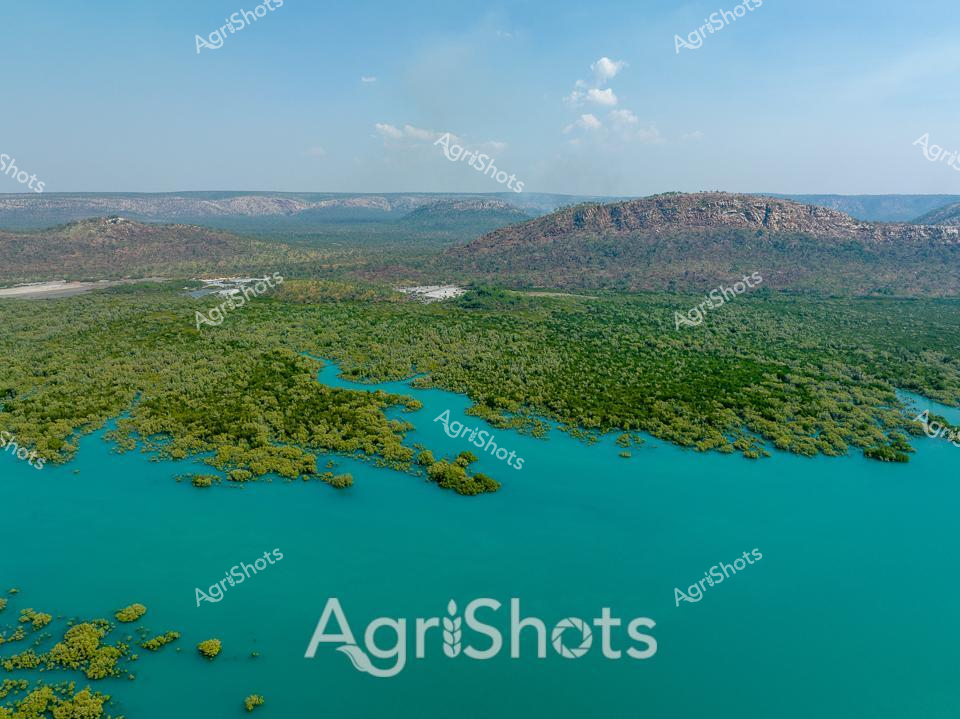
Verdant mangrove forests embrace a stunning turquoise waterway, framed by rugged rocky outcrops and undulating landscapes characteristic of Western Australia's remote northern territories. The luminous azure waters wind sinuously through dense green vegetation, creating a mesmerizing network of waterways and small islands that speak to the complex ecological systems of coastal station landscapes. Distant mountain ranges rise in weathered silhouettes, their rocky escarpments providing dramatic counterpoint to the lush lowland vegetation, capturing the raw, untamed beauty of Australia's agricultural frontier. Soft clouds drift across a pale blue sky, suggesting the early morning or late afternoon light that transforms this landscape into a breathtaking canvas of natural wonder. The scene epitomizes the remarkable biodiversity and geological complexity of Western Australian coastal regions, where water, vegetation, and ancient rock formations intersect in a timeless dance of natural harmony. This landscape represents the extraordinary environmental wealth that underpins Australia's agricultural heritage, showcasing the profound connection between land, water, and sustainable ecosystem management.
 Image
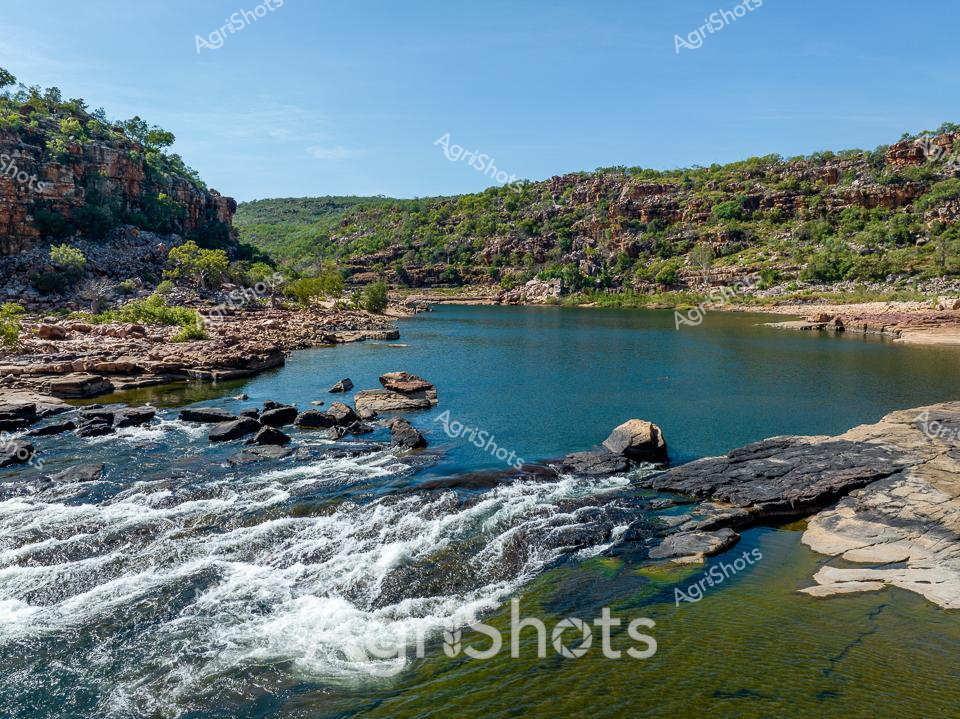
Katherine River Gorge carves a stunning path through the rugged Kimberley landscape, revealing layered sandstone cliffs draped in sparse vegetation. Turbulent white waters cascade over ancient rock formations, creating a dynamic interface between rushing stream and tranquil deep blue pool. The weathered stone banks display geological strata in rich ochre and rust tones, testament to millennia of erosion and natural sculptural processes. Verdant green scrub clings to the rocky escarpments, softening the harsh geological contours and providing a vibrant contrast to the azure sky. This quintessential Western Australian riverscape captures the raw, untamed beauty of the continent's northwestern frontier, where water has carved intricate pathways through resistant rock over countless generations. The scene epitomizes the dramatic, unforgiving yet breathtaking natural environments that define Australia's remote pastoral regions.
 Image
Rugged limestone terraces frame the serpentine waters of a remote Western Australian river, cascading through a rocky landscape of ancient geological complexity. The waterway winds through a sparse, sun-drenched terrain of weathered stone and scattered eucalyptus, revealing the harsh beauty of an inland station landscape. Massive boulder formations interrupt the deep blue-green stream, creating intricate channels and miniature rapids that speak to the patient erosive power of water across millennia. Layered rock formations in warm ochre and tan tones create natural staircases and platforms, highlighting the raw, untempered character of this classic Australian interior watershed. The pristine azure sky stretches overhead, casting sharp, clear light that illuminates every textural detail of the rocky riverscape. This vista encapsulates the untamed spirit of Western Australia's interior - a landscape of profound geological narrative and elemental resilience, where water carves its patient path through an unforgiving but breathtaking environment.
 Image
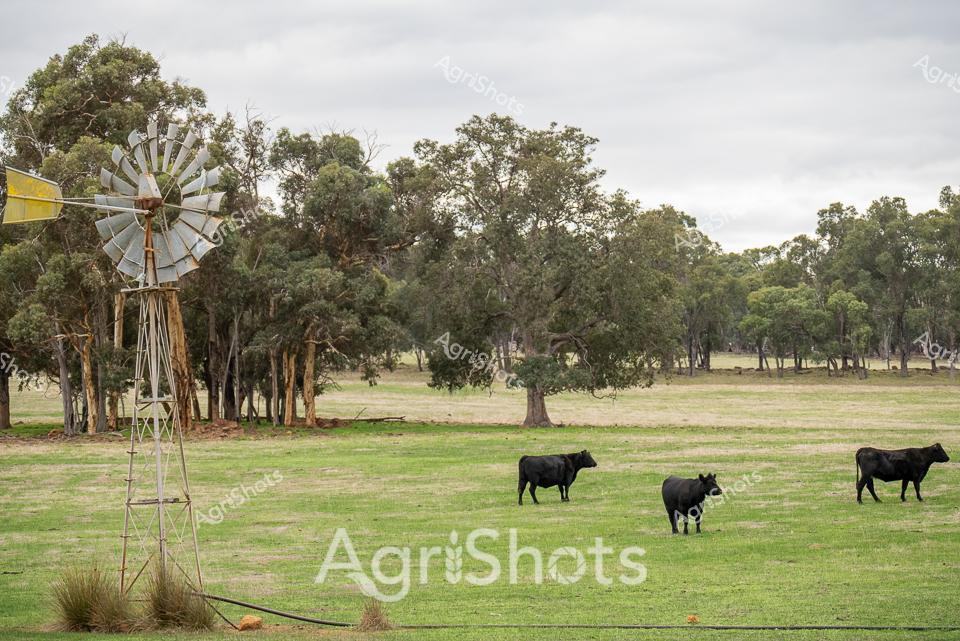
Anchored by a classic steel windmill, this quintessential West Australian pastoral landscape captures the serene essence of rural cattle farming. Three Black Angus cattle graze peacefully across a verdant, gently undulating paddock, their dark coats contrasting sharply with the soft green grasslands and weathered eucalyptus woodland backdrop. The iconic windmill, a stalwart of agricultural infrastructure, stands tall and metallic silver against the muted grey-green landscape, symbolizing generations of sustainable water management in challenging rural terrain. The overcast sky suggests early morning or late afternoon, casting a soft, diffused light that highlights the textural richness of the scene - from the rough bark of centuries-old gum trees to the textured metalwork of the windmill and the sleek, well-muscled flanks of the Angus herd. One cow, distinctively marked with a white patch, breaks the monochromatic uniformity of her companions, adding visual interest to the composition. This image embodies the quiet resilience of Western Australian agricultural landscapes - a harmonious blend of natural beauty and human enterprise, where traditional farming methods and robust livestock continue to define the region's economic and cultural identity.
 Image
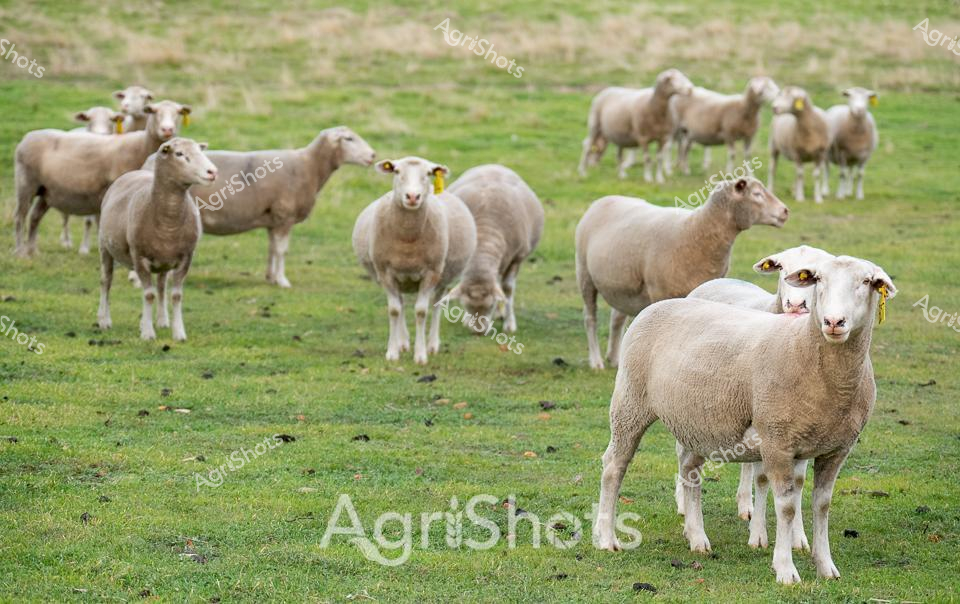
Golden pastures of Western Australia's Wheatbelt region cradle a vibrant flock of Poll Dorset ewes, their creamy wool gleaming against the lush emerald landscape. Carefully tagged with yellow markers, these robust sheep demonstrate the pinnacle of pastoral breeding - muscular, well-proportioned animals representing a premier stud lineage. Each ewe stands alert, their dense fleece reflecting generations of selective breeding for optimal meat and wool production. The verdant paddock stretches beneath a soft, diffused light that hints at early morning or late afternoon, when the pastoral landscape radiates a tranquil energy. These Poll Dorsets embody the resilience of Australian agricultural genetics, thriving in the challenging yet beautiful Wheatbelt environment with their sturdy frames and calm dispositions. The carefully maintained pasture and uniform flock showcase the meticulous care and advanced agricultural practices characteristic of modern Australian sheep farming.
 Image
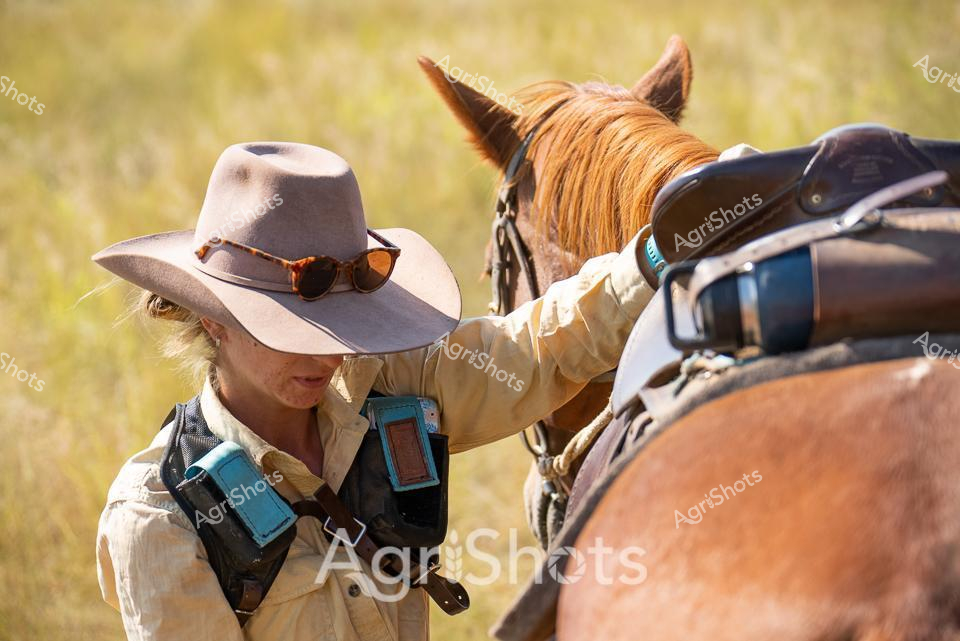
Burnished sunlight bathes the golden grasslands of Western Australia, where a station worker dressed in crisp khaki and a wide-brimmed akubra hat tenderly connects with her stockhorse. Her sunglasses and tactical communication equipment suggest sophisticated modern mustering techniques, while her relaxed posture reflects the deep bond between rider and mount. The chestnut horse stands steady, its rich copper coat gleaming against the sun-bleached landscape, embodying the resilience of Australian agricultural partnerships. Intricate details of the horse's saddle and the worker's professional gear speak to the precision and technology driving contemporary rural operations. This moment captures the essence of Western Australian pastoral life - a harmonious blend of traditional stockmanship and cutting-edge agricultural practice, where human and animal work in seamless collaboration under the vast, unforgiving outback sky.
 Image
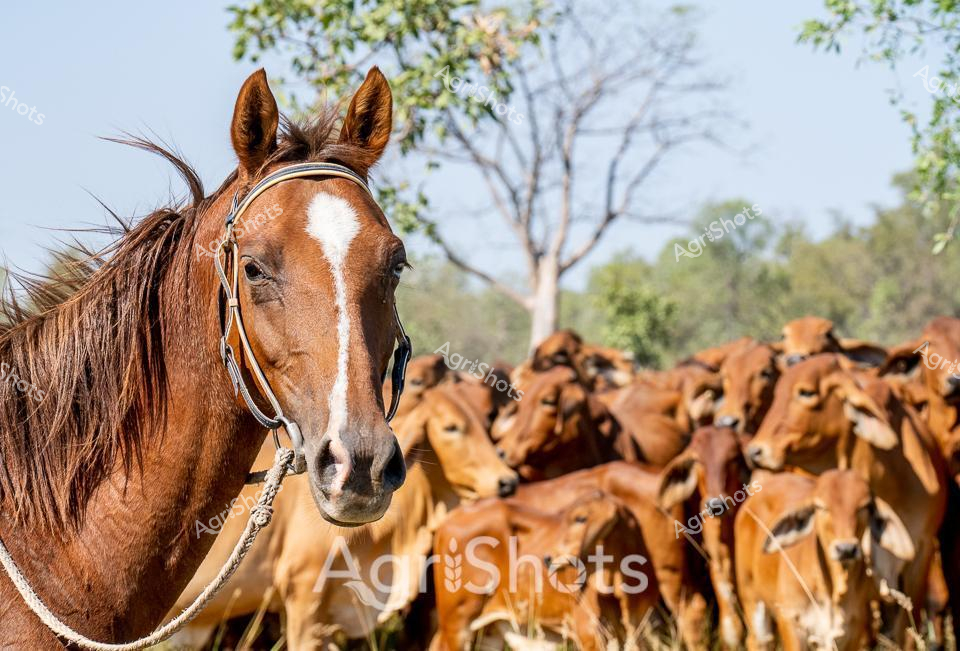
Chestnut-hued and alert, a stockman's horse stands sentinel amid a herd of golden Brahman cattle on a sun-drenched pastoral landscape in Western Australia's rugged Kimberley region. The horse, with its distinctive white blaze and intricately braided leather bridle, represents the enduring partnership between human and equine in the challenging art of cattle mustering. Behind the horse, a tightly clustered mob of burnished red Brahman cattle reflects the breed's remarkable adaptation to the harsh tropical environment, their distinctive humps and loose skin providing natural protection against heat and insects. The backdrop reveals a sparse woodland of weathered trees and dusty earth, capturing the essence of Australia's northern pastoral zones - a landscape of extreme conditions and resilient agriculture. Soft light suggests early morning, when stockmen commence their day's work, moving cattle across vast station lands with skill and precision. The horse's muscular stance and keen expression embody the strength and intelligence required in this demanding rural profession, while the cattle's uniform coloration speaks to carefully managed breeding programs that have developed robust, heat-tolerant livestock perfectly suited to the region's challenging climate.
 Image
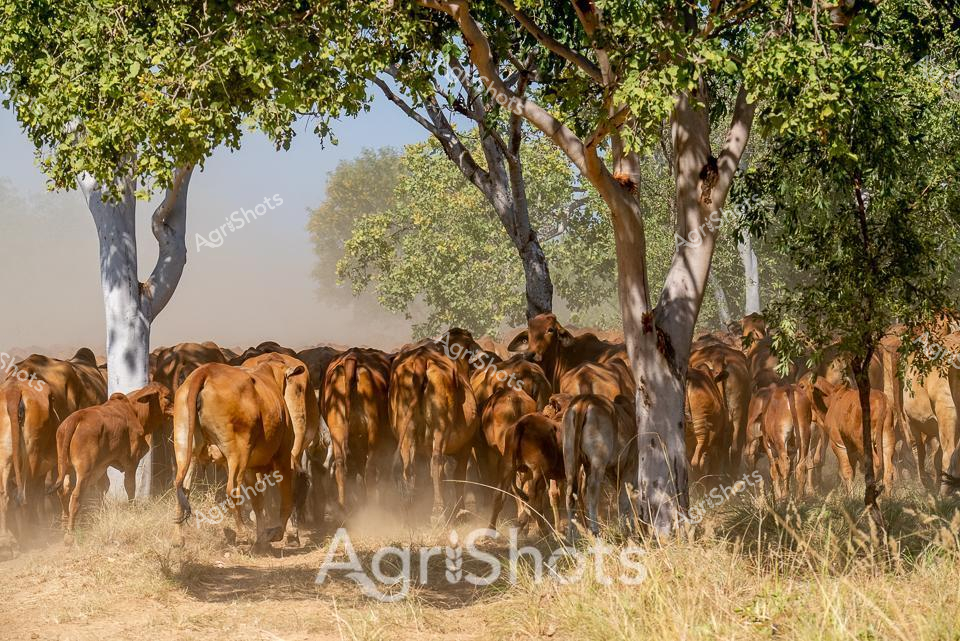
Brahman cattle bunch tightly beneath ghostly white gum trees, kicking up golden dust in the late afternoon light of Western Australia's rugged Kimberley region. The rich, burnished copper-brown hides of these resilient beef cattle create a seamless mass of muscular bodies, their broad backs and distinctive humps telling a story of adaptation to harsh pastoral landscapes. Soft shadows from ancient, twisted trees dapple the dry grassland, creating a sense of movement and heat that speaks to the challenging environment of this remote station country. Each animal stands compact and strong, a testament to the breed's genetic capacity to thrive in scorching temperatures and sparse grazing conditions. The dust rising around their feet suggests recent mustering activity, with the herd clustered protectively, their collective presence a powerful image of agricultural endurance. This quintessential Australian pastoral scene captures the raw beauty of cattle farming in one of the continent's most unforgiving yet magnificent agricultural regions.
 Image
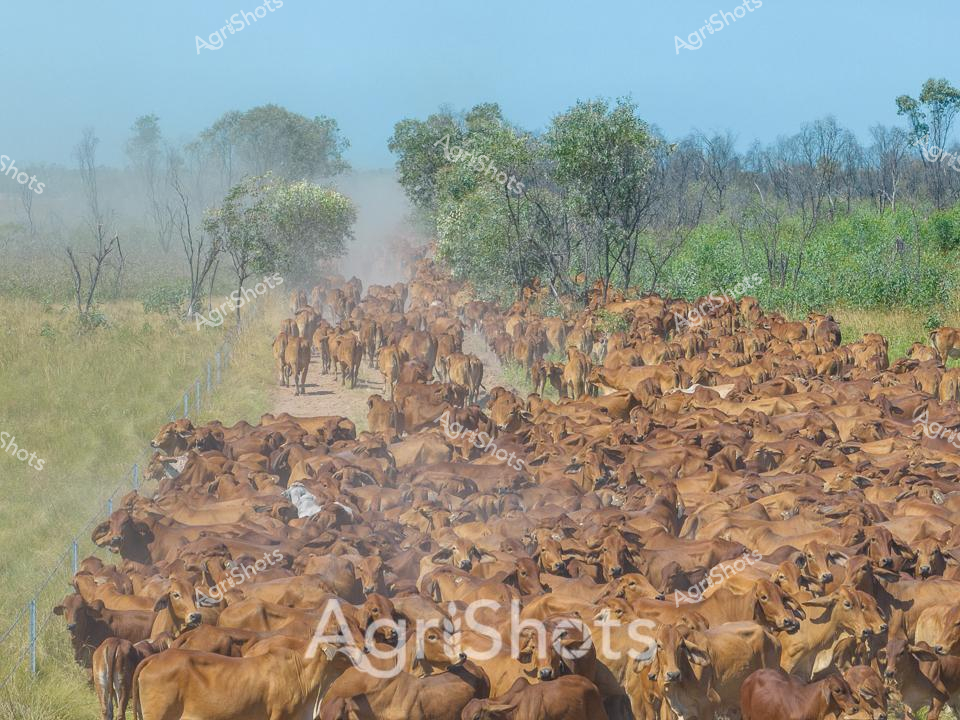
Thundering hooves and billowing dust clouds herald the massive cattle muster traversing the golden grasslands of Western Australia's rugged Kimberley region. A sprawling herd of burnished Brahman cattle, their distinctive light-brown coats gleaming in the harsh sunlight, moves as a living river across the landscape. Tightly packed and disciplined, the cattle follow a narrow dirt track bordered by weathered fence lines and sparse eucalyptus trees, creating a mesmerizing tableau of agricultural movement. The dry season landscape is painted in warm ochres and muted greens, with scattered trees providing sparse relief against the cloudless blue sky. This extraordinary scene captures the essence of large-scale pastoral operations in remote Australia, where mustering represents a critical and challenging aspect of cattle station management. The image powerfully communicates the scale, discipline, and raw energy of traditional livestock handling in one of the world's most unforgiving yet beautiful agricultural environments.
 Image
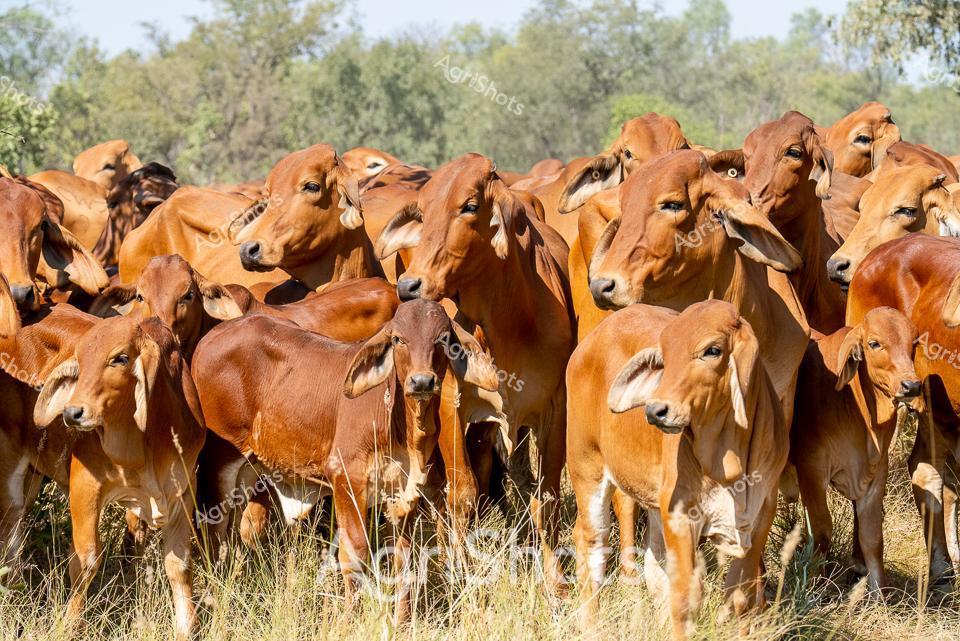
Burnished golden bodies gleaming under the harsh Kimberley sunlight, a magnificent herd of Brahman cattle clusters together in dense formation across sun-drenched grasslands. These robust beef cattle, with their distinctive large ears and loose skin adaptations, represent the resilient livestock breed perfectly suited to Northern Australia's challenging tropical environments. Their uniform rich copper-tan coats create a stunning visual rhythm, each animal standing alert with an almost synchronized posture that speaks to generations of careful station breeding and management. Dry grasses and scattered eucalyptus trees in the background frame the scene, suggesting the rugged Western Australian landscape where these cattle have been carefully bred to thrive in extreme conditions. The tight clustering suggests a moment of pastoral activity - perhaps preparing for mustering or responding to the presence of stockmen nearby. Each animal displays the classic Brahman characteristics - muscular frames, prominent humps, and an air of calm strength that has made this breed iconic in Australian agricultural history.
 Image
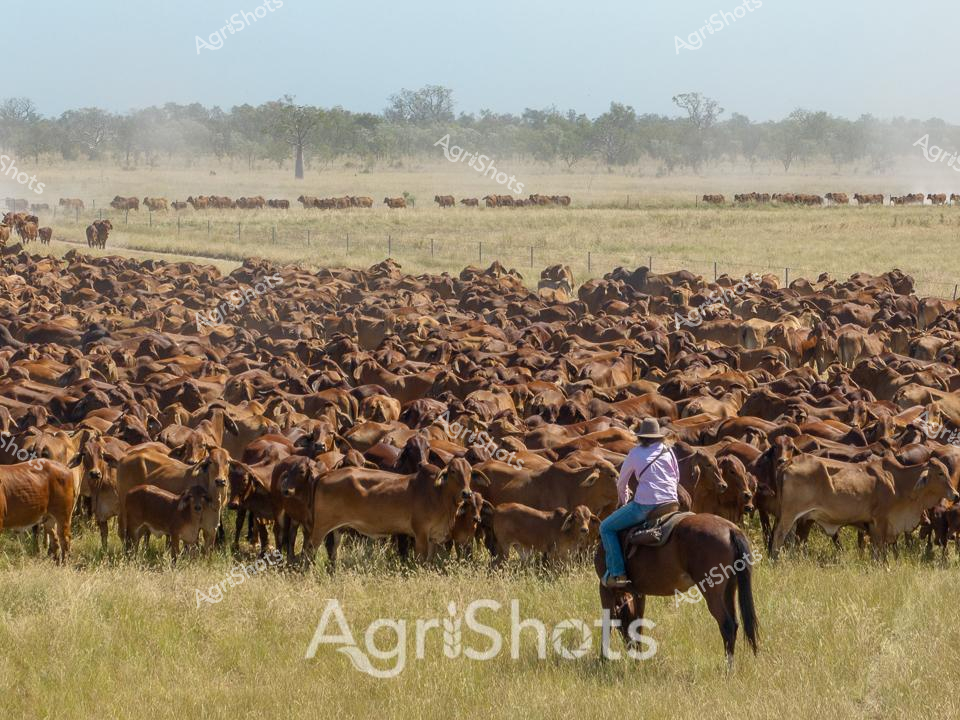
Brahman cattle blanket the golden grasslands of Western Australia's Kimberley region, their rich auburn coats creating a living tapestry across the expansive pastoral landscape. A stockman mounted on a bay horse surveys the massive herd, his lilac shirt and relaxed posture reflecting generations of cattle station expertise. Dust hangs in soft hazes behind the cattle, suggesting early morning movement during mustering season, with scattered trees and vast horizons defining the quintessential Australian pastoral scene. The tightly clustered herd of sturdy Brahman cattle - renowned for their heat and tick resistance - demonstrates the robust livestock breeds that thrive in this challenging northern Australian environment. Distant groups of cattle stretch across the paddock, indicating a substantial station operation with significant livestock numbers. This powerful image captures the essence of Australian cattle farming: resilience, scale, and the timeless connection between skilled stockmen and the land.
 Image
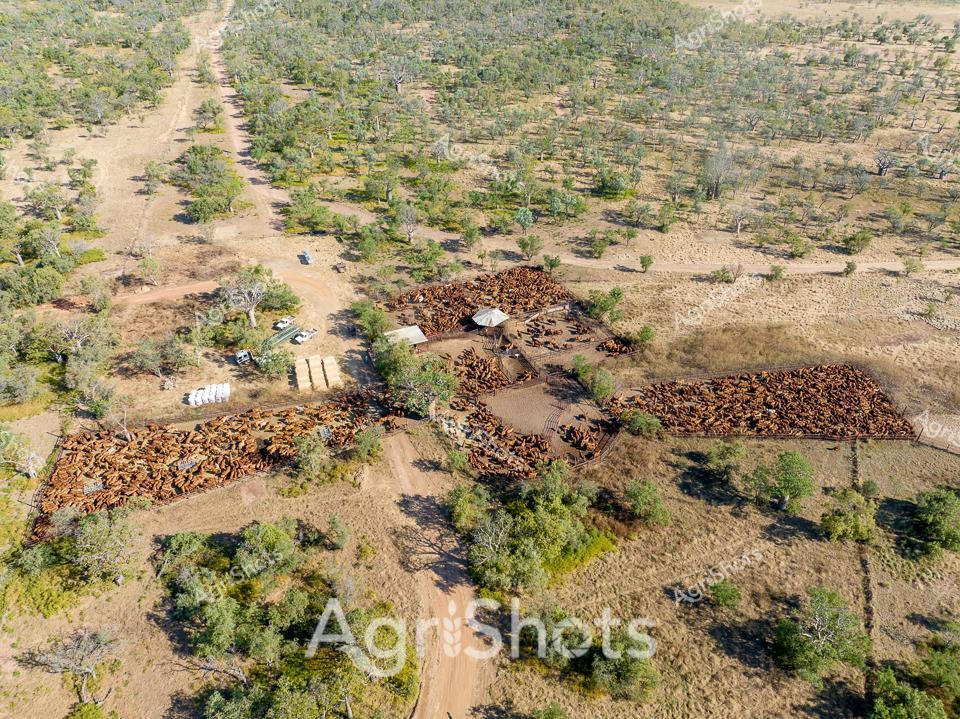
Aerial vista of a bustling cattle station in the golden expanses of Western Australia, where russet-hued Brahman cattle cluster in intricate yard systems amidst a sparse eucalyptus woodland. The landscape breathes with the rhythm of pastoral life - dusty tracks weave between paddocks, connecting clusters of livestock and sparse infrastructure beneath an expansive, sun-drenched sky. Hundreds of cattle, their distinctive humped shoulders and heat-adaptive coloration marking them as classic Brahman breed, huddle in tight groups around central handling areas, suggesting an active mustering operation in progress. White vehicles and structures punctuate the rich ochre and green terrain, providing stark contrast to the earthy tones of the surrounding bushland. The image captures the essence of large-scale northern Australian cattle production - a testament to agricultural resilience in a challenging environmental landscape where human intervention and natural systems intersect with calculated precision. Shadows stretch long across the scene, indicating early morning or late afternoon light, highlighting the textural complexity of this working agricultural ecosystem.
 Image
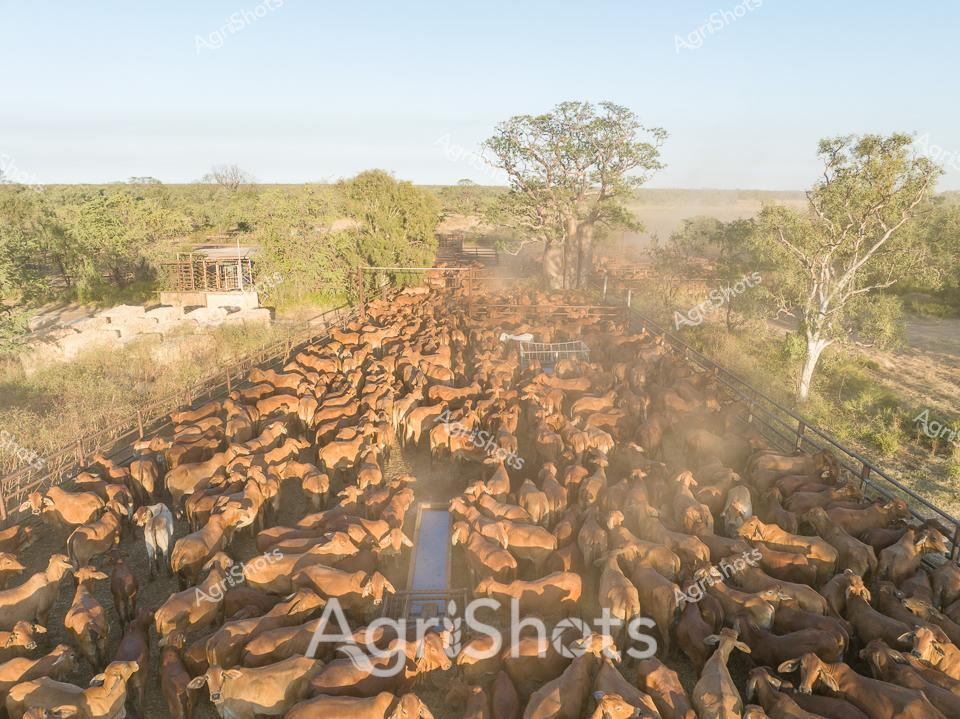
Burnished by the golden morning light, a dense herd of Brahman cattle fills the cattle yards of a Western Australian cattle station. Dust rises in soft halos around the tightly packed beasts, their distinctive humped shoulders and loose skin gleaming in warm terracotta tones against the sun-drenched landscape. Robust steel yard panels contain the mob, guiding them through a systematic movement that speaks to generations of pastoral management and cattle handling expertise. Surrounding trees cast long shadows across the dusty ground, creating a sense of immense space and quiet industry typical of Australia's northern pastoral regions. The scene captures the raw energy of mustering - a quintessential Australian agricultural practice where livestock are gathered, managed, and prepared for market or station operations. Every muscled flank and curved horn represents the resilience of both the cattle and the farmers who work these challenging landscapes, where agricultural skill meets the untamed spirit of the Australian outback.
 Image
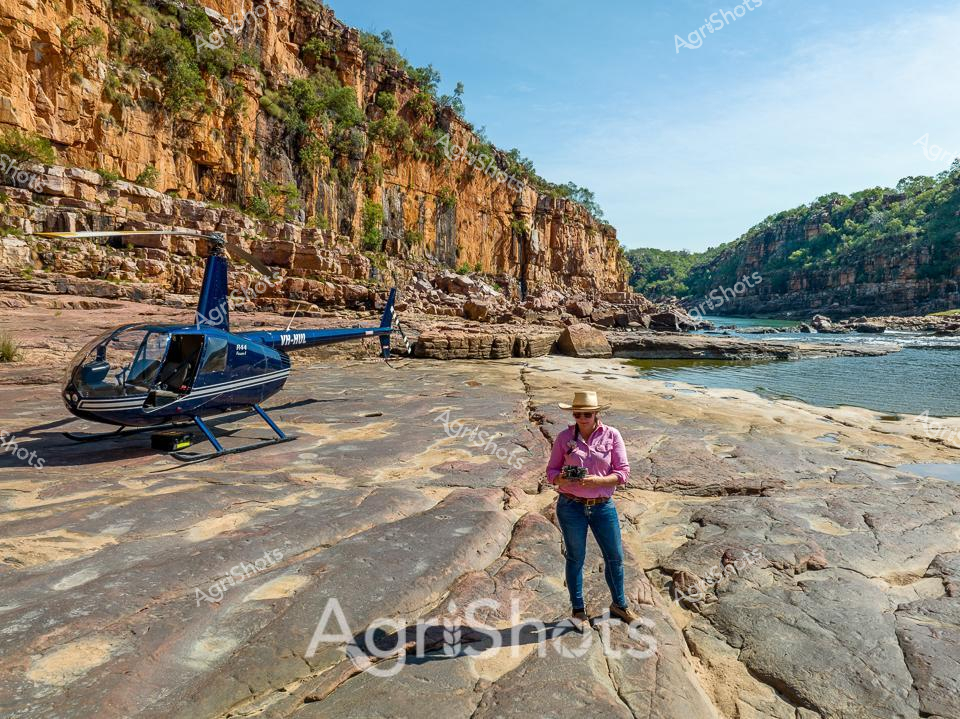
A seasoned station manager surveys the ancient geological landscape of a remote Western Australian river system, her blue helicopter perched beside dramatic sandstone cliffs. Wearing a classic bush outfit of pink long-sleeved shirt, wide-brimmed hat, and blue denim jeans, she stands confidently on the weathered rock platform, commanding the rugged terrain. The harsh, golden-hued rock formations create a stunning backdrop of layered sedimentary walls, with vegetation clinging to the cliff edges and a winding river threading through the rocky corridor. This scene epitomizes the spirit of agricultural exploration and land management in Australia's most challenging environments, showcasing the connection between modern aerial technology and timeless geological landscapes. The crisp blue sky and intricate rock textures highlight the raw beauty of the region, while the strategically positioned helicopter suggests advanced surveying and station monitoring techniques. The image captures the essence of agricultural leadership in one of Australia's most demanding and spectacular natural settings.
 Image
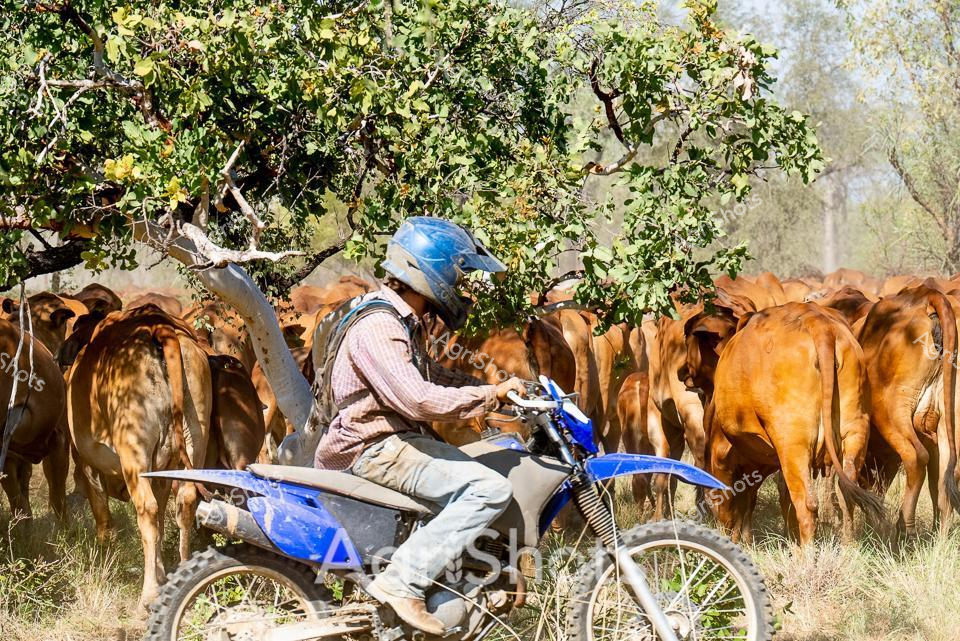
Blazing midday sunlight filters through the gnarled gum trees of Western Australia's Kimberley region, casting dappled shadows across a golden landscape where a seasoned stockman guides a herd of burnished Brahman cattle. Perched on a blue trail bike, the rider navigates through the dense herd with practiced ease, his khaki and pink checked shirt and blue safety helmet marking him as a professional mustering hand. The cattle - with their distinctive sandy-brown coats and prominent humps - cluster tightly, their muscular bodies creating a living, breathing landscape of beef production. Dusty grasses and twisted trees frame the scene, capturing the raw essence of station life in the northwest of Western Australia. This image speaks to the rugged skill of cattle handlers and the demanding yet beautiful environment of Australian pastoral agriculture, where modern machinery meets traditional livestock management techniques. The blue motorbike stands in sharp contrast to the warm earth tones, a symbol of contemporary farming technology seamlessly integrated into an ancient landscape.
 Image
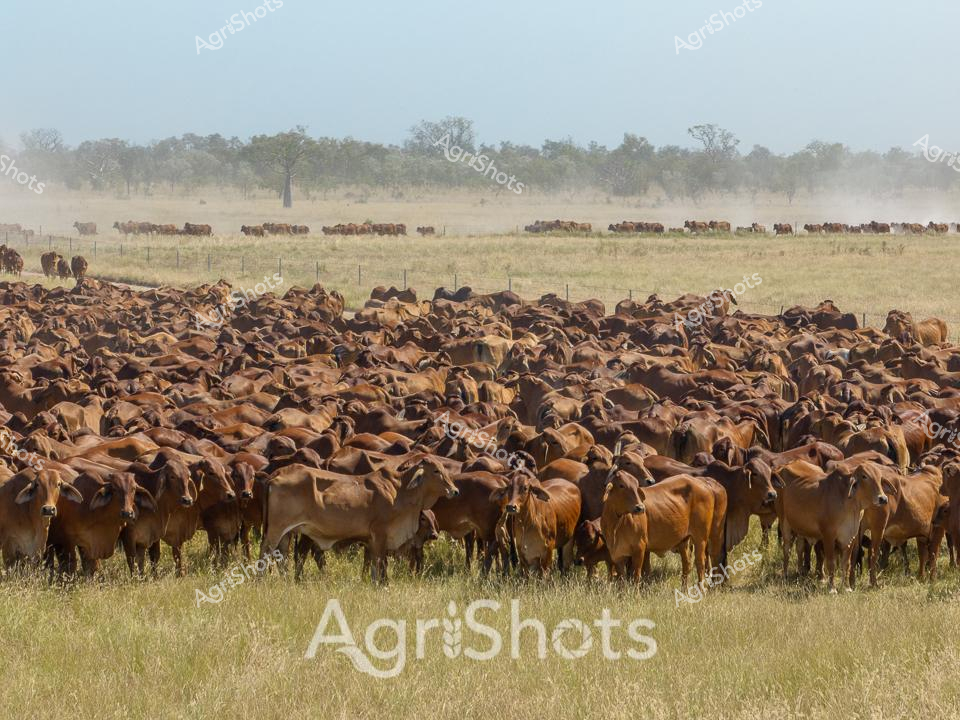
Brahman cattle crowd the golden grasslands of Western Australia's Kimberley region, their rich russet and copper coats blending seamlessly with the sun-drenched pasture. A dense herd of muscular, humped cattle stands tightly packed, their distinctive large ears and loose skin adaptations evident of their tropical breeding. Dust rises softly in the background, hinting at recent movement across the expansive station landscape, with sparse eucalyptus trees marking the distant horizon. The mob represents the resilient spirit of northern Australian cattle farming - hardy beasts bred to thrive in challenging environmental conditions. Soft early morning light bathes the scene, creating a warm palette of browns, tans, and soft greys that speak to the rugged beauty of the agricultural landscape. This powerful image captures the essence of Australia's beef production - a testament to generations of pastoral skill and the unique relationship between land, livestock, and those who work them.
 Image
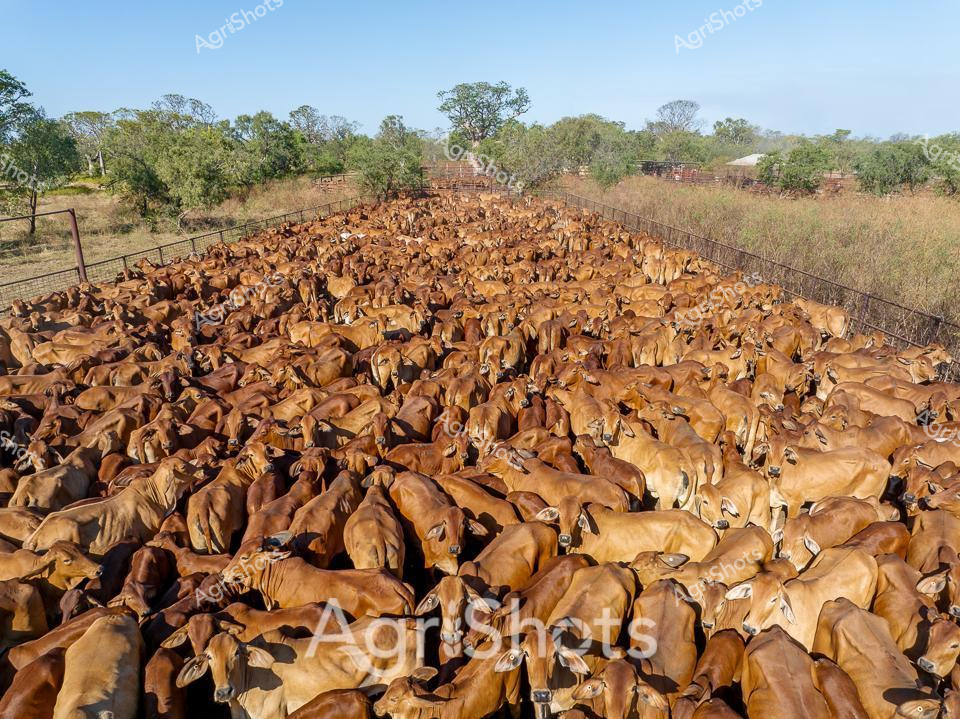
Burnished golden Brahman cattle pack tightly within a fenced pastoral landscape, their muscular bodies creating a sea of tawny hide stretching across the dusty Western Australian Kimberley station yard. Late morning sunlight bathes the herd, highlighting their lean, heat-adapted physiques - trademark humps and loose skin reflecting generations of breeding for tropical cattle management. Sparse eucalyptus trees and rustic infrastructure frame the edges of this quintessential Australian cattle station scene, demonstrating the expansive scale of northern agricultural operations. Each animal stands shoulder-to-shoulder, a testament to the precision of mustering techniques that have evolved over generations of pastoral work. The rich terracotta and amber tones of the cattle contrast beautifully against the muted greens of sparse vegetation and the clear azure sky, capturing the harsh yet magnificent environment of Western Australia's cattle country. This image epitomizes the raw energy and disciplined management required in Australia's northern beef production regions, where resilient livestock and skilled stockmen collaborate to sustain a critical agricultural industry.
 Image
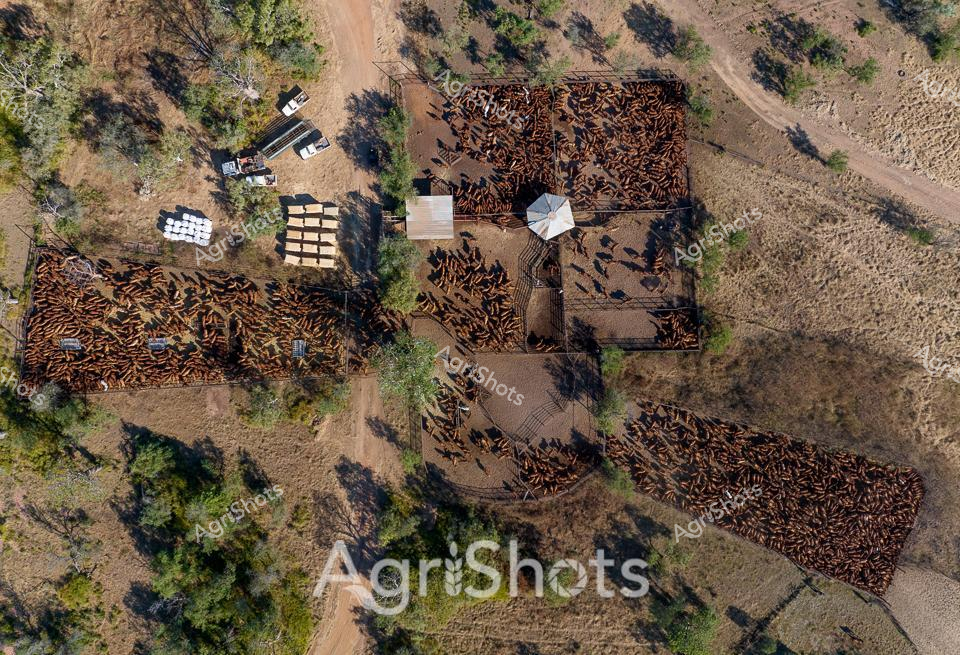
Aerial view of a sprawling cattle station in Western Australia's rugged Kimberley region, revealing a complex of cattle yards packed with burnished red Brahman cattle. The dry, ochre landscape surrounds densely populated livestock paddocks, with white vehicles and wooden pallets scattered near sheds and holding pens. Shadows from sparse trees stretch across the dusty earth, highlighting the geometric precision of the agricultural infrastructure against the natural terrain. Hundreds of cattle cluster tightly within fenced areas, their distinctive humped shoulders and loose skin characteristic of the heat-tolerant Brahman breed perfectly adapted to this harsh northwestern Australian environment. The overhead perspective captures the scale of pastoral operations, where mustering and stock management represent generations of agricultural expertise in one of Australia's most challenging farming landscapes. Golden light and earthy tones emphasize the raw beauty of this remote cattle station, illustrating the intricate relationship between livestock, land, and the dedicated workers who manage these extensive properties.
 Image
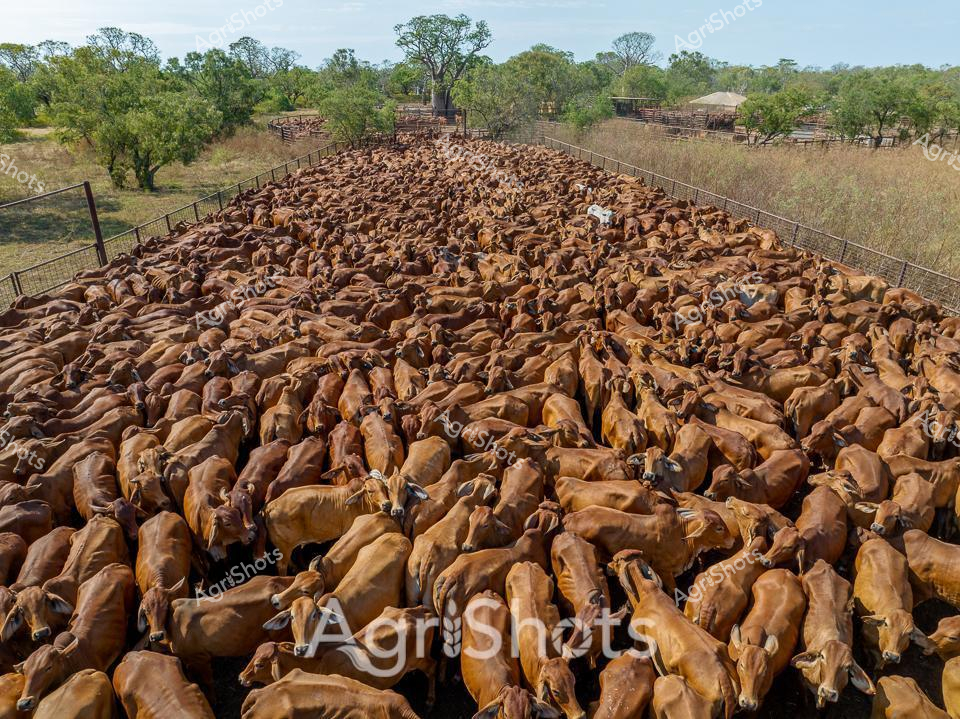
Brahman cattle crowd a sun-drenched pastoral gateway in Western Australia's rugged Kimberley region, their burnished golden-brown hides creating a dense, living carpet within sturdy metal yard fencing. Tightly packed and radiating intense animal energy, the mob represents the quintessential cattle station landscape - sparse woodland and weathered paddocks stretching behind the herd. Each muscular beast displays the distinctive characteristics of the Brahman breed: robust frames, prominent humps, and a resilience perfectly adapted to Australia's challenging northern terrain. The aerial perspective reveals an extraordinary density of livestock, suggesting a major mustering operation typical of these expansive pastoral enterprises. Soft blue skies and scattered eucalyptus trees frame the scene, providing context to this powerful representation of Australia's beef production heritage. The golden-brown uniformity of the cattle, punctuated by subtle variations in tone and texture, transforms the gathering into an almost abstract agricultural tableau that speaks to generations of pastoral management and connection to the land.
 Image
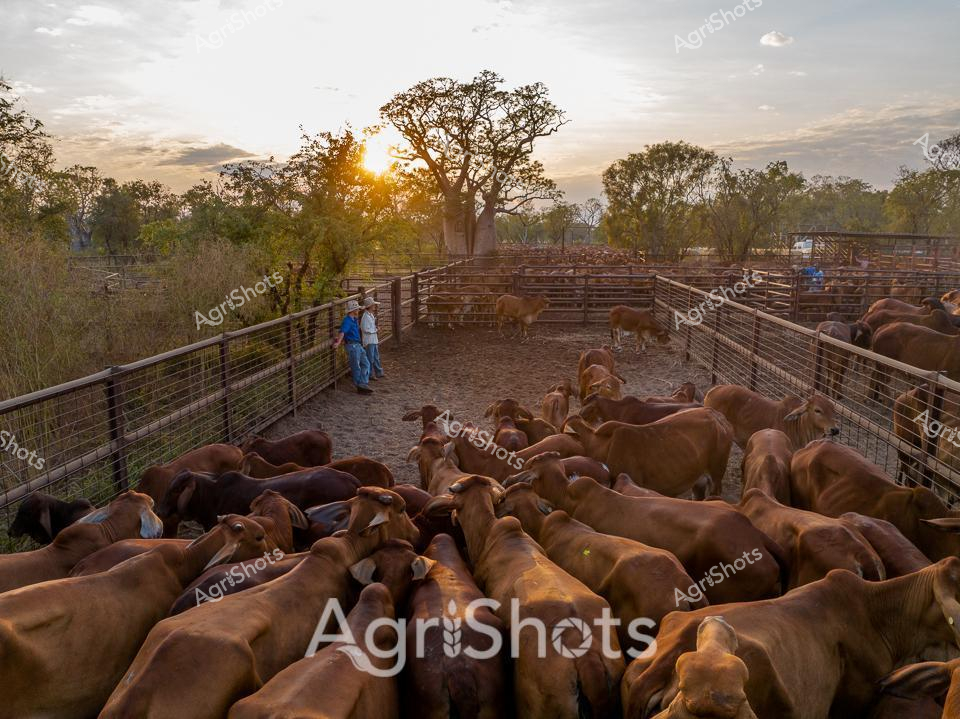
Golden dawn breaks over a dusty cattle yard in Western Australia's rugged Kimberley region, casting long shadows across a tightly packed pen of burnished Brahman cattle. The robust herd, with their distinctive humps and rich reddish-brown coats, huddles closely together in the enclosed space, surrounded by sturdy timber and wire fencing. Two workers in blue work shirts stand sentinel at the edge of the yard, surveying the livestock with the calm expertise of seasoned station hands. A majestic boab tree silhouettes against the soft morning light, a quintessential landmark of this harsh yet beautiful landscape, symbolizing the endurance of agricultural life in remote Australia. The scene captures the essence of pastoral management - the careful control and movement of cattle that has defined rural Western Australian agriculture for generations. Warm sunlight bathes the yard, highlighting the muscular frames of the Brahmans and creating a sense of tranquil industry at the start of another working day on the station.