Browse the collection
 Image
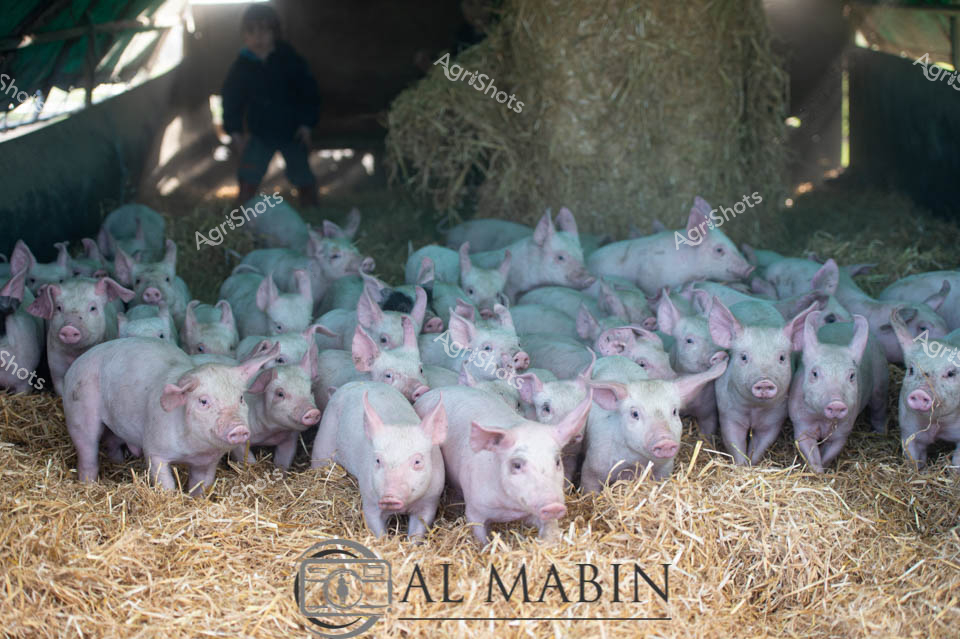
A cluster of pristine white piglets huddles together on golden straw bedding inside a sheltered barn, embodying the controlled environment of modern large-scale pig farming. Soft pink ears and delicate snouts create a sea of young livestock, their uniform coloration suggesting carefully managed breeding practices. Hay bales provide background texture, while diffused light filters through the barn's structure, illuminating the young animals' smooth skin. These newly weaned piglets represent the early stage of agricultural production, nestled closely together for warmth and security. A barn worker partially visible in the background suggests ongoing animal management and care.
 Image
Pale pink piglets mill across dusty ground within a fenced outdoor paddock, their delicate ears and soft skin catching the crisp morning sunlight. A robust young pig dominates the foreground, its stocky frame and alert posture representing classic commercial breeding stock typical of New South Wales large-scale farming practices. Soft earth and shadowed ground texture surrounds the animals, suggesting an expansive free-range agricultural environment in the New England region. The pig's pale flesh tones contrast beautifully against the muted brown and grey landscape, highlighting the health and vitality of these carefully managed livestock. Subtle shadows indicate early daylight hours, with a clean, sharp quality to the image that emphasizes agricultural professionalism and modern farming techniques. The piglets' proximity and relaxed stance suggest a well-managed, low-stress environment where animal welfare and productive breeding intersect.
 Image
A sow nurses her litter of pale pink piglets on a mixed pasture and dirt terrain, capturing the intimate moment of maternal care in a free-range pig farming environment. The robust, cream-colored mother pig stands protectively over her young, her distended udder providing sustenance to the small, delicate piglets clustered beneath her. Sunlight bathes the scene, highlighting the textural contrast between the sow's coarse, slightly matted coat and the smooth, translucent skin of the newborns. Verdant grass patches interrupt the dusty ground, suggesting this is a transitional area between paddock and holding yard, typical of progressive agricultural practices in the New England region of New South Wales. This image powerfully illustrates the natural nurturing behaviors of livestock and the carefully managed environments of contemporary Australian pig farming.
 Image
Young pink piglets cluster together on a bed of golden straw inside a modern indoor piggery facility. The tightly-packed group represents a typical large-scale pig farming environment, with dozens of uniform, light-skinned piglets standing and resting in close proximity. A farm worker in a blue jacket and red boots can be partially seen managing the young livestock, suggesting careful animal husbandry practices. The piglets display delicate pink skin tones with translucent ears catching the soft ambient light, highlighting their youth and vulnerability. Soft straw bedding provides texture and comfort, typical of contemporary Australian pig breeding operations in the New England region of New South Wales. The scene represents the early stages of commercial pig production, where careful monitoring and controlled environments ensure optimal growth and health of young livestock.
 Image
Two young Yorkshire piglets stand alert on a muddy, textured paddock ground, their pale pink skin catching the soft light. Earmarked for large-scale farming, these robust growers represent the New England region's thriving agricultural livestock sector in New South Wales. Their muscular bodies and attentive postures suggest recent movement, with subtle variations in their stance - one slightly forward, the other positioned more laterally. The background reveals a mix of dark soil and sparse ground vegetation, indicating a carefully managed free-range environment typical of modern Australian piggery operations. Subtle shadows cast by the animals highlight their clean, healthy appearance and the midday sunlight characteristic of the region's agricultural landscapes.
 Image
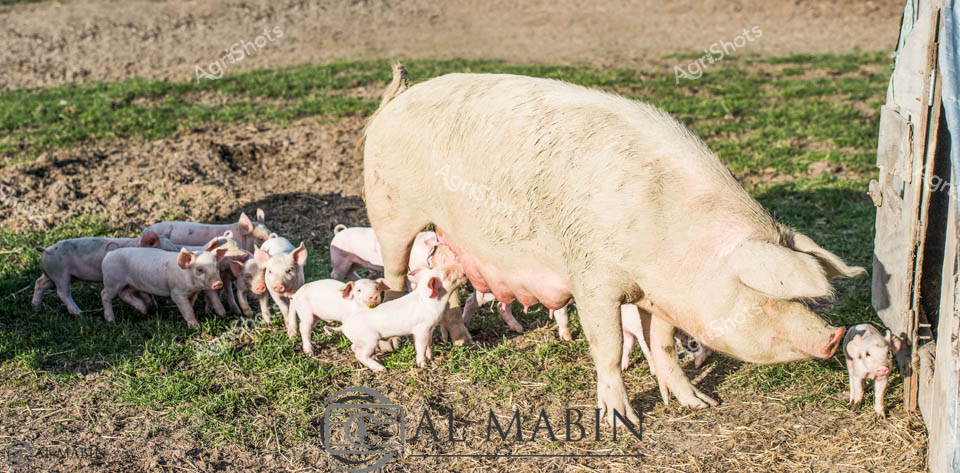
A pale, robust sow nestles in the grassy farmyard, surrounded by a litter of pink-skinned piglets exploring their pastoral enclosure. The mature breeding pig, with her expansive udder and creamy-white coat, anchors the scene near a weathered wooden structure, likely a traditional New England Region farmstead outbuilding. Her young offspring dart and tumble around her, their tiny hooves navigating the patchy grass and bare earth, demonstrating the vibrant energy of free-range pig husbandry. Soft sunlight bathes the scene, suggesting a mild morning in the agricultural landscape of New South Wales, where small-scale and sustainable farming practices remain integral to rural communities. The piglets, varying in size but uniform in their pale coloration, represent the next generation of the farm's livestock, embodying the cyclical nature of agricultural production. This image captures the essence of traditional pig farming - a delicate balance between nurturing animal welfare and productive agricultural systems.
 Image
Young Yorkshire piglets explore a lush pasture on a crisp New England Region morning, their pink skin gleaming against the vibrant green grass. A mature sow watches protectively in the background, her maternal instincts evident as her litter of approximately 10-12 piglets roam and investigate their free-range environment. The scene captures the essence of contemporary pig farming in New South Wales, where animal welfare and natural grazing are prioritized. Soft morning light casts gentle shadows across the paddock, with farm infrastructure subtly visible in the distance - a red-roofed shed and agricultural buildings suggesting a well-managed, professional piggery operation. The piglets display typical curious behavior, some clustered together, others wandering independently, their compact bodies and alert ears reflecting robust health and genetic quality typical of commercial Yorkshire breeding lines. This image eloquently represents the intersection of modern agricultural practices and animal husbandry, showcasing how Australian farmers are implementing more humane, environmentally conscious livestock management techniques. The verdant pasture and active, unstressed animals communicate a narrative of sustainable farming that prioritizes both productivity and animal welfare.
 Image
A robust black and white sow nestles in lush emerald pasture, surrounded by a vibrant litter of pink piglets. The mature sow, her coat a rich blend of charcoal and pale cream, anchors the scene as her numerous offspring explore the verdant grassland. Tiny pink piglets cluster around her, some nursing, others wandering with the curious energy of newborns, their delicate skin contrasting against the green backdrop of what appears to be a free-range paddock in New South Wales' New England region. The pastoral setting speaks to contemporary agricultural practices that prioritize animal welfare and natural environments. Soft morning light bathes the scene, highlighting the textural differences between the sow's coarse, mottled hide and the smooth, unblemished skin of her young. Each piglet represents potential - future livestock that embodies the careful breeding and husbandry of Australian agricultural expertise. This image captures the fundamental relationship between mother and offspring, between farmer and livestock, encapsulating the nurturing heart of sustainable pig farming in regional Australia.
 Image
A pale-colored piglet emerges from a weathered wooden shelter with a corrugated metal roof, standing on a bed of straw in a rustic farm setting. The young pig's creamy-white coat contrasts against the aged timber and metallic blue-gray of the shelter, capturing the essence of free-range pig farming in the New England region of New South Wales. Soft morning light casts gentle shadows across the ground, highlighting the textured surface of the straw and the pig's delicate frame. The piglet's pink snout and lean body suggest it is in the early stages of growth, representing the careful husbandry practices of small-scale agricultural operations. The shelter provides a simple yet effective sanctuary, protecting the young animal from the elements while allowing freedom of movement. This image embodies the traditional approach to pig farming, where animal welfare and natural living conditions are prioritized in the rugged landscape of rural Australia.
 Image
Free-Range Pig Farming in New England, New South Wales A verdant pasture sprawls beneath a soft, diffused light, showcasing a thriving herd of robust white pigs grazing across the undulating green landscape. These healthy Yorkshire and Large White breed pigs move deliberately through the lush grasslands, their pale pink-tinged bodies contrasting beautifully against the emerald and olive ground. Each animal displays the hallmarks of free-range farming: muscular frames, alert postures, and the freedom to roam and forage naturally. The scene captures the essence of modern sustainable agricultural practices in the New England region of New South Wales, where animal welfare and environmental stewardship intersect. Patches of darker ground peek through the grass, suggesting recent movement and natural soil variations, while the pigs' varied positioning demonstrates their individual autonomy within the collective herd. This image embodies the progressive spirit of Australian livestock management - where space, natural behavior, and animal health are paramount considerations in agricultural production.
 Image
Brahman cattle crowd together in a dense herd, their distinctive muscular bodies and prominent humps filling the frame with a rich palette of white, tan, and deep brown. The late afternoon light casts long shadows across the dusty cattle yard, highlighting the sleek, heat-adapted coats of these iconic Northern Territory livestock. Predominantly white Brahman cattle, bred for their resilience in tropical climates, intermingle with darker-colored animals, creating a textural mosaic of muscular forms and subtle color variations. The tight clustering suggests a moment of movement or transition, with animals pressed closely together, their angular bodies creating a complex visual rhythm. The ground beneath them is dry and compacted, typical of the arid Northern Territory landscape, with fine dust particles catching the golden light. Each animal bears the hallmarks of the Brahman breed - large ears, loose skin, and a robust build perfectly adapted to Australia's challenging pastoral environments. This image captures the essence of Northern Territory cattle farming - a testament to agricultural resilience, breed adaptation, and the raw beauty of Australia's cattle industry.
 Image
A mammoth road train thunders across the arid plains of the Northern Territory, its long multi-trailer configuration kicking up a billowing dust cloud against the pale ochre landscape. The heavy-duty Kenworth prime mover, resplendent in blue and yellow livery, hauls multiple livestock trailers designed for transporting cattle across vast pastoral stations. Each articulated trailer features sturdy cattle compartments with robust metal framework, engineered to safely transport livestock across challenging outback terrain. The early morning light casts a soft, muted tone across the sparse grasslands, highlighting the rugged endurance of Australian agricultural logistics. This quintessential outback scene captures the epic scale of cattle transportation, where massive trucks traverse hundreds of kilometers between remote cattle stations, connecting primary producers with broader agricultural markets. The dust-laden atmosphere and expansive horizontal landscape emphasize the harsh yet magnificent character of Australia's northern pastoral regions, where road trains are the critical arteries of agricultural commerce.
 Image
Golden dawn breaks over the vast Northern Territory grasslands, revealing a sweeping aerial view of a cattle muster in progress. A dense herd of pale Brahman cattle, identifiable by their distinctive humped shoulders and heat-resistant coats, moves as a living river through a misty landscape of ochre earth and muted green pastures. Dust billows around the herd, creating an ethereal curtain that softens the boundary between earth and sky, capturing the timeless rhythm of Australian cattle mustering. The early morning light casts a warm, bronze glow across the expansive terrain, highlighting the intricate movement of the cattle as they are carefully guided across the landscape. This powerful image encapsulates the raw beauty of pastoral life in the Top End - a delicate choreography of human skill, animal instinct, and untamed wilderness. The scene speaks to generations of agricultural tradition, where stockmen and cattle have shaped the rugged character of Australia's northern rangelands.
 Image
Woolly sentinels stand guard in a lush pasture, three mature ewes protecting their young lambs during the critical early weeks of spring. Soft green grass carpets the paddock, with a weathered metal gate and fence posts framing the pastoral scene. The ewes display classic characteristics of prime breeding stock - sturdy frames, thick fleece, and alert expressions typical of Australian merino sheep. Tiny lambs huddle close to their mothers, their delicate legs and fresh woolly coats creating a striking contrast against the mature sheep. Soft cream and light brown fleeces dominate the color palette, with the young lambs' coats showing a more muted, silvery-grey tone. This intimate moment captures the essence of lambing season in rural New South Wales, where careful breeding and attentive stock managering ensure the next generation of prime livestock.
 Image
Thundering across the arid Northern Territory landscape, a golden road train carves a dusty path through the sparse saltbush and spinifex grasslands. The massive truck, loaded with cattle, churns up a billowing cloud of ochre dust against the muted browns and greys of the expansive station country. Its powerful diesel engine leaves a trailing plume of smoke, a testament to the challenging conditions of long-haul livestock transport in Australia's rugged interior. The perfectly aligned track cuts a stark line through the windswept terrain, highlighting the precision and resilience required in transporting cattle across vast pastoral stations. This iconic road train represents the lifeblood of the beef industry, connecting remote cattle stations to markets and processing facilities thousands of kilometers away. The early morning light accentuates the truck's weathered yellow paint and robust design, purpose-built to endure the unforgiving outback environment. A powerful visual narrative of agricultural logistics, this image captures the raw essence of Australia's cattle transport infrastructure - a critical link in the nation's beef production chain that connects remote northern stations to the global food supply.
 Image
Thundering across the arid Northern Territory landscape, a blue and yellow road train powers through a sun-baked paddock, leaving a billowing dust cloud in its wake. The heavy-duty truck, equipped with multiple trailers, navigates a dirt track cutting through dry golden grasslands that stretch to the horizon. This quintessential Australian outback scene captures the raw power of agricultural logistics, where massive trucks transport livestock or supplies across vast distances in challenging terrain. The early morning light casts a soft, pale blue sky above the ochre earth, highlighting the resilience of transport infrastructure in remote cattle station country. Dust swirls around the truck's massive wheels, creating a dramatic visual of movement and power against the stark landscape. The road train - a critical lifeline for cattle stations and remote agricultural operations - embodies the spirit of survival and connectivity in Australia's challenging interior.
 Image
Golden dawn light floods the cattle yards, casting long shadows and illuminating a dense herd of Brahman cattle. These distinctive grey-white cattle, with their characteristic humps and loose skin, crowd together in tight formation within sturdy steel yards, creating a swirling landscape of muscled bodies and billowing dust. A stockman stands silhouetted against the hazy background, his classic wide-brimmed hat marking him as a quintessential Northern Territory cattleman managing the morning muster. Fine particles of red earth drift through the air, softening the scene with a warm, amber filter that speaks to the harsh yet beautiful pastoral environments of Australia's top end. The metal yard infrastructure - with its triangulated truss and robust railings - provides a geometric counterpoint to the organic mass of cattle, capturing the engineered precision required to manage large-scale cattle operations in remote Australian landscapes. This image breathes with the rhythm of station life, embodying the resilience, skill, and connection to land that defines Australian agricultural heritage.
 Image
Young Yorkshire piglets cluster together on a golden straw bed within a modern large-scale farming environment. The pale pink livestock huddle closely, their delicate salmon-colored ears standing alert against their pristine white coats. Soft ambient light illuminates the group, highlighting their smooth skin and compact muscular bodies typical of high-quality breeding stock. These carefully managed piglets represent the precision of contemporary agricultural production in New South Wales' New England region, where genetic selection and controlled environments optimize livestock development. The dense grouping suggests early-stage nursery conditions, where young animals receive carefully monitored nutrition and care to ensure optimal growth potential. The clean straw bedding and uniform appearance of the piglets demonstrate sophisticated agricultural practices, showcasing how modern Australian farming balances efficiency with animal welfare standards.
 Image
A serene lake nestles between rugged rocky cliffs under a bright midday sun, capturing the essence of Western Australia's challenging yet beautiful landscape. The water reflects a smooth, silvery-blue surface, interrupted only by gentle ripples that hint at the life-sustaining potential of this critical water resource. Sparse vegetation clings to the rocky slopes, demonstrating the resilience of plant life in this arid environment. The steep cliff walls frame the water, creating a natural reservoir that speaks to the importance of water management in agricultural regions. Bright sunlight bathes the scene, highlighting the contrast between the dark rocky terrain and the reflective water surface.
 Image
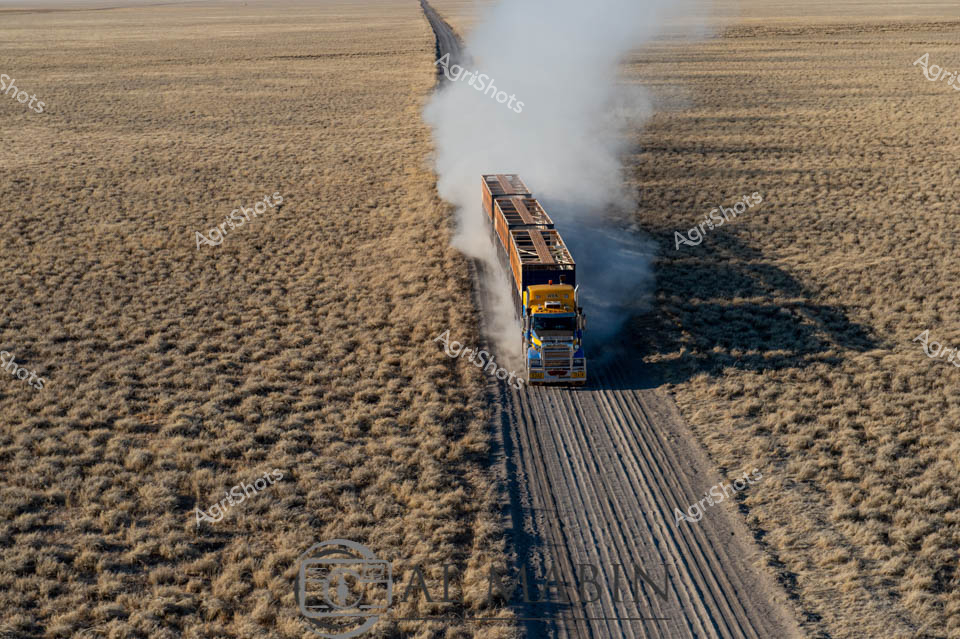
Thundering across the ochre-hued grasslands of the Northern Territory, a robust road train slices through the arid landscape, its yellow and blue cab gleaming against the dusty, tussocked terrain. Loaded with multiple stock trailers, the heavy-duty truck creates a plume of fine red dust that billows dramatically behind its massive wheels, marking its resolute path through the sparse, golden-brown vegetation. The aerial perspective reveals the stark beauty of the Australian outback - a seemingly endless expanse of textured scrubland bisected by a single, well-worn track that speaks to the resilience of agricultural transport infrastructure. The road train represents the lifeblood of cattle station logistics, connecting remote pastoral properties across vast distances with unwavering determination. Its multiple trailers suggest a significant livestock movement, likely transporting cattle between stations or to regional markets - a critical process in Australia's beef production ecosystem. The early morning or late afternoon light casts long shadows, emphasizing the truck's scale and the sweeping, uninterrupted horizons that characterize this challenging yet magnificent agricultural terrain.
 Image
Central Kimberley River Landscape: Verdant Waterway Meets Rugged Terrain A tranquil river cuts through the harsh Western Australian landscape, revealing the extraordinary resilience of riparian ecosystems in the Kimberley region. Rusty-red rocky escarpments rise dramatically behind a lush green foreground of dense river reeds and mature eucalyptus trees, creating a striking contrast of arid and fertile environments. The water flows smooth and reflective, a critical lifeline in this challenging agricultural frontier, with dense reed beds providing natural water filtration and habitat. Brilliant clear blue skies stretch overhead, suggesting early dry season conditions when water resources are most precious. The landscape epitomizes the delicate balance of water management in Australian agricultural systems, where every water source represents potential for sustainable farming and ecosystem preservation. This scene captures the raw beauty of Western Australia's inland waterways, demonstrating nature's capacity to support life in seemingly inhospitable terrain.
 Image
Thundering across the dusty expanse of the Northern Territory, a blue and yellow road train stretches its massive articulated frame across the arid landscape. Multiple cattle trailers trail behind the powerful prime mover, kicking up a billowing cloud of ochre dust that contrasts against the pale, endless horizon. The heavy-duty truck navigates a dirt track cutting through sparse, golden grasslands typical of Australia's remote cattle stations, where transportation of livestock across vast distances is a critical part of the agricultural supply chain. The road train represents the lifeline of cattle production in the Top End, connecting remote cattle stations to processing facilities and markets across thousands of kilometers. Its robust design - with multiple trailers linked together - allows efficient movement of large herds across challenging terrain, embodying the resilience and logistical ingenuity of Australian pastoral operations. The early morning light casts long shadows, highlighting the truck's muscular silhouette against the monochromatic landscape of browns and tans. This image captures the essence of Australia's beef industry: machinery, endurance, and the unforgiving beauty of the continent's interior, where every journey is an epic undertaking across seemingly infinite space.
 Image
Brahman cattle crowd together in a dusty stockyard, their distinctive large ears and loose skin catching the golden light of dawn. The herd is a rich tapestry of cream, white, and tan hides, packed tightly within metal cattle yards that frame the edges of the composition. Brahman breeds, renowned for their heat tolerance and resilience in Australia's harsh northern landscapes, stand shoulder to shoulder, their muscular bodies telling a story of adaptation and agricultural endurance. The early morning light casts long shadows and creates a warm, amber-toned atmosphere, highlighting the textures of cowhides and the fine dust particles suspended in the air. Each animal bears the hallmarks of this robust breed - pronounced humps, dewlaps, and an alert, hardy demeanor that speaks to generations of survival in the challenging Northern Territory environment.
 Image
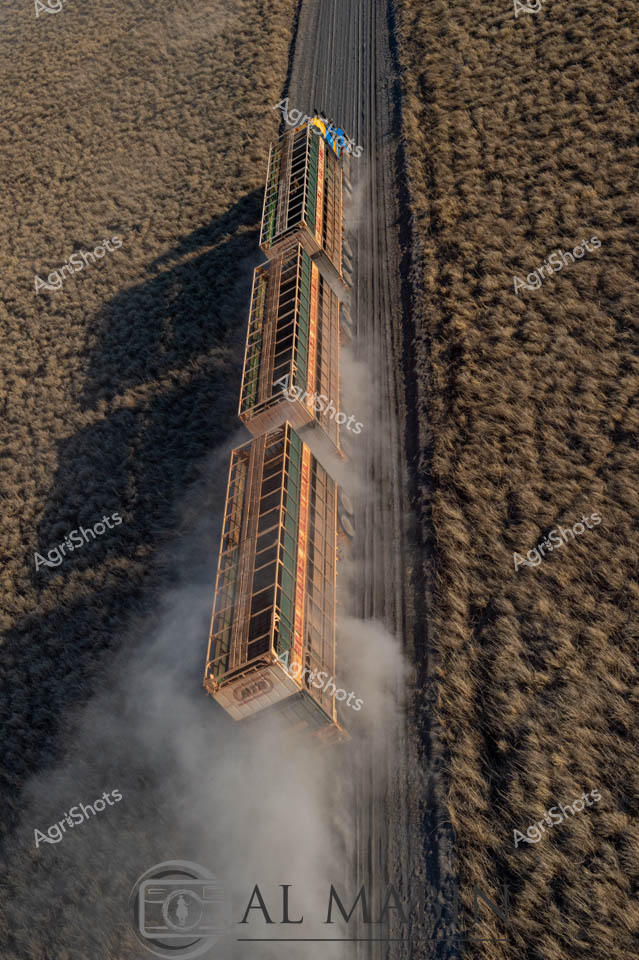
Thundering across the ochre plains of the Northern Territory, a massive road train cleaves through dusty scrubland, its triple-trailer configuration casting long shadows on the arid landscape. Billowing clouds of fine red dust erupt around the articulated truck, creating an ethereal veil that softens the harsh outback terrain. The golden-hued trailers, stacked with precision, represent the lifeline of cattle transport in Australia's remote cattle stations - a critical link in the beef supply chain that connects isolated pastoral properties to distant markets. The aerial perspective captures the raw power and isolation of agricultural logistics, with the road train appearing almost like a mechanical serpent traversing the monochromatic brown and rust-colored wilderness. Wisps of dust swirl beneath and around the vehicle, highlighting the immense ground clearance and robust engineering required to navigate these unforgiving landscapes. This image embodies the spirit of Australian agricultural resilience - machinery and human determination conquering vast, challenging terrains to sustain one of the nation's most important primary industries.