Browse the collection
 Image
Nestled within a meticulously organized cheese storage facility, wheels of artisan cheese rest on industrial shelving, showcasing the rich diversity of Australian dairy craftsmanship. Large golden-hued rounds of aged cheese dominate the upper shelves, alongside carefully labeled packages and distinctive black octagonal product labels like the "Monnalisa" brand. The lower shelves burst with an intricate mosaic of wrapped and packaged cheese varieties - white, brown, and silver-wrapped parcels create a complex visual texture reminiscent of a culinary archive. A burlap-wrapped vertical support adds an earthy, rustic element to the otherwise utilitarian metal shelving system, symbolizing the connection between traditional cheesemaking and modern preservation techniques. Each package bears detailed labels, suggesting a sophisticated tracking and aging process that speaks to the meticulous care of Australian small-batch cheese producers. The densely packed shelves communicate a sense of abundance, craftsmanship, and the rich agricultural heritage of regions like New South Wales, where artisan food production continues to thrive.
 Image
Artisan olive oil producer meticulously prepares a bottle of premium extra virgin olive oil in a rustic processing room. Surrounded by gleaming steel storage containers marked with harvest dates and varietal details, the experienced producer carefully handles a bottle of lemon-infused olive oil from the Hunter Valley. His white lab coat and focused demeanor speak to the precision and care involved in crafting high-quality, small-batch olive oils. Handwritten chalk labels highlight the provenance of the oils - showcasing the direct connection between local agricultural production and gourmet food preparation. Metallic containers reflect soft light, creating an atmosphere of quiet expertise and traditional food craftsmanship. The scene captures the intersection of agricultural skill, artisanal food production, and regional pride in New South Wales' premium olive oil industry.
 Image
Sun-drenched New England tablelands rise in the background as a cluster of robust Hereford cattle gather in the dusty yards. Rusty-red and white-faced bovines stand clustered near weathered timber yards and gleaming steel silos, embodying the resilient spirit of Australian beef production. A farm worker in a vibrant red wide-brimmed hat and blue patterned workwear surveys the herd, her stance suggesting decades of quiet expertise and connection to the land. Eucalyptus trees frame the scene, casting dappled shadows across the compact paddock, while fluffy cumulus clouds drift across a brilliant azure sky. The landscape speaks of generations of agricultural practice - functional, pragmatic, yet beautiful in its elemental simplicity. Silver water tanks and a modest shed complete the quintessential Australian rural infrastructure, capturing a moment of pastoral calm in the productive heart of New South Wales cattle country.
 Image
In the lush Hunter Valley wine region of New South Wales, an agricultural worker guides a green John Deere tractor pulling a spray rig through a meticulously maintained vineyard. Dressed in an olive green uniform and a protective cap, the worker gestures with purpose, directing the precise application of crop treatment across rows of carefully pruned grapevines. The overcast sky provides a soft, diffused light that highlights the verdant landscape, with mature vines stretching out in orderly lines against a backdrop of native eucalyptus trees. The powerful tractor, a testament to modern agricultural technology, moves with calculated precision along the sealed vineyard road, its yellow and green livery a striking contrast to the muted tones of the surrounding landscape. This scene captures the intricate dance of technology, expertise, and nature that defines contemporary Australian viticulture, where careful management and advanced equipment ensure the production of world-class wines. The image embodies the meticulous care and professional approach of modern grape cultivation in one of Australia's most renowned wine-producing regions.
 Image
Verdant rows of grapevines stretch across the misty Hunter Region landscape, anchored by a robust John Deere 6625 tractor in classic emerald green and sunshine yellow. The agricultural workhorse sits poised between vine rows, pulling a specialized crop spraying rig designed to protect and nurture the delicate vineyard. Soft gray clouds drift overhead, casting a subdued light on the meticulously maintained agricultural setting, highlighting the precision of modern viticulture. The spraying equipment, mounted with red protective covers, stands ready to distribute carefully calibrated treatments across the lush green grape plantings, ensuring optimal vine health and grape quality. Surrounding woodland and carefully tended grass create a picturesque backdrop that speaks to the harmonious relationship between structured agriculture and natural landscape. This scene captures the essence of contemporary Australian wine production - a blend of sophisticated technology, environmental stewardship, and generations of agricultural expertise.
 Image
Sun-drenched and purposeful, a viticulturist carefully tends to a grape vine in the rolling vineyards of New South Wales' Hunter Region. Wearing a protective sun hat and crisp white shirt, the worker sits on a compact folding stool between rows of meticulously trained vines, performing the delicate art of vine grafting. His weathered hands gently manipulate a young vine shoot, connecting it to the established rootstock with practiced precision - a critical technique in maintaining vineyard health and wine quality. The surrounding landscape tells a story of careful cultivation: wooden support posts line perfectly spaced rows, with vibrant green grape leaves contrasting against the dry golden grass of the understory. Summer's heat radiates across the landscape, suggesting this is a critical moment in the growing season when each careful intervention can impact the eventual harvest. The scene captures the quiet expertise of Australian viticulture - a blend of scientific knowledge, physical skill, and deep respect for the land's potential.
 Image
Hereford cattle cluster in russet and white clusters within a weathered timber-post cattle yard, the rocky paddock ground telling tales of a long, dry season. Nestled in the rolling hills of New England, New South Wales, these sturdy beef cattle wear distinctive yellow ear tags, marking them as carefully managed livestock. Mature cows with rich chestnut and white coats stand closely together, their robust frames reflecting generations of selective breeding for meat production. The surrounding landscape speaks of classic Australian high country - stringybark trees framing distant blue-green hills, a green farm shed offering minimal shelter in the harsh rural environment. Harsh sunlight casts sharp shadows across the packed earth, highlighting the muscular frames and calm demeanor of these resilient Hereford breed animals. This scene captures the essence of Australian pastoral life - where livestock, landscape, and generations of agricultural expertise converge in a single, powerful moment of rural productivity.
 Image
Seasoned viticulturist tends to grape vine rootstock in the lush Hunter Valley wine region of New South Wales. Wearing a protective sun hat and crisp white polo, the experienced worker carefully inspects and prunes a gnarled grape vine, seated comfortably on a portable stool among the orderly rows of trellised vines. Dry golden grass surrounds the meticulously maintained vineyard, with weathered wooden posts and wire supports guiding the green leafy branches. The warm afternoon light bathes the scene in a soft glow, highlighting the intricate work of vineyard management and the deep connection between the skilled worker and the land. His measured movements reveal decades of expertise in grape cultivation, preparing the vines for optimal growth and future harvest. The image captures the quiet dedication of Australian agricultural workers, whose precise care transforms rugged landscapes into world-renowned wine-producing regions.
 Image
The captures the essence of viticulture in the Hunter Valley with two green John Deere tractors methodically spraying rows of grapevines on an overcast morning. Precision agricultural equipment moves deliberately between carefully cultivated vine lines, releasing fine mists of crop protection solution across the verdant plantation. The soft grey skies provide a muted backdrop to the vibrant green machinery, highlighting the meticulous care required in modern vineyard management. Mounted spray tanks attached to the tractors demonstrate sophisticated agricultural technology, allowing controlled and efficient application of treatments across the expansive grape-growing landscape. A lone worker can be seen atop one of the tractors, navigating the equipment with expertise through the meticulously maintained rows. The scene embodies the intersection of technological innovation and agricultural tradition, showcasing the sophisticated approach to wine production in one of Australia's most renowned viticultural regions.
 Image
Hereford cattle cluster in the dusty yards of a quintessential New England region cattle property, their rich brown and white coats gleaming under the bright Australian midday sun. Muscular and compact, these heritage beef breed animals stand clustered near weathered timber fence posts, with silvery water tanks and a corrugated iron shed visible in the background. Rolling eucalyptus-studded hills rise gently behind the farm infrastructure, creating a classic rural pastoral landscape typical of northern New South Wales. Yellow ear tags mark each beast, signaling careful livestock management and traceability in modern Australian agriculture. The hardened earth beneath their hooves tells a story of dry season resilience, while the clustered herd suggests a moment of communal rest during the heat of the day. This scene captures the robust spirit of Australian beef production - a testament to generations of agricultural skill and the enduring connection between land, livestock, and livelihood.
 Image
A weathered farmer stands beside a red quad bike in a rustic cattle yard, overseeing a herd of rich reddish-brown Hereford cattle. The rural New England landscape of New South Wales unfolds behind him, with rolling hills, scattered gum trees, and wooden stock yard fences creating a quintessential Australian pastoral scene. Sun-drenched and dusty, the paddock captures the essence of cattle mustering on a typical working farm.
 Image
Merino sheep dogs cool off in a concrete water trough during the scorching height of an Australian summer. Four working border collies seek relief from the intense midday heat, their black and white coats glistening as they submerge themselves in the weathered circular water tank. Rivulets of water cascade over their muscular frames, providing essential respite on a dusty rural property where every drop of water is precious. The concrete trough, stained and weathered from years of service, stands as a testament to the resilience of farm infrastructure in harsh agricultural landscapes. Vertical streaks of mineral deposits and sun-baked patina tell a story of countless seasons and the critical role of these utilitarian water sources for both livestock and working dogs. The parched ground surrounding the trough speaks to the challenging conditions of rural Australia, where adaptability and endurance are not just traits, but necessities of survival.
 Image
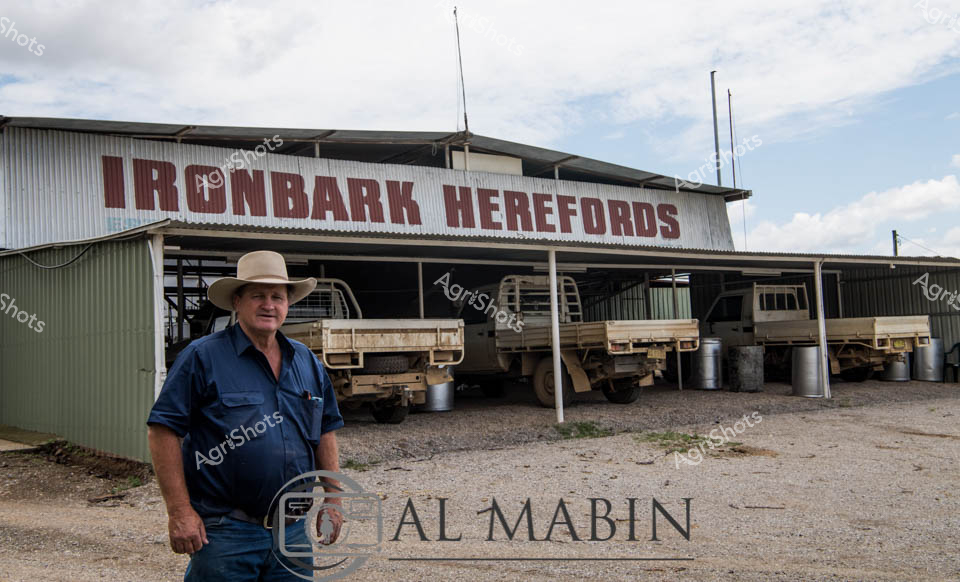
Ironbark Herefords stands as a testament to generational agricultural expertise in the New England region of New South Wales. A weathered cattleman stands proudly in front of the corrugated iron shed, wearing a classic wide-brimmed akubra hat, blue work shirt, and relaxed demeanor that speaks to decades of rural experience. Sturdy utility trucks with functional flatbed trays sit under the shed's protective overhang, alongside gleaming milk cans – tools of a working cattle station. The landscape behind suggests a typical Australian pastoral setting: dusty ground, muted earth tones, and an expansive sky with soft clouds indicating a mild day. The bold red lettering of "IRONBARK HEREFORDS" across the shed communicates the property's specialization in Hereford cattle breeding, a breed renowned for its adaptability to harsh Australian conditions. This image captures the essence of Australian agricultural heritage – resilience, expertise, and a deep connection to the land, embodied by a seasoned farmer at the heart of his operational base.
 Image
In the heart of a New England region cattle station, three working dogs find respite from the scorching summer heat, submerged in a weathered concrete water trough. Border Collies and cattle dogs, essential partners in rural livestock management, cool their lean bodies amid the dusty paddock, their alert ears and keen expressions reflecting their working heritage. Behind them, a mob of Hereford cattle—distinctive white faces and rich russet bodies—graze in wooden-railed yards, representing the quintessential beef production landscape of northern New South Wales. The pastoral scene captures the rugged essence of Australian agricultural life: functional, practical, and deeply connected to the land. Dry grass underfoot, gnarled eucalyptus trees in the background, and the robust concrete infrastructure tell a story of resilience and adaptation in a challenging agricultural environment. The dogs' momentary reprieve in the trough symbolizes the hard work and partnership that defines rural Australian farming.
 Image
Border Collie Working Dogs Cool Down in Concrete Water Tank Midday heat shimmers across a dusty rural paddock as three Border Collie working dogs find refreshment in a weathered concrete water tank. Splashing and energetic, the dogs partially submerge themselves, their black and white coats stark against the gray cylindrical structure, creating dramatic water sprays with their movement. These intelligent herding dogs, vital companions to farmers across New South Wales, demonstrate their resilience and adaptability by using the water trough not just as a drinking source but as a cooling mechanism during intense summer heat. Their alert expressions and muscular bodies reflect the working breed's athletic nature, perfectly suited to the demanding environments of Australian pastoral properties. The image captures a candid moment of rural life, where working animals find momentary respite from their arduous daily responsibilities.
 Image
Harnessing modern agricultural technology, a skilled livestock technician monitors cattle reproduction in a weathered milking shed. Dressed in a crisp blue work shirt, the professional carefully adjusts an ultrasound device, its blue-tinted screen revealing the internal diagnostic imaging of a cow's reproductive status. Thick black cables snake across the metal infrastructure of the milking station, connecting specialized electronic equipment designed for precise livestock management. Beyond the technician, rusty-colored Hereford cattle wait patiently in the adjacent holding pen, their distinctive white faces and reddish-brown bodies characteristic of this robust beef breed. The New England region's soft morning light filters through the shed's open side, casting gentle shadows on the packed earthen floor and highlighting the intricate dance of agricultural science and animal husbandry. This scene captures the sophisticated, data-driven approach of contemporary Australian cattle breeding, where advanced veterinary techniques ensure optimal herd health and genetic potential.
 Image
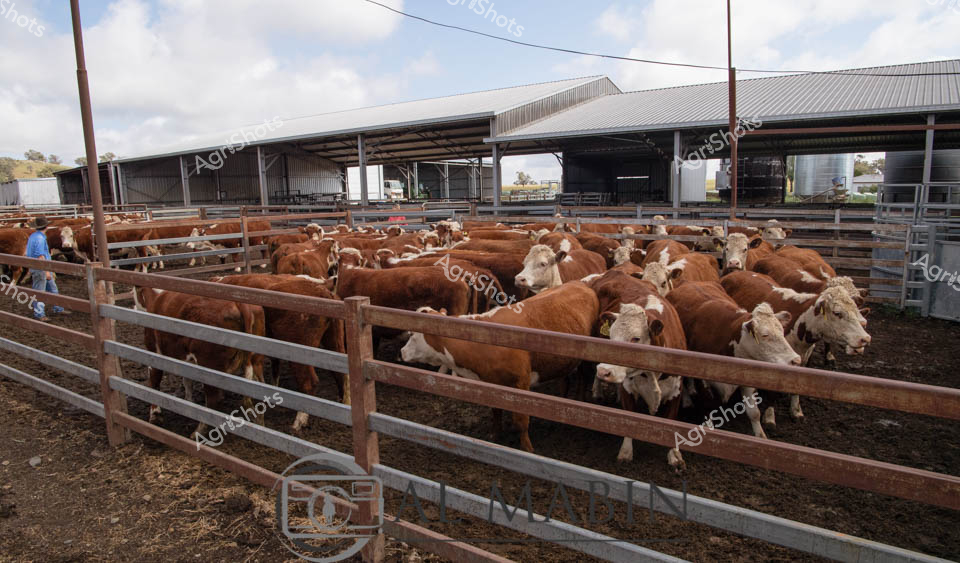
Robust Hereford cattle cluster tightly in a steel-framed livestock yard, their rich chestnut and white coats gleaming under the soft, diffused light of a cloudy rural morning. The herd stands clustered within sturdy wooden and metal fencing, surrounded by a modern steel-roofed agricultural shed that speaks to contemporary Australian cattle management practices. A stockworker in a blue shirt stands nearby, subtly overseeing the group, representing the quiet expertise of rural agricultural professionals. The earthen yard shows signs of recent cattle movement, with compressed dirt and minimal vegetation reflecting the controlled environment of a professional cattle operation. These muscular Herefords, known for their exceptional beef qualities, represent the genetic precision and careful breeding characteristic of Australian stud cattle enterprises. The scene captures the essence of modern agricultural production - efficient, purposeful, and deeply connected to the land.
 Image
In the heart of a weathered livestock handling facility, a dedicated agricultural worker stands alongside a gentle Hereford beef cow secured in a neck access restraint. Dressed in classic blue workwear and a grey trucker cap, the worker holds a green electronic cattle prod, suggesting routine health management or processing procedures. The rustic metal infrastructure surrounds them - aged steel gates and worn concrete floors telling stories of generations of farm work. The cream-colored Hereford, distinguished by its yellow ear tag, peers calmly from between the robust metal barriers, representing the resilient cattle breeding tradition of the New England region in New South Wales. Soft, diffused light filters through the barn's weathered structure, highlighting the textural contrasts between the worker's crisp denim, the cow's textured hide, and the industrial metalwork. This scene captures the quiet professionalism of modern Australian livestock management - a precise choreography of human skill and animal husbandry.
 Image
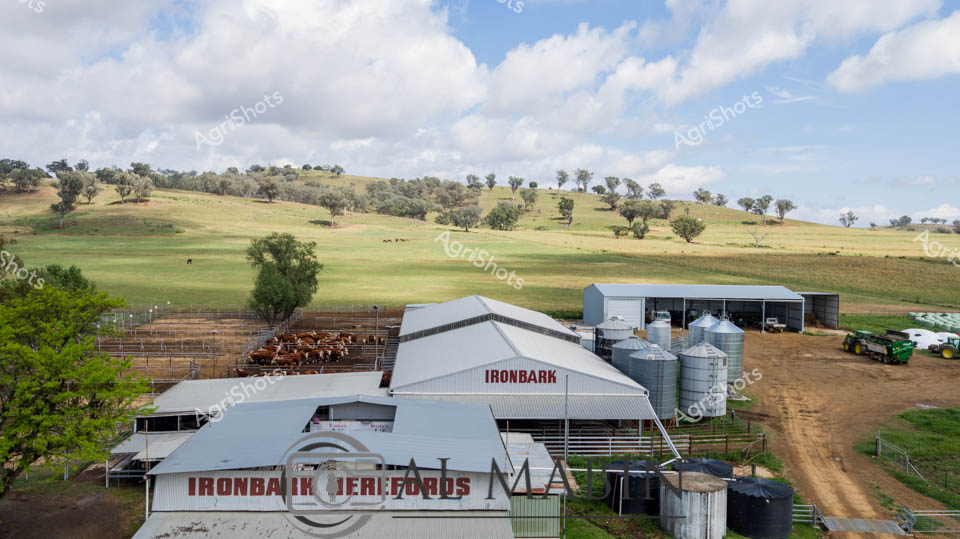
Ironbark Herefords: A Symphony of Rural Productivity Rolling golden pastures of New England's high country embrace a meticulously organized cattle station, where russet-colored Hereford cattle cluster within precision-engineered steel yards. Silvery steel sheds branded with the Ironbark logo anchor the landscape, their corrugated roofs gleaming under a vast sky dappled with cumulus clouds. Grain silos and agricultural machinery punctuate the dusty earthen periphery, revealing the sophisticated infrastructure behind modern pastoral enterprise. Scattered eucalyptus trees cast intermittent shadows across the undulating paddocks, their muted green a counterpoint to the rich ochre and amber tones of the grasslands. The scene captures the quintessential Australian agricultural aesthetic - a harmonious blend of natural terrain and strategic farming infrastructure, where generations of livestock management expertise are distilled into every carefully constructed element. This is a landscape of quiet industry, where the rhythms of cattle breeding and land stewardship pulse with understated intensity.
 Image
Beneath an overcast sky, a robust herd of Hereford cattle grazes on a lush pasture in the New England region of New South Wales. The distinctive brown and white coats of these beef cattle create a striking visual pattern against the muted green grasslands, with a skeletal white tree standing sentinel in the background. Fallen branches litter the foreground, adding texture to the rural landscape, while a line of mature eucalyptus trees frames the distant paddocks. The herd stands clustered together, a testament to the robust breeding of these quality stud cattle, their muscular frames and characteristic markings highlighting the genetic excellence of New England's agricultural heritage. Overcast light casts a soft, diffused glow across the scene, emphasizing the rich earthy tones of the landscape and the healthy condition of the livestock. This image captures the essence of Australian cattle farming - a harmonious blend of natural beauty, agricultural expertise, and the timeless relationship between land and livestock.
 Image
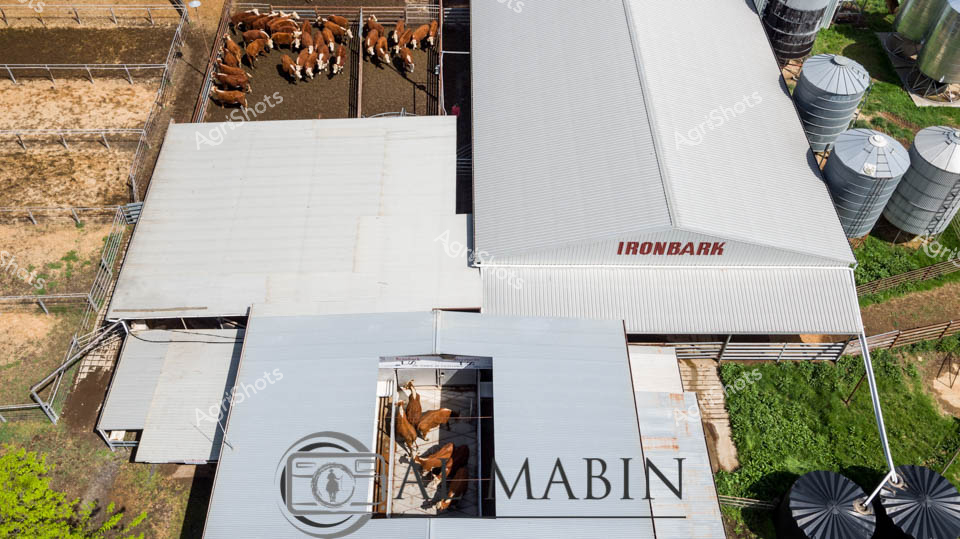
Aerial panorama of a meticulously organized cattle facility in rural New South Wales, showcasing the precision of modern Australian beef production. Rich russet-and-white Hereford cattle cluster in carefully designed yards, their distinctive coat markings gleaming under the bright overhead light. Sleek steel grain silos punctuate the grassy periphery, representing the interconnected infrastructure of contemporary agricultural operations. The overhead perspective reveals a choreographed agricultural ecosystem, where strategic design meets animal husbandry - each element positioned with calculated purpose. The scene pulses with the quiet intensity of a high-performance cattle stud, where generations of breeding expertise converge in these carefully managed spaces.
 Image
Golden afternoon light bathes a young agricultural worker leaning thoughtfully against a weathered timber shed wall. Wearing a classic wide-brimmed Australian rural worker's hat and a vivid royal blue collared work shirt, the individual displays the quintessential character of a New England Region cattleman. Soft freckles and an intent gaze suggest youthful determination, capturing the spirit of generational farming in New South Wales. The intimate portrait reveals the human element of beef cattle management, highlighting the personal connection between young agricultural professionals and their rural landscape. Rich textures of worn timber, soft denim, and the well-shaped felt hat create a compelling narrative of contemporary Australian agricultural life. The image speaks to the ongoing legacy of family farming and the emerging generation of dedicated livestock managers.
 Image
Verdant grapevines stretch across rolling terrain in Australia's renowned Hunter Valley wine region, framed by lush green leaves in the foreground. Meticulously trained vines run in precise parallel rows, their young shoots and leaves vibrant against the rich earth, revealing the early stages of the growing season. Soft grey mountains rise in the background, shrouded by overcast skies that promise moisture for the developing vineyard. Irrigation lines snake between the vine rows, testament to the careful water management essential in this agricultural landscape. The scene captures the serene productivity of viticulture, where generations of expertise combine with modern agricultural techniques to cultivate world-class wine grapes. Muted tones of green, brown, and grey create a tranquil composition that speaks to the patient craft of winemaking in one of New South Wales' most celebrated agricultural districts.
 Image
Kangaroos graze among silvery olive trees, their muscular forms blending seamlessly into the pastoral landscape of New South Wales. The marsupials move with quiet deliberation across sun-dappled grass, their grey-brown fur echoing the weathered bark of the surrounding trees. Mature olive grove rows create a natural colonnade, their twisted branches forming an elegant architectural framework that filters soft, golden light across the dry grassland. The scene captures a quintessential Australian agricultural ecosystem, where native wildlife coexists harmoniously with cultivated agricultural landscapes. Soft morning light bathes the grove, highlighting the textural interplay between the smooth tree trunks, rough bark, and the kangaroos' textured fur. This image embodies the delicate balance of Australian agricultural environments, where wildlife and farming landscapes exist in subtle, interconnected harmony.