Browse the collection
 Image
Aerial view of a classic Australian woolshed nestled in the undulating pastoral landscape of rural New South Wales. The striking blue and white corrugated iron building stands as a testament to generations of agricultural heritage, its distinctive L-shaped design perfectly integrated into the surrounding paddocks of rich earth and verdant green pastures. Precision-planned sheep yards radiate from the central shearing complex, with carefully constructed lanes and holding pens designed to efficiently manage livestock movement during shearing season. Mature eucalyptus trees cast long shadows across the dusty ground, suggesting early morning light and the promise of a productive day in the wool industry. The meticulously maintained infrastructure speaks to the sophisticated agricultural practices of modern merino sheep breeding, where every architectural and landscape element is purposefully designed to support high-quality wool production. This image captures the essence of Australian pastoral excellence - a harmonious blend of engineering, animal husbandry, and respect for the land that has defined rural communities for generations.
 Image
A collection of weathered, stenciled signs adorns a corrugated metal wall, reminiscent of a classic Australian woolshed's interior. These aged metal placards bear cryptic labels like "Boonoke", "Scour", "Pieces", "Lambs", and "1st PCS", telling a fragmented story of sheep processing and wool production. The signs, in various shades of slate gray, rusty brown, and deep blue, speak to the meticulous classification and movement of livestock and wool products typical of large pastoral stations in New South Wales. Each stenciled marker appears worn and slightly faded, suggesting decades of use in the harsh agricultural environment. The uniform corrugated background creates a rhythmic texture, highlighting the industrial heritage of Australian wool production and the systematic approach to sheep farming. These signs are more than mere labels - they are historical artifacts capturing the methodical nature of a significant agricultural industry.
 Image
Merino ewes cluster around a weathered steel feeding station, their woolen coats ranging from creamy white to soft beige against the muted golden grasslands of rural New South Wales. The expansive paddock stretches beneath a pale winter sky, with scattered eucalyptus trees marking the distant horizon. A protective maternal scene unfolds, with newly born lambs nestled close to their mothers, their vulnerable forms contrasting with the sturdy, experienced ewes. The robust metal feeder, a quintessential piece of agricultural infrastructure, provides shelter and sustenance, its rusted patina telling stories of seasons past and countless flocks sustained. Soft morning light bathes the landscape, highlighting the textural richness of the sheep's fleece and the dry, resilient grasses of the Australian pastoral setting. This image captures the quiet rhythm of lambing season, a critical moment in the agricultural cycle that speaks to regeneration, nurture, and the enduring relationship between farmer, livestock, and land.
 Image
Young outback explorer stands proudly in the arid grasslands of rural Australia, wearing a protective sun hat and bright red work shirt. A loyal cattle dog companion sits close by, showcasing the deep bond between children and working animals in remote agricultural landscapes. The sun-bleached terrain stretches endlessly behind them, representing the harsh yet beautiful environment of a typical station or pastoral property in New South Wales. The child's wide smile and confident posture suggest a sense of joy and connection to the land, embodying the resilient spirit of rural Australian youth. The dog, with its alert stance and protective positioning, highlights the essential role of working dogs in station life and agricultural management. The crisp blue sky and weathered ground create a striking backdrop that emphasizes the rugged beauty of Australian agricultural environments.
 Image
Aerial pastoral landscape revealing the intricate boundary between dense eucalyptus woodland and meticulously cultivated agricultural pastures in rural New South Wales. A narrow sealed road bisects the verdant green agricultural fields and dark forest, creating a stark geometric contrast against the organic landscape. Several small groups of sheep graze peacefully on the emerald-hued paddocks, their white forms delicately scattered across the bright green terrain. The woodland section displays a rich mosaic of deep green foliage punctuated by silvery-white gum trees, casting intricate shadows and creating a textural landscape of remarkable depth and complexity. Soft morning light bathes the scene, highlighting the lush spring growth and creating a sense of tranquil productivity characteristic of Australian agricultural landscapes. The image captures the quintessential Australian rural narrative of carefully managed land interface, where wilderness meets cultivation in a harmonious, productive tableau.
 Image
Aerial view of Boonoke Station's meticulous sheep infrastructure reveals the precision of Australian merino wool production. Crisp white wooden fencing defines elegant paddocks and sheep handling lanes, directing a flock of robust merino rams across meticulously maintained pastures. The weathered corrugated iron woolshed anchors the scene, its steel-blue roof gleaming against golden spring grasslands dappled with mature eucalyptus trees casting intricate shadows. A strategic network of interconnected yards allows careful stock movement, demonstrating sophisticated agricultural engineering that enables efficient livestock management. Rams cluster tightly in one paddock, their muscular bodies and dense fleece highlighting the genetic excellence of this renowned merino stud. The panoramic perspective captures the expansive New South Wales rural landscape, embodying generations of pastoral expertise and the sophisticated systems that underpin Australia's world-leading wool production.
 Image
Weathered timber and rusted corrugated iron frame a classic Australian pastoral scene. A flock of robust Merino ewes grazes contentedly across dry golden pasture, their woolly forms creating a living carpet against the sparse landscape of central New South Wales. Ancient eucalyptus trees stand sentinel around an abandoned farmhouse, their gnarled branches casting soft shadows over the historic woolshed and surrounding paddock. In the distant background, a hint of bright yellow canola crop breaks the muted browns and greys, signaling the approaching spring season. This timeless rural landscape captures the resilience of Australian agriculture - a testament to generations of farming heritage where livestock and landscape merge in a delicate, enduring balance.
 Image
Burnished by the golden light of a crisp New England tablelands morning, a robust Hereford beef cow stands sentinel in a dry golden pasture. Her rich mahogany and white coat gleams against the muted tones of late summer grasslands, with distant blue mountains and scattered eucalyptus trees framing the quintessential rural Australian landscape. A small herd clusters behind her, representing the resilience and quality of New South Wales livestock breeding. The weathered paddock tells a story of seasonal challenges, with sparse grasses and hard-packed earth revealing the demanding environment of high-country agriculture. This scene captures the essence of Australian beef production - hardy cattle adapted to challenging terrains, standing as a testament to generations of agricultural expertise and land stewardship.
 Image
Battery hens jostle for space in a multi-tiered industrial laying facility, their cramped wire cages stretching across the interior. Brown eggs accumulate on the lower collection shelves, evidence of relentless production in this precision-engineered agricultural environment. Rust-red feathered hens crowd against metal wire dividers, their beaks and heads protruding through narrow openings, indicating the confined conditions of commercial egg production. The stark infrastructure reveals an efficient but austere system of protein and nutrition generation, typical of large-scale poultry operations found across Australian agricultural regions. Soft ambient lighting highlights the metallic greys of the cage structures contrasting against the warm browns of feathers and eggs, creating a clinical yet organic visual texture. This image captures the industrial scale of modern egg production, where hundreds of birds are systematically arranged to maximize output in a controlled, mechanized setting.
 Image
Industrial egg production at its most concentrated - dense rows of laying hens occupy multi-tiered metal battery cages, each compartment packed tightly with brown-feathered chickens. Eggs accumulate on wire mesh shelves beneath the chickens, a testament to the high-efficiency agricultural system designed to maximize production in minimal space. The steel-gray infrastructure creates a grid-like environment of uniform compartments, with soft pink-brown tones of feathered bodies creating a living texture against the cold mechanical structure. Stark overhead lighting emphasizes the clinical, mechanized nature of commercial poultry farming, revealing every detail of the densely populated layers. This image captures the industrial scale of modern egg production, where efficiency and volume are paramount, representing a significant sector of Australian agricultural output. The precise arrangement and uniformity speak to advanced agricultural technologies that have transformed livestock management in contemporary farming practices.
 Image
A weathered, sun-worn hand delicately cradles a single brown egg amidst a sea of similar eggs nestled in cardboard trays. The scene captures the meticulous process of egg sorting and quality control in a large-scale poultry operation, likely situated in the rich agricultural regions of New South Wales. Warm, terracotta-hued eggs blanket the workspace, their uniform color and shape a testament to careful breeding and consistent farming practices. The close-up perspective emphasizes the tactile connection between the farmer and the produce, highlighting the human touch in industrial-scale egg production. Soft shadows and muted lighting suggest early morning sorting, when workers carefully inspect each egg for quality and uniformity before packaging. The textured skin of the hand, etched with lines of experience, contrasts beautifully with the smooth, pristine surface of the eggs, symbolizing the generations of agricultural expertise that underpin Australia's thriving poultry industry.
 Image
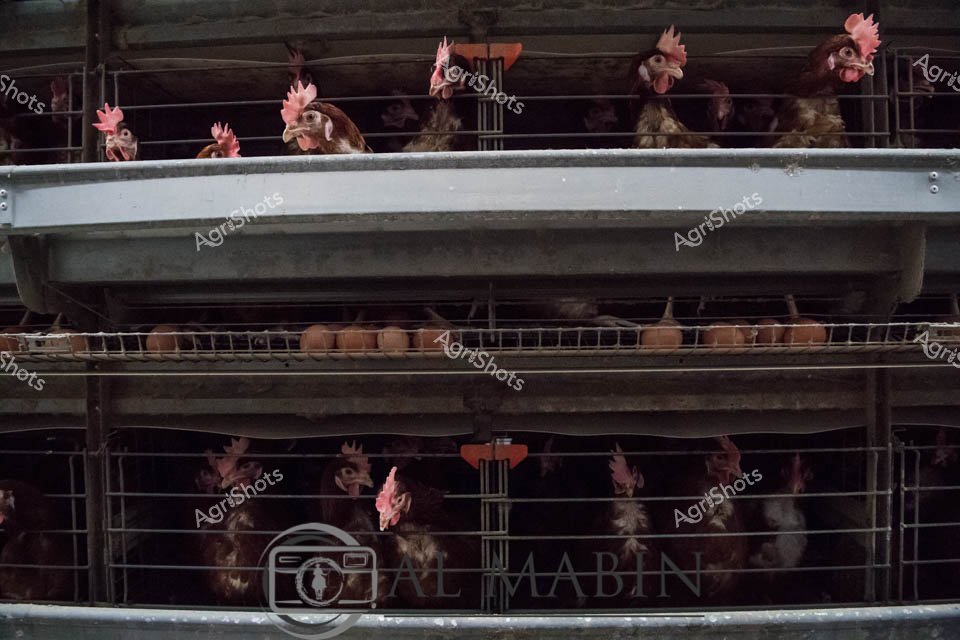
Battery cage layer hens cluster tightly within industrial poultry housing, their russet-brown feathers contrasting against steel wire enclosures. Pristine white egg collection trays sit above the densely populated tiers, each hen confined in a standardized production environment designed for maximum egg yield. The metallic infrastructure of Cthe agricultural facility reveals precision engineering - uniform spacing, galvanized wire mesh, and systematic stacking optimize commercial egg production. Soft ambient light filters through the shed, casting subtle shadows that highlight the uniform positioning of these productive birds. Overhead, clean white egg collection trays demonstrate the systematic efficiency of modern large-scale farming techniques, where each hen represents a carefully managed unit of agricultural output. The image captures the clinical, mechanized approach of contemporary poultry farming, where animal biology meets industrial optimization.
 Image
Layer upon layer of commercial egg production unfolds in this stark industrial portrait of modern poultry farming. Brown and white hens crowd the wire mesh compartments of a multi-tiered battery cage system, their pink combs visible between metal bars, while rows of freshly laid brown eggs rest on the wire shelf below. The metallic gray infrastructure of the cage system dominates the composition, creating a geometric framework that constrains the birds into precise, uniform rows. Harsh lighting emphasizes the clinical, efficient nature of large-scale egg production, revealing every feathered body and metallic surface with uncompromising clarity. This image captures the industrial scale of contemporary agricultural practices, where efficiency and productivity take precedence over individual animal comfort.
 Image
Battery hens crowd the multi-tiered wire cages of an industrial egg production facility, their russet and white feathered bodies pressed against steel mesh compartments. Uniform rows of laying boxes stretch across the climate-controlled interior, with eggs collecting on angled shelves beneath each densely populated tier. Soft ambient lighting illuminates the metallic infrastructure, highlighting the uniform positioning of the chickens and the systematic precision of large-scale poultry agriculture. Each cage contains multiple hens, tightly confined in a standardized production environment designed for maximum egg yield efficiency. The monochromatic grey and silver mechanical structures contrast sharply with the warm brown and reddish tones of the chickens, embodying the mechanized approach of contemporary agricultural systems. This snapshot encapsulates the industrial scale of egg production in modern Australian agricultural practices, revealing the controlled, systematic nature of large-scale livestock farming.
 Image
A seasoned poultry farm worker stands vigilant on a mobile platform, navigating the precise, steel-lined corridor of a modern egg production facility. Wearing a classic Australian rural worker's outfit - blue denim, a wide-brimmed hat, and a navy work shirt - he carefully inspects the production line, surrounded by meticulously arranged stainless steel racks housing rows of laying hens. The controlled environment speaks to the precision of contemporary large-scale farming, with overhead lighting casting a clinical yet atmospheric glow that accentuates the linear geometry of the hen house. His hands, weathered from years of agricultural work, manipulate something out of frame, suggesting ongoing monitoring or management of the egg production process. The symmetrical composition creates a powerful visual narrative of technological efficiency and human expertise in modern agricultural systems, highlighting the intricate balance between hands-on farming knowledge and advanced production techniques typical of New South Wales' progressive agricultural sector.
 Image
Aerial drone imagery reveals an extraordinary agricultural canvas - "The Grower" artfully sculpted into a verdant crop field, showcasing the creativity and precision of modern farming. Intricate letterforms rise from uniform green rows of grain or oats, meticulously carved through careful crop manipulation, transforming the agricultural landscape into a powerful visual statement. The text emerges with sharp definition against the lush green texture, demonstrating remarkable agricultural skill and technological innovation in farming practices. Captured during the vibrant spring season in New South Wales, this image celebrates the artistry and technical mastery of contemporary agricultural producers who see their fields as more than just productive spaces, but as potential canvases for expression. The aerial perspective offers a stunning revelation of human creativity intersecting with agricultural science, where every planted row becomes a potential brushstroke in a living, growing artwork.
 Image
A newborn lamb rests close to its mother in a grassy paddock, capturing a tender moment of maternal care in the Australian agricultural landscape. The young lamb appears wet and newly born, nestled against the ewe's wool-covered body. Traces of blood and afterbirth indicate this is moments after the lamb's birth, highlighting the raw, natural process of livestock reproduction. The surrounding grass and earth suggest a typical rural setting, likely during lambing season when ewes give birth to their offspring. The intimate close-up reveals the delicate vulnerability of the newborn and the protective instinct of the mother sheep, a quintessential scene of pastoral life.
 Image
Nestled in a vast egg production facility, a seasoned Australian poultry farmer radiates pride amid towering stacks of pristine egg trays. Wearing a classic wide-brimmed rural work hat and sunglasses perched on top, he sits comfortably on egg cartons dressed in a dark denim work shirt emblazoned with "Glennarra" branding. His weathered, smiling face tells a story of decades dedicated to agricultural excellence, representing the backbone of Australia's large-scale egg farming industry. The sterile white industrial environment contrasts beautifully with the warm brown tones of thousands of fresh eggs meticulously arranged in precise rows, showcasing the remarkable scale and precision of modern egg production. His relaxed posture and genuine smile capture the spirit of rural entrepreneurship - a testament to the skill, dedication, and technological sophistication of contemporary Australian agricultural practices. The image celebrates the human connection to food production, highlighting the pride and expertise behind every egg that reaches Australian tables.
 Image
Australian Merino sheep populate a windswept pasture during lambing season, capturing the raw essence of pastoral life. A bloodied ewe stands protectively near her newborn lambs, her woolly fleece matted and stained from the birthing process, symbolizing the challenging yet vital nature of agricultural reproduction. The flock spreads across the pale grasslands, with soft grays and beiges blending into the muted landscape, punctuated by distant eucalyptus trees softening the horizon. Young lambs, still unsteady on their legs, cluster near their mother, their delicate forms a stark contrast to the rugged adult sheep. The scene embodies the resilience of sheep farming in regional Australia - a blend of nature's brutal immediacy and the nurturing instincts of livestock. Soft morning light bathes the paddock, suggesting early autumn in a classic New South Wales agricultural setting, where generations of farmers have managed Merino flocks with skill and dedication.
 Image
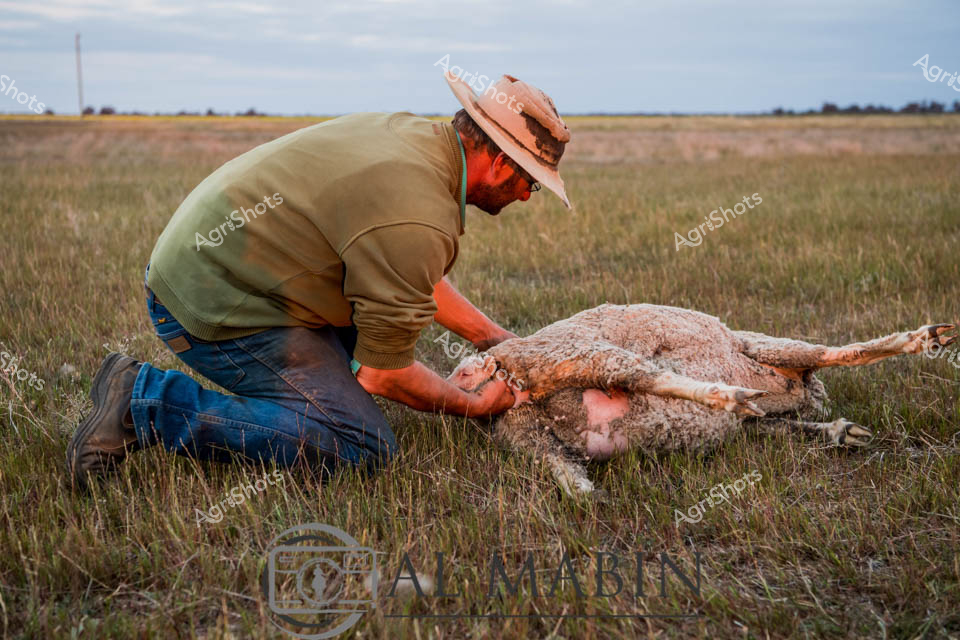
A seasoned farmer kneels attentively beside a distressed Merino ewe during lambing season, his weathered hands gently supporting the struggling animal across a windswept pasture in rural New South Wales. Dressed in a classic khaki sweater, faded blue jeans, and a protective wide-brimmed hat, the stockman demonstrates the compassionate care essential to successful sheep breeding. The muted gray-green grasslands stretch endlessly beneath an overcast sky, typical of the austral winter or early spring lambing period, when newborn lambs are most vulnerable. The soft texture of the sheep's woolly fleece contrasts with the rough grassland, highlighting the delicate nature of pastoral life. Every gesture speaks to generations of agricultural wisdom - the careful positioning, the protective stance, the intimate connection between farmer and flock. This moment captures the raw, unscripted reality of agricultural work, where survival depends on immediate, skilled intervention and a deep understanding of livestock behavior. The scene embodies the resilience of Australian agricultural communities, where individual attention can mean the difference between life and death for a young lamb and its mother.
 Image
Dusty paddock light bathes a tender moment between a Merino ewe and her newborn lamb during lambing season. The mature ewe, her dense woolly fleece a soft beige, gently nuzzles her just-born offspring, whose pale body is still marked with birthing traces and a rusty yellow stain. Fresh green pasture surrounds them, suggesting early spring in a typical New South Wales agricultural landscape. The lamb, still unsteady on its legs, leans into its mother's protective presence, embodying the raw vulnerability and resilience of livestock breeding. A blue ear tag marks the ewe, signaling careful stock management and tracking typical of professional merino sheep operations. This intimate portrait captures the primal bond of maternal care, central to successful sheep farming - a nuanced glimpse into the cyclical rhythms of agricultural life where birth, nurture, and survival intertwine seamlessly across generations of livestock.
 Image
A weathered agricultural worker tends to a newborn lamb in the early morning light of a windswept grassland, likely in the central grazing regions of New South Wales. The scene captures the raw, visceral moment of lambing season, with the farmer carefully assisting a Merino ewe through a challenging birth. Dressed in a forest green sweater and wide-brimmed pastoral hat, the worker cradles the bloodied newborn lamb, demonstrating the delicate yet pragmatic care essential to sheep farming. The muted palette of grays, greens, and earthy tones reflects the harsh yet beautiful landscape of Australian sheep country, where generations of farmers have wrestled productivity from challenging terrain. Sparse, winter-bleached grasses surround the pair, suggesting the challenging conditions of lambing during the cooler months. This intimate portrait captures the profound connection between farmer and livestock, embodying the resilience and nurturing spirit at the heart of Australian agricultural practice.
 Image
Beneath an overcast sky on a windswept pasture, a seasoned stock manager tends to a newborn lamb during the critical lambing season. Wearing a classic wide-brimmed rural worker's hat and layers of green and blue workwear, the farmer carefully manages a vulnerable Merino lamb moments after birth. The grassland appears sparse and weathered, typical of the challenging agricultural landscapes of rural New South Wales. Gently supporting the young animal, the stock manager assists the lamb in its first moments of life, a crucial intervention that can mean survival in harsh farming conditions. The muted earth tones of the landscape - soft grays, pale greens, and dusty browns - create a stark backdrop that highlights the intimate, life-sustaining work of sheep farming. This image captures the resilience and dedication of Australian agricultural workers, embodying the delicate balance between human skill and nature's unpredictability during lambing season.
 Image
Aerial view of a classic Australian woolshed nestled among paddocked grasslands, capturing the essence of pastoral New South Wales. The expansive silver-grey corrugated shed stands as a central landmark, surrounded by meticulously fenced green pastures and scattered eucalyptus trees casting long morning shadows across the landscape. Intricate fence lines divide the property into carefully managed grazing zones, revealing the precision of modern agricultural land management. The property appears to be a prestigious Merino stud station, likely Boonoke, with its precisely arranged infrastructure designed to support high-quality wool production. Soft golden-green grass suggests early spring, when young rams graze and prepare for shearing season, the landscape alive with the potential of new growth and pastoral productivity. The geometric precision of the shed, fences, and natural landscape speaks to generations of agricultural expertise and the calculated beauty of Australian rural enterprise.